



jorgenswest
-
Posts
8,284 -
Joined
-
Last visited
-
Days Won
9
Content Type
Profiles
Minnesota Twins News, Rumors & Analysis
Minnesota Twins Videos
2026 Minnesota Twins Top Prospect Rankings
2022 Minnesota Twins Draft Picks & Signing Bonuses
Minnesota Twins Trade & Free Agent Rumors
Minnesota Twins Fan Guides & Resources
2023 Minnesota Twins Draft Picks & Signing Bonuses
The Minnesota Twins Players Project
2024 Minnesota Twins Draft Picks & Signing Bonuses
2025 Minnesota Twins Draft Picks & Signing Bonuses
2026 Minnesota Twins Draft Picks & Signing Bonuses
Forums
Blogs
Events
Store
Downloads
Gallery
Everything posted by jorgenswest
-
Brian Dozier doesn't belong in the same conversation as Tony Oliva. Hundreds of players have had good late career starts. Most also have earlier declines. The conversation should be about where he fit in with his contemporaries. Looking at only his first 8 years which would shed the best possible light in his Hall if Fame hopes he stands 5th in OPS+ of 9 right fielders in that time span. 165 Frank Robinson 161 Henry Aaron 152 Roberto Clemente 143 Al Kaline 140 Tony Oliva 136 Rusty Staub 121 Tony Conigliaro 114 Johnny Callison 85 Jesus Alou For him, it depends on where the line is drawn. The 4 above all are clear Hall of Famers. They bested him at his best and had much longer careers. He played in an era of elite right fielders. When running the same search and using the previous 8 seasons no RF matches Tony. The best is Jose Bautista at 136. That is encouraging. Checking a few other stretches since Tony O and I find that Canseco, Tartabull, Strawberry, Singleton and Reggie Smith put up similar stretches. All that leaves me a little disappointed. He has been in my Hall of Fame since the first time I saw him at the Met.
-
He certainly would help the Twins. It is very much like the A's looking to sell high in the winter trade market. They routinely get a pitcher in the mix. Escobar doesn't fit there usual mold of high walk rate player though. They only had two players with significant at bats in 2014 below the league average walk rate. Cespedes and Reddick. I don't see them targeting Escobar.
-
The number of at bats and time in the field is finite. They have a plan for some number of non roster pitchers, catchers and hitters. They can't and won't bring in so many guys that the others don't get enough work in. When they bring in a decline phase player with little long term value, they lose an opportunity to bring in a mid 20s player that also comes with team control should he produce. Even if Kubel had approached his career norms last year, they didn't have him under control for this year. They aren't any better off today.
-
I disagree. Like Kubel and Bartlett last year, bringing him in means they don't look elsewhere. He takes a spot even as a minor league sign. Those spots are better used on mid 20s players that are failed prospects elsewhere. If you find a JD Martinez or Chris Davis or Chris Carter, you have something for the future. Signing a decline phase player who has a career OPS+ below Chris Parmelee's doesn't make sense. I don't believe the rumor.
-
Wily Mo Pena - career OPS+ 93 Chris Parmelee - career OPS+ 96
-
REPORT: Neil Allen to be Hired as Pitching Coach
jorgenswest replied to Seth Stohs's topic in Twins Daily Front Page News
Allen has no ties to the organization. The only thing that could have set him apart is the Twins perception of his skill in coaching pitchers. Encouraging. -
Berardino: Twins won bidding for Korean LHP Yang
jorgenswest replied to Steven Buhr's topic in Minnesota Twins Talk
Yang is 6 months younger than Kyle Gibson. They have an opportunity to get a piece for the future rather than a patch for 2015. -
Berardino: Twins won bidding for Korean LHP Yang
jorgenswest replied to Steven Buhr's topic in Minnesota Twins Talk
They don't. They certainly conflict with the report in the daily news and projections of his contract elsewhere. It is impossible to look at numbers but the report above supports conclusion based on video rather than numbers. -
Berardino: Twins won bidding for Korean LHP Yang
jorgenswest replied to Steven Buhr's topic in Minnesota Twins Talk
The money is the risk. The bulk of the hit will be the first year with the posting fee added in. The Twins have the space this year and next year that posting fee is not on the books and is available. If it works out, the payroll takes a big hit in 2015 and they have a mid rotation starter at a reasonable contract for the future. -
Molitor Pushing Hunter Reunion
jorgenswest replied to Parker Hageman's topic in Minnesota Twins Talk
I guess I wasn't clear about the meanwhile... To be clear, they don't wait around until they sign Rasmus or make a trade but while they are negotiating they are also adding mid 20s minor league free agents or DFAs hoping for a JD Martinez rather than the retreads of a year ago. -
Berardino: Twins won bidding for Korean LHP Yang
jorgenswest replied to Steven Buhr's topic in Minnesota Twins Talk
The only cost of acquisition is dollars. They don't give up players or comp picks. He doesn't cut into the international pool. He has the upside of age. If he works out, he is part of the solution long term. -
Molitor Pushing Hunter Reunion
jorgenswest replied to Parker Hageman's topic in Minnesota Twins Talk
Rasmus is the only free agent signing that makes this year and in the future. Buying his 28-30 year old seasons makes a lot more sense than signing a decline phase player on a one year deal. The best case for Rasmus is that he is a valuable regular for three years. The worst case is they are stuck with a contract paying a platoon player (who can play all three OF positions) too much money. The best case for the others is a hope of a half season approaching career norms and a trade for a hard throwing 24 year old reliever in July or August. Worst Case - a more expensive Jason Kubel. Free agency isn't the only way to add players. Teams are allowed to make trades and the Twins have prospects to trade. If they can't get Rasmus, they need to look to make a trade. If they can't find a good trade, then give Schafer two months and be ready to bring up Rosario, Buxton or Sano (Plouffe to LF) on June 1. All of these scenarios are attempts at building long term. Meanwhile, they should also be adding mid 20s minor league free agents or DFAs in hopes of finding upside. -
While the Twins were trying to squeeze a year out of Bartlett and Kubel, the Tigers were claiming JD Martinez. The Twins had no need for Martinez at the time. They had already signed Kubel. Some teams teams seek to fill out spring training roster looking for upside of a mid 20s DFA or minor league free agent. Other teams dream on the hopes of squeezing out one more year from a decline phase player in his 30s. At some point someone is going to say it can't hurt to give Pena a shot on a minor league deal. It hurt last year. When they brought in a Kubel, they stopped seeking other options. They have a planned number of slots they want to fill for spring training. They need to fill those spots betting on the upside of younger players rather than hoping to get a season out of a decline phase player.
-
Rosario only has value at 2B and CF if he can play adequate defense at those spots. Simply playing him there doesn't give him value. When the Rafters lost Buxton, they didn't move Eddie to CF. He continued to play LF and DH for them. I hope the Twins would have been smart enough to keep him in CF early in his career if they felt he could be an average defender at the spot. Good CFs are more valuable than good 2Bs. I realize they had Span, Revere and Hunter in front of him and they had a major league need at 2B. They must have realized that Rookie Ball is a long way from the majors. Lots of things can happen to a position in between. You don't make that position shift based on a perceived major league need 4-5 years down the road. You make it based on assessment of the young player's skills. The assessment at the time appears correct. He probably didn't show the glove potential to be a regular CF. He would need a pretty good bat to be a regular LF. His bat could play at 2B. It was worth a shot in the A Ball. It didn't work out and now he needs to bring the bat to LF to be a regular.
-
Molitor Pushing Hunter Reunion
jorgenswest replied to Parker Hageman's topic in Minnesota Twins Talk
Hunter will not be expensive. If a good team believes he can make a significant contribution towards winning, he will find a home with a contender. If not, he will need to seek a spot on a mediocre team and contribute to their cycle of mediocrity. -
I have wondered what "ready" means. No one can truly get ready to hit major league pitching by hitting minor league pitching. Struggle and adjustment are the norm for almost every player in their first few full years. Perhaps it means ready to take on the next challenge. In this sense, Arcia was ready to take on the next challenge as he came up. Rosario really needs to meet the challenge of AA or AAA first. The success in the AFL was a good start. Match that with similar performance over 50 games in AAA and he should be ready to struggle with the challenge major league pitching. I would give Buxton or Sano the same opportunity if they dominate the first few months in AAA or AAA next year.
- 38 replies
-
- 3
-

-
- eddie rosario
- mike radcliff
- (and 1 more)
-
The Johan Santana Trade is OVER!
jorgenswest replied to stringer bell's topic in Twins Minor League Talk
The book closed after 2013 when team control (from the time of the trade) ended for Gomez and Guerra had become a minor league free agent resigned by the Twins. One year of Santana (7.1 WAR) and a Type A compensation for 6 seasons of Gomez (17 WAR) and 1 good season from Humber followed by two bad seasons in which he gave most of the WAR back (net 1 WAR) A good trade for the Twins. They needed to find one very good player from the four. They did. As stated above, the failure was recognizing and developing the talent of Gomez and subsequently Hardy. Note: WAR from baseball reference. -
Fangraphs certainly values Gibson differently. They had him at 2.5 WAR last year. Miller was 0.2. Gibson's steamer projections give him better relative value than Miller in 2015 with 1.5 more WAR. It doesn't even seem plausible until you consider the following. Gibson is pitching in the AL. He had the league bottom defense behind him. Target Field has become a hitter's park according to park factor. Last year it was number 2 behind Coors Field. It has been in the top half the last four years and was 8 in 2013 yet people keep calling it a pitcher's park. I wouldn't package Gibson and Santana for Miller. The Twins would turn Miller into the next Vance Worley.
-
Miller was not very good last year. Jenkins was a fringe 100 prospect that will certainly drop after posting a 13.3% strike out rate in high A last year. This is not near the kind of return that was forecasted earlier.
-
I am ready for any attempt at the long term.
-
They need young long term assets. They have been patching too long. Are they any better off in LF today than the day they signed Willingham? Once they patch, they don't seek another solution. Sign Tomas. His only cost of acquisition is money. He doesn't cost a draft pick or prospects. If he and Arcia both show to be solid power hitting OFs with limited defense, they have a young power hitting asset to trade.
-
They need to take this risk. Power hitters are hard to develop. That gives them two similar young outfielders with big power potential in Arcia and Tomas.
-
I suspect he is on several teams "no trade" lists also
-
Jordan Schafer is at his 4th stop having moved from Atlanta to Houston to Atlanta prior to being claimed by Minnesota. He enters next season as a 28 year old with a significant 1398 plate appearances. Is there a chance that the once highly rated prospect can turn it around at age 28? Has it happened before? Jordan Schafer is at his 4th stop having moved from Atlanta to Houston to Atlanta prior to being claimed by Minnesota. He enters next season as a 28 year old with a significant 1398 plate appearances. Is there a chance that the once highly rated prospect can turn it around at age 28? Has it happened before? I used Baseball Reference's play index seeking an answer. I wanted a group of outfielders that had a similar number of plate appearances and performances through age 27. A group where Schafer sits somewhere near the middle according to career OPS+ and plate appearances. It turns out pretty rare for an outfielder to be given around 1400 plate appearances at Schafer's level of production. I had to go back to 1987 to find 11 comps. Several of the players listed above have characteristics in speed and ability that allowed them to play all three outfield spots. All had played for multiple teams. Their careers through age 27 were very similar to Schafer. What about after age 27 and their peak values? Brady Anderson! 5 of the 11 had careers with at least 1000 more plate appearances. 2 of the 11 performed better after age 27. I wondered if there was another Brady Anderson if I searched back further. I went back 50 years. We can add Boots Day, Tony Scott, Herm Winningham, Luis Melendez, Rick Bosetti, Marvell Wynne, Hector Cruz and George Wright. Not a Brady Anderson among them. It appears that almost all outfielders by age 28 and 1200+ plate appearances have established their skill level. What do the Twins do with Schafer? Should they tender him a contract and go to arbitration? Do they plan for him to be on the 25 roster next year, or do they look elsewhere? View full article
-
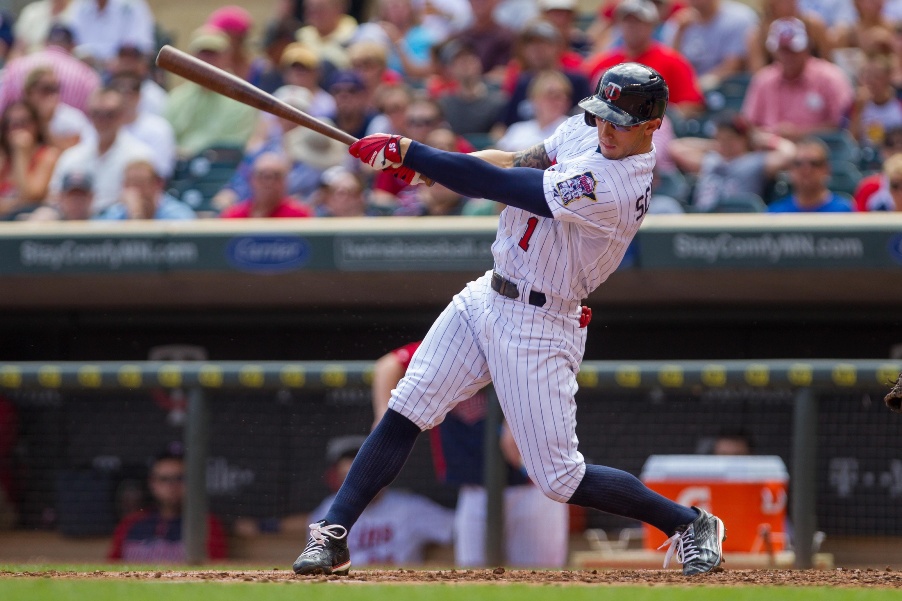 I used Baseball Reference's play index seeking an answer. I wanted a group of outfielders that had a similar number of plate appearances and performances through age 27. A group where Schafer sits somewhere near the middle according to career OPS+ and plate appearances. It turns out pretty rare for an outfielder to be given around 1400 plate appearances at Schafer's level of production. I had to go back to 1987 to find 11 comps. Several of the players listed above have characteristics in speed and ability that allowed them to play all three outfield spots. All had played for multiple teams. Their careers through age 27 were very similar to Schafer. What about after age 27 and their peak values? Brady Anderson! 5 of the 11 had careers with at least 1000 more plate appearances. 2 of the 11 performed better after age 27. I wondered if there was another Brady Anderson if I searched back further. I went back 50 years. We can add Boots Day, Tony Scott, Herm Winningham, Luis Melendez, Rick Bosetti, Marvell Wynne, Hector Cruz and George Wright. Not a Brady Anderson among them. It appears that almost all outfielders by age 28 and 1200+ plate appearances have established their skill level. What do the Twins do with Schafer? Should they tender him a contract and go to arbitration? Do they plan for him to be on the 25 roster next year, or do they look elsewhere?
