



Ted Schwerzler
-
Posts
5,149 -
Joined
-
Last visited
Content Type
Profiles
News
Minnesota Twins Videos
2026 Minnesota Twins Top Prospects Ranking
2022 Minnesota Twins Draft Picks
Minnesota Twins Free Agent & Trade Rumors, Notes, & Tidbits
Guides & Resources
2023 Minnesota Twins Draft Picks
The Minnesota Twins Players Project
2024 Minnesota Twins Draft Picks
2025 Minnesota Twins Draft Pick Tracker
2026 Minnesota Twins Draft Tracker: Picks & Bonuses
Forums
Blogs
Events
Store
Downloads
Gallery
Everything posted by Ted Schwerzler
-
2019 Minnesota Twins Top 15 Prospects- Off The Baggy
Ted Schwerzler posted a blog entry in Off The Baggy
We’re amid the Winter Meetings, and the Minnesota Twins are putting together their active roster for the 2019 Major League Baseball season. Having turned the page on a less than stellar year, an overhaul of the coaching staff puts Rocco Baldelli as the new man in charge. Although the Twins have yet to break through at the top of the AL Central to this point, the hope is that they’re not far off. If that’s going to be a sustainable reality the farm system will need to bear fruit. Last touched mid-way through 2018, my top 15 Twins prospects is due for some updating. If you’d like to see where things stood then, look here. Below you can also find the Top 15 Prospect lists dating back to 2016. Entering the 2019 season, here’s how the list shakes out: 2016 Top 15 Prospects 2017 Top 15 Prospects 2018 Top 15 Prospects 15. Jorge Alcala RHP Minnesota acquired Alcala when dealing Ryan Pressly to the Houston Astros in the middle of the 2018 season. He got in 20 innings with Double-A Chattanooga last season and it didn’t go great. The strikeout numbers were there, which isn’t a surprise for a guy who can threaten triple digits, but command became a larger issue. He’s still working as a starter, but the transition to relief could happen as soon as 2019. He’ll be 23 this season and could be an asset in late inning relief work for the Twins. As a guy who was acquired in exchange for Pressly, dominant relief work would be the situation coming full circle. 14. Luke Raley OF/1B It was Logan Forsythe that was acquired to replace Brian Dozier when Minnesota struck a deal with the Dodgers. Raley was the prospect that looked the most intriguing in the package though. He’s getting old for his level now at 24, but he should start at Triple-A in 2019. Brent Rooker is the prospect that gets the power fanfare, but Raley is looking like he should be in that conversation as well. There’s plenty of swing and miss here and refining the approach at the dish is a must, but he could profile as a fourth outfielder or nice bench bat going forward. 13. Gilberto Celestino OF The other part of the Pressly deal, Celestino is just going to be 20 in 2019. He played in rookie ball for Minnesota last year, but a progression to Cedar Rapids for the year ahead makes sense. Celestino held his own in the New York Pen league while in the Astros system, and driving an OPS back up around .800 would be a very nice development. He’s raw and yet to fill out, but this is a prospect worth monitoring. 12. Jhoan Duran RHP Picked from the Diamondbacks system when the Twins sent Eduardo Escobar to Arizona, Duran has plenty of exciting peripherals. He put up a highlight reel after joining Cedar Rapids, and his strikeout numbers only continued to rise. He’ll likely move up to Double-A at the beginning of 2019 and getting a guy that may have had his minor league breakout last year is an exciting add. 11. Blayne Enlow RHP It was Enlow that was the beneficiary of some shrewd draft strategy by Minnesota in 2017. Despite going in the 3rd round, he was a targeted draft pick and with good reason. He played all of 2018 at Single-A Cedar Rapids despite being just 19, and the numbers were plenty respectable. He did miss some time, but that’s not abnormal for a kid in his first full pro season. He needs to continue developing and the hope would be the strikeout stuff continues to play. Enlow has a shot to be a mid-level or better piece of the rotation. 10. Lewis Thorpe LHP Having returned to the mound in 2017, Thorpe turned in his first full season since 2014. With the injuries and illness behind him, he threw over 100 innings for the first time in his career. Although he’s a lefty, Thorpe isn’t just a soft-tossing contact pitcher. With strong command of his arsenal, he posted nearly 11 strikeouts per nine at both Double and Triple-A last season. Expecting him to be a depth option for the big-league club in 2019 is more than realistic. 9. Wander Javier SS Without a missed season, Javier is probably even higher on this list. Signed out of the Dominican Republic, Javier has been one of the must-see type prospects in the system for a while. He underwent Tommy John surgery and missed all of 2018, but he will be healthy when 2019 kicks off. Javier showed well in his Appy League debut during 2017, and as he fills out, should only become more exciting. 8. Akil Baddoo OF I’ve raved about Baddoo at different times in this space. His body has matured greatly, and he did a great job as a regular for the Kernels in 2018. Although his average wasn’t where it sat during rookie ball, the .770 OPS continues to be reflective of a guy with great plate discipline. He takes a ton of walks and started to show power with the muscle he’s put on. Baddoo is quick enough to stay in centerfield but could profile as a bopper on the corners as well. This is an exciting mix of tools to monitor. 7. LaMonte Wade OF Although lacking some of the power Baddoo may possess, Wade is another guy that can play all three outfield positions and does a great job getting on base. He owns a career .391 OBP in the minors and forces pitchers to work in order to get him out. He probably won’t start 2019 in Minnesota, but he could claim a spot as soon as needed. This is a non-switch-hitting Robbie Grossman with a much better glove. 6. Nick Gordon SS/2B We could’ve been writing a different story here had Gordon’s 2018 continued like it did at Double-A Chattanooga. Through his first 42 games of 2018, the former 1st round pick has a .906 OPS and was on his way to Triple-A. Nothing went right in Rochester, and now both Johnathan Schoop and Ronald Torreyes have been brought into the mix. The goal would be for Gordon to still take over for the Twins up the middle, but that will come after a level of mastery in Rochester is shown. 5. Trevor Larnach OF Picked by the Twins following a College World Series victory in June 2018, Larnach made it to Cedar Rapids in his professional debut season. Positing an .890 OPS split between two levels, Larnach’s bat has always been his calling card. He isn’t a centerfielder, but there’s no reason the glove won’t be good enough for the corners. As with all power guys, a strikeout tendency could be a worry, but Larnach’s 28/21 K/BB in his first 42 games is a great jumping off point. 4. Brent Rooker OF/DH Slow starts can be doom and gloom for some, but Rooker turned it on after stumbling out of the gate. He finished with a .798 OPS at Double-A in 2018 and posted a .900 OPS for a matter of months. He swatted 22 homers and all the comments regarding how much power he possessed were absolutely for real. It sounds like there’s no belief he’ll have the footwork to play first base, so he’s a left fielder or DH at this point. That said, he was drafted as a quick mover and highlighted for his bat. Minnesota could call upon him in 2019 and I’d expect him to be more than ready. 3. Brusdar Graterol RHP Following in the footsteps of Fernando Romero, Graterol is the next Twins fireballing prospect. There is some reason to believe he could end up in the bullpen, but if he harnesses his skills as a starter, he’s a top of the rotation guy. Making it to High-A Fort Myers as a 19-year-old is no small feat, and he had little problem laying waste to hitters quite senior to him. The fastball sits near triple digits, and he’s yet to experience much issue with walks. If there’s a Twins ace of the future, it could be Brusdar. 2. Alex Kirilloff OF Known as a bat first prospect out of high school, it was unfortunate to see Kirilloff miss a year of development due to injury in 2017. You’d be hard pressed to believe action wasn’t seen in a year after the 2018 he had, however. Splitting 130 games equally between Cedar Rapids and Fort Myers, Kirilloff owned a ridiculous .970 OPS. He posted 20 homers and owned a .392 OBP. The Pittsburgh native has all the makeup you’d want, and the tools on the field take it to another level. He’ll enter 2019 as one of the best prospects in the game. 1. Royce Lewis SS Maybe the only thing to slow the Royce Lewis hype train in 2018 was the season Kirilloff had. On his own however, the 2017 1st overall pick looks every bit as good as hoped. On top of being an incredible human being, he should enter 2019 as one of the top three or four prospects in all of baseball. His defensive ability has taken steps forward at shortstop, and his .803 OPS was more than impressive for being his first full year of pro ball. There’s no reason to expect a trip to Pensacola for Double-A won’t be in short order, and a future Twins superstar could emerge from there. For more from Off The Baggy, click here. Follow @tlschwerz- 10 comments
-
- 1
-

-
- minnesota twins
- rocye lewis
- (and 2 more)
-
Entering the offseason Derek Falvey and Thad Levine were tasked with finding infield help. They needed to replace the retired Joe Mauer, and the flipped Brian Dozier. Internal options put pretty much any infield position as an acquirable target, but in the end, second base and first base were the routes traveled. Now with Jonathan Schoop joining C.J. Cron, Minnesota has filled both needs, but there’s plenty to question here. Schoop was acquired by the Brewers during the 2018 season. The intention in Milwaukee was to keep the 2017 All-Star around for the 2019 season. With a year of team control left, his arbitration contract was almost certain to be tendered. Unfortunately for Schoop, he owned just a .577 OPS in 46 games with the Crew and find himself out on the free agent market. After making $8.5 million in 2018, the Twins getting a bounce-back candidate in his age-27 season at a paltry figure of $7.5 million, it’s hard to be disappointed. When viewing Schoop through a vacuum we can see a power hitting middle infielder that’s just a year removed from an .841 slugging percentage. He plays better defense than the Twins have employed at the position in some time, and the market itself wasn’t rich with ideal options. It’s when you look at the fit with the Twins specifically that Schoop becomes a bit more of an odd fit. Gone from the 2018 team are the likes of Dozier, Mauer, and Robbie Grossman. That trio was a mainstay in Paul Molitor’s lineup, and even with the down year from Dozier, the group provided an ability to get on base. Looking at the projected starters for Rocco Baldelli, the best OBP mark over the past two seasons comes from Eddie Rosario (.326). Given that the front office wound up with both Cron (.316 OBP 2017/18) and Schoop (.307 OBP) it’s worth considering that there may be a shift for power as opposed to plate discipline and on-base skills. There’s an argument to be made that slugging percentage can begin tipping the scales away from OBP, but you’d like to have some sort of marriage throughout the lineup. Being too heavy on one side of the spectrum seemingly would lead to a feast or famine type of offensive output. Certainly, a rebounding Miguel Sano (.352 OBP in 2017, .385 OBP in 2015) would help matters. A designated hitter that can marry on-base skills and slugging prowess could also be an avenue of opportunity. At the end of the days, Minnesota got one of the better second basemen on the market. Schoop has plenty more to like than players like Daniel Murphy or Jed Lowrie when considering all factors. At his best though, he’s a downgrade from even 2017 Brian Dozier (who wasn’t and shouldn’t have been considered by Minnesota), and the skillset that the Mississippi native used display in Twins Territory. If this is going to work swimmingly, Schoop needs to make 2018 a mirage and see the rest of the lineup help to hide his deficiency. I’d bet the Twins are done with offensive additions unless a designated hitter falls into their lap, and now it will be up to the ability of the front office to raise the water level of the rotation and bullpen. Cleveland willingly taking steps backwards for 2019 helps this organization, and although the club doesn’t appear to be kicking the door in, beginning to pry it open would be a nice sign of things to come. For more from Off The Baggy, click here. Follow @tlschwerz
- 1 comment
-
- 1
-
-
- minnesota twins
- jonathan schoop
- (and 2 more)
-
Prior to the 2018 season the Minnesota Twins acquired a few free agent relief arms on one-year deals. Needing to shore up the bullpen, and close the widening gap in that area, the goal was to give Paul Molitor a better arsenal. Fast forward to 2019 and relief help is a necessary target once again. While bringing in some sort of top tier talent isn’t something to shy away from, Minnesota has had two very strong revelations play out in relief. Both Trevor Hildenberger and Taylor Rogers have developed nicely from within, but the question is can that be replicated and who’s next?Back in the 2013 Major League Baseball draft the Twins selected Kohl Stewart with the 4th overall pick. After peaking at 28th in the Baseball Prospectus top 100 in 2015, his fall from grace has been both long and hard. Stewart never possessed good strikeout stuff on the farm, but from his ERA darted the wrong way each of the past two seasons. Even with those concerns, he was the first prospect called upon down the stretch by the Twins and he turned in 36.2 IP during his big-league debut. Employing the opener strategy, Minnesota subjected Stewart to just four traditional starts. His other experience came in the form of piggybacking off an initial reliver. What’s interesting about the output though, is that Stewart benefitted by avoiding the first inning. Working as a traditional starter, Kohl posted a 6.61 ERA across 16.1 IP while never making it out of the 5th inning. In the next four games with an opener, he lasted at least five innings three times and owned a 1.33 ERA with a .424 OPS against. Regardless of the situational improvement, Stewart’s strikeout stuff didn’t change much. While going good he still tallied just a 13/9 K/BB. The .185 BABIP was reflective of a guy that generated ground balls over 55% of the time when he was on his game. A guy like Stewart has significant value if he can keep the ball in the yard and generate easy outs. By being stingy in surrendering line drives, batters were rarely able to exploit a pitcher that wasn’t setting them down. It’s not as though Stewart saw a significant jump in velocity when working in relief, after all the intention was to still have him pitch significant innings. What he did change in his latter outings was the reliance on his curveball. After utilizing his bender just 8% of the time in his four starts, he went to it nearly 14% of the time after the opener. A heavy fastball and curveball mix helped to keep opposing hitters on their toes. Recently turning 24 years-old, there’s probably no reason to completely shut the door on Stewart continuing to work as a starter. He’ll likely begin the year at Triple-A serving as depth for the big-league club. That said, Fernando Romero remains ahead of him, and both Stephen Gonsalves and Adalberto Mejia make more sense in the rotation than the pen. With Stewart stretched out some, working him into somewhat of a long man role could be an enticing possibility. It took longer than desired by fans (and likely Kohl himself) for the former first rounder to reach the big leagues. Now that he’s made his debut and we’ve gotten a taste of what it may look like, there could be a role in which he thrives to an even greater extent. As the roster evolves players are always going to look for their best opportunity to contribute. For Kohl, a relief role could unlock a heightened level of effectiveness and help the Twins to build on an area of deficiency in the process. Click here to view the article
-
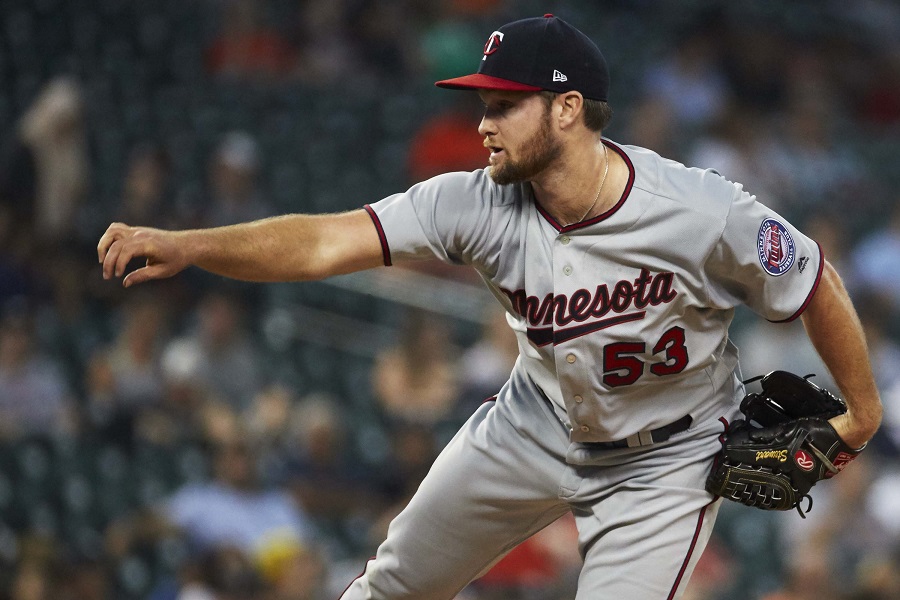 Back in the 2013 Major League Baseball draft the Twins selected Kohl Stewart with the 4th overall pick. After peaking at 28th in the Baseball Prospectus top 100 in 2015, his fall from grace has been both long and hard. Stewart never possessed good strikeout stuff on the farm, but from his ERA darted the wrong way each of the past two seasons. Even with those concerns, he was the first prospect called upon down the stretch by the Twins and he turned in 36.2 IP during his big-league debut. Employing the opener strategy, Minnesota subjected Stewart to just four traditional starts. His other experience came in the form of piggybacking off an initial reliver. What’s interesting about the output though, is that Stewart benefitted by avoiding the first inning. Working as a traditional starter, Kohl posted a 6.61 ERA across 16.1 IP while never making it out of the 5th inning. In the next four games with an opener, he lasted at least five innings three times and owned a 1.33 ERA with a .424 OPS against. Regardless of the situational improvement, Stewart’s strikeout stuff didn’t change much. While going good he still tallied just a 13/9 K/BB. The .185 BABIP was reflective of a guy that generated ground balls over 55% of the time when he was on his game. A guy like Stewart has significant value if he can keep the ball in the yard and generate easy outs. By being stingy in surrendering line drives, batters were rarely able to exploit a pitcher that wasn’t setting them down. It’s not as though Stewart saw a significant jump in velocity when working in relief, after all the intention was to still have him pitch significant innings. What he did change in his latter outings was the reliance on his curveball. After utilizing his bender just 8% of the time in his four starts, he went to it nearly 14% of the time after the opener. A heavy fastball and curveball mix helped to keep opposing hitters on their toes. Recently turning 24 years-old, there’s probably no reason to completely shut the door on Stewart continuing to work as a starter. He’ll likely begin the year at Triple-A serving as depth for the big-league club. That said, Fernando Romero remains ahead of him, and both Stephen Gonsalves and Adalberto Mejia make more sense in the rotation than the pen. With Stewart stretched out some, working him into somewhat of a long man role could be an enticing possibility. It took longer than desired by fans (and likely Kohl himself) for the former first rounder to reach the big leagues. Now that he’s made his debut and we’ve gotten a taste of what it may look like, there could be a role in which he thrives to an even greater extent. As the roster evolves players are always going to look for their best opportunity to contribute. For Kohl, a relief role could unlock a heightened level of effectiveness and help the Twins to build on an area of deficiency in the process.
 -
Tyler Austin Just Visiting Minnesota?
Ted Schwerzler commented on Ted Schwerzler 's blog entry in Off The Baggy
Plenty sick of this narrative. The LoMo signing, and even Lance Lynn, were solid baseball moves. Neither were big money and both were one year deals. Sure neither worked out for different reasons, but that doesn’t mean either of them were bad deals at the time. -
Tyler Austin Just Visiting Minnesota?
Ted Schwerzler commented on Ted Schwerzler 's blog entry in Off The Baggy
There's no denying the Twins need more OBP throughout the lineup. Also, Sano has to go back to walking 15% of the time as opposed to 10% -
In one of their first moves this offseason, the Minnesota Twins plucked C.J. Cron off waivers after he was jettisoned by the Tampa Bay Rays. Following a 30-home run breakout campaign and having established relationships with the likes of Rocco Baldelli and Josh Kalk, the slugging first basemen seems like a decent gamble. What’s worth wondering though is whether Cron slots in as Joe Mauer’s replacement, or just another body on the 25 man. No matter what his role, the Twins do have Tyler Austin to worry about, and what’s next could be described as some uncertainty. The Twins acquired Austin and pitching prospect Luis Rijo in exchange for Lance Lynn at the 2018 trade deadline. After seeing little playing time with the Yankees over the past three seasons, Austin got in consistent run with Minnesota down the stretch. From August through the end of the season, he played in 35 games for Paul Molitor’s club. His .782 OPS was a career best, and the nine longballs were also reflective of his power stroke. Now recently turned 27 years-old Austin looked to be in line for an expanded role with the Twins, but that may not be guaranteed. Projecting the possible roster openings, we can guarantee that nine players fill out the lineup with another five in the starting rotation. A 13 man pitching staff has been customary for the organization of late, so an eight-man bullpen also seems probable. In that scenario there’s just three bench spots up for grabs, likely taken up by backup catcher Mitch Garver, utility man Ehire Adrianza, and fourth outfielder Jake Cave. At this point we’ve yet to consider Austin’s place meaning he’d need to start at either first base or designated hitter. Although the Twins aren’t locked into Cron to start the season, a $4.8 million deal tendered to the former Ray suggests he’s in their plans. Whether that means he starts at first base or takes the bulk of the designated hitter reps remains to be seen. It would be my hope, and a logical expectation, that Minnesota is not yet done adding bats. Obviously, Jorge Polanco needs an up the middle partner, but a higher ceiling fit for first or DH still has plenty of promise. The duo of Cron and Austin would be passable, but the front office would also be plenty open for criticism if such a low reward avenue was embarked upon. Next week the Winter Meetings commence in Las Vegas and we’re almost certainly (err, hopefully) going to see the free agent market pick up. Minnesota may let some of the chips fall first, but they’ll need to fill the necessary holes (middle infield, bullpen) at some point. Another bat entering the picture would only further signify what could be a suboptimal development for the one-time Yankees prospect. For a guy like Austin these situations are never ideal. We saw him produce at a higher level down the stretch when given consistent playing time. He’s out of options however and could be up against a numbers crunch in a position Minnesota stands to benefit from improvement. A Cron and Austin tandem in the lineup would signify somewhat of a disappointing effort to acquire talent, but an improvement could make the stay in Twins Territory a quick one for Tyler. For more from Off The Baggy, click here. Follow @tlschwerz
-
Spending is Coming, Right?
Ted Schwerzler commented on Ted Schwerzler 's blog entry in Off The Baggy
I agree with you. The Twins got to a point where they should be payroll wise last season, and now entering a competitive window, it should hover or rise. I do know Pat is plugged in somewhat though, so if this has any merit, it's an egregious misstep. I tend to agree on Rosario, though this may be your last window to get a team friendly deal on either Sano or Buxton. -
Going into the offseason the Minnesota Twins had more free cash flow than any point in recent memory. Multiple free agents inked to one-year deals are gone, Joe Mauer’s mega contract ended (as well as his big-league career), and the front office is left with something like a $60 million gap between current dollars and the 2018 Opening Day mark. From this we should be able to deduce a windfall of dollars being spent right? Maybe not. On Friday local columnist Patrick Reusse was a guest on the Mackey and Judd show at 1500 ESPN. The discussion turned to the Twins and he noted hearing that the hometown nine are aiming for a payroll below $100 million to start 2019. This would be a $25 million step backwards from 2018, and with the considerable gaps to fill, a barrel scraping blueprint in order to fill out the active roster. You can bet that Reusse is more plugged in than this lowly blogger, and he’s forgotten more baseball contacts than I’ve ever made. There are some reasons to pump the brakes, however. First and foremost, C.J. Cron’s addition to the organization suggests a willingness to commit some uncertain dollars. Robbie Grossman was always headed towards a non-tender with a $4MM-plus price tag, and an inability to do much of anything outside of getting on base. That type of player is extremely replaceable, but the safe assumption would’ve been to do so at a lower valuation. Minnesota tendered Cron a deal at $4.8 million, and that’s plenty trusting for a guy coming off a career year and 30 home run production out of nowhere. Looking at the current structure of the roster, there’s no denying that the Twins need at least one middle infielder, no less than two relievers, potentially a starting pitcher, and maybe another bat. By those assumptions, you’re looking at no less than four more additions to this squad. While acquisitions can come through the trade market (which would still carry obvious contract obligations), four players averaging $10 million pacts over any period seems like a tough ask. Staying below the $100 million threshold from a numerical standpoint would take a concerted effort. Ok, so now that we’ve outline this reality being a difficult ask, it’s time to question why this would be a reasonable decision. As the Cleveland Indians continue to take steps backwards this offseason, it’s becoming more apparent that opportunity is beginning to present itself for the Twins in 2019 and beyond. While there’s reason to wait for a full explosion with Royce Lewis and Alex Kirilloff in 2020, prospects are unpredictable and getting the most from both Byron Buxton and Miguel Sano should remain the chief concern. No matter what waiting game is played, marrying upcoming talent with producers currently in the fold is an absolute must. Should the front office decide to sit out of the market this winter, the largest counter argument would be an effort to lock down arbitration eligible talent to long term deals. Getting commitments out of Sano, Buxton, Jose Berrios, Eddie Rosario, and Max Kepler then all becomes a “must do” type of strategy. If you aren’t willing to spend money on the open market, but also aren’t paying for the control of your own internal talent, you’re visibly announcing a lack of care to improve or compete. That’s really where we find ourselves should this scenario play out. For far too long, there’s been griping about the Twins payroll. Looking back over the recent landscape however, you’ve got plenty of losing seasons and even less controllable talent. Spending big dollars on one player here or there would have never advanced the envelope enough for Minnesota to make any real mark. We are no longer in that period. Top prospects have graduated, the division presents opportunity, and money is plentiful for the proper allocation. Should the Twins fail to be in the same tier of payroll when 2019 kicks off, the front office, organization, and all involved are deserving of the lashing they’ll take. We haven’t yet reached a point of concern given the lack of market movement thus far. The hopes would be that the Winter Meetings would blast the stove to hot, and we wouldn’t see players grasping at last minute deals well into spring training. Should Derek Falvey and Thad Levine welcome the Cleveland Indians to Target Field on March 28th with a payroll less than $110 million though, forget the cold and just burn it all down. For more from Off The Baggy, click here. Follow @tlschwerz
- 9 comments
-
- 2
-
-
- minnesota twins
- derek falvey
- (and 2 more)
-
Coming off a 78-win season, the Minnesota Twins have plenty of room for improvement. Given what all went wrong however, that total in the win column is about as ideal as it could have gotten. This team was a postseason participant just two years ago, and things had only begun to trend up for them. Blueprinting this offseason, and executing during the calendar, the front office has some real direction decisions to make.Here's what we know about the rest of the division at this point: The Kansas City Royals are bad and have a farm system that will have them getting even worse. The Detroit Tigers are old, and without direction. Chicago has done the most to rebuild their system, and there’re some potential superstars in the making. At this point, however, no White Sox prospects are ready to turn the tide for the team. That leaves Minnesota and Cleveland to fend for the division the next two seasons. Or does it? Plenty of reports this summer have come out regarding a new direction for Cleveland. Despite the postseason success, that team draws worse than a hapless high school badminton club. The Indians are looking to move assets, and the talk is of names in their starting rotation. Michael Brantley is gone from the outfield, and Lonnie Chisenhall has moved on as well. Unless there’s a dramatic shift in the replacements, a substantial step backward for the least talented division winner is coming. Now, how do Derek Falvey and Thad Levine choose to go about inserting themselves into this scenario? At this point, a white flag from Cleveland all but vaults Minnesota to the top spot on its own. Obviously getting more from Byron Buxton and Miguel Sano is a must, but there’re plenty of wins to be had within the division even before the top dog starts taking its lumps. A year ago, the front office brought in multiple guys on one-year deals, and a year from now the Twins will be supplemented by a duo of high-ranking prospects. Marrying everything together in 2019 will help to give a clearer indication of direction going forward. I’ll forever be of the mindset that there’s no such thing as a bad one-year deal. Josh Donaldson to the Braves looks like a steal, even if he isn’t fully healthy. It’s too bad Minnesota couldn’t swing that contract, but there were plenty of location factors in Atlanta’s favor that likely trumped the competition as well. When looking back at the likes of Lance Lynn, Logan Morrison, Zach Duke and Fernando Rodney last season, the duo at the top needs to figure out the reasons why the plan went poorly, and how the clubhouse suffered because of it. Last winter we saw a free agent market that was slow moving, and the Twins (like other teams) made the most of capitalizing on the down dollars. Lynn and Morrison were acquired well into spring training, and that could’ve rubbed both players the wrong way. Entering a new situation feeling scorned and with something to prove, the focus could’ve been on the next payday from the get-go. We’ll never know what the components of a perfectly negative storm was, but we can certainly assume that the level of buy-in by the players wasn’t the same as with a traditional pact. When looking to bring in reinforcements this next season, I imagine Minnesota will be looking to pair talent with future assets in the form of multi-year deals. If there’s belief these unnamed acquisitions can help in 2019, Royce Lewis and Alex Kirilloff should benefit from a richer roster as well. Of course, we’ve seen a slow trend toward fewer years and higher AAV begin to show its face, so the right pacts will need to be struck. Internally the Twins must hope the current infrastructure is set up to support whatever 2019 talent there is. Not unlike 2017 with Brian Dozier, Kyle Gibson is staring at the final year of team control. Without an extension in the last arbitration year he’d be set to become a free agent when the snow flies, just like Dozier. Gibson has proven to be a very team-oriented individual, and he’s done well to assume more of a leadership role as his career has matured. There’s room to wonder if he’d be as bought in, or feel scorned, if he’s left with future uncertainty going into this coming spring, however. There’s a lot to unpack here as we’re dealing with more than just new talent being brought in. Falvey and Levine need to decide to what level they’d like to supplement, and how it will all come together. The AL Central is playing toward Minnesota’s favor regardless, but determining if that is enough or if the organization would like to take the bull by the horns has yet to be seen. If I had my way, 2019 would be the launching point for 2020 and beyond. Rocco Baldelli has some solid influencers within the clubhouse and on his staff. Finding high-end talent to make two- or three-year commitments would be priority number one. Adding in a one-year deal to bolster a specific area of production would be a welcomed revelation, and the message would be that this thing is ours to lose. Minnesota can win the division in the year before Lewis, Kirilloff, and the next wave arrive, and have those holdovers there in 2020 to show the kids how it’s done. You could make a pretty decent bet that the World Series winner in 2019 isn’t coming from the AL Central, but the Twins doing more than limping into the postseason sets them up nicely for future success. Putting together a core that supports its manager, meshes in the clubhouse, and invites the next group of can’t- miss prospects puts Minnesota in a position to grip the top of the division for years to come. Click here to view the article
-
 Here's what we know about the rest of the division at this point: The Kansas City Royals are bad and have a farm system that will have them getting even worse. The Detroit Tigers are old, and without direction. Chicago has done the most to rebuild their system, and there’re some potential superstars in the making. At this point, however, no White Sox prospects are ready to turn the tide for the team. That leaves Minnesota and Cleveland to fend for the division the next two seasons. Or does it? Plenty of reports this summer have come out regarding a new direction for Cleveland. Despite the postseason success, that team draws worse than a hapless high school badminton club. The Indians are looking to move assets, and the talk is of names in their starting rotation. Michael Brantley is gone from the outfield, and Lonnie Chisenhall has moved on as well. Unless there’s a dramatic shift in the replacements, a substantial step backward for the least talented division winner is coming. Now, how do Derek Falvey and Thad Levine choose to go about inserting themselves into this scenario? At this point, a white flag from Cleveland all but vaults Minnesota to the top spot on its own. Obviously getting more from Byron Buxton and Miguel Sano is a must, but there’re plenty of wins to be had within the division even before the top dog starts taking its lumps. A year ago, the front office brought in multiple guys on one-year deals, and a year from now the Twins will be supplemented by a duo of high-ranking prospects. Marrying everything together in 2019 will help to give a clearer indication of direction going forward. I’ll forever be of the mindset that there’s no such thing as a bad one-year deal. Josh Donaldson to the Braves looks like a steal, even if he isn’t fully healthy. It’s too bad Minnesota couldn’t swing that contract, but there were plenty of location factors in Atlanta’s favor that likely trumped the competition as well. When looking back at the likes of Lance Lynn, Logan Morrison, Zach Duke and Fernando Rodney last season, the duo at the top needs to figure out the reasons why the plan went poorly, and how the clubhouse suffered because of it. Last winter we saw a free agent market that was slow moving, and the Twins (like other teams) made the most of capitalizing on the down dollars. Lynn and Morrison were acquired well into spring training, and that could’ve rubbed both players the wrong way. Entering a new situation feeling scorned and with something to prove, the focus could’ve been on the next payday from the get-go. We’ll never know what the components of a perfectly negative storm was, but we can certainly assume that the level of buy-in by the players wasn’t the same as with a traditional pact. When looking to bring in reinforcements this next season, I imagine Minnesota will be looking to pair talent with future assets in the form of multi-year deals. If there’s belief these unnamed acquisitions can help in 2019, Royce Lewis and Alex Kirilloff should benefit from a richer roster as well. Of course, we’ve seen a slow trend toward fewer years and higher AAV begin to show its face, so the right pacts will need to be struck. Internally the Twins must hope the current infrastructure is set up to support whatever 2019 talent there is. Not unlike 2017 with Brian Dozier, Kyle Gibson is staring at the final year of team control. Without an extension in the last arbitration year he’d be set to become a free agent when the snow flies, just like Dozier. Gibson has proven to be a very team-oriented individual, and he’s done well to assume more of a leadership role as his career has matured. There’s room to wonder if he’d be as bought in, or feel scorned, if he’s left with future uncertainty going into this coming spring, however. There’s a lot to unpack here as we’re dealing with more than just new talent being brought in. Falvey and Levine need to decide to what level they’d like to supplement, and how it will all come together. The AL Central is playing toward Minnesota’s favor regardless, but determining if that is enough or if the organization would like to take the bull by the horns has yet to be seen. If I had my way, 2019 would be the launching point for 2020 and beyond. Rocco Baldelli has some solid influencers within the clubhouse and on his staff. Finding high-end talent to make two- or three-year commitments would be priority number one. Adding in a one-year deal to bolster a specific area of production would be a welcomed revelation, and the message would be that this thing is ours to lose. Minnesota can win the division in the year before Lewis, Kirilloff, and the next wave arrive, and have those holdovers there in 2020 to show the kids how it’s done. You could make a pretty decent bet that the World Series winner in 2019 isn’t coming from the AL Central, but the Twins doing more than limping into the postseason sets them up nicely for future success. Putting together a core that supports its manager, meshes in the clubhouse, and invites the next group of can’t- miss prospects puts Minnesota in a position to grip the top of the division for years to come.
 -
By Friday the Minnesota Twins will need to decide if they are going to tender contracts to all their arbitration eligible players. The names include guys like Kyle Gibson, Eddie Rosario, and Miguel Sano. Among the ten possibilities, nine of them are near-certainties. If there’s a guy with an uncertain future however, it’s none other than Robbie Grossman. Grossman came to the Twins in 2016, under the Terry Ryan regime, after opting out of a minor league deal with the Cleveland Indians. His career had sputtered with the Houston Astros and never really got off the ground. That 2016 Twins team was a bad one (103 losses), and Grossman was brought in for depth purposes. The day after his acquisition, Eddie Rosario was demoted to Triple-A and Grossman made his Minnesota debut on May 20. Robbie’s first season with the Twins was a coming out party. Despite being on a team playing terrible baseball his offensive production was a bright spot. At 26 years-old he’d eclipsed prospect status, but posting an .828 OPS doesn’t get glanced over, and he was every bit the on-base machine expected of him. Now looking back on his production, the narrative hasn’t changed much. In 347 games with the Twins Grossman owns a .711 OPS buoyed by a .371 OBP. Offensively, he’s a guy that has a little pop, takes strong at bats, and gives opportunity to the hitters surrounding him in the lineup. Unfortunately, the offensive prowess is where things end for Grossman. As good as he was in 2016 at the plate, the defensive output was enough to make either Delmon Young or Josh Willingham blush. Being worth -21 DRS with a -13.8 UZR in just 637 innings is nothing short of an abomination. Spending his time patrolling left field for Paul Molitor’s club, there’s no arguing that his abilities in the outfield aided heavily into such a terrible year. Being used more sparingly in 2017, and then making improvements in 2018, Grossman does deserve somewhat of a pass on such an outlier of a year during his debut in Twins Territory. The reality however is that Robbie isn’t someone this Twins squad wants in the outfield, and it’s arguable as to whether any big-league club would see that as an ideal fit. Without a real defensive position, that’s where things get a bit dicey. MLB Trade Rumors projects Grossman’s arbitration value at $4MM. That number isn’t a significant amount in the landscape of salaries today, but it’s also one that makes him more than expendable. Serving primarily as a designated hitter or bench bat, there’s likely better out there equal to or lower than that valuation. The Tampa Bay Rays just DFA’d C.J. Cron coming off a 30 HR season and an .816 OPS. Both players made similar figures in 2018, and Cron is a capable defender. Knowing that the Twins are looking to upgrade their corner infield spots, have depth in the outfield (and recently acquired another OBP guy in Michael Reed), and have some desire to bring in thump to the designated hitter role, there’s plenty of factors working against Grossman. If this is the end, and it’s trending that way, it’s hard to look back at the tenure and not be happy for both sides. Grossman jumpstarted a career that failed to launch, while the Twins got a bat for the lineup that proved more serviceable than anyone could’ve imagine. At some point we all become expendable as the scales tip in favor of opportunity cost. Grossman will find work and the Twins will fill his role. Going forward, there’s just not the same ideal fit. For more from Off The Baggy, click here. Follow @tlschwerz
-
Recently there were two rather significant developments regarding the 2019 Minnesota Twins roster construction. With the deadline to add Rule 5 Draft eligible players to the 40-man roster now in the rearview mirror, we know how the organization handled the situation. Also, in the early stages of free agency, Jon Morosi reported that the Twins have had discussions with the Arizona Diamondbacks about dealing for Paul Goldschmidt. Both of those scenarios could be hints at what’s next from the front office. Concerning the 40-man roster and Rule 5 decisions, the Twins added Nick Gordon, LaMonte Wade, and Luis Arraez to the fold. The first two were givens while Arraez makes a ton of sense as a great contact and average hitter for a team currently lacking talent up the middle. Still having two open spots on the 40 man, the front office decided to trade reliever Nick Anderson instead of keeping him around. Jake Reed, who was deserving of a September call up, will again be exposed to the Rule 5 draft, and former 1st round pick Tyler Jay was left out in the cold as well. Given the openings on the roster there would have been no downside for Minnesota to add the likes of Reed and Jay, even if more moves necessitated their removal in the coming months. Bullpen help has been assumed to be a key area of focus this offseason, and the internal options being passed over could be somewhat of a hint. The reality is that the Twins certainly could benefit from some top tier relief help. The starting rotation is in a much better place than any time in recent memory, but it’s still void of a true ace. The depth is there but expecting the group to compete with the best in baseball is probably a bit far-fetched. Add in the reality that the game has shifted to being reliever dominated, and Rocco Baldelli would certainly benefit from some elite arms out in the pen. By deciding to forego adding internal options that would have signified depth, we may be able to assume that the intention is to truly aim high in relief. If the front office was going to target more middle-of-the-road relievers, having players like Reed, Anderson, or even Jay to slot in should things go south seems like a solid backup plan. If Derek Falvey and Thad Levine are shooting for the stars though, there should be a reasonable expectation that a backup plan becomes much less necessary. Working from a place of familiarity the Twins and Diamondbacks were trade partners just last season when Eduardo Escobar was shipped out. Goldschmidt is the premiere first basemen available at this point, and even in the final year of his deal, would be an exciting option to replace Joe Mauer. The free agent market at the position is beyond underwhelming, and exploring a trade there sends a few signals. Minnesota is clearly starting at the top by inquiring on Goldschmidt, and they’re also obviously exploring the trade market. Carlos Santana remains an ideal fit a rung down and comes with a bit more longevity provided to the club. What we can glean is that all options are being explored, and that the immediate sense points to Miguel Sano staying at third base. Both discussed situations above help to provide some clarity with regards to how Minnesota may be viewing the 2019 season. Goldschmidt fits oddly as he’s on a one-year deal, but maybe the intention is to go for it and reload. While Royce Lewis, Alex Kirilloff, and the next wave of big prospects don’t seem to factor in before 2020, there’s plenty of talent here to make a run in the year ahead. With the Cleveland Indians clearly approaching the end of their run, Minnesota is positioned to be next in line for consistency within the division. The infrastructure has been put in place by the front office and executing on the personnel would be the next logical step. There’s a ton of money to be spent this offseason, and there will be more to go around in 2020 and beyond. Putting the pedal down now could have the Twins looking like the 2018 Milwaukee Brewers, and that’s a team who made significant noise in the Postseason. For more from Off The Baggy, click here. Follow @tlschwerz
-
Last summer during a late season Minnesota Twins game Thad Levine sat on stage with Aaron Gleeman during the now annual Baseball Prospectus event at Target Field. There was a myriad of topics discussed but on point stood out to me. The general manager quipped that while Minnesota may not be able to outspend the competition in the form of player acquisition, they were committed to adding talent and spending dollars in other facets of the organization. Fast forward to today, and we’re beginning to see that all take shape. Recently announced skipper Rocco Baldelli certainly is a step outside of the typical candidate pool. He’s just 37 years-old and has no previous managerial experience. While that is something that would’ve been unheard of years ago, it’s a decision that has become more common recently. Alex Cora just won a World Series with the Boston Red Sox in his debut season, and Aaron Boone faired well with the Yankees out of the same division. It’s not just the managerial role that the Twins have committed to a different structure though, and it’s felt throughout the organization. Behind the scenes Minnesota has beefed up its analytics department, adding bodies in the front office that should be expected to push the needle. Formerly of Baseball Reference, Hans Van Slooten was brought into the fold prior to the 2018 season. A glance through his timeline will highlight the multiple intern, baseball operations, and baseball research positions the organization has committed to. It’s not just off the field talent though, and that has really played out as Baldelli’s staff has been named. After working with the Twins as an Advance Scout, Jeremy Hefner has been added to the field staff for 2019. He’s just 32 years-old and was pitching professionally as recently as 2017. Despite a lack of coaching experience, he has been named the Assistant Pitching Coach. The man he’ll be working next to is green in the big leagues as well. Wes Johnson was plucked from Arkansas after a successful stint with Mississippi State. He’s well regarded as a forward thinker using TrackMan and Rapsodo technologies, as well as being billed a velocity savant. On the diamond during play, Tony Diaz joins the Twins organization at the age of 41 after holding a base coaching position with the Colorado Rockies last season. Tommy Watkins is just 38 and joins the field staff after serving as a minor league manager and drawing rave reviews from all those he interacted with. Bringing both diversity as well as youth to the highest level of Twins baseball, there’s a very visible shift in dynamics taking place here. It was assumed that Paul Molitor would’ve been on his way out following the 2017 season had he not won Manager of the Year. Not handpicked by the front office, the collective obviously had plans of how they wanted things run and see those interacting with players as an avenue to get more production in the box score. Looking at how this new staff has been filled out, it’s plenty apparent to see that Molitor (by no fault of his own) wasn’t anywhere close to the ideal profile. From a top down view, and before the games begin to matter, it’s plenty fair to suggest that this whole blueprint has a very real chance to go up completely in flames. With so many coaches lacking experience at this level, and youth being a very common thread among them, it will be necessary to overcome hurdles in the process. However, the Twins are very clearly going out on a limb in the vein of innovation. If their competitive advantage isn’t going to come through outspending, looking to exploit market inefficiencies is a very astute way to go about gaining ground. We will still need to see if everything comes together and this formula ends up being worthwhile. That said, innovation doesn’t happen for those unwilling to take the first step, and the Twins front office has committed to a process that bucks the trend of retreads being selected as new hires first. Investing in the opportunity to pioneer a new process, and hopefully benefit both the 25-man active roster as well as the organization, the Twins could certainly be venturing down a path that helps to ever-so-slightly tip the scales in their favor. There’ll come a point in which we can look back and judge how it all worked out, but that remains at least a couple of years in the future right now. Reasoning and process alone make this plan appealing, and there’s little reason to cast aside the hope that it works. For more from Off The Baggy, click here. Follow @tlschwerz
- 4 comments
-
- 2
-
-
- minnesota twins
- derek falvey
- (and 3 more)
-
With the offseason upon us, the Hot Stove will eventually heat up and free agents will begin to select their teams for the 2019 Major League Baseball season and beyond. The Minnesota Twins have some of the most available money across both leagues, and they also have some relatively glaring holes. Needs up the middle, on the corners, and in the bullpen are of the utmost importance. Plugging just anyone into the mix isn’t logical and there’s an offensive profile that is desperately needed.Since Joe Mauer has decided to hang up his cleats and the organization could choose to move on from Robbie Grossman, the starting lineup is lacking some on-base prowess. On top of that reality, a feared slugger to anchor the middle of the order is essential for Rocco Baldelli’s group. Checking off both of those boxes in the form of one player would be the most optimal way to go about it, and that leads me to believe in the following necessity: A successful offseason for the organization almost must include the acquisition of Josh Donaldson, Nelson Cruz, Carlos Santana, or Daniel Murphy. The names above are not all created equal, and there’re warts that come with each of them. However, given the mix of power and on-base skills, along with the plausible acquisition costs, each profile seems like too good of a match to pass up. Suggesting that any of the four-some are true superstars may be a stretch, but in terms of incoming talent to a Minnesota squad, they all present the opportunity to grab both an impact name and impact ability. Diving into them individually, here’s how they break down and rank for me: Josh Donaldson At 33 Donaldson is arguably the most complete mix of perfection in this group. He’d push Miguel Sano over to first base, but the infield would be better because of it. Obviously, there’s significant injury concern here, as he hasn’t played more than 115 games either of the past two seasons. If the bill of health is good though, he was a model of consistency from 2013-2016. A career .367 OBP guy with a .507 SLG, Donaldson would be a surefire superstar in the heart of the Twins lineup. He’s mashed at Target Field (albeit off Twins pitching) and would certainly elevate the overall ability of the starting nine. A high AAV on a one-year deal, or something a bit more conservative on a three-year deal needs to be something Minnesota jumps at. Nelson Cruz Despite being the elder statesmen of this group, Cruz is appealing as he’s aged incredibly well. He’s going to be 38 this upcoming season, and even in his “down year” last season, an .850 OPS was still posted. The Twins would need to be certain that it’s not the beginning of the end, but a guy who posted a .925 OPS with 126 HR’s from 2015-2017 is someone to take a serious look at. With a career .342 OBP, Cruz has surpassed that mark each of the past four years, and he’s still a perennial All-Star. This is not a guy who can do anything but DH for you, but that’s a need for Minnesota and his presence should be welcomed on a one or two-year pact. Carlos Santana If it’s not Donaldson to shore up some of the infield situation then Santana makes an incredible amount of sense. The only caveat here is that he’s a trade target, but the choice can be made to include lesser prospects and pay more, or increase the return and have the Phillies kick in. Philadelphia is a motivated seller in this case, and the Falvey connection is certainly there. The catcher-turned-first-basemen still posted a .352 OBP during his first sub-.800 OPS season since 2015 last year. He provides a strong bat from both sides of the plate (being even better as a lefty) and plays average defense as well. Taking on the finals two years of his current deal (and the 2021 option) would be a nice fit for Minnesota. Daniel Murphy Of this group it’s Murphy who really profiles the most difficult to fit. He’s a second basemen by trade but is terrible or worse in the field. He’s never played much more than a fill-in role at first but would likely be much better suited there. In 2019 Murphy will be 34 and looking for what should be his last payday. You can expect him to provide a high .700 OPS, but the .900-plus marks in two full seasons with Washington may be wishful thinking. Murphy is a high average, high on-base guy, with more gap power than anything. He’ll launch about 20 long balls a year, but it’s the doubles that will really come in bunches. Coming off injury last season he got into just 91 games, and that could help to suppress his price some in this market. I’d prefer not to see him play up the middle with Jorge Polanco, but inking him to a three-year deal isn’t a bad idea either. When the dust settles on this offseason, I think it’s a pretty fair expectation to assume the Twins will have at least two new infielders (2B/SS and 1B/3B), as well as at least one new reliever. Adding in a top-three starter would be a bonus, and a designated hitter could be addressed as well. Given what’s out there however, none of the necessary additions can simply be band-aids. Whether or not the front-office goes for it in 2019 or beginning in 2020 doesn’t much matter. This club needs an impact bat in the worst way and skimping on that should draw ire from the fan base. Buckle up as things are about to get interesting. Click here to view the article
-
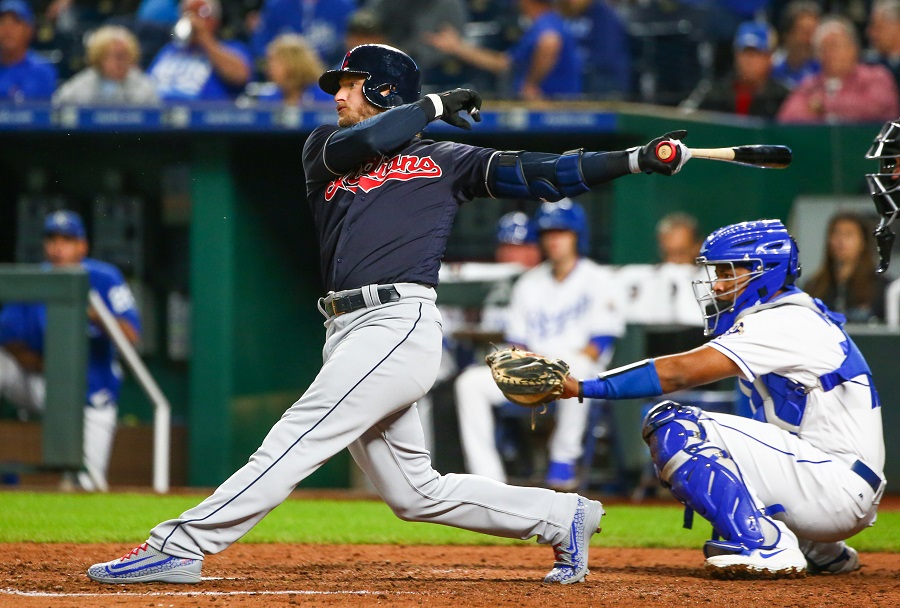 Since Joe Mauer has decided to hang up his cleats and the organization could choose to move on from Robbie Grossman, the starting lineup is lacking some on-base prowess. On top of that reality, a feared slugger to anchor the middle of the order is essential for Rocco Baldelli’s group. Checking off both of those boxes in the form of one player would be the most optimal way to go about it, and that leads me to believe in the following necessity: A successful offseason for the organization almost must include the acquisition of Josh Donaldson, Nelson Cruz, Carlos Santana, or Daniel Murphy. The names above are not all created equal, and there’re warts that come with each of them. However, given the mix of power and on-base skills, along with the plausible acquisition costs, each profile seems like too good of a match to pass up. Suggesting that any of the four-some are true superstars may be a stretch, but in terms of incoming talent to a Minnesota squad, they all present the opportunity to grab both an impact name and impact ability. Diving into them individually, here’s how they break down and rank for me: Josh Donaldson At 33 Donaldson is arguably the most complete mix of perfection in this group. He’d push Miguel Sano over to first base, but the infield would be better because of it. Obviously, there’s significant injury concern here, as he hasn’t played more than 115 games either of the past two seasons. If the bill of health is good though, he was a model of consistency from 2013-2016. A career .367 OBP guy with a .507 SLG, Donaldson would be a surefire superstar in the heart of the Twins lineup. He’s mashed at Target Field (albeit off Twins pitching) and would certainly elevate the overall ability of the starting nine. A high AAV on a one-year deal, or something a bit more conservative on a three-year deal needs to be something Minnesota jumps at. Nelson Cruz Despite being the elder statesmen of this group, Cruz is appealing as he’s aged incredibly well. He’s going to be 38 this upcoming season, and even in his “down year” last season, an .850 OPS was still posted. The Twins would need to be certain that it’s not the beginning of the end, but a guy who posted a .925 OPS with 126 HR’s from 2015-2017 is someone to take a serious look at. With a career .342 OBP, Cruz has surpassed that mark each of the past four years, and he’s still a perennial All-Star. This is not a guy who can do anything but DH for you, but that’s a need for Minnesota and his presence should be welcomed on a one or two-year pact. Carlos Santana If it’s not Donaldson to shore up some of the infield situation then Santana makes an incredible amount of sense. The only caveat here is that he’s a trade target, but the choice can be made to include lesser prospects and pay more, or increase the return and have the Phillies kick in. Philadelphia is a motivated seller in this case, and the Falvey connection is certainly there. The catcher-turned-first-basemen still posted a .352 OBP during his first sub-.800 OPS season since 2015 last year. He provides a strong bat from both sides of the plate (being even better as a lefty) and plays average defense as well. Taking on the finals two years of his current deal (and the 2021 option) would be a nice fit for Minnesota. Daniel Murphy Of this group it’s Murphy who really profiles the most difficult to fit. He’s a second basemen by trade but is terrible or worse in the field. He’s never played much more than a fill-in role at first but would likely be much better suited there. In 2019 Murphy will be 34 and looking for what should be his last payday. You can expect him to provide a high .700 OPS, but the .900-plus marks in two full seasons with Washington may be wishful thinking. Murphy is a high average, high on-base guy, with more gap power than anything. He’ll launch about 20 long balls a year, but it’s the doubles that will really come in bunches. Coming off injury last season he got into just 91 games, and that could help to suppress his price some in this market. I’d prefer not to see him play up the middle with Jorge Polanco, but inking him to a three-year deal isn’t a bad idea either. When the dust settles on this offseason, I think it’s a pretty fair expectation to assume the Twins will have at least two new infielders (2B/SS and 1B/3B), as well as at least one new reliever. Adding in a top-three starter would be a bonus, and a designated hitter could be addressed as well. Given what’s out there however, none of the necessary additions can simply be band-aids. Whether or not the front-office goes for it in 2019 or beginning in 2020 doesn’t much matter. This club needs an impact bat in the worst way and skimping on that should draw ire from the fan base. Buckle up as things are about to get interesting.
 -
A First Basemen with Familiarity
Ted Schwerzler commented on Ted Schwerzler 's blog entry in Off The Baggy
I'm not sure I follow any part of this comment? Even in his "down year" last season, Santana was still good and worth what he was paid. The Twins also wouldn't be giving the Phillies any discount. Philadelphia eating $10MM is a fair ask, or you could give up a bit more prospect capital and pay whatever. Santana would be plenty coveted on the open market again this year. Minnesota has the ability to deal in both players and dollars right now.- 7 comments
-
- 3
-
-
- minnesota twins
- philadelphia phillies
- (and 1 more)
-
On Monday morning the legendary career of Minnesota Twins great Joe Mauer came to an end. While it's obvious that his exploits behind the dish were far superior to what he did at first base, the reality for Derek Falvey and Thad Levine is that they now have a hole in their infield. Heading into free agency the first base market is pretty ugly, but a familiar name could make a ton of sense. Last winter Carlos Santana signed a three-year, $60 million pact with the Philadelphia Phillies. Now according to Ken Rosenthal, they are "shopping the hell" out of their newly acquired first basemen. Of course the optics of such a move don't look great for the Phillies, but there's much more to it than meets the eye. Everything boils down to the fact that Rhys Hoskins is a bonafide stud, but he cannot play in the outfield. Serving as the regular left fielder last season he was worth an abysmal -24 DRS. The best configuration for Gabe Kapler's squad has the young star back at first base. For the Twins (and any other suitors) there's somewhat of a perfect storm brewing. Santana had a down year in 2018 (not terrible however), and his team is motivated to move him before the start of the 2019 season. With those two factors at play it'd be fair to assume that leverage may be on the side of the acquiring ballclub. At 33 next year, Santana is owed $20.3MM with a $20.8MM commitment in 2020. There's a $17.5MM team option for 2021 but the buyout is a measly $500k. For teams interested in corner infield help, Carlos Santana at two-years and $40 million doesn't sound like a bad ask. Trading prospects and taking on the deal though, you're probably looking at asking the Phillies to eat something in the range of $10 million. Right now you'd like to believe that the Minnesota Twins have Miguel Sano inked at third base to open 2019. A position change across the diamond could be in the not-so-distant future, but keeping him in his current role as long as possible is the most optimal scenario. As he transitions across the diamond though, a sort of mentor could be a great addition to the process. Santana has dabbled at third base in both 2014 and last year. He knows the position well enough to understand Sano's process, and Carlos has been a league-average at worst first basemen since coming out from behind the plate. Offensively there isn't a box that Santana doesn't check for the Twins. Sure he had a down 2018, but even that included a respectable .766 OPS. In his final two seasons with Cleveland (yes, not the Falvey connection) Santana owned an .842 OPS. He has a career .363 OBP and has routinely split walks and strikeouts at the dish. With three straight seasons of at least 23 homers the ability to lose the ball in the seats is also present. Of course the best ability is availability, and Santana has been incredibly reliable as a big leaguer. Dating back to 2011, he's played in no less than 143 games and has gotten in 152-plus in all but one of those seasons. Despite playing Gold Glove caliber defense at first base dating back to his positional change, Mauer's greatest detraction on the right corner was the ability to hit for power. Santana brings that to the table, combining his efforts with Sano on the other side. Minnesota's lineup also needs an infusion of on-base ability as Joe (and likely Robbie Grossman) has been subtracted from the mix. On paper this is certainly a perfect fit. According to 1500 ESPN's Darren Wolfson, Santana is "on their radar" and that's a great sign for Twins fans. While the Phillies are motivated to move him, this is a team considered front-runners for one (or both) of Manny Machado or Bryce Harper. They aren't going to take pennies on the dollar and Carlos' services will be coveted by more than a few clubs. If there's a deal to be made in Minnesota this offseason involving prospects however, this is the one I'd like to see get done. For more from Off The Baggy, click here. Follow @tlschwerz
- 7 comments
-
- 3
-
-
- minnesota twins
- philadelphia phillies
- (and 1 more)
-
Sitting in the Charleston International Airport at 12 pm eastern time, I grabbed my phone and watched as Joseph Patrick Mauer delivered a 17 minute speech to announce his retirement from playing professional baseball. This is a man who had been in the Minnesota Twins organization for nearly 20 years, and spent 15 seasons at the Major League level. Sandwiched between two magazine covers emblazoned with his image, there was nothing left to say except, "Well played, Mauer." For two straight seasons, in 2010 and 2011, Sony used Joe Mauer as their coverboy for the popular MLB The Show franchise. On the heels of his 2009 Most Valuable Player season he was the focal point of a limited Nike shoe and countless commercials to promote the game. As the premiere virtual offering to baseball fans around the world, the iconic line "Well played, Mauer," grew plenty of steam. As the dust settles it's incredible how fitting those three words were. At this point we know that the incredible year peak will be his calling card to the Hall of Fame. Three batting titles (a feat in which no other catcher in 118 years of American League Baseball has accomplished once), six All Star games, three Gold Gloves, five Silver Sluggers, and an MVP in tow, the resume is impressive in and of itself. That alone doesn't define the career of the Minnesota Twins legend however. Mauer's reach was felt far beyond his impact behind the dish. Being the incredible athlete he is, and one that could've been a first round NFL draft pick or likely selection in the NBA draft as well, Joe adapted better than anyone could've expected. Following his career altering brain injury he transitioned to a new position and was snubbed of a deserved Gold Glove there. Despite being miscast as a power hitter due to his incredibly 2009, the leadoff prowess always displayed through his on-base skills only gained momentum as his tenure drew on. Regardless of what he set out to do, Mauer played it, and well. Through all of the accolades, thanks, and tears Joe displayed up on that stage there was one statement that got me the most. During the media portion of his press conference Mauer was asked how he wants his legacy to be remembered. This is one of the most decorated Minnesotans ever; a guy that did it all at the highest levels. If there's a loaded question with the ability to draw out an answer filled with never-ending glory, that one was it. His response, "Respect, and the way I played the game." All of the time I find myself suggesting that athletes, celebrities, and public figures are not people to look up to. They're human, have faults, and are unnecessarily placed in the spotlight. This man however, gets it at every level. The last playing embodiment of the legendary Johnny Bench, Joe Mauer wanted his legacy to revolve around respect and the way in which he carried himself. In a landscape starved for great human beings, we didn't deserve what Joe Mauer gave us. The clock now begins, with 2024 being the first time Mauer is eligible for enshrinement into Cooperstown. We'll have to wait and see how the vote shakes out, and it may take a few tries, but make no mistake that the St. Paul native will be the fourth member of the city voted into the Major League Baseball Hall of Fame. In the meantime, we'll need to look back with fondness of what was, and enjoy the continued involvement of a man that has given of himself in every avenue possible. 1,868 games, 15 seasons, one press conference...It was all "Well played, Mauer." For more from Off The Baggy, click here. Follow @tlschwerz
-
Article: Twins Tales Up the Middle
Ted Schwerzler replied to Ted Schwerzler 's topic in Twins Daily Front Page News
From my Twitter discussion on this piece: Jed Lowrie was a name I did omit but could be considered. Fits in the bat group as an avg defender at 2B, with a solid .804 OPS the last 2 yrs. He has hit better/for more power with age, and could be a decent stopgap at 35. Not sure average at 2B cuts it with Polanco at SS though.- 25 replies
-
- 2
-
-
- minnesota twins
- jorge polanco
- (and 3 more)
-
Donaldson to Fix Twins Hot Corner?
Ted Schwerzler commented on Ted Schwerzler 's blog entry in Off The Baggy
Not sure I agree with that premise. Believe the decision at 1B/3B relies more on Mauer than anyone. Regardless of what Sano is doing right now, it’s still likely 1B is in his future. The market is pretty poor at 1B this year, so a big splash could be made at 3B. -
Article: Twins Tales Up the Middle
Ted Schwerzler replied to Ted Schwerzler 's topic in Twins Daily Front Page News
You must have missed multitude of reports indicating Machado’s DRS numbers were due to positioning with the Orioles, one of the least analytically inclined franchises in baseball. He’s a Gold Glover at 3B, and while he’s not that at SS, he was above average with the Dodgers. You won’t find anyone worth their salt not ready to point out Polanco is overmatched at SS. While his DRS isn’t in the terrible spot it was two years ago, his range factor and arm strength continue to be a significant problem.- 25 replies
-
- 4
-
-
- minnesota twins
- jorge polanco
- (and 3 more)
-
With the Minnesota Twins fully focused on the 2019 Major League Baseball season at this point, their goal currently is to construct the best roster to challenge the reigning AL Central Champion Cleveland Indians. Having a literal boatload of cap space there’s plenty of money to be spent this offseason. Needing to address the infield, specifically up the middle, it’s a tale of two types for Derek Falvey and Thad Levine. Do they love the glove, or not?Jorge Polanco is currently the acting Minnesota shortstop. In 664 innings at shortstop in 2018 he was worth -1 DRS with a -3.9 UZR and a 1.4 RngR. Those numbers are all far better than the abomination he was during just 406 innings at short in 2016, but they are a step backward from the 2017 version of Polanco. Whether one understands defensive metrics or not, Minnesota’s current shortstop has a poor arm and limited range. Playing deep in the hole is hardly an option, and it leaves the infield's most important position significantly exposed. The good news is that Polanco profiles as an average to above-average second basemen. His arm would play just fine there, and range factor is less demanding on the right side of the diamond. It’s a role he had essentially been pushed into during the latter part of his minor league career, and only moved back to short as the Twins already had Brian Dozier manning second. When addressing their needs this offseason, I’d imagine the Twins would prefer not to punt on middle-infield defense entirely. Whether at second base or at shortstop, some sort of glove-first player makes sense. The only other option would be to choose some sort of middle-ground type player, with a bat-first emphasis, keeping Polanco where he is and banking on Royce Lewis being adept defensively for that role beginning in 2020. Obviously when considering which path to choose the market factors come into play as well. There are only something like eight available shortstops while there is nearly double that number at second base. In trying to put some pegs into holes, here’s how I see some of those names categorized. Gloves- Manny Machado (SS) Jose Iglesias (SS) Freddy Galvis (SS) D.J. LeMahieu (2B) Ian Kinsler (2B) Logan Forsythe (2B) Bats- Jordy Mercer (SS) Asdrubal Cabrera (2B) Brian Dozier (2B) Daniel Murphy (2B) Daniel Descalso (2B) Josh Harrison (2B) Of the 12 names above, it’s worth immediately ruling a handful out. Manny Machado is a pipe dream, and while the Twins have the money to sign him, there will be no shortage of suitors and plenty more sexy landing spots. Brian Dozier’s time has probably come and gone with the organization, and Daniel Murphy should be both expensive and a significant fielding liability. Each of the remaining nine names presents some intrigue though, so individually they’re worth a look. Jose Iglesias- The former Detroit Tigers shortstop is probably the cream of this crop in the field. While his DRS numbers don’t jump off the charts, he has a strong arm, solid range, and plays a well above-average shortstop. At just 28 years old he would give Minnesota the ability to sign a multi-year deal and feel pretty good about it. Freddy Galvis- A relatively similar player to Iglesias, Galvis separates himself a bit with his stick. He’s hit at least 12 homers each of the past three years and there’s plenty of gap power here. He’s a strong defender as well and will be just 29 next season. He’s also a strong bet to land a multi-year deal. D.J. LeMahieu- Coming off a second straight Gold Glove, the former Rockies second baseman is as sure as it gets in the field. He led MLB second basemen in DRS last season and locks down the right side of an infield. Obviously, his numbers are going to tumble away from Coors, but the question is to what extent. He’ll probably be looking for a bit more than he ends up being worth, but at 30 years old, more quality play should be ahead. Ian Kinsler- Divisional familiarity is at play here after Kinsler spent four seasons with the Tigers. He’ll turn 37 during the 2019 season, and obviously isn’t the player he once was. Struggling to hit much at all last season, he still earned a Gold Glove with his exceptional defense. There’s still some power at the plate and it comes with some on-base ability. Logan Forsythe- Minnesota is obviously familiar with this name, as he was swapped for Brian Dozier down the stretch. Forsythe can play an above average second base, and the defensive upgrade over Dozier was more than apparent. He hasn’t hit for two years, but he could be a decent buy-low target in his age 32 season. Jordy Mercer- Stuck in the middle ground of average on both sides of the game, Mercer has an OK bat and a mediocre glove. He’s not someone you really want to employ at short but isn’t going to hit to the extent of moving positions. There’re on-base skills here too, and he has shown some pop in previous seasons, but this signing would come with plenty of uncertainty. Asdrubal Cabrera- Nothing short of terrible in the field last year, Cabrera has become all bat at this point of his career. He’ll be 33 for his next team and is coming off a .774 OPS in 2018. He wasn’t good for the Phillies down the stretch but posted an exception .817 OPS with the Mets in 98 games to start the year. You’re asking a lot from Polanco in going this route, but maybe the offense makes up for it? Daniel Descalso- Splitting between second and short last season for the Diamondbacks, Descalso was better on the right side. He’s a good contact hitter who doesn’t strike out a ton. While walks haven’t been his game either, Descalso may be a late-developing prime player. The .762 OPS since 2016 far surpasses the .648 OPS in six big league seasons prior. Josh Harrison- Leaving the Pirates for the first time in his big-league career J-Hay is headed for untested waters. He’s been a jack of all trades most seasons but played solely second base last season. He’s average at worst in the field, and hovering around a .700 OPS is a fair expectation. You do worry about him never having played more than 143 games in a season, and there’s nothing he does exceptionally well. In trying to figure out where the Twins might turn it’s not an either-or proposition. Certainly, they could bring in some middle infield depth, but there’s only one starting spot open. Polanco is going to be placed aside of whomever is inserted into the lineup and that makes it critical to get this right. As a long-term play Jose Iglesias seems the best fit to me. He won’t be cheap, but you can’t expect him to break the bank either. Galvis strikes out a bit too much for a lineup filled with them, and Iglesias brings a slightly better form of defense. He can be inserted at shortstop for the next three years, and there then is no pressure for Royce Lewis needing to stick in that spot. Shoot for three years at $25 million and call it a day. Should Minnesota be looking for just a short-term answer to this equation I think the bat-first mentality comes into play a bit more. On a one-year deal, age goes out the window and you’re staring at a trio of Kinsler, Forsythe, and Cabrera. I don’t think you can realistically employ Polanco and Cabrera up the middle without very negative results, and you probably should aim a bit higher than what Forsythe projects as. Welcome Ian Kinsler back to the division. Even at his worst offensively there’s both power and on-base skills to utilize. He’s just two years removed from an .831 OPS and he should be available at less than $10 million for a single season. We’re still a way out from seeing how the Twins plan to address this situation, but it’s one of the most interesting and critical of the entire offseason. Click here to view the article
-
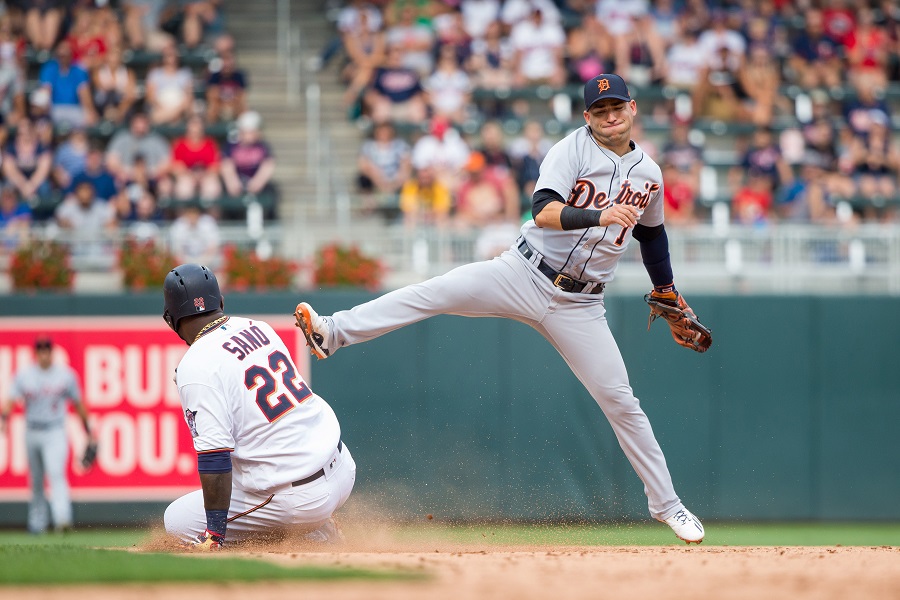 Jorge Polanco is currently the acting Minnesota shortstop. In 664 innings at shortstop in 2018 he was worth -1 DRS with a -3.9 UZR and a 1.4 RngR. Those numbers are all far better than the abomination he was during just 406 innings at short in 2016, but they are a step backward from the 2017 version of Polanco. Whether one understands defensive metrics or not, Minnesota’s current shortstop has a poor arm and limited range. Playing deep in the hole is hardly an option, and it leaves the infield's most important position significantly exposed. The good news is that Polanco profiles as an average to above-average second basemen. His arm would play just fine there, and range factor is less demanding on the right side of the diamond. It’s a role he had essentially been pushed into during the latter part of his minor league career, and only moved back to short as the Twins already had Brian Dozier manning second. When addressing their needs this offseason, I’d imagine the Twins would prefer not to punt on middle-infield defense entirely. Whether at second base or at shortstop, some sort of glove-first player makes sense. The only other option would be to choose some sort of middle-ground type player, with a bat-first emphasis, keeping Polanco where he is and banking on Royce Lewis being adept defensively for that role beginning in 2020. Obviously when considering which path to choose the market factors come into play as well. There are only something like eight available shortstops while there is nearly double that number at second base. In trying to put some pegs into holes, here’s how I see some of those names categorized. Gloves- Manny Machado (SS) Jose Iglesias (SS) Freddy Galvis (SS) D.J. LeMahieu (2B) Ian Kinsler (2B) Logan Forsythe (2B) Bats- Jordy Mercer (SS) Asdrubal Cabrera (2B) Brian Dozier (2B) Daniel Murphy (2B) Daniel Descalso (2B) Josh Harrison (2B) Of the 12 names above, it’s worth immediately ruling a handful out. Manny Machado is a pipe dream, and while the Twins have the money to sign him, there will be no shortage of suitors and plenty more sexy landing spots. Brian Dozier’s time has probably come and gone with the organization, and Daniel Murphy should be both expensive and a significant fielding liability. Each of the remaining nine names presents some intrigue though, so individually they’re worth a look. Jose Iglesias- The former Detroit Tigers shortstop is probably the cream of this crop in the field. While his DRS numbers don’t jump off the charts, he has a strong arm, solid range, and plays a well above-average shortstop. At just 28 years old he would give Minnesota the ability to sign a multi-year deal and feel pretty good about it. Freddy Galvis- A relatively similar player to Iglesias, Galvis separates himself a bit with his stick. He’s hit at least 12 homers each of the past three years and there’s plenty of gap power here. He’s a strong defender as well and will be just 29 next season. He’s also a strong bet to land a multi-year deal. D.J. LeMahieu- Coming off a second straight Gold Glove, the former Rockies second baseman is as sure as it gets in the field. He led MLB second basemen in DRS last season and locks down the right side of an infield. Obviously, his numbers are going to tumble away from Coors, but the question is to what extent. He’ll probably be looking for a bit more than he ends up being worth, but at 30 years old, more quality play should be ahead. Ian Kinsler- Divisional familiarity is at play here after Kinsler spent four seasons with the Tigers. He’ll turn 37 during the 2019 season, and obviously isn’t the player he once was. Struggling to hit much at all last season, he still earned a Gold Glove with his exceptional defense. There’s still some power at the plate and it comes with some on-base ability. Logan Forsythe- Minnesota is obviously familiar with this name, as he was swapped for Brian Dozier down the stretch. Forsythe can play an above average second base, and the defensive upgrade over Dozier was more than apparent. He hasn’t hit for two years, but he could be a decent buy-low target in his age 32 season. Jordy Mercer- Stuck in the middle ground of average on both sides of the game, Mercer has an OK bat and a mediocre glove. He’s not someone you really want to employ at short but isn’t going to hit to the extent of moving positions. There’re on-base skills here too, and he has shown some pop in previous seasons, but this signing would come with plenty of uncertainty. Asdrubal Cabrera- Nothing short of terrible in the field last year, Cabrera has become all bat at this point of his career. He’ll be 33 for his next team and is coming off a .774 OPS in 2018. He wasn’t good for the Phillies down the stretch but posted an exception .817 OPS with the Mets in 98 games to start the year. You’re asking a lot from Polanco in going this route, but maybe the offense makes up for it? Daniel Descalso- Splitting between second and short last season for the Diamondbacks, Descalso was better on the right side. He’s a good contact hitter who doesn’t strike out a ton. While walks haven’t been his game either, Descalso may be a late-developing prime player. The .762 OPS since 2016 far surpasses the .648 OPS in six big league seasons prior. Josh Harrison- Leaving the Pirates for the first time in his big-league career J-Hay is headed for untested waters. He’s been a jack of all trades most seasons but played solely second base last season. He’s average at worst in the field, and hovering around a .700 OPS is a fair expectation. You do worry about him never having played more than 143 games in a season, and there’s nothing he does exceptionally well. In trying to figure out where the Twins might turn it’s not an either-or proposition. Certainly, they could bring in some middle infield depth, but there’s only one starting spot open. Polanco is going to be placed aside of whomever is inserted into the lineup and that makes it critical to get this right. As a long-term play Jose Iglesias seems the best fit to me. He won’t be cheap, but you can’t expect him to break the bank either. Galvis strikes out a bit too much for a lineup filled with them, and Iglesias brings a slightly better form of defense. He can be inserted at shortstop for the next three years, and there then is no pressure for Royce Lewis needing to stick in that spot. Shoot for three years at $25 million and call it a day. Should Minnesota be looking for just a short-term answer to this equation I think the bat-first mentality comes into play a bit more. On a one-year deal, age goes out the window and you’re staring at a trio of Kinsler, Forsythe, and Cabrera. I don’t think you can realistically employ Polanco and Cabrera up the middle without very negative results, and you probably should aim a bit higher than what Forsythe projects as. Welcome Ian Kinsler back to the division. Even at his worst offensively there’s both power and on-base skills to utilize. He’s just two years removed from an .831 OPS and he should be available at less than $10 million for a single season. We’re still a way out from seeing how the Twins plan to address this situation, but it’s one of the most interesting and critical of the entire offseason.
 -
Donaldson to Fix Twins Hot Corner?
Ted Schwerzler commented on Ted Schwerzler 's blog entry in Off The Baggy
To a certain extent, this is the market inefficiency that the Twins are poised to manipulate. The big spenders may not be interested in the risk here, but Minnesota could have a star somewhat fall into their lap.- 17 comments
-
- 1
-
-
- minnesota twins
- josh donaldson
- (and 2 more)
