



Ted Schwerzler
-
Posts
5,149 -
Joined
-
Last visited
Content Type
Profiles
News
Minnesota Twins Videos
2026 Minnesota Twins Top Prospects Ranking
2022 Minnesota Twins Draft Picks
Minnesota Twins Free Agent & Trade Rumors, Notes, & Tidbits
Guides & Resources
2023 Minnesota Twins Draft Picks
The Minnesota Twins Players Project
2024 Minnesota Twins Draft Picks
2025 Minnesota Twins Draft Pick Tracker
2026 Minnesota Twins Draft Tracker: Picks & Bonuses
Forums
Blogs
Events
Store
Downloads
Gallery
Everything posted by Ted Schwerzler
-
Right now, the Minnesota Twins are sitting on a Joe Mauer-sized pile of cash, and the reasoning is that the front office needs to see what they have before they can commit to adding additional assets. While that’s worth poking holes in on its own accord, we can step back for a minute and look at what that reality may amount to. For some time, Miguel Sano, Byron Buxton, and Jose Berrios have been looked at as the foundation going forward in Minnesota. What if we’ve reached that point?There’s no denying that baseball isn’t an individual or star driven sport. Every single team in the league should be jumping at an opportunity to ink either Bryce Harper or Manny Machado. Alone, no player is pushing any team to the postseason, and a World Series is a by-product of a 25-man roster that dominates the opposition. There’s no more integral development than for Rocco Baldelli and the Minnesota Twins to generate the highest level of production out of both Sano and Buxton. Although Berrios was an All-Star in 2018, it’s hard not to think that he probably has more in the tank as well. Let’s go out on a limb here and suggest that each member of this trio breaks out in a new way for 2019. What does that look like? Byron Buxton- Finishes with an .800 OPS and generates MVP votes 2018 was a disaster for the Twins starting center fielder. He played in just 28 games at the big-league level, and his .383 OPS was a futile in every sense of the word. Defense is a natural talent of Byron’s and it’s something that doesn’t slump. Bulking up with extra muscle this offseason should help to provide durability for his all-out style in the grass, and you can bet he’ll have a September-sized chip on his shoulder. Despite a high level of production in multiple Triple-A stints, he has yet to translate that success over an extended period with Minnesota. After returning to the major league lineup on August 1, 2017 Byron turned in a .298/.342/.541 slash line. That 56-game run earned him an 18th place finish in the MVP voting, and was highlighted by a Gold Glove and Defensive Player of the Year award. The best version of Buxton is probably a guy that hits 20 homers while also having a swing-and-miss tendency. The .800 OPS mark is a good baseline for him to enter the conversation of being a star, and that’s where Rocco will need to drive him toward in the season ahead. Miguel Sano- Crosses the 30-home run plateau What started out as a slow burn turned into a nosedive for the Twins third basemen in 2018. After finishing third in the Rookie of the Year voting during the 2015 season, Sano turned in a .781 OPS for his second trip through the big leagues. In year three, Miguel made his first All-Star Game, and an .859 OPS looked like shades of the player that burst onto the scene during his first 80 games. Then there was the broken leg, and the assault scandal, and an eventual demotion all the way to Single-A. Wipe the slate clean and let’s get going. New manager, new focus, and running out of chances, 2019 is looking like a real crossroads for Sano. Soon he’ll be 26 years old and there’re no more excuses to hide behind. This offseason the Twins have monitored his workouts and it genuinely appears like he’s in great shape and has been committed to his conditioning program. Baldelli will be tasked with connecting with and getting the most out of the former top 10 prospect. Sano has never played in more than 116 games during a season, but I’ll bank on this being the campaign in which he gets it done. You won’t ever find a time in which Sano doesn’t have swing-and-miss tendencies. He’s posted his two worst swinging strike percentages in his two best major league seasons. He’s also made a relatively consistent level of contact across the entirety of his career. When he’s been at his best however, his hard-hit rates were career highs as well. As a by-product of crushing the ball, those two years (2015/17) were the only instances in which he’s had a HR/FB ratio north of 26% as well. Simply put, it’s about dialing in for Miguel and connecting when he does so. The Dominican clubbed 28 bombs in 114 games two years ago. Should he get beyond 140 games in 2019, he may clear 30 by double digits. Jose Berrios- Flirts with a sub 3.00 ERA and earns a second straight All-Star berth There’s no reason to take anything away from what Jose Berrios did last season for the Twins. As a 24-year-old, he made his first All-Star Game appearance and turned in some truly unforgettable performances. While the flashes of brilliance were great to see, there was still plenty of hiccups along the way. Berrios probably backed into the All-Star Game despite teammate Eddie Rosario looking like the more logical representative. Despite posting four double-digit strikeout games, he owned a pedestrian 4.63 ERA in his final 16 starts. Plenty of promise, yet to breakthrough, that must all change in a big way. Since making it to the big leagues, Berrios has seen his numbers trend in the right direction. Year-over-year he’s upped his K/9 tally while dropping both his BB/9 and H/9. Home runs have always been sort of a bugaboo, and while he still gave up more than one-per-nine in 2018, he’s worked hard to move away from the 1.9 HR/9 total of 2016. Having so much movement on his pitches, Berrios has had to home in with command over the course of his time in the big leagues. Although he’s not a finished product, it’s great that he’s not afraid either. Working inside has resulted in 26 hit batters over the past two seasons, and split evenly, that tally led the league two seasons ago. Keeping the base paths clean and avoiding the big inning will need to be areas of focus should he take the next step. Minnesota’s built a stable of starters that all have strong floors. Where Jose can separate himself is by reaching the ceiling of his potential performance. Click here to view the article
- 14 replies
-
- 1
-

-
- minnesota twins
- jose berrios
- (and 2 more)
-
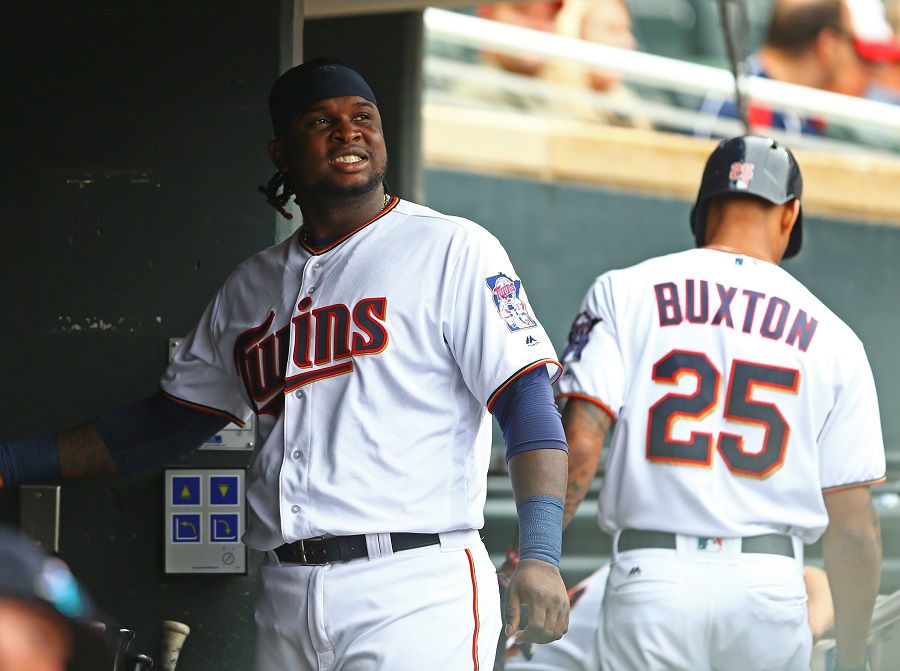 There’s no denying that baseball isn’t an individual or star driven sport. Every single team in the league should be jumping at an opportunity to ink either Bryce Harper or Manny Machado. Alone, no player is pushing any team to the postseason, and a World Series is a by-product of a 25-man roster that dominates the opposition. There’s no more integral development than for Rocco Baldelli and the Minnesota Twins to generate the highest level of production out of both Sano and Buxton. Although Berrios was an All-Star in 2018, it’s hard not to think that he probably has more in the tank as well. Let’s go out on a limb here and suggest that each member of this trio breaks out in a new way for 2019. What does that look like? Byron Buxton- Finishes with an .800 OPS and generates MVP votes 2018 was a disaster for the Twins starting center fielder. He played in just 28 games at the big-league level, and his .383 OPS was a futile in every sense of the word. Defense is a natural talent of Byron’s and it’s something that doesn’t slump. Bulking up with extra muscle this offseason should help to provide durability for his all-out style in the grass, and you can bet he’ll have a September-sized chip on his shoulder. Despite a high level of production in multiple Triple-A stints, he has yet to translate that success over an extended period with Minnesota. After returning to the major league lineup on August 1, 2017 Byron turned in a .298/.342/.541 slash line. That 56-game run earned him an 18th place finish in the MVP voting, and was highlighted by a Gold Glove and Defensive Player of the Year award. The best version of Buxton is probably a guy that hits 20 homers while also having a swing-and-miss tendency. The .800 OPS mark is a good baseline for him to enter the conversation of being a star, and that’s where Rocco will need to drive him toward in the season ahead. Miguel Sano- Crosses the 30-home run plateau What started out as a slow burn turned into a nosedive for the Twins third basemen in 2018. After finishing third in the Rookie of the Year voting during the 2015 season, Sano turned in a .781 OPS for his second trip through the big leagues. In year three, Miguel made his first All-Star Game, and an .859 OPS looked like shades of the player that burst onto the scene during his first 80 games. Then there was the broken leg, and the assault scandal, and an eventual demotion all the way to Single-A. Wipe the slate clean and let’s get going. New manager, new focus, and running out of chances, 2019 is looking like a real crossroads for Sano. Soon he’ll be 26 years old and there’re no more excuses to hide behind. This offseason the Twins have monitored his workouts and it genuinely appears like he’s in great shape and has been committed to his conditioning program. Baldelli will be tasked with connecting with and getting the most out of the former top 10 prospect. Sano has never played in more than 116 games during a season, but I’ll bank on this being the campaign in which he gets it done. You won’t ever find a time in which Sano doesn’t have swing-and-miss tendencies. He’s posted his two worst swinging strike percentages in his two best major league seasons. He’s also made a relatively consistent level of contact across the entirety of his career. When he’s been at his best however, his hard-hit rates were career highs as well. As a by-product of crushing the ball, those two years (2015/17) were the only instances in which he’s had a HR/FB ratio north of 26% as well. Simply put, it’s about dialing in for Miguel and connecting when he does so. The Dominican clubbed 28 bombs in 114 games two years ago. Should he get beyond 140 games in 2019, he may clear 30 by double digits. Jose Berrios- Flirts with a sub 3.00 ERA and earns a second straight All-Star berth There’s no reason to take anything away from what Jose Berrios did last season for the Twins. As a 24-year-old, he made his first All-Star Game appearance and turned in some truly unforgettable performances. While the flashes of brilliance were great to see, there was still plenty of hiccups along the way. Berrios probably backed into the All-Star Game despite teammate Eddie Rosario looking like the more logical representative. Despite posting four double-digit strikeout games, he owned a pedestrian 4.63 ERA in his final 16 starts. Plenty of promise, yet to breakthrough, that must all change in a big way. Since making it to the big leagues, Berrios has seen his numbers trend in the right direction. Year-over-year he’s upped his K/9 tally while dropping both his BB/9 and H/9. Home runs have always been sort of a bugaboo, and while he still gave up more than one-per-nine in 2018, he’s worked hard to move away from the 1.9 HR/9 total of 2016. Having so much movement on his pitches, Berrios has had to home in with command over the course of his time in the big leagues. Although he’s not a finished product, it’s great that he’s not afraid either. Working inside has resulted in 26 hit batters over the past two seasons, and split evenly, that tally led the league two seasons ago. Keeping the base paths clean and avoiding the big inning will need to be areas of focus should he take the next step. Minnesota’s built a stable of starters that all have strong floors. Where Jose can separate himself is by reaching the ceiling of his potential performance.
 -
Big Mike Ready to Stand Up
Ted Schwerzler commented on Ted Schwerzler 's blog entry in Off The Baggy
I see infinitely more value in having Romero work out of the pen for 2019 than Pineda. The vet is under contract for one year, and has been a starter his entire career. Romero going to the pen isn't a death sentence, and he could certainly work his way back to the rotation as the time becomes right. -
This offseason has caused plenty of angst amongst Twins fans. While the team has gotten substantially better, there’s plenty of resources going unused. While the bullpen still seems to be chief among the remaining issues, it can be argued that the rotation leaves some to be desired. When it comes to the overall effectiveness of the starters, a massive wild card exists in the form of Michael Pineda. For the Twins, they need the big man to stand up. Pineda was signed last offseason to a contract that essentially boiled down to Minnesota monitoring his rehab and having the former Yankees hurler ready to go in 2019. Coming off Tommy John surgery, Pineda then suffered a knee injury late in the year that thwarted any possibility of a big-league debut with the Twins. Now healthy and ready to go, Minnesota may have themselves a difference maker ready to emerge. Now 30 years old, Pineda was 28 the last time he was on a major league mound. Throwing four seasons in New York, he posted a sub 4.00 ERA just once. What’s worth noting however, is that despite a hiccup in 2017 prior to blowing out his elbow, the peripherals were all plenty intriguing. From 2014-2016 Pineda posted a 3.42 FIP alongside a 9.2 K/9 and 1.8 BB/9. He did cede 1.2 H/9, and that tally ballooned to 1.9 in 2017. Given the bandbox that Yankees Stadium is, there’s reason to believe a move to Target Field could be helpful. Prior to bowing out of the 2017 season, Pineda got off to a strong start. Through his first 10 outings, he posted a 3.32 ERA and owned a .676 OPS against. It was four (of seven) starts from June on that led to an ERA of 6.14 the rest of the way and turned his overall numbers into a much less pleasing sight. What we can take from this though, is that things were on the right track. The former top 25 prospect can sling it, and he’s honed that Yankee cutter in to the tune of a 94-mph average over the course of his career. His pix mitch includes a sinker and slider that he pairs with a changeup as his go-to offspeed pitch. Predominantly a fastball and slider combination, the 6’7” righty looks to impose his will on opposing batters, and then force them to flail at a pitch with movement. There really hasn’t yet been a time in his career that Pineda has consistently lived up to his prospect billing. He’s shown flashes in small bursts, but largely been under a microscope of scrutiny with organizations hoping for a bit more. Able to slot in behind at least Kyle Gibson and Jose Berrios, while potentially pitching behind Jake Odorizzi as well, Pineda can focus on being piece of the puzzle instead of the guy. An emergence showing any semblance of one-time projected success would be a huge revelation for Rocco Baldelli’s starting rotation. It's understandable to have concerns about the Twins rotation. Pineda is still a question mark until he proves otherwise, and Martin Perez is a head-scratcher at best. The top three lay a strong foundation though, and if the front office was right by banking on a monitored rehab process, Pineda may end up being the surprise no one saw coming. For more from Off The Baggy, click here. Follow @tlschwerz
-
On January 30 the 2019 Major League Baseball season officially gets underway. While the likes of Bryce Harper, Manny Machado, and Craig Kimbrel all remain unsigned and on the free agent market, Topps is ready to role out their first cardboard offering of 2019. Always a fun kickoff to the new year, ripping some wax and seeing new faces in Minnesota uniforms is a time-honored tradition. In 2018 the exclusive rights owner for production of licensed baseball cards had plenty going for them. While Ronald Acuna, Shohei Ohtani, and Juan Soto wouldn't burst onto the scene until later in the year, the rookie crop was flush with talent. To start off 2019 the same can't be said, but seeing as how guys always bust out of nowhere, card collectors will need to decipher who may be the diamond in the rough for the early part of this season. For the Twins, the first offering is flush with hat tipping content. Base Set- The Twins base set to open 2019 is chock full of familiar faces. Logan Morrison is an odd inclusion given that he had his contract option declined quite early in the process. If there's an omission in this group, it's that fellow rookie Stephen Gonsalves has been held back. Outside of those realities, the rest of the group is made up of players either currently playing long term roles or one that was bought out of a final contract year. Kohl Stewart is Minnesota's lone rookie in this cycle. Inserts- With the 2019 Flagship product Topps has decided to change up the configuration a bit. Cutting down on the amount of packs, while putting a few more cards in each, those familiar with how this product breaks will be in for a new challenge. The base set becomes tougher to put together, and the inserts no longer fall one per pack. For the hometown nine, inserts are filled with offerings highlighting players like Rod Care, Harmon Killebrew, and Bert Blyleven. Current players do make their way into the subset offerings, and collecting them all will be a much more difficult endeavor this time around. Hits- As with all Topps Flagship product, the hits are hardly the draw. From manufactured relics to sticker autographs, it's more about the parallels and short prints in this set. That said, the hits are where recently retired Joe Mauer really shines. He is the benefactor of multiple manufactured relics, as well as a couple of game-used jersey offerings. Easier than some of the insert cards, the hits will be plentiful when attempting to land one on the secondary market, and there couldn't be a better player for Topps to Target. Arguably the most notable chase card of the Twins set is the "In the Name" patch. A staple for the Flaship series, a game-used letter off the back of a jersey is a notable 1/1 piece. The honor has been given to players like Mauer and Max Kepler in recent history, but Jose Berrios takes over for the first time in his career with this checklist. Coming off his first All Star nod, it's definitely an earned honor. You can pick up 2019 Topps Baseball Series 1 product at your local Target or Walmart, as well as local hobby stores, and an number of online distributors. Boxes range from $20-$90 and carry multiple different pack odds throughout. For more from Off The Baggy, click here. Follow @tlschwerz
-
Sure, it’s only January but that’s become somewhat of a placeholder for fans to convince themselves that things are going to change. The reality is that we’re less than a month away from baseball being played in Fort Myers, and just over two weeks away from pitchers and catchers reporting. A few more moves could trickle in, but it’s time to evaluate the offseason as it is today.There’s no denying that the Minnesota Twins are a better team today than they were when the 2018 Major League Baseball season concluded. There’s also little reason to believe there isn’t opportunity within the AL Central division. Those two reasons alone are why projection systems have Rocco Baldelli’s club trending towards a win total in the mid-80’s, and why there’s some frustration more hasn’t been done. Let’s get into it... New Acquisitions: Jonathan Schoop, C.J. Cron, Blake Parker, Nelson Cruz, Martin Perez Going into the winter, Minnesota’s most desperate needs were a middle infielder and bullpen help. They likely were going to need a bat to replace Joe Mauer at first base as well. Although each player has some level of control or second year possibility, the Twins went about adding talent on one-year commitments. Schoop is a better defender than Minnesota has recently had at 2B, and a rebound year would bring offensive prowess that would rival what the organization has grown used to. Cron should be an offensive step up for the Twins, and Nelson Cruz still is among the most feared hitters in baseball despite approaching 40. Parker isn’t a flashy name by any means, but he’s got previous closing experience and has put together a couple of strong years in recent seasons. Perez is the oddity in this bunch in that he both hasn’t been good before and has shown little indication that he may get there soon. Pegged as a starter, it’ll be interesting to see what his role looks like as the season progresses. Grade: B Coaching Additions: Rocco Baldelli, Wes Johnson, Tony Diaz, Jeremy Hefner, Tommy Watkins For everything that could be viewed as a negative on the player acquisition side, it’s in coaching and development that the Twins sustainability jumps off the page for me. Baldelli, while green, strikes me as a manager that could and will connect in a big way with this group. Johnson brings no big-league experience to speak of but has been revered among the best at the collegiate level. I’m not worried about the track record and think there’s an area of untapped potential that he can mine with the Twins pitchers. It’ll likely be a learning process in connecting with new faces, but the obstacle on the bridge between new ideas and buy-in is one that has held the Twins back in recent memory. Diaz could prove to be an integral part of a connection made between management and Latin players in the Minnesota clubhouse. Watkins played a key role in the development and graduation from prospect of many players currently on the active roster. Putting Hefner on the field after operating in more of a behind the scenes role will be an interesting development as well. Working as an assistant alongside Johnson, their effectiveness will likely directly correlate, in part, to how quickly they are on the same page as well. Grade: A- Resource Allocation: Current projected payroll $99 million Thus far the Twins have spent something like $35 million on new talent. Even with those additions, they’re nearly $30 million below the 2018 Opening Day payroll and well below the league average. A recent report from the Star Tribune’s LaVelle E. Neal suggests that Perez could be the last major league acquisition for this roster. Should that turn out to be the case, there’s no way to spin it other than calling it embarrassing. Recently Twins President Dave St. Peter was on the recently rebranded Skor North discussing the state of the 2019 squad. He chided payroll comments saying “(fans) only argument is payroll, we’ve heard it a long time, and it’s something we’ll have to put up with.” He went on to say, “I have confidence that not only are we going in with a better team than we had last year, but it's a team that can ultimately, hopefully hunt down Cleveland in the AL Central in 2019." The problem is that these two statements suggest an inability to grasp what the real issue is. No Twins fan cares whether the payroll is $200 million or $100 million. Also, no one has an expectation that the local club is going to spend with the likes of Los Angeles or New York. What does matter however, is that there’s more work to be done on this roster, there were (and are) assets capable of completing that work, and the front office is seemingly content with saying this is it. It’s all well and good for Minnesota to target competing with the Indians, but they’ve left plenty of juice still worth squeezing out. Grade: D- At the end of the day and knowing that the book-ended grades of this exercise remain pending until the dust truly settles, the Twins have a trio of definitive truths from this winter. The big-league product got better and can grow even more with some improvement and consistency from internal holdovers. The coaching staff and developmental group throughout the organization have been bolstered tremendously. Finally, there was more work to be done and a conscious decision to ignore that was made. It’d be great if this Twins team put together an 87-win season, but it would be plenty disheartening if a few games gap between the Indians was left open knowing the offseason had had more to offer. Click here to view the article
-
 There’s no denying that the Minnesota Twins are a better team today than they were when the 2018 Major League Baseball season concluded. There’s also little reason to believe there isn’t opportunity within the AL Central division. Those two reasons alone are why projection systems have Rocco Baldelli’s club trending towards a win total in the mid-80’s, and why there’s some frustration more hasn’t been done. Let’s get into it... New Acquisitions: Jonathan Schoop, C.J. Cron, Blake Parker, Nelson Cruz, Martin Perez Going into the winter, Minnesota’s most desperate needs were a middle infielder and bullpen help. They likely were going to need a bat to replace Joe Mauer at first base as well. Although each player has some level of control or second year possibility, the Twins went about adding talent on one-year commitments. Schoop is a better defender than Minnesota has recently had at 2B, and a rebound year would bring offensive prowess that would rival what the organization has grown used to. Cron should be an offensive step up for the Twins, and Nelson Cruz still is among the most feared hitters in baseball despite approaching 40. Parker isn’t a flashy name by any means, but he’s got previous closing experience and has put together a couple of strong years in recent seasons. Perez is the oddity in this bunch in that he both hasn’t been good before and has shown little indication that he may get there soon. Pegged as a starter, it’ll be interesting to see what his role looks like as the season progresses. Grade: B Coaching Additions: Rocco Baldelli, Wes Johnson, Tony Diaz, Jeremy Hefner, Tommy Watkins For everything that could be viewed as a negative on the player acquisition side, it’s in coaching and development that the Twins sustainability jumps off the page for me. Baldelli, while green, strikes me as a manager that could and will connect in a big way with this group. Johnson brings no big-league experience to speak of but has been revered among the best at the collegiate level. I’m not worried about the track record and think there’s an area of untapped potential that he can mine with the Twins pitchers. It’ll likely be a learning process in connecting with new faces, but the obstacle on the bridge between new ideas and buy-in is one that has held the Twins back in recent memory. Diaz could prove to be an integral part of a connection made between management and Latin players in the Minnesota clubhouse. Watkins played a key role in the development and graduation from prospect of many players currently on the active roster. Putting Hefner on the field after operating in more of a behind the scenes role will be an interesting development as well. Working as an assistant alongside Johnson, their effectiveness will likely directly correlate, in part, to how quickly they are on the same page as well. Grade: A- Resource Allocation: Current projected payroll $99 million Thus far the Twins have spent something like $35 million on new talent. Even with those additions, they’re nearly $30 million below the 2018 Opening Day payroll and well below the league average. A recent report from the Star Tribune’s LaVelle E. Neal suggests that Perez could be the last major league acquisition for this roster. Should that turn out to be the case, there’s no way to spin it other than calling it embarrassing. Recently Twins President Dave St. Peter was on the recently rebranded Skor North discussing the state of the 2019 squad. He chided payroll comments saying “(fans) only argument is payroll, we’ve heard it a long time, and it’s something we’ll have to put up with.” He went on to say, “I have confidence that not only are we going in with a better team than we had last year, but it's a team that can ultimately, hopefully hunt down Cleveland in the AL Central in 2019." The problem is that these two statements suggest an inability to grasp what the real issue is. No Twins fan cares whether the payroll is $200 million or $100 million. Also, no one has an expectation that the local club is going to spend with the likes of Los Angeles or New York. What does matter however, is that there’s more work to be done on this roster, there were (and are) assets capable of completing that work, and the front office is seemingly content with saying this is it. It’s all well and good for Minnesota to target competing with the Indians, but they’ve left plenty of juice still worth squeezing out. Grade: D- At the end of the day and knowing that the book-ended grades of this exercise remain pending until the dust truly settles, the Twins have a trio of definitive truths from this winter. The big-league product got better and can grow even more with some improvement and consistency from internal holdovers. The coaching staff and developmental group throughout the organization have been bolstered tremendously. Finally, there was more work to be done and a conscious decision to ignore that was made. It’d be great if this Twins team put together an 87-win season, but it would be plenty disheartening if a few games gap between the Indians was left open knowing the offseason had had more to offer.
 -
Is Waiting Really a Good Thing for Twins?
Ted Schwerzler commented on Ted Schwerzler 's blog entry in Off The Baggy
Ding ding ding. Baseball isn't a one or two player sport. Even if they step up and break out, the overall impact isn't felt unless 10-15 guys are playing at peak performance. Bring in more talent so the bottom of those 10-15 performs at a higher level.- 11 comments
-
- 1
-
-
- byron buxton
- miguel sano
- (and 2 more)
-
Is Waiting Really a Good Thing for Twins?
Ted Schwerzler commented on Ted Schwerzler 's blog entry in Off The Baggy
I'm the last person to be out on them, and I'd expect both to rebound. At this point however, they have failed to live up to their prospect projections. It is true in this moment. I don't anticipate it continuing to be so. -
Coming into the 2019 Major League Baseball season, the Minnesota Twins will have plenty of organizational changes. From coaches to players throughout the system, there have been plenty of new developments. Among the biggest changes is the shift from a Double-A squad in Tennessee to one in Florida. The Pensacola Blue Wahoos will play home to some very exciting future Twins this season, and it's time to introduce them to Twins Territory.Having reached out to the Blue Wahoos in hopes of best representing and introducing them to Minnesota fans, I was presented with the idea of a guest article. Senior Writer Bill Verona put together a great piece and Media Relations Manager Daniel Venn did an exceptional job coordinating things. Before you're introduced to this new affiliate over the weekend at Twins Fest, here's an opportunity for them to introduce themselves. Take it away Bill... All right, Twins fans, so you’re intrigued about this new partnership with the Pensacola Blue Wahoos as the Double-A affiliate. It’s new for everyone here, too. The Blue Wahoos were the Cincinnati Reds’ affiliate in the Southern League since the team’s inception in 2012. First, let’s start with the name. Blue Wahoos won the fan vote of choices and it’s a good connection. A wahoo is a sport fish, found in the nearby Gulf of Mexico. Edible for humans, especially appetizing when cooked grilled or blackened. The species is fast, fierce, not easy to catch, and surprisingly strong, but not quite like a shark. Blue Wahoos is connecting the blue waters here, along with homage to the Blue Angels, the U.S. Navy flight demonstration squadron, based at Naval Air Station-Pensacola. People here are rightfully as proud of the Blue Angels as they are Blue Wahoos Stadium or the sugar-white beaches nearby. The stadium was built on neglected land along Pensacola Bay, which leads into the Gulf of Mexico. So, there is normally a breeze, which helps keep the stadium comfortable in mid-summer. From the ballpark to Pensacola Beach, it’s an 8.8-mile drive. Blue Wahoos owners Quint and Rishy Studer went through a six-year odyssey to see this stadium finally become reality. Just like everywhere else, there is never universal support for stadiums when using public money, no matter how much. They invested millions to make it happen. Since the day it opened, the stadium has been transformational for the downtown area of Pensacola, community pride and adding to the quality of life in the community. The Studers previously owned the Pensacola Pelicans, an Independent League team that formerly competed in the American Association that includes the St. Paul Saints. That team played at the University of West Florida baseball field and it was called Pelican Park during the summer months when the team played. Blue Wahoos Stadium, part of the Community Maritime Park project, is used year-round. The University of West Florida football team, an NCAA Division II member of the Gulf South Conference, has made the stadium a unique home-field setting since beginning a football program in 2016. The stadium also hosts everything from sunrise Easter Sunday services to weddings to dinner events to Fourth of July celebrations to an NFL Flag Football youth league sponsored by Pro Football Hall of Fame linebacker Derrick Brooks, who grew up in Pensacola. When the Blue Wahoos opted to switch affiliations, the Minnesota Twins were the overwhelming choice in a fan poll when paired with the San Diego Padres. Pensacola has a couple things in common with Minnesota. Both are in the Central Time Zone. Both have plenty of waterfront land. Both are in areas where the weather can quickly change, just not in the same way. It has spit snow here in rare years since weather has been recorded. But most winter days feature afternoon temperatures in the 50’s-low 70’s. When it gets below 50 degrees as a daytime temperature, people start shivering. Many of us have moved from other places, including areas like Minneapolis and other cold-weather places in the winter. It’s easy to get soft. But Pensacola is different weather than Fort Myers, the Twins spring training home on the Gulf Coast. That’s south Florida. The opposite side of the Everglades from Fort Lauderdale-Miami. Big difference. It’s a 10-hour drive from Pensacola and the winter temperature difference could be 20-30 degrees. Pensacola rests near the Florida-Alabama state line on Interstate 10. Mobile, Alabama is 60 miles away. You can drive in four states (Florida, Alabama, Mississippi, Louisiana) when traveling three hours to New Orleans. The Twins are only the second major league affiliation in Pensacola in more than a half-century. Prior to joining the Southern League, Pensacola’s last affiliated baseball team was the Pensacola Senators in 1962 in the Alabama-Florida League. Click here to view the article
-
 Having reached out to the Blue Wahoos in hopes of best representing and introducing them to Minnesota fans, I was presented with the idea of a guest article. Senior Writer Bill Verona put together a great piece and Media Relations Manager Daniel Venn did an exceptional job coordinating things. Before you're introduced to this new affiliate over the weekend at Twins Fest, here's an opportunity for them to introduce themselves. Take it away Bill... All right, Twins fans, so you’re intrigued about this new partnership with the Pensacola Blue Wahoos as the Double-A affiliate. It’s new for everyone here, too. The Blue Wahoos were the Cincinnati Reds’ affiliate in the Southern League since the team’s inception in 2012. First, let’s start with the name. Blue Wahoos won the fan vote of choices and it’s a good connection. A wahoo is a sport fish, found in the nearby Gulf of Mexico. Edible for humans, especially appetizing when cooked grilled or blackened. The species is fast, fierce, not easy to catch, and surprisingly strong, but not quite like a shark. Blue Wahoos is connecting the blue waters here, along with homage to the Blue Angels, the U.S. Navy flight demonstration squadron, based at Naval Air Station-Pensacola. People here are rightfully as proud of the Blue Angels as they are Blue Wahoos Stadium or the sugar-white beaches nearby. The stadium was built on neglected land along Pensacola Bay, which leads into the Gulf of Mexico. So, there is normally a breeze, which helps keep the stadium comfortable in mid-summer. From the ballpark to Pensacola Beach, it’s an 8.8-mile drive. Blue Wahoos owners Quint and Rishy Studer went through a six-year odyssey to see this stadium finally become reality. Just like everywhere else, there is never universal support for stadiums when using public money, no matter how much. They invested millions to make it happen. Since the day it opened, the stadium has been transformational for the downtown area of Pensacola, community pride and adding to the quality of life in the community. The Studers previously owned the Pensacola Pelicans, an Independent League team that formerly competed in the American Association that includes the St. Paul Saints. That team played at the University of West Florida baseball field and it was called Pelican Park during the summer months when the team played. Blue Wahoos Stadium, part of the Community Maritime Park project, is used year-round. The University of West Florida football team, an NCAA Division II member of the Gulf South Conference, has made the stadium a unique home-field setting since beginning a football program in 2016. The stadium also hosts everything from sunrise Easter Sunday services to weddings to dinner events to Fourth of July celebrations to an NFL Flag Football youth league sponsored by Pro Football Hall of Fame linebacker Derrick Brooks, who grew up in Pensacola. When the Blue Wahoos opted to switch affiliations, the Minnesota Twins were the overwhelming choice in a fan poll when paired with the San Diego Padres. Pensacola has a couple things in common with Minnesota. Both are in the Central Time Zone. Both have plenty of waterfront land. Both are in areas where the weather can quickly change, just not in the same way. It has spit snow here in rare years since weather has been recorded. But most winter days feature afternoon temperatures in the 50’s-low 70’s. When it gets below 50 degrees as a daytime temperature, people start shivering. Many of us have moved from other places, including areas like Minneapolis and other cold-weather places in the winter. It’s easy to get soft. But Pensacola is different weather than Fort Myers, the Twins spring training home on the Gulf Coast. That’s south Florida. The opposite side of the Everglades from Fort Lauderdale-Miami. Big difference. It’s a 10-hour drive from Pensacola and the winter temperature difference could be 20-30 degrees. Pensacola rests near the Florida-Alabama state line on Interstate 10. Mobile, Alabama is 60 miles away. You can drive in four states (Florida, Alabama, Mississippi, Louisiana) when traveling three hours to New Orleans. The Twins are only the second major league affiliation in Pensacola in more than a half-century. Prior to joining the Southern League, Pensacola’s last affiliated baseball team was the Pensacola Senators in 1962 in the Alabama-Florida League.
 -
Payroll angst has been at what seems like an all-time high this offseason. Joe Mauer’s contract came off the books, and there’s zero committed dollars for 2020 and beyond. Instead of allocating those funds though, the Twins are hovering around a $100 million payroll and made another “splash” by signing Martin Perez. Local media has suggested the Twins are waiting to get it right, but does that make sense? Phil Mackey of the recently rebranded Skor North radio tweeted he’s been told directly by someone within the organization that this is a waiting game. Needing to get the “nucleus” of the roster right before adding pieces, the strategy of acquiring filler talent this offseason jives with that notion. Realistically speaking, Byron Buxton and Miguel Sano are going to be the straw that stirs Minnesota’s drink, and even the next wave of prospects won’t change that reality. Waiting for the perfect scenario seems to have plenty of hurdles, however. There’s no denying that Sano and Buxton have both failed to live up to their prospect projections. Expected to be franchise cornerstones for years to come, neither has solidified that notion yet. Chief among the concerns for new manager Rocco Baldelli, will be jumpstarting and developing both of those guys into the players they’ve been expected to be. If he’s able to accomplish that goal, he’ll have done what former manager Paul Molitor was unable to achieve. The idea that the spending, supplementation, or bolstering the roster with talent hinges on a set group of players seems like a poor decision, however. First and foremost, baseball is not a sport that’s dictated by even a handful of guys on a 25-man roster. Winning teams accomplish goals by being a stronger sum of their parts and raising the water level of those on the ends of the roster helps to push the bar. On top of that, projecting year-over-year certainties is somewhat of a losing battle. Recently the Twins sprung up for an 85-win season in 2017 following the disastrous 103 loss campaign a year earlier. Twins Daily’s Nick Nelson pointed out that neither World Series winning Minnesota club was coming off a season in which competitiveness should’ve been the expectation either. On top of that, there’s plenty of opportunity to be had given the current landscape within the division. Minnesota has the opportunity to play two surefire 90 loss clubs in both Detroit and Kansas City. The White Sox are not yet ready to run, and the Indians have taken considerable steps backwards. Jumping at the window present by the AL Central itself should be enticing on the surface. Oh yeah, and about those White Sox. Chicago is coming off a 2018 in which they lost 100 games and finished 4th in the division. Boasting one of the best farm systems in the sport, they are in the middle of guys yet to pan out (Yoan Moncada and Reynaldo Lopez), those yet to debut (Eloy Jimenez), and those still a ways off (Nick Madrigal, Luis Robert). Despite all of that, they’ve gone out and signed recruiting tools in Jon Jay and Yonder Alonso, while jumping to the front of the line in hopes of landing a game changing Manny Machado. There couldn’t be a blueprint highlight a less established nucleus than what Chicago currently employs, but they’ve chosen to spark winning by seeing what’s coming and supporting it. At some point, the Twins need to be held accountable. Holding off on spending in previous seasons while battling uncertainty and a less than ideal opportunity cost was defendable. With more than their fair share of assets available, talent on the rise, and the red carpet nearly rolled out in the division, the sensibility this time around is nowhere to be found. We can continue to wait for a sign, an omen, or an airplane flying a banner. In the meantime, I guess we just wait for the circumstances to be even more ideal. For more from Off The Baggy, click here. Follow @tlschwerz
- 11 comments
-
- 2
-
-
- byron buxton
- miguel sano
- (and 2 more)
-
Perez Finalizes Rotation, Twins Have More Questions
Ted Schwerzler posted a blog entry in Off The Baggy
Today Ken Rosenthal reported that the Minnesota Twins are signing left-handed pitcher Martin Perez to a one-year deal with a second year option. The former Texas Rangers starter now rounds out Rocco Baldelli's starting rotation. What he doesn't do is address the bullpen needs, or calm any concerns about resources being properly allocated. Prior to this signing Minnesota was at a payroll of roughly $96.3 million. That number is $30 million below where they checked in to start 2018, and represents the ability to still add a significant amount of talent. With arms like Dallas Keuchel or Gio Gonzalez still on the open market, it's Perez who will take a roster spot on the 40 man. A former top-100 prospect, Perez debuted with the Rangers back in 2012 and has been with the organization for the entirety of his career. Unfortunately through seven big league seasons he's been neither durable or very good. Having pitched 180 innings just twice, he has't posted a sub-4.00 ERA since 2013. With a career 5.5 K/9, Perez is a hurler that relies on ok control and the idea that batters will get themselves out. Looking at how the Twins have executed this offseason, namely with their pitching, this comes across as another head scratcher. Likely taking the spot of Adalberto Mejia in the rotation, Perez doesn't push the needle. Instead of a Keuchel or Gonzalez addition that pushes everyone from the top down, the former Rangers starter simply fills in the last spot and adds to the overall depth. If there's a positive in this move, it's that the acquisition makes the reality of Fernando Romero starting in the bullpen even more likely. There's no denying that 180 innings from the Twins fireballer would be great, but utilizing him in relief for 2019 could be of the most benefit. The bullpen needs help and Romero's bullets may go a lot further in that role. You can bet Baldelli will utilize the opener strategy quite often in 2019, and Perez could be subject to that treatment. This front office has prided itself on the ability to both pinpoint and develop pitching. It's not that they don't know more on Perez than this lowly blogger. The problem is that there's both reason and circumstance to push the envelope and at every possible opportunity they've chosen to do less with more. At some point it would be great to see the Twins make a commitment to their players by acquiring talent with expectations as opposed to being surprised by what comes of a decision. Martin Perez could certainly have a career year in Minnesota, and that'd be a great revelation, but banking on that is a process with many more flaws than we should be seeing right now. For more from Off The Baggy, click here. Follow @tlschwerz -
On Monday Seth did a great job of outlining where the Minnesota Twins were at as of January 14. His 25-man roster projection looks nearly spot on, and there are very few areas of contention. When the dust settled at the end of his article the 2019 payroll projection came in at $96.32 million. That number is a laughable sum, but if we were to reclassify it as an allocation of resources, how much additional hand-wringing would there be?Let’s start off by clearing the air. There’s roughly a month left until pitchers and catchers report to Fort Myers for spring training. As was the case last offseason, free agents have been dealt an unnecessary blow in both offered and assumed contracts. The dollars for those agreed to are not there, and plenty more talent has yet to find new homes. Given that reality, there’s also the very real possibility that the Twins are not done spending (or adding through the trade market). Any additional acquisitions would cause the following discussion to be re-evaluated on a sliding scale, but the principles all still hold true. Now, when it comes to payroll, it’s less about a dollar figure than it is a percentage of allocated resources. In 2018, per Aaron Gleeman’s numbers, the average MLB payroll was roughly $135 million. At right around $129 million in 2018, Minnesota came very close to being at that mark. Where they are today puts them at a paltry 71% of that average and would be a throwback to the days of the Metrodome. Looking back to the last four teams standing in 2018, they came in with the 1st, 3rd, 11th, and 26th highest payrolls in baseball. While the Brewers were certainly an anomaly, the Athletics were the only other team to enter the postseason below the average spend. The expansion to a second wild card certainly incentivizes those fringe teams to win on a more frugal scale, but the best tend to separate themselves from the pack. Bringing this back to the Twins, Tony Wirt responded to me on Twitter as saying, “Money is a resource. Some teams have more, some less, but if you don't use the resources you have to the fullest, you're doing your organization a disservice.” This is exactly the issue when it comes to Minnesota’s payroll. It isn’t about dollars, but rather about sense. What opportunity cost is left on the table by failing to fully allocate all the resources at your disposal? In this space, as well as my personal blog, and Twitter, I have long defended the notion that the Twins haven’t needed to spend in recent years. Certainly, the opening of Target Field was seen (and pitched) as a new revenue stream. It is, but league- wide the greatest share of revenue still comes from lucrative TV contracts, which the Twins do not have. On top of that, doling out cash, err... resources, when the overall conditions (talent and competition) lack optimal opportunity for winning, is not ideal. That’s not to say I’m in favor of tanking but spending significantly while lagging behind the competition isn’t smart sports business. Right now, however, the contributing factors have changed. Going into 2019 the Cleveland Indians are the worst they’ve been in recent memory. Rocco Baldelli will field a team (as it sits now) that is substantially better on paper than it was at the end of 2018. Knowing full well that there are additional resources available, fans should be clamoring for them to be used. There are fringe players in the bullpen, and there are unknowns in the starting rotation. Can the front office improve upon Matt Magill, Tyler Duffey, or Adalberto Mejia? Can depth be improved by signing a player or two who pushes everyone else down a notch? With what’s left on the open market the answers would both seem to be a resounding yes. By failing to execute on that opportunity, the team is doing a disservice to those who are directly responsible for all the revenue streams. At the end of the day I don’t care if millionaires or billionaires make more money. The players certainly deserve a larger slice of the pie. What I do care about is that, as a fan, the team I’m invested in is operating within its means to utilize every resource available. At a payroll near $100 million, that’s not close to happening. Even at $130 million we have a debate. This isn’t about dollars though, it’s about sense. Click here to view the article
- 80 replies
-
- 3
-
-
- minnesota twins
- payroll
- (and 1 more)
-
 Let’s start off by clearing the air. There’s roughly a month left until pitchers and catchers report to Fort Myers for spring training. As was the case last offseason, free agents have been dealt an unnecessary blow in both offered and assumed contracts. The dollars for those agreed to are not there, and plenty more talent has yet to find new homes. Given that reality, there’s also the very real possibility that the Twins are not done spending (or adding through the trade market). Any additional acquisitions would cause the following discussion to be re-evaluated on a sliding scale, but the principles all still hold true. Now, when it comes to payroll, it’s less about a dollar figure than it is a percentage of allocated resources. In 2018, per Aaron Gleeman’s numbers, the average MLB payroll was roughly $135 million. At right around $129 million in 2018, Minnesota came very close to being at that mark. Where they are today puts them at a paltry 71% of that average and would be a throwback to the days of the Metrodome. Looking back to the last four teams standing in 2018, they came in with the 1st, 3rd, 11th, and 26th highest payrolls in baseball. While the Brewers were certainly an anomaly, the Athletics were the only other team to enter the postseason below the average spend. The expansion to a second wild card certainly incentivizes those fringe teams to win on a more frugal scale, but the best tend to separate themselves from the pack. Bringing this back to the Twins, Tony Wirt responded to me on Twitter as saying, “Money is a resource. Some teams have more, some less, but if you don't use the resources you have to the fullest, you're doing your organization a disservice.” This is exactly the issue when it comes to Minnesota’s payroll. It isn’t about dollars, but rather about sense. What opportunity cost is left on the table by failing to fully allocate all the resources at your disposal? In this space, as well as my personal blog, and Twitter, I have long defended the notion that the Twins haven’t needed to spend in recent years. Certainly, the opening of Target Field was seen (and pitched) as a new revenue stream. It is, but league- wide the greatest share of revenue still comes from lucrative TV contracts, which the Twins do not have. On top of that, doling out cash, err... resources, when the overall conditions (talent and competition) lack optimal opportunity for winning, is not ideal. That’s not to say I’m in favor of tanking but spending significantly while lagging behind the competition isn’t smart sports business. Right now, however, the contributing factors have changed. Going into 2019 the Cleveland Indians are the worst they’ve been in recent memory. Rocco Baldelli will field a team (as it sits now) that is substantially better on paper than it was at the end of 2018. Knowing full well that there are additional resources available, fans should be clamoring for them to be used. There are fringe players in the bullpen, and there are unknowns in the starting rotation. Can the front office improve upon Matt Magill, Tyler Duffey, or Adalberto Mejia? Can depth be improved by signing a player or two who pushes everyone else down a notch? With what’s left on the open market the answers would both seem to be a resounding yes. By failing to execute on that opportunity, the team is doing a disservice to those who are directly responsible for all the revenue streams. At the end of the day I don’t care if millionaires or billionaires make more money. The players certainly deserve a larger slice of the pie. What I do care about is that, as a fan, the team I’m invested in is operating within its means to utilize every resource available. At a payroll near $100 million, that’s not close to happening. Even at $130 million we have a debate. This isn’t about dollars though, it’s about sense.
 -
Payroll Problems Biting Baseball
Ted Schwerzler commented on Ted Schwerzler 's blog entry in Off The Baggy
A sub-$100MM mark would absolutely be a joke. Being $30MM below 2018, which was already hovering around league average is a problem. Certainly being hung up on the dollar amount isn't worthwhile, but dollars equate to added talent right? If there's $50MM in payroll flexibility which could be attributed to new talent, and instead is handed out to a spot occupied by a Tyer Duffey or Matt Magill, what are you doing? -
Fixing Free Agency, MLB’s Dark Cloud
Ted Schwerzler commented on Ted Schwerzler 's blog entry in Off The Baggy
Well articulated! -
Fixing Free Agency, MLB’s Dark Cloud
Ted Schwerzler commented on Ted Schwerzler 's blog entry in Off The Baggy
With that argument, you’re arguing in favor of owners (who already exploit talent for at least 7 years) to make more billions, instead of the players whose talent drive the game, to make their millions. Odd stance to take -
Fixing Free Agency, MLB’s Dark Cloud
Ted Schwerzler commented on Ted Schwerzler 's blog entry in Off The Baggy
I don't think you can tie it to a specific age due to debuts, but I think there absolutely has to be a reduction in overall service time. -
We are now halfway through January and are in the middle of a free agency cycle that is highlighted by two premiere talents. In a sport that suppresses player earnings for nearly a decade, opportunities to sign youthful megastars at the height of their potential is largely uncharted territory. Even with that reality currently sitting before us, players are watching as organizations hand out moderate deals and scrutinize anything that truly would move the needle. At the current juncture, there’s no less than 50 major league caliber players still awaiting a home for the 2019 season. Multiple teams have yet to sign a player to a big-league deal, and even more are looking at spending thresholds that fall significantly short of anything reflecting actual revenues. We’re still talking about athletes becoming millionaires in this entire scenario, but owners are sitting on wads of cash that have them all starting at sums best described with a “B.” There’s little reason to deny significant flaws in the current CBA structure. Owners took the MLB Players Association to the woodshed, and that has never been more apparent than the past two winters. You can bet stronger negotiation tactics will be employed during the next round of discussions but coming up with ideas in order to spark improvement is the first step. While we won’t see anything implemented right now today, there seems to be one avenue to create buzz and heighten fan interest. Looking across the landscape of the three major sports, fans hang onto the opportunity to watch transactions occur at a breakneck pace. Whether it be the MLB trade deadline, NFL free agency, or either of those instances in the NBA, players moving at a fast pace gives fans something to gravitate towards. The success that Major League Baseball sees mid-season could potentially be harnessed over the winter as well. We can talk a certain threshold of dollars needing to be handed out, and there could even be a mandate put on percentage of revenues being spent. What if the league decided to create a free agency window? By forcing teams to conduct negotiations between a certain time period, you’d allow agents, players, and organizations to all have their cards on the table together. Inciting some sort of bidding war for talent could be a nice by-product of this exercise, and a sense of urgency would have fans involved in the progress their perspective team is making. In this proposed scenario, one of the largest hurdles would seem to be what to do beyond a presented window of opportunity. Inevitably not every player would find a deal and you can’t simply ask them all to accept MiLB pacts or something of that ilk. Finding an incentive for teams to sign players during the free agency period, while also working in the best interests of players, would seemingly marry all attempted goals together. At the end of the day, I don’t think there’s any way some drastic changes won’t be taking place. We’ll see multiple propositions as to what they may look like, and eventually different options will come to fruition. For now, we’ll have to continue this waiting game while a significant number of talented players wonder where spring training will take place. For more from Off The Baggy, click here. Follow @tlschwerz
-
Payroll Problems Biting Baseball
Ted Schwerzler commented on Ted Schwerzler 's blog entry in Off The Baggy
Mookie Betts, right now today, is worth more than $20MM a year. Harper and Machado are infiinitely more valuable than Heyward has ever been.- 8 comments
-
- 2
-
-
- minnesota twins
- cody allen
- (and 1 more)
-
With just over a month until the Minnesota Twins embark upon sunny Fort Myers, the projected Opening Day payroll is just under $97 million. To call that a joke is putting it lightly. That number is $30 million under the 2018 mark, and about $45 million under a realistic expectation given market factors. What’s worth noting however, is that spending doesn’t appear to be as cut and dry as it may seem. To date, it’s fair to call Minnesota’s offseason a mild success. They’ve gotten better from the point in which they ended the 2018 season, and talent with solid upside has been acquired. There’s no denying this club could use another move or two however, and that reality is what holds them back from any sort of commendations yet this winter. It’s in buying more talent that helps Rocco Baldelli be better positioned for a next step in 2019, but the dollar threshold doesn’t look anything close to doable. Thinking about what the front office could still choose to do, there’s a couple of names that make plenty of sense. Cody Allen screams probability in the bullpen, and a Gio Gonzalez addition would be great for the rotation. That duo likely comes in around $20 million per season though, and still puts the Twins $10 million under where they were previously. Short of signing Bryce Harper, Manny Machado, or Craig Kimbrel the big fish is not still on the market to raise the overall water level. Dallas Keuchel could command enough to make a seismic shift in the payroll structure, but that may be a move that is more based upon name than performance. What we’re really seeing here is that short of acquiring the top one to three names on the open market, and avenue to a fair payroll expectation looks murky at best. Minnesota has acquired for free agents this offseason. The club would’ve needed to bring in at least three top tier talents, or something like seven mid-range options to account for the opened cash flow. Allocating dollars to more talent is always a sensible ask, but what seems more problematic is that the market correction on valuations of players simply hasn’t taken shape. At this stage in the game, we shouldn’t be hearing that one or two teams are debating the validity of Machado or Harper being worth $300 million. Guys are on the market in their early 30’s and are finding one-year pacts below and eight-figure sum. The reality is that baseball gets the most out of talent prior to this portion of a career, and by this time, the market isn’t willing to correct that exploitation. You can certainly expect a piece from this writer chastising the hometown nine if the payroll is in March where it is now. That number is unacceptable, and opportunity has been left on the table. Even if there’s more potential room for growth executed upon however, it’s hard not to see how organizations would be stretching terms to get towards more realistic compensation numbers. Across baseball, multiple franchises are worth billions of dollars. At the bottom end of the totem pole (according to this Forbes piece) the Tampa Bay Rays are valued at $900 million. No team has a revenue below $200 million, and only two organizations turned a loss in 2018. What that suggests is those off the field are doing just fine with their investment, while the players responsible for the output are severely underpaid. We aren’t at a point where the CBA can be rectified, but we also aren’t far off. There’s a storm brewing for the owners, and the MLBPA needs to be vastly more prepared the next time around. For now, it’d be great if the Twins would allocate some of the cash that is currently set to be pocketed, but even from the get-go this winter, their realistic additions would’ve left more to be desired in the hands of those who play the game. For more from Off The Baggy, click here. Follow @tlschwerz
-
As of this writing the Minnesota Twins have made just one move to solidify their bullpen for 2019. Snagging non-tendered reliever Blake Parker on a one-year deal, Rocco Baldelli’s relief corps hasn’t been overhauled by any means. Knowing the innings will need to be allocated across the group in the season ahead, there’s plenty of uncertainty when attempting to determine roles. From a traditional sense, that’s a fine determination. For those concerned with such things however, we’re left wondering who closes things out? On January 14 the Parker deal was made official. It is a $3.2 million pact, but the oddity is that only $1.8 million is guaranteed. The former Angel receives a $1.4 million sum if he is on Minnesota’s active roster for 160 days. It’s a weird stipulation that needed to be agreed to for a guy who’s put up solid numbers over the past two years. Being non-tendered is one thing, but this almost makes it look like Parker didn’t have great prospects elsewhere either. Regardless, I believe he can help Minnesota’s pen. Pitching for Los Angeles each of the past two years Parker earned 22 saves. Never tabbed the closer from the get-go, he’s filled in during times of need and done so admirably. A high strikeout and strong command pitcher, Parker has the makings of a guy able to succeed in the 9th or a setup role. From there, things get less certain. If there’s a “proven closer” among the current bunch it’s Addison Reed. Signed to a two-year last winter, Reed was expected to be a difference maker for the Twins. He flopped and battled injury in Minnesota but has always shown so much more. He was far too hittable last season but remained relatively strong in terms of limiting walks. With 125 saves to his credit, operating as a closer is something he’s familiar with. In talking with Reed last spring, he told me he could care less about the save aside from grabbing some prior to arbitration. Should Minnesota be able to right the 30-year-old on a path that he had previously been on, they’ll have a strong late inning reliever no matter where he’s used. From an internally developed standpoint Minnesota has only two options. Trevor May and Trevor Hildenberger look like the most logical fits. The former is a converted starter that seems to be able to amp it up in relief, why the latter is a crafty reliever who’s used deception and stuff to fuel a level of dominance out of the pen. I’d suggest May as profiling more towards your prototypical closer, but it’s clear that Hildenberger has found success in that arena as well. The Twins watched a further breakout from Taylor Rogers in 2018, and while his numbers are spectacular, I think he continues to slot in best during optimal high leverage. Being called upon situationally late in games allows for him to dictate matchups and utilize his best stuff for getting opponents out. Fernando Romero looks like he could be headed to the pen this year, and the blazing fastball would certainly play up in relief. Over time I’d be far from shocked if he doesn’t force himself into high leverage. Initially, Minnesota may be cautious to keep him stretched out, and even if not, asking him to immediately work the most important innings could be a tough ask. From here Baldelli won’t have much to turn to. J.T. Chargois is gone, John Curtiss was just DFA’d, Jake Reed has yet to be promoted, and Tyler Jay is still on the farm. If there’s someone outside of the previously mentioned big league names ready to reign in the closer role for this club, they aren’t currently on the roster. Cody Allen continues to be a name that makes so much sense, and I’ve heard rumblings that the interest is mutual. Until that deal comes to fruition however, it’s a wait and see sort of scenario. Even with an Allen marriage in Minnesota, this collection is setting up like a group that will rotate the hot hand rather often. Allen has recorded at least 24 saves in each of his five seasons operating as the Indians closer, but the Twins could see something like five different players record marks in that category. From both a developmental exercise to a best fit scenario, the Twins relievers possess a wide spectrum of potential outcomes for the 2019 season. The best-case scenario looks to be a collection that succeeds by being quality over the sum of its parts. There probably isn’t going to be a runaway fireman called on at every opportunity but being able to adequately operate together gives this group promise. Right now, today, it’s hard to envision the Twins front office feeling good about where the relief corps is at. The bulk of the work has been done, but another signing seems almost necessary. We’ll know more about who takes what role, when, as spring training gets underway. There’s going to be uncertainty for this group regardless, but I think it’s less damaging than immediately may be assumed. For more from Off The Baggy, click here. Follow @tlschwerz
- 4 comments
-
- 5
-
-
- minnesota twins
- trevor may
- (and 3 more)
-
We’re nearing the middle of January and there are still plenty of high-caliber free agents on the open market. The Minnesota Twins have committed over $30 million to a foursome of players that should all be expected to help this club. There’s still another $30 million the front office could choose to allocate (more on that here), but the question is whether they’ll fall into advantageous situations like 2018.Both Lance Lynn and Logan Morrison were coming off strong showings during the 2017 season. Any indications that they’d need to settle for bargain basement deals in the final hours of the free agency cycle were not apparent throughout the winter. The Twins were able to take advantage of both players and the market last season, but the deals went poorly for all involved. There’s an opportunity for things to be different this time around, and it’ll be worth monitoring to see what the reaction is. After Lynn and Morrison flopped, story lines down the stretch emerged that the Twins would shy away from one-year deals or rogue agent type players. After being non-tendered, Minnesota’s first two acquisitions, Jonathan Schoop and C.J. Cron, were both brought in on one-year pacts. All things are not always created equal however, and this is an instance of that. Cron had a career year in 2018 but was sent packing by the Rays. Grabbed by a system owning familiarity with his background, it had to feel like a nice spot for C.J. And Schoop is on a one-year bounce back opportunity after being an All Star in 2017. More with something to prove rather than a level of scorn, guys like Schoop, Cron, and even Parker could funnel that energy into a Twins club that has improved over the course of this offseason. Given the decline in talent that the Indians have seen, any level of motivating factors outside the field of play may serve to close the gap. There’s still just over a month until pitchers and catchers arrive at sunny Fort Myers for spring training. Obviously, the biggest names should have new homes by then, so things will have to start moving sooner or later. Bryce Harper and Manny Machado aren’t taking one-year deals because teams may be waiting them out, but Minnesota could end up striking late again on someone like Dallas Keuchel or Cody Allen. Should the Twins emerge as a landing spot for a bigger name, I’d imagine it would come in the form of a price drop but still a longer-term pact. Allen or another reliever could be acquired on a one-year deal that wouldn’t come with baggage if the money ends up being right. For the former Cleveland closer, there’s probably a good deal of relationship equity in place with this Twins organization. When the dust settles, I’d certainly hope that Minnesota has another move in them. If they learned anything from last year however, grabbing the guys who feel the process did them a disservice isn’t a good bet. The clearance rack is a fun place at Target, but we’ve seen how human commodities work out at Target Field. Jumping in on a market for guys who shouldn’t still be angling for a role, and compensating them at a level that suggests you believe they’ll advance their own and your cause, may be the bow this team needs to place on jumping the gun into relevancy. Click here to view the article
- 18 replies
-
- 2
-
-
- minnesota twins
- lance lynn
- (and 3 more)
-
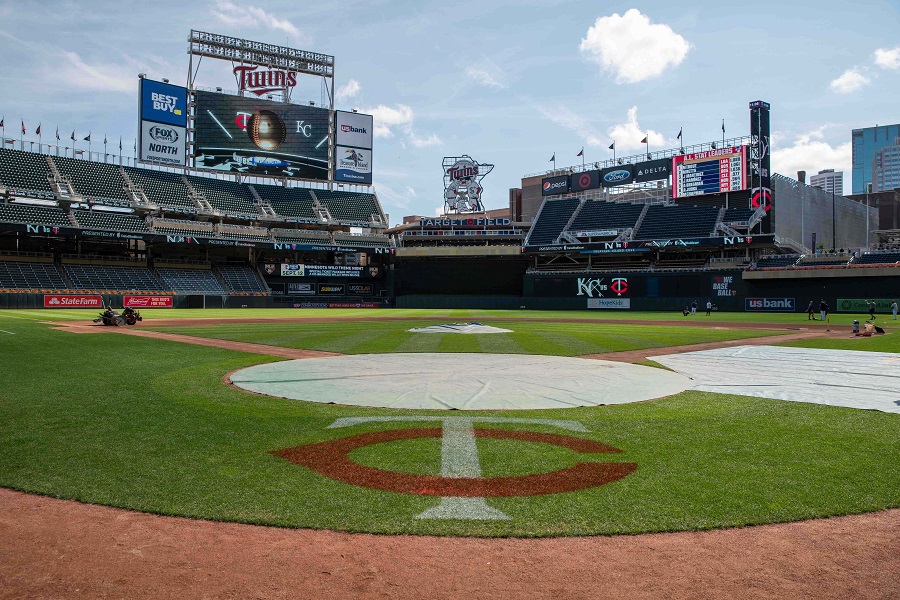 Both Lance Lynn and Logan Morrison were coming off strong showings during the 2017 season. Any indications that they’d need to settle for bargain basement deals in the final hours of the free agency cycle were not apparent throughout the winter. The Twins were able to take advantage of both players and the market last season, but the deals went poorly for all involved. There’s an opportunity for things to be different this time around, and it’ll be worth monitoring to see what the reaction is. After Lynn and Morrison flopped, story lines down the stretch emerged that the Twins would shy away from one-year deals or rogue agent type players. After being non-tendered, Minnesota’s first two acquisitions, Jonathan Schoop and C.J. Cron, were both brought in on one-year pacts. All things are not always created equal however, and this is an instance of that. Cron had a career year in 2018 but was sent packing by the Rays. Grabbed by a system owning familiarity with his background, it had to feel like a nice spot for C.J. And Schoop is on a one-year bounce back opportunity after being an All Star in 2017. More with something to prove rather than a level of scorn, guys like Schoop, Cron, and even Parker could funnel that energy into a Twins club that has improved over the course of this offseason. Given the decline in talent that the Indians have seen, any level of motivating factors outside the field of play may serve to close the gap. There’s still just over a month until pitchers and catchers arrive at sunny Fort Myers for spring training. Obviously, the biggest names should have new homes by then, so things will have to start moving sooner or later. Bryce Harper and Manny Machado aren’t taking one-year deals because teams may be waiting them out, but Minnesota could end up striking late again on someone like Dallas Keuchel or Cody Allen. Should the Twins emerge as a landing spot for a bigger name, I’d imagine it would come in the form of a price drop but still a longer-term pact. Allen or another reliever could be acquired on a one-year deal that wouldn’t come with baggage if the money ends up being right. For the former Cleveland closer, there’s probably a good deal of relationship equity in place with this Twins organization. When the dust settles, I’d certainly hope that Minnesota has another move in them. If they learned anything from last year however, grabbing the guys who feel the process did them a disservice isn’t a good bet. The clearance rack is a fun place at Target, but we’ve seen how human commodities work out at Target Field. Jumping in on a market for guys who shouldn’t still be angling for a role, and compensating them at a level that suggests you believe they’ll advance their own and your cause, may be the bow this team needs to place on jumping the gun into relevancy.
