



Ted Schwerzler
-
Posts
5,149 -
Joined
-
Last visited
Content Type
Profiles
News
Minnesota Twins Videos
2026 Minnesota Twins Top Prospects Ranking
2022 Minnesota Twins Draft Picks
Minnesota Twins Free Agent & Trade Rumors, Notes, & Tidbits
Guides & Resources
2023 Minnesota Twins Draft Picks
The Minnesota Twins Players Project
2024 Minnesota Twins Draft Picks
2025 Minnesota Twins Draft Pick Tracker
2026 Minnesota Twins Draft Tracker: Picks & Bonuses
Forums
Blogs
Events
Store
Downloads
Gallery
Everything posted by Ted Schwerzler
-
The 2018 Major League Baseball trade deadline has come and gone, with the Minnesota Twins jettisoning 20% of their active roster. Beloved figureheads Brian Dozier and Eduardo Escobar are both gone, while one-year fill ins Zach Duke and Lance Lynn followed. Of the moves made, only Ryan Pressly’s time with the organization was truly cut short. Having now moved on from the names above, it’s worth exploring why exactly nothing has changed regarding the outlook for the years ahead.There’s been plenty of hand-wringing over the decisions made by the front office over the past week. The reality is that each one of them were both the right and correct move. Flipping veterans set to become free agents for tangible assets usable down the line is a logical concept. Maximizing the peak value of a relief pitcher, one of the most unstable roles on a team, is also a good bet. There’s no denying that the Twins shed a lot of talent at the end of July, but the reality is that in September that same talent would have left and there’d be nothing to show for it. Getting past the heartache of Dozier's and Escobar’s smiles being gone from the clubhouse, we can look toward the future. That’s where things come back into focus, and the reality is that for 2019 and beyond, the blueprint remains unchanged for the organization. Coming into 2018, the Twins were fresh off a postseason berth and had added plenty of talent through free agency. Supplementing a developed core of players, the front office positioned the active roster for a season of competitiveness within a weak AL Central division. Looking ahead to 2019, that same formula remains. The core for Minnesota will continue to revolve around players like Miguel Sano and Byron Buxton. The breakout of Eddie Rosario has been much welcomed, and the emergence of Jose Berrios continues. Getting more from Max Kepler is a must and picking up steam from a couple of additional guys like Jorge Polanco or Mitch Garver would be a nice boost. This collection of talent that has largely risen through the system together, will continue to be the backbone of any progress going forward. You can’t recap the 2018 season without noting the frustrations circling around that established core however. Both Buxton and Sano experiencing lost seasons is a significant setback. Kepler failing to really break out is unfortunate, and Polanco missing half of the season due to poor choice is suboptimal. For all their faults and failures however, it’s because of those guys that supplementing and signing free agents even made sense in the first place. Going into 2019, the same opportunity will be afforded Minnesota’s front office once again. There’s less than $70 million of committed money in the upcoming year, and the organization should be expected to nearly double that amount when the payroll hits it's ceiling. Whether going all in on a premiere name, or spreading the wealth around a bit, reinforcements should help to bolster what will once again be a talented group on paper. Outside of the organization, the same positive factors will also be in favor of the Twins. While the Indians window of competitiveness should remain open, the rest of the AL Central will continue to be bottom feeders in the foreseeable future. Although the White Sox system is loaded, the talent is not yet ready to emerge. The Tigers remain in the middle of a rebuild, and the Royals have yet to start a very necessary overhaul. For a Twins team that should be well positioned to feast on poor competition, they’ll have plenty of opportunities presented to them over the course of their schedule. At the end of the day, it all comes down to the talent Minnesota has been banking on for years. Sano and Buxton are two of the highest rates prospects to ever come through the system and doing so at the same time should make them cornerstone pieces on a team that provides years of relevance. It’s probably beginning to get late a little early, but they are also just 25 and 24 years-old respectively. We aren’t at all past the point of no return, but there’s no denying that it will be a direct result of their efforts if this team takes the next step forward. As Minnesota’s core has arrived together at the big-league level, it’s become time that spending finally makes sense. The front office, and ownership showed a commitment to that belief this offseason. They’ll get an opportunity to hit the reset button prior to 2019, and the trajectory of this team doesn’t need to change at all. From a year in which things fell flat, there’s a very real opportunity to make noise in the immediate future. Click here to view the article
- 42 replies
-
- 3
-

-
- minnesota twins
- brian dozier
- (and 2 more)
-
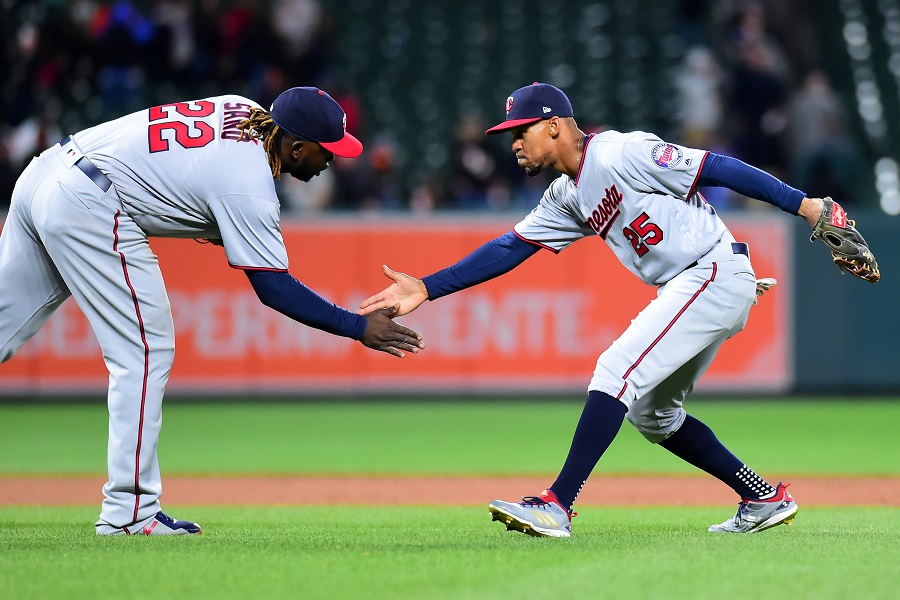 There’s been plenty of hand-wringing over the decisions made by the front office over the past week. The reality is that each one of them were both the right and correct move. Flipping veterans set to become free agents for tangible assets usable down the line is a logical concept. Maximizing the peak value of a relief pitcher, one of the most unstable roles on a team, is also a good bet. There’s no denying that the Twins shed a lot of talent at the end of July, but the reality is that in September that same talent would have left and there’d be nothing to show for it. Getting past the heartache of Dozier's and Escobar’s smiles being gone from the clubhouse, we can look toward the future. That’s where things come back into focus, and the reality is that for 2019 and beyond, the blueprint remains unchanged for the organization. Coming into 2018, the Twins were fresh off a postseason berth and had added plenty of talent through free agency. Supplementing a developed core of players, the front office positioned the active roster for a season of competitiveness within a weak AL Central division. Looking ahead to 2019, that same formula remains. The core for Minnesota will continue to revolve around players like Miguel Sano and Byron Buxton. The breakout of Eddie Rosario has been much welcomed, and the emergence of Jose Berrios continues. Getting more from Max Kepler is a must and picking up steam from a couple of additional guys like Jorge Polanco or Mitch Garver would be a nice boost. This collection of talent that has largely risen through the system together, will continue to be the backbone of any progress going forward. You can’t recap the 2018 season without noting the frustrations circling around that established core however. Both Buxton and Sano experiencing lost seasons is a significant setback. Kepler failing to really break out is unfortunate, and Polanco missing half of the season due to poor choice is suboptimal. For all their faults and failures however, it’s because of those guys that supplementing and signing free agents even made sense in the first place. Going into 2019, the same opportunity will be afforded Minnesota’s front office once again. There’s less than $70 million of committed money in the upcoming year, and the organization should be expected to nearly double that amount when the payroll hits it's ceiling. Whether going all in on a premiere name, or spreading the wealth around a bit, reinforcements should help to bolster what will once again be a talented group on paper. Outside of the organization, the same positive factors will also be in favor of the Twins. While the Indians window of competitiveness should remain open, the rest of the AL Central will continue to be bottom feeders in the foreseeable future. Although the White Sox system is loaded, the talent is not yet ready to emerge. The Tigers remain in the middle of a rebuild, and the Royals have yet to start a very necessary overhaul. For a Twins team that should be well positioned to feast on poor competition, they’ll have plenty of opportunities presented to them over the course of their schedule. At the end of the day, it all comes down to the talent Minnesota has been banking on for years. Sano and Buxton are two of the highest rates prospects to ever come through the system and doing so at the same time should make them cornerstone pieces on a team that provides years of relevance. It’s probably beginning to get late a little early, but they are also just 25 and 24 years-old respectively. We aren’t at all past the point of no return, but there’s no denying that it will be a direct result of their efforts if this team takes the next step forward. As Minnesota’s core has arrived together at the big-league level, it’s become time that spending finally makes sense. The front office, and ownership showed a commitment to that belief this offseason. They’ll get an opportunity to hit the reset button prior to 2019, and the trajectory of this team doesn’t need to change at all. From a year in which things fell flat, there’s a very real opportunity to make noise in the immediate future.
-
The Minnesota Twins have seen some significant turnover in the past few years. From a new front office, to a handful of new faces in the dugout and on the field, the organization has assumed a significantly different shape. Over the course of all the changes, there's been lots of good momentum with regards to the direction of the franchise. In fact, it could be suggested that the front office has been near flawless in their personnel decisions. Near flawless comes with a caveat however, and that's the final phase. Heading into the offseason prior to the 2018 Major League Baseball season, Minnesota had plenty of opportunity. Coming off of a postseason berth, the arrow for the ballclub appeared to be pointing straight up. Given how much young talent filled the 25 man roster, spending to supplement that group finally made sense for the front office. With the opportunity in front of them, Derek Falvey and thad Levine performed admirably. Although Minnesota didn't and Yu Darvish, they were heavily involved on arguably the premiere player available. Pivoting to other assets, Falvey and Levine bolstered the bullpen and rotation, while also tacking on some help for an already imposing lineup. When the dust settle on the open market, there was no other conclusion to draw aside from the reality that the Twins hit a home run. In the offseason, Minnesota dominated. Fast forward to where we are today, and the Twins can look back on a season that lay in ruins. From top contributors falling flat, injuries coming at inopportune times, and key free agents giving the club little, the front office was pushed into sell mode. Making five separate deals, Falvey and Levine flipped four players who are set to be free agents at season's end. Two of those players were signed on one-year deals, making them either assets to a competitive team here, or beneficial trade chips to an organization in position to go for it. Knowing full well that those five players would head out of town leaving Minnesota nothing to show for them, the front office generated 12 new assets in exchange. Much like the offseason, the trade deadline was another effort that highlighted the ability of Minnesota's front office. This duo maximized opportunity, and continued to be a forward thinking collective that best positions the on-field product for future success. That leaves just one key area to examine, and it's part of where it all went wrong. What took place during the season itself? From an outsider's perspective it's hard to fully attribute what level of control each party has in roster decisions. While Derek Falvey and Thad Levine likely have ultimate rule, they've coined collaboration as their calling card since joining the club. With Paul Molitor in tow, there's little argument to be made that his voice doesn't carry some weight as well. It's in the way moves have been handled as a whole that leaves me scratching my head. It's hard to quantify what impact each decision has had on a wins and losses level, but there's no doubt in my mind that the bottom line has been impacted. Ryan LaMarre was given significantly more run than he should have been, Alan Busenitz hasn't been handled properly, Mitch Garver has experienced terrible playing time issues, and Matt Belisle remains among the worst signings across all of baseball this season. Although the more egregious examples, there's been plenty of other questionable hiccups along the way. You'd be hard pressed to argue that Paul Molitor's job wasn't entirely spared by winning Manager of the Year a season ago. He was never the choice of this front office, and has often looked inept when it comes to in game strategy. There's no evidence to suggest front office decisions have been made forcing Molitor to play with half of a deck, but the skipper seems insistent upon doing that to himself at times. As a collective, the front office and manager have done less with more on the field during 2018 and that's an issue needing to be addressed. Going into the offseason, it's a possibility that Molitor could find himself relieved of his duties. Whether or not that takes place, and it probably doesn't need to, the focus for 2019 needs to be upon executing the final phase of comeptition. While stacking the roster in your favor through free agency and development is ideal, promotion, selection, and delegation of playing time dictates how effective those efforts are. Getting the most out of the assets available to you is an area Minnesota must take a step forward in for the year ahead. There's plenty of blame to go around for the final phase, but it's also one that collaboration has a very real ability to address. For more from Off The Baggy, click here. Follow @tlschwerz
- 2 comments
-
- 1
-
-
- minnesota twins
- derek falvey
- (and 2 more)
-
Deadline Deals Do Wonders for Twins
Ted Schwerzler commented on Ted Schwerzler 's blog entry in Off The Baggy
Actually...I believe the stat is no team has made up 6+ G after July 31. The Twins also are chasing a better team, that has the worst schedule in baseball ahead of them. Denying the inevitable leads you in the middle ground.- 7 comments
-
- 2
-
-
- minnesota twins
- eduardo escobar
- (and 3 more)
-
The year was 2012, and a 25 year old Brian Dozier had finally burst onto the scene. No, this wasn't the big leagues, but it was close enough. Spring Training had commenced down in Fort Myers, and the scrappy Southern Mississippi kid had taken the narratives by storm. He was getting hits on a daily basis, and fans were looking for a long term answer at short. The 8th round senior sign from 2009 had put his name in the hat and wasn't going away quietly. Although he didn't go north with the club that year, it didn't take long for them to come calling either. On May 7, 2012 Brian Dozier would make his Major League debut. He tallied his first hit in that game, and his first home run came five games later. Largely however, 2012 was a season to forget. It became quickly apparent that Dozier wasn't suited to play shortstop at the big league level and the reset button was pushed. Fast forward to 2013 and a positional move to second base. Marking his first full season with the Twins, Dozier would play in 147 games. It has since become customary over the course of his seven year career, but Minnesotans were put on notice that season; this man would simply not be held out of the game. In 2014 Brian began to establish himself as a power threat. His 23 longballs followed up a solid 18 in the year prior. While not being the hulking corner infield type, this man helped to wear out the left field bleachers at Target Field. Despite being a snub for the game itself, Brian was able to participate in the hometown 2014 Home Run Derby. Although his efforts fell short, it was a great moment for the entirety of Twins Territory. Not to be denied in 2015, Brian captured his first All Star game nod. A season that saw him come up just shy of 30 homers (28 in total), he received MVP votes for the first time in his career. By this point, it was apparent that the Minnesota Twins had one of the best second basemen in all of baseball. Then, 2016 happened... Harmon Killebrew is still, and will forever be, revered as the best Twins home run hitter of all time. In 2016, Dozier put himself among that rare company. With 42 homers to his credit, he again received MVP votes and further cementer his ability in comparison with the Jose Altuve's and Robinson Cano's of his position. At just 5'11" this was a relatively short man that had an ability at the plate to wear out Minnie and Paulie's hands. Having now become known as a player that gets hot down the stretch, Dozier simply followed status quo in 2017. Although he didn't repeat and eclipse the 40 mark, his 34 homers were the second highest total of his career. Thanks to his offensive accolades, he vaulted himself into Gold Glove consideration and ended up taking home the award. At this point, the self-made slugger had turned a late blooming career into one for the storybooks. Although Brian would've liked it to go differently this season, Minnesota simply couldn't keep up with all of the roadblocks in their way. Another trip to the postseason wasn't going to happen in Twins Territory, but that doesn't mean it won't for Brian. Now on his way to Los Angeles to join the Dodgers, a team he had been tied to in the past, Dozier gets to join a front-runner. He'll make a great up the middle partner for Manny Machado, and many Twins fans will only have to change their shade of blue come October. As the sun sets on this chapter, Dozier leaves the Twins with 167 home runs, 202 doubles, and 491 RBI to his credit. He's a testament to the player that never stops working, and more importantly, the man that always wants more. Both he and his wife Renee have made an impact far greater than what's seen on the diamond, and they'll be sorely missed around Target Field. It's the nature of the business that players come and go, but this is one that left his mark here forever. Thank you Brian, and go Dodgers. For more from Off The Baggy, click here. Follow @tlschwerz
-
Deadline Deals Do Wonders for Twins
Ted Schwerzler commented on Ted Schwerzler 's blog entry in Off The Baggy
This seems to be stated as a negative thing. Even if that ends up being true, it's still significantly more beneficial than the two months remaining for these big leaguers.- 7 comments
-
- 2
-
-
- minnesota twins
- eduardo escobar
- (and 3 more)
-
The Minnesota Twins came into the 2018 Major League Baseball season with postseason aspirations. Coming off of a Wild Card berth a year ago, it was fair to expect this club to challenge the Indians for the American League Central Division title. For a multitude of reasons, things didn't pan out as expected, and that left the club as sellers when it came to the trade deadline. As has often been the case, the front office positioned and executed the endeavor near flawlessly. Having lots of money to spend this offseason, Derek Falvey and Thad Levine bolstered the organization with talent. At the time, all of the acquisitions made a ton of sense, and looked nothing short of great on paper. We know that across the board plenty of players fell flat for Minnesota, and that allowed more shrewd decision making to come into play. Thanks to the short term commitment, and multiple one-year deals handed out, the Twins found themselves with assets able to be moved when their direction took a turn. It's always tough to see a player like Eduardo Escobar leave the organization he broke out in, but the reality is that the Twins maximized his value. Zach Duke and Lance Lynn were set to depart at season's end for nothing, and getting a return helps to stretch their effectiveness for the club into the future. Now a handful of trades in, there's reason to like every one of them. Eduardo Escobar to Arizona for SP Jhoan Duran, OF Gabriel Maciel, and OF Ernie De La Trinidad It's Duran that highlights this package for the Twins. All three prospects are current in Single-A, and given the depth in the Diamondbacks system (or lack thereof), these are three relative lottery tickets. That said, Maciel was highly touted as an International signee and stockpiling some talent that Minnesota may have missed out on when each was available as an amateur is hardly a bad get. Escobar was set to be a free agent at season's end, and now he gets to go be a part of a pennant race. Minnesota could bring him back this offseason (and if they can do so at the right dollar figure, it'd be very appealing), but getting some tangible return for him while they could is a very good move. Ryan Pressly to Houston for SP Jorge Alcala and OF Gilberto Celestino Flipping Pressly stings a bit, as I've been vocal about how good of a pitcher he is for quite some time. In 2018, he truly emerged as one of the best relievers in all of baseball. With another year of team control, it's unfortunate he won't be around to help what should be a competitive Twins team in 2019. That said, the reality is that he's a reliever. With pen arms being fickle, it made sense to flip him for a healthy return at a time when Minnesota had plenty of suitors. Getting a prospect with triple digit velocity in return is a nice piece, and it opens the door for Minnesota to explore some internal options in hops of backfilling Ryan's role. Zach Duke to Seattle for SP Chase De Jong and IF Ryan Costello Here is the first move in which the Twins front office continues to make a one-year deal work for them. Duke was signed for just $2.15 million this offseason and was handed a one-year deal. Having just two months left on his contract and not in a position to provide Minnesota value, the two prospects continue to do so. Although neither piece is a blue chip talent, there's little reason to scoff at the ability to develop and potentially drive major league talent out of players that will be around long after Duke would have left the organization. The Mariners get a lefty killer in return, and Duke's time with the Twins was an effective one. Lance Lynn to New York for 1B Tyler Austin and SP Luis Rijo If you'd ask who among the Twins free agent acquisitions underperformed the most this season, it'd have to be a tossup between Lynn and Logan Morrison. Being able to send the former Cardinals hurler out for a respectable return only highlights the importance of a track record. After missing virtually all of spring training, Lynn has been better since being awful his first month or so. He was striking out batters (and walking them) at career high rates, but there's too much leash there to believe he's cooked. In going to the Yankees, Lynn represents another one-year deal that plays future dividends for the Twins. Austin is out of options, so it would make sense that Minnesota give him ample opportunity to stick down the stretch. Rijo is a lottery ticket that you'd never be wise to turn down. For more from Off The Baggy, click here. Follow @tlschwerz
- 7 comments
-
- 3
-
-
- minnesota twins
- eduardo escobar
- (and 3 more)
-
The Minnesota Twins moved Eduardo Escobar and Ryan Pressly over the weekend. One transaction involved a free agent to be, and the other focused around a return that likely was too good to pass up. With the trade deadline quickly approaching, clearing some extra space should be the goal for Derek Falvey and Thad Levine. As things stand currently Minnesota has a handful of guys capable of being flipped to another team. The names include Brian Dozier, Zach Duke, Fernado Rodney, and Lance Lynn. If they really wanted to, and were presented with a solid return, Kyle Gibson could also enter this list. It's hard to see Minnesota being able to move Ervin Santana after just one or two healthy starts, but he could be an August trade candidate through the waiver process. Looking at the list of candidates having a potential to be moved, there's something that should jump out as an opportunity. All of them are impending free agents, and there's a relatively small likelihood that any of them return to the Twins in 2019. With that in mind, it's time to start planning for the year ahead. Giving those innings to players that will be around is a must, and it's something that Paul Molitor only has two months left to capitalize on. While it's uncertain as to whether or not Nick Gordon can start at the big league level a year from now, or if Stephen Gonsalves can continue to limit free passes, it's become time to find out some of those answers. Guys like Alan Busenitz, John Curtiss, and Jake Reed deserve some real run in the Twins pen, while Zack Littell and Adalberto Mejia could benefit from a couple of starts being strung together in succession. When the Twins constructed the 2018 roster each of the pieces now available on the block made sense to bring in. This club was expected to be competitive, and without a lack of production across the board (combined with untimely injuries and bad luck), that was a reasonable expectation. Now with the narrative of the season having changed, the goal should be getting a jumpstart on the 2019 season. It's hard to decipher whether or not Minnesota will be able to move all of their expiring pieces. Duke and Rodney have performed well this season, and should have appeal to some contenders. Dozier hasn't looked like himself, but a late season spark is all he'd need to supply in order to provide value to a postseason run. Lynn has been the worst of the bunch, but he's trended better of late and has a strong track record of success in his corner. What may be most interesting is what Minnesota decides to do if they can't move some of the pieces. Looking at the roster construction as it currently stands, there's plenty of reason to question where the front office is prioritizing playing time. A guy like Matt Belisle has been both bad and ineffective for multiple organizations this season. Unfortunately, he's been given ample opportunity with Minnesota and that's to the detriment of the multiple more viable pen arms for the year ahead. A decision like that would suggest there isn't much care when it comes to preparing for what's next. Lynn could be DFA'd and the leftovers could see themselves passed through the waiver process, but we don't really have much evidence to suggest that's what lies ahead. By my estimation, the most unfortunate way for the final two months of the season to play out would be to see all of these players stick around and no one get any real opportunity from the farm. You can't just cut bait on big league guys that are producing, but clearing the way for those you'll need to rely upon next season has to be of the utmost importance. We should have more clarity in the coming days, but the hope should be that the front office is on board with the train of thought as well. For more from Off The Baggy, click here. Follow @tlschwerz
- 5 comments
-
- 2
-
-
- minnesota twins
- brian dozier
- (and 3 more)
-
Over the course of the 2018 Major League Baseball season, there have been no two players more mishandled by the Minnesota Twins than Mitch Garver and Jake Cave. Alan Busenitz probably has a case to be included among the duo, but it’s the position players who take the cake for me. With Ryan LaMarre finally being jettisoned, and Cave getting regular run with Byron Buxton out, the stage has completely turned to Garver. Fortunately, he’s beginning to force the Twins hand.Jason Castro’s 2018 season ended on May 4. From that point on, I found myself campaigning for Garver to get the lion’s share of reps behind the plate. Despite being 27 years-old, it’s not as if Garver has never had real prospect stock. He has been included among the Twins top 30 regularly over the past couple of seasons, and as a ninth-round pick, the previous regime saw some significant promise in the kid from New Mexico. Posting a .928 OPS across 88 games with Triple-A Rochester in 2017, Garver found himself in the big leagues for 23 games to end the year. He mustered just a .636 OPS across 52 plate appearances, but for a guy whose bat has always been his calling card, the expectation was that there was more there. From the time Castro’s season ended through the month of May, Garver mustered just a .580 OPS. Having operated in a rotational capacity with the Minnesota starter, he was obviously just looking to find his footing. The Twins brought Bobby Wilson into the mix on May 6, and despite being a known commodity who brings nothing to the table at the plate, Garver’s opportunity to develop and take hold of the position was seemingly stunted. Fast forward to today, and Garver’s bat has completely arrived. Since June he’s slashing .312/.396/.484 with nine extra-base hits and three home runs. Reflective of his approach on the farm, Garver is a disciplined hitter at the dish, and doesn’t bail pitchers out. He’s able to work counts, draw walks, and capitalize on the pitches he should mash. The good news is that for the last two months, he’s been doing exactly that for Minnesota. The bad news however, is that the amount of playing time is still unacceptable. Since June 1st, the Twins have played 48 games, of which Garver has drawn just 27 starts (56%). Bobby Wilson has drawn 24 starts over that same time span, which is one more start than Garver has made behind the plate. For his efforts in the lineup, Wilson is slashing a terrible .181/.244/.236 over that time. Garver’s 1.0 fWAR is 5th best among Twins position players, while Bobby Wilson’s -0.7 fWAR is dead last. There must be some reason why the Twins are willingly putting themselves in a negative position 50% of the time, right? Well, behind the plate, obviously defense weighs heavily on the position. Wilson has been worth 3 DRS to Garver’s -7 mark. Bobby’s 1.2 framing runs also ranks 25th in MLB while Garver’s -4.4 mark checks in at 89th among 99 catchers. So, there’s a very clear divide in defensive quality, but the question is how much weight does each side of the game hold? It’s more than fair to see the value in players like Martin Maldonado or Yasmani Grandal. Both are among the elite defensive catchers across the entire league. While Grandal is actually a very good, well-rounded player, Maldonado draws his opportunities solely on his defensive prowess. The problem with putting Wilson into that argument is that he’s a black hole at the plate, and while better than Garver behind it, he’s only slightly above league average. Last season, the Twins offense found themselves seventh in runs scored across all of baseball. Shrinking it down to just the American League, they were fourth. This season the offense has climbed up to 12th but sat 14th heading into the All-Star break. In the early part of the season that positioning was even worse. Given the slight defensive advantage that Wilson may provide behind the dish, it’s hard not to acknowledge the significant net negative by any semblance of offense from that position in the lineup. Evaluating the Twins where they are now, as sellers, it’s time to put forth a development focus of sorts. Over the course of a season in which you’d hope to compete for a postseason berth, it’s fair to be skeptical as to whether Garver can work behind the plate. For now though, it’s become inexcusable to stifle an OPS nearing .900 because of how a guy with 51 career starts at catcher has responded on defense. Guys like Willson Contreras and Gary Sanchez are notably poor on defense, but their bat has carried them to new heights. While Garver is not close to the company of either of those players, the same process needs to be explored by Minnesota. Catcher isn’t a position many teams are rich in, and the Twins are no exception. Short of trading for the Marlins' J.T. Realmuto, there isn’t going to be a perfect remedy to the situation any time soon either. It’ll be great to have Castro back next season for defensive purposes, but not pushing Garver to be better defensively while capitalizing on his bat seems like poor planning. It’s great to have a guy like Bobby Wilson around to spell whoever the Twins want to start. Right now, Garver needs to be getting at least 75% of the opportunities regardless of whether Molitor or the pitching staff have differing opinions. Click here to view the article
-
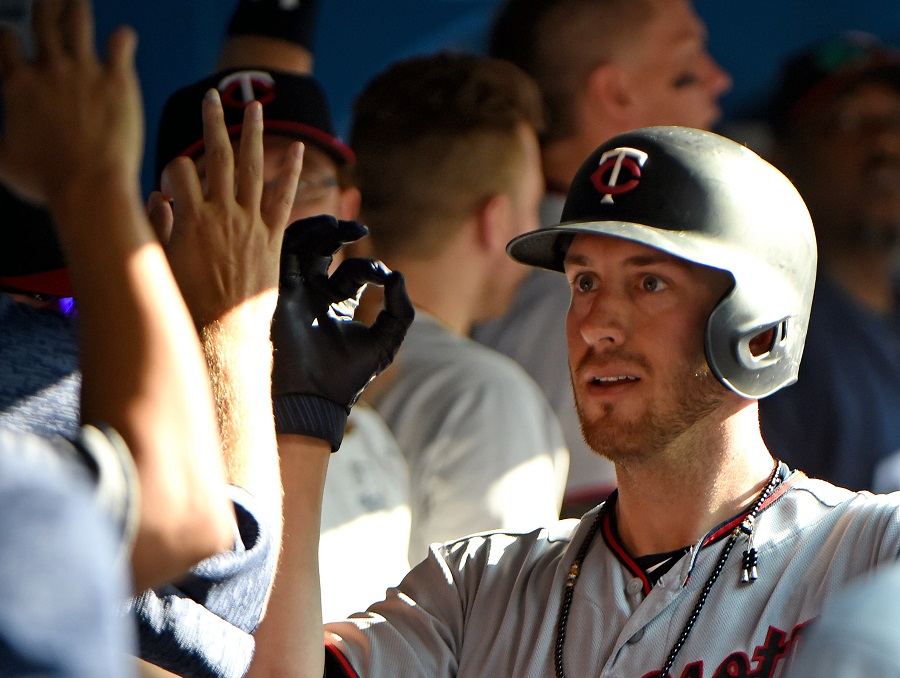 Jason Castro’s 2018 season ended on May 4. From that point on, I found myself campaigning for Garver to get the lion’s share of reps behind the plate. Despite being 27 years-old, it’s not as if Garver has never had real prospect stock. He has been included among the Twins top 30 regularly over the past couple of seasons, and as a ninth-round pick, the previous regime saw some significant promise in the kid from New Mexico. Posting a .928 OPS across 88 games with Triple-A Rochester in 2017, Garver found himself in the big leagues for 23 games to end the year. He mustered just a .636 OPS across 52 plate appearances, but for a guy whose bat has always been his calling card, the expectation was that there was more there. From the time Castro’s season ended through the month of May, Garver mustered just a .580 OPS. Having operated in a rotational capacity with the Minnesota starter, he was obviously just looking to find his footing. The Twins brought Bobby Wilson into the mix on May 6, and despite being a known commodity who brings nothing to the table at the plate, Garver’s opportunity to develop and take hold of the position was seemingly stunted. Fast forward to today, and Garver’s bat has completely arrived. Since June he’s slashing .312/.396/.484 with nine extra-base hits and three home runs. Reflective of his approach on the farm, Garver is a disciplined hitter at the dish, and doesn’t bail pitchers out. He’s able to work counts, draw walks, and capitalize on the pitches he should mash. The good news is that for the last two months, he’s been doing exactly that for Minnesota. The bad news however, is that the amount of playing time is still unacceptable. Since June 1st, the Twins have played 48 games, of which Garver has drawn just 27 starts (56%). Bobby Wilson has drawn 24 starts over that same time span, which is one more start than Garver has made behind the plate. For his efforts in the lineup, Wilson is slashing a terrible .181/.244/.236 over that time. Garver’s 1.0 fWAR is 5th best among Twins position players, while Bobby Wilson’s -0.7 fWAR is dead last. There must be some reason why the Twins are willingly putting themselves in a negative position 50% of the time, right? Well, behind the plate, obviously defense weighs heavily on the position. Wilson has been worth 3 DRS to Garver’s -7 mark. Bobby’s 1.2 framing runs also ranks 25th in MLB while Garver’s -4.4 mark checks in at 89th among 99 catchers. So, there’s a very clear divide in defensive quality, but the question is how much weight does each side of the game hold? It’s more than fair to see the value in players like Martin Maldonado or Yasmani Grandal. Both are among the elite defensive catchers across the entire league. While Grandal is actually a very good, well-rounded player, Maldonado draws his opportunities solely on his defensive prowess. The problem with putting Wilson into that argument is that he’s a black hole at the plate, and while better than Garver behind it, he’s only slightly above league average. Last season, the Twins offense found themselves seventh in runs scored across all of baseball. Shrinking it down to just the American League, they were fourth. This season the offense has climbed up to 12th but sat 14th heading into the All-Star break. In the early part of the season that positioning was even worse. Given the slight defensive advantage that Wilson may provide behind the dish, it’s hard not to acknowledge the significant net negative by any semblance of offense from that position in the lineup. Evaluating the Twins where they are now, as sellers, it’s time to put forth a development focus of sorts. Over the course of a season in which you’d hope to compete for a postseason berth, it’s fair to be skeptical as to whether Garver can work behind the plate. For now though, it’s become inexcusable to stifle an OPS nearing .900 because of how a guy with 51 career starts at catcher has responded on defense. Guys like Willson Contreras and Gary Sanchez are notably poor on defense, but their bat has carried them to new heights. While Garver is not close to the company of either of those players, the same process needs to be explored by Minnesota. Catcher isn’t a position many teams are rich in, and the Twins are no exception. Short of trading for the Marlins' J.T. Realmuto, there isn’t going to be a perfect remedy to the situation any time soon either. It’ll be great to have Castro back next season for defensive purposes, but not pushing Garver to be better defensively while capitalizing on his bat seems like poor planning. It’s great to have a guy like Bobby Wilson around to spell whoever the Twins want to start. Right now, Garver needs to be getting at least 75% of the opportunities regardless of whether Molitor or the pitching staff have differing opinions.
-
Trade Tea Leaves Telling for Twins
Ted Schwerzler commented on Ted Schwerzler 's blog entry in Off The Baggy
Finding a closer is hardly a massive issue. I'm not sure I follow Pressly being "Worth the trouble" as he's one of the best relievers in baseball right now. Hildy has also been very good. The Twins just signed a 43 year old to close this year and he's been great. You develop strong relievers, sign some fliers, and pick someone to shut games down.- 9 comments
-
- 3
-
-
- minnesota twins
- kyle gibson
- (and 1 more)
-
The Minnesota Twins played extras at the big league level today, while the minor league action was split between day and night games. Michael Helman stayed hot for the E-Twins, Akil Baddoo paced the Kernels, and Tyler Wells continued to be unhittable on the mound. Check out the day’s action below.TRANSACTIONS Chattanooga Lookouts DEL C Brian Olson transferred to DL ADD RHP Ryan Eades transferred from DL RED WINGS REPORT Indianapolis 3, Rochester 1 Box Score Tonight the Red Wings employed the opener strategy again and while Gabriel Moya pitched a scoreless first inning, there just wasn’t enough offense to back Kohl Stewart. Working five innings for Rochester, Stewart allowed three runs (two earned) on seven hits while walking two and striking out three. Indianapolis got on the board first with a run in the third inning. Thanks to a solo shot by Willians Astudillo, the lead was erased in the top half of the fourth. Ceding single runs in both the 5th and 6th innings, the Red Wings weren’t able to muster another tally with their five hits on the night. The series is now knotted at one game each with the rubber match scheduled for tomorrow night. LaMonte Wade recorded the lone multi-hit effort with a two-hit game, and Miguel Sano went 1-4 with his first double for the Red Wings. CHATTANOOGA CHATTER Pensacola 5, Chattanooga 4 Box Score As has been somewhat of a trend through the Twins minor league system of late, the Chattanooga Lookouts went with the opener strategy in this one again. Paco Rodriguez worked one inning to begin the game, and the three-run deficit was one the home team never found themselves able to overcome. Rodriguez worked into the second inning but recorded just three outs. Chattanooga found themselves trailing 5-0 entering the sixth inning. After taking over for Rodriguez in the second, Sean Poppen turned in seven solid innings for the Lookouts. He allowed just two runs on his own (one earned) and surrendered five hits. The traditional starter also fanned seven while allowing just one free pass. In the bottom of the sixth, Chattanooga tallied their first runs. Jaylin Davis knocked his seventh double of the season to right field. With the bases loaded Luis Arraez, Chris Paul, and Mitchell Kranson all came around to score. Despite entering the inning with a large deficit, Chattanooga had cut the Blue Wahoos lead to just two. Entering the ninth, the Lookouts were up against it needing a rally to extend this one. Recently reinstated from the disabled list, Chris Paul picked up his 21st double of the season to drive in Brent Rooker. Tanner English then took over as a pinch runner and was in scoring position with two outs. After intentionally walking Kranson, Pensacola was able to set down Davis on strikes. The rally came up just short and Chattanooga dropped the contest 5-4. Looking to even the series, Chattanooga plays host again tomorrow night. A win would allow the Twins Double-A affiliate an opportunity to take the series in game five on Friday. MIRACLE MATTERS Fort Myers 2, Jupiter 1 Box Score Tyler Wells was on the mound for the Miracle in this one, which means that the Twins affiliate was bound to get a good start. When the dust settled, that’s exactly what Wells turned in. Twirling eight innings of one-run baseball, Wells allowed just three hits and one walk while striking out 10. His dominant outing was backed by just enough offense to get on the right side of the final score tonight. The scoring started in the fourth inning, thanks to a Taylor Grzelakowski double. With Royce Lewis coming around to score on the play, Fort Myers had the first run of the game. Alex Kirilloff then continued his hot hitting, and a single was enough to drive in Grzelakowski. Those two runs were all Fort Myers could muster out of their six hits on the evening. Thanks to Wells’ dominance however, that proved to be enough to get the job done. Kirilloff was the lone Miracle hitter to record a multi-hit effort, and that brings his streak of games accomplishing that feat to five. Now batting .374 through 30 games at High-A, he’s making this level look plenty easy as well. Fort Myers was able to take the series over Jupiter with tonight’s victory, and they’ll head to Daytona Beach for a four game set with the Tortugas beginning tomorrow night. KERNELS NUGGETS Cedar Rapids 7, Clinton 2 Box Score Edwar Colina was on the bump to start this one for the Kernels, and thanks to seven strong innings of work, he picked up his fourth victory on the season. The Cedar Rapids starter allowed two runs on six hits but fanned nine and issued zero free passes. The lineup got Colina some breathing room in their first at-bats of the game. Akil Baddoo led off the bottom half of the inning with his ninth long ball of the season and put the home team on top 1-0. With the scoring ceasing for a few innings, it wasn’t until the middle innings that another run was tallied. Michael Davis hit a solo blast of his own, and the first in his time with Cedar Rapids, to stretch the lead to 2-0. With Baddoo on the bases, Jose Miranda dropped a single into centerfield and picked up an RBI in the process. Leaving the bottom of the fifth inning, the Kernels led 3-0. Looking to add some insurance in the late innings, another spark came for the Kernels in the seventh. Ryan Jeffers singled in David Banuelos, and Miranda drove in Davis on his second RBI single of the evening. Capping off the inning, Robby Rinn got in on the action. Lifting an RBI single to center, Baddoo and Jeffers were able to cross the plate as well. Calling it a night for his start after 89 pitches, Colina gave way to Rickey Ramirez and had him staked to a 7-0 lead. Clinton pushed across two runs in the top half of the eighth inning, but that’s all they’d get and this one was never in doubt. Taking the opener of the series, Cedar Rapids will look for similar success in games two and three the next two nights. E-TWINS E-TALK Elizabethton 6, Burlington 5 Box Score Moving to 20-11 on the year, offense has not ever been an issue for the E-Twins in 2018. Picking up six runs on 10 hits today, Tyler Palm was handed a lead and Elizabethton continued to tack on. As the away team, the E-Twins wasted no time in getting on the board. Trevor Larnach drove a sac fly out to left field and Michael Helman came in to score on the play. In the second, Helman did damage on his own, picking up an RBI on an infield single to third. Alex Robles then followed up with a single to center allowing Lean Marrero to cross the plate. Despite giving a run back in the bottom half of the inning, the E-Twins led 3-1 going into the third. Helman, who was 3-for-4 on the day, picked up his second RBI on a fourth inning single to left. As Tyler Webb scored, the E-Twins lead grew to 4-1. In the fifth, an error and a blast allowed Burlington grabbed the lead for the first time. Up 5-4, they’d look to hang on against the powerful Elizabethton offense. Fortunately for the good guys, Marrero ripped his third double of the year in the sixth and Webb scored again. Now knotted up at five all it was time for Elizabethton to regain the lead for good. Robert Molina singled in the top half of the seventh inning, plating Chris Williams and putting the E-Twins back on top. The 6-5 score would hold over the final two innings and was how this one ended. Elizabethton will look for the three game road sweep of Burlington tomorrow evening. GCL TWINS TAKES GCL Twins 3, GCL Rays 0 Box Score Hailing from the Netherlands, 18-year-old Donny Breek was on top of his game today for the GCL Twins. He went five scoreless innings and gave up just one hit while walking one and fanning nine. Getting scoreless relief work from the bullpen, including 2018 drafty pick Erik Cha’s first pro save, the Twins blanked the Rays in this one. The scoring started in the second inning of this contest. Charles Mack drew a leadoff walk and was followed by both Hunter Lee and Kidany Silva. Having the bases loaded as he stepped to the plate, Victor Tademo grounded out. On the play, both Mack and Lee came around to score. The GCL Twins couldn’t push anything else across in the inning, but they had grabbed the 2-0 lead. As the GCL Rays were able to muster just two hits in this contest, there wasn’t much in the form of scoring chances. The Twins added another insurance run in the top half of the ninth to push the lead to 3-0. Erick Rivera singled to pick up his second hit on the day, and later came around to score on a LaRon Smith fielder’s choice. These two teams will square off again tomorrow morning, but the Twins will play as the home team in Fort Myers. STARS OF THE DAY Twins Daily Pitcher of the Day – Tyler Wells 8.0 IP, 3 H, 1 R, 1 ER, 1 BB, 10 K Twins Daily Hitter of the Day – Akil Baddoo 2-3, 3 R, RBI, HR(9) TOP PROSPECT SUMMARY #1 - Royce Lewis (Ft. Myers) – 1-3, R #2 - Alex Kirilloff (Ft. Myers) – 2-4, RBI, 2B #4 - Nick Gordon (Rochester) – 0-4, K #6 - Trevor Larnach (Elizabethton) – 0-4, R #7 - Brent Rooker (Chattanooga) – 1-4, R, BB #8 - Akil Baddoo (Cedar Rapids) – 2-3, 3 R, RBI, HR(9) #12 - LaMonte Wade (Rochester) – 2-4 #13 - Travis Blankenhorn (Ft. Myers) – 0-4, K #15 - Ben Rortvedt (Ft. Myers) – 0-4 #18 - Ryan Jeffers (Cedar Rapids) – 1-4, R, RBI #20 - Luis Arraez (Chattanooga) – 1-2, R, BB THURSDAY’S PROBABLE STARTERS Rochester @ Indianapolis (6:05PM CST) – RHP Fernando Romero (2-2, 2.66 ERA) Pensacola @ Chattanooga (6:15AM CST) – TBD Fort Myers @ Daytona Beach (6:05PM CST) – RHP Griffin Jax (1-1, 3.08 ERA) Clinton @ Cedar Rapids (6:35PM CST) – LHP Tyler Watson (3-4, 4.80 ERA) Elizabethton @ Burlington (6:00PM CST) – TBD GCL Rays vs GCL Twins (11:00AM CST) - TBD Please feel free to ask questions and discuss Wednesday’s games! Click here to view the article
- 45 replies
-
- 2
-
-
- minnesota twins
- akil baddoo
- (and 2 more)
-
Twins Minor League Report (7/25): Baddoo Goes Boom, Wells Locks it Down
Ted Schwerzler posted an article in Twins
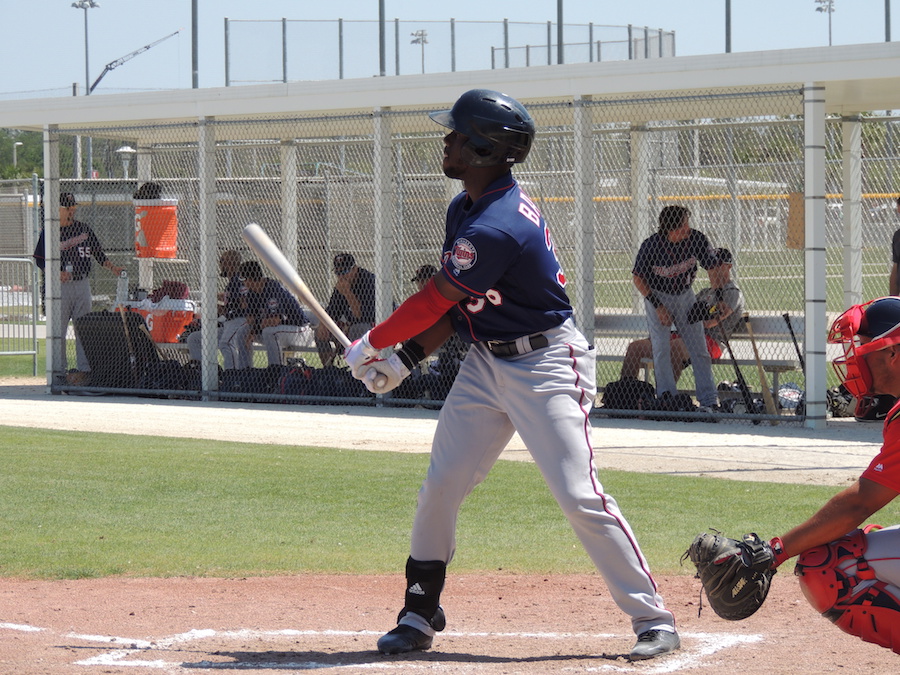 TRANSACTIONS Chattanooga Lookouts DEL C Brian Olson transferred to DL ADD RHP Ryan Eades transferred from DL RED WINGS REPORT Indianapolis 3, Rochester 1 Box Score Tonight the Red Wings employed the opener strategy again and while Gabriel Moya pitched a scoreless first inning, there just wasn’t enough offense to back Kohl Stewart. Working five innings for Rochester, Stewart allowed three runs (two earned) on seven hits while walking two and striking out three. Indianapolis got on the board first with a run in the third inning. Thanks to a solo shot by Willians Astudillo, the lead was erased in the top half of the fourth. Ceding single runs in both the 5th and 6th innings, the Red Wings weren’t able to muster another tally with their five hits on the night. The series is now knotted at one game each with the rubber match scheduled for tomorrow night. LaMonte Wade recorded the lone multi-hit effort with a two-hit game, and Miguel Sano went 1-4 with his first double for the Red Wings. CHATTANOOGA CHATTER Pensacola 5, Chattanooga 4 Box Score As has been somewhat of a trend through the Twins minor league system of late, the Chattanooga Lookouts went with the opener strategy in this one again. Paco Rodriguez worked one inning to begin the game, and the three-run deficit was one the home team never found themselves able to overcome. Rodriguez worked into the second inning but recorded just three outs. Chattanooga found themselves trailing 5-0 entering the sixth inning. After taking over for Rodriguez in the second, Sean Poppen turned in seven solid innings for the Lookouts. He allowed just two runs on his own (one earned) and surrendered five hits. The traditional starter also fanned seven while allowing just one free pass. In the bottom of the sixth, Chattanooga tallied their first runs. Jaylin Davis knocked his seventh double of the season to right field. With the bases loaded Luis Arraez, Chris Paul, and Mitchell Kranson all came around to score. Despite entering the inning with a large deficit, Chattanooga had cut the Blue Wahoos lead to just two. Entering the ninth, the Lookouts were up against it needing a rally to extend this one. Recently reinstated from the disabled list, Chris Paul picked up his 21st double of the season to drive in Brent Rooker. Tanner English then took over as a pinch runner and was in scoring position with two outs. After intentionally walking Kranson, Pensacola was able to set down Davis on strikes. The rally came up just short and Chattanooga dropped the contest 5-4. Looking to even the series, Chattanooga plays host again tomorrow night. A win would allow the Twins Double-A affiliate an opportunity to take the series in game five on Friday. MIRACLE MATTERS Fort Myers 2, Jupiter 1 Box Score Tyler Wells was on the mound for the Miracle in this one, which means that the Twins affiliate was bound to get a good start. When the dust settled, that’s exactly what Wells turned in. Twirling eight innings of one-run baseball, Wells allowed just three hits and one walk while striking out 10. His dominant outing was backed by just enough offense to get on the right side of the final score tonight. The scoring started in the fourth inning, thanks to a Taylor Grzelakowski double. With Royce Lewis coming around to score on the play, Fort Myers had the first run of the game. Alex Kirilloff then continued his hot hitting, and a single was enough to drive in Grzelakowski. Those two runs were all Fort Myers could muster out of their six hits on the evening. Thanks to Wells’ dominance however, that proved to be enough to get the job done. Kirilloff was the lone Miracle hitter to record a multi-hit effort, and that brings his streak of games accomplishing that feat to five. Now batting .374 through 30 games at High-A, he’s making this level look plenty easy as well. Fort Myers was able to take the series over Jupiter with tonight’s victory, and they’ll head to Daytona Beach for a four game set with the Tortugas beginning tomorrow night. KERNELS NUGGETS Cedar Rapids 7, Clinton 2 Box Score Edwar Colina was on the bump to start this one for the Kernels, and thanks to seven strong innings of work, he picked up his fourth victory on the season. The Cedar Rapids starter allowed two runs on six hits but fanned nine and issued zero free passes. The lineup got Colina some breathing room in their first at-bats of the game. Akil Baddoo led off the bottom half of the inning with his ninth long ball of the season and put the home team on top 1-0. With the scoring ceasing for a few innings, it wasn’t until the middle innings that another run was tallied. Michael Davis hit a solo blast of his own, and the first in his time with Cedar Rapids, to stretch the lead to 2-0. With Baddoo on the bases, Jose Miranda dropped a single into centerfield and picked up an RBI in the process. Leaving the bottom of the fifth inning, the Kernels led 3-0. Looking to add some insurance in the late innings, another spark came for the Kernels in the seventh. Ryan Jeffers singled in David Banuelos, and Miranda drove in Davis on his second RBI single of the evening. Capping off the inning, Robby Rinn got in on the action. Lifting an RBI single to center, Baddoo and Jeffers were able to cross the plate as well. Calling it a night for his start after 89 pitches, Colina gave way to Rickey Ramirez and had him staked to a 7-0 lead. Clinton pushed across two runs in the top half of the eighth inning, but that’s all they’d get and this one was never in doubt. Taking the opener of the series, Cedar Rapids will look for similar success in games two and three the next two nights. E-TWINS E-TALK Elizabethton 6, Burlington 5 Box Score Moving to 20-11 on the year, offense has not ever been an issue for the E-Twins in 2018. Picking up six runs on 10 hits today, Tyler Palm was handed a lead and Elizabethton continued to tack on. As the away team, the E-Twins wasted no time in getting on the board. Trevor Larnach drove a sac fly out to left field and Michael Helman came in to score on the play. In the second, Helman did damage on his own, picking up an RBI on an infield single to third. Alex Robles then followed up with a single to center allowing Lean Marrero to cross the plate. Despite giving a run back in the bottom half of the inning, the E-Twins led 3-1 going into the third. Helman, who was 3-for-4 on the day, picked up his second RBI on a fourth inning single to left. As Tyler Webb scored, the E-Twins lead grew to 4-1. In the fifth, an error and a blast allowed Burlington grabbed the lead for the first time. Up 5-4, they’d look to hang on against the powerful Elizabethton offense. Fortunately for the good guys, Marrero ripped his third double of the year in the sixth and Webb scored again. Now knotted up at five all it was time for Elizabethton to regain the lead for good. Robert Molina singled in the top half of the seventh inning, plating Chris Williams and putting the E-Twins back on top. The 6-5 score would hold over the final two innings and was how this one ended. Elizabethton will look for the three game road sweep of Burlington tomorrow evening. GCL TWINS TAKES GCL Twins 3, GCL Rays 0 Box Score Hailing from the Netherlands, 18-year-old Donny Breek was on top of his game today for the GCL Twins. He went five scoreless innings and gave up just one hit while walking one and fanning nine. Getting scoreless relief work from the bullpen, including 2018 drafty pick Erik Cha’s first pro save, the Twins blanked the Rays in this one. The scoring started in the second inning of this contest. Charles Mack drew a leadoff walk and was followed by both Hunter Lee and Kidany Silva. Having the bases loaded as he stepped to the plate, Victor Tademo grounded out. On the play, both Mack and Lee came around to score. The GCL Twins couldn’t push anything else across in the inning, but they had grabbed the 2-0 lead. As the GCL Rays were able to muster just two hits in this contest, there wasn’t much in the form of scoring chances. The Twins added another insurance run in the top half of the ninth to push the lead to 3-0. Erick Rivera singled to pick up his second hit on the day, and later came around to score on a LaRon Smith fielder’s choice. These two teams will square off again tomorrow morning, but the Twins will play as the home team in Fort Myers. STARS OF THE DAY Twins Daily Pitcher of the Day – Tyler Wells 8.0 IP, 3 H, 1 R, 1 ER, 1 BB, 10 K Twins Daily Hitter of the Day – Akil Baddoo 2-3, 3 R, RBI, HR(9) TOP PROSPECT SUMMARY #1 - Royce Lewis (Ft. Myers) – 1-3, R #2 - Alex Kirilloff (Ft. Myers) – 2-4, RBI, 2B #4 - Nick Gordon (Rochester) – 0-4, K #6 - Trevor Larnach (Elizabethton) – 0-4, R #7 - Brent Rooker (Chattanooga) – 1-4, R, BB #8 - Akil Baddoo (Cedar Rapids) – 2-3, 3 R, RBI, HR(9) #12 - LaMonte Wade (Rochester) – 2-4 #13 - Travis Blankenhorn (Ft. Myers) – 0-4, K #15 - Ben Rortvedt (Ft. Myers) – 0-4 #18 - Ryan Jeffers (Cedar Rapids) – 1-4, R, RBI #20 - Luis Arraez (Chattanooga) – 1-2, R, BB THURSDAY’S PROBABLE STARTERS Rochester @ Indianapolis (6:05PM CST) – RHP Fernando Romero (2-2, 2.66 ERA) Pensacola @ Chattanooga (6:15AM CST) – TBD Fort Myers @ Daytona Beach (6:05PM CST) – RHP Griffin Jax (1-1, 3.08 ERA) Clinton @ Cedar Rapids (6:35PM CST) – LHP Tyler Watson (3-4, 4.80 ERA) Elizabethton @ Burlington (6:00PM CST) – TBD GCL Rays vs GCL Twins (11:00AM CST) - TBD Please feel free to ask questions and discuss Wednesday’s games!
-
The Minnesota Twins are fully expected to be sellers at this point, and with just under a week until the July 31 trade deadline there's moves to be made. As a few teams have already started to swap assets, the hope would be that Derek Falvey and Thad Levine have taken notice. Specifically, there seems to be real value when dealing controllable pieces and the Twins have two of the best out there. Today, the Tampa Bay Rays flipped Nathan Eovaldi to the Boston Red Sox for LHP Jalen Beeks. Beeks comes in as the Red Sox 6th best prospect per Baseball America, and Tampa netting him after just 10 starts from Eovaldi post Tommy John surgery seems like some sort of sorcery. At 28, Eovaldi has always been a guy to push the radar gun. He's sitting at 97.4 mph on his fastball this year, and appears to have regained his pre-surgery form just fine. The 4.26 ERA is backed by a 4.28 FIP while his 8.4 K/9 and 1.3 BB/9 are plenty solid. If this is the return Eovaldi commands though, what could Minnesota get for Kyle Gibson? Still arbitration eligible for another season, Gibson doesn't hit the open market until 2020. Eovaldi checks in as a rental, and will only be with Boston for the remainder of 2018. After coming on strong in the second half of 2017, Gibson has continued to prove that he's truly turned a corner. With a 3.57 ERA and a 3.85 FIP in 2018 the former first round pick has been nothing short of a solid arm. He's also amped up his strikeout rate, posting a career best 8.9 K/9 mark while staying on pace with career norms in the walks department. It's fair to wonder whether or not the Twins should hang onto Gibson given the likelihood that they turn things around in 2019. Despite having decent pitching depth, Minnesota would be just fine penciling the former Missouri Tiger into the top half of the rotation next season. Ideally this club is making a postseason push in 2019, and getting another strong performance out of Gibson could be integral to that taking place. The Mets would have the two best arms on the market if either deGrom or Syndergaard were made available. I can't see either of them being moved however, and that means other organizations have an opportunity. If Falvey and Levine are fielding calls on Gibson, a significant haul doesn't appear to be out of the question. In the bullpen, Minnesota finds another premiere asset. Ryan Pressly has been one of the best relievers in all of baseball this season. He owns a 3.45 ERA with a 2.99 FIP. Jumping up his strikeout total each season, he's at a career best 13.0 K/9 in 2018. That mark puts him 9th among MLB relievers, and above guys like Brad Hand, Felipe Vasquez, and Sean Doolittle. Much like Gibson, there could be little incentive for Minnesota to deal Pressly. The former Rule 5 pick has another year of arbitration eligibility and also hits the market in 2020. A focus this offseason was to revamp the bullpen, and removing Ryan from it would hurt big time. That said, Jon Morosi recently reported that the Marlins told Boston neither Jay Groome or Michael Chavis along would be enough to acquire their reliever Drew Steckenrider. While Steckenrider has more team control than that of Pressly, they're very comparable pitchers. At the end of the day I'd be relatively surprised if either Pressly or Gibson was moved. Given the expectation to compete next season, having both of those players on the roster would be beneficial. Moving assets like Brian Dozier and Eduardo Escobar makes much more sense, and should be the focal point of the next few days. Then again if a team comes calling on Gibson or Pressly, ask for the farm and remain grounded in that. For more from Off The Baggy, click here. Follow @tlschwerz
- 9 comments
-
- 2
-
-
- minnesota twins
- kyle gibson
- (and 1 more)
-
Kepler Looking for Next Step
Ted Schwerzler commented on Ted Schwerzler 's blog entry in Off The Baggy
Thanks for the kind words, and more importantly, be open to the idea that BA is truly archaic. It's become somewhat of an epidemic this season. Sure, Bryce Harper is batting .216 but he's got an .836 OPS and leads the league in walks. I tweeted this last night, but the Blue Jays Teoscar Hernandez is hitting .253 but has just an .806 OPS. Give me Harper in that scenario all day long. Batting average has a purpose, but it's a worthless number unless you're putting the weight of OBP or OPS alongside it. -
The Minnesota Twins came into the 2018 season with postseason expectations. After appearing in the Wild Card game a season ago, that result was viewed as a worst case scenario this time around. Fast forward to where we are now, and nothing has gone according to plan. For the Twins to exceed expectations, optimal performance from home grown stars was going to be a must. Byron Buxton and Miguel Sano have drawn the headlines, but where does Max Kepler fall into all of this? During the 2017 campaign, Kepler posted a career best .737 OPS. It was a very slight improvement over his 2016 season, and the thought was that he could be a prime candidate for a breakout in the year ahead. Through 96 games this season, he owns just a .731 OPS and hasn't taken the step forward that was imagined for him. That's the bad news. The good news is this story is still being written. On the surface, it seems that Kepler is simply repeating the same level of production he's had over the course of his big league career. Diving a bit deeper however, we see some narratives that suggest much more could be coming. Before diving into any underlying stats, Kepler's slash line this year is interesting in its own right. His .226 batting average is a career worst, but the .314 OBP is a career best. With 44 walks already, he's going to easily set a career high in that category. The German born outfielder also already has 13 longballs to his credit, and reaching 20 for the first time in his career seems like a foregone conclusion. Striking out less, walking more, and leaving the yard at a higher rate are all avenues for success. Unquestionably, the biggest development for Kepler has been his regained ability to hit left-handed pitching. After posting a .453 OPS against southpaws last season, he now owns an .831 OPS against those same pitchers in the current campaign. Oddly he's fallen off a bit against righties, owning just a .689 OPS, but eight of his 13 homers have come against opposite armed pitchers. Being able to even out the splits, or more desirably mash righties again, would significantly raise Kepler's water level across the board. Looking at the quality of balls Max is putting in play we can see signs of a potential breakthrough ready to happen. Although his average sits at .226 on the year, Kepler is generating an unreasonably low .239 BABIP. That mark is significantly below the .276 tally from 2017, and given the career high 38.6 hard hit rate, there's plenty of room for growth. In previous interviews Kepler has turned his nose at the launch angle revolution. He's actually been goal in saying that it was his goal to put the ball on the ground. By now we know that isn't a viable path to success in the big leagues, and Kepler's numbers have begun to turn away from that. In 2018 he owns a career low 37.9% ground ball rate, and a 45.5% fly ball rate. If there's missed opportunity here, it comes in the form of a HR/FB ratio sitting at 10.3%. Right now Kepler may be getting too far under the ball, and staying within career norms at a 16.6% line drive rate, he's got a bit of room to flatten out the balls he's elevating. Earlier I touched on the heightened level of plate discipline that Kepler has shown this season, and that's obviously a direct results of his efforts as well. In 2018 he's dropped his swinging strike rate all the way down to 7.4%. That new number is nearly a 2% decrease from a season ago, and a full percent lower than his career average. On top of missing the ball less, he's also chasing pitches out of the zone at a career low 24.9%. In short, it adds up to the perfect storm. Right now the sum of Kepler's parts has plenty of room for growth. What's a very encouraging sign is that he's hardly defined as the player with a .226 batting average. Continuing to sting the ball while working to optimize his launch angle should only help to drive the BABIP north. As he's able to settle in more against righties, the damage only has an opportunity to become universal. There's been a lot asked of Kepler in a season where Byron Buxton has been nonexistent, but the growth opportunity for a player that's just 25 can do wonders down the road. No matter what it currently seems like, the best is yet to come for Max Kepler and the Minnesota Twins. For more from Off The Baggy, click here. Follow @tlschwerz
-
A Dish of the Waiting Game
Ted Schwerzler commented on Ted Schwerzler 's blog entry in Off The Baggy
You both inadvertently touch on the reality with Astudillo. He was up for a month, played something like 5 positions, and not once did he catch. If the Twins don't believe in Garver behind the plate, they think absolutely nothing of Astudillo. Disagree with it or not, that's the message they've sent.- 7 comments
-
- 1
-
-
- minnesota twins
- jason castro
- (and 2 more)
-
The Minnesota Twins employed the best catcher in baseball up until 2013, and over his tenure behind the plate, Joe Mauer proved to be one of the five or ten best to ever play the position. Since then however, the role has become somewhat of a black hole for the organization. With Jason Castro shelved in 2018 more question marks have surfaced. The biggest unknown going forward is what do Derek Falvey and Thad Levine do now? Castro will return in 2019 on the final year of a three-year, $24.5 million deal. He'll be coming off a knee surgery that allowed him to play in just 19 games this season. At 32 years old he'll have spent 699 games behind the dish, and the likelihood that his best days are behind him remains real. Initially billed as a framing wizard behind the dish, Castro ranked just 15th in baseball per Baseball Prospectus' Framing Runs metric for 2017. While not awful, that's hardly what the Twins had hoped given the hype around that being his best asset. Castro's .720 OPS last season was 29th among major league catchers with at least 130 plate appearances. To summarize, there was plenty to be desired on both sides of the game even before the injury. Fast forward to 2018, and the Twins catchers have combined to post a .607 OPS. That number comes in 6th worst in all of baseball. Bobby Wilson, who has been the main starter behind the plate in Castro's absence, owns the 6th worst OPS among 55 catchers with at least 100 plate appearances (.507). Mitch Garver has been a significantly better bat, and Willians Astudillo profiles as such also, but neither have been trusted with the gear on. The lack of belief behind the plate really points to the crux of the Twins issues. Regardless of what form Castro is in when he returns, Minnesota has virtually no one else they're willing to turn to. Astudillo has posted strong framing numbers at Triple-A, and held his own throwing out 35% of would be base stealers. In seven games with the Twins (and nearly a month on the roster), he never once drew time behind the plate. Garver has been on the 25 man for the balance of the season, yet has been called upon to start at catcher just 45 times. There's plenty of reason to believe that the Twins should compete immediately in 2019. Projecting another year of virtually everything going wrong seems like a poor bet, and the division should remain plenty open with the only other talented team being the Cleveland Indians. Before they get there however, the Minnesota front office needs to figure out a better blueprint at catcher. Down the stretch, Garver should be prioritized over Wilson. Whether or not he's deemed an acceptable catcher shouldn't matter in a lost season. Figuring out to what degree he can be counted upon is a must. Astudillo seems like a career minor leaguer, and probably isn't the answer either. Should the results point towards a different direction than Garver, the Twins will need to get creative over the winter. Castro could be presumed the starter out of the gate again, but a free agent could be brought in to take away those duties. Potential names on the open market include Yasmani Grandal, Wilson Ramos, and Devin Mesoraco. Should the Twins decide not to supplant Castro, another Chris Gimenez type might make sense in place of Garver. Stepping further away from the situation, the reality is there's a ton of moving pieces and very few certainties for Minnesota. Catcher isn't a position rich in value across the big leagues right now, and while the Twins have two intriguing prospects in Ben Rortvedt and Ryan Jeffers, neither are close enough to make a difference any time soon. The role can't continue to be a revolving door for a team with postseason aspirations however, and driving towards a real answer needs to be a goal sooner rather than later. For more from Off The Baggy, click here. Follow @tlschwerz
- 7 comments
-
- 5
-
-
- minnesota twins
- jason castro
- (and 2 more)
-
The trade deadline is fast approaching, and with the Dodgers recent acquisition of Manny Machado, the best up-the-middle player on the market may be the Minnesota Twins Brian Dozier. Unfortunately he doesn’t play the more premium shortstop position, but he’s been the best second basemen in baseball (not named Jose Altuve) for the past handful of years. His struggles in 2018 seem a bit overstated to me, and the front office could still find themselves commanding a nice haul.Recently, Patrick Reusse wrote a nice article on Dozier in the Star Tribune. The backbone of the column was that Dozier has provided the Twins with an immense amount of value. That’s absolutely spot on and in buying out his arbitration years, the Twins found themselves cashing in big on Brian. For what it’s worth, Fangraphs values Dozier’s production from 2015 until today at $124.7 million; Minnesota will have paid him $20 million at the end of 2018. Where I found myself intrigued, and looking for more information, was the notion that Dozier’s 2018 can be categorized as lackluster. In noting both his run scoring ability and .230 batting average, there were points to suggest that this isn’t what we’ve seen from Brian over the past few years. Fortunately for the player, Dozier himself, and a potential team that may acquire him, those things seem to be a bit blown out of proportion. As of July 18, Brian Dozier owned a .230/.314/.423 slash line. He had scored 60 runs and had launched 16 homers. Here’s how that baseline compares to each of the past two seasons: 7/18/17- .250/.336/.440 43 R 15 HR 7/18/16- .247/.332/.454 48 R 15 HR We can see here, that nothing is that incredibly out of whack during 2018. Although Dozier’s slash line has sagged across the board, there isn’t egregious movement anywhere. Despite batting outside of the leadoff spot (which should’ve taken place much sooner), Brian has continued to cross the plate. While, individually, runs aren’t the most important part of the game on offense (getting on base is), the Twins second basemen has continued to score at a very solid clip. His walk totals remain in line with previous production, coming in at essentially a 1:2 ratio alongside strikeouts. As a whole, nothing on the surface suggests that the status quo has been thrown off for the Mississippi native. In an attempt to figure out where the sag is coming from, the advanced metrics help to paint a bit better picture. In 2018, Dozier is both swinging and missing, as well as chasing pitches, less often. He’s making hard contact at a career high rate, and his BABIP is relatively normalized. The area that jumps out to me is the type of balls he’s putting into play. For a dead pull hitter like Dozier, elevating pitches has always been his plan. That’s the correct route to go, but in 2018 he’s seen a slight shift in flight path that’s allowed too many negative outcomes for balls in play. After a 19% line drive rate last season, that number has dipped to 14.7% in 2018. His nearly 40% ground ball rate is a career high, and his fly ball rate sits at 46.2%. As a whole, the numbers have combined to produce just a 12.1% HR/FB rate, which is his lowest total since 2014. For Dozier to have optimal success he needs to be hitting line drives and fly balls with closer to ideal launch angles. Any time he’s putting the ball on the ground, a negative outcome can be expected. What it comes down to for Brian is finding a more harmonious combination of batted ball trajectories. There isn’t a singular formula that works. In 2015 when Dozier hit 28 homers, he owned just a 13.1% HR/FB rate. However, he also owned a 22.6% LD rate that season and hit the ball on the ground just 33% of the time. In 2016 when he blasted 42 long balls, there was an 18.4% HR/FB thanks to a career best 47.7% FB rate. Right now, taking away ground balls and adding those outcomes to line drives and fly balls would help make up ground. As a whole however, this current version of Dozier isn’t far off from what he’s been any of the previous two seasons. In 2015, he went gangbusters prior to the All-Star break and then slid from there. Since then, he’s become a guy known for his second half outbursts. There’s no reason to believe that isn’t the same scenario waiting to play itself out. In 15 games during July, Dozier owns a .298/.369/.632 slash line. It’s brought his season OPS up nearly .50 points and could be a precursor for the breakout we’ve come to expect. Given the state of the Twins as a whole, and reality that Dozier will move on following the conclusion of this season, I’d still be looking to move him right now. Allowing another team, or even this fan base, to talk down his current production or projection the rest of the way would be a misstep however. The Twins were right to hold on to Dozier a couple of winters ago when the Dodgers were willing to give up only Jose De Leon in return. Minnesota is now also right in looking at moving him, and I’d hardly be shocked if the return doesn’t work out better at this current juncture. Far too often there’s a tendency to be enamored with a poor batting average or a quick assessment regarding what we may have seen. While the 40+ home run outlier shouldn’t have ever become the expectation, a full 162 game season from even the 2018 version of Brian Dozier would still be one of the best at the position in all of baseball. Click here to view the article
-
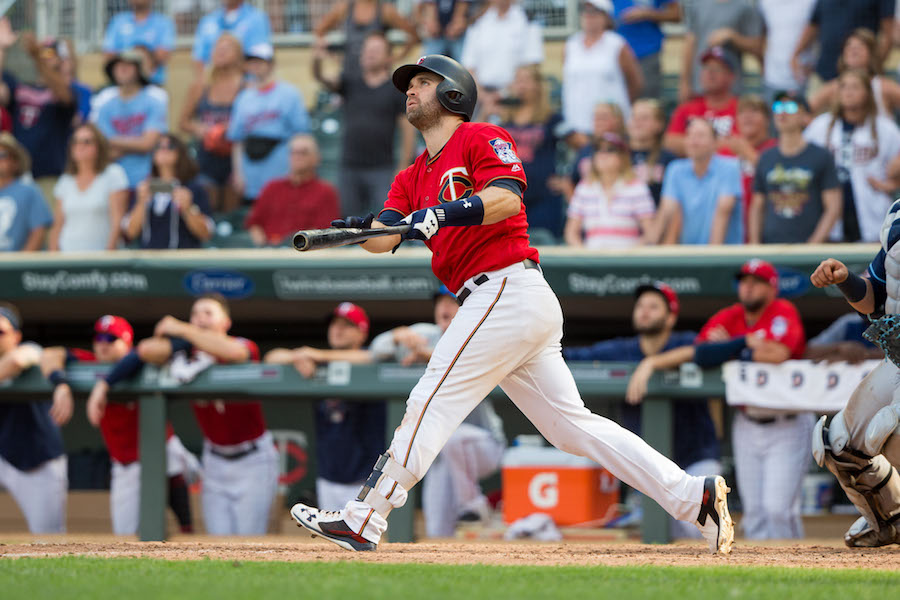 Recently, Patrick Reusse wrote a nice article on Dozier in the Star Tribune. The backbone of the column was that Dozier has provided the Twins with an immense amount of value. That’s absolutely spot on and in buying out his arbitration years, the Twins found themselves cashing in big on Brian. For what it’s worth, Fangraphs values Dozier’s production from 2015 until today at $124.7 million; Minnesota will have paid him $20 million at the end of 2018. Where I found myself intrigued, and looking for more information, was the notion that Dozier’s 2018 can be categorized as lackluster. In noting both his run scoring ability and .230 batting average, there were points to suggest that this isn’t what we’ve seen from Brian over the past few years. Fortunately for the player, Dozier himself, and a potential team that may acquire him, those things seem to be a bit blown out of proportion. As of July 18, Brian Dozier owned a .230/.314/.423 slash line. He had scored 60 runs and had launched 16 homers. Here’s how that baseline compares to each of the past two seasons: 7/18/17- .250/.336/.440 43 R 15 HR 7/18/16- .247/.332/.454 48 R 15 HR We can see here, that nothing is that incredibly out of whack during 2018. Although Dozier’s slash line has sagged across the board, there isn’t egregious movement anywhere. Despite batting outside of the leadoff spot (which should’ve taken place much sooner), Brian has continued to cross the plate. While, individually, runs aren’t the most important part of the game on offense (getting on base is), the Twins second basemen has continued to score at a very solid clip. His walk totals remain in line with previous production, coming in at essentially a 1:2 ratio alongside strikeouts. As a whole, nothing on the surface suggests that the status quo has been thrown off for the Mississippi native. In an attempt to figure out where the sag is coming from, the advanced metrics help to paint a bit better picture. In 2018, Dozier is both swinging and missing, as well as chasing pitches, less often. He’s making hard contact at a career high rate, and his BABIP is relatively normalized. The area that jumps out to me is the type of balls he’s putting into play. For a dead pull hitter like Dozier, elevating pitches has always been his plan. That’s the correct route to go, but in 2018 he’s seen a slight shift in flight path that’s allowed too many negative outcomes for balls in play. After a 19% line drive rate last season, that number has dipped to 14.7% in 2018. His nearly 40% ground ball rate is a career high, and his fly ball rate sits at 46.2%. As a whole, the numbers have combined to produce just a 12.1% HR/FB rate, which is his lowest total since 2014. For Dozier to have optimal success he needs to be hitting line drives and fly balls with closer to ideal launch angles. Any time he’s putting the ball on the ground, a negative outcome can be expected. What it comes down to for Brian is finding a more harmonious combination of batted ball trajectories. There isn’t a singular formula that works. In 2015 when Dozier hit 28 homers, he owned just a 13.1% HR/FB rate. However, he also owned a 22.6% LD rate that season and hit the ball on the ground just 33% of the time. In 2016 when he blasted 42 long balls, there was an 18.4% HR/FB thanks to a career best 47.7% FB rate. Right now, taking away ground balls and adding those outcomes to line drives and fly balls would help make up ground. As a whole however, this current version of Dozier isn’t far off from what he’s been any of the previous two seasons. In 2015, he went gangbusters prior to the All-Star break and then slid from there. Since then, he’s become a guy known for his second half outbursts. There’s no reason to believe that isn’t the same scenario waiting to play itself out. In 15 games during July, Dozier owns a .298/.369/.632 slash line. It’s brought his season OPS up nearly .50 points and could be a precursor for the breakout we’ve come to expect. Given the state of the Twins as a whole, and reality that Dozier will move on following the conclusion of this season, I’d still be looking to move him right now. Allowing another team, or even this fan base, to talk down his current production or projection the rest of the way would be a misstep however. The Twins were right to hold on to Dozier a couple of winters ago when the Dodgers were willing to give up only Jose De Leon in return. Minnesota is now also right in looking at moving him, and I’d hardly be shocked if the return doesn’t work out better at this current juncture. Far too often there’s a tendency to be enamored with a poor batting average or a quick assessment regarding what we may have seen. While the 40+ home run outlier shouldn’t have ever become the expectation, a full 162 game season from even the 2018 version of Brian Dozier would still be one of the best at the position in all of baseball.
-
The Minnesota Twins are still on their All Star Break, but the entire farm system was in action today. 1st round 2018 MLB draft pick Trevor Larnach made his debut for the Elizabethton Twins, while top prospects Royce Lewis and Alex Kirilloff did damage for the Fort Myers Miracle. Stephen Gonsalves turned in a nice outing for the Red Wings, and there was plenty of stat stuffing across the minors.TRANSACTIONS Rochester Red Wings Add INF Alex Perez DEL OF Zack Granite placed on DL with right shoulder contusion Chattanooga Lookouts Add C Brian Olson active from DL RED WINGS REPORT Louisville 2, Rochester 0 Box Score Stephen Gonsalves was on the bump for this one, and he turned in a good outing for Rochester. Holding Louisville scoreless through six innings, the Red Wings simply couldn’t push a run across of their own, and fell by a 2-0 tally. The game would be scoreless through six innings, at which point Louisville would strike first. With John Curtiss on the bump, a single would push across the game’s first run. The Red Wings then found themselves trailing 2-0 entering their last raps in the 9th. (But check out this athleticism from Curtiss to cut down a run) Getting singles from both LaMonte Wade and Andy Wilkins, Rochester would put up a threat. Unfortunately recently acquired Jon Kemmer went down swinging, and Edgar Corcino popped out to end the game. Rochester will head back to upstate New York tomorrow and look for some home cooking in a doubleheader with the Norfolk Tides. CHATTANOOGA CHATTER Chattanooga 4, Mobile 2 Box Score Despite working as a starter for the majority of the season, Anthony Marzi came on in relief for this one. Paco Rodriguez got the ball to kick off the contest, and he turned in a scoreless first inning while striking out two. Marzi then worked four innings and the bullpen finished off the 4-2 victory. Chattanooga got on the board first, thanks to an error in an attempt to throw out Mitchell Kranson. The errant throw allowed Luis Arraez to score, and the Lookouts took the lead. Unfortunately, being on top wouldn’t last long for the Lookouts. Mobile immediately answered against Marzi in the bottom of the fourth. Pushing across two runs, they grabbed their first and only lead of the contest. Fueled by a pair of solo blasts from Jimmy Kerrigan and Brian Navarreto, Chattanooga leapt back out in front 3-2 heading into the eighth inning. Navaretto then singled in Arraez to add an insurance run, and the 4-2 lead would be enough to get the win. In a five game set with the Bay Bears, Chattanooga owns a 1-0 lead and will look to extend that in game two tomorrow night. MIRACLE MATTERS Fort Myers 13, St. Lucie 7 Box Score Early and often was the mantra tonight for the Miracle. Despite having ace Tyler Wells on the bump, Fort Myers put runs on the board in bunches, and in turn gave their pitchers some breathing room. Scoring four runs in the first inning, Fort Myers got a handful of contributors. Alex Kirilloff drove in the first run on an RBI since to score Mark Contreras. Caleb Hamilton scored Joe Cronin from third on a single of his own. Shane Carrier then kept the carousel going with another RBI single to push Kirilloff and Hamilton across the plate. After the Mets chipped two runs off the lead, Royce Lewis gave the Miracle a bit more breathing room. A looping single to center drove in Aaron Whitefield, and Fort Myers led 5-2 in the second. Another push by the Mets had Fort Myers looking at a lead in jeopardy, but Lewin Diaz came through with the insurance this time. In the fifthinning, his sac fly drove in Cronin and it was a 6-4 game. Aaron Whitefield launched a two-run shot in the sixth for his second dinger of the year, and in turn, put Fort Myers up 8-5. St. Lucie battled back again and got within one, 8-7 in the seventh. An eighth inning barrage for Fort Myers put this one away however. A Contreras double drove in two, and then a Kirilloff triple scored another couple of Miracle baserunners. For good measure, Hamilton \drove in Kirilloff from third on a ground out to cap off the five-run eighth inning. Downing the Mets 13-7, Fort Myers was able to cap off a series sweep. They’ll welcome Lakeland tomorrow night for another three-game set. KERNELS NUGGETS Cedar Rapids 2, Great Lakes 1 Box Score With Edwar Colina on the mound, Cedar Rapids was handed six quality innings of scoreless work. Colina was able to fan seven while allowing just three free passes. Neither team scored until the seventh inning, and it was a two-run ninth that put the good guys out in front for good. The Loons tallied the first run of the game on a double in the seventh off of Calvin Faucher. That would be the only run they’d tally however, and the rally caps came out for the Kernels a couple of innings later. Looking at a loss with their last at-bat in front of them, Toby Gardenhire’s squad needed a rally. With Jared Akins and Ben Rodriguez manning second and third, Jacob Pearson was called upon to pinch hit. Coming through with a single to left, both runners scored and Cedar Rapids had their first lead of the contest. Kevin Marnon came on to record the save, his second of the season. The three game series will continue tomorrow evening with Cedar Rapids looking at an opportunity to take it on the road. E-TWINS E-TALK Elizabethton 6, Greenville 5 Box Score 2018 Minnesota Twins first round pick Trevor Larnach made his pro debut in this one, and Tyler Palm spun five solid innings of work. It took some late runs and lockdown efforts from the bullpen, but the Twins walked away with the victory. Trailing 1-0 in the fourth inning, Chris Williams came through scoring Lean Marrero and evening the contest at 1. A couple of innings later, in the bottom of the sixth, Trevor Larnach recorded his first professional hit. The single drove in second-round pick Ryan Jeffers, and hehad his first professional RBI on the same play. A wild pitch to Trevor Casanova allowed Williams to come in from third, and Casanova’s first pro homer drove in Larnach. Up 5-1 headed to the seventh, the Twins were in a nice spot. Having given all of the lead back, Elizabethton needed something in the bottom of the eighth to jump back out in front. Larnach again came through, this time with a fielder’s choice. Jeffers raced home and the 6-5 lead was enough to get the victory. Elizabethton will continue the series with Greenville tomorrow night. It seems likely that Ryan Jeffers may soon be headed towards Cedar Rapids, but the Twins fans should have a few weeks of Larnach to hold them over. GCL TWINS TAKES Twins 8, Orioles 7 Box Score Coming on and working two innings of relief, 2018 Twins draft pick Erik Cha picked up his first professional win in this one. Fellow 2018 draft pick Denny Bentley was able to record his first professional save to close out the victory. The first big inning came from the Twins in the 2nd. A 0-0 game was broken open with a six-run effort. A throwing error allowed Samuel Vasquez to come across as the game’s first run. Alberoni Nunez later ripped his 4th double, to plate another three runs. A fielding error on a ball put in play by Victor Tademo brought in both Nunez and Kidany Silva. Having batted around in the inning, the Twins were way out in front. After having a big inning of their own, the Twins allowed the opposition that feat as well. A five-run 4th had the ball game back to being a close one. Nunez singled and then came around to score on a wild pitch in the 6th. The 7th saw the Twins add another run on an Agustin Marte double. The Orioles would push a run across in the 7th and 8th but were never able to make up the single tally deficit. These two teams will again do battle tomorrow morning. STARS OF THE DAY Twins Daily Pitcher of the Day – Stephen Gonsalves (Rochester) – 6.0 IP, 3 H, 0 R, 0 ER, 5 BB, 3 K Twins Daily Hitter(s) of the Day – Alex Kirilloff (Ft. Myers) – 4-5, 2 R, 3 RBI, 3B TOP PROSPECT SUMMARY #1 - Royce Lewis (Ft. Myers) – 2-5, R, RBI, 2B #2 - Alex Kirilloff (Ft. Myers) – 4-5, 2 R, 3 RBI, 3B #4 - Nick Gordon (Rochester) – 0-4, K #5 - Stephen Gonsalves (Rochester) – 6.0 IP, 3 H, 0 R, 0 ER, 5 BB, 3 K #6 - Trevor Larnach (Elizabethton) – 1-4, R, 2 RBI #7 - Brent Rooker (Chattanooga) – 0-3, BB, K #8 - Akil Baddoo (Cedar Rapids) – 1-4 #12 - LaMonte Wade (Rochester) – 2-3, BB #17 - Lewin Diaz (Ft. Myers) – 0-4, RBI #18 - Ryan Jeffers (Elizabethton) – 1-2, 2 R, 2B #19 - Jacob Pearson (Cedar Rapids) – 1-1, 2 RBI #20 - Luis Arraez (Chattanooga) – 2-4, 2 R THURSDAY’S PROBABLE STARTERS Norfolk @ Rochester DH (4:05PM CST) – RHP Kohl Stewart (0-1, 5.82 ERA/TBD) Chattanooga @ Mobile (6:35PM CST) – RHP Omar Bencomo (5-4, 3.42 ERA) Lakeland @ Fort Myers (6:00PM CST) – RHP Griffin Jax (1-1, 3.38 ERA) Cedar Rapids @ Great Lakes (6:05PM CST) – LHP Tyler Watson (2-4, 5.44 ERA) Greeneville @ Elizabethton (6:00PM CST) – TBD GCL Twins @ GCL Orioles (11:00AM CST) - TBD Please feel free to ask questions and discuss Wednesday’s games! Click here to view the article
- 27 replies
-
- 2
-
-
- minnesota twins
- trevor larnach
- (and 2 more)
-
Twins Minor League Report (7/18): Larnach Debuts and Top Bats Fly
Ted Schwerzler posted an article in Minor Leagues
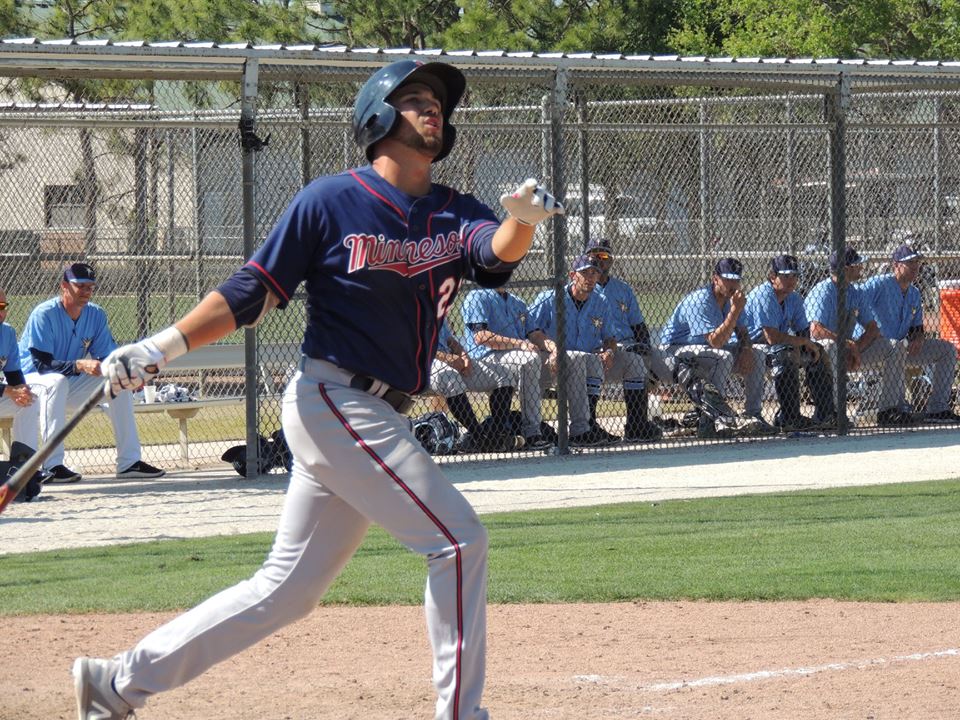 TRANSACTIONS Rochester Red Wings Add INF Alex Perez DEL OF Zack Granite placed on DL with right shoulder contusion Chattanooga Lookouts Add C Brian Olson active from DL RED WINGS REPORT Louisville 2, Rochester 0 Box Score Stephen Gonsalves was on the bump for this one, and he turned in a good outing for Rochester. Holding Louisville scoreless through six innings, the Red Wings simply couldn’t push a run across of their own, and fell by a 2-0 tally. The game would be scoreless through six innings, at which point Louisville would strike first. With John Curtiss on the bump, a single would push across the game’s first run. The Red Wings then found themselves trailing 2-0 entering their last raps in the 9th. (But check out this athleticism from Curtiss to cut down a run) Getting singles from both LaMonte Wade and Andy Wilkins, Rochester would put up a threat. Unfortunately recently acquired Jon Kemmer went down swinging, and Edgar Corcino popped out to end the game. Rochester will head back to upstate New York tomorrow and look for some home cooking in a doubleheader with the Norfolk Tides. CHATTANOOGA CHATTER Chattanooga 4, Mobile 2 Box Score Despite working as a starter for the majority of the season, Anthony Marzi came on in relief for this one. Paco Rodriguez got the ball to kick off the contest, and he turned in a scoreless first inning while striking out two. Marzi then worked four innings and the bullpen finished off the 4-2 victory. Chattanooga got on the board first, thanks to an error in an attempt to throw out Mitchell Kranson. The errant throw allowed Luis Arraez to score, and the Lookouts took the lead. Unfortunately, being on top wouldn’t last long for the Lookouts. Mobile immediately answered against Marzi in the bottom of the fourth. Pushing across two runs, they grabbed their first and only lead of the contest. Fueled by a pair of solo blasts from Jimmy Kerrigan and Brian Navarreto, Chattanooga leapt back out in front 3-2 heading into the eighth inning. Navaretto then singled in Arraez to add an insurance run, and the 4-2 lead would be enough to get the win. In a five game set with the Bay Bears, Chattanooga owns a 1-0 lead and will look to extend that in game two tomorrow night. MIRACLE MATTERS Fort Myers 13, St. Lucie 7 Box Score Early and often was the mantra tonight for the Miracle. Despite having ace Tyler Wells on the bump, Fort Myers put runs on the board in bunches, and in turn gave their pitchers some breathing room. Scoring four runs in the first inning, Fort Myers got a handful of contributors. Alex Kirilloff drove in the first run on an RBI since to score Mark Contreras. Caleb Hamilton scored Joe Cronin from third on a single of his own. Shane Carrier then kept the carousel going with another RBI single to push Kirilloff and Hamilton across the plate. After the Mets chipped two runs off the lead, Royce Lewis gave the Miracle a bit more breathing room. A looping single to center drove in Aaron Whitefield, and Fort Myers led 5-2 in the second. Another push by the Mets had Fort Myers looking at a lead in jeopardy, but Lewin Diaz came through with the insurance this time. In the fifthinning, his sac fly drove in Cronin and it was a 6-4 game. Aaron Whitefield launched a two-run shot in the sixth for his second dinger of the year, and in turn, put Fort Myers up 8-5. St. Lucie battled back again and got within one, 8-7 in the seventh. An eighth inning barrage for Fort Myers put this one away however. A Contreras double drove in two, and then a Kirilloff triple scored another couple of Miracle baserunners. For good measure, Hamilton \drove in Kirilloff from third on a ground out to cap off the five-run eighth inning. Downing the Mets 13-7, Fort Myers was able to cap off a series sweep. They’ll welcome Lakeland tomorrow night for another three-game set. KERNELS NUGGETS Cedar Rapids 2, Great Lakes 1 Box Score With Edwar Colina on the mound, Cedar Rapids was handed six quality innings of scoreless work. Colina was able to fan seven while allowing just three free passes. Neither team scored until the seventh inning, and it was a two-run ninth that put the good guys out in front for good. The Loons tallied the first run of the game on a double in the seventh off of Calvin Faucher. That would be the only run they’d tally however, and the rally caps came out for the Kernels a couple of innings later. Looking at a loss with their last at-bat in front of them, Toby Gardenhire’s squad needed a rally. With Jared Akins and Ben Rodriguez manning second and third, Jacob Pearson was called upon to pinch hit. Coming through with a single to left, both runners scored and Cedar Rapids had their first lead of the contest. Kevin Marnon came on to record the save, his second of the season. The three game series will continue tomorrow evening with Cedar Rapids looking at an opportunity to take it on the road. E-TWINS E-TALK Elizabethton 6, Greenville 5 Box Score 2018 Minnesota Twins first round pick Trevor Larnach made his pro debut in this one, and Tyler Palm spun five solid innings of work. It took some late runs and lockdown efforts from the bullpen, but the Twins walked away with the victory. Trailing 1-0 in the fourth inning, Chris Williams came through scoring Lean Marrero and evening the contest at 1. A couple of innings later, in the bottom of the sixth, Trevor Larnach recorded his first professional hit. The single drove in second-round pick Ryan Jeffers, and hehad his first professional RBI on the same play. A wild pitch to Trevor Casanova allowed Williams to come in from third, and Casanova’s first pro homer drove in Larnach. Up 5-1 headed to the seventh, the Twins were in a nice spot. Having given all of the lead back, Elizabethton needed something in the bottom of the eighth to jump back out in front. Larnach again came through, this time with a fielder’s choice. Jeffers raced home and the 6-5 lead was enough to get the victory. Elizabethton will continue the series with Greenville tomorrow night. It seems likely that Ryan Jeffers may soon be headed towards Cedar Rapids, but the Twins fans should have a few weeks of Larnach to hold them over. GCL TWINS TAKES Twins 8, Orioles 7 Box Score Coming on and working two innings of relief, 2018 Twins draft pick Erik Cha picked up his first professional win in this one. Fellow 2018 draft pick Denny Bentley was able to record his first professional save to close out the victory. The first big inning came from the Twins in the 2nd. A 0-0 game was broken open with a six-run effort. A throwing error allowed Samuel Vasquez to come across as the game’s first run. Alberoni Nunez later ripped his 4th double, to plate another three runs. A fielding error on a ball put in play by Victor Tademo brought in both Nunez and Kidany Silva. Having batted around in the inning, the Twins were way out in front. After having a big inning of their own, the Twins allowed the opposition that feat as well. A five-run 4th had the ball game back to being a close one. Nunez singled and then came around to score on a wild pitch in the 6th. The 7th saw the Twins add another run on an Agustin Marte double. The Orioles would push a run across in the 7th and 8th but were never able to make up the single tally deficit. These two teams will again do battle tomorrow morning. STARS OF THE DAY Twins Daily Pitcher of the Day – Stephen Gonsalves (Rochester) – 6.0 IP, 3 H, 0 R, 0 ER, 5 BB, 3 K Twins Daily Hitter(s) of the Day – Alex Kirilloff (Ft. Myers) – 4-5, 2 R, 3 RBI, 3B TOP PROSPECT SUMMARY #1 - Royce Lewis (Ft. Myers) – 2-5, R, RBI, 2B #2 - Alex Kirilloff (Ft. Myers) – 4-5, 2 R, 3 RBI, 3B #4 - Nick Gordon (Rochester) – 0-4, K #5 - Stephen Gonsalves (Rochester) – 6.0 IP, 3 H, 0 R, 0 ER, 5 BB, 3 K #6 - Trevor Larnach (Elizabethton) – 1-4, R, 2 RBI #7 - Brent Rooker (Chattanooga) – 0-3, BB, K #8 - Akil Baddoo (Cedar Rapids) – 1-4 #12 - LaMonte Wade (Rochester) – 2-3, BB #17 - Lewin Diaz (Ft. Myers) – 0-4, RBI #18 - Ryan Jeffers (Elizabethton) – 1-2, 2 R, 2B #19 - Jacob Pearson (Cedar Rapids) – 1-1, 2 RBI #20 - Luis Arraez (Chattanooga) – 2-4, 2 R THURSDAY’S PROBABLE STARTERS Norfolk @ Rochester DH (4:05PM CST) – RHP Kohl Stewart (0-1, 5.82 ERA/TBD) Chattanooga @ Mobile (6:35PM CST) – RHP Omar Bencomo (5-4, 3.42 ERA) Lakeland @ Fort Myers (6:00PM CST) – RHP Griffin Jax (1-1, 3.38 ERA) Cedar Rapids @ Great Lakes (6:05PM CST) – LHP Tyler Watson (2-4, 5.44 ERA) Greeneville @ Elizabethton (6:00PM CST) – TBD GCL Twins @ GCL Orioles (11:00AM CST) - TBD Please feel free to ask questions and discuss Wednesday’s games!
-
The Minnesota Twins came into the 2018 Major League Baseball season expecting to compete for a second straight postseason berth. Unfortunately, the offense has been nonexistent for the bulk of the schedule, and that's led to a situation where the club looks like it will sell off assets prior to the trade deadline. The immediate success of the organization lies on the backs of its former top prospects; chief among them are Miguel Sano and Byron Buxton. Sano and Buxton have had nothing short of disastrous seasons. They both find themselves down in the minors right now, and the latter is on the shelf with a hand injury. Whether or not Minnesota gets anything of substance out of either this season is largely unimportant at this point. What does matter however, is that both players are trending in a direction to be difference makers out of the gate in 2019. Now having spent a substantial amount of time down on the farm, it's worth checking on each to see where they're at. Miguel Sano After looking like an uncommitted shell of the player he both could and should be for the Twins, Sano was sent to High-A Fort Myers. Rather than scripting it like a punishment, Minnesota's front office communicated that this was a reinvestment in the player. Everyone in the organization wants more from Sano, they all believe it's possible, and the goal is to get the player on that same page as well. Although High-A is a drastic drop in surroundings, the idea is that Fort Myers essentially serves as the Twins hub. There's a training center and support staff there that is unrivaled across the rest of the minor league system. While performance is part of the equation, conditioning and support are arguably the greater piece of the pie. Expecting this to be best handled in South Florida, it made the most sense as a destination. Now through 19 games with the Miracle, Sano owns a .328/.442/.453 slash line. He's contributed four extra-base hits (two homers), and owns a 21/13 K/BB ratio. Looking at the numbers, there's some things to like and others to be skeptical about. Firstly, it's disappointing not seeing a higher power output from a guy who should be feasting on High-A pitching. Just two home runs in 77 plate appearances is a rather paltry display. It's fair to reserve judgement however, as the goal may be working on specific outputs in game situations as opposed to simply letting it fly. On the flip side, the strikeout to walk ratio is something that has to please Minnesota brass. Again, Sano should be much better than this level, but drawing walks at a higher rate is something he must do in the big leagues. As a power hitter, strikeouts will never be a significant problem so long as the longballs and free passes even them out. From my vantage point, I'm unable to evaluate Sano's off the field progress. Reports have all suggested he's been very committed to his conditioning program and is invested in the plan set forth for him. I've been vocal about Miguel's weight not ever being the real issue, and instead believing that it all revolves around a work ethic that strives for more. If the Twins are happy with the desire and drive they see from their promising slugger, that's as valuable as anything Miguel can bring back to the big leagues with him. It's hard to evaluate whether or not Sano should have any sort of timetable for a return to the Twins. Again, I don't think the numbers are the true barometer that should inform fans of an impending promotion. The talent and ability is all there for Sano; it simply comes down to whether or not he wants to get the most from it. Byron Buxton Nearly a polar opposite from the Twins first basemen, Buxton's issue has never been that he isn't committed or willing to work. Taken off the field due to injuries and ineffectiveness, it's all about whether or not Buxton can harness all of his abilities in conjunction with one another. Minnesota handled Buxton's injury situation rather oddly this year. There was time missed due to migraines, and then a skipped rehab assignment. Then there was a broken toe, and the blessing to play through an injury that hampered any real ability to be effective at the plate. Following a necessary rehab stint, the organization the decided Buxton's bat wasn't where it needed to be, and optioned him to Rochester for good. Fast forward to today, and a hand ailment has the talented outfielder on the shelf yet again. On the season, Buxton has played in just 47 games across all levels. He owns an MLB worst .383 OPS and has slashed .232/.303/.377 in 18 games with Triple-A Rochester. There's two trains of thought when it comes to the production, and it's either a result of inability at the current time, or there's the question as to whether lack of consistency has hampered any ability to settle in. Faults of both injuries and the Twins handling of them, Buxton hasn't found any sort of stability in 2018. It's been nothing short of a lost season, and right now it's a waiting game to see if that narrative can be corrected. There's significantly too much talent in the superstar outfielder for this to go on forever. Right now though, there has to be a strive towards getting him back on the field and keeping him there. After he heals from this wrist sprain, my hope would be that there's a few games at Triple-A used as a rehab assignment. From there, I'd like to see him sent back up to the Twins to compete in the big leagues. No matter how much he's currently scuffling at Triple-A, we've already seen him master that level. What Byron needs is the ability to adapt and compete at the plate in the majors. In a lost season for the club as a whole, the continued development at the dish needs to take place where it matters. Sparking his bat on the farm, only to then have him start over following a promotion, does no good. The Twins need to allow Buxton to settle into the level he appears destined to compete at for a long time. Developing consistency in a season that's had very little for him is a must. There's significant opportunity left to be had in 2018, and capitalizing on that would be best for Buxton as well as the Twins. For more from Off The Baggy, click here. Follow @tlschwerz
- 3 comments
-
- 2
-
-
- minnesota twins
- byron buxton
- (and 1 more)
-
Over the past week or so, the Minnesota Twins have certainly brought a higher level of intrigue to their 2018 season. Despite getting so little out of their offense for so long, they've at least made the idea of being sellers, one worth questioning. Ultimately I'm not sure 2018 is salvageable, but expecting them to again be competitive in 2019 is a very real proposition. For those wondering about what's even further out, this one is for you. I have been sitting on this question from "twins dude" on Twitter for over a month now. Wondering what the Twins lineup might look like in five years, I was waiting for a good opportunity to take a look. Immediately following the Futures Game and during this lull of Twins baseball, it seemed as good of a time as any. So, with all of that out of the way, who takes the field where in 2023? This is my stab at that answer: C- Ryan Jeffers The 2018 2nd round pick has gotten off to a hot start over his first 20+ professional games. While there were questions about whether he could stick behind the plate, Minnesota believes the answer is yes. The bat will play, and he's got a decent shot to race ahead of Ben Rortvedt in getting to the big leagues. 1B- Miguel Sano For this to be accurate, a few factors would come into play. First and foremost, Sano would need to truly dedicate himself to his craft. Even in sliding over to first from third, staying in better shape and being committed to giving the Twins more than just a shell of himself is a must. He'll be eligible for free agency in 2022, so staying with Minnesota behind that point would be reflective of a renewed belief in his ability and work ethic. 2B- Nick Gordon We should see Gordon as soon as 2018, and immediately taking over for Brian Dozier makes a ton of sense. He's probably not quite ready to step in as an above-average big leaguer, but he's still developing. Nick has a completely different skillset than that of Brian, but it's one that Derek Falvey and Thad Levine could safely deploy at the top or bottom of the lineup. SS- Royce Lewis Superstar, that's really the only word I'm coming up with when trying to describe Lewis. He's an incredible athlete, top tier baseball player, and an even better person. I'd be far from shocked if we don't see him in the big leagues by 2020. He could slide to the outfield, but Minnesota would obviously be better suited if he stays at short. He's not going to be the best fielder, but from an all around standpoint, he could be the next Carlos Correa. 3B- Jorge Polanco I think Polanco remains in the Twins long term plans. He's been fine as a shortstop, and has really worked at improving himself defensively. That said, it's probably more likely he moves off than position than Lewis. Not the typical slugging corner infielder, Polanco has plenty of pop to be an asset offensively as well. LF- Eddie Rosario Having gone from a free winging question mark to one of the best outfielders in the game, Eddie Rosario has absolutely broken out in 2018. This isn't some flash in the pan, as we've seen it substantiated for nearly a full year now. The Twins should be looking to extend him through arbitration and into free agency. CF- Byron Buxton At 24, it's still way too early to give up on one of the best defenders baseball has ever seen. Buxton is incredible in center field, and I believe the bat is legit too. We've had to practice a significant amount of patience with him, but in the not-so-distant future I think we see it pay off. He needs to do a better job of staying healthy, but there's a big time breakout waiting to happen here. RF- Alex Kirilloff Shooting up prospect lists this season, you'd hardly remember that Kirilloff missed a full year due to Tommy John surgery. Seen as a bat only prospect coming out of high school, the offensive upside has been through the roof. He crushed Low-A, and has started off well at High-A Fort Myers. I'd imagine we could see him in the big leagues by 2020, and that thump from the left side of the plate would be incredibly welcomed. Max Kepler is going to be in the mix here, but he'll need to flash more consistency than we've seen thus far. DH- Brent Rooker/Trevor Larnach Larnach is probably the better outfielder of this duo, but Rooker can slot in at first base in the big leagues. Rotating through some of those defensive positions while being focused on hitting first, both of these bats have an opportunity to do some serious damage at the highest level. Rooker needs to cut down on the strikeouts, and work more walks, but the power is absolutely real. We've yet to see what Larnach can do professionally, but his collegiate approach was a very good one, and there's plenty of thump off his bat as well. These two would be among the better athletes cast as DH's in the majors. If I were to construct a lineup out of this group, it might look something like this: Buxton CF Lewis SS Kirilloff RF Sano 1B Rosario LF Rooker DH Polanco 3B Jeffers C Gordon 2B Five years is a long time out, and there's so much that can happen prior to any of this actually taking place. It's fun to look at what's ahead, but given the immediate future of this club and the opportunity within the division, it's also best to not miss what is right around the corner. For more from Off The Baggy, click here. Follow @tlschwerz
- 1 comment
-
- 3
-
-
- minnesota twins
- royce lewis
- (and 1 more)
-
Despite sweeping the hapless Baltimore Orioles, and then taking a series from the equally terrible Kansas City Royals, the Minnesota Twins are still trending towards being sellers in 2018. With a couple more weeks before the July 31 non-waiver trade deadline, Derek Falvey and Thad Levine are coming down to crunch time in terms of stockpiling assets. Minnesota doesn’t have much in the form of big pieces, Kyle Gibson and Eduardo Escobar potentially chief among those, but arguably the most intriguing name remains Brian Dozier.A late-bloomer, Dozier didn’t reach the big leagues until 25, and he was initially cast as a shortstop. We saw how that went, and he was quickly sent over to second base. Fast forward two more years, and the 28 year-old was a first time All-Star while being arguably the best power-hitting two-bagger in the sport. Since then, he’s won a Gold Glove and picked up progressing numbers of MVP votes each season. 2018 has hardly been a great start for the Twins star, but it follows along the same path he has blazed plenty of times to this point. Now well into July, Dozier is beginning to do Brian-like things, and his second half surge appears to have started. Despite just a .732 OPS on the season, he’s got a .905 mark across his last 21 games. If you shrink the sample size down to just the month of July, Brian is hitting .317/.378/.683 with seven extra-base hits (four home runs) across 11 games. In short, it’s a great time for him to be going well. After being the subject of trade talks two winters ago, Minnesota wisely decided that their premium player was worth more than the Jose De Leon return that the Dodgers were willing to part with. Forget that De Leon has since undergone Tommy John surgery after being traded to the Rays, I’m still not convinced Minnesota can’t get an equal or better package at this point. Manny Machado will be the cream of the crop come trading season, but Dozier is capable of being a big get up the middle for a team looking to make a postseason push. Concerning the Twins however, Paul Molitor will be tasked with filling his position in the field, as well as the gaping hole in the lineup. From where I stand, I can see only two options in how to handle the days post-Brian Dozier. In my mind, only one of them is right, but that doesn’t necessarily make it any more likely. Let’s explore: Option A: It’s Nick Gordon Time In dealing Dozier, the Twins essentially wave the white flag on their season. While they could be sellers and pivot as they did a year ago, moving one of their best players is something you wouldn’t expect to come back from. In operating this way, the focus needs to turn from winning games, into focusing on process for 2019. Given the expectation that Nick Gordon will become the Twins second basemen of the future, getting him up to the big leagues, and acclimated, should be of the utmost importance. He’s scuffled mightily at Triple-A Rochester, posting an OPS just north of .600. I really don’t care about his production however. He dominated at Double-A, and there’s been some questions surrounding his bat ever since he was drafted. Allowing him to get in the field, settle into a new role, and get used to the rigors of big league baseball is a must. The more high-end pitching he faces now, the less of a learning curve there should be expected in the season ahead. The core of Byron Buxton, Miguel Sano, Jose Berrios, Max Kepler, and Eddie Rosario will ultimately determine what this team can accomplish in the next few years. As veterans step aside however, the graduation of top prospects such as Gordon, will need to go smoothly to fill in. Now is not the time to worry about starting his clock or whether he’s going to step in and be all-systems-go right away. Get young Flash in there, and take what you can into the offseason to work on. Option B: Utility All Over Ehire Adrianza was recently activated from the disabled list, and returns to the Twins having had a nice little hot streak before landing on the shelf. He was going to lose his starting role at SS when Jorge Polanco returned regardless, but now there isn’t a clear avenue to playing time. Minnesota has pushed Adrianza out into the outfield at times over his tenure here, but he’s yet to play second base this season (in part because Dozier has been there for 89/90 games). Should Minnesota go this route, Adrianza likely becomes the starter at second. Polanco would stay at short, as it’s his long-term home, and Eduardo Escobar remains at the hot corner. In operating this way, the Twins would really be up a creek without a paddle. Adrianza doesn’t figure into the future plans, and they’d be past the point of prioritizing wins. Unfortunately, it’s hard to not see this as a likely scenario, given how much run players like Ryan LaMarre and Bobby Wilson have been given. At the end of the day the hope should be that if the Twins do sell, and most importantly regarding Brian Dozier, the position is turned over to the man in waiting. Stephen Gonsalves, John Curtiss, Trevor May, and a handful of other players should make their way up from Triple-A, but Gordon must be chief among them. Once a team has decided to close shop on a given season, making sure to learn something and get the most out of every game from a development standpoint needs to be the focus. Selling off assets and failing to capitalize on opportunity- allowing process and ability to drive results could very well have the Twins staring at the next big prospects to be sent back down in hopes of figuring it out. Click here to view the article
