



John Bonnes
-
Posts
6,794 -
Joined
-
Last visited
-
Days Won
4
Content Type
Profiles
Minnesota Twins News, Rumors & Analysis
Minnesota Twins Videos
2026 Minnesota Twins Top Prospect Rankings
2022 Minnesota Twins Draft Picks & Signing Bonuses
Minnesota Twins Trade & Free Agent Rumors
Minnesota Twins Fan Guides & Resources
2023 Minnesota Twins Draft Picks & Signing Bonuses
The Minnesota Twins Players Project
2024 Minnesota Twins Draft Picks & Signing Bonuses
2025 Minnesota Twins Draft Picks & Signing Bonuses
2026 Minnesota Twins Draft Picks & Signing Bonuses
Forums
Blogs
Events
Store
Downloads
Gallery
Everything posted by John Bonnes
-
Yeah, I actually knew he was a local financial planner, but I can't remember why. He's with Wealth Management Group, a local firm which is featured on radio commercials (and possibly has their own programs) pretty regularly, so I imagine that's how I knew that. The story above was seemingly done because they were expanding to Chicago and Illinois.
-
 Pitching will be an especially important subject for the Twins this offseason. So we’re especially excited that Matthew Trueblood, known for his analysis surrounding pitching at Baseball Prospectus, will be joining our guest writer ranks this year. His meaty essay in the 2020 Offseason Handbook takes a look at a defensive aspect that was mostly overlooked as the season progressed: the Twins' decreasing use of the shift. Image courtesy of © Raj Mehta-USA TODAY Sports Pitching will be an especially important subject for the Twins this offseason. So we’re especially excited that Matthew Trueblood, known for his analysis surrounding pitching at Baseball Prospectus, will be joining our guest writer ranks this year. His meaty essay in the 2020 Offseason Handbook takes a look at a defensive aspect that was mostly overlooked as the season progressed: the Twins' decreasing use of the shift. Here's a taste: Shifting is not a universal good; it must be implemented thoughtfully and effectively. Still, the high-level evidence suggests the Twins were better when they deployed shifts more often. In August, only the Pirates allowed a higher BABIP than did the Twins. In September, only the Tigers and Cubs did. In analysis of individual pitchers, BABIP is often treated as an indicator of luck, but at the team level, it speaks to the quality of the defense. Minnesota’s was, down the stretch, one of the worst in baseball. Not only does Trueblood breakdown the impacts of decreasing the frequency of the shift, he breaks down the impact and the variation behind each individual starting pitcher. And since this is an offseason-focused publication, he looks at the free agent starting pitchers they Twins might acquire and their history (and in some cases, criticism) of using the shift. It’s all done so you can come up with your own offseason blueprint and see how it compares to that of the Twins brain trust. Secure your digital copy now, and you'll get it before it's officially available to the public (ETA is around the conclusion of the World Series). You can name your price but the minimum for preorders is $10. You can only get it early if you preorder, so grab yours now! View full article
-
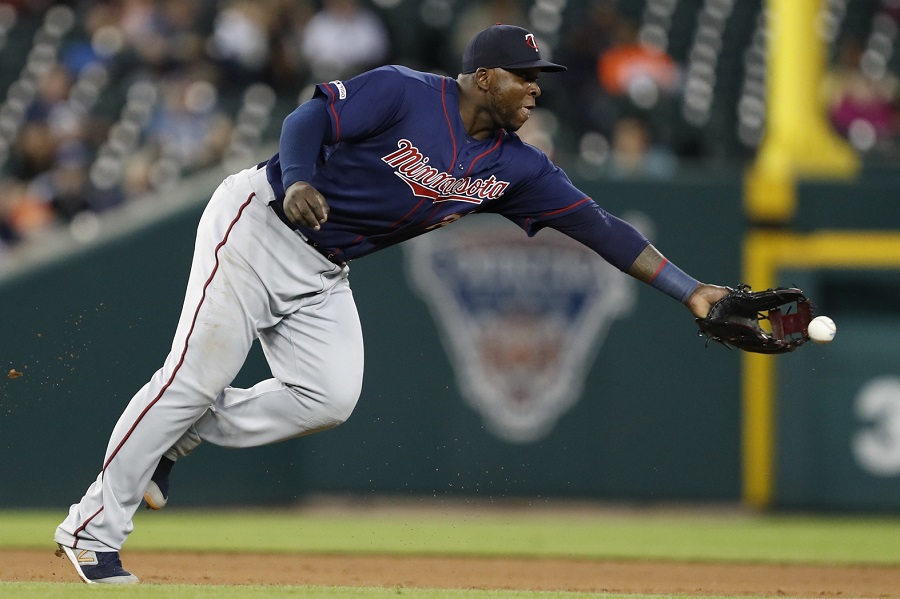 Here's a taste: Shifting is not a universal good; it must be implemented thoughtfully and effectively. Still, the high-level evidence suggests the Twins were better when they deployed shifts more often. In August, only the Pirates allowed a higher BABIP than did the Twins. In September, only the Tigers and Cubs did. In analysis of individual pitchers, BABIP is often treated as an indicator of luck, but at the team level, it speaks to the quality of the defense. Minnesota’s was, down the stretch, one of the worst in baseball. Not only does Trueblood breakdown the impacts of decreasing the frequency of the shift, he breaks down the impact and the variation behind each individual starting pitcher. And since this is an offseason-focused publication, he looks at the free agent starting pitchers they Twins might acquire and their history (and in some cases, criticism) of using the shift. It’s all done so you can come up with your own offseason blueprint and see how it compares to that of the Twins brain trust. Secure your digital copy now, and you'll get it before it's officially available to the public (ETA is around the conclusion of the World Series). You can name your price but the minimum for preorders is $10. You can only get it early if you preorder, so grab yours now!
-
Who's a more valuable trade asset, Buxton or Kepler?
John Bonnes replied to John Bonnes's topic in Minnesota Twins Talk
First, a gentle chastisement: in general, if people want to talk about a potentially relevant Twins topic at Twins Daily, your choices are to participate or not to participate, which is perfectly valid. But saying "this is a terrible topic" or "people shouldn't be talking about this" is essentially trolling and can get moderators' ire. And for good reason. It's the kind of thing that discourages exploring topic and expressing opinions in a forum. I assume what you're really saying here is "why the hell would we want to trade either one of them" and the answer to that is "I agree, but...". I really don't want to. But I also don't think either one is completely off the table for the right offer. We've seen the Mets ask about a centerfielder. A lot of the National League teams were asking for major-league ready or young players over which they can have team control for a number of years. Calling those teams about pitching, which is a lot more dire need than an outfielder for this team. -
I've been having this discussion in my email, so I might as well throw it out to the group of learned Twins fans: At the trade deadline, there we talks about Noah Syndergaard. Instead, the Mets traded for Stroman, went on a tear, and won 86 games, being the top team in the NL to NOT make the postseason. They look like they're more ready to add than subtract this offseason, though they still have some pretty expensive players on the books, and I'm not sure what their payroll situation is. Here is their baseball-reference page. The only real weakness in the lineup is in CF, which explains the Buxton rumors. Here is their Cot's contract page. I notice Todd Frazier is a free agent. Would they have interest in Sano? (And would you be willing to move him?) Both he and Syndergaard would be under contract for two more years. Another option: Kepler, who showed he can play CF and would look pretty good in that mostly RHed lineup. Here's the thing: if they're competing, I would think prospects who are not major-league ready would be of limited interest to them. After last season, their second-year GM might be thinking a lot more about having a good year to keep his job. What have you got?
-
On a monthly basis we like to check in on the health of the site and bring news and notes to the community. September was a remarkable month in stories, authors, traffic, and community building. Let’s cover it. On a monthly basis we like to check in on the health of the site and bring news and notes to the community. September was a remarkable month in stories, authors, traffic, and community building. Let’s cover it. Stories and Authors You are hearing from more and more writers at Twins Daily, as we pointed out in last month’s report, and we find that thrilling. But since September was the last month of the third quarter, I got another thrill: I got to pay them, some for the first time. We sent out over $4500 to the contributing writers that are responsible for the stories you read on the front page. “Thrill” might sound strange, but that was literally the whole point of Twins Daily, and really the goal when we first created the Offseason Handbook (which proceeded Twins Daily) eleven years ago. Seth, Nick, Parker and I had all blogged about the Twins for years without making a cent. We wanted to find a better way for bloggers to get something for their work, because we wanted to continue to read independent voices. So Twins Daily pays all our contributing writers the income the site makes directly from their stories from ads. If someone views a story that has been promoted to the front page, we count those page views and send revenue the site to the writer. In September, that was good news in two ways. First, we had record traffic, which I’ll get to soon. And second, our ad provider provided a better return on those ad spaces, averaging close to $6 per 1000 page views. This doesn’t slay the blogging dragon by any means: on a per story basis, I’m still legitimately embarrassed that we can’t pay our writers more for their insights. We recognize we are paying less than their work is worth, but we pass along what we make. We believe they should have it. Here are a couple of other story highlights from the month: 21 different writers had at least 2000 views of their stories in September. The most read writer was Cody Christie. The most read story was whether or not the Twins could hold off the Yankees for the home run record. (Spoiler alert: they did.) Other very popular stories included Nick Nelson’s review of Kyle Gibson’s Twins’ career and Cody’s preview of Luis Arraez’ Twins’ career. Traffic It might surprise you to find out that September has traditionally been a pretty slow month at Twins Daily, or at least it might surprise you if you don’t realize we launched in 2012, right when the Twins took a downturn. Since then, the Twins have only had three Septembers that weren’t playing out the string: 2015 when they made a too-little-too-late charge at the Wild Card, 2017 when they won the second AL Wild Card and this year when they were Central division champions. The most page views we’ve ever had in September was that 2017 season, when we had 734K page views with 62,000 users visiting. This September blew those away: Readers – 156,976 (up 225% from 2018) Sessions – 397,237 (up 138% from 2018) Page Views – 1,032,480,367 (up 114% from 2018) Turns out a pennant race is good for traffic. Who knew? This offseason should be interesting for Twins Daily. We’ll continue to provide daily coverage of the Twins throughout the offseason, and a lot of community-building and discussion takes place over the next four months. I would love to see those 156K visitors from September drop in occasionally. Traffic for October suggests they are. So if you find a story or discussion that you like, please share it with your friends or followers via email, Facebook or Twitter. The Twins get an offseason, but Twins Daily doesn’t. We just keep analyzing and discussing, which brings us to or forums. We’ll discuss that tomorrow. If you have any questions, concerns or thoughts, I'd love to discuss them in the comments section. Have at it gang. View full article
-
- 2
-

-
 Stories and Authors You are hearing from more and more writers at Twins Daily, as we pointed out in last month’s report, and we find that thrilling. But since September was the last month of the third quarter, I got another thrill: I got to pay them, some for the first time. We sent out over $4500 to the contributing writers that are responsible for the stories you read on the front page. “Thrill” might sound strange, but that was literally the whole point of Twins Daily, and really the goal when we first created the Offseason Handbook (which proceeded Twins Daily) eleven years ago. Seth, Nick, Parker and I had all blogged about the Twins for years without making a cent. We wanted to find a better way for bloggers to get something for their work, because we wanted to continue to read independent voices. So Twins Daily pays all our contributing writers the income the site makes directly from their stories from ads. If someone views a story that has been promoted to the front page, we count those page views and send revenue the site to the writer. In September, that was good news in two ways. First, we had record traffic, which I’ll get to soon. And second, our ad provider provided a better return on those ad spaces, averaging close to $6 per 1000 page views. This doesn’t slay the blogging dragon by any means: on a per story basis, I’m still legitimately embarrassed that we can’t pay our writers more for their insights. We recognize we are paying less than their work is worth, but we pass along what we make. We believe they should have it. Here are a couple of other story highlights from the month: 21 different writers had at least 2000 views of their stories in September. The most read writer was Cody Christie. The most read story was whether or not the Twins could hold off the Yankees for the home run record. (Spoiler alert: they did.) Other very popular stories included Nick Nelson’s review of Kyle Gibson’s Twins’ career and Cody’s preview of Luis Arraez’ Twins’ career. Traffic It might surprise you to find out that September has traditionally been a pretty slow month at Twins Daily, or at least it might surprise you if you don’t realize we launched in 2012, right when the Twins took a downturn. Since then, the Twins have only had three Septembers that weren’t playing out the string: 2015 when they made a too-little-too-late charge at the Wild Card, 2017 when they won the second AL Wild Card and this year when they were Central division champions. The most page views we’ve ever had in September was that 2017 season, when we had 734K page views with 62,000 users visiting. This September blew those away: Readers – 156,976 (up 225% from 2018) Sessions – 397,237 (up 138% from 2018) Page Views – 1,032,480,367 (up 114% from 2018) Turns out a pennant race is good for traffic. Who knew? This offseason should be interesting for Twins Daily. We’ll continue to provide daily coverage of the Twins throughout the offseason, and a lot of community-building and discussion takes place over the next four months. I would love to see those 156K visitors from September drop in occasionally. Traffic for October suggests they are. So if you find a story or discussion that you like, please share it with your friends or followers via email, Facebook or Twitter. The Twins get an offseason, but Twins Daily doesn’t. We just keep analyzing and discussing, which brings us to or forums. We’ll discuss that tomorrow. If you have any questions, concerns or thoughts, I'd love to discuss them in the comments section. Have at it gang.
-
At the deadline, it was reported that the Mets asked for Byron Buxton (plus more players) for Noah Syndergaard. With the Twins are least calling teams about trading for high impact starters, I wonder who we think is the more valuable asset for a team looking for a centerfielder: Byron Buxton or Max Kepler? I'd like the community's analysis on two things: 1) Which do you think is more valuable to other teams? (Especially to teams looking for a centerfielder.) 2) Which would you want to hang onto? Here's the high-level analysis: Buxton - 827 OPS (10 HR, .262 BA, 19 BB, 68 K) but only played in 87 games - saves about 15 runs per year in CF per UZR metric - under team control for three more years via arbitration, probably at salaries of something like $4M/$7M/$10M = $21M Kepler - 855 OPS (32 HR, .252 BA, 60 BB, 99K) in 134 games - saves about 10 runs per year in CF per UZR metric (though I have trouble believing that) - under team control for up to five more years via contract. Approximately $6M/$7M/$7M/$8M + $10M team option = $38M
-
If you're into offseason talk, this includes quite a bit of discussion in the last half hour both about what other AL teams might be thinking this offseason, and about the Twins ability (or inability, we'll see?) to take risks this offseason.
-
Aaron and John talk about their preseason over/under bets, why the Twins need to finally take some risks, the less-juiced playoff baseball, Rocco Baldelli being nice at Brasa, and the Yankees losing to someone other than the Twins again. You can listen by downloading us from iTunes, Spotify, Stitcher, iHeartRadio or find it at GleemanAndTheGeek.com. Or just click this link. Aaron and John talk about their preseason over/under bets, why the Twins need to finally take some risks, the less-juiced playoff baseball, Rocco Baldelli being nice at Brasa, and the Yankees losing to someone other than the Twins again. You can listen by downloading us from iTunes, Spotify, Stitcher, iHeartRadio or find it at GleemanAndTheGeek.com. Or just click this link. http://directory.libsyn.com/episode/index/id/11711168 View full article
-
 http://directory.libsyn.com/episode/index/id/11711168
-
[giving standing ovation] I just want to echo Brock's thoughts, add some praise, and then be a little bit of a hardass. Moderating a sports forum is an incredibly difficult job, which is why they usually fall apart. Within 6 months of launching this site, I was ready to close the forums completely until Glunn and Brock and the rest of the moderation team took it upon themselves to save it. Their work no only provides a great place to discuss Twins baseball, it provide a place, period. If not for them, it would not exist. It couldn't. I'll add something else you probably do not know: they actually do twice as much as you see, It's damn near impossible to moderate with any consistency, but the moderators here do as good a job of that as anyone because they spend at least as much time discussing between themselves how to work together and be consistent as they do moderating the forums which have grown by leaps and bounds over the last 6 months. Prioritizing consistency is not something they NEED to do, but they do it even though it's twice as much work. So if you occasionally see inconsistencies, consider the challenge of applying consistency to something as nebulous as sports rhetoric, taking into consideration factors like context, past history, member feuds, available personal bandwidth and everything else. It's an impossible task, and they do an unbelievable job, especially considering at times we can all act like petulant emotional children about stuff we care about. If you find yourself on the wrong side of them occasionally, I'd ask that you consider the challenges they face and the results they have obtained. Take a little medicine, just or not, and try and get past it. They can't be perfect, and likely neither can you. On the other hand, if you find yourself on the wrong side of them a LOT, understand that I tell each one of them this when they start: Every month 150,000 people stop by the site, and every month there are five hundred or so who contribute thoughts. But in any given period of time, there is consistently 10 or so names that keep causing problems. That is not random. That 2% (or much less) keep coming up because they like to test boundaries and consistency, and we're not going to derail the forums or the community for them, and we're not going to move the boundaries around so they can test those too. If you find yourself consistently being part of that 2%, if you think you are regularly the target of discipline or unjust decisions, it might not be the moderators that are constantly putting you you in that position. The other 149,990 people that visit the site are not in that position. Neither are the other 490 people who comment. The moderators work terribly hard, take a lot of unjust grief, and agonize over the best way to approach difficult situations. I hope the other 149K who benefit from their work appreciate all that.
- 30 replies
-
- 10
-
-
Also I love the idea of Hrbek just being g a full time bear manager with the club. It feels like that’s his calling.
-
Can’t help but notice he didn’t say they could squeeze Astudillo into that service elevator with the bear.
-
Aaron and John talk about the ALDS and its depressing end, and then set up the offseason with payroll, arbitration, and free agent decisions to come. You can listen by downloading us from iTunes, Spotify, Stitcher, iHeartRadio or find it at GleemanAndTheGeek.com. Or just click this link. Aaron and John talk about the ALDS and its depressing end, and then set up the offseason with payroll, arbitration, and free agent decisions to come. You can listen by downloading us from iTunes, Spotify, Stitcher, iHeartRadio or find it at GleemanAndTheGeek.com. Or just click this link. http://directory.libsyn.com/episode/index/id/11615684 View full article
-
Every new manager has certain shortcuts, certain fallbacks. They’re not bad things; they’re crucial to survival. In the majors, the game moves fast. A skipper without much experience at marshaling and weighing resources in a competitive environment needs to have a few safe spaces to which they can reliably go when the walls seem to start closing in on them. Image courtesy of © David Berding-USA TODAY Sports Every new manager has certain shortcuts, certain fallbacks. They’re not bad things; they’re crucial to survival. In the majors, the game moves fast. A skipper without much experience at marshaling and weighing resources in a competitive environment needs to have a few safe spaces to which they can reliably go when the walls seem to start closing in on them. Three games should hardly form the basis of a team’s offseason mentality, but this five-part series will explore five takeaways from the ALDS series that seem both clearer and more important now than they did a week ago. Here are links to Part 1 and Part 2. This is one area in which experience is an irreplaceable and inimitable asset. Every new guy is going to have some tough learning moments as he figures out how to keep all the plates spinning and not to count on an illusion of control he creates by closing off certain options. Aaron Boone had them in the playoffs last season. This year, he’s clearly made huge strides, and it was his counterpart’s turn to take his lumps. Much has been made of Baldelli’s failure to call upon Taylor Rogers soon enough in either of the first two games of the series. That’s a fair criticism, as long as it’s not taken too far, but the fact is that even in this day and age, it’s rare for a team to call upon its relief ace in a game of indeterminate status, with fewer than five innings in the books and no lead to protect. More importantly, Baldelli erred in both Yankee Stadium games by leaning on heuristics he needed to have left in the regular season. When he needed length in the middle innings of a close game, down the stretch, Baldelli went to Zack Littell, so that’s who he called for to start the fifth inning in Game 1. However, he either never fully considered his own thought processes or overlooked them when a familiar situation arose. Littell wasn’t that guy in September because he was actually the best pitcher for those situations, but because Baldelli needed to keep his true relief aces fresh and couldn’t afford to extend one by throwing him into a game that might or might not prove winnable, with 15 outs still left to get. In October, those reservations needed to be dispensed with, and if Baldelli had done so, he would have called upon Sergio Romo or Trevor May for that fifth inning work. It was impossible to foresee that Littell (and then Tyler Duffey) would struggle so badly, but it should have been possible to discern that the game situation differed meaningfully from the same inning and score against the Tigers in mid-September. Next time, Baldelli will get that right. The other security blanket he needs to throw away, however, can be a harder one for managers to let go. In each game, Baldelli called upon Duffey when innings began to go sideways. That’s not necessarily a bad decision, in a vacuum. Duffey was great this season. However, Baldelli did it for the wrong reasons. As even more seasoned managers often do, he had come to rely on Duffey as his “up-and-in” guy—a quick-ready fireman who could warm up fast and enter a game before an inning got out of hand. That’s a real trait, although a hard one to quantify or measure. (Thus, it is also subject to considerable error in evaluation, especially anecdotal biases.) Managers do well to be aware of how each of their relievers responds to such things. This includes not only the length of time they’re given to prepare, but the possibility of being asked to warm up multiple times without actually entering the game, or the mental challenge of entering with runners on base. On the other hand, managers get in trouble (especially in October) when they let that kind of consideration govern them, instead of being more proactive and getting the best possible pitcher for a given moment or match-up warm before that situation can even materialize. In the fifth inning of Game 1, Duffey either should have started the frame, or he should have been left to put out a fire later. In Game 2, especially given that Duffey had a 7.45 ERA and allowed an .811 OPS on zero days’ rest in 2019, Baldelli should have called upon May to relieve Randy Dobnak. In the first two frames, Dobnak had showed plenty of the chinks in the armor that rapidly pushed him out of the fray in the third. Seeing them, Baldelli should have had May warming during the top of the third, if he needs more time to prepare than does Duffey. Those are the things even Boone isn’t good at yet, and at which Baldelli can certainly improve and for which he can be more ready next fall. Here are links to Part 1 & Part 2 of this series. Or comment below after you register. View full article
-
 http://directory.libsyn.com/episode/index/id/11615684
-
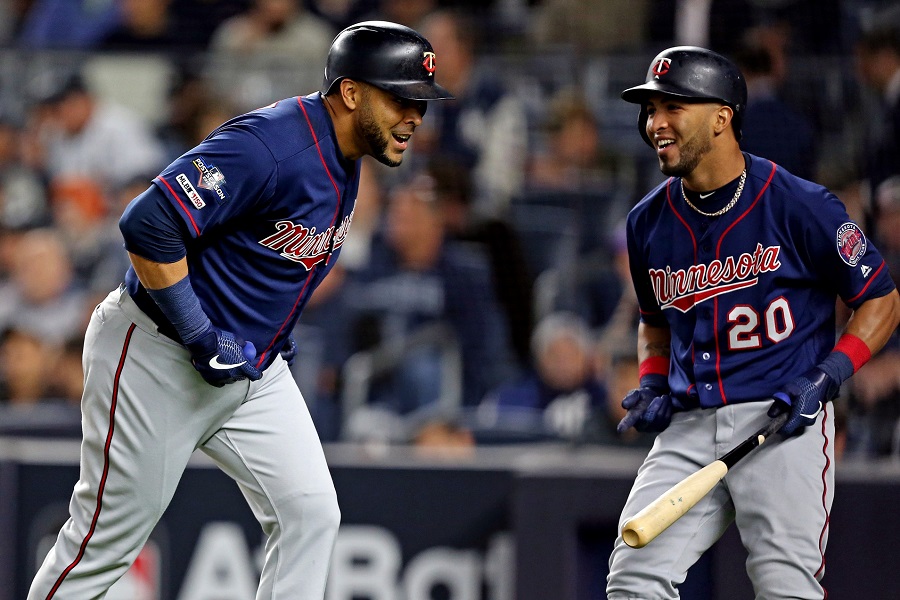
Jon Heyman of the MLB Network reported today that the Twins have picked up Nelson Cruz’s $12M contract option for 2020. The move is not a surprise, but it’s nice to inject a little positive forward-thinking news into the news cycle just 48 hours after being knocked out of the ALDS. Cruz hit .311 with 41 home runs, even while he was limited to just 120 games due to wrist tendon issues. Image courtesy of © Wendell Cruz-USA TODAY Sports Jon Heyman of the MLB Network reported today that the Twins have picked up Nelson Cruz’s $12M contract option for 2020. The move is not a surprise, but it’s nice to inject a little positive forward-thinking news into the news cycle just 48 hours after being knocked out of the ALDS. Cruz hit .311 with 41 home runs, even while he was limited to just 120 games due to wrist tendon issues. The option, believe it or not, represents a cut in pay to Cruz. The 39-year-old signed a one-year deal last offseason with the Twins for $14M that also included a team option for $12M this year, which is what the Twins exercised. He responded with a 1.031 OPS for his new team, the highest of his 15-year career. The move was expected, though perhaps not this soon, though there was no point in delaying it. In Twins Daily’s review of the Twins’ payroll situation, Cruz’s option was already included. The Twins still need to make some tougher decisions, such as whether to offer CJ Cron arbitration or extend a qualifying offer to Jake Odorizzi. Those decisions are not expected for a few weeks. View full article
-
 The option, believe it or not, represents a cut in pay to Cruz. The 39-year-old signed a one-year deal last offseason with the Twins for $14M that also included a team option for $12M this year, which is what the Twins exercised. He responded with a 1.031 OPS for his new team, the highest of his 15-year career. The move was expected, though perhaps not this soon, though there was no point in delaying it. In Twins Daily’s review of the Twins’ payroll situation, Cruz’s option was already included. The Twins still need to make some tougher decisions, such as whether to offer CJ Cron arbitration or extend a qualifying offer to Jake Odorizzi. Those decisions are not expected for a few weeks.
-
It is rare that the offseason machinations of a billion-dollar team can be distilled down to a Twitter hashtag, but the headline says it all: #3Pitchers70Million. The Twins have a nearly empty starting rotation and, even by their modest standards, a lot of money to spend. This essay could end right now, and you would know enough to follow developments this offseason. It is rare that the offseason machinations of a billion-dollar team can be distilled down to a Twitter hashtag, but the headline says it all: #3Pitchers70Million. The Twins have a nearly empty starting rotation and, even by their modest standards, a lot of money to spend. This essay could end right now, and you would know enough to follow developments this offseason. But let’s give a little more. For a complete breakdown, make sure to grab a copy of the Twins Daily Offseason Handbook which you can pre-order today. There you’ll find names, amounts, contracts and details on the decisions that the Twins will likely make. Plus, you get a handy worksheet where you can figure out how you’re going to fit your dream rotation into the Twins starting staff. Honestly, just dreaming through that is worth the price of admission. But here’s a high level breakdown. The Lineup - $50-55M committed Essentially, the only decisions are whether to offer arbitration to C.J. Cron and whether to entice Jason Castro or another catcher back to the Twins. The rest of the decisions are no-brainers. Even without Cron and Castro, all of the positions are covered, provided you’re not trading anyone away for some pitching (and then maybe even if you are). The total cost of all those players will be about $50-55M. The Rotation - $5M committed Jake Odorizzi, Kyle Gibson, Michael Pineda and Martin Perez are all either free agents or likely to be, though there are some decisions the Twins need to make. Jose Berrios sticks around, gets a raise due to arbitration, and one spot at least is probably saved for a competition between Devin Smeltzer, Randy Dobnak and Lewis Thorpe. That leaves three spots to fill and $55-60M spent. The Bullpen - $10M committed The youth that filled up the Twins bullpen will likely fill it up, but they’ll need to decide whether to try and retain (and pay) Sergio Romo who will be a free agent. If you think they do, or need to add another big arm to the bullpen, you need to add to the committed payroll, but without that they are only spending $65-$70M and can fill all the slots on the 25-man roster. Payroll Space - $60M - $75M available Two years ago, the Twins had about $130M payroll for their Opening Day roster. Last year it shrunk down to $120M, reflecting decreased interest in ticket sales due to a disappointing 2018. This year, the opposite is true; anything less than $135M should be considered gross negligence. That leaves about $70M to spend on three pitchers. Maybe that means signing a free agent, like Gerrit Cole, whose price tag will be $30-35M/year. Maybe that means trading for a veteran whose salary has become an albatross. (Could the Nationals be in teardown mode yet?) Or maybe that means acquiring a high-end pitcher by trading some top prospects (or even everyday players) and backfilling them with free agents. The story of the offseason will be how the Twins attack their top three problems: pitching, pitching and pitching. They have a lot of work, but all the resources they should need to get the job done. It sounds crazy to say this as a Twins fan (and it probably is) but payroll really should not be a limitation. We’ll follow their progress (or lack therof) every day here at Twins Daily. If you would like to get a head start, preorder the Twins Daily Offseason Handbook. View full article
-
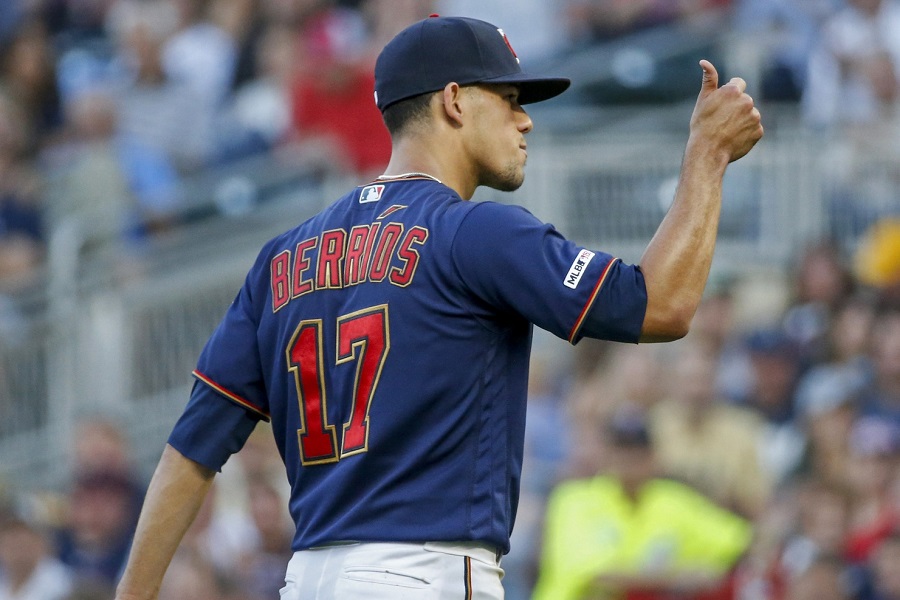 But let’s give a little more. For a complete breakdown, make sure to grab a copy of the Twins Daily Offseason Handbook which you can pre-order today. There you’ll find names, amounts, contracts and details on the decisions that the Twins will likely make. Plus, you get a handy worksheet where you can figure out how you’re going to fit your dream rotation into the Twins starting staff. Honestly, just dreaming through that is worth the price of admission. But here’s a high level breakdown. The Lineup - $50-55M committed Essentially, the only decisions are whether to offer arbitration to C.J. Cron and whether to entice Jason Castro or another catcher back to the Twins. The rest of the decisions are no-brainers. Even without Cron and Castro, all of the positions are covered, provided you’re not trading anyone away for some pitching (and then maybe even if you are). The total cost of all those players will be about $50-55M. The Rotation - $5M committed Jake Odorizzi, Kyle Gibson, Michael Pineda and Martin Perez are all either free agents or likely to be, though there are some decisions the Twins need to make. Jose Berrios sticks around, gets a raise due to arbitration, and one spot at least is probably saved for a competition between Devin Smeltzer, Randy Dobnak and Lewis Thorpe. That leaves three spots to fill and $55-60M spent. The Bullpen - $10M committed The youth that filled up the Twins bullpen will likely fill it up, but they’ll need to decide whether to try and retain (and pay) Sergio Romo who will be a free agent. If you think they do, or need to add another big arm to the bullpen, you need to add to the committed payroll, but without that they are only spending $65-$70M and can fill all the slots on the 25-man roster. Payroll Space - $60M - $75M available Two years ago, the Twins had about $130M payroll for their Opening Day roster. Last year it shrunk down to $120M, reflecting decreased interest in ticket sales due to a disappointing 2018. This year, the opposite is true; anything less than $135M should be considered gross negligence. That leaves about $70M to spend on three pitchers. Maybe that means signing a free agent, like Gerrit Cole, whose price tag will be $30-35M/year. Maybe that means trading for a veteran whose salary has become an albatross. (Could the Nationals be in teardown mode yet?) Or maybe that means acquiring a high-end pitcher by trading some top prospects (or even everyday players) and backfilling them with free agents. The story of the offseason will be how the Twins attack their top three problems: pitching, pitching and pitching. They have a lot of work, but all the resources they should need to get the job done. It sounds crazy to say this as a Twins fan (and it probably is) but payroll really should not be a limitation. We’ll follow their progress (or lack therof) every day here at Twins Daily. If you would like to get a head start, preorder the Twins Daily Offseason Handbook.
-
“Freedom’s just another word for nothing left to lose.” – Janis Joplin When the time was right, the Twins promised they would pull the trigger. It could not be any more right than this offseason – the Twins have unprecedented freedom to address their starting pitching issues - and Twins Daily will cover their decisions, rumors and moves (or lack thereof) every day throughout the offseason. Image courtesy of © Ben Ludeman-USA TODAY Sports “Freedom’s just another word for nothing left to lose.” – Janis Joplin When the time was right, the Twins promised they would pull the trigger. It could not be any more right than this offseason – the Twins have unprecedented freedom to address their starting pitching issues - and Twins Daily will cover their decisions, rumors and moves (or lack thereof) every day throughout the offseason. First up: tomorrow we’ll start coverage from our 12th annual Twins Daily Offseason Handbook. It’s a complete breakdown of the decisions the Twins will need to make, including how much they’re likely to spend, which free agents will be available, what trade candidates they can pursue, and a full breakdown of minor league options. You’ll be able to preorder it tomorrow, ensuring you get it before we even get to the end of the World Series. You’ll also get daily coverage of the team, even without games. Want a breakdown of what you can expect from Luis Arraez? Well, we’ve already got that, but we’ll have more like that. Want to hear about how top Twins prospect Royce Lewis is doing in the Arizona Fall League? OK, we already have that too, but there will be plenty more coverage like that as well. How about the latest rumors? They’ll be covered in our stories, but covered even more immediately in our forums, along with thoughtful, civil discussion about what they mean, and whether they make sense for the Twins. There should be plenty to talk about. Derek Falvey and Thad Levine have positioned the Twins to have a very low payroll commitment exactly when they need to go out and rebuild a starting rotation to compete with teams like the Astros and Yankees. We will be detailing that tomorrow, and how even if the Pohlads don’t break the bank, money should not be much of a limiting factor. We’ll also be profiling free agent targets or trade candidates pretty much every day on the site. If you haven’t already, you’ll learn all about Gerrit Cole, the top free agent starting pitcher available. Is it even worth talking about whether the Twins could land the top free agent pitcher on the market? Hint: there’s already an essay in the Offseason Handbook titled “Could the Twins Sign Gerrit Cole?” For the next four months, right up until spring training, we’ll be covering the Twins, uh, daily. Just like we have done for the last seven years. If you’re not ready for the season to end, we’ve got good news: it never does here. We’ll see you tomorrow. View full article
-
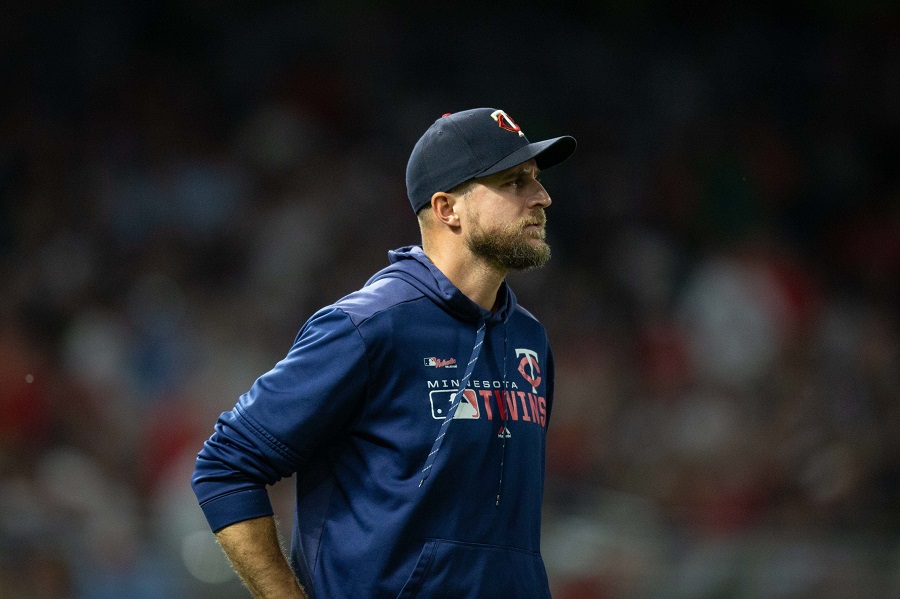 First up: tomorrow we’ll start coverage from our 12th annual Twins Daily Offseason Handbook. It’s a complete breakdown of the decisions the Twins will need to make, including how much they’re likely to spend, which free agents will be available, what trade candidates they can pursue, and a full breakdown of minor league options. You’ll be able to preorder it tomorrow, ensuring you get it before we even get to the end of the World Series. You’ll also get daily coverage of the team, even without games. Want a breakdown of what you can expect from Luis Arraez? Well, we’ve already got that, but we’ll have more like that. Want to hear about how top Twins prospect Royce Lewis is doing in the Arizona Fall League? OK, we already have that too, but there will be plenty more coverage like that as well. How about the latest rumors? They’ll be covered in our stories, but covered even more immediately in our forums, along with thoughtful, civil discussion about what they mean, and whether they make sense for the Twins. There should be plenty to talk about. Derek Falvey and Thad Levine have positioned the Twins to have a very low payroll commitment exactly when they need to go out and rebuild a starting rotation to compete with teams like the Astros and Yankees. We will be detailing that tomorrow, and how even if the Pohlads don’t break the bank, money should not be much of a limiting factor. We’ll also be profiling free agent targets or trade candidates pretty much every day on the site. If you haven’t already, you’ll learn all about Gerrit Cole, the top free agent starting pitcher available. Is it even worth talking about whether the Twins could land the top free agent pitcher on the market? Hint: there’s already an essay in the Offseason Handbook titled “Could the Twins Sign Gerrit Cole?” For the next four months, right up until spring training, we’ll be covering the Twins, uh, daily. Just like we have done for the last seven years. If you’re not ready for the season to end, we’ve got good news: it never does here. We’ll see you tomorrow.
-
The Twins can do their best to limit the Yankees lineup, but the Bomba Squad will need to outslug the Bombers to win the ALDS. So what weaknesses can one find on the Yankees pitching staff? There are at least a couple. Image courtesy of © Noah K. Murray-USA TODAY Sports The Twins can do their best to limit the Yankees lineup, but the Bomba Squad will need to outslug the Bombers to win the ALDS. So what weaknesses can one find on the Yankees pitching staff? There are at least a couple. The Yankees Are Not A Great Pitching Staff We’re sweating the Twins pitching staff, which ended the regular season with a 4.18 ERA, fifth best in the American League. The Yankees staff is a touch further down the ladder, with a 4.31 ERA and sixth best in the AL. And like the Twins, the starting rotation (which had a 4.51 ERA) has some big question marks as it enters the postseason. The biggest has to be Luis Severino, the 25-year-old phenom whom Twins fans might remember from the American League Wild Card game – provided they didn’t show up fifteen minutes late and miss the entire out he got. His postseason experience would normally be the big question mark, given that he has a 6.26 ERA in six postseason games, and has only made it through the fifth inning once. But there’s a bigger concern. Severino has only pitched three games this year after missing most of the season with a shoulder and lat injury. He only started making rehab appearances a month ago. A couple of his games have been very good, a couple he’s had trouble keeping people off base, and in every case he’s had a short leash, topping out at 80 pitches. Masahiro Tanaka, the likely Game 3 starter, has been equally enigmatic. He finished the regular season with a 4.45 ERA. He can throw a gem, such as a complete game shutout of the Rays on June 17th. Twelve days later versus Boston he didn’t get out of the first, and a month later he gave up 12(!!!) earned runs in a single game. His biggest strength is that he usually provides innings; he lasted through six innings or more in 21 of his 32 starts. That could be important in a series where so much could depend on the bullpens performing well. His biggest weakness? He shares it with a few other Yankees…. The Yankees Give Up Home Runs The Yankees starting rotation gave up 152 home runs this season, third worst in the American League. The Bomba Squad hit the most in the history of MLB. Unstoppable force, meet … pretty movable object. The Yankees probable Game 1 starter is 30-year-old southpaw James Paxton, who is a helluva good pitcher with two limitations that keep him from being among the game’s best. First, he has never pitched more than 160.1 innings in a season. Second, he gives up a lot of home runs to right-handed hitters. This year he gave up 23 home runs in 150.2 innings, which is slightly better than average this crazy year. But of those 23, 21 of them were to right-handed hitters. The Twins, of course, have a lot of right-handed hitters that like to hit home runs. Miguel Sano. Nelson Cruz. Mitch Garver. Even Jonathon Schoop and CJ Cron will likely find themselves in the lineup against Paxton. The Yankees, of course, are also aware of this. One reason Paxton might be lined up to pitch Game 1 and Game 5 for the Yankees is that they’re both being played at Yankee Stadium. Yankee Stadium is known as a ballpark that gives up a lot of home runs, but the truth is the shortest porch is in right field, favoring left-handed batters. The Yankees might feel Paxton has a better chance keeping big right-handed bats in check in Yankee Stadium than in Target Field, where the ball tends to fly out down the left field line. Paxton is not alone. Tanaka has had trouble with home runs his entire career. J.A. Happ, the left-handed starter whose role in the ALDS has yet to be determined, gave up 34(!) home runs in 161.1 innings. CC Sabathia was even worse this year, posting double the league-average home run rate. The bullpen is another story, but a little top heavy. The Yankees top three relievers, Aroldis Chapman, Adam Ottavino and Zack Britton are extremely stingy with the long ball. But the guys likely to eat up some middle innings, Chad Green and Tommy Kahnle, have been susceptible. So the strategy is similar to facing just about any MLB team. When the Twins get a couple of ducks on the pond versus the starting pitcher, they need to take advantage. If Yankees manager Aaron Boone pulls a starter early, feast on the middle innings. There will likely not be much available late in the game. In other words, when you come at the king, don’t miss. The Bomba Squad for most of the season, hasn’t. View full article
-
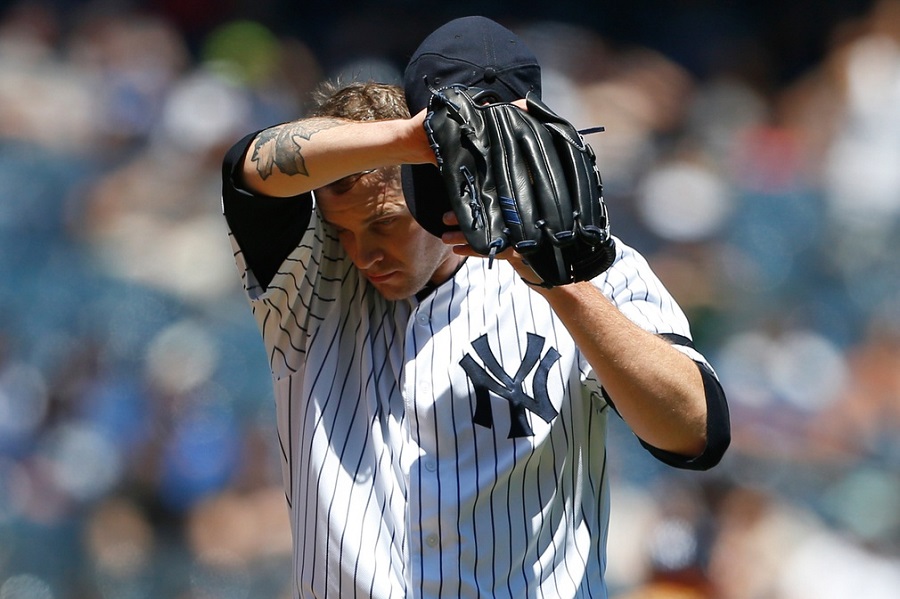 The Yankees Are Not A Great Pitching Staff We’re sweating the Twins pitching staff, which ended the regular season with a 4.18 ERA, fifth best in the American League. The Yankees staff is a touch further down the ladder, with a 4.31 ERA and sixth best in the AL. And like the Twins, the starting rotation (which had a 4.51 ERA) has some big question marks as it enters the postseason. The biggest has to be Luis Severino, the 25-year-old phenom whom Twins fans might remember from the American League Wild Card game – provided they didn’t show up fifteen minutes late and miss the entire out he got. His postseason experience would normally be the big question mark, given that he has a 6.26 ERA in six postseason games, and has only made it through the fifth inning once. But there’s a bigger concern. Severino has only pitched three games this year after missing most of the season with a shoulder and lat injury. He only started making rehab appearances a month ago. A couple of his games have been very good, a couple he’s had trouble keeping people off base, and in every case he’s had a short leash, topping out at 80 pitches. Masahiro Tanaka, the likely Game 3 starter, has been equally enigmatic. He finished the regular season with a 4.45 ERA. He can throw a gem, such as a complete game shutout of the Rays on June 17th. Twelve days later versus Boston he didn’t get out of the first, and a month later he gave up 12(!!!) earned runs in a single game. His biggest strength is that he usually provides innings; he lasted through six innings or more in 21 of his 32 starts. That could be important in a series where so much could depend on the bullpens performing well. His biggest weakness? He shares it with a few other Yankees…. The Yankees Give Up Home Runs The Yankees starting rotation gave up 152 home runs this season, third worst in the American League. The Bomba Squad hit the most in the history of MLB. Unstoppable force, meet … pretty movable object. The Yankees probable Game 1 starter is 30-year-old southpaw James Paxton, who is a helluva good pitcher with two limitations that keep him from being among the game’s best. First, he has never pitched more than 160.1 innings in a season. Second, he gives up a lot of home runs to right-handed hitters. This year he gave up 23 home runs in 150.2 innings, which is slightly better than average this crazy year. But of those 23, 21 of them were to right-handed hitters. The Twins, of course, have a lot of right-handed hitters that like to hit home runs. Miguel Sano. Nelson Cruz. Mitch Garver. Even Jonathon Schoop and CJ Cron will likely find themselves in the lineup against Paxton. The Yankees, of course, are also aware of this. One reason Paxton might be lined up to pitch Game 1 and Game 5 for the Yankees is that they’re both being played at Yankee Stadium. Yankee Stadium is known as a ballpark that gives up a lot of home runs, but the truth is the shortest porch is in right field, favoring left-handed batters. The Yankees might feel Paxton has a better chance keeping big right-handed bats in check in Yankee Stadium than in Target Field, where the ball tends to fly out down the left field line. Paxton is not alone. Tanaka has had trouble with home runs his entire career. J.A. Happ, the left-handed starter whose role in the ALDS has yet to be determined, gave up 34(!) home runs in 161.1 innings. CC Sabathia was even worse this year, posting double the league-average home run rate. The bullpen is another story, but a little top heavy. The Yankees top three relievers, Aroldis Chapman, Adam Ottavino and Zack Britton are extremely stingy with the long ball. But the guys likely to eat up some middle innings, Chad Green and Tommy Kahnle, have been susceptible. So the strategy is similar to facing just about any MLB team. When the Twins get a couple of ducks on the pond versus the starting pitcher, they need to take advantage. If Yankees manager Aaron Boone pulls a starter early, feast on the middle innings. There will likely not be much available late in the game. In other words, when you come at the king, don’t miss. The Bomba Squad for most of the season, hasn’t.
