



Teflon
-
Posts
982 -
Joined
-
Last visited
-
Days Won
2
Content Type
Profiles
News
Minnesota Twins Videos
2026 Minnesota Twins Top Prospects Ranking
2022 Minnesota Twins Draft Picks
Minnesota Twins Free Agent & Trade Rumors, Notes, & Tidbits
Guides & Resources
2023 Minnesota Twins Draft Picks
The Minnesota Twins Players Project
2024 Minnesota Twins Draft Picks
2025 Minnesota Twins Draft Pick Tracker
2026 Minnesota Twins Draft Tracker: Picks & Bonuses
Forums
Blogs
Events
Store
Downloads
Gallery
Everything posted by Teflon
-
You can view the page at http://twinsdaily.com/content.php?r=2310-Revisiting-the-4-Man-Rotation
-
-
Parker Hageman posed his thoughts on how the Twins can improve their rotation through free agency. The players he suggested were either once-good pitchers who are now in decline or once-promising pitchers who have failed to keep their promises. If you are the Twins GM and those are the best pitching options the team can hope for in 2014, you wonder if there might be a simpler (and much cheaper) solution that nobody's thinking of. The 4-man rotation. Like nearly everyone, you were ready to dismiss this as foolish or irrelevant in this day and age of delicate arms, guaranteed mega-contracts and pitch counts. But what if you didn't use it to divide more innings among fewer starters. What if you adapted it to address this fundamental premise: A mediocre starting pitcher's third trip through the lineup is usually crap. And to that end, you could attempt to optimize those opportunities for disaster by replacing them with something better. http://hall-fame.com/cuellar.jpg How would it work? First, you'll need to say arrivederci to your 5th starting pitcher and 3rd catcher. Replace them with two relievers and then smile inwardly just a bit because you know this fundamental premise to be true, but not leveraged: Serviceable relief pitchers are easier to find than serviceable starting pitchers. (Cheaper, too.) With your 25-man roster now aligned as needed, you then set these two rules for utilizing your mediocre 4-man rotation: Have no expectation to EVER pitch a starter more than 5 innings. Plan for regular use of a 6-man combo of middle relievers to share middle innings. Seems pretty simple. You're exchanging that third trip through an opponent's batting order by a mediocre pitcher for some fresh-armed innings of relief from an expanded relief corps. Hell, you can even do some lefty-righty match-ups you didn't have a chance to do before. You've looked at the K-rates and opposing batting averages of your pitchers for years acknowledging (but not exploiting) the fact that a player pitching out of the bullpen does better in those categories than when he starts. (You might be looking at Glen Perkins as you muse about this) You know that's because he can throttle-up in a much shorter appearance and he doesn't get exposed to any batter more than once. Why then, haven't you thought it would be advantageous to have more of those kinds of innings as opposed to the tail end of a Mike Pelfrey start? You shake your head when you realize that your team's old pitching philosophy was to let a mediocre starter pitch until he got into trouble. This meant that you were usually engineering a trouble situation to be your key to make your pitching change. This is definitely better, you think. It does all of the following: Takes away 25-30 starts from a horrible starting pitcher Doesn't add any innings to the 4 starters. Just shifts their innings from the ends of games when they're tired to the beginnings of games when they're fresh. Limits starting pitchers' exposure. Starters will not get a third time through a batting order. This really is just evolution, you think. This philosophy is already used for closers. They don't get used to respond to specific game situations but rather to optimize the 9th inning. Same with the setup pitcher. He optimizes the 8th inning. Why shouldn't you optimize the middle innings as much as possible, too? Is there a downside, you wonder? Your four starters will still pitch comparable innings to other starters so don't have to worry about how their stats compare at contract time - plus they should get a couple more wins because they're still going 5 and getting more starts. Hell, pitching more innings when they're fresh might even improve the quality of their stats. Quite possibly their health and longevity, too. Inter-league play? Does losing a bench player mean you lose an opportunity to pinch-hit? You still have 12 batters. You could still pinch-hit 3 or 4 times in a National League game. You can live with that. Workload for the bullpen? You're not getting them up in knee-jerk response as much and you added 120-140 innings worth of arms out there. Pretty close to the innings lost from a 5th starter. Prep time for the starters? Can they adapt to three off days instead of four? Is that adequate time to recover from a now lessened 80-pitch workload? That's going to be the main question to answer. Hopefully one you can test this season.
-
http://hall-fame.com/cuellar.jpg Parker Hageman posed his thoughts on how the Twins can improve their rotation through free agency. The players he suggested were either once-good pitchers who are now in decline or once-promising pitchers who have failed to keep their promises. If you are the Twins GM and those are the best pitching options the team can hope for in 2014, you wonder if there might be a simpler (and much cheaper) solution that nobody's thinking of. The 4-man rotation. Like nearly everyone, you were ready to dismiss this as foolish or irrelevant in this day and age of delicate arms, guaranteed mega-contracts and pitch counts. But what if you didn't use it to divide more innings among fewer starters. What if you adapted it to address this fundamental premise: A mediocre starting pitcher's third trip through the lineup is usually crap. And to that end, you could attempt to optimize those opportunities for disaster by replacing them with something better. How would it work? First, you'll need to say arrivederci to your 5th starting pitcher and 3rd catcher. Replace them with two relievers and then smile inwardly just a bit because you know this fundamental premise to be true, but not leveraged: Serviceable relief pitchers are easier to find than serviceable starting pitchers. (Cheaper, too.) With your 25-man roster now aligned as needed, you then set these two rules for utilizing your mediocre 4-man rotation: Have no expectation to EVER pitch a starter more than 5 innings. Plan for regular use of a 6-man combo of middle relievers to share middle innings. Seems pretty simple. You're exchanging that third trip through an opponent's batting order by a mediocre pitcher for some fresh-armed innings of relief from an expanded relief corps. Hell, you can even do some lefty-righty match-ups you didn't have a chance to do before. You've looked at the K-rates and opposing batting averages of your pitchers for years acknowledging (but not exploiting) the fact that a player pitching out of the bullpen does better in those categories than when he starts. (You might be looking at Glen Perkins as you muse about this) You know that's because he can throttle-up in a much shorter appearance and he doesn't get exposed to any batter more than once. Why then, haven't you thought it would be advantageous to have more of those kinds of innings as opposed to the tail end of a Mike Pelfrey start? You shake your head when you realize that your team's old pitching philosophy was to let a mediocre starter pitch until he got into trouble. This meant that you were usually engineering a trouble situation to be your key to make your pitching change. This is definitely better, you think. It does all of the following: Takes away 25-30 starts from a horrible starting pitcher Doesn't add any innings to the 4 starters. Just shifts their innings from the ends of games when they're tired to the beginnings of games when they're fresh. Limits starting pitchers' exposure. Starters will not get a third time through a batting order. This really is just evolution, you think. This philosophy is already used for closers. They don't get used to respond to specific game situations but rather to optimize the 9th inning. Same with the setup pitcher. He optimizes the 8th inning. Why shouldn't you optimize the middle innings as much as possible, too? Is there a downside, you wonder? Your four starters will still pitch comparable innings to other starters so don't have to worry about how their stats compare at contract time - plus they should get a couple more wins because they're still going 5 and getting more starts. Hell, pitching more innings when they're fresh might even improve the quality of their stats. Quite possibly their health and longevity, too. Inter-league play? Does losing a bench player mean you lose an opportunity to pinch-hit? You still have 12 batters. You could still pinch-hit 3 or 4 times in a National League game. You can live with that. Workload for the bullpen? You're not getting them up in knee-jerk response as much and you added 120-140 innings worth of arms out there. Pretty close to the innings lost from a 5th starter. Prep time for the starters? Can they adapt to three off days instead of four? Is that adequate time to recover from a now lessened 80-pitch workload? That's going to be the main question to answer. Hopefully one you can test this season. Addendum: The Rockies Interesting Rotation Experiment Rockies four-man rotation gathering traction as season continues
-
Article: What to do with Trevor Plouffe?
Teflon replied to Seth Stohs's topic in Twins Daily Front Page News
These are some options: [video=youtube;E88HEuwInno] -
Article: Twins' Rotation Is Out of Whack
Teflon replied to Nick Nelson's topic in Twins Daily Front Page News
What about Will Chase? I remember reading this headline from John Bonnes on Twins Daily last year Terry Ryan: Twins Will Chase "Pretty Darn Good" Pitcher but then heard nothing about him after. -
Article: Twins Trade Justin Morneau To Pirates
Teflon replied to howeda7's topic in Twins Daily Front Page News
Hoping Morneau gets a chance to relive this moment from our previous Twins' 1B (and now Miracle Manager)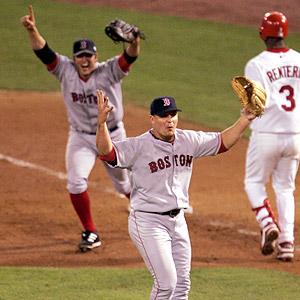
-
Article: Twins Trade Justin Morneau To Pirates
Teflon replied to howeda7's topic in Twins Daily Front Page News
Although it was probably not the desired synergy that the Twins season ticket renewal packets came out this week. After three awful seasons this year's packet is decidedly light on featuring actual Twins players, however, choosing instead to focus on the 2014 All-Star game and the Twins' minor league prospects - most of whom we still won't actually get to see in 2014. -
Article: Twins Trade Justin Morneau To Pirates
Teflon replied to howeda7's topic in Twins Daily Front Page News
Can Presley pitch? -
Article: Twins Trade Justin Morneau To Pirates
Teflon replied to howeda7's topic in Twins Daily Front Page News
I wonder how much Presley is going to offer Mauer to give up the #7?
-
I thought this was a post about Judge Reinhold. My bad.

-
American League third basemen had 6,168 chances in 20,285 innings last year. This works out to 2.73 chances per game. Based on the actual opportunities for making plays at 3B, some might be overvaluing the value of defense at this position. On second thought - given the Twins pitchers' inability to strike out batters, I'll concede that this number is probably 10% more significant for us right now than for other teams.
-
I've been working on my own advanced metric to measure specific blown save situations called Times In Trouble In Ninth With Run Issued - Not Game Ending Reliever. (TITINWRINGER.) Ron Davis had a very high TITINWRINGER value. I'm also working on one to calculate Wins Incremental to Mike Pelfrey's or WIMP.
-
Article: Liriano's Success Is Tough To Stomach
Teflon replied to Nick Nelson's topic in Twins Daily Front Page News
I wonder if the perceived difficulty of coaching certain players weighs into the Twins decision-making at times over upside, also. I'm not claiming it does - just asking the question. -
Article: Liriano's Success Is Tough To Stomach
Teflon replied to Nick Nelson's topic in Twins Daily Front Page News
I don't think it's Liriano's success that's so hard to stomach as it is our entire starting staff's lack thereof. -
September Call-ups/Rochester in Playoff Hunt
Teflon replied to stringer bell's topic in Minnesota Twins Talk
Since the Twins have already used so many players from Rochester or demoted players to Rochester who started their seasons with the Twins, September call-ups wouldn't provide much new insight on these guys. Better to let them finish of a playoff run. -
Twins Bring Up 19 Year-Old Pitcher with 33 Games in Minors
Teflon replied to Teflon's topic in Minnesota Twins Talk
Good point. -
Twins Bring Up 19 Year-Old Pitcher with 33 Games in Minors
Teflon replied to Teflon's topic in Minnesota Twins Talk
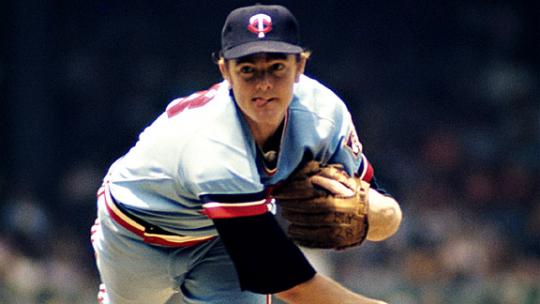
Bert has long said that he had great role models and pitching mentors when he got to the Twins in Jim Perry and Jim Kaat. Knowing those two could be counted on to guide Blyleven in the bigs had to have made it an easier decision to promote him in 1970, as well. -
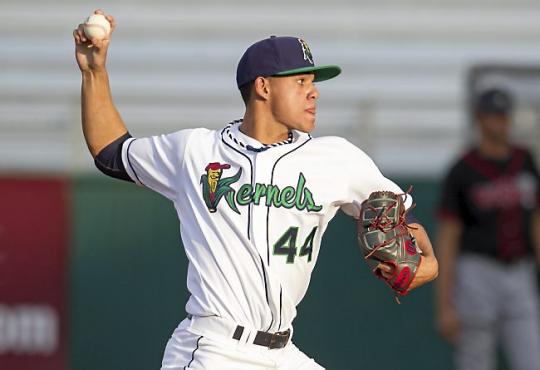
After dominating the Florida Instructional League and Gulf Coast League as an 18 year-old fresh out of high school, (and getting a taste of Single A as well), this 3rd-round draft choice made the AAA roster as a 19 year-old where he made only 7 starts before getting called up to the Majors at the beginning of June. His team was 31-15 at the time and had a more than serviceable pitching rotation featuring the eventual Cy Young winner that season. Clearly this young pitcher (Bert Blyleven) had the goods and history shows the right decision was made to bring him up when they did. Still, some risk of failure had to exist with that move, too. If Blyleven was an 18-year old today signing with the Twins, would he be given as quick a shot to the Majors or would today's process be more deliberative with his advancements? I surmise it would take Bert at least a full second season in the minors if for no other reason than it would take that long to reach the same amount of innings pitched. Also, money would be a bigger consideration today. Blyleven, a third round pick, said he signed for 10,000 dollars. Jose Berrios, the 32nd player taken in 2012 signed for 1.55 million. Not Byron Buxton money, but still an investment.
-
I would too if they directly correlated to additional scoring opportunities. Joe Mauer of 2013 has less of a correlation, however. First, more of Joe's outs are ending with the ball in the catcher's glove than an infielder's. (His 18% strikeout ratio is an all-time high; His 46.0% groundball rate is his lowest since he was a rookie playing 35 games in 2004) Second, more of his outs are ending with the ball in an outfielder's glove than an infielder's glove. (His GB/FB ratio is 1.82 this year compared to 2.35 in 2012 and 2.57 in 2011.) You'll notice I didn't say any of those were bad. With fewer runners on base ahead of him and a lack of a Morneau-of-old or Willingham-of-last-year to hit behind him, Joe is getting the lowest percentage of fastballs he's ever seen. (59.6%) Given some protection back in the lineup and a modicum of threats on base, Joe will get more fastballs and his K-rate likely reverts to his norm. Not sure about the GB/FB rate - but guessing that from the increased off-speed pitches Joe's getting he might be trying to make hay with more high fastballs than in the past. If you look at other aspects of Mauer's season at the plate, he's hitting a higher percentage of line drives than ever before and his ratio of runs created per game is higher than any season since 2009. (I didn't say anything about GIDPs in regards to runs created; infer what you will.) He isn't a worse player at the plate but he is a different player.
-
Your opinion (check Ted Williams or Micky Mantle GIDP rates) but not actually the point I was making. My point was that this year's Joe Mauer with 38 RBI and 5 GIDPs was not as negative as as this year's Joe Mauer would be with with 20 GIDPs. If you can prove that grounding into an additional 15 double plays would be a good thing for Joe or the Twins, then I'll gladly concede the point to you.
-
Or the seasons where he's actually managed to play 140 or more games in which he's averaging 22.7.
-
And of course Jose Cardenal was a Card-i-nal
-
During the last homestand the Twins played an Astros team that featured Jason Castro in their lineup. Somewhere about the 4th inning, I looked up at the scoreboard and realized "Castro the Astro" had his team's name embedded in his last name. While he probably would have chosen to be named Jason Gray or Jason Nathan if it meant playing for a contender like the Rays or the Nats instead of the cellar-dweller Astros - it still was rather cool to have your team's name in your last name. I tried to think of other players and teams where this might have happened. Here' a couple: Butch Metzger was a Met Gary Redus was a Red Any others you can think of?
-
On the bright side, not having runners on base means that Joe isn't grounding into his usual 20 double plays a season. Only 5 so far this year in 455 plate appearances. His slightly higher strikeout rate this year is helping in that regard, too.


