



Cody Christie
-
Posts
7,794 -
Joined
-
Last visited
-
Days Won
5
Content Type
Profiles
News
Minnesota Twins Videos
2026 Minnesota Twins Top Prospects Ranking
2022 Minnesota Twins Draft Picks
Minnesota Twins Free Agent & Trade Rumors, Notes, & Tidbits
Guides & Resources
2023 Minnesota Twins Draft Picks
The Minnesota Twins Players Project
2024 Minnesota Twins Draft Picks
2025 Minnesota Twins Draft Pick Tracker
2026 Minnesota Twins Draft Tracker: Picks & Bonuses
Forums
Blogs
Events
Store
Downloads
Gallery
Everything posted by Cody Christie
-
 Image courtesy of © Ken Blaze-Imagn Images The MLB trade deadline isn't just about what the Minnesota Twins need. It's also about what everyone else is looking for. Every contender enters deadline week with holes to fill, and those needs determine which Twins players could become the hottest commodities on the market. While Minnesota continues to insist it plans to buy rather than sell, front offices have to be prepared for every scenario. Even if the Twins only make a minor move or two, knowing which clubs are desperate for help can reveal where conversations are most likely to happen. From Ryan Jeffers drawing interest behind the plate to Trevor Larnach fitting an offense-starved lineup, here's how the biggest needs around the league could impact Minnesota. Yankees Need Catching Jeffers' name is going to be connected to the Yankees until the trade deadline comes and goes. New York's urgency only increased (or, at least, their options list only grew shorter) after Athletics All-Star catcher Shea Langeliers suffered a torn meniscus in his right knee that will sideline him for the remainder of the 2026 season. That removes one of the biggest catching options from the market and could make Jeffers even more valuable. Few catchers have produced offensively as consistently as Jeffers over the last three seasons. His combination of power, on-base ability, and affordable salary makes him one of the more attractive rental options available. The decision for Minnesota comes down to value. It seems unlikely the Twins will re-sign Jeffers this winter. They have to determine whether the return at the deadline outweighs the risk of watching him leave in free agency without receiving anything in return. A shortage of impact catchers only strengthens the Twins' negotiating position. Phillies Need a Center Fielder Trade speculation surrounding Byron Buxton has been a constant topic in Philadelphia and across national media. The reality hasn't changed. Buxton owns a full no-trade clause, has repeatedly expressed his desire to remain with the Twins, and his family has established roots in the Twin Cities. As long as those factors remain true, a blockbuster deal appears unlikely. Still, every player has a breaking point. If Minnesota were to pivot into a larger selloff by moving multiple core veterans, Buxton could eventually decide his best chance to compete for a World Series lies elsewhere. Philadelphia has long been viewed as one of the most logical fits because of its need in center field. The Twins have successfully completed significant trades with the Phillies before, including deals involving Jhoan Duran and Harrison Bader. The challenge is whether Philadelphia still has enough prospect capital to satisfy Minnesota after several aggressive trade deadlines in recent years. Their farm system isn't nearly as deep as it once was, making a deal more difficult than it might have been a year ago. (Well, maybe that's the second-biggest challenge. The biggest is still Buxton's desire to stay right where he is, which is unlikely to change this summer.) Mariners Need Offense Seattle continues searching for answers at the plate. The Mariners recently fired one of their hitting coaches in an effort to spark one of baseball's least productive offenses, and they remain locked in a crowded AL West race where every run matters. That creates an interesting opportunity for Minnesota. Larnach could be an intriguing fit for Seattle's lineup. The left-handed slugger would provide another middle-of-the-order bat while giving the Twins flexibility to create a roster spot for top prospect Walker Jenkins if they believe he's ready for the majors. If Minnesota wants Jenkins to continue developing in Triple-A, Alan Roden could instead see an expanded role. Either way, dealing from a position of offensive depth only makes sense if the Twins receive players who can strengthen the current roster. Minnesota isn't looking to take a step backward, so any conversation with Seattle would likely focus on pieces that help the Twins win immediately. Rays Need Catching The Yankees may not be Jeffers's only suitor. Tampa Bay also has a need behind the plate, giving Minnesota an opportunity to create a bidding war if it ever decides to move its starting catcher. That decision still feels unlikely unless another club overwhelms the Twins with an offer. Jeffers remains an important part of Minnesota's lineup, and replacing his production wouldn't be easy. Recent history shows baseball operations isn't afraid to pursue creative player-for-player swaps. Last season's Griffin Jax-for-Taj Bradley deal proved that teams can exchange established major leaguers when both sides address immediate needs. The Rays have the organizational depth to build a package that helps Minnesota now while also adding long-term value. Whether they're willing to meet the Twins' asking price is another question entirely. Trade deadlines are driven by supply and demand, and contender needs often dictate which players become the most valuable. The Yankees' search for catching could inflate Jeffers's market. Philadelphia's need in center field ensures Buxton rumors won't disappear, even if they should. Seattle's desperate hunt for offense makes Larnach a logical name to watch, while Tampa Bay could emerge as another serious Jeffers suitor if it wants to upgrade behind the plate. Even if the Twins remain buyers, understanding where other contenders are searching for help provides a roadmap for how the market could develop. Minnesota may ultimately decide to keep its core together, but the needs of the rest of baseball will still play a major role in shaping what happens before the deadline clock hits zero. Will the Twins trade with any of these contenders? Can Minnesota walk a line between buyer and seller? Leave a comment and start the discussion. View full article
 -
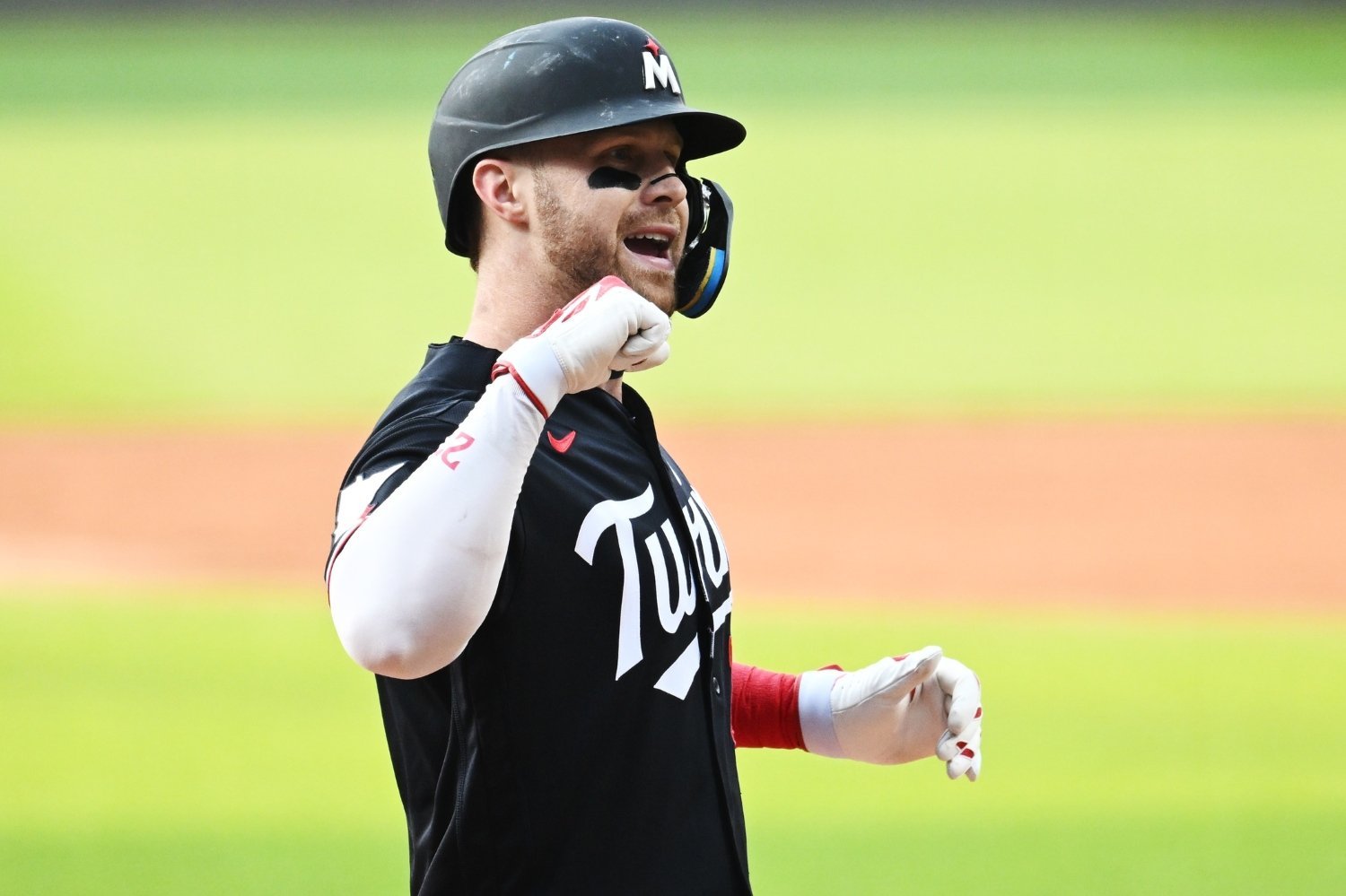 The MLB trade deadline isn't just about what the Minnesota Twins need. It's also about what everyone else is looking for. Every contender enters deadline week with holes to fill, and those needs determine which Twins players could become the hottest commodities on the market. While Minnesota continues to insist it plans to buy rather than sell, front offices have to be prepared for every scenario. Even if the Twins only make a minor move or two, knowing which clubs are desperate for help can reveal where conversations are most likely to happen. From Ryan Jeffers drawing interest behind the plate to Trevor Larnach fitting an offense-starved lineup, here's how the biggest needs around the league could impact Minnesota. Yankees Need Catching Jeffers' name is going to be connected to the Yankees until the trade deadline comes and goes. New York's urgency only increased (or, at least, their options list only grew shorter) after Athletics All-Star catcher Shea Langeliers suffered a torn meniscus in his right knee that will sideline him for the remainder of the 2026 season. That removes one of the biggest catching options from the market and could make Jeffers even more valuable. Few catchers have produced offensively as consistently as Jeffers over the last three seasons. His combination of power, on-base ability, and affordable salary makes him one of the more attractive rental options available. The decision for Minnesota comes down to value. It seems unlikely the Twins will re-sign Jeffers this winter. They have to determine whether the return at the deadline outweighs the risk of watching him leave in free agency without receiving anything in return. A shortage of impact catchers only strengthens the Twins' negotiating position. Phillies Need a Center Fielder Trade speculation surrounding Byron Buxton has been a constant topic in Philadelphia and across national media. The reality hasn't changed. Buxton owns a full no-trade clause, has repeatedly expressed his desire to remain with the Twins, and his family has established roots in the Twin Cities. As long as those factors remain true, a blockbuster deal appears unlikely. Still, every player has a breaking point. If Minnesota were to pivot into a larger selloff by moving multiple core veterans, Buxton could eventually decide his best chance to compete for a World Series lies elsewhere. Philadelphia has long been viewed as one of the most logical fits because of its need in center field. The Twins have successfully completed significant trades with the Phillies before, including deals involving Jhoan Duran and Harrison Bader. The challenge is whether Philadelphia still has enough prospect capital to satisfy Minnesota after several aggressive trade deadlines in recent years. Their farm system isn't nearly as deep as it once was, making a deal more difficult than it might have been a year ago. (Well, maybe that's the second-biggest challenge. The biggest is still Buxton's desire to stay right where he is, which is unlikely to change this summer.) Mariners Need Offense Seattle continues searching for answers at the plate. The Mariners recently fired one of their hitting coaches in an effort to spark one of baseball's least productive offenses, and they remain locked in a crowded AL West race where every run matters. That creates an interesting opportunity for Minnesota. Larnach could be an intriguing fit for Seattle's lineup. The left-handed slugger would provide another middle-of-the-order bat while giving the Twins flexibility to create a roster spot for top prospect Walker Jenkins if they believe he's ready for the majors. If Minnesota wants Jenkins to continue developing in Triple-A, Alan Roden could instead see an expanded role. Either way, dealing from a position of offensive depth only makes sense if the Twins receive players who can strengthen the current roster. Minnesota isn't looking to take a step backward, so any conversation with Seattle would likely focus on pieces that help the Twins win immediately. Rays Need Catching The Yankees may not be Jeffers's only suitor. Tampa Bay also has a need behind the plate, giving Minnesota an opportunity to create a bidding war if it ever decides to move its starting catcher. That decision still feels unlikely unless another club overwhelms the Twins with an offer. Jeffers remains an important part of Minnesota's lineup, and replacing his production wouldn't be easy. Recent history shows baseball operations isn't afraid to pursue creative player-for-player swaps. Last season's Griffin Jax-for-Taj Bradley deal proved that teams can exchange established major leaguers when both sides address immediate needs. The Rays have the organizational depth to build a package that helps Minnesota now while also adding long-term value. Whether they're willing to meet the Twins' asking price is another question entirely. Trade deadlines are driven by supply and demand, and contender needs often dictate which players become the most valuable. The Yankees' search for catching could inflate Jeffers's market. Philadelphia's need in center field ensures Buxton rumors won't disappear, even if they should. Seattle's desperate hunt for offense makes Larnach a logical name to watch, while Tampa Bay could emerge as another serious Jeffers suitor if it wants to upgrade behind the plate. Even if the Twins remain buyers, understanding where other contenders are searching for help provides a roadmap for how the market could develop. Minnesota may ultimately decide to keep its core together, but the needs of the rest of baseball will still play a major role in shaping what happens before the deadline clock hits zero. Will the Twins trade with any of these contenders? Can Minnesota walk a line between buyer and seller? Leave a comment and start the discussion.
- 8 comments
-
- 2
-

-
- ryan jeffers
- byron buxton
- (and 3 more)
-
 Every summer, the release of updated prospect rankings becomes one of the first opportunities to evaluate how the newest draft class stacks up against baseball's best young talent. Each national outlet has its own philosophy, leading to plenty of debate about player ceilings, risk, and long-term projections. There isn't one correct way to rank prospects, which is exactly what makes comparing these lists so interesting. The Athletic's Keith Law has long taken a different approach than many evaluators, emphasizing future value over consensus rankings. His updated top prospects list following the 2026 MLB Draft reflects that philosophy, and it includes an especially optimistic evaluation of Minnesota's newest first-round pick. Where Does Vahn Lackey Rank? Law ranks Vahn Lackey as the No. 20 prospect in all of baseball, making him the highest-rated player from the 2026 MLB Draft on his list. That ranking is six spots higher than Baseball America's post-draft evaluation, which placed Lackey 26th overall. It also puts the Twins' third overall selection ahead of both players drafted before him. First overall pick Roch Cholowsky checks in at No. 21, while second overall pick Grady Emerson lands at No. 34. It's another reminder that opinions on this draft class remain fluid. While most evaluators viewed the top three selections as being in the same tier entering the draft, Law believes Lackey deserves a slight edge. The upside Law describes is exactly why Minnesota was comfortable making Lackey the third overall pick. Catchers who project to provide impact offense while remaining behind the plate are among the rarest commodities in baseball. If Lackey reaches that ceiling, the Twins could have one of the game's most valuable young players. Where Do Other Twins Top Prospects Rank? Walker Jenkins has held the title of Minnesota's top prospect since the Twins selected him with the fifth overall pick in the 2023 MLB Draft. Law still gives him the edge, ranking Jenkins as baseball's No. 19 overall prospect, just one spot ahead of Lackey. The narrow gap is notable. Shortly after the draft, I made the case that Lackey had a legitimate argument to become the Twins' No. 1 prospect immediately. While Law stops just short of making that move, his rankings suggest the two are essentially viewed as equals entering the next stage of their development. Jenkins slipped eight spots compared to Law's preseason rankings, with injuries playing the biggest role in that decline rather than any concerns about his long-term talent. When healthy, Jenkins still possesses the all-around tools that have made him one of baseball's elite prospects since draft day. Minnesota also placed two more players on Law's list. Emmanuel Rodriguez came in at No. 31, while Kaelen Culpepper ranked No. 53 overall. Those placements become even more impressive when considering the size of Law's rankings. Unlike many national outlets that publish a Top 100, Law limits his list to just 70 prospects. Having four players inside that group speaks to the overall strength of Minnesota's farm system, especially after adding another premium talent at the top. Prospect rankings will continue to change as players gain professional experience, battle injuries, and adjust to higher levels of competition. Still, Law's evaluation reinforces what the Twins believed when they turned in Lackey's name on draft night. Not only did Minnesota land one of the most talented players available, but they may have selected the player with the highest long-term upside in the entire draft. Whether Lackey eventually overtakes Jenkins as the organization's top prospect remains to be seen, but the conversation is already underway, and that's exactly where the Twins hoped it would be just weeks after the draft.
- 11 comments
-
- 6
-
-
- vahn lackey
- roch cholowsky
- (and 4 more)
-
Every summer, the release of updated prospect rankings becomes one of the first opportunities to evaluate how the newest draft class stacks up against baseball's best young talent. Each national outlet has its own philosophy, leading to plenty of debate about player ceilings, risk, and long-term projections. There isn't one correct way to rank prospects, which is exactly what makes comparing these lists so interesting. The Athletic's Keith Law has long taken a different approach than many evaluators, emphasizing future value over consensus rankings. His updated top prospects list following the 2026 MLB Draft reflects that philosophy, and it includes an especially optimistic evaluation of Minnesota's newest first-round pick. Where Does Vahn Lackey Rank? Law ranks Vahn Lackey as the No. 20 prospect in all of baseball, making him the highest-rated player from the 2026 MLB Draft on his list. That ranking is six spots higher than Baseball America's post-draft evaluation, which placed Lackey 26th overall. It also puts the Twins' third overall selection ahead of both players drafted before him. First overall pick Roch Cholowsky checks in at No. 21, while second overall pick Grady Emerson lands at No. 34. It's another reminder that opinions on this draft class remain fluid. While most evaluators viewed the top three selections as being in the same tier entering the draft, Law believes Lackey deserves a slight edge. The upside Law describes is exactly why Minnesota was comfortable making Lackey the third overall pick. Catchers who project to provide impact offense while remaining behind the plate are among the rarest commodities in baseball. If Lackey reaches that ceiling, the Twins could have one of the game's most valuable young players. Where Do Other Twins Top Prospects Rank? Walker Jenkins has held the title of Minnesota's top prospect since the Twins selected him with the fifth overall pick in the 2023 MLB Draft. Law still gives him the edge, ranking Jenkins as baseball's No. 19 overall prospect, just one spot ahead of Lackey. The narrow gap is notable. Shortly after the draft, I made the case that Lackey had a legitimate argument to become the Twins' No. 1 prospect immediately. While Law stops just short of making that move, his rankings suggest the two are essentially viewed as equals entering the next stage of their development. Jenkins slipped eight spots compared to Law's preseason rankings, with injuries playing the biggest role in that decline rather than any concerns about his long-term talent. When healthy, Jenkins still possesses the all-around tools that have made him one of baseball's elite prospects since draft day. Minnesota also placed two more players on Law's list. Emmanuel Rodriguez came in at No. 31, while Kaelen Culpepper ranked No. 53 overall. Those placements become even more impressive when considering the size of Law's rankings. Unlike many national outlets that publish a Top 100, Law limits his list to just 70 prospects. Having four players inside that group speaks to the overall strength of Minnesota's farm system, especially after adding another premium talent at the top. Prospect rankings will continue to change as players gain professional experience, battle injuries, and adjust to higher levels of competition. Still, Law's evaluation reinforces what the Twins believed when they turned in Lackey's name on draft night. Not only did Minnesota land one of the most talented players available, but they may have selected the player with the highest long-term upside in the entire draft. Whether Lackey eventually overtakes Jenkins as the organization's top prospect remains to be seen, but the conversation is already underway, and that's exactly where the Twins hoped it would be just weeks after the draft. View full rumor
-
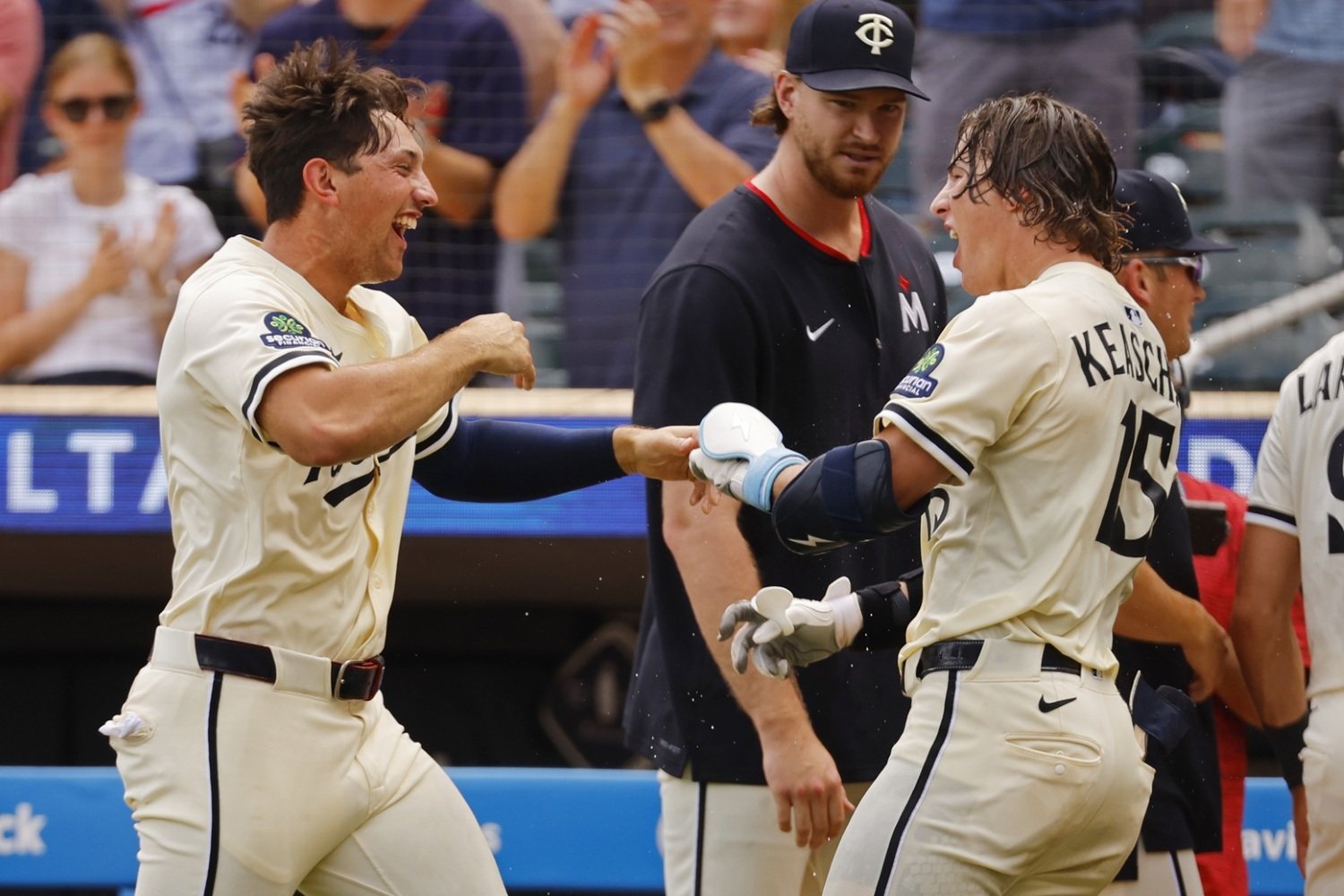 Few decisions in life are bigger than choosing who (and when) you'll marry. For four Minnesota Twins players, that milestone will arrive on the exact same day this offseason. Brooks Lee, Luke Keaschall, Ryan Kreidler and Cole Sands are all scheduled to say "I do" on Saturday, November 14, creating one of the most unusual offseason coincidences in recent baseball memory. Even more remarkable, none of them coordinated the date. The players planned their weddings independently before discovering during Spring Training that they had all landed on the same weekend. Major League Baseball highlighted the unusual coincidence in a July 22 post on X, jokingly asking, "Poor wedding planning?" The reality is much less dramatic. For baseball players, the offseason calendar leaves a relatively small window to plan major life events. Waiting until after the World Series avoids conflicts with the postseason, while pushing too deep into November starts running into the holiday season and offseason training schedules. Lee said that made mid-November the obvious choice. "You don't want to be too close to the end of October, and don't want to be too far [into November] because Thanksgiving is coming up. Seemed like everyone is going to choose that date." That explanation also made perfect sense to manager Derek Shelton, because he is a baseball lifer and his own wedding anniversary falls the following day. Shelton also won’t be attending any of the weddings, because he and his wife already have a Napa Valley trip planned. The overlapping guest lists extend beyond the clubhouse. Lee and Keaschall share the same agent, Adam Karon, creating a unique logistical challenge. Fortunately, both weddings will take place in central California, making it possible to attend portions of each celebration. "I think he's going to go to Keaschall's first and then ours," Lee said. "But they're both early in the afternoon because the sun sets so early." Kreidler's ceremony will take place in Southern California, while Sands will celebrate near his home in North Florida. Despite the scheduling conflict, none of the four players appear overly concerned. No current Twins players are expected to be in each other's wedding parties, making it easier for teammates and staff to choose whichever event best fits their travel plans. Keaschall said there was some humor in how everyone eventually realized they had picked the same date. "When you find out somebody's getting married," he said, "you ask when." Before this quartet celebrates one of the biggest days of their personal lives, Twins fans hope they'll have another reason to celebrate. If Minnesota can make a deep postseason run, the weeks leading up to November 14 could be filled with October memories instead of an early offseason. Then, after chasing a championship together, the four teammates can begin the next chapter of their lives on the very same day.
- 4 comments
-
- 1
-
-
- luke keaschall
- cole sands
- (and 2 more)
-
Few decisions in life are bigger than choosing who (and when) you'll marry. For four Minnesota Twins players, that milestone will arrive on the exact same day this offseason. Brooks Lee, Luke Keaschall, Ryan Kreidler and Cole Sands are all scheduled to say "I do" on Saturday, November 14, creating one of the most unusual offseason coincidences in recent baseball memory. Even more remarkable, none of them coordinated the date. The players planned their weddings independently before discovering during Spring Training that they had all landed on the same weekend. Major League Baseball highlighted the unusual coincidence in a July 22 post on X, jokingly asking, "Poor wedding planning?" The reality is much less dramatic. For baseball players, the offseason calendar leaves a relatively small window to plan major life events. Waiting until after the World Series avoids conflicts with the postseason, while pushing too deep into November starts running into the holiday season and offseason training schedules. Lee said that made mid-November the obvious choice. "You don't want to be too close to the end of October, and don't want to be too far [into November] because Thanksgiving is coming up. Seemed like everyone is going to choose that date." That explanation also made perfect sense to manager Derek Shelton, because he is a baseball lifer and his own wedding anniversary falls the following day. Shelton also won’t be attending any of the weddings, because he and his wife already have a Napa Valley trip planned. The overlapping guest lists extend beyond the clubhouse. Lee and Keaschall share the same agent, Adam Karon, creating a unique logistical challenge. Fortunately, both weddings will take place in central California, making it possible to attend portions of each celebration. "I think he's going to go to Keaschall's first and then ours," Lee said. "But they're both early in the afternoon because the sun sets so early." Kreidler's ceremony will take place in Southern California, while Sands will celebrate near his home in North Florida. Despite the scheduling conflict, none of the four players appear overly concerned. No current Twins players are expected to be in each other's wedding parties, making it easier for teammates and staff to choose whichever event best fits their travel plans. Keaschall said there was some humor in how everyone eventually realized they had picked the same date. "When you find out somebody's getting married," he said, "you ask when." Before this quartet celebrates one of the biggest days of their personal lives, Twins fans hope they'll have another reason to celebrate. If Minnesota can make a deep postseason run, the weeks leading up to November 14 could be filled with October memories instead of an early offseason. Then, after chasing a championship together, the four teammates can begin the next chapter of their lives on the very same day. View full rumor
-
Twins Prospect Hot Sheet: Eduardo Tait Starting to Erase Doubt
Cody Christie posted an article in Minor Leagues
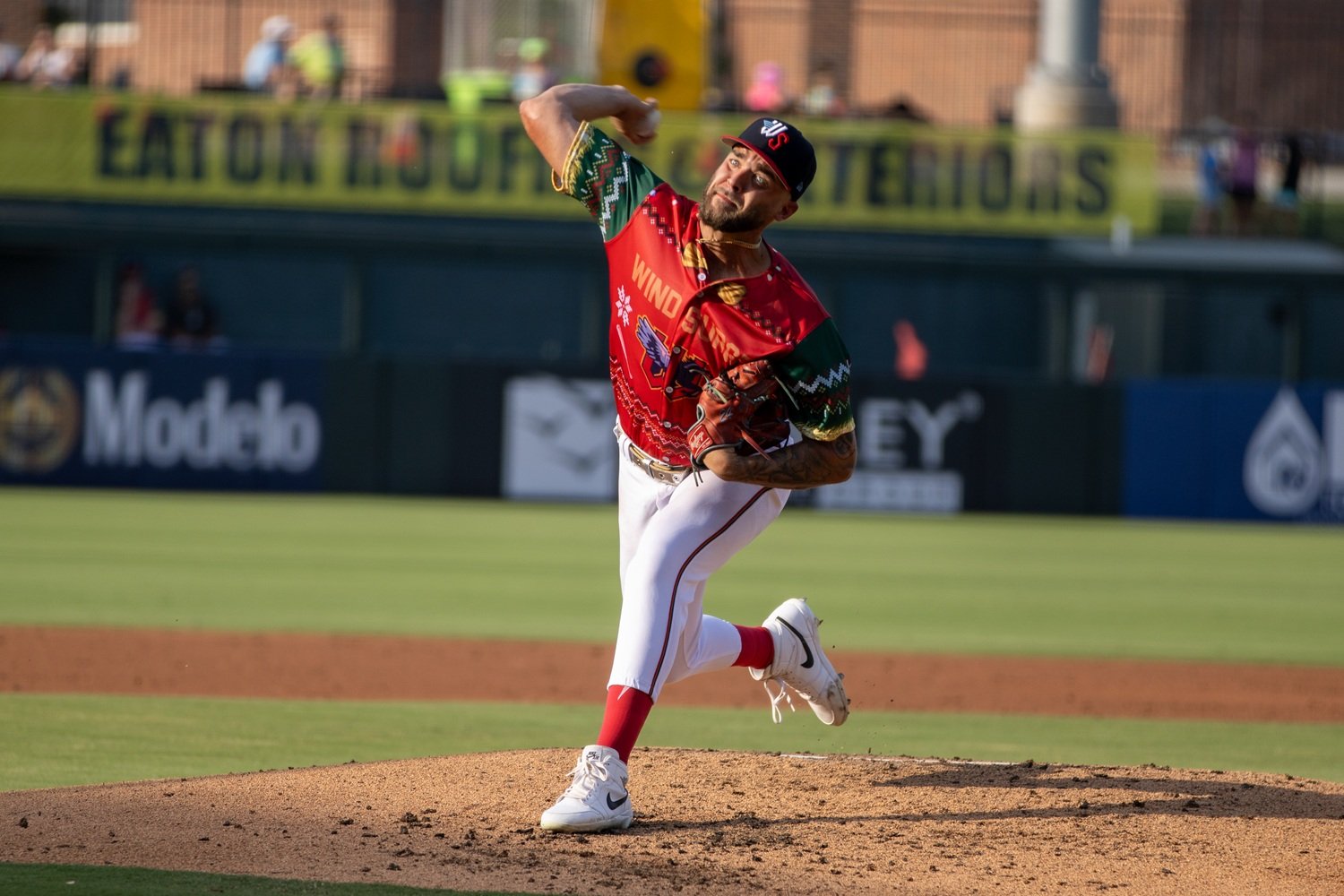 With next Monday's MLB trade deadline quickly approaching, prospect lists take on a different level of importance. Every standout performance can strengthen a player's case to remain part of Minnesota's future or make him a more attractive centerpiece in a trade for immediate help. The Twins have one of baseball's deepest farm systems, and rival clubs will undoubtedly ask about several of the organization's top prospects over the next week. That makes every game meaningful, especially for players trying to prove they belong in the club's long-term plans. One player on this week's Hot Sheet knows exactly what that spotlight feels like after arriving during last summer's deadline fire sale. C Eduardo Tait – Cedar Rapids Kernels How He Got Here: The Panama native arrived in the Twins organization as one of the headline pieces in last summer's Jhoan Duran trade with Philadelphia. Acquired alongside Mick Abel, Tait had already become one of the fastest-rising catching prospects in baseball. Signed by the Phillies for just $90,000 during the 2023 international signing period, Tait immediately outperformed expectations. He posted a .917 OPS in the Dominican Summer League before reaching full-season ball in 2024, where he hit .302 with an .842 OPS as a teenager. His ascent continued at a rapid pace. By 18, he had reached High-A, earned a Futures Game selection, and established himself among baseball's premier catching prospects. Minnesota challenged him immediately after the trade, and he helped Cedar Rapids during its playoff push before returning to the Kernels this season. Hitting the Hot Button: Maybe it was the Twins selecting two catchers in the first two rounds of the 2026 MLB Draft. Maybe it was being named one of the organization's prospects with the most to prove during the second half. Whatever the motivation, Tait responded with one of his best weeks of the season. The 19-year-old played six games, launching three home runs while driving in six runs. He posted a .600 slugging percentage and an .850 OPS during the week, showing the impact power that has long made him one of the organization's most intriguing offensive prospects. The overall season numbers still leave room for improvement with an 80 wRC+ and a .729 OPS, but weeks like this serve as reminders of why evaluators remain so bullish on his long-term upside. Catchers often develop slowly, and Tait continues to flash the offensive tools that made him such a coveted trade acquisition. RHP Cory Lewis – Wichita Wind Surge How He Got Here: Lewis has rarely lacked talent. Staying healthy has been the biggest obstacle. The Fountain Valley, California, native was selected by Minnesota in the ninth round of the 2022 MLB Draft out of UC Santa Barbara. After signing for $140,000, he quickly rewarded the Twins by climbing from Single-A to High-A during the 2023 season. Among organizational pitchers with at least 100 innings, he led the way in several categories, including ERA, batting average against, and strikeouts per nine innings. A shoulder impingement delayed his 2024 season until late May, but he finished the year pitching effectively in Double-A. The Twins promoted him to Triple-A for all of 2025, where injuries and inconsistency led to a difficult campaign. Lewis posted a 7.27 ERA while bouncing between the rotation and bullpen before another shoulder strain shut him down during spring training this year. Hitting the Hot Button: This season has always been about proving his shoulder could hold up over a full workload. Lewis took another encouraging step this week, appearing twice, including one start, and throwing eight scoreless innings. He allowed six hits, walked one batter, and struck out 10. For the season, the 25-year-old owns a 4.15 ERA with a 1.42 WHIP and a 12.5 K-BB% across 14 appearances (13 starts). He's slightly older than the average age of the Texas League competition, but that's secondary to demonstrating durability. After multiple shoulder-related setbacks over the past three seasons, simply staying on the mound while missing bats is a significant development. RHP Chris Vallimont – Wichita Wind Surge How He Got Here: Vallimont's baseball journey has taken plenty of turns before bringing him back to the Twins organization. Originally selected by the Marlins in the fifth round of the 2018 MLB Draft out of Mercyhurst University, he first joined Minnesota during the 2019 trade deadline in the deal that also brought Sergio Romo from Miami in exchange for Lewin Diaz. He reached Double-A before being claimed off waivers by Baltimore in 2022. Vallimont made his lone major league appearance with the Orioles in 2023, striking out one batter while allowing one hit in two-thirds of an inning. His career then included stops with Cleveland, the Dodgers organization, and independent baseball before Minnesota signed him again in mid-June. Now 28, he's trying to pitch his way back onto the organizational radar. Hitting the Hot Button: Saturday provided one of the highlights of the Wind Surge season. Vallimont started Wichita's combined no-hitter, tossing five hitless innings before Darren Bowen and Ruddy Gomez completed just the second no-hitter in franchise history. He struck out a season-high six hitters while continuing an impressive return to affiliated baseball. Since signing out of independent ball, Vallimont has compiled a 3.90 ERA and a 1.37 WHIP over 30 innings across eight starts. It's a small sample, but performances like Saturday's could earn him additional opportunities as Minnesota evaluates pitching depth throughout the organization. The next week could reshape the Twins organization in more ways than one. Some of these prospects may remain untouchable as Minnesota balances buying without sacrificing its future. Others could become key pieces in deadline negotiations. Tait reminded everyone why he was considered one of last year's biggest trade acquisitions. Lewis continues rebuilding confidence after years of shoulder troubles. Vallimont has turned an independent-ball opportunity into another chance with the organization. With the deadline looming, every strong performance carries a little more weight. Which performance stands out most to you? Can Cory Lewis and Chris Vallimont work their way back into the Twins' long-term plans? Leave a comment and start the discussion.
- 22 comments
-
- 6
-
-
- eduardo tait
- chris vallimont
- (and 1 more)
-
Image courtesy of Greta Riedl With next Monday's MLB trade deadline quickly approaching, prospect lists take on a different level of importance. Every standout performance can strengthen a player's case to remain part of Minnesota's future or make him a more attractive centerpiece in a trade for immediate help. The Twins have one of baseball's deepest farm systems, and rival clubs will undoubtedly ask about several of the organization's top prospects over the next week. That makes every game meaningful, especially for players trying to prove they belong in the club's long-term plans. One player on this week's Hot Sheet knows exactly what that spotlight feels like after arriving during last summer's deadline fire sale. C Eduardo Tait – Cedar Rapids Kernels How He Got Here: The Panama native arrived in the Twins organization as one of the headline pieces in last summer's Jhoan Duran trade with Philadelphia. Acquired alongside Mick Abel, Tait had already become one of the fastest-rising catching prospects in baseball. Signed by the Phillies for just $90,000 during the 2023 international signing period, Tait immediately outperformed expectations. He posted a .917 OPS in the Dominican Summer League before reaching full-season ball in 2024, where he hit .302 with an .842 OPS as a teenager. His ascent continued at a rapid pace. By 18, he had reached High-A, earned a Futures Game selection, and established himself among baseball's premier catching prospects. Minnesota challenged him immediately after the trade, and he helped Cedar Rapids during its playoff push before returning to the Kernels this season. Hitting the Hot Button: Maybe it was the Twins selecting two catchers in the first two rounds of the 2026 MLB Draft. Maybe it was being named one of the organization's prospects with the most to prove during the second half. Whatever the motivation, Tait responded with one of his best weeks of the season. The 19-year-old played six games, launching three home runs while driving in six runs. He posted a .600 slugging percentage and an .850 OPS during the week, showing the impact power that has long made him one of the organization's most intriguing offensive prospects. The overall season numbers still leave room for improvement with an 80 wRC+ and a .729 OPS, but weeks like this serve as reminders of why evaluators remain so bullish on his long-term upside. Catchers often develop slowly, and Tait continues to flash the offensive tools that made him such a coveted trade acquisition. RHP Cory Lewis – Wichita Wind Surge How He Got Here: Lewis has rarely lacked talent. Staying healthy has been the biggest obstacle. The Fountain Valley, California, native was selected by Minnesota in the ninth round of the 2022 MLB Draft out of UC Santa Barbara. After signing for $140,000, he quickly rewarded the Twins by climbing from Single-A to High-A during the 2023 season. Among organizational pitchers with at least 100 innings, he led the way in several categories, including ERA, batting average against, and strikeouts per nine innings. A shoulder impingement delayed his 2024 season until late May, but he finished the year pitching effectively in Double-A. The Twins promoted him to Triple-A for all of 2025, where injuries and inconsistency led to a difficult campaign. Lewis posted a 7.27 ERA while bouncing between the rotation and bullpen before another shoulder strain shut him down during spring training this year. Hitting the Hot Button: This season has always been about proving his shoulder could hold up over a full workload. Lewis took another encouraging step this week, appearing twice, including one start, and throwing eight scoreless innings. He allowed six hits, walked one batter, and struck out 10. For the season, the 25-year-old owns a 4.15 ERA with a 1.42 WHIP and a 12.5 K-BB% across 14 appearances (13 starts). He's slightly older than the average age of the Texas League competition, but that's secondary to demonstrating durability. After multiple shoulder-related setbacks over the past three seasons, simply staying on the mound while missing bats is a significant development. RHP Chris Vallimont – Wichita Wind Surge How He Got Here: Vallimont's baseball journey has taken plenty of turns before bringing him back to the Twins organization. Originally selected by the Marlins in the fifth round of the 2018 MLB Draft out of Mercyhurst University, he first joined Minnesota during the 2019 trade deadline in the deal that also brought Sergio Romo from Miami in exchange for Lewin Diaz. He reached Double-A before being claimed off waivers by Baltimore in 2022. Vallimont made his lone major league appearance with the Orioles in 2023, striking out one batter while allowing one hit in two-thirds of an inning. His career then included stops with Cleveland, the Dodgers organization, and independent baseball before Minnesota signed him again in mid-June. Now 28, he's trying to pitch his way back onto the organizational radar. Hitting the Hot Button: Saturday provided one of the highlights of the Wind Surge season. Vallimont started Wichita's combined no-hitter, tossing five hitless innings before Darren Bowen and Ruddy Gomez completed just the second no-hitter in franchise history. He struck out a season-high six hitters while continuing an impressive return to affiliated baseball. Since signing out of independent ball, Vallimont has compiled a 3.90 ERA and a 1.37 WHIP over 30 innings across eight starts. It's a small sample, but performances like Saturday's could earn him additional opportunities as Minnesota evaluates pitching depth throughout the organization. The next week could reshape the Twins organization in more ways than one. Some of these prospects may remain untouchable as Minnesota balances buying without sacrificing its future. Others could become key pieces in deadline negotiations. Tait reminded everyone why he was considered one of last year's biggest trade acquisitions. Lewis continues rebuilding confidence after years of shoulder troubles. Vallimont has turned an independent-ball opportunity into another chance with the organization. With the deadline looming, every strong performance carries a little more weight. Which performance stands out most to you? Can Cory Lewis and Chris Vallimont work their way back into the Twins' long-term plans? Leave a comment and start the discussion. View full article
-
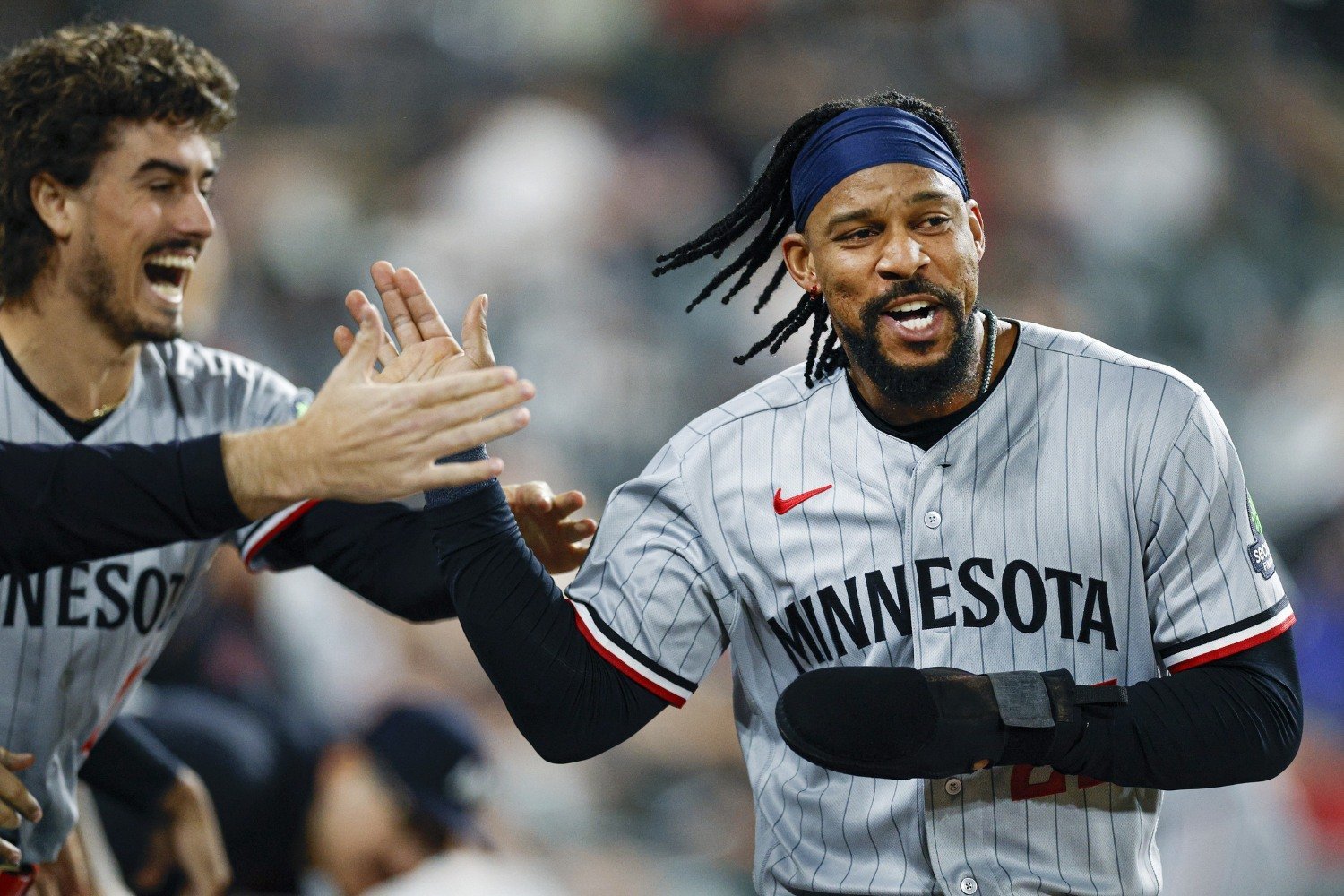 With one week remaining before the August 3 MLB trade deadline, the Minnesota Twins continue to walk the line between contender and pretender. At 53-54, they have exceeded expectations and are still very much alive in both the American League Central and Wild Card races. That reality has fueled weeks of speculation about whether Minnesota could cash in on its biggest stars. Byron Buxton and Joe Ryan have frequently surfaced in trade rumors, with rival executives wondering if the Twins would entertain blockbuster offers. According to former MLB general manager and current insider Jim Bowden, that isn't happening. Twins Operating as Buyers Speaking on GM Territory, Bowden shut down the idea that Minnesota is shopping either of its franchise cornerstones. "No, absolutely not," Bowden said when asked if the Twins would trade Buxton or Ryan. "I'm being told neither one is going. In fact, the Twins are buyers right now, they feel like they're in the race as well. They feel they have a chance for the Wild Card." That aligns with everything the Twins have shown publicly. Owner Tom Pohlad has repeatedly indicated that Minnesota would add talent if the club remained in postseason contention. Despite hovering around .500 for much of the summer, the Twins have done just enough to stay within striking distance. The Twins trail the division-leading Chicago White Sox by only 3.5 games and sit just one game behind the final American League Wild Card spot currently held by Cleveland. In a league where few teams have separated themselves, Minnesota believes it has a legitimate opportunity to play meaningful baseball in October. Bullpen Is the Clear Priority If the Twins are going to buy, the biggest need isn't difficult to identify. Minnesota's bullpen has struggled throughout the season, posting a 5.03 ERA that ranks among the worst relief units in baseball. Late-inning inconsistency has turned potential victories into frustrating losses and left little margin for error. Adding one impact reliever may not be enough. Minnesota could realistically use multiple bullpen arms capable of pitching high-leverage innings if it hopes to survive the stretch run. Bowden's report suggests that's exactly where the front office is directing its attention instead of pursuing splashier moves. Ryan and Buxton Aren't Going Anywhere While rival clubs would undoubtedly love to pry away Ryan or Buxton, neither situation has ever appeared particularly realistic. Ryan has once again established himself as one of the American League's better starters, compiling a 3.38 ERA with 131 strikeouts across 114 1/3 innings. Even after a pair of uneven outings, he remains the ace of Minnesota's rotation and would leave an enormous hole if traded. Buxton's case is even simpler. The veteran center fielder owns a full no-trade clause through 2028 and has repeatedly stated his desire to spend his entire career in Minnesota. When healthy, he remains one of baseball's most impactful players, providing elite defense, game-changing speed, and middle-of-the-order power. Bowden also noted that Minnesota believes staying healthy (particularly with Buxton and Royce Lewis) is critical to making a postseason push. If those stars remain on the field, the Twins believe their roster is capable of competing with the rest of the American League. Buying Makes Sense With the Right Moves A 53-54 club buying at the deadline may raise eyebrows, but context matters. The American League has been defined by parity, and Minnesota remains firmly in the playoff picture despite an inconsistent first four months. Selling would signal surrender in a race where virtually every contender has flaws of its own. The Twins don't necessarily need a dramatic overhaul. Their lineup has produced enough offense to compete, and the rotation has been anchored by Ryan while receiving quality contributions from the rest of the staff. The glaring weakness has been the bullpen, making it the logical place to invest deadline resources. There is also an opportunity to move Connor Prielipp or Zebby Matthews to the bullpen if the team acquires a back-end starter. Whether that's enough to make a deep postseason run remains to be seen. A frontline starting pitcher would undoubtedly elevate Minnesota's October outlook, but there has been little indication that such a move is on the table. If Bowden's reporting proves accurate, the Twins have made their decision. Ryan and Buxton will stay put, the front office will search aggressively for bullpen reinforcements, and Minnesota will bet that a healthier roster and a stronger relief corps are enough to turn a .500 season into a playoff berth.
 -
With one week remaining before the August 3 MLB trade deadline, the Minnesota Twins continue to walk the line between contender and pretender. At 53-54, they have exceeded expectations and are still very much alive in both the American League Central and Wild Card races. That reality has fueled weeks of speculation about whether Minnesota could cash in on its biggest stars. Byron Buxton and Joe Ryan have frequently surfaced in trade rumors, with rival executives wondering if the Twins would entertain blockbuster offers. According to former MLB general manager and current insider Jim Bowden, that isn't happening. Twins Operating as Buyers Speaking on GM Territory, Bowden shut down the idea that Minnesota is shopping either of its franchise cornerstones. "No, absolutely not," Bowden said when asked if the Twins would trade Buxton or Ryan. "I'm being told neither one is going. In fact, the Twins are buyers right now, they feel like they're in the race as well. They feel they have a chance for the Wild Card." That aligns with everything the Twins have shown publicly. Owner Tom Pohlad has repeatedly indicated that Minnesota would add talent if the club remained in postseason contention. Despite hovering around .500 for much of the summer, the Twins have done just enough to stay within striking distance. The Twins trail the division-leading Chicago White Sox by only 3.5 games and sit just one game behind the final American League Wild Card spot currently held by Cleveland. In a league where few teams have separated themselves, Minnesota believes it has a legitimate opportunity to play meaningful baseball in October. Bullpen Is the Clear Priority If the Twins are going to buy, the biggest need isn't difficult to identify. Minnesota's bullpen has struggled throughout the season, posting a 5.03 ERA that ranks among the worst relief units in baseball. Late-inning inconsistency has turned potential victories into frustrating losses and left little margin for error. Adding one impact reliever may not be enough. Minnesota could realistically use multiple bullpen arms capable of pitching high-leverage innings if it hopes to survive the stretch run. Bowden's report suggests that's exactly where the front office is directing its attention instead of pursuing splashier moves. Ryan and Buxton Aren't Going Anywhere While rival clubs would undoubtedly love to pry away Ryan or Buxton, neither situation has ever appeared particularly realistic. Ryan has once again established himself as one of the American League's better starters, compiling a 3.38 ERA with 131 strikeouts across 114 1/3 innings. Even after a pair of uneven outings, he remains the ace of Minnesota's rotation and would leave an enormous hole if traded. Buxton's case is even simpler. The veteran center fielder owns a full no-trade clause through 2028 and has repeatedly stated his desire to spend his entire career in Minnesota. When healthy, he remains one of baseball's most impactful players, providing elite defense, game-changing speed, and middle-of-the-order power. Bowden also noted that Minnesota believes staying healthy (particularly with Buxton and Royce Lewis) is critical to making a postseason push. If those stars remain on the field, the Twins believe their roster is capable of competing with the rest of the American League. Buying Makes Sense With the Right Moves A 53-54 club buying at the deadline may raise eyebrows, but context matters. The American League has been defined by parity, and Minnesota remains firmly in the playoff picture despite an inconsistent first four months. Selling would signal surrender in a race where virtually every contender has flaws of its own. The Twins don't necessarily need a dramatic overhaul. Their lineup has produced enough offense to compete, and the rotation has been anchored by Ryan while receiving quality contributions from the rest of the staff. The glaring weakness has been the bullpen, making it the logical place to invest deadline resources. There is also an opportunity to move Connor Prielipp or Zebby Matthews to the bullpen if the team acquires a back-end starter. Whether that's enough to make a deep postseason run remains to be seen. A frontline starting pitcher would undoubtedly elevate Minnesota's October outlook, but there has been little indication that such a move is on the table. If Bowden's reporting proves accurate, the Twins have made their decision. Ryan and Buxton will stay put, the front office will search aggressively for bullpen reinforcements, and Minnesota will bet that a healthier roster and a stronger relief corps are enough to turn a .500 season into a playoff berth. View full rumor
-
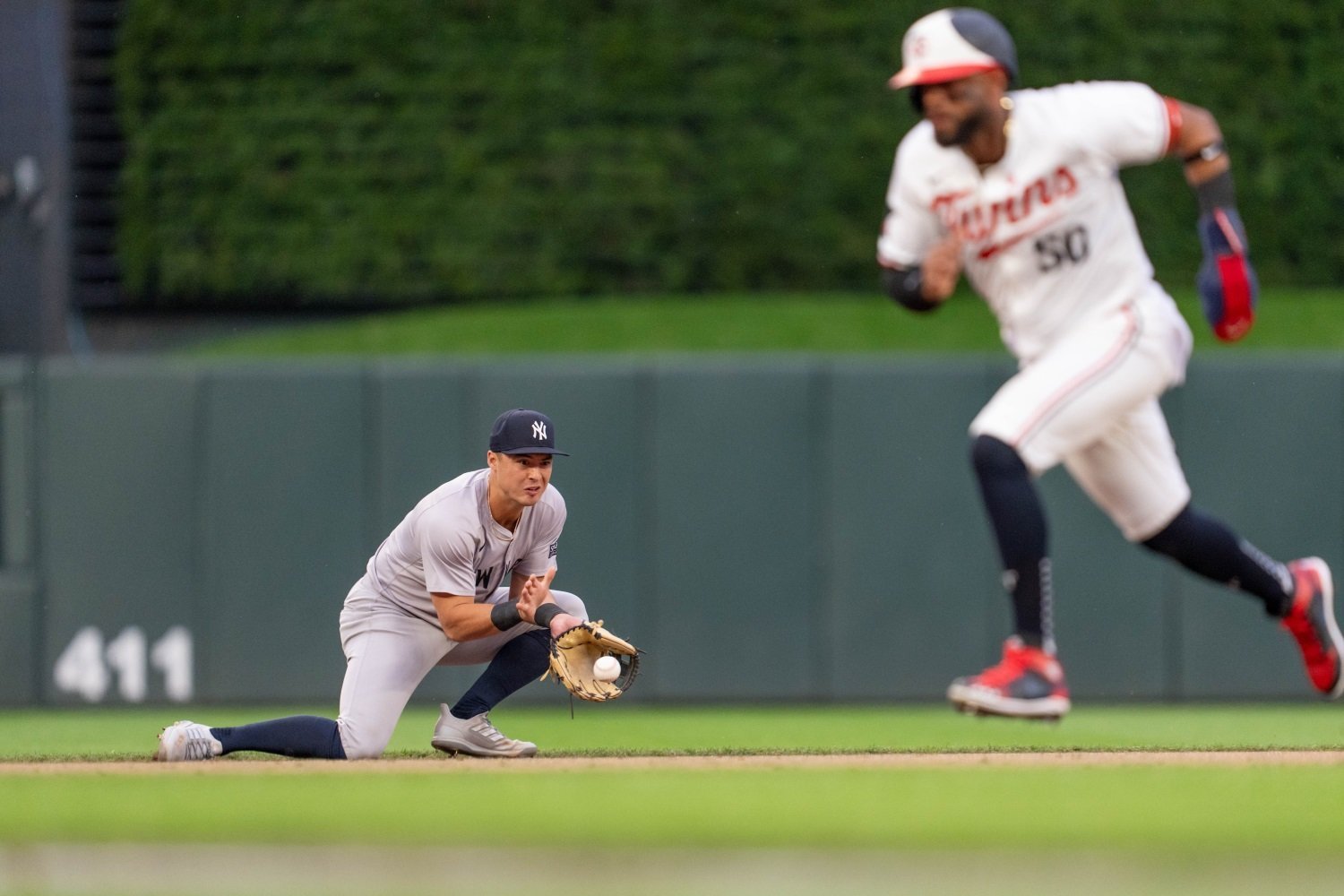 The Minnesota Twins have no shortage of trade deadline questions to answer over the next week. Ryan Jeffers is one of the organization’s most obvious trade candidates as he approaches free agency, and if the Twins decide to move their veteran catcher, finding a return that helps both now and in the future will be the priority. One recently proposed deal checks both boxes. According to The Athletic’s Chris Kirschner, the Yankees could send shortstop Anthony Volpe and reliever Camilo Doval to Minnesota in exchange for Jeffers. Shortstop has been the most underperforming position in a lineup that leads the American League in runs scored. While Volpe’s value has fallen considerably over the last two seasons, the Twins would be betting on a talented player rediscovering the potential that once made him one of baseball’s premier prospects. Jeffers Makes Sense for New York The Yankees have been connected to the catching market leading up to the deadline, and Jeffers fits what they’re searching for. Kirschner noted that Jeffers has an existing relationship with Yankees director of catching Tanner Swanson, who played an instrumental role in Minnesota selecting Jeffers in the second round of the 2018 MLB Draft. “Ryan Jeffers is the most logical catching target for the Yankees because of his relationship with Tanner Swanson, the club’s director of catching. Swanson was a key figure in the Minnesota Twins’ decision to draft Jeffers in 2018,” Kirschner wrote. “Jeffers will be a free agent after this season, so this move would also give the Yankees a stretch run to determine if he could also be a longer-term fit. In return, the Twins would get two change-of-scenery candidates in Volpe and Doval.” For New York, Jeffers would fill an immediate need behind the plate while allowing the club to evaluate whether he’s worth retaining beyond this season. Could Minnesota Unlock Volpe? From the Twins’ perspective, Volpe would be the centerpiece of the return. The former first-round pick entered professional baseball with enormous expectations, but his offensive production has never consistently matched the hype. Injuries haven’t helped, as Volpe missed the first month and a half of the season recovering from shoulder surgery before returning to split time at shortstop with Jose Caballero. In 158 plate appearances this season, the 25-year-old has hit .246/.342/.326 (.668) with one home run and 13 RBI. While both his batting average and on-base percentage are the highest marks of his career, the lack of power has limited his overall production. Since making his MLB debut in 2023, Volpe owns a .224/.288/.375 (.663) career slash line. He flashed intriguing power early in his career, hitting 21 home runs as a rookie before adding 19 more the following season, but his offensive inconsistency has remained a recurring issue. Even so, the Twins could view Volpe differently than the Yankees do. Minnesota has shown a willingness to bet on athletic players with strong defensive ability (6 OAA in 2026), particularly when they’re still under team control. Volpe would also give the Twins another option at shortstop, a position that seems to be waiting for top prospects Kaelen Culpepper and Marek Houston. Doval Addresses Another Need Adding Camilo Doval could make the proposal even more intriguing. While the Twins have been expected to pursue bullpen help at the deadline, acquiring an established late-inning reliever as part of a larger deal would allow them to strengthen another area of need without sacrificing additional prospect capital. He has a 4.51 FIP and a 22.6 K% this season. A reliever with Doval’s experience could immediately slot into the middle of Minnesota’s bullpen while remaining under team control through next season. A High-Risk, High-Reward Gamble Trading Jeffers won’t be easy, especially for a club that still sees itself as a postseason contender. But if Minnesota decides his impending free agency makes a move inevitable, maximizing the return becomes the priority. Volpe is no longer viewed as the lineup changing player many expected when he arrived in New York, but he is still just 25 years old with premium defensive skills and untapped offensive upside. Pairing him with a proven reliever like Doval could give the Twins two players capable of making an impact well beyond 2026. For a front office looking to compete now while building for the future, this is exactly the type of creative buy-low opportunity worth exploring.
- 87 comments
-
- 3
-

-
-
- anthony volpe
- ryan jeffers
- (and 1 more)
-
The Minnesota Twins have no shortage of trade deadline questions to answer over the next week. Ryan Jeffers is one of the organization’s most obvious trade candidates as he approaches free agency, and if the Twins decide to move their veteran catcher, finding a return that helps both now and in the future will be the priority. One recently proposed deal checks both boxes. According to The Athletic’s Chris Kirschner, the Yankees could send shortstop Anthony Volpe and reliever Camilo Doval to Minnesota in exchange for Jeffers. Shortstop has been the most underperforming position in a lineup that leads the American League in runs scored. While Volpe’s value has fallen considerably over the last two seasons, the Twins would be betting on a talented player rediscovering the potential that once made him one of baseball’s premier prospects. Jeffers Makes Sense for New York The Yankees have been connected to the catching market leading up to the deadline, and Jeffers fits what they’re searching for. Kirschner noted that Jeffers has an existing relationship with Yankees director of catching Tanner Swanson, who played an instrumental role in Minnesota selecting Jeffers in the second round of the 2018 MLB Draft. “Ryan Jeffers is the most logical catching target for the Yankees because of his relationship with Tanner Swanson, the club’s director of catching. Swanson was a key figure in the Minnesota Twins’ decision to draft Jeffers in 2018,” Kirschner wrote. “Jeffers will be a free agent after this season, so this move would also give the Yankees a stretch run to determine if he could also be a longer-term fit. In return, the Twins would get two change-of-scenery candidates in Volpe and Doval.” For New York, Jeffers would fill an immediate need behind the plate while allowing the club to evaluate whether he’s worth retaining beyond this season. Could Minnesota Unlock Volpe? From the Twins’ perspective, Volpe would be the centerpiece of the return. The former first-round pick entered professional baseball with enormous expectations, but his offensive production has never consistently matched the hype. Injuries haven’t helped, as Volpe missed the first month and a half of the season recovering from shoulder surgery before returning to split time at shortstop with Jose Caballero. In 158 plate appearances this season, the 25-year-old has hit .246/.342/.326 (.668) with one home run and 13 RBI. While both his batting average and on-base percentage are the highest marks of his career, the lack of power has limited his overall production. Since making his MLB debut in 2023, Volpe owns a .224/.288/.375 (.663) career slash line. He flashed intriguing power early in his career, hitting 21 home runs as a rookie before adding 19 more the following season, but his offensive inconsistency has remained a recurring issue. Even so, the Twins could view Volpe differently than the Yankees do. Minnesota has shown a willingness to bet on athletic players with strong defensive ability (6 OAA in 2026), particularly when they’re still under team control. Volpe would also give the Twins another option at shortstop, a position that seems to be waiting for top prospects Kaelen Culpepper and Marek Houston. Doval Addresses Another Need Adding Camilo Doval could make the proposal even more intriguing. While the Twins have been expected to pursue bullpen help at the deadline, acquiring an established late-inning reliever as part of a larger deal would allow them to strengthen another area of need without sacrificing additional prospect capital. He has a 4.51 FIP and a 22.6 K% this season. A reliever with Doval’s experience could immediately slot into the middle of Minnesota’s bullpen while remaining under team control through next season. A High-Risk, High-Reward Gamble Trading Jeffers won’t be easy, especially for a club that still sees itself as a postseason contender. But if Minnesota decides his impending free agency makes a move inevitable, maximizing the return becomes the priority. Volpe is no longer viewed as the lineup changing player many expected when he arrived in New York, but he is still just 25 years old with premium defensive skills and untapped offensive upside. Pairing him with a proven reliever like Doval could give the Twins two players capable of making an impact well beyond 2026. For a front office looking to compete now while building for the future, this is exactly the type of creative buy-low opportunity worth exploring. View full rumor
- 87 replies
-
- 1
-
-
- anthony volpe
- ryan jeffers
- (and 1 more)
-
The Minnesota Twins took a low-risk gamble earlier this month when they acquired right-handed reliever Woo-Suk Go from the Detroit Tigers for cash considerations. After a brief look in the majors, the organization sent him to Triple-A St. Paul to continue refining his mechanics and remain available as bullpen depth. Instead of getting another opportunity to prove himself, Go will now spend the next 10 games serving a suspension. Major League Baseball announced Sunday that Go received a 10-game suspension after an illegal foreign substance was discovered on his glove during Friday night's game with the St. Paul Saints. The suspension is retroactive to Saturday. Why Was Go Suspended? The incident occurred before Go could even throw his first pitch for the Saints. During a routine glove inspection, third base umpire Joe McCarthy noticed something unusual and conferred with the rest of the umpiring crew before ejecting the 27-year-old reliever. His glove was confiscated and sent to Major League Baseball for further examination, ultimately leading to the suspension. He will not be eligible to return until the Saints' next homestand starting August 4. For Go, the timing couldn't be much worse. After Minnesota acquired him from Detroit on July 6, the Twins quickly gave him an opportunity at the major-league level. He appeared in four games, allowing four runs on eight hits (including two home runs), while striking out five over four innings before being optioned back to Triple-A. The demotion wasn't necessarily surprising. Minnesota wanted Go to iron out some mechanical issues while giving another reliever an opportunity in the bullpen. The expectation was that a few solid outings in St. Paul could put him back into the conversation for another call-up. A Long Road to the Major Leagues Go's professional journey has been anything but conventional. He debuted in the Korean Baseball Organization as an 18-year-old and spent seven seasons establishing himself as one of the league's better late-inning relievers. Across 354 appearances, he posted a 3.18 ERA while striking out 401 batters in 368 innings, eventually earning a two-year, $4.5 million contract with the San Diego Padres before the 2024 season. The transition to affiliated baseball proved difficult. Control problems prevented him from making San Diego's Opening Day roster, and his struggles continued in Double-A. After later joining the Miami Marlins organization and being released, Go signed a minor-league contract with Detroit before the 2025 season. That move appeared to get his career back on track. Between Double-A Erie and Triple-A Toledo this season, Go posted a 1.96 ERA over 41 1/3 innings, showing enough promise for the Twins to acquire him as they searched for additional bullpen depth. Another Opportunity Will Have to Wait Minnesota's bullpen has lacked consistency throughout the season, meaning there is still a realistic path for Go to earn another opportunity in the majors once his suspension ends. However, the challenge has become significantly steeper. Players on the fringe of a big-league roster have little margin for error, and a suspension involving an illegal foreign substance raises questions that Go now has to answer with his performance. The Twins were hoping he could become another reclamation success story, but first he'll have to regain the organization's trust. If he can rediscover the form that made him dominant in Detroit's farm system, another call to Minnesota remains possible. But after this latest setback, he'll have to earn that opportunity all over again. View full rumor
-
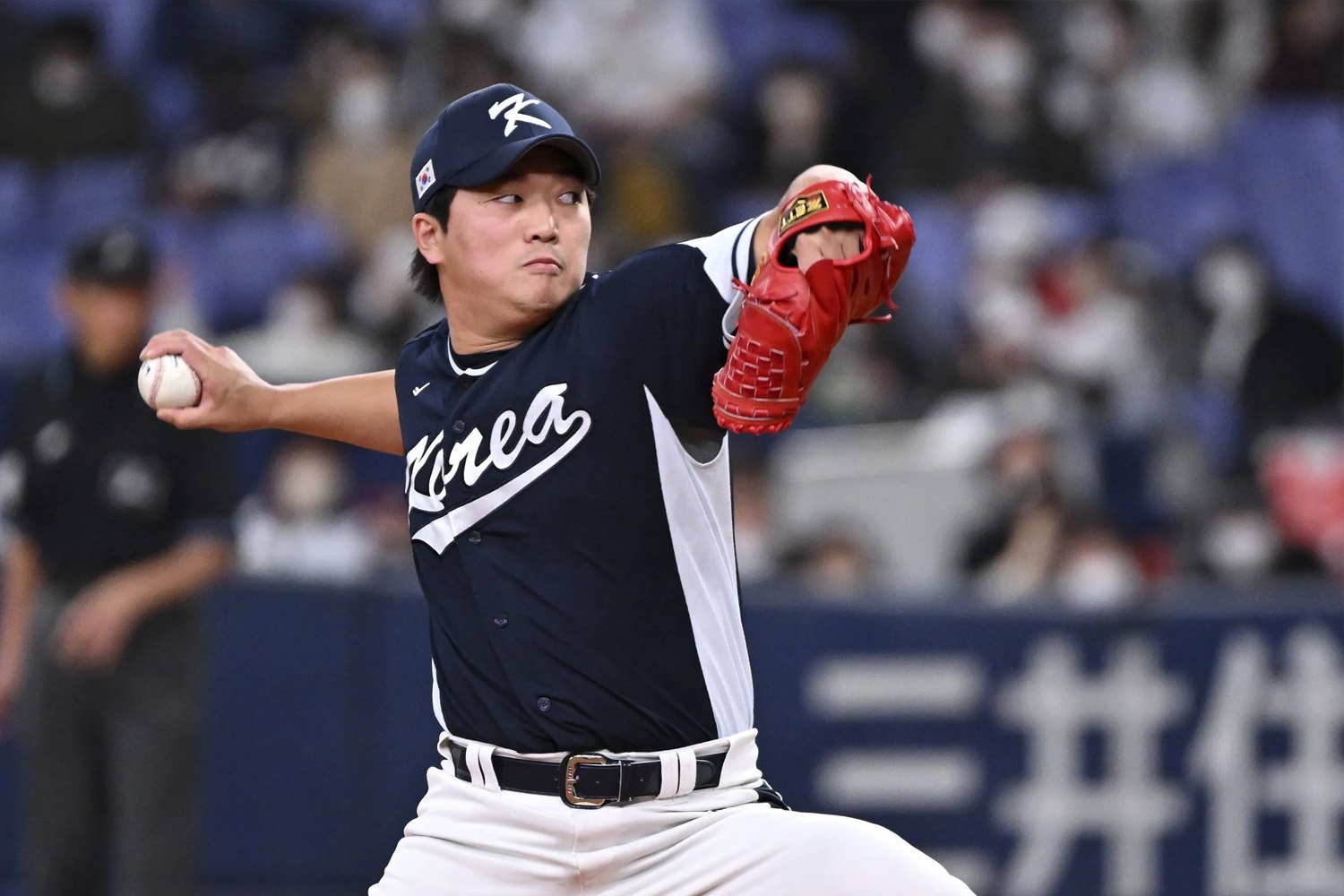 The Minnesota Twins took a low-risk gamble earlier this month when they acquired right-handed reliever Woo-Suk Go from the Detroit Tigers for cash considerations. After a brief look in the majors, the organization sent him to Triple-A St. Paul to continue refining his mechanics and remain available as bullpen depth. Instead of getting another opportunity to prove himself, Go will now spend the next 10 games serving a suspension. Major League Baseball announced Sunday that Go received a 10-game suspension after an illegal foreign substance was discovered on his glove during Friday night's game with the St. Paul Saints. The suspension is retroactive to Saturday. Why Was Go Suspended? The incident occurred before Go could even throw his first pitch for the Saints. During a routine glove inspection, third base umpire Joe McCarthy noticed something unusual and conferred with the rest of the umpiring crew before ejecting the 27-year-old reliever. His glove was confiscated and sent to Major League Baseball for further examination, ultimately leading to the suspension. He will not be eligible to return until the Saints' next homestand starting August 4. For Go, the timing couldn't be much worse. After Minnesota acquired him from Detroit on July 6, the Twins quickly gave him an opportunity at the major-league level. He appeared in four games, allowing four runs on eight hits (including two home runs), while striking out five over four innings before being optioned back to Triple-A. The demotion wasn't necessarily surprising. Minnesota wanted Go to iron out some mechanical issues while giving another reliever an opportunity in the bullpen. The expectation was that a few solid outings in St. Paul could put him back into the conversation for another call-up. A Long Road to the Major Leagues Go's professional journey has been anything but conventional. He debuted in the Korean Baseball Organization as an 18-year-old and spent seven seasons establishing himself as one of the league's better late-inning relievers. Across 354 appearances, he posted a 3.18 ERA while striking out 401 batters in 368 innings, eventually earning a two-year, $4.5 million contract with the San Diego Padres before the 2024 season. The transition to affiliated baseball proved difficult. Control problems prevented him from making San Diego's Opening Day roster, and his struggles continued in Double-A. After later joining the Miami Marlins organization and being released, Go signed a minor-league contract with Detroit before the 2025 season. That move appeared to get his career back on track. Between Double-A Erie and Triple-A Toledo this season, Go posted a 1.96 ERA over 41 1/3 innings, showing enough promise for the Twins to acquire him as they searched for additional bullpen depth. Another Opportunity Will Have to Wait Minnesota's bullpen has lacked consistency throughout the season, meaning there is still a realistic path for Go to earn another opportunity in the majors once his suspension ends. However, the challenge has become significantly steeper. Players on the fringe of a big-league roster have little margin for error, and a suspension involving an illegal foreign substance raises questions that Go now has to answer with his performance. The Twins were hoping he could become another reclamation success story, but first he'll have to regain the organization's trust. If he can rediscover the form that made him dominant in Detroit's farm system, another call to Minnesota remains possible. But after this latest setback, he'll have to earn that opportunity all over again.
 -
The Minnesota Twins remain squarely in the middle of the American League postseason race, leaving the front office with one of the more intriguing decisions before next Monday's MLB Trade Deadline. A strong finish to July could cement Minnesota as a buyer, but that doesn't necessarily mean the organization will only deal prospects. If the Twins choose to add, the priorities are obvious. Their rotation could use another reliable starter, and the bullpen has been one of the club's biggest weaknesses throughout the season. The challenge is finding impact pitching without sacrificing too much of the organization's future. According to The Athletic's Dan Hayes, Minnesota could solve that problem by trading from its major league roster instead of relying exclusively on prospects. Buying Doesn't Mean Keeping Everyone Hayes believes the Twins will ultimately acquire major league pitching, but the price may come from the current roster rather than the upper levels of the farm system. "In an effort to bolster their long-shot odds, the Twins will trade someone with experience off their 40-man roster - perhaps Matt Wallner, Ryan Jeffers or Trevor Larnach - to acquire major-league pitching help. The club also will dip into its farm system, though not at an all-in level, to add useful pieces to Derek Shelton's big-league bullpen and perhaps the rotation." It's a fascinating prediction because it doesn't fit the traditional buyer-or-seller mold. Rather than standing pat with the current roster or sacrificing premium prospects, Minnesota could improve by swapping from areas of relative strength. At 53-54, the Twins aren't in position to mortgage the future, but they also aren't far enough out of contention to wave the white flag. That makes creative roster construction more important than ever. Ryan Jeffers Headlines the Trade Candidates Jeffers has been connected to multiple clubs in recent weeks, including the Yankees and Rays. Catching is one of the more difficult positions to fill across baseball, which gives the Twins leverage if they decide to move him. The question is whether the return outweighs what Jeffers brings behind the plate. If Minnesota can acquire a meaningful upgrade for either the rotation or bullpen while remaining confident in its catching depth, it's a move worth considering. Trevor Larnach's Value May Never Be Higher Larnach is enjoying the best offensive season of his career (134 OPS+), making him one of the Twins' most valuable trade assets. His production, combined with another season of team control, would appeal to clubs looking for middle-of-the-order offense beyond 2026. Trading one of the lineup's best hitters would certainly be difficult, but controllable bats often bring back value. If the Twins believe they can replace Larnach's production internally (Perhaps with top prospect Walker Jenkins), his value on the market could be difficult to ignore. Matt Wallner Could Be a Change-of-Scenery Candidate Wallner doesn't carry the same trade value as Jeffers or Larnach after spending much of the season at Triple-A. Even so, his power potential and previous major league success could intrigue a rebuilding organization willing to bet on a change of scenery. While Wallner likely wouldn't headline a blockbuster, he could still be part of a package that helps Minnesota address its pitching needs. An Aggressive But Balanced Strategy The Twins don't have to choose between buying and selling. Hayes' prediction outlines a middle path that could improve the major league club without emptying the farm system. Jeffers would likely command the strongest return, while Larnach could bring back a controllable impact arm. Wallner represents more of a secondary asset, but each player gives Minnesota flexibility as it explores different trade scenarios. If the front office can turn a position player surplus into much-needed pitching, the Twins could strengthen their chances of reaching October while maintaining much of their long-term foundation. It's a difficult balancing act, but it may be the most realistic path toward improving this year's roster without compromising the future. View full rumor
-
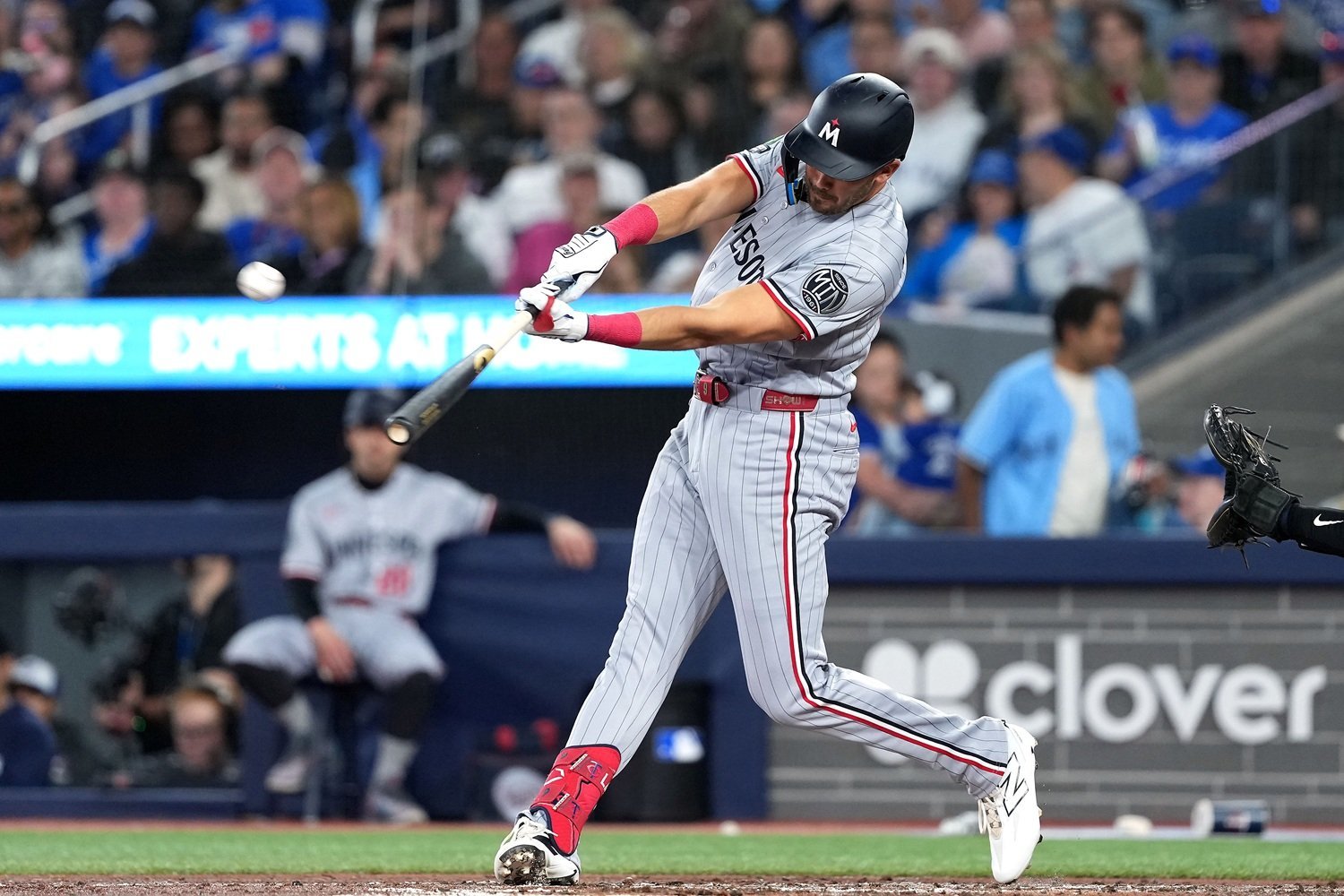 The Minnesota Twins remain squarely in the middle of the American League postseason race, leaving the front office with one of the more intriguing decisions before next Monday's MLB Trade Deadline. A strong finish to July could cement Minnesota as a buyer, but that doesn't necessarily mean the organization will only deal prospects. If the Twins choose to add, the priorities are obvious. Their rotation could use another reliable starter, and the bullpen has been one of the club's biggest weaknesses throughout the season. The challenge is finding impact pitching without sacrificing too much of the organization's future. According to The Athletic's Dan Hayes, Minnesota could solve that problem by trading from its major league roster instead of relying exclusively on prospects. Buying Doesn't Mean Keeping Everyone Hayes believes the Twins will ultimately acquire major league pitching, but the price may come from the current roster rather than the upper levels of the farm system. "In an effort to bolster their long-shot odds, the Twins will trade someone with experience off their 40-man roster - perhaps Matt Wallner, Ryan Jeffers or Trevor Larnach - to acquire major-league pitching help. The club also will dip into its farm system, though not at an all-in level, to add useful pieces to Derek Shelton's big-league bullpen and perhaps the rotation." It's a fascinating prediction because it doesn't fit the traditional buyer-or-seller mold. Rather than standing pat with the current roster or sacrificing premium prospects, Minnesota could improve by swapping from areas of relative strength. At 53-54, the Twins aren't in position to mortgage the future, but they also aren't far enough out of contention to wave the white flag. That makes creative roster construction more important than ever. Ryan Jeffers Headlines the Trade Candidates Jeffers has been connected to multiple clubs in recent weeks, including the Yankees and Rays. Catching is one of the more difficult positions to fill across baseball, which gives the Twins leverage if they decide to move him. The question is whether the return outweighs what Jeffers brings behind the plate. If Minnesota can acquire a meaningful upgrade for either the rotation or bullpen while remaining confident in its catching depth, it's a move worth considering. Trevor Larnach's Value May Never Be Higher Larnach is enjoying the best offensive season of his career (134 OPS+), making him one of the Twins' most valuable trade assets. His production, combined with another season of team control, would appeal to clubs looking for middle-of-the-order offense beyond 2026. Trading one of the lineup's best hitters would certainly be difficult, but controllable bats often bring back value. If the Twins believe they can replace Larnach's production internally (Perhaps with top prospect Walker Jenkins), his value on the market could be difficult to ignore. Matt Wallner Could Be a Change-of-Scenery Candidate Wallner doesn't carry the same trade value as Jeffers or Larnach after spending much of the season at Triple-A. Even so, his power potential and previous major league success could intrigue a rebuilding organization willing to bet on a change of scenery. While Wallner likely wouldn't headline a blockbuster, he could still be part of a package that helps Minnesota address its pitching needs. An Aggressive But Balanced Strategy The Twins don't have to choose between buying and selling. Hayes' prediction outlines a middle path that could improve the major league club without emptying the farm system. Jeffers would likely command the strongest return, while Larnach could bring back a controllable impact arm. Wallner represents more of a secondary asset, but each player gives Minnesota flexibility as it explores different trade scenarios. If the front office can turn a position player surplus into much-needed pitching, the Twins could strengthen their chances of reaching October while maintaining much of their long-term foundation. It's a difficult balancing act, but it may be the most realistic path toward improving this year's roster without compromising the future.
- 11 comments
-
- 2
-
-
- ryan jeffers
- trevor larnach
- (and 1 more)
-
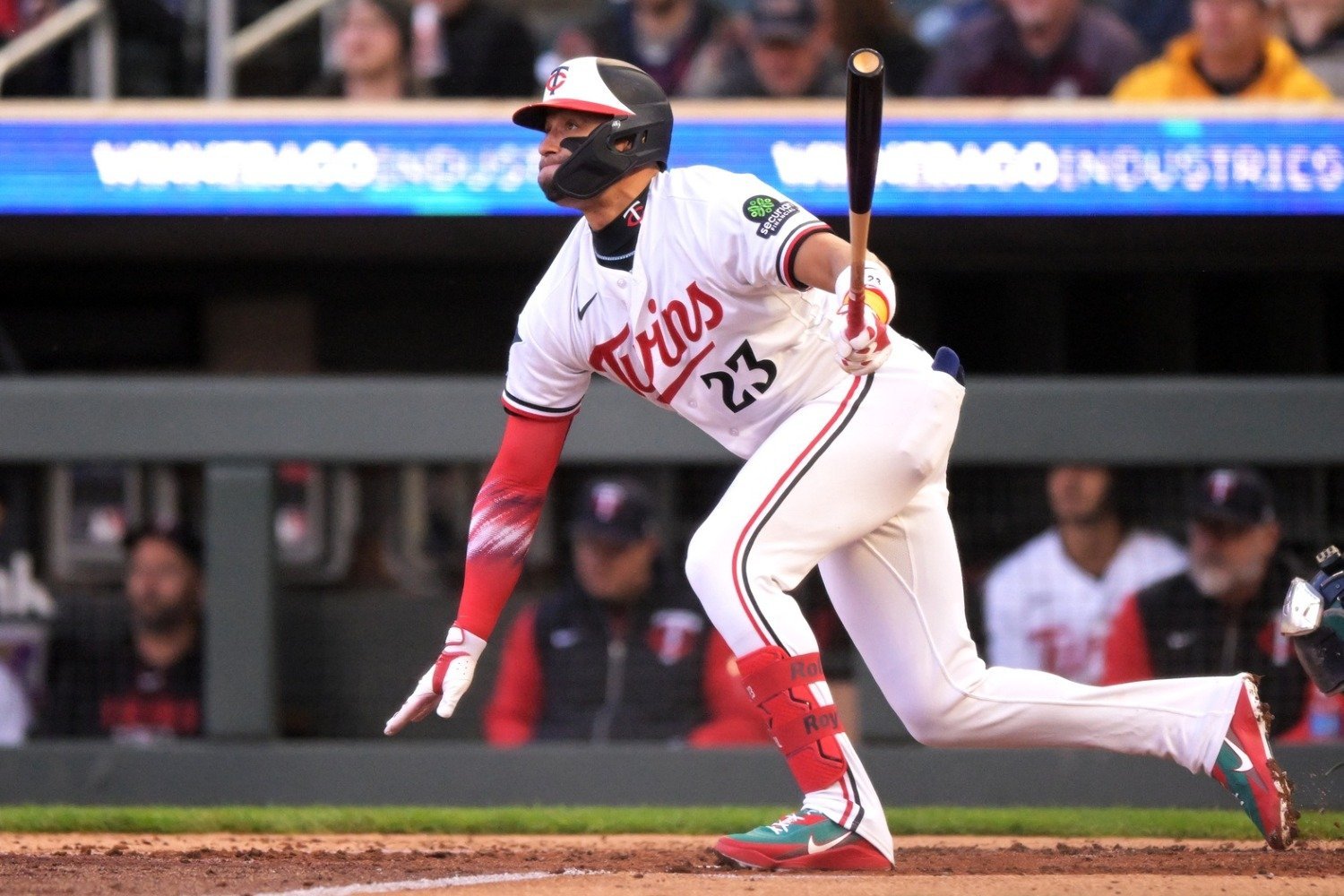 The Minnesota Twins don't have to make a decision about whether they are buyers or sellers in a vacuum. The calendar is making the decision for them. The August 3 trade deadline is just a week away, and Minnesota remains in the American League playoff race. That wasn't necessarily the expectation when the season began, but the Twins have played well enough to make the front office consider adding pieces, instead of simply looking toward the future. That doesn't mean every player on the roster is untouchable. In fact, Minnesota could potentially make a move that improves the team while also dealing from an area of depth. With that in mind, it's time to hand out some trade deadline superlatives. Most Likely to Be Traded: Ryan Jeffers Jeffers has arguably been the most logical trade candidate on Minnesota's roster for months. That's not necessarily a reflection of his value to the Twins. It's a reflection of his contract situation and the organization's catching depth. Jeffers is a pending free agent, making him one of the few players Minnesota can move without sacrificing multiple seasons of team control. He also plays a premium position, has experience as an everyday catcher, and could interest contenders looking for an upgrade behind the plate. Recent reporting has connected him to teams such as the Yankees or Rays, while the Twins have also been linked to potential bullpen upgrades in a deal involving their catcher. Minnesota wouldn't have to completely abandon its postseason ambitions to make the move, either. The Twins have options behind Jeffers, including Victor Caratini and Alex Jackson. That's what makes Jeffers different from someone like Joe Ryan. Trading Ryan would fundamentally change the rotation. Trading Jeffers would hurt, but the Twins could survive it. If Minnesota receives a controllable bullpen arm in return, the move could make sense, even if the Twins continue trying to win in 2026. Biggest Surprise Trade: Royce Lewis If the Twins trade Lewis, it would set off a torrent of debate among fans. Lewis was the first overall pick in the 2017 MLB Draft. He was supposed to be part of the organization's long-term core, and there were still hopes entering 2026 that he could reclaim some of the star potential he showed during his breakout 2023 season. Instead, the former top prospect has continued to battle inconsistency, and Minnesota has already shown a willingness to send him to Triple-A when his performance hasn't matched expectations. That doesn't mean the Twins should give him away. In fact, that would be the biggest problem with trading Lewis right now. His value isn't what it once was, and another organization would be buying into the possibility of a rebound rather than paying for a proven middle-of-the-order bat. Still, Lewis is an intriguing trade chip because another team could believe it has the environment to unlock something Minnesota hasn't been able to consistently find. A Lewis trade would also signal something larger. Minnesota would be admitting that the former No. 1 overall pick is no longer a necessary piece of the organization's next competitive window. That would be a stunning development, at least to some fans. Best Value Acquisition: Dustin May If the Twins want to add starting pitching without paying the premium attached to the biggest names on the market, May could make plenty of sense. The Cardinals acquired May as part of their rotation plans, but his 2026 season hasn't been dominant. He's posted a 4.59 ERA with a 3.15 FIP, numbers that could make him considerably more attainable than some of the marquee pitchers available. That's exactly why he could be interesting. Minnesota doesn't necessarily need to acquire a pitcher who has to immediately become a de facto ace. The Twins need more reliable innings and another arm capable of taking meaningful starts down the stretch. May has enough track record and underlying ability to make a rebound plausible, while the price should be considerably lower than what teams would pay for a pitcher such as Tarik Skubal. May is currently ranked as DiamondCentric's 43rd-best trade candidate: This is the type of move that could fit Minnesota's situation perfectly. The Twins can improve without sacrificing the upper levels of their farm system. If the organization believes its pitching infrastructure can help May find another level, he becomes even more intriguing. Sleeper Bullpen Pickup: Huascar Brazobán The Twins don't need to make every move a headline. Brazobán could be the kind of under-the-radar bullpen addition that makes a bigger impact than expected. Minnesota's bullpen has been one of the obvious areas of need heading into the deadline, and the Twins have already shown they are willing to add relief help rather than wait for internal solutions. Brazobán makes sense because the price should be much more manageable than it would be for one of the market's premier closers. The Twins don't necessarily need another traditional ninth-inning arm. They need more pitchers who can take important innings without forcing the coaching staff to overextend its top relievers. DiamondCentric ranks Brazobán as the 56th-best trade candidate: That's where Brazobán could fit. The Mets have plenty of reasons to consider selling, and their roster could look considerably different by the deadline. A pitcher like Brazobán could become available as part of that reshuffling. For Minnesota, this would be the type of transaction worth pursuing. Don't overpay for a reliever. Don't sacrifice a top prospect. Find a pitcher with enough stuff to make a difference and give the coaching staff another option in the late innings. It's about augmentation, not transformation. That's an important distinction for an organization that has already gone through a dramatic roster transformation. Minnesota has rebuilt its farm system, added young talent and unexpectedly found itself back in the playoff picture. Another massive selloff doesn't make much sense, but going all-in on one season could be equally dangerous. That's why Jeffers remains so fascinating. He's one of the few players Minnesota could move without completely changing its roster construction. Lewis would be the surprise, May represents the type of calculated pitching gamble that could work, and Brazobán could be the quiet bullpen addition that helps make everything else work. The Twins don't need to make five trades before August 3. They need to identify which one or two moves can make this surprising season last a little longer. What other superlatives would you add to the list? Biggest trade mistake? Leave a comment and start the discussion.
- 21 comments
-
- 5
-
-
- ryan jeffers
- royce lewis
- (and 2 more)
-
Image courtesy of © Nick Wosika-Imagn Images The Minnesota Twins don't have to make a decision about whether they are buyers or sellers in a vacuum. The calendar is making the decision for them. The August 3 trade deadline is just a week away, and Minnesota remains in the American League playoff race. That wasn't necessarily the expectation when the season began, but the Twins have played well enough to make the front office consider adding pieces, instead of simply looking toward the future. That doesn't mean every player on the roster is untouchable. In fact, Minnesota could potentially make a move that improves the team while also dealing from an area of depth. With that in mind, it's time to hand out some trade deadline superlatives. Most Likely to Be Traded: Ryan Jeffers Jeffers has arguably been the most logical trade candidate on Minnesota's roster for months. That's not necessarily a reflection of his value to the Twins. It's a reflection of his contract situation and the organization's catching depth. Jeffers is a pending free agent, making him one of the few players Minnesota can move without sacrificing multiple seasons of team control. He also plays a premium position, has experience as an everyday catcher, and could interest contenders looking for an upgrade behind the plate. Recent reporting has connected him to teams such as the Yankees or Rays, while the Twins have also been linked to potential bullpen upgrades in a deal involving their catcher. Minnesota wouldn't have to completely abandon its postseason ambitions to make the move, either. The Twins have options behind Jeffers, including Victor Caratini and Alex Jackson. That's what makes Jeffers different from someone like Joe Ryan. Trading Ryan would fundamentally change the rotation. Trading Jeffers would hurt, but the Twins could survive it. If Minnesota receives a controllable bullpen arm in return, the move could make sense, even if the Twins continue trying to win in 2026. Biggest Surprise Trade: Royce Lewis If the Twins trade Lewis, it would set off a torrent of debate among fans. Lewis was the first overall pick in the 2017 MLB Draft. He was supposed to be part of the organization's long-term core, and there were still hopes entering 2026 that he could reclaim some of the star potential he showed during his breakout 2023 season. Instead, the former top prospect has continued to battle inconsistency, and Minnesota has already shown a willingness to send him to Triple-A when his performance hasn't matched expectations. That doesn't mean the Twins should give him away. In fact, that would be the biggest problem with trading Lewis right now. His value isn't what it once was, and another organization would be buying into the possibility of a rebound rather than paying for a proven middle-of-the-order bat. Still, Lewis is an intriguing trade chip because another team could believe it has the environment to unlock something Minnesota hasn't been able to consistently find. A Lewis trade would also signal something larger. Minnesota would be admitting that the former No. 1 overall pick is no longer a necessary piece of the organization's next competitive window. That would be a stunning development, at least to some fans. Best Value Acquisition: Dustin May If the Twins want to add starting pitching without paying the premium attached to the biggest names on the market, May could make plenty of sense. The Cardinals acquired May as part of their rotation plans, but his 2026 season hasn't been dominant. He's posted a 4.59 ERA with a 3.15 FIP, numbers that could make him considerably more attainable than some of the marquee pitchers available. That's exactly why he could be interesting. Minnesota doesn't necessarily need to acquire a pitcher who has to immediately become a de facto ace. The Twins need more reliable innings and another arm capable of taking meaningful starts down the stretch. May has enough track record and underlying ability to make a rebound plausible, while the price should be considerably lower than what teams would pay for a pitcher such as Tarik Skubal. May is currently ranked as DiamondCentric's 43rd-best trade candidate: This is the type of move that could fit Minnesota's situation perfectly. The Twins can improve without sacrificing the upper levels of their farm system. If the organization believes its pitching infrastructure can help May find another level, he becomes even more intriguing. Sleeper Bullpen Pickup: Huascar Brazobán The Twins don't need to make every move a headline. Brazobán could be the kind of under-the-radar bullpen addition that makes a bigger impact than expected. Minnesota's bullpen has been one of the obvious areas of need heading into the deadline, and the Twins have already shown they are willing to add relief help rather than wait for internal solutions. Brazobán makes sense because the price should be much more manageable than it would be for one of the market's premier closers. The Twins don't necessarily need another traditional ninth-inning arm. They need more pitchers who can take important innings without forcing the coaching staff to overextend its top relievers. DiamondCentric ranks Brazobán as the 56th-best trade candidate: That's where Brazobán could fit. The Mets have plenty of reasons to consider selling, and their roster could look considerably different by the deadline. A pitcher like Brazobán could become available as part of that reshuffling. For Minnesota, this would be the type of transaction worth pursuing. Don't overpay for a reliever. Don't sacrifice a top prospect. Find a pitcher with enough stuff to make a difference and give the coaching staff another option in the late innings. It's about augmentation, not transformation. That's an important distinction for an organization that has already gone through a dramatic roster transformation. Minnesota has rebuilt its farm system, added young talent and unexpectedly found itself back in the playoff picture. Another massive selloff doesn't make much sense, but going all-in on one season could be equally dangerous. That's why Jeffers remains so fascinating. He's one of the few players Minnesota could move without completely changing its roster construction. Lewis would be the surprise, May represents the type of calculated pitching gamble that could work, and Brazobán could be the quiet bullpen addition that helps make everything else work. The Twins don't need to make five trades before August 3. They need to identify which one or two moves can make this surprising season last a little longer. What other superlatives would you add to the list? Biggest trade mistake? Leave a comment and start the discussion. View full article
-
Rays Could Be Perfect Trade Deadline Partner for Two Veteran Twins
Cody Christie posted an article in Twins
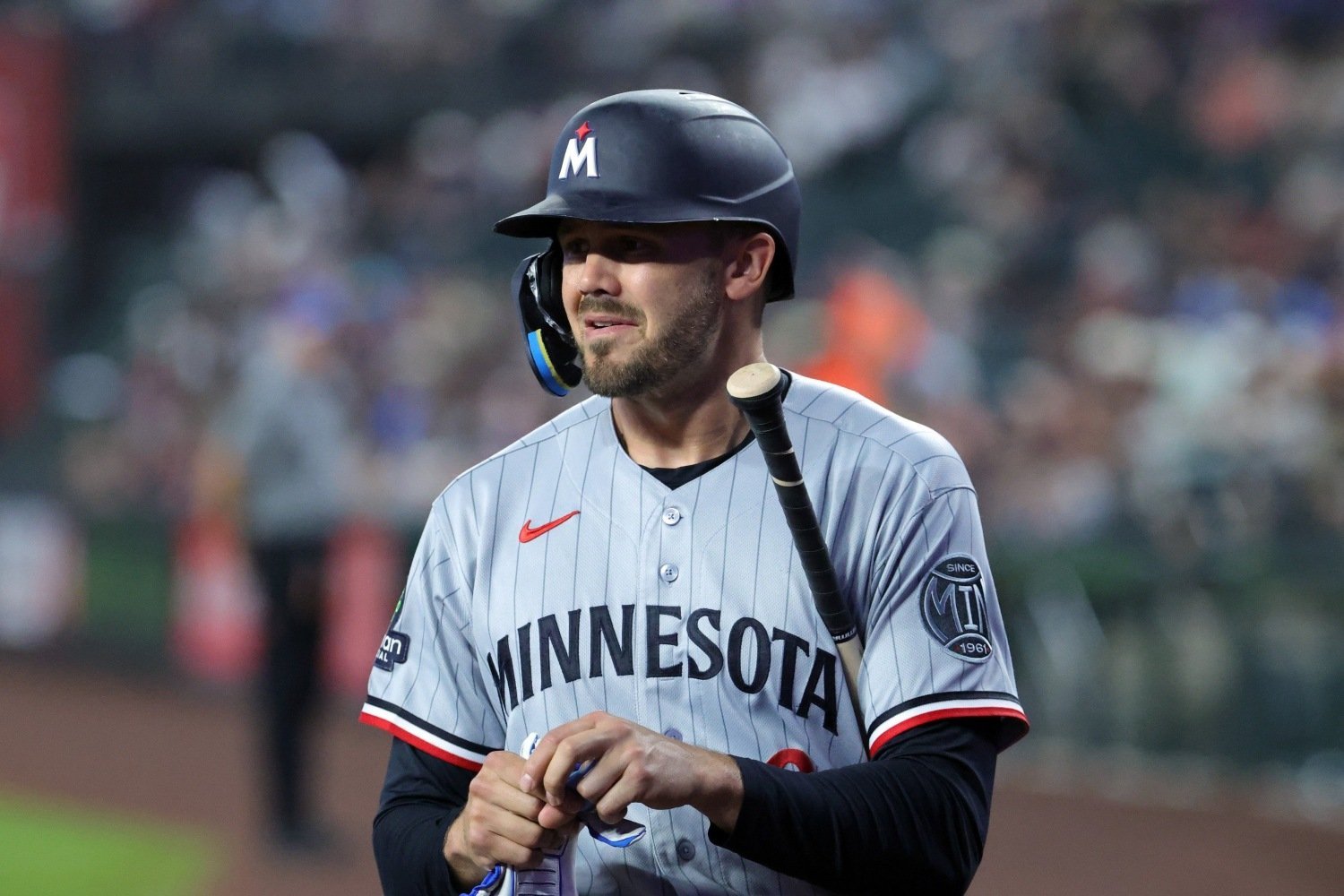 The Minnesota Twins enter the trade deadline in an unusual position. They're still trying to compete in 2026, but that doesn't necessarily mean every veteran on the roster is untouchable. Multiple reports suggest the Twins could remain active sellers around the margins, even if they don't launch another deadline fire sale. Dan Hayes of The Athletic noted that the Tampa Bay Rays have been scouting Minnesota heavily in recent weeks, making them one of the more intriguing potential trade partners. If the Rays are looking to add offense for a postseason push, two Twins stand out as logical fits: Ryan Jeffers and Trevor Larnach. Rather than weakening Minnesota's roster, moving either (or even both) could allow the organization to lean into areas of organizational strength while addressing bigger needs. The Rays Need More Middle-of-the-Order Production Tampa Bay has rarely been afraid to make creative deadline moves, especially when they can acquire controllable hitters at reasonable salaries. Larnach checks nearly every box. The 29-year-old is putting together the best offensive season of his career, hitting .293/.381/.457 (.842) with eight home runs, 19 doubles, and a career-high 135 OPS+. His improved approach has been just as impressive as the production. He's walking 11.4% of the time while cutting his strikeout rate to a career-low 17.4%. Like most left-handed hitters, Larnach has struggled against southpaws, batting just .167/.268/.333 in 42 plate appearances. However, his production against right-handed pitching has been elite. His .313/.398/.475 line versus righties would immediately lengthen Tampa Bay's lineup and give the Rays another middle-of-the-order bat capable of getting on base consistently. Just as importantly, Larnach remains affordable. He's earning $4.475 million this season and remains under team control through arbitration next year, making him attractive for a club that consistently looks for value. Minnesota Has Plenty of Internal Replacements Trading Larnach becomes much easier because of the Twins' depth. Matt Wallner looked overmatched during his early-season stint, hitting just .167/.259/.292 before being optioned to Triple-A in May. Since returning to St. Paul, however, he's looked much more like the player Minnesota expected. Over 243 plate appearances, Wallner owns a .284/.374/.602 line with 19 home runs. Alan Roden has also forced his way into the conversation. Acquired in last year's Louis Varland trade, Roden hit .272/.397/.512 at Triple-A before earning another opportunity with Minnesota. Despite posting those numbers, he's received only 37 plate appearances since being promoted to the Twins in early July. Then there's Walker Jenkins. The former No. 5 overall pick has quickly reminded everyone why he's considered one of baseball's premier prospects. Jenkins has touched Triple-A pitching with a .267/.371/.432 line and looks increasingly ready for an extended opportunity in the major leagues. With three legitimate corner outfield options waiting behind Larnach, the Twins are in a position where dealing from depth could improve other parts of the roster without sacrificing offensive production. Jeffers Could Bring Back Significant Value Jeffers presents a different but equally compelling trade case. Bobby Nightengale recently reported there's a growing belief around baseball that Jeffers could be available even if Minnesota doesn't fully commit to selling. That makes sense. Jeffers is an impending free agent who has elevated his offensive game this season. Across 186 plate appearances, he's hitting .293/.395/.535, with nine home runs. His elite plate discipline stands out even more than the power, as his 14.4% walk rate nearly matches a career-low 16.6% strikeout rate. His offensive production has been 64% better than league average, according to wRC+. This year's breakout only strengthens what has already been an impressive offensive résumé. Dating back to the start of 2023, Jeffers owns a .259/.346/.446 line for a 122 wRC+, making him one of baseball's better offensive catchers over that span. For comparison, major-league catchers are hitting just .229/.304/.380 this season. Few contenders have enough offense behind the plate, and Jeffers would instantly become one of the better bats available at the position. Caratini Gives Minnesota Flexibility Trading Jeffers would have been much more difficult earlier in the season. Victor Caratini has changed that equation. After a slow start, the veteran took advantage of increased playing time while Jeffers recovered from a hamate fracture. Since May 20, Caratini has hit .273/.342/.460, with six home runs, eight doubles, a 8.9% walk rate, and an 19.6% strikeout rate over 158 plate appearances. Minnesota also has Alex Jackson on the roster to provide quality defense as a backup catcher, giving the Twins a capable tandem if Jeffers is moved. Caratini is signed through 2027, making him more than just a short-term stopgap. That contract provides the Twins with the flexibility to maximize Jeffers's trade value while maintaining stability behind the plate. Why Tampa Bay Makes Sense The Rays have consistently targeted hitters who control the strike zone, possess positional flexibility, and remain affordable through arbitration or short-term contracts. Both Larnach and Jeffers fit that profile. For Minnesota, Tampa Bay has one thing the Twins desperately need: bullpen depth. The Rays have built a reputation for developing power arms and routinely possess relievers who become attractive trade chips at the deadline. Even if bullpen help isn't the centerpiece of a deal, the Rays also have one of baseball's deeper farm systems, giving Minnesota multiple avenues to improve its long-term outlook. The fit is obvious from both sides. Moving Jeffers or Larnach wouldn't necessarily signal that the Twins are giving up on 2026. Instead, it would represent a front office willing to capitalize on organizational depth. Minnesota has viable replacements waiting at both catcher and corner outfield. Caratini has shown he can handle a larger workload behind the plate, while Wallner, Roden, and Jenkins all deserve opportunities to establish themselves in the outfield. If Tampa Bay is indeed one of the clubs most interested in adding offense, the Rays could offer exactly what Minnesota needs in return. The result could be one of the rare deadline trades where both teams improve their present while the Twins also look to strengthen their future. Can the Twins and Rays align on a trade before the deadline? Can Minnesota trade Jeffers and stay competitive? Leave a comment and start the discussion.
 -
Image courtesy of © Mark J. Rebilas-Imagn Images The Minnesota Twins enter the trade deadline in an unusual position. They're still trying to compete in 2026, but that doesn't necessarily mean every veteran on the roster is untouchable. Multiple reports suggest the Twins could remain active sellers around the margins, even if they don't launch another deadline fire sale. Dan Hayes of The Athletic noted that the Tampa Bay Rays have been scouting Minnesota heavily in recent weeks, making them one of the more intriguing potential trade partners. If the Rays are looking to add offense for a postseason push, two Twins stand out as logical fits: Ryan Jeffers and Trevor Larnach. Rather than weakening Minnesota's roster, moving either (or even both) could allow the organization to lean into areas of organizational strength while addressing bigger needs. The Rays Need More Middle-of-the-Order Production Tampa Bay has rarely been afraid to make creative deadline moves, especially when they can acquire controllable hitters at reasonable salaries. Larnach checks nearly every box. The 29-year-old is putting together the best offensive season of his career, hitting .293/.381/.457 (.842) with eight home runs, 19 doubles, and a career-high 135 OPS+. His improved approach has been just as impressive as the production. He's walking 11.4% of the time while cutting his strikeout rate to a career-low 17.4%. Like most left-handed hitters, Larnach has struggled against southpaws, batting just .167/.268/.333 in 42 plate appearances. However, his production against right-handed pitching has been elite. His .313/.398/.475 line versus righties would immediately lengthen Tampa Bay's lineup and give the Rays another middle-of-the-order bat capable of getting on base consistently. Just as importantly, Larnach remains affordable. He's earning $4.475 million this season and remains under team control through arbitration next year, making him attractive for a club that consistently looks for value. Minnesota Has Plenty of Internal Replacements Trading Larnach becomes much easier because of the Twins' depth. Matt Wallner looked overmatched during his early-season stint, hitting just .167/.259/.292 before being optioned to Triple-A in May. Since returning to St. Paul, however, he's looked much more like the player Minnesota expected. Over 243 plate appearances, Wallner owns a .284/.374/.602 line with 19 home runs. Alan Roden has also forced his way into the conversation. Acquired in last year's Louis Varland trade, Roden hit .272/.397/.512 at Triple-A before earning another opportunity with Minnesota. Despite posting those numbers, he's received only 37 plate appearances since being promoted to the Twins in early July. Then there's Walker Jenkins. The former No. 5 overall pick has quickly reminded everyone why he's considered one of baseball's premier prospects. Jenkins has touched Triple-A pitching with a .267/.371/.432 line and looks increasingly ready for an extended opportunity in the major leagues. With three legitimate corner outfield options waiting behind Larnach, the Twins are in a position where dealing from depth could improve other parts of the roster without sacrificing offensive production. Jeffers Could Bring Back Significant Value Jeffers presents a different but equally compelling trade case. Bobby Nightengale recently reported there's a growing belief around baseball that Jeffers could be available even if Minnesota doesn't fully commit to selling. That makes sense. Jeffers is an impending free agent who has elevated his offensive game this season. Across 186 plate appearances, he's hitting .293/.395/.535, with nine home runs. His elite plate discipline stands out even more than the power, as his 14.4% walk rate nearly matches a career-low 16.6% strikeout rate. His offensive production has been 64% better than league average, according to wRC+. This year's breakout only strengthens what has already been an impressive offensive résumé. Dating back to the start of 2023, Jeffers owns a .259/.346/.446 line for a 122 wRC+, making him one of baseball's better offensive catchers over that span. For comparison, major-league catchers are hitting just .229/.304/.380 this season. Few contenders have enough offense behind the plate, and Jeffers would instantly become one of the better bats available at the position. Caratini Gives Minnesota Flexibility Trading Jeffers would have been much more difficult earlier in the season. Victor Caratini has changed that equation. After a slow start, the veteran took advantage of increased playing time while Jeffers recovered from a hamate fracture. Since May 20, Caratini has hit .273/.342/.460, with six home runs, eight doubles, a 8.9% walk rate, and an 19.6% strikeout rate over 158 plate appearances. Minnesota also has Alex Jackson on the roster to provide quality defense as a backup catcher, giving the Twins a capable tandem if Jeffers is moved. Caratini is signed through 2027, making him more than just a short-term stopgap. That contract provides the Twins with the flexibility to maximize Jeffers's trade value while maintaining stability behind the plate. Why Tampa Bay Makes Sense The Rays have consistently targeted hitters who control the strike zone, possess positional flexibility, and remain affordable through arbitration or short-term contracts. Both Larnach and Jeffers fit that profile. For Minnesota, Tampa Bay has one thing the Twins desperately need: bullpen depth. The Rays have built a reputation for developing power arms and routinely possess relievers who become attractive trade chips at the deadline. Even if bullpen help isn't the centerpiece of a deal, the Rays also have one of baseball's deeper farm systems, giving Minnesota multiple avenues to improve its long-term outlook. The fit is obvious from both sides. Moving Jeffers or Larnach wouldn't necessarily signal that the Twins are giving up on 2026. Instead, it would represent a front office willing to capitalize on organizational depth. Minnesota has viable replacements waiting at both catcher and corner outfield. Caratini has shown he can handle a larger workload behind the plate, while Wallner, Roden, and Jenkins all deserve opportunities to establish themselves in the outfield. If Tampa Bay is indeed one of the clubs most interested in adding offense, the Rays could offer exactly what Minnesota needs in return. The result could be one of the rare deadline trades where both teams improve their present while the Twins also look to strengthen their future. Can the Twins and Rays align on a trade before the deadline? Can Minnesota trade Jeffers and stay competitive? Leave a comment and start the discussion. View full article
-
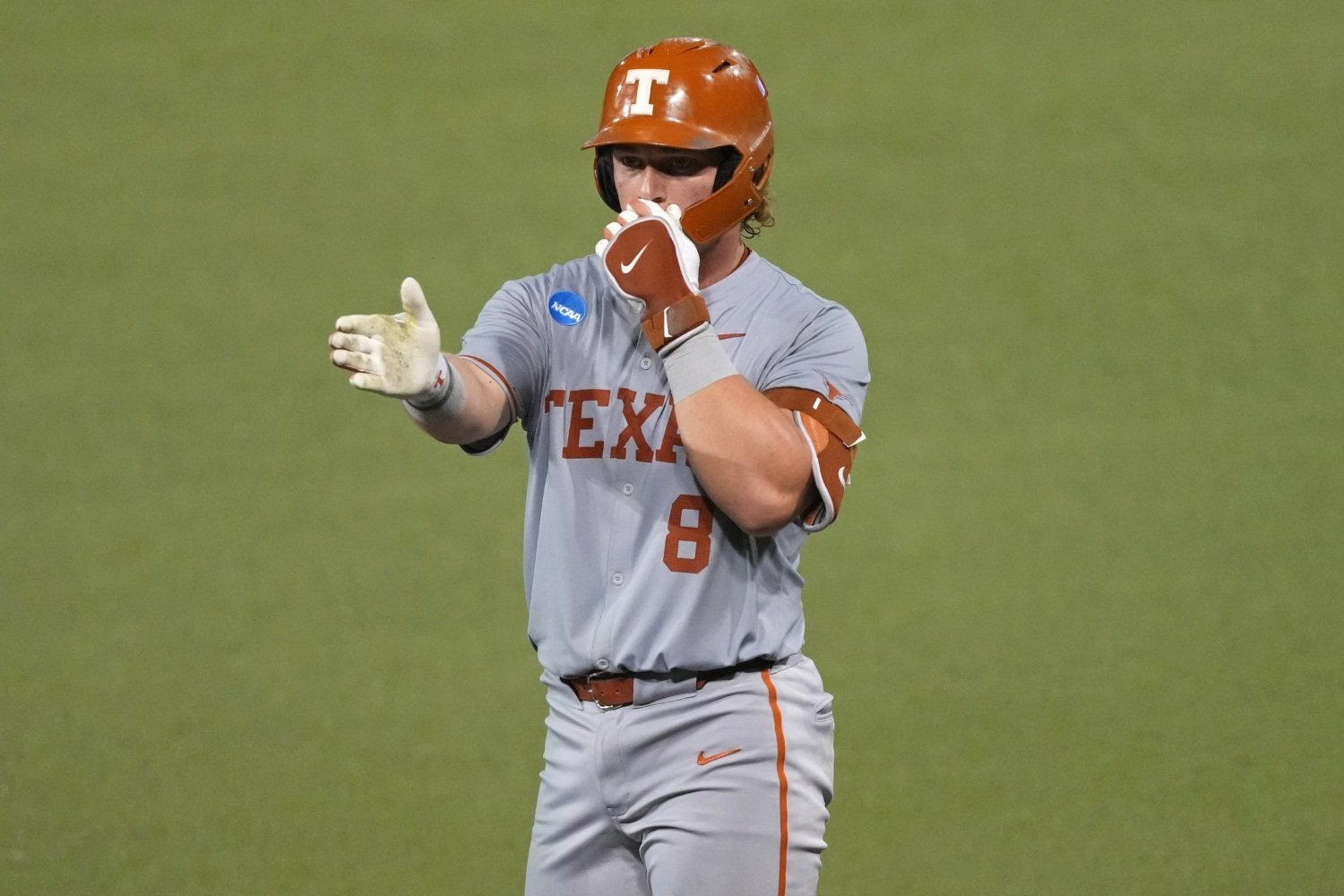 The Minnesota Twins were in position to take one of the draft’s top prospects when they used the third overall pick in the 2026 MLB Draft on catcher Vahn Lackey. Then they doubled down on the position with their very next pick, selecting Texas catcher Carson Tinney with the 43rd overall pick. Drafting two catchers that early wasn't about redundancy. It was about conviction. Minnesota believes both players have the talent to become impact major leaguers, and while Lackey entered the draft as one of the most polished catchers available, Tinney represents a different type of investment. His offensive upside is obvious, but the Twins believe there's considerably more to unlock behind the plate. If that sounds familiar, it's because the organization has already traveled this road once before. A Familiar Development Story Ryan Jeffers entered professional baseball with questions about whether he could stick behind the plate. The offensive tools were never in doubt. Across three collegiate seasons, Jeffers slashed .323/.445/.620 (1.064) while posting an OPS above 1.000 in each of those years. However, he hadn't received extensive coaching as a catcher, making his defensive development a priority once he joined the Twins organization. The results speak for themselves. Jeffers grew into a reliable major league catcher while maintaining the offensive impact that made him an attractive draft pick. Tinney arrives with a remarkably similar profile. After spending his first two seasons at Notre Dame, Tinney transferred to Texas and became one of the nation's most dangerous hitters. He hit .326/.478/.688 (1.165) over three seasons while launching 42 home runs, including 22 during his final collegiate campaign. Like Jeffers before him, Tinney's bat is already advanced. Like Jeffers, the Twins see defensive improvements that can elevate his overall value. Best Player Available When assistant general manager Sean Johnson joined Inside Twins to recap Minnesota's draft class, he explained that selecting a second catcher wasn't part of a predetermined strategy. "So, we had stacked the board the way we liked it. When we got to that range, Carson was definitely in play. And I think I say it every year, every scouting director says it, we're gonna take the best guy available." "And so that was, that rings true. We thought he was the best position player on the board. We think we can turn him into a real catcher at the big-league level. He's got tremendous makeup, desire. He hasn't caught, really, his whole life. So, there's some stuff to unlock there for sure." That belief mirrors the organization's philosophy with Jeffers several years ago. Rather than viewing Tinney as a finished product, the Twins see a player whose defensive ceiling is much higher than what he showed in college. More Than Just Power Tinney's offensive profile extends beyond tape-measure home runs. Johnson highlighted the complete package the Twins believe they're acquiring. "And then offensively, the guy did as much damage with the ball as almost anybody in the draft. You know, he's, he hit in a great lineup at Texas this year. Hits the ball extremely hard. Takes great at-bats. Really, really nice walk rate to kind of support. He's not just a power first guy." "But when he hits it, he hits the ball extremely hard. And a really good foundation to catch. He can really throw." The combination of patience, power, and arm strength gives the Twins multiple reasons to believe Tinney can develop into an everyday player. His defensive work is simply the next phase of that development. Betting on Makeup Player development is rarely just about physical tools. For the Twins, Tinney's willingness to improve may be one of his biggest assets. "We think we can do even more with his receiving,” said Johnson. “And again, like the makeup is the thing you're going to get into there once again. He's going to work at all the things that RPD is going to offer him once he signs." That comment stands out because it echoes what the organization valued in Jeffers years ago. Strong leadership, work ethic, and coachability can often determine whether a player reaches his ceiling. The Twins clearly believe Tinney possesses those qualities. Similar, But Not Identical Naturally, comparisons to Jeffers surfaced almost immediately. Johnson understands why. "They're somewhat similar. I think we had similar thoughts on Ryan. I don't like to compare the two of them directly. But Ryan needed… some work with his receiving. We thought his swing was in a good spot." "So, you can immediately kind of connect the two together in that way. But both had really good makeups, really good leaders on their team, carried their clubs, different leagues, obviously. So, I think we have similar feelings there. But I think as far as Carson's concerned, we think we can turn him into a real catcher." Johnson stopped short of labeling Tinney the next Jeffers, but the similarities are difficult to ignore. Both entered pro ball as offense-first catchers. Both needed refinement as receivers. Both were respected leaders with strong makeup. Most importantly, both joined an organization confident in its ability to develop catchers. The Twins drafted Tinney because Jeffers proved this development path can work. Minnesota has spent years building one of baseball's most respected player development systems, and Jeffers became one of the best examples of that philosophy. Tinney still has a long way to go before anyone should expect him to follow the same career trajectory. Prospect development is rarely linear, and plenty of talented college hitters never make the defensive leap required to become major league catchers. Still, if the Twins are looking for a blueprint, they don't have to look very far. They've already turned one offense-first college catcher into a productive big league regular. Now they'll spend the next several years trying to do it again with Tinney. Can Tinney become the next Jeffers? Leave a comment and start the discussion.
- 18 comments
-
- 5
-
-
- carson tinney
- ryan jeffers
- (and 1 more)
-
Image courtesy of © Scott Wachter-Imagn Images The Minnesota Twins were in position to take one of the draft’s top prospects when they used the third overall pick in the 2026 MLB Draft on catcher Vahn Lackey. Then they doubled down on the position with their very next pick, selecting Texas catcher Carson Tinney with the 43rd overall pick. Drafting two catchers that early wasn't about redundancy. It was about conviction. Minnesota believes both players have the talent to become impact major leaguers, and while Lackey entered the draft as one of the most polished catchers available, Tinney represents a different type of investment. His offensive upside is obvious, but the Twins believe there's considerably more to unlock behind the plate. If that sounds familiar, it's because the organization has already traveled this road once before. A Familiar Development Story Ryan Jeffers entered professional baseball with questions about whether he could stick behind the plate. The offensive tools were never in doubt. Across three collegiate seasons, Jeffers slashed .323/.445/.620 (1.064) while posting an OPS above 1.000 in each of those years. However, he hadn't received extensive coaching as a catcher, making his defensive development a priority once he joined the Twins organization. The results speak for themselves. Jeffers grew into a reliable major league catcher while maintaining the offensive impact that made him an attractive draft pick. Tinney arrives with a remarkably similar profile. After spending his first two seasons at Notre Dame, Tinney transferred to Texas and became one of the nation's most dangerous hitters. He hit .326/.478/.688 (1.165) over three seasons while launching 42 home runs, including 22 during his final collegiate campaign. Like Jeffers before him, Tinney's bat is already advanced. Like Jeffers, the Twins see defensive improvements that can elevate his overall value. Best Player Available When assistant general manager Sean Johnson joined Inside Twins to recap Minnesota's draft class, he explained that selecting a second catcher wasn't part of a predetermined strategy. "So, we had stacked the board the way we liked it. When we got to that range, Carson was definitely in play. And I think I say it every year, every scouting director says it, we're gonna take the best guy available." "And so that was, that rings true. We thought he was the best position player on the board. We think we can turn him into a real catcher at the big-league level. He's got tremendous makeup, desire. He hasn't caught, really, his whole life. So, there's some stuff to unlock there for sure." That belief mirrors the organization's philosophy with Jeffers several years ago. Rather than viewing Tinney as a finished product, the Twins see a player whose defensive ceiling is much higher than what he showed in college. More Than Just Power Tinney's offensive profile extends beyond tape-measure home runs. Johnson highlighted the complete package the Twins believe they're acquiring. "And then offensively, the guy did as much damage with the ball as almost anybody in the draft. You know, he's, he hit in a great lineup at Texas this year. Hits the ball extremely hard. Takes great at-bats. Really, really nice walk rate to kind of support. He's not just a power first guy." "But when he hits it, he hits the ball extremely hard. And a really good foundation to catch. He can really throw." The combination of patience, power, and arm strength gives the Twins multiple reasons to believe Tinney can develop into an everyday player. His defensive work is simply the next phase of that development. Betting on Makeup Player development is rarely just about physical tools. For the Twins, Tinney's willingness to improve may be one of his biggest assets. "We think we can do even more with his receiving,” said Johnson. “And again, like the makeup is the thing you're going to get into there once again. He's going to work at all the things that RPD is going to offer him once he signs." That comment stands out because it echoes what the organization valued in Jeffers years ago. Strong leadership, work ethic, and coachability can often determine whether a player reaches his ceiling. The Twins clearly believe Tinney possesses those qualities. Similar, But Not Identical Naturally, comparisons to Jeffers surfaced almost immediately. Johnson understands why. "They're somewhat similar. I think we had similar thoughts on Ryan. I don't like to compare the two of them directly. But Ryan needed… some work with his receiving. We thought his swing was in a good spot." "So, you can immediately kind of connect the two together in that way. But both had really good makeups, really good leaders on their team, carried their clubs, different leagues, obviously. So, I think we have similar feelings there. But I think as far as Carson's concerned, we think we can turn him into a real catcher." Johnson stopped short of labeling Tinney the next Jeffers, but the similarities are difficult to ignore. Both entered pro ball as offense-first catchers. Both needed refinement as receivers. Both were respected leaders with strong makeup. Most importantly, both joined an organization confident in its ability to develop catchers. The Twins drafted Tinney because Jeffers proved this development path can work. Minnesota has spent years building one of baseball's most respected player development systems, and Jeffers became one of the best examples of that philosophy. Tinney still has a long way to go before anyone should expect him to follow the same career trajectory. Prospect development is rarely linear, and plenty of talented college hitters never make the defensive leap required to become major league catchers. Still, if the Twins are looking for a blueprint, they don't have to look very far. They've already turned one offense-first college catcher into a productive big league regular. Now they'll spend the next several years trying to do it again with Tinney. Can Tinney become the next Jeffers? Leave a comment and start the discussion. View full article
-
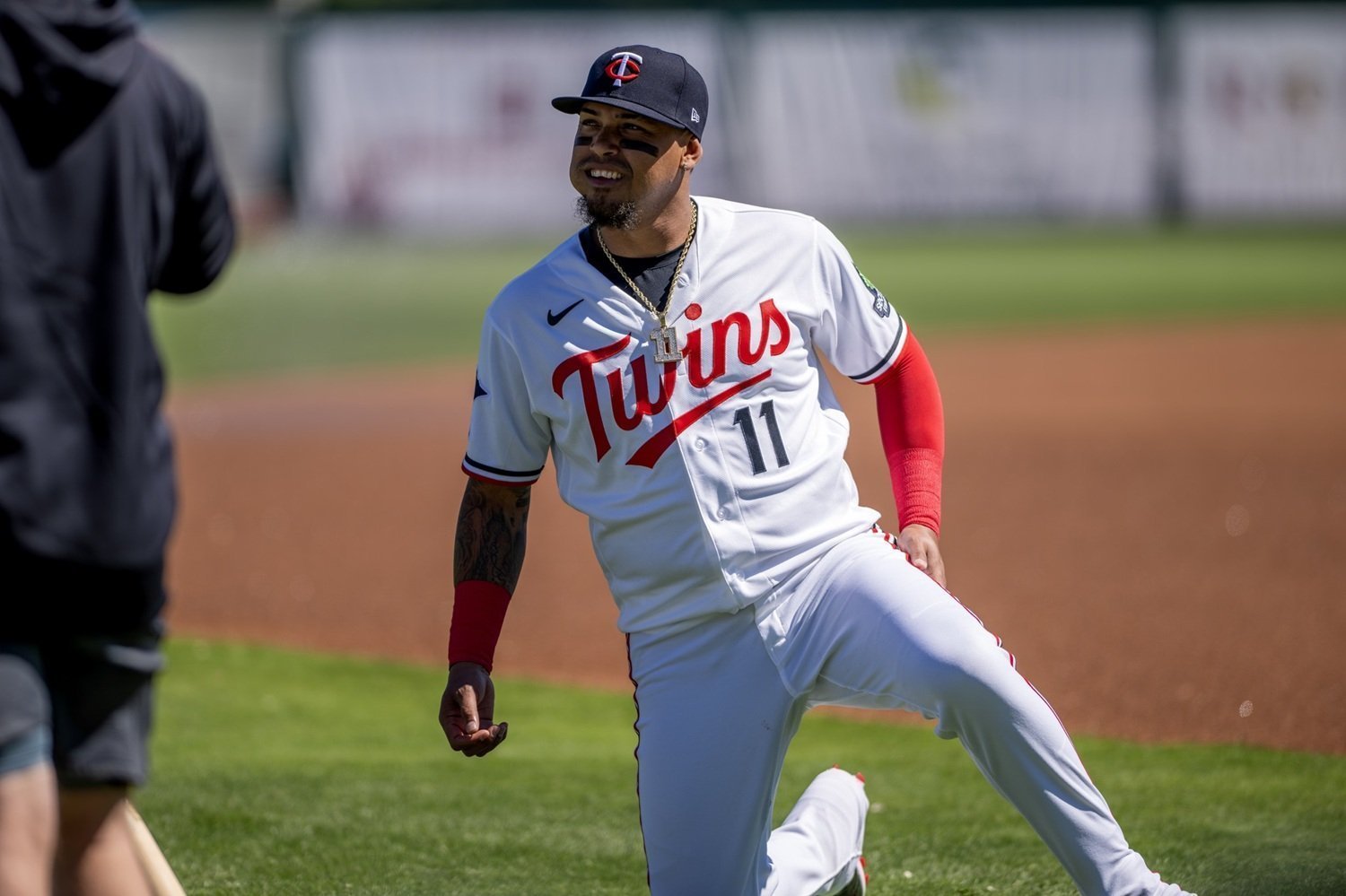 The Twins have officially moved on from Orlando Arcia. The veteran infielder was released from Triple-A St. Paul’s roster, according to Bobby Nightengale of the Minnesota Star Tribune. Arcia had spent the majority of the season in the minors after appearing in 19 games for Minnesota earlier this year. It’s an understandable roster decision, but it also leaves the Twins without much experienced infield depth on their bench. Orlando Arcia’s Brief Twins Opportunity Minnesota signed Arcia to a minor league contract in January, giving the organization an experienced option to stash in Triple-A. He didn’t make the team out of spring training, but his opportunity eventually came when Royce Lewis was sent to the minors. Arcia joined the Twins and remained with the club for less than a month before Lewis returned. Arcia appeared in 19 games and received 50 plate appearances. He hit .271/.300/.354 with one home run, producing a .654 OPS. The veteran also provided plenty of defensive flexibility, seeing time at all four infield positions. When Lewis returned to the big-league club in June, there was no obvious spot left for Arcia. Minnesota designated him for assignment, giving him the opportunity to elect free agency. Instead, Arcia chose to remain with the Twins and continue playing at Triple-A St. Paul. Now, that stint has come to an end. Arcia's time in the majors didn't produce much offensive impact, but his work with the Saints was considerably better. Across 63 games with St. Paul, Arcia slashed .282/.336/.498 (.834). That production offered a reminder of what he can bring when his bat is clicking, particularly when combined with his ability to move around the infield. That type of versatility made Arcia a useful depth piece for the Twins. Unfortunately, Minnesota's current roster construction didn't leave much room for him. Arcia’s Recent MLB Struggles Arcia entered 2026 looking to rebound from a difficult 2025 season. He split last year between the Braves and Rockies and struggled significantly at the plate. In 76 games, Arcia posted a 33 wRC+. An elbow injury also cost him time in August. The offensive decline has been noticeable over the last couple of seasons. Since the beginning of 2024, Arcia owns a .217/.265/.338 (.603) slash line in the majors. That stretch has pulled down his career numbers, which now sit at .240/.292/.369 (.661) across more than 3,500 plate appearances. Still, there is evidence that Arcia can be a productive major leaguer. The 31-year-old has appeared in the majors across parts of 11 seasons and enjoyed a resurgence with the Braves. During the 2022 and 2023 seasons, he hit .258/.319/.419 (.738) and established himself as a reliable contributor while also providing defensive versatility. The question entering this season was whether that version of Arcia could return. His performance at Triple-A suggested there might still be something left, but his limited opportunities with Minnesota didn't provide much evidence either way. Where Does This Leave the Twins? The timing of Arcia's departure is interesting because Minnesota could arguably use the type of player he represents. Brooks Lee has settled in as the team's full-time third baseman, while most of Royce Lewis' recent infield work has come on the right side of the diamond. Ryan Kreidler has handled shortstop, and Kody Clemens has taken over at second base with Luke Keaschall transitioning into a full-time outfield role. That leaves a somewhat unusual configuration. The Twins don't have a true middle infielder on the bench after demoting Tristan Gray over the last week. Arcia could have provided insurance at both middle-infield positions while also offering the ability to cover third base in a pinch. His offensive track record isn't particularly strong at this stage of his career, but his defensive flexibility would have given Minnesota another way to navigate injuries and late-game substitutions. Instead, the Twins have decided they can live without him. Arcia will now hit the open market and look for another organization willing to give him a chance. Given his experience, defensive versatility, and productive Triple-A season, another opportunity could be waiting. For the Twins, though, the organization appears comfortable moving forward with its current infield alignment. That could work just fine if everyone stays healthy. But as every team learns over the course of a long season, having an experienced utility infielder around can become pretty valuable in a hurry.
 -
The Twins have officially moved on from Orlando Arcia. The veteran infielder was released from Triple-A St. Paul’s roster, according to Bobby Nightengale of the Minnesota Star Tribune. Arcia had spent the majority of the season in the minors after appearing in 19 games for Minnesota earlier this year. It’s an understandable roster decision, but it also leaves the Twins without much experienced infield depth on their bench. Orlando Arcia’s Brief Twins Opportunity Minnesota signed Arcia to a minor league contract in January, giving the organization an experienced option to stash in Triple-A. He didn’t make the team out of spring training, but his opportunity eventually came when Royce Lewis was sent to the minors. Arcia joined the Twins and remained with the club for less than a month before Lewis returned. Arcia appeared in 19 games and received 50 plate appearances. He hit .271/.300/.354 with one home run, producing a .654 OPS. The veteran also provided plenty of defensive flexibility, seeing time at all four infield positions. When Lewis returned to the big-league club in June, there was no obvious spot left for Arcia. Minnesota designated him for assignment, giving him the opportunity to elect free agency. Instead, Arcia chose to remain with the Twins and continue playing at Triple-A St. Paul. Now, that stint has come to an end. Arcia's time in the majors didn't produce much offensive impact, but his work with the Saints was considerably better. Across 63 games with St. Paul, Arcia slashed .282/.336/.498 (.834). That production offered a reminder of what he can bring when his bat is clicking, particularly when combined with his ability to move around the infield. That type of versatility made Arcia a useful depth piece for the Twins. Unfortunately, Minnesota's current roster construction didn't leave much room for him. Arcia’s Recent MLB Struggles Arcia entered 2026 looking to rebound from a difficult 2025 season. He split last year between the Braves and Rockies and struggled significantly at the plate. In 76 games, Arcia posted a 33 wRC+. An elbow injury also cost him time in August. The offensive decline has been noticeable over the last couple of seasons. Since the beginning of 2024, Arcia owns a .217/.265/.338 (.603) slash line in the majors. That stretch has pulled down his career numbers, which now sit at .240/.292/.369 (.661) across more than 3,500 plate appearances. Still, there is evidence that Arcia can be a productive major leaguer. The 31-year-old has appeared in the majors across parts of 11 seasons and enjoyed a resurgence with the Braves. During the 2022 and 2023 seasons, he hit .258/.319/.419 (.738) and established himself as a reliable contributor while also providing defensive versatility. The question entering this season was whether that version of Arcia could return. His performance at Triple-A suggested there might still be something left, but his limited opportunities with Minnesota didn't provide much evidence either way. Where Does This Leave the Twins? The timing of Arcia's departure is interesting because Minnesota could arguably use the type of player he represents. Brooks Lee has settled in as the team's full-time third baseman, while most of Royce Lewis' recent infield work has come on the right side of the diamond. Ryan Kreidler has handled shortstop, and Kody Clemens has taken over at second base with Luke Keaschall transitioning into a full-time outfield role. That leaves a somewhat unusual configuration. The Twins don't have a true middle infielder on the bench after demoting Tristan Gray over the last week. Arcia could have provided insurance at both middle-infield positions while also offering the ability to cover third base in a pinch. His offensive track record isn't particularly strong at this stage of his career, but his defensive flexibility would have given Minnesota another way to navigate injuries and late-game substitutions. Instead, the Twins have decided they can live without him. Arcia will now hit the open market and look for another organization willing to give him a chance. Given his experience, defensive versatility, and productive Triple-A season, another opportunity could be waiting. For the Twins, though, the organization appears comfortable moving forward with its current infield alignment. That could work just fine if everyone stays healthy. But as every team learns over the course of a long season, having an experienced utility infielder around can become pretty valuable in a hurry. View full rumor
-
Image courtesy of © David Richard-Imagn Images Joe Ryan is exactly the type of player every contender covets at the MLB Trade Deadline. He has developed into one of the American League's most consistent starters, earning an All-Star selection while posting another sub-3.50 ERA season. Better yet, Ryan isn't a rental. He remains under team control through 2027, making him one of the most valuable starting pitchers who could realistically be available this summer. That's why his name continues to surface in trade speculation, even as the Twins insist they want to add rather than subtract. If Minnesota remains in the Wild Card race, Ryan isn't going anywhere. However, if the club falls out of contention over the next two weeks, the front office would have to at least listen. Pitchers with Ryan's production, durability, and affordable contract rarely become available, and the bidding would be fierce. Diamond Centric currently ranks Ryan as the third best trade deadline candidate behind Mason Miller and Tarik Skubal. There’s no guarantee that either of those arms gets moved, so Ryan could be the top player traded at the deadline. Here’s what Diamond Centric said about Ryan: Not every contender has the prospect capital to make a competitive offer. Some farm systems simply can't match Ryan's value, while others line up almost perfectly with what Minnesota should seek in return. Instead of focusing only on potential destinations, these are four realistic trade packages that could make sense for both sides if the Twins ultimately decide to move one of their biggest stars. New York Yankees Twins fans would hate this, but the Yankees are never shy about making aggressive moves when they believe another World Series run is within reach. With questions surrounding their rotation and several key injuries throughout the roster, adding an All-Star starter like Joe Ryan would immediately become one of the biggest deadline upgrades available. New York also has one of the deepest farm systems among contenders. If the Twins are going to move Ryan, they need impact talent at the top of the return, and that conversation should start with George Lombard Jr. The 21-year-old has developed into one of baseball's better infield prospects and is close enough to the majors to envision him helping Minnesota as early as next season. To make the value work, the Yankees could pair Lombard with left-hander Elmer Rodríguez, another upper-level prospect with mid-rotation upside. Minnesota would land a potential everyday infielder and another young arm capable of joining its next competitive core. That's the type of package it should demand for a pitcher with Ryan's résumé and another season of club control. Seattle Mariners Few organizations can match Seattle's collection of young talent, which makes the Mariners an intriguing trade partner. If Seattle wants to maximize its current championship window, it may need to trade from an area of strength. Ryan would slide into the front of the rotation immediately and give the Mariners another proven arm for multiple postseason runs. The return starts with Kade Anderson, one of the top pitching prospects in baseball. His combination of stuff, command, and projection gives him legitimate top-of-the-rotation potential. Pairing him with infielder Michael Arroyo would give Minnesota another consensus top 100 prospect who is already knocking on the door of the upper minors. Arroyo's advanced approach at the plate and offensive upside would add another potential impact bat to an organization that has prioritized position-player depth. This proposal offers the Twins the best of both worlds: a potential frontline starter and an advanced middle infielder with everyday upside. Premium starting pitching is one of the hardest assets to acquire, and adding a player like Arroyo gives Minnesota an impact position player who could arrive in the big leagues on a similar timeline as the club's next wave of prospects. Los Angeles Dodgers The Dodgers seem to find themselves connected to every impact player at the trade deadline, and Ryan would fit their model perfectly, especially with his California roots. Los Angeles doesn't need another back-end starter, it needs someone capable of starting Game 2 or Game 3 in a postseason series. Unlike Seattle, the Dodgers' strength is position-player talent. Their system is loaded with athletic outfielders who may eventually struggle to find opportunities in Los Angeles because of the organization's major league depth. Mike Sirota and Eduardo Quintero would be an appealing combination for Minnesota. Good news for Twins fans is that both players are right-handed to add to the team’s left-handed heavy prospect list. Sirota brings impact power and athleticism, while Quintero has quietly developed into one of the organization's better all-around offensive prospects. Together, they would give the Twins two legitimate everyday position-player candidates without sacrificing years of team control. The Dodgers have repeatedly shown they're willing to move prospects for proven major league talent. If Ryan becomes available, this feels like the type of deal Andrew Friedman would seriously explore. San Diego Padres If one team is going to be part of a blockbuster, it might be San Diego. The Padres have spent the last several seasons chasing another deep postseason run, but injuries have once again exposed their rotation depth. Ryan would immediately become one of the club's most dependable starters while remaining under control beyond this season. San Diego’s farm system is depleted after multiple years of blockbuster trades. Any conversation between Minnesota and San Diego would likely begin with Ethan Salas, San Diego’s lone top 100 prospect. Despite an up-and-down development path, Salas remains one of baseball's premier catching prospects and possesses the type of ceiling organizations rarely make available. To match Ryan's value, the Padres could include left-hander Kruz Schoolcraft, a towering pitching prospect with frontline upside if everything clicks. Minnesota would walk away with a potential big-league catcher and another premium arm, giving the organization impact talent at two premium positions. However, Minnesota spent its first two draft picks on catchers last week, so the Padres might not have the prospect capital to make this trade. The Twins aren't actively shopping Ryan (yet), nor should they be. A pitcher with his combination of production, durability, and affordable team control is exactly the type of player every organization hopes to build around. If Minnesota stays in the playoff race, keeping Ryan gives the club its best chance to compete this season and next. However, every player has a price. If the Twins find themselves slipping out of contention before the deadline, Ryan instantly becomes one of the most valuable starting pitchers available. That means the return can't be centered around organizational depth or lottery-ticket prospects. Minnesota should be targeting players who project as future everyday contributors or impact starters. The types of prospects capable of becoming foundational pieces for the next winning core. Whether it's Lombard Jr., Anderson, Salas, or another elite prospect, the Twins would only have one opportunity to maximize Ryan's value. If they're willing to make that move, the return needs to be significant enough that fans look back in three or four years and understand exactly why the organization pulled the trigger. Which package is the best fit for the Twins? Leave a comment and start the discussion. View full article


