


.png.7846f23ff7308bd0a60773982c8c4137.png)
William Malone
-
Posts
786 -
Joined
-
Last visited
Content Type
Profiles
News
Minnesota Twins Videos
2026 Minnesota Twins Top Prospects Ranking
2022 Minnesota Twins Draft Picks
Minnesota Twins Free Agent & Trade Rumors, Notes, & Tidbits
Guides & Resources
2023 Minnesota Twins Draft Picks
The Minnesota Twins Players Project
2024 Minnesota Twins Draft Picks
2025 Minnesota Twins Draft Pick Tracker
2026 Minnesota Twins Draft Tracker: Picks & Bonuses
Forums
Blogs
Events
Store
Downloads
Gallery
Everything posted by William Malone
-
Joseph Michael Smith was born on March 22, 1984 in Cincinnati, Ohio. The New York Mets took Smith in round three of the 2006 MLB Draft out of Wright State. He rose quickly through the minors, and made their Opening Day roster in 2007. Smith pitched two seasons in Queens, posting a 3.51 ERA across 136 relief appearances. He was then traded to the Cleveland Indians as part of a massive three team, 12 player trade. Smith had a 2.76 ERA over the next five seasons with Cleveland, and then signed a three year deal with the Los Angeles Angles upon reaching free agency for the first time. He became a closer for the first time in his career in 2014, going 15-for-19 in save chances before Los Angeles acquired Huston Street at the deadline. Smith was moved to an eighth inning role, and finished 2014 with a 1.81 ERA. He didn't allow a single base runner in two innings during the postseason that year, which is the Angles last playoff appearance as of 2024. Los Angeles traded Smith to the Chicago Cubs at the deadline in 2016, which was the final year of his deal with the Angles. He had a 2.61 ERA in 16 outings with the Cubs, but was then placed on the disabled list with a hamstring strain. This ultimately kept him off the playoff roster, but Smith did receive a World Series ring when Chicago defeated his old Cleveland club in the fall classic. He then became a journeyman reliever, pitching for five teams over the next six years. This included a second stint with the Indians, helping them reach the playoffs in 2017. After missing out due to injury with the Cubs, Smith finally got an opportunity to pitch in the World Series with the Houston Astros in 2018. He allowed a pair of ninth inning insurance runs to score in game seven of the World Series, playing a small part in Houston's 7-2 loss against the Washington Nationals. Smith did have scoreless appearances in games one, three and five. The final stop of his career came with the Minnesota Twins in 2022. He was brilliant out of the gate for the Twins, not allowing a run over his first 16 appearances. This included all 12 runners he inherited. Smith continued to pitch well, but hit the injured list with a back injury on June 26th. At the time of his injury, Smith had a 2.78 ERA and 14 holds through 28 appearances. He still hadn't allowed any inherited runners to score. Things were never the same when Smith returned from the IL in late July, and he was designated for assignment after allowing nine runs in his first six outings after his activation. Smith cleared waivers and was released by the Twins on August 5th. He remained unsigned, and announced his retirement via Instagram in 2024. He spends much of retired life promoting his organization dedicated to finding a cure for Huntington's Disease, a condition that leads to death of the nerve cells in a person's brain. Smith's mother was diagnosed with the disease in 2012. Because it's triggered by a faulty gene, there is a 50% chance Smith will eventually develop it. He is married to Turner Sports sideline reporter Allie LaForce, who is also very active in their HelpCureHD foundation. View full player
-
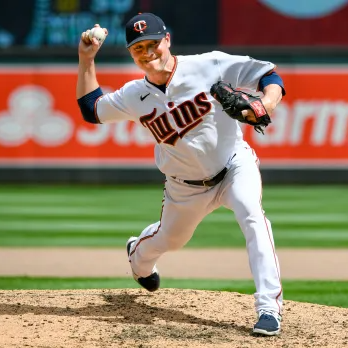 Joseph Michael Smith was born on March 22, 1984 in Cincinnati, Ohio. The New York Mets took Smith in round three of the 2006 MLB Draft out of Wright State. He rose quickly through the minors, and made their Opening Day roster in 2007. Smith pitched two seasons in Queens, posting a 3.51 ERA across 136 relief appearances. He was then traded to the Cleveland Indians as part of a massive three team, 12 player trade. Smith had a 2.76 ERA over the next five seasons with Cleveland, and then signed a three year deal with the Los Angeles Angles upon reaching free agency for the first time. He became a closer for the first time in his career in 2014, going 15-for-19 in save chances before Los Angeles acquired Huston Street at the deadline. Smith was moved to an eighth inning role, and finished 2014 with a 1.81 ERA. He didn't allow a single base runner in two innings during the postseason that year, which is the Angles last playoff appearance as of 2024. Los Angeles traded Smith to the Chicago Cubs at the deadline in 2016, which was the final year of his deal with the Angles. He had a 2.61 ERA in 16 outings with the Cubs, but was then placed on the disabled list with a hamstring strain. This ultimately kept him off the playoff roster, but Smith did receive a World Series ring when Chicago defeated his old Cleveland club in the fall classic. He then became a journeyman reliever, pitching for five teams over the next six years. This included a second stint with the Indians, helping them reach the playoffs in 2017. After missing out due to injury with the Cubs, Smith finally got an opportunity to pitch in the World Series with the Houston Astros in 2018. He allowed a pair of ninth inning insurance runs to score in game seven of the World Series, playing a small part in Houston's 7-2 loss against the Washington Nationals. Smith did have scoreless appearances in games one, three and five. The final stop of his career came with the Minnesota Twins in 2022. He was brilliant out of the gate for the Twins, not allowing a run over his first 16 appearances. This included all 12 runners he inherited. Smith continued to pitch well, but hit the injured list with a back injury on June 26th. At the time of his injury, Smith had a 2.78 ERA and 14 holds through 28 appearances. He still hadn't allowed any inherited runners to score. Things were never the same when Smith returned from the IL in late July, and he was designated for assignment after allowing nine runs in his first six outings after his activation. Smith cleared waivers and was released by the Twins on August 5th. He remained unsigned, and announced his retirement via Instagram in 2024. He spends much of retired life promoting his organization dedicated to finding a cure for Huntington's Disease, a condition that leads to death of the nerve cells in a person's brain. Smith's mother was diagnosed with the disease in 2012. Because it's triggered by a faulty gene, there is a 50% chance Smith will eventually develop it. He is married to Turner Sports sideline reporter Allie LaForce, who is also very active in their HelpCureHD foundation.
 -
.thumb.png.131fdf97b843dfc7f73f4f987002a0f8.png) This is the other side of the coin when it comes to spending money. And while they’re still not the Dodgers or Yankees, spending $1 million for Ty France to take at-bats away from Jose Miranda was something the Twins could not afford in 2000. They were consistently bottom five in payroll post-1994 strike until Target Field opened, despite the fact that they often won their division. Right now, they’re not even bottom ten in payroll
This is the other side of the coin when it comes to spending money. And while they’re still not the Dodgers or Yankees, spending $1 million for Ty France to take at-bats away from Jose Miranda was something the Twins could not afford in 2000. They were consistently bottom five in payroll post-1994 strike until Target Field opened, despite the fact that they often won their division. Right now, they’re not even bottom ten in payroll- 12 replies
-
- 1
-

-
- cristian guzman
- remembering random twins
- (and 3 more)
-
Brooks Lee was not remotely close to being as bad as rookie year Guzman
-
Cristian Guzmán had arguably the worst season in Twins history and then blossomed into an All-Star shortstop. Cristian Guzmán had arguably the worst season in Twins history and then blossomed into an All-Star shortstop. The Minnesota Twins have had many successful sell-offs in franchise history. A recent example is when they got Joe Ryan from the Tampa Bay Rays for half a season of a declining Nelson Cruz. The best example is when they sent A.J. Pierzynski away in his contract year to the San Francisco Giants for Joe Nathan, Francisco Liriano, and Boof Bonser. Minnesota also got a pretty good haul for superstar second baseman Chuck Knoblauch in 1998. This was the guy they wanted to build the franchise around after the retirements of Kirby Puckett and Kent Hrbek, and for good reason. Knoblauch was becoming a regular at the Midsummer Classic. His trophy case featured the 1991 AL Rookie of the Year, a few Silver Sluggers, a Gold Glove, and a World Series ring. He was locked up long-term, signing a five-year extension before the 1997 campaign. But his attitude soured as Minnesota limped to a 68-94 finish that season, and Knoblauch demanded a trade. He was traded to the New York Yankees just days before camp opened in 1998. The return was four prospects: Eric Milton, Brian Buchanan, Danny Mota, and Cristian Guzmán. Milton and Guzmán were All-Stars in 2001 and big pieces of the team when they finally returned to postseason play in 2002. But developing them into these key pieces wasn’t always pretty—especially Guzmán, who began his career by having arguably the worst season in Twins history. Baseball America ranked Guzmán as the league’s 68th-best prospect heading into 1999, and he was the Twins' starting shortstop on Opening Day that season. Guzmán went 0-for-2 before getting lifted for pinch hitter Brent Gates. It's not a major league debut for the history books, but it's far from a disaster. Especially with the Twins winning, thanks to a stellar pitching performance from Brad Radke. But things never got better for him as a rookie. While starting 126 Twins games at shortstop in 1999, Guzmán posted a miserable .543 OPS. His on-base percentage (.267) and slugging percentage (.276) sat below .280, and the defense wasn’t great either. Guzmán committed 24 errors in 1999, the fifth most by any American League player. It was the second most by an American League shortstop. Nobody in the American League came close to touching his -2.5 bWAR that season. The second worst was -1.7, recorded by teammate Doug Mientkiewicz. White Sox shortstop Mike Caruso and his -1.6 bWAR was the worst in the American League by any non-Twin in 1999. This is a rookie season that is impossible to defend, and it very well could be the worst season in Twins history by someone who got regular playing time. But Guzmán was out there on Opening Day once again in 2000. What choice did the team have? Minnesota had become one of the worst teams in baseball since winning the 1991 World Series. Guzmán wasn’t just starting on Opening Day. He was batting second. And you know what? Things finally got better for the speedy shortstop. The Twins lost 7-0 to a terrible Tampa Bay Devil Rays team, but Guzmán went 2-for-4 with a stolen base. He had an RBI double and another stolen base in their second game, which was a winning effort. His first triple of the season came three days later, and then he hit 19 more. Those 20 triples led the majors and are tied with Goose Goslin of the 1925 Washington Senators for a franchise record. 2001 marked another year of improvement for Guzmán, named an All-Star for the first time. He hit .302 and led the league in triples once again. Guzmán finished 16th in the AL MVP voting and helped Minnesota to their first winning season since 1992. They finished just six games out of a playoff spot, but this young core wouldn’t have to wait much longer to finally get a taste of October baseball, winning the AL Central in 2002 with a 13 game margin. Guzmán went 6-for-21 (.286) as Minnesota defeated Oakland in the 2002 ALDS, adding two stolen bases and a home run. Like many of his Twins teammates, the rest of his postseason sample was less successful. He hit .217 with no RBI and just one extra-base hit over the remaining 13 playoff games of his career. Following the Twins' 2004 ALDS loss, the Washington Nationals signed Guzmán in free agency. His first season there was almost as bad as that 1999 rookie campaign. He slashed .219/.260/.314 (.574), and that was aided by a fantastic September where Guzmán hit .325 with nine extra-base hits in 25 games. Without that September surge, this wouldn’t have been “almost” as bad as that rookie season. It would’ve been just as bad. This was a guy the Nationals were hoping to build around. They had just moved from Montreal and didn’t have much on their roster upon arriving in our nation’s capital. Signing an All-Star caliber shortstop who had been playing October baseball regularly could get fans excited. But instead, poor numbers and a perceived lack of hustle had Guzmán getting booed each time he came to the plate. Nobody was able to boo him in 2006, as Guzmán missed the entire season due to shoulder and eye surgeries. The booing stopped when he hit a career-best .328 in 2007. Guzmán followed that up by making his second All-Star team in 2008. But 2009 saw offensive and defensive declines for a now 31-year-old Guzmán. He was moved to second base at the start of 2010 and traded to the Texas Rangers at the deadline that year. Guzmán initially tried to decline the trade by invoking his 10-5 rights but eventually talked into accepting after a few days of “will he, won’t he” drama. Guzmán hit just .152 for the Rangers after the trade and was left off their playoff roster. Texas reached the World Series, where they fell in five games to the Giants. He sat out the 2011 season while rehabbing from another shoulder surgery, citing unspecified family issues. The Cleveland Indians signed him to a minor league contract in 2012 but released him before spring training ended. This ended the professional career of Cristian Guzmán. View full article
-
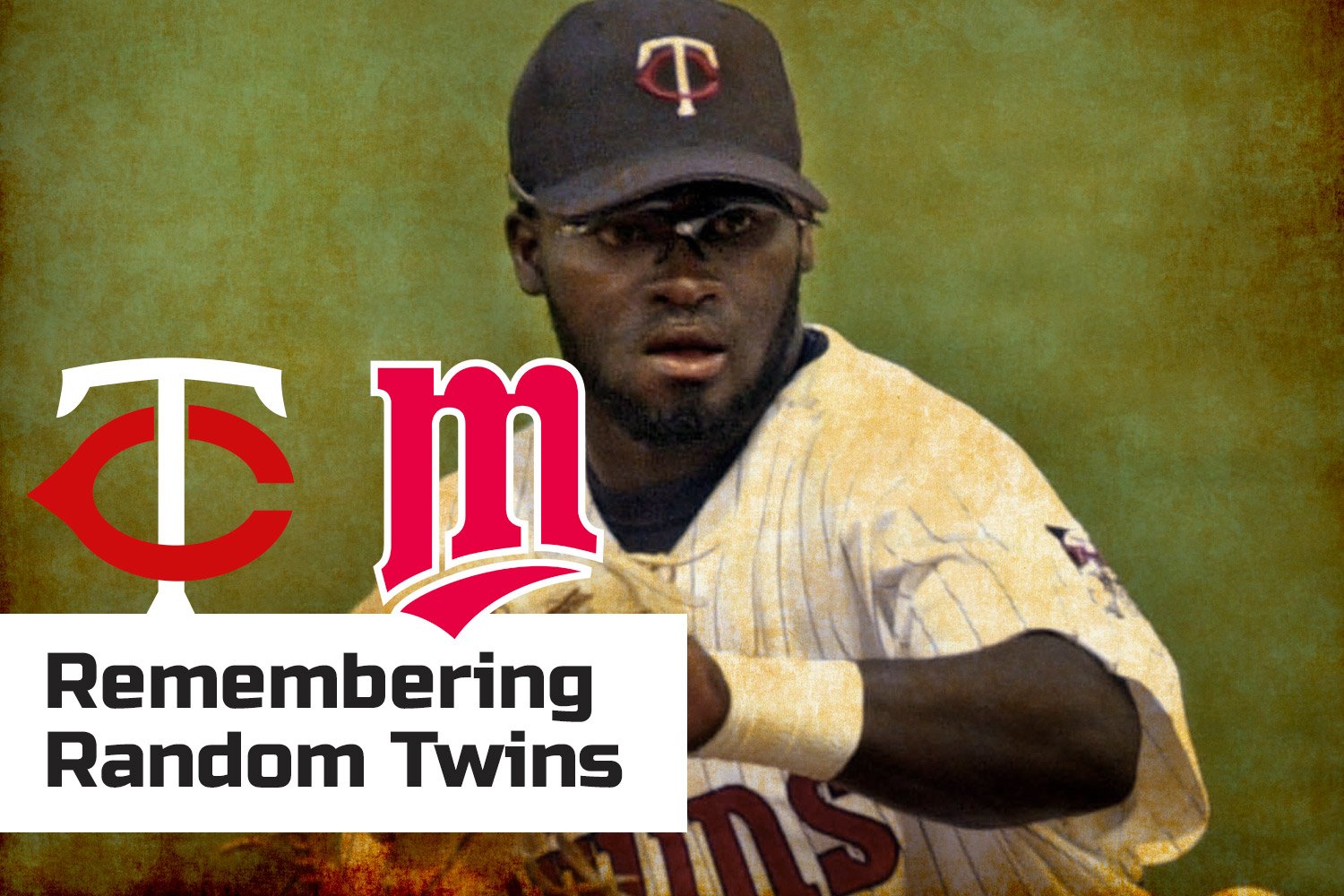 The Minnesota Twins have had many successful sell-offs in franchise history. A recent example is when they got Joe Ryan from the Tampa Bay Rays for half a season of a declining Nelson Cruz. The best example is when they sent A.J. Pierzynski away in his contract year to the San Francisco Giants for Joe Nathan, Francisco Liriano, and Boof Bonser. Minnesota also got a pretty good haul for superstar second baseman Chuck Knoblauch in 1998. This was the guy they wanted to build the franchise around after the retirements of Kirby Puckett and Kent Hrbek, and for good reason. Knoblauch was becoming a regular at the Midsummer Classic. His trophy case featured the 1991 AL Rookie of the Year, a few Silver Sluggers, a Gold Glove, and a World Series ring. He was locked up long-term, signing a five-year extension before the 1997 campaign. But his attitude soured as Minnesota limped to a 68-94 finish that season, and Knoblauch demanded a trade. He was traded to the New York Yankees just days before camp opened in 1998. The return was four prospects: Eric Milton, Brian Buchanan, Danny Mota, and Cristian Guzmán. Milton and Guzmán were All-Stars in 2001 and big pieces of the team when they finally returned to postseason play in 2002. But developing them into these key pieces wasn’t always pretty—especially Guzmán, who began his career by having arguably the worst season in Twins history. Baseball America ranked Guzmán as the league’s 68th-best prospect heading into 1999, and he was the Twins' starting shortstop on Opening Day that season. Guzmán went 0-for-2 before getting lifted for pinch hitter Brent Gates. It's not a major league debut for the history books, but it's far from a disaster. Especially with the Twins winning, thanks to a stellar pitching performance from Brad Radke. But things never got better for him as a rookie. While starting 126 Twins games at shortstop in 1999, Guzmán posted a miserable .543 OPS. His on-base percentage (.267) and slugging percentage (.276) sat below .280, and the defense wasn’t great either. Guzmán committed 24 errors in 1999, the fifth most by any American League player. It was the second most by an American League shortstop. Nobody in the American League came close to touching his -2.5 bWAR that season. The second worst was -1.7, recorded by teammate Doug Mientkiewicz. White Sox shortstop Mike Caruso and his -1.6 bWAR was the worst in the American League by any non-Twin in 1999. This is a rookie season that is impossible to defend, and it very well could be the worst season in Twins history by someone who got regular playing time. But Guzmán was out there on Opening Day once again in 2000. What choice did the team have? Minnesota had become one of the worst teams in baseball since winning the 1991 World Series. Guzmán wasn’t just starting on Opening Day. He was batting second. And you know what? Things finally got better for the speedy shortstop. The Twins lost 7-0 to a terrible Tampa Bay Devil Rays team, but Guzmán went 2-for-4 with a stolen base. He had an RBI double and another stolen base in their second game, which was a winning effort. His first triple of the season came three days later, and then he hit 19 more. Those 20 triples led the majors and are tied with Goose Goslin of the 1925 Washington Senators for a franchise record. 2001 marked another year of improvement for Guzmán, named an All-Star for the first time. He hit .302 and led the league in triples once again. Guzmán finished 16th in the AL MVP voting and helped Minnesota to their first winning season since 1992. They finished just six games out of a playoff spot, but this young core wouldn’t have to wait much longer to finally get a taste of October baseball, winning the AL Central in 2002 with a 13 game margin. Guzmán went 6-for-21 (.286) as Minnesota defeated Oakland in the 2002 ALDS, adding two stolen bases and a home run. Like many of his Twins teammates, the rest of his postseason sample was less successful. He hit .217 with no RBI and just one extra-base hit over the remaining 13 playoff games of his career. Following the Twins' 2004 ALDS loss, the Washington Nationals signed Guzmán in free agency. His first season there was almost as bad as that 1999 rookie campaign. He slashed .219/.260/.314 (.574), and that was aided by a fantastic September where Guzmán hit .325 with nine extra-base hits in 25 games. Without that September surge, this wouldn’t have been “almost” as bad as that rookie season. It would’ve been just as bad. This was a guy the Nationals were hoping to build around. They had just moved from Montreal and didn’t have much on their roster upon arriving in our nation’s capital. Signing an All-Star caliber shortstop who had been playing October baseball regularly could get fans excited. But instead, poor numbers and a perceived lack of hustle had Guzmán getting booed each time he came to the plate. Nobody was able to boo him in 2006, as Guzmán missed the entire season due to shoulder and eye surgeries. The booing stopped when he hit a career-best .328 in 2007. Guzmán followed that up by making his second All-Star team in 2008. But 2009 saw offensive and defensive declines for a now 31-year-old Guzmán. He was moved to second base at the start of 2010 and traded to the Texas Rangers at the deadline that year. Guzmán initially tried to decline the trade by invoking his 10-5 rights but eventually talked into accepting after a few days of “will he, won’t he” drama. Guzmán hit just .152 for the Rangers after the trade and was left off their playoff roster. Texas reached the World Series, where they fell in five games to the Giants. He sat out the 2011 season while rehabbing from another shoulder surgery, citing unspecified family issues. The Cleveland Indians signed him to a minor league contract in 2012 but released him before spring training ended. This ended the professional career of Cristian Guzmán.
- 12 comments
-
- 3
-
-
- cristian guzman
- remembering random twins
- (and 3 more)
-
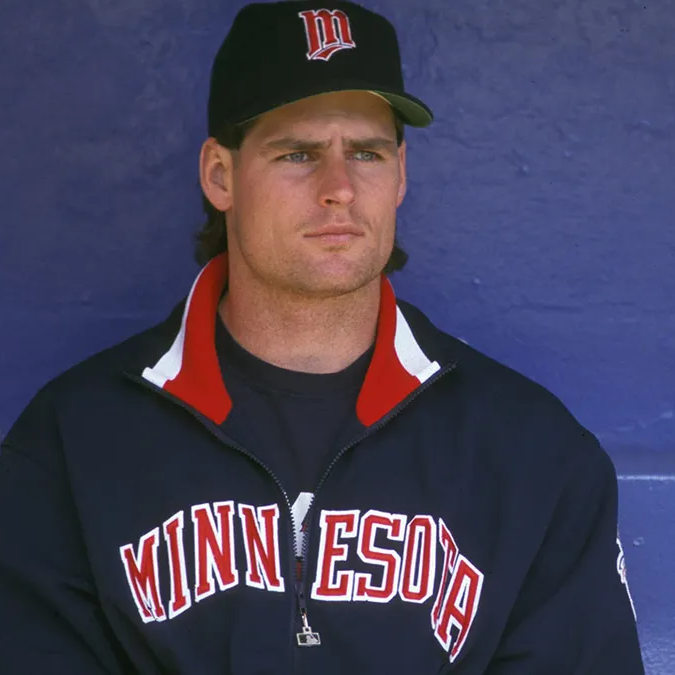 Scott Gavin Erickson was born on February 2, 1968 in Long Beach, California. His 18 wins for the University of Arizona in 1989 is still a single season program record, and it led to the Minnesota Twins using a fourth round pick on Erickson in the draft that June. He rose through the minor league system rather quickly, making his Major League debut early on in the 1990 campaign. Erickson was a bright spot for a last place Twins team during his rookie year, owning a 2.87 ERA across 17 starts. A strong off-season saw Minnesota bring in veterans Chili Davis and Jack Morris, helping spark one of the greatest year-to-year turnarounds in baseball history. They went on to win the World Series, defeating an Atlanta Braves team who had also finished in last place a year earlier. While Morris famously put the team on his back during the 1991 playoffs, you could argue that Erickson was the staff ace during the regular season. He led the American League with 20 wins, and finished second in the Cy Young voting behind Roger Clemens of the Boston Red Sox. Erickson was particularly dominant in the first half, posting a 1.39 ERA over his first 15 starts. He didn't record any decisions in his three starts during the 1991 postseason, where he had a 4.91 ERA. His best start during the Twins title run came in game six of the World Series, where he tossed six innings and allowed three runs. Minnesota would famously win in 11 innings, thanks to a walk-off home run from Kirby Puckett. Morris left the Twins after just one year with the club, and Tom Kelly gave the ball to Erickson on Opening Day in 1992. At just 24-years old with a World Series ring and a second place Cy Young finish already on his resume, it seemed like he was destined to be the Twins next true ace. But things just didn't work out that way. Erickson went 13-12 with a 3.40 ERA in 1992, and things only got worse from there. His 19 losses in 1993 led the American League, and that came with a 5.19 ERA. The ERA went up to 5.44 in 1994, and it reached 5.95 through 15 starts in 1995. That's when Minnesota finally decided to move on, trading Erickson to the Baltimore Orioles for Scott Klingenbeck and Kimera Bartee around the 1995 deadline. Erickson continued to struggle with the Orioles, and he also began to battle some injuries. He had a 4.73 ERA during his nine years in Baltimore, not throwing a single pitch in two of those seasons. Erickson did have a little postseason success with the Orioles, helping them reach the ALCS in 1996 and 1997. His most memorable performance in Baltimore was when he hurled eight shutout innings against the Cleveland Indians in game one of the 1997 ALCS. Baltimore would wind up losing in six games. The New York Mets signed Erickson ahead of the 2004 season, and spent most of the first half continuing to rehab a torn labrum that he suffered in 2003. He made his Mets debut on July 19th, tossing six innings and allowing just two runs in a loss against the Florida Marlins. The Texas Rangers, who were competing for a playoff spot, acquired Erickson a week later at the deadline. He made just four starts in Texas before landing on the disabled list again, ending his season. Erickson made eight starts for the Dodgers in 2005, and eight relief appearances for the Yankees in 2006. He retired just before spring training in 2007 after going unsigned during the off-season. Retirement has kept Erickson busy. He spent a few years as a minor league pitching coach for the Indians, working at various levels of their system. Erickson later transitioned to broadcasting, working as a color commentator for college baseball broadcasts on the Pac-12 Network. He was charged with reckless driving in the aftermath of a 2020 car accident that killed two people. The charges were later dropped after he issued a public service announcement regarding the importance of safe driving.
 -
Scott Gavin Erickson was born on February 2, 1968 in Long Beach, California. His 18 wins for the University of Arizona in 1989 is still a single season program record, and it led to the Minnesota Twins using a fourth round pick on Erickson in the draft that June. He rose through the minor league system rather quickly, making his Major League debut early on in the 1990 campaign. Erickson was a bright spot for a last place Twins team during his rookie year, owning a 2.87 ERA across 17 starts. A strong off-season saw Minnesota bring in veterans Chili Davis and Jack Morris, helping spark one of the greatest year-to-year turnarounds in baseball history. They went on to win the World Series, defeating an Atlanta Braves team who had also finished in last place a year earlier. While Morris famously put the team on his back during the 1991 playoffs, you could argue that Erickson was the staff ace during the regular season. He led the American League with 20 wins, and finished second in the Cy Young voting behind Roger Clemens of the Boston Red Sox. Erickson was particularly dominant in the first half, posting a 1.39 ERA over his first 15 starts. He didn't record any decisions in his three starts during the 1991 postseason, where he had a 4.91 ERA. His best start during the Twins title run came in game six of the World Series, where he tossed six innings and allowed three runs. Minnesota would famously win in 11 innings, thanks to a walk-off home run from Kirby Puckett. Morris left the Twins after just one year with the club, and Tom Kelly gave the ball to Erickson on Opening Day in 1992. At just 24-years old with a World Series ring and a second place Cy Young finish already on his resume, it seemed like he was destined to be the Twins next true ace. But things just didn't work out that way. Erickson went 13-12 with a 3.40 ERA in 1992, and things only got worse from there. His 19 losses in 1993 led the American League, and that came with a 5.19 ERA. The ERA went up to 5.44 in 1994, and it reached 5.95 through 15 starts in 1995. That's when Minnesota finally decided to move on, trading Erickson to the Baltimore Orioles for Scott Klingenbeck and Kimera Bartee around the 1995 deadline. Erickson continued to struggle with the Orioles, and he also began to battle some injuries. He had a 4.73 ERA during his nine years in Baltimore, not throwing a single pitch in two of those seasons. Erickson did have a little postseason success with the Orioles, helping them reach the ALCS in 1996 and 1997. His most memorable performance in Baltimore was when he hurled eight shutout innings against the Cleveland Indians in game one of the 1997 ALCS. Baltimore would wind up losing in six games. The New York Mets signed Erickson ahead of the 2004 season, and spent most of the first half continuing to rehab a torn labrum that he suffered in 2003. He made his Mets debut on July 19th, tossing six innings and allowing just two runs in a loss against the Florida Marlins. The Texas Rangers, who were competing for a playoff spot, acquired Erickson a week later at the deadline. He made just four starts in Texas before landing on the disabled list again, ending his season. Erickson made eight starts for the Dodgers in 2005, and eight relief appearances for the Yankees in 2006. He retired just before spring training in 2007 after going unsigned during the off-season. Retirement has kept Erickson busy. He spent a few years as a minor league pitching coach for the Indians, working at various levels of their system. Erickson later transitioned to broadcasting, working as a color commentator for college baseball broadcasts on the Pac-12 Network. He was charged with reckless driving in the aftermath of a 2020 car accident that killed two people. The charges were later dropped after he issued a public service announcement regarding the importance of safe driving. View full player
-
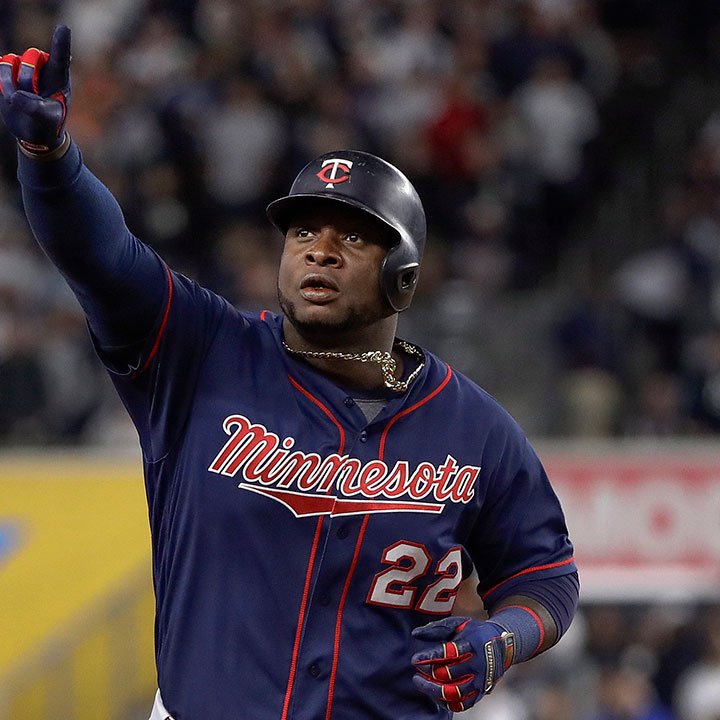 Miguel Angel Jean Sanó was born on May 11, 1993 in the Dominican Republic. He was one of the most sought after international free agents of all time, signing with the Minnesota Twins for $3.15 million in 2009. Other clubs interested in signing Sanó included the New York Yankees, Boston Red Sox, Baltimore Orioles, Cleveland Indians and Pittsburgh Pirates. It was the second largest signing bonus ever given to a Dominican amateur, only falling short of the $4.25 million signing bonus that Michael Yona received from the Oakland Athletics in 2008. Sanó quickly established himself as one of the best prospects in baseball. He hit 28 home runs with 100 RBI while playing at the Class-A level in 2012. This was followed up with 35 home runs with 103 RBI between High-A and Double-A in 2013. Sanó missed the entire 2014 after undergoing Tommy John surgery, but began hitting at a high level again upon returning in 2015. Minnesota called Sanó up to the big leagues to make his debut on July 2, 2015. He hit 18 home runs with a .916 OPS in 80 big league games that summer, finishing third in the AL Rookie of the Year voting. The Twins moved Sanó to right field ahead of the 2016 off-season, but it was a short-lived experiment and he was back at third base by June. Offensively, he hit 25 home runs with a .781 OPS in 2016. His talent was on full display for the whole nation during All-Star week in 2017. Sanó was the runner-up to Aaron Judge at the Home Run Derby, and his RBI single off Alex Wood helped the American League escape with a 2-1 win in the Midsummer Classic. Injuries limited Sanó in the second half that season, and he was left off the Twins playoff roster due to a shin injury. Things got off to a disastrous start for Sanó in 2018, and he was demoted to the minors on June 14th. While his poor statistical output was the main reason for his demotion, the Twins also had concerns regarding Sanó's conditioning and work ethic. He was eventually re-called after Eduardo Escobar was traded at the deadline, which opened the third base job back up. He finished the 2018 season with a .199 average and 13 home runs in 71 big league games. All reports indicated that Sanó had a great off-season following a disappointing 2018 campaign, but he injured himself at the celebratory victory parade for his Dominican winter ball team. This kept him out until the middle of May in 2019. After returning from his weird winter injury, Sanó proceeded to have the best season of his Major League career. Despite not debuting until May 16th, he hit 34 home runs. A lot of these were big homers too. Sanó led the league with 20 non-solo home runs in 2019, and his nine go-ahead home runs were the second most by a Twins player that season. Only Max Kepler hit more, and that was inflated by his six lead-off home runs. The crown jewel of these clutch homers was a pinch hit walk-off blast to beat the Atlanta Braves on August 5th. He also hit a go-ahead grand slam against the Indians on September 14th, which felt like a dagger in an AL Central race Minnesota had slowly been pulling away in. It was a tale of two halves for Sanó during the 2020 season that was shortened because of the COVID-19 pandemic. He slashed .284/.394/.636 in August, then slashed .148/.179/.383 in September. His 12 doubles that season led the Twins, who won their second consecutive AL Central crown. His 13 home runs were second on the team, trailing only Nelson Cruz. Sanó had his second career 30 home run season in 2021, also hitting a career best 24 doubles. Various injuries limited him to just 20 games in 2022, and he hit .083 with a .345 OPS when on the field. His final hit in a Twins uniform came on April 26th of that year. This hit helped walk-off the Detroit Tigers, but Sanó was not credited with an RBI as the winning run scored on an error. Minnesota declined his contract option for the 2023 season, making Sanó a free agent. He remained unsigned throughout the 2023 season, eventually inking a minor league deal with the Los Angeles Angles in January 2024. Sanó made their Opening Day roster after a strong spring, but he was eventually designated for assignment in early July.
 -
Miguel Angel Jean Sanó was born on May 11, 1993 in the Dominican Republic. He was one of the most sought after international free agents of all time, signing with the Minnesota Twins for $3.15 million in 2009. Other clubs interested in signing Sanó included the New York Yankees, Boston Red Sox, Baltimore Orioles, Cleveland Indians and Pittsburgh Pirates. It was the second largest signing bonus ever given to a Dominican amateur, only falling short of the $4.25 million signing bonus that Michael Yona received from the Oakland Athletics in 2008. Sanó quickly established himself as one of the best prospects in baseball. He hit 28 home runs with 100 RBI while playing at the Class-A level in 2012. This was followed up with 35 home runs with 103 RBI between High-A and Double-A in 2013. Sanó missed the entire 2014 after undergoing Tommy John surgery, but began hitting at a high level again upon returning in 2015. Minnesota called Sanó up to the big leagues to make his debut on July 2, 2015. He hit 18 home runs with a .916 OPS in 80 big league games that summer, finishing third in the AL Rookie of the Year voting. The Twins moved Sanó to right field ahead of the 2016 off-season, but it was a short-lived experiment and he was back at third base by June. Offensively, he hit 25 home runs with a .781 OPS in 2016. His talent was on full display for the whole nation during All-Star week in 2017. Sanó was the runner-up to Aaron Judge at the Home Run Derby, and his RBI single off Alex Wood helped the American League escape with a 2-1 win in the Midsummer Classic. Injuries limited Sanó in the second half that season, and he was left off the Twins playoff roster due to a shin injury. Things got off to a disastrous start for Sanó in 2018, and he was demoted to the minors on June 14th. While his poor statistical output was the main reason for his demotion, the Twins also had concerns regarding Sanó's conditioning and work ethic. He was eventually re-called after Eduardo Escobar was traded at the deadline, which opened the third base job back up. He finished the 2018 season with a .199 average and 13 home runs in 71 big league games. All reports indicated that Sanó had a great off-season following a disappointing 2018 campaign, but he injured himself at the celebratory victory parade for his Dominican winter ball team. This kept him out until the middle of May in 2019. After returning from his weird winter injury, Sanó proceeded to have the best season of his Major League career. Despite not debuting until May 16th, he hit 34 home runs. A lot of these were big homers too. Sanó led the league with 20 non-solo home runs in 2019, and his nine go-ahead home runs were the second most by a Twins player that season. Only Max Kepler hit more, and that was inflated by his six lead-off home runs. The crown jewel of these clutch homers was a pinch hit walk-off blast to beat the Atlanta Braves on August 5th. He also hit a go-ahead grand slam against the Indians on September 14th, which felt like a dagger in an AL Central race Minnesota had slowly been pulling away in. It was a tale of two halves for Sanó during the 2020 season that was shortened because of the COVID-19 pandemic. He slashed .284/.394/.636 in August, then slashed .148/.179/.383 in September. His 12 doubles that season led the Twins, who won their second consecutive AL Central crown. His 13 home runs were second on the team, trailing only Nelson Cruz. Sanó had his second career 30 home run season in 2021, also hitting a career best 24 doubles. Various injuries limited him to just 20 games in 2022, and he hit .083 with a .345 OPS when on the field. His final hit in a Twins uniform came on April 26th of that year. This hit helped walk-off the Detroit Tigers, but Sanó was not credited with an RBI as the winning run scored on an error. Minnesota declined his contract option for the 2023 season, making Sanó a free agent. He remained unsigned throughout the 2023 season, eventually inking a minor league deal with the Los Angeles Angles in January 2024. Sanó made their Opening Day roster after a strong spring, but he was eventually designated for assignment in early July. View full player
-
Hello, fellow humans! My name is William Malone IV. Son of William Malone III. And I come with great news! March Madness is here. While March Madness isn't as wonderful as watching the Minnesota Twins compete in baseball games, the rituals of a college basketball tournament signal that baseball is near. Countless players on the Minnesota Twins, past and present, played college baseball. Many of those schools also have a basketball team, and some of those basketball teams are competing in the March Madness ritual. Here is a random list featuring some of those players. It isn't close to all of the players though. Just a random list featuring a few. Kyle Gibson University of Missouri Tough loss for the Tigers in the first round, but that doesn't change the fact that Kyle Gibson is a Mizzou legend. His 131 strikeouts in 2009 is a single season school record. Well, actually it's tied for the record. He shares it with a guy named Max Scherzer. Maybe you've heard of him. Gibson had 11 wins in that 2009 season, making him one of seven Mizzou pitchers to have double digit wins in a single season. Mitch Garver University of New Mexico The New Mexico basketball is coached by former Golden Gophers head coach Richard Pitino. On the diamond, Mitch Garver went from walk-on to Mountain West Player of the Year. He actually won that award twice. Jason Bartlett University of Oklahoma Tough task for the Sooners, drawing the two time defending national champions for a first round matchup. But it's been awhile since we've seen a team try to three peat in the big dance. When the Florida Gatros won back-to-back in 2006 and 2007, they failed to even make the tournament in 2008. And 2009 for that matter. Can't defend your title if you don't show up to the party. As for Bartlett, he played for Oklahoma after attending a JUCO school for two years. Chris Colabello Assumption University Yeah, that's right. We're going to the Division II tournament, baby. The Greyhounds are on quite the run. They've reached the Elite Eight as a six seed, which is a lot more impressive than it sounds. The 64 team D2 bracket has eight regions instead of four, meaning there are eight #1 seeds. This also means the lowest seed is eight, instead of 16. This year's Elite Eight consists of four #1 seeds, three #2 seeds...and sixth seeded Assumption out of Worcester, Massachusetts. That's where Chris Colabello played college baseball. Joe Niekro West Liberty University Can't dive into the Division II tournament for just one stop. West Liberty is also in the Elite Eight. Although, they were one of the eight teams who earned a #1 seed. So it's not some sort of Cinderella Story. Joe Niekro ended his 22-year career with the Twins, pitching two relief innings during the 1987 World Series. He came back in 1988, posting a 10.03 ERA through five appearances (two starts). That ended his lengthy career. Kyle Garlick University of Oregon Back to Division I we go! Kyle Garlick was second on the Ducks all-time RBI list when he left the program, which was inactive between 1981 and 2009. He currently sits seventh on their all-time RBI list. Okay, now back to Division II. With an extra year of eligibility remaining after graduating from Oregon, Garlick actually transferred to a D2 school and played there for a year. He hit nukes at Cal Poly-Pomona.
-
Ranking every Joe Mauer season
William Malone posted a blog entry in William Malone IV blogs about Twins
Hello, fellow humans! My name is William Malone IV. Son of William Malone III. And I come with great news! While the Minnesota Twins do not have a baseball game today, they will play one against the Boston Red Sox tomorrow. Off days stink, but it only means we are one day closer to more baseball. And that's pretty cool. You know what else is pretty cool? Reminiscing about the greatness of Joe Mauer. He was awesome. You don't win five Silver Sluggers and three Gold Gloves by accident! These are just some of the accolades that got him into Cooperstown on the very first try! Need more of his sweet, sweet resume? Your ole pal William Malone IV is about to give you a healthy dose of it! Mauer played 15 season for the Twins. Some were better than others, so maybe we should rank them. Starting with the worst and shooting right on up to the very best of his amazing and wonderful career. And as always, don't forget to light up the comments calling William Malone IV a big stupid dum dum when you disagree on where your favorite Joe Mauer season is ranked! 15. 2011 Stats: 82 G, .729 OPS, 18 XBH, 30 RBI Accolades: The infamous bi-lateral leg weakness injury limited Mauer to just 82 games in 2011, and his stats were not Mauer-esque when he was on the field. While he would eventually return to All-Star form as a catcher in 2012 and 2013, his 14 starts at first base late in 2011 foreshadowed his future at the position. 14. 2005 Stats: 131 G, .783 OPS, 37 XBH, 55 RBI Accolades: After knee injuries cut his rookie campaign short, 2005 marked the first fully healthy season of Mauer's career. A lot of his rate stats dropped off from what he had shown during a 35 game sample in 2004, but his .294 average was still second among primary catchers. 13. 2004 Stats: 35 G, .939 OPS, 15 XBH, 17 RBI Accolades: 2004 proved that Mauer was talented enough to be a big league star. He was the Opening Day catcher, and was immediately one of the best players on a talented team that had won back-to-back division titles. Unfortunately, the Twins would have to wait in order to see this production in bulk. Knee issues limited Mauer to just 35 games during that rookie season. 12. 2014 Stats: 120 G, .732 OPS, 33 XBH, 55 RBI Accolades: Mauer struggled in his first season as a full time first baseman. He spent most of the first half trying to play through an oblique injury, but the Twins finally placed him on the disabled list at the end of June. Mauer had a .695 OPS through 76 games at the time he was shut down. He returned in mid-August, and actually played pretty well down the stretch. He hit .295 with an .805 OPS in 44 games after returning from injury. 11. 2016 Stats: 134 G, .718 OPS, 37 XBH, 49 RBI Accolades: Joe Mauer looked like Joe Mauer at the plate in April, slashing .337/.459/.461 (.920). Unfortunately, the Twins were sitting at 7-17 on May 1st. Even an MVP level Mauer couldn't save this team, and his performance eventually caught up with all of his teammates...in a bad way. 10. 2018 Stats: 127 G, .729 OPS, 34 XBH, 48 RBI Accolades: The .282 batting average wasn't that bad, but his walk rated dropped below 10% for the first time in his career. This gave Mauer the second worst on-base percentage of his career, only beating out the 2015 campaign where he hit almost 20 points lower. He also suffered another concussion in mid-May, which began the rumors that his retirement might be near. 9. 2015 Stats: 158 G, .718 OPS, 46 XBH, 66 RBI Accolades: From a purely statistical standpoint, you can justify putting this season dead last. 2015 was the only time Mauer had an OPS+ that sat below the standard league average of 100, and his .338 OBP was the worst of his career. But the guy was still 44-for-125 (.352) with runners in scoring position, and there were countless big hits throughout the summer that kept a very mediocre Twins roster mathematically alive through the final week of the regular season. 8. 2007 Stats: 109 G, .808 OPS, 37 XBH, 60 RBI Accolades: It looked like Mauer was going to win a second consecutive batting title. He was batting .353 in early May, but a strained quad put him on the disabled list. Mauer missed a little over a month, and was never quite the same once back on the field. He returned on June 8th, and hit just .273 in 81 games after the Twins re-activated him. 7. 2017 Stats: 141 G, .801 OPS, 44 XBH, 71 RBI Accolades: After hitting just .267 between 2014 and 2016, Joe Mauer was finally a .300 hitter again. He hit .305 for the whole season, and led the charge after Minnesota sold off pieces at the deadline and seemingly waved the white flag. The veteran hit .340 in 55 games after August 1st, helping push the Twins into the playoffs for the first time since 2010. 6. 2013 Stats: 113 G, .880 OPS, 46 XBH, 47 RBI Accolades: Silver Slugger, All-Star The infamous concussion in August ended Mauer's 2013 season a bit early, and it also ended his time behind the plate. It's a shame, because he was probably still the best catcher in baseball at that point. His .880 OPS led everyone at the position, a strong 44 points ahead of Cardinals backstop Yadier Molina that season. 5. 2012 Stats: 147 G, .861 OPS, 45 XBH, 85 RBI Accolades: AL OBP leader, All-Star Joe Mauer won five Silver Sluggers in his career, and he might've been robbed of a sixth in 2012. The award went to A.J. Pierzynski, who hit .278 with an .827 OPS and just 77 RBI. Mauer hit .319 with an AL best .416 on-base percentage in 2012, leading all AL catchers with an .861 OPS. 4. 2008 Stats: 146 G, .864 OPS, 44 XBH, 85 RBI Accolades: AL batting champion, Silver Slugger, Gold Glove, All-Star This marked the second Silver Slugger and first Gold Glove won by Joe Mauer. He also won his second of three career batting titles in 2008, thanks to a late surge that helped him pass Dustin Pedroia in the final weeks of the season. Mauer hit .373 over his final 30 games of the season, raising his average from .317 to .328 in the process. 3. 2010 Stats: 137 G, .871 OPS, 53 XBH, 75 RBI Accolades: Silver Slugger, Gold Glove, All-Star 2010 was the third consecutive season in which Mauer won the Gold Glove and Silver Slugger. Only Ivan Rodriguez has swept these two awards at the catcher position more often (seven times). His 43 doubles in 2010 was a career high. 2. 2006 Stats: 140 G, .936 OPS, 53 XBH, 84 RBI Accolades: AL batting champion, Silver Slugger, All-Star Mauer became the first American League catcher to win the batting title in 2006. He finished sixth in the AL MVP voting, but he might win the award if you re-voted today. His 5.8 bWAR was higher than four of the five people ahead of him, and tied with the fifth (third place finisher David Ortiz). This was obviously before WAR was a huge talking point in MVP discussions. 1. 2009 Stats: 138 G, 1.031 OPS, 59 XBH, 96 RBI Accolades: MVP, AL batting champion, AL OBP leader, AL slugging leader, Silver Slugger, Gold Glove, All-Star Leading the league in average, on-base percentage and slugging percentage is very rare. Mauer was the first American League player to do this since George Brett in 1980. His .365 average was boosted by a .373 clip after August 1st, and his team needed every single hit down to the very end. This is the year where Minnesota snuck into the playoffs with a tiebreaker win over the Detroit Tigers. Mauer reached base four times in that tiebreaker game. -
Ranking every single Opening Day first baseman in Twins history
William Malone commented on William Malone's blog entry in William Malone IV blogs about Twins
Joe Mauer is in the Hall of Fame. -
Edward Charles Knoblauch was born on July 7, 1968 in Houston, Texas. The Minnesota Twins used the 25th overall pick on Knoblauch in 1989, and it didn't take long for him to reach the Major League level. He was the Twins starting second baseman on Opening Day in 1991, winning Rookie of the Year honors and helping Minnesota win their second World Series in a five year stretch. Knoblauch continued to improve as the years went on, and he quickly established himself as one of the best players in franchise history. His 276 stolen bases is the most by any player in a Twins uniform, as is his single season clip of 62 steals in 1997. Knoblauch led the Majors with 45 doubles in 1994, which was a Twins record at the time. That mark has since been broken by Marty Cordova (46 in 1996) and Justin Morneau (47 in 2008), but it's possible that Knoblauch would still have this record if the 1994 season wasn't cut short by a player's strike. He was an All-Star four times while in Minnesota, winning two Silver Slugger awards and a Gold Glove. This was the guy Minnesota wanted to build their franchise around after the retirements of Kent Hrbek and Kirby Puckett. After not trading away the free agent to be at the 1996 deadline, the Twins signed Knoblauch to the largest contract in franchise history on August 24th of that year. It seemed like he was destined to be a Twin for life, and then things changed. Just one year later, Knoblauch demanded a trade. He was shipped off to the New York Yankees for prospects Cristian Guzman, Eric Milton, Brian Buchanan and Danny Mota. Knoblauch won three more rings in the Bronx, but he was only a small part of the dynasty as his skills began to decline. After hitting .319 with a 127 OPS+ over the previous four seasons before getting traded, he hit .272 with a 100 OPS+ during his four seasons with the Yankees. But the more infamous part of his decline came in the field, as Knoblauch developed the "yips" and was no longer able to complete the short throw from second to first base. He was strictly a DH by the end of 2000, and moved to left field in 2001. While playing left field as a visitor at the Metrodome in 2001, fans began throwing debris in the direction of their former star. Umpires pulled the Yankees off a field that was littered with beer bottles, hot dogs, and a few golf balls. This caused a lengthy delay, and more than 40 fans were ejected. Since retiring, Knoblauch has had his share of legal troubles. He was charged with assaulting a family member by choking after an incident with his wife in 2009, which is a third degree felony in Texas. Knoblauch pleaded guilty to a misdemeanor assault charge, and received one year probation. He was arrested again for similar charges in 2014, which prompted the Twins to cancel his upcoming Twins Hall of Fame induction ceremony. Knoblauch was also named as a steroid user in the 2007 Mitchell Report, which cited a link to the same trainer who was providing Roger Clemens and Andy Pettitte with performance enhancing drugs. The report alleged that this trainer, Brian McNamee, injected Knoblauch with human growth hormone around seven to nine times during the 2001 season. Knoblauch later admitted this was true, making clear that 2001 was the only time he used such drugs in his career. His poor hitting during that season made him add that "it was not performance enhancing for me." View full player
-
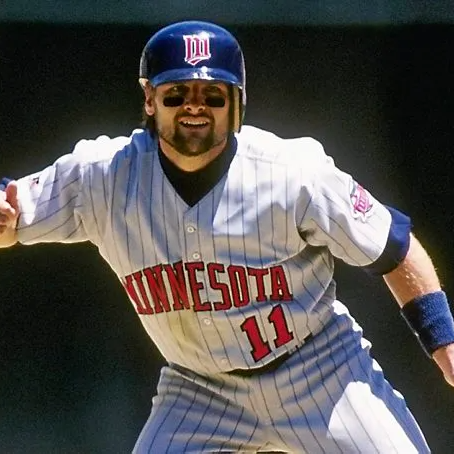 Edward Charles Knoblauch was born on July 7, 1968 in Houston, Texas. The Minnesota Twins used the 25th overall pick on Knoblauch in 1989, and it didn't take long for him to reach the Major League level. He was the Twins starting second baseman on Opening Day in 1991, winning Rookie of the Year honors and helping Minnesota win their second World Series in a five year stretch. Knoblauch continued to improve as the years went on, and he quickly established himself as one of the best players in franchise history. His 276 stolen bases is the most by any player in a Twins uniform, as is his single season clip of 62 steals in 1997. Knoblauch led the Majors with 45 doubles in 1994, which was a Twins record at the time. That mark has since been broken by Marty Cordova (46 in 1996) and Justin Morneau (47 in 2008), but it's possible that Knoblauch would still have this record if the 1994 season wasn't cut short by a player's strike. He was an All-Star four times while in Minnesota, winning two Silver Slugger awards and a Gold Glove. This was the guy Minnesota wanted to build their franchise around after the retirements of Kent Hrbek and Kirby Puckett. After not trading away the free agent to be at the 1996 deadline, the Twins signed Knoblauch to the largest contract in franchise history on August 24th of that year. It seemed like he was destined to be a Twin for life, and then things changed. Just one year later, Knoblauch demanded a trade. He was shipped off to the New York Yankees for prospects Cristian Guzman, Eric Milton, Brian Buchanan and Danny Mota. Knoblauch won three more rings in the Bronx, but he was only a small part of the dynasty as his skills began to decline. After hitting .319 with a 127 OPS+ over the previous four seasons before getting traded, he hit .272 with a 100 OPS+ during his four seasons with the Yankees. But the more infamous part of his decline came in the field, as Knoblauch developed the "yips" and was no longer able to complete the short throw from second to first base. He was strictly a DH by the end of 2000, and moved to left field in 2001. While playing left field as a visitor at the Metrodome in 2001, fans began throwing debris in the direction of their former star. Umpires pulled the Yankees off a field that was littered with beer bottles, hot dogs, and a few golf balls. This caused a lengthy delay, and more than 40 fans were ejected. Since retiring, Knoblauch has had his share of legal troubles. He was charged with assaulting a family member by choking after an incident with his wife in 2009, which is a third degree felony in Texas. Knoblauch pleaded guilty to a misdemeanor assault charge, and received one year probation. He was arrested again for similar charges in 2014, which prompted the Twins to cancel his upcoming Twins Hall of Fame induction ceremony. Knoblauch was also named as a steroid user in the 2007 Mitchell Report, which cited a link to the same trainer who was providing Roger Clemens and Andy Pettitte with performance enhancing drugs. The report alleged that this trainer, Brian McNamee, injected Knoblauch with human growth hormone around seven to nine times during the 2001 season. Knoblauch later admitted this was true, making clear that 2001 was the only time he used such drugs in his career. His poor hitting during that season made him add that "it was not performance enhancing for me."
 -
Cristian Antonio Guzmán was born on March 21, 1978 in the Dominican Republic. He signed with the New York Yankees as an amateur free agent in 1994. The Minnesota Twins acquired him in a 1998 blockbuster trade for All-Star second baseman Chuck Knoblauch. Eric Milton, Brian Buchanan and Danny Mota also came to Minnesota in that deal. Guzmán debuted in 1999, and had arguably the worst season by a regular Twins starter. He slashed .226/.267/.276 in 131 games, which included 126 starts at shortstop. That was good for a miserable 38 OPS+, and his bWAR was -2.5 that season. But things quickly got better for the speedy shortstop. He stole 28 bases while leading the Majors with 20 triples in 2000, and was named an All-Star in 2001. Guzmán continued to start at shortstop for the Twins throughout their AL Central three-peat in 2002, 2003 and 2004. In ten career playoff games with Minnesota, he slashed .239/.302/.328 with two RBI and one home run. The Washington Nationals signed Guzmán as a free agent ahead of the 2005 season. His first year in Washington was almost as bad as the disastrous 1999 rookie campaign. Guzmán had shoulder surgery in the off-season, causing him to miss the entire 2006 season. He also underwent an eye surgery to help improve his plate vision, which he later credited after hitting a career best .328 in 2007. Guzmán was an All-Star for a second time in 2008. He was moved to second base in 2010, and traded to the Texas Rangers at the deadline that season. Guzmán hit .152 during his half season in Texas, and was left off their playoff roster. The Rangers would reach the World Series that fall, losing to the San Francisco Giants in five games. Guzmán never in the Majors or minors again. He briefly signed a minor league contact with the Cleveland Indians in 2012, but was released before spring training ended. View full player
-
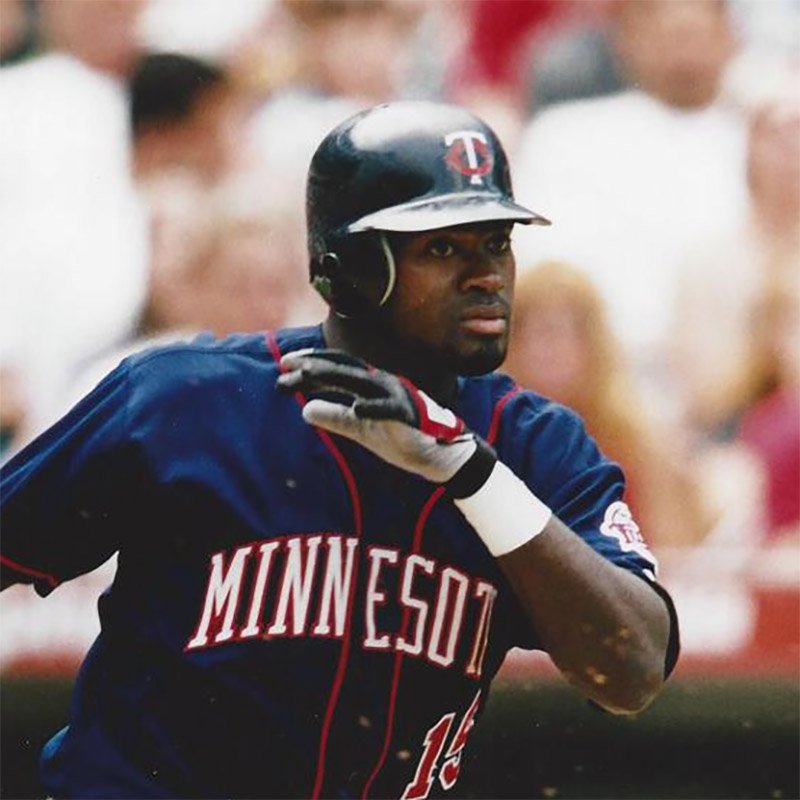 Cristian Antonio Guzmán was born on March 21, 1978 in the Dominican Republic. He signed with the New York Yankees as an amateur free agent in 1994. The Minnesota Twins acquired him in a 1998 blockbuster trade for All-Star second baseman Chuck Knoblauch. Eric Milton, Brian Buchanan and Danny Mota also came to Minnesota in that deal. Guzmán debuted in 1999, and had arguably the worst season by a regular Twins starter. He slashed .226/.267/.276 in 131 games, which included 126 starts at shortstop. That was good for a miserable 38 OPS+, and his bWAR was -2.5 that season. But things quickly got better for the speedy shortstop. He stole 28 bases while leading the Majors with 20 triples in 2000, and was named an All-Star in 2001. Guzmán continued to start at shortstop for the Twins throughout their AL Central three-peat in 2002, 2003 and 2004. In ten career playoff games with Minnesota, he slashed .239/.302/.328 with two RBI and one home run. The Washington Nationals signed Guzmán as a free agent ahead of the 2005 season. His first year in Washington was almost as bad as the disastrous 1999 rookie campaign. Guzmán had shoulder surgery in the off-season, causing him to miss the entire 2006 season. He also underwent an eye surgery to help improve his plate vision, which he later credited after hitting a career best .328 in 2007. Guzmán was an All-Star for a second time in 2008. He was moved to second base in 2010, and traded to the Texas Rangers at the deadline that season. Guzmán hit .152 during his half season in Texas, and was left off their playoff roster. The Rangers would reach the World Series that fall, losing to the San Francisco Giants in five games. Guzmán never in the Majors or minors again. He briefly signed a minor league contact with the Cleveland Indians in 2012, but was released before spring training ended.
 -
Hello, fellow humans! My name is William Malone IV. Son of William Malone III. And I come with great news! The Minnesota Twins had a wonderful game this week featuring only prospects. Many of these prospects were acquired through a magical process wildly known as the MLB Draft. The MLB Draft is only 20 round these days, but it used to have an infinite number of rounds. Teams would keep picking for as long as they wanted, and then drop out once they were happy with who they had. The Minnesota Twins have stuck around in this process for as many as 60 rounds, getting that deep in 1993. Their second longest draft was 59 rounds in 1989. So who are the best players taken in each of these 60 rounds? Here is your answer! In years where none of the players reached the Majors, it is left blank. 1st round Joe Mauer It's hard to beat a first ballot Hall of Fame player who you take with the first overall pick. Mauer won three batting titles, to go along with five Silver Sluggers and three Gold Gloves at catcher. 2nd Round Frank Viola The 1987 World Series MVP followed that up by winning AL Cy Young in 1988. He was a three time All-Star, who had nice tenures with both the Twins and New York Mets. 3rd Round Bert Blyleven Minnesota also used a third round pick on 2006 AL MVP Justin Morneau, but you can't go wrong with the Hall of Fame pitcher. It took awhile for Blyleven to get induced, but the resume was always obvious. He ranks fifth all-time in strikeouts, and ninth in shutouts. 4th Round Graig Nettles Sadly, almost all of his big league success came away from the Twin Cities. He was traded to Cleveland just 121 games into his big league career, and blossomed into a six time All-Star. Nettles won the World Series in 1977 and 1978 with the New York Yankees, also winning ALCS MVP in 1981. 5th Round Dave Goltz Goltz was a solid starting pitcher in the league for a decade, and was a 20 game winner for the Twins in 1977. He won a World Series with the Dodgers in 1981. 6th Round Pat Neshek The electric sidearm reliever had some great seasons with the Twins early in his career, but he underwent Tommy John surgery in 2009 and struggled upon returning in 2010. It took him a few years, and a few stops with other clubs, to find his form again. But he eventually began to dominate again, making All-Star appearances in 2014 and 2017. 7th Round LaTroy Hawkins He certainly had a long career, and it came with many great years too. Hawkins was a bullpen staple for the Twins in the early Ron Gardenhire years, often setting up closer Eddie Guardado. He played for 11 teams in his 21 Major League seasons. 8th Round Brad Radke One of Tom Kelly or Ron Gardenhire handed the ball to Radke on Opening Day nine times, which is the most Opening Day starts in Twins history. He finished third in the 1997 AL Cy Young voting. 9th Round Mitch Garver The Bomba Squad wouldn't have been complete without Garver, who hit 31 home runs in 2019 and won a Silver Slugger. His career has been filled with many ups and downs. Some good stretches, some bad stretches, and some stretches where he's the best hitting catcher in baseball. 10th Round Marty Cordova Steve Braun and Jeff Reboulet were ten round picks of the Twins who had longer careers, but Marty Cordova had a solid peak. He won AL Rookie of the Year in 1996, and followed that up with a 111 RBI season in 1997. There were a few other solid seasons sprinkled in after that. 11th Round Taylor Rogers Rogers had a 3.15 ERA across six seasons as bullpen mainstay for the Twins. They traded him to San Diego for Chris Paddack and Emilio Pagan, where he had a nightmare season. Things have gotten a little better for him since moving onto San Francisco. 12th Round Jason Kubel Bailey Ober might have this spot soon. You could even argue he should have it now, as his career WAR has already surpassed Kubel. But we'll give respect to the man who hit a billion clutch grand slams for the Twins. 13th Round Matt Lawton He was a very good right fielder for several bad Twins teams in the late 90's, but he was never able to enjoy their early 2000's success after getting traded to the New York Mets for Rick Reed at the 2001 deadline. 14th Round Mike Trombley After struggling as a starter early in his career, Trombley became a reliable middle reliever who had a nice 11-year big league career. 15th Round Rick Dempsey Remember Graig Nettles from earlier in this list? Dempsey is another guy who had a lot of success after getting traded away from Minnesota. He was World Series MVP with the Orioles in 1983. 16th Round Kolten Wong Wong is the first of several players on this list who never played for the Twins. Minnesota drafted him out of high school, but he didn't sign and chose to play at the University of Hawaii. After a stellar college career, St. Louis drafted Wong in the first round. 17th Round Kent Hrbek It's always cool to draft a franchise legend in round 17. It's even cooler when he's a Minnesota native. 18th Round Edouard Julien The Twins are hoping that Julien can become a mainstay for the club. He got off to a great start in 2023, before undergoing a rough sophomore season in the bigs. 19th Round Danny Valencia Fans might've been hoping for more after Valencia finished third in the 2010 AL Rookie of the Year voting, but he still had a respectable nine year career. Most of it was spent as a platoon bat. 20th Round Damian Miller Arizona swiped Miller from the Twins in the 1998 expansion draft. He was their starting catcher when they won the World Series in 2001, and an All-Star in 2002. 21st Round Eddie Guardado Round 21 helped the Twins build a huge chunk of their early 2000's bullpen, given them Eddie Guardado and J.C. Romero. Guardado did have the better overall career, and is in the Twins Hall of Fame. 22nd Round Trevor Hildenberger The sidearm slinging righty had a great rookie season for the Twins in 2017, giving them big relief appearances during a tight playoff race. But he was never able to repeat that season. 23rd Round Willie Eyre We're reaching a point where some of these rounds don't have much to choose from. Eyre made 42 relief appearances for the Twins in 2006, and 69 others for the Orioles and Rangers after that. 24th Round Juan Padilla Padilla was the player to be named later sent to the New York Yankees for Jesse Orosco in an August wavier trade during the 2003 season. He made 42 career relief appearances for the Yankees, Mets and Reds. 25th Round Taylor Hearn Hearn never signed with the Twins after getting drafted in the 25th round, and he was taken by the Nationals in the fifth round one year later. He's made 101 big league pitching appearances for the Rangers, Royals and Braves. 26th Round Corey Koskie The newest Twins Hall of Fame member began his professional baseball career by getting taken in round 26. 27th Round Scott Stahoviak Minnesota took Stahoviak out of Creighton with their first round choice in 1991. They had previously drafted him out of high school in round 25, but he obviously chose to play in college. 28th Round Bret Boone He chose to attend USC instead of signing with the Twins as a 28th round pick. Boone wound up having an excellent career, winning four Gold Gloves and two Silver Sluggers. While he opted against starting his professional career with the Twins, he did end things in Minnesota with a 14 game stint in 2005, 29th Round Nick Blackburn "Big Game Blackburn" often showed up for the Twins when they needed him most. He had a stellar performance in the 2008 AL Central Tiebreaker Game, only to have his offense provide no run support. His final three starts of 2009 were all seven inning gems, allowing three total runs in those appearances. Each one of these was vital to the Twins forcing a second straight game 163. 30th Round Michael Tonkin 15 years later and he's still on the Twins. There have been a lot of stops in the middle though. 31st Round Mike Lamb Lamb is another late round pick who the Twins didn't sign. He was a seventh round pick of the Rangers a few years later, and eventually made it back to the Twins for a brief stint as their third baseman in 2008. Lamb was the Astros starting first baseman in the 2005 World Series. 32nd Round Matt Wallner Minnesota selected Matt Wallner in 2016 out of Forest Lake High School, and listed him as a pitcher on their draft card. While he continued to play two ways in college, they drafted him out of Southern Mississippi a few years later as an outfielder. 33rd Round Nick Punto We've seen it a few times already, but these late round picks who don't sign have a funny way of making it back to the Twins. Punto was re-drafted by the Phillies a year after declining to sign in Minnesota, only to become a fan favorite at the Metrodome. 34th Round Tim Davis Davis didn't sign with the Twins, and was later re-drafted by Seattle. He pitched 122.2 innings for the Mariners, posting 4.62 career ERA. 35th Round Josh Bard For the first time, we have a "by default" winner. Josh Bard is the only 35th round pick in Twins history to reach the Majors. He never spent a day in the Twins organization though, getting re-drafted by the Rockies later on. 36th Round J.D. Martinez When he was re-drafted by the Houston Astros three years later out of Division II Nova Southeastern, it was only in round 20. Martinez went onto become a six time All-Star and three time Silver Slugger winner, helping Boston win the World Series in 2018. 37th Round Aaron Sele Do you want to know how awesome steroids were? Sele finished fifth in the 1999 AL Cy Young voting with a 4.79 ERA. Just think about how much offense there was back in the steroid era. 38th Round Gary Matthews Jr. After not signing with the Twins and later getting re-drafted, Matthews Jr had a very nice career. He played 12 years for seven different teams, and was an All-Star in 2006. 39th Round Brain Lawrence He pitched five years for the Padres in the early-2000's, owning a 4.19 ERA across 152 big league starts. 40th Round Chase Anderson Chase Anderson was re-drafted by the Arizona Diamondbacks in the ninth round two years later, and has played 11 years in the big leagues for nine different teams. 41st Round Brian Raabe The University of Minnesota product played 17 big league games for the Twins, Rockies and Mariners. 42nd Round Chase Anderson Yes, he was drafted by the Twins twice. They also failed to sign him both times. 43rd Round Jason Vargas Vargas was an All-Star in 2017, and pitched for six teams in a 14-year career. None of those teams were the Twins. 44th Round Bob Gebhard He made 30 relief appearances for the Twins over parts of two seasons. His ERA was 6.00. 45th Round Steve Pearce The 2018 World Series MVP did not sign after Minnesota used a 45th round pick on him. He was briefly in the Twins organization on a minor league contracts during spring training in 2012, but he was released after not breaking camp with the club. 46th Round A.J. Achter Minnesota signed Achter as a 45th round pick in 2010, and he reached the Majors with them in 2014. His big league career was 45 relief appearances with the Twins and Angels, boasting a 3.92 ERA. 47th Round Chris Heston His career didn't start with the Twins, because he didn't sign with them as a 47th round pick. But his career ended in 2017 with a single relief appearance for the Twins. In between all of this, he did throw a no-hitter for the Giants. 48th Round George Springer Another late round future World Series MVP who was drafted by the Twins, but did not sign. The New Britain native often went to Rock Cats games growing up, watching many future Twins as prospects. Springer opted to play college ball at UConn, and became a first round pick. 49th Round Brock Peterson The Twins actually did sign Peterson, but he never reached the Majors with them. He stayed in their system from 2003 until 2010, reaching Triple-A. Peterson then played a few years of independent ball, finally reaching the Majors in 2013 with the St. Louis Cardinals. 50th Round Tyler Anderson A 50th round pick of the Twins out of high school, Anderson went to Oregon and became a first round pick Rockies three years later. He is a two time All-Star, and currently pitches for the Angels. 51st Round 52nd Round Denny Hocking Hell of a career for a catcher drafted out of a JUCO school. He spent 13-years in the big leagues playing almost everything but catcher. 11 of those seasons came with the Twins. He is the lowest drafted Twins player, signed or unsigned by the club, to reach the Majors. 53rd Round 54th Round 55th Round 56th Round 57th Round 58th Round 59th Round 60th Round
-
Octavio Augie Ojeda was born on December 20, 1974 in Los Angeles, California. He was drafted by the Baltimore Orioles in round 13 of the 1996 MLB Draft. Ojeda won a bronze medal with Team USA at the 1996 Olympics, and then debuted professionally as a minor league player in 1997. Baltimore traded him to the Chicago Cubs on December 14, 1999. He made his Major League debut for the Cubs in 2000. Ojeda spent four seasons on the Cubs in Quad-A limbo, playing 148 big league games between 2000 and 2003. The Minnesota Twins claimed him on waivers on November 24, 2003. He was released the next day and cleared waivers, allowing Minnesota to sign him to a minor league deal. After spending most of 2004 in Triple-A, the Twins called Ojeda up in late August and he went on a tear. The utility infielder slashed .339/.429/.458 in his 30 games with the club that season, which included 16 starts at various infield positions. Despite his strong finish to the season, Ojeda was left off the Twins playoff roster as they fell in the ALDS. He spent all of 2005 in Triple-A, and then left the Twins organization. Ojeda returned to the Cubs, spending the entire 2006 season in their minor league system. After starting 2007 in Triple-A for the Arizona Diamondbacks, he was finally recalled to the Majors and eventually became their starting second baseman. Ojeda was their starting second baseman by the end of the season, helping Arizona reach the NLCS. He remind in Arizona through the end of 2010. Chicago brought him back one final time in 2011, signing Ojeda to a minor league deal. After just 18 games in Triple-A, he was released. This ended his professional playing career. View full player
-
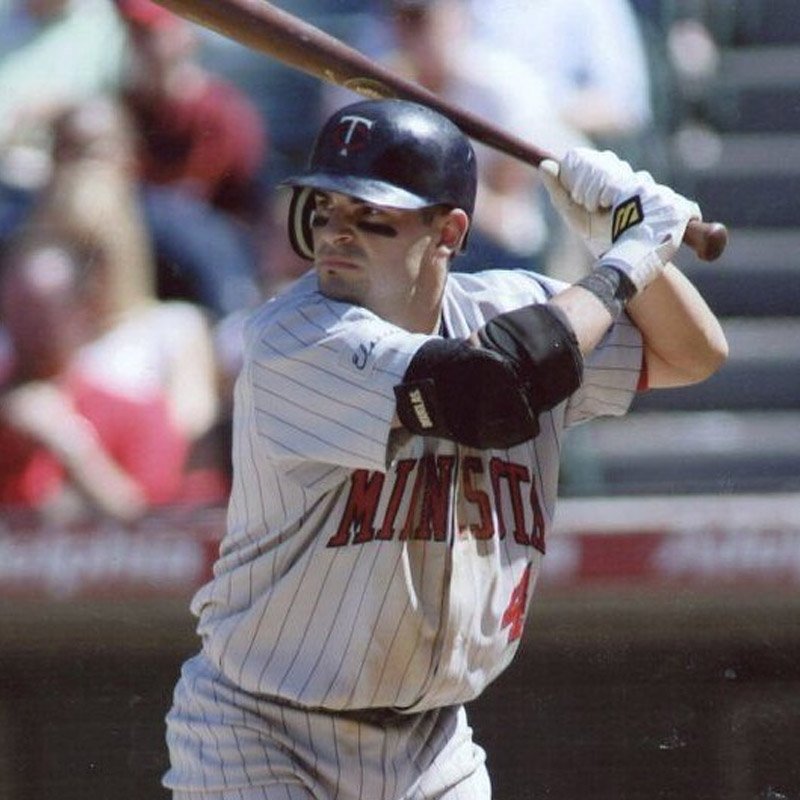 Octavio Augie Ojeda was born on December 20, 1974 in Los Angeles, California. He was drafted by the Baltimore Orioles in round 13 of the 1996 MLB Draft. Ojeda won a bronze medal with Team USA at the 1996 Olympics, and then debuted professionally as a minor league player in 1997. Baltimore traded him to the Chicago Cubs on December 14, 1999. He made his Major League debut for the Cubs in 2000. Ojeda spent four seasons on the Cubs in Quad-A limbo, playing 148 big league games between 2000 and 2003. The Minnesota Twins claimed him on waivers on November 24, 2003. He was released the next day and cleared waivers, allowing Minnesota to sign him to a minor league deal. After spending most of 2004 in Triple-A, the Twins called Ojeda up in late August and he went on a tear. The utility infielder slashed .339/.429/.458 in his 30 games with the club that season, which included 16 starts at various infield positions. Despite his strong finish to the season, Ojeda was left off the Twins playoff roster as they fell in the ALDS. He spent all of 2005 in Triple-A, and then left the Twins organization. Ojeda returned to the Cubs, spending the entire 2006 season in their minor league system. After starting 2007 in Triple-A for the Arizona Diamondbacks, he was finally recalled to the Majors and eventually became their starting second baseman. Ojeda was their starting second baseman by the end of the season, helping Arizona reach the NLCS. He remind in Arizona through the end of 2010. Chicago brought him back one final time in 2011, signing Ojeda to a minor league deal. After just 18 games in Triple-A, he was released. This ended his professional playing career.
 -
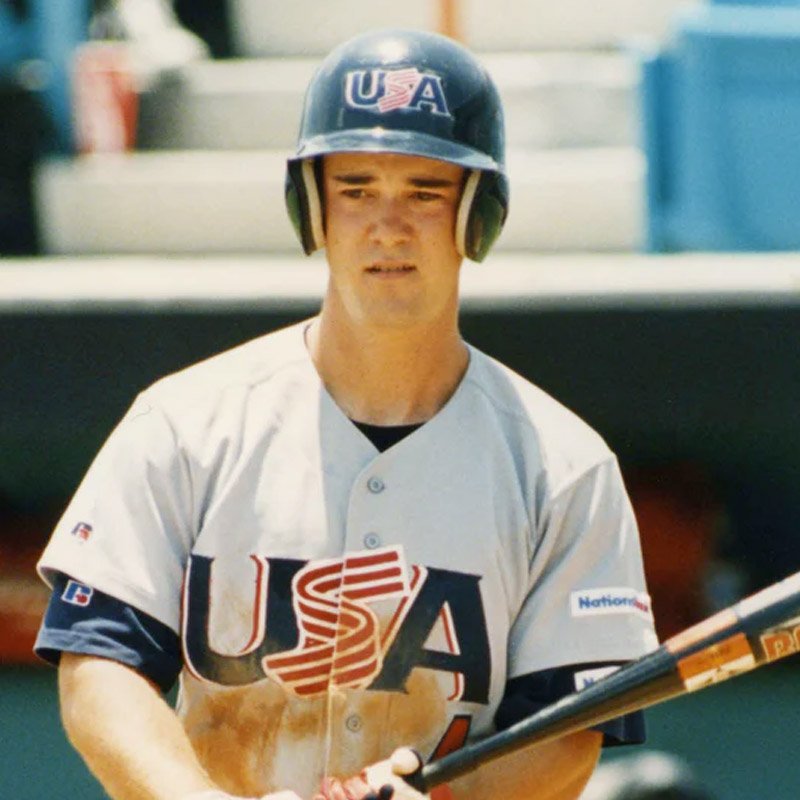 Warren Randall Morris was born on January 11, 1974 in Alexandria, Louisiana. His name was etched in baseball lore forever when he hit a walk-off home run for LSU to win the College World Series in 1996. The Tigers were down to their final out, trailing Miami by one with a runner on base. Morris hit a wall scraping home run over the right field fence, walking off the Hurricanes and flipping the game's result. It was the first home run of the season for Morris, who missed most of the year with a broken hamate bone. He won Showstopper of the Year at the 1997 ESPY Awards. The Texas Rangers drafted Morris in the fifth round of the 1996 MLB Draft. The draft was held on June 4th, a few days before his heroic home run on June 8th. Morris didn't sign right away, playing for Team USA in the summer Olympics and earning a bronze medal. Negotiations were dragged right up to the deadline, but the two sides eventually came to terms. He began his professional career at the High-A level in 1997. Morris blossomed into one of baseball's best prospects, and hit .331 at the Double-A level in 1998. He was traded to the Pittsburgh Pirates in a deadline deal for Esteban Loaiza that year, and Morris cracked their Opening Day roster in 1999. His rookie season in Pittsburgh was fantastic, hitting .288 with 15 home runs and 73 RBI. This was good for a third place finish in NL Rookie of the Year voting, coming in behind Scott Williamson of the Reds and Preston Wilson of the Marlins. He was never able to reduplicate that 1999 season, and the Pirates released Morris following the 2001 campaign. The Minnesota Twins signed Morris, expecting him to compete for time at second base with Denny Hocking and Luis Rivas. All three of them made the Opening Day roster, but Morris was quickly sent to the minors as the odd man out. He went 0-for-7 in four games with the Twins, which included two starts. Minnesota never called him back up to the big league roster, and he was traded to the St. Louis Cardinals in June for a player to be named later. That player became minor league shortstop Seth Davidson, who never got above Double-A in his professional career. The final big league action for Morris came in 2003 with the Detroit Tigers. He played 97 games for them that season, batting .272 with six home runs and 37 RBI. Morris spent the 2005 season in various minor league systems, and retired right before spring training in 2006. After his playing career ended, Morris moved back to Louisiana and began working in banking.
 -
Warren Randall Morris was born on January 11, 1974 in Alexandria, Louisiana. His name was etched in baseball lore forever when he hit a walk-off home run for LSU to win the College World Series in 1996. The Tigers were down to their final out, trailing Miami by one with a runner on base. Morris hit a wall scraping home run over the right field fence, walking off the Hurricanes and flipping the game's result. It was the first home run of the season for Morris, who missed most of the year with a broken hamate bone. He won Showstopper of the Year at the 1997 ESPY Awards. The Texas Rangers drafted Morris in the fifth round of the 1996 MLB Draft. The draft was held on June 4th, a few days before his heroic home run on June 8th. Morris didn't sign right away, playing for Team USA in the summer Olympics and earning a bronze medal. Negotiations were dragged right up to the deadline, but the two sides eventually came to terms. He began his professional career at the High-A level in 1997. Morris blossomed into one of baseball's best prospects, and hit .331 at the Double-A level in 1998. He was traded to the Pittsburgh Pirates in a deadline deal for Esteban Loaiza that year, and Morris cracked their Opening Day roster in 1999. His rookie season in Pittsburgh was fantastic, hitting .288 with 15 home runs and 73 RBI. This was good for a third place finish in NL Rookie of the Year voting, coming in behind Scott Williamson of the Reds and Preston Wilson of the Marlins. He was never able to reduplicate that 1999 season, and the Pirates released Morris following the 2001 campaign. The Minnesota Twins signed Morris, expecting him to compete for time at second base with Denny Hocking and Luis Rivas. All three of them made the Opening Day roster, but Morris was quickly sent to the minors as the odd man out. He went 0-for-7 in four games with the Twins, which included two starts. Minnesota never called him back up to the big league roster, and he was traded to the St. Louis Cardinals in June for a player to be named later. That player became minor league shortstop Seth Davidson, who never got above Double-A in his professional career. The final big league action for Morris came in 2003 with the Detroit Tigers. He played 97 games for them that season, batting .272 with six home runs and 37 RBI. Morris spent the 2005 season in various minor league systems, and retired right before spring training in 2006. After his playing career ended, Morris moved back to Louisiana and began working in banking. View full player
-
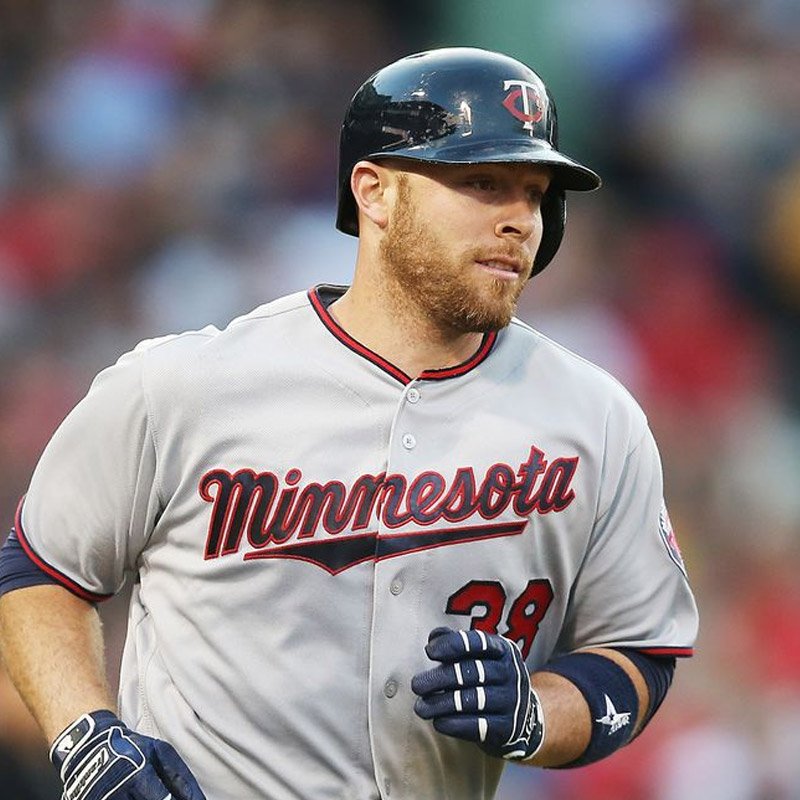 Christopher Paul Gimenez was born on December 27, 1982 in Gilroy, California. He was a 19th round pick of the Cleveland Indians in the 2004 MLB Draft. A college outfielder desperate to earn minor league playing time as a lower draft pick, Gimenez began to work all around the diamond. He played a lot of corner infield and corner outfield during his early years in the minors, adding reps as a catcher in 2006. Gimenez made his Major League debut for the Indians on June 3, 2009. Cleveland primarily used him at first base and left field during his rookie season, but he did catch eight games as well. Gimenez was designated for assignment following the 2010 season. This would become a normal occurrence for him. He spent most of his career signing minor league contracts, getting called up when that team needed a third catcher or extra bench bat, only to get DFA'd after a few weeks or months. Gimenez had three separate stints with Cleveland, two with the Texas Rangers, while also playing for the Seattle Mariners and Tampa Bay Rays. All of this came before signing a minor league contract with the Minnesota Twins ahead of the 2017 season, where Gimenez made the team out of camp. He played in a career high 74 games for Minnesota in 2017, posting a strong .350 on-base percentage while serving as the primary backup catcher for Jason Castro. Gimenez also spent a little time at first base, third base, left field, and was the Twins designated mop up reliever with six appearances on the mound. The Chicago Cubs signed Gimenez to a minor league contract for the 2018 season. He played 12 games for the Cubs, and was traded back to Minnesota for Bobby Wilson in a backup catcher swap. With the Twins, he played 13 more games and retired when the season concluded. After retiring, Gimenez spent 2019 as the Game Planning Coordinator for the Los Angeles Dodgers. He left the team after one season, and joined SiriusXM's MLB Network Radio. For the station, he currently co-hosts "Loud Outs" alongside Ryan Spilborghs, C.J. Nitkowski and Kevin Frandsen.
 -
Christopher Paul Gimenez was born on December 27, 1982 in Gilroy, California. He was a 19th round pick of the Cleveland Indians in the 2004 MLB Draft. A college outfielder desperate to earn minor league playing time as a lower draft pick, Gimenez began to work all around the diamond. He played a lot of corner infield and corner outfield during his early years in the minors, adding reps as a catcher in 2006. Gimenez made his Major League debut for the Indians on June 3, 2009. Cleveland primarily used him at first base and left field during his rookie season, but he did catch eight games as well. Gimenez was designated for assignment following the 2010 season. This would become a normal occurrence for him. He spent most of his career signing minor league contracts, getting called up when that team needed a third catcher or extra bench bat, only to get DFA'd after a few weeks or months. Gimenez had three separate stints with Cleveland, two with the Texas Rangers, while also playing for the Seattle Mariners and Tampa Bay Rays. All of this came before signing a minor league contract with the Minnesota Twins ahead of the 2017 season, where Gimenez made the team out of camp. He played in a career high 74 games for Minnesota in 2017, posting a strong .350 on-base percentage while serving as the primary backup catcher for Jason Castro. Gimenez also spent a little time at first base, third base, left field, and was the Twins designated mop up reliever with six appearances on the mound. The Chicago Cubs signed Gimenez to a minor league contract for the 2018 season. He played 12 games for the Cubs, and was traded back to Minnesota for Bobby Wilson in a backup catcher swap. With the Twins, he played 13 more games and retired when the season concluded. After retiring, Gimenez spent 2019 as the Game Planning Coordinator for the Los Angeles Dodgers. He left the team after one season, and joined SiriusXM's MLB Network Radio. For the station, he currently co-hosts "Loud Outs" alongside Ryan Spilborghs, C.J. Nitkowski and Kevin Frandsen. View full player
-
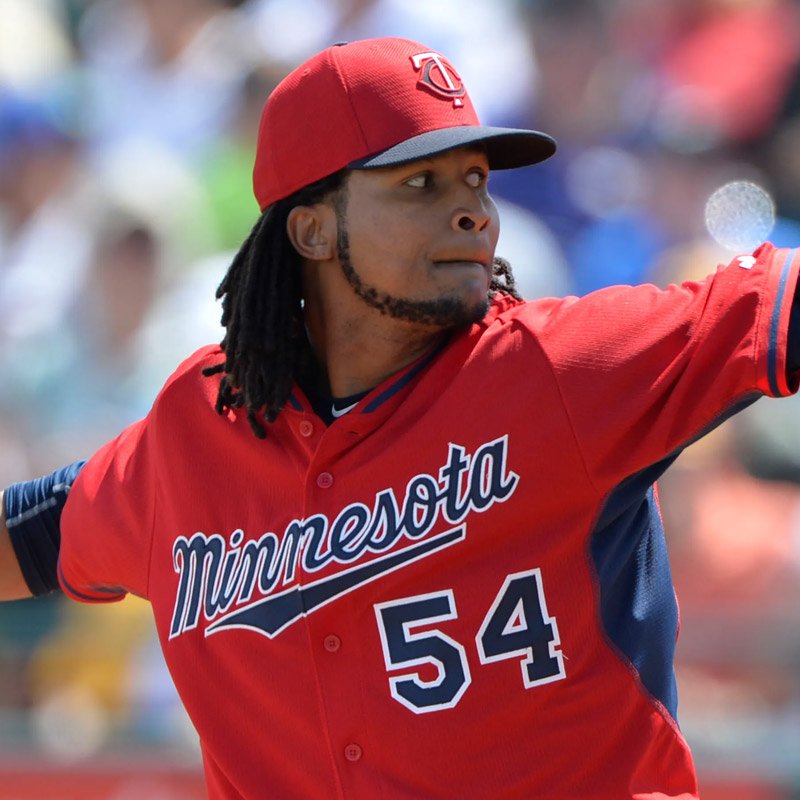 Johan Ramon Santana was born on December 12, 1982 in the Dominican Republic. He legally changed his first name to Ervin in 2003. The Anaheim Angels signed him as an amateur free agent in 2000. He made his Major League debut for them in 2005, after the franchise had changed their name to the Los Angeles Angels of Anaheim. Santana spent the first eight years of his big league career with the Angels, going 96-80 with a 4.33 ERA over 233 starts. He was an All-Star in 2008, and pitched a no-hitter in 2011. He was acquired by the Kansas City Royals in a trade on October 31, 2012. Santana had a career best 3.24 ERA in 32 starts with the Royals in 2013, and became a free agent after declining the qualifying offer. Despite having a career year in 2013, the free agent market wasn’t good to Santana. He remained unsigned as spring training began. After asking for six and seven year deals throughout the off-season, Santana fired his agent and began searching for a one year deal. A verbal agreement with the Toronto Blue Jays fell through at the last minute, and he eventually signed with the Atlanta Braves on March 12th. Santana 14-10 with a 3.95 ERA during his lone season in Atlanta. Free agency was a much smoother process for Santana the following off-season. He inked a four year deal with the Minnesota Twins in early December, but his Twins tenure got off to a rocky start when he was suspended for the first 80 games of 2015 due to a failed PED test. Santana went 7-5 with a 4.00 ERA in 17 starts during the 2015 season. He established himself as the Twins ace in 2016. His 7-11 record that season was due to poor run support on a 103 loss team, but his 3.38 ERA was good for tenth in the American League. Santana was even better in 2017, getting named an All-Star for the second time in his career. His five complete games and three shutouts both led the Majors. He was also fifth in the American League with a 3.28 ERA. The 2017 AL Wild Card Game didn’t go so well for Santana, as he allowed four runs over two innings. Somehow, this was still a better performance than Yankees starter Luis Severino. But the Yankees bullpen was better than the Twins bullpen that night, and Minnesota’s postseason run ended after just one game. Santana underwent finger surgery right before the start of spring training in 2018, delaying the start of his season for several months. He returned to the big league mound on July 25th, but was shut down after five starts as his discomfort continued. Santana became a free agent after the 2018 season. He signed a minor league contract with the Chicago White Sox that winter, and had his contract selected in early April. His 9.45 ERA with the White Sox saw him get designated for assignment after just three starts. Santana sat out the 2020 season unsigned, which was ultimately shortened to just 60 games because of the COVID-19 pandemic. He returned to the Royals organization on a minor league deal for the 2021 season, and was re-called to Major League duty on April 13th. Santana spent most of the 2021 campaign in a long relief role. He had a 4.68 ERA over 65.1 innings, which was accumulated over 36 relief appearances and two spot starts.
.thumb.png.131fdf97b843dfc7f73f4f987002a0f8.png)

