



Parker Hageman
-
Posts
4,162 -
Joined
-
Last visited
-
Days Won
6
Content Type
Profiles
Minnesota Twins News, Rumors & Analysis
Minnesota Twins Videos
2026 Minnesota Twins Top Prospect Rankings
2022 Minnesota Twins Draft Picks & Signing Bonuses
Minnesota Twins Trade & Free Agent Rumors
Minnesota Twins Fan Guides & Resources
2023 Minnesota Twins Draft Picks & Signing Bonuses
2024 Minnesota Twins Draft Picks & Signing Bonuses
2025 Minnesota Twins Draft Picks & Signing Bonuses
2026 Minnesota Twins Draft Picks & Signing Bonuses
Forums
Blogs
Events
Store
Downloads
Gallery
Everything posted by Parker Hageman
-

BREAKING: Twins Flip Granite To Rangers
Parker Hageman posted a topic in Twins Daily Front Page News
FORT MYERS, FL - The Minnesota Twins announced that they have acquired a minor-league pitcher, Xavier Moore, and cash from the Texas Rangers in exchange for outfielder, Zack Granite. The Twins made the decision to waive Granite after signing Marwin Gonzalez. Drafted in the 13th round in 2013 out of Seton Hall, the speedy Granite played six seasons in the organization, including 40 games with the Twins in 2017, where he hit .237/.321/.290 in 107 plate appearances. A shoulder contusion in spring training limited Granite's play to just 73 games in 2018. An MRI in July revealed a tear in his rotator cuff that ended his season prematurely. A few hours later the Twins made another trade, sending Moore to the Baltimore Orioles in exchange for $750,000 in international bonus money. Image courtesy of Scott Rovak-USA TODAY Sports View full article -
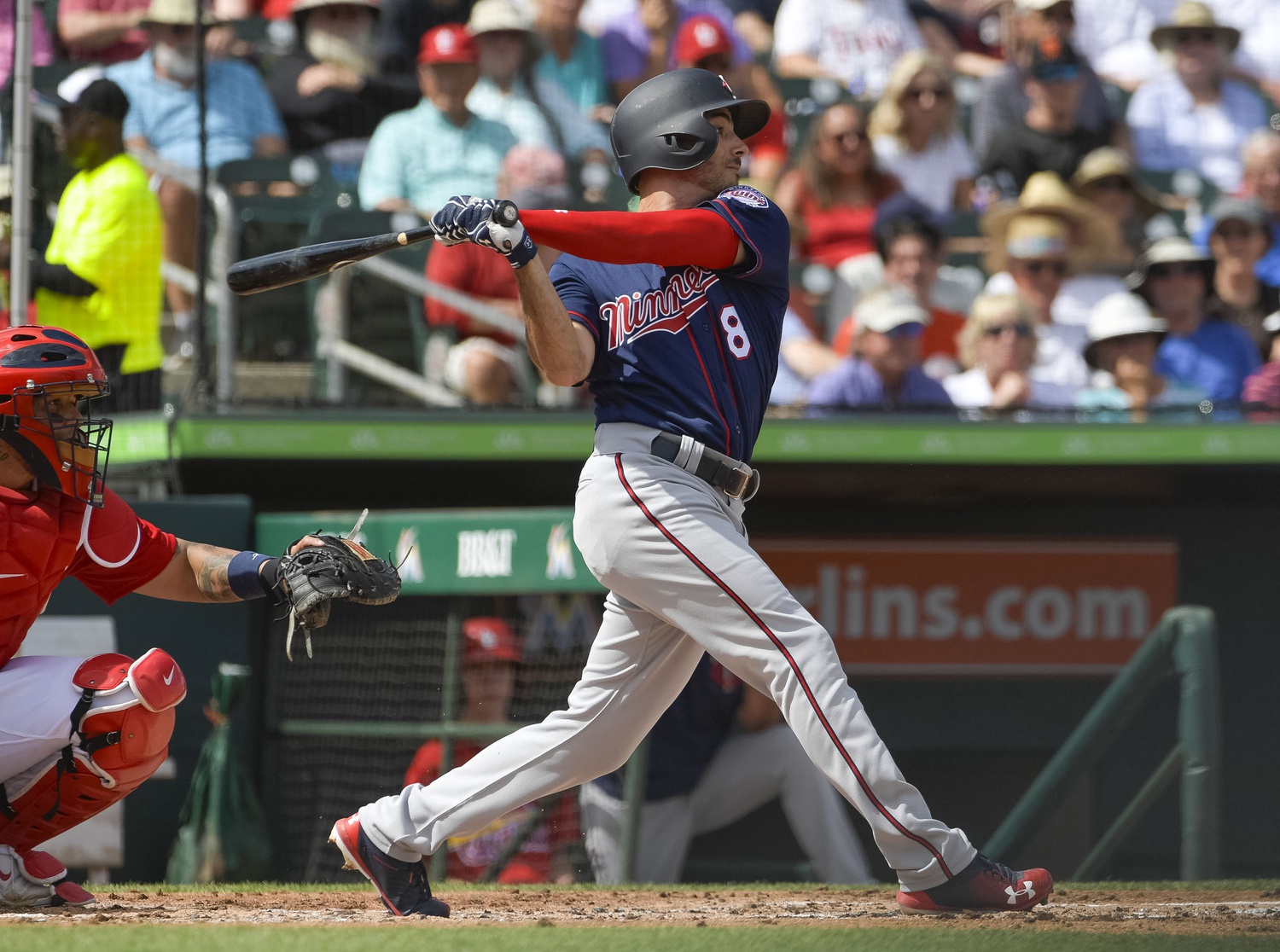 The Twins made the decision to waive Granite after signing Marwin Gonzalez. Drafted in the 13th round in 2013 out of Seton Hall, the speedy Granite played six seasons in the organization, including 40 games with the Twins in 2017, where he hit .237/.321/.290 in 107 plate appearances. A shoulder contusion in spring training limited Granite's play to just 73 games in 2018. An MRI in July revealed a tear in his rotator cuff that ended his season prematurely. A few hours later the Twins made another trade, sending Moore to the Baltimore Orioles in exchange for $750,000 in international bonus money.
-
Here's the weird thing about this narrative -- he ditched the leg kick pretty much in 2017. In 2018, he had no leg kick. https://twitter.com/ParkerHageman/status/1100950644016508928 https://twitter.com/ParkerHageman/status/900063867895762944 He did attempt to resurrect the leg kick in his stint in the minors but eventually stopped using it there too.
-
Let me just add this about Buxton's hitting coach quote: I don't know the context of the question, but to me, it reads like "who did you work with this offseason?" Like several other winters, Buxton really didn't hit with anybody. He did communicate with Torii Hunter, sending him videos on occasion, but he really didn't do anything else with any instructors or coaches. It could be bitter. I wouldn't blame him. He's been jerked around a lot by the coaching staff at all levels (with his best interest in mind, of course).
-
What To Expect From Marwin Gonzalez
Parker Hageman replied to Parker Hageman's topic in Twins Daily Front Page News
is that passive-aggressive minnesotan "interesting" or were you genuinely interested -
What To Expect From Marwin Gonzalez
Parker Hageman replied to Parker Hageman's topic in Twins Daily Front Page News
Good question. And it definitely made me pause, given how advanced the Astros are supposed to be -- do they see something that happened in 2018 that made them believe Gonzalez is expendable? If media reports are to be believed, the Astros did have conversations with Gonzalez and wanted to bring him back. With bringing in Michael Brantley, unless there were injuries (which it's baseball, sure there will be), Gonzalez likely didn't have a starting position with Houston. With the Twins, at least from what the Twins are saying, he'll basically be an everyday player. -
What To Expect From Marwin Gonzalez
Parker Hageman replied to Parker Hageman's topic in Twins Daily Front Page News
In general, that might be what happened. In order to adjust launch angles, there usually is something in the swing that changes -- perhaps the degree in which the barrel enters the zone or different contact point or whatever. Teams do have this type of minuscule data that they can review and discuss with players. Here's the thing -- if he elevates *more* those have a higher tendency of becoming extra-base hits and home runs. If he lowers his launch, he may get a few more hits in front of the defenders but then he might also have more ground balls (which with shifts are getting cut off). For my money, I think the right answer is doing what you can to get him back to whatever was working in 2017. Max Kepler had this similar problem in 2018. He hit a ton of balls in optimal launch angle/ev ranges but a lot of those stayed up in the gaps and were caught by outfielders. Interestingly enough, going back to Tango Tom's flight distance study, Kepler was a guy who outperformed his expected carry rate -- meaning more of his batted balls should have maybe died earlier. The one area of data that the public doesn't have access to is flight spin once the ball makes contact with the bat. From what I've been told, for whatever reason, there are guys who impart high spin and low spin (too much spin and the ball dies or hooks/slices, too little and the ball goes nowhere). The guys who manage to stay in the mid-range of that tend to have the ball carry the furthest -- Mookie Betts was supposedly one of these guys. It possible that Gonzalez (and Kepler) had too much spin in 2018. -
Marwin Gonzalez. Minnesota Twin. Pencil him in for any position in the field, he can play more roles than Christian Bale. As a switch-hitter, he’s his own platoon partner. Call him a Swiss Army Knife or Thneed or whatever object you want to conjure up versatility. The Twins will simply call him theirs. It was a bit of an oddity that Gonzalez lingered this long on the free agent market. Sure, there’s been the ongoing Great Free Agent Freeze-Out but still, someone who can play passable defense at positions 3 through 9 on the diamond and hold his own offensively would be a godsend for any bench -- particularly those that have their sights on a postseason berth -- at a relatively modest price would have multiple suitors. And, yet, Gonzalez was available so long that the Twins were forced to say ‘take our money’. So what is this modern-day Cesar Tovar capable of providing the Twins? Is Gonzalez likely to replicate his 2017 numbers or is his true production closer to what he’s turned in every other year? You probably can’t help but notice that Gonzalez seemingly came out of nowhere, grabbed attention during the Astros’ 2017 World Series run with a career year at age 28, and then turned in a down year in 2018 on the cusp of free agency. That’s one potential reason he was available in late February. After digging in, it appears that Gonzalez’s 2017 breakout season was really a combination of things including optimization of his swing, refining his zone approach and, perhaps, punctuated with a bit of luck. Let’s start with the swing. While he is a switch-hitter, because over 70% of his career plate appearances happened in the left-handed batter's box -- and will likely be where he receives the bulk of his at-bats going forward -- we will focus on this. Over the first 5 seasons of his career, he posted a pedestrian .256/.296/.382 from the left-side. In the last two -- which was mostly driven by his 2017 performance (we’ll get into that later) -- Gonzalez has hit .280/.362/.477. Look back at his home run totals from the left-side: 2012 - 2 2013 - 4 2014 - 6 2015 - 6 2016 - 8 2017 - 18 2018 - 11 So what happened where he finally achieved his breakout in an age-28 season? To understand his power progression, you have to understand how his swing has grown. Below is a comparison of two of Gonzalez’s left-handed swings. The one on the left is from 2015 -- you know, The Weeknd, Adele, Inside Out, Mad Max Fury Road, Obama, etc. Classic 2015. The one on the right is from 2017 -- Cardi B, Imagine Dragons, Get Out, Blade Runner 2049, Trump, etc. Standard 2017 stuff. Like those two years, Marwin Gonzalez’s swing is essentially the same but also radically different. While the components are similar, such as the big leg-kick and low hands, there are some subtle yet very important changes to his movement patterns. From a high-level perspective, it is a more connected swing. What do I mean by more connected? It simply means that the kinetic chain sequence is working as a unit rather than independent parts of the body. For example, look at the hand load portion of his swing. From the 2015 clip, you see his hands pick up the bat and bring it to the launch point. His back elbow is picking up the bat. It is drifting. In 2017, his hands, elbow, and bat remain in the same spot as he steps away, leaving the barrel ready to fire at the launch point. Another way to explain what is happening is by using your index finger and thumb, curl your finger back toward your thumb — without touching the two fingers — and flick forward. Now do the same thing but put your index finger on your thumb, feel that tension for a second and then flick. Much more potent, right? That’s the difference between these two movements. This was something that Eduardo Escobar changed during his career with the Twins which helped provide more power but also gave him more time to identify pitches. By staying taut and stretching rather than moving to a spot, it gives the hitter extra fractions of milliseconds to identify a pitch. A rolling start, like his 2015 swing, can also be more difficult to shut a swing down. For Gonzalez, the change helped him ID breaking balls sooner. He went from swinging at breaking balls at a 46% clip in his first 5 seasons to offering at them at a 35% clip since 2017. His chase rate also dropped from 34% to 21%. But that was not his only improvement in discipline. Gonzalez’s overall chase rate from the left-side went from 40% and 35% in 2015 and 2016, respectively, to 26% in 2017 and 27% in 2018. Part of the transformation came from the Astros showing the players charts of their weaknesses and creating development strategies to turn them into strengths. Curveballs, from both sides of the plate, were one of Gonzalez’s biggest weaknesses. To be fair, the Houston Astros are light years ahead of most MLB teams and one thing they excel at is pregame prep. Take a listen to how well they prepare for opposing teams using Statcast data. Furthermore, Gonzalez credits working with and interacting with teammates like Jose Altuve, Carlos Correa and Carlos Beltran as factors behind his approach adjustment. Undoubtedly, this likely influenced Gonzalez’s improvements versus breaking balls as much as his swing tweak did. As an import from the Astros organization, this is an ancillary benefit for having signed Gonzalez. Gonzalez’s career has spanned the great shift in Houston, going from the laughingstock to one of the elite and respected organizations. He knows the way the analytic-heavy Astros prepared for games and how valuable it was to share ideas with teammates. In order to use the Statcast data to a lineup’s advantage, it requires buy-in from the players. Gonzalez has been through this rodeo and could potentially assist in getting the Twins players up to speed. The next clip is the power sauce. This is where the two swings really diverge. Watch how in 2015 the barrel and his hands come forward whereas in the 2017 clip the barrel is staying back behind him. It’s pushing versus turning the barrel. What happens now, Gonzalez is extending the time the barrel stays in the zone. Gonzalez’s swing stays on plane with the pitch slightly longer, allowing him to handle a greater variation in speed. It also provides a different attack approach. The 2015 version enters the zone steep, which can lead to cutting or chopping contact — in short, less optimal contact. In 2017, with a barrel that is on plane sooner, he’s getting more lift as his ground ball rate dropped from 52% to 46% (his average fly ball distance also increased from 277 feet to 303 feet). That was the catalyst of his 2017 breakout. A season where he finished hitting a robust .322/.394/.552 from the left side, lifting him to career-best numbers. Of course, those same numbers from the left side plummeted back to earth in 2018. He posted a mundane .237/.330/.399 from the port (which was much closer to his left-handed career slash of .252/.304/.386 when removing the 2017 production). It raises the question if his adjustments were so good that it led to a breakout season in 2017, why did it regress so heavily in 2018? “Know what the difference between hitting .250 and .300 is? It's 25 hits. 25 hits in 500 at-bats is 50 points, okay? There's 6 months in a season, that's about 25 weeks. That means if you get just one extra flare a week - just one - a gorp... you get a groundball, you get a groundball with eyes... you get a dying quail, just one more dying quail a week... and you're in Yankee Stadium.” - Crash Davis, Bull Durham While the changes to his swing have led to an improved approach and more consistent contact, the baseball gods seemingly looked the other way in 2018 after showering him with good fortune in 2017. His average exit velocity dropped to his normal levels. After posting a 92.1 mph exit velocity in 2017, it receded back to 90 mph in 2018. The second data point that changed is his average launch angle increased from 9 degrees to 14 degrees. Most may consider an increase in launch angle a good thing but for Gonzalez, it led to more batted ball outs -- specifically in the line drive category. Per ESPN/TruMedia’s data, in 2017, Gonzalez had a .794 batting average on line drives as a lefty. Coincidentally, only Logan Morrison (.805) had a better average. The rest of the league’s left-handed constituency sat at .687. So Gonzalez was performing well above the norm which may have been an indication to expect regression. Last year that number dropped to .613. Part of the reason for this is that his line drives carried a bit further than his previous season. In 2017 his average liner went 257 feet on average but was at 268 feet in 2018, meaning fewer liners dropped in front of the outfielders and infielders. Hitting the ball hard on a line is obviously preferential, however there are some diminishing returns when more liners become midrange instead of short or long. The venerable Tango Tom, MLBAM’s senior data architect, dropped some wet hot charty data on us this weekend, showing how exit velocity and launch angle affects the distance of a batted ball. A ball struck at a 15-degree launch and a 97 mph exit velo would travel on average 271 feet. This was Gonzalez’s average line drive metrics in 2017. He actually averaged a distance of 257 feet on those balls. Meanwhile, one that has a 17-degree launch and hit at 95 mph would travel 281 feet. In reality, Gonzalez’s liners traveled 268 feet in 2018. Take a look at how that visually played out. There were many more balls falling in front of the outfielder and over or between the infielders. Since 2009, line drives that traveled between 200 and 250 feet (which is where the bulk of Gonzalez’s landed in 2017) became hits at a 96.2% clip. Line drives traveling over 250 and under 300 feet, however, only became hits at a 70.3% clip. That extra 11 feet cost Gonzalez a bunch of hits. Likewise, Gonzalez experienced a decline in his ground ball average as well. In 2017 he held a .281 average on ground balls, 12th highest among left-handed hitters and well above the .243 average. In 2018, that average dropped to .182, 64th among left-handed hitters. To be clear, grounders are just long bunts however even the most ardent launch angle supporter still hits ground balls in 30% of their batted ball profile mix. Grounders need to sneak through the infield in order to continue to post robust numbers. What does this mean for the Twins and Marwin Gonzalez going forward? Obviously, you can’t just say Marwin, hit it a bit softer with some topspin occasionally. Hitting doesn’t work that way. That said, Tango Tom’s Twitter thread alluded to that particular study potentially being critical in understanding how attack angle plays a role in the output. There are players who outperform that expected batted ball travel distance and most of those players with the added carry have lower launch angles (Tango cited Lorenzo Cain versus Joey Gallo as contrasting examples). The Twins brain trust may be able to back into an attack angle study with Gonzalez. It may be that his swing in 2018 had some change that can be tweaked back through some spring drills. Again, Gonzalez’s greatest asset is his versatility, not necessarily his bat. Tweaks or no tweaks heading in 2019, if Gonzalez continues to hit the ball as hard as he has done since 2017, from either side of the plate, while playing wherever he is needed in the field, the Twins should wind up with more than enough value. Image courtesy of Thomas Shea - USA Today View full article
-
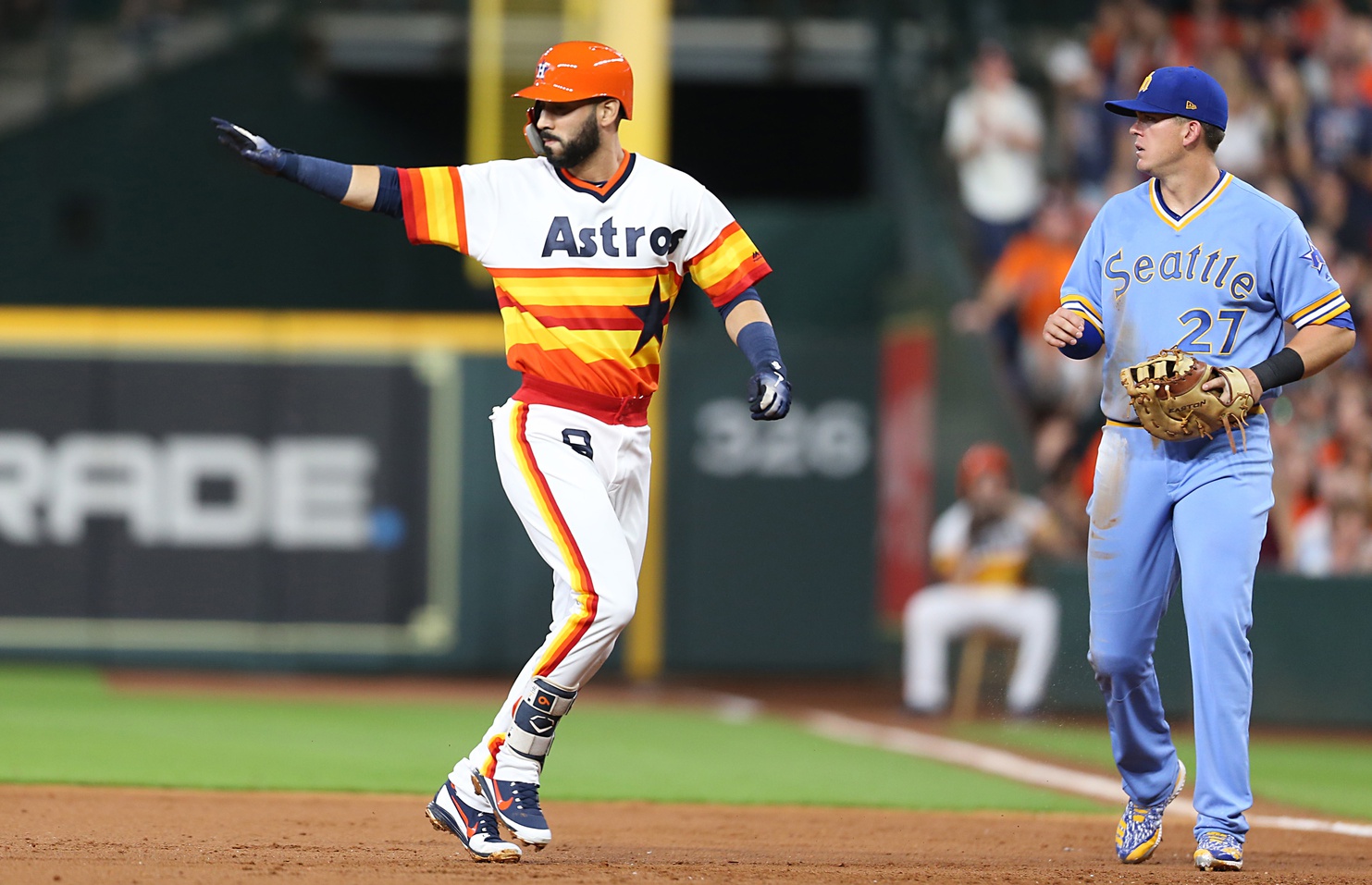 You probably can’t help but notice that Gonzalez seemingly came out of nowhere, grabbed attention during the Astros’ 2017 World Series run with a career year at age 28, and then turned in a down year in 2018 on the cusp of free agency. That’s one potential reason he was available in late February. After digging in, it appears that Gonzalez’s 2017 breakout season was really a combination of things including optimization of his swing, refining his zone approach and, perhaps, punctuated with a bit of luck. Let’s start with the swing. While he is a switch-hitter, because over 70% of his career plate appearances happened in the left-handed batter's box -- and will likely be where he receives the bulk of his at-bats going forward -- we will focus on this. Over the first 5 seasons of his career, he posted a pedestrian .256/.296/.382 from the left-side. In the last two -- which was mostly driven by his 2017 performance (we’ll get into that later) -- Gonzalez has hit .280/.362/.477. Look back at his home run totals from the left-side: 2012 - 2 2013 - 4 2014 - 6 2015 - 6 2016 - 8 2017 - 18 2018 - 11 So what happened where he finally achieved his breakout in an age-28 season? To understand his power progression, you have to understand how his swing has grown. Below is a comparison of two of Gonzalez’s left-handed swings. The one on the left is from 2015 -- you know, The Weeknd, Adele, Inside Out, Mad Max Fury Road, Obama, etc. Classic 2015. The one on the right is from 2017 -- Cardi B, Imagine Dragons, Get Out, Blade Runner 2049, Trump, etc. Standard 2017 stuff. Like those two years, Marwin Gonzalez’s swing is essentially the same but also radically different. While the components are similar, such as the big leg-kick and low hands, there are some subtle yet very important changes to his movement patterns. From a high-level perspective, it is a more connected swing. What do I mean by more connected? It simply means that the kinetic chain sequence is working as a unit rather than independent parts of the body. For example, look at the hand load portion of his swing. From the 2015 clip, you see his hands pick up the bat and bring it to the launch point. His back elbow is picking up the bat. It is drifting. In 2017, his hands, elbow, and bat remain in the same spot as he steps away, leaving the barrel ready to fire at the launch point. Another way to explain what is happening is by using your index finger and thumb, curl your finger back toward your thumb — without touching the two fingers — and flick forward. Now do the same thing but put your index finger on your thumb, feel that tension for a second and then flick. Much more potent, right? That’s the difference between these two movements. This was something that Eduardo Escobar changed during his career with the Twins which helped provide more power but also gave him more time to identify pitches. By staying taut and stretching rather than moving to a spot, it gives the hitter extra fractions of milliseconds to identify a pitch. A rolling start, like his 2015 swing, can also be more difficult to shut a swing down. For Gonzalez, the change helped him ID breaking balls sooner. He went from swinging at breaking balls at a 46% clip in his first 5 seasons to offering at them at a 35% clip since 2017. His chase rate also dropped from 34% to 21%. But that was not his only improvement in discipline. Gonzalez’s overall chase rate from the left-side went from 40% and 35% in 2015 and 2016, respectively, to 26% in 2017 and 27% in 2018. Part of the transformation came from the Astros showing the players charts of their weaknesses and creating development strategies to turn them into strengths. Curveballs, from both sides of the plate, were one of Gonzalez’s biggest weaknesses. To be fair, the Houston Astros are light years ahead of most MLB teams and one thing they excel at is pregame prep. Take a listen to how well they prepare for opposing teams using Statcast data. Furthermore, Gonzalez credits working with and interacting with teammates like Jose Altuve, Carlos Correa and Carlos Beltran as factors behind his approach adjustment. Undoubtedly, this likely influenced Gonzalez’s improvements versus breaking balls as much as his swing tweak did. As an import from the Astros organization, this is an ancillary benefit for having signed Gonzalez. Gonzalez’s career has spanned the great shift in Houston, going from the laughingstock to one of the elite and respected organizations. He knows the way the analytic-heavy Astros prepared for games and how valuable it was to share ideas with teammates. In order to use the Statcast data to a lineup’s advantage, it requires buy-in from the players. Gonzalez has been through this rodeo and could potentially assist in getting the Twins players up to speed. The next clip is the power sauce. This is where the two swings really diverge. Watch how in 2015 the barrel and his hands come forward whereas in the 2017 clip the barrel is staying back behind him. It’s pushing versus turning the barrel. What happens now, Gonzalez is extending the time the barrel stays in the zone. Gonzalez’s swing stays on plane with the pitch slightly longer, allowing him to handle a greater variation in speed. It also provides a different attack approach. The 2015 version enters the zone steep, which can lead to cutting or chopping contact — in short, less optimal contact. In 2017, with a barrel that is on plane sooner, he’s getting more lift as his ground ball rate dropped from 52% to 46% (his average fly ball distance also increased from 277 feet to 303 feet). That was the catalyst of his 2017 breakout. A season where he finished hitting a robust .322/.394/.552 from the left side, lifting him to career-best numbers. Of course, those same numbers from the left side plummeted back to earth in 2018. He posted a mundane .237/.330/.399 from the port (which was much closer to his left-handed career slash of .252/.304/.386 when removing the 2017 production). It raises the question if his adjustments were so good that it led to a breakout season in 2017, why did it regress so heavily in 2018? “Know what the difference between hitting .250 and .300 is? It's 25 hits. 25 hits in 500 at-bats is 50 points, okay? There's 6 months in a season, that's about 25 weeks. That means if you get just one extra flare a week - just one - a gorp... you get a groundball, you get a groundball with eyes... you get a dying quail, just one more dying quail a week... and you're in Yankee Stadium.” - Crash Davis, Bull Durham While the changes to his swing have led to an improved approach and more consistent contact, the baseball gods seemingly looked the other way in 2018 after showering him with good fortune in 2017. His average exit velocity dropped to his normal levels. After posting a 92.1 mph exit velocity in 2017, it receded back to 90 mph in 2018. The second data point that changed is his average launch angle increased from 9 degrees to 14 degrees. Most may consider an increase in launch angle a good thing but for Gonzalez, it led to more batted ball outs -- specifically in the line drive category. Per ESPN/TruMedia’s data, in 2017, Gonzalez had a .794 batting average on line drives as a lefty. Coincidentally, only Logan Morrison (.805) had a better average. The rest of the league’s left-handed constituency sat at .687. So Gonzalez was performing well above the norm which may have been an indication to expect regression. Last year that number dropped to .613. Part of the reason for this is that his line drives carried a bit further than his previous season. In 2017 his average liner went 257 feet on average but was at 268 feet in 2018, meaning fewer liners dropped in front of the outfielders and infielders. Hitting the ball hard on a line is obviously preferential, however there are some diminishing returns when more liners become midrange instead of short or long. The venerable Tango Tom, MLBAM’s senior data architect, dropped some wet hot charty data on us this weekend, showing how exit velocity and launch angle affects the distance of a batted ball. A ball struck at a 15-degree launch and a 97 mph exit velo would travel on average 271 feet. This was Gonzalez’s average line drive metrics in 2017. He actually averaged a distance of 257 feet on those balls. Meanwhile, one that has a 17-degree launch and hit at 95 mph would travel 281 feet. In reality, Gonzalez’s liners traveled 268 feet in 2018. Take a look at how that visually played out. There were many more balls falling in front of the outfielder and over or between the infielders. Since 2009, line drives that traveled between 200 and 250 feet (which is where the bulk of Gonzalez’s landed in 2017) became hits at a 96.2% clip. Line drives traveling over 250 and under 300 feet, however, only became hits at a 70.3% clip. That extra 11 feet cost Gonzalez a bunch of hits. Likewise, Gonzalez experienced a decline in his ground ball average as well. In 2017 he held a .281 average on ground balls, 12th highest among left-handed hitters and well above the .243 average. In 2018, that average dropped to .182, 64th among left-handed hitters. To be clear, grounders are just long bunts however even the most ardent launch angle supporter still hits ground balls in 30% of their batted ball profile mix. Grounders need to sneak through the infield in order to continue to post robust numbers. What does this mean for the Twins and Marwin Gonzalez going forward? Obviously, you can’t just say Marwin, hit it a bit softer with some topspin occasionally. Hitting doesn’t work that way. That said, Tango Tom’s Twitter thread alluded to that particular study potentially being critical in understanding how attack angle plays a role in the output. There are players who outperform that expected batted ball travel distance and most of those players with the added carry have lower launch angles (Tango cited Lorenzo Cain versus Joey Gallo as contrasting examples). The Twins brain trust may be able to back into an attack angle study with Gonzalez. It may be that his swing in 2018 had some change that can be tweaked back through some spring drills. Again, Gonzalez’s greatest asset is his versatility, not necessarily his bat. Tweaks or no tweaks heading in 2019, if Gonzalez continues to hit the ball as hard as he has done since 2017, from either side of the plate, while playing wherever he is needed in the field, the Twins should wind up with more than enough value.
-
Randball's Stu, Oracle of Twins Daily.
-
We played Busch in our sections his senior year. Another assistant coach on our team had coached him for several years prior to joining our staff. Raved about his attitude. Busch had fractured an arm or leg or something during the hockey season and was playing at like 70% capacity. He still looked smooth at shortstop. He lead off and walked twice and scored both. I remember thinking his baseball IQ on the bases was outstanding. Saw him playing for the Rox after his freshman year at UNC and he hit a bomb. He has filled out a bunch.
-
It would be interesting to find out if Hildenberger has done anything to combat the possible pitch tipping. http://twinsdaily.com/articles.html/_/minnesota-twins-news/minnesota-twins/trevor-hildenberger-and-tipping-pitches-r7123
-
At least Berrios had fun.
-
Both pitches are on the outer-third. In the first, the armsy swing, he pulls the ball. In the second, the more connected swing, he drives it the other way. Contrary to the last sentence, he is not "throwing his hands" or "trusting his wrists" in the more recent iteration. That was what he was doing previously which zapped his power potential. It was all disconnected. In both cases, the hands get to the same launch point. They start lower in the newer model but go back to the same spot to fire. Two things to focus on in this swing pattern: (1) Both of these pitches are on the outer-third (fastballs). In the one on the left, he reaches with his hands (the armsy/wristy swing). In the one from last year, his hands go in, connected to his body. (2) Watch his THICC lower body work in the later one. He squats a bit before he launches his swing. He's generating power from the ground up. In the example on the left, the hands/arms are almost disconnected from the upper half when he goes to load and fire. That makes it a more armsy swing. You can see that in his BP swings with the Phillies.
-
Back when the Twins first signed him in November 2017, I noted that Astudillo made some changes to his swing in the minors before having a career year in the Braves org. While he doesn't have a big leg kick or obvious power generator, he now has a fully connected swing whereas his top and lower half acted more independently in his previous swing. https://twitter.com/ParkerHageman/status/1015262501087399936 It's a more connected kinetic chain. I liken it to something that Bruce Lee talked about in his one-inch punch -- working the power from the ground up in the proper sequence -- and you can generate a ton of power in a small space.
-
Most guys in spring are making this type of contact the first time they face live pitching... Obviously Astudillo has the advantage of having played winter ball up until two weeks ago so he is probably further ahead than most of his teammates.
- 44 replies
-
- 12
-

-
In 2007, my (now) wife and I spent a long weekend in Fort Myers (it was the first time for both of us). The plan was to take in a game at Hammond, a night on Ft Myers Beach, and then spend two nights out on Captiva (someone told us the island was low key with a fun bar called The Mucky Duck). The baseball experience sold me but my wife loved Captiva so much that when we (finally) got married, we had it on the beach at 'Tween Waters Inn. I cannot recommend enough to at least visit the area once in your life.
-
Miller: Twins Install Technology at Spring Training
Parker Hageman replied to Seth Stohs's topic in Minnesota Twins Talk
Here's a good shot from Trevor May's curveball that shows the level of detail the Edgertronic camera captures: Now you can take these samples and pair them with the Rapsodo 2.0 data (the device that's halfway to home plate) and figure out if this grip and release are getting May the optimal spin or spin direction. Just going off MLB's data (not Rapsodo), May's curveball actually profiles very closely to Houston's Collin McHugh's curveball (in terms of spin direction, break angle and break length). McHugh's curveball has a higher spin rate which may explain why he gets some many more swing-and-misses than May's curve (28% vs 13%) but minor tweaks to the grip/release can help gain a few more RPMs. -
Miller: Twins Install Technology at Spring Training
Parker Hageman replied to Seth Stohs's topic in Minnesota Twins Talk
The Twins acquired one Rapsodo device in 2017 after signing Craig Breslow, who used it during the offseason to try to improve his pitches. I was told it was purely coincidentally but the clubhouse guys said Breslow was very vocal about using that info. That spring the Twins set up on one of the backfields and the way Jack Goin described it to me at that time was that they were "testing" it. From my recollection, it sounded more uncertain of the tool's use. Last season it was installed pretty much in every bullpen in their minor league system. Now it's paired with the Edgertronic camera and they have the Rapsodo 2.0 device in the big league pen. Almost every team has both devices now. The critical part is being able to use the data, to be able to take that and feed it to players in a useful manner. The Tigers are one organization who were severely behind the analytics curve -- starting a department just a year ago, really -- but they have both machines and are using them now. Listen to Gardy here: The teams that have the coaching infrastructure in place to communicate the necessary adjustments will be the beneficiaries of this product. Wes Johnson is a huge proponent of the technology and has used it in his college days. More importantly, players rave about his delivery. He's not spouting numbers. He's presenting the information in a way pitchers can relate. This could be a separator for the Twins. -
Ryan did blow out his arm years before retirement and used literal snake oil to keep his arm healthy, but also let's not cherrypick an outlier like Ryan who had an abnormally long career (and played through injuries). Here's the thing: I think people mistake big lower half movements (like Ryan's leg kick) as being a huge factor in absorbing something that takes pressure off the arm. The ol' Bert Blyleven "PUSHING that back leg OFF the rubber" or driving from the back leg. More recent studies involving more high tech equipment have found that the front leg and hip rotation play a bigger role in creating velocity and taking pressure off of the arm. So while Ryan had those big movements. he also had excellent hip rotation. Graterol is using his lower half fairly well. It's not as pronounced as someone like Ryan but he leads with that front hip, creating a drift forward and then fires his rear hip well over his front. Bottom line, us mortals are not going to be able to derive any stress in Gratarol's mechanics -- that's going to need to be done via the available tech the Twins and other outlets have. If that shows added pressure, they will likely try to get him to make some changes.
-
I'm curious about the metadata on Graterol's slider. From that outing in Ft Myers, he rarely got a swing-and-miss off his slider but it did get plenty of awkward contact and it set up some other pitches nicely, Check out this strikeout sequence (SL in-2S out):
-
A lot of people who look at Graterol's mechanics like to suggest he's not using his legs or lower half, putting stress on his arm. I submit he uses his hips extremely well. if you watch his back hip, watch as it fires forward on the firm front side. That's where the power comes from. -- the lightning-quick rotation. In regards to Nick's comment about movement, I present Graterol's two-seam movement. [Source] What makes this pitch so sexy, besides that movement that resists running to the left-handed batter's box, is that it was set-up by two previous sliders away. Out of his hand, the pitch looks like it's going to be another on the outer-half and then redirects back to the inner third.
-
There's no doubt that Romero could be special. As I mentioned, his fastballs are definitely plus pitches. Unlike Berrios however, who had a plus-plus curveball, Romero has a very good slider at times and an even more sporadic changeup (he leaves it up in the zone too much as well which would definitely be another candidate of the pitch design treatment). And Berrios' 4-seam/curveball combination tunnel much better off each other than Romero's slider does with his fastballs. Minor tweaks can make it much more of a devastating pitch. Development-wise, however, Berrios had been stretch out much more than Romero has been (part of it because of the injuries). So to build him up into a traditional starter might take more prolonged time in Rochester to develop a third pitch. It's certainly something the front office is weighing right now -- whether to go forward with Romero as is in a reduced capacity to maximize what he can contribute now or try to push him to the traditional starters role while working on it in Rochester. Whatever his role is, in my opinion, crafting that slider into the best possible pitch will only serve his best interest.
-
It’s January so, like most of the of the young and inexperienced pitchers, Fernando Romero’s future role with the Minnesota Twins is up in the air. What we do know is that with the signing of Martin Perez, the traditional starting rotation is currently full. There is the possibility that Romero emerges as a primary pitcher -- the guy who follows the opener. There’s also a chance he lands as a late-innings power arm. It could be in Minnesota. Or it could be in Rochester. The Twins acknowledged that Romero is currently a two-pitch pitcher. Technically, he has three types of fastballs (but two movement patterns), a promising slider, and a developing change-up but, functionally, he has a fastball and a slider. Because of this, the front office believes he is better served coming out of the bullpen (or at least in a role that limits his times through the order). Foundationally, Romero’s fastballs are solid for any pitching role. The mid-90s-plus 4-seam fastball can be elevated while his 2-seam and 1-seam fastballs burrow down-and-in to right-handed hitters. From a pitch sequencing standpoint, this is something to build upon. In the most basic sense, depending on the shape of a pitcher’s breaking pitch, when you have an elevated fastball, it would be best to have a curveball that can tunnel with it before descending out of the path. Likewise, if you have a running sinker, you would like to pair it more with a slider running the other direction, similar to how Kyle Gibson tunnels his. Ideally, a pitcher would have a variety of pitches moving in different directions to keep hitters defending the entire zone but a pair of complementary pitches can carve opponents up. After all, Glen Perkins had an impressive run as the Twins’ closer with a two-pitch repertoire. So what is the shape of Romero’s slider? The greasy techie data says that it is one that has 8.2 inches of break length from release to the plate, which is average from a right-handed pitcher, and a below average break angle of -2.9. The break angle essentially means which direction and how much the pitch is running. A break angle of 0 means the pitch follows a straight path from the release point to the target with no movement in any direction. If the break angle is positive, it means it is moving toward a right-handed hitter. Negative, toward a lefty. Romero’s -2.9 break angle means it has some movement toward left-handed hitters while the average right-hander’s slider has a break angle of -8.1. (To give a better picture of what break angle means, you can compare Fernando Romero’s -2.9 break angle slider with the new Yankee Adam Ottavino’s frisbee slider with a -21.5 break angle slider who is on the opposite end of the slider movement spectrum.) So that is the essence of his best secondary pitch. It’s thrown fairly hard (the average slider is thrown at 84 mph and his clocks in at 87), moves slightly away from right-handed hitters, and has about league-average break. Before coming to the big club, Paul Molitor described Romero’s slider as “inconsistent”, which is exactly how it played for the Twins. On occasion, Romero would spin a nasty hoochie woochie but on others, it would back up and sit on a platter for a lucky batter. While Romero’s 36 percent miss rate on the slider is above average (and actually higher than that of the oft-celebrated Ottavino), opponents posted a .723 OPS and an 88 mph exit velocity (higher than the MLB slider average of 85.8 mph) off of it. It is a small sampling, to be sure, but one can look at these numbers as an affirmation of what Molitor suggested. One reason for the middling production was simply location. If you divided the zone in half across the middle, separating upper and lower quadrants, his slider landed in the upper quadrant 40.1 percent of the time (significantly higher than the 25 percent league average). The good news is that hitters did not completely decimate sliders left up - but they didn’t swing through them either (just a 5% swinging strike rate up compared to a 25% one when he kept it down). The location cost him some strikeouts, leaving the ball spinning up in two-strike counts where an otherwise well-executed slider would have been a kill shot. In terms of sequencing, Romero’s slider has actually played well off of the 4-seam fastball, enticing a miss rate of 40 percent and a 39 percent chase rate out of the zone in a fastball-slider pairing. On the other hand, opponents may be able to tell the difference between his slider and sinker as they have a 33 percent miss rate and just a 15 percent chase rate on his slider after being set up by his sinker. If Romero does nothing to tweak his slider heading into the 2019 season, at the very least he should be pairing it more frequently off his fastball. Here is where the new-look, data savvy, tech-reliant Twins organization might be able to optimize Fernando Romero’s stuff. It would seem that Romero is a prime candidate to receive the pitch design treatment — a retooling of his pitches guided by Rapsodo technology and high-speed Edgertronic cameras. Championed by Driveline Baseball, the baseball training company has found some best practices that can identify issues and improve a pitch’s performance based on certain modifications. Before pitch design technology became available, the previous best method to improve this was to have a pitching coach observe bullpens, giving the pitcher cues and provide affirmation when the ball seems to react differently. Then they hope that a player carries whatever feel they had during the pen into the game. Between the diagnostic process and communicating what the problem and solution might be, there could be a long trial-and-error period. Now, however, armed with the new tools, a pitcher and the player development team can isolate the issue, diagnose it and set forth a plan to correct it. The first issue for Romero is consistency, which seems to track back to the moment the pitch leaves his hand. When he releases the slider, it may be that he is letting go too early or with different hand tilts. As researchers at Driveline have demonstrated, even the smallest minutiae such as fingertip contact points can wildly change the spin and flight path. Admittedly, without the high-speed cameras, it is difficult to properly diagnose the issue but from the limited slow-motion release clips, we can see where Romero’s slider needs work. Here is an example of how the slider comes out of Romero’s hand. Romero’s thumb is tucked and his fingers are wrapped around the bottom of the baseball. At this juncture, the thumb is making very minimal contact while his index and middle fingertips are applying pressure. Then he snaps across. On average, he imparts 2,431 rpm worth of spin on his slider, which is about the league average spin rate for right-handed sliders (2,413). Now compare that to Justin Verlander’s slider grip and release (image courtesy of Pitching Ninja) -- the one that Verlander reportedly improved upon while using the Astros’ bevy of Edgertronic cameras to isolate his release point. Notice how his fingers wrap the side with more contact points on his fingers. His release motion also comes down diagonally through the ball. The results were two more inches of run than Romero’s slider as well as 200 more rpms of spin (2,684 average). The added rpms is important because each increase of 100 or more translates into more swing and misses. Of course, not everyone has the same release or arm path. Verlander’s 6-5 frame and over-the-top delivery might preclude Romero from copying his style. Romero’s slider release almost mimics that of Marcus Stroman, whose pitch was the basis for Trevor Bauer’s recent slider rebuild (which is now superb). This may be a template for Romero to unleash hell on an improved pitch. Like Verlander’s, Stroman’s slider grip is held deeper in the hand, which can account for more spin. Stroman’s release has his hand placement similar to Romero’s (underneath rather than like Verlander’s wrapping the side) but unlike Romero’s, Stroman has more contact with the baseball, most noticeably with his thumb (Stroman’s is flush whereas Romero’s makes contact on the side of his). The action differs slightly too as Romero pulls across while Stroman’s hand pulls down. To be fair, Romero’s slider numbers actually outperformed Stroman’s in 2018, with a higher swinging strike percentage, but Stroman’s numbers took a step back on the pitch this last season where he had previously had a swinging strike rate of 21 percent and a chase rate of 41 percent (with 17 and 33 being league average on the pitch). That said, Stroman’s metrics exceed those of Romero, with a 12-inch break and a 2,654 rpm spin rate. If Romero can emulate this pitch consistently, it will give him a significantly improved weapon and be a cornerstone swing-and-miss pitch vital for late innings relief. At the very least, tweaking his slider to give it more consistent depth and tilt could help create a monster in the bullpen. What’s more, if he reinvents his slider and maintains the more cutter-ish version, he might have the necessary three-pitch mix to be a force in the rotation. The Twins have built a player development infrastructure -- both the best tech and the best minds — to address this very issue. Now we will get to see it in action. Exciting times. Image courtesy of Brad Rempel-USA TODAY Sports View full article
-
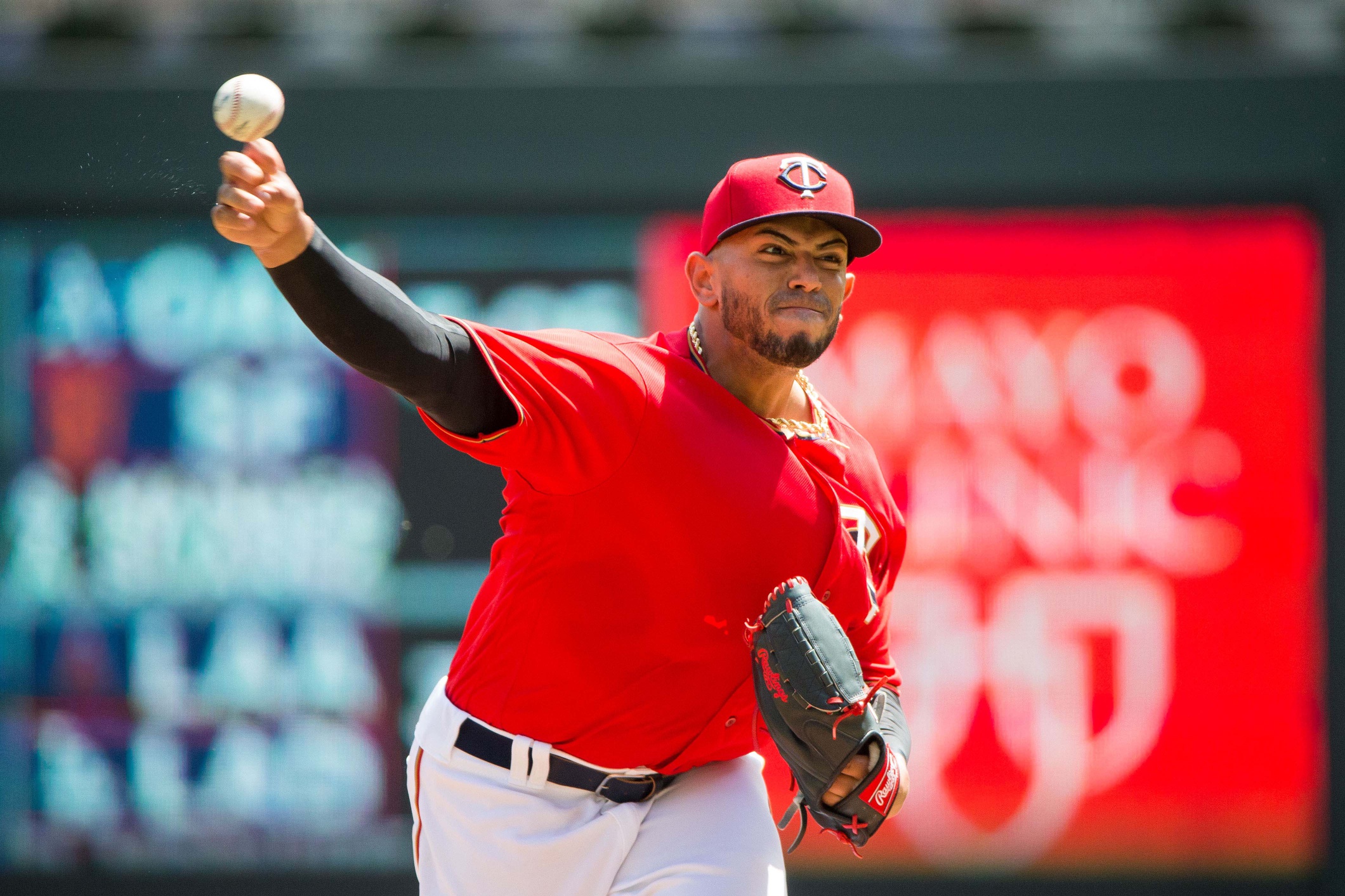 The Twins acknowledged that Romero is currently a two-pitch pitcher. Technically, he has three types of fastballs (but two movement patterns), a promising slider, and a developing change-up but, functionally, he has a fastball and a slider. Because of this, the front office believes he is better served coming out of the bullpen (or at least in a role that limits his times through the order). Foundationally, Romero’s fastballs are solid for any pitching role. The mid-90s-plus 4-seam fastball can be elevated while his 2-seam and 1-seam fastballs burrow down-and-in to right-handed hitters. From a pitch sequencing standpoint, this is something to build upon. In the most basic sense, depending on the shape of a pitcher’s breaking pitch, when you have an elevated fastball, it would be best to have a curveball that can tunnel with it before descending out of the path. Likewise, if you have a running sinker, you would like to pair it more with a slider running the other direction, similar to how Kyle Gibson tunnels his. Ideally, a pitcher would have a variety of pitches moving in different directions to keep hitters defending the entire zone but a pair of complementary pitches can carve opponents up. After all, Glen Perkins had an impressive run as the Twins’ closer with a two-pitch repertoire. So what is the shape of Romero’s slider? The greasy techie data says that it is one that has 8.2 inches of break length from release to the plate, which is average from a right-handed pitcher, and a below average break angle of -2.9. The break angle essentially means which direction and how much the pitch is running. A break angle of 0 means the pitch follows a straight path from the release point to the target with no movement in any direction. If the break angle is positive, it means it is moving toward a right-handed hitter. Negative, toward a lefty. Romero’s -2.9 break angle means it has some movement toward left-handed hitters while the average right-hander’s slider has a break angle of -8.1. (To give a better picture of what break angle means, you can compare Fernando Romero’s -2.9 break angle slider with the new Yankee Adam Ottavino’s frisbee slider with a -21.5 break angle slider who is on the opposite end of the slider movement spectrum.) So that is the essence of his best secondary pitch. It’s thrown fairly hard (the average slider is thrown at 84 mph and his clocks in at 87), moves slightly away from right-handed hitters, and has about league-average break. Before coming to the big club, Paul Molitor described Romero’s slider as “inconsistent”, which is exactly how it played for the Twins. On occasion, Romero would spin a nasty hoochie woochie but on others, it would back up and sit on a platter for a lucky batter. While Romero’s 36 percent miss rate on the slider is above average (and actually higher than that of the oft-celebrated Ottavino), opponents posted a .723 OPS and an 88 mph exit velocity (higher than the MLB slider average of 85.8 mph) off of it. It is a small sampling, to be sure, but one can look at these numbers as an affirmation of what Molitor suggested. One reason for the middling production was simply location. If you divided the zone in half across the middle, separating upper and lower quadrants, his slider landed in the upper quadrant 40.1 percent of the time (significantly higher than the 25 percent league average). The good news is that hitters did not completely decimate sliders left up - but they didn’t swing through them either (just a 5% swinging strike rate up compared to a 25% one when he kept it down). The location cost him some strikeouts, leaving the ball spinning up in two-strike counts where an otherwise well-executed slider would have been a kill shot. In terms of sequencing, Romero’s slider has actually played well off of the 4-seam fastball, enticing a miss rate of 40 percent and a 39 percent chase rate out of the zone in a fastball-slider pairing. On the other hand, opponents may be able to tell the difference between his slider and sinker as they have a 33 percent miss rate and just a 15 percent chase rate on his slider after being set up by his sinker. If Romero does nothing to tweak his slider heading into the 2019 season, at the very least he should be pairing it more frequently off his fastball. Here is where the new-look, data savvy, tech-reliant Twins organization might be able to optimize Fernando Romero’s stuff. It would seem that Romero is a prime candidate to receive the pitch design treatment — a retooling of his pitches guided by Rapsodo technology and high-speed Edgertronic cameras. Championed by Driveline Baseball, the baseball training company has found some best practices that can identify issues and improve a pitch’s performance based on certain modifications. Before pitch design technology became available, the previous best method to improve this was to have a pitching coach observe bullpens, giving the pitcher cues and provide affirmation when the ball seems to react differently. Then they hope that a player carries whatever feel they had during the pen into the game. Between the diagnostic process and communicating what the problem and solution might be, there could be a long trial-and-error period. Now, however, armed with the new tools, a pitcher and the player development team can isolate the issue, diagnose it and set forth a plan to correct it. The first issue for Romero is consistency, which seems to track back to the moment the pitch leaves his hand. When he releases the slider, it may be that he is letting go too early or with different hand tilts. As researchers at Driveline have demonstrated, even the smallest minutiae such as fingertip contact points can wildly change the spin and flight path. Admittedly, without the high-speed cameras, it is difficult to properly diagnose the issue but from the limited slow-motion release clips, we can see where Romero’s slider needs work. Here is an example of how the slider comes out of Romero’s hand. Romero’s thumb is tucked and his fingers are wrapped around the bottom of the baseball. At this juncture, the thumb is making very minimal contact while his index and middle fingertips are applying pressure. Then he snaps across. On average, he imparts 2,431 rpm worth of spin on his slider, which is about the league average spin rate for right-handed sliders (2,413). Now compare that to Justin Verlander’s slider grip and release (image courtesy of Pitching Ninja) -- the one that Verlander reportedly improved upon while using the Astros’ bevy of Edgertronic cameras to isolate his release point. Notice how his fingers wrap the side with more contact points on his fingers. His release motion also comes down diagonally through the ball. The results were two more inches of run than Romero’s slider as well as 200 more rpms of spin (2,684 average). The added rpms is important because each increase of 100 or more translates into more swing and misses. Of course, not everyone has the same release or arm path. Verlander’s 6-5 frame and over-the-top delivery might preclude Romero from copying his style. Romero’s slider release almost mimics that of Marcus Stroman, whose pitch was the basis for Trevor Bauer’s recent slider rebuild (which is now superb). This may be a template for Romero to unleash hell on an improved pitch. Like Verlander’s, Stroman’s slider grip is held deeper in the hand, which can account for more spin. Stroman’s release has his hand placement similar to Romero’s (underneath rather than like Verlander’s wrapping the side) but unlike Romero’s, Stroman has more contact with the baseball, most noticeably with his thumb (Stroman’s is flush whereas Romero’s makes contact on the side of his). The action differs slightly too as Romero pulls across while Stroman’s hand pulls down. To be fair, Romero’s slider numbers actually outperformed Stroman’s in 2018, with a higher swinging strike percentage, but Stroman’s numbers took a step back on the pitch this last season where he had previously had a swinging strike rate of 21 percent and a chase rate of 41 percent (with 17 and 33 being league average on the pitch). That said, Stroman’s metrics exceed those of Romero, with a 12-inch break and a 2,654 rpm spin rate. If Romero can emulate this pitch consistently, it will give him a significantly improved weapon and be a cornerstone swing-and-miss pitch vital for late innings relief. At the very least, tweaking his slider to give it more consistent depth and tilt could help create a monster in the bullpen. What’s more, if he reinvents his slider and maintains the more cutter-ish version, he might have the necessary three-pitch mix to be a force in the rotation. The Twins have built a player development infrastructure -- both the best tech and the best minds — to address this very issue. Now we will get to see it in action. Exciting times.
