



Don't Feed the Greed Guy
-
Posts
895 -
Joined
-
Last visited
Content Type
Profiles
Minnesota Twins News, Rumors & Analysis
Minnesota Twins Videos
2026 Minnesota Twins Top Prospect Rankings
2022 Minnesota Twins Draft Picks & Signing Bonuses
Minnesota Twins Trade & Free Agent Rumors
Minnesota Twins Fan Guides & Resources
2023 Minnesota Twins Draft Picks & Signing Bonuses
The Minnesota Twins Players Project
2024 Minnesota Twins Draft Picks & Signing Bonuses
2025 Minnesota Twins Draft Picks & Signing Bonuses
2026 Minnesota Twins Draft Picks & Signing Bonuses
Forums
Blogs
Events
Store
Downloads
Gallery
Everything posted by Don't Feed the Greed Guy
-

Thoughts After One Series
Don't Feed the Greed Guy replied to stringer bell's topic in Minnesota Twins Talk
#4 is the good news. #7 is the bad news, methinks... -
Thanks, Seth. This seems to be the prevailing sentiment of those who saw Plouff-ee show up in shape this spring. The key to life is showing up, especially when young, fit, and trim. I wish him well. BTW: Is anyone else just a little tired of the oft-repeated caveat regarding size of the sample? I just want to remind everyone that Bucky Dent's performance in the fall of 1978 is just too small of a sample size to judge an historic performance...
-
I really liked Patrick Reusse's take on Plouffe: "Blame it on spring, but I see hope with Plouffe" Here's an extended quote. for more check the link below: http://www.startribune.com/sports/blogs/252603621.html "I do think the manager and his coaching staff finally reached the conclusion last season that Plouffe’s flaws were not due to a lack of work by him on his fielding. He’s gifted with neither quick reactions nor soft hands. So be it. Two or three head shakers a week are not the Twins’ issue at the moment. It would help if Plouffe could improve his timing, and not have the bad plays show up at the worst possible moment for his pitcher, but hey, it’s third base … Harmon Killebrew started 718 big-league games there. A full-figured Miggy Cabrera played there the past two seasons, risking life, limb and winning back-to-back MVPs. If he hits, Plouffe as the third baseman becomes part of the solution, not one of the Twins’ problems." A .462 AVG and an 1.072 OPS over three games isn't sustainable. But it begins to underscore Reusse's point.
-
Game Thread: Twins@White Sox 4/3 1:10PM
Don't Feed the Greed Guy replied to Riverbrian's topic in Archived Game Threads

-
Our "weak hitting" lineup did generate three earned runs on five hits off Sale over 7.1 innings. That won't happen every time he takes the mound (career 2.98 ERA). All the same, he was better than Nolasco, and that was the difference. In game 2 it was the relievers (Perkins & Deduno) who blew it, although that "weak hitting" lineup did generate six runs over 11 innings. Mauer (and Dozier) will come around.
-
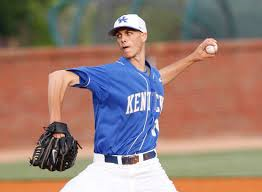
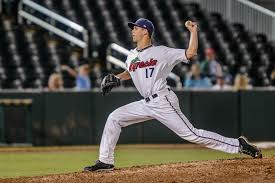
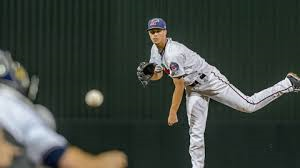
Taylor Rogers was drafted by the Twins in the 11thround of the 2012 June Amateur Draft out of the University of Kentucky (Note: Andrew Albers, Logan Darnell, Lance Ray, and Alex Meyer also hail from the same school). Seth Stohs quotes Rogers on being selected to play in the Twins organization: “During the draft, it was a possibility that the Twins were interested, but I just wanted to be taken at some point. After it all settled in, I was very thankful that it was the Twins because of their reputation with developing minor league players and drafting well-rounded individuals.” The 6’3” lefthander began the 2013 campaign in Cedar Rapids but was quickly promoted to Fort Myers where he led the Florida State League in complete games and shutouts and ranked second in ERA (2.55) and third in wins (11-6). Rogers posted 83 strikeouts in 130.2 innings pitched, while walking 32. His WHIP is a very respectable 1.156, while yielding only 5 home runs. More from Seth Stohs: “Rogers works quickly and efficiently, getting quick outs and eating a lot of innings. He had three complete games (2 shutouts) for the Miracle. That doesn’t count his nine shutout innings in his Miracle playoff start. He has a low 90s fastball and a good slider. He has good command. He was my choice for Twins Minor League Starting Pitcher of the Year.” Rogers will open the 2014 season in New Britain's starting rotation. Here's an end-of-season interview from NaplesNews.Com: http://swflmoms.com/videos/detail/miracles-taylor-rogers/ And, although it's a little dated, some video of him warming up & pitching in the Cape Cod League: https://www.youtube.com/watch?v=IexOqMIXKFo Note: quotes were taken from Twins Daily Articles: “MTPH2014:Award-Winner Stories” (posted 12/18/2013) and “Minnesota Twins Top 50Prospects: 16-20” (posted 11/1/2013)
-
Over moderation
Don't Feed the Greed Guy replied to DaveW's topic in Twins Daily Issues & Suggestions
Less aggressive, or more creative? Instead of using the "s" word, perhaps one could make reference to the Twins Kubel/Bartlett clubhouse as an Assisted Living Complex/Salvage Yard/Charitable Thrift Store for Twins from a bygone era? Is that approach more germane to the sophistication of Twins Daily than resorting to the "S" word? Acceptable, or no? It's your website, guys. I appreciate tending to the high level of moderation. We get to play here, but you make the rules, and play umpire. Thanks for the chance to play. If you build it, we will come. -
Taylor Rogers
-
Better view than from the front window of my van, down by the river!
-
I'm hearing thunderclaps in Northern MN. Storm coming in? Or is that Nolasco getting lit up on the South Side?
-
Called third strikes!! Yikes. I'm already getting yips and twitches from 2013's PTSD... Thank goodness Suzuki cleaned up.
-
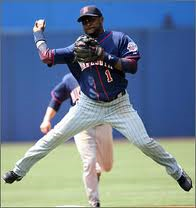
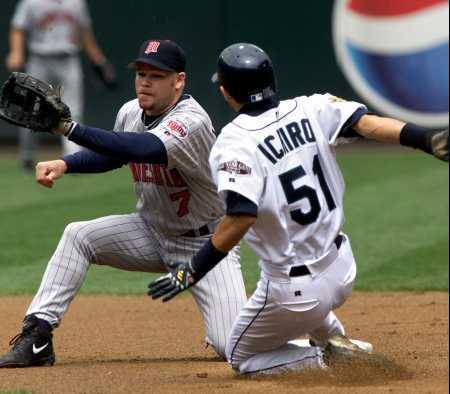
Slick fielding keystone cop who brought stability to the Twins middle infield, .296/.358 (BA/OBP) with 25 steals in 2006. .304/.356 in 85 games in the 2007 campaign before being traded to the Mets for a career minor leaguer named Dustin Martin, and a guy named Drew Butera. He played three more seasons with the Mets.
-
In case you can't make out the signature, think 2nd worst trade by a Minnesota franchise in 1988-89. The Two Tommy Swap, leading to this guy, about eleven months before Herschel Walker came to town...
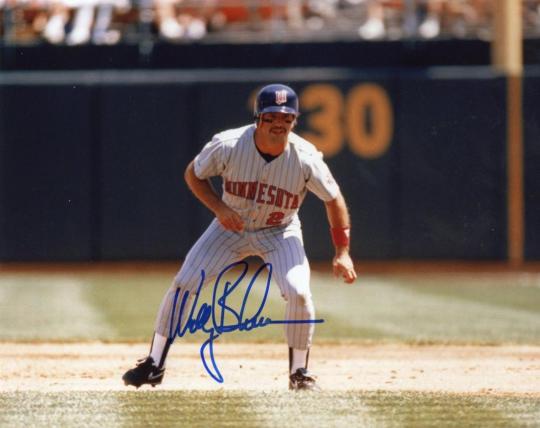
-
April and May of 1982: Roy Smalley and Butch Wynegar traded to the Evil Empire.
-
Drafted by the Twins in 1980, Jim Eisenreich would break into the majors with the parent club as a twenty-three year old centerfielder. The season was 1982, and Eisenreich would play in 34 games, posting a .303 average, before teammates, the media, and some fans became aware of facial tics and other behaviors unique to Eisenreich's condition, which was misdiagnosed as agoraphobia. The rumors regarding Eisenreich's condition arose as the Twins entered Boston on a road trip to Fenway Park. Scot Johnson writes on Eisenreich's SABR site: "Fans in the bleachers chanted insults at Eisenreich, and the symptoms progressively became worse. By the third inning, Eisenreich was still shaking violently and began to have trouble breathing, a result of hyperventilation, causing him to remove himself from the game." Eisenreich would attempt two comebacks over the next two seasons, retired for two more, before attempting a successful comeback with the Kansas City Royals in 1987. He would go on to play for three other teams over eleven seasons, producing home runs in the 1993 and 1997 World Series, while taking home a ring in the latter Fall Classic, while he played for the Florida Marlins. A final quote from the SABR site: "Throughout his later years in baseball, Eisenreich became an inspiration for others dealing with Tourette syndrome. He would regularly receive calls from people asking him how he overcame Tourette to have success in the major leagues. In 1996, Eisenreich and his wife, Leann, founded the Jim Eisenreich Foundation for Children with Tourette syndrome. Eisenreich now lives in Kansas City with his wife and four kids. He continues to travel the country, telling his story to children and families in order to get the message out about Tourette syndrome, often doing so at major-league baseball stadiums, where the foundation hosts presentations and outings for Tourette-affected families. The foundation also provides resource guides for teachers, principals, counselors, and school support staff on Tourette syndrome and gives an annual Children’s Most Valuable Player Award to major-league players and alumni who have made a significant positive impact on the lives of children." For more information, see: http://sabr.org/bioproj/person/8c6b1cee
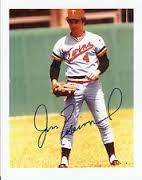
-
Article: Moving Goalposts
Don't Feed the Greed Guy replied to Nick Nelson's topic in Twins Daily Front Page News
Nick, I find myself in group A: I'm a quietly supportive believer in franchise development after prolonged disappointments. Will 2014 be remembered as when the Curse of the Trees infected not only the majors, but metastasized into the bone marrow of Buxton, Rosario, and Sano? All I know is that I fell in love with Camden Yards in September of 2006. The Baltimore fan base had written off the O's after what would become a 69-93 season, their ninth straight season below .500. The night before I watched the Twins, in a playoff chase, lose 6-0 to the Red Sox as David Ortiz destroyed Jimmy Foxx's single-season home run record at Fenway Park, homering off Johann Santana in the 1st, and Matt Guerrier in the 7th. Ortiz homered off Boof Bonser the night before to tie Double X. But for my buddy and I, our road trip was just beginning. I drove through the night to Baltimore, where the tickets were CHEAP! Everyone in Baltimore and Camden Yards, it seemed, had given up hope for owner Peter Angelos, who would hire Andy MacPhail to run the organization nine months later, in June of 2007. Did I say that the tickets were CHEAP? My buddy and I went to the first (9/22/06) game with tickets purchased for a song off of a 2nd market website. On Saturday (9/23) my buddy & I planned to enter the scalpers' den outside Camden to find the cheapest seats available. No worries. A father and son walked past us in the parking lot and asked if we had tickets. "No" was our answer. They gave us two seats halfway between home plate and first base, right over the Orioles dugout, for free. So, what's the moral of the story? Be prepared to enjoy some good seats this summer. I hear Andy MacPhail is still looking for a job, after he and Buck Schowalter manufactured the O's return to the postseason. Type A fans can hopefully appreciate the empty seats, and a better vantage point on a team that wants to manufacture hope while the fair-weather-fan-base dwindles. As for me, I'll be watching the future from the cheap seats--and I wouldn't mind being surprised into spending more for those seats as the summer progresses. All the same, it just might be time for the groundskeepers at Target Field to start planting some trees. -
Time for Accountability
Don't Feed the Greed Guy replied to jorgenswest's topic in Minnesota Twins Talk
This is a response to the title of the forum, on Accountability--not so much the Worley situation. In a broader sense the Twins are experiencing an accountability gap whenever someone chooses not to pay for a ticket and walk through Gates 3, 6, 14, 29 & 34 at Target Field. Tyler Mason, writing for Fox Sports, interviewed Dave St. Peter regarding the upcoming Twins Opener. The focus of the article was on the weather, not the product on the field. Hmmm. If the Twins had a winning season last year, were in a pennant race, or were lighting fires under "fair weather" fans, they would sell out every game. Not now. No chance. That's accountability. Here's a snippet from the article: Three straight 90-loss seasons have dampened the spirits of some Twins fans, as is evidenced by the ticket sales for next month's home opener. St. Peter said the team still has between 4,000 to 5,000 tickets to sell for that first home game. "We've got some work to do," he added. "I don't think the cold weather has helped us to kind of get people thinking baseball." http://msn.foxsports.com/north/story/twins-hoping-for-nice-weather-for-april-7-home-opener-032414 There's more work to do than just checking weather forecasts and shoveling snow off the field, Mr. St. Peter. -
Tony O.
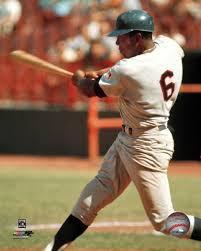
-
Article: Monday Morning Roster Cuts
Don't Feed the Greed Guy replied to Seth Stohs's topic in Twins Daily Front Page News
According to the Pioneer Press' Mike Berardino: "Twins' Jason Kubel expects to play outfield often" http://www.twincities.com/twins/ci_25408345/twins-jason-kubel-expects-play-outfield-often -
With the glove, not so much the stick...
-
Before booking a timeshare (or resorting off to a platoon) it's always good to look at the numbers. Aaron Hicks' MLB & AAA: 2013 vs. RHP as LHB = .186/.255/.308 in 310 plate appearances. 2013 vs. LHP as RHB = .236/.317/.444 in 82 plate appearances. 2013 vs. RHP as RHB = .500/.667/.500 in 3 plate appearances. AA 2012 vs. RHP as LHB = .287/.394/.434 in 407 plate appearances. 2012 vs. LHP as RHB = .283/.359/.522 in 183 plate appearances. A+ 2011 vs. RHP as LHB = .230/.358/.356 in 340 plate appearances. 2011 vs. LHP as RHB = .263/.349/.401 in 190 plate appearances. Alex Presley's career MLB splits (2010-2013): LHB vs. RHP = .264/.308/.426 in 634 plate appearances. LHB vs. LHP = .264/.290/.360 in 187 plate appearances. Granted, Hicks' performance against RHP was horrendous last year, but I'm not exactly enamored with Presley's .308 career OBP against righties either. I'm in favor of letting this Hicks kid hit until Presley, Buxton, Rosario or someone else eclipses his future by burning more brightly by the end of 2014-2015. If it were all this simple... Circle 3/20/2013 on your calendar and remember Hicks' 4 for 4 performance as the day he heard Rob Anthony's wake up call, "I wish somebody would step up." At any rate, it's a great opportunity. Now is the time for Hicks to step up against LHP and RHP.
-
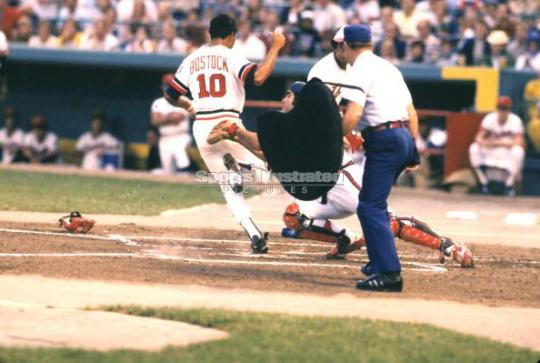
Lyman Bostock 11/22/1950-9/23/1978 There were four glorious seasons between the dash, above. Fans at Metropolitan Stadium and other ballparks saw Bostock bat .336/.389/.508 in 1977, before journeying west to join the Angels for his final season under the sun. Now he is safe at home. Rest eternal, Lyman Wesley Bostock.
-
Duck and cover...

-
Mark Salas. He finished 8th in ROY voting, after posting .300/.332/.458 in 1985. Not the fleetest afoot, I once saw him thrown out at first base after skipping a rocket off the Metrodome turf to the right fielder. Score it a 9-3 putout. Unsubstantiated rumors have it that Salas never received a World Series ring in 1987 after posting .378/.431/.622 in 51 plate appearances. That year, he was traded to the Yankees for Joe Niekro. [TABLE=class: sortable stats_table row_summable] [TR=class: full hl, bgcolor: #DDEEFF] [TD=align: right][/TD] [TD=align: right][/TD] [TD=align: right][/TD] [/TR] [/TABLE]

-
I know that we're supposed to see the number, but the glove does the talking in this memorable pose... Herbie's glove--the most underrated part of his game.


