



Seth Stohs
-
Posts
25,912 -
Joined
-
Last visited
-
Days Won
109
Content Type
Profiles
News
Minnesota Twins Videos
2026 Minnesota Twins Top Prospects Ranking
2022 Minnesota Twins Draft Picks
Minnesota Twins Free Agent & Trade Rumors, Notes, & Tidbits
Guides & Resources
2023 Minnesota Twins Draft Picks
The Minnesota Twins Players Project
2024 Minnesota Twins Draft Picks
2025 Minnesota Twins Draft Pick Tracker
2026 Minnesota Twins Draft Tracker: Picks & Bonuses
Forums
Blogs
Events
Store
Downloads
Gallery
Everything posted by Seth Stohs
-
Catching Up With Catcher Dan Rohlfing
Seth Stohs replied to Seth Stohs's topic in Twins Daily Front Page News
I'd like to see that too. -
Four Twins Arbitration Decisions Looming Again
Seth Stohs replied to Seth Stohs's topic in Twins Daily Front Page News
Per Doogie... Kintzler agrees at $2.925 million... The Saves got him some extra money, no doubt. Which is fine. It's still not a big number. -
Four Twins Arbitration Decisions Looming Again
Seth Stohs replied to Seth Stohs's topic in Twins Daily Front Page News
Per Berardino, the Twins and Hector Santiago settled at $8 million. That's exactly what we projected in the Twins Daily Offseason Handbook. -
Catching Up With Catcher Dan Rohlfing
Seth Stohs replied to Seth Stohs's topic in Twins Daily Front Page News
Thank you! This was a fun one for me because I've known and chatted occasionally with Dan for probably 7-8 years. But this one was different because 1.) he was coming back, 2.) his relationship with Beresford, 3.) the catcher stats stuff, 4.) Team USA stuff, 5.) playing for Backman and Viola... I felt like there was a lot of interesting stuff here.- 6 replies
-
- 1
-

-
- dan rohlfing
- james beresford
- (and 2 more)
-
Four Twins Arbitration Decisions Looming Again
Seth Stohs replied to Seth Stohs's topic in Twins Daily Front Page News
According to Mike Berardino, the Twins and Kyle Gibson avoided arbitration by agreeing to a 1 year, $2.9 million deal. I'll be interested in finding out if there are any incentives in this deal... Here's what I wrote in the article...- 27 replies
-
- 3
-
-
- hector santiago
- kyle gibson
- (and 2 more)
-
Four Twins Arbitration Decisions Looming Again
Seth Stohs replied to Seth Stohs's topic in Twins Daily Front Page News
To steal a fun catch phrase we see often... a person with direct knowledge told me that teams have until noon central time to reach an agreement before they are required to exchange numbers. We'll keep things updated here.- 27 replies
-
- 3
-
-
- hector santiago
- kyle gibson
- (and 2 more)
-
2017 Twins Minor League Transactions
Seth Stohs replied to Seth Stohs's topic in Twins Minor League Talk
While Nordgren pitched pretty well in CR and FM in 2016, scouting reports weren't real high on his stuff. Still, he found some success with the Miracle, so the timing is surprising. I'm surprised about Onas Farfan. The left-hander was solid in the GCL in his return from Tommy John surgery. Figured he would at least get a chance to go somewhere this year. Manuel Guzman was a favorite of mine after seeing him last spring. He was hurt a ton last year and frankly didn't play well when healthy. Luis Martinez is fast, but he just couldn't hit much at all. And, I was a big Tyree Davis fan. The Compton native is one of the best athletes in the organization. He was like 6-3, 205, could run like the wind. And while his numbers didn't show (in three seasons in the GCL), there were a lot that thought he was making some strides. -
2017 Twins Minor League Transactions
Seth Stohs replied to Seth Stohs's topic in Twins Minor League Talk
Nine of the ten were profiled in the Twins Prospect Handbook. -
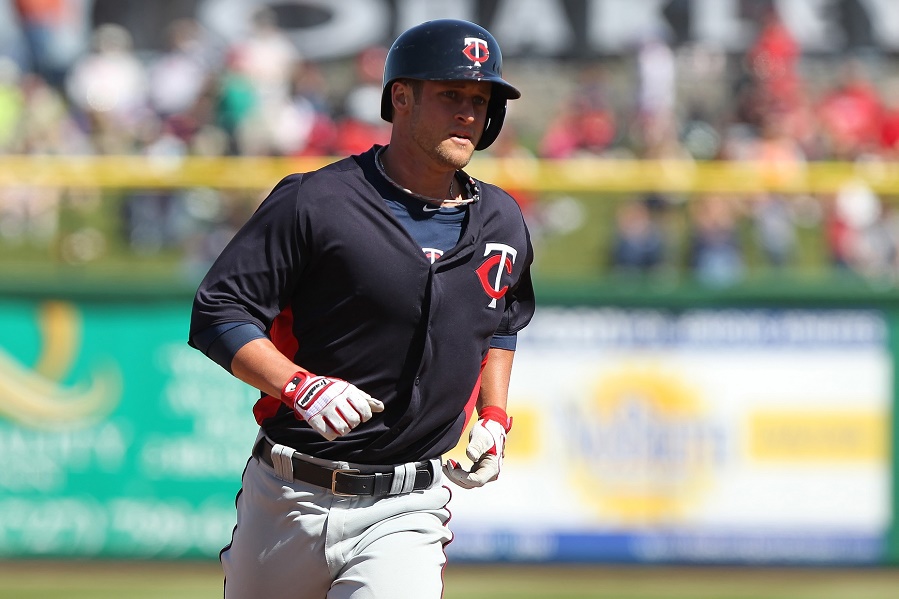
Dan Rohlfing was the Twins 14th round draft pick in 2007 out of high school in St. Louis. He played a lot of third base in high school, but the Twins had him mostly playing catcher. Because he is such a good athlete, he played some in the outfield as well. After three years of rookie-league ball, Rohlfing skipped the Midwest League and jumped right to Ft. Myers in 2010. He split the 2011 and 2012 seasons between Ft. Myers and New Britain and finished the 2012 season with some time in the Arizona Fall League. His 2013 was split between New Britain and Rochester, and he spent the 2014 season with the Red Wings. Though he could have left earlier as a minor league free agent, he signed with the Mets before the 2015 season and spent the summer in Las Vegas (AAA). In 2016, he signed with the Arizona Diamondbacks and spent most of the season in AAA Reno. Image courtesy of Kim Klement, USA Today (photo of Dan Rohlfing) Dan Rohlfing was the Twins 14th round draft pick in 2007 out of high school in St. Louis. He played a lot of third base in high school, but the Twins had him mostly playing catcher. Because he is such a good athlete, he played some in the outfield as well. After three years of rookie-league ball, Rohlfing skipped the Midwest League and jumped right to Ft. Myers in 2010. He split the 2011 and 2012 seasons between Ft. Myers and New Britain and finished the 2012 season with some time in the Arizona Fall League. His 2013 was split between New Britain and Rochester, and he spent the 2014 season with the Red Wings. Though he could have left earlier as a minor league free agent, he signed with the Mets before the 2015 season and spent the summer in Las Vegas (AAA). In 2016, he signed with the Arizona Diamondbacks and spent most of the season in AAA Reno. Given the opportunity, Dan Rohlfing decided to return to the Minnesota Twins organization on a minor league contract. Recently, he took time to answer several questions for Twins Daily readers about a variety of prospects. Let’s get started. Seth Stohs (SS): Earlier this month, you announced on Twitter that you are returning to the Twins. Tell us what went into your decision to sign with the Twins. What were some of the factors that led to that choice? Dan Rohlfing (DR):Opportunity is the number one factor I look at. I just want a chance to play and prove myself. This year, with the teams I was talking to, the Twins were the best fit. Bonus points for it being a familiar place! SS: You’ve been a free agent the last couple of years and signed with two different organizations. Have you enjoyed the free agency process at all, or is is more stressful? DR: Free agency starts as exciting. Then can turn stressful pretty quickly if it doesn't go your way. Wondering who will call or the thought of a fresh start somewhere is always exciting. The first couple years went smooth, and I signed back with the Twins pretty quickly. But, then there are years like last year where the catchers market was saturated and the phone wasn't ringing. I didn't sign with the Dbacks until Feb 8th. So to say I was stressed may be an understatement. SS: After all those years in the Twins organization, you’ve had a year in the Mets and Diamondbacks systems. Without getting into anymore detail than you’re comfortable, were there (significant) differences between the organizations from your perspective? DR: There wasn't anything too crazy that I can remember. Baseball-wise, it's all the same game. The main difference I noticed is just how teams place emphasis in different areas. SS: What did it mean to you to put on the red, white and blue chest protector and represent Team USA in the WSBC Premier 12 tournament a year ago in Japan? What was that experience like for you? DR: Playing for Team USA was always a dream of mine and that was the most fun I've ever had playing ball. That uniform had a special feel to it the second I put it on, different than any other uniform I've ever worn. We had such an awesome group of guys that all came together and truly played for the name on the front. Even though Park and Team Korea took the gold, we walked away with silver, and I wouldn't trade that experience of playing for Team USA for anything. SS: I have to ask… How was your Wally Backman experience? (Secondly, did you work with Frank Viola as well in 2015 in Las Vegas?) DR: Ha ha! What a staff! That was fun. I loved playing for Wally and working with Frank! Wally is a guy you wanted to play hard for. He still remembers how tough it is to play this game, and because of that the way he interacts with his players is special and he was the type of guy you wanted to win for. You knew he always had your back and clearly has no problem tearing into an umpire for you. If you need a refresher just check out his YouTube videos. Ha ha!. SS: You spent eight years moving gradually up the Twins system. You had a lot of teammates in those years, and there were several that you played with a lot. For instance, you played with James Beresford about five of those years. Were you excited to see him get his month in the big leagues in 2016? DR: So many great guys! I think Jimmy and I may actually be legal brothers now. Between time at the field and living together in about 7 different apartments and houses we definitely got close. That was the happiest I've been for someone to get 'the call'. The only one that would top it was if I received that call myself. SS: Having seen that, and with the time you’ve spent in AAA over the years, does it change your opinion at all on what it would mean to you to get an opportunity in the big leagues, even if just for a week? DR: I'll take one day at this point. Ha ha! Baseball has been my life and my dream since I can remember. To be able to say "I made it" would make every single sacrifice I've made worth it. SS: You’ve spent some time in the Dominican Winter League. What do you get out of the Winter League experience? DR: Each year I've had a little different motive. The first year was for the experience and getting more reps in against quality competition to make myself better. The other year I was a free agent so it helped get more exposure. Also the money is nice so that's always a plus of going down. SS: What is it that you most enjoy about catching? DR: I love the action. It's a crazy position where you impact the game on so many different levels. My favorite part has to be working with pitchers and game-calling. It gets you involved in every pitch, and it becomes a game within a game. Using my knowledge of what the pitcher has against each different hitter is a true chess match. SS: As more catcher statistics such as pitch framing have become more prevalent, what are your thoughts on them? In your experience, are they used by coaches at various levels in any way? DR: I love them. I'm not exactly sure how I measure up on them, but I'd be willing to bet I could guess pretty close to where I am. Being a catcher first/hitter second type of guy I love seeing guys finally getting credit and getting paid their worth for what they do behind the dish SS: Are you looking forward to getting back to Ft. Myers and spring training in that Twins uniform again? DR: I am. Fort Myers has become kind of a second home to me and a town I really enjoy. Leaving the Twins was a sad day for me, so to get another opportunity with them is something I hope to take advantage of. I'm excited to see what this year has in store. Thank you to Dan Rohlfing for taking time to thoughtfully respond to these questions. Please feel free to discuss and ask questions in the comments down below. View full article
- 6 replies
-
- 2
-
-
- dan rohlfing
- james beresford
- (and 2 more)
-
 Given the opportunity, Dan Rohlfing decided to return to the Minnesota Twins organization on a minor league contract. Recently, he took time to answer several questions for Twins Daily readers about a variety of prospects. Let’s get started. Seth Stohs (SS): Earlier this month, you announced on Twitter that you are returning to the Twins. Tell us what went into your decision to sign with the Twins. What were some of the factors that led to that choice? Dan Rohlfing (DR):Opportunity is the number one factor I look at. I just want a chance to play and prove myself. This year, with the teams I was talking to, the Twins were the best fit. Bonus points for it being a familiar place! SS: You’ve been a free agent the last couple of years and signed with two different organizations. Have you enjoyed the free agency process at all, or is is more stressful? DR: Free agency starts as exciting. Then can turn stressful pretty quickly if it doesn't go your way. Wondering who will call or the thought of a fresh start somewhere is always exciting. The first couple years went smooth, and I signed back with the Twins pretty quickly. But, then there are years like last year where the catchers market was saturated and the phone wasn't ringing. I didn't sign with the Dbacks until Feb 8th. So to say I was stressed may be an understatement. SS: After all those years in the Twins organization, you’ve had a year in the Mets and Diamondbacks systems. Without getting into anymore detail than you’re comfortable, were there (significant) differences between the organizations from your perspective? DR: There wasn't anything too crazy that I can remember. Baseball-wise, it's all the same game. The main difference I noticed is just how teams place emphasis in different areas. SS: What did it mean to you to put on the red, white and blue chest protector and represent Team USA in the WSBC Premier 12 tournament a year ago in Japan? What was that experience like for you? DR: Playing for Team USA was always a dream of mine and that was the most fun I've ever had playing ball. That uniform had a special feel to it the second I put it on, different than any other uniform I've ever worn. We had such an awesome group of guys that all came together and truly played for the name on the front. Even though Park and Team Korea took the gold, we walked away with silver, and I wouldn't trade that experience of playing for Team USA for anything. SS: I have to ask… How was your Wally Backman experience? (Secondly, did you work with Frank Viola as well in 2015 in Las Vegas?) DR: Ha ha! What a staff! That was fun. I loved playing for Wally and working with Frank! Wally is a guy you wanted to play hard for. He still remembers how tough it is to play this game, and because of that the way he interacts with his players is special and he was the type of guy you wanted to win for. You knew he always had your back and clearly has no problem tearing into an umpire for you. If you need a refresher just check out his YouTube videos. Ha ha!. SS: You spent eight years moving gradually up the Twins system. You had a lot of teammates in those years, and there were several that you played with a lot. For instance, you played with James Beresford about five of those years. Were you excited to see him get his month in the big leagues in 2016? DR: So many great guys! I think Jimmy and I may actually be legal brothers now. Between time at the field and living together in about 7 different apartments and houses we definitely got close. That was the happiest I've been for someone to get 'the call'. The only one that would top it was if I received that call myself. SS: Having seen that, and with the time you’ve spent in AAA over the years, does it change your opinion at all on what it would mean to you to get an opportunity in the big leagues, even if just for a week? DR: I'll take one day at this point. Ha ha! Baseball has been my life and my dream since I can remember. To be able to say "I made it" would make every single sacrifice I've made worth it. SS: You’ve spent some time in the Dominican Winter League. What do you get out of the Winter League experience? DR: Each year I've had a little different motive. The first year was for the experience and getting more reps in against quality competition to make myself better. The other year I was a free agent so it helped get more exposure. Also the money is nice so that's always a plus of going down. SS: What is it that you most enjoy about catching? DR: I love the action. It's a crazy position where you impact the game on so many different levels. My favorite part has to be working with pitchers and game-calling. It gets you involved in every pitch, and it becomes a game within a game. Using my knowledge of what the pitcher has against each different hitter is a true chess match. SS: As more catcher statistics such as pitch framing have become more prevalent, what are your thoughts on them? In your experience, are they used by coaches at various levels in any way? DR: I love them. I'm not exactly sure how I measure up on them, but I'd be willing to bet I could guess pretty close to where I am. Being a catcher first/hitter second type of guy I love seeing guys finally getting credit and getting paid their worth for what they do behind the dish SS: Are you looking forward to getting back to Ft. Myers and spring training in that Twins uniform again? DR: I am. Fort Myers has become kind of a second home to me and a town I really enjoy. Leaving the Twins was a sad day for me, so to get another opportunity with them is something I hope to take advantage of. I'm excited to see what this year has in store. Thank you to Dan Rohlfing for taking time to thoughtfully respond to these questions. Please feel free to discuss and ask questions in the comments down below.
 -
In recent days the Twins have released several minor league players. There are a couple of semi-surprises in this group. --------- IF Jorge Andrade - GCL OF Tyree Davis - GCL LHP Onas Farfan - GCL IF Manuel Guzman - CR/GCL/ET OF Brad Hartong - CR/FM RHP CK Irby - CR OF Joe Maloney - CHAT/FM OF Luis Martinez - ET RHP Miles Nordgren - CR/FM LHP Luke Westphal - CHAT/FM
-
In my opinion, the plan doesn't change if the Twins don't trade Dozier, at least big picture. The plan should be all about playing the young guys as much as possible and giving them opportunities. Sano, Kepler, Buxton, Polanco, Rosario, Berrios, .. these guys are the key, and hopefully each of them will improve in 2017. Castro should help the defense, or at least that is the assumption. Santana is a solid guy in the rotation, and we have to assume that Gibson and Santiago will be better (if healthy)... Hughes can be solid (if healthy)... and Mejia likely works his way into the rotation at some point. The bullpen, well maybe they can add another option, but I want to see Pressly, Chargois, Rogers and soon Reed, Melotakis, Hildenberger, Burdi, etc. if they'd like a DH, I'd be good with Chris Carter (if the front office is ready to give up on Park or Vargas). Target Field has been good for right-handed power hitters, and Carter - despite all the Ks - could hit 40 HR in his year. This is a 59-win team that could/should jump up to 75 wins in 2017 just with improved youth and some health.
-
2016 Twins Minor League Free Agents
Seth Stohs replied to Seth Stohs's topic in Twins Minor League Talk
Per Dustin Morse, Twins sign veteran catcher Chris Gimenez to a minor league deal. -
2017 Twins Off-Season top 60 Prospect List: 56-60
Seth Stohs commented on Thrylos's blog entry in Thrylos' Blog - select Tenth Inning Stretch posts
Spent 45 minutes chatting with English a couple of days ago. He's healthy. He had Lasik surgery in April. Was supposed to miss three weeks. That third week, he was playing his second (final) rehab game when he hurt his ankle. However, he came back for about 25-30 games at the end of the season and ended with five in Rochester. He also played 22 games in the AFL (one behind team leaders). He's healthy. He's talented. He and Granite are very similar in terms of skill set. Here's my thought. English probably has a little more upside. He's a little bigger/stronger. They're both incredible fast. English is a better outfielder and has a stronger arm. The two are friends and competitive with each other, which is fun to see. If people have my book and have seen my updated top 30/50 rankings, I have Wade in the low-teens, with English and Granite in the mid-20s. Wade has a chance to be a quality everyday left fielder (or a 4th OF). Of the three, all of them can play CF, but Wade and Granite are more left fielders whereas English can absolutely be a centerfielder (even if he never gets that chance because of Buxton). -
Twins Announce Billy Joel at Target Field 7/28/17
Seth Stohs replied to Seth Stohs's topic in Minnesota Twins Talk
My bad. It's been corrected. -
Thrylos is going to have about a 13-part series on his Top 60 Twins prospects. I thought putting links to them all in one place might be helpful. I know Thrylos doesn't typically include anyone who has played in MLB in his prospect rankings, which makes it a little different than other rankings (usually go by MLB rookie status remaining). It always seems to give us a lot to talk about. Intro Prospects 56-60 Prospects 51-55 Prospects 46-50 Prospects 41-45 Prospects 36-40 Prospects 31-35 Prospects 26-30 Prospects 21-25 Prospects 16-20 Prospects 11-15 Prospects 6-10 Prospects 1-5
-
Four Twins Arbitration Decisions Looming Again
Seth Stohs replied to Seth Stohs's topic in Twins Daily Front Page News
My guess is that it won't a whole lot. The general inflation of all salaries probably is equally helpful to those types.- 27 replies
-
- 1
-
-
- hector santiago
- kyle gibson
- (and 2 more)
-
Twins Announce Billy Joel at Target Field 7/28/17
Seth Stohs replied to Seth Stohs's topic in Minnesota Twins Talk
Molitor acknowledged that this was corny, but it was pretty good. -
The Twins and Live Nation announced this morning that Billy Joel will have a concert at Target Field on July 28th. Not really baseball-related, but it is at Target Field and maybe some are interested. I'd love to go! And, Paul Molitor's speech was pretty funny. I'll try to post the FSN link to that later. Billy Joel in Concert at Target Field on Friday, July 28, 2017 BILLY JOELIN CONCERT TARGET FIELD ON FRIDAY, JULY 28, 2017 FIRST EVER MINNESOTA STADIUM SHOW Public On Sale Friday, January 20 @ 10 a.m. (Minneapolis, MN) – Legendary musician Billy Joel will perform at Target Field, home of the Minnesota Twins, on Friday, July 28, marking his first concert in a Minnesota Stadium in his extraordinary career. “The Target Field concert experience has proven to be among the best in the region and we are thrilled to welcome Billy Joel, one of the most respected and endearing global recording artists in history,” said Laura Day, Twins Executive Vice President, Chief Business Officer. “We expect this to be another amazing outdoor music experience in Twins Territory.” American Express® Card Members can purchase tickets before the general public beginning Monday, January 16 at 10:00 AM through Thursday, January 19 at 10:00 PM. Tickets will be available for purchase to the general public beginning at 10:00 AM on Friday, January 20 via www.livenation.com. In December 2013, Billy Joel became Madison Square Garden’s first-ever music franchise, joining the ranks of the storied venue’s other original franchises – the New York Knicks, Rangers and Liberty. Since January 2014, Joel has played one show per month at The Garden as part of the Time Warner Cable Concert Series. This unprecedented and wildly successful residency has led to selling out 40 shows thru April 2017. Billy Joel is one of the biggest concert draws in the world and continues this achievement with an impressive run of sold-out consecutive stadium shows and concert arenas. Having sold 150 million records over the past quarter century, scoring 33 consecutive Top 40 hits, Billy Joel ranks as one of most popular recording artists and respected entertainers in history. The singer/songwriter/composer is the sixth best-selling recording artist of all time and the third best-selling solo artist. In 2016, the Library of Congress selected "Piano Man" for preservation in the National Recording Registry for its "cultural, historic, and artistic significance.” In November 2014, Billy Joel received both The Library of Congress Gershwin Prize for Popular Song which honors living musical artists’ lifetime achievement in promoting the genre of song as a vehicle of cultural understanding; entertaining and informing audiences; and inspiring new generations, and the once-in-a-century ASCAP Centennial Award, which is presented to American music icons in recognition of their incomparable accomplishments in their respective music genres and beyond. In December 2013, Joel received The Kennedy Center Honors, one of the United States' top cultural awards. He is also the recipient of six GRAMMY® Awards, including the prestigious Grammy Legend Award. Joel has been inducted into the Songwriter’s Hall of Fame and the Rock and Roll Hall of Fame and has received numerous industry awards including a TONY AWARD for "Movin' Out," a Broadway musical based on Joel’s music. For his accomplishments as a musician and as a humanitarian, Joel was honored as the 2002 MusiCares Person Of The Year by the MusiCares Foundation and the National Academy of Recording Arts & Sciences. Joel has also performed alongside other music greats at two of Madison Square Garden’s most extraordinary benefit concerts – “12-12-12, The Concert For Sandy Relief,” which raised awareness and money for those affected by Hurricane Sandy and “The Concert for New York City,” which was held to help aid 9/11 victims and heroes. Billy Joel received a star on the Hollywood Walk of Fame in Los Angeles, adding another milestone to his brilliant career. Tickets can be purchased online at Ticketmaster.com and LiveNation.com, or charge by phone at 1.800.745.3000.
-
Vogelsong and Tepesch: Where's the Excitement?
Seth Stohs replied to ScrapTheNickname's topic in Twins Minor League Talk
I agree with a lot of this. Slegers has never pitched out of the bullpen, so I would be surprised if he did, especially since the Twins like him enough to invite him to big league camp. And, again, I just don't see which players are the "appropriate people" to move up. Gonsalves is the one from Chattanooga that maybe could go to Rochester. Steele and Rosario could start in Chattanooga. But there are always injuries and they need depth. I also wonder if the Twins and Vogelsong have a deal in which if he's not on the MLB roster on Opening Day, they'll release him. Certainly he'll have an early opt-out date. -
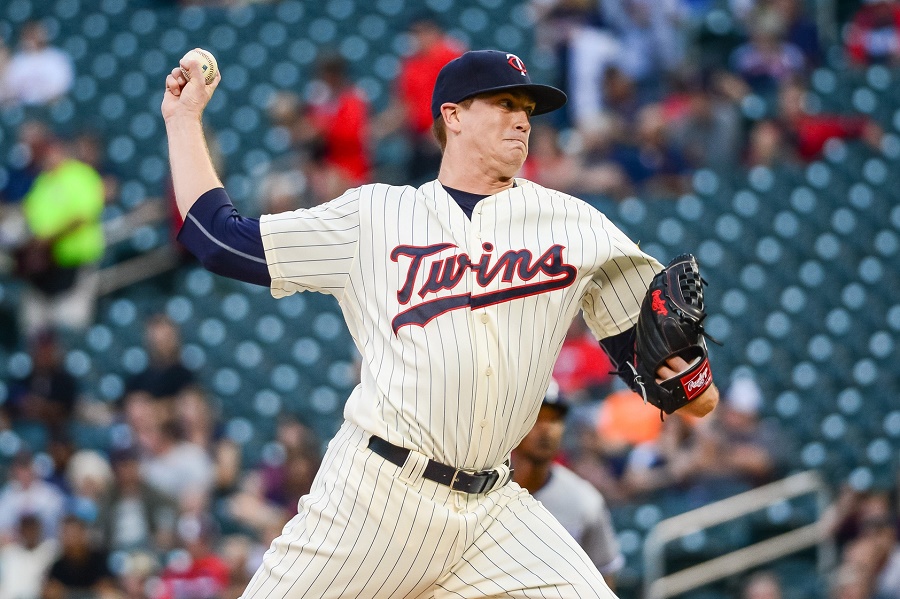
Back in November, the Twins had to decide whether or not to offer 2017 contracts to six players. They non-tendered Trevor Plouffe (who now has an agreement with the A’s). The Twins agreed to terms with Eduardo Escobar who will make $2.6 million in 2017. The Twins offered arbitration to four other players for 2017: Hector Santiago, Brandon Kintzler, Kyle Gibson and Ryan Pressly. If those players do not have an agreement with the Twins by Friday (several players already have), the two sides will exchange numbers. Obviously the player and his agent will ask the team for a number. The Twins side will likely think that number is a bit high and will come in with their own number, likely lower. Most often, the two sides wind up meeting somewhere near the midpoint on a deal. Image courtesy of Jeffrey Becker, USA Today Back in November, the Twins had to decide whether or not to offer 2017 contracts to six players. They non-tendered Trevor Plouffe (who now has an agreement with the A’s). The Twins agreed to terms with Eduardo Escobar who will make $2.6 million in 2017. The Twins offered arbitration to four other players for 2017: Hector Santiago, Brandon Kintzler, Kyle Gibson and Ryan Pressly. If those players do not have an agreement with the Twins by Friday (several players already have), the two sides will exchange numbers. Obviously the player and his agent will ask the team for a number. The Twins side will likely think that number is a bit high and will come in with their own number, likely lower. Most often, the two sides wind up meeting somewhere near the midpoint on a deal. With that in mind, let's try to project (OK, guess) what will happen over the next two days. Post your thoughts and guesses in the Comments below. HECTOR SANTIAGO Service Time: 5.016 2016 Salary: $5.0 Million MLB Trade Rumors Projection: $8.6 Million Twins Daily Projection: 8.0 Million Santiago came to the Twins at the deadline last year in exchange for Ricky Nolasco and Alex Meyer. He struggled early, but was better late. He has been an All-Star and until his 4.70 ERA in 2016, he had never posted an ERA over 3.75. He has pitched over 180 innings in each of the last two seasons. Seth’s Guesses Santiago Asks: $8.5 Million Twins Offer: $7.0 Million Midpoint: $7.75 Million A huge salary bump after a rough season for Santiago doesn’t make sense, but he’ll get a bump because of the innings and the numbers prior to 2016. That means there is potentially a pretty big difference between what Santiago’s side wants and what the Twins might be willing to offer. The bigger the gap, the more difficult it can be for both sides to reach an agreement in the middle. Remember that the Twins sent $4 million to the Angels in that trade last year to avoid needing to pay Nolasco $12 million in 2017. In other words, it appears that they anticipated needing to pay him around $8 million. BRANDON KINTZLER Service Time: 4.128 2016 Salary: $1.1 Million MLB Trade Rumors Projection: $2.2 Million Twins Daily Projection: $2.5 Million Kintzler’s road to the big leagues was interesting and even included a stint with the St. Paul Saints. After a couple of solid seasons in middle relief for the Brewers, he missed much of the 2015 season with a knee injury. The Brewers non-tendered him after that season and the Twins quickly signed him to a minor league deal with an invite to spring training. Though he didn’t start the season in the big leagues, he was with the Twins within a month. Not only did he pitch well and show increased velocity, but he became the Twins closer and recorded 17 saves. Seth’s Guesses Kintzler Asks: $2.95 Million Twins Offer: $2.25 Million Midpoint: $2.6 Million This is an interesting one because of the saves. Frankly, if he had just worked in middle relief, he would likely be in line for a deal between $1.9 and $2.2 million. The reality is that the saves probably mean something in arbitration discussions. While I can’t imagine Kintzler’s side overstating their case, they should be using it to their advantage. That’s why I kept them just shy of $3 million. The Twins will argue that he isn’t really a typical closer and fits the role of middle relief. That would be an easier case for them if they had a veteran closer on the staff at this point. This feels like one where an agreement should be easy to reach. KYLE GIBSON Service Time: 3.056 2016 Salary: approximately $600,000 MLB Trade Rumors Projection: $3.5 Million Twins Daily Projection: $2.5 Million Gibson was being fast-tracked to the big leagues. He was the team’s #1 pick in 2009 and began his career in Ft. Myers in 2010. He finished the season with several starts in AAA. That’s where he began the 2011 season. By season’s end, he had Tommy John surgery and missed the 2012 season. He debuted in 2013 and became a fixture in the Twins rotation since 2014. He was the Twins pitcher of the year in 2015. A month into the 2016 season, he landed on the DL with some shoulder pain. He returned about six weeks later and was inconsistent the rest of the season. Seth’s Guesses Gibson Asks: $3.55 Million Twins Offer: $2.55 Million Midpoint: $3.05 Million This is another difficult one. It is Gibson’s first trek into arbitration. There are some first-year arbitration eligible starting pitchers who have reached closer to $4 million, but I don’t think Gibson can reach that level. But the Twins may be able to use his 2016 struggles to negate some of the value he could have received after 2015. The Twins can’t really go any lower than $2.5 million. My guess is that they will reach an agreement with Gibson just shy of the midpoint with some innings-incentives that could push him just past the midpoint. Using my guesses, I could see a deal for about $2.9 million with $50K bonus at 140 innings, $50K at 170 innings, $50K at 185 innings and $50K at 200 innings. RYAN PRESSLY Service Time: 3.053 2016 Salary: approximately $550,000 MLB Trade Rumors Projection: $1.1 Million Twins Daily Projection: $1.5 Million Pressly came to the Twins in the December 2012 Rule 5 draft. He spent the entire 2013 season with the Twins, but he was able to go to Rochester in 2014. He returned late in 2014 and pitched well. He was off to a very good start in 2015 but an injury ended his season early. Pressly was one of the most used relievers early in the 2016 season and in time it caught up to him. Blessed with a fastball that reached 98 and even 99 mph, he has the potential to be very good in the bullpen. Seth’s Guesses Pressly Asks: $1.65 Million Twins Offer: $1.15 Million Midpoint: $1.4 Million I can’t imagine this one even getting to the point of exchanging figures. They should be fairly close in the $1.1 to $1.5 million range. I would think that they are close enough where midpoint agreement would work. He pitched innings, but was average for a reliever, numbers-wise. He has missed time the two previous seasons, so he should fit into a typical first-year arbitration reliever range. So what do you think? Which players will come to an agreement with the Twins before exchanging numbers? Is it possible that the Twins could go to arbitration for the first time in over a decade in 2017? We shall find out in the next couple of days. View full article
- 27 replies
-
- 2
-
-
- hector santiago
- kyle gibson
- (and 2 more)
-
 With that in mind, let's try to project (OK, guess) what will happen over the next two days. Post your thoughts and guesses in the Comments below. HECTOR SANTIAGO Service Time: 5.016 2016 Salary: $5.0 Million MLB Trade Rumors Projection: $8.6 Million Twins Daily Projection: 8.0 Million Santiago came to the Twins at the deadline last year in exchange for Ricky Nolasco and Alex Meyer. He struggled early, but was better late. He has been an All-Star and until his 4.70 ERA in 2016, he had never posted an ERA over 3.75. He has pitched over 180 innings in each of the last two seasons. Seth’s Guesses Santiago Asks: $8.5 Million Twins Offer: $7.0 Million Midpoint: $7.75 Million A huge salary bump after a rough season for Santiago doesn’t make sense, but he’ll get a bump because of the innings and the numbers prior to 2016. That means there is potentially a pretty big difference between what Santiago’s side wants and what the Twins might be willing to offer. The bigger the gap, the more difficult it can be for both sides to reach an agreement in the middle. Remember that the Twins sent $4 million to the Angels in that trade last year to avoid needing to pay Nolasco $12 million in 2017. In other words, it appears that they anticipated needing to pay him around $8 million. BRANDON KINTZLER Service Time: 4.128 2016 Salary: $1.1 Million MLB Trade Rumors Projection: $2.2 Million Twins Daily Projection: $2.5 Million Kintzler’s road to the big leagues was interesting and even included a stint with the St. Paul Saints. After a couple of solid seasons in middle relief for the Brewers, he missed much of the 2015 season with a knee injury. The Brewers non-tendered him after that season and the Twins quickly signed him to a minor league deal with an invite to spring training. Though he didn’t start the season in the big leagues, he was with the Twins within a month. Not only did he pitch well and show increased velocity, but he became the Twins closer and recorded 17 saves. Seth’s Guesses Kintzler Asks: $2.95 Million Twins Offer: $2.25 Million Midpoint: $2.6 Million This is an interesting one because of the saves. Frankly, if he had just worked in middle relief, he would likely be in line for a deal between $1.9 and $2.2 million. The reality is that the saves probably mean something in arbitration discussions. While I can’t imagine Kintzler’s side overstating their case, they should be using it to their advantage. That’s why I kept them just shy of $3 million. The Twins will argue that he isn’t really a typical closer and fits the role of middle relief. That would be an easier case for them if they had a veteran closer on the staff at this point. This feels like one where an agreement should be easy to reach. KYLE GIBSON Service Time: 3.056 2016 Salary: approximately $600,000 MLB Trade Rumors Projection: $3.5 Million Twins Daily Projection: $2.5 Million Gibson was being fast-tracked to the big leagues. He was the team’s #1 pick in 2009 and began his career in Ft. Myers in 2010. He finished the season with several starts in AAA. That’s where he began the 2011 season. By season’s end, he had Tommy John surgery and missed the 2012 season. He debuted in 2013 and became a fixture in the Twins rotation since 2014. He was the Twins pitcher of the year in 2015. A month into the 2016 season, he landed on the DL with some shoulder pain. He returned about six weeks later and was inconsistent the rest of the season. Seth’s Guesses Gibson Asks: $3.55 Million Twins Offer: $2.55 Million Midpoint: $3.05 Million This is another difficult one. It is Gibson’s first trek into arbitration. There are some first-year arbitration eligible starting pitchers who have reached closer to $4 million, but I don’t think Gibson can reach that level. But the Twins may be able to use his 2016 struggles to negate some of the value he could have received after 2015. The Twins can’t really go any lower than $2.5 million. My guess is that they will reach an agreement with Gibson just shy of the midpoint with some innings-incentives that could push him just past the midpoint. Using my guesses, I could see a deal for about $2.9 million with $50K bonus at 140 innings, $50K at 170 innings, $50K at 185 innings and $50K at 200 innings. RYAN PRESSLY Service Time: 3.053 2016 Salary: approximately $550,000 MLB Trade Rumors Projection: $1.1 Million Twins Daily Projection: $1.5 Million Pressly came to the Twins in the December 2012 Rule 5 draft. He spent the entire 2013 season with the Twins, but he was able to go to Rochester in 2014. He returned late in 2014 and pitched well. He was off to a very good start in 2015 but an injury ended his season early. Pressly was one of the most used relievers early in the 2016 season and in time it caught up to him. Blessed with a fastball that reached 98 and even 99 mph, he has the potential to be very good in the bullpen. Seth’s Guesses Pressly Asks: $1.65 Million Twins Offer: $1.15 Million Midpoint: $1.4 Million I can’t imagine this one even getting to the point of exchanging figures. They should be fairly close in the $1.1 to $1.5 million range. I would think that they are close enough where midpoint agreement would work. He pitched innings, but was average for a reliever, numbers-wise. He has missed time the two previous seasons, so he should fit into a typical first-year arbitration reliever range. So what do you think? Which players will come to an agreement with the Twins before exchanging numbers? Is it possible that the Twins could go to arbitration for the first time in over a decade in 2017? We shall find out in the next couple of days.
 -
Only thing I want is that hitting coach to be a good communicator with players, understand hitting fundamentals, have a strong passion for the game, relate to the players and understands the big picture of player development.. No question, he gets all of that. I don't care about his personal stats. I don't care what his record was as manager at Stout. When you understand the baseball situation for players in Wisconsin and hence the players he gets at Stout, maybe 81-116 is a good thing. I don't know.
-
Vogelsong and Tepesch: Where's the Excitement?
Seth Stohs replied to ScrapTheNickname's topic in Twins Minor League Talk
Romero will likely start in Ft. Myers for a month and move up to Chattanooga. Jay, Gonsalves, Jorge and Stewart, along with Rosario will most likely start in Chattanooga. The only one of those you could make some argument for starting in Rochester is Gonsalves, though I'd doubt it. Rochester will have Mejia, Slegers and Wheeler, maybe Hurlbut. Maybe Baxendale. So, these guys can go there (if they don't have opt-outs) and make starts until those AA guys are ready. Also, we don't know where Berrios will be how about Duffey, etc. -
Twins Interested in Jose Bautista?
Seth Stohs replied to nicksaviking's topic in Minnesota Twins Talk
Per LaVelle... calm down on the Bautista rumors... Per Doogie - right now on 1500 ESPN... the Twins haven't had a meaningful discussion with Bautista's people, and probably won't.
