



Seth Stohs
-
Posts
25,912 -
Joined
-
Last visited
-
Days Won
109
Content Type
Profiles
News
Minnesota Twins Videos
2026 Minnesota Twins Top Prospects Ranking
2022 Minnesota Twins Draft Picks
Minnesota Twins Free Agent & Trade Rumors, Notes, & Tidbits
Guides & Resources
2023 Minnesota Twins Draft Picks
The Minnesota Twins Players Project
2024 Minnesota Twins Draft Picks
2025 Minnesota Twins Draft Pick Tracker
2026 Minnesota Twins Draft Tracker: Picks & Bonuses
Forums
Blogs
Events
Store
Downloads
Gallery
Everything posted by Seth Stohs
-
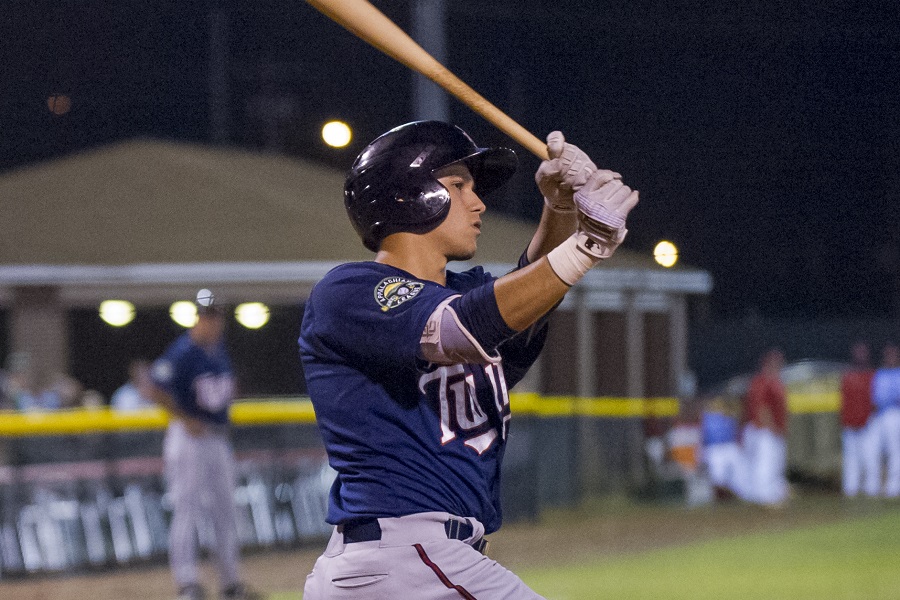 Today, we get a chance to meet the Twins top pick. Enjoy the following Q&A. Let’s get to know Alex Kirilloff. Seth Stohs (SS): Growing up near Pittsburgh, we know your favorite team was the Pirates. Did you go to a lot of games? Who were some of your favorite players? Alex Kirilloff (AK): I usually was able to catch a few games a year. When I was younger I liked Jason Bay and Freddy Sanchez basically because they were the only two good players they had at the time. As I grew a little bit older I took a liking to and looked up to Andrew McCutchen a lot. It's hard not to like him, he's a great player and I admire the way he handles himself off the field as well. SS: What were some of the better memories of your high school baseball career? Did you play other sports or were you involved in other activities? AK: Some of my best memories were building relationships and bonds with my teammates on my high school team. Having success with them made it all the more pleasant. Also, playing competitively during the summer high school circuits was a lot of fun. Perfect Game All-American Game was great, something I will always look back on and never forget. SS: You committed to Liberty pretty early, a program that is building. What was the recruitment process for your through your years? What was it about Liberty that made it the right program for you? AK: I did commit young to Liberty. I committed going into ninth grade. For me the best part about Liberty was just the atmosphere there and the faith-based aspect of that school. I love the people and the coaches there so it was a no-brainer for me. I knew that I couldn't see myself at any other school so that is why I chose so early. SS: Did you enjoy traveling a lot in the summer for the tournaments, Perfect Game, etc. ? AK: I loved it. Being able to travel and go play against some of the best talent in the country was awesome. Truly was a great opportunity. SS: What was your experience with the whole scouting process? When was the first time you remember having scouts watching you? What was your interaction with the Twins scout before the draft? AK: I didn't mind the scouting process. If anything I just let it fuel me more and motivate me to perform better. The Underclass Area Code game was really the first time I really felt like I had a lot of eyes on me. I was able to have a home visit with the Twins area scout and one of the cross-checkers before the high school season started. They were able to catch multiple games and I eventually was able to meet then Scouting Director Deron Johnson as well. SS: The Twins took you with the 15th overall pick. Is that about where you were expecting to go? AK: I was fortunate enough to have a good adviser at the time who basically was able to give me a general idea of where I was going to fall. But obviously, yes, I couldn't be happier with the Twins selecting me and the opportunity that I have. SS: Who was with you during the draft? Obviously you were watching it on TV. What was the reaction like from your family and friends that night? AK: I was able to be accompanied by my whole high school team that night which was pretty great. We had a state playoff game earlier that day which we won. Besides them I had a lot of family and close friends there at the gathering. The overall reaction was amazing and is definitely one of the coolest moments in my life. https://twitter.com/AKirilloff19/status/741112654320795649 SS: You had the opportunity to come to Target Field to sign, but also were able to meet some current Twins. What was that experience like? Did you talk to many of the current players or the manager? AK: I thoroughly enjoyed Minnesota and visiting Target Field. It was the first time I've been there, and I don't really think a better first impression could have been made. I was fortunate enough to meet some of the players and speak to Paul Molitor briefly as well. SS: What has the adjustment like for you, from the high school game to the professional game, both on and off the field? AK: Adjusting for me was not too bad at first. Playing professional baseball has been something I've been preparing for basically my whole life. Obviously the game speeds up a lot compared to high school, so that is a big adjustment. Off the field as well just being ready to play everyday is a big part of adjusting as well. SS: To what do you attribute your success in the Elizabethton, particularly early in the season? AK: It really was a combination of things. First off, it was a blessing from the Lord and I give all the glory to God for letting me get off to a good start in my career. Second, I was pretty rested, excited, and eager to start playing. SS: You were quite young on the E-Town roster. Was it difficult to play with older guys? How about adjusting to several teammates who speak Spanish? AK: It wasn't hard playing against older guys. I've played against older guys mostly the whole time I was growing up. Most of the Latin guys that speak Spanish are still usually capable of communicating back in some form of English. Some are even fluent in both languages. I am trying to learn Spanish myself now though. SS: You missed the end of the season with an elbow injury. Can you recall exactly what happened? How has the rehab process been, and how are you doing at this point? AK: The rehab process has been great. Biggest thing for me is just having patience with it. I'm super excited to get back on the field for spring training. SS: At this very early stage in your career, what would you say are your biggest strengths? AK: On field, I would have to say my bat. I still have room for improvement in all aspects of my game though and I have a long way to go. SS: What are the areas of your game that you would like to spend time working to improve in the offseason and going forward? AK: I would like to improve on everything. My main thing with offseason is just getting healthy though. SS: What are some of the things you enjoy doing away from the game of baseball? AK: Staying active, reading my Bible, going to the beach. SS: Most are aware that your dad runs a hitting facility and has helped you with your game since you were young. How has he helped you on and off the field and who are some of the other people who have helped you get to this point in your career? AK: My dad has helped me immensely and is a huge contributor in my life. My mom and sister also were big supporters for me growing up. Various coaches and teammates are big parts of my life as well. SS: Favorite baseball movie? AK: Tie between Mickey and Little Big League. Again, thank you so much to Alex Kirilloff. Please feel free to comment or ask questions below.
 -
The Twins came to Warroad this afternoon. They were excited to be in Hockeytown USA, so before the event, they went to The Gardens and the people there give them sticks and pucks and helmets! https://twitter.com/SethTweets/status/824006501786382336 The event was solid. Good to catch up with Berrios a bit and chat with Brace Hemmelgarn and Carlos Font too.
-
 Last summer, the Minnesota Twins had the fifteenth overall pick in the Major League draft. They selected Alex Kirilloff, an outfielder from the Pittsburgh, Pennsylvania, area. His Plum High School team was playing in the state tournament when he was picked. They went on to finish second in the state. Soon after, Kirilloff came to Target Field and signed with the Twins. The Twins had him report straight to the Applachian League where he hit over .300 for Elizabethton, showing very good power. He played some center field, but also played in right field. He’s also known for being very good around first base. Image courtesy of David McQueen (photo of Alex Kirilloff) Last summer, the Minnesota Twins had the fifteenth overall pick in the Major League draft. They selected Alex Kirilloff, an outfielder from the Pittsburgh, Pennsylvania, area. His Plum High School team was playing in the state tournament when he was picked. They went on to finish second in the state. Soon after, Kirilloff came to Target Field and signed with the Twins. The Twins had him report straight to the Applachian League where he hit over .300 for Elizabethton, showing very good power. He played some center field, but also played in right field. He’s also known for being very good around first base. Today, we get a chance to meet the Twins top pick. Enjoy the following Q&A. Let’s get to know Alex Kirilloff. Seth Stohs (SS): Growing up near Pittsburgh, we know your favorite team was the Pirates. Did you go to a lot of games? Who were some of your favorite players? Alex Kirilloff (AK): I usually was able to catch a few games a year. When I was younger I liked Jason Bay and Freddy Sanchez basically because they were the only two good players they had at the time. As I grew a little bit older I took a liking to and looked up to Andrew McCutchen a lot. It's hard not to like him, he's a great player and I admire the way he handles himself off the field as well.SS: What were some of the better memories of your high school baseball career? Did you play other sports or were you involved in other activities? AK: Some of my best memories were building relationships and bonds with my teammates on my high school team. Having success with them made it all the more pleasant. Also, playing competitively during the summer high school circuits was a lot of fun. Perfect Game All-American Game was great, something I will always look back on and never forget.SS: You committed to Liberty pretty early, a program that is building. What was the recruitment process for your through your years? What was it about Liberty that made it the right program for you? AK: I did commit young to Liberty. I committed going into ninth grade. For me the best part about Liberty was just the atmosphere there and the faith-based aspect of that school. I love the people and the coaches there so it was a no-brainer for me. I knew that I couldn't see myself at any other school so that is why I chose so early.SS: Did you enjoy traveling a lot in the summer for the tournaments, Perfect Game, etc. ? AK: I loved it. Being able to travel and go play against some of the best talent in the country was awesome. Truly was a great opportunity.SS: What was your experience with the whole scouting process? When was the first time you remember having scouts watching you? What was your interaction with the Twins scout before the draft? AK: I didn't mind the scouting process. If anything I just let it fuel me more and motivate me to perform better. The Underclass Area Code game was really the first time I really felt like I had a lot of eyes on me. I was able to have a home visit with the Twins area scout and one of the cross-checkers before the high school season started. They were able to catch multiple games and I eventually was able to meet then Scouting Director Deron Johnson as well.SS: The Twins took you with the 15th overall pick. Is that about where you were expecting to go? AK: I was fortunate enough to have a good adviser at the time who basically was able to give me a general idea of where I was going to fall. But obviously, yes, I couldn't be happier with the Twins selecting me and the opportunity that I have.SS: Who was with you during the draft? Obviously you were watching it on TV. What was the reaction like from your family and friends that night? AK: I was able to be accompanied by my whole high school team that night which was pretty great. We had a state playoff game earlier that day which we won. Besides them I had a lot of family and close friends there at the gathering. The overall reaction was amazing and is definitely one of the coolest moments in my life.https://twitter.com/AKirilloff19/status/741112654320795649 SS: You had the opportunity to come to Target Field to sign, but also were able to meet some current Twins. What was that experience like? Did you talk to many of the current players or the manager? AK: I thoroughly enjoyed Minnesota and visiting Target Field. It was the first time I've been there, and I don't really think a better first impression could have been made. I was fortunate enough to meet some of the players and speak to Paul Molitor briefly as well. SS: What has the adjustment like for you, from the high school game to the professional game, both on and off the field? AK: Adjusting for me was not too bad at first. Playing professional baseball has been something I've been preparing for basically my whole life. Obviously the game speeds up a lot compared to high school, so that is a big adjustment. Off the field as well just being ready to play everyday is a big part of adjusting as well.SS: To what do you attribute your success in the Elizabethton, particularly early in the season? AK: It really was a combination of things. First off, it was a blessing from the Lord and I give all the glory to God for letting me get off to a good start in my career. Second, I was pretty rested, excited, and eager to start playing.SS: You were quite young on the E-Town roster. Was it difficult to play with older guys? How about adjusting to several teammates who speak Spanish? AK: It wasn't hard playing against older guys. I've played against older guys mostly the whole time I was growing up. Most of the Latin guys that speak Spanish are still usually capable of communicating back in some form of English. Some are even fluent in both languages. I am trying to learn Spanish myself now though.SS: You missed the end of the season with an elbow injury. Can you recall exactly what happened? How has the rehab process been, and how are you doing at this point? AK: The rehab process has been great. Biggest thing for me is just having patience with it. I'm super excited to get back on the field for spring training.SS: At this very early stage in your career, what would you say are your biggest strengths? AK: On field, I would have to say my bat. I still have room for improvement in all aspects of my game though and I have a long way to go.SS: What are the areas of your game that you would like to spend time working to improve in the offseason and going forward? AK: I would like to improve on everything. My main thing with offseason is just getting healthy though.SS: What are some of the things you enjoy doing away from the game of baseball? AK: Staying active, reading my Bible, going to the beach.SS: Most are aware that your dad runs a hitting facility and has helped you with your game since you were young. How has he helped you on and off the field and who are some of the other people who have helped you get to this point in your career? AK: My dad has helped me immensely and is a huge contributor in my life. My mom and sister also were big supporters for me growing up. Various coaches and teammates are big parts of my life as well.SS: Favorite baseball movie? AK: Tie between Mickey and Little Big League.Again, thank you so much to Alex Kirilloff. Please feel free to comment or ask questions below. View full article
 -
Passan: Dodgers Nearing Deal for Forsythe
Seth Stohs replied to Seth Stohs's topic in Minnesota Twins Talk
Good point. Not sure who I was thinking about... maybe Carson Fulmer. I think I lumped those two together. I don't know. Either way, yes, the point remains the same. -
Passan: Dodgers Nearing Deal for Forsythe
Seth Stohs replied to Seth Stohs's topic in Minnesota Twins Talk
For sure. The discussions on the offers had to be fascinating. Obviously Falvey comes from Cleveland and had their organization's thoughts on the Dodgers prospects. Thad Falvey brought the Rangers thoughts/opinions on the Dodgers prospects. And, Rob Antony brought to the table how the Twins scouts/coaches/evaluators ranked and felt about the Dodgers prospects. That's a lot of opinion to put together and to create discussion. It's quite likely that overall, the Twins may have ranked De Leon as the Dodgers 3rd or 4th best pitching prospects too. Most would have Urias 1... I think a lot see Alvarez higher than De Leon... And Buehler was the 7th or 8th overall pick just a couple of years ago, and so they'd want to keep him coming off of TJ Surgery too. -
Passan: Dodgers Nearing Deal for Forsythe
Seth Stohs replied to Seth Stohs's topic in Minnesota Twins Talk
-
Passan: Dodgers Nearing Deal for Forsythe
Seth Stohs replied to Seth Stohs's topic in Minnesota Twins Talk
https://twitter.com/JeffPassan/status/823683869513842688 -
According to Jeff Passan, the Dodgers are nearing a deal for Tampa Bay Rays 2B Logan Forsythe. Such a deal would all but officially end any possibility of a Brian Dozier trade... at least to the Dodgers. Likely more to come... and relatively soon. Now Ken Rosenthal is saying that the deal is agreed upon and Jose DeLeon is in it. It's a one-for-one deal... https://twitter.com/Ken_Rosenthal/status/823681791827595264 Personal opinion: If that's the deal the Twins were offered, they were right to just say no.
-
Thrylos's Top 60 Twins Prospects
Seth Stohs replied to Seth Stohs's topic in Twins Minor League Talk
I had high hopes for Michael in 2016. And it didn't take long for the Twins to promote Ryan Walker to Chattanooga where he got a ton of the playing time at 2B. It was Walker that would play other positions when Michael would get a shot at second base. When Michael didn't play 2B, he didn't play other spots. To me, that was all pretty telling, unfortunately for Michael. I'm definitely still believe in Harrison. He's still young. It's in there. It would be great to see the numbers match the talent. And yes, it's obviously a big year for both since they can be free agents after the year. -
More unfortunate news, this time out of the Dominican Republic. Last night/This morning, two MLB players passed away in car accidents in the Dominican. Royals starting pitcher Yordano Ventura (25) passed away. Former Cleveland and Atlanta 3B Andy Marte also died in an auto accident last night. Thoughts to their families and teammates.
-
In His Words: Nick Gordon's 2016 Season
Seth Stohs replied to Seth Stohs's topic in Twins Daily Front Page News
I've talked to Nick several times over the last two years, and I always come away impressed. He's very thoughtful in his responses. He obviously knows the cliches, but he doesn't always go with them. He's not afraid to open up. But he's also always been very respectful. It's cool to see. Also, I'm sure he often gets asked about his dad and his brother, and you could think that he would maybe get tired of it. At least to this point, he hasn't tired of it. He embraces it. He likes talking about both of them, and they have such a strong relationship. Again, very neat to see that pride that they have in each other.- 7 replies
-
- 2
-

-
- nick gordon
- tom gordon
- (and 2 more)
-
His story has always included mention of his bloodlines. Nick Gordon is the son of long-time big league pitcher Tom “Flash” Gordon. His older brother, Dee Gordon, has been an All-Star and won a batting title. However, as Nick Gordon works his way up the Minnesota Twins organization ladder, he is attempting to create his own story and his own path. Baseball has always been a huge part of Nick Gordon’s story, at least as long as he can remember. Image courtesy of Mark J. Rebilas, USA Today (photos of Nick Gordon) His story has always included mention of his bloodlines. Nick Gordon is the son of long-time big league pitcher Tom “Flash” Gordon. His older brother, Dee Gordon, has been an All-Star and won a batting title. However, as Nick Gordon works his way up the Minnesota Twins organization ladder, he is attempting to create his own story and his own path. Baseball has always been a huge part of Nick Gordon’s story, at least as long as he can remember. “For as long as I can remember, baseball was always something I wanted to play. My brother loved basketball, but I always wanted to be a baseball player,” Nick continued. “I played different sports, but since I was three or four years old, as long as I can remember, I had a bat in my hand. I always tried to follow my dad and follow my brother to the baseball field, so I always knew I wanted to be a baseball player.” His path involves a terrific career at Olympia High School in Orlando. He became the first-round pick of the Minnesota Twins, the fifth overall pick in the 2014 draft. Upon signing, he jumped straight to Elizabethton where he was much younger than most players in the league. The same is true of his first full season, 2015 in the Midwest League. Gordon went into the season knowing that he had to do something, work much harder, to push through what can be a long, difficult season in the heat and humidity of the Florida State League. Gordon put on 15 pounds of good muscle. Of last offseason, he said he “learned about resting, eating and maturing in the game. I’m from Florida, I know it’s hot. You know that you have to put on extra weight and extra pounds because later on in the season, you’re going to shed some pounds. Beyond that, Gordon said, “And, you’re going to get days when you’re tired and feeling sluggish, and the extra work in the offseason helps for days like that.” While he came into the 2016 season without any specific number goals, Gordon had some key goals for the year that come in more general terms. “Staying healthy is always a goal. It’s kind of in and out of your control, but it’s always a goal. I would definitely say consistency and things for that sort, good at-bats, going out and winning ball games.” While the 2016 Miracle did not win either half of its season, they did combine for a 70-68 record overall. Gordon had a good season. He hit .291/.335/.386 (.721) with 23 doubles, six triples and three home runs. Gordon was playing shortstop behind that impressive group of starting pitcher prospects that started the season in Ft. Myers. “They came out every day and competed and gave us a chance. That’s why we got off to the start that we did. Being behind (Stephen) Gonsalves, (Tyler) Jay, (Kohl) Stewart, those guys really throw the ball, and it was amazing to watch. To be honest, Felix Jorge was the most impressive to me. Every single time, and even last year, every time he takes the mound, it’s special.” Gordon and Jorge have also been teammates since 2014. Of his 2016 season, Gordon said, “A lot of good things happened, and a lot of bad things happened that I also learned from.” One of those good things for Gordon was being named a starter at shortstop in the Florida State League All-Star Game which was played at Hammond Stadium, home of the Miracle. “It definitely was fun. A lot of my family got to get out because it was close to home. They all got to see me play. I had fun. It was a blast. I played with some guys that are going to be great in this game, and a lot of guys who really love to compete and play the game hard. So it was definitely a great time.” Gordon noticed a difference between pitchers in the Midwest League and pitchers in the Florida State League. Specifically, he saw more and more of a tough pitch that hitters need to adapt to. “Pitchers definitely have a little better idea, and that’s every single level that you go to. They’re going to have a better idea. I saw a lot more cutters this year that you wouldn’t see elsewhere, like Low A and Rookie Ball. You definitely start seeing it in High-A, and it’s a very effective pitch. You’ve got to learn how to make adjustments on it. The cutter was definitely a challenge, but making the adjustments and starting to see the pitch and recognize the pitch helped me get ready for the next level.” Being in Florida, his parents were able to see him often during the season. With his brother playing across the peninsula with the Marlins, it was a lot more difficult. “My brother’s first game back (following suspension), I was able to go. We had a day off, so I was able to go there. That was pretty much it. Normally on a day off, I was getting rest and it turned into a thing where our schedules wouldn’t line up. My parents were always back and forth between Miami and Ft. Myers to see us. I definitely got to see my family a lot. Off days were spent well.” As the season was coming to an end, Gordon found out late in the season that he was going to the Arizona Fall League. (For much more on his time in the Fall League, click here.) Gordon hit a robust .346/.418/.444 (.862) with four doubles and two triples in his 21 games. Following the Fall League, Gordon took almost two weeks off, “just kind of hanging with my family.” At that point, he began his 2016/17 offseason work, doing many of the same things he did a year earlier, but to a new level. “I started my lifts, and then right after that, we were right back to ground balls and hitting in the cage. I worked out with Barry Larkin, Francisco Lindor, my brother and guys like that. They started, so I couldn't let them get too far ahead of me.” As baseball celebrates its new Hall of Fame class. Gordon is working out again with Hall of Famer Barry Larkin, as he has in previous years, in Orlando. Each day, Gordon is a sponge, observing everything and asking a ton of questions. “Everything that Mr. Larkin teaches, you know, I don’t want to miss that. I took two weeks, began working out, and we’ve been getting after it ever since then. Five days a week. We take Fridays and Saturdays off, depending on the week and if people had anything going on. We’re out there from about 9-2 every day. We definitely get after it.” Gordon continued, “I ask as many questions as I can. I like to watch Francisco (Lindor) and the way he does things. That’s the player I would love to be one day. Just to see the things that he’s able to do with the glove and the bat. I try to take a lot of things from him. And just to hear Mr. Larkin talk, he’s got so much wisdom. He can look at anyone taking a ground ball or anyone swinging a bat. He’ll be able to see things, and he doesn’t come up and tell you that you have to change your swing. He’ll help work with your swing. He’ll be there to be hands on. He’s definitely one of the most influential people in my baseball career, right after my dad and my brother. He’s been there for me, and I definitely am thankful for being able to work with them.” And there is a new participant at these Larkin group this year, someone else that Gordon can watch and learn from. “And, we started hitting with Carlos Gonzalez this year, so now we get to see the power too.” In recent weeks, Gordon got a phone call telling him that the Twins were inviting him to big league spring training as a non-roster invite. That Twins don’t just hand out spring training invites to young players unless they feel that the player can contribute and contribute fairly soon. “Brad (Steil) called. I was stoked about it. I called my dad. I called my mom. They were both very excited. It’s an honor and a blessing to get the invite to spring training, big league camp,” Gordon said. “It’ll be good to be around the veterans of the game, the veteran coaches in the game. It’s going to be a great experience. I’m definitely looking forward to it.” He’s got some goals for 2017 and also knows what the key is to his success. “Strength, definitely. I feel like strength will help me improve a lot of things in my game in the field and at the plate. Defensively, consistency. Getting my body in the right positions and making sure to do everything right. I always practice while preparing.” 2017 will be a big year for Gordon. He turned 21 years old in October, so he’ll be one of the youngest players in the Southern League next year. Many believe that the jump from A ball to AA ball is difficult, the most difficult. He has the talent to succeed, and his maturity and understanding of the game will only help. ---------------------------------------------------------------- Twins Minor League Director Brad Steil on Nick Gordon's tools: "Nick does a lot of things well and has the potential to grow in all areas of the game. His swing and hit skills are probably what stand out for most people. I think he has shown the ability to hit high end pitching and we also think he will develop power as he physically matures and gets stronger. Overall, Nick has an advanced feel for the game and I think we see that on both sides of the ball." Some in the industry question whether or not Gordon can stick at shortstop long-term. Here is Steil's response on that. "Defense is something that Nick works very hard at and he continues to show progress at SS. I have seen him make plays in the hole and I think his arm strength will improve as he gets stronger. With young shortstops, I think it’s normal to see some inconsistency in their play, and we’ve seen some of that with Nick along the way. However, as he gains experience and continues to learn the nuances of the position, I think we’ll see him iron out some of those mistakes and develop into a reliable major league defender." View full article
- 7 replies
-
- 2
-
-
- nick gordon
- tom gordon
- (and 2 more)
-
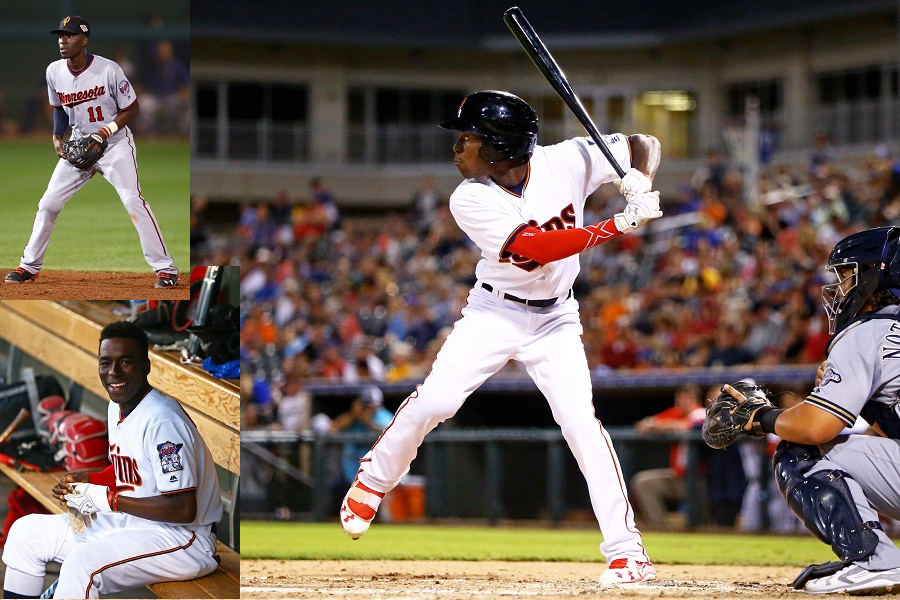 “For as long as I can remember, baseball was always something I wanted to play. My brother loved basketball, but I always wanted to be a baseball player,” Nick continued. “I played different sports, but since I was three or four years old, as long as I can remember, I had a bat in my hand. I always tried to follow my dad and follow my brother to the baseball field, so I always knew I wanted to be a baseball player.” His path involves a terrific career at Olympia High School in Orlando. He became the first-round pick of the Minnesota Twins, the fifth overall pick in the 2014 draft. Upon signing, he jumped straight to Elizabethton where he was much younger than most players in the league. The same is true of his first full season, 2015 in the Midwest League. Gordon went into the season knowing that he had to do something, work much harder, to push through what can be a long, difficult season in the heat and humidity of the Florida State League. Gordon put on 15 pounds of good muscle. Of last offseason, he said he “learned about resting, eating and maturing in the game. I’m from Florida, I know it’s hot. You know that you have to put on extra weight and extra pounds because later on in the season, you’re going to shed some pounds. Beyond that, Gordon said, “And, you’re going to get days when you’re tired and feeling sluggish, and the extra work in the offseason helps for days like that.” While he came into the 2016 season without any specific number goals, Gordon had some key goals for the year that come in more general terms. “Staying healthy is always a goal. It’s kind of in and out of your control, but it’s always a goal. I would definitely say consistency and things for that sort, good at-bats, going out and winning ball games.” While the 2016 Miracle did not win either half of its season, they did combine for a 70-68 record overall. Gordon had a good season. He hit .291/.335/.386 (.721) with 23 doubles, six triples and three home runs. Gordon was playing shortstop behind that impressive group of starting pitcher prospects that started the season in Ft. Myers. “They came out every day and competed and gave us a chance. That’s why we got off to the start that we did. Being behind (Stephen) Gonsalves, (Tyler) Jay, (Kohl) Stewart, those guys really throw the ball, and it was amazing to watch. To be honest, Felix Jorge was the most impressive to me. Every single time, and even last year, every time he takes the mound, it’s special.” Gordon and Jorge have also been teammates since 2014. Of his 2016 season, Gordon said, “A lot of good things happened, and a lot of bad things happened that I also learned from.” One of those good things for Gordon was being named a starter at shortstop in the Florida State League All-Star Game which was played at Hammond Stadium, home of the Miracle. “It definitely was fun. A lot of my family got to get out because it was close to home. They all got to see me play. I had fun. It was a blast. I played with some guys that are going to be great in this game, and a lot of guys who really love to compete and play the game hard. So it was definitely a great time.” Gordon noticed a difference between pitchers in the Midwest League and pitchers in the Florida State League. Specifically, he saw more and more of a tough pitch that hitters need to adapt to. “Pitchers definitely have a little better idea, and that’s every single level that you go to. They’re going to have a better idea. I saw a lot more cutters this year that you wouldn’t see elsewhere, like Low A and Rookie Ball. You definitely start seeing it in High-A, and it’s a very effective pitch. You’ve got to learn how to make adjustments on it. The cutter was definitely a challenge, but making the adjustments and starting to see the pitch and recognize the pitch helped me get ready for the next level.” Being in Florida, his parents were able to see him often during the season. With his brother playing across the peninsula with the Marlins, it was a lot more difficult. “My brother’s first game back (following suspension), I was able to go. We had a day off, so I was able to go there. That was pretty much it. Normally on a day off, I was getting rest and it turned into a thing where our schedules wouldn’t line up. My parents were always back and forth between Miami and Ft. Myers to see us. I definitely got to see my family a lot. Off days were spent well.” As the season was coming to an end, Gordon found out late in the season that he was going to the Arizona Fall League. (For much more on his time in the Fall League, click here.) Gordon hit a robust .346/.418/.444 (.862) with four doubles and two triples in his 21 games. Following the Fall League, Gordon took almost two weeks off, “just kind of hanging with my family.” At that point, he began his 2016/17 offseason work, doing many of the same things he did a year earlier, but to a new level. “I started my lifts, and then right after that, we were right back to ground balls and hitting in the cage. I worked out with Barry Larkin, Francisco Lindor, my brother and guys like that. They started, so I couldn't let them get too far ahead of me.” As baseball celebrates its new Hall of Fame class. Gordon is working out again with Hall of Famer Barry Larkin, as he has in previous years, in Orlando. Each day, Gordon is a sponge, observing everything and asking a ton of questions. “Everything that Mr. Larkin teaches, you know, I don’t want to miss that. I took two weeks, began working out, and we’ve been getting after it ever since then. Five days a week. We take Fridays and Saturdays off, depending on the week and if people had anything going on. We’re out there from about 9-2 every day. We definitely get after it.” Gordon continued, “I ask as many questions as I can. I like to watch Francisco (Lindor) and the way he does things. That’s the player I would love to be one day. Just to see the things that he’s able to do with the glove and the bat. I try to take a lot of things from him. And just to hear Mr. Larkin talk, he’s got so much wisdom. He can look at anyone taking a ground ball or anyone swinging a bat. He’ll be able to see things, and he doesn’t come up and tell you that you have to change your swing. He’ll help work with your swing. He’ll be there to be hands on. He’s definitely one of the most influential people in my baseball career, right after my dad and my brother. He’s been there for me, and I definitely am thankful for being able to work with them.” And there is a new participant at these Larkin group this year, someone else that Gordon can watch and learn from. “And, we started hitting with Carlos Gonzalez this year, so now we get to see the power too.” In recent weeks, Gordon got a phone call telling him that the Twins were inviting him to big league spring training as a non-roster invite. That Twins don’t just hand out spring training invites to young players unless they feel that the player can contribute and contribute fairly soon. “Brad (Steil) called. I was stoked about it. I called my dad. I called my mom. They were both very excited. It’s an honor and a blessing to get the invite to spring training, big league camp,” Gordon said. “It’ll be good to be around the veterans of the game, the veteran coaches in the game. It’s going to be a great experience. I’m definitely looking forward to it.” He’s got some goals for 2017 and also knows what the key is to his success. “Strength, definitely. I feel like strength will help me improve a lot of things in my game in the field and at the plate. Defensively, consistency. Getting my body in the right positions and making sure to do everything right. I always practice while preparing.” 2017 will be a big year for Gordon. He turned 21 years old in October, so he’ll be one of the youngest players in the Southern League next year. Many believe that the jump from A ball to AA ball is difficult, the most difficult. He has the talent to succeed, and his maturity and understanding of the game will only help. ---------------------------------------------------------------- Twins Minor League Director Brad Steil on Nick Gordon's tools: "Nick does a lot of things well and has the potential to grow in all areas of the game. His swing and hit skills are probably what stand out for most people. I think he has shown the ability to hit high end pitching and we also think he will develop power as he physically matures and gets stronger. Overall, Nick has an advanced feel for the game and I think we see that on both sides of the ball." Some in the industry question whether or not Gordon can stick at shortstop long-term. Here is Steil's response on that. "Defense is something that Nick works very hard at and he continues to show progress at SS. I have seen him make plays in the hole and I think his arm strength will improve as he gets stronger. With young shortstops, I think it’s normal to see some inconsistency in their play, and we’ve seen some of that with Nick along the way. However, as he gains experience and continues to learn the nuances of the position, I think we’ll see him iron out some of those mistakes and develop into a reliable major league defender."
 -
2017 Twins Off-Season top 60 Prospect List: 41-45
Seth Stohs commented on Thrylos's blog entry in Thrylos' Blog - select Tenth Inning Stretch posts
If Zach Granite becomes Ben Revere, he should be Top 10-15... Revere has put together a pretty solid MLB career. Granite isn't as strong as Revere (yet) and isn't as good defensively. Granite's arm is a little bit better though. -
Catching Up With Catcher Dan Rohlfing
Seth Stohs replied to Seth Stohs's topic in Twins Daily Front Page News
Probably. -
In His Words: Tanner English's 2016 Season
Seth Stohs replied to Seth Stohs's topic in Twins Daily Front Page News
Yeah, it'll be interesting to see how he does in AA Chattanooga this coming year. He's got the much-improved eye sight. He's got some confidence from playing well in the Fall League. He also mentioned that he's very excited to get to play for Jake Mauer again for many reasons. He's very competitive with his good friend Zach Granite, so they'll likely be pushing each other from a distance. It'll be a fun year for them.- 7 replies
-
- 1
-
-
- tanner english
- james beresford
- (and 2 more)
-
2017 Twins Minor League Transactions
Seth Stohs replied to Seth Stohs's topic in Twins Minor League Talk
They were also signed after the draft, as non-drafted free agents. -
English, Gordon On AFL And Each Other
Seth Stohs replied to Seth Stohs's topic in Twins Daily Front Page News
I think both have big league futures... -
2017 Twins Off-Season top 60 Prospect List: 41-45
Seth Stohs commented on Thrylos's blog entry in Thrylos' Blog - select Tenth Inning Stretch posts
I've always enjoyed that you've included DSL players in your rankings, but these two seem a bit surprising. Pedro Garcia is already 21, wasn't signed until he was 19 or 20. Maldanado seems intriguing, but another guy who didn't sign until late. There are always late bloomers, and I'm the last one to worry about age-to-level-of-competition. Those two are just surprising. Nice to see your keeping Peterson in the rankings despite a frustrating 2016 season for him that saw him go backwards. He also rarely hits 95. He sits more in the 90-92 range. -
Recently, Twins Daily caught up with Twins prospects Tanner English and Nick Gordon. Earlier this week, we had the story of Tanner English, In His Own Words. Tomorrow, we'll have a full story on Nick Gordon. Today, we discussed their shared experience in the Arizona Fall League. The two also are great friends and have huge respect for each other so we asked each to talk a little about the other. Image courtesy of Linwood Ferguson (photos of Tanner English and Nick Gordon) Recently, Twins Daily caught up with Twins prospects Tanner English and Nick Gordon. Earlier this week, we had the story of Tanner English, In His Own Words. Tomorrow, we'll have a full story on Nick Gordon. Today, we discussed their shared experience in the Arizona Fall League. The two also are great friends and have huge respect for each other so we asked each to talk a little about the other. The Arizona Fall League provides an opportunity for prospects to play an extra 20 to 25 games against some premium competition. There are several reasons for a team to select players to participate. Once selected, players have different goals for what they’d like to accomplish while playing in the Fall League. Recently we caught up with Tanner English and Nick Gordon and discussed their time in the Arizona Fall League and more. Gordon was the fifth overall pick in the 2014 draft. English was the team’s 11th round pick in 2014 out of the University of South Carolina. English is a fan of country music. He admits, “I am a country music fanatic. I love old country. I like the new stuff. I like everything.” He and Gordon are very close, having been teammates at each level since signing. English continued, “He hates it, so whenever he’s around, I blare it.” ARIZONA FALL LEAGUE Late in the 2016 season, the two were playing for the Ft. Myers Miracle in a series against the Tampa Yankees when they were first asked about possibly going to Arizona for the Fall League. Both were excited about the opportunity. As we learned the other day, English missed a large portion of his season due to Lasik surgery which was followed by an ankle injury that cost him more time. He hoped that “the good Lord had a plan.” Maybe the Arizona Fall League was that opportunity. As Twins minor league director Brad Steil recently told Twins Daily, “I think the AFL was something we were considering once he decided to have the procedure done. Whenever a player misses time because of an injury, we know that the AFL and/or instructional league are options to make up some of those at-bats or innings. Considering how Tanner finished the year, we thought that facing AFL pitching would be a nice step for him in his development progression.” Nick Gordon got through his season in the heat of the Florida State League weary but generally healthy. He spent a week on the DL midseason with a concussion, but other than that, it was a relatively healthy season. For Gordon,the Twins’ reasons for wanting him to play in the AFL were a little different. According to Steil, “Considering the season Nick had with the Miracle, we thought the AFL would be a natural progression in his development and would help prepare him for the jump to Double-A.” Gordon acknowledged that he wasn’t even thinking about the Fall League when he found out, but he was very excited for the chance to play in Arizona. “It definitely was a blessing when I found out. I wasn’t really expecting it at first. I was just going out there every single day trying to compete. I hadn’t thought about the offseason yet, and when I did find out, I was definitely happy about it.” After missing so much time English’s goal for the Fall League sounds pretty simplistic, but really it was anything but. “One of the things I wanted to work on going there was having more competitive at bats. That’s a pretty broad statement, but I missed a lot of time. So when I came back, I wanted to be able to use my eyes to my advantage. At first, it was tough because I had been hitting one way for so long that I had to make an adjustment. It sounds stupid, but I just had to be able to see the ball, you know,” English continued. “Going out to Arizona, I think I had played about 25 games before I went out there to finish out the year. I had a little bit of experience, but those guys had all been playing 100 games this year and I was on game number 30 or so. So, I was pretty far behind the other guys. I just wanted to go out there and have competitive at bats.” Gordon was one of the youngest players in the Arizona Fall League during the season, though that is nothing new for the phenom. He had a decent idea of what to expect, at least in terms of the types of talent. “Definitely knew the competition was going to be good, but I knew I could go out there and compete. It’s why I train so hard all season doing the things that I do so I could just go out there and have fun. I knew going out there that there were guys going to the big leagues or had even played in the big leagues.” He also was given some good advice from a 21-year-MLB veteran, his father Tom Gordon. “My dad was telling me that every single pitch, every single game, you can’t take anything for granted. It’s the same as the regular season. You’re going to play some guys who are ready for the big leagues.” Nick Gordon led the Surprise Saguaros in several categories including batting average (.346), on-base percentage (.418), triples (2) and stolen bases (5). His .444 slugging percentage trailed only two teammates, one of which was Twins teammate Mitch Garver. Gordon also had just two errors in his 21 games played. For English, his Fall League started out slow, but he got going about halfway through the season. Though his overall batting average was just .239, he got on base 33.3% of the time. His 21 games played were just one behind the team leaders. He also said that he absorbed and learned whether he was playing or not. “Even if I wasn’t playing, I could go out there and watch some of the best dudes in baseball.” English noted, “When I wasn’t playing, I could be learning just by watching other people, either on my team or the other team. When I was playing, you learn a ton just from experience.” Gordon was selected to play in the annual Fall Stars game, something he really enjoyed. He said of his experience, “It was a great time, and to be able to meet some of those guys and play with those guys, and be in the Fall Stars game. It was fun. I wouldn’t change it for anything.” Gordon said he got a signed bat from all of his teammates, “which was pretty awesome.” English also had a great time. “The Fall League was a blast. As everybody knows, the competition is pretty crazy out there. Everyone is really good. It was a huge learning experience, and I’m just glad I got the opportunity to do it.” Remember in Tuesday’s article when English received his promotion to Rochester for the final five games. He had to call his parents (at 1 a.m.), who were on their way to Ft. Myers to watch him play, that they might as well turn around. The Saguaros played in the AFL championship game which airs on MLB Network. “Playing on MLB Network was cool. That was awesome. It’s one of the things that a lot of guys can’t say that they’ve been able to do. My parents haven’t seen me play in two years, I don’t think. So it was cool. They were able to turn the TV on and watch me play.” Gordon and English were both drafted by the Twins in 2014. Gordon with the fifth overall pick. English with their 11th round pick. They played that summer together in Elizabethton. In 2015 they played together in Cedar Rapids. They were teammates with the Miracle in 2016 when English was healthy. And, as we just wrote about, they were teammates in the Arizona Fall League. They have roomed together and have become very close. I asked each about what they have seen from each other in the time since they were drafted. ENGLISH ON GORDON What has Tanner English seen from Nick Gordon over these three seasons? How has he grown, and what makes him one of the top prospects in the game? English emphatically paused the interviewer and said, “In the game, and don’t get that wrong. Not just in the system.” English shared that he sent Gordon a text recently that literally said, “How the heck do you make hitting look so easy? Why is it so easy to you?” “He is so good, and obviously his numbers hitting speak for themselves. Everybody knew he was a good hitter in high school. He just needed to get stronger, be able to control the bat a little more, hit the ball a little harder, which he’s don’t” English continued, “He’s gotten a lot better in the field. He is absolutely good enough to stay at shortstop. He works his tail off. He just turned 21 in the past year, and he acts like he’s a lot older. He’s grown up off the field as a man. He’s matured really fast which has helped him a lot. It’s been fun to watch him. It’s been fun to play with him.” English is Gordon’s biggest fan, and cheerleader. “If there are videos of him making a sick play in the field, I can promise you I’m in the outfield, running in, pumping my fist in the air and screaming. You may not see that half the time, but I promise I’m doing that. I’m his #1 fan out there. And if I make a sick catch in the outfield, I look, and he’s the closest one to me. He’s pointing at me, clapping and yelling ‘Yes, sir.’ He’s a great teammate and a great friend. And I really look forward to playing with him and learning from him as we go.” GORDON ON ENGLISH Gordon is equally enthusiastic when talking about Tanner English. And when it comes to English, the first thing people want to talk about is his defense. According to minor league director Brad Steil, “Certainly when you evaluate Tanner, his speed, arm, and overall defensive skills stand out. With his instincts and athletic ability, we think he has the potential to be an above average defender in the big leagues.” Gordon adds, “He can honestly play the outfield with the best of them.I don't think I’ve seen too many better than Tanner in centerfield. He’s definitely reliable out there.” But he can be more than just his great glove, Gordon says. “He can do so many things with the bat as well. And speed. It’s ridiculous. It’s unbelievable to watch him run. I’ve seen a couple of people in my life run like that, and one of them is my brother.” That’s pretty fast! While they are great friends, Gordon enjoys watching English play the game. He observes English, and they talk to each other about their games. And then they cheer for each other. “It’s the way he plays the game. We have so many conversations about hitting. To see somebody grow and learn is great. To listen to some of the things that we talk about and then we see each other doing it, it pumps me up. It’s fun to be able to play with him and pick his brain and stuff like that, and to become so close.” These two have a strong bond and a mutual respect for one another on and off the field. They enjoy competing with each other and cheering for each other. They can both acknowledge the other’s strengths. They both have big league futures, and they’ll help each other reach their potential. View full article
- 3 replies
-
- 3
-
-
- nick gordon
- tanner english
- (and 3 more)
-
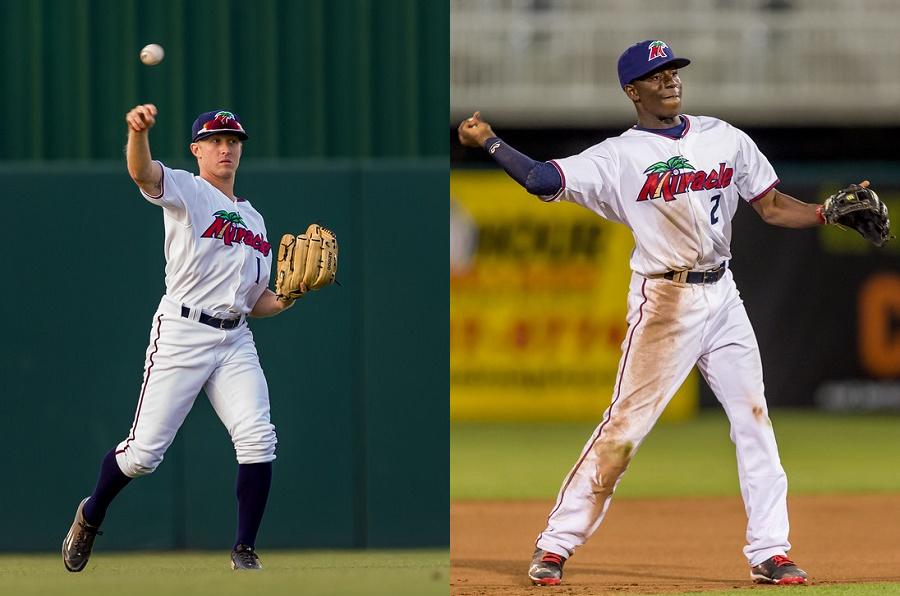 The Arizona Fall League provides an opportunity for prospects to play an extra 20 to 25 games against some premium competition. There are several reasons for a team to select players to participate. Once selected, players have different goals for what they’d like to accomplish while playing in the Fall League. Recently we caught up with Tanner English and Nick Gordon and discussed their time in the Arizona Fall League and more. Gordon was the fifth overall pick in the 2014 draft. English was the team’s 11th round pick in 2014 out of the University of South Carolina. English is a fan of country music. He admits, “I am a country music fanatic. I love old country. I like the new stuff. I like everything.” He and Gordon are very close, having been teammates at each level since signing. English continued, “He hates it, so whenever he’s around, I blare it.” ARIZONA FALL LEAGUE Late in the 2016 season, the two were playing for the Ft. Myers Miracle in a series against the Tampa Yankees when they were first asked about possibly going to Arizona for the Fall League. Both were excited about the opportunity. As we learned the other day, English missed a large portion of his season due to Lasik surgery which was followed by an ankle injury that cost him more time. He hoped that “the good Lord had a plan.” Maybe the Arizona Fall League was that opportunity. As Twins minor league director Brad Steil recently told Twins Daily, “I think the AFL was something we were considering once he decided to have the procedure done. Whenever a player misses time because of an injury, we know that the AFL and/or instructional league are options to make up some of those at-bats or innings. Considering how Tanner finished the year, we thought that facing AFL pitching would be a nice step for him in his development progression.” Nick Gordon got through his season in the heat of the Florida State League weary but generally healthy. He spent a week on the DL midseason with a concussion, but other than that, it was a relatively healthy season. For Gordon,the Twins’ reasons for wanting him to play in the AFL were a little different. According to Steil, “Considering the season Nick had with the Miracle, we thought the AFL would be a natural progression in his development and would help prepare him for the jump to Double-A.” Gordon acknowledged that he wasn’t even thinking about the Fall League when he found out, but he was very excited for the chance to play in Arizona. “It definitely was a blessing when I found out. I wasn’t really expecting it at first. I was just going out there every single day trying to compete. I hadn’t thought about the offseason yet, and when I did find out, I was definitely happy about it.” After missing so much time English’s goal for the Fall League sounds pretty simplistic, but really it was anything but. “One of the things I wanted to work on going there was having more competitive at bats. That’s a pretty broad statement, but I missed a lot of time. So when I came back, I wanted to be able to use my eyes to my advantage. At first, it was tough because I had been hitting one way for so long that I had to make an adjustment. It sounds stupid, but I just had to be able to see the ball, you know,” English continued. “Going out to Arizona, I think I had played about 25 games before I went out there to finish out the year. I had a little bit of experience, but those guys had all been playing 100 games this year and I was on game number 30 or so. So, I was pretty far behind the other guys. I just wanted to go out there and have competitive at bats.” Gordon was one of the youngest players in the Arizona Fall League during the season, though that is nothing new for the phenom. He had a decent idea of what to expect, at least in terms of the types of talent. “Definitely knew the competition was going to be good, but I knew I could go out there and compete. It’s why I train so hard all season doing the things that I do so I could just go out there and have fun. I knew going out there that there were guys going to the big leagues or had even played in the big leagues.” He also was given some good advice from a 21-year-MLB veteran, his father Tom Gordon. “My dad was telling me that every single pitch, every single game, you can’t take anything for granted. It’s the same as the regular season. You’re going to play some guys who are ready for the big leagues.” Nick Gordon led the Surprise Saguaros in several categories including batting average (.346), on-base percentage (.418), triples (2) and stolen bases (5). His .444 slugging percentage trailed only two teammates, one of which was Twins teammate Mitch Garver. Gordon also had just two errors in his 21 games played. For English, his Fall League started out slow, but he got going about halfway through the season. Though his overall batting average was just .239, he got on base 33.3% of the time. His 21 games played were just one behind the team leaders. He also said that he absorbed and learned whether he was playing or not. “Even if I wasn’t playing, I could go out there and watch some of the best dudes in baseball.” English noted, “When I wasn’t playing, I could be learning just by watching other people, either on my team or the other team. When I was playing, you learn a ton just from experience.” Gordon was selected to play in the annual Fall Stars game, something he really enjoyed. He said of his experience, “It was a great time, and to be able to meet some of those guys and play with those guys, and be in the Fall Stars game. It was fun. I wouldn’t change it for anything.” Gordon said he got a signed bat from all of his teammates, “which was pretty awesome.” English also had a great time. “The Fall League was a blast. As everybody knows, the competition is pretty crazy out there. Everyone is really good. It was a huge learning experience, and I’m just glad I got the opportunity to do it.” Remember in Tuesday’s article when English received his promotion to Rochester for the final five games. He had to call his parents (at 1 a.m.), who were on their way to Ft. Myers to watch him play, that they might as well turn around. The Saguaros played in the AFL championship game which airs on MLB Network. “Playing on MLB Network was cool. That was awesome. It’s one of the things that a lot of guys can’t say that they’ve been able to do. My parents haven’t seen me play in two years, I don’t think. So it was cool. They were able to turn the TV on and watch me play.” Gordon and English were both drafted by the Twins in 2014. Gordon with the fifth overall pick. English with their 11th round pick. They played that summer together in Elizabethton. In 2015 they played together in Cedar Rapids. They were teammates with the Miracle in 2016 when English was healthy. And, as we just wrote about, they were teammates in the Arizona Fall League. They have roomed together and have become very close. I asked each about what they have seen from each other in the time since they were drafted. ENGLISH ON GORDON What has Tanner English seen from Nick Gordon over these three seasons? How has he grown, and what makes him one of the top prospects in the game? English emphatically paused the interviewer and said, “In the game, and don’t get that wrong. Not just in the system.” English shared that he sent Gordon a text recently that literally said, “How the heck do you make hitting look so easy? Why is it so easy to you?” “He is so good, and obviously his numbers hitting speak for themselves. Everybody knew he was a good hitter in high school. He just needed to get stronger, be able to control the bat a little more, hit the ball a little harder, which he’s don’t” English continued, “He’s gotten a lot better in the field. He is absolutely good enough to stay at shortstop. He works his tail off. He just turned 21 in the past year, and he acts like he’s a lot older. He’s grown up off the field as a man. He’s matured really fast which has helped him a lot. It’s been fun to watch him. It’s been fun to play with him.” English is Gordon’s biggest fan, and cheerleader. “If there are videos of him making a sick play in the field, I can promise you I’m in the outfield, running in, pumping my fist in the air and screaming. You may not see that half the time, but I promise I’m doing that. I’m his #1 fan out there. And if I make a sick catch in the outfield, I look, and he’s the closest one to me. He’s pointing at me, clapping and yelling ‘Yes, sir.’ He’s a great teammate and a great friend. And I really look forward to playing with him and learning from him as we go.” GORDON ON ENGLISH Gordon is equally enthusiastic when talking about Tanner English. And when it comes to English, the first thing people want to talk about is his defense. According to minor league director Brad Steil, “Certainly when you evaluate Tanner, his speed, arm, and overall defensive skills stand out. With his instincts and athletic ability, we think he has the potential to be an above average defender in the big leagues.” Gordon adds, “He can honestly play the outfield with the best of them.I don't think I’ve seen too many better than Tanner in centerfield. He’s definitely reliable out there.” But he can be more than just his great glove, Gordon says. “He can do so many things with the bat as well. And speed. It’s ridiculous. It’s unbelievable to watch him run. I’ve seen a couple of people in my life run like that, and one of them is my brother.” That’s pretty fast! While they are great friends, Gordon enjoys watching English play the game. He observes English, and they talk to each other about their games. And then they cheer for each other. “It’s the way he plays the game. We have so many conversations about hitting. To see somebody grow and learn is great. To listen to some of the things that we talk about and then we see each other doing it, it pumps me up. It’s fun to be able to play with him and pick his brain and stuff like that, and to become so close.” These two have a strong bond and a mutual respect for one another on and off the field. They enjoy competing with each other and cheering for each other. They can both acknowledge the other’s strengths. They both have big league futures, and they’ll help each other reach their potential.
 -
At 5:00 on Wednesday, Jeff Idelson announced that three players had been voted to become the 2017 Hall of Fame class. Jeff Bagwell and Tim Raines made it after falling just short a year ago. On his first ballot, Ivan “Pudge” Rodriguez also was named a Hall of Famer, baseball’s highest honor. Certainly it was a huge day for all three new Hall of Famers. Certainly a big day for Puerto Rico. And without question, it was a big day for Dereck Rodriguez, Twins prospect and son of the first-ballot Hall of Famer. Image courtesy of Linwood Ferguson (photo of Dereck Rodriguez) At 5:00 on Wednesday, Jeff Idelson announced that three players had been voted to become the 2017 Hall of Fame class. Jeff Bagwell and Tim Raines made it after falling just short a year ago. On his first ballot, Ivan “Pudge” Rodriguez also was named a Hall of Famer, baseball’s highest honor. Certainly it was a huge day for all three new Hall of Famers. Certainly a big day for Puerto Rico. And without question, it was a big day for Dereck Rodriguez, Twins prospect and son of the first-ballot Hall of Famer. Making the Hall of Fame is a huge accomplishment. With Rodriguez voted in, it was also a big day for Puerto Rico. He became just the fourth player born in Puerto Rico to be named a Hall of Famer. Consider all of the great players to come from Puerto Rico, only Roberto Clemente, Orlando Cepeda and Roberto Alomar are in the Hall of Fame in Cooperstown. Lean Marrero spent his summer playing for the GCL Twins. Very young, he has a lot of athletic talent. Here are his thoughts on this important day for Ivan Rodriguez and for Puerto Rico. “It gives me satisfaction to hear that a Puerto Rican has reached the Hall of Fame. It inspires me to stay focused on what I want my career to be like It serves as an example to always exceed any limitation.” JJ Fernandez, a Twins minor league outfielder who spent his 2016 season in Cedar Rapids and had been a catcher before 2016, was excited for Rodriguez. “For me, he deserves it. He’s one of the best catchers baseball has ever seen. It really means a lot for sure. Everybody in Puerto Rico is very happy and proud.” Another 2016 Kernel, Nelson Molina, was very excited as well. “It means so much to me. Really, it does. Since I was a little kid, he was always my favorite player. I know it’s not only me, but all the young players from Puerto Rico have this feeling of excitement and feel extremely proud, knowing that dreams do come true with hard work, dedication and a lot of sacrifice.” Molina continued, “I got the pleasure of not only meeting him, but to get to know him on a personal level. All I can say is that he is a great human being who has given me advice on how to be a better player. As I mentioned before, I know it’s not only me, but all of Puerto Rico feels extremely proud of Ivan for joining a select group of elite baseball players in the Hall of Fame, and putting our island, Puerto Rico, very high as have Roberto Clemente, Roberto Alomar and Orlando Cepeda.” “It means a lot,” said Dereck Rodriguez, another member of the 2016 Cedar Rapids Kernels roster from Puerto Rico. He continued, “Hopefully there’s one next year too in Edgar Martinez. You never know. It could be one year, five years, twenty years. It’s a very special moment for Puerto Ricans and for the island. I know they’re going crazy right now. I’ve received phone calls and FaceTimed with people. It's nuts over there right now. It’s a fun time.” Dereck Rodriguez is excited for the island of Puerto Rico, where he has been pitching (and well) this winter. But as the son of Ivan Rodriguez, Dereck is understandably excited for his dad and his family. On Tuesday, he flew to Dallas to be with his father. It was important for him to be there. “It means a lot to me. This is where I was born. This is where everything started for him. It’s where things started for him and for me,” he continued, “It was big. I was there from Day 1. I went through the journey with him. I spent a lot of nights with him in the hotel in the summers. It means a lot. It was important for me to be there with him for that special moment.” Just ten minutes before 5:00, the phone rang at Ivan Rodriguez’s home. On the other end, the Hall of Fame. Seconds later, Pudge clenched his fist and raised his arm as tears began to form in the corners of his eyes. The first person to give him a hug was his son, Dereck. Dereck Rodriguez said, “It was a special moment. Yeah, I got the first hug in. It was a very special moment. I couldn’t hold back any tears.” Dereck Rodriguez has a very different perspective on the game of baseball than most people, even most minor leaguers. It might be surprising to some to learn when he realized just how difficult this game is and the challenges it can present. “Before I signed, I always just thought of this as just a game. After I signed and had been in the minor leagues and been through all of the struggles… It’s tough. It’s tough. And to be a Hall of Famer, and to be the caliber of player that he was, it’s not easy. So I understand 100% how he must feel after all of the hard work and sacrifice that he put in. It paid off.” Rodriguez has said before that he spent a lot of time with his dad growing up. He saw it up close. He had a great view of the game and got to know many of his dad’s teammates, but for him, it was about more than that. In fact, other things were likely more important much of the time. “When I used to come to the field when I was younger, I used to spend my time making paintballs and playing pickle and all that stuff with the other kids.” Now? As Dereck Rodriguez stood in the outfield at The Ballpark in Arlington, looking in as his father conducted a press conference on the infield, his mind was racing and full of excitement. “I go to a baseball game, and wow, I want to be here. I’m here standing in the outfield. I’m wishing and hoping. I can’t wait to be hopefully one day be pitching on that mound, in front of this packed stadium, in the town that I lived in and grew up, and it pretty much raised me for a lot of years.” Dereck Rodriguez is one proud son. “The feeling that I have right now for my dad, and me honestly, I can’t believe it that my dad is a Hall of Famer.” That was the sentiment he felt when he posted the following on twitter: Rodriguez noted, “To be honest, it was a longer tweet but you can only put so many characters, so I had to make it shorter.” Drafted in the 6th round of the 2010 draft out of high school in Florida, Rodriguez spent the first three years of his professional career as a hitter. At that point, Rodriguez and the Twins brass made the decision for him to move to the mound, to become a pitcher in 2014. In 2015, he was the Appalachian League pitcher of the year. His father gets to a handful of Dereck’s games each year. “He’s been supportive. He tries to make it out there as much as he can.” Ivan Rodriguez is a special assistant to the GM of the Texas Rangers. It’s a title similar to what the Twins recently named Torii Hunter, Michael Cuddyer and LaTroy Hawkins. He also does pregame and postgame shows for Fox Sports Southwest during the season. This year, Dereck Rodriguez moved up to Cedar Rapids to start the season. He really struggled for the first two months before taking off. Starting in mid-June, he started pitching much better. In fact, he had a strong six-week stretch for the Kernels and earned a promotion to Ft. Myers where he pitched well in five starts to end the season. “I started throwing the ball down a bit more. It was honestly that confidence. I didn’t have as much confidence as I should. I started throwing the two-seam a lot more, and that helped a lot. Started getting a lot more ground balls instead of fly balls. It was a combination of things. But that main thing was that I just needed to build up my confidence. It paid off. I got moved up to High-A and I just kept doing it up there.” This winter, as we mentioned, he has been working out the bullpen for Mayaguez. He pitches an inning or two each weekend. In 13 games and 17.2 innings, he is 2-1 with a 1.02 ERA. He has been very appreciative of the opportunity he was given and gained a lot from it. “It was special. It was fun. They gave me the confidence that they believed in me to throw me in those late-game situations. Puerto Rico, compared to the other leagues, may not be the highest ranked, but it’s really good competition. They have AA, AAA, big league guys playing there. It was a lot of fun. It taught me a lot. I worked on a couple of things. It taught me how to pitch in different situations, key situations late in the game. It taught me a lot.” 2017 is a big year for Rodriguez. At the end of the season, he could become a free agent if he chooses. So what are his goals? “I think any player in the minors, the ultimate goal is to go up as much as he can; AA, AAA, or even the big leagues. I’m taking some time off right now with my arm to give it some rest before getting it going again. Trying to make AA right out of spring training and see what happens from there. Hopefully I do well enough and they see the hard work that I do during the year and then, we’ll see, maybe move up to AAA and maybe the big leagues in September.” He’d like to get a little rest before spring training starts in a little over a month. But the next few days will not allow for it. He is going to be a bit busy, doing some traveling with his dad. They are flying up to New York tonight, expected to arrive in Cooperstown well after midnight. “It’s going to be a couple of fun, hectic days.” Tomorrow afternoon, Ivan Rodriguez will join Jeff Bagwell and Tim Raines at the baseball Hall of Fame to see the museum and speak with more press. Dereck says that he has been to Cooperstown before, but this will certainly be different. “I’ve been there before, but as a visitor. Last time I went, I was 12 years old. Now I get to go and see everything, appreciate everything a lot more now that I’m older.” What an experience! Some may say that Johnny Bench is the greatest catcher in baseball history. Some will say that title goes to Yogi Berra. In baseball’s 150-year existence, it is certain that Ivan Rodriguez is right there at or near the top of the list of baseball’s great catchers. His son Dereck is very happy and very proud. As he should be. “He worked his butt off to be where he is today. I honestly don’t think there’s been a harder working person than he has been. During the offseason, his workout program, and even during the season, he was the first one to get to the stadium and the last one to leave. He worked his butt off to get to where he is today.” View full article
- 4 replies
-
- 2
-
-
- dereck rodriguez
- ivan rodriguez
- (and 3 more)
-
Twins Prospect Proud Of Baseball's Newest Hall Of Famer
Seth Stohs posted an article in Minor Leagues
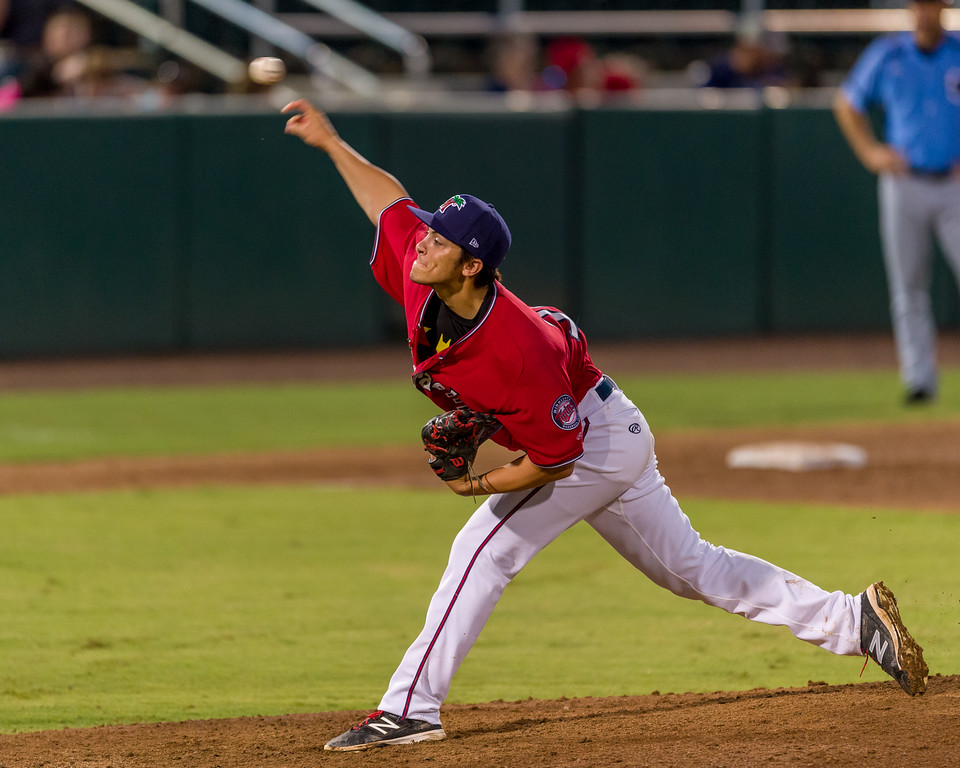 Making the Hall of Fame is a huge accomplishment. With Rodriguez voted in, it was also a big day for Puerto Rico. He became just the fourth player born in Puerto Rico to be named a Hall of Famer. Consider all of the great players to come from Puerto Rico, only Roberto Clemente, Orlando Cepeda and Roberto Alomar are in the Hall of Fame in Cooperstown. Lean Marrero spent his summer playing for the GCL Twins. Very young, he has a lot of athletic talent. Here are his thoughts on this important day for Ivan Rodriguez and for Puerto Rico. “It gives me satisfaction to hear that a Puerto Rican has reached the Hall of Fame. It inspires me to stay focused on what I want my career to be like It serves as an example to always exceed any limitation.” JJ Fernandez, a Twins minor league outfielder who spent his 2016 season in Cedar Rapids and had been a catcher before 2016, was excited for Rodriguez. “For me, he deserves it. He’s one of the best catchers baseball has ever seen. It really means a lot for sure. Everybody in Puerto Rico is very happy and proud.” Another 2016 Kernel, Nelson Molina, was very excited as well. “It means so much to me. Really, it does. Since I was a little kid, he was always my favorite player. I know it’s not only me, but all the young players from Puerto Rico have this feeling of excitement and feel extremely proud, knowing that dreams do come true with hard work, dedication and a lot of sacrifice.” Molina continued, “I got the pleasure of not only meeting him, but to get to know him on a personal level. All I can say is that he is a great human being who has given me advice on how to be a better player. As I mentioned before, I know it’s not only me, but all of Puerto Rico feels extremely proud of Ivan for joining a select group of elite baseball players in the Hall of Fame, and putting our island, Puerto Rico, very high as have Roberto Clemente, Roberto Alomar and Orlando Cepeda.” “It means a lot,” said Dereck Rodriguez, another member of the 2016 Cedar Rapids Kernels roster from Puerto Rico. He continued, “Hopefully there’s one next year too in Edgar Martinez. You never know. It could be one year, five years, twenty years. It’s a very special moment for Puerto Ricans and for the island. I know they’re going crazy right now. I’ve received phone calls and FaceTimed with people. It's nuts over there right now. It’s a fun time.” Dereck Rodriguez is excited for the island of Puerto Rico, where he has been pitching (and well) this winter. But as the son of Ivan Rodriguez, Dereck is understandably excited for his dad and his family. On Tuesday, he flew to Dallas to be with his father. It was important for him to be there. “It means a lot to me. This is where I was born. This is where everything started for him. It’s where things started for him and for me,” he continued, “It was big. I was there from Day 1. I went through the journey with him. I spent a lot of nights with him in the hotel in the summers. It means a lot. It was important for me to be there with him for that special moment.” Just ten minutes before 5:00, the phone rang at Ivan Rodriguez’s home. On the other end, the Hall of Fame. Seconds later, Pudge clenched his fist and raised his arm as tears began to form in the corners of his eyes. The first person to give him a hug was his son, Dereck. Dereck Rodriguez said, “It was a special moment. Yeah, I got the first hug in. It was a very special moment. I couldn’t hold back any tears.” Dereck Rodriguez has a very different perspective on the game of baseball than most people, even most minor leaguers. It might be surprising to some to learn when he realized just how difficult this game is and the challenges it can present. “Before I signed, I always just thought of this as just a game. After I signed and had been in the minor leagues and been through all of the struggles… It’s tough. It’s tough. And to be a Hall of Famer, and to be the caliber of player that he was, it’s not easy. So I understand 100% how he must feel after all of the hard work and sacrifice that he put in. It paid off.” Rodriguez has said before that he spent a lot of time with his dad growing up. He saw it up close. He had a great view of the game and got to know many of his dad’s teammates, but for him, it was about more than that. In fact, other things were likely more important much of the time. “When I used to come to the field when I was younger, I used to spend my time making paintballs and playing pickle and all that stuff with the other kids.” Now? As Dereck Rodriguez stood in the outfield at The Ballpark in Arlington, looking in as his father conducted a press conference on the infield, his mind was racing and full of excitement. “I go to a baseball game, and wow, I want to be here. I’m here standing in the outfield. I’m wishing and hoping. I can’t wait to be hopefully one day be pitching on that mound, in front of this packed stadium, in the town that I lived in and grew up, and it pretty much raised me for a lot of years.” Dereck Rodriguez is one proud son. “The feeling that I have right now for my dad, and me honestly, I can’t believe it that my dad is a Hall of Famer.” That was the sentiment he felt when he posted the following on twitter: Rodriguez noted, “To be honest, it was a longer tweet but you can only put so many characters, so I had to make it shorter.” Drafted in the 6th round of the 2010 draft out of high school in Florida, Rodriguez spent the first three years of his professional career as a hitter. At that point, Rodriguez and the Twins brass made the decision for him to move to the mound, to become a pitcher in 2014. In 2015, he was the Appalachian League pitcher of the year. His father gets to a handful of Dereck’s games each year. “He’s been supportive. He tries to make it out there as much as he can.” Ivan Rodriguez is a special assistant to the GM of the Texas Rangers. It’s a title similar to what the Twins recently named Torii Hunter, Michael Cuddyer and LaTroy Hawkins. He also does pregame and postgame shows for Fox Sports Southwest during the season. This year, Dereck Rodriguez moved up to Cedar Rapids to start the season. He really struggled for the first two months before taking off. Starting in mid-June, he started pitching much better. In fact, he had a strong six-week stretch for the Kernels and earned a promotion to Ft. Myers where he pitched well in five starts to end the season. “I started throwing the ball down a bit more. It was honestly that confidence. I didn’t have as much confidence as I should. I started throwing the two-seam a lot more, and that helped a lot. Started getting a lot more ground balls instead of fly balls. It was a combination of things. But that main thing was that I just needed to build up my confidence. It paid off. I got moved up to High-A and I just kept doing it up there.” This winter, as we mentioned, he has been working out the bullpen for Mayaguez. He pitches an inning or two each weekend. In 13 games and 17.2 innings, he is 2-1 with a 1.02 ERA. He has been very appreciative of the opportunity he was given and gained a lot from it. “It was special. It was fun. They gave me the confidence that they believed in me to throw me in those late-game situations. Puerto Rico, compared to the other leagues, may not be the highest ranked, but it’s really good competition. They have AA, AAA, big league guys playing there. It was a lot of fun. It taught me a lot. I worked on a couple of things. It taught me how to pitch in different situations, key situations late in the game. It taught me a lot.” 2017 is a big year for Rodriguez. At the end of the season, he could become a free agent if he chooses. So what are his goals? “I think any player in the minors, the ultimate goal is to go up as much as he can; AA, AAA, or even the big leagues. I’m taking some time off right now with my arm to give it some rest before getting it going again. Trying to make AA right out of spring training and see what happens from there. Hopefully I do well enough and they see the hard work that I do during the year and then, we’ll see, maybe move up to AAA and maybe the big leagues in September.” He’d like to get a little rest before spring training starts in a little over a month. But the next few days will not allow for it. He is going to be a bit busy, doing some traveling with his dad. They are flying up to New York tonight, expected to arrive in Cooperstown well after midnight. “It’s going to be a couple of fun, hectic days.” Tomorrow afternoon, Ivan Rodriguez will join Jeff Bagwell and Tim Raines at the baseball Hall of Fame to see the museum and speak with more press. Dereck says that he has been to Cooperstown before, but this will certainly be different. “I’ve been there before, but as a visitor. Last time I went, I was 12 years old. Now I get to go and see everything, appreciate everything a lot more now that I’m older.” What an experience! Some may say that Johnny Bench is the greatest catcher in baseball history. Some will say that title goes to Yogi Berra. In baseball’s 150-year existence, it is certain that Ivan Rodriguez is right there at or near the top of the list of baseball’s great catchers. His son Dereck is very happy and very proud. As he should be. “He worked his butt off to be where he is today. I honestly don’t think there’s been a harder working person than he has been. During the offseason, his workout program, and even during the season, he was the first one to get to the stadium and the last one to leave. He worked his butt off to get to where he is today.”
 -
2017 Twins Minor League Transactions
Seth Stohs replied to Seth Stohs's topic in Twins Minor League Talk
Yup, not a surprise. He was one of 4-5 pitchers that the Twins signed AFTER the draft. Martinez struggled in the GCL. The Others: Garrett Kelly (Wake Forest) had ups and downs in the GCL, but he just started pitching a couple years ago and hits 96. Zach Strecker (Kentucky) is a good innings-eater. Bo Hellquist (Minnesota-Duluth) pitched well in the GCL. Tyler Fox (Nebraska-Omaha) did pretty well too. Brady Anderson (FGCU) pitched well in the GCL and then did alright in Cedar Rapids too. -
2017 Twins Minor League Transactions
Seth Stohs replied to Seth Stohs's topic in Twins Minor League Talk
Per Baseball America, Daniel Martinez was also released.
