



Seth Stohs
-
Posts
25,912 -
Joined
-
Last visited
-
Days Won
109
Content Type
Profiles
News
Minnesota Twins Videos
2026 Minnesota Twins Top Prospects Ranking
2022 Minnesota Twins Draft Picks
Minnesota Twins Free Agent & Trade Rumors, Notes, & Tidbits
Guides & Resources
2023 Minnesota Twins Draft Picks
The Minnesota Twins Players Project
2024 Minnesota Twins Draft Picks
2025 Minnesota Twins Draft Pick Tracker
2026 Minnesota Twins Draft Tracker: Picks & Bonuses
Forums
Blogs
Events
Store
Downloads
Gallery
Everything posted by Seth Stohs
-
I like the deal. I have to assume he'll have an opt-out sometime around March 28th or something, meaning if he isn't on the Opening Day roster, he' can become a free agent.
-
Get To Know: Twins RHP Prospect Juan Gamez
Seth Stohs replied to Seth Stohs's topic in Twins Daily Front Page News
Why? He'll be a bullpen guy. Fastball-Slider is a great combination. -
Pretty sure that's not an issue at all.
-
Adding Drew Stubbs fits the description as well. Great speed/defense. Is JB Shuck a defensive specialist?
-
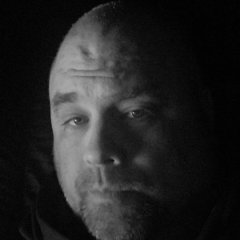
Juan Gamez grew up in Tucson, Arizona, went to junior college in his hometown for two years and then made the trek north to North Dakota State University where he spent his final two college years. His story is quite interesting. He was a catcher in high school and college. The Twins drafted him as a catcher but within a couple of weeks, Gamez was moved from behind the plate to the mound. The transition wasn’t too surprising, and yet it is going to take a little bit of patience. Gamez does have a big arm, and he’s working on his secondary pitches and learning how to be a pitcher. His journey will certainly be interesting to watch. Image courtesy of Jon Tarr (photo of Juan Gamez) Juan Gamez grew up in Tucson, Arizona, went to junior college in his hometown for two years and then made the trek north to North Dakota State University where he spent his final two college years. His story is quite interesting. He was a catcher in high school and college. The Twins drafted him as a catcher but within a couple of weeks, Gamez was moved from behind the plate to the mound. The transition wasn’t too surprising, and yet it is going to take a little bit of patience. Gamez does have a big arm, and he’s working on his secondary pitches and learning how to be a pitcher. His journey will certainly be interesting to watch. Recently Gamez took some time to answer questions for Twins Daily. After ready, be sure to make ask questions and leave comments in the forum. Seth Stohs (SS): Growing up in Tucson, which was your favorite team to follow? (I bet I can guess.) Who were some of your favorite players? Juan Gamez (JG): Believe it or not I was not a big D-backs fan during my childhood. My favorite team was the Boston Red Sox mostly because of one player, an ex-Twin by the name of David Ortiz.SS: What were some of the better memories of your high school baseball career? Did you play other sports or were you involved in other activities? JG: Some of my best high school memories were being able to play baseball with my best friends and all the friendships created thanks to baseball. And I played soccer my freshman year, but I wasn’t very good at it so I focused on baseball instead.SS: What was the recruitment process like for you out of high school, and what was it about Pima CC that made you want to play there? JG: Out of high school the recruitment was fairly quiet. There were a few bigger schools that showed interest in me but felt that playing junior college out of high school was the best option for me. It was an easy decision for me to pick Pima as my junior college because apart from being in my hometown, the coaching staff there is one of the best in the junior college level.SS: After two seasons there, what brought you way up north to play baseball at North Dakota State? JG: Well after my two years at Pima, there were a few schools interested in me, but after taking my visit to NDSU, I fell in love with the place and knew that I wanted to spend the next two years playing baseball up there.SS: What was the experience for you at NDSU? What were some of your highlights and favorite moments in your years there? JG: It was an amazing experience for me, definitely the best time of my life. The school itself, the great facilities we were provided with, along with all the life-long friendships created. Plus on top of all that Fargo, North Dakota, is by far one of the greatest college towns in the U.S. One of my favorite moments was the celebration in the clubhouse after we walked off against Oral Roberts to win the series. #Horns-upSS: Did you have the chance to speak with many scouts before the draft? Where did you think that you might be drafted? What was your interaction with Twins scouts before the draft? JG: I got the chance to talk to several scouts before the draft and got the chance to go to a couple of pre-draft workouts. The Twins were one of the teams who invited me to a pre-draft workout and thankfully they ended up liking me enough to draft me.SS: When you did hear your name in the 31st round, where were you? What was your reaction and the reaction of those close to you? JG: I was actually in my room watching TV. I was too nervous to follow the draft on my computer, so I went up to my room by myself and waited. Finally my parents starting cheering as my name got called.SS: What has the adjustment been like for you, from the amateur/college game to the professional game, both on and off the field? JG: I’ve had a good transition from the college game to the professional game thanks to the work ethic driven into me ever since high school. I’ve been lucky enough to be in good programs all throughout my amateur career, which has definitely made the transition to pro ball a much simpler one.SS: What was the discussion like when the decision was made for you to move out from behind the plate and to the mound? Were you OK with that decision? JG: Pitching in the pro level became an option even before the draft. During the pre-draft workout, I worked out as both catcher and pitcher for the Twins. I ended up being drafted as a catcher, but becoming a pitcher was always an option. When the decision was made to switch positions, I was more than happy to take on a new challenge.SS: What was it about catching that you most enjoyed?? JG: One of the things that I loved about catching was being in every single play throughout the entire game. I loved the responsibility that came with the position.SS: I know you pitched in one game while at NDSU. Had you pitched before in college or high school? JG: I got the chance to pitch a couple innings during summer ball before my senior year. But other than that the only time I had stepped on a pitcher’s mound before was during mound visits.SS: What pitches do you throw, and what would you consider your out pitch? JG: Right now, I have a two seam-fastball and a slider. This off-season I’ve been working on developing a good changeup. I would consider my slider to be my out pitch, but it definitely needs some work.SS: At this very early stage in your career, what would you say are your biggest strengths? JG: I think one of my biggest strengths is that all the information provided from my pitching coach is new to me. Which sounds like a bad thing, but I think the ability to start from zero and to be surrounded by people with so much knowledge about the game can definitely help me become a better pitcher than someone who thinks they know it all and has created bad habits throughout the years.SS: What are the areas of your game that you have been working on improving in the offseason and going forward? JG: The biggest thing I’ve focused on this off-season is bettering my pitching mechanics. Finding something I feel comfortable with to build on. This pitching thing is fairly new to me so I’m working on becoming a pitcher not a thrower.SS: Did you go back to school in the offseason? What is your major in school? JG: I was able to graduate on time at the end of my senior year. I majored in Criminal Justice and minored in Psychology.SS: What are some of the things you enjoy doing away from the game of baseball? JG: Definitely spending time with the family. The season is so long that there is a lot of catching up to do with them. Hiking and swimming are some of the things I enjoy doing the most during my time off from baseball. And watching Netflix. I really enjoy that.SS: Who are some of the people who have helped you get to this point in your career? JG: I give all the credit to my family. It’s safe to say I have the best parents in the world who are always pushing me to better myself. They support every decision I make and always have my back. My siblings who I know support me as well and motivate me to do great things. Lastly all the coaches who have helped me out throughout my career on and off the field. Without them I wouldn’t be in the position I am right now.SS: Favorite baseball movie? JG: Mr. Baseball.A huge Thank You to Juan Gamez for taking time to answer all of these questions and let us Get To Know him. Leave your comments below. View full article
-
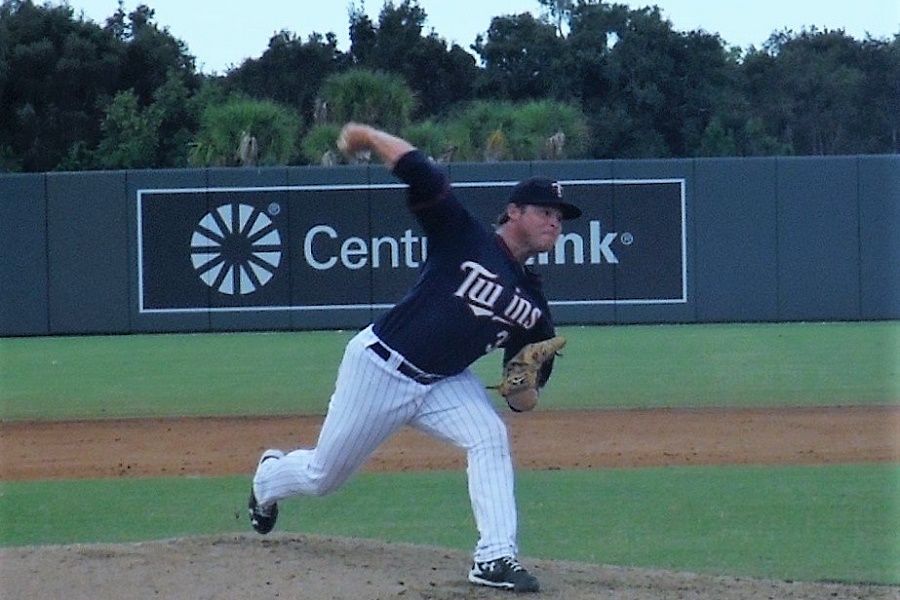 Recently Gamez took some time to answer questions for Twins Daily. After ready, be sure to make ask questions and leave comments in the forum. Seth Stohs (SS): Growing up in Tucson, which was your favorite team to follow? (I bet I can guess.) Who were some of your favorite players? Juan Gamez (JG): Believe it or not I was not a big D-backs fan during my childhood. My favorite team was the Boston Red Sox mostly because of one player, an ex-Twin by the name of David Ortiz. SS: What were some of the better memories of your high school baseball career? Did you play other sports or were you involved in other activities? JG: Some of my best high school memories were being able to play baseball with my best friends and all the friendships created thanks to baseball. And I played soccer my freshman year, but I wasn’t very good at it so I focused on baseball instead. SS: What was the recruitment process like for you out of high school, and what was it about Pima CC that made you want to play there? JG: Out of high school the recruitment was fairly quiet. There were a few bigger schools that showed interest in me but felt that playing junior college out of high school was the best option for me. It was an easy decision for me to pick Pima as my junior college because apart from being in my hometown, the coaching staff there is one of the best in the junior college level. SS: After two seasons there, what brought you way up north to play baseball at North Dakota State? JG: Well after my two years at Pima, there were a few schools interested in me, but after taking my visit to NDSU, I fell in love with the place and knew that I wanted to spend the next two years playing baseball up there. SS: What was the experience for you at NDSU? What were some of your highlights and favorite moments in your years there? JG: It was an amazing experience for me, definitely the best time of my life. The school itself, the great facilities we were provided with, along with all the life-long friendships created. Plus on top of all that Fargo, North Dakota, is by far one of the greatest college towns in the U.S. One of my favorite moments was the celebration in the clubhouse after we walked off against Oral Roberts to win the series. #Horns-up SS: Did you have the chance to speak with many scouts before the draft? Where did you think that you might be drafted? What was your interaction with Twins scouts before the draft? JG: I got the chance to talk to several scouts before the draft and got the chance to go to a couple of pre-draft workouts. The Twins were one of the teams who invited me to a pre-draft workout and thankfully they ended up liking me enough to draft me. SS: When you did hear your name in the 31st round, where were you? What was your reaction and the reaction of those close to you? JG: I was actually in my room watching TV. I was too nervous to follow the draft on my computer, so I went up to my room by myself and waited. Finally my parents starting cheering as my name got called. SS: What has the adjustment been like for you, from the amateur/college game to the professional game, both on and off the field? JG: I’ve had a good transition from the college game to the professional game thanks to the work ethic driven into me ever since high school. I’ve been lucky enough to be in good programs all throughout my amateur career, which has definitely made the transition to pro ball a much simpler one. SS: What was the discussion like when the decision was made for you to move out from behind the plate and to the mound? Were you OK with that decision? JG: Pitching in the pro level became an option even before the draft. During the pre-draft workout, I worked out as both catcher and pitcher for the Twins. I ended up being drafted as a catcher, but becoming a pitcher was always an option. When the decision was made to switch positions, I was more than happy to take on a new challenge. SS: What was it about catching that you most enjoyed?? JG: One of the things that I loved about catching was being in every single play throughout the entire game. I loved the responsibility that came with the position. SS: I know you pitched in one game while at NDSU. Had you pitched before in college or high school? JG: I got the chance to pitch a couple innings during summer ball before my senior year. But other than that the only time I had stepped on a pitcher’s mound before was during mound visits. SS: What pitches do you throw, and what would you consider your out pitch? JG: Right now, I have a two seam-fastball and a slider. This off-season I’ve been working on developing a good changeup. I would consider my slider to be my out pitch, but it definitely needs some work. SS: At this very early stage in your career, what would you say are your biggest strengths? JG: I think one of my biggest strengths is that all the information provided from my pitching coach is new to me. Which sounds like a bad thing, but I think the ability to start from zero and to be surrounded by people with so much knowledge about the game can definitely help me become a better pitcher than someone who thinks they know it all and has created bad habits throughout the years. SS: What are the areas of your game that you have been working on improving in the offseason and going forward? JG: The biggest thing I’ve focused on this off-season is bettering my pitching mechanics. Finding something I feel comfortable with to build on. This pitching thing is fairly new to me so I’m working on becoming a pitcher not a thrower. SS: Did you go back to school in the offseason? What is your major in school? JG: I was able to graduate on time at the end of my senior year. I majored in Criminal Justice and minored in Psychology. SS: What are some of the things you enjoy doing away from the game of baseball? JG: Definitely spending time with the family. The season is so long that there is a lot of catching up to do with them. Hiking and swimming are some of the things I enjoy doing the most during my time off from baseball. And watching Netflix. I really enjoy that. SS: Who are some of the people who have helped you get to this point in your career? JG: I give all the credit to my family. It’s safe to say I have the best parents in the world who are always pushing me to better myself. They support every decision I make and always have my back. My siblings who I know support me as well and motivate me to do great things. Lastly all the coaches who have helped me out throughout my career on and off the field. Without them I wouldn’t be in the position I am right now. SS: Favorite baseball movie? JG: Mr. Baseball. A huge Thank You to Juan Gamez for taking time to answer all of these questions and let us Get To Know him. Leave your comments below.
 -
With the reported (by Jerry Crasnick) signing of Drew Stubbs... I would have him replace Danny Santana (which will likely make a lot of people happy.
- 47 replies
-
- 1
-

-
- byron buxton
- max kepler
- (and 3 more)
-
... in Chattanooga. Ha!
-
I really like the signing, especially on a minor league deal. No risk... And... here's what I'd like to see... vs RHP 1B - Mauer DH - Vargas LF - Rosario vs LHP 1B - Vargas DH - Grossman LF - Stubbs Stubbs can definitely play CF as a backup. Makes a ton of sense.
-
None of his tools jump out at you. He's got good speed, and he's a good outfielder, so he can play centerfield. But he's not as fast as guys like Buxton, Granite, English, etc.
- 47 replies
-
- 1
-
-
- byron buxton
- max kepler
- (and 3 more)
-
I'd probably have Grossman DH against LH pitchers. 5th outfielder, and consider a RH hitting platoon option with Rosario... though I'm also fine with Rosario playing against lefties and righties. And, Kepler always hit lefties and righties pretty similarly in the minors. I know he didn't last year, but he's too young to start platooning.
- 47 replies
-
- 3
-
-
- byron buxton
- max kepler
- (and 3 more)
-
I'd say it's more likely that one of the guys from the AAA list goes back to AA, but never know.
-
Isaiah Aluko signed last year as a non-drafted free agent and spent a few weeks in the GCL at the end of last season. I believe he went to Valdosta State. He's a great athlete, profiled in the prospect handbook. Rick Eckstein is the minor league hitting coordinator... they hired him last August.
-
He's played a lot of 1B in his years... a way to keep his bat in the lineup on days when he wasn't catching.
-
I could tell it was Garver... everything else is too far away. Ha!
-
I've been waiting for someone to post this... I just started seeing some pictures on Facebook... And if anyone has pictures, post them here and we'll help identify them.
-
No, I just missed him. I added him after Baddoo and just before English...
-
I'd say that it all depends on the timing. If it's a 10-day thing, they probably wouldn't want to add anyone to the 40-man, so I'd say Granite makes the most sense. If it's longer than that, it may depend on the point of the season. If it's early, they may want Granite to keep developing and could add a Shuck or someone like that.
-
Only thing I can think of is that they're evaluations of Park are just really bad. I mean, they have Ben Paulsen and Reynaldo Rodriguez and Matt Hague all on minor league deals in Rochester. Not that they're great options, but if they think they're better options than Park, then that speaks volumes and they might as well just cut the losses. But yeah, no reason to not send him to Rochester and just see what he can do with a healthy wrist... or maybe those evaluations are that the wrist won't get better. Seems like there must be something more to this.
-
After beginning our Roster Projections last week with the Catchers, today we shift our attention to the outfield. It’s seemingly always been a position for which we say they have plenty of options and more in the future. And the future is now, though there are still several more outfield prospects coming. Image courtesy of Jesse Johnson, USA Today After beginning our Roster Projections last week with the Catchers, today we shift our attention to the outfield. It’s seemingly always been a position for which we say they have plenty of options and more in the future. And the future is now, though there are still several more outfield prospects coming. So today, let’s take a look at the outfielders throughout the Twins farm system. Minnesota Twins - Eddie Rosario (25), Robbie Grossman (27), Byron Buxton (23), Max Kepler (24 on Friday), Danny Santana (26) Center field will, hopefully, be covered by Byron Buxton for the next decade or more. After his strong September, the hope is that he will never spend another day in the minor leagues. His defense alone makes him incredibly valuable. Adding Jason Castro behind the plate helps the pitching and defense. Having Buxton patrolling center field is great for the pitching staff too. Max Kepler took over in right field at the beginning of June. He had an incredible weekend in Cleveland in early July, and he had some ups and downs throughout his rookie season. He also grew more comfortable in right field as the season went along. He was named the Twins top rookie. Left field is where there could be some competition, or at least some platooning. Eddie Rosario is the great athlete with the ability to be above average defensively. He showed that he can fill a box score during his rookie season in 2015, and his complete lack of plate discipline was taken advantage of by good pitchers in his sophomore season. Robbie Grossman came to the organization in May, in a move that got Rosario sent to Rochester for a while. Grossman took off immediately and even when he came down to earth, he still destroyed left-handed pitching. The problem, of course, is Grossman’s defense. Danny Santana can be the fifth outfielder and a pinch runner, if he’s still on the roster. Rochester Red Wings - Travis Harrison (24), Zach Granite (24), Daniel Palka (25), JB Shuck (29), Ryan Strausborger (28) JB Shuck has spent parts of five seasons in the big leagues. He’s got almost 1,100 MLB at bats. He can play center, though he’s better as a corner outfielder. Ryan Strausborger hit .200 in 45 at bats (31 games) for the Rangers in 2015. He hit just .235 in the PCL last year, though he missed time with injury. But hopefully a new group of prospects will get a lot of playing time in AAA. Zach Granite was the Twins choice for Minor League Player of the Year. He was the Lookouts leadoff man and center fielder almost every day throughout 2016. Like Buxton, Granite can play centerf ield due to his great speed. His speed can also wreak havoc on the base paths where he stole 56 bases in 2017. Daniel Palka was the Twins Daily Minor League Hitter of the Year after a season in which he hit 34 home runs between Chattanooga and Rochester. Blessed with tremendous power, he’ll need to make more contact, but he has a chance to be a very productive hitter. Travis Harrison has spent the last two seasons in Chattanooga. It’s time to send him to AAA Rochester. (Did You Know: Harrison can fly!) Chattanooga Lookouts - Leandro Castro (27), Jonathan Rodriguez (27), Tanner English (23), Edgar Corcino (24) Leandro Castro is a 27-year-old who spent eight seasons in the Phillies system including a couple of seasons in AAA. The last two years he has played in independent leagues. This winter, he hit .347 in Mexico. Another 27-year-old, Puerto Rican Jonathan Rodriguez, signed with the Twins this winter after spending the last eight seasons in the Cardinals organizations. He got his first taste of AAA in 2016. Tanner English missed two months of the 2016 season due to Lasik surgery and an ankle injury, but he came back with the Miracle, finished the season in Rochester and then played in the Arizona Fall League. He’s ready for the bump up to AA, and his defense is elite in center field. Edgar Corcino spent the second half of 2016. The tremendous athlete is very good defensively and puts together quality plate appearances. Ft. Myers Miracle - Daniel Kihle (23), Austin Diemer (23), LaMonte Wade (23), JJ Fernandez (22), Max Murphy (24) This is a group of outfielders who spent spent part of the 2016 season. Diemer began the season with the Miracle, getting time in each of the outfield positions before an injury curtailed his season. Minnesota native Max Murphy was promoted to the Miracle in late April. He also missed time due to injury. Daniel Kihle hit .259 in 49 games in Cedar Rapids before hitting .259 in 41 games with the Miracle. However, his on-base percentage and slugging percentages were better in Ft. Myers. He played all three outfield positions. LaMonte Wade got off to a fast start with Cedar Rapids in his first full season. He was a Midwest League All-Star and then moved up to Ft. Myers where he was even better. Unfortunately he missed a lot of time due to injuries. While Wade is probably best suited for left field, but he will most likely play a lot of center field again. JJ Fernandez has spent the last two seasons in Cedar Rapids. He hit just .225 and got on-base 29% of the time, but he hit 26 doubles and ten homers. 2016 was his first season without catching. He played a little first base, but he mostly played in the outfield. Cedar Rapids Kernels - Jaylin Davis (22), Christian Cavaness (22), Casey Scoggins (22), Alex Kirilloff (19), Shane Carrier (20), Hank Morrison (22) This group includes three players who spent time with the Kernels in 2016. It also includes four 2016 draft picks. Jaylin Davis made his pro debut in 2016. He began the season in extended spring training before hitting seven home runs in 12 games for the E-Twins. He moved up to Cedar Rapids where he hit another nine home runs in 52 games. Casey Scoggins was drafted in the 39th round last year, and after just a couple of games with the E-Twins, he moved up and became a key cog at the top of the Kernels lineup and in center field. Christian Cavaness split time between Elizabethton and Cedar Rapids. Shane Carrier provides a bunch of power to the lineup. He was the eighth round pick last June and hit 14 doubles and six homers for the E-Twins. Alex Kirilloff was the top draft pick last year out of high school, and he got off to a fast start. He hit .351 through the first 42 games before his season ended with a .306 average. He had nine double and seven home runs before his season ended with elbow pain (which is fine now).Hank Morrison also could provide some power for the Kernels. He was limited to just 20 games in Elizabethton due to injury, but he has potential. Extended Spring Training - Matt Albanese (21), Isaiah Aluko (23), Akil Baddoo (18), Lean Marrero (19), Aaron Whitefield (20), Roberto Gonzalez (21), Jean Carlos Arias (19) Of this group, Roberto Gonzalez is the player who spent time in Elizabethton. He has immense power from the left side, though he’ll need to make more contact. Aaron Whitefield was one of the best players for the Twins GCL team in 2016, and he has been one of the best hitters in the Australian Baseball League this winter where he hit .338. Lean Marrero has five-tool potential, but he’s very young. He showed improvement in 2016 in the GCL and should move up to Elizabethton in 2017. Akil Baddoo was a comp pick in 2016 out of high school in Georgia. A tremendous athlete, he should move up to Elizabethton and get a lot of playing time. Jean Carlos Arias’s stateside debut didn’t go real well, but he has a high ceiling and will repeat the GCL. Matt Albanese was a 7th round pick last year out of college, but an injury cut short his season. He will make his pro debut in 2017. He’ll likely start in EST, though he could move up to Cedar Rapids before the short-seasons start. Top Prospects 1.) Alex Kirilloff 2.) LaMonte Wade 3.) Daniel Palka 4.) Akil Baddoo 5.) Zack Granite 6.) Tanner English 7.) Edgar Corcino 8.) Jaylin Davis 9.) Aaron Whitefield 10.) Matt Albanese 11.) Travis Harrison Which prospects are you most excited about in 2017? Which prospects may be on a bubble? What kind of seasons do you think that Byron Buxton and Max Kepler will have, but can Eddie Rosario and Robbie Grossman be a quality platoon combination? Which other outfielders do you expect to see in a Twins uniform in 2017? Please feel free to discuss and ask questions in the Comments below. View full article
-
2017 Minnesota Twins Roster Projections - The Outfielders
Seth Stohs posted an article in Minor Leagues
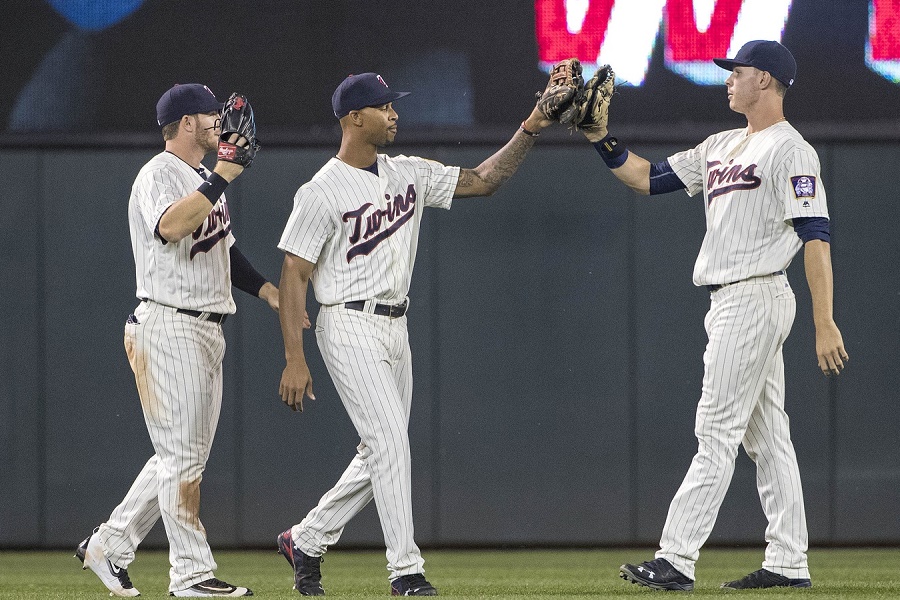 So today, let’s take a look at the outfielders throughout the Twins farm system. Minnesota Twins - Eddie Rosario (25), Robbie Grossman (27), Byron Buxton (23), Max Kepler (24 on Friday), Danny Santana (26) Center field will, hopefully, be covered by Byron Buxton for the next decade or more. After his strong September, the hope is that he will never spend another day in the minor leagues. His defense alone makes him incredibly valuable. Adding Jason Castro behind the plate helps the pitching and defense. Having Buxton patrolling center field is great for the pitching staff too. Max Kepler took over in right field at the beginning of June. He had an incredible weekend in Cleveland in early July, and he had some ups and downs throughout his rookie season. He also grew more comfortable in right field as the season went along. He was named the Twins top rookie. Left field is where there could be some competition, or at least some platooning. Eddie Rosario is the great athlete with the ability to be above average defensively. He showed that he can fill a box score during his rookie season in 2015, and his complete lack of plate discipline was taken advantage of by good pitchers in his sophomore season. Robbie Grossman came to the organization in May, in a move that got Rosario sent to Rochester for a while. Grossman took off immediately and even when he came down to earth, he still destroyed left-handed pitching. The problem, of course, is Grossman’s defense. Danny Santana can be the fifth outfielder and a pinch runner, if he’s still on the roster. Rochester Red Wings - Travis Harrison (24), Zach Granite (24), Daniel Palka (25), JB Shuck (29), Ryan Strausborger (28) JB Shuck has spent parts of five seasons in the big leagues. He’s got almost 1,100 MLB at bats. He can play center, though he’s better as a corner outfielder. Ryan Strausborger hit .200 in 45 at bats (31 games) for the Rangers in 2015. He hit just .235 in the PCL last year, though he missed time with injury. But hopefully a new group of prospects will get a lot of playing time in AAA. Zach Granite was the Twins choice for Minor League Player of the Year. He was the Lookouts leadoff man and center fielder almost every day throughout 2016. Like Buxton, Granite can play centerf ield due to his great speed. His speed can also wreak havoc on the base paths where he stole 56 bases in 2017. Daniel Palka was the Twins Daily Minor League Hitter of the Year after a season in which he hit 34 home runs between Chattanooga and Rochester. Blessed with tremendous power, he’ll need to make more contact, but he has a chance to be a very productive hitter. Travis Harrison has spent the last two seasons in Chattanooga. It’s time to send him to AAA Rochester. (Did You Know: Harrison can fly!) Chattanooga Lookouts - Leandro Castro (27), Jonathan Rodriguez (27), Tanner English (23), Edgar Corcino (24) Leandro Castro is a 27-year-old who spent eight seasons in the Phillies system including a couple of seasons in AAA. The last two years he has played in independent leagues. This winter, he hit .347 in Mexico. Another 27-year-old, Puerto Rican Jonathan Rodriguez, signed with the Twins this winter after spending the last eight seasons in the Cardinals organizations. He got his first taste of AAA in 2016. Tanner English missed two months of the 2016 season due to Lasik surgery and an ankle injury, but he came back with the Miracle, finished the season in Rochester and then played in the Arizona Fall League. He’s ready for the bump up to AA, and his defense is elite in center field. Edgar Corcino spent the second half of 2016. The tremendous athlete is very good defensively and puts together quality plate appearances. Ft. Myers Miracle - Daniel Kihle (23), Austin Diemer (23), LaMonte Wade (23), JJ Fernandez (22), Max Murphy (24) This is a group of outfielders who spent spent part of the 2016 season. Diemer began the season with the Miracle, getting time in each of the outfield positions before an injury curtailed his season. Minnesota native Max Murphy was promoted to the Miracle in late April. He also missed time due to injury. Daniel Kihle hit .259 in 49 games in Cedar Rapids before hitting .259 in 41 games with the Miracle. However, his on-base percentage and slugging percentages were better in Ft. Myers. He played all three outfield positions. LaMonte Wade got off to a fast start with Cedar Rapids in his first full season. He was a Midwest League All-Star and then moved up to Ft. Myers where he was even better. Unfortunately he missed a lot of time due to injuries. While Wade is probably best suited for left field, but he will most likely play a lot of center field again. JJ Fernandez has spent the last two seasons in Cedar Rapids. He hit just .225 and got on-base 29% of the time, but he hit 26 doubles and ten homers. 2016 was his first season without catching. He played a little first base, but he mostly played in the outfield. Cedar Rapids Kernels - Jaylin Davis (22), Christian Cavaness (22), Casey Scoggins (22), Alex Kirilloff (19), Shane Carrier (20), Hank Morrison (22) This group includes three players who spent time with the Kernels in 2016. It also includes four 2016 draft picks. Jaylin Davis made his pro debut in 2016. He began the season in extended spring training before hitting seven home runs in 12 games for the E-Twins. He moved up to Cedar Rapids where he hit another nine home runs in 52 games. Casey Scoggins was drafted in the 39th round last year, and after just a couple of games with the E-Twins, he moved up and became a key cog at the top of the Kernels lineup and in center field. Christian Cavaness split time between Elizabethton and Cedar Rapids. Shane Carrier provides a bunch of power to the lineup. He was the eighth round pick last June and hit 14 doubles and six homers for the E-Twins. Alex Kirilloff was the top draft pick last year out of high school, and he got off to a fast start. He hit .351 through the first 42 games before his season ended with a .306 average. He had nine double and seven home runs before his season ended with elbow pain (which is fine now).Hank Morrison also could provide some power for the Kernels. He was limited to just 20 games in Elizabethton due to injury, but he has potential. Extended Spring Training - Matt Albanese (21), Isaiah Aluko (23), Akil Baddoo (18), Lean Marrero (19), Aaron Whitefield (20), Roberto Gonzalez (21), Jean Carlos Arias (19) Of this group, Roberto Gonzalez is the player who spent time in Elizabethton. He has immense power from the left side, though he’ll need to make more contact. Aaron Whitefield was one of the best players for the Twins GCL team in 2016, and he has been one of the best hitters in the Australian Baseball League this winter where he hit .338. Lean Marrero has five-tool potential, but he’s very young. He showed improvement in 2016 in the GCL and should move up to Elizabethton in 2017. Akil Baddoo was a comp pick in 2016 out of high school in Georgia. A tremendous athlete, he should move up to Elizabethton and get a lot of playing time. Jean Carlos Arias’s stateside debut didn’t go real well, but he has a high ceiling and will repeat the GCL. Matt Albanese was a 7th round pick last year out of college, but an injury cut short his season. He will make his pro debut in 2017. He’ll likely start in EST, though he could move up to Cedar Rapids before the short-seasons start. Top Prospects 1.) Alex Kirilloff 2.) LaMonte Wade 3.) Daniel Palka 4.) Akil Baddoo 5.) Zack Granite 6.) Tanner English 7.) Edgar Corcino 8.) Jaylin Davis 9.) Aaron Whitefield 10.) Matt Albanese 11.) Travis Harrison Which prospects are you most excited about in 2017? Which prospects may be on a bubble? What kind of seasons do you think that Byron Buxton and Max Kepler will have, but can Eddie Rosario and Robbie Grossman be a quality platoon combination? Which other outfielders do you expect to see in a Twins uniform in 2017? Please feel free to discuss and ask questions in the Comments below.
 -
With their fourth pick in the 2016 draft, the Minnesota Twins selected Tom Hackimer, a right-handed relief pitcher from St. John’s University in New York. He had been drafted in the 15th round in 2015, but he returned to college for his senior year. He works with a sidearm delivery that can keep hitters off balance. Recently, he took some time to answer questions for Seth. Image courtesy of Steve Buhr (photo of Tom Hackimer) With their fourth pick in the 2016 draft, the Minnesota Twins selected Tom Hackimer, a right-handed relief pitcher from St. John’s University in New York. He had been drafted in the 15th round in 2015, but he returned to college for his senior year. He works with a sidearm delivery that can keep hitters off balance. Recently, he took some time to answer questions for Seth. On signing, he was sent to Cedar Rapids where he posted a 2.39 ERA in 21 games. In 26.2 innings he walked 12 and struck out 26. He also recorded five saves. Tom Hackimer will be one to watch in 2017 and beyond. He has a chance to be a fairly quick mover. Feel free to share your thoughts or ask further questions in the comments below. Let the Q&A begin! Let’s get to know, RHP Tom Hackimer. Seth Stohs (SS): Growing up in New York, who (or which?) was your favorite team to follow? Who were some of your favorite players? Tom Hackimer (TH): I grew up as a fan of the New York Yankees, and since I played shortstop for most of my career my favorite player was obviously Derek Jeter.SS: What were some of the better memories of your high school baseball career? Did you play other sports or were you involved in other activities? TH: The best memory of my high school baseball career was easily when we won the city championship my freshman year. In high school, I also played basketball, as well as being a member of the Science Olympiad team and part of the school concert band and chorus.SS: What was the recruitment process like for you out of high school, and what was it about St. John’s University that made you want to kind of stay home and pitch there? TH: I was a shortstop for all four years of high school and did not pitch a single inning in those four years. I was not recruited to play anywhere at all, but was given the option to walk on at St. John's and try to become a pitcher. I decided to take that opportunity since I had a full academic scholarship there anyway, and it ended up working out.https://twitter.com/HackAttackimer/status/819997478649004037 SS: What was the experience for your at St. John’s? What were some of your highlights and favorite moments in your four years there? TH: I greatly enjoyed my time at St John's, and to me, the highlight of my career is that I pitched well enough to end my career holding all of the relief pitching records at St. John's, and of course, winning the Big East Championship my junior year.SS: The Mets took you in the 15th round after your junior season. How difficult was the decision to return to school for your senior season? TH: It seemed like a very difficult decision at the time, but the further I get away from that decision the more clear it becomes that I made the right decision.SS: Did you have the chance to speak with many scouts before the draft this year? Where did you think that you might be drafted? What was your interaction with Twins scouts before the draft? TH: I had a chance to speak with many scouts before the draft, either in the fall meetings that we had at St. John's or over the phone, and I was getting the feeling that I would be a top-10 round pick, possibly top 5. My interaction with John Wilson, the Twins scout for my area, was very little during the season as he had promised me when I met with him in the winter. After our season at St. John's had ended, he called and we went over all of the information about the draft.SS: When you did hear your name in the 4th round, where were you? What your reaction and the reaction of those close to you? TH: I was at home, watching with my parents, and we were all very excited about what happened, and relieved and happy that my decision to return to school for my senior year had been the correct one.SS: What has the adjustment like for you, from the amateur/college game to the professional game, both on and off the field? TH: Off the field, it was learning to deal with the amount of free time that you have, and the fact that your only real responsibility is your on-field performance. On field, it was adjusting my pre-game throwing to deal with playing almost every single day, and dealing with a higher level of hitters than I had seen in college.SS: To what do you attribute your success in Cedar Rapids, particularly in the playoff race? TH: I would actually say that I struggled somewhat during the summer, and I went through a few periods of dead arm in the middle of the year that affected both my velocity and command of all of my pitches. However, I was able to still find success by making sure that I stuck to the things that have gotten me to the point I'm at as a pitcher.SS: How long have you thrown sidearm? Is there a story to how you started doing that? TH: I've thrown sidearm for two pitches less than I've been a full-time pitcher. My pitching coach when I got to college was Scott Brown, now at Vanderbilt. My first day of practice at St. John's my freshman year, I threw two pitches from my normal overhand slot, then was immediately dropped down to sidearm, and that's how I've pitched since that day.https://twitter.com/OneGun45/status/826954287431380992 SS: What pitches do you throw, and what would you consider your out pitch? TH: I throw predominantly a fastball and slider, and both can be out pitches for me depending on the batter, situation, and sequence of pitches. I also started to work a changeup into my mix during instructs, but it still needs more work.SS: At this very early stage in your career, what would you say are your biggest strengths? TH: I would say my biggest strengths are the movement on my fastball, the deception of my delivery, and my ability to spin my breaking ball for a strike when I am behind in the count.SS: What are the areas of your game that you would like to spend time working to improve in the offseason and going forward? TH: This offseason I have spent a lot of time trying to improve my changeup and possibly add a fourth pitch to my mix. I've also spent time refining my command and trying to see if I can get another mile per hour or so on my fastball.SS: Are you be going back to school in the offseason? What is your major in school? TH: I have spent a tremendous amount of time at St. John's this offseason, mostly because that's where I have been doing my offseason workouts. I majored in physics at St. John's, and unfortunately still have one more class left to finish my degree. I wasn't able to complete it this fall due to my participation in fall instructs.SS: What are some of the things you enjoy doing away from the game of baseball? TH: I play several instruments and sing, so I like to make sure that I keep practicing and improving my skills in those areas. I also read a lot, and am always on the hunt for new books that I might enjoyhttps://twitter.com/HackAttackimer/status/730553375620792321 SS: Who are some of the people who have helped you get to this point in your career? TH: My father and brother were easily two of the most important people that helped me get to where I am, in more ways than I could possibly list. My former hitting coach, Bob O'Brien, was also instrumental in the opportunity that I got to walk on to the team at St. John's, so I would be remiss if I didn't take this opportunity to thank him as well.SS: Favorite baseball movie? TH: Major League, with Bull Durham as a close second.A Huge Thank You to Tom Hackimer for taking time to answer our questions today at Twins Daily. The righthander is certainly one to watch, particularly as he begins his first full professional baseball season. If you you have any questions, please feel free to ask. I can get back to Tom, or who knows, maybe he’ll answer himself. View full article
-
 On signing, he was sent to Cedar Rapids where he posted a 2.39 ERA in 21 games. In 26.2 innings he walked 12 and struck out 26. He also recorded five saves. Tom Hackimer will be one to watch in 2017 and beyond. He has a chance to be a fairly quick mover. Feel free to share your thoughts or ask further questions in the comments below. Let the Q&A begin! Let’s get to know, RHP Tom Hackimer. Seth Stohs (SS): Growing up in New York, who (or which?) was your favorite team to follow? Who were some of your favorite players? Tom Hackimer (TH): I grew up as a fan of the New York Yankees, and since I played shortstop for most of my career my favorite player was obviously Derek Jeter. SS: What were some of the better memories of your high school baseball career? Did you play other sports or were you involved in other activities? TH: The best memory of my high school baseball career was easily when we won the city championship my freshman year. In high school, I also played basketball, as well as being a member of the Science Olympiad team and part of the school concert band and chorus. SS: What was the recruitment process like for you out of high school, and what was it about St. John’s University that made you want to kind of stay home and pitch there? TH: I was a shortstop for all four years of high school and did not pitch a single inning in those four years. I was not recruited to play anywhere at all, but was given the option to walk on at St. John's and try to become a pitcher. I decided to take that opportunity since I had a full academic scholarship there anyway, and it ended up working out. https://twitter.com/HackAttackimer/status/819997478649004037 SS: What was the experience for your at St. John’s? What were some of your highlights and favorite moments in your four years there? TH: I greatly enjoyed my time at St John's, and to me, the highlight of my career is that I pitched well enough to end my career holding all of the relief pitching records at St. John's, and of course, winning the Big East Championship my junior year. SS: The Mets took you in the 15th round after your junior season. How difficult was the decision to return to school for your senior season? TH: It seemed like a very difficult decision at the time, but the further I get away from that decision the more clear it becomes that I made the right decision. SS: Did you have the chance to speak with many scouts before the draft this year? Where did you think that you might be drafted? What was your interaction with Twins scouts before the draft? TH: I had a chance to speak with many scouts before the draft, either in the fall meetings that we had at St. John's or over the phone, and I was getting the feeling that I would be a top-10 round pick, possibly top 5. My interaction with John Wilson, the Twins scout for my area, was very little during the season as he had promised me when I met with him in the winter. After our season at St. John's had ended, he called and we went over all of the information about the draft. SS: When you did hear your name in the 4th round, where were you? What your reaction and the reaction of those close to you? TH: I was at home, watching with my parents, and we were all very excited about what happened, and relieved and happy that my decision to return to school for my senior year had been the correct one. SS: What has the adjustment like for you, from the amateur/college game to the professional game, both on and off the field? TH: Off the field, it was learning to deal with the amount of free time that you have, and the fact that your only real responsibility is your on-field performance. On field, it was adjusting my pre-game throwing to deal with playing almost every single day, and dealing with a higher level of hitters than I had seen in college. SS: To what do you attribute your success in Cedar Rapids, particularly in the playoff race? TH: I would actually say that I struggled somewhat during the summer, and I went through a few periods of dead arm in the middle of the year that affected both my velocity and command of all of my pitches. However, I was able to still find success by making sure that I stuck to the things that have gotten me to the point I'm at as a pitcher. SS: How long have you thrown sidearm? Is there a story to how you started doing that? TH: I've thrown sidearm for two pitches less than I've been a full-time pitcher. My pitching coach when I got to college was Scott Brown, now at Vanderbilt. My first day of practice at St. John's my freshman year, I threw two pitches from my normal overhand slot, then was immediately dropped down to sidearm, and that's how I've pitched since that day. https://twitter.com/OneGun45/status/826954287431380992 SS: What pitches do you throw, and what would you consider your out pitch? TH: I throw predominantly a fastball and slider, and both can be out pitches for me depending on the batter, situation, and sequence of pitches. I also started to work a changeup into my mix during instructs, but it still needs more work. SS: At this very early stage in your career, what would you say are your biggest strengths? TH: I would say my biggest strengths are the movement on my fastball, the deception of my delivery, and my ability to spin my breaking ball for a strike when I am behind in the count. SS: What are the areas of your game that you would like to spend time working to improve in the offseason and going forward? TH: This offseason I have spent a lot of time trying to improve my changeup and possibly add a fourth pitch to my mix. I've also spent time refining my command and trying to see if I can get another mile per hour or so on my fastball. SS: Are you be going back to school in the offseason? What is your major in school? TH: I have spent a tremendous amount of time at St. John's this offseason, mostly because that's where I have been doing my offseason workouts. I majored in physics at St. John's, and unfortunately still have one more class left to finish my degree. I wasn't able to complete it this fall due to my participation in fall instructs. SS: What are some of the things you enjoy doing away from the game of baseball? TH: I play several instruments and sing, so I like to make sure that I keep practicing and improving my skills in those areas. I also read a lot, and am always on the hunt for new books that I might enjoy https://twitter.com/HackAttackimer/status/730553375620792321 SS: Who are some of the people who have helped you get to this point in your career? TH: My father and brother were easily two of the most important people that helped me get to where I am, in more ways than I could possibly list. My former hitting coach, Bob O'Brien, was also instrumental in the opportunity that I got to walk on to the team at St. John's, so I would be remiss if I didn't take this opportunity to thank him as well. SS: Favorite baseball movie? TH: Major League, with Bull Durham as a close second. A Huge Thank You to Tom Hackimer for taking time to answer our questions today at Twins Daily. The righthander is certainly one to watch, particularly as he begins his first full professional baseball season. If you you have any questions, please feel free to ask. I can get back to Tom, or who knows, maybe he’ll answer himself.
 -
Twins Claim Ehire Adrianza, DFA Pat Light
Seth Stohs replied to Seth Stohs's topic in Twins Daily Front Page News
They were able to get him in exchange for 2 months of Fernando Abad.... -
Twins Claim Ehire Adrianza, DFA Pat Light
Seth Stohs replied to Seth Stohs's topic in Twins Daily Front Page News
I'd say that the Twins are trying to obtain depth of players that play defense. That was the decision with Castro. My guess is he'll be DFAd, hoping they can get him to Rochester. That way they have someone to be a backup middle infielder who can catch the ball if Polanco can't, or something else.
