



Seth Stohs
-
Posts
25,909 -
Joined
-
Last visited
-
Days Won
109
Content Type
Profiles
News
Minnesota Twins Videos
2026 Minnesota Twins Top Prospects Ranking
2022 Minnesota Twins Draft Picks
Minnesota Twins Free Agent & Trade Rumors, Notes, & Tidbits
Guides & Resources
2023 Minnesota Twins Draft Picks
The Minnesota Twins Players Project
2024 Minnesota Twins Draft Picks
2025 Minnesota Twins Draft Pick Tracker
2026 Minnesota Twins Draft Tracker: Picks & Bonuses
Forums
Blogs
Events
Store
Downloads
Gallery
Everything posted by Seth Stohs
-
Article: 2018 Twins Minor League All-Stars
Seth Stohs replied to Seth Stohs's topic in Twins Daily Front Page News
Which two spots?? I'll guess LHP, but other than that, I'm not sure... -
The Minnesota Twins minor league season has been done for about a month. At Twins Daily, we have handed out a lot of awards since then. We conclude that series today by presenting the Twins Daily 2018 Twins Minor League All-Star team. Scroll down to find out who made the 13-man team. The Twins Daily minor league writers voted for each of 13 positions. There was some variance in terms of positions that certain guys were placed at, as you’ll see below. Quickly, here is a list of the Twins Daily 2018 minor league awards: Short-Season Minor League Pitcher of the Year - Andrew CabezasShort-Season Minor League Hitter of the Year - Chris WilliamsTwins Minor League Relief Pitcher of the Year - Andrew VasquezTwins Minor League Starting Pitcher of the Year - Tyler WellsTwins Minor League Hitter of the Year - Alex KirilloffAnd here are the Twins Harmon Killebrew Awards for 2018:Rochester Red Wings: Jake ReedChattanooga Lookouts: Chris PaulFt. Myers Miracle: Tyler WellsCedar Rapids Kernels: David BanuelosToday, we would like to announce our choices for 2018 Minnesota Twins All-Stars. Our Twins Daily minor league report writers were asked to vote for a catcher, first baseman, second baseman, third baseman, shortstop, three outfielders, a DH, a left-handed starting pitcher, a right-handed starting pitcher, a left-handed reliever and a right-handed reliever. The player at each position who received the most votes takes the spots. Read through our choices for each position. Check out how each of our writers voted. And then discuss and cast your votes as well. Let’s get started. The Twins Daily 2018 Minnesota Twins Minor League All-Star Team Catcher: Taylor Grzelakowski - Ft. Myers Miracle Acquired: non-drafted free agent from Madonna University (by way of the USPBL) 2018 Stats: .298/.370/.458 (.828) with 23 doubles, 8 homers and 40 RBI Before the season, I included Taylor Grzelakowski (“Gelly”) as one of my Spring Standouts. He signed late last season as a non-drafted free agent out of Madonna University. After playing just 12 games in the Gulf Coast League last year, it was surprising to see that he made the jump all the way up to the Ft. Myers Miracle. His is a great story, but he has also worked very hard to turn himself into a very good player. Not only did he make that jump, but he played well and hit in the middle of the Miracle lineup. He hit for average, got on base a lot, and showed good power, particularly for the Florida State League. He played some in the outfield and a little at first base, along with catching and DHing. ETA - August 2020 First Base: Zander Wiel - Chattanooga Lookouts, Rochester Red Wings Acquired: 12th round pick in 2015 from Vanderbilt 2018 Stats: .297/.367/.442 (.809) with 27 doubles, 10 homers and 65 RBI Wiel has really been a consistent performer since signing out of the baseball hot-bed that is Vanderbilt. In his first full season, he led the Midwest League in RBI. He was a middle-of-the-lineup bat for the Miracle in 2017. 2018 was another strong season for Wiel. He hit .311 with an .827 OPS for the Chattanooga Lookouts before ending the season with the Rochester Red Wings. While he took some lumps in that short AAA experience, he also had some highlights including a walkoff home run. Wiel split his time in 2018 between first base and left field. He also spent a lot of time hitting in the leadoff spot for the Lookouts. ETA - August 2019 Second Base: Luis Arraez, Ft. Myers Miracle, Chattanooga Lookouts Acquired: signed as international free agent in November 2013 from Venezuela 2018 Stats: .310/.361/.397 (.758) with 20 doubles, 3 home runs and 36 RBI. 2017 was a tough season for Arraez. After winning the Midwest League batting title at .337 as a 19-year-old in Cedar Rapids in 2016, Arraez hoped for a big start with the Miracle in 2017. In this third game, he tore up his knee and needed surgery which cost him the full season. He returned a couple of weeks into the 2018 season with the Miracle. While he started out slow (1-24, .042), Arraez returned to form quickly. In his next 54 games, he hit .353/.403/.466 (.868). He was the choice for Twins Daily Hitter of the Month in June when he hit .449 with 13 extra base hits. He was promoted to the Lookouts in early July. He hit .298 for the Lookouts, as a 21-year-old. Arraez will need to be added to the 40-man roster in November or risk being lost in the Rule 5 draft. ETA: July 2020 Third Base: Jose Miranda - Cedar Rapids Kernels, Ft. Myers Miracle Acquired: Twins 2nd-round in 2016 from high school in Puerto Rico 2018 Stats: .264/.319/.417 (.736) with 27 doubles, 16 home runs and 82 RBI. Miranda was a shortstop in high school, but when the Twins drafted him, they knew his future was not at that position. He has spent time through his career at second base and third base. His 2018 season went along with the weather in Cedar Rapids. He started out cold, but he continued to heat up as the temperatures rose. He began the season by playing primarily at second base, but he spent most of the second half at third base. Most believe that he will grow and add a lot of power. In 2018, he showed that with both the doubles and the home run power. He ended his first year of full-season play with a promotion to the Ft. Myers Miracle, helping them to the Florida State League Championship. He’s a big part of The Twins Big 4 from the 2016 Draft. ETA: June 2021 Shortstop: Royce Lewis - Cedar Rapids Kernels, Ft. Myers Miracle Acquired: 1st round pick in 2017 out of high school in California 2018 Stats: .296/.333/.454 (.788) with 21 doubles, 14 homers and 74 RBI The Twins used the top overall pick in the 2017 draft out of JSerra Catholic High School. He homered in his first professional at-bat in the GCL, and he finished the season helping the Cedar Rapids Kernels to a playoff berth. Lewis also impressed in his first full season of pro ball. He returned to Iowa to start the season and earned a spot on the Midwest League All-Star Game. A couple of weeks later, he was promoted to the Miracle where he helped lead the Miracle to the playoffs on the final day and all the way to a championship. Lewis showed off the range of tools that made him the top pick and has pushed him into the Top 10 on most national prospect lists. He has shown a strong hitting acumen. While we (fans) thought he could have been pushed to Ft. Myers sooner, his extra month with the Kernels let him show serious increased power which carried over to his time with the Miracle. He came into the season with question marks at shortstop from some, but those concerns quieted some over the course of the year as he showed terrific range and a strong arm. He’s got really good speed. He led the organization in stolen bases. It will be fun to watch him develop and see how quickly he can work his way up the ladder. In addition to immense talent, Lewis has the leadership and charisma to be a difference-maker, a building block on the way to a championship-caliber team. ETA: April 2020 Outfielder: Alex Kirilloff - Cedar Rapids Kernels, Ft. Myers Miracle Acquired: Twins 1st-round draft pick in 2016 out of high school in Pennsylvania 2018 Stats: .348/.392/.578 (.970) with 44 doubles, 7 triples, 20 homers and 101 RBI Kirilloff was the Twins top draft pick in the 2016 draft, selected with the 15th overall pick. The Twins were on him early and were as impressed with his maturity as they were with his immense power potential. He had a successful pro debut, hitting over .300 in Elizabethton. Unfortunately, his season ended with an elbow injury, and in March 2017, he had Tommy John surgery which cost him that season. So while people believe in Kirilloff’s bat, no one could have imagined how well Kirilloff would play in his return in 2018. He went 1-for-12 in his first three games, and then he hit the rest of the year. He hit .333/.391/.607 (.999) in 65 games in Cedar Rapids. He played in the Midwest League All-Star Game. He finished the season with 65 games in Ft. Myers and hit .362/.393/.550 (.943). He went 2-for-2 in the Futures Game. He had a long streak of games with multiple hits. His 44 doubles led all of minor league baseball. He had home run power and drove in over 100 runs. He was a big part of the Miracle FSL championship. Like Lewis, Kirilloff will be near the top of most national prospect rankings this offseason. ETA: July 2019 Outfielder: Jaylin Davis - Ft. Myers Miracle, Chattanooga Lookouts Acquired: Twins 24th round draft pick in 2015 out of Appalachian State 2018 Stats: .273/.347/.412 (.759) with 24 doubles, 11 home runs, 53 RBI. When the Twins drafted Jaylin Davis out of Appalachian State, they knew he had immense power. However, at the time, he was hurt and missed the rest of the 2015 season. He began play in Elizabethton in 2016, but when he hit seven home runs in 12 games, he was moved up to Cedar Rapids. He has been productive and provided a lot of power. Davis showed improvement in 2018 in a couple of key areas in his development. He increased his walk rate and decreased his strikeout rate. While the FSL depressed his power a little, he had a really strong season. It will continue on Tuesday as the Arizona Fall League begins and he’ll be playing for Tommy Watkins and the Salt River Rafters. ETA: September 2019 Outfielder - Akil Baddoo - Cedar Rapids Kernels Drafted: Twins 2nd-round (compensation round) pick in 2016 out of high school in Georgia 2018 Stats: .243/.351/.419 (.770) with 22 doubles, 11 triples, 11 home runs and 40 RBI. If you only look at his batting average, you may think that Baddoo had a disappointing season. While it will be nice to see Baddoo increase his batting average, it is important to look at all of his numbers and see how well he fills the stat sheet. Another member of the 2016 Big Four, Baddoo was the third of four picks that year. He was the Twins Daily 2017 Short-Season Hitter of the Year. He spent his first full season hitting at the top of the Cedar Rapids Kernels lineup and playing a lot of centerfield. He reached double-figures in doubles (22), triples (11), home runs (11) and stolen bases (24). Baddoo has all the tools. Many believe he will hit and he is very strong and should continue to develop power. He’s got great speed on the bases and his defense really improved. If he has one tool lacking, it might be his arm. His approach at the plate is terrific. He knows the strike zone and gets his pitches. He takes a lot of walks, but he is aggressive in the zone. ETA: August 2021 Designated Hitter: Brent Rooker - Chattanooga Lookouts Acquired: Twins 1st-round (compensation) draft pick in 2017 out of Mississippi State 2018 Stats: .254/.333/.465 (.798) with 32 doubles, 22 homers and 79 RBI After selecting Brent Rooker late in the 2016 draft,the Twins took him in 2017 with a compensation pick right after the first round. He bet on himself and came through with a Triple Crown in the SEC. With four years of college, Rooker is considered an advanced hitter, and the Twins have aggressively promoted him. After a brief time in Elizabethton, the Twins pushed him to Ft. Meyers where he continued to show incredible power. The aggressiveness continued when the Twins sent Rooker to Double-A Chattanooga for the 2018 season. He struggled the first couple of months, but in both June and July he posted OPS over 1.000. He will have the opportunity to continue to grow offensively while playing more outfield defense in the Arizona Fall League. In spring training, he spent some time with Justin Morneau at first base as well. While the strikeouts will continue to be something he needs to work on, his power potential is legit. ETA: July 2019 Right-Handed Starting Pitcher: Tyler Wells - Ft. Myers Miracle, Chattanooga Lookouts Acquired: Twins 15th round in 2016 out of Cal State-San Bernadino 2018 Stats: 10-6, 2.49 ERA, 0.96 WHIP, 2.3 BB/9, 9.1 K/9 2018 was a fantastic season for the 24-year-old Tyler Wells. He began the season in Ft. Myers where he pitched well and earned his spot on the Florida State League All Star team. He went 8-4 with a 2.80 ERA and a 0.89 WHIP in 18 starts for the Miracle. He moved up to Chattanooga where he made six appearances for the Lookouts to end the season. He posted a 1.65 ERA over 32 2/3 innings. He struck out more than a batter per inning while throwing a lot of strikes. He was the 2018 Twins Daily Minor League Starting Pitcher of the Year for his efforts. In addition, he did a ton of work in the community and was the 2018 Harmon Killebrew Awards for Community Service recipient for the Ft. Myers Miracle. ETA: August 2020 Left-Handed Starting Pitcher: Stephen Gonsalves - Chattanooga Lookouts, Rochester Red Wings, Minnesota Twins Acquired: Twins 4th-round pick in 2014 out of high school in California 2018 Stats: 12-3, 2.76 ERA, 1.17 WHIP, 4.8 BB/9, 9.0 K/9 On the final weekend of the season, Stephen Gonsalves called his 2018 season “probably one of the worst seasons of his career. Well, other than getting called up here.” He called his big league call up “A dream come true.” I mean, consider that he was the Twins Daily Starting Pitcher of the Year in both 2016 and 2017, and he was the runner up to Jose Berrios for the award in 2015. He has set the bar high throughout his minor league career. And based on finding himself as the Twins Daily choice for top left-handed starting pitcher, it’s clear that it was still a very strong season for the southpaw from San Diego. If you look at his numbers across the board, he had another strong season. 12-3 with a 2.76 ERA. That’s very good. He struck out a batter per inning. However, as he noted, “The walks were a mystery to me.” At times, he just couldn’t find command. And yet, he pitched well and finally earned his first big league promotion in August and Paul Molitor kept having him pitch through some early struggles. After Berrios won two straight Starting Pitcher of the Year Awards, Gonsalves followed with two. Berrios really struggled mightily in his first big league opportunity, but he has turned things around. Hopefully Gonsalves can do the same thing in his major-league career, starting as early as 2019. ETA: August 2018 Right-Handed Relief Pitcher: Cody Stashak - Chattanooga Lookouts, Ft. Myers Miracle Acquired: Twins 12th-round draft pick in 2015 out of St. John’s University 2018 Stats: 2-1, 4 Saves, 2.87 ERA, 1.07 WHIP, 2.3 BB/9, 11.2 K/9 Stashak is probably the least-known member of the 2018 Twins Daily All-Star team, but he put together a strong 2018 season in Chattanooga, beating out several of the bigger-named relievers in Rochester for this honor. Stashak was drafted out of college as a starting pitcher, and he did a nice job for the Miracle in 2017. He ended 2017 with six good innings out of the Lookouts bullpen. He pitched very well out of the Lookouts bullpen throughout the 2018 season as well. He was able to pitch in multiple roles. He could work one inning, or he could use his starting background to reach a few innings. That may be the role for him as he moves up. Not a big guy, Stashak surprisingly worked in the low-90s as a starter, and he was able to add a couple of ticks out of the bullpen. ETA: May 2020 Left-Handed Relief Pitcher: Andrew Vasquez - Ft. Myers Miracle, Chattanooga Lookouts, Rochester Red Wings, Minnesota Twins Acquired: Twins 32nd-round draft pick in 2016 out of Westmont College 2018 MiLB Stats: 1-2, 6 Saves, 1.30 ERA, 1.02 WHIP, 2.7 BB/9, 14.0 K/9 2018 was a whirlwind season for Andrew Vasquez. He began the season in Ft. Myers and spent the first half of the season there. In fact, he pitched in the Florida State League All Star game. After the game, he was promoted to Chattanooga where he continued to thrive for about a month. He was promoted to Rochester in late August and about a week later, he was called up to the Twins on September 1st. While he had some rough moments in the season’s final month, he ended the season by striking out the side in his inning of work on the season’s final game. Andrew Vasquez tops out at 90, maybe 91 at times, but his best pitch is a tremendous slider the he is able to get a lot of swings and misses with. With Taylor Rogers and Gabriel Moya in the big leagues, Vasquez could split time in 2019 between AAA and the big leagues. Did I mention the 14 strikeouts per nine innings? ETA: September 2018 PREVIOUS Twins Daily Minor League All-Stars Looking Back: 2016 Twins Daily Minor League All-Stars C: Mitch Garver, 1B: Zander Wiel, 2B: Luis Arraez, 3B: Nelson Molina, SS: Nick Gordon, OF: LaMonte Wade, Zack Granite, Daniel Palka, DH: Adam Brett Walker. RH SP: Fernando Romero, LH SP: Stephen Gonsalves, RH RP: Trevor Hildenberger, LH RP: Michael Theofanopoulos. Looking Back: 2017 Twins Daily Minor League All-Stars C: Mitch Garver, 1B: Jonathan Rodriguez, 2B: Travis Blankenhorn, 3B: TJ White, SS: Jermaine Palacios, OF:LaMonte Wade, Zack Granite, Akil Baddoo, DH: Brent Rooker. RH SP: Clark Beeker, LH SP: Stephen Gonsalves, RH RP: John Curtiss, LH RP: Andrew Vasquez. The Votes So there you have it. The second annual Twins Daily Minor League All-Star team. Who would get your vote? Below are the votes/selections of our 2018 Twins Daily minor league writers: Seth: C: Taylor Grzelakowski, 1B: Brent Rooker, 2B: Luis Arraez, 3B: Jose Miranda, SS: Royce Lewis, OF: Alex Kirilloff, Zander Wiel, Akil Baddoo, DH: Zander Wiel, RH SP: Tyler Wells, LH SP: Stephen Gonsalves, RH RP: Cody Stashak, LH RP: Andrew Vasquez Cody: C: Taylor Grzelakowski, 1B: Zander Wiel, 2B: Luis Arraez, 3B: Chris Paul, SS: Royce Lewis, OF: Alex Kirilloff, Jaylin Davis, Akil Baddoo, DH: Brent Rooker, RH SP: Tyler Wells, LH SP: Stephen Gonsalves, RH RP: Cody Stashak, LH RP: Andrew Vasquez Tom: C: Taylor Grzelakowski, 1B: Zander Wiel, 2B: Luis Arraez, 3B: Jose Miranda, SS: Royce Lewis, OF: Alex Kirilloff, LaMonte Wade, Akil Baddoo, DH: Brent Rooker, RH SP: Tyler Wells, LH SP: Lewis Thorpe, RH RP: Cody Stashak, LH RP: Andrew Vasquez Ted: C: Ben Rortvedt, 1B: Zander Wiel, 2B: Luis Arraez, 3B: Jose Miranda, SS: Royce Lewis, OF: Alex Kirilloff, LaMonte Wade, Akil Baddoo, DH: Brent Rooker, RH SP: Tyler Wells, LH SP: Stephen Gonsalves, RH RP: Jake Reed, LH RP: Andrew Vasquez Steve: C: Willians Astudillo, 1B: Zander Wiel, 2B: Luis Arraez, 3B: Jose Miranda, SS: Royce Lewis, OF: Alex Kirilloff, Brent Rooker, Taylor Grzelakowski, DH: Ryan Jeffers, RH SP: Tyler Wells, LH SP: Lewis Thorpe, RH RP: Cody Stashak, LH RP: Andrew Vasquez Jeremy: C: Willians Astudillo, 1B: Zander Wiel, 2B: Luis Arraez, 3B: Jose Miranda, SS: Royce Lewis, OF: Alex Kirilloff, Jaylin Davis, Akil Baddoo, DH: Brent Rooker, RH SP: Tyler Wells, LH SP: Stephen Gonsalves, RH RP: Alan Busenitz, LH RP: Andrew Vasquez Click here to view the article
- 15 replies
-
- 1
-

-
- royce lewis
- alex kirilloff
- (and 3 more)
-
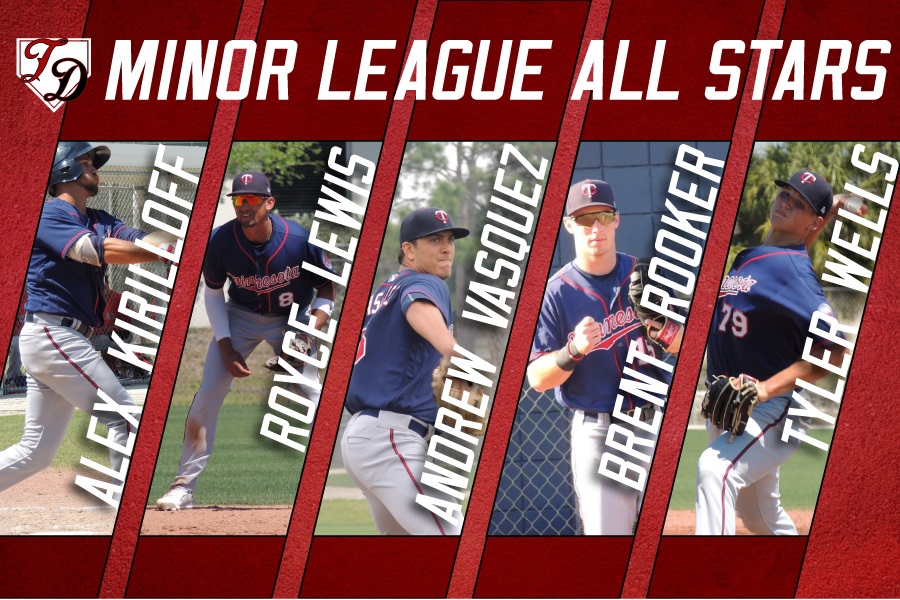 Today, we would like to announce our choices for 2018 Minnesota Twins All-Stars. Our Twins Daily minor league report writers were asked to vote for a catcher, first baseman, second baseman, third baseman, shortstop, three outfielders, a DH, a left-handed starting pitcher, a right-handed starting pitcher, a left-handed reliever and a right-handed reliever. The player at each position who received the most votes takes the spots. Read through our choices for each position. Check out how each of our writers voted. And then discuss and cast your votes as well. Let’s get started. The Twins Daily 2018 Minnesota Twins Minor League All-Star Team Catcher: Taylor Grzelakowski - Ft. Myers Miracle Acquired: non-drafted free agent from Madonna University (by way of the USPBL) 2018 Stats: .298/.370/.458 (.828) with 23 doubles, 8 homers and 40 RBI Before the season, I included Taylor Grzelakowski (“Gelly”) as one of my Spring Standouts. He signed late last season as a non-drafted free agent out of Madonna University. After playing just 12 games in the Gulf Coast League last year, it was surprising to see that he made the jump all the way up to the Ft. Myers Miracle. His is a great story, but he has also worked very hard to turn himself into a very good player. Not only did he make that jump, but he played well and hit in the middle of the Miracle lineup. He hit for average, got on base a lot, and showed good power, particularly for the Florida State League. He played some in the outfield and a little at first base, along with catching and DHing. ETA - August 2020 First Base: Zander Wiel - Chattanooga Lookouts, Rochester Red Wings Acquired: 12th round pick in 2015 from Vanderbilt 2018 Stats: .297/.367/.442 (.809) with 27 doubles, 10 homers and 65 RBI Wiel has really been a consistent performer since signing out of the baseball hot-bed that is Vanderbilt. In his first full season, he led the Midwest League in RBI. He was a middle-of-the-lineup bat for the Miracle in 2017. 2018 was another strong season for Wiel. He hit .311 with an .827 OPS for the Chattanooga Lookouts before ending the season with the Rochester Red Wings. While he took some lumps in that short AAA experience, he also had some highlights including a walkoff home run. Wiel split his time in 2018 between first base and left field. He also spent a lot of time hitting in the leadoff spot for the Lookouts. ETA - August 2019 https://twitter.com/MorrieSilver8/status/1037032313601675264 Second Base: Luis Arraez, Ft. Myers Miracle, Chattanooga Lookouts Acquired: signed as international free agent in November 2013 from Venezuela 2018 Stats: .310/.361/.397 (.758) with 20 doubles, 3 home runs and 36 RBI. 2017 was a tough season for Arraez. After winning the Midwest League batting title at .337 as a 19-year-old in Cedar Rapids in 2016, Arraez hoped for a big start with the Miracle in 2017. In this third game, he tore up his knee and needed surgery which cost him the full season. He returned a couple of weeks into the 2018 season with the Miracle. While he started out slow (1-24, .042), Arraez returned to form quickly. In his next 54 games, he hit .353/.403/.466 (.868). He was the choice for Twins Daily Hitter of the Month in June when he hit .449 with 13 extra base hits. He was promoted to the Lookouts in early July. He hit .298 for the Lookouts, as a 21-year-old. Arraez will need to be added to the 40-man roster in November or risk being lost in the Rule 5 draft. ETA: July 2020 Third Base: Jose Miranda - Cedar Rapids Kernels, Ft. Myers Miracle Acquired: Twins 2nd-round in 2016 from high school in Puerto Rico 2018 Stats: .264/.319/.417 (.736) with 27 doubles, 16 home runs and 82 RBI. Miranda was a shortstop in high school, but when the Twins drafted him, they knew his future was not at that position. He has spent time through his career at second base and third base. His 2018 season went along with the weather in Cedar Rapids. He started out cold, but he continued to heat up as the temperatures rose. He began the season by playing primarily at second base, but he spent most of the second half at third base. Most believe that he will grow and add a lot of power. In 2018, he showed that with both the doubles and the home run power. He ended his first year of full-season play with a promotion to the Ft. Myers Miracle, helping them to the Florida State League Championship. He’s a big part of The Twins Big 4 from the 2016 Draft. ETA: June 2021 Shortstop: Royce Lewis - Cedar Rapids Kernels, Ft. Myers Miracle Acquired: 1st round pick in 2017 out of high school in California 2018 Stats: .296/.333/.454 (.788) with 21 doubles, 14 homers and 74 RBI The Twins used the top overall pick in the 2017 draft out of JSerra Catholic High School. He homered in his first professional at-bat in the GCL, and he finished the season helping the Cedar Rapids Kernels to a playoff berth. Lewis also impressed in his first full season of pro ball. He returned to Iowa to start the season and earned a spot on the Midwest League All-Star Game. A couple of weeks later, he was promoted to the Miracle where he helped lead the Miracle to the playoffs on the final day and all the way to a championship. Lewis showed off the range of tools that made him the top pick and has pushed him into the Top 10 on most national prospect lists. He has shown a strong hitting acumen. While we (fans) thought he could have been pushed to Ft. Myers sooner, his extra month with the Kernels let him show serious increased power which carried over to his time with the Miracle. He came into the season with question marks at shortstop from some, but those concerns quieted some over the course of the year as he showed terrific range and a strong arm. He’s got really good speed. He led the organization in stolen bases. It will be fun to watch him develop and see how quickly he can work his way up the ladder. In addition to immense talent, Lewis has the leadership and charisma to be a difference-maker, a building block on the way to a championship-caliber team. ETA: April 2020 Outfielder: Alex Kirilloff - Cedar Rapids Kernels, Ft. Myers Miracle Acquired: Twins 1st-round draft pick in 2016 out of high school in Pennsylvania 2018 Stats: .348/.392/.578 (.970) with 44 doubles, 7 triples, 20 homers and 101 RBI Kirilloff was the Twins top draft pick in the 2016 draft, selected with the 15th overall pick. The Twins were on him early and were as impressed with his maturity as they were with his immense power potential. He had a successful pro debut, hitting over .300 in Elizabethton. Unfortunately, his season ended with an elbow injury, and in March 2017, he had Tommy John surgery which cost him that season. So while people believe in Kirilloff’s bat, no one could have imagined how well Kirilloff would play in his return in 2018. He went 1-for-12 in his first three games, and then he hit the rest of the year. He hit .333/.391/.607 (.999) in 65 games in Cedar Rapids. He played in the Midwest League All-Star Game. He finished the season with 65 games in Ft. Myers and hit .362/.393/.550 (.943). He went 2-for-2 in the Futures Game. He had a long streak of games with multiple hits. His 44 doubles led all of minor league baseball. He had home run power and drove in over 100 runs. He was a big part of the Miracle FSL championship. Like Lewis, Kirilloff will be near the top of most national prospect rankings this offseason. ETA: July 2019 Outfielder: Jaylin Davis - Ft. Myers Miracle, Chattanooga Lookouts Acquired: Twins 24th round draft pick in 2015 out of Appalachian State 2018 Stats: .273/.347/.412 (.759) with 24 doubles, 11 home runs, 53 RBI. When the Twins drafted Jaylin Davis out of Appalachian State, they knew he had immense power. However, at the time, he was hurt and missed the rest of the 2015 season. He began play in Elizabethton in 2016, but when he hit seven home runs in 12 games, he was moved up to Cedar Rapids. He has been productive and provided a lot of power. Davis showed improvement in 2018 in a couple of key areas in his development. He increased his walk rate and decreased his strikeout rate. While the FSL depressed his power a little, he had a really strong season. It will continue on Tuesday as the Arizona Fall League begins and he’ll be playing for Tommy Watkins and the Salt River Rafters. ETA: September 2019 Outfielder - Akil Baddoo - Cedar Rapids Kernels Drafted: Twins 2nd-round (compensation round) pick in 2016 out of high school in Georgia 2018 Stats: .243/.351/.419 (.770) with 22 doubles, 11 triples, 11 home runs and 40 RBI. If you only look at his batting average, you may think that Baddoo had a disappointing season. While it will be nice to see Baddoo increase his batting average, it is important to look at all of his numbers and see how well he fills the stat sheet. Another member of the 2016 Big Four, Baddoo was the third of four picks that year. He was the Twins Daily 2017 Short-Season Hitter of the Year. He spent his first full season hitting at the top of the Cedar Rapids Kernels lineup and playing a lot of centerfield. He reached double-figures in doubles (22), triples (11), home runs (11) and stolen bases (24). Baddoo has all the tools. Many believe he will hit and he is very strong and should continue to develop power. He’s got great speed on the bases and his defense really improved. If he has one tool lacking, it might be his arm. His approach at the plate is terrific. He knows the strike zone and gets his pitches. He takes a lot of walks, but he is aggressive in the zone. ETA: August 2021 Designated Hitter: Brent Rooker - Chattanooga Lookouts Acquired: Twins 1st-round (compensation) draft pick in 2017 out of Mississippi State 2018 Stats: .254/.333/.465 (.798) with 32 doubles, 22 homers and 79 RBI After selecting Brent Rooker late in the 2016 draft,the Twins took him in 2017 with a compensation pick right after the first round. He bet on himself and came through with a Triple Crown in the SEC. With four years of college, Rooker is considered an advanced hitter, and the Twins have aggressively promoted him. After a brief time in Elizabethton, the Twins pushed him to Ft. Meyers where he continued to show incredible power. The aggressiveness continued when the Twins sent Rooker to Double-A Chattanooga for the 2018 season. He struggled the first couple of months, but in both June and July he posted OPS over 1.000. He will have the opportunity to continue to grow offensively while playing more outfield defense in the Arizona Fall League. In spring training, he spent some time with Justin Morneau at first base as well. While the strikeouts will continue to be something he needs to work on, his power potential is legit. ETA: July 2019 Right-Handed Starting Pitcher: Tyler Wells - Ft. Myers Miracle, Chattanooga Lookouts Acquired: Twins 15th round in 2016 out of Cal State-San Bernadino 2018 Stats: 10-6, 2.49 ERA, 0.96 WHIP, 2.3 BB/9, 9.1 K/9 2018 was a fantastic season for the 24-year-old Tyler Wells. He began the season in Ft. Myers where he pitched well and earned his spot on the Florida State League All Star team. He went 8-4 with a 2.80 ERA and a 0.89 WHIP in 18 starts for the Miracle. He moved up to Chattanooga where he made six appearances for the Lookouts to end the season. He posted a 1.65 ERA over 32 2/3 innings. He struck out more than a batter per inning while throwing a lot of strikes. He was the 2018 Twins Daily Minor League Starting Pitcher of the Year for his efforts. In addition, he did a ton of work in the community and was the 2018 Harmon Killebrew Awards for Community Service recipient for the Ft. Myers Miracle. ETA: August 2020 Left-Handed Starting Pitcher: Stephen Gonsalves - Chattanooga Lookouts, Rochester Red Wings, Minnesota Twins Acquired: Twins 4th-round pick in 2014 out of high school in California 2018 Stats: 12-3, 2.76 ERA, 1.17 WHIP, 4.8 BB/9, 9.0 K/9 On the final weekend of the season, Stephen Gonsalves called his 2018 season “probably one of the worst seasons of his career. Well, other than getting called up here.” He called his big league call up “A dream come true.” I mean, consider that he was the Twins Daily Starting Pitcher of the Year in both 2016 and 2017, and he was the runner up to Jose Berrios for the award in 2015. He has set the bar high throughout his minor league career. And based on finding himself as the Twins Daily choice for top left-handed starting pitcher, it’s clear that it was still a very strong season for the southpaw from San Diego. If you look at his numbers across the board, he had another strong season. 12-3 with a 2.76 ERA. That’s very good. He struck out a batter per inning. However, as he noted, “The walks were a mystery to me.” At times, he just couldn’t find command. And yet, he pitched well and finally earned his first big league promotion in August and Paul Molitor kept having him pitch through some early struggles. After Berrios won two straight Starting Pitcher of the Year Awards, Gonsalves followed with two. Berrios really struggled mightily in his first big league opportunity, but he has turned things around. Hopefully Gonsalves can do the same thing in his major-league career, starting as early as 2019. ETA: August 2018 Right-Handed Relief Pitcher: Cody Stashak - Chattanooga Lookouts, Ft. Myers Miracle Acquired: Twins 12th-round draft pick in 2015 out of St. John’s University 2018 Stats: 2-1, 4 Saves, 2.87 ERA, 1.07 WHIP, 2.3 BB/9, 11.2 K/9 Stashak is probably the least-known member of the 2018 Twins Daily All-Star team, but he put together a strong 2018 season in Chattanooga, beating out several of the bigger-named relievers in Rochester for this honor. Stashak was drafted out of college as a starting pitcher, and he did a nice job for the Miracle in 2017. He ended 2017 with six good innings out of the Lookouts bullpen. He pitched very well out of the Lookouts bullpen throughout the 2018 season as well. He was able to pitch in multiple roles. He could work one inning, or he could use his starting background to reach a few innings. That may be the role for him as he moves up. Not a big guy, Stashak surprisingly worked in the low-90s as a starter, and he was able to add a couple of ticks out of the bullpen. ETA: May 2020 Left-Handed Relief Pitcher: Andrew Vasquez - Ft. Myers Miracle, Chattanooga Lookouts, Rochester Red Wings, Minnesota Twins Acquired: Twins 32nd-round draft pick in 2016 out of Westmont College 2018 MiLB Stats: 1-2, 6 Saves, 1.30 ERA, 1.02 WHIP, 2.7 BB/9, 14.0 K/9 2018 was a whirlwind season for Andrew Vasquez. He began the season in Ft. Myers and spent the first half of the season there. In fact, he pitched in the Florida State League All Star game. After the game, he was promoted to Chattanooga where he continued to thrive for about a month. He was promoted to Rochester in late August and about a week later, he was called up to the Twins on September 1st. While he had some rough moments in the season’s final month, he ended the season by striking out the side in his inning of work on the season’s final game. Andrew Vasquez tops out at 90, maybe 91 at times, but his best pitch is a tremendous slider the he is able to get a lot of swings and misses with. With Taylor Rogers and Gabriel Moya in the big leagues, Vasquez could split time in 2019 between AAA and the big leagues. Did I mention the 14 strikeouts per nine innings? ETA: September 2018 PREVIOUS Twins Daily Minor League All-Stars Looking Back: 2016 Twins Daily Minor League All-Stars C: Mitch Garver, 1B: Zander Wiel, 2B: Luis Arraez, 3B: Nelson Molina, SS: Nick Gordon, OF: LaMonte Wade, Zack Granite, Daniel Palka, DH: Adam Brett Walker. RH SP: Fernando Romero, LH SP: Stephen Gonsalves, RH RP: Trevor Hildenberger, LH RP: Michael Theofanopoulos. Looking Back: 2017 Twins Daily Minor League All-Stars C: Mitch Garver, 1B: Jonathan Rodriguez, 2B: Travis Blankenhorn, 3B: TJ White, SS: Jermaine Palacios, OF:LaMonte Wade, Zack Granite, Akil Baddoo, DH: Brent Rooker. RH SP: Clark Beeker, LH SP: Stephen Gonsalves, RH RP: John Curtiss, LH RP: Andrew Vasquez. The Votes So there you have it. The second annual Twins Daily Minor League All-Star team. Who would get your vote? Below are the votes/selections of our 2018 Twins Daily minor league writers: Seth: C: Taylor Grzelakowski, 1B: Brent Rooker, 2B: Luis Arraez, 3B: Jose Miranda, SS: Royce Lewis, OF: Alex Kirilloff, Zander Wiel, Akil Baddoo, DH: Zander Wiel, RH SP: Tyler Wells, LH SP: Stephen Gonsalves, RH RP: Cody Stashak, LH RP: Andrew Vasquez Cody: C: Taylor Grzelakowski, 1B: Zander Wiel, 2B: Luis Arraez, 3B: Chris Paul, SS: Royce Lewis, OF: Alex Kirilloff, Jaylin Davis, Akil Baddoo, DH: Brent Rooker, RH SP: Tyler Wells, LH SP: Stephen Gonsalves, RH RP: Cody Stashak, LH RP: Andrew Vasquez Tom: C: Taylor Grzelakowski, 1B: Zander Wiel, 2B: Luis Arraez, 3B: Jose Miranda, SS: Royce Lewis, OF: Alex Kirilloff, LaMonte Wade, Akil Baddoo, DH: Brent Rooker, RH SP: Tyler Wells, LH SP: Lewis Thorpe, RH RP: Cody Stashak, LH RP: Andrew Vasquez Ted: C: Ben Rortvedt, 1B: Zander Wiel, 2B: Luis Arraez, 3B: Jose Miranda, SS: Royce Lewis, OF: Alex Kirilloff, LaMonte Wade, Akil Baddoo, DH: Brent Rooker, RH SP: Tyler Wells, LH SP: Stephen Gonsalves, RH RP: Jake Reed, LH RP: Andrew Vasquez Steve: C: Willians Astudillo, 1B: Zander Wiel, 2B: Luis Arraez, 3B: Jose Miranda, SS: Royce Lewis, OF: Alex Kirilloff, Brent Rooker, Taylor Grzelakowski, DH: Ryan Jeffers, RH SP: Tyler Wells, LH SP: Lewis Thorpe, RH RP: Cody Stashak, LH RP: Andrew Vasquez Jeremy: C: Willians Astudillo, 1B: Zander Wiel, 2B: Luis Arraez, 3B: Jose Miranda, SS: Royce Lewis, OF: Alex Kirilloff, Jaylin Davis, Akil Baddoo, DH: Brent Rooker, RH SP: Tyler Wells, LH SP: Stephen Gonsalves, RH RP: Alan Busenitz, LH RP: Andrew Vasquez
 -
Miguel Sano in Traffic Incident, Arrested
Seth Stohs replied to Seth Stohs's topic in Minnesota Twins Talk
I posted this as an article and will update it on the front page... It's definitely a huge story and warrants the article. -
Miguel Sano was detained in his hometown of San Pedro De Macoris, Dominican Republic, for a traffic incident involving a police officer. He was released from jail but will need to return on Monday. We will continue to update this article as details emerge.According to a variety of reports, Sano left a club around 3 a.m. The exact details are still not clear, but it appears the vehicle Sano was in made contact with an officer. ESPN has additional reporting Monday morning that sheds additional light to the situation. The entire article is worth reading, but here's the main takeaway: "Sano, who was leaving a nightclub in his native San Pedro de Macoris at 3 a.m. on Sunday in the company of his wife, had been speaking to police officer Argenis Emilio Gillandeux in front of the club. After the exchange, he went to back up his white pickup truck without realizing that Gillandeux had not moved his motorcycle from behind him, a spokesman for the Dominican national police, Coronel Frank Duran Mejia, told Enrique Rojas on Monday." Click here to view the article
-
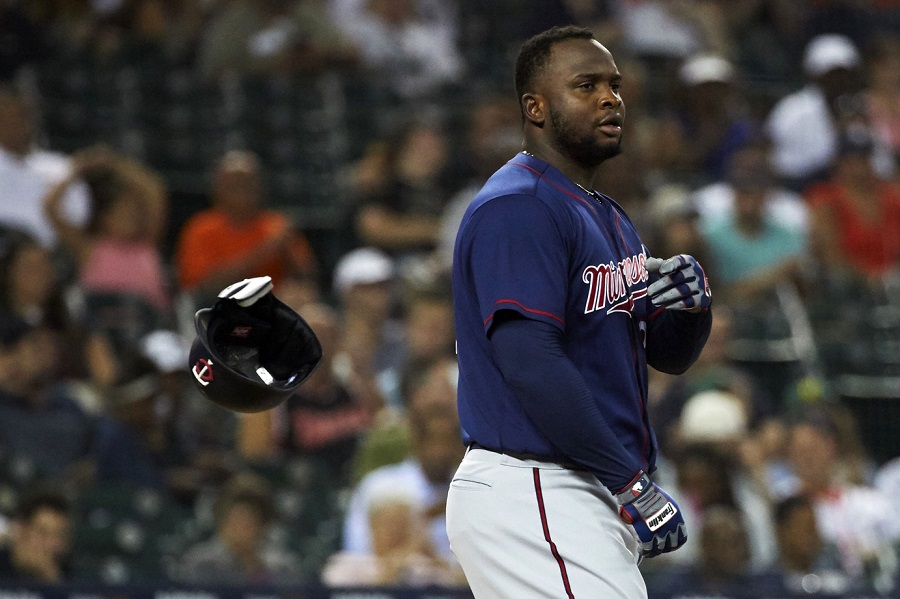 According to a variety of reports, Sano left a club around 3 a.m. The exact details are still not clear, but it appears the vehicle Sano was in made contact with an officer. https://twitter.com/hgomez27/status/1049013440545804288 The police officer is in the hospital with a broken leg. Some reports say that Sano has offered to pay for any of the officer's medical bills. https://twitter.com/StoDomingoNews/status/1049024197501091841 At this stage, it is clear that an incident happened. Of course, we all need to let it play out to see what comes of it. It is certain that this story will not go away. It continues what has been a bad year for Sano. Sano missed the final two months of the 2017 season because of a broken leg. After the season, he had surgery to insert a titanium rod into his leg. In December, allegations of assault surfaced on Twitter. An MLB investigation led to him not being suspended due to insufficient evidence. On the field, Sano struggled so much in his return, striking out at a very high rate, that he was sent all the way down to Ft. Myers to basically start over. He returned in better shape, but the numbers didn't come back right away. In early September, he slid late into second and rolled on the ground in pain. While his leg was deemed structurally sound, he did not play the rest of the season because of it. This is a big offseason for Miguel Sano on many levels, and this is not the way for it to start. UPDATES I will try to keep things updated on here, though I can't promise to see or read everything. Twins Latinos (Mariana Guzman) has been keeping up on this as well. Here is a tweet she said that says that there may have been gun shots. https://twitter.com/MarianaGuzzy/status/1049038767271698432 Darren Wolfson of KSTP passed along an official statement from the Twins via Twitter: https://twitter.com/DWolfsonKSTP/status/1049050899895738374 ESPN has additional reporting Monday morning that sheds additional light to the situation. The entire article is worth reading, but here's the main takeaway: "Sano, who was leaving a nightclub in his native San Pedro de Macoris at 3 a.m. on Sunday in the company of his wife, had been speaking to police officer Argenis Emilio Gillandeux in front of the club. After the exchange, he went to back up his white pickup truck without realizing that Gillandeux had not moved his motorcycle from behind him, a spokesman for the Dominican national police, Coronel Frank Duran Mejia, told Enrique Rojas on Monday."
 -
https://www.magazineconisabel.com/index.php/2018/10/07/miguel-sano-involucrado-en-accidente-en-que-salio-herido-un-policia/ According to the above article, Miguel Sano was in a traffic incident early this morning in the Dominican Republic. The police officer is in the hospital. The article notes that he was arrested, but he has been released... Though he'll have to be in court on Monday. I'm sure there will be more news coming. https://twitter.com/hgomez27/status/1049013440545804288 Adding some more:
-
BA's League Top 20 Prospect Lists Thread
Seth Stohs replied to lamiwe21's topic in Twins Minor League Talk
Royce Lewis was #1 in the Florida State League and the Midwest League. Alex Kirilloff was #2 in the Florida State League and #3 in the Midwest League (I believe). -
Allen, Arteaga among minor league coaches let go
Seth Stohs replied to Seth Stohs's topic in Twins Minor League Talk
Mitchell Report means nothing at this point. He could coach, and he had a few early successes and was credited with helping Buxton in 2017 (or maybe it was 2016). He's Mientkiewicz like, so it isn't too surprising though. I would say that for the coaches, the criteria for letting them go was that their contracts were up. They can just let them go and pick their own people. Maybe a guy like Michael McCarthy, who the front office brought in last year as the Red Wings fourth outfielder could be a pitching coach somewhere. I won't pretend to know what they're doing. I do like that not everyone got let go right away, and they at least had a chance to get evaluated in their real world, season situation. -
The term "from within the organization" was a big deal to so many in these (And other) forums back in the Ryan administration. Ryan replaced MacPhail and a lot of people had been around for a long time. Likewise, Molitor replaced Gardy who replaced TK, all along the same lines. But at this point, I don't think that phrase means anything. First, there's a better chance that Gene Glynn, Eddie Guardado and Jeff Smith are let go than any of them having a chance to be the manager. All three were Ryan hires, I believe. Derek Shelton's been in the organization for 1 year, hired by Falvey/Levine. Jeff Pickler has been around two years, hired by Falvey/Levine. They aren't "organizational guys" at this point. At this point, there are a ton of good candidates. My guess is that they will want to someone who fully supports the analytics of the game, and has a reputation of being good with young players and development. (note - these were qualities of Molitor too, by the way) I think Mark Derosa is a legit candidate. I don't think Managerial experience is a high priority, and it shouldn't be. I would lean toward someone recently retired... I'd consider Chris Gimenez a candidate.
-
Top 300 Twins-updated through 2018
Seth Stohs replied to Nate Tubbs Rules's topic in Minnesota Twins Talk
I love this list. So fun to see which players are there, current and former. After the top 100, it drops a bit. But there are a lot of current Twins players who are rising quick and if they stick around could be Top 50 types in no time (Buxton, Sano, Kepler, Polanco, Berrios). Interesting to see how close and how similar Max Kepler and Rich Becker are... Becker would have been a more-appreciated player a decade later. -
That's very kind to say, but Ryan was a terrific interview and it all just kind of flowed. It was fun. Hopefully we'll do several more of these.
-
Article: Watkins, Players Excited For AFL Opportunity
Seth Stohs replied to Seth Stohs's topic in Twins Daily Front Page News
Nope. Not heading down there. I wish! -
Article: Watkins, Players Excited For AFL Opportunity
Seth Stohs replied to Seth Stohs's topic in Twins Daily Front Page News
I linked to the article explaining the situation that I wrote in May or June in the article. Here is that link: http://twinsdaily.com/_/minnesota-twins-news/minnesota-twins-minor-leagues/griffin-jaxs-baseball-career-resumes-r6715- 10 replies
-
- 1
-
-
- brent rooker
- tommy watkins
- (and 3 more)
-
October 9th (next Tuesday) is Opening Day of the 2018 Arizona Fall League. Tommy Watkins will serve as the manager the Salt River Rafters, a team consisting of prospects from the Twins, Nationals, Rockies, Diamondbacks and Marlins. Eight players from the Twins organization will be on the team and today, we discuss them and get their thoughts on the opportunity. Below, find out how they learned about their invitation and what they’re looking forward to in the AFL.Sure, he played for the Twins in the big leagues for a little while, but as a player, Tommy Watkins never had the opportunity to play in the Arizona Fall League. However, the 38-year-old former infielder turned minor league hitting coach turned minor league manager learned in late July that he will lead the Salt River Rafters through their Fall League schedule. It’s an opportunity that Watkins is looking forward to. “The opportunity to manage in the Fall League means a lot to me. The responsibility to coach our prospects, as well as prospects from other teams, is an honor. I am humbled that the Twins trust me with this role, and I plan to work tirelessly to exceed the expectations of the Twins, my fellow coaches and my players. Like the players in the Fall League, the managers and coaches are also trying to work on their crafts and learn from others. “For coaches and players, the Fall League is the perfect setting to grow and learn while turning heads and having some fun in the process. Personally, I am looking forward to being reunited with some of my former players, developing all the players on our team and learning from the other coaches on my staff.” Watkins will be tasked with managing an entire team, but for the Twins Daily audience, you’ll primarily want to know which Twins prospects he will be managing. The Twins announced in late August that they are sending eight players to the Arizona Fall League. They are sending hitters Brent Rooker, Luke Raley, Travis Blankenhorn and Jaylin Davis. Four Twins minor league pitchers will also be pitching in the Fall League. They include RHP Griffin Jax, Adam Bray, Hector Lujan, and LHP Devin Smeltzer. Soon after Watkins learned he would be the manager, he was able to inform some of his Chattanooga Lookouts players that they would be joining him. Brent Rooker noted, “I got the to the park early one day in Chattanooga and Tommy had just found out that he would be managing and I got an invite. He called me into his office and gave me the news.” For the players in Ft. Myers with the Miracle, they were told by Twins minor league director Jeremy Zoll. Hector Lujan said, “I learned about the Fall League through our farm director Jeremy Zoll. Waking up to a text from him saying if there was a spot for me if I’d like to participate in the Fall League. It was a pretty exciting start to the day! ” When the initial rosters were announced, hard-throwing lefty reliever Alex Robinson was on the list. He had been placed on the Disabled List by the Miracle in late August with some shoulder issues. In his place, right-handed pitcher Adam Bray, the Minnesotan who came to the Twins in a March trade from the Dodgers. Bray didn’t hesitate, “I was invited by our farm director. He asked me if I would be interested, and I immediately said ‘Yes’!” Bray understands that it is an honor to get the chance to play in the AFL. “I am very excited and honored to be chosen to play and represent the Minnesota Twins in the AFL! I have heard that you are playing against very good competition and that it’s a big honor to get selected for this.” While the Fall League isn’t just about top prospects, it is a strong gathering of talent from around baseball. For instance, players from countries that have a Winter League are not able to participate without getting a waiver from their Winter League team. However, there are exceptions. Several years ago, the Twins got approval from Eddie Rosario’s team in Puerto Rico and he played in the AFL. Players are excited about the opportunity to play in the Arizona environment. Another former Dodgers prospect, who came to the Twins on July 31st with Luke Raley in exchange for Brian Dozier, is Devin Smeltzer. He noted, “I’ve heard it’s an awesome experience on and off the field. Best of the best competition. Really looking forward to it.” Travis Blankenhorn said, “I’m thrilled the Twins are giving me the opportunity to represent the organization in the Fall League. I’ve heard some things about the AFL, and they were all good, so I am looking forward to heading out there.” Due to some first-hand stories, Jaylin Davis is excited to be in the Fall League too. “I’m really excited about getting the opportunity to get to play in the AFL. I played with some guys this season that went last year. So I got a chance to pick their brain a little and ask them about their experiences.” Lujan is looking forward to participating in the AFL for several reasons. “My thoughts for the Fall League are that I think it’s a great opportunity to get new experiences and to be able to compete with other players from different organizations. I think it’s a challenge in a good, but I believe it should be a great learning experience for myself and my fellow teammates that are participating as well. I’ve heard nothing but good things about the Fall League.” And knowing his AFL manager and having played for him before doesn’t hurt either. “I heard that it’s a very fun atmosphere and knowing that Tommy Watkins is going to be our manager makes it very exciting too since he was my manager last year in Cedar Rapids. It should overall be a great time.” Rooker’s thoughts pretty well sum up what the entire group thinks. “It’s a very exciting opportunity. Obviously there’s a ton of talent in the league so it will be a lot of fun getting to compete against some really good competition. Everyone I’ve talked to says it’s one of the most fun baseball experiences they’ve ever had. I’m really looking forward to it.” But it is more than just a fun experience. It is an opportunity to showcase their skills, not only for the Twins but for the other 29 MLB clubs who will have coaches, scouts and front-office types at the games. 40-man roster decisions can be made on some players based on seeing something. Some players are sent to the AFL to work on specific things. Travis Blankenhorn is choosing to keep things simple for himself. “I am looking forward to playing and just going out there and giving it my all.” Adam Bray’s looking forward to testing himself. “There are always things to work on. I think facing good competition and being challenged in this league is going to be what I am looking forward to!” Same thing for Jaylin Davis, “I think the biggest thing for me is going out there and getting to compete against some really good guys.” Hector Lujan, the Twins 2017 Harmon Killebrew Award winner for the Cedar Rapids Kernels, is looking to work on a new pitch, but also continue to by a positive influence in the community. “The Twins have discussed things to work on, and I also have things in mind that I want to work on. I would like to work on my splitter to get more comfortable throwing it, and continue to keep developing consistency on my pitches, and just to continue to keep doing what I can to develop myself as a pitcher. Hopefully I can reach out to the community and kids around the neighborhoods we will be playing. Just over all really excited for this!” Devin Smeltzer was drafted as a starter and was a full-time starter in his first full season of pro baseball last year. He began the 2018 season as a starter as well, but when the calendar turned to July, the Dodgers moved him to the bullpen. All ten of his appearances with the Lookouts this year came out of the bullpen as well. So, it may not be surprising to hear what he wants to work on and work through. “For me it’s just to get more experience out of the bullpen, see some high competition, and enjoy the experience.” Brent Rooker started 46 games at first base in Chattanooga in 2018. He also made 44 starts out in left field. He’ll obviously continue to work on his offense, but he will also get more opportunities to work on his defense too. “I think the plan is for me to play outfield while I’m there. So it’ll be a great opportunity for me to just continue to get more reps and experience in left field. Doing that, along with getting the at-bats against some of the best arms in the minor leagues, should put me in a good place developmentally going into next season.” The Arizona Fall League’s final regular season game will be Thursday, November 15th. The championship game will be on Saturday, November 17th. Rooker may have an opportunity to represent the Twins in the Bowman Hitting Challenge on Saturday, October 13th. He also is a likely participant in the November 3rd Fall Stars Game. However, if the Rafters make it to the championship game, Rooker will not be able to participate. But he’s got a good reason. He’s getting married. He said he will just have to “leave Arizona about five days early.” The AFL season starts next Tuesday. Steve Lien will again be providing weekly updates throughout the AFL season, so be sure to check back often to see how this group is performing. Click here to view the article
- 10 replies
-
- 3
-
-
- brent rooker
- tommy watkins
- (and 3 more)
-
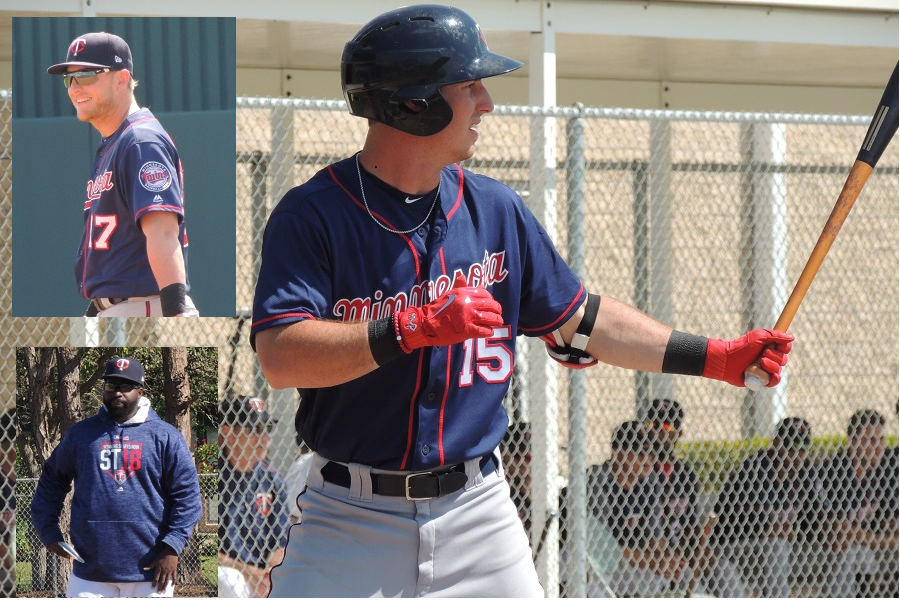 Sure, he played for the Twins in the big leagues for a little while, but as a player, Tommy Watkins never had the opportunity to play in the Arizona Fall League. However, the 38-year-old former infielder turned minor league hitting coach turned minor league manager learned in late July that he will lead the Salt River Rafters through their Fall League schedule. It’s an opportunity that Watkins is looking forward to. “The opportunity to manage in the Fall League means a lot to me. The responsibility to coach our prospects, as well as prospects from other teams, is an honor. I am humbled that the Twins trust me with this role, and I plan to work tirelessly to exceed the expectations of the Twins, my fellow coaches and my players. Like the players in the Fall League, the managers and coaches are also trying to work on their crafts and learn from others. “For coaches and players, the Fall League is the perfect setting to grow and learn while turning heads and having some fun in the process. Personally, I am looking forward to being reunited with some of my former players, developing all the players on our team and learning from the other coaches on my staff.” Watkins will be tasked with managing an entire team, but for the Twins Daily audience, you’ll primarily want to know which Twins prospects he will be managing. The Twins announced in late August that they are sending eight players to the Arizona Fall League. They are sending hitters Brent Rooker, Luke Raley, Travis Blankenhorn and Jaylin Davis. Four Twins minor league pitchers will also be pitching in the Fall League. They include RHP Griffin Jax, Adam Bray, Hector Lujan, and LHP Devin Smeltzer. Soon after Watkins learned he would be the manager, he was able to inform some of his Chattanooga Lookouts players that they would be joining him. Brent Rooker noted, “I got the to the park early one day in Chattanooga and Tommy had just found out that he would be managing and I got an invite. He called me into his office and gave me the news.” For the players in Ft. Myers with the Miracle, they were told by Twins minor league director Jeremy Zoll. Hector Lujan said, “I learned about the Fall League through our farm director Jeremy Zoll. Waking up to a text from him saying if there was a spot for me if I’d like to participate in the Fall League. It was a pretty exciting start to the day! ” When the initial rosters were announced, hard-throwing lefty reliever Alex Robinson was on the list. He had been placed on the Disabled List by the Miracle in late August with some shoulder issues. In his place, right-handed pitcher Adam Bray, the Minnesotan who came to the Twins in a March trade from the Dodgers. Bray didn’t hesitate, “I was invited by our farm director. He asked me if I would be interested, and I immediately said ‘Yes’!” Bray understands that it is an honor to get the chance to play in the AFL. “I am very excited and honored to be chosen to play and represent the Minnesota Twins in the AFL! I have heard that you are playing against very good competition and that it’s a big honor to get selected for this.” While the Fall League isn’t just about top prospects, it is a strong gathering of talent from around baseball. For instance, players from countries that have a Winter League are not able to participate without getting a waiver from their Winter League team. However, there are exceptions. Several years ago, the Twins got approval from Eddie Rosario’s team in Puerto Rico and he played in the AFL. Players are excited about the opportunity to play in the Arizona environment. Another former Dodgers prospect, who came to the Twins on July 31st with Luke Raley in exchange for Brian Dozier, is Devin Smeltzer. He noted, “I’ve heard it’s an awesome experience on and off the field. Best of the best competition. Really looking forward to it.” Travis Blankenhorn said, “I’m thrilled the Twins are giving me the opportunity to represent the organization in the Fall League. I’ve heard some things about the AFL, and they were all good, so I am looking forward to heading out there.” Due to some first-hand stories, Jaylin Davis is excited to be in the Fall League too. “I’m really excited about getting the opportunity to get to play in the AFL. I played with some guys this season that went last year. So I got a chance to pick their brain a little and ask them about their experiences.” Lujan is looking forward to participating in the AFL for several reasons. “My thoughts for the Fall League are that I think it’s a great opportunity to get new experiences and to be able to compete with other players from different organizations. I think it’s a challenge in a good, but I believe it should be a great learning experience for myself and my fellow teammates that are participating as well. I’ve heard nothing but good things about the Fall League.” And knowing his AFL manager and having played for him before doesn’t hurt either. “I heard that it’s a very fun atmosphere and knowing that Tommy Watkins is going to be our manager makes it very exciting too since he was my manager last year in Cedar Rapids. It should overall be a great time.” Rooker’s thoughts pretty well sum up what the entire group thinks. “It’s a very exciting opportunity. Obviously there’s a ton of talent in the league so it will be a lot of fun getting to compete against some really good competition. Everyone I’ve talked to says it’s one of the most fun baseball experiences they’ve ever had. I’m really looking forward to it.” But it is more than just a fun experience. It is an opportunity to showcase their skills, not only for the Twins but for the other 29 MLB clubs who will have coaches, scouts and front-office types at the games. 40-man roster decisions can be made on some players based on seeing something. Some players are sent to the AFL to work on specific things. Travis Blankenhorn is choosing to keep things simple for himself. “I am looking forward to playing and just going out there and giving it my all.” Adam Bray’s looking forward to testing himself. “There are always things to work on. I think facing good competition and being challenged in this league is going to be what I am looking forward to!” Same thing for Jaylin Davis, “I think the biggest thing for me is going out there and getting to compete against some really good guys.” Hector Lujan, the Twins 2017 Harmon Killebrew Award winner for the Cedar Rapids Kernels, is looking to work on a new pitch, but also continue to by a positive influence in the community. “The Twins have discussed things to work on, and I also have things in mind that I want to work on. I would like to work on my splitter to get more comfortable throwing it, and continue to keep developing consistency on my pitches, and just to continue to keep doing what I can to develop myself as a pitcher. Hopefully I can reach out to the community and kids around the neighborhoods we will be playing. Just over all really excited for this!” Devin Smeltzer was drafted as a starter and was a full-time starter in his first full season of pro baseball last year. He began the 2018 season as a starter as well, but when the calendar turned to July, the Dodgers moved him to the bullpen. All ten of his appearances with the Lookouts this year came out of the bullpen as well. So, it may not be surprising to hear what he wants to work on and work through. “For me it’s just to get more experience out of the bullpen, see some high competition, and enjoy the experience.” Brent Rooker started 46 games at first base in Chattanooga in 2018. He also made 44 starts out in left field. He’ll obviously continue to work on his offense, but he will also get more opportunities to work on his defense too. “I think the plan is for me to play outfield while I’m there. So it’ll be a great opportunity for me to just continue to get more reps and experience in left field. Doing that, along with getting the at-bats against some of the best arms in the minor leagues, should put me in a good place developmentally going into next season.” The Arizona Fall League’s final regular season game will be Thursday, November 15th. The championship game will be on Saturday, November 17th. Rooker may have an opportunity to represent the Twins in the Bowman Hitting Challenge on Saturday, October 13th. He also is a likely participant in the November 3rd Fall Stars Game. However, if the Rafters make it to the championship game, Rooker will not be able to participate. But he’s got a good reason. He’s getting married. He said he will just have to “leave Arizona about five days early.” The AFL season starts next Tuesday. Steve Lien will again be providing weekly updates throughout the AFL season, so be sure to check back often to see how this group is performing.
 -
Fair question... but he's at the same level as Jose Miranda who they think will likely stick at third, though they may try to keep him at second base for awhile too.
- 10 replies
-
- 1
-
-
- ryan costello
- denny hocking
- (and 2 more)
-
In late July, infielder Ryan Costello was putting together a solid season for the Clinton Lumberjacks. In fact, he was on the brink of a promotion to High-A. After batting practice, he was called into manager Denny Hocking’s office and told that he had just been traded to the Minnesota Twins as part of the deal that sent lefty Zach Duke to the Seattle Mariners. Along with moving to a new organization, Costello also moved up a level, joining the Ft. Myers Miracle for their championship run. It was an interesting 2018 season for Costello. Recently, he chatted with Twins Daily and let us get to know him.Let’s start at the beginning. Ryan Costello grew up just outside of Hartford, Connecticut. Yes, he was a Red Sox fan. “When I was a kid, I was a big Nomar (Garciaparra) fan. Then I remember Pedroia came up. I was always a big fan of Dustin Pedroia.” As you child, he played soccer, basketball, flag football and other sports. When he got to be about ten years old, he said, “It was just basketball and baseball mostly.” He played Little League and other youth sports, but it didn’t take him long to come up with his “When I grow up” dream job. “Once I got to high school, that’s when I really started to realize that was what I wanted to do when I went to college. I wanted to play professional baseball and that was what I was aspiring to do. After my freshman year of high school, I quit basketball and just focused on baseball more and be able to work out more in the offseason and do more sport-specific stuff.” His high school team was good but not great. “Junior year, we went 13-7. Senior year, we were 12-8. My junior year we went on a run for awhile and made it to the semi-finals of the state. One kid on that team ended up going to the same college that I went to, so we ended up being college teammates.“ After high school, Costello stayed close to home and attended Central Connecticut State University in New Britain, Connecticut. “I went and checked out Central. I liked it. I had known about Central my whole life. I’m only 15 minutes from the school. I had gone to their basketball games and I’d heard that the program was good. So when the time came, a couple of weeks later, I hadn’t heard from many other schools. It was … I wanted to go there. I didn't wont to make them wait. I made a decision early in the recruiting process and it ended up working out.” As a youth, Costello and his family went to several New Britain Rock Cat games. As you recall, the Rock Cats were the Double-A affiliate of the Twins for many years. “I remember thinking that was pretty cool and thinking there were some big time players who came through Connecticut.” He was a part-time player as a freshman, and after a strong start to his sophomore season, a broken finger ended his season early. Then as a junior, he had a strong, full season. In 58 games, he hit .296/.423/.532 (.955) with 22 doubles and nine home runs. It was a process and a lot of work to develop his power. “I would say knowing myself and maturing physically too, getting bigger throughout those years definitely helped, getting stronger. We had a good strength program, so as a team we were always in the weight room, five days a week. Putting on some weight, getting stronger, definitely contributed.” In addition to the added power, Costello had a really strong approach at the plate. He walked 45 times and struck out 38 times. It was all part of his development and maturity. “(The development was) Maturity-driven, understanding that as the year progressed, in certain situations, they weren’t going to give me much to hit, especially in big situations in a game. I was ready to hit. I would tone it down and look in a specific area because I knew that they were going to try to flip me stuff and get me to chase. So that kind of led to more walks than strikeouts.” And that’s when the scouts started showing up to the small Division I school in the north. “It was more during my junior year. That was when I started getting more contact, getting some questionnaires. Was seeing more interest in teams looking to me becoming a professional baseball player.” The Mariners used their 31st round pick to select Costello. He found himself on a bus when his name was selected. “I’m not as superstitious as I used to be, but at that time I was pretty superstitious. I knew a couple of kids that were really good ball players that were on scouts’ radars that didn’t get picked up that year. So, I tried to treat everything as if I wasn’t getting drafted. So I was actually in Vermont, on a bus, playing summer ball when I got the call.” As a junior, Costello had some leverage and could have returned to college for his senior season. But for Costello, it wasn’t about the money, and he put a lot of thought into his decision to sign. “I knew that the money wasn’t going to be bigl I wasn’t going to be a Top 10 guy, where I was and where I was playing college ball. To get exposure and get cross-checkers to come take a look at you is a little bit more difficult.” Costello continued, “For me, it was just important to take the next step. I was willing to go a bit later instead of staying another year.” He made his professional debut a year ago with the Mariners’ rookie Arizona League team. In 2018, he began the season with the Clinton LumberKings. His manager was former Twins utility man Denny Hocking, and he really enjoyed the experience. “It was amazing. I connected with Denny really well. He really knew how to take the different personalities that were on our team and understand how to communicate with them, and I was one of those guys. Clinton, Iowa, isn’t the nicest area. We were a team built for that. We had a lot of tough guys, college guys. He was really good about bringing a positive environment every day. We just rolled with the punches of the season. Having him at the helm of the team really gave up a good environment to play in.” For the LumberKings, Costello played well, hitting in the middle of their lineup. In 101 games, he hit .266/.360/.486 (.845) with 24 doubles, 16 homers and 70 RBI. He participated in the Midwest League All Star game with Kernels’ representatives Jared Finkel, Alex Kirilloff, and Royce Lewis. On the day he was traded, he was participating in batting practice when the team’s other first baseman told him that he was now playing first base. When he came into the clubhouse at the end of batting practice, he was called into his manager’s office. “What’s going on? Did I do something? Did I upset him?” These were the thoughts that entered Ryan Costello’s mind. When he got to Denny Hocking’s office, he saw the entire coaching staff and his roommates sitting in there. He was a bit confused. “I had no idea the trade deadline was coming.” Hocking said, “Do you know why I took you out of the lineup today?” Costello responded, “Well, did I do something wrong?” Hocking giggled. Costello continued, “Well, either I got promoted, or I got traded.” “Which one do you think?” “I’m going to say promoted.” “Nope. The other one.” For any young player traded, there are a couple of emotions that come into play. Obviously it’s difficult leaving one organization and all of the relationships that have been developed. At the same time, there is another organization that likes you enough to acquire you. “It’s a little of both. You always hear that being traded is a good thing in the minor leagues. It means that an organization likes you. They want you. Obviously it’s still tough. I had just spent three or four months with this team, built some great relationships. Initially, it was a bit up and down for me. I didn’t really know how to think about it at first because I knew it was a good thing, but I was still sad that I was leaving my boys and that coaching staff that I had really blended well with.” Along with the trade, Costello also received a promotion from Low-A to High-A, being sent to the Ft. Myers Miracle. Costello wasn’t completely shocked by that news. “Not really to be honest with you. There was talk with the Mariners that I was possibly getting promoted soon. When I found out about it, Jeremy Zoll called me and before I could even process anything, he filled me in on some details and told me I was going to Ft. Myers. When he said that, I was still trying to process everything that was going on, and by the time stuff slowed down and I realized I was headed to Ft. Myers to play for the Miracle, I wasn’t too surprised.”] When he got to the Miracle, there were a couple of familiar faces. “From the Midwest League All Star game, I had met Alex Kirilloff and Royce Lewis. So coming in, I knew they were on that team. So it was cool rolling in there and having some relationship and were on a first-name basis and knew who each other were off the field a little bit.” First professional season. Traded to a new organization. Earning a promotion. And, Costello joined a team that was about to go on a very strong run to end the season. He was ready, and h was excited for the opportunity. “It was really awesome. It’s definitely cool coming into an environment where you’re thrown into pressure right away. I remember the day I got there, I was in the game and I think we were two games back at the time. I got filled in on what was going on. Everything matters right now. Every pitch. Every play. Every at bat matters. I took it as a blessing coming from, I think we were 8 games back in Clinton. I had the opportunity to play some playoff baseball this year, might as well take advantage of it.” And he certainly took advantage of it. In the final game of the Miracle season, a win that gave Ft. Myers the Florida State League championship series, it was Ryan Costello’s three-run homer that gave them a lead that they never gave up. “That was awesome. That was a high during the moment, and eventually to have the season end that night and end on such a high note, it was pretty awesome.” Ryan Costello added four home runs (during the regular season) to finish the season with 20 home runs. “It was kind of a goal. It was something in the back of my mind. It was something I knew I could achieve if I put together a good season and stayed consistent throughout. I had written down some things for myself going into the season that I wanted to check back at the end. Hitting 20 home runs was on that list.” While he hits for power, he doesn’t want to be deemed solely a power hitter. He notes, “I would like to be more of a well-rounded hitter. I’m not all about hitting home runs. Mentally I try to stay line-drive driven and let the other stuff happen. But as the season went on this year, I was getting close to the 20-home run mark and I was like ‘this is pretty cool.’ I wouldn’t say that I consider myself just strictly a power hitter. I would like to be a more well-rounded hitter who can hit for power.” Like many, Costello was a shortstop on his high school team. In college, he played primarily third base. However, in his first professional season, he made 110 starts at first base and just four starts at third base. Over the course of the season, he got more comfortable at the new position. While he had a solid first full professional season on the field, he thinks that his greatest skill at this point is in his head. “I would say my ability to stay positive through tough times and understand that it’s part of the game and ups and downs are going to come. But if I can stay more level-headed and put myself in a position mentally to be successful, then things will kind of work themselves out a little bit.” As he enters the offseason, there are several things he plans to work on. “I want to improve my batting. I want to get stronger. I want to be a bit more consistent in the box. The second half this season this year didn’t go as well as I would have liked it to. I think that was an adjustment to playing so many games and a couple of things in my swing or in my approach. So, I’m going to take a step back and look at that and break it down from the bottom to the top and try to come back and be just a little more consistent at the plate.” But he also will spend some time away from the game of baseball before jumping back into his preparation for 2019. “Golfing and fishing. My dad has a bass boat and has had it since I was a kid. The first thing we do when I go home is go fishing. I’ve been home for seven days, I’ve been out fishing about four of those days. I live about five minutes from a river, the Connecticut River, so we go fishing on the river a lot.” Ryan Costello was a late-round pick, but he had a very solid first full season as a professional baseball. He has a lot of positives to build from as he looks to year two. Click here to view the article
-
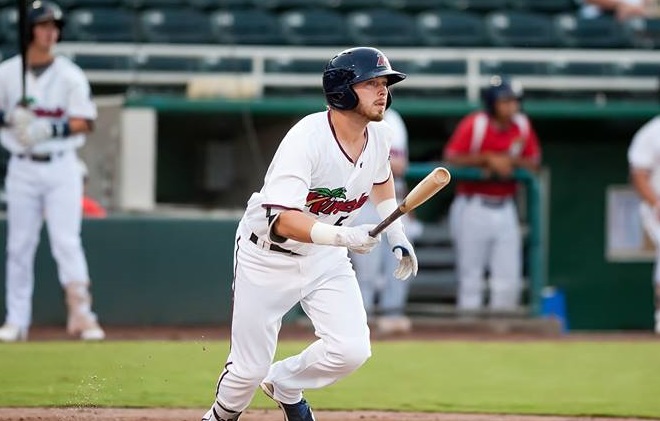 Let’s start at the beginning. Ryan Costello grew up just outside of Hartford, Connecticut. Yes, he was a Red Sox fan. “When I was a kid, I was a big Nomar (Garciaparra) fan. Then I remember Pedroia came up. I was always a big fan of Dustin Pedroia.” As you child, he played soccer, basketball, flag football and other sports. When he got to be about ten years old, he said, “It was just basketball and baseball mostly.” He played Little League and other youth sports, but it didn’t take him long to come up with his “When I grow up” dream job. “Once I got to high school, that’s when I really started to realize that was what I wanted to do when I went to college. I wanted to play professional baseball and that was what I was aspiring to do. After my freshman year of high school, I quit basketball and just focused on baseball more and be able to work out more in the offseason and do more sport-specific stuff.” His high school team was good but not great. “Junior year, we went 13-7. Senior year, we were 12-8. My junior year we went on a run for awhile and made it to the semi-finals of the state. One kid on that team ended up going to the same college that I went to, so we ended up being college teammates.“ After high school, Costello stayed close to home and attended Central Connecticut State University in New Britain, Connecticut. “I went and checked out Central. I liked it. I had known about Central my whole life. I’m only 15 minutes from the school. I had gone to their basketball games and I’d heard that the program was good. So when the time came, a couple of weeks later, I hadn’t heard from many other schools. It was … I wanted to go there. I didn't wont to make them wait. I made a decision early in the recruiting process and it ended up working out.” As a youth, Costello and his family went to several New Britain Rock Cat games. As you recall, the Rock Cats were the Double-A affiliate of the Twins for many years. “I remember thinking that was pretty cool and thinking there were some big time players who came through Connecticut.” He was a part-time player as a freshman, and after a strong start to his sophomore season, a broken finger ended his season early. Then as a junior, he had a strong, full season. In 58 games, he hit .296/.423/.532 (.955) with 22 doubles and nine home runs. It was a process and a lot of work to develop his power. “I would say knowing myself and maturing physically too, getting bigger throughout those years definitely helped, getting stronger. We had a good strength program, so as a team we were always in the weight room, five days a week. Putting on some weight, getting stronger, definitely contributed.” In addition to the added power, Costello had a really strong approach at the plate. He walked 45 times and struck out 38 times. It was all part of his development and maturity. “(The development was) Maturity-driven, understanding that as the year progressed, in certain situations, they weren’t going to give me much to hit, especially in big situations in a game. I was ready to hit. I would tone it down and look in a specific area because I knew that they were going to try to flip me stuff and get me to chase. So that kind of led to more walks than strikeouts.” And that’s when the scouts started showing up to the small Division I school in the north. “It was more during my junior year. That was when I started getting more contact, getting some questionnaires. Was seeing more interest in teams looking to me becoming a professional baseball player.” The Mariners used their 31st round pick to select Costello. He found himself on a bus when his name was selected. “I’m not as superstitious as I used to be, but at that time I was pretty superstitious. I knew a couple of kids that were really good ball players that were on scouts’ radars that didn’t get picked up that year. So, I tried to treat everything as if I wasn’t getting drafted. So I was actually in Vermont, on a bus, playing summer ball when I got the call.” As a junior, Costello had some leverage and could have returned to college for his senior season. But for Costello, it wasn’t about the money, and he put a lot of thought into his decision to sign. “I knew that the money wasn’t going to be bigl I wasn’t going to be a Top 10 guy, where I was and where I was playing college ball. To get exposure and get cross-checkers to come take a look at you is a little bit more difficult.” Costello continued, “For me, it was just important to take the next step. I was willing to go a bit later instead of staying another year.” He made his professional debut a year ago with the Mariners’ rookie Arizona League team. In 2018, he began the season with the Clinton LumberKings. His manager was former Twins utility man Denny Hocking, and he really enjoyed the experience. “It was amazing. I connected with Denny really well. He really knew how to take the different personalities that were on our team and understand how to communicate with them, and I was one of those guys. Clinton, Iowa, isn’t the nicest area. We were a team built for that. We had a lot of tough guys, college guys. He was really good about bringing a positive environment every day. We just rolled with the punches of the season. Having him at the helm of the team really gave up a good environment to play in.” For the LumberKings, Costello played well, hitting in the middle of their lineup. In 101 games, he hit .266/.360/.486 (.845) with 24 doubles, 16 homers and 70 RBI. He participated in the Midwest League All Star game with Kernels’ representatives Jared Finkel, Alex Kirilloff, and Royce Lewis. On the day he was traded, he was participating in batting practice when the team’s other first baseman told him that he was now playing first base. When he came into the clubhouse at the end of batting practice, he was called into his manager’s office. “What’s going on? Did I do something? Did I upset him?” These were the thoughts that entered Ryan Costello’s mind. When he got to Denny Hocking’s office, he saw the entire coaching staff and his roommates sitting in there. He was a bit confused. “I had no idea the trade deadline was coming.” Hocking said, “Do you know why I took you out of the lineup today?” Costello responded, “Well, did I do something wrong?” Hocking giggled. Costello continued, “Well, either I got promoted, or I got traded.” “Which one do you think?” “I’m going to say promoted.” “Nope. The other one.” For any young player traded, there are a couple of emotions that come into play. Obviously it’s difficult leaving one organization and all of the relationships that have been developed. At the same time, there is another organization that likes you enough to acquire you. “It’s a little of both. You always hear that being traded is a good thing in the minor leagues. It means that an organization likes you. They want you. Obviously it’s still tough. I had just spent three or four months with this team, built some great relationships. Initially, it was a bit up and down for me. I didn’t really know how to think about it at first because I knew it was a good thing, but I was still sad that I was leaving my boys and that coaching staff that I had really blended well with.” Along with the trade, Costello also received a promotion from Low-A to High-A, being sent to the Ft. Myers Miracle. Costello wasn’t completely shocked by that news. “Not really to be honest with you. There was talk with the Mariners that I was possibly getting promoted soon. When I found out about it, Jeremy Zoll called me and before I could even process anything, he filled me in on some details and told me I was going to Ft. Myers. When he said that, I was still trying to process everything that was going on, and by the time stuff slowed down and I realized I was headed to Ft. Myers to play for the Miracle, I wasn’t too surprised.”] When he got to the Miracle, there were a couple of familiar faces. “From the Midwest League All Star game, I had met Alex Kirilloff and Royce Lewis. So coming in, I knew they were on that team. So it was cool rolling in there and having some relationship and were on a first-name basis and knew who each other were off the field a little bit.” First professional season. Traded to a new organization. Earning a promotion. And, Costello joined a team that was about to go on a very strong run to end the season. He was ready, and h was excited for the opportunity. “It was really awesome. It’s definitely cool coming into an environment where you’re thrown into pressure right away. I remember the day I got there, I was in the game and I think we were two games back at the time. I got filled in on what was going on. Everything matters right now. Every pitch. Every play. Every at bat matters. I took it as a blessing coming from, I think we were 8 games back in Clinton. I had the opportunity to play some playoff baseball this year, might as well take advantage of it.” And he certainly took advantage of it. In the final game of the Miracle season, a win that gave Ft. Myers the Florida State League championship series, it was Ryan Costello’s three-run homer that gave them a lead that they never gave up. “That was awesome. That was a high during the moment, and eventually to have the season end that night and end on such a high note, it was pretty awesome.” Ryan Costello added four home runs (during the regular season) to finish the season with 20 home runs. “It was kind of a goal. It was something in the back of my mind. It was something I knew I could achieve if I put together a good season and stayed consistent throughout. I had written down some things for myself going into the season that I wanted to check back at the end. Hitting 20 home runs was on that list.” While he hits for power, he doesn’t want to be deemed solely a power hitter. He notes, “I would like to be more of a well-rounded hitter. I’m not all about hitting home runs. Mentally I try to stay line-drive driven and let the other stuff happen. But as the season went on this year, I was getting close to the 20-home run mark and I was like ‘this is pretty cool.’ I wouldn’t say that I consider myself just strictly a power hitter. I would like to be a more well-rounded hitter who can hit for power.” Like many, Costello was a shortstop on his high school team. In college, he played primarily third base. However, in his first professional season, he made 110 starts at first base and just four starts at third base. Over the course of the season, he got more comfortable at the new position. While he had a solid first full professional season on the field, he thinks that his greatest skill at this point is in his head. “I would say my ability to stay positive through tough times and understand that it’s part of the game and ups and downs are going to come. But if I can stay more level-headed and put myself in a position mentally to be successful, then things will kind of work themselves out a little bit.” As he enters the offseason, there are several things he plans to work on. “I want to improve my batting. I want to get stronger. I want to be a bit more consistent in the box. The second half this season this year didn’t go as well as I would have liked it to. I think that was an adjustment to playing so many games and a couple of things in my swing or in my approach. So, I’m going to take a step back and look at that and break it down from the bottom to the top and try to come back and be just a little more consistent at the plate.” But he also will spend some time away from the game of baseball before jumping back into his preparation for 2019. “Golfing and fishing. My dad has a bass boat and has had it since I was a kid. The first thing we do when I go home is go fishing. I’ve been home for seven days, I’ve been out fishing about four of those days. I live about five minutes from a river, the Connecticut River, so we go fishing on the river a lot.” Ryan Costello was a late-round pick, but he had a very solid first full season as a professional baseball. He has a lot of positives to build from as he looks to year two.
 -
Long-time strength and conditioning coach Perry Castellanos and his assistant Erik Beiser did not have their contracts renewed. Several other minor league strength and conditioning coaches also let go:
-
The Twins didn't renew the contracts of the following minor league coaches: AAA hitting coach Chad Allen AA pitching coach Ivan Arteaga A pitching coach Henry Bonilla Dom. Lg. hitting coach Asdrubal Estrada
-
Article: Twins Daily 2018 Awards: Most Improved
Seth Stohs replied to Seth Stohs's topic in Twins Daily Front Page News
Might have been using last year's Most Improved article as my template and didn't delete a paragraph. Oops!! Corrected.- 24 replies
-
- 1
-
-
- kyle gibson
- taylor rogers
- (and 3 more)
-
A year after the Twins made massive improvements, jumping from 59 wins in 2016 to 85 wins in 2017, 2018 was a disappointing season for the Twins. Today we begin our week of handing out the Twins Daily 2018 Awards by looking at the players who showed the most improvement. In 2017, there were several players who showed significant improvement. In a difficult 2018 season, improvement was more difficult to find, but one player took some major strides forward this year, particularly in terms of consistency.2017 was a tough season for Kyle Gibson. The Twins top pick from 2009 was the Twins Daily choice for Best Pitcher in 2015 when he posted an ERA of 3.84. But he posted a 5.07 ERA in both 2016 and 2017. In fact, in 2017, he was demoted to Triple-A Rochester twice and told to work on certain things. Gibson has acknowledged that getting sent down was quite humbling, but instead of sulking, he went to work. He impressed those in Rochester with how much he worked, how well he listened and the adjustments that he worked on. He also discussed how he was able to work on the mental side of the game as much as the physical. “You’ve gotta have the right mentality about what you’re doing. You can’t put too much pressure on yourself, you can’t put too much importance on one start, one outing. It’s still a game.” Gibson told Twins Daily recently, “For me, I just had to switch my mentality a little bit and realize that if I never played another game of baseball I’d be OK. I try to keep things in perspective, try to keep my priorities straight and that allowed me to understand and be able to handle the failure a little bit better, learn from the failure a little bit better and eventually turn it into longer-term success.” Gibson responded late in the 2017 season. Over his final eight starts for the Twins last year, Gibson went 6-0 with a 2.92 ERA. Fortunately for the Twins, Gibson carried his lessons learned into the 2018 season and put together his best season. Maybe more important, it was his most consistent (in a positive way) season. Among his 29 MLB starts in 2017, he had 12 games in which he pitched at least six innings. Seven of them came over his final eight starts. Eight times he did not complete five innings. In 2018, he made 32 starts and completed six innings in 20 of them. Just three times, and twice in April, did he fail to complete five innings. He was a reliable starter and finished with a career-high 196 2/3 innings. If you’re still into Win-Loss record, you may not like this choice. Despite the 5.07 ERA in 2017, Gibson went 12-10. This year, while posting a 3.62 ERA, he went just 10-13. Most of the rest of his numbers showed improvement. WHIP: 2017: 1.53. 2018: 1.30bWAR: 2017: 0.3, 2018: 3.8fWAR: 2017: 1.2, 2018: 2.8Innings: 2017: 158.0, 2018: 196 2/3K/9: 2017: 6.9, 2018: 8.2HR/9: 2017: 1.4, 2018: 1.1K%: 2017: 17.5%, 2018: 21.7%Avg: 2017: .290, 2018: .238Aside from those stats, it is interesting to note that Gibson’s average fastball jumped from 92.0 to 93.0 in 2018. He was throwing all of his pitches harder. He threw the same percentage of fastballs, but he reduced his changeup usage, choosing to throw more breaking pitches. That helped him increase his swinging strike rate from 10.0% to 11.5% Through his struggles in early 2017 and his return to success throughout 2018, coupled with several midseason trades, Gibson finds himself in even more for a leadership role on this Twins roster. “I’m getting to the point where I’m one of the older guys in here. After the trades I ended up being one of the higher service-time guys, so you’ve got to have a good mentality. It’s up to us (veterans) to try to lead these guys in the right direction, and if we don’t have the right mentality just because the team’s losing, then what is that showing them?” And Gibson welcomes the leadership role for the young Twins starters and has already had some discussions with them, particularly about the struggles. He’s experienced it. He understands. ““We’ve got a couple guys in (Stephen) Gonsalves, Kohl (Stewart) and Zack (Littell) that have all gone through certain times of struggle, and that’s good for them. Hopefully I can be here and say ‘listen guys, a three-start struggle is nothing like a full-year struggle. Understand that these three starts really don’t really have that great of an impact on your career.’ They know my story, and the more I can share with them, hopefully it can help them through certain times of struggle.”” Hopefully he continues to progress and improve, and some of those young pitchers will improve right along with him. Gibson put up improved numbers, and he was one of three Twins starters to make 32 starts. He was certainly the Twins most consistent starter in 2018. That earned him our Most Improved award, unanimously, for 2018. THE BALLOTS Here's a look at the ballots from each of our seven voters. Opinions didn't vary much on this one. Seth Stohs: 1) Kyle Gibson, 2) Taylor Rogers, 3) Jose Berrios Nick Nelson: 1) Kyle Gibson, 2) Taylor Rogers,, 3) Jose Berrios John Bonnes: 1) Kyle Gibson, 2) Mitch Garver Tom Froemming: 1) Kyle Gibson, 2) Eduardo Escobar, 3) Taylor Rogers Cody Christie: 1) Kyle Gibson, 2) Eddie Rosario, 3) Eduardo Escobar Steve Lein: 1) Kyle Gibson, 2) Mitch Garver, 3) Ryan Pressly Ted Schwerzler: 1) Kyle Gibson, 2) Mitch Garver, 4) Matt Magill POINTS Kyle Gibson: 21 Mitch Garver: 6 Taylor Rogers: 5 Eduardo Escobar: 3 Jose Berrios: 2 Eddie Rosario: 2 Ryan Pressly: 1 Matt Magill: 1 PREVIOUS MOST IMPROVED WINNERS 2015: Aaron Hicks 2016: Brian Dozier 2017: Byron Buxton Do you agree with our committee's pick? Who would be your choice for Most Improved Twin and why? Click here to view the article
- 24 replies
-
- 2
-
-
- kyle gibson
- taylor rogers
- (and 3 more)
-
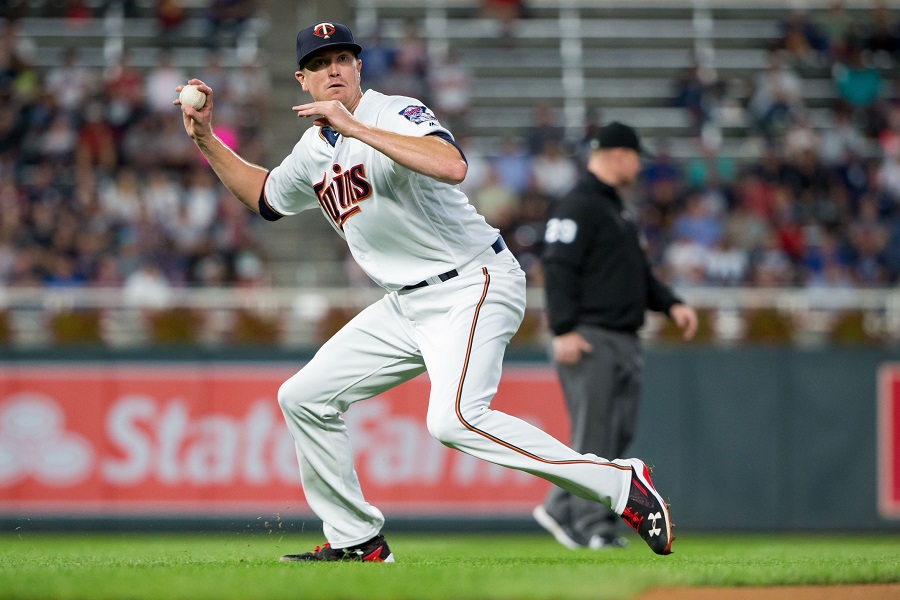 2017 was a tough season for Kyle Gibson. The Twins top pick from 2009 was the Twins Daily choice for Best Pitcher in 2015 when he posted an ERA of 3.84. But he posted a 5.07 ERA in both 2016 and 2017. In fact, in 2017, he was demoted to Triple-A Rochester twice and told to work on certain things. Gibson has acknowledged that getting sent down was quite humbling, but instead of sulking, he went to work. He impressed those in Rochester with how much he worked, how well he listened and the adjustments that he worked on. He also discussed how he was able to work on the mental side of the game as much as the physical. “You’ve gotta have the right mentality about what you’re doing. You can’t put too much pressure on yourself, you can’t put too much importance on one start, one outing. It’s still a game.” Gibson told Twins Daily recently, “For me, I just had to switch my mentality a little bit and realize that if I never played another game of baseball I’d be OK. I try to keep things in perspective, try to keep my priorities straight and that allowed me to understand and be able to handle the failure a little bit better, learn from the failure a little bit better and eventually turn it into longer-term success.” Gibson responded late in the 2017 season. Over his final eight starts for the Twins last year, Gibson went 6-0 with a 2.92 ERA. Fortunately for the Twins, Gibson carried his lessons learned into the 2018 season and put together his best season. Maybe more important, it was his most consistent (in a positive way) season. Among his 29 MLB starts in 2017, he had 12 games in which he pitched at least six innings. Seven of them came over his final eight starts. Eight times he did not complete five innings. In 2018, he made 32 starts and completed six innings in 20 of them. Just three times, and twice in April, did he fail to complete five innings. He was a reliable starter and finished with a career-high 196 2/3 innings. If you’re still into Win-Loss record, you may not like this choice. Despite the 5.07 ERA in 2017, Gibson went 12-10. This year, while posting a 3.62 ERA, he went just 10-13. Most of the rest of his numbers showed improvement. WHIP: 2017: 1.53. 2018: 1.30 bWAR: 2017: 0.3, 2018: 3.8 fWAR: 2017: 1.2, 2018: 2.8 Innings: 2017: 158.0, 2018: 196 2/3 K/9: 2017: 6.9, 2018: 8.2 HR/9: 2017: 1.4, 2018: 1.1 K%: 2017: 17.5%, 2018: 21.7% Avg: 2017: .290, 2018: .238 Aside from those stats, it is interesting to note that Gibson’s average fastball jumped from 92.0 to 93.0 in 2018. He was throwing all of his pitches harder. He threw the same percentage of fastballs, but he reduced his changeup usage, choosing to throw more breaking pitches. That helped him increase his swinging strike rate from 10.0% to 11.5% Through his struggles in early 2017 and his return to success throughout 2018, coupled with several midseason trades, Gibson finds himself in even more for a leadership role on this Twins roster. “I’m getting to the point where I’m one of the older guys in here. After the trades I ended up being one of the higher service-time guys, so you’ve got to have a good mentality. It’s up to us (veterans) to try to lead these guys in the right direction, and if we don’t have the right mentality just because the team’s losing, then what is that showing them?” And Gibson welcomes the leadership role for the young Twins starters and has already had some discussions with them, particularly about the struggles. He’s experienced it. He understands. ““We’ve got a couple guys in (Stephen) Gonsalves, Kohl (Stewart) and Zack (Littell) that have all gone through certain times of struggle, and that’s good for them. Hopefully I can be here and say ‘listen guys, a three-start struggle is nothing like a full-year struggle. Understand that these three starts really don’t really have that great of an impact on your career.’ They know my story, and the more I can share with them, hopefully it can help them through certain times of struggle.”” Hopefully he continues to progress and improve, and some of those young pitchers will improve right along with him. Gibson put up improved numbers, and he was one of three Twins starters to make 32 starts. He was certainly the Twins most consistent starter in 2018. That earned him our Most Improved award, unanimously, for 2018. THE BALLOTS Here's a look at the ballots from each of our seven voters. Opinions didn't vary much on this one. Seth Stohs: 1) Kyle Gibson, 2) Taylor Rogers, 3) Jose Berrios Nick Nelson: 1) Kyle Gibson, 2) Taylor Rogers,, 3) Jose Berrios John Bonnes: 1) Kyle Gibson, 2) Mitch Garver Tom Froemming: 1) Kyle Gibson, 2) Eduardo Escobar, 3) Taylor Rogers Cody Christie: 1) Kyle Gibson, 2) Eddie Rosario, 3) Eduardo Escobar Steve Lein: 1) Kyle Gibson, 2) Mitch Garver, 3) Ryan Pressly Ted Schwerzler: 1) Kyle Gibson, 2) Mitch Garver, 4) Matt Magill POINTS Kyle Gibson: 21 Mitch Garver: 6 Taylor Rogers: 5 Eduardo Escobar: 3 Jose Berrios: 2 Eddie Rosario: 2 Ryan Pressly: 1 Matt Magill: 1 PREVIOUS MOST IMPROVED WINNERS 2015: Aaron Hicks 2016: Brian Dozier 2017: Byron Buxton Do you agree with our committee's pick? Who would be your choice for Most Improved Twin and why?
 -
Article: Offseason Handbook Available for Preorder
Seth Stohs replied to John Bonnes's topic in Twins Daily Front Page News
I know, but i was curious.
