



Nick Nelson
-
Posts
8,325 -
Joined
-
Last visited
-
Days Won
56
Content Type
Profiles
News
Minnesota Twins Videos
2026 Minnesota Twins Top Prospects Ranking
2022 Minnesota Twins Draft Picks
Minnesota Twins Free Agent & Trade Rumors, Notes, & Tidbits
Guides & Resources
2023 Minnesota Twins Draft Picks
The Minnesota Twins Players Project
2024 Minnesota Twins Draft Picks
2025 Minnesota Twins Draft Pick Tracker
2026 Minnesota Twins Draft Tracker: Picks & Bonuses
Forums
Blogs
Events
Store
Downloads
Gallery
Everything posted by Nick Nelson
-
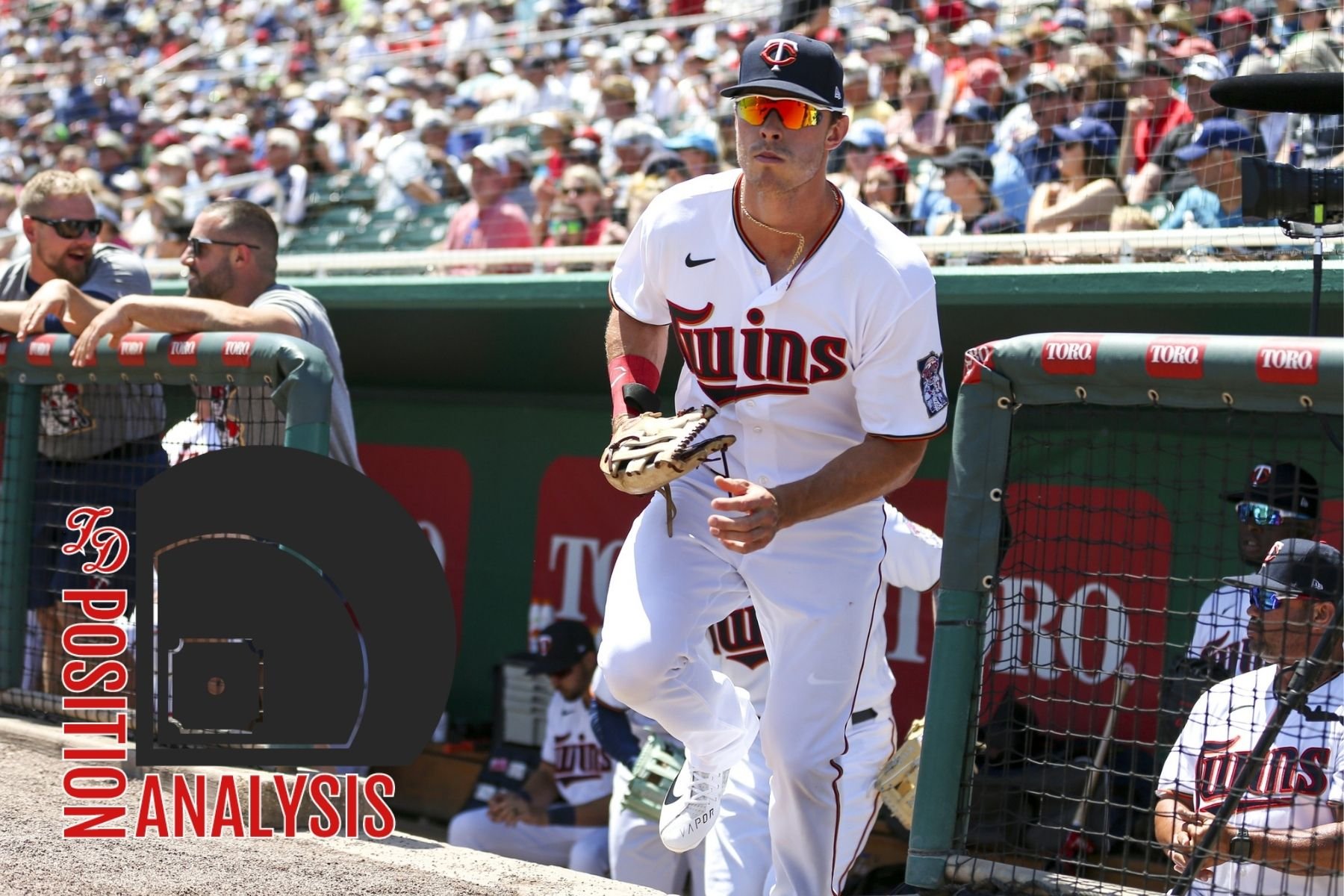 Projected Starter: Max Kepler Likely Backup: Alex Kirilloff Depth: Trevor Larnach, Jake Cave Prospects: Matt Wallner, Kala'i Rosario THE GOOD It's the same story as usual with Max Kepler in right field: stellar defense and so-so offense. It's easy to focus on the latter, especially in the wake of a truly lackluster season at the plate, but the value of Kepler's glove should not be ignored. Statcast had him in the 95th percentile for Outs Above Average last year, ranking second among right fielders (behind only Manuel Margot) with eight. FanGraphs had him sixth at the position in Defensive Runs Saved, with nine. No matter the source or metric, Kepler is a top-tier defensive player in right, bringing a center fielder's range to the position along with a solid arm and good instincts. When both he and Buxton are in the outfield, it's extremely difficult for opposing hitters to land a fly ball anywhere in their expansive territory, which will certainly be appreciated by young fly-ball pitchers like Joe Ryan and Bailey Ober. At the plate, Kepler is not great – especially given the offense-oriented position he plays – but far from horrible. His 2021 season was frustrating because it harkened back to his unfulfilling pre-2019 norm, but not because it was abjectly terrible. Kepler's baseline is "slightly below average hitter" (he's posted an OPS+ between 95 and 98 in four of five full seasons), but that's also been his floor. Even at his worst, he'll contribute enough home runs and walks to be reasonably productive. At his best, Kepler is a legitimate star. He hit 36 home runs in 2019 while holding his own against left-hander pitchers. With a 4.5 fWAR he was our pick for team MVP. It'd be easier to gravitate toward the possibility of that upside returning if we'd ever seen it outside of one brilliant, juiced-ball-aided season. Alas, he's still only 29. THE BAD In his first four MLB seasons, Kepler's home run totals jumped from 17 to 19 to 20 to 36. It appeared he had turned a corner, especially when he opened up the very next one with homers in first two at-bats against Lucas Giolito. And yet, since that first game of 2020, Kepler has managed only 26 home runs with a .410 slugging percentage in 169 games. Among 29 right fielders with 600+ PA over this span, Kepler ranks 25th in wOBA and wRC+. He's a poor hitter at a position with a high offensive bar, and unfortunately Rocco Baldelli has magnified the negative impact by routinely having Kepler hit at key spots in the lineup, as well as by starting him against lefties. Over the past two seasons, the outfielder has slashed .148/.236/.235 against southpaws. He needs to be platooned. Unfortunately, the Twins don't have a natural fit to platoon with Kepler in right. Brent Rooker could theoretically fill that role, but Baldelli doesn't like using Rooker in the outfield and seems to prefer him in left when he does. Also, Rooker has hardly shown to be a lefty masher, with a .222/.325/.375 line in 83 plate appearances. Kyle Garlick was supposed to fill a role like this for the Twins last year, and it's very possible he could resurface quickly, although he's not currently on the 40-man roster. Otherwise, as you look through the right field depth, both short-term and long-term, you find a whole lot of lefty bats: Alex Kirilloff, Trevor Larnach, Jake Cave, Mark Contreras, Matt Wallner, Willie Joe Garry. THE BOTTOM LINE The shortage of viable platoon-mates means the Twins are probably staying committed to Kepler as an everyday starter for the time being. As long as he keeps providing premium defense in right field, the team can live with his sub-par offensive production at the position. He's under contract for $6.5 million this year, and $8.5 million in 2023, with a $10 million team option for the following year. I'd be very surprised if he plays through the end of his contract in Minnesota. Catch Up on the Rest of Our 2022 Previews: Position Analysis: Catcher Position Analysis: First Base Position Analysis: Second Base Position Analysis: Third Base Position Analysis: Shortstop Position Analysis: Left Field Position Analysis: Center Field
- 19 comments
-
- 6
-

-
- max kepler
- alex kirilloff
- (and 1 more)
-
Twins 2022 Position Analysis: Center Field
Nick Nelson posted a topic in Twins Daily Front Page News
In an offseason that saw the Twins reel in their biggest-ticket free agent ever, the most important move they made came from within: extending Byron Buxton long-term and securing the most talented, athletic player in franchise history. Center field is in good hands, with the usual caveats. Projected Starter: Byron Buxton Likely Backup: Nick Gordon Depth: Max Kepler, Gilberto Celestino Prospects: Austin Martin, Royce Lewis THE GOOD Outside of Mike Trout, Byron Buxton is the best center fielder in baseball when he's on the field. Since 2019, he's been worth 8.1 fWAR, ranking seventh among all players at the position in this cumulative stat despite playing only 187 games. No player other than Trout delivers more value on a rate basis. That's because Buxton is an elite difference-maker in all phases of the game. He provides top-tier defense at one of the most crucial positions on the field. He's among the fastest players in the majors, a threat to steal or take extra bases any time he's aboard. I mean, this Statcast snapshot from last year says it all. Buxton tops the measurable charts in terms of power, speed, and defensive range. And the 28-year-old is trending up across the board. Buxton's new contract provides him with life-changing guaranteed money, but hardly diminishes his financial motivation to stay healthy and perform. His base salary for 2022 is $9 million, but he can more than double that total by meeting plate appearance thresholds and earning MVP votes. Buck is not the type of person who needs extra incentive to push him, but it's there, and will be throughout the life of his historically unprecedented contract. THE BAD There's no sugarcoating the fact that Buxton's injury history has defined his career up to this point as much as his superlative play. Last year was just another link in the broken chain, as a hip strain and broken hand cost him well over half the season. In both 2019 and 2020, Buxton was unavailable for the playoffs. I've said it before and I'll say it again: a player is only injury-prone until he isn't. There's no reason that, with some (long overdue) better luck, Buxton can't play 140-plus games like he did in 2017. But the reality is that Minnesota would be irresponsible not to plan for his absence, making it all the more strange there wasn't (or at least hasn't been) better depth built in behind him. Sure, the Twins have Nick Gordon, who proved surprisingly adept in center last year despite having no prior experience. You probably don't want him as your regular in the event of a prolonged Buxton absence, but he's a handy backup. For the purposes of injury contingencies, Gilberto Celestino might be an ideal fit. He's young, inexpensive, and very much a legitimate center fielder. But he was blatantly overmatched in his MLB debut last year (.466 OPS, -0.7 fWAR), and that impression will take some work to distance himself from. Austin Martin and Royce Lewis could be eventual options, but need seasoning in the minors. Max Kepler apparently has a strong aversion to playing center, with the Twins inclined to accommodate his preference. Jake Cave is around still but ... no thanks. In light of all this, the Twins would seemingly benefit from bringing in another veteran outfielder who is capable in center (especially with Alex Kirilloff likely to be spending ample time at first). To this point, they haven't. I don't think Derek Fisher qualifies. THE BOTTOM LINE The Twins hope to have Buxton manning center field for the next seven years. Realistically, they have to be persistently prepared for life without him. Their interim depth is a bit questionable, but long-term the outlook is bright with prospects like Celestino, Martin, Lewis, Emmanuel Rodriguez and Misael Urbina all projecting as possible options down the line. That said, their immediate depth behind Buxton is questionable, which is quite troubling all things considered. Catch Up on the Rest of Our 2022 Previews: Position Analysis: Catcher Position Analysis: First Base Position Analysis: Second Base Position Analysis: Third Base Position Analysis: Shortstop Position Analysis: Left Field View full article -
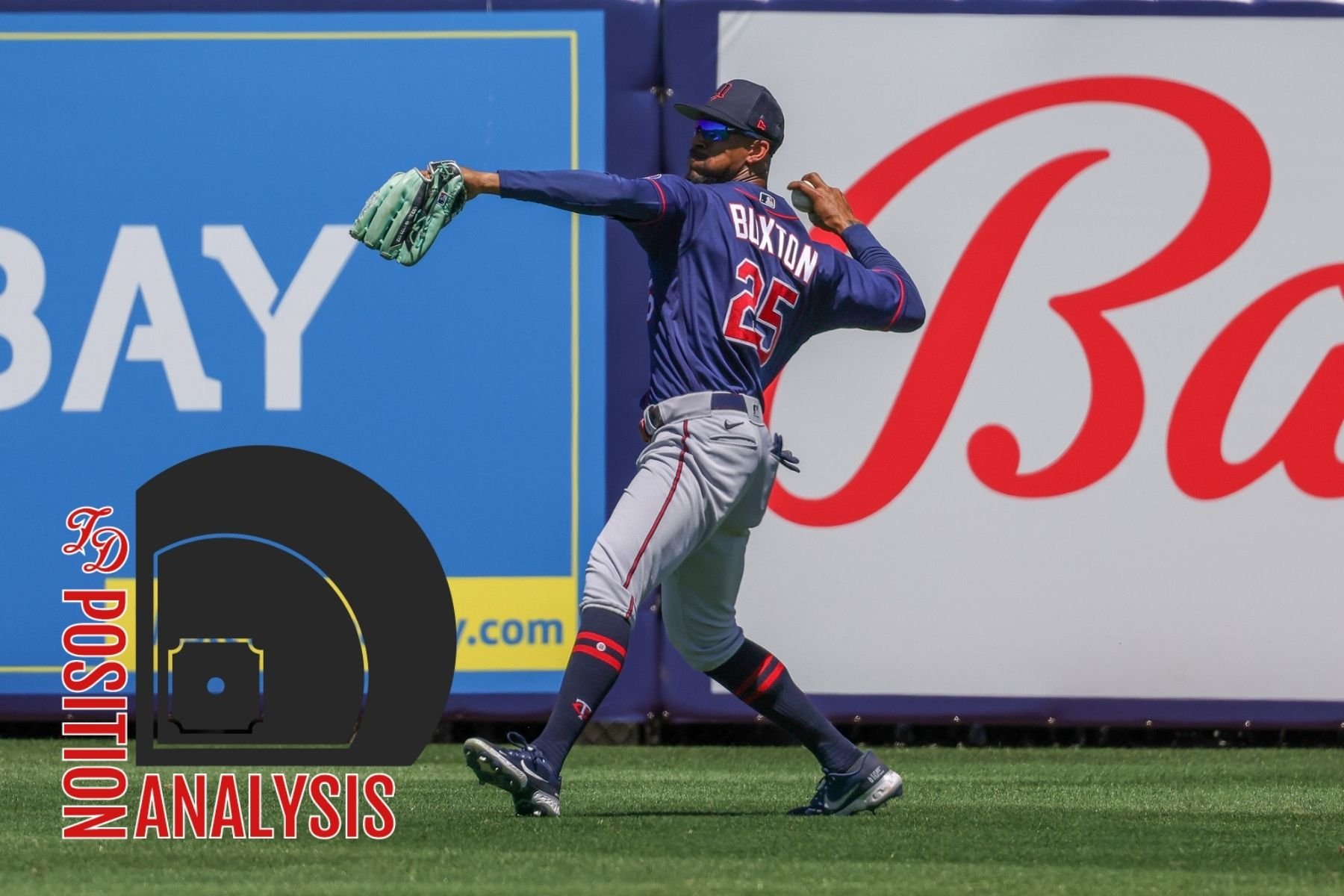 Projected Starter: Byron Buxton Likely Backup: Nick Gordon Depth: Max Kepler, Gilberto Celestino Prospects: Austin Martin, Royce Lewis THE GOOD Outside of Mike Trout, Byron Buxton is the best center fielder in baseball when he's on the field. Since 2019, he's been worth 8.1 fWAR, ranking seventh among all players at the position in this cumulative stat despite playing only 187 games. No player other than Trout delivers more value on a rate basis. That's because Buxton is an elite difference-maker in all phases of the game. He provides top-tier defense at one of the most crucial positions on the field. He's among the fastest players in the majors, a threat to steal or take extra bases any time he's aboard. I mean, this Statcast snapshot from last year says it all. Buxton tops the measurable charts in terms of power, speed, and defensive range. And the 28-year-old is trending up across the board. Buxton's new contract provides him with life-changing guaranteed money, but hardly diminishes his financial motivation to stay healthy and perform. His base salary for 2022 is $9 million, but he can more than double that total by meeting plate appearance thresholds and earning MVP votes. Buck is not the type of person who needs extra incentive to push him, but it's there, and will be throughout the life of his historically unprecedented contract. THE BAD There's no sugarcoating the fact that Buxton's injury history has defined his career up to this point as much as his superlative play. Last year was just another link in the broken chain, as a hip strain and broken hand cost him well over half the season. In both 2019 and 2020, Buxton was unavailable for the playoffs. I've said it before and I'll say it again: a player is only injury-prone until he isn't. There's no reason that, with some (long overdue) better luck, Buxton can't play 140-plus games like he did in 2017. But the reality is that Minnesota would be irresponsible not to plan for his absence, making it all the more strange there wasn't (or at least hasn't been) better depth built in behind him. Sure, the Twins have Nick Gordon, who proved surprisingly adept in center last year despite having no prior experience. You probably don't want him as your regular in the event of a prolonged Buxton absence, but he's a handy backup. For the purposes of injury contingencies, Gilberto Celestino might be an ideal fit. He's young, inexpensive, and very much a legitimate center fielder. But he was blatantly overmatched in his MLB debut last year (.466 OPS, -0.7 fWAR), and that impression will take some work to distance himself from. Austin Martin and Royce Lewis could be eventual options, but need seasoning in the minors. Max Kepler apparently has a strong aversion to playing center, with the Twins inclined to accommodate his preference. Jake Cave is around still but ... no thanks. In light of all this, the Twins would seemingly benefit from bringing in another veteran outfielder who is capable in center (especially with Alex Kirilloff likely to be spending ample time at first). To this point, they haven't. I don't think Derek Fisher qualifies. THE BOTTOM LINE The Twins hope to have Buxton manning center field for the next seven years. Realistically, they have to be persistently prepared for life without him. Their interim depth is a bit questionable, but long-term the outlook is bright with prospects like Celestino, Martin, Lewis, Emmanuel Rodriguez and Misael Urbina all projecting as possible options down the line. That said, their immediate depth behind Buxton is questionable, which is quite troubling all things considered. Catch Up on the Rest of Our 2022 Previews: Position Analysis: Catcher Position Analysis: First Base Position Analysis: Second Base Position Analysis: Third Base Position Analysis: Shortstop Position Analysis: Left Field
 -
One year ago, the Twins decided to move on from their longtime fixture in left field, Eddie Rosario. The team's first season in his absence did not feature much stability at the position. In 2022, the Twins will try to clarify the future in left, which remains fairly murky at the moment – albeit with some quality options in place. Projected Starter: Alex Kirilloff Likely Backup: Nick Gordon Depth: Trevor Larnach, Brent Rooker Prospects: Emmanuel Rodriguez, Alerick Soularie THE GOOD Among all positions for the Twins last year (aside from pitcher), left field saw the most different names rotate through: a total of eight players made at least one start there. This speaks to their depth of usable corner outfielders, which remains intact – seven of those players are back in camp this spring. (Minus Rob Refsnyder, who signed with the Red Sox during the offseason.) When Eddie Rosario departed, Alex Kirilloff was lined up as his replacement in left, a natural opening to be filled by the organization's MLB-ready top prospect. And yet, Kirilloff ended up ranking fifth in starts at the position, spending much more of his time (pre-surgery) at first base while Trevor Larnach led the team in left field starts with 51. I would imagine that still represents the front office's long-term vision: Kirilloff at first, Larnach in left. Two former first-round draft picks and impact bats entrenched at the positions for which they are best suited. However, it's probably not a feasible path forward in the immediate future, both because Miguel Sanó is occupying first base and because Larnach's late-season plunge in 2021 cast doubt on his readiness. Hardly the worst thing in the world. Left field might not be Kirilloff's BEST position, but it's certainly one he can play. And the most important thing is getting his bat into the lineup. With his surgically repaired wrist appearing to be in the clear, it's time to once again let loose the purest swing in the organization. I assume the plan is to trot him out regularly in left, because there are no other obvious paths to everyday playing time for him, and no other obvious answers out there. But the Twins have not operated like a team prepping him for such an assignment. THE BAD Do the Twins actually want to use Kirilloff in left field? Unclear. There's no reason to think he can't play a perfectly solid left field, and he's looked fine during his opportunities there. But for whatever reason, those opportunities have been far and few between. Last year, as the Twins sorted through a multitude of different players to fill in, Kirilloff drew only 11 total starts at the position. In a minor-league career that spanned 281 games, he started in left field a total of 10 times. He started more times in center! The team's lack of interest in seeing Kirilloff play left field shows no signs of dissipating. He has started only two games there this spring. It certainly suggests that the Twins aren't planning on using Kirilloff regularly in left field for any extended length of time. Once you move past him, the options at the position become significantly less exciting, at least in the short-term. The club now seems firmly committed to keeping Luis Arraez (who started 24 games in left last year) in the infield. Brent Rooker's glove is not be trusted. Jake Cave and Kyle Garlick are uninspiring non-roster options. Nick Gordon is a pure plug-and-play backup who lacks the bat to be an asset in a corner outfield spot. Larnach is the one who holds the key. While there's plenty of reason to remain bullish on his future, it's hard to imagine the Twins are going to plug him right back into the Opening Day lineup after the way his rookie year concluded. Following a good start with the Twins, Larnach got thoroughly dominated for two months. From June 15th through August 15th, he slashed .193/.279/.298 with a 38.3% K-rate. He was then demoted to Triple-A, where he posted a .611 OPS in 10 games before being shut down. When major-league pitchers spot a weakness, they take advantage, and that's what happened here as they began to unload an endless bevy of breaking balls and changeups on Larnach, who mashed fastballs (.296 BA, .512 SLG) but struggled mightily against offspeed (.143 BA, .179 SLG). THE BOTTOM LINE Assuming Larnach goes back to Triple-A to build confidence and prove he's ready, Kirilloff should be in line for the lion's share of playing time in left field from day one. Unless the Twins have other plans. Which their behavior suggests they might. With only 10 days until the regular season gets underway, they are running short on time to orchestrate their final designs. Catch Up on the Rest of Our 2022 Previews: Position Analysis: Catcher Position Analysis: First Base Position Analysis: Second Base Position Analysis: Third Base Position Analysis: Shortstop View full article
-
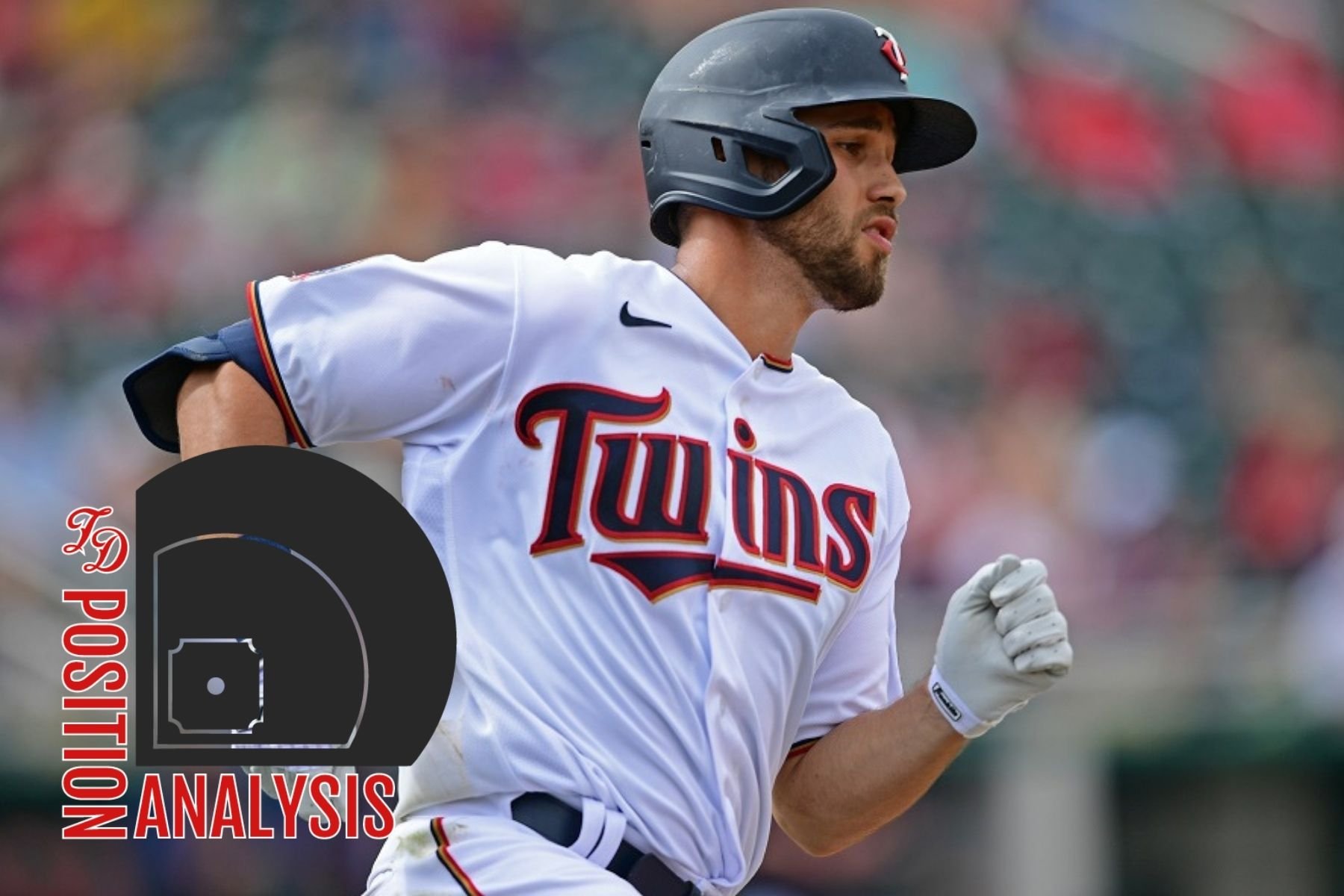 Projected Starter: Alex Kirilloff Likely Backup: Nick Gordon Depth: Trevor Larnach, Brent Rooker Prospects: Emmanuel Rodriguez, Alerick Soularie THE GOOD Among all positions for the Twins last year (aside from pitcher), left field saw the most different names rotate through: a total of eight players made at least one start there. This speaks to their depth of usable corner outfielders, which remains intact – seven of those players are back in camp this spring. (Minus Rob Refsnyder, who signed with the Red Sox during the offseason.) When Eddie Rosario departed, Alex Kirilloff was lined up as his replacement in left, a natural opening to be filled by the organization's MLB-ready top prospect. And yet, Kirilloff ended up ranking fifth in starts at the position, spending much more of his time (pre-surgery) at first base while Trevor Larnach led the team in left field starts with 51. I would imagine that still represents the front office's long-term vision: Kirilloff at first, Larnach in left. Two former first-round draft picks and impact bats entrenched at the positions for which they are best suited. However, it's probably not a feasible path forward in the immediate future, both because Miguel Sanó is occupying first base and because Larnach's late-season plunge in 2021 cast doubt on his readiness. Hardly the worst thing in the world. Left field might not be Kirilloff's BEST position, but it's certainly one he can play. And the most important thing is getting his bat into the lineup. With his surgically repaired wrist appearing to be in the clear, it's time to once again let loose the purest swing in the organization. I assume the plan is to trot him out regularly in left, because there are no other obvious paths to everyday playing time for him, and no other obvious answers out there. But the Twins have not operated like a team prepping him for such an assignment. THE BAD Do the Twins actually want to use Kirilloff in left field? Unclear. There's no reason to think he can't play a perfectly solid left field, and he's looked fine during his opportunities there. But for whatever reason, those opportunities have been far and few between. Last year, as the Twins sorted through a multitude of different players to fill in, Kirilloff drew only 11 total starts at the position. In a minor-league career that spanned 281 games, he started in left field a total of 10 times. He started more times in center! The team's lack of interest in seeing Kirilloff play left field shows no signs of dissipating. He has started only two games there this spring. It certainly suggests that the Twins aren't planning on using Kirilloff regularly in left field for any extended length of time. Once you move past him, the options at the position become significantly less exciting, at least in the short-term. The club now seems firmly committed to keeping Luis Arraez (who started 24 games in left last year) in the infield. Brent Rooker's glove is not be trusted. Jake Cave and Kyle Garlick are uninspiring non-roster options. Nick Gordon is a pure plug-and-play backup who lacks the bat to be an asset in a corner outfield spot. Larnach is the one who holds the key. While there's plenty of reason to remain bullish on his future, it's hard to imagine the Twins are going to plug him right back into the Opening Day lineup after the way his rookie year concluded. Following a good start with the Twins, Larnach got thoroughly dominated for two months. From June 15th through August 15th, he slashed .193/.279/.298 with a 38.3% K-rate. He was then demoted to Triple-A, where he posted a .611 OPS in 10 games before being shut down. When major-league pitchers spot a weakness, they take advantage, and that's what happened here as they began to unload an endless bevy of breaking balls and changeups on Larnach, who mashed fastballs (.296 BA, .512 SLG) but struggled mightily against offspeed (.143 BA, .179 SLG). THE BOTTOM LINE Assuming Larnach goes back to Triple-A to build confidence and prove he's ready, Kirilloff should be in line for the lion's share of playing time in left field from day one. Unless the Twins have other plans. Which their behavior suggests they might. With only 10 days until the regular season gets underway, they are running short on time to orchestrate their final designs. Catch Up on the Rest of Our 2022 Previews: Position Analysis: Catcher Position Analysis: First Base Position Analysis: Second Base Position Analysis: Third Base Position Analysis: Shortstop
- 22 comments
-
- 4
-
-
- alex kirilloff
- trevor larnach
- (and 1 more)
-
The Twins may have put the finishing touches on their rotation on Monday, agreeing to terms with veteran right-hander Chris Archer on a one-year deal. Can the two-time All-Star rediscover his game? Jeff Passan reports that the deal is worth $3.5 million in guaranteed money, with Archer being able to earn up to $6 million in incentives. There's a mutual option of $10 million for 2023. Archer was once a dominant force for the Rays, named to the AL All-Star team in both 2015 and 2017, but of late he's been hampered by injuries and poor performance. After an unfulfilling run with the Pirates, he re-signed with Tampa last year but threw only 19.1 IP due to elbow issues. The 33-year-old Archer is, much like Dylan Bundy, a bounce-back candidate and projected back-end starter. It's not the kind of splashy move most Twins fans were hoping for, but it doesn't fill out the final obvious opening in the rotation while adding a needed dash of veteran experience. The structure of the deal creates plenty of motivation for Archer, who can nearly triple his base salary by reaching certain workload bonuses (games started or outings with nine or more outs recorded). He owns a career 3.87 ERA and 9.8 K/9 rate over nine MLB seasons. We'll update with more details soon, so make sure to check back. In the meantime, what are your immediate thoughts on Archer to the Twins? View full article
-
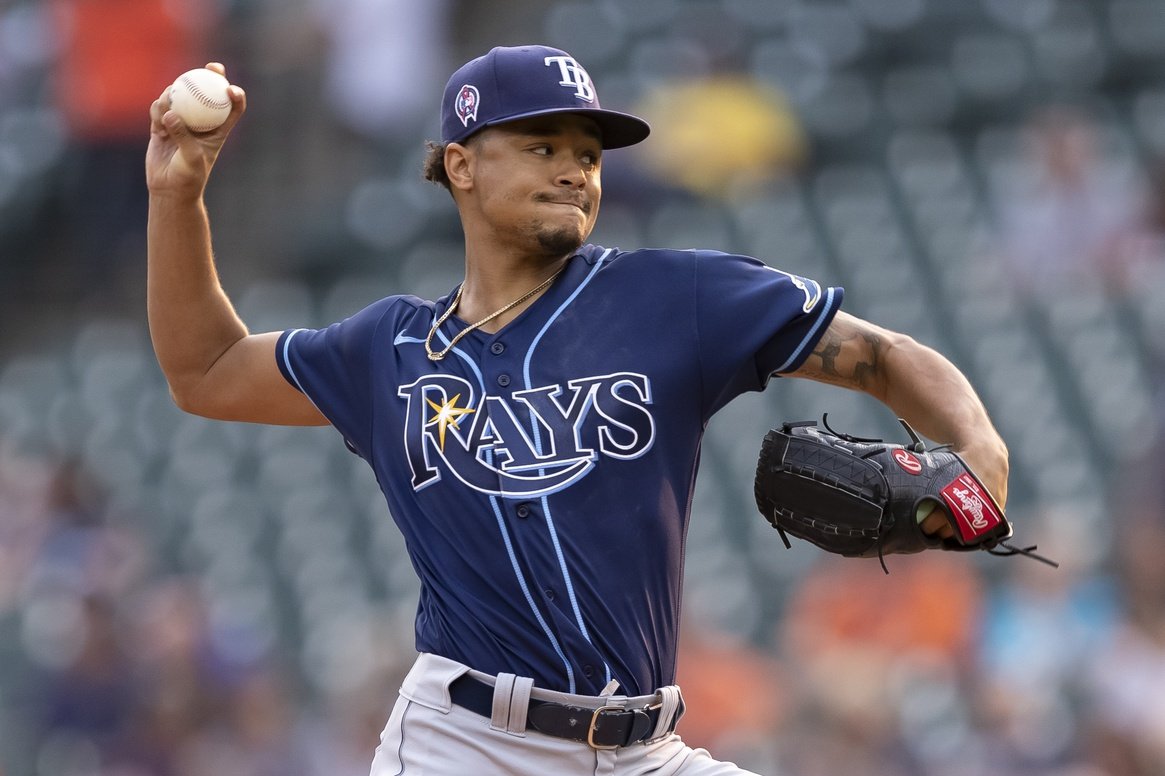 Jeff Passan reports that the deal is worth $3.5 million in guaranteed money, with Archer being able to earn up to $6 million in incentives. There's a mutual option of $10 million for 2023. Archer was once a dominant force for the Rays, named to the AL All-Star team in both 2015 and 2017, but of late he's been hampered by injuries and poor performance. After an unfulfilling run with the Pirates, he re-signed with Tampa last year but threw only 19.1 IP due to elbow issues. The 33-year-old Archer is, much like Dylan Bundy, a bounce-back candidate and projected back-end starter. It's not the kind of splashy move most Twins fans were hoping for, but it doesn't fill out the final obvious opening in the rotation while adding a needed dash of veteran experience. The structure of the deal creates plenty of motivation for Archer, who can nearly triple his base salary by reaching certain workload bonuses (games started or outings with nine or more outs recorded). He owns a career 3.87 ERA and 9.8 K/9 rate over nine MLB seasons. We'll update with more details soon, so make sure to check back. In the meantime, what are your immediate thoughts on Archer to the Twins?
 -
In the beginning, there was nothing. Then, there was everything. So goes the story of the shortstop position in Minnesota over the course of the past offseason. It was a barren void until the Twins stunningly filled it with one of the biggest superstars in the game. The definition of a game-changer. Projected Starter: Carlos Correa Likely Backup: Jorge Polanco Depth: Gio Urshela, Nick Gordon Prospects: Royce Lewis, Noah Miller THE GOOD Carlos Correa is an MVP-caliber stud in his prime and one of the best shortstops in baseball. Since debuting for the Astros at age 20 in 2015, he ranks third at the position in fWAR, with his 25.1 trailing only Francisco Lindor and Xander Bogaerts. Correa is a former Rookie of the Year and two-time All-Star who last year finished fifth in AL MVP voting, thanks to a .279/.366/.485 slash line to go along with 26 home runs, 92 RBIs, and 104 runs scored. He was the best player on a 95-win Astros team, and then added to his extensive postseason résumé by helping propel Houston to another World Series berth. At age 27, the former first overall draft pick has already appeared in 79 playoff games, with a customary .272/.344/.505 slash line. He's the real deal: a two-way phenom who is legitimately elite on both offense and defense. Correa's work in the field was so impressive last year that he not only earned his first Gold Glove at shortstop, but was awarded a Platinum Glove as the best overall defender in the American League. Assuming he's healthy and on top of his game, Correa will give the Twins a boost at short like they've never had before. He brings the defensive chops of Andrelton Simmons combined with the bat of a healthy and thriving Jorge Polanco. It's the best of both worlds. The only question is how long it will last. (And the answer is: probably not very.) THE BAD The Twins' problem, before acquiring Correa, was not that they lacked a starting shortstop. It was more that they lacked ANY shortstops, throughout the entire system basically. What once looked like an abundance of depth at the position evaporated over the years, as prospects switched positions or fizzled out. This issue will rear its head again quickly if Correa goes down for any period of time. Presumably one of Polanco or Gio Urshela would slide over – each started a couple-dozen games at short last year. I'd be interested to know which backup ranks ahead in preference. Urshela has much less overall experience at the position, but the Twins seem motivated to keep Polanco off short if they can help it. Utilityman Nick Gordon is an option to plug in, with the least disruption to the starting lineup, but I can't envision a scenario where Rocco Baldelli uses him there regularly over an extended period of time. Backup talk aside, the biggest question at shortstop is beyond this year, due to the nature of Correa's contract. Barring something unforeseen, he'll opt out and return to free agency for a $300 million payday following the 2022 season. That wouldn't exactly bring the Twins back to square one, since they'll have a bunch of new spending flexibility and another year's worth of intel on their own prospects. One of those prospects in particular seems to hold the key to the future of the positon at this point. No one really seems to believe Austin Martin will be a regular shortstop in the big leagues, but that possibility remains in play for Royce Lewis. Drafted first overall, five years after Correa, Lewis has played short almost exclusively in the minors, and that's where the Twins have been using him this spring. In the highlight below, we see both the natural ability that keeps Lewis in the SS conversation, as well as the rusty form and footwork of a player who's basically been sidelined for two straight years. The Twins need to get a good long look at Lewis and assess where he's at. The presence of Correa this year will enable them to do just that, with Lewis billed for Triple-A. If he doesn't convince them he can stick, and Correa opts out after this season ... well, then the Twins pretty much are back to square one. THE BOTTOM LINE I would say the Twins addressed their shortstop vacancy in the most impactful way imaginable, except ... it was unimaginable. The #1 free agent in a loaded class, Correa seemed completely out of their reach. Yet various circumstances – the lockout, the Josh Donaldson trade, and Correa's agent switch – came together and created an opportunity. Derek Falvey and Thad Levine jumped on it. On both sides of the ball, Correa is capable of bringing a level of play at shortstop most Twins fans have never seen before. Strap in and enjoy the ride while it lasts. We can worry later about what comes next. Catch Up on the Rest of Our 2022 Previews: Position Analysis: Catcher Position Analysis: First Base Position Analysis: Second Base Position Analysis: Third Base MORE FROM TWINS DAILY — Latest Twins coverage from our writers — Recent Twins discussion in our forums — Follow Twins Daily via Twitter, Facebook or email — Become a Twins Daily caretaker View full article
-
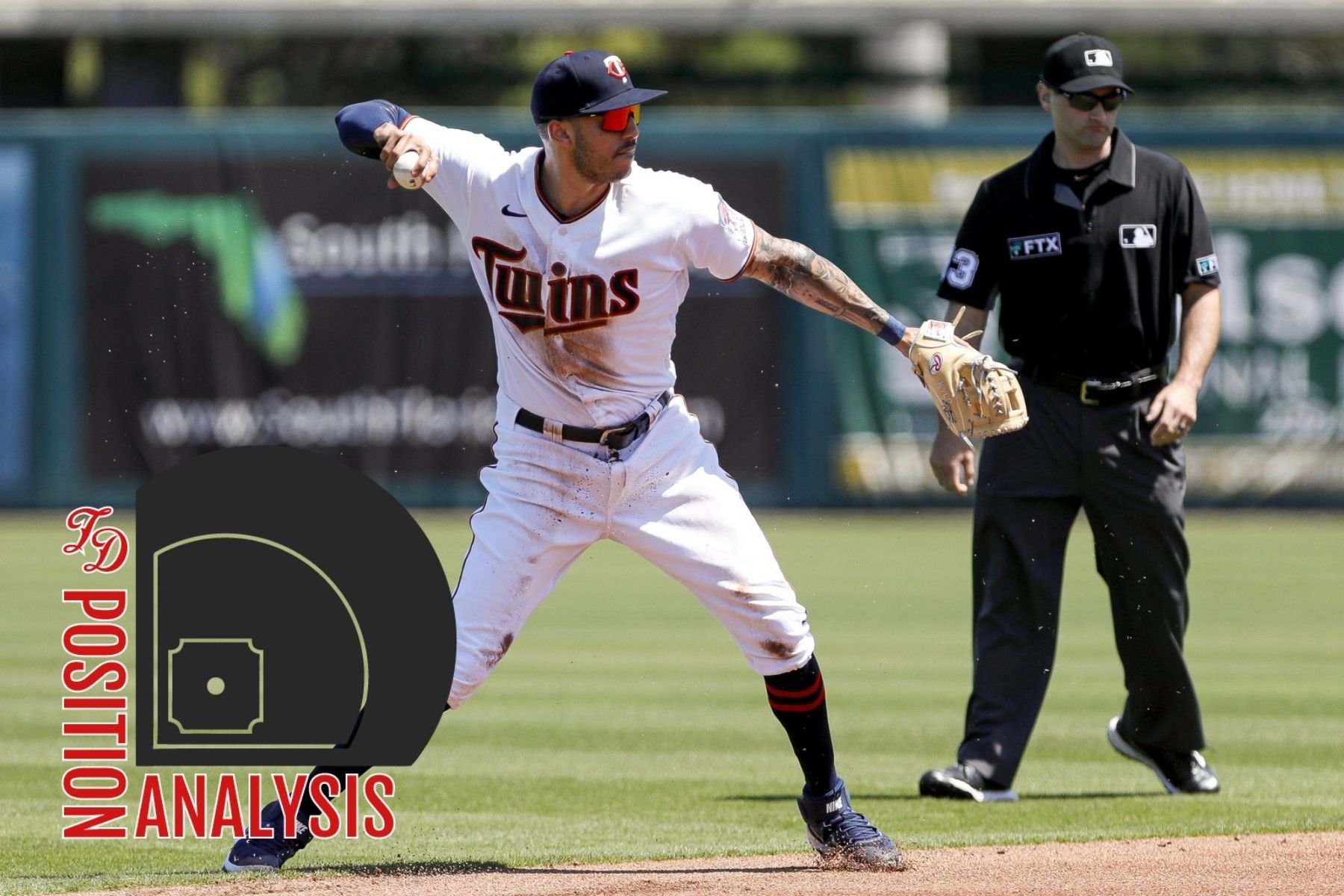 Projected Starter: Carlos Correa Likely Backup: Jorge Polanco Depth: Gio Urshela, Nick Gordon Prospects: Royce Lewis, Noah Miller THE GOOD Carlos Correa is an MVP-caliber stud in his prime and one of the best shortstops in baseball. Since debuting for the Astros at age 20 in 2015, he ranks third at the position in fWAR, with his 25.1 trailing only Francisco Lindor and Xander Bogaerts. Correa is a former Rookie of the Year and two-time All-Star who last year finished fifth in AL MVP voting, thanks to a .279/.366/.485 slash line to go along with 26 home runs, 92 RBIs, and 104 runs scored. He was the best player on a 95-win Astros team, and then added to his extensive postseason résumé by helping propel Houston to another World Series berth. At age 27, the former first overall draft pick has already appeared in 79 playoff games, with a customary .272/.344/.505 slash line. He's the real deal: a two-way phenom who is legitimately elite on both offense and defense. Correa's work in the field was so impressive last year that he not only earned his first Gold Glove at shortstop, but was awarded a Platinum Glove as the best overall defender in the American League. Assuming he's healthy and on top of his game, Correa will give the Twins a boost at short like they've never had before. He brings the defensive chops of Andrelton Simmons combined with the bat of a healthy and thriving Jorge Polanco. It's the best of both worlds. The only question is how long it will last. (And the answer is: probably not very.) THE BAD The Twins' problem, before acquiring Correa, was not that they lacked a starting shortstop. It was more that they lacked ANY shortstops, throughout the entire system basically. What once looked like an abundance of depth at the position evaporated over the years, as prospects switched positions or fizzled out. This issue will rear its head again quickly if Correa goes down for any period of time. Presumably one of Polanco or Gio Urshela would slide over – each started a couple-dozen games at short last year. I'd be interested to know which backup ranks ahead in preference. Urshela has much less overall experience at the position, but the Twins seem motivated to keep Polanco off short if they can help it. Utilityman Nick Gordon is an option to plug in, with the least disruption to the starting lineup, but I can't envision a scenario where Rocco Baldelli uses him there regularly over an extended period of time. Backup talk aside, the biggest question at shortstop is beyond this year, due to the nature of Correa's contract. Barring something unforeseen, he'll opt out and return to free agency for a $300 million payday following the 2022 season. That wouldn't exactly bring the Twins back to square one, since they'll have a bunch of new spending flexibility and another year's worth of intel on their own prospects. One of those prospects in particular seems to hold the key to the future of the positon at this point. No one really seems to believe Austin Martin will be a regular shortstop in the big leagues, but that possibility remains in play for Royce Lewis. Drafted first overall, five years after Correa, Lewis has played short almost exclusively in the minors, and that's where the Twins have been using him this spring. In the highlight below, we see both the natural ability that keeps Lewis in the SS conversation, as well as the rusty form and footwork of a player who's basically been sidelined for two straight years. The Twins need to get a good long look at Lewis and assess where he's at. The presence of Correa this year will enable them to do just that, with Lewis billed for Triple-A. If he doesn't convince them he can stick, and Correa opts out after this season ... well, then the Twins pretty much are back to square one. THE BOTTOM LINE I would say the Twins addressed their shortstop vacancy in the most impactful way imaginable, except ... it was unimaginable. The #1 free agent in a loaded class, Correa seemed completely out of their reach. Yet various circumstances – the lockout, the Josh Donaldson trade, and Correa's agent switch – came together and created an opportunity. Derek Falvey and Thad Levine jumped on it. On both sides of the ball, Correa is capable of bringing a level of play at shortstop most Twins fans have never seen before. Strap in and enjoy the ride while it lasts. We can worry later about what comes next. Catch Up on the Rest of Our 2022 Previews: Position Analysis: Catcher Position Analysis: First Base Position Analysis: Second Base Position Analysis: Third Base MORE FROM TWINS DAILY — Latest Twins coverage from our writers — Recent Twins discussion in our forums — Follow Twins Daily via Twitter, Facebook or email — Become a Twins Daily caretaker
- 10 comments
-
- 6
-
-
- carlos correa
- jorge polanco
- (and 1 more)
-
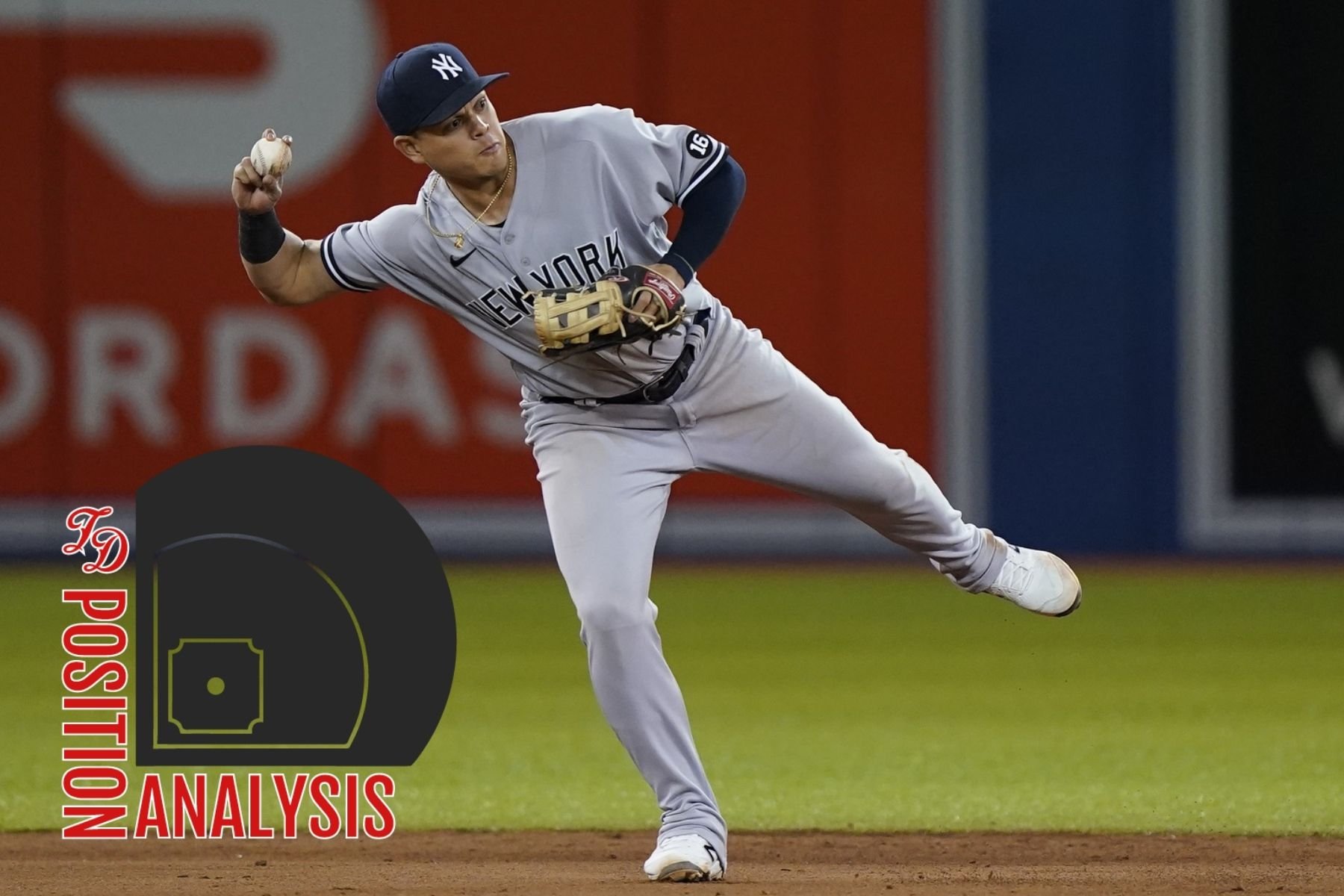 Projected Starter: Gio Urshela Likely Backup: Luis Arraez Depth: Tim Beckham, Daniel Robertson Prospects: José Miranda, Austin Martin THE GOOD Although the inclusion of Gary Sánchez in the Josh Donaldson deal can hardly be viewed as anything more than a salary dump by New York, the late-blooming Gio Urshela is actually a fairly valuable player, with two remaining years of control and a recent track record of success. The 2021 season doesn't qualify, as Urshela struggled to sub par offensive production (.309 wOBA), but in the two seasons prior he had slashed .310/.359/.523 while establishing himself as a high-caliber defender at third base. Urshela would've ranked fifth in fWAR among Twins position players in 2019 (3.1), and second behind Nelson Cruz in 2020 (1.6). Rediscovering his game would turn Urshela into an asset for Minnesota. Who wouldn't want an .880 OPS with defense that merits Gold Glove consideration? (Urshela was a finalist at third base in 2020, but lost out to Isiah Kiner-Falefa.) But even if the 30-year-old can't bounce back, the Twins have plenty of options lined up behind him. In fact, this was likely a big driver in their desire to move on from Donaldson. First and foremost, there is Luis Arraez, who is probably lined up for enough action at the position that we can consider it a timeshare. He doesn't have much arm, but Arraez looked serviceable when playing at third last season (with one glaring and extremely painful exception) and some consider it his strongest defensive position. Obviously, the Twins are motivated to get his bat in the lineup as much as possible, and this is the most natural spot to do it. The looming elephant in the room, then, is José Miranda. Fifty-two of his defensive starts in the minors last year came at third base (compared to 30 at second and 26 at first), during a breakthrough season that ended in Triple-A and left him looking ready to make an impact in the majors. Some projection systems suggest there's no reason to wait; Steamer for example has him pegged for a .280/.331/.468 line in the big leagues this year, at age 23. Finally, you've got Austin Martin. Minnesota's #1 prospect might not be pressing quite as hard as Miranda, having finished last year in Double-A, but he's clearly getting close and he'll need to find a defensive landing spot. Martin hasn't yet played third base professionally, but he played there plenty in college and it may be his most natural fit in the infield. There are layers of contingency in place at third that help mitigate the relative uncertainty atop the depth chart. THE BAD It's difficult to count on Urshela after his performance last year, but one wonders how long the Twins will be compelled to stick with him, given he's a veteran owed $6.6 million this season. You don't just pull the plug on someone like that haphazardly, even though the team might be inclined if he's slumping while Arraez, Miranda, or Martin warrant playing time. Of course, we haven't seen this front office too constrained my sentimentality, and Urshela could possibly offer some value in a utility role anyway, should they opt to move him off third. He made 28 starts at shortstop down the stretch last year and was passable there (leaving one to wonder if he'll be Carlos Correa's top backup instead of Jorge Polanco). He's got some experience at second and first. Beyond Urshela on the depth chart, exciting upside must be balanced with reality. And the reality is that experience is in somewhat short supply. Arraez has made less than a third of his defensive starts in the majors at third. Miranda has played there plenty, but hasn't yet fielded an inning in the majors and was barely on the prospect radar before last year. Martin has yet to gain any professional experience at the hot corner. Whereas Donaldson was a prototypical third baseman in many ways (when healthy) the Twins lack such a prototype at present. Urshela is a significant downgrade in terms of talent and track record. The Twins are worse now at third base than they were before the trade, at least in the short-term – even if the move necessarily clears the way for the future. THE BOTTOM LINE The Twins lost a hell of a player in Donaldson, albeit an aging and undependable one. They're well equipped to move on in his absence, but the short-term picture might be a little shaky. I'd expect a pseudo-platoon of Urshela and Arraez out of the gates, with Miranda primed to take over in the near future and Martin standing ready should anything go awry. Catch Up on the Rest of Our 2022 Previews: Position Analysis: Catcher Position Analysis: First Base Position Analysis: Second Base MORE FROM TWINS DAILY — Latest Twins coverage from our writers — Recent Twins discussion in our forums — Follow Twins Daily via Twitter, Facebook or email — Become a Twins Daily caretaker
- 13 comments
-
- 11
-
-
- gio urshela
- luis arraez
- (and 2 more)
-
The Twins changed course at the hot corner in a major way earlier this month when they traded away Josh Donaldson and the last two years of his contract, bringing back Gio Urshela from New York in the deal. Urshela figures to step in as Minnesota's primary third baseman, for now, but he may need to fend off the advances of several players and prospects to stay there. Projected Starter: Gio Urshela Likely Backup: Luis Arraez Depth: Tim Beckham, Daniel Robertson Prospects: José Miranda, Austin Martin THE GOOD Although the inclusion of Gary Sánchez in the Josh Donaldson deal can hardly be viewed as anything more than a salary dump by New York, the late-blooming Gio Urshela is actually a fairly valuable player, with two remaining years of control and a recent track record of success. The 2021 season doesn't qualify, as Urshela struggled to sub par offensive production (.309 wOBA), but in the two seasons prior he had slashed .310/.359/.523 while establishing himself as a high-caliber defender at third base. Urshela would've ranked fifth in fWAR among Twins position players in 2019 (3.1), and second behind Nelson Cruz in 2020 (1.6). Rediscovering his game would turn Urshela into an asset for Minnesota. Who wouldn't want an .880 OPS with defense that merits Gold Glove consideration? (Urshela was a finalist at third base in 2020, but lost out to Isiah Kiner-Falefa.) But even if the 30-year-old can't bounce back, the Twins have plenty of options lined up behind him. In fact, this was likely a big driver in their desire to move on from Donaldson. First and foremost, there is Luis Arraez, who is probably lined up for enough action at the position that we can consider it a timeshare. He doesn't have much arm, but Arraez looked serviceable when playing at third last season (with one glaring and extremely painful exception) and some consider it his strongest defensive position. Obviously, the Twins are motivated to get his bat in the lineup as much as possible, and this is the most natural spot to do it. The looming elephant in the room, then, is José Miranda. Fifty-two of his defensive starts in the minors last year came at third base (compared to 30 at second and 26 at first), during a breakthrough season that ended in Triple-A and left him looking ready to make an impact in the majors. Some projection systems suggest there's no reason to wait; Steamer for example has him pegged for a .280/.331/.468 line in the big leagues this year, at age 23. Finally, you've got Austin Martin. Minnesota's #1 prospect might not be pressing quite as hard as Miranda, having finished last year in Double-A, but he's clearly getting close and he'll need to find a defensive landing spot. Martin hasn't yet played third base professionally, but he played there plenty in college and it may be his most natural fit in the infield. There are layers of contingency in place at third that help mitigate the relative uncertainty atop the depth chart. THE BAD It's difficult to count on Urshela after his performance last year, but one wonders how long the Twins will be compelled to stick with him, given he's a veteran owed $6.6 million this season. You don't just pull the plug on someone like that haphazardly, even though the team might be inclined if he's slumping while Arraez, Miranda, or Martin warrant playing time. Of course, we haven't seen this front office too constrained my sentimentality, and Urshela could possibly offer some value in a utility role anyway, should they opt to move him off third. He made 28 starts at shortstop down the stretch last year and was passable there (leaving one to wonder if he'll be Carlos Correa's top backup instead of Jorge Polanco). He's got some experience at second and first. Beyond Urshela on the depth chart, exciting upside must be balanced with reality. And the reality is that experience is in somewhat short supply. Arraez has made less than a third of his defensive starts in the majors at third. Miranda has played there plenty, but hasn't yet fielded an inning in the majors and was barely on the prospect radar before last year. Martin has yet to gain any professional experience at the hot corner. Whereas Donaldson was a prototypical third baseman in many ways (when healthy) the Twins lack such a prototype at present. Urshela is a significant downgrade in terms of talent and track record. The Twins are worse now at third base than they were before the trade, at least in the short-term – even if the move necessarily clears the way for the future. THE BOTTOM LINE The Twins lost a hell of a player in Donaldson, albeit an aging and undependable one. They're well equipped to move on in his absence, but the short-term picture might be a little shaky. I'd expect a pseudo-platoon of Urshela and Arraez out of the gates, with Miranda primed to take over in the near future and Martin standing ready should anything go awry. Catch Up on the Rest of Our 2022 Previews: Position Analysis: Catcher Position Analysis: First Base Position Analysis: Second Base MORE FROM TWINS DAILY — Latest Twins coverage from our writers — Recent Twins discussion in our forums — Follow Twins Daily via Twitter, Facebook or email — Become a Twins Daily caretaker View full article
-
Twins 2022 Position Analysis: Second Base
Nick Nelson replied to Nick Nelson's topic in Twins Daily Front Page News
He probably can, but he really hasn't. At all. I was kinda surprised by this when digging for the article. Urshela has started only 3 out of 458 MLB games at second base, and only 5 in the minors, all back in 2018. -
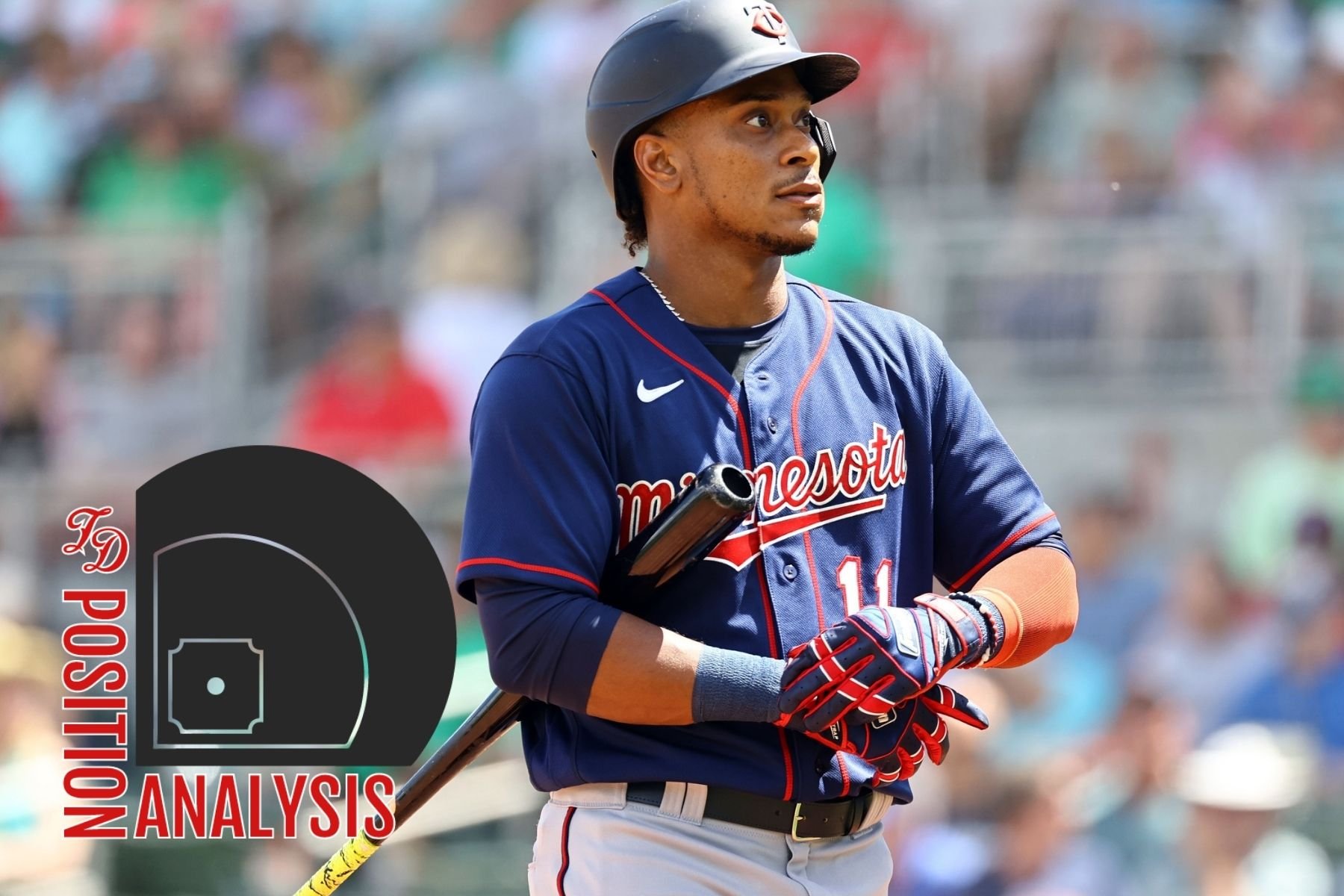 Projected Starter: Jorge Polanco Likely Backup: Nick Gordon Depth: Luis Arraez, Daniel Robertson Prospects: Austin Martin, José Miranda THE GOOD Last year, the Twins decided to pivot in the middle infield by moving longtime shortstop Jorge Polanco – the 2019 All-Star starter at the position – to second base. The club hoped this relocation would help Polanco stay healthier, rediscover his power swing, and contribute more defensively. It appears they were correct on all counts. Polanco went from ranking 19th among all MLB shortstops in fWAR during the shortened 2020 season to ranking ninth among second basemen in 2021. His .349 wOBA was sixth-best at the position, trailing only Trea Turner, Marcus Semien, Brandon Lowe, Jonathan India, and Jose Altuve. That's some great company. He was in even better company when it came to the AL's leaders in Win Probability Added: Shohei Ohtani Aaron Judge Jorge Polanco Vladimir Guerrero Jr. Salvador Perez Polanco was a clutch-hitting beast who delivered five walk-offs over the course of the season. He slashed .269/.323/.503 with 33 homers, 35 doubles, 98 RBIs, 97 runs scored, and 11 steals, filling the stat sheet and easily earning Twins Daily's MVP nod. He saw sizable increases in barrel rate, exit velocity, and launch angle thanks to a sturdy base. Following two surgeries and a maddening impact on his game over parts of three seasons, he finally seemed to put the ankle issues behind him. Defensively, Polanco looked much more comfortable and natural in his new position. Although fielding metrics were mixed, he clearly improved as the year progressed, and there's no doubt that the team's defense benefited massively overall from supplanting him at shortstop with a more viable glove. In the event Polanco gets hurt, or needs to fill in at shortstop for a spell, the Twins are well equipped to backfill in his absence. It's possible that second base is the best defensive position for all these players: Luis Arraez, Nick Gordon, José Miranda, Austin Martin, Royce Lewis. The latter two haven't really played there, but as fringy defensive shortstops they automatically qualify. One could argue this saturation of similar defensive skill sets is less than ideal in the big picture, but in terms of the outlook at second base – which is our specific focus here – it's wonderful. THE BAD It's pretty difficult to envision a scenario where second base becomes a problem this year. If Polanco is unavailable, they have so many options to step in. Even if you don't have faith in Gordon, and even if Miranda and Arraez are spending most their time at third base ... you can still fall back on one of the top two prospects in the organization. More than depth and contingencies, the question here is really one of true upside. Second base is a strength for the Twins, but how strong can it be? The answer might come down to Polanco's defensive progression. I mentioned that he looked better at second last year, but metrics don't necessarily match the eye test. FanGraphs had him at negative-1 Defensive Runs Saved, with a -10.5 UZR/150 that basically matches his career mark as a shortstop (-11.0). According to Statcast he was in the 13th percentile for Outs Above Average, ranking 30th out of 37 qualified players. If Polanco keeps raking, the lack of defensive impact will be tolerable, especially with the Twins being otherwise incredibly strong up the middle. But improving his range and execution – perfectly reasonable with one year of regular experience under his belt – would make him a more balanced player, offsetting any regression at the plate. THE BOTTOM LINE From top to bottom, second base is probably the strongest position in the Twins system. Polanco is controllable at reasonable rates for three more seasons after 2022, through age 31, so he figures to maintain a foothold on the position so long as his feet (and ankles) hold up. From there, it's really just a matter of sorting out the youthful depth behind him, which shouldn't be terrible difficult since so many of those players are defensively versatile and capable of ending up elsewhere. Catch Up on the Rest of Our 2022 Previews: Position Analysis: Catcher Position Analysis: First Base MORE FROM TWINS DAILY — Latest Twins coverage from our writers — Recent Twins discussion in our forums — Follow Twins Daily via Twitter, Facebook or email — Become a Twins Daily caretaker
 -
The Twins have current and future question marks at a lot of different positions. Second base is not one of them. Converted shortstop Jorge Polanco emerged as a star at second last year, and the organization has an abundance of depth behind him – both established big-leaguers and upcoming prospects. Projected Starter: Jorge Polanco Likely Backup: Nick Gordon Depth: Luis Arraez, Daniel Robertson Prospects: Austin Martin, José Miranda THE GOOD Last year, the Twins decided to pivot in the middle infield by moving longtime shortstop Jorge Polanco – the 2019 All-Star starter at the position – to second base. The club hoped this relocation would help Polanco stay healthier, rediscover his power swing, and contribute more defensively. It appears they were correct on all counts. Polanco went from ranking 19th among all MLB shortstops in fWAR during the shortened 2020 season to ranking ninth among second basemen in 2021. His .349 wOBA was sixth-best at the position, trailing only Trea Turner, Marcus Semien, Brandon Lowe, Jonathan India, and Jose Altuve. That's some great company. He was in even better company when it came to the AL's leaders in Win Probability Added: Shohei Ohtani Aaron Judge Jorge Polanco Vladimir Guerrero Jr. Salvador Perez Polanco was a clutch-hitting beast who delivered five walk-offs over the course of the season. He slashed .269/.323/.503 with 33 homers, 35 doubles, 98 RBIs, 97 runs scored, and 11 steals, filling the stat sheet and easily earning Twins Daily's MVP nod. He saw sizable increases in barrel rate, exit velocity, and launch angle thanks to a sturdy base. Following two surgeries and a maddening impact on his game over parts of three seasons, he finally seemed to put the ankle issues behind him. Defensively, Polanco looked much more comfortable and natural in his new position. Although fielding metrics were mixed, he clearly improved as the year progressed, and there's no doubt that the team's defense benefited massively overall from supplanting him at shortstop with a more viable glove. In the event Polanco gets hurt, or needs to fill in at shortstop for a spell, the Twins are well equipped to backfill in his absence. It's possible that second base is the best defensive position for all these players: Luis Arraez, Nick Gordon, José Miranda, Austin Martin, Royce Lewis. The latter two haven't really played there, but as fringy defensive shortstops they automatically qualify. One could argue this saturation of similar defensive skill sets is less than ideal in the big picture, but in terms of the outlook at second base – which is our specific focus here – it's wonderful. THE BAD It's pretty difficult to envision a scenario where second base becomes a problem this year. If Polanco is unavailable, they have so many options to step in. Even if you don't have faith in Gordon, and even if Miranda and Arraez are spending most their time at third base ... you can still fall back on one of the top two prospects in the organization. More than depth and contingencies, the question here is really one of true upside. Second base is a strength for the Twins, but how strong can it be? The answer might come down to Polanco's defensive progression. I mentioned that he looked better at second last year, but metrics don't necessarily match the eye test. FanGraphs had him at negative-1 Defensive Runs Saved, with a -10.5 UZR/150 that basically matches his career mark as a shortstop (-11.0). According to Statcast he was in the 13th percentile for Outs Above Average, ranking 30th out of 37 qualified players. If Polanco keeps raking, the lack of defensive impact will be tolerable, especially with the Twins being otherwise incredibly strong up the middle. But improving his range and execution – perfectly reasonable with one year of regular experience under his belt – would make him a more balanced player, offsetting any regression at the plate. THE BOTTOM LINE From top to bottom, second base is probably the strongest position in the Twins system. Polanco is controllable at reasonable rates for three more seasons after 2022, through age 31, so he figures to maintain a foothold on the position so long as his feet (and ankles) hold up. From there, it's really just a matter of sorting out the youthful depth behind him, which shouldn't be terrible difficult since so many of those players are defensively versatile and capable of ending up elsewhere. Catch Up on the Rest of Our 2022 Previews: Position Analysis: Catcher Position Analysis: First Base MORE FROM TWINS DAILY — Latest Twins coverage from our writers — Recent Twins discussion in our forums — Follow Twins Daily via Twitter, Facebook or email — Become a Twins Daily caretaker View full article
-
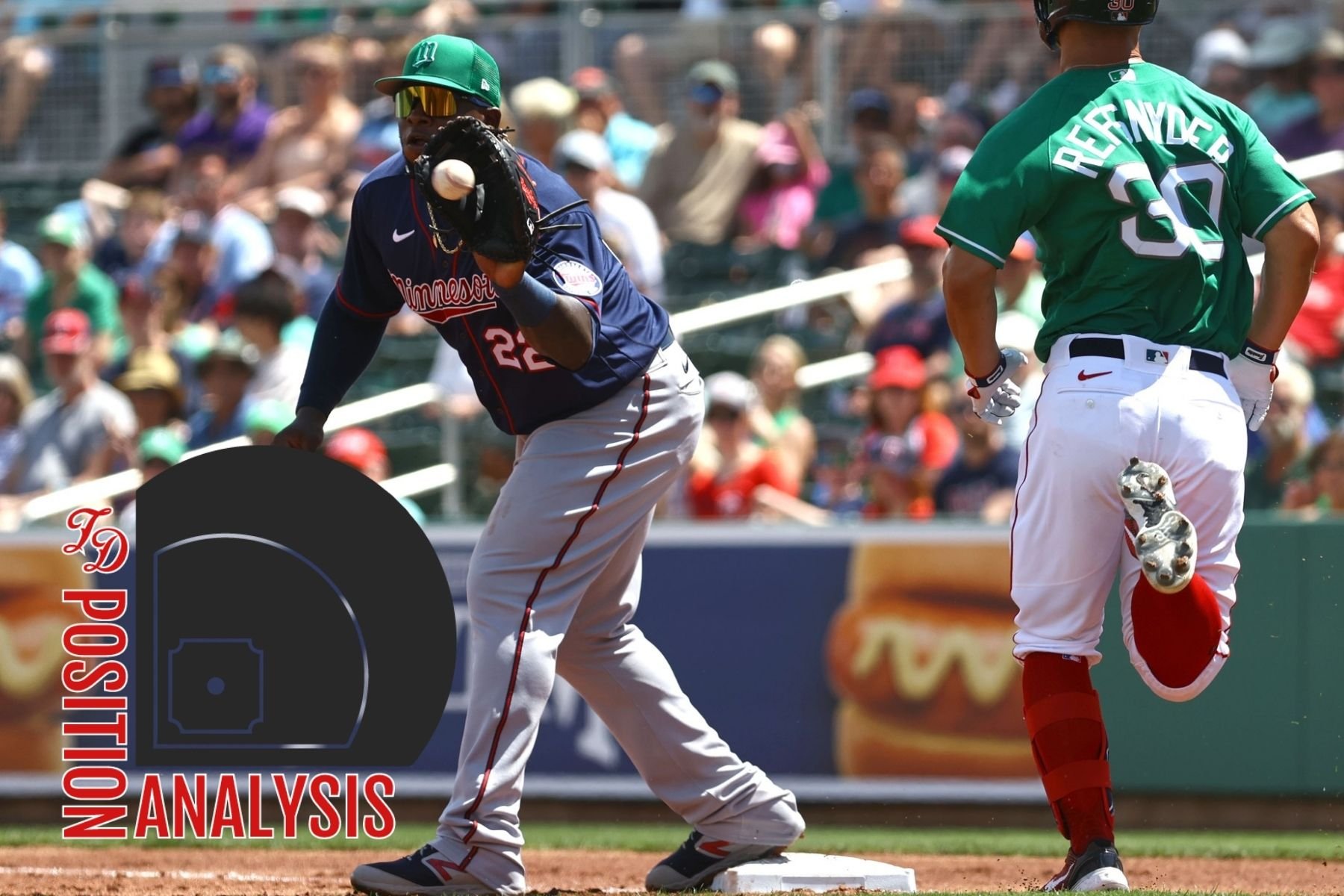 Projected Starter: Miguel Sanó Likely Backup: Alex Kirilloff Depth: Curtis Terry, José Miranda Prospects: Aaron Sabato THE GOOD Miguel Sanó is capable of putting forth production that would make him a prototypical slugging first baseman. We saw it in 2017, and in 2019, and at times last year. After shaking off a rough first two months in 2021, Sanó slashed .246/.325/.493 with 21 homers in 97 games starting on June 1st. He continues to hit the ball as hard as anyone in baseball, ranking in the 97th percentile for average exit velocity, 98th in max EV, 99th in hard-hit percentage, and 97th in barrel percentage. That's a guy who intimidates not only opposing pitchers, but also everyone around the infield who might get a drive sent their way. Sanó rebounded somewhat from a disappointing shortened 2020 campaign, although his overall numbers still left something to be desired – especially the .223 average and .312 on-base percentage. The 28-year-old hasn't since come close to replicating his 15.8% walk rate and .385 OBP as a rookie in 2015. Rediscovering a sense of selectiveness and discipline at the plate – sustainably, rather than in sporadic bursts – holds the key to resuscitating his dormant potential. If you've given up on that ability ever showing through again, I don't blame you. It's been a rough go. But as his batted-ball metrics illustrate, he still has it within him to be a dominant power hitter if he can rein in the strike zone control. And Sanó is now more fundamentally motivated than ever to do so. Pending a $14 million team option for 2023, he's due for free agency after this season, and as things currently stand Sanó will struggle to drive a market for his services. He could alter that outlook significantly with a season that harkens back to 2019, when he posted a .923 OPS with 34 home runs and 2.8 fWAR in just 105 games. This is a career-defining season for him, which helps explain why he openly committed to getting in better shape during the offseason. He looks pretty good physically in camp, but of course, the proof will be in the pudding. If Sanó can get back to the level of hitting we know he's capable of, he'll become a stellar complement to Byron Buxton, Carlos Correa, and (maybe) Gary Sánchez as standout righty power bats in the lineup. If Sanó falls back into one of this familiar ruts, the Twins may accelerate their plan to move on and entrench Kirilloff at first base, given the lack of future commitment. It's a nice fallback to have available, because Kirilloff clearly has enough bat for the position and his defense looked terrific there during brief glimpses last year. THE BAD The Twins were already in the process of writing Sanó out of their plans last summer. He'd essentially been demoted to part-time player status by June, with Kirilloff drawing regular starts at first as the team's clearly preferred option. From June 18th through July 18th, Sanó started 12 of Minnesota’s 24 games, including just nine at first base. Then Kirilloff underwent wrist surgery, and Sanó regained the starting first base job by default. To his credit, he made the most of it, slashing .250/.346/.504 from the date of Kirilloff's surgery to the end of the season. That's nearly identical to the line he put forth during an All-Star 2017 campaign (.264/.352/.507). It's unclear Sanó can afford another start like he got off to in 2021, when he slashed .141/.295/.256 through mid-May while the team tanked into an inescapable early hole. As things stand, however, the Twins need Kirilloff in left field. Maybe Trevor Larnach re-establishes himself to negate that need, or the Twins add another veteran outfielder, but right now they're somewhat reliant on Sanó at first. THE BOTTOM LINE The long-term outlook at this position is strong with Kirilloff waiting in the wings, but for now things are in flux. Will Sanó shake off his consistency struggles of the past two seasons and reaffirm his status as a cornerstone for the Twins? Doing so would not only give him a chance to hang on at first base this year, but also potentially extend his tenure with the club for another year (perhaps as a DH?). If not, we may be reaching the end of the road for Sanó and Minnesota, and dawning a new era at first base. Catch Up on the Rest of Our 2022 Roster Previews: Position Analysis: Catcher MORE FROM TWINS DAILY — Latest Twins coverage from our writers — Recent Twins discussion in our forums — Follow Twins Daily via Twitter, Facebook or email — Become a Twins Daily caretaker
 -
First base is a position in transition for the Twins. It's clear they view Alex Kirilloff as their future there, but for now, Miguel Sanó still stands in the way with one year left under contract. How will things play out? Projected Starter: Miguel Sanó Likely Backup: Alex Kirilloff Depth: Curtis Terry, José Miranda Prospects: Aaron Sabato THE GOOD Miguel Sanó is capable of putting forth production that would make him a prototypical slugging first baseman. We saw it in 2017, and in 2019, and at times last year. After shaking off a rough first two months in 2021, Sanó slashed .246/.325/.493 with 21 homers in 97 games starting on June 1st. He continues to hit the ball as hard as anyone in baseball, ranking in the 97th percentile for average exit velocity, 98th in max EV, 99th in hard-hit percentage, and 97th in barrel percentage. That's a guy who intimidates not only opposing pitchers, but also everyone around the infield who might get a drive sent their way. Sanó rebounded somewhat from a disappointing shortened 2020 campaign, although his overall numbers still left something to be desired – especially the .223 average and .312 on-base percentage. The 28-year-old hasn't since come close to replicating his 15.8% walk rate and .385 OBP as a rookie in 2015. Rediscovering a sense of selectiveness and discipline at the plate – sustainably, rather than in sporadic bursts – holds the key to resuscitating his dormant potential. If you've given up on that ability ever showing through again, I don't blame you. It's been a rough go. But as his batted-ball metrics illustrate, he still has it within him to be a dominant power hitter if he can rein in the strike zone control. And Sanó is now more fundamentally motivated than ever to do so. Pending a $14 million team option for 2023, he's due for free agency after this season, and as things currently stand Sanó will struggle to drive a market for his services. He could alter that outlook significantly with a season that harkens back to 2019, when he posted a .923 OPS with 34 home runs and 2.8 fWAR in just 105 games. This is a career-defining season for him, which helps explain why he openly committed to getting in better shape during the offseason. He looks pretty good physically in camp, but of course, the proof will be in the pudding. If Sanó can get back to the level of hitting we know he's capable of, he'll become a stellar complement to Byron Buxton, Carlos Correa, and (maybe) Gary Sánchez as standout righty power bats in the lineup. If Sanó falls back into one of this familiar ruts, the Twins may accelerate their plan to move on and entrench Kirilloff at first base, given the lack of future commitment. It's a nice fallback to have available, because Kirilloff clearly has enough bat for the position and his defense looked terrific there during brief glimpses last year. THE BAD The Twins were already in the process of writing Sanó out of their plans last summer. He'd essentially been demoted to part-time player status by June, with Kirilloff drawing regular starts at first as the team's clearly preferred option. From June 18th through July 18th, Sanó started 12 of Minnesota’s 24 games, including just nine at first base. Then Kirilloff underwent wrist surgery, and Sanó regained the starting first base job by default. To his credit, he made the most of it, slashing .250/.346/.504 from the date of Kirilloff's surgery to the end of the season. That's nearly identical to the line he put forth during an All-Star 2017 campaign (.264/.352/.507). It's unclear Sanó can afford another start like he got off to in 2021, when he slashed .141/.295/.256 through mid-May while the team tanked into an inescapable early hole. As things stand, however, the Twins need Kirilloff in left field. Maybe Trevor Larnach re-establishes himself to negate that need, or the Twins add another veteran outfielder, but right now they're somewhat reliant on Sanó at first. THE BOTTOM LINE The long-term outlook at this position is strong with Kirilloff waiting in the wings, but for now things are in flux. Will Sanó shake off his consistency struggles of the past two seasons and reaffirm his status as a cornerstone for the Twins? Doing so would not only give him a chance to hang on at first base this year, but also potentially extend his tenure with the club for another year (perhaps as a DH?). If not, we may be reaching the end of the road for Sanó and Minnesota, and dawning a new era at first base. Catch Up on the Rest of Our 2022 Roster Previews: Position Analysis: Catcher MORE FROM TWINS DAILY — Latest Twins coverage from our writers — Recent Twins discussion in our forums — Follow Twins Daily via Twitter, Facebook or email — Become a Twins Daily caretaker View full article
-
Offseason Status Update: Here Comes Correa
Nick Nelson replied to Nick Nelson's topic in Twins Daily Front Page News
He arrived today!- 35 replies
-
- 8
-
-
- carlos correa
- joe smith
- (and 1 more)
-
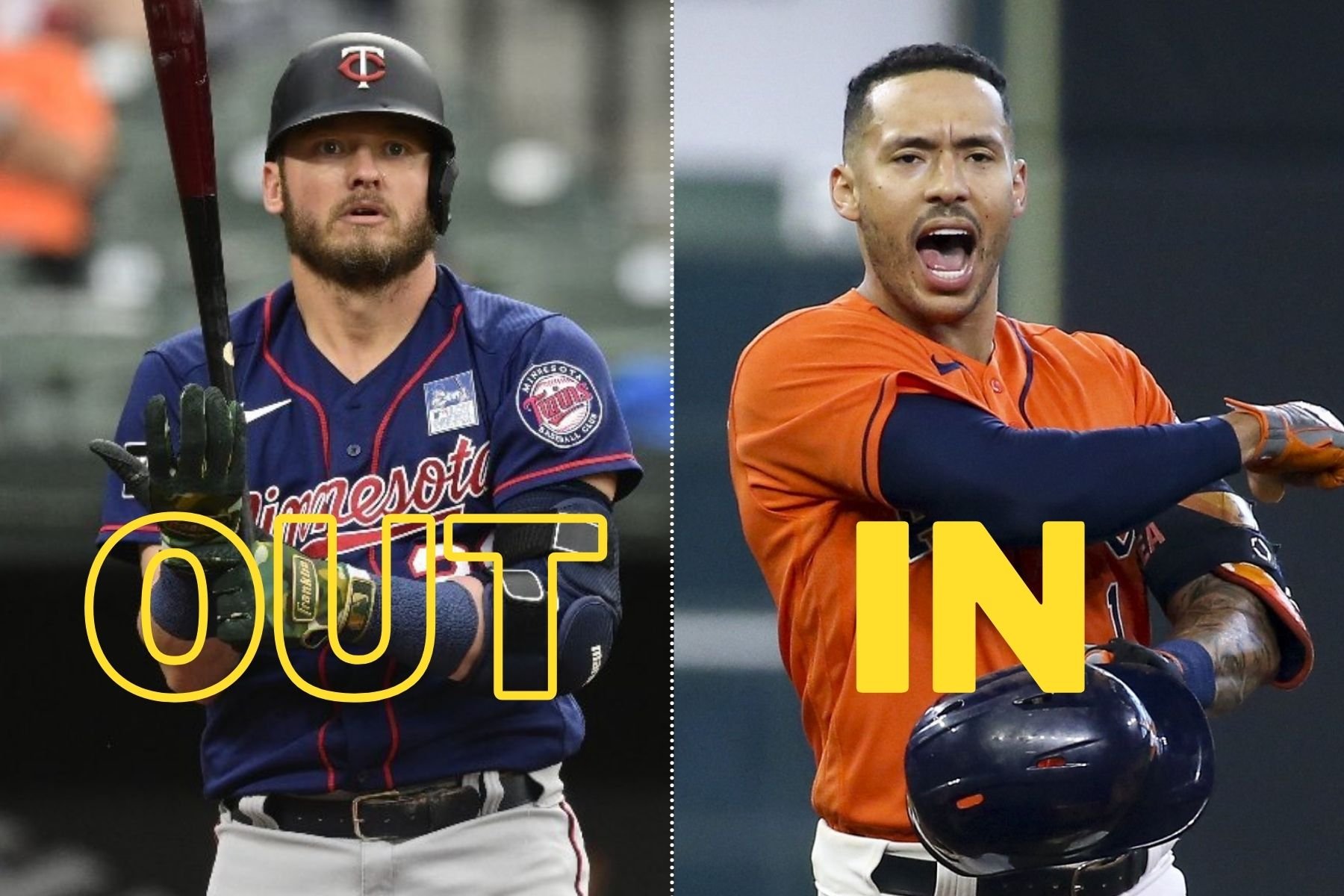 Spring training is fully underway but that doesn't mean Hot Stove SZN is over. The Twins made a huge addition over the weekend and seemingly have at least one more on tap. Pressure is building to check off the final boxes ahead of the season opener in just 18 days. What does the front office still need to accomplish and what are their options? Donaldson Trade Clears the Books I posted the last of these offseason status updates last Sunday night, figuring that at 9:22 PM I could safely assume the news cycle had settled, and the whirlwind weekend's moves were finished. But if there's been one lesson from the past week, it's that the news cycle never sleeps. Literally minutes after clicking publish on an article reviewing the Isiah Kiner-Falefa and Sonny Gray trades, I learned of another blockbuster going down: the Twins dealt Josh Donaldson, along with Kiner-Falefa and Ben Rortvedt, to the Yankees in exchange for Gary Sánchez, Gio Urshela, and a bunch of salary relief. With that, Minnesota's short-lived and unfulfilling engagement with Donaldson came to an end. It was a signing that ultimately illustrated the hazards of spending big on aging veteran talent. The Twins can consider themselves lucky to get out of the last two years, even though they had to actively worsen their roster to do it. In the wake of this shakeup, many unknowns were in play. But among the few things we DID know: "The Twins now have all kinds of flexibility to make at least one HUGE move." What would it be? Twins Shock the World with Correa Signing For five days, we all sat mired in uncertainty, wondering how the Twins planned to flex their newfound financial clout. As reports emerged of Trevor Story leaning toward other destinations, anxiety started to rise. Had the front office boxed itself into a corner? Nah. They went out and signed the No. 1 free agent on the entire market, landing Carlos Correa in an absolute game-changing stunner. The three-year, $105.3 million contract makes Correa the highest-paid infielder in the game, and addresses the club's need at shortstop decisively. (For now.) In all likelihood, it'll end up being a one-year deal, as Correa has the ability to opt out following either the 2022 or 2023 season. His aim is clearly to put together a good year, return to a less-crowded FA shortstop market next year, and score the $300+ million payday he desired. But that's okay. Getting an MVP-caliber player at age 27 on a one-year pact is a win, even if the framework of the deal creates a bit of team risk. On Sunday, Story signed with the Red Sox for six years and $140 million, prioritizing length of the deal over AAV. Meanwhile, the Yankees were basically left out in the cold. You hate to see it. Still in Need of a Starter Perhaps New York can still claim a victory in all of this late offseason action. They are reportedly among the teams in on Oakland's Frankie Montas and Sean Manaea. With so much steam around the two front-line starters and their availability, that situation feels like the last big domino yet to fall. The Twins have also been repeatedly connected to the Athletics in rumors, which only makes sense because they let every free agent starter come off the board while failing to adequately address their starting pitching needs. Even fallback mid-tier options like Michael Pineda and Tyler Anderson are now gone, and Minnesota has a glaring hole after (or ahead of?) Gray atop their rotation. Chi Chi Gonzalez might add some welcome veteran depth on a minors deal, but he's not moving the MLB needle in any way. The Twins almost HAVE to make a trade in order to put the finishing touches on a complete offseason. Are they willing to meet the extraordinary price that extracting Montas will surely require? Or will they opt instead for Manaea, who has only one year of team control left but will command a lesser return? Could they acquire ... both? Given how the Twins have operated this offseason – conditioning us to expect the unexpected – something tells me the most likely outcome is none of the above. They'll find a way to surprise us by zagging while everyone anticipates the zig. Stay tuned. Bullpen Gets a Veteran Boost With all the attention being paid to starting pitchers and shortstops, the team's bullpen needs have been more or less on the backburner. Outside of grabbing Jharel Cotton before the lockout, and bringing back the likes of Juan Minaya and Danny Coulombe on minors deals, the Twins hadn't taken much action to offset their various question marks in relief. On Saturday they did something about that, signing veteran right-hander Joe Smith to a one-year, $2.5 million deal. I would describe this as a low-wattage signing; the sidearmer, who turns 38 on Tuesday, hasn't put together a complete quality season since 2017. But he's been a pretty reliable righty specialist throughout his career and that was a need. We'll see if the front office has anything else in store for the bullpen. Remaining options are limited. I wouldn't be the least surprised to see them lean primarily on internal arms in rounding out this unit. Griffin Jax looked really good in his first spring appearance and is one to watch. Lewis Thorpe is out of options. Roster & Payroll Projection Accounting for all of this wheeling and dealing, here's an updated look at the Twins' projected roster and spending commitments for this season. The payroll currently stands at about $122.5M, which is $7.5M short of their baseline target. With the news that Randy Dobnak is still bothered by his finger and unlikely for Opening Day, I've moved him out of the bullpen picture and added his (meager) guaranteed salary to the "Dead Money" section." I still see opportunities to add a fourth outfielder and one or two bullpen arms, though each of those needs could reasonably be filled with existing options. The remaining hole in the rotation, however, needs an external fix. For what it's worth, Montas is expected to earn around $5.5M via arbitration this year, and Manaea $10.2M. MORE FROM TWINS DAILY — Latest Twins coverage from our writers — Recent Twins discussion in our forums — Follow Twins Daily via Twitter, Facebook or email — Become a Twins Daily caretaker
- 35 comments
-
- 8
-
-
- carlos correa
- joe smith
- (and 1 more)
-
Offseason Status Update: Here Comes Correa
Nick Nelson posted a topic in Twins Daily Front Page News
With one stunning and historic move, the Minnesota Twins completely flipped the script on an underwhelming offseason, acquiring a superstar in his prime with an unprecedented free agency splash. Let's get up to speed on where things stand and what's still ahead. Spring training is fully underway but that doesn't mean Hot Stove SZN is over. The Twins made a huge addition over the weekend and seemingly have at least one more on tap. Pressure is building to check off the final boxes ahead of the season opener in just 18 days. What does the front office still need to accomplish and what are their options? Donaldson Trade Clears the Books I posted the last of these offseason status updates last Sunday night, figuring that at 9:22 PM I could safely assume the news cycle had settled, and the whirlwind weekend's moves were finished. But if there's been one lesson from the past week, it's that the news cycle never sleeps. Literally minutes after clicking publish on an article reviewing the Isiah Kiner-Falefa and Sonny Gray trades, I learned of another blockbuster going down: the Twins dealt Josh Donaldson, along with Kiner-Falefa and Ben Rortvedt, to the Yankees in exchange for Gary Sánchez, Gio Urshela, and a bunch of salary relief. With that, Minnesota's short-lived and unfulfilling engagement with Donaldson came to an end. It was a signing that ultimately illustrated the hazards of spending big on aging veteran talent. The Twins can consider themselves lucky to get out of the last two years, even though they had to actively worsen their roster to do it. In the wake of this shakeup, many unknowns were in play. But among the few things we DID know: "The Twins now have all kinds of flexibility to make at least one HUGE move." What would it be? Twins Shock the World with Correa Signing For five days, we all sat mired in uncertainty, wondering how the Twins planned to flex their newfound financial clout. As reports emerged of Trevor Story leaning toward other destinations, anxiety started to rise. Had the front office boxed itself into a corner? Nah. They went out and signed the No. 1 free agent on the entire market, landing Carlos Correa in an absolute game-changing stunner. The three-year, $105.3 million contract makes Correa the highest-paid infielder in the game, and addresses the club's need at shortstop decisively. (For now.) In all likelihood, it'll end up being a one-year deal, as Correa has the ability to opt out following either the 2022 or 2023 season. His aim is clearly to put together a good year, return to a less-crowded FA shortstop market next year, and score the $300+ million payday he desired. But that's okay. Getting an MVP-caliber player at age 27 on a one-year pact is a win, even if the framework of the deal creates a bit of team risk. On Sunday, Story signed with the Red Sox for six years and $140 million, prioritizing length of the deal over AAV. Meanwhile, the Yankees were basically left out in the cold. You hate to see it. Still in Need of a Starter Perhaps New York can still claim a victory in all of this late offseason action. They are reportedly among the teams in on Oakland's Frankie Montas and Sean Manaea. With so much steam around the two front-line starters and their availability, that situation feels like the last big domino yet to fall. The Twins have also been repeatedly connected to the Athletics in rumors, which only makes sense because they let every free agent starter come off the board while failing to adequately address their starting pitching needs. Even fallback mid-tier options like Michael Pineda and Tyler Anderson are now gone, and Minnesota has a glaring hole after (or ahead of?) Gray atop their rotation. Chi Chi Gonzalez might add some welcome veteran depth on a minors deal, but he's not moving the MLB needle in any way. The Twins almost HAVE to make a trade in order to put the finishing touches on a complete offseason. Are they willing to meet the extraordinary price that extracting Montas will surely require? Or will they opt instead for Manaea, who has only one year of team control left but will command a lesser return? Could they acquire ... both? Given how the Twins have operated this offseason – conditioning us to expect the unexpected – something tells me the most likely outcome is none of the above. They'll find a way to surprise us by zagging while everyone anticipates the zig. Stay tuned. Bullpen Gets a Veteran Boost With all the attention being paid to starting pitchers and shortstops, the team's bullpen needs have been more or less on the backburner. Outside of grabbing Jharel Cotton before the lockout, and bringing back the likes of Juan Minaya and Danny Coulombe on minors deals, the Twins hadn't taken much action to offset their various question marks in relief. On Saturday they did something about that, signing veteran right-hander Joe Smith to a one-year, $2.5 million deal. I would describe this as a low-wattage signing; the sidearmer, who turns 38 on Tuesday, hasn't put together a complete quality season since 2017. But he's been a pretty reliable righty specialist throughout his career and that was a need. We'll see if the front office has anything else in store for the bullpen. Remaining options are limited. I wouldn't be the least surprised to see them lean primarily on internal arms in rounding out this unit. Griffin Jax looked really good in his first spring appearance and is one to watch. Lewis Thorpe is out of options. Roster & Payroll Projection Accounting for all of this wheeling and dealing, here's an updated look at the Twins' projected roster and spending commitments for this season. The payroll currently stands at about $122.5M, which is $7.5M short of their baseline target. With the news that Randy Dobnak is still bothered by his finger and unlikely for Opening Day, I've moved him out of the bullpen picture and added his (meager) guaranteed salary to the "Dead Money" section." I still see opportunities to add a fourth outfielder and one or two bullpen arms, though each of those needs could reasonably be filled with existing options. The remaining hole in the rotation, however, needs an external fix. For what it's worth, Montas is expected to earn around $5.5M via arbitration this year, and Manaea $10.2M. MORE FROM TWINS DAILY — Latest Twins coverage from our writers — Recent Twins discussion in our forums — Follow Twins Daily via Twitter, Facebook or email — Become a Twins Daily caretaker View full article -
Twins 2022 Position Analysis: Catcher
Nick Nelson replied to Nick Nelson's topic in Twins Daily Front Page News
I think Garver largely credited Tanner Swanson with helping him turn a corner? Swanson went to New York after the 2019 season and couldn't do much for Sanchez which is not the most promising.- 34 replies
-
- 3
-
-
- ryan jeffers
- gary sanchez
- (and 1 more)
-
 Projected Starter: Ryan Jeffers Likely Backup: Gary Sánchez Depth: José Godoy, Caleb Hamilton Prospects: Alex Isola THE GOOD The Twins are all-in on Ryan Jeffers. By trading Mitch Garver and Ben Rortvedt on successive days, the front office decimated its high-level catching depth. Yes, all the moving and shaking did bring back Gary Sánchez, but he's an occasional (at best) catcher with one year of team control remaining. Jeffers is the guy. Clearly the Twins have been heartened by his performance through two big-league seasons and are ready to commit. The 24-year-old former second-round draft pick rose fast through the system, playing only 167 games over a season-and-a-half in the minors before being summoned from the alternate site in 2020 to help the Twins. He has since shown to be a quality defender with good power, equating to 1.1 fWAR over 111 games for the Twins. He was Twins Daily's pick for team Rookie of the Year in 2020. Overall, defense has definitely been Jeffers' calling card in the big leagues. He runs the staff with confidence, bringing good mechanics and instincts behind the plate. His pitch-framing stands out as well above average, ranking in the 74th percentile last year according to Statcast. The bat is lagging behind the glove here, for sure, but given he's only 24 and followed an accelerated development path, it's reasonable to expect some offensive growth ahead. He slashed .286/.377/.452 in the minors, flashing solid discipline that will hopefully translate over time to the majors, and his power tool is definitely legit. When Jeffers gets into one, the ball takes off. The same can be said for his new backup. Sánchez is a masher, and a fair approximation of Garver at the plate. In fact, his All-Star campaigns in 2017 and 2019 were basically what you'd hope to see from Garver in a full season. Sánchez has 138 career home runs through age 28, leading all catchers since 2016, and has been a reliable slugging force even when his offensive game has otherwise run astray. Defensive misgivings aside, it's nice to be able to plug Sánchez's threatening bat into the catcher position from time to time. THE BAD Even before they traded Garver and Rortvedt, catching depth was an area of uncertainty in the Twins system. No one outside of the top three had any MLB experience, Garver was running out of team control, and Jeffers was a question mark. Make no mistake: Jeffers is still a question mark, having seen his OPS+ drop from 119 in 2020 to 83 in 2021. It's just that he now bears a much higher level of expectation and dependence. Sánchez might be a comparable bat to Garver, but he represents a huge drop-off defensively. It's actually pretty hard to make sense of Minnesota's plan in light of their commitments to quality defense, and timeshares behind home plate to reduce wear-and-tear. Are they actually going to let Sánchez catch a sizable share of the team's games? Really?! His defensive issues are well known, especially among Yankees fans. Sánchez has led the league in errors at catcher three times, and allowed the second-most stolen bases of any backstop last year. His rigid movements and slow reactions lead to numerous costly mistakes; Sánchez ranks sixth among all active catchers in passed balls allowed. Here's a, er, "highlight" reel of his glovework: He struggled so mightily in New York that some Yankees pitchers notoriously asked not to have him behind the plate in games they started. That doesn't seem like a great situation for a Twins staff that expects to usher in multiple young pitchers this year. Despite their claims otherwise, I find it difficult to believe the Twins are going to follow through on the current plan. But until something changes, Sánchez is lined up for a big portion of work behind the plate, and we are one Jeffers injury or demotion away from him being the primary guy there. Ack. To make up for the loss of Rortvedt, the Twins claimed José Godoy off waivers from San Francisco on Thursday, infusing at least some semblance of experienced depth behind Jeffers and Sánchez. Godoy is actually quite similar to Rortvedt in profile – a mid-20s, no-hit defensive specialist who's gotten his feet wet in the big leagues. He's a reasonable swap-in that at least gives the team some peace of mind in terms of contingencies. There are players further down in the system like Caleb Hamilton and Chris Williams with the potential to reach the majors relatively soon, but they're not high-caliber prospects and could use more seasoning. THE BOTTOM LINE The Twins imploded their catching depth in order to unload Josh Donaldson's contract. The pipeline is very thin at this position and Sánchez is a year away from free agency, so there is a ton of pressure on Jeffers to entrench himself as a long-term fixture behind the plate. That's a bit of a scary proposition, since he's hardly established himself as a surefire MLB starting catcher. But it's a risk the Twins were willing to take as part of their offseason roster overhaul. This team was in an enviable spot with two starting-caliber catchers under control for multiple seasons. Now they've got Jeffers and a pseudo catcher/DH in a walk year, followed by little assurance at one of the most attrition-filled positions in the sport. Catcher now stands out as a glaring weakness for this franchise, unless Jeffers and Sánchez can both convincingly put their disappointing 2021 seasons behind them. MORE FROM TWINS DAILY — Latest Twins coverage from our writers — Recent Twins discussion in our forums — Follow Twins Daily via Twitter, Facebook or email — Become a Twins Daily caretaker
- 34 comments
-
- 7
-
-
- ryan jeffers
- gary sanchez
- (and 1 more)
-
Spring training is finally underway. With that, it's time to fire up my annual preseason breakdown of the Twins' depth and outlook at each position. Today we kick things off at catcher, where the original plan was dramatically altered by a series of trades last weekend. Projected Starter: Ryan Jeffers Likely Backup: Gary Sánchez Depth: José Godoy, Caleb Hamilton Prospects: Alex Isola THE GOOD The Twins are all-in on Ryan Jeffers. By trading Mitch Garver and Ben Rortvedt on successive days, the front office decimated its high-level catching depth. Yes, all the moving and shaking did bring back Gary Sánchez, but he's an occasional (at best) catcher with one year of team control remaining. Jeffers is the guy. Clearly the Twins have been heartened by his performance through two big-league seasons and are ready to commit. The 24-year-old former second-round draft pick rose fast through the system, playing only 167 games over a season-and-a-half in the minors before being summoned from the alternate site in 2020 to help the Twins. He has since shown to be a quality defender with good power, equating to 1.1 fWAR over 111 games for the Twins. He was Twins Daily's pick for team Rookie of the Year in 2020. Overall, defense has definitely been Jeffers' calling card in the big leagues. He runs the staff with confidence, bringing good mechanics and instincts behind the plate. His pitch-framing stands out as well above average, ranking in the 74th percentile last year according to Statcast. The bat is lagging behind the glove here, for sure, but given he's only 24 and followed an accelerated development path, it's reasonable to expect some offensive growth ahead. He slashed .286/.377/.452 in the minors, flashing solid discipline that will hopefully translate over time to the majors, and his power tool is definitely legit. When Jeffers gets into one, the ball takes off. The same can be said for his new backup. Sánchez is a masher, and a fair approximation of Garver at the plate. In fact, his All-Star campaigns in 2017 and 2019 were basically what you'd hope to see from Garver in a full season. Sánchez has 138 career home runs through age 28, leading all catchers since 2016, and has been a reliable slugging force even when his offensive game has otherwise run astray. Defensive misgivings aside, it's nice to be able to plug Sánchez's threatening bat into the catcher position from time to time. THE BAD Even before they traded Garver and Rortvedt, catching depth was an area of uncertainty in the Twins system. No one outside of the top three had any MLB experience, Garver was running out of team control, and Jeffers was a question mark. Make no mistake: Jeffers is still a question mark, having seen his OPS+ drop from 119 in 2020 to 83 in 2021. It's just that he now bears a much higher level of expectation and dependence. Sánchez might be a comparable bat to Garver, but he represents a huge drop-off defensively. It's actually pretty hard to make sense of Minnesota's plan in light of their commitments to quality defense, and timeshares behind home plate to reduce wear-and-tear. Are they actually going to let Sánchez catch a sizable share of the team's games? Really?! His defensive issues are well known, especially among Yankees fans. Sánchez has led the league in errors at catcher three times, and allowed the second-most stolen bases of any backstop last year. His rigid movements and slow reactions lead to numerous costly mistakes; Sánchez ranks sixth among all active catchers in passed balls allowed. Here's a, er, "highlight" reel of his glovework: He struggled so mightily in New York that some Yankees pitchers notoriously asked not to have him behind the plate in games they started. That doesn't seem like a great situation for a Twins staff that expects to usher in multiple young pitchers this year. Despite their claims otherwise, I find it difficult to believe the Twins are going to follow through on the current plan. But until something changes, Sánchez is lined up for a big portion of work behind the plate, and we are one Jeffers injury or demotion away from him being the primary guy there. Ack. To make up for the loss of Rortvedt, the Twins claimed José Godoy off waivers from San Francisco on Thursday, infusing at least some semblance of experienced depth behind Jeffers and Sánchez. Godoy is actually quite similar to Rortvedt in profile – a mid-20s, no-hit defensive specialist who's gotten his feet wet in the big leagues. He's a reasonable swap-in that at least gives the team some peace of mind in terms of contingencies. There are players further down in the system like Caleb Hamilton and Chris Williams with the potential to reach the majors relatively soon, but they're not high-caliber prospects and could use more seasoning. THE BOTTOM LINE The Twins imploded their catching depth in order to unload Josh Donaldson's contract. The pipeline is very thin at this position and Sánchez is a year away from free agency, so there is a ton of pressure on Jeffers to entrench himself as a long-term fixture behind the plate. That's a bit of a scary proposition, since he's hardly established himself as a surefire MLB starting catcher. But it's a risk the Twins were willing to take as part of their offseason roster overhaul. This team was in an enviable spot with two starting-caliber catchers under control for multiple seasons. Now they've got Jeffers and a pseudo catcher/DH in a walk year, followed by little assurance at one of the most attrition-filled positions in the sport. Catcher now stands out as a glaring weakness for this franchise, unless Jeffers and Sánchez can both convincingly put their disappointing 2021 seasons behind them. MORE FROM TWINS DAILY — Latest Twins coverage from our writers — Recent Twins discussion in our forums — Follow Twins Daily via Twitter, Facebook or email — Become a Twins Daily caretaker View full article
-
Spring camp is underway and the Twins are set to kick off an abbreviated exhibition schedule on Thursday against Boston. From there, they'll begin a three-week ramp toward Opening Day at Target Field. Here are four key player storylines to watch closely as spring training unfolds. Even those fans who can't make it down to Fort Myers this spring will have plenty of opportunities to catch the team in action, with 12 of 16 Grapefruit League games slated to be televised. If you get a chance to tune in, keep an eye on these players as they look to rebound from various injuries and setbacks. Taylor Rogers' finger Rogers hasn't pitched in a game since he walked off the mound shaking his finger last July 26th at Target Field. His status has been a major source of uncertainty in Minnesota's planning and outlook. They badly need him to return as the bullpen stalwart of years past. But can they count on it? Theoretically, Rogers should be well clear of the middle-finger sprain that ended his season. The injury took place almost eight months ago and didn't require surgery. But Twins fans who've watched middle-finger issues dramatically affect other slider-reliant pitchers like Ervin Santana and Randy Dobnak can't take for granted that Rogers will be the same guy as before – especially given that he's now 31 at the volatile position of relief pitcher. The Twins will be in big trouble if Rogers can't get back to his previous level or close. It'll be interesting to see how comfortable he is letting loose after the long layoff, as well as the more measurable aspects like velocity, spin, and results. Good news so far: Rogers is throwing in camp with no apparent hindrance. Dobnak will be worth watching for the same reason, given that he's also coming off a finger injury that mostly ruined his season. But he's not nearly as vital as Rogers to the team's plans this year. Royce Lewis' movements and defense Seeing Lewis on the field in general will be a sight for sore eyes. Coming off a season lost to a major knee injury, it will be especially interesting to see how the 22-year-old is running and moving, given how much of his value and upside are tied to his special athleticism. Is the top-end speed still fully intact? Is he moving laterally with comfort and ease? Most importantly: how does he look at shortstop? Lewis' ability to stick at the position was already in question before the missed time and injury. Yet he remains the best long-term hope in the organization, and as of now, the door is wide open. Alex Kirilloff's swing After joining the Twins last year, Kirilloff started 0-for-14 in his first five games. Then his potential shined through, as he slashed .327/.346/.674 in his next 12 games while showing remarkable power – four home runs and five doubles in 52 plate appearances. The rest of the way, Kirilloff was largely hampered by a wrist injury that sapped his power, managing just four homers and a .382 slugging percentage in his last 42 games. It was fairly evident from watching him swing the bat that he just wasn't quite right. The Twins eventually shut him down and he underwent season-ending surgery on July 23rd. We haven't seen him since. Well, Rocco Baldelli has, and he likes what he sees. That Kirilloff appears unrestricted is a good sign. He's now almost eight months removed from a procedure said to require about eight weeks of recovery, so he should be totally good in that regard. But there are no guarantees for hitters coming back from significant wrist surgeries. I'll be keeping a close eye on how his swing looks and how loud the contact is. Tyler Duffey's velocity Last spring, Duffey came to camp and raised some eyebrows with his reduced velocity, working in the high 80s after dominating with mid-90s heat the previous two seasons. For his part, the reliever downplayed any concerns, but his spring was a precursor to a 2021 season that saw his velocity drop to new lows as a reliever – with performance tailing off in tandem. Like Rogers, Duffey's success carries outsized importance in a bullpen full of question marks. Can he find that 96-MPH fastball again or is he a low-90s guy (or worse) now as he ages into his 30s? Those extra couple of ticks make an enormous difference for him. The radar gun in Fort Myers could provide key early indicators. MORE FROM TWINS DAILY — Latest Twins coverage from our writers — Recent Twins discussion in our forums — Follow Twins Daily via Twitter, Facebook or email View full article
-
 Even those fans who can't make it down to Fort Myers this spring will have plenty of opportunities to catch the team in action, with 12 of 16 Grapefruit League games slated to be televised. If you get a chance to tune in, keep an eye on these players as they look to rebound from various injuries and setbacks. Taylor Rogers' finger Rogers hasn't pitched in a game since he walked off the mound shaking his finger last July 26th at Target Field. His status has been a major source of uncertainty in Minnesota's planning and outlook. They badly need him to return as the bullpen stalwart of years past. But can they count on it? Theoretically, Rogers should be well clear of the middle-finger sprain that ended his season. The injury took place almost eight months ago and didn't require surgery. But Twins fans who've watched middle-finger issues dramatically affect other slider-reliant pitchers like Ervin Santana and Randy Dobnak can't take for granted that Rogers will be the same guy as before – especially given that he's now 31 at the volatile position of relief pitcher. The Twins will be in big trouble if Rogers can't get back to his previous level or close. It'll be interesting to see how comfortable he is letting loose after the long layoff, as well as the more measurable aspects like velocity, spin, and results. Good news so far: Rogers is throwing in camp with no apparent hindrance. Dobnak will be worth watching for the same reason, given that he's also coming off a finger injury that mostly ruined his season. But he's not nearly as vital as Rogers to the team's plans this year. Royce Lewis' movements and defense Seeing Lewis on the field in general will be a sight for sore eyes. Coming off a season lost to a major knee injury, it will be especially interesting to see how the 22-year-old is running and moving, given how much of his value and upside are tied to his special athleticism. Is the top-end speed still fully intact? Is he moving laterally with comfort and ease? Most importantly: how does he look at shortstop? Lewis' ability to stick at the position was already in question before the missed time and injury. Yet he remains the best long-term hope in the organization, and as of now, the door is wide open. Alex Kirilloff's swing After joining the Twins last year, Kirilloff started 0-for-14 in his first five games. Then his potential shined through, as he slashed .327/.346/.674 in his next 12 games while showing remarkable power – four home runs and five doubles in 52 plate appearances. The rest of the way, Kirilloff was largely hampered by a wrist injury that sapped his power, managing just four homers and a .382 slugging percentage in his last 42 games. It was fairly evident from watching him swing the bat that he just wasn't quite right. The Twins eventually shut him down and he underwent season-ending surgery on July 23rd. We haven't seen him since. Well, Rocco Baldelli has, and he likes what he sees. That Kirilloff appears unrestricted is a good sign. He's now almost eight months removed from a procedure said to require about eight weeks of recovery, so he should be totally good in that regard. But there are no guarantees for hitters coming back from significant wrist surgeries. I'll be keeping a close eye on how his swing looks and how loud the contact is. Tyler Duffey's velocity Last spring, Duffey came to camp and raised some eyebrows with his reduced velocity, working in the high 80s after dominating with mid-90s heat the previous two seasons. For his part, the reliever downplayed any concerns, but his spring was a precursor to a 2021 season that saw his velocity drop to new lows as a reliever – with performance tailing off in tandem. Like Rogers, Duffey's success carries outsized importance in a bullpen full of question marks. Can he find that 96-MPH fastball again or is he a low-90s guy (or worse) now as he ages into his 30s? Those extra couple of ticks make an enormous difference for him. The radar gun in Fort Myers could provide key early indicators. MORE FROM TWINS DAILY — Latest Twins coverage from our writers — Recent Twins discussion in our forums — Follow Twins Daily via Twitter, Facebook or email
- 18 comments
-
- 4
-
-
- taylor rogers
- alex kirilloff
- (and 2 more)
-
 1. The Twins REALLY wanted to get out from under Josh Donaldson's contract. I'm not at all surprised that the Twins were looking to trade Donaldson. Personally I've been on board with that course of action for some time, and wrote as much last July. At the time, I hoped they might be able to leverage the trade deadline or cover some of his remaining salary to lessen the blow of unloading such an undesirable contract. Alas, they did not. The front office was able to eventually finder a taker for Donaldson, and New York even took on the full remainder of his deal – all $50 million in guaranteed money. To make it happen, the Twins needed to part with Mitch Garver (via Isiah Kiner-Felafa) and Ben Rortvedt in addition to Donaldson, decimating their catching depth while reopening a total vacancy at shortstop. Minnesota also brought on two buy-low reclamation projects in the swap. It's hard to imagine that either Gio Urshela or Gary Sanchez were players the Twins coveted, coming off bad years with dwindling team control. But that was part of the deal. It's a deal the Twins made purely out of eagerness to escape Donaldson's contract. And I get it. He didn't fit here anymore and his big salaries at 36 and 37 were likely to be a hindrance. Now the Twins are free of that commitment, albeit at the expense of clearly downgrading the current roster. To what end? 2. They Twins now have, like, no catching depth. Garver, gone. Rortvedt, gone. Even our sweet baby boy Willians Astudillo is gone. It was notable that the our recent top 20 prospects breakdown included zero catchers, and now the Twins have suddenly parted with two of their three big-leaguers in one fell swoop. What are we doing here? This system has no depth to be wiping out the top shelf like that. Yes, Sanchez is here, but we're talking about a guy who's widely regarded as one of the worst defensive catchers in baseball. He's a terrible pitch-framer and borderline DH. Did the Twins just abandon their whole philosophy around the value of defense and catching depth? Oh, and: 3. They also have no shortstop (again). We'd all spent about 24 hours talking ourselves into Kiner-Falefa. "Yeah, the Andrelton Simmons thing didn't work out, but that doesn't mean the concept of a glove-first shortstop was bad. IKF is young and hungry! He's gritty!" And then, poof. The solution at shortstop was gone nearly as fast as he arrived, and thus, the Twins are back to square one. Meanwhile, every free agent option has dried up – Simmons and Jose Iglesias both signed over the weekend. The middle tier is gone. I mean, there are still a couple of big names out there. And, the biggest takeaway from all this is... 4. The Twins now have all kinds of flexibility to make at least one HUGE move. The front office freed up $50 million in future payroll commitments, on the same day they traded their 2021 first-round draft pick for a veteran front-line starter. These signs clearly point toward the Twins setting up for one or more extremely significant moves. It's fascinating to think about what that might look like. By this point all high-end free agent pitchers are gone. Two big-name shortstops remain, and I'm confident Minnesota is not signing Carlos Correa. So, are they going to sign Trevor Story? They are reportedly in contact with his camp, so it's definitely a possibility. But it can hardly be considered a lock, right? If the Twins don't land Story, what's the backup plan? And even if they do, how will they address their multiple remaining needs in the rotation, bullpen, and outfield? How are the Twins going to spend all this newly freed up money, with spring training already underway and Opening Day bearing down fast? Like I said, a lot of unknowns. But it's gonna be fun to find out. MORE FROM TWINS DAILY — Latest Twins coverage from our writers — Recent Twins discussion in our forums — Follow Twins Daily via Twitter, Facebook or email
- 120 comments
-
- 11
-
-
- josh donaldson
- gary sanchez
- (and 1 more)
