



Nate Palmer
-
Posts
439 -
Joined
-
Last visited
Content Type
Profiles
News
Minnesota Twins Videos
2026 Minnesota Twins Top Prospects Ranking
2022 Minnesota Twins Draft Picks
Minnesota Twins Free Agent & Trade Rumors, Notes, & Tidbits
Guides & Resources
2023 Minnesota Twins Draft Picks
The Minnesota Twins Players Project
2024 Minnesota Twins Draft Picks
2025 Minnesota Twins Draft Pick Tracker
2026 Minnesota Twins Draft Tracker: Picks & Bonuses
Forums
Blogs
Events
Store
Downloads
Gallery
Everything posted by Nate Palmer
-
Twins 3, Tigers 6: Twins Home Runs Not Enough to Stop Tigers from Roaring
Nate Palmer posted an article in Twins
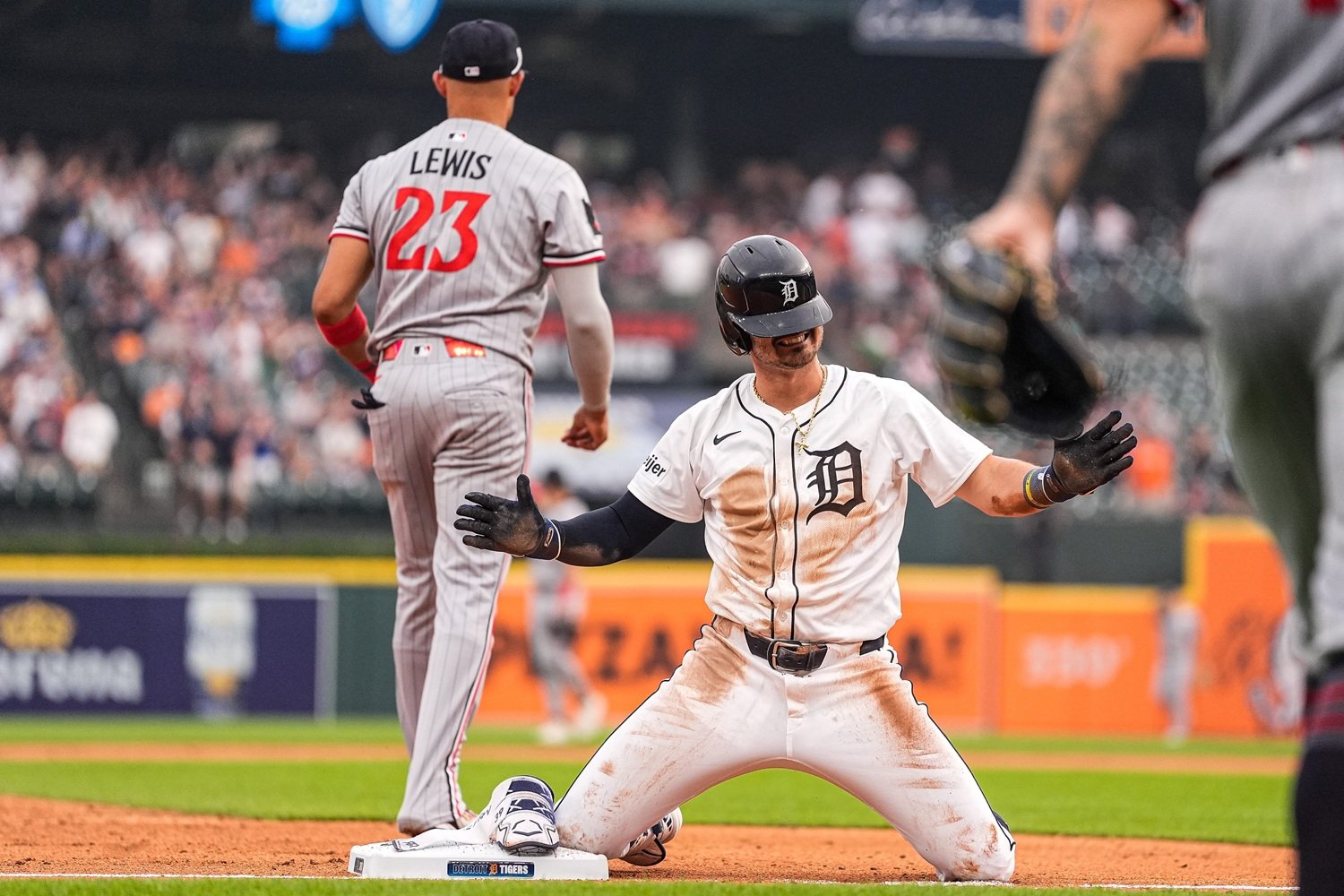 Box Score SP: Travis Adams 5.0 IP, 4 H, 2 ER, 0 BB, 7 K (63 pitches, 44 strikes (69.8%) Home Runs: Ryan Jeffers (8), Trevor Larnach (14), Matt Wallner (15 Bottom 3 WPA: Noah Davis (-0.436), Austin Martin (-0.155), Royce Lewis (-0.138) Win Probability Chart (via FanGraphs) Travis Adams got the start Monday night and started the game off on an impressive roll. In the first two innings, Adams collected five strikeouts. The right-hander got to those early strikeouts in large part by inducing whiffs as he went through the Tigers lineup. Adams exited the game after completing five innings. That becomes his longest outing of the season in the majors. Adams walked off the mound with seven strikeouts and 16 swing-and-misses. An impressive outing by Adams through four innings, but the fifth resulted in trouble. Tigers bloop and blast Spencer Torkelson got to Adams with a line drive single with one out in the fifth inning. It was Wenceel Perez who got the Tigers on the board and tied the game with a home run to right field. Rocco Baldelli tried to stretch Adams, who had a low pitch count, and it didn’t work Monday. Solo Home Run Parade Thankfully for Adams, when he left the game after giving up the home run to Perez, it was only a tie game. Ryan Jeffers got the offense going in the first inning with a home run for an early 1-0 lead. It was just before the Tigers got on the board, Trevor Larnach joined Jeffers by hitting a home run of his own. Finally, after the Tigers tied the lead, Matt Wallner would not let the score remain there. To put the Twins back up 3-0, Wallner blasted the third solo home run for the Twins. Home runs are great, quickly fans would be reminded why it is nice to make them of a different variety than the solo. Noah Davis and the bullpen With Adams out of the game, Noah Davis came in for his second appearance as a Twin. It was an outing Davis will likely want to forget. Before joining the Twins, the former Dodger struggled with giving up home runs, and a home run is what accented a 3-run inning for the Tigers. Davis left a 2-0 pitch for Kerry Carpenter which gave the Tigers a 5-3 lead after 6. Before the end of the game the Tigers would add one more run to make the game 6-3. As was the case early in the season, the Twins had opportunities in this game they just didn’t put it all together. The home runs were nice, but as the season finishes it will be the job of some of the rest of the lineup to step up and claim their role in the roster. What’s Next? The headline for Tuesday is that the Twins will face former teammate Chris Paddack for the first time since his trade. Paddack performed well, completing six innings and only allowing one run. Zebby Matthews is up for the Twins and will try to bounce back from a rough time out before trade deadline day when he went up against Boston. Postgame Interviews Bullpen Usage Spreadsheet THU FRI SAT SUN MON TOT Ureña 0 0 0 69 0 69 Adams 0 0 0 0 63 63 Ohl 0 0 52 0 0 52 Funderburk 0 11 0 35 0 46 Sands 0 20 0 21 0 41 Davis 0 0 0 0 28 31 Topa 0 13 0 15 0 28 Ramírez 0 0 0 9 19 28 Tonkin 0 11 0 14 0 25
- 50 comments
-
- 2
-

-
- travis adams
- ryan jeffers
- (and 2 more)
-
Image courtesy of © Bruce Kluckhohn-Imagn Images Box Score SP: Simeon Woods Richardson 4.2 IP, 7 H, 3 ER, 2 BB, 5 K (99 pitches, 58 strikes (58.6%) Home Runs: DaShawn Keirsey Jr. (2) Top 3 WPA: Brooks Lee (0.395), Mickey Gasper (0.241), DeShawn Kiersey Jr (0.211) Win Probability Chart (via FanGraphs) The Minnesota Twins made their first move of the trade deadline and it signaled "sell" as Chris Paddack became a member of the Detroit Tigers. With the Boston Red Sox in town, a team ahead of the Twins for a wild card spot, would the team on the field concede and also declare sell Monday evening? The Twins first inning got off to a weird and rocky start. First was a Roman Anthony hit right back at Woods Richardson that bounced off the right-hander's glove. When Woods Richardson gathered the ball, he threw an errant throw that made it to the wall and was lodged under the padding. Giving Anthony second base. The second batter was Alex Bregman, and his hit also went off Woods Richardson’s glove, putting runners on the corner. Impressively, the Twins starter was able to escape the first inning without allowing a run. Woods Richardson struck out two batters and was helped for the second out by Willie Castro. Castro was able to position himself well on a fly ball to left field in a way that Anthony did not even attempt to tag up and test a throw to home. Is DaShawn Kiersey Jr. Auditioning? Depending on just how much more selling the Twins participate in, DaShawn Kiersey Jr. could see his playing time rise if he can prove he deserves it. Hopefully, the Twins front office is watching as Kiersey Jr. puts a great swing on a ball in the third inning for an opposite-field home run to drive in Christian Vazquez and put the Twins up 2-0. The left-handed hitter hasn’t had much opportunity to hit this season, being limited to 74 at-bats. If Harrison Bader leaves the Twins as a rental, Kiersey Jr. would have an opportunity to grab at-bats down the stretch of the season. Chance to Add Runs Squandered The Twins had a chance in the fourth inning to add to their lead as Kody Clemens walked, Royce Lewis singled, and a long shot to center field from Matt Wallner that resulted in a single, had the team with the bases loaded and no outs. As the television broadcast stated, that scenario gave the Twins a 2.69 run expectancy. Instead of scoring, the Twins walked away with zero runs as Ty France struck out and Christian Vazquez grounded into a double play to end the inning. That fourth inning feels like a description of the Twins offense in 2025 and exactly what has been frustrating to watch. Woods Richardson a Third Time Through the Lineup? The Twins have been described as reluctant to allow Woods Richardson to face the lineup a third time this season. While the numbers don’t prove to be that awful as the Twins pitcher has allowed a .206 average and .649 OPS, it has seemed to be a strategy of the Twins. Although maybe the reluctance (if two-thirds of the time can be considered that) has helped keep Woods Richardson's numbers looking good. It was the third time through the order that did Woods Richardson in on Monday evening, after what had been a good outing into the fifth inning, that all was erased on an Alex Bregman swing that found the seats. With two runners on, that gave the Red Sox a 3-2 lead over the Twins. Even if the third time through the order narrative isn’t a true trend, it seems like an interesting spot to choose to let Woods Richardson continue when the Twins and Rocco Baldelli hadn’t often enough. Is it a further sign of the Twins selling as the week goes on? Jorge Alcala to the Rescue Don’t worry, you didn’t misremember a trade that happened earlier this season. Jorge Alcala is back in the Twin Cities, but still in a Red Sox uniform. This time, his ability to shrink in the big moments helped the Twins out. With Lewis on first, Alcala threw a wild pitch, advancing Lewis to second. Lewis would advance again to third as catcher Carlos Narvaez couldn’t handle an Alcala pitch. Harrison Bader was the batter as a pinch hitter during the wild throwing and would make it to third on a walk. It was Vazquez who was able to hit a sacrifice fly, which allowed Lewis to tag up and tie the game at 3-3. It likely felt good for Vazquez to get some runs across after not being able to in the fourth inning. Walks Haunt With a walk to Abraham Toro to lead the ninth inning, David Hamilton came on to pinch run. Hamilton has a reputation for being a great base stealer, and every bit of that was showcased at Target Field. First, Hamilton stole second, and if it wasn’t for a crafty play by the veteran Correa, Hamilton should have been standing on third as the ball made its way into the outfield. It didn’t matter much as Hamilton went ahead and stole third as well. An Anthony single later, and the Red Sox put themselves up 4-3. All of Twins Territory was able to "enjoy" an intermission in the middle of the ninth inning as a strong storm system made its way through the state. Once the weather had passed, the Twins got ready to try and erase the one run Boston was now ahead of them. They would have to go through flamethrower Jordan Hicks to do so. Brooks Lee is the Hero Kiersey Jr. was able to continue is good night at the plate with a single to lead the inning. Mickey Gasper entered the game and wore a pitch to put himself on the basepaths. Willi Castro was also hit by a pitch, loading the bases for Carlos Correa. Correa hit a grounder, and Kiersey Jr. was thrown out at home plate. All wasn't lost as the bases were still loaded with one out. Next came Brooks Lee, hitting from the left side of the plate. Lee quickly went down 0-2 in the count, but took a swing at the third pitch and the first fastball he saw and lined it to left field. It was enough to bring around two runs and end the game in a Twins win. The team on the field showed Monday night they are not ready to call it a season quite yet. If there is any slim chance of them fighting back into the playoff picture, a win against a Boston team you are looking up at in the standings is a good step towards that. What’s Next? It has been reported that Pierson Ohl is getting the call-up and making his major league debut Tuesday evening. Since his promotion to St. Paul, Ohl has pitched in seven games, three of those starts. In those 22 ⅓ innings, the 25-year-old right-hander has a 2.82 ERA. Veteran Lucas Giolito will take the mound for the Red Sox. Giolito is bringing into the contest a 3.97 ERA and a 6-2 record. Postgame Interviews Bullpen Usage Spreadsheet THU FRI SAT SUN MON TOT Durán 0 6 0 17 27 50 Topa 0 0 27 0 16 43 Funderburk 0 0 39 0 0 39 Jax 0 25 0 0 13 38 Coulombe 0 11 0 20 0 31 Sands 0 0 0 27 0 27 Stewart 0 0 0 9 16 25 Varland 0 0 0 11 0 11 Tonkin 0 0 0 0 0 0 View full article
-
Twins 5, Red Sox 4: Lee Swings Like the Wind to a Walk Off Win
Nate Palmer posted an article in Twins
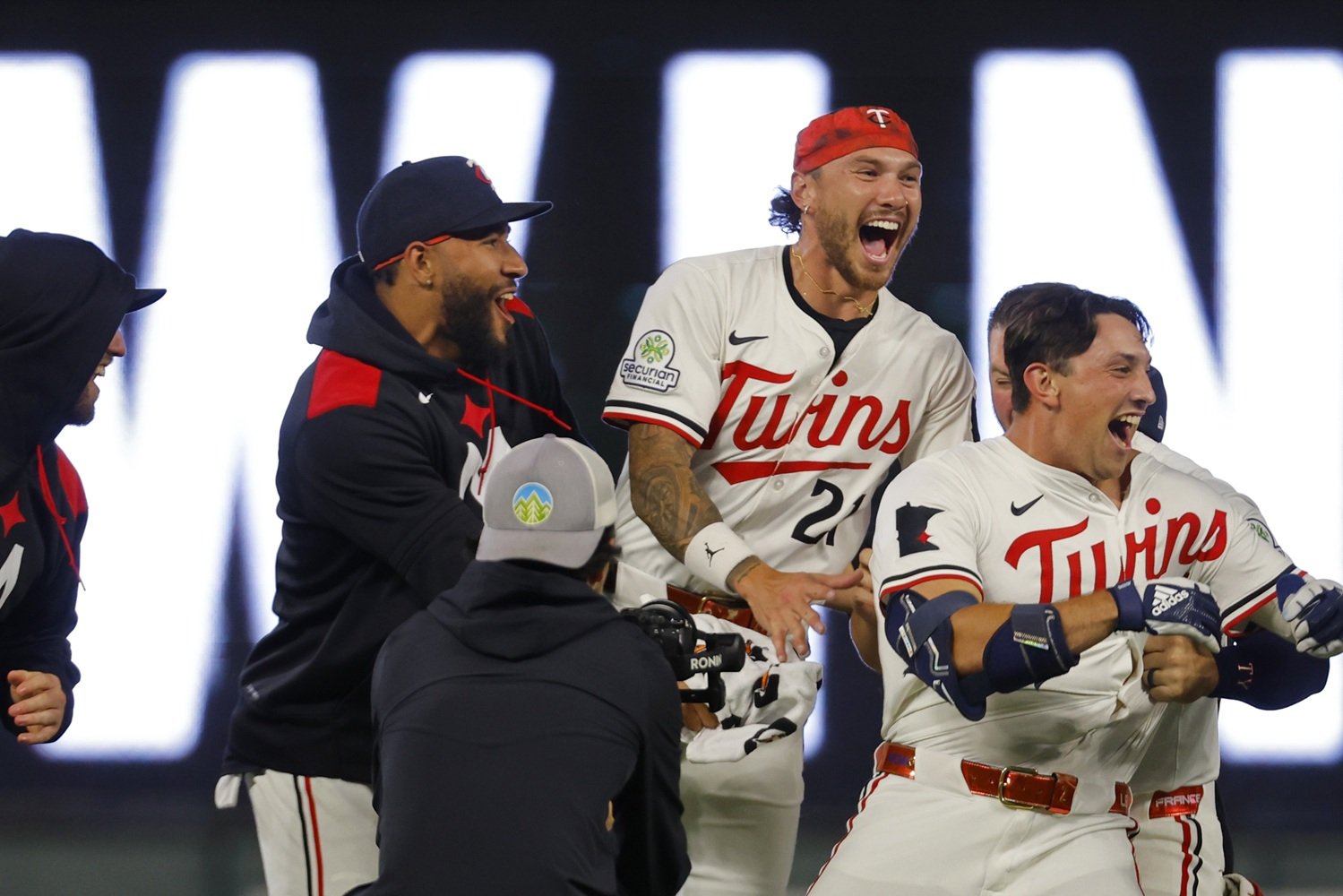 Box Score SP: Simeon Woods Richardson 4.2 IP, 7 H, 3 ER, 2 BB, 5 K (99 pitches, 58 strikes (58.6%) Home Runs: DaShawn Keirsey Jr. (2) Top 3 WPA: Brooks Lee (0.395), Mickey Gasper (0.241), DeShawn Kiersey Jr (0.211) Win Probability Chart (via FanGraphs) The Minnesota Twins made their first move of the trade deadline and it signaled "sell" as Chris Paddack became a member of the Detroit Tigers. With the Boston Red Sox in town, a team ahead of the Twins for a wild card spot, would the team on the field concede and also declare sell Monday evening? The Twins first inning got off to a weird and rocky start. First was a Roman Anthony hit right back at Woods Richardson that bounced off the right-hander's glove. When Woods Richardson gathered the ball, he threw an errant throw that made it to the wall and was lodged under the padding. Giving Anthony second base. The second batter was Alex Bregman, and his hit also went off Woods Richardson’s glove, putting runners on the corner. Impressively, the Twins starter was able to escape the first inning without allowing a run. Woods Richardson struck out two batters and was helped for the second out by Willie Castro. Castro was able to position himself well on a fly ball to left field in a way that Anthony did not even attempt to tag up and test a throw to home. Is DaShawn Kiersey Jr. Auditioning? Depending on just how much more selling the Twins participate in, DaShawn Kiersey Jr. could see his playing time rise if he can prove he deserves it. Hopefully, the Twins front office is watching as Kiersey Jr. puts a great swing on a ball in the third inning for an opposite-field home run to drive in Christian Vazquez and put the Twins up 2-0. The left-handed hitter hasn’t had much opportunity to hit this season, being limited to 74 at-bats. If Harrison Bader leaves the Twins as a rental, Kiersey Jr. would have an opportunity to grab at-bats down the stretch of the season. Chance to Add Runs Squandered The Twins had a chance in the fourth inning to add to their lead as Kody Clemens walked, Royce Lewis singled, and a long shot to center field from Matt Wallner that resulted in a single, had the team with the bases loaded and no outs. As the television broadcast stated, that scenario gave the Twins a 2.69 run expectancy. Instead of scoring, the Twins walked away with zero runs as Ty France struck out and Christian Vazquez grounded into a double play to end the inning. That fourth inning feels like a description of the Twins offense in 2025 and exactly what has been frustrating to watch. Woods Richardson a Third Time Through the Lineup? The Twins have been described as reluctant to allow Woods Richardson to face the lineup a third time this season. While the numbers don’t prove to be that awful as the Twins pitcher has allowed a .206 average and .649 OPS, it has seemed to be a strategy of the Twins. Although maybe the reluctance (if two-thirds of the time can be considered that) has helped keep Woods Richardson's numbers looking good. It was the third time through the order that did Woods Richardson in on Monday evening, after what had been a good outing into the fifth inning, that all was erased on an Alex Bregman swing that found the seats. With two runners on, that gave the Red Sox a 3-2 lead over the Twins. Even if the third time through the order narrative isn’t a true trend, it seems like an interesting spot to choose to let Woods Richardson continue when the Twins and Rocco Baldelli hadn’t often enough. Is it a further sign of the Twins selling as the week goes on? Jorge Alcala to the Rescue Don’t worry, you didn’t misremember a trade that happened earlier this season. Jorge Alcala is back in the Twin Cities, but still in a Red Sox uniform. This time, his ability to shrink in the big moments helped the Twins out. With Lewis on first, Alcala threw a wild pitch, advancing Lewis to second. Lewis would advance again to third as catcher Carlos Narvaez couldn’t handle an Alcala pitch. Harrison Bader was the batter as a pinch hitter during the wild throwing and would make it to third on a walk. It was Vazquez who was able to hit a sacrifice fly, which allowed Lewis to tag up and tie the game at 3-3. It likely felt good for Vazquez to get some runs across after not being able to in the fourth inning. Walks Haunt With a walk to Abraham Toro to lead the ninth inning, David Hamilton came on to pinch run. Hamilton has a reputation for being a great base stealer, and every bit of that was showcased at Target Field. First, Hamilton stole second, and if it wasn’t for a crafty play by the veteran Correa, Hamilton should have been standing on third as the ball made its way into the outfield. It didn’t matter much as Hamilton went ahead and stole third as well. An Anthony single later, and the Red Sox put themselves up 4-3. All of Twins Territory was able to "enjoy" an intermission in the middle of the ninth inning as a strong storm system made its way through the state. Once the weather had passed, the Twins got ready to try and erase the one run Boston was now ahead of them. They would have to go through flamethrower Jordan Hicks to do so. Brooks Lee is the Hero Kiersey Jr. was able to continue is good night at the plate with a single to lead the inning. Mickey Gasper entered the game and wore a pitch to put himself on the basepaths. Willi Castro was also hit by a pitch, loading the bases for Carlos Correa. Correa hit a grounder, and Kiersey Jr. was thrown out at home plate. All wasn't lost as the bases were still loaded with one out. Next came Brooks Lee, hitting from the left side of the plate. Lee quickly went down 0-2 in the count, but took a swing at the third pitch and the first fastball he saw and lined it to left field. It was enough to bring around two runs and end the game in a Twins win. The team on the field showed Monday night they are not ready to call it a season quite yet. If there is any slim chance of them fighting back into the playoff picture, a win against a Boston team you are looking up at in the standings is a good step towards that. What’s Next? It has been reported that Pierson Ohl is getting the call-up and making his major league debut Tuesday evening. Since his promotion to St. Paul, Ohl has pitched in seven games, three of those starts. In those 22 ⅓ innings, the 25-year-old right-hander has a 2.82 ERA. Veteran Lucas Giolito will take the mound for the Red Sox. Giolito is bringing into the contest a 3.97 ERA and a 6-2 record. Postgame Interviews Bullpen Usage Spreadsheet THU FRI SAT SUN MON TOT Durán 0 6 0 17 27 50 Topa 0 0 27 0 16 43 Funderburk 0 0 39 0 0 39 Jax 0 25 0 0 13 38 Coulombe 0 11 0 20 0 31 Sands 0 0 0 27 0 27 Stewart 0 0 0 9 16 25 Varland 0 0 0 11 0 11 Tonkin 0 0 0 0 0 0
- 26 comments
-
- 2
-
-
- deshawn keirsey jr
- brooks lee
- (and 1 more)
-
Image courtesy of © Gary A. Vasquez-Imagn Images Box Score Starting Pitcher: David Festa 5.1 IP, 4 H, 4 ER, 1 BB, 5 K (81 pitches, 50 strikes (61.7%) Home Runs: Byron Buxton (23) Bottom 3 WPA: David Festa (-0.184), Willi Castro (-0.171), Harrison Bader (-0.168) Win Probability Chart (via FanGraphs) The trade deadline looms, and many contenders are smelling the blood in the water when it comes to the Minnesota Twins. After dropping two out of three to the Rockies, that scent is only getting stronger. There may be some time to convince those with the power to supplement the current roster to do so, but one of the best teams in baseball (the Los Angeles Dodgers) stands in the way. The Dodgers are also one of those teams that would love to swoop up some Twins players they will get a close look at in this series. If the team wasn’t tough enough, the individual player was. That is two-way phenom Shohei Ohtani, who got the start Monday evening. As Ohtani made his sixth start of the season against the Twins, he had logged only 9 innings, as the Dodgers are building him back into starting games as a pitcher while he continues to be their everyday designated hitter. However, he has pitched well, with a 1.00 ERA coming into the night. The Twins' own All-Star was ready for the challenge of facing Ohtani. Byron Buxton was the leadoff hitter once again, and he looked like he wanted to make the Home Run Derby a weekly occurrence. Pouncing on Ohtani’s second pitch, a sweeper, Buxton put the Twins up 1-0. Ohtani wouldn’t let that stand long. After shutting the Twins out for the remainder of the inning, in his at-bat for the Dodgers' half of the first inning, Ohtani matched and raised Buxton. After Twins starter David Festa walked Mookie Betts, Ohtani hit his own home run, putting the Dodgers up 2-1. As mentioned by Cory Provus on the broadcast, that first inning makes Ohtani the third pitcher to give up and hit a home run in the first inning of the same game. Ups and Downs of Festa Festa had a very up-and-down night. With the first inning lowlight already MENTIONED, Festa did go on from there to put down nine straight Dodger hitters, the final of those nine being a strikeout on a foul tip of Ohtani. The next hitter (to begin the fourth inning for LA) resulted in a Will Smith home run, though, extending the Dodgers' lead to 3-1. Unfortunately, that pattern would repeat itself in the sixth inning. Festa would strike out Ohtani looking, but then give up another home run to Smith. The young righty left after 5 ⅓ innings after being stung for four runs. The long ball marked Festa’s outing. If the home run can be limited moving forward, this outing had plenty of positive moments to it. Royce Rakes and Runs After hitting two home runs in Sunday’s win over Colorado, Royce Lewis continued to have success at the plate. It wasn’t quite as explosive, but he hit singles in his first two at-bats. His first came off the bat with incredible speed, a 113.7 mph exit velocity. What may have caught the most attention was that after Lewis’s second single, he stole his first base of the season. Lewis would tack on his third hit of the night with a double in the eighth inning. Each hit looked good from process to result, which is a positive development for Lewis and the Twins. A productive Lewis may be one of the biggest trade deadline "moves" the Twins could have made around their roster. The Twins tried to make noise in the eighth inning, which contained Lewis's double. It was shut down, however, as Tommy Edman snagged a screaming liner off the bat of Harrison Bader to end the inning. If the eighth inning had noise, the ninth inning brought the drama. Tanner Scott would come on in relief for the Dodgers and record one out, while walking Buxton and hitting Brooks Lee with a pitch. During Ryan Jeffers' at-bat, Scott would leave with an injury, giving way to Kirby Yates to enter in a save situation for the Dodgers. Kody Clemens hit a sacrifice fly to bring one run around and make the score 5-2. Then the boo birds would fly, as Carlos Correa came ot the plate with two outs and two runners on, representing the tying run. Correa did get a hold of a Yates pitch and hit it 394 feet... in front of the 395 feet center field sign and into the glove of James Outman. The Twins made the game much more interesting than most of the contest looked. In the end, though, they didn't have the answer for the Dodgers' pitching staff. What’s Next? Simeon Woods Richardson has been a steady force in each of his last four starts, allowing one run or less in each outing. The Twins will need him to do that once again Tuesday. Right-hander Yoshinobu Yamamoto will go for the Dodgers. Handling Yamamoto will be a challenging task for the Twins, as the All-Star comes into the game with a 2.59 ERA. Postgame Interviews Bullpen Usage Spreadsheet THU FRI SAT SUN MON TOT Sands 0 22 0 0 28 50 Topa 0 17 16 0 0 33 Misiewicz 0 0 21 0 0 21 Durán 0 0 0 16 0 16 Coulombe 0 0 12 0 0 12 Stewart 0 0 9 0 0 9 Jax 0 0 0 8 0 8 Varland 0 0 0 0 7 7 View full article
-
Dodgers 5, Twins 2: Twins Start with a Bang, Then Barely Muster a Whimper
Nate Palmer posted an article in Twins
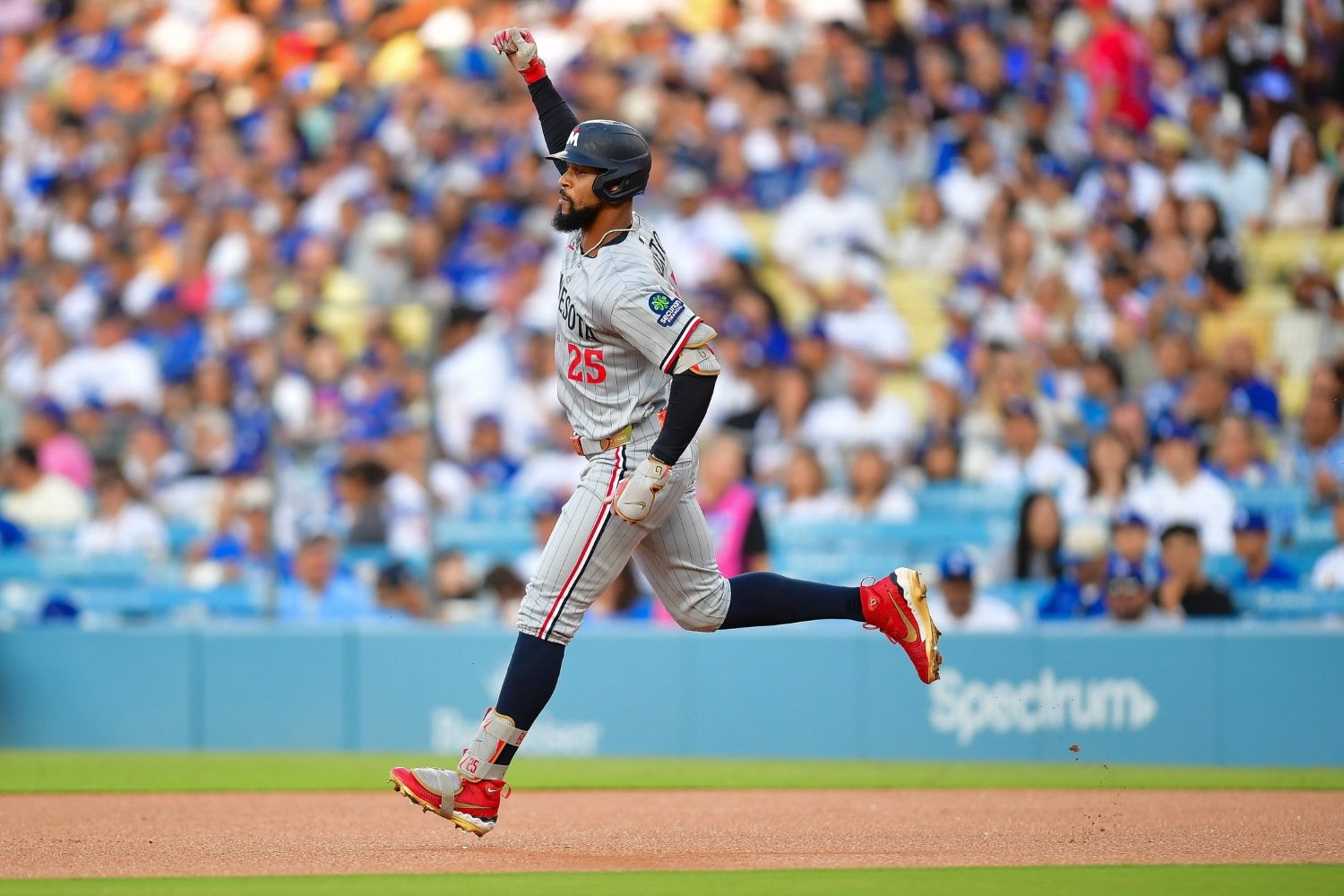 Box Score Starting Pitcher: David Festa 5.1 IP, 4 H, 4 ER, 1 BB, 5 K (81 pitches, 50 strikes (61.7%) Home Runs: Byron Buxton (23) Bottom 3 WPA: David Festa (-0.184), Willi Castro (-0.171), Harrison Bader (-0.168) Win Probability Chart (via FanGraphs) The trade deadline looms, and many contenders are smelling the blood in the water when it comes to the Minnesota Twins. After dropping two out of three to the Rockies, that scent is only getting stronger. There may be some time to convince those with the power to supplement the current roster to do so, but one of the best teams in baseball (the Los Angeles Dodgers) stands in the way. The Dodgers are also one of those teams that would love to swoop up some Twins players they will get a close look at in this series. If the team wasn’t tough enough, the individual player was. That is two-way phenom Shohei Ohtani, who got the start Monday evening. As Ohtani made his sixth start of the season against the Twins, he had logged only 9 innings, as the Dodgers are building him back into starting games as a pitcher while he continues to be their everyday designated hitter. However, he has pitched well, with a 1.00 ERA coming into the night. The Twins' own All-Star was ready for the challenge of facing Ohtani. Byron Buxton was the leadoff hitter once again, and he looked like he wanted to make the Home Run Derby a weekly occurrence. Pouncing on Ohtani’s second pitch, a sweeper, Buxton put the Twins up 1-0. Ohtani wouldn’t let that stand long. After shutting the Twins out for the remainder of the inning, in his at-bat for the Dodgers' half of the first inning, Ohtani matched and raised Buxton. After Twins starter David Festa walked Mookie Betts, Ohtani hit his own home run, putting the Dodgers up 2-1. As mentioned by Cory Provus on the broadcast, that first inning makes Ohtani the third pitcher to give up and hit a home run in the first inning of the same game. Ups and Downs of Festa Festa had a very up-and-down night. With the first inning lowlight already MENTIONED, Festa did go on from there to put down nine straight Dodger hitters, the final of those nine being a strikeout on a foul tip of Ohtani. The next hitter (to begin the fourth inning for LA) resulted in a Will Smith home run, though, extending the Dodgers' lead to 3-1. Unfortunately, that pattern would repeat itself in the sixth inning. Festa would strike out Ohtani looking, but then give up another home run to Smith. The young righty left after 5 ⅓ innings after being stung for four runs. The long ball marked Festa’s outing. If the home run can be limited moving forward, this outing had plenty of positive moments to it. Royce Rakes and Runs After hitting two home runs in Sunday’s win over Colorado, Royce Lewis continued to have success at the plate. It wasn’t quite as explosive, but he hit singles in his first two at-bats. His first came off the bat with incredible speed, a 113.7 mph exit velocity. What may have caught the most attention was that after Lewis’s second single, he stole his first base of the season. Lewis would tack on his third hit of the night with a double in the eighth inning. Each hit looked good from process to result, which is a positive development for Lewis and the Twins. A productive Lewis may be one of the biggest trade deadline "moves" the Twins could have made around their roster. The Twins tried to make noise in the eighth inning, which contained Lewis's double. It was shut down, however, as Tommy Edman snagged a screaming liner off the bat of Harrison Bader to end the inning. If the eighth inning had noise, the ninth inning brought the drama. Tanner Scott would come on in relief for the Dodgers and record one out, while walking Buxton and hitting Brooks Lee with a pitch. During Ryan Jeffers' at-bat, Scott would leave with an injury, giving way to Kirby Yates to enter in a save situation for the Dodgers. Kody Clemens hit a sacrifice fly to bring one run around and make the score 5-2. Then the boo birds would fly, as Carlos Correa came ot the plate with two outs and two runners on, representing the tying run. Correa did get a hold of a Yates pitch and hit it 394 feet... in front of the 395 feet center field sign and into the glove of James Outman. The Twins made the game much more interesting than most of the contest looked. In the end, though, they didn't have the answer for the Dodgers' pitching staff. What’s Next? Simeon Woods Richardson has been a steady force in each of his last four starts, allowing one run or less in each outing. The Twins will need him to do that once again Tuesday. Right-hander Yoshinobu Yamamoto will go for the Dodgers. Handling Yamamoto will be a challenging task for the Twins, as the All-Star comes into the game with a 2.59 ERA. Postgame Interviews Bullpen Usage Spreadsheet THU FRI SAT SUN MON TOT Sands 0 22 0 0 28 50 Topa 0 17 16 0 0 33 Misiewicz 0 0 21 0 0 21 Durán 0 0 0 16 0 16 Coulombe 0 0 12 0 0 12 Stewart 0 0 9 0 0 9 Jax 0 0 0 8 0 8 Varland 0 0 0 0 7 7
 -
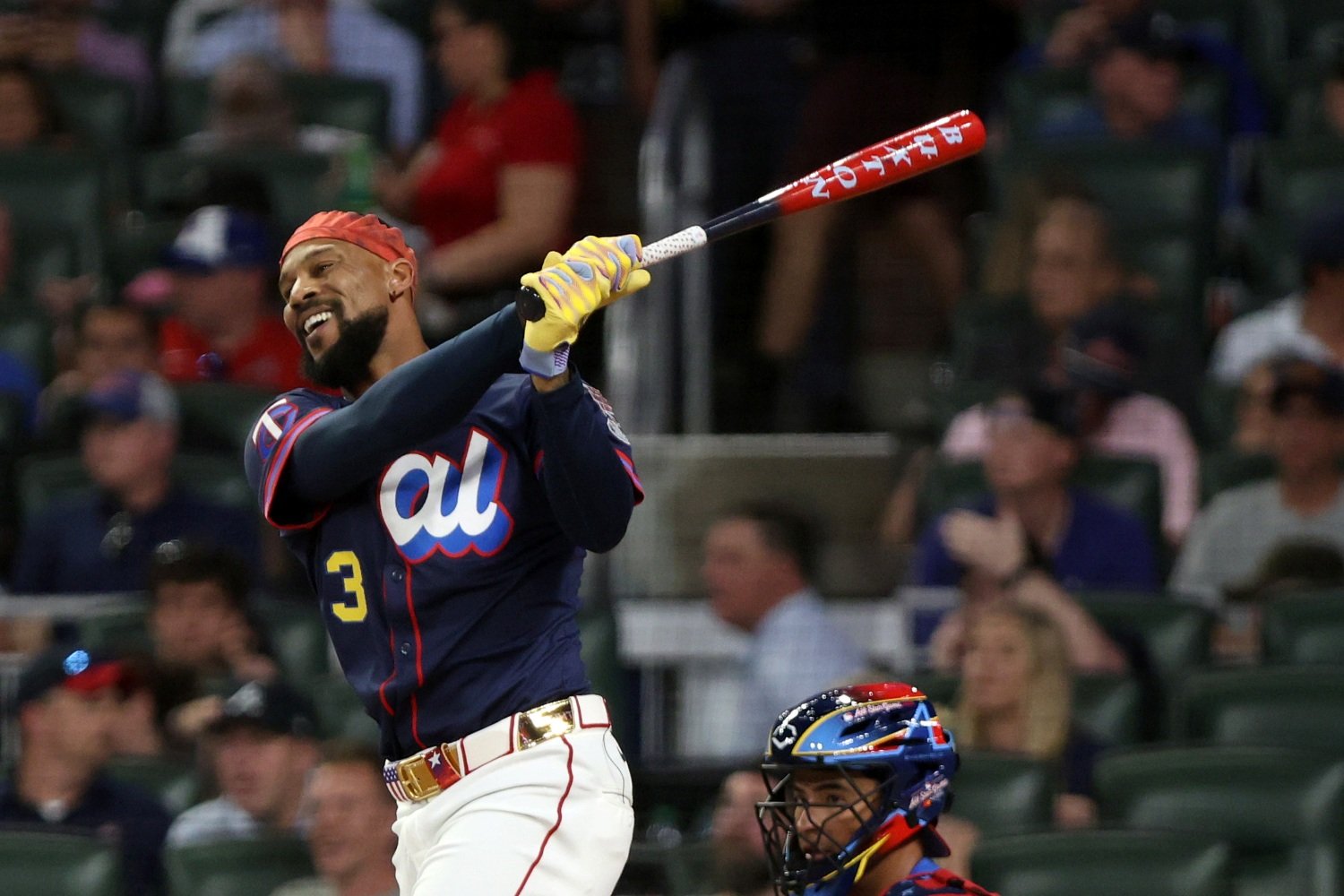 Minnesota was the home of the first All-Star Week Home Run Derby in 1985, as Tom Brunansky took second while mashing dingers in the Metrodome. In 2008, Justin Morneau also made it to the big stage of the derby. While he is largely forgotten because of Josh Hamilton’s performance, Morneau still gets to boast the hardware as the champion. Monday night, as a part of the 2025 All-Star break, it was Byron Buxton’s turn to see if he could add his name to the list of notable Minnesota Twins Home Run Derby participants. As the derby was getting started, there were excellent shots of all the players getting ready. We got a glimpse of Joe Ryan sitting with the Buxton kids and flashing a truck horn motion to cheer on his teammate. Twins social media got in on the fun, wanting to make sure that the kids could be trusted with Ryan. There was also a great shot of Buxton getting geared up for the derby in the best way possible and taking down some Skittles. Round 1 Ahead of Buxton, Oneil Cruz and Junior Caminero put on a show to warm up the fans in Truist Park. Cruz, being the Statcast darling that he is, is nearly the perfect player for an event like the derby. Each hit seemed to have a screaming exit velocity, and then finally, he broke the theoretical tape measure by hitting a bomb 513 feet. Caminero may not have had the same distance and velocity as Cruz, but he was hitting home runs at an incredible pace. As Buxton was ready to step to the plate, Cruz and Caminero were tied for the lead at 21 home runs apiece. With the bar set, Buxton walked to the plate ready to perform in front of his hometown crowd. He started slow, with no home runs produced off the first four swings he took. He then hit three home runs in a row, the first of a couple streaks of home runs he would put together in his regular round swings. After 19 swings, Buxton took his timeout and his boys (most importantly Brixton, for whom it was such a point of emphasis) got their chance to meet their dad near the plate with a towel and Gatorade. Tommy Watkins and Buxton certainly had a pace to their round, which netted the Twins' offensive leader 14 home runs before the bonus round. It also left five pitches on the board. Those five didn’t hurt Buxton, as the untimed bonus round proved to be the perfect pace for the Twins duo. Buxton was able to hit six additional home runs and put himself in second place with 20 home runs behind the duo of Cruz and Caminero. Buxton did not touch Cruz’s distance, but hit his longest home run of the night: 466 feet. Buxton finished out the 1st round in that third-place spot, proving that pace over volume was best for his strategy. A tenth of a foot decided the fourth spot, as Cal Raleigh just edged out old friend Brent Rooker. Atlanta Braves slugger Matt Olson was in great position out of the timed portion of his round with 15, but had nothing left in the tank to push past 17. Round 2 In the second round, Buxton was the leadoff batter and was matched up with Caminero. The round got off to a shaky start, as Watkins almost gave Buxton some of that sweet chin music with his first official pitch. Unfortunately, Buxton didn’t rebound with any grand heroics after that. Throughout the round, he struggled to access the same power he had in the first round. Buxton ended the timed portion of his round with six home runs and left three pitches on the board. He then moved on to the bonus round, which was his bread and butter the first time around, but he only added one more home run. Caminero came up and made short work of his round. He hit eight home runs in 11 pitches and was able to walk out of the batter’s box and begin thinking about the final. The question raised on the Statcast broadcast was whether Buxton’s swing, which generates great power, requires too much energy for an event like the derby. He certainly seemed to tire out toward the end. Finals After squeaking into the semi-finals, Raleigh advanced past Cruz to face Caminero for the championship, $1 million, and the derby champion chain. While it may be debated for years to come on whether or not Raleigh should have even advanced out of the first round, he kept on strong into the finals. Those Big Dumper muscles seemed to fuel him into an incredible finals in which he hit 18 home runs, one better than his opening round number. Truly, his butt refuses to quit. Caminero would put on his own show after plenty of rest from his shortened semi-final round. After collecting 14 home runs before the bonus round, however, the young right-hander was not able to generate enough power to put himself over the top and finished with 15. Instead, the first half home run champ also became the Home Run Derby champion. Congratulations, Cal Raleigh.
- 6 comments
-
- 2
-
-
- byron buxton
- oneil cruz
- (and 2 more)
-
Image courtesy of © Jordan Godfree-Imagn Images Minnesota was the home of the first All-Star Week Home Run Derby in 1985, as Tom Brunansky took second while mashing dingers in the Metrodome. In 2008, Justin Morneau also made it to the big stage of the derby. While he is largely forgotten because of Josh Hamilton’s performance, Morneau still gets to boast the hardware as the champion. Monday night, as a part of the 2025 All-Star break, it was Byron Buxton’s turn to see if he could add his name to the list of notable Minnesota Twins Home Run Derby participants. As the derby was getting started, there were excellent shots of all the players getting ready. We got a glimpse of Joe Ryan sitting with the Buxton kids and flashing a truck horn motion to cheer on his teammate. Twins social media got in on the fun, wanting to make sure that the kids could be trusted with Ryan. There was also a great shot of Buxton getting geared up for the derby in the best way possible and taking down some Skittles. Round 1 Ahead of Buxton, Oneil Cruz and Junior Caminero put on a show to warm up the fans in Truist Park. Cruz, being the Statcast darling that he is, is nearly the perfect player for an event like the derby. Each hit seemed to have a screaming exit velocity, and then finally, he broke the theoretical tape measure by hitting a bomb 513 feet. Caminero may not have had the same distance and velocity as Cruz, but he was hitting home runs at an incredible pace. As Buxton was ready to step to the plate, Cruz and Caminero were tied for the lead at 21 home runs apiece. With the bar set, Buxton walked to the plate ready to perform in front of his hometown crowd. He started slow, with no home runs produced off the first four swings he took. He then hit three home runs in a row, the first of a couple streaks of home runs he would put together in his regular round swings. After 19 swings, Buxton took his timeout and his boys (most importantly Brixton, for whom it was such a point of emphasis) got their chance to meet their dad near the plate with a towel and Gatorade. Tommy Watkins and Buxton certainly had a pace to their round, which netted the Twins' offensive leader 14 home runs before the bonus round. It also left five pitches on the board. Those five didn’t hurt Buxton, as the untimed bonus round proved to be the perfect pace for the Twins duo. Buxton was able to hit six additional home runs and put himself in second place with 20 home runs behind the duo of Cruz and Caminero. Buxton did not touch Cruz’s distance, but hit his longest home run of the night: 466 feet. Buxton finished out the 1st round in that third-place spot, proving that pace over volume was best for his strategy. A tenth of a foot decided the fourth spot, as Cal Raleigh just edged out old friend Brent Rooker. Atlanta Braves slugger Matt Olson was in great position out of the timed portion of his round with 15, but had nothing left in the tank to push past 17. Round 2 In the second round, Buxton was the leadoff batter and was matched up with Caminero. The round got off to a shaky start, as Watkins almost gave Buxton some of that sweet chin music with his first official pitch. Unfortunately, Buxton didn’t rebound with any grand heroics after that. Throughout the round, he struggled to access the same power he had in the first round. Buxton ended the timed portion of his round with six home runs and left three pitches on the board. He then moved on to the bonus round, which was his bread and butter the first time around, but he only added one more home run. Caminero came up and made short work of his round. He hit eight home runs in 11 pitches and was able to walk out of the batter’s box and begin thinking about the final. The question raised on the Statcast broadcast was whether Buxton’s swing, which generates great power, requires too much energy for an event like the derby. He certainly seemed to tire out toward the end. Finals After squeaking into the semi-finals, Raleigh advanced past Cruz to face Caminero for the championship, $1 million, and the derby champion chain. While it may be debated for years to come on whether or not Raleigh should have even advanced out of the first round, he kept on strong into the finals. Those Big Dumper muscles seemed to fuel him into an incredible finals in which he hit 18 home runs, one better than his opening round number. Truly, his butt refuses to quit. Caminero would put on his own show after plenty of rest from his shortened semi-final round. After collecting 14 home runs before the bonus round, however, the young right-hander was not able to generate enough power to put himself over the top and finished with 15. Instead, the first half home run champ also became the Home Run Derby champion. Congratulations, Cal Raleigh. View full article
-
Could Minnesota Twins Find Themselves Rushing to the Dodgers for a Catcher?
Nate Palmer posted an article in Twins
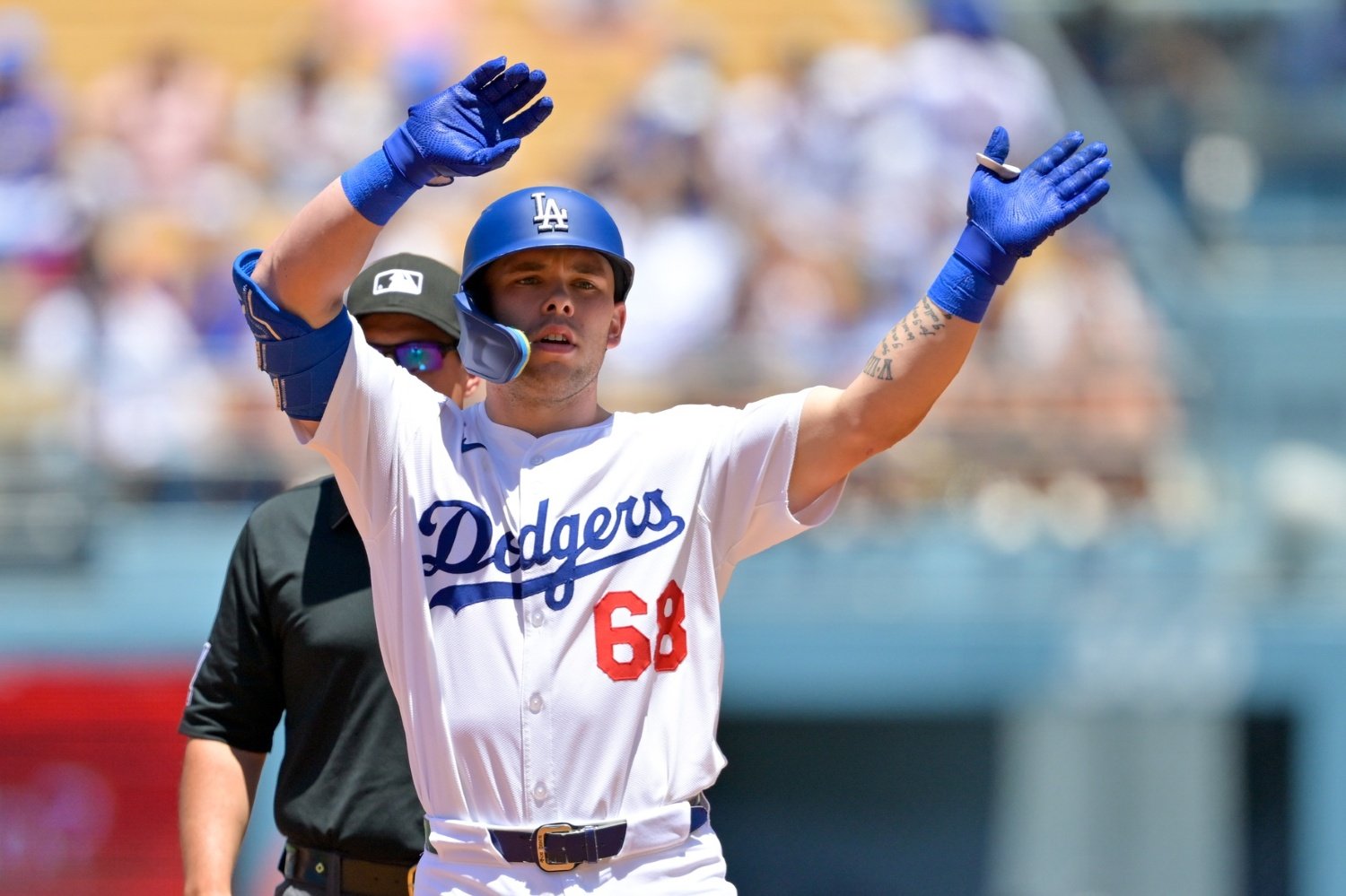 As fans root for the Minnesota Twins to make positive moves and impact on the roster as the trade deadline approaches, one name continues to come up around baseball as a coveted prospect. That name was also prominently featured in the comments of a recent article discussing core-altering moves the Twins could make. It's the current backup catcher for the Los Angeles Dodgers, Dalton Rushing. There are plenty of reasons to hope for the acquisition of the left-handed hitter and backstop. Rushing was the Dodgers' top pick in 2022, 40th overall, and he entered last season being regarded by many as the organization's top prospect. Rushing also has a very robust power tool and has hit for an OPS above .800 each year in the minors. His defense still needs some polish, but many teams will be willing to take the hit tools Rushing possesses and shine up the defensive rawness later. If he is so great, why would the Dodgers part ways with him? For starters, they have All-Star catcher Will Smith in front of him at catcher. A little more than a year ago, Smith and the Dodgers agreed to a 10-year, $140-million contract. Plainly, he's the long-term plan as the primary backstop in Los Angeles. That's why Rushing’s promotion to the majors has drawn many eyes. It seems like an inefficient way to raise a prospect, to give them a backup role. Some believe one motivation for the move is to give other clubs, like the Twins, a chance to evaluate Rushing as a major-leaguer. There has been no confirmation that the Dodgers are looking to trade the young catcher, but Rushing is undoubtedly the type of prospect who draws eyes from teams looking for a long-term answer behind the plate. The Twins would look at a young catcher like Rushing because, at the moment, there isn’t any clear future starter behind Ryan Jeffers in the system—especially not anyone with Rushing’s ceiling. This offseason, Jeffers will enter his final year of arbitration before becoming a free agent. The Twins then face a significant decision: Pay Jeffers, or find a replacement. What could a trade look like? To get an idea, we can examine a few catcher trades to understand value. One recent trade of note involved Sean Murphy and William Contreras. It's a hard trade to evaluate, and it is the value of Contreras to focus on, as he was a backup in Atlanta before the deal. The three-team makeup of the trade does add to the difficulty of evaluating the value Contreras had. If we look just at what the Brewers gave up, this trade continues to look like an absolute steal for Milwaukee. Somehow, the Crew only gave up Esteury Ruiz. Since the trade, Ruiz flashed a bit in his first season with Oakland, most notably by stealing 67 bases, but he hasn’t done much since that season. The Twins aren’t getting Rushing for a Ruiz-type prospect. We can best estimate what Contreras was worth by observing that he got involved in a deal for Murphy, an established, star-caliber backstop. A more directly applicable trade may be the swap of former Cleveland prospect Francisco Mejia. At the time of the trade in 2018, Mejia was regarded as a better prospect, being ranked among the top 20 on many lists. Rushing was 30th on MLB Pipeline's list this spring. Mejia, like Rushing, was also regarded as a bat-first catcher with a need to improve his defense. In return for Mejia, the Cleveland club got Brad Hand and Adam Cimber. At the time of the trade, Hand held a 3.05 ERA, 24 saves, and 13.2 strikeouts per nine innings. Cimber was in his first season and held a 3.17 ERA and a 9.5 K/9. Cleveland received two good relievers for Mejia. This gives us more to work with as far as a framework. The question remains: Do the Dodgers agree with this as the sort of value Rushing has? What are the Dodgers' Needs? The Dodgers, if they trade Rushing, are likely to want impact talent that can elevate them immediately toward their World Series dreams. We know the core in L.A. is ready to carry the team into the postseason. The areas the Dodgers would likely desire an upgrade in start with pitching, likely end with pitching, but may detour to a backup outfielder. Jhoan Duran, Griffin Jax, Brock Stewart, Willi Castro, and Harrison Bader feel like the plausible pieces in a trade package. Castro and Bader are free agents at the end of the season, so their value is limited, but that of Duran and Jax is quite high. Of course, a lot would depend on how much the Twins believe in Rushing or the Dodgers believe in and need whatever Twin(s) they are getting in return. For instance, if the Dodgers think Duran is the final piece to their bullpen puzzle, then maybe that's all it takes. He's under control for two more seasons beyond this one, so acquiring him would be a medium-term play at the back end of the bullpen. Ultimately, a potential marriage between the Dodgers and Twins remains a possibility. If a trade for Rushing can’t be figured out, attention could turn to fellow catching prospect Hunter Feduccia. Feduccia is sort of the opposite of Rushing in terms of skillsets; he's primarily been regarded as a more defensive catcher. So far in his minor league career, Feduccia has shown that label doesn’t mean his bat should be forgotten. In the past three minor-league seasons, the lefty has hit for an OPS over .800 at Triple-A Oklahoma City. This winter, Cody Schoenmann proposed a trade for Feduccia for the Twins. Feduccia has traditionally been considered the lesser of the two prospects. Still, there is a realm where Feduccia may keep a good enough bat that he is ultimately a better major-league player than Rushing. The clock is ticking, as Feduccia is already 28 years old; it's now or never for him. Rushing, 24, has more time. If the Dodgers value him less than Rushing and it takes a lesser package to acquire Feduccia, it may be the deal to strike if the Twins front office believes in the bat. Are either of these catching prospects a place you would like to see the Twins use their trade assets? What package do you consider most suitable to get a deal done?
- 10 comments
-
- 2
-
-
- dalton rushing
- hunter feduccia
- (and 3 more)
-
As fans root for the Minnesota Twins to make positive moves and impact on the roster as the trade deadline approaches, one name continues to come up around baseball as a coveted name. That name was also prominently featured in the comments of a recent article discussing core-altering moves the Twins could make. That is the current backup catcher for the Los Angeles Dodgers, Dalton Rushing. There are plenty of reasons to desire the acquisition of the left-handed backstop. Rushing was the Dodgers top pick in 2022, number 40 overall, and entered last season being regarded by many as the organization's top prospect. Rushing also has a very high power tool and has hit for an .OPS above .800 each year in the minors. His defense still needs some polish, but many teams will be willing to take the hit tools Rushing possesses and work to polish up the defensive rawness. If he is so great, why would the Dodgers part ways with him? For starters, they have All-Star catcher Will Smith in front of him at catcher. Just a little more than a year ago, Smith and the Dodgers agreed to a 10-year, $140 million contract. That gives little window of opportunity for any other catchers to play. That is why Rushing’s promotion to the majors has drawn many eyes. It seems like an inefficient way to raise a prospect to give them a backup role, causing speculation that it is a move to give other clubs, like the Twins, a chance to evaluate Rushing as a major leaguer. There has been no confirmation that the Dodgers are looking to trade the young catcher, but Rushing is undoubtedly the type of prospect that draws eyes from teams looking for a long term answer behind the plate. The Twins would look at a young catcher like Rushing because, at the moment, there isn’t any clear future starter behind Ryan Jeffers in the system. Especially not anyone with Rushing’s ceiling. This offseason, Jeffers will enter his final year of arbitration before becoming a free agent. The Twins then face a significant decision. Pay Jeffers or find a replacement. What could a trade look like? To get an idea, we can examine a few catcher trades to understand value. One recent trade of note involved Sean Murphy and William Contreras. It is a hard trade to evaluate, and it is the value of Contreras to focus on as he was a backup in Atlanta before the trade. The three-team makeup of the trade does add to the difficulty of evaluating the trade value of Contreras. If we look just at what the Brewers gave up, this trade continues to look like an absolute steal for Milwaukee. Somehow, the Milwaukee club only gave up Esteury Ruiz. Since the trade, Ruiz flashed a bit in his first season with Oakland. Most notably by stealing 67 bases, but he hasn’t done much since that season. The Twins aren’t getting Rushing for a Ruiz-type prospect. That is where the value evaluation gets tricky, because there is a harder-to-measure value in how the Braves felt about Murphy and their willingness to give up Contreras. A more directly applicable trade may be the trade of former Cleveland prospect Francisco Mejia. At the time of the trade in 2018, Mejia was regarded as a better prospect, being ranked among the top 20 on many lists. Rushing was most recently ranked 75th by MLB.com in 2024. Mejia, like Rushing, was also regarded as a bat-first catcher with a need to improve his defense. In return for Mejia, the Indians got Brad Hand and Amber Cimber. At the time of the trade, Hand held a 3.05 ERA, 24 saves, and a 13.2 K/9 rate. Cimber was in his first season and held a 3.17 ERA and a 9.5 K/9. Cleveland received two good relievers for Mejia. This gives us more to work with as far as a framework. The question remains: Do the Dodgers agree with this as the sort of value Rushing has? What are the Dodgers Needs? The Dodgers, if they trade Rushing, are likely to want impact talent that can elevate them immediately towards their World Series dreams. We know the core in L.A. is ready to carry the team into the postseason. The areas the Dodgers would likely desire an upgrade in start with pitching, likely end with pitching, but may detour to a backup outfielder. A combination of Jhoan Duran, Griffin Jax, Brock Stewart, Willi Castro, and Harrison Bader begins to make sense in a trade package. It may increase from two players, as seen in the Mejia trade, to three, considering Castro and Bader are free agents at the end of the season. Of course, a lot would depend on how much the Twins believe in Rushing or the Dodgers believe in and need whatever Twin(s) they are getting in return. For instance, if the Dodgers think Duran is the final piece to their bullpen puzzle, then maybe that is all it takes. Ultimately, a potential marriage between the Dodgers and Twins remains a possibility. If a trade for Rushing can’t be figured out, attention could be turned to fellow catching prospect Hunter Feduccia. Feduccia is somewhat of a reverse in terms of skillsets and has primarily been regarded as a more defensive catcher. So far in his minor league career, Feduccia has shown that label doesn’t mean his bat should be forgotten. In the past three minor league seasons, the lefty has hit for an OPS over .800 at Triple-A Oklahoma City. This winter Cody Schoenmann proposed a trade for Feduccia for the Twins. Feduccia has traditionally been considered the lesser of the two prospects. Still, there is a realm where Feduccia may keep a good enough bat that he is ultimately a better major league player than Rushing. The clock is ticking as Feduccia is already 28 years old (Rushing is 24) and 28 is getting late fast for a prospect. If the Dodgers value him less than Rushing and it takes a lesser package to acquire Feduccia, it may be the deal to strike if the Twins front office believes in the bat. Are either of these catching prospects a place you would like to see the Twins use their trade assets? What package do you consider most suitable to get a deal done? View full article
-
5 Major Trade Candidates if Twins Decide to Reshuffle Their Core
Nate Palmer posted an article in Twins
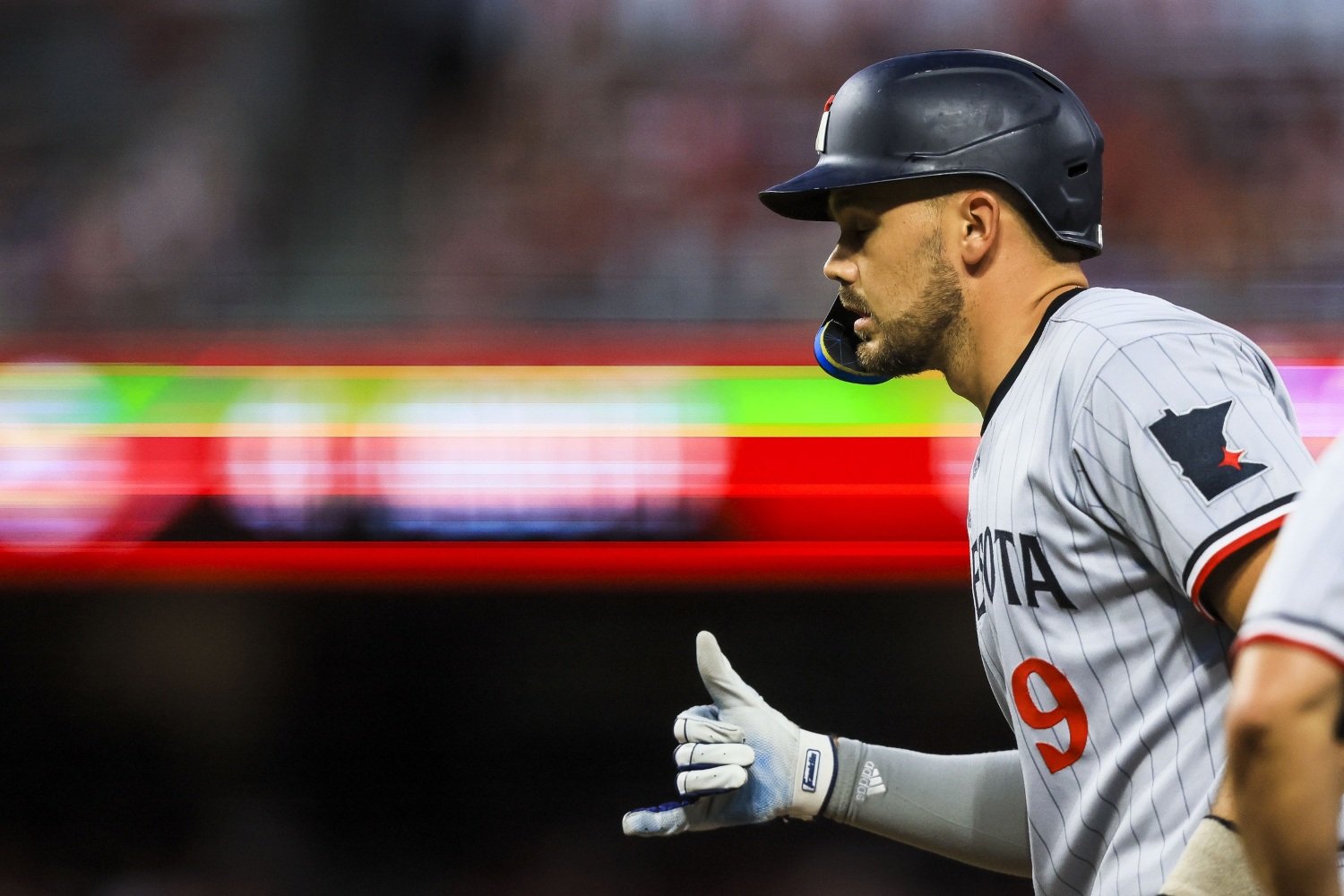 Major League Baseball (and the Minnesota Twins) are exactly four weeks away from the 2025 trade deadline. At this point, the Twins are within striking distance of a playoff spot. The problem is that when they haven’t been playing well, the performance has been very discouraging, which makes “buying” hard to endorse—and, as we will explore here, makes one wonder if the Twins have a core ready to compete for the playoffs, let alone make a deep run. With that in mind, it may be prudent for the front office to consider tearing down what was expected to be the core of this team and forming a new one for future seasons. Not everything will happen overnight. A core rebuild could happen quickly, as the Twins do have some quality pieces and would need to look to supplement that group better than they have been currently. A core rebuild likely cannot happen in full by the end of the month, but the Twins can get a strong start on the process. The most obvious thing that can happen immediately is a series of marginal moves: trading away players on expiring deals. Willi Castro, Chris Paddack, and Harrison Bader top that list. When we consider establishing a new core, this group and their trade value may not be enough, but the trades could prove valuable as a source of organizational depth that can develop into regulars, future trade targets, and, of course, the chance of a high-performing wild card acquisition. Moving someone like Bader out could also force the team to get a longer look at Austin Martin or DaShawn Keirsey Jr., accelerating the evaluation process (and perhaps, over the next year, accelerating turnover) for those prime-aged players on the fringes of the roster. Changing the core, however, would require bigger and riskier moves, too. Here are some moves with larger consequences that the Twins could consider—ones that would shake up the core and help establish a new one. Trevor Larnach or Matt Wallner As the two lefties came up through the minors, it always seemed it would be a miracle if both were genuinely able to work long-term on the Twins roster together. This deadline may be the perfect time to part with one player to find value in another. With the Twins' organizational depth, no player acquired for one of these two would need to replace them on the roster. For one, Wallner or Larnach would still exist on the roster, and would fill the role of a left-handed corner outfielder. Some well-regarded prospects could fill in at their positions (looking at you, Walker Jenkins and Emmanuel Rodriguez) soon. This move also creates room for the Twins to identify a right-handed bat to insert into the lineup, something that this club desperately needs, and has needed for some time. As far as which lefty to send out, that feels like a toss-up. While both are left-handed, Larnach and Wallner bring slightly different skill sets to the table. Wallner appears to have the highest chance of being a game-changing power bat, which may tip the scale for the Twins. Taking the best package available in this scenario is the best way to go. Royce Lewis We know this story all too well. Royce Lewis can’t seem to stay healthy in a Twins jersey, or their affiliates' jerseys. Lately, even when healthy, he has struggled to produce. Lewis is just back from his most recent stint on the IL, and if he can regain any offensive form, it could be the prime opportunity for the Twins to part ways with him and reshape part of their core. A change of scenery could jumpstart Lewis's career. Moving him would also give the Twins more freedom to think about the future on the infield. If this sort of move works for Lewis, the Twins front office will undoubtedly hear about it for ages. (Anyone heard about this David Ortiz guy?) At the same time, there are currently plenty of question marks surrounding Lewis, and instead of reacting in fear, the Twins need to decide if they can afford to wait on Lewis and watch him not regain form. Jhoan Duran or Griffin Jax A trade of one of these two is the most obvious possibility this month, among the major options. At the same time, it may cut to the heart of fans the most, because these two have been largely blameless during the team's recent spiral. Relief pitchers are the most expendable players on any non-playoff roster, but they're also the easiest players to slot into contending ones. Out of these two, I would have to believe the Twins would prefer to part ways with Duran. He would likely fetch the best package, and we must not forget that the decline in the top end of his velocity has been a concern over the past two seasons. Those concerns could be unwarranted, as Duran is putting together an excellent season. While Duran’s strike rate is down, his 1.69 ERA and 12 saves will undoubtedly catch the eye of a contending team looking to add a lockdown closer to the back end of their bullpen. Jax would be easier for many fans to stomach trading away, since he seems to have these blips where he gives up a series of games in a row before becoming a dominant reliever again. Last season, Tanner Scott was part of a package that netted the Marlins a top-50 prospect, along with three other Padres prospects. Lucas Erceg also found his way onto the Royals at the deadline in exchange for three prospects, including MLB.com’s number four-ranked prospect in the Royals system. Relievers can still fetch good packages at the trade deadline. Contenders want to be able to lock down games with as much certainty as possible. Duran has proved he can do it. Where are you at? Is it time to rebuild part of this core, or do you still have confidence in it? What moves would you make? Make it heard below!
- 105 comments
-
- 6
-

-
-
- matt wallner
- trevor larnach
- (and 4 more)
-
Image courtesy of © Katie Stratman-Imagn Images Major League Baseball (and the Minnesota Twins) are exactly four weeks away from the 2025 trade deadline. At this point, the Twins are within striking distance of a playoff spot. The problem is that when they haven’t been playing well, the performance has been very discouraging, which makes “buying” hard to endorse—and, as we will explore here, makes one wonder if the Twins have a core ready to compete for the playoffs, let alone make a deep run. With that in mind, it may be prudent for the front office to consider tearing down what was expected to be the core of this team and forming a new one for future seasons. Not everything will happen overnight. A core rebuild could happen quickly, as the Twins do have some quality pieces and would need to look to supplement that group better than they have been currently. A core rebuild likely cannot happen in full by the end of the month, but the Twins can get a strong start on the process. The most obvious thing that can happen immediately is a series of marginal moves: trading away players on expiring deals. Willi Castro, Chris Paddack, and Harrison Bader top that list. When we consider establishing a new core, this group and their trade value may not be enough, but the trades could prove valuable as a source of organizational depth that can develop into regulars, future trade targets, and, of course, the chance of a high-performing wild card acquisition. Moving someone like Bader out could also force the team to get a longer look at Austin Martin or DaShawn Keirsey Jr., accelerating the evaluation process (and perhaps, over the next year, accelerating turnover) for those prime-aged players on the fringes of the roster. Changing the core, however, would require bigger and riskier moves, too. Here are some moves with larger consequences that the Twins could consider—ones that would shake up the core and help establish a new one. Trevor Larnach or Matt Wallner As the two lefties came up through the minors, it always seemed it would be a miracle if both were genuinely able to work long-term on the Twins roster together. This deadline may be the perfect time to part with one player to find value in another. With the Twins' organizational depth, no player acquired for one of these two would need to replace them on the roster. For one, Wallner or Larnach would still exist on the roster, and would fill the role of a left-handed corner outfielder. Some well-regarded prospects could fill in at their positions (looking at you, Walker Jenkins and Emmanuel Rodriguez) soon. This move also creates room for the Twins to identify a right-handed bat to insert into the lineup, something that this club desperately needs, and has needed for some time. As far as which lefty to send out, that feels like a toss-up. While both are left-handed, Larnach and Wallner bring slightly different skill sets to the table. Wallner appears to have the highest chance of being a game-changing power bat, which may tip the scale for the Twins. Taking the best package available in this scenario is the best way to go. Royce Lewis We know this story all too well. Royce Lewis can’t seem to stay healthy in a Twins jersey, or their affiliates' jerseys. Lately, even when healthy, he has struggled to produce. Lewis is just back from his most recent stint on the IL, and if he can regain any offensive form, it could be the prime opportunity for the Twins to part ways with him and reshape part of their core. A change of scenery could jumpstart Lewis's career. Moving him would also give the Twins more freedom to think about the future on the infield. If this sort of move works for Lewis, the Twins front office will undoubtedly hear about it for ages. (Anyone heard about this David Ortiz guy?) At the same time, there are currently plenty of question marks surrounding Lewis, and instead of reacting in fear, the Twins need to decide if they can afford to wait on Lewis and watch him not regain form. Jhoan Duran or Griffin Jax A trade of one of these two is the most obvious possibility this month, among the major options. At the same time, it may cut to the heart of fans the most, because these two have been largely blameless during the team's recent spiral. Relief pitchers are the most expendable players on any non-playoff roster, but they're also the easiest players to slot into contending ones. Out of these two, I would have to believe the Twins would prefer to part ways with Duran. He would likely fetch the best package, and we must not forget that the decline in the top end of his velocity has been a concern over the past two seasons. Those concerns could be unwarranted, as Duran is putting together an excellent season. While Duran’s strike rate is down, his 1.69 ERA and 12 saves will undoubtedly catch the eye of a contending team looking to add a lockdown closer to the back end of their bullpen. Jax would be easier for many fans to stomach trading away, since he seems to have these blips where he gives up a series of games in a row before becoming a dominant reliever again. Last season, Tanner Scott was part of a package that netted the Marlins a top-50 prospect, along with three other Padres prospects. Lucas Erceg also found his way onto the Royals at the deadline in exchange for three prospects, including MLB.com’s number four-ranked prospect in the Royals system. Relievers can still fetch good packages at the trade deadline. Contenders want to be able to lock down games with as much certainty as possible. Duran has proved he can do it. Where are you at? Is it time to rebuild part of this core, or do you still have confidence in it? What moves would you make? Make it heard below! View full article
-
Twins 10, Athletics 4: Buck Truck Hauling Offense in Sacramento
Nate Palmer posted an article in Twins
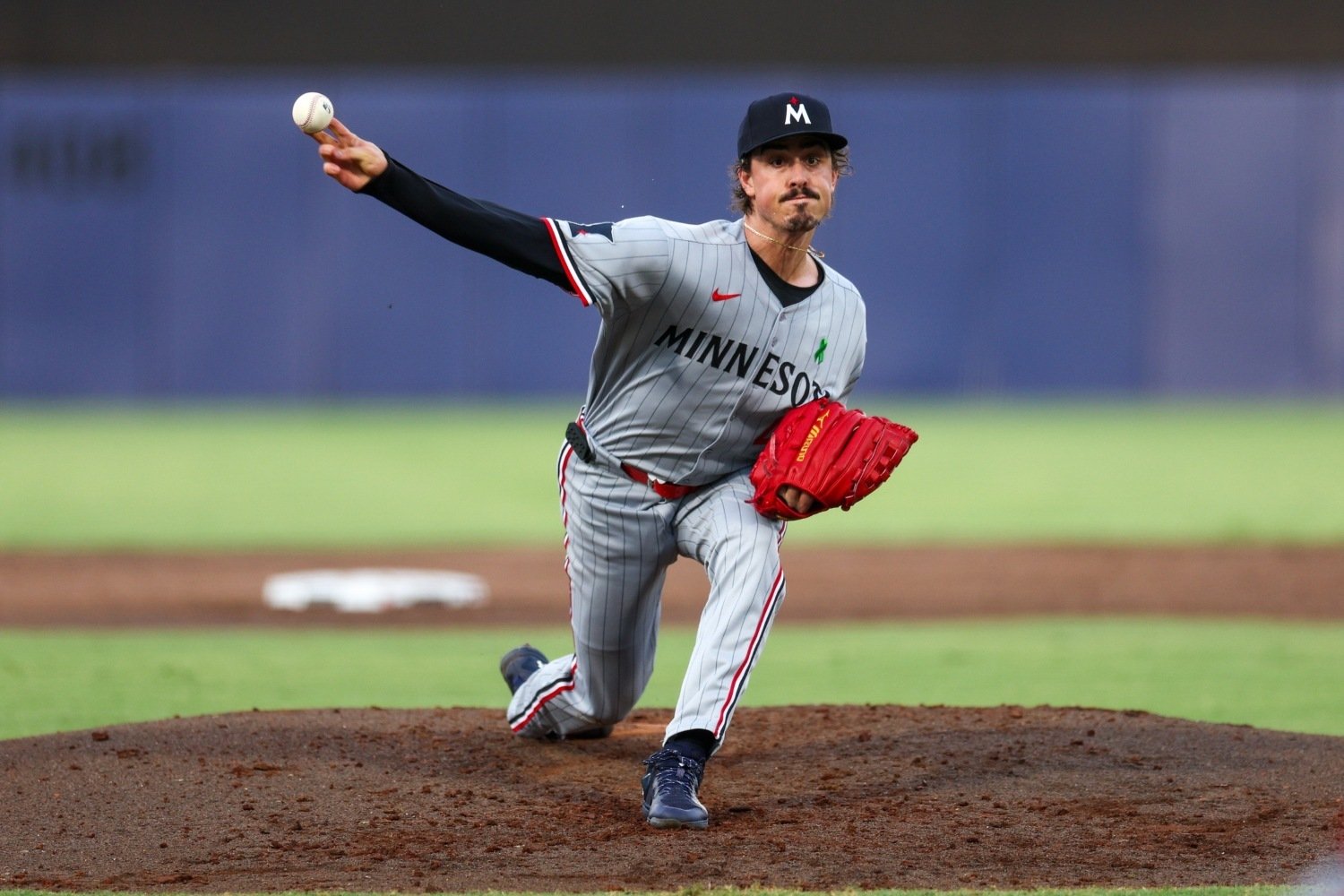 Box Score SP: Joe Ryan 5.0 IP, 6 H, 4 ER, 3 BB, 4 K (97 pitches, 62 strikes (63.9%) Home Runs: N/A Top 3 WPA: Byron Buxton (0.233), Ty France (0.163), Kody Clemens (0.044) Win Probability Chart (via FanGraphs) The Minnesota Twins have had one flaw in their blueprint for winning games the entire 2025 season. That flaw is that they have not been able to score runs consistently. The pitching has often put the Twins in position to win games, but the bats have not picked up their end of the tab. Monday evening in Sacramento demonstrated just how important those runs are for the Twins to achieve sustained success. Joe Ryan has been on a tear since the start of May. Over that stretch, Ryan started five games, and the Twins went 4-1 in his starts. He held opponents to a low six earned runs and a 1.86 ERA over 29 innings while stringing out 33 and only walking five. Ryan had a test Monday night to continue that sort of output in a ballpark that has showcased plenty of good offense. Second-Inning Explosion The Twins exploded for six runs in the second inning—a number that would prove to be needed to be competitive in the game. Carlos Correa got the hits going with a pulled double down the third-base line that he created with his legs as much as his bat. Willi Castro followed up with a hustle infield single to put runners on the corners. Kody Clemens was next to reach base, by wearing a pitch and loading the bases with one out for the Twins. As it has been so often this season, Ty France stepped into the batter's box with runners in scoring position and delivered once again. France laced another RBI single to bring home Correa and Castro to make it 2-0 Twins. Byron Buxton skied a deep fly ball to left field that was misplayed. That gave Buxton a 2-RBI double to extend the Twins lead to 4-0. Trevor Larnach then singled to bring Buxton home, and Brooks Lee doubled to score Larnach, building that 6-0 lead. Ryan Tested Ryan finally ran into some turbulence beginning in the third inning. The A’s first took Ryan through a long and grinding third inning that resulted in a run. It was the fourth inning that led to the A’s pulling the Twins closer courtesy of a 3-run Lawrence Butler home run and maybe a missed strike call in the previous at-bat, with Denzel Clarke up to bat. With the lead 6-4 for the Twins, Ryan got tested once again. Ryan had to figure out how to get out of a no-outs, bases-loaded jam. Somehow, he figured out how to do that in a place where it seemed sure that more of that six-run buffer that was built up would slip away. Instead, two infield flies and a ground out later, Ryan could make his way back to the dugout with the score still 6-4. Twins continue scoring A frustrating trait of recent Twins teams has been their tendency to score runs early and then fail to score again for the rest of the game. Monday night, the Twins offense found a way to extend their lead after the A’s got to Ryan. Buxton again brought two more runs in to extend their lead to 8-4 in the sixth inning. Brooks Lee spent Monday night rewarding his manager for his confidence in the young infielder. Lee's appearance as the number three hitter came with plenty of scrutiny, but he came through with two hits and two RBIs to keep the Twins rolling. The second of those RBIs came in the 8th inning to give the Twins some more insurance and a 9-4 lead. Buxton would drive one more run in on a sacrifice fly to give himself a five-RBI night and the Twins a 10-4 lead. Kody Clemens continues to contribute Kody Clemens made his way as a mainstay in the Twins lineup, with his bat sitting north of a 1.000 OPS for several games. While his bat has cooled off and that number has settled to the south again, Clemens continues to come up in big spots and significant ways. While Clemens did come through with a hit and a run in the sixth inning Monday night, it was his glove at second that proved to be key in the Twins efforts. Clemens first saved a run in the first when he threw out Lawrence Butler at home off of a Brent Rooker ground ball. Then in the fourth inning, Clemens saved a run by keeping a grounder up the middle from reaching the outfield. It didn’t produce an out, but it caused Drew Avans to stay at third. Avans would ultimately score on Butler’s home run, but the play shows how Clemens has continued to find ways to succeed with a Twins uniform on. What’s Next? Tuesday is Pablo Day. Pablo Lopez will look to bounce back after giving up four runs against the Rays last time out. Jacob Lopez (while unofficial currently) appears to be in line for the A's start Tuesday which will be his fourth of the season. The Twins offense will look to continue to roll against the left-hander and put some more crooked numbers on the board. Bullpen Usage Spreadsheet THU FRI SAT SUN MON TOT Stewart 0 17 11 0 12 40 Jax 0 0 18 15 0 33 Varland 0 0 18 0 15 33 Alcalá 0 0 28 0 0 28 Sands 0 21 6 0 0 27 Durán 0 13 14 0 0 27 Topa 0 0 10 0 11 21 Funderburk 0 0 0 0 17 17
- 20 comments
-
- 4
-
-
- joe ryan
- byron buxton
- (and 1 more)
-
Image courtesy of Joe Ryan © Nathan Ray Seebeck-Imagn Images Box Score SP: Joe Ryan 5.0 IP, 6 H, 4 ER, 3 BB, 4 K (97 pitches, 62 strikes (63.9%) Home Runs: N/A Top 3 WPA: Byron Buxton (0.233), Ty France (0.163), Kody Clemens (0.044) Win Probability Chart (via FanGraphs) The Minnesota Twins have had one flaw in their blueprint for winning games the entire 2025 season. That flaw is that they have not been able to score runs consistently. The pitching has often put the Twins in position to win games, but the bats have not picked up their end of the tab. Monday evening in Sacramento demonstrated just how important those runs are for the Twins to achieve sustained success. Joe Ryan has been on a tear since the start of May. Over that stretch, Ryan started five games, and the Twins went 4-1 in his starts. He held opponents to a low six earned runs and a 1.86 ERA over 29 innings while stringing out 33 and only walking five. Ryan had a test Monday night to continue that sort of output in a ballpark that has showcased plenty of good offense. Second-Inning Explosion The Twins exploded for six runs in the second inning—a number that would prove to be needed to be competitive in the game. Carlos Correa got the hits going with a pulled double down the third-base line that he created with his legs as much as his bat. Willi Castro followed up with a hustle infield single to put runners on the corners. Kody Clemens was next to reach base, by wearing a pitch and loading the bases with one out for the Twins. As it has been so often this season, Ty France stepped into the batter's box with runners in scoring position and delivered once again. France laced another RBI single to bring home Correa and Castro to make it 2-0 Twins. Byron Buxton skied a deep fly ball to left field that was misplayed. That gave Buxton a 2-RBI double to extend the Twins lead to 4-0. Trevor Larnach then singled to bring Buxton home, and Brooks Lee doubled to score Larnach, building that 6-0 lead. Ryan Tested Ryan finally ran into some turbulence beginning in the third inning. The A’s first took Ryan through a long and grinding third inning that resulted in a run. It was the fourth inning that led to the A’s pulling the Twins closer courtesy of a 3-run Lawrence Butler home run and maybe a missed strike call in the previous at-bat, with Denzel Clarke up to bat. With the lead 6-4 for the Twins, Ryan got tested once again. Ryan had to figure out how to get out of a no-outs, bases-loaded jam. Somehow, he figured out how to do that in a place where it seemed sure that more of that six-run buffer that was built up would slip away. Instead, two infield flies and a ground out later, Ryan could make his way back to the dugout with the score still 6-4. Twins continue scoring A frustrating trait of recent Twins teams has been their tendency to score runs early and then fail to score again for the rest of the game. Monday night, the Twins offense found a way to extend their lead after the A’s got to Ryan. Buxton again brought two more runs in to extend their lead to 8-4 in the sixth inning. Brooks Lee spent Monday night rewarding his manager for his confidence in the young infielder. Lee's appearance as the number three hitter came with plenty of scrutiny, but he came through with two hits and two RBIs to keep the Twins rolling. The second of those RBIs came in the 8th inning to give the Twins some more insurance and a 9-4 lead. Buxton would drive one more run in on a sacrifice fly to give himself a five-RBI night and the Twins a 10-4 lead. Kody Clemens continues to contribute Kody Clemens made his way as a mainstay in the Twins lineup, with his bat sitting north of a 1.000 OPS for several games. While his bat has cooled off and that number has settled to the south again, Clemens continues to come up in big spots and significant ways. While Clemens did come through with a hit and a run in the sixth inning Monday night, it was his glove at second that proved to be key in the Twins efforts. Clemens first saved a run in the first when he threw out Lawrence Butler at home off of a Brent Rooker ground ball. Then in the fourth inning, Clemens saved a run by keeping a grounder up the middle from reaching the outfield. It didn’t produce an out, but it caused Drew Avans to stay at third. Avans would ultimately score on Butler’s home run, but the play shows how Clemens has continued to find ways to succeed with a Twins uniform on. What’s Next? Tuesday is Pablo Day. Pablo Lopez will look to bounce back after giving up four runs against the Rays last time out. Jacob Lopez (while unofficial currently) appears to be in line for the A's start Tuesday which will be his fourth of the season. The Twins offense will look to continue to roll against the left-hander and put some more crooked numbers on the board. Bullpen Usage Spreadsheet THU FRI SAT SUN MON TOT Stewart 0 17 11 0 12 40 Jax 0 0 18 15 0 33 Varland 0 0 18 0 15 33 Alcalá 0 0 28 0 0 28 Sands 0 21 6 0 0 27 Durán 0 13 14 0 0 27 Topa 0 0 10 0 11 21 Funderburk 0 0 0 0 17 17 View full article
-
The Minnesota Twins' bullpen (and bats) fell flat once again. Add two more pitcher throwing errors to Minnesota's tally, and the New York Mets didn't squander their opportunity to easily take the first game of the series. Image courtesy of © Jesse Johnson-Imagn Images Box Score SP: Joe Ryan: 5.0 IP, 3 H, 1 ER, 2 BB, 8 K (101 pitches, 65 strikes (64.4%) Home Runs: N/A Bottom 3 WPA: Justin Topa (-0.251), Jorge Alcala (-0.111), Byron Buxton (-0.106) Win Probability Chart (via FanGraphs) The Minnesota Twins finally put together a complete game to close out their series and get a win against division rival Detroit Tigers. They welcomed the New York Mets to Target Field Monday to build on that momentum. A cold, windy, did I say windy Target Field? Joe Ryan Strikes Out Eight As the Twins looked to build on Sunday’s win, Joe Ryan also took the mound looking to build on his last outing, against the Royals. In that start, Ryan completed seven innings, struck out four batters, and held the Royals scoreless. Ryan’s first inning Monday was also scoreless, but set the righthander up in a hole. He had to spend 27 pitches to get through the inning after allowing a double to Fransisco Lindor and a walk to Pete Alonso. Coming out of the first, there was good reason to question how the start would go. Ryan rebounded well, though, and only really had a third-inning series of events to hang his head about. In that frame, Luisangel Acuña walked as the ninth hitter. He used his speed to steal second base, putting him in place to score on a Pete Alonso single. The elongated first inning did limit Ryan to five innings pitched, but he kept them very much in it over 101 pitches. The Acuña run was the only run allowed by Ryan, while he struck out eight Mets batters. Twins Runs With Ryan heading out of the game, the Twins were able to put together a little rally of base activity of their own. Ironically, most of it centered around walks. Trevor Larnach walked, Ty France was hit by a pitch, and Brooks Lee also walked. That set up a Christian Vázquez sacrifice fly. That would be all the Twins could muster, though, leaving the inning with the game tied at 1-1 after five innings. Pitcher Fielding Errors Bury Them Again The glimpse of hope didn’t last long for the Twins. With Justin Topa in the game as the first arm out of the bullpen, Alonso singled, and Mark Vientos doubled to score a run. The maddening part of the inning came as Vientos also would come around to score, due to another throwing error by a Twins pitcher. Obviously, this time, Topa made the mistake, airmailing a throw in an attempt to retire Luis Torrens. The seventh inning became "second verse, same as the first," in too many ways. Jorge Alcala took the mound and promptly committed his own throwing error, as he tried fielding an Acuña bunt but ended up putting the speedy second baseman on second base again. That set the stage for the heart of the Mets lineup, and Juan Soto, who had been held in check, would no longer be. Soto took Alcala deep to right-center to stretch the lead to 5-1 in favor of the visiting team. Christian Vázquez Exits in Ninth Catcher Vázquez was hit on the hand by a foul ball with Tyrone Taylor up to bat in the final frame. The cold weather certainly didn’t help with how that would have felt. Vázquez exited the game and was replaced by Mickey Gasper to finish things off. Ryan did plenty in setting the Twins up to win the game. Once again, the bullpen failed to hold off the opposing offense from there, in large part due to the fielding issues. The bats also did not come through, and that bases-loaded fifth-inning situation will haunt the Twins into the twilight. What’s Next? The Twins need to find a win again, and find it quickly. Bailey Ober will be tasked with that duty. Ober looked strong in his third outing of the young season, and the Twins will lean on him to start a winning streak. The Mets will counter with righthander Tylor Megill, who comes to Target Field with a minuscule 0.63 ERA over 14 ⅓ innings. The Twins bats will be challenged once again. Postgame Interviews Bullpen Usage Spreadsheet MON FRI SAT SUN SUN TOT Funderburk 0 0 43 0 36 79 Topa 0 37 0 0 21 58 Alcalá 0 23 10 0 18 51 Sands 24 0 0 17 0 41 Varland 18 0 0 12 0 30 Durán 0 0 12 10 0 22 Jax 0 0 0 17 0 17 Coulombe 4 6 0 0 0 10 View full article
-
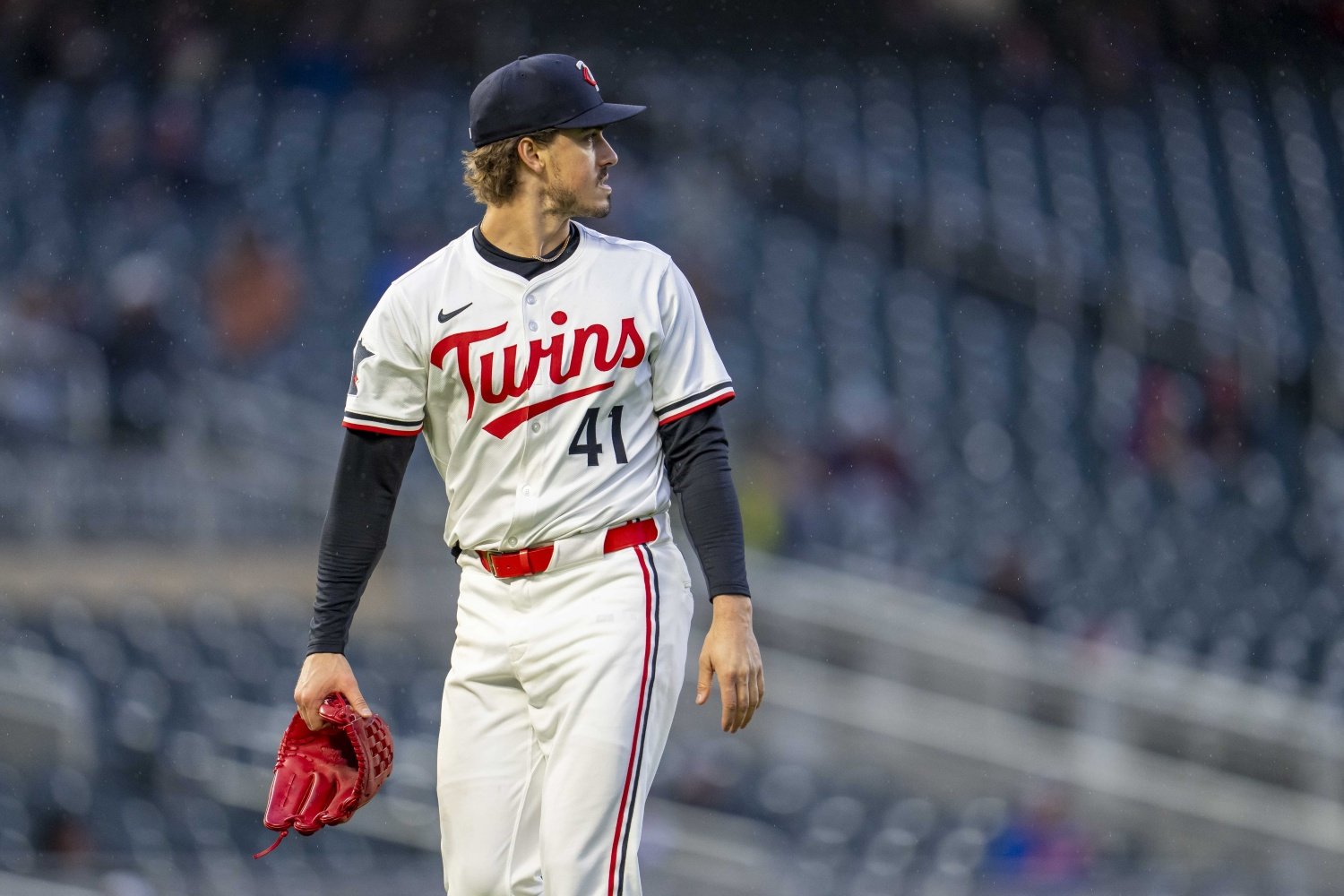 Box Score SP: Joe Ryan: 5.0 IP, 3 H, 1 ER, 2 BB, 8 K (101 pitches, 65 strikes (64.4%) Home Runs: N/A Bottom 3 WPA: Justin Topa (-0.251), Jorge Alcala (-0.111), Byron Buxton (-0.106) Win Probability Chart (via FanGraphs) The Minnesota Twins finally put together a complete game to close out their series and get a win against division rival Detroit Tigers. They welcomed the New York Mets to Target Field Monday to build on that momentum. A cold, windy, did I say windy Target Field? Joe Ryan Strikes Out Eight As the Twins looked to build on Sunday’s win, Joe Ryan also took the mound looking to build on his last outing, against the Royals. In that start, Ryan completed seven innings, struck out four batters, and held the Royals scoreless. Ryan’s first inning Monday was also scoreless, but set the righthander up in a hole. He had to spend 27 pitches to get through the inning after allowing a double to Fransisco Lindor and a walk to Pete Alonso. Coming out of the first, there was good reason to question how the start would go. Ryan rebounded well, though, and only really had a third-inning series of events to hang his head about. In that frame, Luisangel Acuña walked as the ninth hitter. He used his speed to steal second base, putting him in place to score on a Pete Alonso single. The elongated first inning did limit Ryan to five innings pitched, but he kept them very much in it over 101 pitches. The Acuña run was the only run allowed by Ryan, while he struck out eight Mets batters. Twins Runs With Ryan heading out of the game, the Twins were able to put together a little rally of base activity of their own. Ironically, most of it centered around walks. Trevor Larnach walked, Ty France was hit by a pitch, and Brooks Lee also walked. That set up a Christian Vázquez sacrifice fly. That would be all the Twins could muster, though, leaving the inning with the game tied at 1-1 after five innings. Pitcher Fielding Errors Bury Them Again The glimpse of hope didn’t last long for the Twins. With Justin Topa in the game as the first arm out of the bullpen, Alonso singled, and Mark Vientos doubled to score a run. The maddening part of the inning came as Vientos also would come around to score, due to another throwing error by a Twins pitcher. Obviously, this time, Topa made the mistake, airmailing a throw in an attempt to retire Luis Torrens. The seventh inning became "second verse, same as the first," in too many ways. Jorge Alcala took the mound and promptly committed his own throwing error, as he tried fielding an Acuña bunt but ended up putting the speedy second baseman on second base again. That set the stage for the heart of the Mets lineup, and Juan Soto, who had been held in check, would no longer be. Soto took Alcala deep to right-center to stretch the lead to 5-1 in favor of the visiting team. Christian Vázquez Exits in Ninth Catcher Vázquez was hit on the hand by a foul ball with Tyrone Taylor up to bat in the final frame. The cold weather certainly didn’t help with how that would have felt. Vázquez exited the game and was replaced by Mickey Gasper to finish things off. Ryan did plenty in setting the Twins up to win the game. Once again, the bullpen failed to hold off the opposing offense from there, in large part due to the fielding issues. The bats also did not come through, and that bases-loaded fifth-inning situation will haunt the Twins into the twilight. What’s Next? The Twins need to find a win again, and find it quickly. Bailey Ober will be tasked with that duty. Ober looked strong in his third outing of the young season, and the Twins will lean on him to start a winning streak. The Mets will counter with righthander Tylor Megill, who comes to Target Field with a minuscule 0.63 ERA over 14 ⅓ innings. The Twins bats will be challenged once again. Postgame Interviews Bullpen Usage Spreadsheet MON FRI SAT SUN SUN TOT Funderburk 0 0 43 0 36 79 Topa 0 37 0 0 21 58 Alcalá 0 23 10 0 18 51 Sands 24 0 0 17 0 41 Varland 18 0 0 12 0 30 Durán 0 0 12 10 0 22 Jax 0 0 0 17 0 17 Coulombe 4 6 0 0 0 10
- 76 comments
-
- 4
-
-

-
- joe ryan
- christian vazquez
- (and 1 more)
-
What Happened in Chris Paddack's First Start?
Nate Palmer replied to Nate Palmer's topic in Twins Daily Front Page News
He does have a pretty good changeup. -
Chris Paddack's first start was one to forget, but is there something we can learn from it? There may be some encouraging signs for the veteran right-hander. Image courtesy of © Matt Marton-Imagn Images The opening week for Minnesota Twins baseball has been frustrating, to say the least. Chris Paddack's first start was potentially the height of frustration or, dare we say, embarrassment in that stretch. His start resulted in nine runs from a White Sox team that was historically bad last season. Paddack's status has been in question for much of the offseason, and it's possible he is simply keeping his rotation spot warm for a younger pitcher currently in St. Paul. But the veteran has shown flashes of good performance. Is there more of that in Paddack if he is healthy? Is there anything we learned from Paddack in his outing on Monday that might show us a glimpse of something yet to come? Ultimately, it is a tiny sample size, but here are a few observations from Paddack’s first start. Fastball Movement Paddack's arsenal starts with a 4-seam fastball. That was true for his career and Monday, as it made up 49% of his pitches thrown. The difference Monday was that his fastball was getting more upward carry. Movement is usually good when it comes to pitches. Paddack generally likes to throw his fastball high in the zone, so as long as he can keep his 4-seamer flirting with or hitting the strike zone, there is potential that it is a pitch that could generate a few more whiffs than it usually would have. Speaking of swings and misses, Paddack excelled at that on Monday, generating nine swings and misses out of the White Sox lineup. Changeup The changeup has been Paddack’s second most utilized pitch in the past. It has also been his leading pitch when it comes to inducing swinging strikes. For some reason, Paddack supplanted it in favor of his slider. We can turn to the movement chart once again to see potentially why. Paddack didn’t seem to be getting the same movement we are used to seeing from his changeup, which isn’t all bad. The changeup typically would drop toward the ground, creating a similar but opposite movement to the new movement on his fastball. The changeup is now coming from a similar depth as Paddack’s fastball; the worry comes in where there is potentially something in the two deliveries that are not deceiving batters in the way Paddack and the coaching staff hoped it would. Arm Angle While the weather could certainly be a culprit to movement effects, especially for an offspeed pitch like Paddack’s changeup, he also raised his arm slot four degrees from 46 degrees in 2024 to 50 degrees on Monday, which is the exact arm angle that Paddack used in 2022 before Tommy John surgery. That season, Paddack only made it five starts, but in those starts, he produced an 8.06 K/9, 0.81 BB/9, and had already amassed 0.9 fWAR. Returning to his 2022 arm angle won’t necessarily mean we are due for this exact sort of performance from the Sheriff. He has lost around two mph since then, but it seems to signal an attempt to recapture something old from 2022. This different arm angle could create a different or better ability to get vertical movement on pitches like the fastball. That more vertical angle, while positive for the fastball, could have created a loss in feel or confidence for his slider, Paddack’s horizontally moving pitch. While Paddack hasn’t used his slider in large amounts when facing left-handers, he completely abandoned it on Monday, according to Statcast data. In fact, he did the same with his curveball. It's not clear if the weather or an adjustment in his arm slot made it harder for Paddack to get the feel he would like for those pitches. What happened then was that Paddack became a two-pitch pitcher when facing a lefty, and one of them, Andrew Benintendi, was able to take advantage of that by taking a changeup to right field for a home run. If Paddack is going to succeed in 2025, he will need to find confidence in a third pitch or else left-handed hitters will be able to key in on one pitch, especially over multiple at-bats in a start. If Paddack tries to include his slider again when facing left-handed hitters, he may need to change how he locates his fastball. The Twins starter spent most of his first start throwing his fastball to his glove side or inside to left-handed hitters. Paddack's approach from Monday does set up his changeup well. If Paddack were more willing to throw his fastball to his arm side, it would set up his slider more. Unfortunately, such a change would likely expose or make his changeup less effective, so using the third pitch is even more important. Monday’s plan made him very predictable and Paddack needs to figure out how to work on another pitch. Paddack has been one of the more frustrating pitchers since he was acquired. Once again, there is plenty of potential for something good to happen with Paddack. Will he be able to put it together is the real question. View full article
-
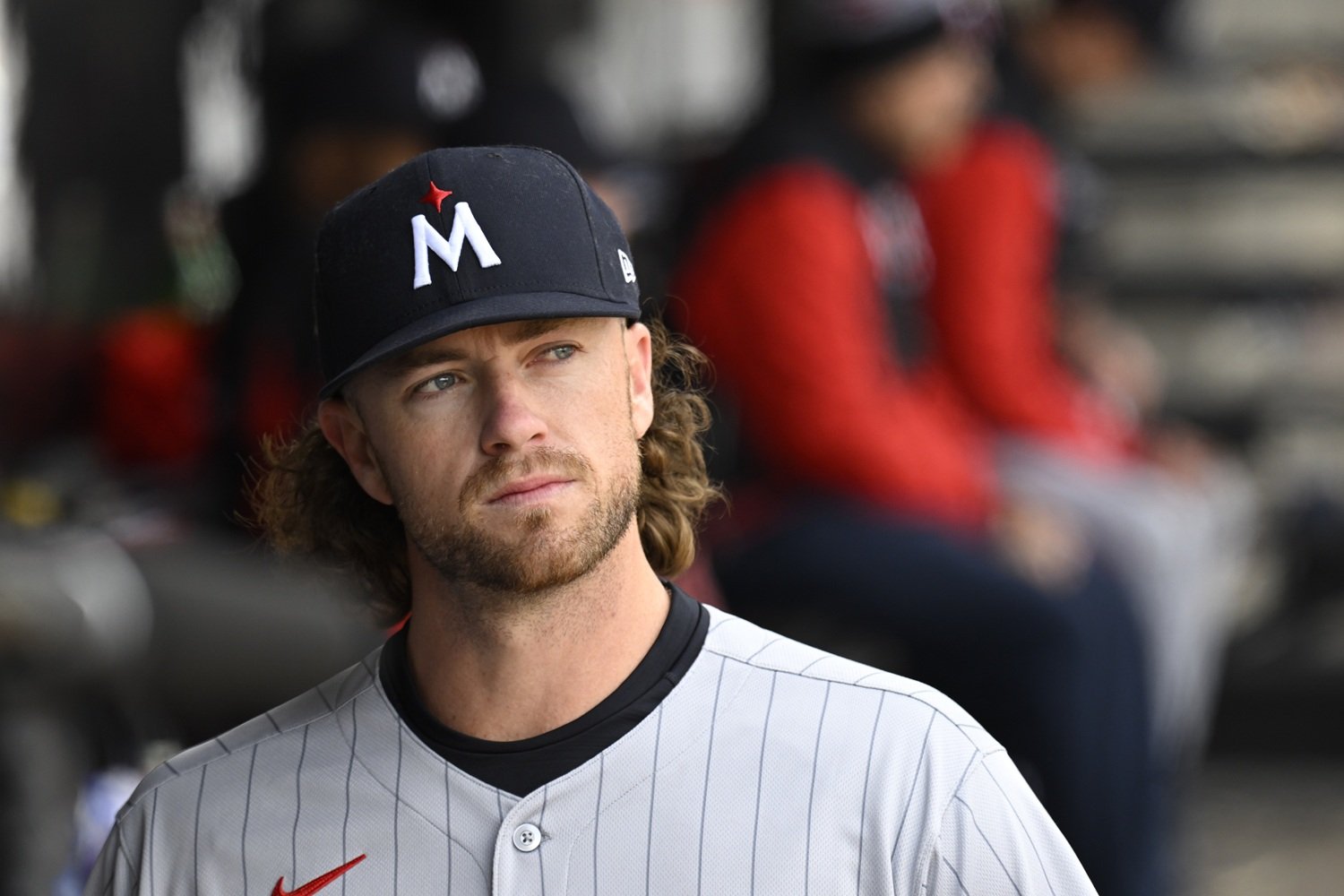 The opening week for Minnesota Twins baseball has been frustrating, to say the least. Chris Paddack's first start was potentially the height of frustration or, dare we say, embarrassment in that stretch. His start resulted in nine runs from a White Sox team that was historically bad last season. Paddack's status has been in question for much of the offseason, and it's possible he is simply keeping his rotation spot warm for a younger pitcher currently in St. Paul. But the veteran has shown flashes of good performance. Is there more of that in Paddack if he is healthy? Is there anything we learned from Paddack in his outing on Monday that might show us a glimpse of something yet to come? Ultimately, it is a tiny sample size, but here are a few observations from Paddack’s first start. Fastball Movement Paddack's arsenal starts with a 4-seam fastball. That was true for his career and Monday, as it made up 49% of his pitches thrown. The difference Monday was that his fastball was getting more upward carry. Movement is usually good when it comes to pitches. Paddack generally likes to throw his fastball high in the zone, so as long as he can keep his 4-seamer flirting with or hitting the strike zone, there is potential that it is a pitch that could generate a few more whiffs than it usually would have. Speaking of swings and misses, Paddack excelled at that on Monday, generating nine swings and misses out of the White Sox lineup. Changeup The changeup has been Paddack’s second most utilized pitch in the past. It has also been his leading pitch when it comes to inducing swinging strikes. For some reason, Paddack supplanted it in favor of his slider. We can turn to the movement chart once again to see potentially why. Paddack didn’t seem to be getting the same movement we are used to seeing from his changeup, which isn’t all bad. The changeup typically would drop toward the ground, creating a similar but opposite movement to the new movement on his fastball. The changeup is now coming from a similar depth as Paddack’s fastball; the worry comes in where there is potentially something in the two deliveries that are not deceiving batters in the way Paddack and the coaching staff hoped it would. Arm Angle While the weather could certainly be a culprit to movement effects, especially for an offspeed pitch like Paddack’s changeup, he also raised his arm slot four degrees from 46 degrees in 2024 to 50 degrees on Monday, which is the exact arm angle that Paddack used in 2022 before Tommy John surgery. That season, Paddack only made it five starts, but in those starts, he produced an 8.06 K/9, 0.81 BB/9, and had already amassed 0.9 fWAR. Returning to his 2022 arm angle won’t necessarily mean we are due for this exact sort of performance from the Sheriff. He has lost around two mph since then, but it seems to signal an attempt to recapture something old from 2022. This different arm angle could create a different or better ability to get vertical movement on pitches like the fastball. That more vertical angle, while positive for the fastball, could have created a loss in feel or confidence for his slider, Paddack’s horizontally moving pitch. While Paddack hasn’t used his slider in large amounts when facing left-handers, he completely abandoned it on Monday, according to Statcast data. In fact, he did the same with his curveball. It's not clear if the weather or an adjustment in his arm slot made it harder for Paddack to get the feel he would like for those pitches. What happened then was that Paddack became a two-pitch pitcher when facing a lefty, and one of them, Andrew Benintendi, was able to take advantage of that by taking a changeup to right field for a home run. If Paddack is going to succeed in 2025, he will need to find confidence in a third pitch or else left-handed hitters will be able to key in on one pitch, especially over multiple at-bats in a start. If Paddack tries to include his slider again when facing left-handed hitters, he may need to change how he locates his fastball. The Twins starter spent most of his first start throwing his fastball to his glove side or inside to left-handed hitters. Paddack's approach from Monday does set up his changeup well. If Paddack were more willing to throw his fastball to his arm side, it would set up his slider more. Unfortunately, such a change would likely expose or make his changeup less effective, so using the third pitch is even more important. Monday’s plan made him very predictable and Paddack needs to figure out how to work on another pitch. Paddack has been one of the more frustrating pitchers since he was acquired. Once again, there is plenty of potential for something good to happen with Paddack. Will he be able to put it together is the real question.
 -
The Minnesota Twins completed a baseball game on Monday. Like most of the season thus far, it was another day where very little went right for Minnesota. Image courtesy of © Matt Marton-Imagn Images Box Score SP: Chris Paddack: 3.1 IP, 6 H, 9 ER, 4 BB, 2 K (89 pitches, 54 strikes (60.6%) Home Runs: N/A Bottom 3 WPA: Chris Paddack (-0.388), Byron Buxton (-0.022), Ty France (-0.020) Win Probability Chart (via FanGraphs) The Minnesota Twins headed into Monday’s contest with the Chicago White Sox with the need to wipe a bad taste from their mouths. After being swept by the St. Louis Cardinals, the White Sox had to be exactly what the doctor ordered, right? Right?? It wasn’t—unless that order was for an unpleasant experience. When the Twins needed their starter Chris Paddack to find the form he had before his second Tommy John surgery (or the way he was out of the bullpen in the 2023 playoffs), the starter brought quite the opposite to the mound. The bats moved quickly for the White Sox in the first two innings, as Andrew Vaughn and Andrew Benintendi hit three-run home runs. Paddack became the second straight Twins starter (after Bailey Ober, Sunday) to give up two three-run jolts in one game. As was mentioned on the TV broadcast, the Twins reached a mark of trailing they never found themselves at during the 2024 campaign, trailing by more than three runs to the White Sox. After the third inning, Rocco Baldelli removed both Carlos Correa and Byron Buxton from the lineup. That was a new layer of disappointment. With only one hit on the season between the duo, it is a defeating move when, as a fan, you want your team to show some fight. Then again, whatever fight Buxton and Correa are bringing to the field hasn’t produced anything to this point in 2025. Edouard Julien and DaShawn Keirsey Jr. were instead given a chance to spark the offense. Darren McCaughan Debut In games that go sideways like Monday's, the only silver lining is that fans are sometimes treated to seeing a new player. That man this time was Darren McCaughan, who was brought in after Randy Dobnak was sent out after Sunday’s outing. McCaughan would throw 2 ⅔ innings in relief, allowing one hit and striking out two in his Twins debut. It may feel like a modest outing, but it is another bullpen-saving type of outing that the Twins need too often early this season. Martin Perez No-Hit Bid Not only did the Twins' starter get knocked around for nine runs, but White Sox starter Martin Perez looked like an ace when he was toeing the rubber. Perez was so good that he left the game without allowing a hit. After six innings, Perez left the game with the only blemishes being three walks and a hit batter—and with nine strikeouts to boast about. It would take Perez’s exit for the Twins to record their first hit. That came off the hot bat of Willi Castro with Mike Vasil on the mound for the White Sox. Justin Topa Solid If there is anything to take away from the game Monday as a positive, it was Justin Topa’s outing. Topa was able to come in for one inning and while he did give up a walk. He also induced Matt Thaiss into a great swinging strikeout. What’s Next? The Twins will again go for their first win of the season on Tuesday. Simeon Woods-Richardson was a savior to the rotation in 2024, and will look to save the Twins from an 0-5 start in 2025. The White Sox are scheduled to send right-hander Shane Smith, who will be making his MLB debut. Chicago selected Smith in the Rule 5 Draft from the Milwaukee Brewers. Postgame Interviews Bullpen Usage Spreadsheet WED THU FRI SAT SUN MON TOT Topa 0 17 0 8 0 19 44 Varland 0 12 0 23 0 0 35 McCaughan 0 0 0 0 0 31 31 Durán 0 0 0 24 0 0 24 Jax 0 21 0 0 0 0 21 Coulombe 0 0 0 16 0 0 16 Sands 0 14 0 0 0 0 14 Alcalá 0 0 0 12 0 0 12 View full article
-
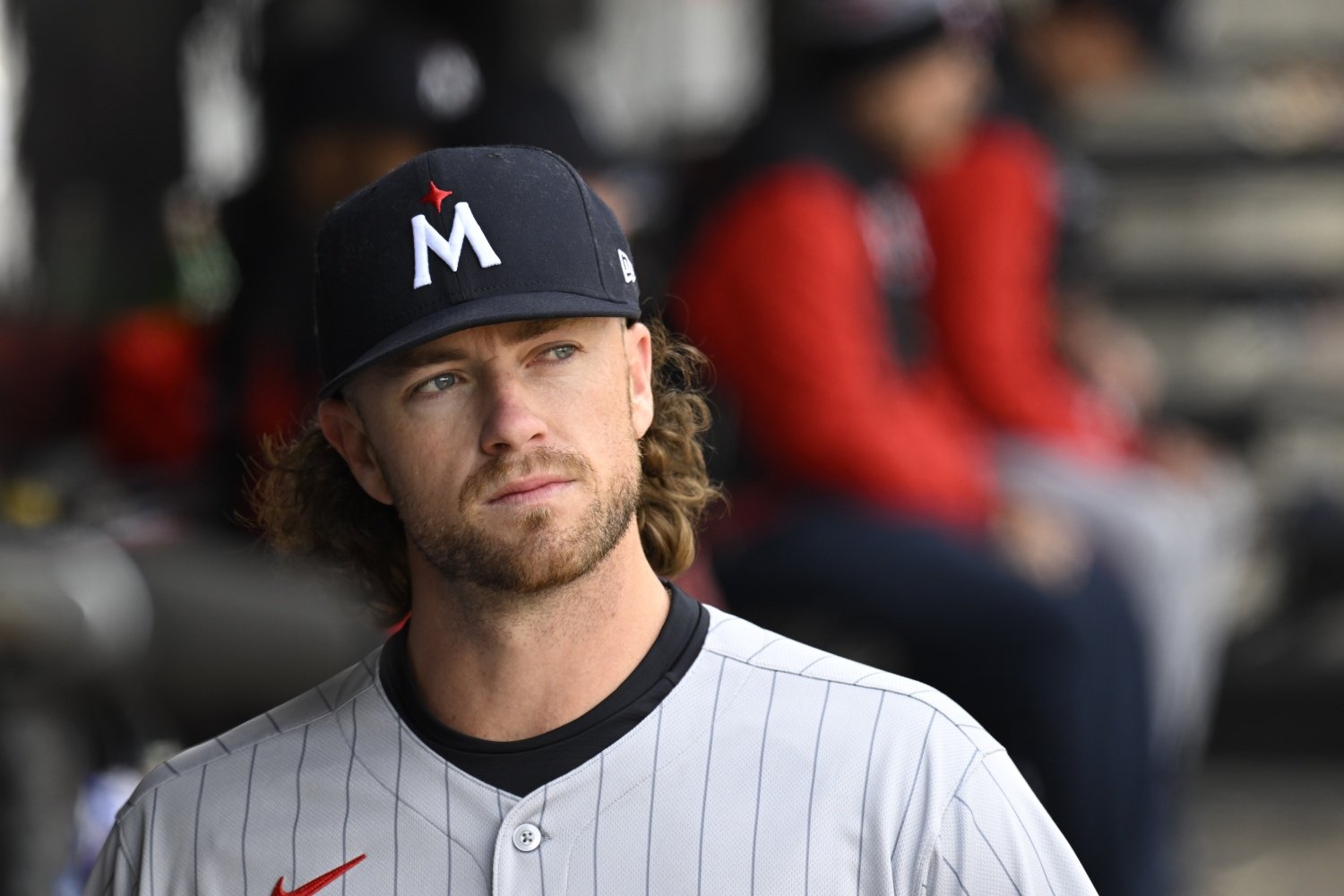 Box Score SP: Chris Paddack: 3.1 IP, 6 H, 9 ER, 4 BB, 2 K (89 pitches, 54 strikes (60.6%) Home Runs: N/A Bottom 3 WPA: Chris Paddack (-0.388), Byron Buxton (-0.022), Ty France (-0.020) Win Probability Chart (via FanGraphs) The Minnesota Twins headed into Monday’s contest with the Chicago White Sox with the need to wipe a bad taste from their mouths. After being swept by the St. Louis Cardinals, the White Sox had to be exactly what the doctor ordered, right? Right?? It wasn’t—unless that order was for an unpleasant experience. When the Twins needed their starter Chris Paddack to find the form he had before his second Tommy John surgery (or the way he was out of the bullpen in the 2023 playoffs), the starter brought quite the opposite to the mound. The bats moved quickly for the White Sox in the first two innings, as Andrew Vaughn and Andrew Benintendi hit three-run home runs. Paddack became the second straight Twins starter (after Bailey Ober, Sunday) to give up two three-run jolts in one game. As was mentioned on the TV broadcast, the Twins reached a mark of trailing they never found themselves at during the 2024 campaign, trailing by more than three runs to the White Sox. After the third inning, Rocco Baldelli removed both Carlos Correa and Byron Buxton from the lineup. That was a new layer of disappointment. With only one hit on the season between the duo, it is a defeating move when, as a fan, you want your team to show some fight. Then again, whatever fight Buxton and Correa are bringing to the field hasn’t produced anything to this point in 2025. Edouard Julien and DaShawn Keirsey Jr. were instead given a chance to spark the offense. Darren McCaughan Debut In games that go sideways like Monday's, the only silver lining is that fans are sometimes treated to seeing a new player. That man this time was Darren McCaughan, who was brought in after Randy Dobnak was sent out after Sunday’s outing. McCaughan would throw 2 ⅔ innings in relief, allowing one hit and striking out two in his Twins debut. It may feel like a modest outing, but it is another bullpen-saving type of outing that the Twins need too often early this season. Martin Perez No-Hit Bid Not only did the Twins' starter get knocked around for nine runs, but White Sox starter Martin Perez looked like an ace when he was toeing the rubber. Perez was so good that he left the game without allowing a hit. After six innings, Perez left the game with the only blemishes being three walks and a hit batter—and with nine strikeouts to boast about. It would take Perez’s exit for the Twins to record their first hit. That came off the hot bat of Willi Castro with Mike Vasil on the mound for the White Sox. Justin Topa Solid If there is anything to take away from the game Monday as a positive, it was Justin Topa’s outing. Topa was able to come in for one inning and while he did give up a walk. He also induced Matt Thaiss into a great swinging strikeout. What’s Next? The Twins will again go for their first win of the season on Tuesday. Simeon Woods-Richardson was a savior to the rotation in 2024, and will look to save the Twins from an 0-5 start in 2025. The White Sox are scheduled to send right-hander Shane Smith, who will be making his MLB debut. Chicago selected Smith in the Rule 5 Draft from the Milwaukee Brewers. Postgame Interviews Bullpen Usage Spreadsheet WED THU FRI SAT SUN MON TOT Topa 0 17 0 8 0 19 44 Varland 0 12 0 23 0 0 35 McCaughan 0 0 0 0 0 31 31 Durán 0 0 0 24 0 0 24 Jax 0 21 0 0 0 0 21 Coulombe 0 0 0 16 0 0 16 Sands 0 14 0 0 0 0 14 Alcalá 0 0 0 12 0 0 12
 -
Can Byron Buxton Realistically Retire as a Member of the Minnesota Twins?
Nate Palmer posted an article in Twins
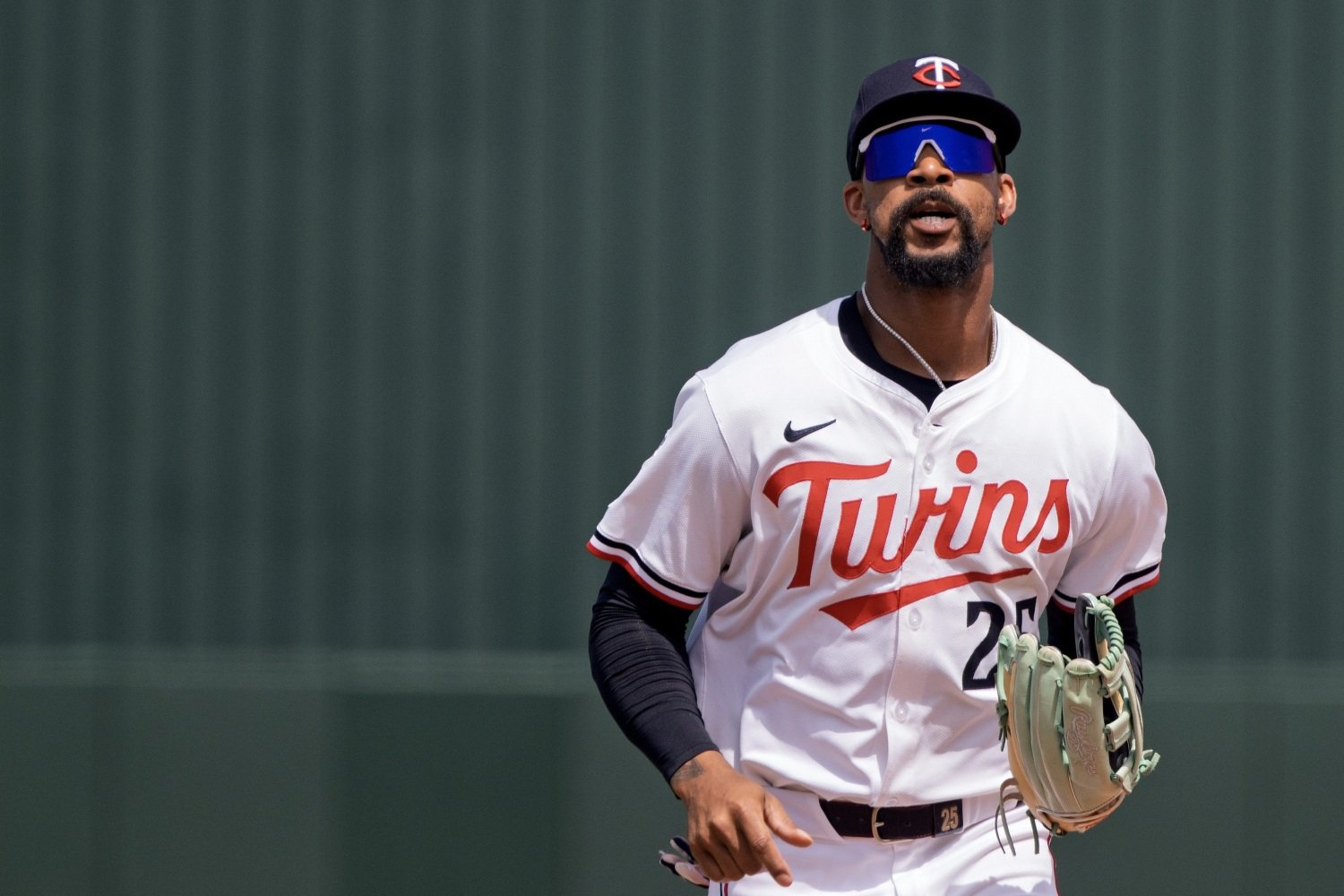 Recently, Minnesota Twins center fielder Byron Buxton indicated that he would like to finish his career as a Twin. This is a pretty common sentiment from players who were drafted by and played the whole of their career with the same major-league club. Such outward loyalty is often celebrated by fanbases, but we know it gets complicated when evaluating Buxton in Twins Territory. Buxton is under his current contract through the 2028 season, when he will be 34 years old. He holds a full no-trade clause, so if he wants to play in Minnesota, he is in full control of that until the contract is complete. If Buxton wishes to continue playing at age 35 and beyond, however, the question becomes: What sort of player will he need to be for the Twins to want to sign him again? Up to this point, Buxton has been a polarizing player, as injuries have severely limited his playing time. With that in view, Buxton was able to play in 102 games in 2024. He was second on the team in fWAR (3.7) and third in WPA (1.76). There is no doubt that when he is healthy and on the field, he makes a significant impact. He has five seasons with a fWAR above 3.0, even though only two seasons have seen Buxton play more than 100 games. The value is clearly there, which has engendered patience on the part of the Twins. They're hoping to catch enough healthy games from Buxton to push the team toward playoff success in any given year. As the speedy center fielder ages, three areas will come into focus as evaluation tools when it comes to the viability of a contract for that age-35 season: health, athleticism, and defense. Health This is an obvious area of concern, but will only magnify as Buxton ages. Father Time is undefeated, and our bones, tendons, and muscles only become more cranky and slower to heal as we age. If the Twins and Buxton have found a formula that can keep Buxton on the field for over 100 games per year, that could be a likely step toward this box being checked. Alas, it's more likely the Twins will need to see if they can come to a contract sweet spot with Buxton where any of his potential missed time won’t tie up too much of their resources. New ownership does have the potential to bring about a different financial reality. Traditionally, though, the Twins haven’t had enough resources to want to risk it sitting in the training room for large chunks of the season. Athleticism As will become evident, these three areas bleed together to some extent. As health is in question and age continues to creep in, every human's athleticism takes a hit. For some athletes, it's less impactful than for others. For Buxton, a player whose speed and ability to move creates much of his impact on the field, it may become a drag on his value into his thirties. One area that we may not think of immediately is Buxton’s bat speed. This is an area that Jamie Cameron covered at length, and two things pop up about Buxton. First, right now his bat speed is very good. Secondly, he is right at the age where we see that drop off dramatically. Buxton’s sprint speed is another area to watch as he ages. Since his rookie season, he has lost about a foot per second in speed. While that isn’t good, he still ranked as the 20th-fastest player in the league last season. Obviously, he will no longer be holding that number one spot like he had early on in his career, but he is still very fast when he can let loose. For as long as that remains true, he seems likely to retain most of his value as a defender in center field. That leads us to the final area of evaluation… Defense As Buxton continues through the later part of his career, the question of where he will play comes into full view. At what point will the Twins decide it is best to move him to a corner outfield spot, as the Angels are doing this season with Mike Trout? Buxton is still just 31, whereas Trout will turn 34 in August, but the wear and tear is similar. Former Twins star outfielder Torii Hunter made the same transition at age 35. What is hard about this switch is that each of these players derived so much of their value from being able to play a premier up-the-middle defensive position that the value-vs.-expense conversation becomes very real, very quickly once that change happens. That was evident in Hunter’s subsequent contracts. He went from making $18 million with the Angels to $12 and $14 million in the next contract with the Tigers. Then, finally, he got $10.5 million with the Twins in 2015, at age 39. As both Trout and Buxton will find out, the big difference between themselves and Hunter is that the elder player regularly played the majority of a season even as he aged. The inability to do that over the last few years is exactly why the Angels are making the move for Trout this season, and it would likely be the reason the Twins would consider such a change. If Buxton can fully get over the hurdle of being both healthy and available, he most certainly has the bat skills to transfer to a corner position and still be worth a contract similar to what he is currently making. Last season’s .859 OPS and 137 OPS+ are evidence of that. If, as evidence seems to indicate, Buxton’s bat speed does decrease with age, it may take a reinvention at the plate to sustain his production. As that happens, Buxton will also be fighting off external pressures, as the Twins could still be a team that operates with limited resources (in comparison to other clubs) under new ownership. There are a host of younger outfielders lining up behind him in the Twins system. While Buxton having the same durability as Hunter is unlikely. Buxton will need to build on his 102 games played in 2024 to make it make sense for the Twins to sign him as he turns 35 and not turn the reins over to a younger, more affordable player. By no means is Buxton finishing his career with the Twins with one final contract an insane idea. It just depends on whether the club can feel comfortable with how he adjusts on the field to the aging of his body. Where do you see Buxton’s career arc finishing? Let us know below.
 -
Byron Buxton recently told Phil Miller he wants to finish his career as a Twin. What version of Buxton needs to exist as he ages for that dream to become reality? Recently Minnesota Twins center fielder Byron Buxton made the comment to Phil Miller of the Star Tribune that he would like to finish his career as a Twin. This is a pretty common sentiment from players who were drafted by and played the whole of their career with the same MLB club. This sort of statement is often celebrated by fanbases, but we know it gets complicated when evaluating Buxton in Twins Territory. Buxton is under his current contract through the 2028 season when he will be 34 years old. Buxton also holds a full no-trade clause with his contract, so if he wants to play in Minnesota he is in full control of that until the contract is complete. If Buxton wishes to continue playing at age 35, the question becomes what sort of player will he need to be in order for the Twins to want to sign him to another contract? Up to this point in his career Buxton has been a polarizing player as injuries have severely limited his playing time. With that in view, Buxton was able to play in 102 games in 2024 in which he was second on the team in fWAR (3.7) and third in WPA (1.76). There is no doubt that when he is healthy and on the field he makes a significant impact. Evidenced by his five seasons posting a fWAR above 3 even though only two seasons have seen Buxton play more than 100 games. The value is clearly there which has produced patience on the part of the Twins hoping to catch enough healthy games from Buxton to push the team towards playoff success. As the speedy center fielder ages three areas will come into focus as evaluation tools when it comes to the viability of a contract for that age 35 season: health, athleticism, and defense. Health This is an obvious area of concern, but will only magnify as Buxton ages. Mother time is undefeated and our bones, tendons, and muscles only become more cranky and slower to heal as we age. If the Twins and Buxton have found a formula of success that can keep Buxton on the field for over 100 games that could be a likely step toward this box being checked. Likely the Twins will need to see if they can come to a contract sweet spot with Buxton where any of his potential missed time won’t tie up too much of the Twins resources. New ownership does have the potential to bring about a different financial reality. Traditionally the Twins haven’t had enough resources to want to risk it sitting in the training room for large chunks of the season. Athleticism As will become evident, to some extent these three areas bleed together. As health is in question and age continues to creep in, every human's athleticism takes a hit. For some athletes it is less impactful than others. For Buxton, a player whose speed and ability to move creates much of his impact on the field, it may dictate a lot of his value into his thirties. One area that we may not think of immediately is Buxton’s bat speed. This is an area that Jamie Cameron covered at length and two things pop up about Buxton. First, right now his bat speed is very good among baseball players. Secondly, he is right at the age where we see that drop off dramatically. Buxton’s sprint speed is another area to watch as he ages. Since his rookie season he has lost about a foot per second in speed. While that isn’t good he still ranked as the 20th fastest in the league last season. It is obvious he will no longer be holding that number one spot like he had early on in his career, but he is still very fast when he can let loose. That leads us to the final area of evaluation… Defense As Buxton continues through the later part of his career the question of where he will play comes into full view. At what point will the Twins decide it is best to move him to a corner outfield spot much like the Angels are doing this season with Mike Trout who will turn 34 this season. Former Twins star outfielder Torii Hunter similarly made the same transition at age 35. What is hard about this switch is that each of these players derive so much of their value from being able to play a premier up the middle defensive position that the value vs. expense conversation becomes very real, very quickly once that change happens. That was evident in Hunter’s subsequent contracts. He went from making $18 million with the Angels to $12 and $14 million in the next contract with the Tigers. Then finally $10.5 million with the Twins in 2015 at age 39. As both Trout and Buxton will find out, the big difference between themselves and Hunter is that Torii was regularly playing the majority of a season even as he aged. Which is exactly why the Angels are making the move for Trout this season and it would likely be the reason the Twins would consider such a change. If Buxton can fully get over the hurdle of being both healthy and available, he most certainly has the bat skills to transfer to a corner position and still be worth paying a contract similar to what he is currently making. Last season’s .859 OPS and 137 OPS+ are evidence of that. If, as evidence seems to indicate from earlier, Buxton’s bat speed does decrease with age it may take reinventing of his approach at the plate to keep his production. As that happens, Buxton will also be fighting off external pressures as the Twins could still be a team that operates with limited resources in comparison to other clubs. Even under new ownership. Not to mention, there are a host of younger outfielders lining up behind him in the Twins system. While Buxton having the same durability as Hunter is unlikely. Buxton will need to build on his 102 games played in 2024 in order to make it make sense for the Twins to sign him as he turns 35 and not turn the reins over to a younger and likely more affordable player. By no means is Buxton finishing his career with the Twins with one final contract an insane idea either. If the club can feel comfortable with how he adjusts on the field to the aging of his body. Where do you see Buxton’s career arc finishing? Let us know below. View full article
-
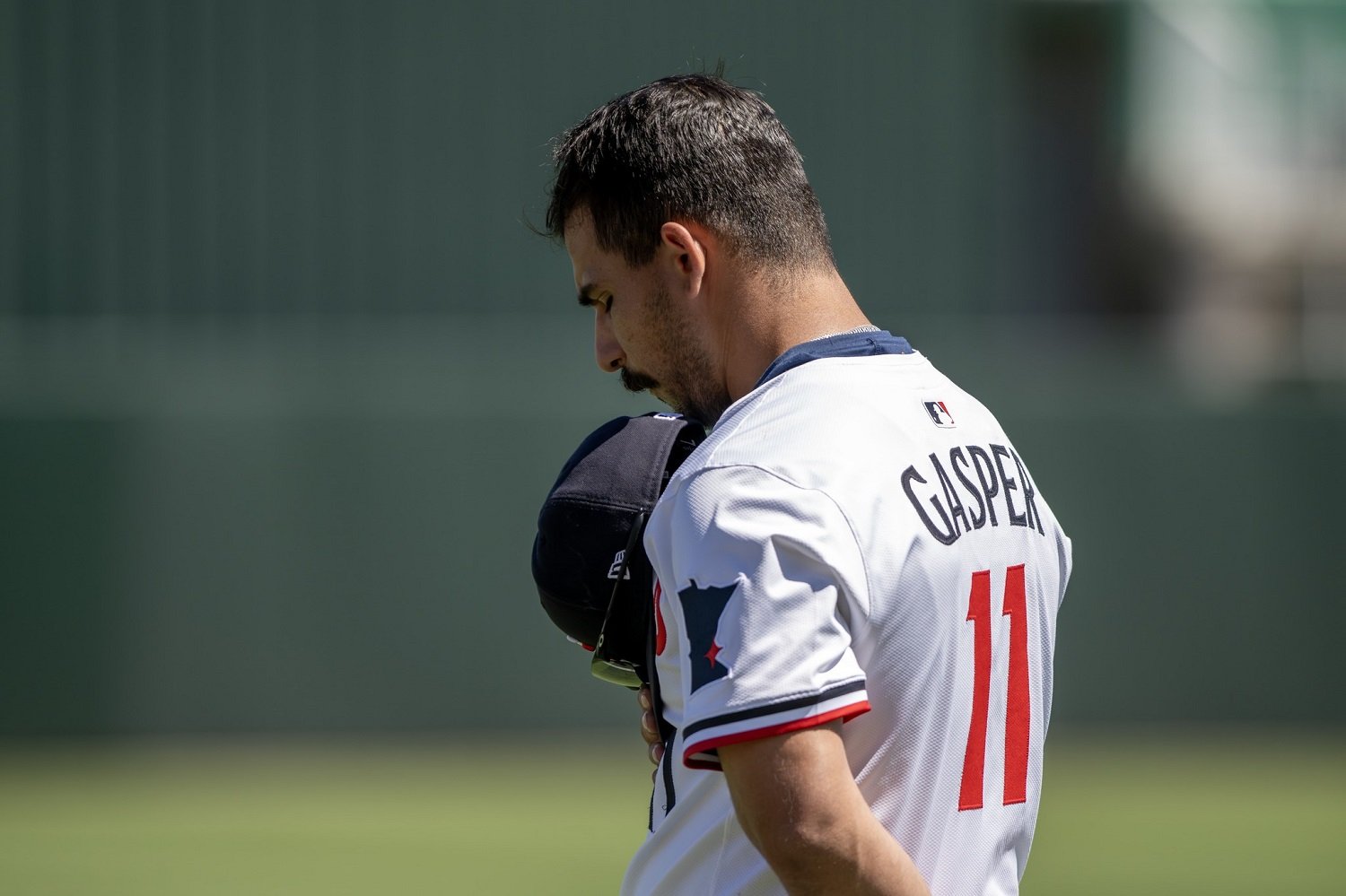 Once upon a time, a legend among legends lived in Twins territory. A man who transcended time and space and popularity. A man for whom memes and merchandise were manufactured. Fans referred to that man as “La Tortuga.” The scorecard referred to him as Willians Astudillo. Astudillo was a fun player to watch, and he also had video game numbers in the minors regarding his strikeout and walk rates. While he could play all over the diamond, including catcher, we could never quite figure out if we wanted him playing anywhere. Regardless, in the middle of the 2018 season, Astudillo was one fun player to watch. As 2025 spring training plays out, the Twins may have another similarly fun player to watch. While it will be hard to match Astudillo’s hair and hustle, Mickey Gasper seems to be the current Twin with the closest possibility. Both players are of short stature for a major-leaguer. Both aren’t exactly rocking six-pack abs either. Both players have been able to pick up several different gloves and hit the ball in the minor leagues in a way that gets them noticed by multiple clubs. Gasper hasn’t put up the same sort of eye-catching numbers as Astudillo, like the aforementioned walk and strikeout rate. Gasper has put together a couple of seasons in the minors where his average has been above .300. He has done so as recently as last season where over two levels (AA and AAA) Gasper had a combined slash line of .328/.440/.531 and an OPS of .970 in 92 games. That performance was enough to get Gasper a cup of coffee with Boston late last season. And those numbers, combined with a hot spring, are getting Gasper similar attention and could land him on the Twins roster. If not Opening Day, at some point in 2025. When that happens, it's natural to envision him becoming the next cult hero to wear a Twins uniform. Astudillo was our hero in a half shell as La Tortuga with his luscious locks flowing behind him as he rounded the bases. While Gasper doesn't have the hair on his head to compete, he may have the facial hair to resurrect the Randy Dobnak silhouette. Maybe even Gasper can become the real-life version of the rally sausage and be the hero at the center of every unbelievable victory. When acquired this offseason, Gasper seemed like a long shot to play any significant role with the Twins. As he has had success this spring and Royce Lewis went down injured once again, the possibility of that has only increased. If or when he does make the roster, Gasper seems like a likely fan favorite, like many of those who have gone before him. So while Carlos Correa, Byron Buxton, and others will compete for statistical team MVP, Gasper seems like the sort of guy who could be the MVP of fan’s hearts.
 -
Minnesota and the Minnesota Twins are good at finding and highlighting the best of cult heroes and personalities. Wally the Beer Man and La Tortuga to name a few. Could Mickey Gasper be next? Image courtesy of William Parmeter Once upon a time, a legend among legends lived in Twins territory. A man who transcended time and space and popularity. A man for whom memes and merchandise were made. Fans referred to that man as “La Tortuga.” The scorecard referred to him as Willians Astudillo. Astudillo was a fun player to watch, and he also had video game numbers in the minors regarding his strikeout and walk rates. While he could play all over the diamond, including catcher, we could never quite figure out if we wanted him playing anywhere. Regardless, in the middle of the 2018 season, Astudillo was one fun player to watch. As 2025 spring training plays out, the Twins may have another similarly fun player to watch. While it will be hard to match Astudillo’s hair and hustle, Mickey Gasper seems to be the current Twin with the closest possibility. Both players are of short stature for a major league player. Both aren’t exactly rocking six-pack abs either. Both players have been able to pick up several different gloves and hit the ball in the minor leagues in a way that gets them noticed by multiple clubs. Gasper hasn’t put up the same sort of eye-catching numbers as Astudillo, like the aforementioned walk and strikeout rate. Gasper has put together a couple of seasons where his average has been above .300. He has done so as recently as last season where over two levels (AA and AAA) Gasper had a combined slash line of .328/.440/.531 and an OPS of .970 in 92 games. That performance was enough to get Gasper a cup of coffee with Boston last season. Last season’s numbers, combined with a hot spring, are getting Gasper similar attention and could land him on the Twins roster. If not, Opening Day at some point in 2025. When that happens, it seems obvious he could be the next cult hero to wear a Twins uniform. Astudillo was our hero in a half shell as La Tortuga with his luscious locks flowing behind him as he rounded the bases. While Gasper doesn't have the hair on his head to compete, he may have the facial hair to resurrect the Randy Dobnak silhouette. Maybe even Gasper can become the real-life version of the rally sausage and be the hero at the center of every unbelievable victory. When acquired this offseason, Gasper seemed like a long shot to play any significant role with the Twins. As he has had success this spring and Royce Lewis went down injured once again, the possibility of that has only increased. If or when he does make the roster, Gasper seems like a likely fan favorite, like many of those who have gone before him. So while Carlos Correa, Byron Buxton, and others will compete for statistical team MVP, Gasper seems like the sort of guy who could be the MVP of fan’s hearts. View full article
-
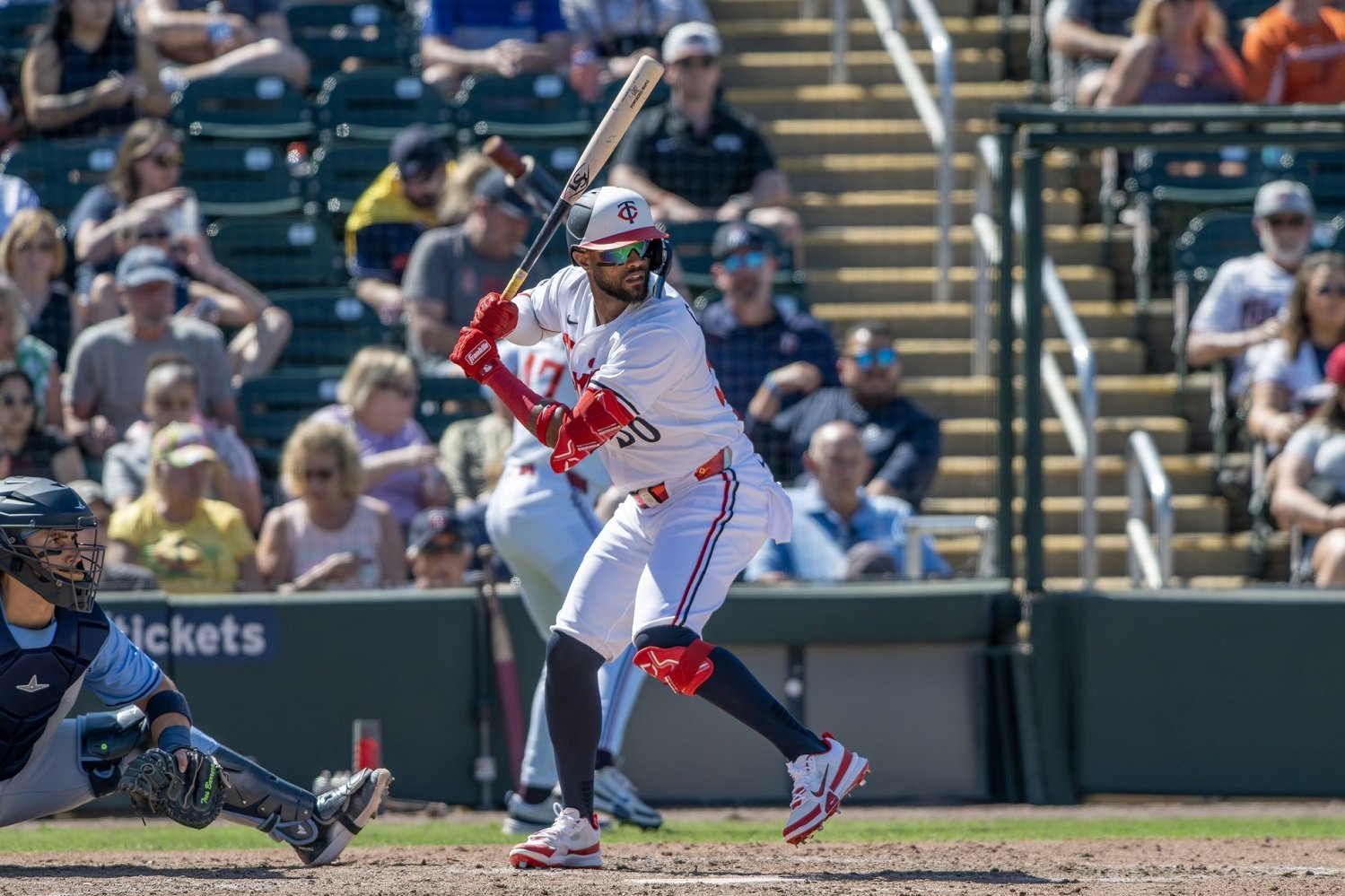 Even though Willi Castro is coming off a season in which he was the Twins' All-Star selection, it has been hard to figure out what we can expect from him in 2025. Trade rumors have swirled around Castro. A lack of early clarity about the team's budget made it hard to gauge whether the team could or would retain him for his final year of team control. Though Castro's tough second half has left him less prominent in the minds of many fans, the way he has been treated by the Twins (most notably that he is still on the roster) suggests that they still view him as an everyday player—and maybe one who moves around less than he did last year. Not only is there a path to that, but we could even ask if that has been the plan all along. While shortstop was Castro’s most frequented position in 2024 (due to Carlos Correa’s injury), the fact the Twins were reportedly interested in a true backup shortstop sends some signal that they don't want him lining up there much this season. The two other positions that Castro played the most, left field and second base, offer ample opportunities for the veteran to see significant time in 2025. If Castro can combine attributes of his offensive output from the 2023 and 2024 seasons, it gets much easier to write him into the lineup every day. In 2023, Castro's base-stealing ability was the stat that stood out. "I would love to," manager Rocco Baldelli told reporters this spring training, when asked if he would like the Twins to steal more bases this season. If Castro recaptures his 2023 rate of attempts or success, he could bring a smile to his manager’s face and playing time for himself. While Castro’s batting numbers in his two seasons with the Twins are very similar overall, his first half in 2024 propelled the 27-year-old to the All-Star game. A consistent ability to produce a slash line of .266/.352/.422, as Castro did for the first half of 2024, would quickly make him a solid second baseman, left fielder, or some combination of the two. It may seem strange to limit Castro to one or two positions, as one of his greatest assets is his ability to line up just about anywhere. That versatility led to his record-setting season last year, in which he started at least 25 games at five different positions. While it is a remarkable ability, he was only in the position to set that record due to key injuries from the Twins. Hopefully, some high-profile teammates will primarily play center field, shortstop, and third base. While the Twins value versatility, we might be erring by assuming that they were ever planning to lean on Castro's so heavily—or that they want to do so again this year. There are some at-bats available at designated hitter, but given the health issues of Correa, Byron Buxton, and Royce Lewis and the defensive limitations of Matt Wallner and Trevor Larnach, Castro will only be a full-time regular if he gets most of his playing time elsewhere. Edouard Julien and Brooks Lee might, for instance, each fail to claim the second-base job. In the outfield, one of Wallner or Larnach might take a step backward, developmentally. (Unfortunately, it would hardly be their first.) It could also mean Harrison Bader wasn’t the veteran right-handed bat the team hoped he would be. Even if everyone performed positively, there could still be a unique path to regular time between those two positions. It would become much trickier, but that would be a good problem. Last year, injuries forced the team to treat Castro like an ace defender at several positions, which isn't realistic or the best way to use him. It probably also resulted in the wear and tear that degraded his production after the All-Star break. Instead, if Castro finds a home at one or both of second base and left field in 2025, the Twins will be sitting pretty—with good health at other spots and the prospect of better season-long production from Castro himself.

