Lucas Seehafer PT
-
Posts
522 -
Joined
-
Last visited
-
Days Won
2
Content Type
Profiles
News
Minnesota Twins Videos
2026 Minnesota Twins Top Prospects Ranking
2022 Minnesota Twins Draft Picks
Minnesota Twins Free Agent & Trade Rumors, Notes, & Tidbits
Guides & Resources
2023 Minnesota Twins Draft Picks
The Minnesota Twins Players Project
2024 Minnesota Twins Draft Picks
2025 Minnesota Twins Draft Pick Tracker
2026 Minnesota Twins Draft Tracker: Picks & Bonuses
Forums
Blogs
Events
Store
Downloads
Gallery
Everything posted by Lucas Seehafer PT
-
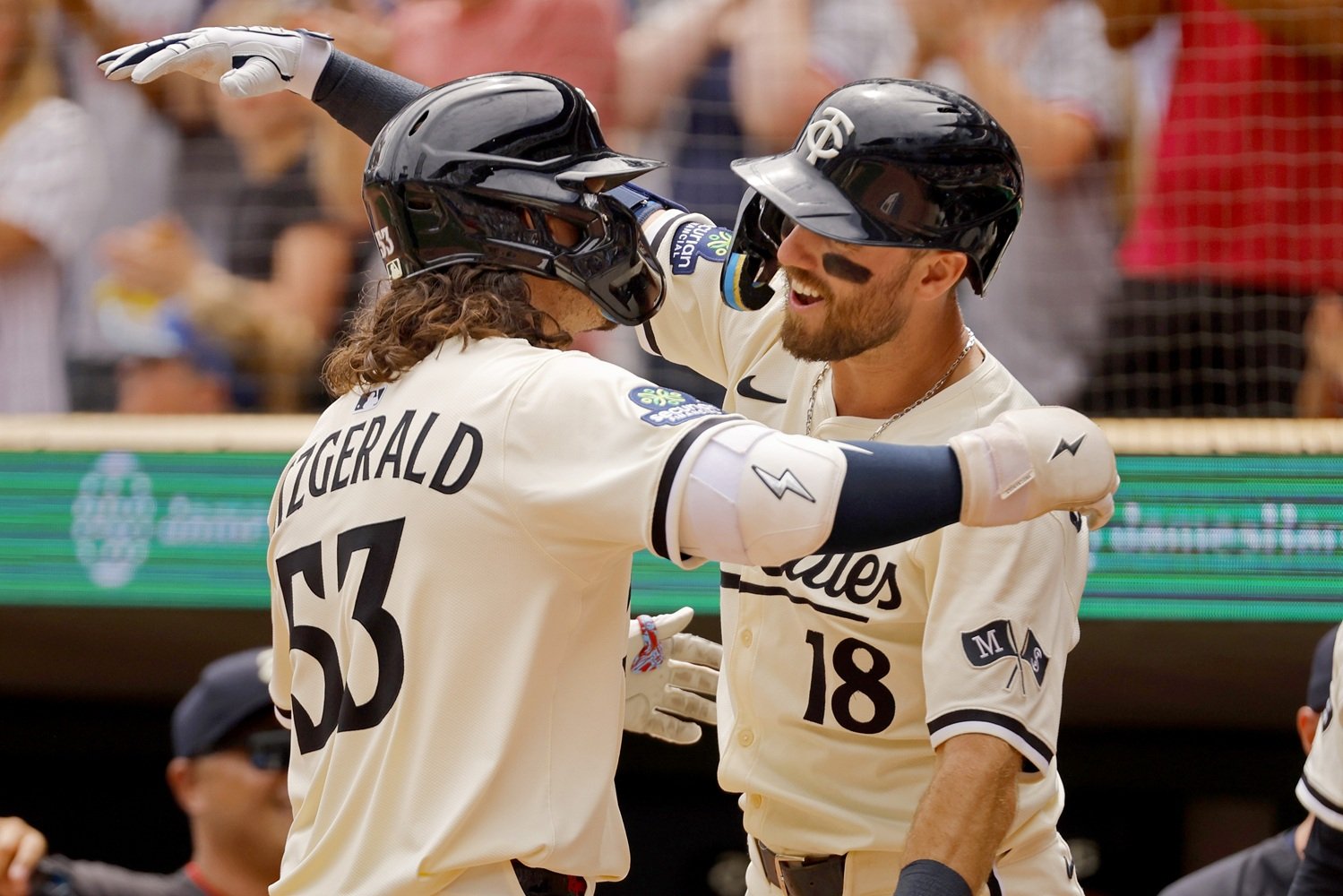
 Image courtesy of © Bruce Kluckhohn-Imagn Images Ryan Fitzgerald is 31 years old and has appeared in nine MLB games. He’s likely not in the Twins’ plans beyond the 2025 campaign, and his days in professional baseball may be numbered. That’s just the reality for a player of Fitzgerald’s ilk. But one doesn’t amass over 400 games at the Triple-A level without having talent or the desire to improve. For Fitzgerald, this desire came to the fore during the 2020 COVID-cancelled minor-league season. “In 2019, I had the highest line-drive percentage of the Statcast Era. I think the next-highest was like Freddie Freeman’s, around 31%. I think I was half a percent higher or something like that. So I was trying to figure out, ‘Ok, I’ve got a below-.700 OPS but I’ve got a really high line-drive rate. What’s going on here?’” said Fitzgerald, who was in the Boston Red Sox organization at the time. “I was like, ‘I’ve gotta add bat speed.’” Bat speed has become one of the hot buzzwords in the baseball lexicon over the last few seasons, due largely to MLB publishing swing data for every MLB player on their hyper-specialized stats site Baseball Savant. However, teams have been tracking bat speed and other swing metrics for quite some time. “I think my average bat speed in games in 2019 was like 68 and change [miles per hour]. Obviously, league average is 71.3, somewhere around there. So going into 2020, I got with a guy named Ryan Johansen, who was at the time one of the hitting coordinators for the [Chicago White Sox]. I was working with him pretty much that whole offseason—all of 2020. Just trying to figure out how I can increase bat speed.” Fitzgerald's swing speed in limited MLB action? 71.3 mph. Nnk5QVlfV0ZRVkV3dEdEUT09X0JnUUFBQVVEQlFjQURsb0NVUUFIVkFOWEFGa0ZCVkFBQlFRQ0FBSU1DVkZVQWdwVQ==.mp4 Swing metrics are one of the many aspects of baseball that successfully marries concepts of physics to the sport. As the sport is largely rotational—one can’t throw a ball or swing a bat without rotating, after all—all of the forces generated by the athletes are technically torques, the rotational equivalent of linear force. However, linear force (F) is familiar and easy enough to understand, so it is often used to explain the benefits of increased bat speed. As Isaac Newton described over 300 years ago, force is equal to the mass (m) of an object multiplied by its acceleration (a); the famous F=ma. Acceleration can further be described as the change of velocity (v) over time (t), morphing the equation to F=m(v/t). So, at its most basic level, force production is directly related to velocity—or in the case of Fitzgerald, swing speed. “[Johansen] put me on a bunch of different programs and kind of got me right,” Fitzgerald said. “I went and got a bat-fitting done, changed my bat. That helped a lot. I was swinging a really small and light bat. I went to a bit longer bat, and slightly heavier; a different model.” By increasing the weight (literally the mass) of his bat, Fitzgerald improved both variables that contribute to force production, m and v/t. The result was a career minor-league OPS of .770, though outside of a poor .704 mark in 127 games in 2022, his numbers regularly landed north of .800. That kept his career viable long enough to eventually bring him all the way to the place players dream of reaching—the majors. But how, exactly, did Fitzgerald go about improving his bat speed? A mix of weight training and bat speed work. “I linked up with a trainer after the 2021 season named Bill Miller, and he got me on a ton more weight room-specific bat speed stuff,” Fitzgerald said. “Ryan Johansen helped me more with my swing and stuff like that in the cage, but then I was able to couple that with Bill’s training. A lot of isometrics. A lot of fast-twitch movements. I mean, we measure pretty much everything I do in the weight room there, so that’s been huge for me.” Measuring force and power output on a regular basis is standard practice at all levels of professional baseball (and increasingly, college and high-school ball, as well). The primary tools used to gather such metrics are force plates. These sensors, which can be embedded under a batter's box or used as isolated above-ground units, can measure force and power data to ridiculously precise degrees. This allows teams to determine an athlete’s strength and power, and develop appropriate training protocols. One metric commonly used by teams is the Dynamic Strength Index, which is determined by finding the relationship between the athlete’s maximal force production during an isometric pull (strength) and a jumping task (power). If the athlete can produce a lot of force but not very quickly, they’d benefit from power training, which emphasizes moving weight quickly. If they can produce force quickly but not very much, they’d benefit from strength training, which is all about producing as much force as possible. For Fitzgerald, he needed to improve his power. “I’ve always said, squatting more weight in the weight room isn’t really gonna help you on the baseball field. If you can get to a certain threshold, I think that’s plenty of strength that you’re gonna need. Developing those Type 2 muscle fibers and those fast-twitch muscles are really what you want to do,” Fitzgerald said. “I’m not concerned about squatting 400 pounds in the weight room; I’d rather move 225 extremely fast. I think that’s gonna play better, in terms of bat speed, athleticism, pretty much everything you need on a baseball field.” (Writer’s note for clarification: Type 2 muscle fibers are often referred to as fast-twitch because, among other things, they contract more quickly than their Type 1 counterparts.) However, not all athletes would benefit from the same approach as Fitzgerald. In fact, it’s possible that he would have seen similar results from squatting 400 pounds. Again, consider the equation F=m(v/t). This formula stipulates that there are three viable ways to increase force production: 1. Increasing m (i.e., squatting 400); 2. Increasing v/t (i.e., moving 225 really fast); or 3. Doing both. The key to developing individual athletes is working together with them to determine their preferred method of training and developing training programs to improve their weaknesses. Johansen and Miller did that expertly with Fitzgerald, and it paid off. Matthew Trueblood contributed reporting to this story. View full article
 -
 Ryan Fitzgerald is 31 years old and has appeared in nine MLB games. He’s likely not in the Twins’ plans beyond the 2025 campaign, and his days in professional baseball may be numbered. That’s just the reality for a player of Fitzgerald’s ilk. But one doesn’t amass over 400 games at the Triple-A level without having talent or the desire to improve. For Fitzgerald, this desire came to the fore during the 2020 COVID-cancelled minor-league season. “In 2019, I had the highest line-drive percentage of the Statcast Era. I think the next-highest was like Freddie Freeman’s, around 31%. I think I was half a percent higher or something like that. So I was trying to figure out, ‘Ok, I’ve got a below-.700 OPS but I’ve got a really high line-drive rate. What’s going on here?’” said Fitzgerald, who was in the Boston Red Sox organization at the time. “I was like, ‘I’ve gotta add bat speed.’” Bat speed has become one of the hot buzzwords in the baseball lexicon over the last few seasons, due largely to MLB publishing swing data for every MLB player on their hyper-specialized stats site Baseball Savant. However, teams have been tracking bat speed and other swing metrics for quite some time. “I think my average bat speed in games in 2019 was like 68 and change [miles per hour]. Obviously, league average is 71.3, somewhere around there. So going into 2020, I got with a guy named Ryan Johansen, who was at the time one of the hitting coordinators for the [Chicago White Sox]. I was working with him pretty much that whole offseason—all of 2020. Just trying to figure out how I can increase bat speed.” Fitzgerald's swing speed in limited MLB action? 71.3 mph. Nnk5QVlfV0ZRVkV3dEdEUT09X0JnUUFBQVVEQlFjQURsb0NVUUFIVkFOWEFGa0ZCVkFBQlFRQ0FBSU1DVkZVQWdwVQ==.mp4 Swing metrics are one of the many aspects of baseball that successfully marries concepts of physics to the sport. As the sport is largely rotational—one can’t throw a ball or swing a bat without rotating, after all—all of the forces generated by the athletes are technically torques, the rotational equivalent of linear force. However, linear force (F) is familiar and easy enough to understand, so it is often used to explain the benefits of increased bat speed. As Isaac Newton described over 300 years ago, force is equal to the mass (m) of an object multiplied by its acceleration (a); the famous F=ma. Acceleration can further be described as the change of velocity (v) over time (t), morphing the equation to F=m(v/t). So, at its most basic level, force production is directly related to velocity—or in the case of Fitzgerald, swing speed. “[Johansen] put me on a bunch of different programs and kind of got me right,” Fitzgerald said. “I went and got a bat-fitting done, changed my bat. That helped a lot. I was swinging a really small and light bat. I went to a bit longer bat, and slightly heavier; a different model.” By increasing the weight (literally the mass) of his bat, Fitzgerald improved both variables that contribute to force production, m and v/t. The result was a career minor-league OPS of .770, though outside of a poor .704 mark in 127 games in 2022, his numbers regularly landed north of .800. That kept his career viable long enough to eventually bring him all the way to the place players dream of reaching—the majors. But how, exactly, did Fitzgerald go about improving his bat speed? A mix of weight training and bat speed work. “I linked up with a trainer after the 2021 season named Bill Miller, and he got me on a ton more weight room-specific bat speed stuff,” Fitzgerald said. “Ryan Johansen helped me more with my swing and stuff like that in the cage, but then I was able to couple that with Bill’s training. A lot of isometrics. A lot of fast-twitch movements. I mean, we measure pretty much everything I do in the weight room there, so that’s been huge for me.” Measuring force and power output on a regular basis is standard practice at all levels of professional baseball (and increasingly, college and high-school ball, as well). The primary tools used to gather such metrics are force plates. These sensors, which can be embedded under a batter's box or used as isolated above-ground units, can measure force and power data to ridiculously precise degrees. This allows teams to determine an athlete’s strength and power, and develop appropriate training protocols. One metric commonly used by teams is the Dynamic Strength Index, which is determined by finding the relationship between the athlete’s maximal force production during an isometric pull (strength) and a jumping task (power). If the athlete can produce a lot of force but not very quickly, they’d benefit from power training, which emphasizes moving weight quickly. If they can produce force quickly but not very much, they’d benefit from strength training, which is all about producing as much force as possible. For Fitzgerald, he needed to improve his power. “I’ve always said, squatting more weight in the weight room isn’t really gonna help you on the baseball field. If you can get to a certain threshold, I think that’s plenty of strength that you’re gonna need. Developing those Type 2 muscle fibers and those fast-twitch muscles are really what you want to do,” Fitzgerald said. “I’m not concerned about squatting 400 pounds in the weight room; I’d rather move 225 extremely fast. I think that’s gonna play better, in terms of bat speed, athleticism, pretty much everything you need on a baseball field.” (Writer’s note for clarification: Type 2 muscle fibers are often referred to as fast-twitch because, among other things, they contract more quickly than their Type 1 counterparts.) However, not all athletes would benefit from the same approach as Fitzgerald. In fact, it’s possible that he would have seen similar results from squatting 400 pounds. Again, consider the equation F=m(v/t). This formula stipulates that there are three viable ways to increase force production: 1. Increasing m (i.e., squatting 400); 2. Increasing v/t (i.e., moving 225 really fast); or 3. Doing both. The key to developing individual athletes is working together with them to determine their preferred method of training and developing training programs to improve their weaknesses. Johansen and Miller did that expertly with Fitzgerald, and it paid off. Matthew Trueblood contributed reporting to this story.
 -
Tendons can for sure and the jury is still out on ligaments, but the general consensus is that they cannot. The reason is because tendons are connected to muscles and the cells that make up tendons are responsive to tension. So just like muscles, they can increase in strength with things like weightlifting. Ligaments are inherently non-contractile and therefore don't respond to force like tendons and muscle. That's part of the reason why we think the best predictor of future, say, ankle sprains is past ankle sprains because the tissue stretches but doesn't strengthen as a result.
-
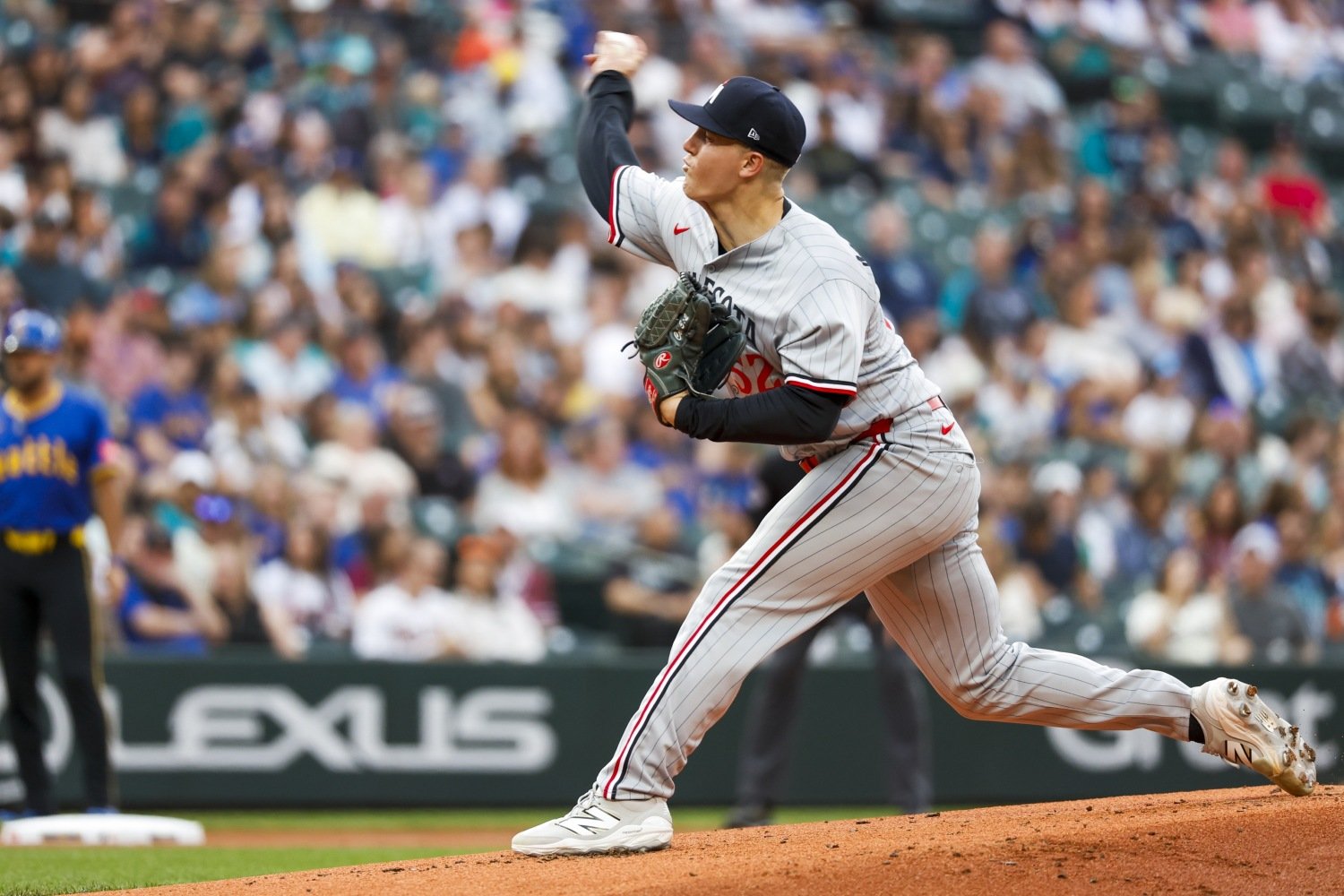
Image courtesy of © Joe Nicholson-Imagn Images The Minnesota Twins lost another starting pitcher for the foreseeable future when they placed Zebby Matthews on the 15-day IL with what was initially reported as a "shoulder strain." The Twins provided more details on Tuesday evening, revealing that the righty suffered a moderate strain of his subscapularis and that he will be shut down from throwing for two weeks. The subscapularis is one of the four rotator cuff muscles, and it's located on the front side of the scapula, or shoulder blade, situated between the scapula and rib cage. Its purpose is to forcefully internally rotate the humerus, or arm bone. In layman's terms, it is one of the muscles that generates significant power, allowing for throwers to achieve a high velocity. It functions similarly to the teres major, the muscle that recently landed fellow starter Pablo Lopez on the IL. However, the teres major is arguably a more complex muscle, as it performs two actions, shoulder internal rotation and extension, which generally extends the return-to-play timeline slightly. Regardless, it would not surprise me if Matthews ultimately misses a similar amount of time as Lopez. A moderate strain, also sometimes called a Grade 2 strain, is generally a weeks-to-months injury, and the Twins will undoubtedly want Matthews to go on a rehab assignment following his recovery. The location of the strain will be one of the primary drivers of his timeline. Torn tendon fibers generally take longer to recover from than torn muscle fibers, because of their relative lack of blood flow. According to Baseball Prospectus's Injury Ledger, the average time to return from a subscapularis strain is 103 days, although it's very rare that these injuries are logged with enough detail to be sure; the sample is too small. Luckily, Grade 2 strains don't require surgery, though a platelet-rich plasma (PRP) injection or equivalent may be utilized to theoretically aid the healing process. There have been a huge number of shoulder strains (the initial and official category under which Matthews's injury will be logged) from which pitchers returned within a month or so, but with this one being Grade 2, the expectation should be that he's on the shelf until at least the end of July. Like López, if all goes well, Matthews should be able to return to the Twins rotation before the end of the regular season. In the meantime, Minnesota will have to rely on its Triple-A depth and bullpen. While the news could be worse and Matthews does appear to have dodged the need for surgery, this is going to be a longer absence than the team initially seemed inclined to say. View full article
-
 The Minnesota Twins lost another starting pitcher for the foreseeable future when they placed Zebby Matthews on the 15-day IL with what was initially reported as a "shoulder strain." The Twins provided more details on Tuesday evening, revealing that the righty suffered a moderate strain of his subscapularis and that he will be shut down from throwing for two weeks. The subscapularis is one of the four rotator cuff muscles, and it's located on the front side of the scapula, or shoulder blade, situated between the scapula and rib cage. Its purpose is to forcefully internally rotate the humerus, or arm bone. In layman's terms, it is one of the muscles that generates significant power, allowing for throwers to achieve a high velocity. It functions similarly to the teres major, the muscle that recently landed fellow starter Pablo Lopez on the IL. However, the teres major is arguably a more complex muscle, as it performs two actions, shoulder internal rotation and extension, which generally extends the return-to-play timeline slightly. Regardless, it would not surprise me if Matthews ultimately misses a similar amount of time as Lopez. A moderate strain, also sometimes called a Grade 2 strain, is generally a weeks-to-months injury, and the Twins will undoubtedly want Matthews to go on a rehab assignment following his recovery. The location of the strain will be one of the primary drivers of his timeline. Torn tendon fibers generally take longer to recover from than torn muscle fibers, because of their relative lack of blood flow. According to Baseball Prospectus's Injury Ledger, the average time to return from a subscapularis strain is 103 days, although it's very rare that these injuries are logged with enough detail to be sure; the sample is too small. Luckily, Grade 2 strains don't require surgery, though a platelet-rich plasma (PRP) injection or equivalent may be utilized to theoretically aid the healing process. There have been a huge number of shoulder strains (the initial and official category under which Matthews's injury will be logged) from which pitchers returned within a month or so, but with this one being Grade 2, the expectation should be that he's on the shelf until at least the end of July. Like López, if all goes well, Matthews should be able to return to the Twins rotation before the end of the regular season. In the meantime, Minnesota will have to rely on its Triple-A depth and bullpen. While the news could be worse and Matthews does appear to have dodged the need for surgery, this is going to be a longer absence than the team initially seemed inclined to say.
 -
 The Twins received tough news Wednesday night, when an MRI revealed that starting pitcher Pablo López suffered a Grade 2 teres major strain. Dan Hayes of The Athletic reported that the Twins expect López to miss the next 8-12 weeks. Unfortunately, the Twins' starting rotation isn't unfamiliar with this injury. It's the same one that ended Joe Ryan's 2024 campaign last August. The teres major is a muscle located at the back of the shoulder, running from the shoulder blade to the front of the humerus, or upper arm bone. Its role is to extend and internally rotate the arm; in layman's terms, it's an important muscle for throwing a baseball at a high velocity. This is the same role as the latissimus dorsi, more commonly referred to as the lat, and the two muscles are located right next to each other. Without imaging, such as an MRI, it can be difficult to differentiate between an injury in the two muscles; hence the initial diagnosis of a lat strain. "Grade 2" simply means that the injury is of moderate severity. From a technical standpoint, it means that a significant amount of muscle fibers were torn, though the overall integrity of the muscle remains intact. This is not an injury that requires surgery, but it's not uncommon for athletes to receive a platelet-rich plasma (PRP) injection in an attempt to aid the healing process. According to Baseball Prospectus's Recovery Dashboard, the average time to return to play following a teres major strain is 78 days, and the median is 73. That's right in line with the Twins' estimated timeline, though on the longer end of it. Grade 2 strains are generally a months-long injury, regardless of the muscle involved, which is in line with the Twins' 8-12 week prognosis, though it will also take some time for López to build back up after being on the shelf. According to Hayes, López is not expected to throw for at least four weeks, which is typical for this type of injury. While this is undeniably a tough blow for López and the Twins, as long as the recovery goes well, there shouldn't be too much of a concern long-term. As previously stated, this is the same injury suffered by Joe Ryan last season, and he has been among the best pitchers in baseball this season. Given a smooth recovery, López should return by sometime in August or September, in plenty of time for a Twins playoff push. That's a long time from now, though, and his absence will be deeply felt as the trade deadline approaches.
 -
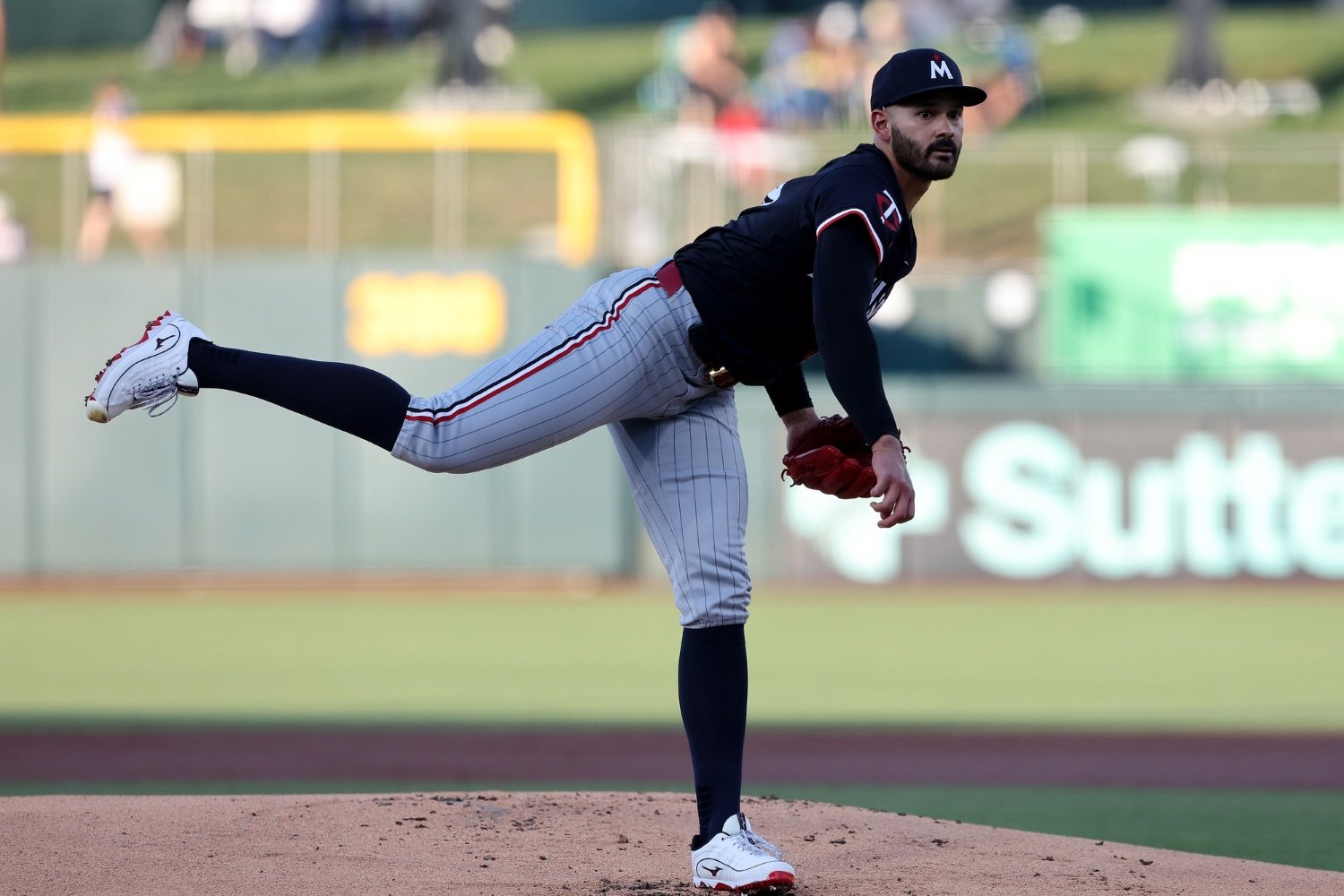
Image courtesy of © Dennis Lee-Imagn Images The Twins received tough news Wednesday night, when an MRI revealed that starting pitcher Pablo López suffered a Grade 2 teres major strain. Dan Hayes of The Athletic reported that the Twins expect López to miss the next 8-12 weeks. Unfortunately, the Twins' starting rotation isn't unfamiliar with this injury. It's the same one that ended Joe Ryan's 2024 campaign last August. The teres major is a muscle located at the back of the shoulder, running from the shoulder blade to the front of the humerus, or upper arm bone. Its role is to extend and internally rotate the arm; in layman's terms, it's an important muscle for throwing a baseball at a high velocity. This is the same role as the latissimus dorsi, more commonly referred to as the lat, and the two muscles are located right next to each other. Without imaging, such as an MRI, it can be difficult to differentiate between an injury in the two muscles; hence the initial diagnosis of a lat strain. "Grade 2" simply means that the injury is of moderate severity. From a technical standpoint, it means that a significant amount of muscle fibers were torn, though the overall integrity of the muscle remains intact. This is not an injury that requires surgery, but it's not uncommon for athletes to receive a platelet-rich plasma (PRP) injection in an attempt to aid the healing process. According to Baseball Prospectus's Recovery Dashboard, the average time to return to play following a teres major strain is 78 days, and the median is 73. That's right in line with the Twins' estimated timeline, though on the longer end of it. Grade 2 strains are generally a months-long injury, regardless of the muscle involved, which is in line with the Twins' 8-12 week prognosis, though it will also take some time for López to build back up after being on the shelf. According to Hayes, López is not expected to throw for at least four weeks, which is typical for this type of injury. While this is undeniably a tough blow for López and the Twins, as long as the recovery goes well, there shouldn't be too much of a concern long-term. As previously stated, this is the same injury suffered by Joe Ryan last season, and he has been among the best pitchers in baseball this season. Given a smooth recovery, López should return by sometime in August or September, in plenty of time for a Twins playoff push. That's a long time from now, though, and his absence will be deeply felt as the trade deadline approaches. View full article
-
Image courtesy of Mitch Stringer-Imagn Images The Minnesota Twins announced on Friday afternoon that shortstop Carlos Correa was indeed headed to the 7-day concussion injured list. Correa collided with center fielder Byron Buxton during the third inning of Thursday's win over the Baltimore Orioles on a pop-up to short centerfield. The star shortstop immediately exited the game while Buxton left during the bottom of the third. Correa will be sidelined for at least a week, with Ryan Fitzgerald called up from Triple-A to replace him on the roster. Fitzgerald made his major-league debut on Friday night in Milwaukee. Buxton's status, meanwhile, remains up in the air. There was some confusion on Friday when the Twins initially indicated to reporters that he had cleared concussion protocol and would be available against the Brewers, only to follow shortly after with an update that Buxton had NOT in fact been cleared. ""He is still being evaluated daily," team officials shared per Audra Martin. "Until he is in the lineup or not on the IL he needs to clear hurdles in the protocol." UPDATE: The Twins announced ahead of Saturday night's game that Buxton will be joining Correa on the 7-day concussion IL.. Correa appeared to take the brunt of the collision on Thursday when Buxton's forehead and chin smacked into the back of his head and left shoulder, respectively. He appeared woozy but exited the field under his own power following a prolonged visit by the athletic training staff. Implemented in 2011, MLB's concussion protocol and 7-day concussion injured list is specifically reserved for suspected and diagnosed concussions, which incentivizes teams to be conservative with concussion management while still maintaining a full 26-man roster. The typical recovery timeframe for a mild concussion is seven to 10 days. Correa had no reported history of concussions prior to Thursday's injury. Given the franchise’s history, it’s hard to blame Twins fans for feeling a wave of nausea seeing two of the team’s biggest stars dealing with concussion concerns. Correa and Buxton's placements on the 7-day IL evoke painful memories of the past — namely, the careers of Joe Mauer and Justin Morneau, both of which were permanently altered by fateful blows to the head. Hopefully this latest scare proves to be a short detour. We'll keep you posted with more details as they emerge. View full article
-
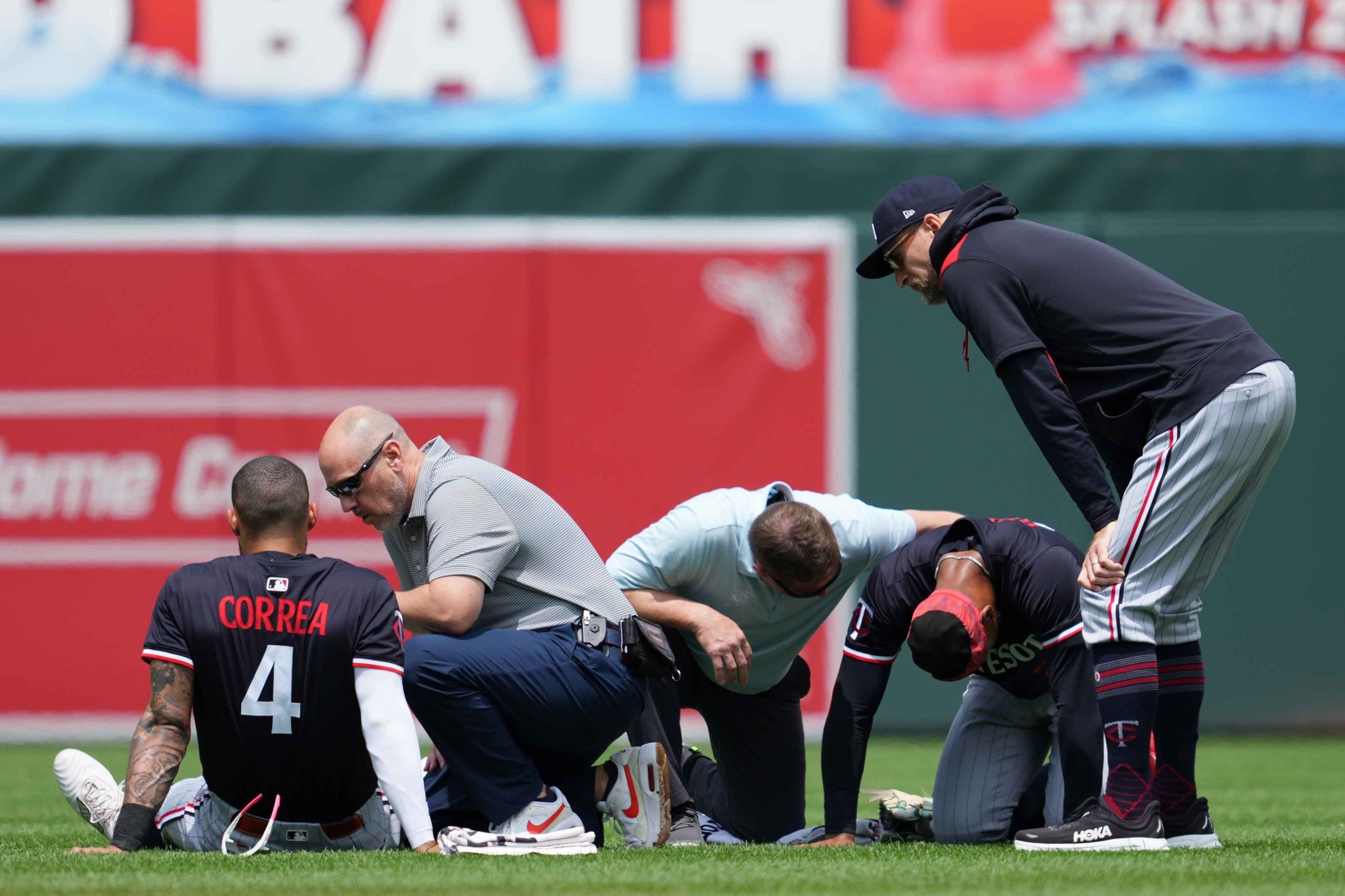 The Minnesota Twins announced on Friday afternoon that shortstop Carlos Correa was indeed headed to the 7-day concussion injured list. Correa collided with center fielder Byron Buxton during the third inning of Thursday's win over the Baltimore Orioles on a pop-up to short centerfield. The star shortstop immediately exited the game while Buxton left during the bottom of the third. Correa will be sidelined for at least a week, with Ryan Fitzgerald called up from Triple-A to replace him on the roster. Fitzgerald made his major-league debut on Friday night in Milwaukee. Buxton's status, meanwhile, remains up in the air. There was some confusion on Friday when the Twins initially indicated to reporters that he had cleared concussion protocol and would be available against the Brewers, only to follow shortly after with an update that Buxton had NOT in fact been cleared. ""He is still being evaluated daily," team officials shared per Audra Martin. "Until he is in the lineup or not on the IL he needs to clear hurdles in the protocol." UPDATE: The Twins announced ahead of Saturday night's game that Buxton will be joining Correa on the 7-day concussion IL.. Correa appeared to take the brunt of the collision on Thursday when Buxton's forehead and chin smacked into the back of his head and left shoulder, respectively. He appeared woozy but exited the field under his own power following a prolonged visit by the athletic training staff. Implemented in 2011, MLB's concussion protocol and 7-day concussion injured list is specifically reserved for suspected and diagnosed concussions, which incentivizes teams to be conservative with concussion management while still maintaining a full 26-man roster. The typical recovery timeframe for a mild concussion is seven to 10 days. Correa had no reported history of concussions prior to Thursday's injury. Given the franchise’s history, it’s hard to blame Twins fans for feeling a wave of nausea seeing two of the team’s biggest stars dealing with concussion concerns. Correa and Buxton's placements on the 7-day IL evoke painful memories of the past — namely, the careers of Joe Mauer and Justin Morneau, both of which were permanently altered by fateful blows to the head. Hopefully this latest scare proves to be a short detour. We'll keep you posted with more details as they emerge.
 -
Teams are absolutely using AI to research this stuff. I know the Dodgers have an internal team of data scientists that use advanced techniques to try to predict future injury. The result: The Dodgers are still among the most injured teams in baseball year-over-year. There are some correlations: Athletes who specialized in baseball and played year-round before age 16, for example.
-
Stretching generally doesn't reduce injury risk, which seems counterintuitive but is backed up by bunch of research. As far as their warm-ups go, the specifics matter less than just simply getting a heart rate increase and sweat going. I'm sure what they do is just fine. The real real and unsatisfactory answer is that injuries just happens. Luck, or more scientifically variance, plays a huge part in injury occurrence. An athlete can do everything right and still suffer multiple injuries. Injuries are so multifactorial that it's impossible to say that one or two variables either cause or prevent an injury. I promise that the Twins athletic training, strength and conditioning, and sports science teams are highly intelligent, capable, and arguably among the best in baseball. But even all of that can't prevent injuries.
-
Yes, but most hamstring injuries occur within the muscle. Also, muscles exert force through tendons, so if you're strengthening muscles you're also strengthening tendons. Stronger muscles are also associated with fewer tendon injuries.
-
There is very little scientific evidence that this is true. Virtually all research points to stronger muscles having less risk for injury. Muscles will always get injured in sport, but injury occurrence can't be boiled down to a single factor. That said, "too strong" just doesn't seem to be a factor according to the most recent literature.
-
This is a really good point. Essentially, a good coach could take this data and tell Buck, "Hey. When you're swinging, try and rotate your hips as fast as possible." For Lewis, "Stick your arms out a little further with each swing." They'd then work on drills that reinforce those movement patterns. Therefore, the pass on the concepts with even uttering the word torque or moment of inertia.
-
Two of the Twins' biggest stars saw their swing speeds decrease in 2024. That's a big deal, but it might be fixable—and it might be telling us something else. Image courtesy of © Jesse Johnson-Imagn Images Baseball Savant began publishing swing data during the 2024 season. As such, we now have access to impactful metrics such as swing speed, swing length, and the solidity of contact for the second half of 2023 and all of last season, right at our fingertips. Savant defines swing speed as the average velocity of the sweet spot of the bat during the top 90% of an athlete’s swings. They locate the sweet spot 6 inches from the top of the bat, and lop off that bottom decile of swings on the hunch that they're “non-competitive” attempts, such as check swings and bunts, which would artificially lower the average swing speed. There are two properties of physics that are important for understanding why an athlete’s swing speed is important: momentum and torque. Momentum (often labeled as ‘p’) is simply the product of an object’s mass and velocity (p = mv). Essentially, an object will possess more momentum the faster it is moving, given its mass remains unchanged. This is true of a baseball bat; its mass does not change during a swing (assuming it doesn’t break), and therefore, a faster swing has more momentum than a slower one. Torque (‘t’) is the force produced by an object as it rotates around a given point. As such, we can tweak Newton’s linear first law of motion (force is the product of mass and acceleration; F=ma) a bit to torque is the product of an object’s moment of inertia and angular acceleration (t=Iα). Moment of inertia can be expressed as the product of an object’s mass and the square of the radius of the circle about which it is rotating (I=mr2) and the rate at which that rotation is occurring (therefore, t=mr2α). (Note: I can already hear some of you physics types clacking away at the keyboard: “This is much too simplistic! A baseball bat isn’t a simple pendulum!” yada yada yada. Whatever, this simplistic version is good enough to get the point across.) [Editor's note: I can already hear some of you non-physics types cackling bitterly at the idea that what we just read is the simplistic version. Don't worry, Lucas is going to land this plane for us.] What this means in English: Generally speaking, a faster swing will exert greater torque and momentum on the ball, and that will result in the ball registering a higher exit velocity. And we know that a harder-hit ball will more frequently result in a better outcome (i.e. home run, double, fielding error, etc.). Additionally, these physics principles tell us that an athlete can improve their swing speed in two ways; they can rotate more quickly to accelerate the bat head faster (and achieve a greater velocity at any given instant; see: momentum) and/or they can increase the radius of the circle about which they are rotating (i.e. increase their swing length; see: moment of inertia). Doing either (or both!) will increase momentum and torque. (So, of course, would increasing the mass of your bat, i.e. swinging a heavier one—but only if doing so cost you little or no bat speed.) We can see this theory in practice by looking at the relationship between average bat speed and average swing length among MLB hitters. The correlation between the two is 0.54, indicating a moderate (bordering on strong) relationship between the two variables. Basically, the longer an individual’s swing (i.e. the larger the radius of the circle), the faster their swing will generally be. However, swing length doesn’t fully explain swing speed (the correlation isn't 1.0, after all) because swing speed can be modulated by other variables, including how quickly a hitter accelerates their trunk. Additionally, if we consider average bat speed and Statcast’s run value statistic, it can be said that faster bat speeds have a moderate correlation with offensive production (r = 0.41). Again, bat speed is not the sole determinant of offensive production (the correlation is not 1.0), but it is an important factor. Increasing an athlete’s swing speed, either by tweaking their mechanics to increase swing length or by improving their ability to accelerate their trunk rotation via strength training, is of vital importance for individual and team success in the long term. (Yes, Luis Arraez exists. Yes, he has a slow swing speed. Yes, he is productive. Yes, he is an exception to the rule.) However, this also means the opposite is true: a decrease in swing speed would likely have a deleterious impact on offensive production in the long run. That brings us to Byron Buxton and Royce Lewis. Both Buxton (76.2 mph to 74.3 mph) and Lewis (75.1 mph to 73.3 mph) experienced a dip in swing speed in 2024, compared to the second half of 2023. (We don’t know how this trend compares to previous seasons because we don’t have that data.) However, it’s likely that their decreases were driven by different mechanisms. Buxton has one of the longest swings (8 feet, in three-dimensional space, from the start of his swing to the front of the hitting zone) in baseball, which is the driving force behind both his prolific power and propensity to swing and miss. (In short, a longer swing not only causes a fast barrel but also introduces more difficulty in adjusting to a given pitch. The result: more dingers, but also more strikeouts.) From 2023 to 2024, his swing length actually increased from 8.0 feet to 8.1 feet, despite a 2-mph reduction in speed. This would seem to imply that the primary mitigating factor was that he was rotating his trunk more slowly in 2024. Counterintuitively, it’s possible that this reduced reliance on trunk rotation was due, at least in part, to his right knee feeling better. The back leg (Buxton’s right) is important for generating force during a swing, and that force is modulated by the hips, core, and arms before being transferred to the ball on contact with the bat. When Buxton’s right knee was in pain, it’s possible that he compensated by increasing his trunk rotation acceleration to generate similar levels of force. As such, for Buxton to regain his swing speed, it’s likely that he will have to increase his trunk rotational power via strength and weighted-bat training. Lewis, on the other hand, saw his swing length decrease from 7.9-feet to 7.7-feet. Because torque is proportional to the square of the radius of the circle about which he is rotating, a small decrease in swing length can lead to a large decrease in torque production (assuming he used bats of the same weight during both seasons). Lewis saw his production crater during the second half of the 2024 season, as the Twins saw their playoff odds evaporate. It’s possible Lewis subconsciously reduced his swing length to allow for better barrel control, in an effort to improve his production and right the quickly sinking ship. However, doing so is antithetical to Lewis’ strengths, primarily that of quick-twitch power. Lewis is at his best when he's swinging for the fences, not trying to hit singles. For Lewis to regain his old form, it’s possible that he just simply needs to increase his swing length. As we gain the ability to measure not just the outputs of players' movements (like velocity, spin rate, exit velocity, and others) but the movements themselves (like swing speed, arm angle, and more), we'll have to handle lots of new data carefully, and ask good questions about it. Buxton and Lewis exemplify the way changes in swing speed can speak to two different issues, with two different possible remedies—or even more possibilities, not fully unpacked here. Some players can't move a particular way. Others choose not to, for strategic reasons. Either way, it's helpful to understand how they're moving. From there, it becomes possible to convert problems into solutions. View full article
-
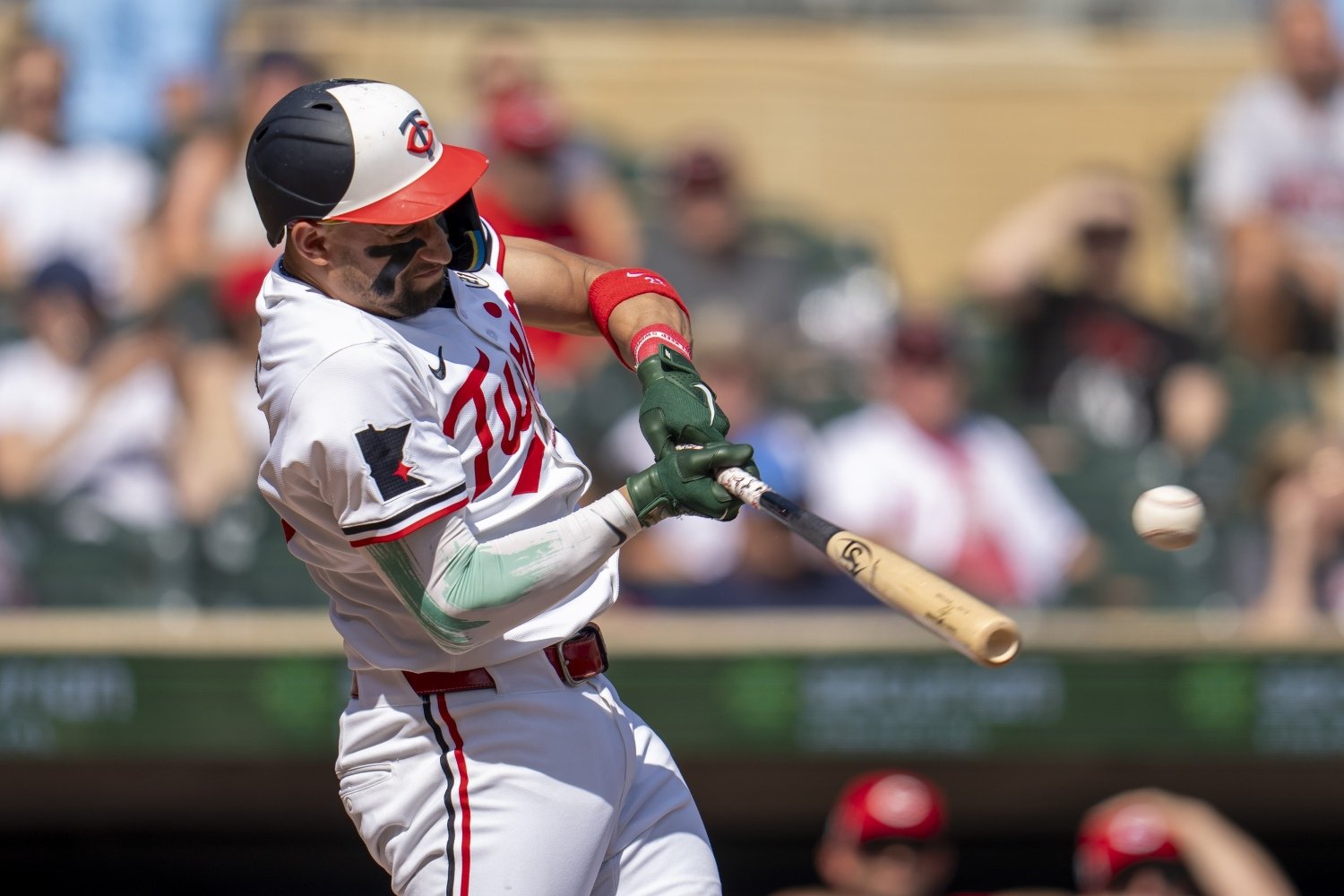 Baseball Savant began publishing swing data during the 2024 season. As such, we now have access to impactful metrics such as swing speed, swing length, and the solidity of contact for the second half of 2023 and all of last season, right at our fingertips. Savant defines swing speed as the average velocity of the sweet spot of the bat during the top 90% of an athlete’s swings. They locate the sweet spot 6 inches from the top of the bat, and lop off that bottom decile of swings on the hunch that they're “non-competitive” attempts, such as check swings and bunts, which would artificially lower the average swing speed. There are two properties of physics that are important for understanding why an athlete’s swing speed is important: momentum and torque. Momentum (often labeled as ‘p’) is simply the product of an object’s mass and velocity (p = mv). Essentially, an object will possess more momentum the faster it is moving, given its mass remains unchanged. This is true of a baseball bat; its mass does not change during a swing (assuming it doesn’t break), and therefore, a faster swing has more momentum than a slower one. Torque (‘t’) is the force produced by an object as it rotates around a given point. As such, we can tweak Newton’s linear first law of motion (force is the product of mass and acceleration; F=ma) a bit to torque is the product of an object’s moment of inertia and angular acceleration (t=Iα). Moment of inertia can be expressed as the product of an object’s mass and the square of the radius of the circle about which it is rotating (I=mr2) and the rate at which that rotation is occurring (therefore, t=mr2α). (Note: I can already hear some of you physics types clacking away at the keyboard: “This is much too simplistic! A baseball bat isn’t a simple pendulum!” yada yada yada. Whatever, this simplistic version is good enough to get the point across.) [Editor's note: I can already hear some of you non-physics types cackling bitterly at the idea that what we just read is the simplistic version. Don't worry, Lucas is going to land this plane for us.] What this means in English: Generally speaking, a faster swing will exert greater torque and momentum on the ball, and that will result in the ball registering a higher exit velocity. And we know that a harder-hit ball will more frequently result in a better outcome (i.e. home run, double, fielding error, etc.). Additionally, these physics principles tell us that an athlete can improve their swing speed in two ways; they can rotate more quickly to accelerate the bat head faster (and achieve a greater velocity at any given instant; see: momentum) and/or they can increase the radius of the circle about which they are rotating (i.e. increase their swing length; see: moment of inertia). Doing either (or both!) will increase momentum and torque. (So, of course, would increasing the mass of your bat, i.e. swinging a heavier one—but only if doing so cost you little or no bat speed.) We can see this theory in practice by looking at the relationship between average bat speed and average swing length among MLB hitters. The correlation between the two is 0.54, indicating a moderate (bordering on strong) relationship between the two variables. Basically, the longer an individual’s swing (i.e. the larger the radius of the circle), the faster their swing will generally be. However, swing length doesn’t fully explain swing speed (the correlation isn't 1.0, after all) because swing speed can be modulated by other variables, including how quickly a hitter accelerates their trunk. Additionally, if we consider average bat speed and Statcast’s run value statistic, it can be said that faster bat speeds have a moderate correlation with offensive production (r = 0.41). Again, bat speed is not the sole determinant of offensive production (the correlation is not 1.0), but it is an important factor. Increasing an athlete’s swing speed, either by tweaking their mechanics to increase swing length or by improving their ability to accelerate their trunk rotation via strength training, is of vital importance for individual and team success in the long term. (Yes, Luis Arraez exists. Yes, he has a slow swing speed. Yes, he is productive. Yes, he is an exception to the rule.) However, this also means the opposite is true: a decrease in swing speed would likely have a deleterious impact on offensive production in the long run. That brings us to Byron Buxton and Royce Lewis. Both Buxton (76.2 mph to 74.3 mph) and Lewis (75.1 mph to 73.3 mph) experienced a dip in swing speed in 2024, compared to the second half of 2023. (We don’t know how this trend compares to previous seasons because we don’t have that data.) However, it’s likely that their decreases were driven by different mechanisms. Buxton has one of the longest swings (8 feet, in three-dimensional space, from the start of his swing to the front of the hitting zone) in baseball, which is the driving force behind both his prolific power and propensity to swing and miss. (In short, a longer swing not only causes a fast barrel but also introduces more difficulty in adjusting to a given pitch. The result: more dingers, but also more strikeouts.) From 2023 to 2024, his swing length actually increased from 8.0 feet to 8.1 feet, despite a 2-mph reduction in speed. This would seem to imply that the primary mitigating factor was that he was rotating his trunk more slowly in 2024. Counterintuitively, it’s possible that this reduced reliance on trunk rotation was due, at least in part, to his right knee feeling better. The back leg (Buxton’s right) is important for generating force during a swing, and that force is modulated by the hips, core, and arms before being transferred to the ball on contact with the bat. When Buxton’s right knee was in pain, it’s possible that he compensated by increasing his trunk rotation acceleration to generate similar levels of force. As such, for Buxton to regain his swing speed, it’s likely that he will have to increase his trunk rotational power via strength and weighted-bat training. Lewis, on the other hand, saw his swing length decrease from 7.9-feet to 7.7-feet. Because torque is proportional to the square of the radius of the circle about which he is rotating, a small decrease in swing length can lead to a large decrease in torque production (assuming he used bats of the same weight during both seasons). Lewis saw his production crater during the second half of the 2024 season, as the Twins saw their playoff odds evaporate. It’s possible Lewis subconsciously reduced his swing length to allow for better barrel control, in an effort to improve his production and right the quickly sinking ship. However, doing so is antithetical to Lewis’ strengths, primarily that of quick-twitch power. Lewis is at his best when he's swinging for the fences, not trying to hit singles. For Lewis to regain his old form, it’s possible that he just simply needs to increase his swing length. As we gain the ability to measure not just the outputs of players' movements (like velocity, spin rate, exit velocity, and others) but the movements themselves (like swing speed, arm angle, and more), we'll have to handle lots of new data carefully, and ask good questions about it. Buxton and Lewis exemplify the way changes in swing speed can speak to two different issues, with two different possible remedies—or even more possibilities, not fully unpacked here. Some players can't move a particular way. Others choose not to, for strategic reasons. Either way, it's helpful to understand how they're moving. From there, it becomes possible to convert problems into solutions.
 -
Alex Kirilloff has retired. The former top prospect announced on Thursday that he is dealing with a spondylolisthesis in his lower back that will require surgery to correct. What does that mean? Image courtesy of © Gary A. Vasquez-Imagn Images Alex Kirilloff was placed on the injured list in mid-June with what was described as an “unspecified back issue.” He stated that he had been dealing with the back injury since the beginning of the season, but his symptoms worsened, including the onset of nerve pain in his leg, leading to the IL placement. He did not appear in a game after Jun. 11. “During my career, I’ve encountered numerous injuries, which led me to search for new ways to overcome the pain constantly. These challenges have taken a toll on me, mentally and physically,” Kirilloff wrote, in a statement published by the Twins on Twitter. “As I navigate the recovery process for my current lower back injury, I’m excited to focus more on my family and explore new opportunities.” A spondylolisthesis (“spondylo” meaning spine and “listhesis” meaning slippage) occurs when a portion of the spinal column shifts forward relative to the rest of the bones. This most commonly occurs where the fourth and fifth lumbar vertebrae or the fifth lumbar vertebra and the sacrum meet, as the small forward curvature places increased stress on certain portions of the bone. Significant shifting occurs when the portion of the bone holding the vertebrae together (known as the pars interarticularis) fractures, resulting in compression on the spinal cord and surrounding nerves. Pars interarticularis injuries are relatively common in baseball, as repetitive and combined lumbar extension and rotation (as occurs in swinging and throwing) inflict significant force throughout the bone. If the body can't compensate and remodel in the face of such forces, bony breakdown occurs, leading to a stress reaction and (if untreated) a stress fracture. The pars interarticularis exists on both sides of the spine, so a fracture of both can lead to significant spondylolisthesis. If only one is fractured, the slippage is often less pronounced or non-existent. Treatments for this condition vary from rest and rehabilitation to repair of the pars interarticularis and spinal fusion. Regardless of the procedure and treatment plan, in the long term, Kirilloff will be able to live a happy, pain-reduced (and hopefully pain-free) life. Which, ultimately and inarguably, is what is most important. It's a shame that he'll no longer be able to play pro baseball, but he made the right decision for himself and his family, under the circumstances. View full article
-
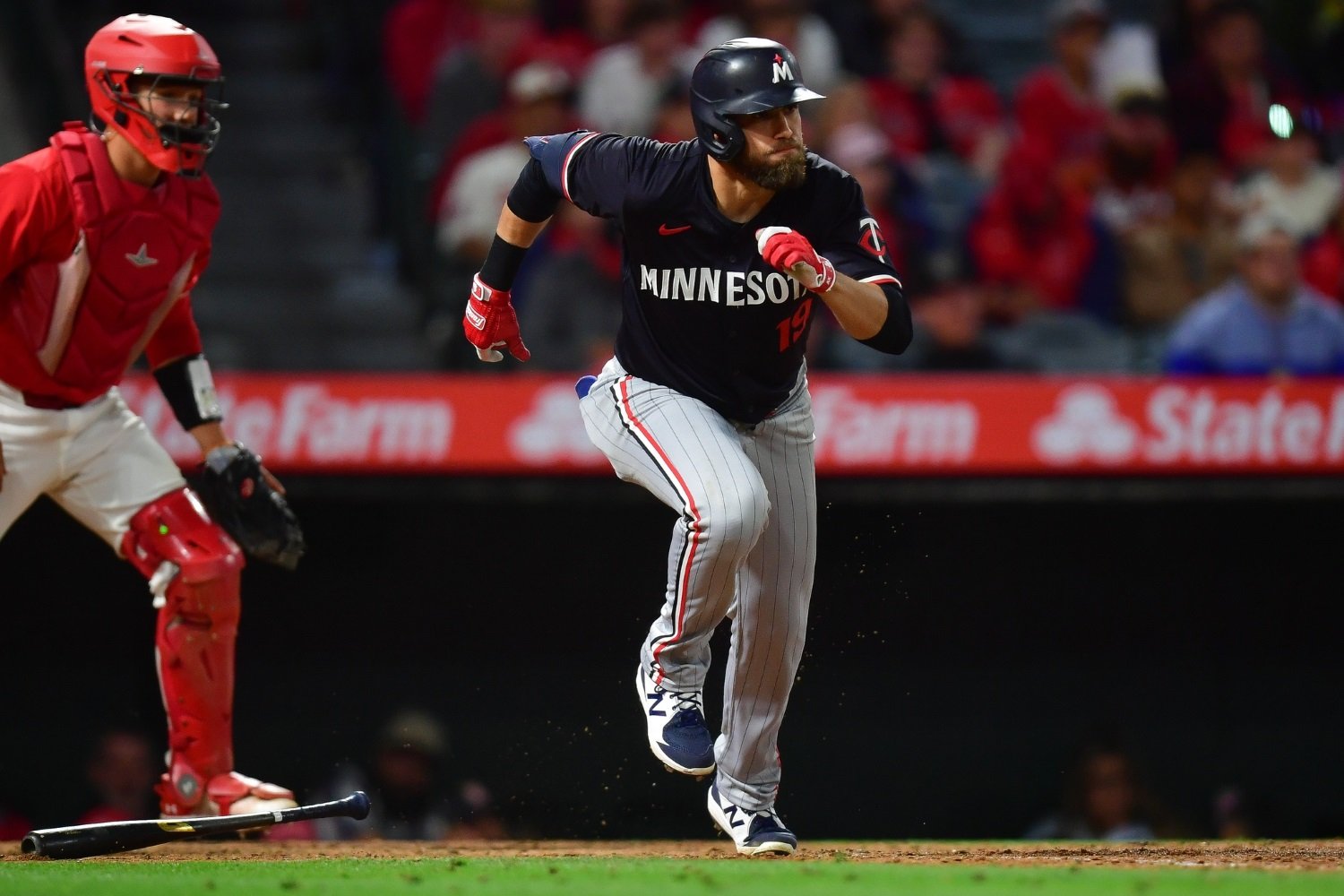 Alex Kirilloff was placed on the injured list in mid-June with what was described as an “unspecified back issue.” He stated that he had been dealing with the back injury since the beginning of the season, but his symptoms worsened, including the onset of nerve pain in his leg, leading to the IL placement. He did not appear in a game after Jun. 11. “During my career, I’ve encountered numerous injuries, which led me to search for new ways to overcome the pain constantly. These challenges have taken a toll on me, mentally and physically,” Kirilloff wrote, in a statement published by the Twins on Twitter. “As I navigate the recovery process for my current lower back injury, I’m excited to focus more on my family and explore new opportunities.” A spondylolisthesis (“spondylo” meaning spine and “listhesis” meaning slippage) occurs when a portion of the spinal column shifts forward relative to the rest of the bones. This most commonly occurs where the fourth and fifth lumbar vertebrae or the fifth lumbar vertebra and the sacrum meet, as the small forward curvature places increased stress on certain portions of the bone. Significant shifting occurs when the portion of the bone holding the vertebrae together (known as the pars interarticularis) fractures, resulting in compression on the spinal cord and surrounding nerves. Pars interarticularis injuries are relatively common in baseball, as repetitive and combined lumbar extension and rotation (as occurs in swinging and throwing) inflict significant force throughout the bone. If the body can't compensate and remodel in the face of such forces, bony breakdown occurs, leading to a stress reaction and (if untreated) a stress fracture. The pars interarticularis exists on both sides of the spine, so a fracture of both can lead to significant spondylolisthesis. If only one is fractured, the slippage is often less pronounced or non-existent. Treatments for this condition vary from rest and rehabilitation to repair of the pars interarticularis and spinal fusion. Regardless of the procedure and treatment plan, in the long term, Kirilloff will be able to live a happy, pain-reduced (and hopefully pain-free) life. Which, ultimately and inarguably, is what is most important. It's a shame that he'll no longer be able to play pro baseball, but he made the right decision for himself and his family, under the circumstances.
- 10 comments
-
- 14
-

-

-
That was an error. It should have said Kirilloff, not Wallner, in the story. Made the fix.
- 23 replies
-
- 1
-
-
- joe ryan
- luke keaschall
- (and 1 more)
-
The Twins will be without their best starter for "weeks to months," according to Rocco Baldelli. While troublesome in the short term, the injury shouldn't be of concern in the long term. Image courtesy of © John Hefti-USA TODAY Sports The teres major is a relatively small muscle that runs from the shoulder blade to the front of the arm. It's actively involved in throwing as it pulls the arm into extension and internal rotation, two of the primary motions of the arm during pitching. The latissimus dorsi (i.e., last) perform the same motions but are significantly larger and more powerful. Teres major strains aren't among the most common pitching injuries but aren't rare. A recent study identified 159 professional pitchers who suffered either teres major or lat strains, with long-term return-to-play rates hovering around 100%. However, what is more important, particularly for the Twins, is short-term return to play. Grade 2 injuries fall on the moderate to severe end of the muscle strain spectrum. They generally don't require surgical intervention, but they do take a while to recover from. Moderate muscle strains usually heal within 4-8 weeks, not including a full ramp-up period. With seven weeks remaining in the regular season, it's possible Ryan won't be able to make another start until the playoffs (assuming the Twins make the playoffs). Unfortunately, Ryan's injury was far from the only one to strike the Twins in recent days. Reliever Brock Stewart will miss the remainder of the season after undergoing arthroscopic shoulder surgery. The recovery is expected to take 5-6 months, which is fairly standard for the procedure. Arthroscopy generally involves "cleaning up" damaged and/or floating tissue in the joint. According to Stewart, imaging did not find major structural damage, which keeps the expected recovery time from approaching 12 months or more. Finally, top prospect Luke Keaschall will be undergoing Tommy John surgery. Luckily, he is a position player and right-handed batter, so he should be a full go by the time Spring Training rolls around. Keaschall joins Alex Kirilloff and Miguel Sanó among Twins position player prospects to have the procedure done. View full article
- 23 replies
-
- 1
-
-
- joe ryan
- luke keaschall
- (and 1 more)
-
On the Injuries of Joe Ryan, Brock Stewart, and Luke Keaschall
Lucas Seehafer PT posted an article in Twins
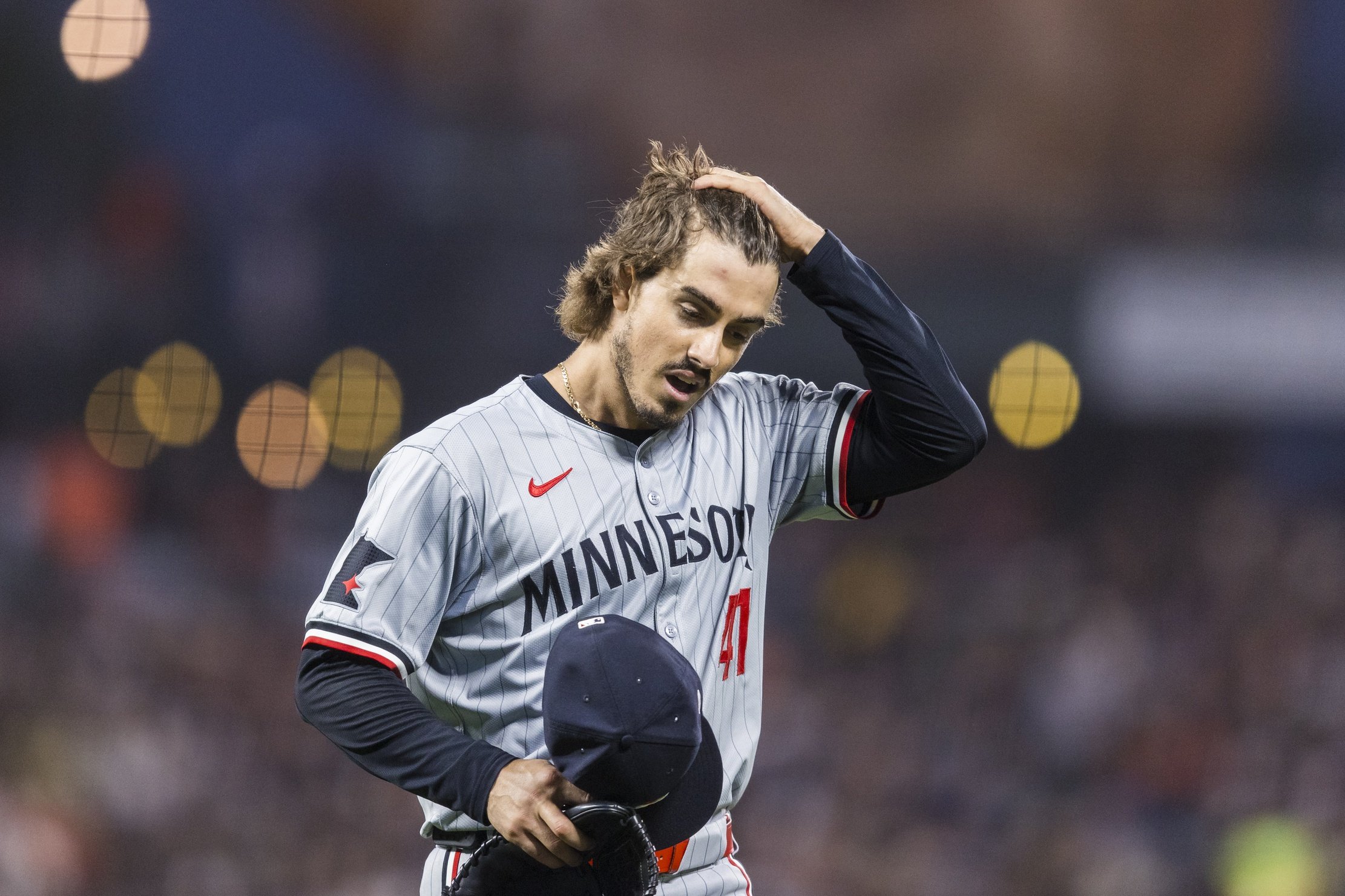 The teres major is a relatively small muscle that runs from the shoulder blade to the front of the arm. It's actively involved in throwing as it pulls the arm into extension and internal rotation, two of the primary motions of the arm during pitching. The latissimus dorsi (i.e., last) perform the same motions but are significantly larger and more powerful. Teres major strains aren't among the most common pitching injuries but aren't rare. A recent study identified 159 professional pitchers who suffered either teres major or lat strains, with long-term return-to-play rates hovering around 100%. However, what is more important, particularly for the Twins, is short-term return to play. Grade 2 injuries fall on the moderate to severe end of the muscle strain spectrum. They generally don't require surgical intervention, but they do take a while to recover from. Moderate muscle strains usually heal within 4-8 weeks, not including a full ramp-up period. With seven weeks remaining in the regular season, it's possible Ryan won't be able to make another start until the playoffs (assuming the Twins make the playoffs). Unfortunately, Ryan's injury was far from the only one to strike the Twins in recent days. Reliever Brock Stewart will miss the remainder of the season after undergoing arthroscopic shoulder surgery. The recovery is expected to take 5-6 months, which is fairly standard for the procedure. Arthroscopy generally involves "cleaning up" damaged and/or floating tissue in the joint. According to Stewart, imaging did not find major structural damage, which keeps the expected recovery time from approaching 12 months or more. Finally, top prospect Luke Keaschall will be undergoing Tommy John surgery. Luckily, he is a position player and right-handed batter, so he should be a full go by the time Spring Training rolls around. Keaschall joins Alex Kirilloff and Miguel Sanó among Twins position player prospects to have the procedure done.
- 23 comments
-
- 6
-
-
- joe ryan
- luke keaschall
- (and 1 more)
-
Royce Lewis, Injuries, and Stupid Luck
Lucas Seehafer PT replied to Lucas Seehafer PT's topic in Twins Daily Front Page News
If we had an answer to this question, we'd have much, much fewer injuries. Again, the extremely unsatisfying answer is that random chance plays a significant role. There are so many factors associated with injury occurrence that it's nearly impossible to account for them all. Strength training, sleep, diet, traveling from east to west, weekly load, yearly load, lifetime load, intrinsic characteristics about the individuals body, modifiable risk factors, non-modifiable risk factors, I could go on. There aren't enough hours in the day, especially during an MLB regular season. When conducting research, we often look at a variable's p-value when determining if it's a risk factor. This values attempts to determine if the outcome in question is due to chance or the variable being assessed. The cutoff is often set at 5%. So if a p-value comes in at 4%, we determine the result is "significant" but what it is really saying is that there is a 4% chance that the outcome occured due to luck. Luck is *always* an option. (And that's not even getting in to how 5% is probably not sensitive enough to find true significance and that most studies have too small of a sample size.) -
Royce Lewis, Injuries, and Stupid Luck
Lucas Seehafer PT replied to Lucas Seehafer PT's topic in Twins Daily Front Page News
If we want to dive into the weeds: -Muscle strains generally occur at one of two points: the point where stress (i.e. force) is too great for its ability to strain (ability for the muscle to deform) or when the muscle is transitioning from a concentric (shortening) to eccentric (lengthening) contraction. -Based on option one, you'd think stretching would be protective against injury but there is so much research on the topic I can confidently say that stretching doesn't reduce injury risk. -Yoga improves overall body mobility which seems to be protective, but only to a point. In my opinion, mobility has become over-hyped by the fitness and performance legion.. it's helpful but not a panacea. -There is a ton of research that suggests strengthening the groin and hamstring muscles eccentricly reduces injury and re-injury rates. Without a doubt this was/will be part of his rehab process. Does he need to do more in the offseason? Maybe, but who knows. -As I stated in the article, we know muscle activation and strength issues persist for up to two years following ACL surgery. But beyond that we're just taking logical leaps and inferring that those issue lead to greater injury risk. Logically, that makes sense but I'm not comfortable saying so definitively. Sports med just isn't that simple vary often. -
The Minnesota Twins lost Royce Lewis to yet another muscle injury on Wednesday afternoon, this time a Grade 2 right adductor strain. It is the fourth significant injury to his right leg in the last three seasons. Image courtesy of © Matt Blewett-USA TODAY Sports Luckily, the Twins are hopeful that it isn’t as severe as the right quadriceps injury which caused Royce Lewis to miss the first two months of the season. The adductor muscles provide breaking forces through eccentric muscle contractions (i.e. the muscle is contracting while lengthening) to help control athletic movements. So, it should come as no surprise that groin and adductor strains are among the most common muscular injuries in elite athletes. The Grade 2 categorization essentially indicates that it is a moderate injury. From an advanced imaging standpoint, this means at least 10% but no more than 50% of Lewis’s muscle fibers were damaged. Because of the wide range of damage, outcomes for Grade 2 strains vary considerably, though most generally heal within six to eight weeks. That would be a rough estimate for Lewis’s return sometime between Aug. 14 and the end of that month. Now, the question facing Lewis and the Twins, one that is undoubtedly on everybody’s mind: What can be done to prevent this from occurring again? As I mentioned previously, this is the fourth significant injury Lewis has suffered to his right leg—ACL twice, quadriceps, adductor—since reaching MLB, and the sixth issue (those four, plus strains of his left oblique and left hamstring) that has landed him on the IL. Unfortunately, there aren’t any easy, straightforward answers here. It’s often said that the best predictor of future injury is past injury, though that saying is only true as it pertains to the same muscle or location. For example, the best predictor of suffering a right ankle sprain is if you previously sprained that right ankle. All of Lewis’s injuries thus far—save for the ACL—are to unique muscles. Muscle weakness is a common characteristic following ACL reconstruction, yet there is a surprising lack of research looking into the presence and persistence of weakness in muscle groups other than the quadriceps. However, there is evidence that muscle activation patterns (specifically the co-activation of the gluteal and adductor muscles) are impaired for up to two years following surgery. Unfortunately, research going the next step—determining if these impaired activation patterns are associated with greater injury risk—is largely absent. It’s also important to consider that, as a professional athlete, Lewis has access to elite rehabilitation and strength and conditioning programs. The Twins have been cautious with his rehab and training, and assess his force production (strength, power, etc.) via scientific means such as force plates and dynamometry regularly. Athletes aren’t cleared to return to play following a major injury until all of their measures have reached or exceeded their pre-injury values. (As far as imbalances go (i.e. one side is stronger than the other), there isn’t much strong evidence to suggest it is an important factor in injury risk mitigation or performance.) Finally, the most powerful but least satisfying factor needs to be considered: Dumb luck. We don’t like to think that nothing could have been done; that Lewis’s injury was an accident, the simple flap of the butterfly’s wing throwing into motion a chain of events that were unpredictable and uncontrollable. Suggesting so nullifies the ability to ascribe blame, leaving our frustrations and sympathies simply afloat in the ether. We can’t blame Lewis’s legs or work ethic, nor can we question Nick Paparesta’s treatment philosophy and practices. But often that is done anyway, by the talking heads and individuals with no avenue for venting their frustrations. They label the athlete as “injury-prone”—despite not fully appreciating the complexities of the human neuromusculoskeletal system and injury risk mitigation—and place blame via jumps in logic and correlation-equals-causation thinking. Losing Royce Lewis sucks--for him, for the team, and for us. We all want to see Lewis batting in the middle of the order and playing a stout third base. But right now, he’s headed for another IL stint. It’s not his fault. It may not even be his body’s fault. It may just be Lady Luck striking yet again. View full article
-
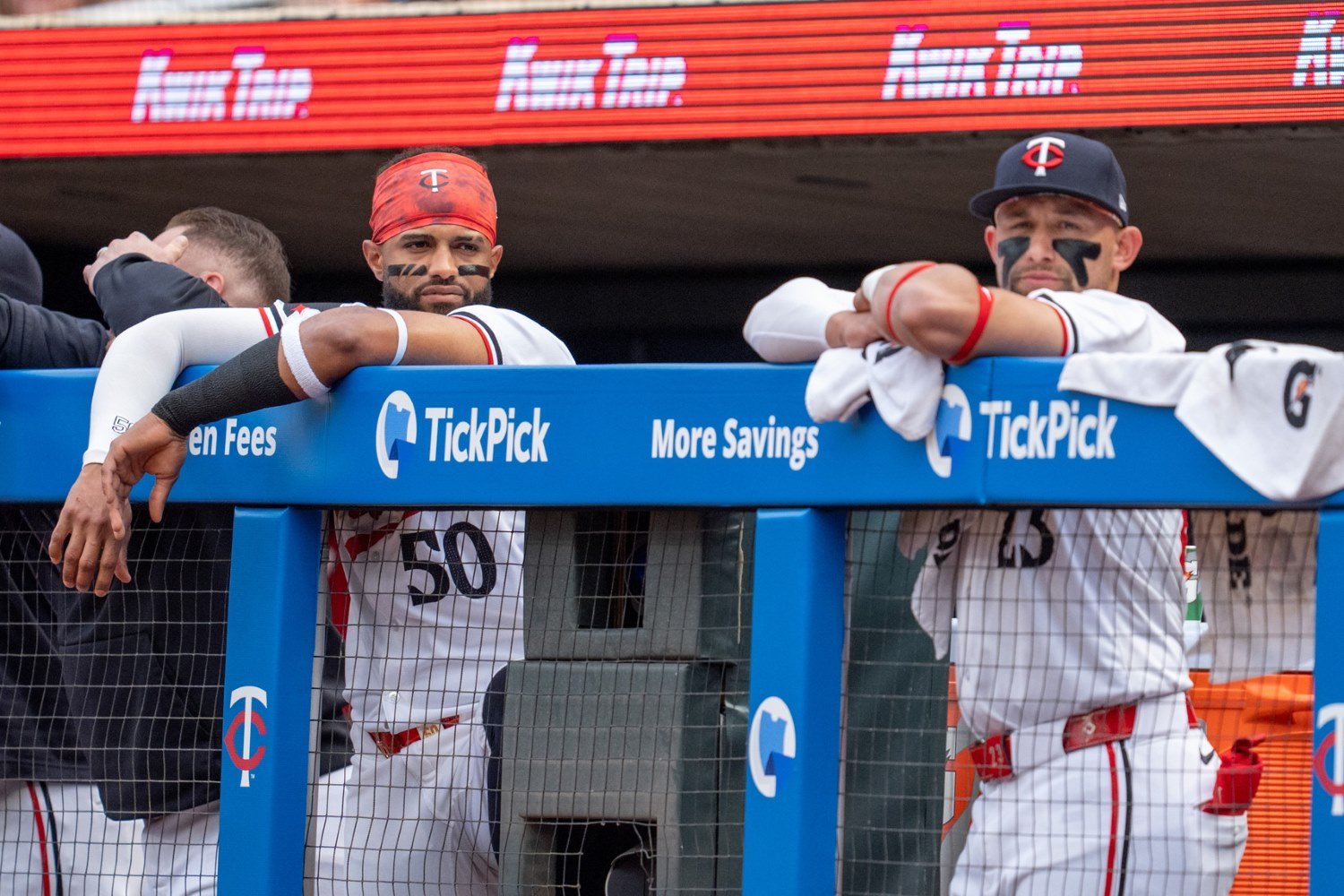 Luckily, the Twins are hopeful that it isn’t as severe as the right quadriceps injury which caused Royce Lewis to miss the first two months of the season. The adductor muscles provide breaking forces through eccentric muscle contractions (i.e. the muscle is contracting while lengthening) to help control athletic movements. So, it should come as no surprise that groin and adductor strains are among the most common muscular injuries in elite athletes. The Grade 2 categorization essentially indicates that it is a moderate injury. From an advanced imaging standpoint, this means at least 10% but no more than 50% of Lewis’s muscle fibers were damaged. Because of the wide range of damage, outcomes for Grade 2 strains vary considerably, though most generally heal within six to eight weeks. That would be a rough estimate for Lewis’s return sometime between Aug. 14 and the end of that month. Now, the question facing Lewis and the Twins, one that is undoubtedly on everybody’s mind: What can be done to prevent this from occurring again? As I mentioned previously, this is the fourth significant injury Lewis has suffered to his right leg—ACL twice, quadriceps, adductor—since reaching MLB, and the sixth issue (those four, plus strains of his left oblique and left hamstring) that has landed him on the IL. Unfortunately, there aren’t any easy, straightforward answers here. It’s often said that the best predictor of future injury is past injury, though that saying is only true as it pertains to the same muscle or location. For example, the best predictor of suffering a right ankle sprain is if you previously sprained that right ankle. All of Lewis’s injuries thus far—save for the ACL—are to unique muscles. Muscle weakness is a common characteristic following ACL reconstruction, yet there is a surprising lack of research looking into the presence and persistence of weakness in muscle groups other than the quadriceps. However, there is evidence that muscle activation patterns (specifically the co-activation of the gluteal and adductor muscles) are impaired for up to two years following surgery. Unfortunately, research going the next step—determining if these impaired activation patterns are associated with greater injury risk—is largely absent. It’s also important to consider that, as a professional athlete, Lewis has access to elite rehabilitation and strength and conditioning programs. The Twins have been cautious with his rehab and training, and assess his force production (strength, power, etc.) via scientific means such as force plates and dynamometry regularly. Athletes aren’t cleared to return to play following a major injury until all of their measures have reached or exceeded their pre-injury values. (As far as imbalances go (i.e. one side is stronger than the other), there isn’t much strong evidence to suggest it is an important factor in injury risk mitigation or performance.) Finally, the most powerful but least satisfying factor needs to be considered: Dumb luck. We don’t like to think that nothing could have been done; that Lewis’s injury was an accident, the simple flap of the butterfly’s wing throwing into motion a chain of events that were unpredictable and uncontrollable. Suggesting so nullifies the ability to ascribe blame, leaving our frustrations and sympathies simply afloat in the ether. We can’t blame Lewis’s legs or work ethic, nor can we question Nick Paparesta’s treatment philosophy and practices. But often that is done anyway, by the talking heads and individuals with no avenue for venting their frustrations. They label the athlete as “injury-prone”—despite not fully appreciating the complexities of the human neuromusculoskeletal system and injury risk mitigation—and place blame via jumps in logic and correlation-equals-causation thinking. Losing Royce Lewis sucks--for him, for the team, and for us. We all want to see Lewis batting in the middle of the order and playing a stout third base. But right now, he’s headed for another IL stint. It’s not his fault. It may not even be his body’s fault. It may just be Lady Luck striking yet again.