



Lucas Seehafer PT
-
Posts
522 -
Joined
-
Last visited
-
Days Won
2
Content Type
Profiles
News
Minnesota Twins Videos
2026 Minnesota Twins Top Prospects Ranking
2022 Minnesota Twins Draft Picks
Minnesota Twins Free Agent & Trade Rumors, Notes, & Tidbits
Guides & Resources
2023 Minnesota Twins Draft Picks
The Minnesota Twins Players Project
2024 Minnesota Twins Draft Picks
2025 Minnesota Twins Draft Pick Tracker
2026 Minnesota Twins Draft Tracker: Picks & Bonuses
Forums
Blogs
Events
Store
Downloads
Gallery
Everything posted by Lucas Seehafer PT
-
Twins Minor League Pitching Report: Jordan Balazovic
Lucas Seehafer PT posted an article in Minor Leagues
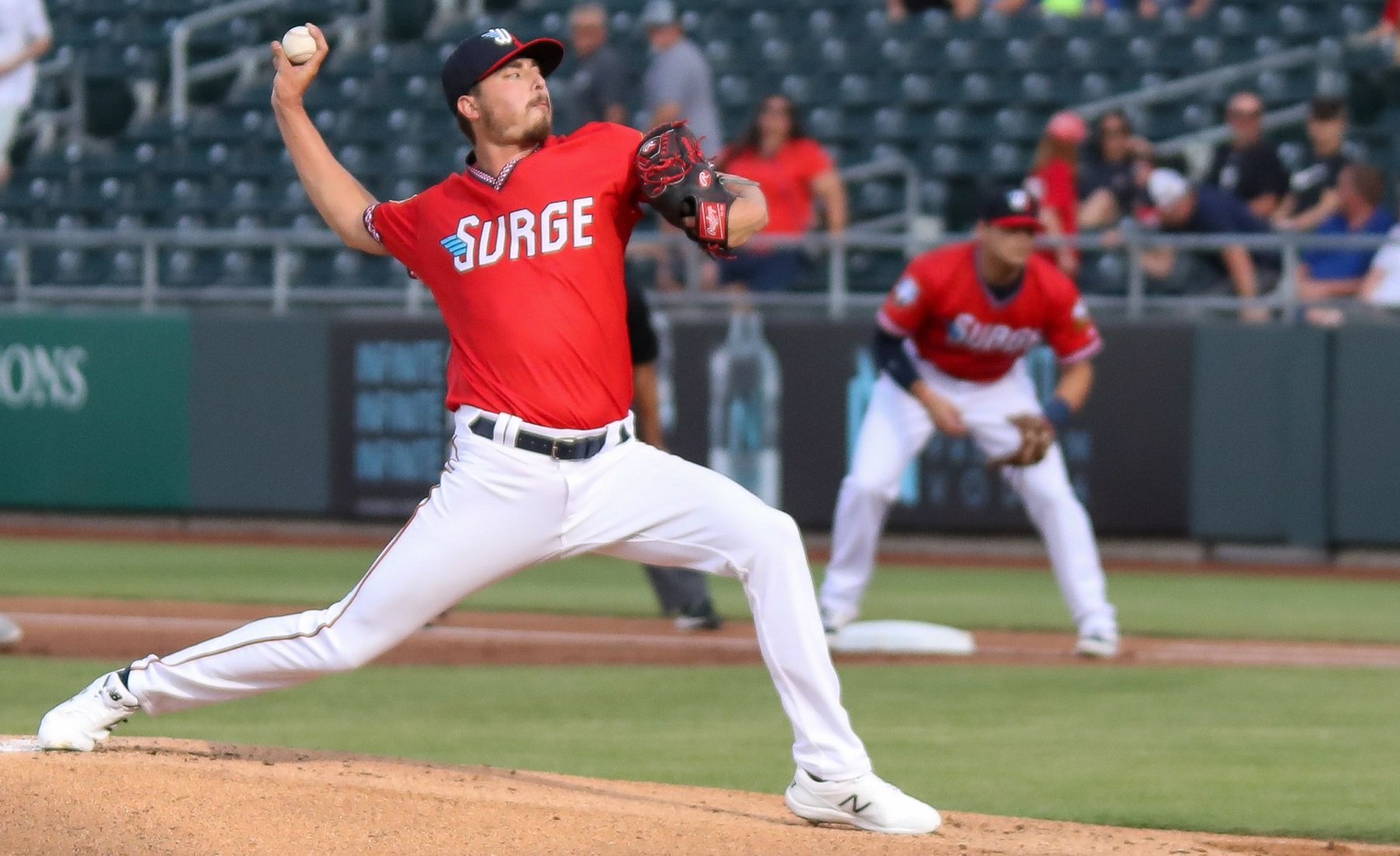 After missing the first couple months of the season thanks to an ailing back, Balazovic has made six starts for the Double-A Wichita Wind Surge, hurling a total of 24 ⅓ innings with his last start on June 30 (5 ⅔ innings) being his longest of the season. He currently owns an uninspiring 4.44 ERA, though 10 of the 12 runs he has surrendered came during two of his first four starts. Over his last 10 ⅓ innings, Balazovic has allowed two earned runs while striking out 14 batters and walking only two. Balazovic possesses a funky-ish delivery that isn’t so much violent as it is...flaily? This delivery is simultaneously one of his strengths as well as a weakness, at least potentially. The sheer volume of movement of his limbs not only serves as a peripheral distraction, but also helps hide the ball remarkably well, making it difficult for opposing batters to get a solid read on which pitch is barreling towards the plate. Combine that with his healthy wingspan and Balazovic has a natural proclivity for getting people out with his heater (more on that in a second). However, this extraneous movement also likely increases the amount of torque placed on his shoulder and back, in particular, potentially threatening his durability. (There’s no way to know for sure unless the Twins allow us to strap electrodes on him and register the force these structures are exposed to and I don’t think Twins Daily has either that kind of budget or access.) That said, Balazovic pushes off well with his back leg, which is the main reason why he is able to sit 93-95 mph with his fastball. Speaking of which, Balazovic’s fastball is, in my estimation, one of the better ones in the Twins’ system. He most frequently unloads the pitch near the top of the zone and while command can sometimes be an issue - his 7.1% BB% is tied for the second highest of his career - the fastball can touch as high as 97 mph and possesses great rising action. Of course, Balazovic’s fastball doesn’t actually rise - that would either 1. defy the laws of physics or 2. suggest that he’s secretly Tyler Rogers in disguise - but rather it simply appears as though it is rising to the batter. One of the worst pitches a hurler can have is a fastball that neither sinks nor plays tricks with opponent’s mind and luckily Balazovic checks at least one of those boxes. As for his other pitches, Balazovic infrequently throws a changeup that sits 87-90 mph with tailing/sinking movement as well as a slider and curveball that are essentially the same pitch, though the slider is both a little faster (83-86 mph versus 81-83 mph) and has a slightly sharper break. The fastball and slider are the two pitches he relies on most frequently to rack up strikeouts and induce outs, in general. The curveball is most often employed in the middle of an at-bat while his changeup is very frequently an afterthought. Watching Balazovic, it’s easy to get excited for what his future holds, and it’s apparent why many in and around MLB think that he is perhaps the Twins’ top pitching prospect; he simply looks like a modern day pitcher and has the stuff of one, too. If he can stay healthy, keep the walks low, and keep the ball in the park, he has the potential to be a very solid pitcher with a long career. MORE FROM TWINS DAILY — Latest Twins coverage from our writers — Recent Twins discussion in our forums — Follow Twins Daily via Twitter, Facebook or email
 -
If 2021 is the year of Josh Winder’s breakout, then 2019 was the year of Jordan Balazovic. The Minnesota Twins’ 2016 fifth-round pick out of Canada shot up the internet’s various prospect ranking systems thanks to an electric fastball and the projectability of his 6-foot-5-inch, 215 pound frame. There are arguably no more important attributes a pitcher can possess in the modern iteration of major league baseball than heat and projectability and Balazovic has both in spades. After missing the first couple months of the season thanks to an ailing back, Balazovic has made six starts for the Double-A Wichita Wind Surge, hurling a total of 24 ⅓ innings with his last start on June 30 (5 ⅔ innings) being his longest of the season. He currently owns an uninspiring 4.44 ERA, though 10 of the 12 runs he has surrendered came during two of his first four starts. Over his last 10 ⅓ innings, Balazovic has allowed two earned runs while striking out 14 batters and walking only two. Balazovic possesses a funky-ish delivery that isn’t so much violent as it is...flaily? This delivery is simultaneously one of his strengths as well as a weakness, at least potentially. The sheer volume of movement of his limbs not only serves as a peripheral distraction, but also helps hide the ball remarkably well, making it difficult for opposing batters to get a solid read on which pitch is barreling towards the plate. Combine that with his healthy wingspan and Balazovic has a natural proclivity for getting people out with his heater (more on that in a second). However, this extraneous movement also likely increases the amount of torque placed on his shoulder and back, in particular, potentially threatening his durability. (There’s no way to know for sure unless the Twins allow us to strap electrodes on him and register the force these structures are exposed to and I don’t think Twins Daily has either that kind of budget or access.) That said, Balazovic pushes off well with his back leg, which is the main reason why he is able to sit 93-95 mph with his fastball. Speaking of which, Balazovic’s fastball is, in my estimation, one of the better ones in the Twins’ system. He most frequently unloads the pitch near the top of the zone and while command can sometimes be an issue - his 7.1% BB% is tied for the second highest of his career - the fastball can touch as high as 97 mph and possesses great rising action. Of course, Balazovic’s fastball doesn’t actually rise - that would either 1. defy the laws of physics or 2. suggest that he’s secretly Tyler Rogers in disguise - but rather it simply appears as though it is rising to the batter. One of the worst pitches a hurler can have is a fastball that neither sinks nor plays tricks with opponent’s mind and luckily Balazovic checks at least one of those boxes. As for his other pitches, Balazovic infrequently throws a changeup that sits 87-90 mph with tailing/sinking movement as well as a slider and curveball that are essentially the same pitch, though the slider is both a little faster (83-86 mph versus 81-83 mph) and has a slightly sharper break. The fastball and slider are the two pitches he relies on most frequently to rack up strikeouts and induce outs, in general. The curveball is most often employed in the middle of an at-bat while his changeup is very frequently an afterthought. Watching Balazovic, it’s easy to get excited for what his future holds and it’s apparent why many in and around MLB think that he is perhaps the Twins’ top pitching prospect; he simply looks like a modern day pitcher and has the stuff of one, too. If he can stay healthy, keep the walks low, and keep the ball in the park, he has the potential to be a very solid pitcher with a long career. MORE FROM TWINS DAILY — Latest Twins coverage from our writers — Recent Twins discussion in our forums — Follow Twins Daily via Twitter, Facebook or email View full article
-
Which Pitching Prospect Will Help Twins Next?
Lucas Seehafer PT commented on Greglw3's blog entry in Greg Allen
Jovani Moran and Josh Winder are definitely the closest to MLB ready, in my estimation, and also are pretty much the only two who are healthy at this point (sounds like Winder is going to be ok after taking a ball off the neck in his last start). I'm pretty high on both, but we probably won't see extended looks at either until next summer. -
Falvine's Waiver Claim Game
Lucas Seehafer PT commented on TwerkTwonkTwins's blog entry in Ryan Stephan's Twinpinions
Wow, great work. Goes to show that the vast majority of the time, waiver moves - whether pick ups or losing players - rarely matter in the grand scheme. We - myself included - sometimes get a little irritated when the Twins drop someone like a Chalmers or Blankenhorn, but this high suggests that doing so will almost never have any consequences despite their perceived upside. -
He's only started 7 of his 95 MiLB appearances, so the Twins have never really viewed him as anything but a reliever. I'd say that right now, his fastball and changeup are legit MLB pitches, but his slider is his true third pitch and it will likely only ever be average at best. It just doesn't have the attributes you'd like to see from a true third option in an arsenal; it's more of an occasional offering to keep batters honest. That could always change, but I feel comfortable saying that it will never usurp his fastball and definitely not his changeup. To your point, I agree that his command is probably his biggest weakness at this point, but a slightly better Hansel Robles is a darn good option out of the pen. If that's his floor, which it may or may not be, he's in a really good spot.
-
Yes, it's due to COVID protocols, but once they clear testing and whatnot they can be called up right away.
-
Twins Minor League Pitching Report: Jovani Moran
Lucas Seehafer PT posted an article in Minor Leagues
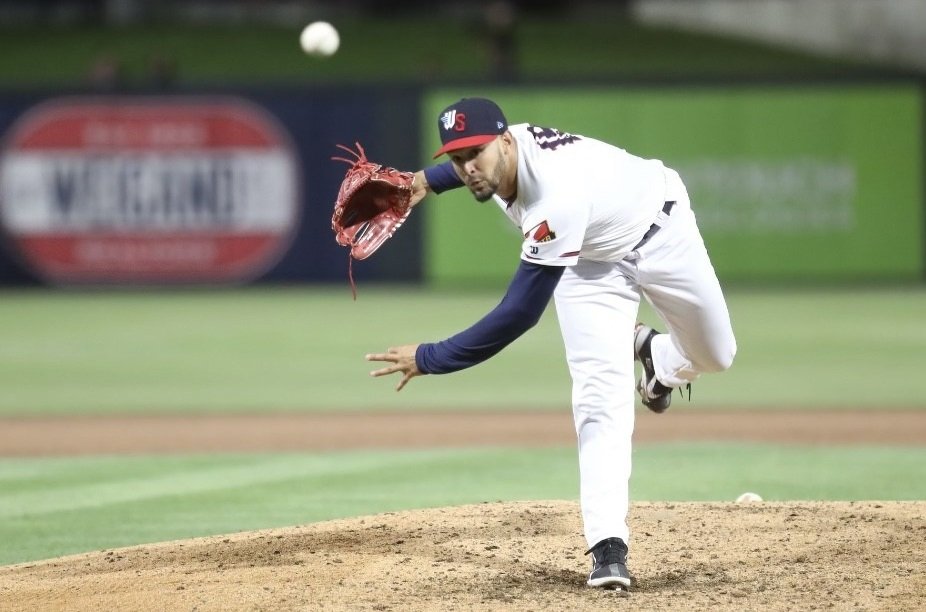 The Minnesota Twins farm system is chock-full of intriguing arm talent, particularly when it comes to starting pitching. But while names such as Jhoan Duran, Jordan Balazovic, and Josh Winder grab the majority of the headlines, perhaps no single pitcher in the system is more ready for major league action than reliever Jovani Moran. The Twins selected the 24-year-old lefty with the 200th pick of the 2015 draft out of the Carlos Beltran Baseball Academy located in Florida, Puerto Rico. Since putting pen to paper and officially signing with the Twins, Moran has experienced bouts of incredible success and overall mediocrity, though his performance to date this summer has catapulted him into the franchise's Top 30 prospects according to MLB Pipeline. As of this writing, he owns a 1.91 ERA and 0.70 WHIP to go along with 55 strikeouts in 33 innings for Double-A Wichita. From a purely physical standpoint, nothing about Moran stands out. He's listed at 6-foot-1-inches tall and 165 pounds with an athletic, if a little slender, frame. That said, his mechanics are fluid and repeatable - he only throws out of the stretch - and generates good forward thrust with his powerful legs. Moran primarily utilizes his 4-seam fastball, which sits 92-94 mph, though it can touch as high as 96 mph, to begin at-bats and mixes in an average slider that has good, but not overwhelming, bite. However, the pièce de résistance of Moran's arsenal is his Johan Santana-like changeup, blasphemous as that may sound. His changeup "poofs" - for lack of a more technical scouting term - out of his hand and floats towards the catcher's mitt seemingly in slow motion while opposing batters corkscrew themselves into the ground. Batters know the changeup is coming, but the similar arm slots combined with the 10-12 mph difference between it and his 4-seamer keeps them on their heels. It is this combination that has led Moran to post the highest strikeout rate (45.8%) and second-best xFIP (2.09) among all minor league pitchers who have thrown at least 30 innings this season. However, Moran is not without his warts. He often falls behind in the count due to average command of his fastball and slider and has escaped multiple full-counts throughout the course of the season. (Note: His overall control is fine - he's walked only 11 batters in 33.0 innings - but his ability to place the ball where he wants it with every pitch is lacking. Think of control as accuracy, but command as precision. He can throw strikes, just not always in the location he and/or the catcher want.) Of the 12 hits he has allowed this summer, three have been home runs and his high leg kick, even with runners on base, leaves him susceptible to stolen base attempts; in the some-15 innings I've watched him throw this season, I have yet to seem him unleash a pick-off attempt. Additionally, Moran has a history of elbow and shoulder injuries, though he has not been placed on the injured list since July of 2019 and has not undergone any major surgeries (i.e. Tommy John). That said, the numbers and video speak for themselves. Moran is one of the most untouchable relievers in all of Minor League Baseball and owns one of the league's most dominant pitches in his legitimate 70-grade changeup. It would not be surprising to see Moran take the hill at Target Field at some point this season, despite not currently being on the 40-man roster, and one could easily make the argument that he has earned the right to be called up directly from Double-A. In all likelihood, though, he will see some time in St. Paul despite the Twins' bullpen woes and his consistent dominance at one of the minor league's top levels. But there is a legitimate argument to be made that he is the most likely candidate in the system to be the future ace of the Twins' bullpen due in large part to his ability to throw strikes and strike batters out. MORE FROM TWINS DAILY — Latest Twins coverage from our writers — Recent Twins discussion in our forums — Follow Twins Daily via Twitter, Facebook or email
 -
While the likes of Jhoan Duran, Jordan Balazovic, and Josh Winder garner most of the headlines, Double-A relief pitcher Jovani Moran may just be the most sure-thing pitching prospect in the Twins' farm system. The Minnesota Twins farm system is chock-full of intriguing arm talent, particularly when it comes to starting pitching. But while names such as Jhoan Duran, Jordan Balazovic, and Josh Winder grab the majority of the headlines, perhaps no single pitcher in the system is more ready for major league action than reliever Jovani Moran. The Twins selected the 24-year-old lefty with the 200th pick of the 2015 draft out of the Carlos Beltran Baseball Academy located in Florida, Puerto Rico. Since putting pen to paper and officially signing with the Twins, Moran has experienced bouts of incredible success and overall mediocrity, though his performance to date this summer has catapulted him into the franchise's Top 30 prospects according to MLB Pipeline. As of this writing, he owns a 1.91 ERA and 0.70 WHIP to go along with 55 strikeouts in 33 innings for Double-A Wichita. From a purely physical standpoint, nothing about Moran stands out. He's listed at 6-foot-1-inches tall and 165 pounds with an athletic, if a little slender, frame. That said, his mechanics are fluid and repeatable - he only throws out of the stretch - and generates good forward thrust with his powerful legs. Moran primarily utilizes his 4-seam fastball, which sits 92-94 mph, though it can touch as high as 96 mph, to begin at-bats and mixes in an average slider that has good, but not overwhelming, bite. However, the pièce de résistance of Moran's arsenal is his Johan Santana-like changeup, blasphemous as that may sound. His changeup "poofs" - for lack of a more technical scouting term - out of his hand and floats towards the catcher's mitt seemingly in slow motion while opposing batters corkscrew themselves into the ground. Batters know the changeup is coming, but the similar arm slots combined with the 10-12 mph difference between it and his 4-seamer keeps them on their heels. It is this combination that has led Moran to post the highest strikeout rate (45.8%) and second-best xFIP (2.09) among all minor league pitchers who have thrown at least 30 innings this season. However, Moran is not without his warts. He often falls behind in the count due to average command of his fastball and slider and has escaped multiple full-counts throughout the course of the season. (Note: His overall control is fine - he's walked only 11 batters in 33.0 innings - but his ability to place the ball where he wants it with every pitch is lacking. Think of control as accuracy, but command as precision. He can throw strikes, just not always in the location he and/or the catcher want.) Of the 12 hits he has allowed this summer, three have been home runs and his high leg kick, even with runners on base, leaves him susceptible to stolen base attempts; in the some-15 innings I've watched him throw this season, I have yet to seem him unleash a pick-off attempt. Additionally, Moran has a history of elbow and shoulder injuries, though he has not been placed on the injured list since July of 2019 and has not undergone any major surgeries (i.e. Tommy John). That said, the numbers and video speak for themselves. Moran is one of the most untouchable relievers in all of Minor League Baseball and owns one of the league's most dominant pitches in his legitimate 70-grade changeup. It would not be surprising to see Moran take the hill at Target Field at some point this season, despite not currently being on the 40-man roster, and one could easily make the argument that he has earned the right to be called up directly from Double-A. In all likelihood, though, he will see some time in St. Paul despite the Twins' bullpen woes and his consistent dominance at one of the minor league's top levels. But there is a legitimate argument to be made that he is the most likely candidate in the system to be the future ace of the Twins' bullpen due in large part to his ability to throw strikes and strike batters out. MORE FROM TWINS DAILY — Latest Twins coverage from our writers — Recent Twins discussion in our forums — Follow Twins Daily via Twitter, Facebook or email View full article
-
He was looked incredible in his debut against a really good Triple-A offense. Fastball sat in the mid-90s and his changeup was devastating. A very encouraging and exciting first glimpse!
-
Thanks Darwin! I would assume either Saturday or Sunday. Both are currently listed as TBD by milb.com and Winder's last start with Wichita was on June 23. Tuesday at the absolute latest.
-
Josh Winder pitched like a future MLB starter en route to being named the Twins Daily Minor League Starting Pitcher of the Month for June. Honorable Mentions: LHP Brent Headrick, Low-A: 1-1, 1.71 ERA, 21 IP, 30 K, 10 BB, 1.24 WHIP RHP Sawyer Gipson-Long, Low-A, 3-0, 2.91 ERA, 21 2/3 IP, 31 K, 5 BB, 1.25 WHIP Number 5: RHP Chris Vallimont, Double-A Stats: 2-2, 3.22 ERA, 22 1/3 IP, 34 K, 10 BB, 1.39 WHIP On the surface, Vallimont's numbers from May are arguably better than the ones he posted in June. However, the big difference was his uptick in innings. Vallimont faced exactly twice as many batters in June as he did in May - 96 versus 48 - and essentially maintained his strikeout rate. While he wasn't fantastic, he was good, which was enough to come in fifth in the vote. Number 4: RHP Ben Gross, High-A Stats: 2-0, 1.54 ERA, 23 1/3 IP, 29 K, 10 BB, 1.37 WHIP Gross will be 25-years-old before the end of the season meaning the odds that he ever reaches the majors are dwindling with each passing day. That said, his performance during the month of June was rather encouraging. Compared to May, Gross pitched six more innings, struck out seven more batters, allowed four fewer runs, and dropped his overall ERA from 4.15 to 2.66. Number 3: RHP Austin Schulfer, Double-A Stats: 1-1, 1.75 ERA, 25 2/3 IP, 28 K, 8 BB, 1.29 WHIP Like Gross, Schulfer saw his performance improve dramatically as the calendar turned from May to June. A 19th-round pick in the 2018 draft, Schulfer dropped his ERA from 5.31 to 3.33 after allowing seven less earned runs and striking out twice as many batters in 5 1/3 more innings. Again, his future may not be in the majors as he is already 25-years-old and owns a FIP north of 3.50 in his minor league career, however, it's always intriguing anytime a player posts a month as successful as Schulfer. Number 2: RHP Louie Varland, Low-A Stats: 1-0, 0.40 ERA, 22 1/3 IP, 29 K, 5 BB, 0.90 WHIP For as mediocre as Varland's May was, his June was absolutely superb. Piling up strikeouts has never been an issue for the former Concordia-St. Paul Golden Bear, but what changed for the 23-year-old in June was his ability to combine his punch outs with preventing the long ball. Varland struck out 29 batters in June compared to his 28 in May while seeing his home runs allowed (0 versus 2) and walks issued (5 versus 10) drop precipitously subsequent to a 59% increase in innings pitched (22 1/3 versus 14). Varland owns the raw stuff to be a contributor in some capacity at the major league level. The key with him, as is the case with many minor league pitchers, is improving his command to the point he did in June. If he can keep the walks low and and long ball few and far between, he could find himself pitching at Target Field someday. Number 1: RHP Josh Winder, Double-A (recently promoted to Triple-A) Stats: 2-0, 2.37 ERA, 30 1/3 IP, 35 K, 4 BB, 0.96 WHIP In a Twins' farm system that is replete with talent, perhaps no pitching prospect is more under-appreciated than Josh Winder. Winder, who did not even crack Twins Daily's Top 20 prospect list prior to the start of the season, finished in second place during last month's Starting Pitcher of the Month race after posting some ridiculous numbers and he continued his streak of dominance as spring turned to summer en route to winning this past month's honors. Unlike contemporaries Matt Canterino and Jhoan Duran, Winder possesses fluid mechanics with a consistent, repeatable motion. He get's good push off from his back leg which reduces the strain placed on his shoulder and elbow. He's only been placed on the injured list once in his minor league career, a stint that lasted exactly one week. Winder's owns a classic pitch arsenal consisting of a four-seam fastball, curveball, slider, and change-up. His fastball sits in the low- to mid-90s, though it can touch as high as 96 mph, and is graded as a 50-55 on the traditional 20-80 scouting scale according to FanGraphs. While he doesn't have one pitch that stands out as more impressive than the others, all four are at least average offerings, which has the benefit of raising his floor as a prospect. It this fact, along with his string of consistent positive performances, that drove Winder to be named to the 2021 Futures Game alongside a host of top-tier MLB prospects. Winder may never find himself among the Twins' top-10 prospects, however, arguably no pitcher in the system has risen their stock more than he has compared to prior to the season beginning. MORE FROM TWINS DAILY — Latest Twins coverage from our writers — Recent Twins discussion in our forums — Follow Twins Daily via Twitter, Facebook or email View full article
-
.jpg.c9a97de444ec54583538e7368fc03a7e.jpg) Honorable Mentions: LHP Brent Headrick, Low-A: 1-1, 1.71 ERA, 21 IP, 30 K, 10 BB, 1.24 WHIP RHP Sawyer Gipson-Long, Low-A, 3-0, 2.91 ERA, 21 2/3 IP, 31 K, 5 BB, 1.25 WHIP Number 5: RHP Chris Vallimont, Double-A Stats: 2-2, 3.22 ERA, 22 1/3 IP, 34 K, 10 BB, 1.39 WHIP On the surface, Vallimont's numbers from May are arguably better than the ones he posted in June. However, the big difference was his uptick in innings. Vallimont faced exactly twice as many batters in June as he did in May - 96 versus 48 - and essentially maintained his strikeout rate. While he wasn't fantastic, he was good, which was enough to come in fifth in the vote. Number 4: RHP Ben Gross, High-A Stats: 2-0, 1.54 ERA, 23 1/3 IP, 29 K, 10 BB, 1.37 WHIP Gross will be 25-years-old before the end of the season meaning the odds that he ever reaches the majors are dwindling with each passing day. That said, his performance during the month of June was rather encouraging. Compared to May, Gross pitched six more innings, struck out seven more batters, allowed four fewer runs, and dropped his overall ERA from 4.15 to 2.66. Number 3: RHP Austin Schulfer, Double-A Stats: 1-1, 1.75 ERA, 25 2/3 IP, 28 K, 8 BB, 1.29 WHIP Like Gross, Schulfer saw his performance improve dramatically as the calendar turned from May to June. A 19th-round pick in the 2018 draft, Schulfer dropped his ERA from 5.31 to 3.33 after allowing seven less earned runs and striking out twice as many batters in 5 1/3 more innings. Again, his future may not be in the majors as he is already 25-years-old and owns a FIP north of 3.50 in his minor league career, however, it's always intriguing anytime a player posts a month as successful as Schulfer. Number 2: RHP Louie Varland, Low-A Stats: 1-0, 0.40 ERA, 22 1/3 IP, 29 K, 5 BB, 0.90 WHIP For as mediocre as Varland's May was, his June was absolutely superb. Piling up strikeouts has never been an issue for the former Concordia-St. Paul Golden Bear, but what changed for the 23-year-old in June was his ability to combine his punch outs with preventing the long ball. Varland struck out 29 batters in June compared to his 28 in May while seeing his home runs allowed (0 versus 2) and walks issued (5 versus 10) drop precipitously subsequent to a 59% increase in innings pitched (22 1/3 versus 14). Varland owns the raw stuff to be a contributor in some capacity at the major league level. The key with him, as is the case with many minor league pitchers, is improving his command to the point he did in June. If he can keep the walks low and and long ball few and far between, he could find himself pitching at Target Field someday. Number 1: RHP Josh Winder, Double-A (recently promoted to Triple-A) Stats: 2-0, 2.37 ERA, 30 1/3 IP, 35 K, 4 BB, 0.96 WHIP In a Twins' farm system that is replete with talent, perhaps no pitching prospect is more under-appreciated than Josh Winder. Winder, who did not even crack Twins Daily's Top 20 prospect list prior to the start of the season, finished in second place during last month's Starting Pitcher of the Month race after posting some ridiculous numbers and he continued his streak of dominance as spring turned to summer en route to winning this past month's honors. Unlike contemporaries Matt Canterino and Jhoan Duran, Winder possesses fluid mechanics with a consistent, repeatable motion. He get's good push off from his back leg which reduces the strain placed on his shoulder and elbow. He's only been placed on the injured list once in his minor league career, a stint that lasted exactly one week. Winder's owns a classic pitch arsenal consisting of a four-seam fastball, curveball, slider, and change-up. His fastball sits in the low- to mid-90s, though it can touch as high as 96 mph, and is graded as a 50-55 on the traditional 20-80 scouting scale according to FanGraphs. While he doesn't have one pitch that stands out as more impressive than the others, all four are at least average offerings, which has the benefit of raising his floor as a prospect. It this fact, along with his string of consistent positive performances, that drove Winder to be named to the 2021 Futures Game alongside a host of top-tier MLB prospects. Winder may never find himself among the Twins' top-10 prospects, however, arguably no pitcher in the system has risen their stock more than he has compared to prior to the season beginning. MORE FROM TWINS DAILY — Latest Twins coverage from our writers — Recent Twins discussion in our forums — Follow Twins Daily via Twitter, Facebook or email
Honorable Mentions: LHP Brent Headrick, Low-A: 1-1, 1.71 ERA, 21 IP, 30 K, 10 BB, 1.24 WHIP RHP Sawyer Gipson-Long, Low-A, 3-0, 2.91 ERA, 21 2/3 IP, 31 K, 5 BB, 1.25 WHIP Number 5: RHP Chris Vallimont, Double-A Stats: 2-2, 3.22 ERA, 22 1/3 IP, 34 K, 10 BB, 1.39 WHIP On the surface, Vallimont's numbers from May are arguably better than the ones he posted in June. However, the big difference was his uptick in innings. Vallimont faced exactly twice as many batters in June as he did in May - 96 versus 48 - and essentially maintained his strikeout rate. While he wasn't fantastic, he was good, which was enough to come in fifth in the vote. Number 4: RHP Ben Gross, High-A Stats: 2-0, 1.54 ERA, 23 1/3 IP, 29 K, 10 BB, 1.37 WHIP Gross will be 25-years-old before the end of the season meaning the odds that he ever reaches the majors are dwindling with each passing day. That said, his performance during the month of June was rather encouraging. Compared to May, Gross pitched six more innings, struck out seven more batters, allowed four fewer runs, and dropped his overall ERA from 4.15 to 2.66. Number 3: RHP Austin Schulfer, Double-A Stats: 1-1, 1.75 ERA, 25 2/3 IP, 28 K, 8 BB, 1.29 WHIP Like Gross, Schulfer saw his performance improve dramatically as the calendar turned from May to June. A 19th-round pick in the 2018 draft, Schulfer dropped his ERA from 5.31 to 3.33 after allowing seven less earned runs and striking out twice as many batters in 5 1/3 more innings. Again, his future may not be in the majors as he is already 25-years-old and owns a FIP north of 3.50 in his minor league career, however, it's always intriguing anytime a player posts a month as successful as Schulfer. Number 2: RHP Louie Varland, Low-A Stats: 1-0, 0.40 ERA, 22 1/3 IP, 29 K, 5 BB, 0.90 WHIP For as mediocre as Varland's May was, his June was absolutely superb. Piling up strikeouts has never been an issue for the former Concordia-St. Paul Golden Bear, but what changed for the 23-year-old in June was his ability to combine his punch outs with preventing the long ball. Varland struck out 29 batters in June compared to his 28 in May while seeing his home runs allowed (0 versus 2) and walks issued (5 versus 10) drop precipitously subsequent to a 59% increase in innings pitched (22 1/3 versus 14). Varland owns the raw stuff to be a contributor in some capacity at the major league level. The key with him, as is the case with many minor league pitchers, is improving his command to the point he did in June. If he can keep the walks low and and long ball few and far between, he could find himself pitching at Target Field someday. Number 1: RHP Josh Winder, Double-A (recently promoted to Triple-A) Stats: 2-0, 2.37 ERA, 30 1/3 IP, 35 K, 4 BB, 0.96 WHIP In a Twins' farm system that is replete with talent, perhaps no pitching prospect is more under-appreciated than Josh Winder. Winder, who did not even crack Twins Daily's Top 20 prospect list prior to the start of the season, finished in second place during last month's Starting Pitcher of the Month race after posting some ridiculous numbers and he continued his streak of dominance as spring turned to summer en route to winning this past month's honors. Unlike contemporaries Matt Canterino and Jhoan Duran, Winder possesses fluid mechanics with a consistent, repeatable motion. He get's good push off from his back leg which reduces the strain placed on his shoulder and elbow. He's only been placed on the injured list once in his minor league career, a stint that lasted exactly one week. Winder's owns a classic pitch arsenal consisting of a four-seam fastball, curveball, slider, and change-up. His fastball sits in the low- to mid-90s, though it can touch as high as 96 mph, and is graded as a 50-55 on the traditional 20-80 scouting scale according to FanGraphs. While he doesn't have one pitch that stands out as more impressive than the others, all four are at least average offerings, which has the benefit of raising his floor as a prospect. It this fact, along with his string of consistent positive performances, that drove Winder to be named to the 2021 Futures Game alongside a host of top-tier MLB prospects. Winder may never find himself among the Twins' top-10 prospects, however, arguably no pitcher in the system has risen their stock more than he has compared to prior to the season beginning. MORE FROM TWINS DAILY — Latest Twins coverage from our writers — Recent Twins discussion in our forums — Follow Twins Daily via Twitter, Facebook or email- 11 comments
-
- 3
-

-
- josh winder
- louis varland
- (and 3 more)
-
Twins Daily Minor League Hitter of the Month
Lucas Seehafer PT replied to David Youngs's topic in Twins Minor League Talk
It wouldn't surprise me too much if we see the Twins make a few moves like these as the season progresses. The Triple-A squad is filled with former major leaguers who don't really have a role or value on a team like the Twins at the moment. A few will stick around as you need enough warm bodies to fill the roster, but there could be quite a bit of movement, particularly after the trade deadline.- 6 replies
-
- 1
-
-
- jose miranda
- trey cabbage
- (and 3 more)
-
Kind of a complex question with a complex answer, so I'll do my best to keep it simple: At the end of the day, "force" is the key variable in practically every injury. Take the UCL for example. Ligaments provide stability passively, meaning they don't have the ability to contract like muscles. Muscles, though, provide stability actively through their contractions. A UCL alone cannot stabilize the inner elbow, but it can with aid from the surrounding muscles. That's often why players sometimes try rehab before undergoing Tommy John, particularly if they only have a partial tear; theoretically, the muscles could compensate for the decreases stability provided by the ligament. However, there is only so much that can be done when the UCL and muscles are exposed to a constant barrage of 95+ mph heaters. Similarly, (and this is where I delve into educated guessing) Buxton's body produces so much force that the soft tissue has a difficult time keeping pace. He's fast, he's powerful and those facts may make him more susceptible to injury. Again, there is only so much that can be done to prevent injury when one moves as quickly and powerfully as he does. On a pure mathematical level, almost no one in the league submits their body to greater amounts of force than Buxton. That's just physics. What can be done to counteract that is, potentially, the $100 million question.
-
It isn't really an ability, though, is my argument. If most of it is due to bad luck as you say and as I argue, doesn't that preclude it from being an ability? It's like being good at roulette. It's chance due to factors that are largely out of the athlete's control.
-
Injuries are fickle. What we know for certain, something that pops up in the scientific literature over and over again, is that the best predictor for future injury is past injury. Beyond that, the world of athletic rehabilitation is a chasm filled to the brim with unknowns. A sprained thumb. A groin strain. Migraines. A broken toe. Wrist injuries. A concussion. A subluxed shoulder that required surgery. A hip strain. And now a broken hand. One would be hard pressed to not find even the slightest bit of sympathy for Minnesota Twins outfielder Byron Buxton after the spate of injuries he has suffered over the first seven seasons of his MLB career. Soft tissue. Bone. Brain. The injuries he’s experienced have run the gamut of both tissue and severity and have many wondering what he did to deserve such terrible luck. The fact of the matter is this: Byron Buxton has done nothing wrong and that makes his 2021 season the height of frustration, not because of himself as an individual, but because his body simply will not allow him to wow the denizens of Target Field on a nightly basis. The term “injury prone” gets thrown around quite often, particularly in cases similar to that of Buxton’s. While it is true that some players suffer injuries more often than others, the underlying factors that cause such injuries are often anyone’s best guess. Perhaps the athlete has a genetic predisposition, a “flaw” in their DNA structure that codes for more feeble muscles or brittle bones. Perhaps they indulge themselves on too many cheeseburgers when their body is better at extracting nutrients from fish or plant-based protein sources. Perhaps they simply have just plain bad luck. The term “injury prone” is not a neutral term, despite the insistence of many, fans and media members alike. The term often connotes a set of failures on the part of the athlete and suggests that if they had just done something better, they would be able to stay on the field. What that something is is often conveniently left blank - “How am I supposed to know? I’m not a doctor!” - but the implication persists. The fact of the matter is that quite often the medical community does not know what can be done to sufficiently prevent injuries from occurring and that is frustrating as hell. The sciences of athletic rehabilitation and injury prevention are not as firm as we’d like to believe. Coming back from injury is not like chemistry. Preventing one is not like theoretical physics. Very infrequently are their concrete formulas that explain the exact best way for getting an athlete back on the field and keeping them there. Many treatments and injury prevention programs are educated guesses, at best. There is little evidence that any sort of treatment works better than any other. Ultrasonic waves of energy delivered to a tissue by a specialized machine theoretically warm the tissue and promote blood flow and healing, but the results don’t bear out when tested. In theory, strengthening the muscles of the core, hip, and thighs will prevent catastrophic lower body injuries, but athletes around the world tear their ACLs and blow their Achilles at alarming rates. Injuries are fickle. What we know for certain, something that pops up in the scientific literature over and over again, is that the best predictor for future injury is past injury. Beyond that, the world of athletic rehabilitation is a chasm filled to the brim with unknowns. A team’s medical staff may employ the current best evidence and practices and treat their athletes 100% “by the book” and yet see them suffer injury after injury. Another may use unorthodox treatments that have little, if any, scientific backing and be heralded as the best among their peers because their athletes are seemingly impervious to breaking down. Injuries are not straightforward phenomena as much as we all wish them to be. Their occurrence is not straightforward. Their treatment is not straightforward. Their prevention is not straightforward. Nothing about them is straightforward and it is exactly this opaqueness that makes them so damn frustrating. By all accounts, Byron Buxton is one of the hardest working athletes in the game. He is revered by his teammates and coaching staff. He’s one of the good ones. And, yet, his body has betrayed him over and over and over again. That is not his fault. It is not the training staff’s fault. It is nobody’s fault. And that makes it all the more unfair. MORE FROM TWINS DAILY — Latest Twins coverage from our writers — Recent Twins discussion in our forums — Follow Twins Daily via Twitter, Facebook, Instagram or email View full article
-
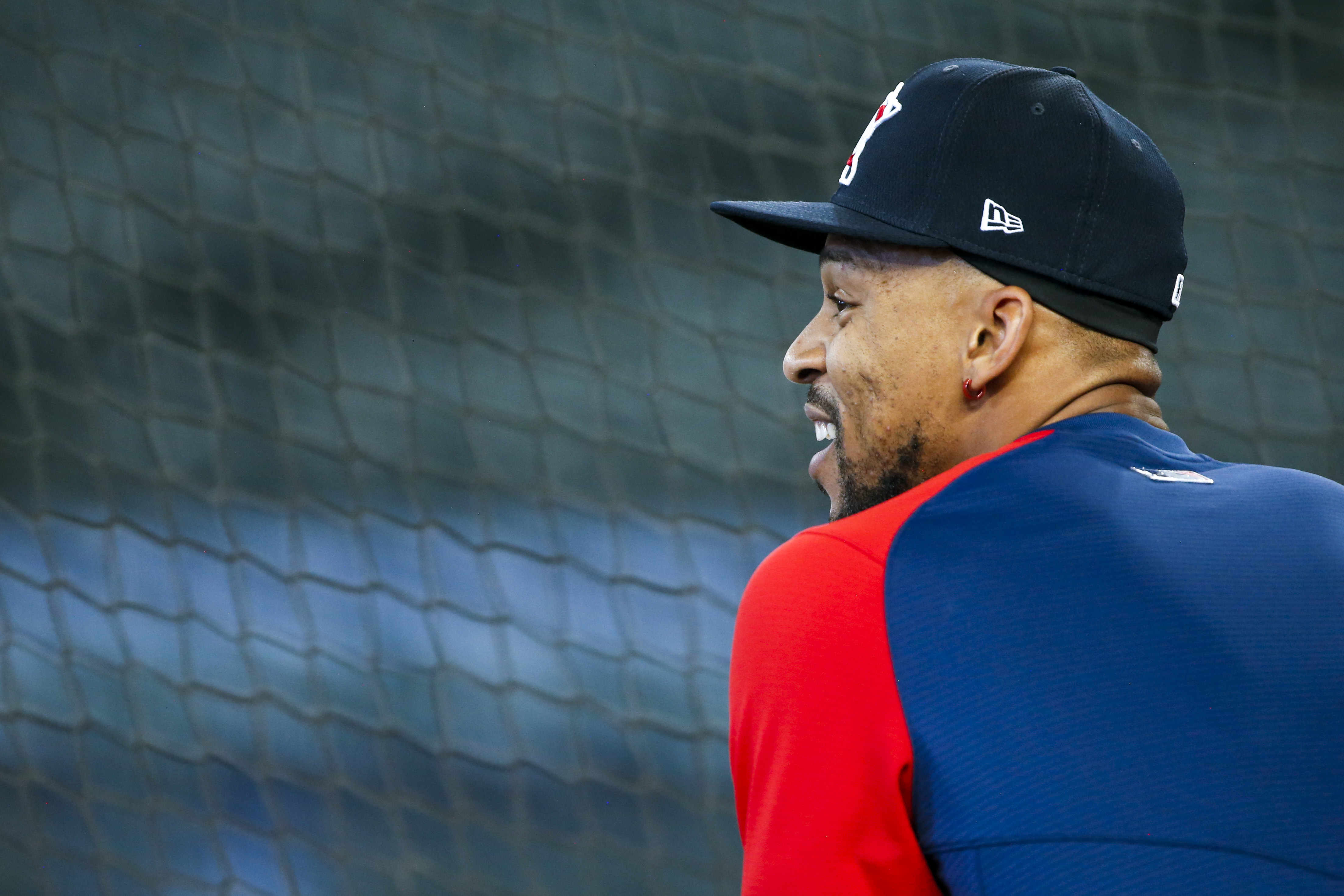 A sprained thumb. A groin strain. Migraines. A broken toe. Wrist injuries. A concussion. A subluxed shoulder that required surgery. A hip strain. And now a broken hand. One would be hard pressed to not find even the slightest bit of sympathy for Minnesota Twins outfielder Byron Buxton after the spate of injuries he has suffered over the first seven seasons of his MLB career. Soft tissue. Bone. Brain. The injuries he’s experienced have run the gamut of both tissue and severity and have many wondering what he did to deserve such terrible luck. The fact of the matter is this: Byron Buxton has done nothing wrong and that makes his 2021 season the height of frustration, not because of himself as an individual, but because his body simply will not allow him to wow the denizens of Target Field on a nightly basis. The term “injury prone” gets thrown around quite often, particularly in cases similar to that of Buxton’s. While it is true that some players suffer injuries more often than others, the underlying factors that cause such injuries are often anyone’s best guess. Perhaps the athlete has a genetic predisposition, a “flaw” in their DNA structure that codes for more feeble muscles or brittle bones. Perhaps they indulge themselves on too many cheeseburgers when their body is better at extracting nutrients from fish or plant-based protein sources. Perhaps they simply have just plain bad luck. The term “injury prone” is not a neutral term, despite the insistence of many, fans and media members alike. The term often connotes a set of failures on the part of the athlete and suggests that if they had just done something better, they would be able to stay on the field. What that something is is often conveniently left blank - “How am I supposed to know? I’m not a doctor!” - but the implication persists. The fact of the matter is that quite often the medical community does not know what can be done to sufficiently prevent injuries from occurring and that is frustrating as hell. The sciences of athletic rehabilitation and injury prevention are not as firm as we’d like to believe. Coming back from injury is not like chemistry. Preventing one is not like theoretical physics. Very infrequently are their concrete formulas that explain the exact best way for getting an athlete back on the field and keeping them there. Many treatments and injury prevention programs are educated guesses, at best. There is little evidence that any sort of treatment works better than any other. Ultrasonic waves of energy delivered to a tissue by a specialized machine theoretically warm the tissue and promote blood flow and healing, but the results don’t bear out when tested. In theory, strengthening the muscles of the core, hip, and thighs will prevent catastrophic lower body injuries, but athletes around the world tear their ACLs and blow their Achilles at alarming rates. Injuries are fickle. What we know for certain, something that pops up in the scientific literature over and over again, is that the best predictor for future injury is past injury. Beyond that, the world of athletic rehabilitation is a chasm filled to the brim with unknowns. A team’s medical staff may employ the current best evidence and practices and treat their athletes 100% “by the book” and yet see them suffer injury after injury. Another may use unorthodox treatments that have little, if any, scientific backing and be heralded as the best among their peers because their athletes are seemingly impervious to breaking down. Injuries are not straightforward phenomena as much as we all wish them to be. Their occurrence is not straightforward. Their treatment is not straightforward. Their prevention is not straightforward. Nothing about them is straightforward and it is exactly this opaqueness that makes them so damn frustrating. By all accounts, Byron Buxton is one of the hardest working athletes in the game. He is revered by his teammates and coaching staff. He’s one of the good ones. And, yet, his body has betrayed him over and over and over again. That is not his fault. It is not the training staff’s fault. It is nobody’s fault. And that makes it all the more unfair. MORE FROM TWINS DAILY — Latest Twins coverage from our writers — Recent Twins discussion in our forums — Follow Twins Daily via Twitter, Facebook, Instagram or email
 -
The Minnesota Twins have won three games in a row. We're looking into whether or not that is legal. Box Score Randy Dobnak: 5 IP, 4 H, 2 R, 2 ER, 1 BB, 1 K Home Runs: Nelson Cruz (15) Top 3 WPA: Max Kepler .167, Hansel Robles .144, Alex Colome .109 Win Probability Chart (via FanGraphs) The Minnesota Twins picked up their third win in a row and sealed a series victory after taking down the Texas Rangers by a score of 3-2 Saturday afternoon. Byron Buxton made his triumphant return after being sidelined with a hip flexor strain, going 1-for-4 at the plate and scoring one of the team’s three runs. His lone hit was an infield single in which he didn’t display a single hitch in his giddy-up. One batter later, Nelson Cruz tied the game at 2-2 with a long home run. While Cruz hasn’t exactly been the NELSON CRUZ the Twins and their faithful have come to expect over the last few seasons, he has still been remarkably good for a player north of his...experience. Should the team decide to pull the trigger on shipping out anyone with one year remaining on their deal, something that is almost guaranteed to happen, Cruz will be one of the more sought after bats on the market. His departure from the Twins will be sad, but he will go down as a true fan favorite and one of the more fun players to watch in team history. Randy Dobnak started on the mound and although he allowed a home run, his start was encouraging compared to his previous appearances. Saturday’s start represents pretty much exactly what the Twins want to see from Dobnak; control the zone and induce double plays. The biggest quibble one can have with Dobnak’s start is that he only picked up one strikeout, but at this point, the Twins will take any positives they can get when he takes the mound. Speaking about taking any positives they can get, how about the Twins bullpen? Caleb Theilbar, Alexander Colome, Hansel Robles and Taylor Rogers combined to throw four innings of scoreless baseball, striking out five and allowing only three runners to reach base. Saturday’s performance is exactly what the Twins’ front office envisioned over the offseason. Unfortunately, it’s a little too late for the Twins to make a run, but if the bullpen strings a couple of games like this together, perhaps they can recoup some value on the trade market. The Twins will turn to Kenta Maeda (2-2, 5.01 ERA) on Sunday as they look to sweep the Rangers. First pitch is scheduled for 1:35 p.m. CT. Postgame Interviews Bullpen Usage Spreadsheet SUN MON TUE WED FRI SAT TOT Colomé 24 0 0 20 0 15 59 Robles 0 17 0 0 20 14 51 Thielbar 0 0 0 38 0 12 50 Alcalá 0 19 0 10 18 0 47 Shoemaker 43 0 0 0 0 0 43 Dobnak 40 0 0 0 0 start 40 Rogers 0 0 0 15 12 13 40 Duffey 0 10 0 0 20 0 30 Farrell 0 24 0 0 0 0 24 MORE FROM TWINS DAILY — Latest Twins coverage from our writers — Recent Twins discussion in our forums — Follow Twins Daily via Twitter, Facebook, Instagram or email View full article
-
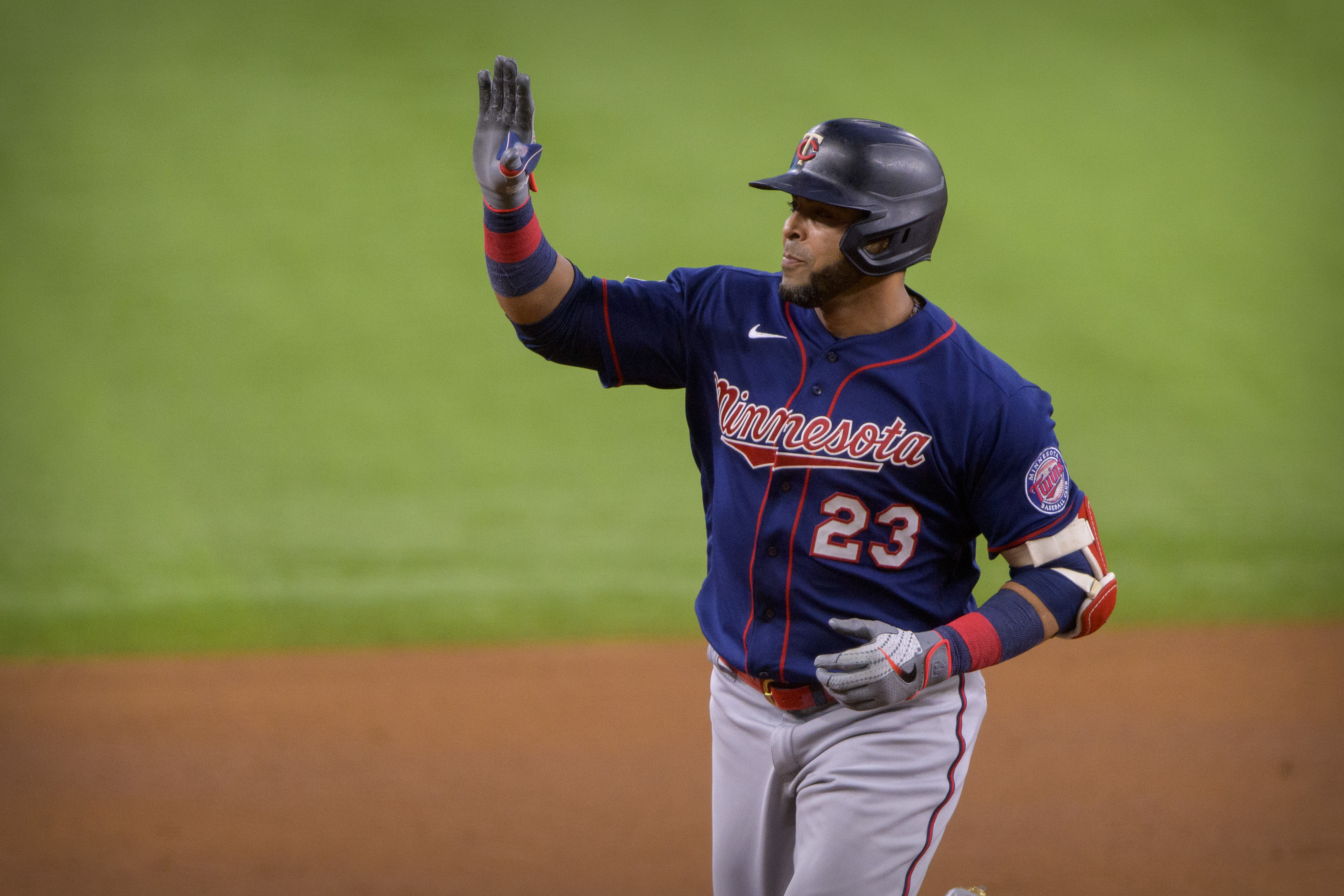 Box Score Randy Dobnak: 5 IP, 4 H, 2 R, 2 ER, 1 BB, 1 K Home Runs: Nelson Cruz (15) Top 3 WPA: Max Kepler .167, Hansel Robles .144, Alex Colome .109 Win Probability Chart (via FanGraphs) The Minnesota Twins picked up their third win in a row and sealed a series victory after taking down the Texas Rangers by a score of 3-2 Saturday afternoon. Byron Buxton made his triumphant return after being sidelined with a hip flexor strain, going 1-for-4 at the plate and scoring one of the team’s three runs. His lone hit was an infield single in which he didn’t display a single hitch in his giddy-up. One batter later, Nelson Cruz tied the game at 2-2 with a long home run. While Cruz hasn’t exactly been the NELSON CRUZ the Twins and their faithful have come to expect over the last few seasons, he has still been remarkably good for a player north of his...experience. Should the team decide to pull the trigger on shipping out anyone with one year remaining on their deal, something that is almost guaranteed to happen, Cruz will be one of the more sought after bats on the market. His departure from the Twins will be sad, but he will go down as a true fan favorite and one of the more fun players to watch in team history. Randy Dobnak started on the mound and although he allowed a home run, his start was encouraging compared to his previous appearances. Saturday’s start represents pretty much exactly what the Twins want to see from Dobnak; control the zone and induce double plays. The biggest quibble one can have with Dobnak’s start is that he only picked up one strikeout, but at this point, the Twins will take any positives they can get when he takes the mound. Speaking about taking any positives they can get, how about the Twins bullpen? Caleb Theilbar, Alexander Colome, Hansel Robles and Taylor Rogers combined to throw four innings of scoreless baseball, striking out five and allowing only three runners to reach base. Saturday’s performance is exactly what the Twins’ front office envisioned over the offseason. Unfortunately, it’s a little too late for the Twins to make a run, but if the bullpen strings a couple of games like this together, perhaps they can recoup some value on the trade market. The Twins will turn to Kenta Maeda (2-2, 5.01 ERA) on Sunday as they look to sweep the Rangers. First pitch is scheduled for 1:35 p.m. CT. Postgame Interviews Bullpen Usage Spreadsheet SUN MON TUE WED FRI SAT TOT Colomé 24 0 0 20 0 15 59 Robles 0 17 0 0 20 14 51 Thielbar 0 0 0 38 0 12 50 Alcalá 0 19 0 10 18 0 47 Shoemaker 43 0 0 0 0 0 43 Dobnak 40 0 0 0 0 start 40 Rogers 0 0 0 15 12 13 40 Duffey 0 10 0 0 20 0 30 Farrell 0 24 0 0 0 0 24 MORE FROM TWINS DAILY — Latest Twins coverage from our writers — Recent Twins discussion in our forums — Follow Twins Daily via Twitter, Facebook, Instagram or email
 -
Game Recap: Twins 5, Astros 2
Lucas Seehafer PT replied to Lucas Seehafer PT's topic in Twins Daily Front Page News
All indications point to him being activated after tomorrow's game. -
José Berríos threw one of his greatest games of the season and big, timely hits from Miguel Sanó and Jorge Polanco helped drive the Minnesota Twins past the Houston Astros Saturday evening. Oh, and Nick Gordon was a major factor on the base paths and in centerfield. Box Score José Berríos: 7 IP, 5 H, 2 R, 2 ER, 1 BB, 8 K Home Runs: Jorge Polanco (9) Top 3 WPA: José Berríos .266, Jorge Polanco .126, Miguel Sanó .104 Win Probability Chart (via FanGraphs) The Minnesota Twins were in full control from the moment that José Berríos took the mound during the bottom of the first inning. Berríos tossed an absolute gem, striking out eight and lowering his ERA to 3.49 over the course of seven innings for one of his better performances of an already strong campaign. Other than two poorly located pitches against Kyle Tucker and Robel Garcia - the two went back-to-back during the top of the seventh inning - Berríos was virtually unhittable. At the plate, the Twins tagged eight balls with an exit velocity greater than 100 mph, producing five hits. Jorge Polanco continued to display signs of returning to his 2019 form as he went 3-for-4 with a home run and three RBI. He’s slashing .300/.358/.617 with 18 hits and five home runs over his last 15 games. His current .766 OPS would be the third-best of his career behind the 2018 (.773) and 2019 (.841) seasons. Miguel Sanó got the scoring going for the Twins in the bottom of the fourth inning when he launched a double high off the right centerfield wall to score Trevor Larnach. He was later robbed of more RBIs when Astros’ leftfielder Michael Brantley made a sliding catch on a sinking line drive with the bases loaded. While it could be easily argued that Sanó has had one of the more disappointing performances during a Twins’ season littered with disappointing performances, the fact of the matter remains that he has been largely a league-average player. (His wRC+ is hovering right around 100.) There's even some evidence that he's getting a little unlucky. Sanó currently owns a .214 batting average on balls in play (BABIP), which is the lowest of his career by far. (He owns a .329 BABIP for his career and his previous low was in 2018 with a .286 figure.) Entering play on Saturday, the MLB average BABIP was .289. Sanó will always have a high strikeout rate and will often fail to produce in situations where, frankly, he needs to, but if he continues to put the ball in play at the current rate that he is, odds are he’ll end the season as a slightly-above average player statistically speaking. Another bright spot for the Twins during their win was the continued strong play of Nick Gordon. Gordon made yet another start in centerfield and once again performed quite well defensively. His initial reactions on two balls in the right centerfield gap were solid and his strong path to the ball combined with his above-average speed allowed him to make two fairly difficult catches look easy. Gordon went 1-for-4 at the plate, but reached base a second time after a dropped third strike rolled to the backstop. He proceeded to steal second base both times he reached, putting him in some truly rarified air. The key for Gordon’s career moving forward is continuing to perform well in center. He can play a serviceable second base and, while it’s not his ideal defensive position, would be alright in fits and starts at shortstop. The biggest thing that was keeping Gordon as a fringe prospect - his health history notwithstanding - was his overall lack of power combined with mediocre arm strength. He had the speed to get to balls as short, but sometimes struggled with fielding the ball cleanly and throwing runners out. If he can show average to above-average skills in center, his value on the team will rise rather significantly. There just aren’t many role players on MLB rosters who can produce a .300 or so batting average and fill in at both shortstop, center and second base. Finally, and there really isn’t any way to relay this stat other than to shoehorn the bejeezus out of it, Larnach’s legs simply can’t catch a break. Postgame Interviews No postgame interviews tonight as the game was aired on Fox. Bullpen Usage Spreadsheet SUN TUE WED THU FRI SAT TOT Jax 0 23 51 0 0 0 74 Duffey 14 0 0 20 22 0 56 Farrell 13 19 0 23 0 0 55 Alcalá 10 21 0 7 15 0 53 Robles 15 0 0 11 0 15 41 Shoemaker 0 0 0 0 35 0 35 Colomé 0 9 25 0 0 0 34 Rogers 0 20 0 0 3 9 32 MORE FROM TWINS DAILY — Latest Twins coverage from our writers — Recent Twins discussion in our forums — Follow Twins Daily via Twitter, Facebook or email View full article
-
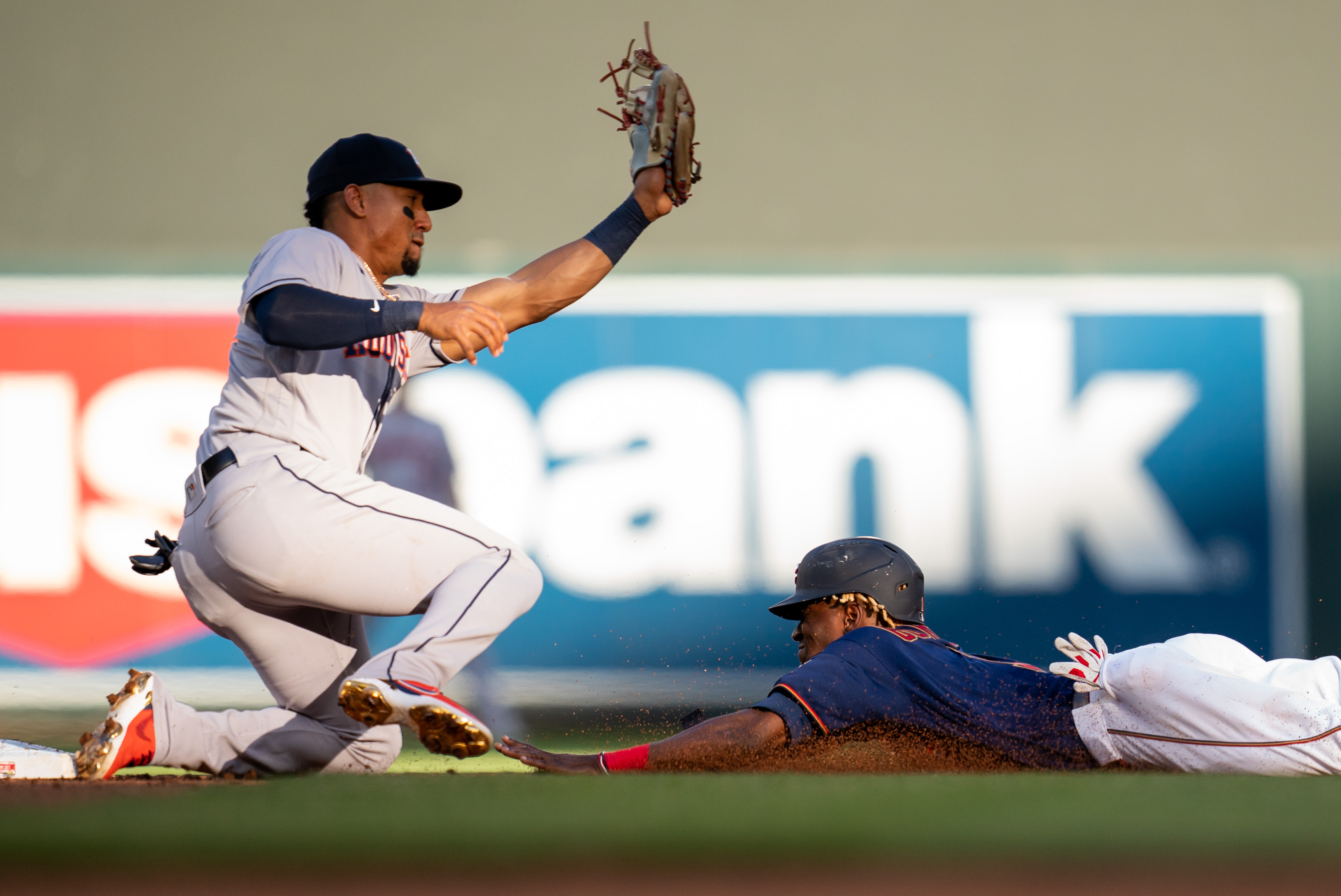 Box Score José Berríos: 7 IP, 5 H, 2 R, 2 ER, 1 BB, 8 K Home Runs: Jorge Polanco (9) Top 3 WPA: José Berríos .266, Jorge Polanco .126, Miguel Sanó .104 Win Probability Chart (via FanGraphs) The Minnesota Twins were in full control from the moment that José Berríos took the mound during the bottom of the first inning. Berríos tossed an absolute gem, striking out eight and lowering his ERA to 3.49 over the course of seven innings for one of his better performances of an already strong campaign. Other than two poorly located pitches against Kyle Tucker and Robel Garcia - the two went back-to-back during the top of the seventh inning - Berríos was virtually unhittable. At the plate, the Twins tagged eight balls with an exit velocity greater than 100 mph, producing five hits. Jorge Polanco continued to display signs of returning to his 2019 form as he went 3-for-4 with a home run and three RBI. He’s slashing .300/.358/.617 with 18 hits and five home runs over his last 15 games. His current .766 OPS would be the third-best of his career behind the 2018 (.773) and 2019 (.841) seasons. Miguel Sanó got the scoring going for the Twins in the bottom of the fourth inning when he launched a double high off the right centerfield wall to score Trevor Larnach. He was later robbed of more RBIs when Astros’ leftfielder Michael Brantley made a sliding catch on a sinking line drive with the bases loaded. While it could be easily argued that Sanó has had one of the more disappointing performances during a Twins’ season littered with disappointing performances, the fact of the matter remains that he has been largely a league-average player. (His wRC+ is hovering right around 100.) There's even some evidence that he's getting a little unlucky. Sanó currently owns a .214 batting average on balls in play (BABIP), which is the lowest of his career by far. (He owns a .329 BABIP for his career and his previous low was in 2018 with a .286 figure.) Entering play on Saturday, the MLB average BABIP was .289. Sanó will always have a high strikeout rate and will often fail to produce in situations where, frankly, he needs to, but if he continues to put the ball in play at the current rate that he is, odds are he’ll end the season as a slightly-above average player statistically speaking. Another bright spot for the Twins during their win was the continued strong play of Nick Gordon. Gordon made yet another start in centerfield and once again performed quite well defensively. His initial reactions on two balls in the right centerfield gap were solid and his strong path to the ball combined with his above-average speed allowed him to make two fairly difficult catches look easy. Gordon went 1-for-4 at the plate, but reached base a second time after a dropped third strike rolled to the backstop. He proceeded to steal second base both times he reached, putting him in some truly rarified air. The key for Gordon’s career moving forward is continuing to perform well in center. He can play a serviceable second base and, while it’s not his ideal defensive position, would be alright in fits and starts at shortstop. The biggest thing that was keeping Gordon as a fringe prospect - his health history notwithstanding - was his overall lack of power combined with mediocre arm strength. He had the speed to get to balls as short, but sometimes struggled with fielding the ball cleanly and throwing runners out. If he can show average to above-average skills in center, his value on the team will rise rather significantly. There just aren’t many role players on MLB rosters who can produce a .300 or so batting average and fill in at both shortstop, center and second base. Finally, and there really isn’t any way to relay this stat other than to shoehorn the bejeezus out of it, Larnach’s legs simply can’t catch a break. Postgame Interviews No postgame interviews tonight as the game was aired on Fox. Bullpen Usage Spreadsheet SUN TUE WED THU FRI SAT TOT Jax 0 23 51 0 0 0 74 Duffey 14 0 0 20 22 0 56 Farrell 13 19 0 23 0 0 55 Alcalá 10 21 0 7 15 0 53 Robles 15 0 0 11 0 15 41 Shoemaker 0 0 0 0 35 0 35 Colomé 0 9 25 0 0 0 34 Rogers 0 20 0 0 3 9 32 MORE FROM TWINS DAILY — Latest Twins coverage from our writers — Recent Twins discussion in our forums — Follow Twins Daily via Twitter, Facebook or email
 -
When the Minnesota Twins signed veteran shortstop Andrelton Simmons to a one-year, $10.5 million contract this past January they did so with the intention of him not only serving as a stopgap before top prospect Royce Lewis made his much anticipated jump to the Majors but also to shore up a Twins’ defense that desperately needed an upgrade over what Jorge Polanco was providing. The deal at the time was widely respected, neither panned nor necessarily praised, as it was widely understood that the team’s primary target to replace Polanco, Marcus Semien, who ultimately signed with the Toronto Bluejays, simply did not want to come to Minnesota. Additionally, Simmons had been the definition of a generational talent defensively since his debut in 2012, so there was quite literally no better option on the market if improving the team’s defense was a top priority. Simmons has largely lived up to his defensive reputation on his way to compiling 10 outs above average, according to Baseball Savant, placing him third in all of MLB. However, he’s committed six errors this season, three each throwing and fielding, and his fielding percentage of .968 would be the second-lowest of his career if the season ended today. (He registered a .960 fielding percentage during the COVID shortened 2020 season.) Even still, it would be difficult to argue that a better defensive shortstop exists in the Majors as of this moment, which alone justifies his hefty eight-figure salary. But while Simmons’ glove hasn’t taken much of a dip, his bat has more or less fallen off of a cliff and it’s not as if his offensive “prowess” was akin to the peak of Mt. Everest. The 10-year veteran is currently averaging career-worsts in the following key offensive categories: Exit Velocity: 83.5 mph (peaked at 88.2 mph in 2018) Launch Angle: -3.1 degrees (peaked at +9.5 in 2019) Hard Hit%: 25.6% (peaked at 36.1% in 2018) Whiff%: 20.1% (low: 11.8% in 2015) K%: 17.8% (low: 7.3% in 2018) Simmons owns a .311 batting average on balls in play and has barreled only one(!) of his last 223 batted balls over the last two seasons. If anything, some good luck is preventing his numbers from looking worse. Simply put, Andrelton Simmons, who was never exactly known for his intimidating presence at the plate, is a complete non-factor offensively, even more so than usual. To recap: Simmons has been solid defensively, but is showing some signs of decline, he’s having by far his worst season at the plate, and he isn’t signed beyond this season. So, the question then becomes: What should the Twins do with Andrelton Simmons as the summer progresses? The answer is fairly straightforward, but trading Simmons may be more difficult than it sounds in theory. For starters, most teams in playoff contention, the kind of team that would be the most likely to swing a trade for Simmons due to his age and defensive capabilities, are already pretty set at shortstop, something touched on by Matthew Taylor here. A quick glance over most MLB rosters that are hovering towards the top of the division and wild card standings doesn’t reveal much in the way of obvious fits for Simmons. One potential fit could be the Chicago Cubs, but only if they decide to move on from Javier Báez during the season. Báez isn’t likely to return to Windy City next summer, so shipping him out for prospects may make sense, even as the Cubs stand in second place in the NL Central with a 34-27 record, 0.5 games out from the first-place Milwaukee Brewers. Similarly, the St. Louis Cardinals make some sense as current starter Paul DeJong is currently on rehab assignment and was batting .177/.277/.371 before going on the injured list. But DeJong is only 27-years-old and is under team control for a few more years. However, if Simmons is traded, to a contender or otherwise, expect the return the Twins get in exchange to be rather unimpressive. The most they could likely expect in return is a low-mid-level prospect, perhaps someone akin to infielder Seth Gray or pitcher Chris Vallimont in the Twins’ system (i.e. a prospect with potential, but glaring flaws). Andrelton Simmons is not in the Twins’ long-term plans and was only ever brought on to fill a one year gap before Royce Lewis’s arrival. While Lewis may not appear until late in 2022 after tearing his ACL earlier this year, Simmons’ overall disappointing season makes it wise for the team to move on from him by before the arrival of August. Just don’t expect much in return. MORE FROM TWINS DAILY — Latest Twins coverage from our writers — Recent Twins discussion in our forums — Follow Twins Daily via Twitter, Facebook or email View full article
-
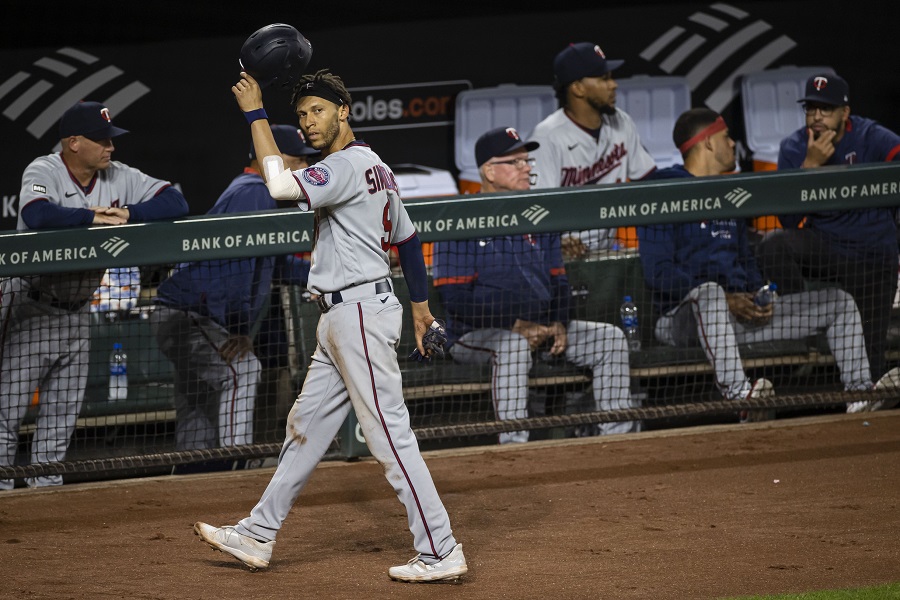 The deal at the time was widely respected, neither panned nor necessarily praised, as it was widely understood that the team’s primary target to replace Polanco, Marcus Semien, who ultimately signed with the Toronto Bluejays, simply did not want to come to Minnesota. Additionally, Simmons had been the definition of a generational talent defensively since his debut in 2012, so there was quite literally no better option on the market if improving the team’s defense was a top priority. Simmons has largely lived up to his defensive reputation on his way to compiling 10 outs above average, according to Baseball Savant, placing him third in all of MLB. However, he’s committed six errors this season, three each throwing and fielding, and his fielding percentage of .968 would be the second-lowest of his career if the season ended today. (He registered a .960 fielding percentage during the COVID shortened 2020 season.) Even still, it would be difficult to argue that a better defensive shortstop exists in the Majors as of this moment, which alone justifies his hefty eight-figure salary. But while Simmons’ glove hasn’t taken much of a dip, his bat has more or less fallen off of a cliff and it’s not as if his offensive “prowess” was akin to the peak of Mt. Everest. The 10-year veteran is currently averaging career-worsts in the following key offensive categories: Exit Velocity: 83.5 mph (peaked at 88.2 mph in 2018) Launch Angle: -3.1 degrees (peaked at +9.5 in 2019) Hard Hit%: 25.6% (peaked at 36.1% in 2018) Whiff%: 20.1% (low: 11.8% in 2015) K%: 17.8% (low: 7.3% in 2018) Simmons owns a .311 batting average on balls in play and has barreled only one(!) of his last 223 batted balls over the last two seasons. If anything, some good luck is preventing his numbers from looking worse. Simply put, Andrelton Simmons, who was never exactly known for his intimidating presence at the plate, is a complete non-factor offensively, even more so than usual. To recap: Simmons has been solid defensively, but is showing some signs of decline, he’s having by far his worst season at the plate, and he isn’t signed beyond this season. So, the question then becomes: What should the Twins do with Andrelton Simmons as the summer progresses? The answer is fairly straightforward, but trading Simmons may be more difficult than it sounds in theory. For starters, most teams in playoff contention, the kind of team that would be the most likely to swing a trade for Simmons due to his age and defensive capabilities, are already pretty set at shortstop, something touched on by Matthew Taylor here. A quick glance over most MLB rosters that are hovering towards the top of the division and wild card standings doesn’t reveal much in the way of obvious fits for Simmons. One potential fit could be the Chicago Cubs, but only if they decide to move on from Javier Báez during the season. Báez isn’t likely to return to Windy City next summer, so shipping him out for prospects may make sense, even as the Cubs stand in second place in the NL Central with a 34-27 record, 0.5 games out from the first-place Milwaukee Brewers. Similarly, the St. Louis Cardinals make some sense as current starter Paul DeJong is currently on rehab assignment and was batting .177/.277/.371 before going on the injured list. But DeJong is only 27-years-old and is under team control for a few more years. However, if Simmons is traded, to a contender or otherwise, expect the return the Twins get in exchange to be rather unimpressive. The most they could likely expect in return is a low-mid-level prospect, perhaps someone akin to infielder Seth Gray or pitcher Chris Vallimont in the Twins’ system (i.e. a prospect with potential, but glaring flaws). Andrelton Simmons is not in the Twins’ long-term plans and was only ever brought on to fill a one year gap before Royce Lewis’s arrival. While Lewis may not appear until late in 2022 after tearing his ACL earlier this year, Simmons’ overall disappointing season makes it wise for the team to move on from him by before the arrival of August. Just don’t expect much in return. MORE FROM TWINS DAILY — Latest Twins coverage from our writers — Recent Twins discussion in our forums — Follow Twins Daily via Twitter, Facebook or email
 -
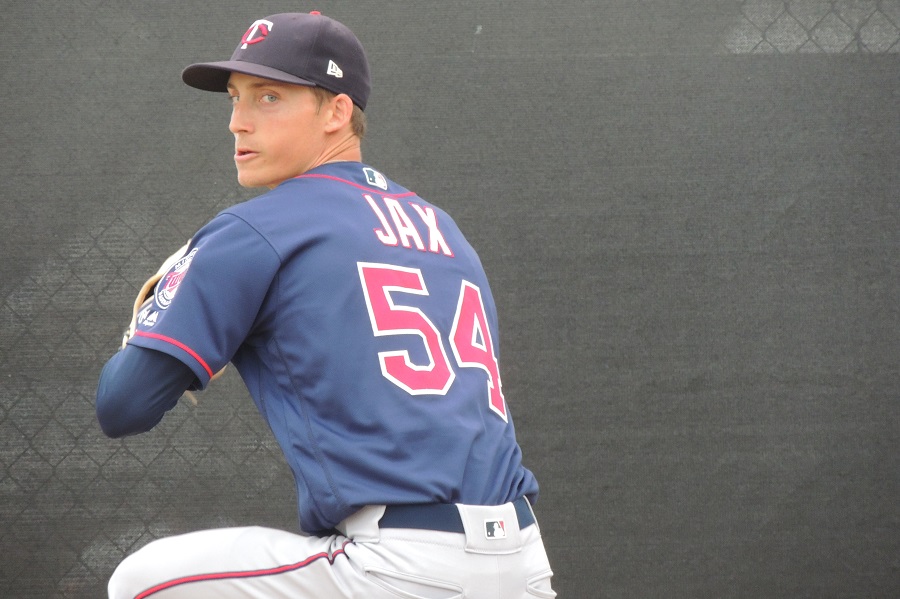 Amateur Career Jax was named the 2013 Gatorade Player of the Year for the state of Colorado as well as a Louisville Slugger High School First-Team All-American after going 7-1 with a 1.74 ERA and a 57/2 K:BB ratio for Cherry Creek High School. He started 29 games on the mound for the Air Force Academy Falcons across his freshman and sophomore seasons while posting a mediocre 5.49 ERA with 115 strikeouts and 56 walks. However, he exploded onto the scene in 2016 during his junior season by going 9-2 with a 2.05 ERA and striking out 90 batters while walking only 20. He was selected as the 2016 Mountain West co-Pitcher of the Year and was named a top 100 prospect for the 2016 MLB Draft by Baseball America. The Twins selected Jax with the 93rd overall pick. Professional Career Jax’s path to the Majors has taken a circuitous route due in large part to his military commitments. You can read all about this process in a story written by Twins Daily’s Seth Stohs (link below) but the long it short of it: Jax was required to remain on active duty following his graduation, which limited him to only nine games pitched during the 2016 and 2017 seasons. However, he has since transitioned into the Air Force reserves, freeing him up to pursue his dream of becoming an MLB pitcher full-time. He spent the 2018 season with the then Ft. Myers Miracle in High-A, starting 14 games and posting a 3.70 ERA in 87 ⅔ innings. He began the 2019 season in Double-A with Pensacola and performed extremely well, registering a 2.67 ERA in 111 ⅓ innings, though his strikeout numbers were paltry (84). Jax made three starts for Triple-A Rochester where he struck out 10 across 16 innings. The two biggest criticisms often thrown at Jax as he rose through the minor leagues were his lackluster strikeout numbers as well as his lack of a true third pitch. His role in today’s MLB, where velocity and strikeouts are king, has been in question throughout his career despite his established track record of success. However, his strikeout numbers saw a surprising and encouraging bump during his 27 innings with the St. Paul Saints this spring, as he struckout 29 batters across five starts, including a career-high 10 against the Iowa Cubs. While not phenomenal by any means, his 1.1 K/IP rate is by far the highest of his career and arguably changed his trajectory from at best a Quad-A player to one who may have a chance to stick, even if his home turns out to be in the bullpen long-term. Jax’s best pitch is his slider, which he most frequently employs to pick up his strikeouts, though he’ll throw it at any point in the count. He also boasts a fastball that sits in the low-90s and occasionally reaches as high as 94 mph. Jax will mix in a changeup as well as an occasional looping curveball, but his command on both, as well as their combination of velocity and movement, or lack thereof, leaves something to be desired. The Twins made a name for themselves for pursuing hurlers with this exact pitch mix and turning them into serviceable bullpen arms. Jax’s name won’t show up on any of the Twins top prospect lists, but it isn’t out of the realm of possibility that he becomes something akin to last season’s Matt Wisler. Twins Daily Coverage WATCH: Tom Froemming put together some highlights from Jax’s 10 K performance with the Saints earlier this season. READ: Not only is Jax an MLB pitcher, but he’s also pursuing a Master’s degree. Read more in this article from David Youngs. READ: Here’s a dispatch from Stohs when Jax resumed his professional pitching career in 2018 after serving his time in the Air Force. READ: And here’s a Q&A between Stohs and Jax from 2017. MORE FROM TWINS DAILY — Latest Twins coverage from our writers — Recent Twins discussion in our forums — Follow Twins Daily via Twitter, Facebook or email
.jpg.c9a97de444ec54583538e7368fc03a7e.jpg)
