



Cody Pirkl
-
Posts
1,314 -
Joined
-
Last visited
-
Days Won
4
Content Type
Profiles
News
Minnesota Twins Videos
2026 Minnesota Twins Top Prospects Ranking
2022 Minnesota Twins Draft Picks
Minnesota Twins Free Agent & Trade Rumors, Notes, & Tidbits
Guides & Resources
2023 Minnesota Twins Draft Picks
The Minnesota Twins Players Project
2024 Minnesota Twins Draft Picks
2025 Minnesota Twins Draft Pick Tracker
2026 Minnesota Twins Draft Tracker: Picks & Bonuses
Forums
Blogs
Events
Store
Downloads
Gallery
Everything posted by Cody Pirkl
-
The Twins may very well need an ace to feel good about competing in 2022, but they need quality innings as a baseline above all else. There are several interesting options that may be on the trade market that the team could check in on when the offseason resumes. There is no question that the Twins will need to make some additions to their starting staff when the offseason comes back, whenever that is. Many of the top free agent starting pitchers are no longer available. The Twins did sign Dylan Bundy to team with Bailey Ober and Joe Ryan in the rotation, but clearly they will add more. They may need to do so with some creative trades. Here are three such options that the Twins might consider. Kyle Freeland Freeland has been a serviceable pitcher throughout his career which is an impressive statement to make considering he’s spent five seasons in Colorado. Freeland owns a career 4.20 ERA which is a fair baseline of what to expect from the southpaw moving forward. He flew under the radar posting a 4.33 ERA in 2021 with 120 innings pitched and had peripherals to match. Even if he doesn’t get a bump from moving out of the worst pitching environment in baseball, Freeland would already slot in nicely as the Twins #3 in the rotation for a bargain in regards to payroll. At 29 years old, Freeland is due $7m in 2022 with another year of control in 2023. For the Rockies who have no shot at contending in the next two years, this is the exact type of player that should be shopped to get a hold of any type of young talent that could be a part of their next contending window while relieving some payroll. The Twins could easily put together a trade package consisting of young players far from the top of their prospect rankings. It may just be a matter of whether the Rockies front office comes to their senses and gets realistic about their future. Luke Weaver Much like Freeland, Weaver would be a multi-year acquisition. The 28-year-old right-hander has had an up-and-down career in terms of performance and health. The former first round pick sports a 4.64 career ERA and has averaged over a strikeout per inning in his six seasons. In those seasons, however, Weaver has eclipsed 65 innings only once and that was in 2018. For the right price, the upside could be worth the gamble. With a fastball averaging around 94 mph, a wipeout changeup, and 60-grade command, finding a way to work a full season out of Luke Weaver could have a huge payoff. The Diamondbacks are likely a bit more realistic than their division mates in Colorado, although it’s worth noting that Weaver is only due $2.4m in 2022. They have some nice pieces but don’t quite have a clear cut core in place to build around. Given Weaver’s injuries and contract status, they may see more upside in taking a few prospects that fit their timeline than gambling on Weaver and potentially losing. Like Freeland, there’s likely a prospect package that makes sense for both teams. Jake Odorizzi Despite his 4.21 ERA in 100+ innings last year, Jake Odorizzi may not have a rotation spot in Houston given their depth of young starting pitching. I can’t blame anyone who wants to turn the page on the Twins teams of the last three Twins seasons, but this former Twin fits right into the next steps of this organization. Odorizzi has shown plenty of signs of being the same pitcher he has been during his whole career. Vintage Jake Odorizzi would go a long way in shoring up a currently rookie-led rotation and provide some much-needed innings. Signed to fill in for an injured Framber Valdez last spring, Odorizzi is set to make a $3.0 million signing bonus and $5.0 million in base salary for 2022. He gets half a million for 100 innings and an extra million for 110, 120, 130, 140 and 150 innings pitched. In 2023, he’s due $6.5 million with a $3.25 million buyout. His stuff would likely play up in a bullpen role in Houston, but it’s likely to cause some waves with a pitcher who wants to start and may have already ruffled some feathers in the organization. It may just be mutually beneficial for all parties. The Astros save some money, the Twins add an arm, and Odorizzi gets to start. It seems like a match made in heaven. People’s interest in bona fide stud pitchers is understandable, but the Twins need quantity just as much as quality. Are there any middle of the rotation arms you’d like to see the Twins pick up before Spring Training? — Latest Twins coverage from our writers — Recent Twins discussion in our forums — Follow Twins Daily via Twitter, Facebook or email — Follow Cody Pirkl on Twitter here View full article
- 40 replies
-
- 1
-

-
- luke weaver
- jake odorizzi
- (and 1 more)
-
It seems like an entirely different era of Twins baseball that included left-handed pitcher Devin Smeltzer. Forgotten by many since his rookie season in 2019, he still remains in the Twins organization. Will we see the soft tossing lefty again? The main return in the Brian Dozier trade from the Dodgers, Devin Smeltzer quickly worked his way up to the Major League club in 2019 and posted decent results for a division-winning team. Smeltzer totaled 49 innings with a 3.86 ERA even though his indicators didn’t quite back it up. 2020 and 2021 were disappointing for the left hander, as he totaled just 20 2/3 innings combined across nine appearances. His 2020 performance got him demoted to Triple-A by year's end and injuries derailed his 2021 season and eventually led to him being jettisoned off the 40 man roster. Smeltzer, however, passed through waivers and remains a Twin, awaiting 2022 in purgatory with no guaranteed roster spot. It seemed Twins fans soured on a pitcher who was at one time a fan-favorite with a great story. It may have been shinier prospects passing him by or his struggles paired with a lack of exciting stuff. The Twins are not likely to simply let go of the 26 year old so quickly. Successful soft tossers aren’t exactly common in the MLB, and Devin Smeltzer averaged 89 mph on the fastball in his rookie season with a steady decline the following two years. Look no further than right over the border at Milwaukee’s Brent Suter, however, as one example of how a pitcher with Smeltzer’s skillset can be used as a weapon. The left-hander threw 73 innings of a 3.07 ERA for the Brewers and was an important part of a very good bullpen on a playoff team. Suter has averaged anywhere from 84 to 88 mph on his fastball since his debut and has been serviceable in any role he’s found himself in since 2016. He’s well below league average in strikeouts and well above average at avoiding free passes much like Smeltzer. His lack of velocity is rare in today’s MLB and using him in short stints appears to have slowed down the league’s adjustment. The Twins likely had this in mind in 2021 when Smeltzer was buried in the depth chart, but injuries never really gave him a chance. It could also be argued that Smeltzer was on the verge of figuring something out across his last two years in the league. In 2020, he debuted a new slider which posted a whiff rate of over 27%. The result was a much improved K-rate nearing 21%, a manageable number for a pitcher who avoids walks and relies on weak contact. The walk rate increased a bit more than a pitcher of Smeltzer’s plan of attack would like, but it’s certainly something that could have been ironed out as he got more feel for the pitch. As underwhelming as Smeltzer seemed in 2020, his peripherals actually improved across the board from a 2019 debut that so many found encouraging. It’s possible Smeltzer was inching towards a new level that made him a reliable Major League pitcher for the next few years. It’s really discouraging that an elbow injury disrupted what would have been a tremendous opportunity for him at the end of a lost 2021 with so many innings available. It was likely a combination of his injury and the Twins' need for 40 man roster spots that led to Smeltzer being put on waivers. The move itself certainly doesn’t hint at the Twins prioritizing Smeltzer headed into 2022. Still, this is baseball. He’s likely to begin the season as a staple in the Saints rotation and I’d dare to call it likely we see him added back to the 40 man roster and called back up to Minneapolis again at some point. He’s the kind of player you can’t help but pull for, and he does have a respectable skillset to hang around and grab ahold of an opportunity that presents itself. His raw tools may make him a unicorn if he becomes successful, but it’s far from out of the question. Being off the 40 man may not make a comeback sound incredibly likely. For a Twins team that will likely be pitching starved again in 2022, however, it’s near impossible to rule anything out for a pitcher who’s already shown something at the Major League level. The book may not yet be written on Devin Smeltzer. MORE TWINS DAILY CONTENT — Latest Twins coverage from our writers — Recent Twins discussion in our forums — Follow Twins Daily via Twitter, Facebook or email — Follow Cody Pirkl on Twitter here View full article
-
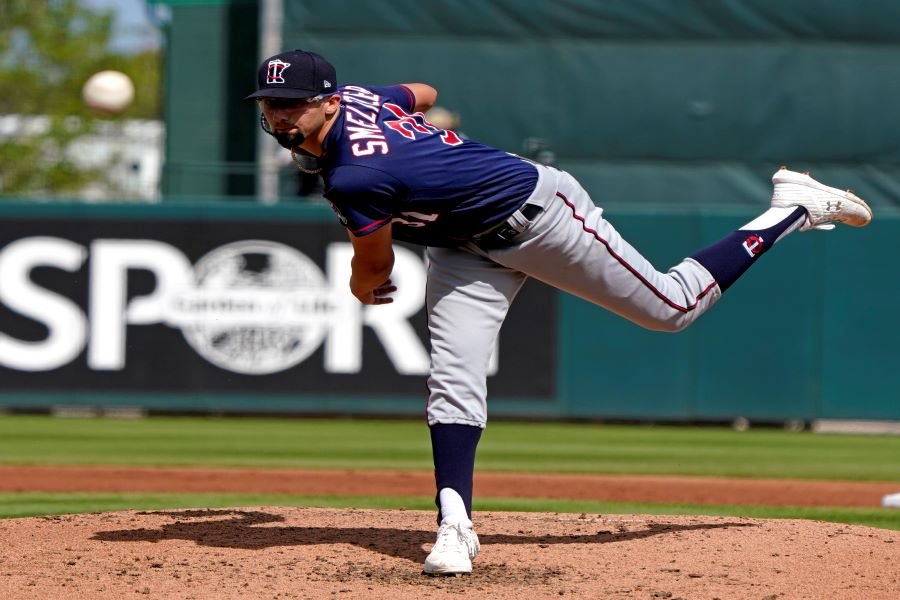 The main return in the Brian Dozier trade from the Dodgers, Devin Smeltzer quickly worked his way up to the Major League club in 2019 and posted decent results for a division-winning team. Smeltzer totaled 49 innings with a 3.86 ERA even though his indicators didn’t quite back it up. 2020 and 2021 were disappointing for the left hander, as he totaled just 20 2/3 innings combined across nine appearances. His 2020 performance got him demoted to Triple-A by year's end and injuries derailed his 2021 season and eventually led to him being jettisoned off the 40 man roster. Smeltzer, however, passed through waivers and remains a Twin, awaiting 2022 in purgatory with no guaranteed roster spot. It seemed Twins fans soured on a pitcher who was at one time a fan-favorite with a great story. It may have been shinier prospects passing him by or his struggles paired with a lack of exciting stuff. The Twins are not likely to simply let go of the 26 year old so quickly. Successful soft tossers aren’t exactly common in the MLB, and Devin Smeltzer averaged 89 mph on the fastball in his rookie season with a steady decline the following two years. Look no further than right over the border at Milwaukee’s Brent Suter, however, as one example of how a pitcher with Smeltzer’s skillset can be used as a weapon. The left-hander threw 73 innings of a 3.07 ERA for the Brewers and was an important part of a very good bullpen on a playoff team. Suter has averaged anywhere from 84 to 88 mph on his fastball since his debut and has been serviceable in any role he’s found himself in since 2016. He’s well below league average in strikeouts and well above average at avoiding free passes much like Smeltzer. His lack of velocity is rare in today’s MLB and using him in short stints appears to have slowed down the league’s adjustment. The Twins likely had this in mind in 2021 when Smeltzer was buried in the depth chart, but injuries never really gave him a chance. It could also be argued that Smeltzer was on the verge of figuring something out across his last two years in the league. In 2020, he debuted a new slider which posted a whiff rate of over 27%. The result was a much improved K-rate nearing 21%, a manageable number for a pitcher who avoids walks and relies on weak contact. The walk rate increased a bit more than a pitcher of Smeltzer’s plan of attack would like, but it’s certainly something that could have been ironed out as he got more feel for the pitch. As underwhelming as Smeltzer seemed in 2020, his peripherals actually improved across the board from a 2019 debut that so many found encouraging. It’s possible Smeltzer was inching towards a new level that made him a reliable Major League pitcher for the next few years. It’s really discouraging that an elbow injury disrupted what would have been a tremendous opportunity for him at the end of a lost 2021 with so many innings available. It was likely a combination of his injury and the Twins' need for 40 man roster spots that led to Smeltzer being put on waivers. The move itself certainly doesn’t hint at the Twins prioritizing Smeltzer headed into 2022. Still, this is baseball. He’s likely to begin the season as a staple in the Saints rotation and I’d dare to call it likely we see him added back to the 40 man roster and called back up to Minneapolis again at some point. He’s the kind of player you can’t help but pull for, and he does have a respectable skillset to hang around and grab ahold of an opportunity that presents itself. His raw tools may make him a unicorn if he becomes successful, but it’s far from out of the question. Being off the 40 man may not make a comeback sound incredibly likely. For a Twins team that will likely be pitching starved again in 2022, however, it’s near impossible to rule anything out for a pitcher who’s already shown something at the Major League level. The book may not yet be written on Devin Smeltzer. MORE TWINS DAILY CONTENT — Latest Twins coverage from our writers — Recent Twins discussion in our forums — Follow Twins Daily via Twitter, Facebook or email — Follow Cody Pirkl on Twitter here
 -
Having someone like Montas or Castillo would make the 2023 team better if they're on it and if that was the plan it makes such a trade better. The problem is the front office showed with the Berrios trade that A. They're not going to extend a pitcher like that for any realistic amount of money it would take and B. If the team stinks at the deadline and they have a high end pitcher with one year left of control, they're trading them. That's where I worry about some disgusting cycle of trading a bunch of prospects for arms and then cashing them in again right away for more prospects if the team disappoints. They should just pick a lane.
-
Here's my issue with essentially trading Berrios for Montas: that in a vacuum doesn't accomplish much for 2022. It adds one single reliable pitcher to a rotation that I'd argue has zero as of right now. Are they going to empty the entire farm system and get 1-2 more high level pitchers? I doubt it. So what's the point? The front office talks about sustained success all the time. I don't see how trading top prospects we just got in another trade just so we have one solid arm on likely another sub .500 roster fits that model. Let these guys develop and see what we have for 2023.
- 48 replies
-
- 6
-
-
- jose berrios
- austin martin
- (and 1 more)
-
Acquired by trade last July, Austin Martin has quickly found himself at the center of trade talks once again for a Twins team short on pitching. The Twins, however, shouldn’t be so quick to flip their newly-acquired top prospect. It’s reasonable to look at Austin Martin and see a valuable piece that the Twins could use to acquire some pitching, but there are several reasons they shouldn’t be looking to do so. Redundancy is Overrated One argument that can be made is that Martin doesn’t appear to be a future shortstop and his future in center field is blocked by the Buxton extension. This could wind up leaving Martin in a utility role. The Twins already have Luis Arraez in a similar position, however, with other players like Jose Miranda and Royce Lewis coming up who could find themselves in a similar spot. It makes sense to deal from a place of depth, but Martin could bring a lot of value backing up Byron Buxton in center field and Jorge Polanco at second, two players with significant injury histories who could very well miss time at any point moving forward. Luis Arraez can’t fill in for Buxton in center and is stretched at second, not to mention his own injury worries as well. Martin is a younger, healthier, higher floor and likely higher ceiling option than most players that find themselves in a possible platoon role. Not to mention these issues that involve “too much depth” always find a way to work themselves out when it comes to baseball. His Value Isn’t That High Potential MLB caliber shortstops are one of the more valuable assets a team can have in their farm system. It’s a big part of what led to Martin being chosen so high in the draft and what could make him an enormous trade piece moving forward. Tom makes a good point in regards to Martin’s trade value: Tom’s reasoning behind this is solid. Austin Martin’s 2021 has gone a long way in proving he’s not a future shortstop. Twins fans should be on board with trading him if a team still looks at him as one, as the return would be that much better for a player that’s unlikely to reach that ceiling. Martin was a longshot to be a future shortstop at the trade deadline, however, and didn't do much to change that idea after the fact. I’d be shocked if a team is still all in on this idea. A team such as the Reds who are in need of a shortstop of the future would likely be more open to paying a higher price to gamble on Royce Lewis panning out at the position because he hasn’t proven otherwise yet. Trading Austin Martin to a team that believes him to be an outfielder or second baseman wouldn’t bring back all that much relative value. Musical Chairs There isn’t a lot of baseball logic that goes into this one, but it just feels unproductive to trade the Twins best pitcher for two prospects and turn around and trade the biggest name for a different pitcher who likely won’t be any better than Berrios. Sure, the Twins will have gotten Simeon Woods-Richardson out of the deal, but it’ll cost other prospects in addition to Austin Martin to acquire any of the big names on the market. If there was any enthusiasm about extending one of these arms after acquiring them then it could be worth the price. It’s hard to find that enthusiasm however and the likelier outcome is trading such a pitcher away at the 2022 trade deadline if the team finds themselves in a similar situation as last year. It runs the risk of beginning a cycle that doesn’t sound all that fun to be honest. The Twins liked Martin enough to acquire him as a big piece of the Jose Berrios trade and he’s been about as advertised since then. To turn around and trade him for another pitcher with two years of control (the majority of the high-end pitchers on the market) just seems like shuffling deck chairs on the Titanic. It essentially just swaps out a couple of prospects for a new pitcher who’s likely on Berrios’ level and still leaves a gaping hole in the rotation. It’s possible Austin Martin doesn’t become the star he was projected to be when drafted. He’s still an MLB-bound player with incredible pure hitting skills and versatility. He could easily settle into a position for the next 5-6 years and be an example of how not quite everything in 2021 went wrong. It’s going to be interesting to see how the Twins front office tries to wriggle out of their own self-inflicted mess with the pitching staff. Players on the verge of bringing some much needed excitement to Twins Territory such as Martin should be off the table unless there are extenuating circumstances. Austin Martin should be wearing a Twins jersey by 2022 season’s end. — Latest Twins coverage from our writers — Recent Twins discussion in our forums — Follow Twins Daily via Twitter, Facebook or email — Follow Cody Pirkl on Twitter here View full article
- 48 replies
-
- 2
-
-
- jose berrios
- austin martin
- (and 1 more)
-
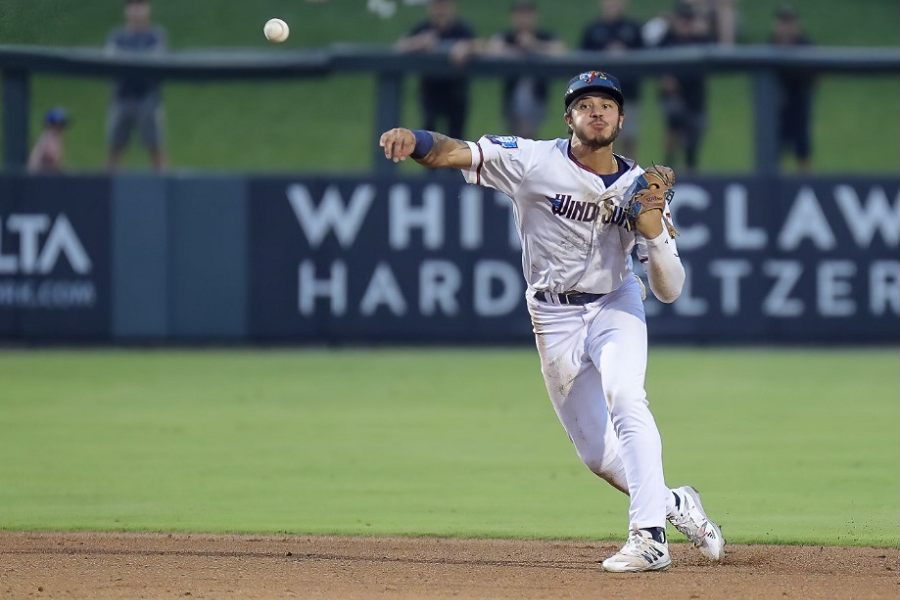 It’s reasonable to look at Austin Martin and see a valuable piece that the Twins could use to acquire some pitching, but there are several reasons they shouldn’t be looking to do so. Redundancy is Overrated One argument that can be made is that Martin doesn’t appear to be a future shortstop and his future in center field is blocked by the Buxton extension. This could wind up leaving Martin in a utility role. The Twins already have Luis Arraez in a similar position, however, with other players like Jose Miranda and Royce Lewis coming up who could find themselves in a similar spot. It makes sense to deal from a place of depth, but Martin could bring a lot of value backing up Byron Buxton in center field and Jorge Polanco at second, two players with significant injury histories who could very well miss time at any point moving forward. Luis Arraez can’t fill in for Buxton in center and is stretched at second, not to mention his own injury worries as well. Martin is a younger, healthier, higher floor and likely higher ceiling option than most players that find themselves in a possible platoon role. Not to mention these issues that involve “too much depth” always find a way to work themselves out when it comes to baseball. His Value Isn’t That High Potential MLB caliber shortstops are one of the more valuable assets a team can have in their farm system. It’s a big part of what led to Martin being chosen so high in the draft and what could make him an enormous trade piece moving forward. Tom makes a good point in regards to Martin’s trade value: Tom’s reasoning behind this is solid. Austin Martin’s 2021 has gone a long way in proving he’s not a future shortstop. Twins fans should be on board with trading him if a team still looks at him as one, as the return would be that much better for a player that’s unlikely to reach that ceiling. Martin was a longshot to be a future shortstop at the trade deadline, however, and didn't do much to change that idea after the fact. I’d be shocked if a team is still all in on this idea. A team such as the Reds who are in need of a shortstop of the future would likely be more open to paying a higher price to gamble on Royce Lewis panning out at the position because he hasn’t proven otherwise yet. Trading Austin Martin to a team that believes him to be an outfielder or second baseman wouldn’t bring back all that much relative value. Musical Chairs There isn’t a lot of baseball logic that goes into this one, but it just feels unproductive to trade the Twins best pitcher for two prospects and turn around and trade the biggest name for a different pitcher who likely won’t be any better than Berrios. Sure, the Twins will have gotten Simeon Woods-Richardson out of the deal, but it’ll cost other prospects in addition to Austin Martin to acquire any of the big names on the market. If there was any enthusiasm about extending one of these arms after acquiring them then it could be worth the price. It’s hard to find that enthusiasm however and the likelier outcome is trading such a pitcher away at the 2022 trade deadline if the team finds themselves in a similar situation as last year. It runs the risk of beginning a cycle that doesn’t sound all that fun to be honest. The Twins liked Martin enough to acquire him as a big piece of the Jose Berrios trade and he’s been about as advertised since then. To turn around and trade him for another pitcher with two years of control (the majority of the high-end pitchers on the market) just seems like shuffling deck chairs on the Titanic. It essentially just swaps out a couple of prospects for a new pitcher who’s likely on Berrios’ level and still leaves a gaping hole in the rotation. It’s possible Austin Martin doesn’t become the star he was projected to be when drafted. He’s still an MLB-bound player with incredible pure hitting skills and versatility. He could easily settle into a position for the next 5-6 years and be an example of how not quite everything in 2021 went wrong. It’s going to be interesting to see how the Twins front office tries to wriggle out of their own self-inflicted mess with the pitching staff. Players on the verge of bringing some much needed excitement to Twins Territory such as Martin should be off the table unless there are extenuating circumstances. Austin Martin should be wearing a Twins jersey by 2022 season’s end. — Latest Twins coverage from our writers — Recent Twins discussion in our forums — Follow Twins Daily via Twitter, Facebook or email — Follow Cody Pirkl on Twitter here
- 48 comments
-
- 7
-
-
- jose berrios
- austin martin
- (and 1 more)
-
It was a nightmare 2021 for Randy Dobnak. A massive opportunity was missed due to injury and general struggles. Even after a disappointing season, a massive opportunity awaits Dobnak on a pitching-needy 2022 Twins roster. The Twins offseason did not leave a great taste in the mouths of the fanbase before the CBA lockout commenced. The only addition to a rotation in need of at least three more reliable options was rebound-candidate Dylan Bundy with few high-end free agent options left. As a result, it sounds like the Twins could lean heavily on internal options. Much attention is rightfully drawn to the shiny prospects we haven’t seen yet, but people seem to be forgetting about Randy Dobnak. Dobnak’s popularity comes from more than his entertaining story and killer ‘stache. He was leaned on heavily down the stretch in 2019 en route to a surprising division title. He posted a 1.59 ERA in 28 1/3 innings as a whole and got off to a similar start in 2020. After a miserable 2021 where his ERA neared 8, however, why is Dobnak first in line for an opportunity? For starters, his 2021 needs to be taken with a grain of salt. His grip on the slider was reportedly changed before the season, and it just never really took. His expected batting average on the pitch rose from .204 to .356. Before he could attempt to make the necessary adjustments, he injured his right middle finger, a pivotal body part in executing a pitch. Baseball being a game of adjustments, it’s safe to assume Dobnak will spend this offseason trying to figure out what went wrong. He’ll surely continue to tweak his signature whiff pitch and could always pivot back to his previous grip on the slider if all else fails. Health is also a factor, as it’s easy to see how a new slider could end up finding inopportune parts of the strike zone more often when the finger used to guide it is in pain. The Twins shut Dobnak down rather than having him continue to fight through it, so the hope is that the extra time he was given has him fully healthy and ready to compete pain-free in 2022. Dobnak has also already earned the trust of the organization, and for good reason. He was thrust into a Game 2 playoff start in Yankee Stadium during his rookie season. Despite the results, paired with how much he helped the Twins rotation in 2019 and 2020 far outweighs his struggles during a 2021 season where it seemed like nobody lived up to expectation. The approximate $9m invested into the contract that will keep Dobnak in Minnesota through 2026 isn’t incredibly high, but the Twins surely won’t call that a sunk cost just yet. The fact of the matter is Dobnak is probably somewhere in between the sub 2.00 ERA pitcher we saw when he debuted and the one that posted a near 8.00 ERA in 2021. He won’t be the savior that shores up the front of the rotation, but profiling him behind Bailey Ober and Joe Ryan isn’t absurd. He’s a groundball artist who limits home runs and walks which is more than enough for a pitcher to settle into a solid career on a good baseball team. The pitching pipeline does grow ever closer to the Major Leagues with pitchers like Jhoan Duran and Josh Winder finally having reached AAA. It appears there will almost certainly be rotation spots to contend for during Spring Training, however, and Randy Dobnak would be my odds on favorite to get some run early in the year. It’s easy to forget after a miserable 2021, but if handed a rotation spot, there’s a chance Randy Dobnak simply doesn’t give it back. — Latest Twins coverage from our writers — Recent Twins discussion in our forums — Follow Twins Daily via Twitter, Facebook or email — Follow Cody Pirkl on Twitter here View full article
-
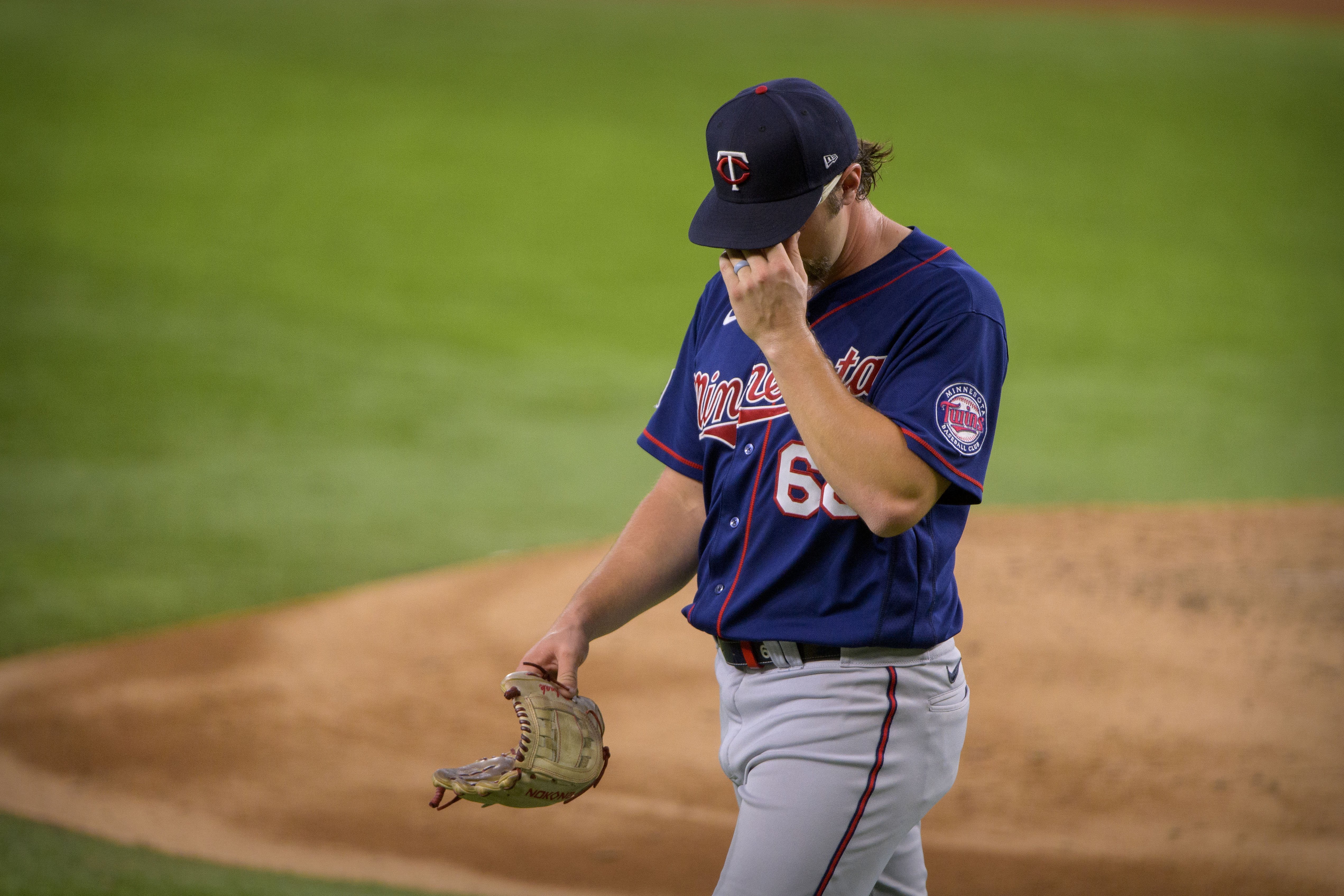 The Twins offseason did not leave a great taste in the mouths of the fanbase before the CBA lockout commenced. The only addition to a rotation in need of at least three more reliable options was rebound-candidate Dylan Bundy with few high-end free agent options left. As a result, it sounds like the Twins could lean heavily on internal options. Much attention is rightfully drawn to the shiny prospects we haven’t seen yet, but people seem to be forgetting about Randy Dobnak. Dobnak’s popularity comes from more than his entertaining story and killer ‘stache. He was leaned on heavily down the stretch in 2019 en route to a surprising division title. He posted a 1.59 ERA in 28 1/3 innings as a whole and got off to a similar start in 2020. After a miserable 2021 where his ERA neared 8, however, why is Dobnak first in line for an opportunity? For starters, his 2021 needs to be taken with a grain of salt. His grip on the slider was reportedly changed before the season, and it just never really took. His expected batting average on the pitch rose from .204 to .356. Before he could attempt to make the necessary adjustments, he injured his right middle finger, a pivotal body part in executing a pitch. Baseball being a game of adjustments, it’s safe to assume Dobnak will spend this offseason trying to figure out what went wrong. He’ll surely continue to tweak his signature whiff pitch and could always pivot back to his previous grip on the slider if all else fails. Health is also a factor, as it’s easy to see how a new slider could end up finding inopportune parts of the strike zone more often when the finger used to guide it is in pain. The Twins shut Dobnak down rather than having him continue to fight through it, so the hope is that the extra time he was given has him fully healthy and ready to compete pain-free in 2022. Dobnak has also already earned the trust of the organization, and for good reason. He was thrust into a Game 2 playoff start in Yankee Stadium during his rookie season. Despite the results, paired with how much he helped the Twins rotation in 2019 and 2020 far outweighs his struggles during a 2021 season where it seemed like nobody lived up to expectation. The approximate $9m invested into the contract that will keep Dobnak in Minnesota through 2026 isn’t incredibly high, but the Twins surely won’t call that a sunk cost just yet. The fact of the matter is Dobnak is probably somewhere in between the sub 2.00 ERA pitcher we saw when he debuted and the one that posted a near 8.00 ERA in 2021. He won’t be the savior that shores up the front of the rotation, but profiling him behind Bailey Ober and Joe Ryan isn’t absurd. He’s a groundball artist who limits home runs and walks which is more than enough for a pitcher to settle into a solid career on a good baseball team. The pitching pipeline does grow ever closer to the Major Leagues with pitchers like Jhoan Duran and Josh Winder finally having reached AAA. It appears there will almost certainly be rotation spots to contend for during Spring Training, however, and Randy Dobnak would be my odds on favorite to get some run early in the year. It’s easy to forget after a miserable 2021, but if handed a rotation spot, there’s a chance Randy Dobnak simply doesn’t give it back. — Latest Twins coverage from our writers — Recent Twins discussion in our forums — Follow Twins Daily via Twitter, Facebook or email — Follow Cody Pirkl on Twitter here
- 8 comments
-
- 4
-
-
- randy dobnak
- jhoan duran
- (and 1 more)
-
Not every pitching prospect is cut out for a starting role in the Major Leagues. That doesn’t mean they’re a failure, as oftentimes these former starters transition into a big role in shorter stints. The Twins have several arms who are candidates for such a transition in 2022. The Twins need some bullpen help in 2022 in addition to significant rotation help. Unfortunately, there’s only so much money to go around. Transitioning some younger arms into bullpen pieces could benefit the players and team alike and get them into the majors that much quicker. The Twins have some great young arms who could be primed to make this switch. Matt Canterino Canterino was a 2nd round pick and has been a starting pitcher for much of his minor league career. His highest ERA in a single season was 1.80 as he’s dominated every stop of the minors to this point. He sports a devastating slider and a solid complementary changeup. His fastball took a big step forward during the pandemic forced break in minor league action. He can now run it up to the high 90s consistently. With such a deep pitch mix, why shouldn’t Canterino be a starting pitcher? Canterino is already 24 years old and has only made it as high as A+ ball in his three years with the Twins. He’s thrown 48 total innings in his professional career thus far. This is partially due to the lost 2020 season, but Canterino also dealt with multiple forearm injuries which eventually ended his 2021 season. Headed into 2022, Canterino has a long way to go in developing as a starter. Staying the course not only would likely keep him out of the majors for another year or two at least, but more innings also make a recurrence of the recent arm troubles more likely. Canterino has the raw stuff to debut very soon and be an effective reliever. It’s an option the Twins could very well consider at this point. Chris Vallimont Recently added to the 40 man roster, Vallimont had too much raw talent for the Twins to risk letting him go. His 6.06 ERA across 91 innings in AA aren’t impressive, but his raw skills were. Vallimont struck out 31.1% of his hitters faced, but walked a crippling 14.6% while allowing a 1.48 HR/9. He has a decent mix of pitches featuring a low to mid 90s fastball and a decent slider, curve and change. Pitchers like Vallimont move to the bullpen all the time. Jorge Alcala was the Twins' latest iteration. Moving into a short burst role actually helped iron out the walks and allowing his stuff to play up in 1-2 inning stints helped him work around the walks he was still issuing. Unlike Alcala however, Vallimont already has a steady pitch mix to immediately have a third option. The Twins protected him in the rule 5 draft because even with his walks and homer issues, Vallimont may have the floor to join a team’s bullpen and contribute in some fashion immediately. With his 40 man spot secured, I wouldn’t be surprised to see the Twins make this move and fast track him to Minneapolis sometime in 2022. Drew Strotman Acquired with Joe Ryan from the Rays, Strotman also already has a 40 man spot. He also has already reached AAA, although he struggled mightily in St. Paul, posting a 7.33 ERA in 54 innings down the stretch after posting a 3.86 mark with the Rays affiliate in his 58 innings prior. It’s very possible he faded down the stretch as 2021 was his first full season coming off Tommy John. He has an impressive 60 grade fastball which he mostly pairs with the strong duo that is his cutter and slider. He also has impressive control. The Twins may be tempted to see if Strotman can hold out his performance in a rotation role again in 2022. It’s possible however, especially if they’re trying to compete, that they acclimate him to the bullpen to start the season and quickly bring him up. His big fastball and command of his pitches give him a solid floor in the bullpen and he lacks a strong changeup which could have him bullpen bound eventually anyways. Strotman also was a reliever for much of his college career. It would be far from a failure given what we’ve already gotten from Joe Ryan if Drew Strotman simply turns out to be a reliable reliever. Are there any other pitchers in the Twins system that are bullpen bound? Would you like to see any of these three stay the course? Let us know below! — Latest Twins coverage from our writers — Recent Twins discussion in our forum — Follow Twins Daily via Twitter, Facebook or email — Follow Cody Pirkl on Twitter here View full article
-
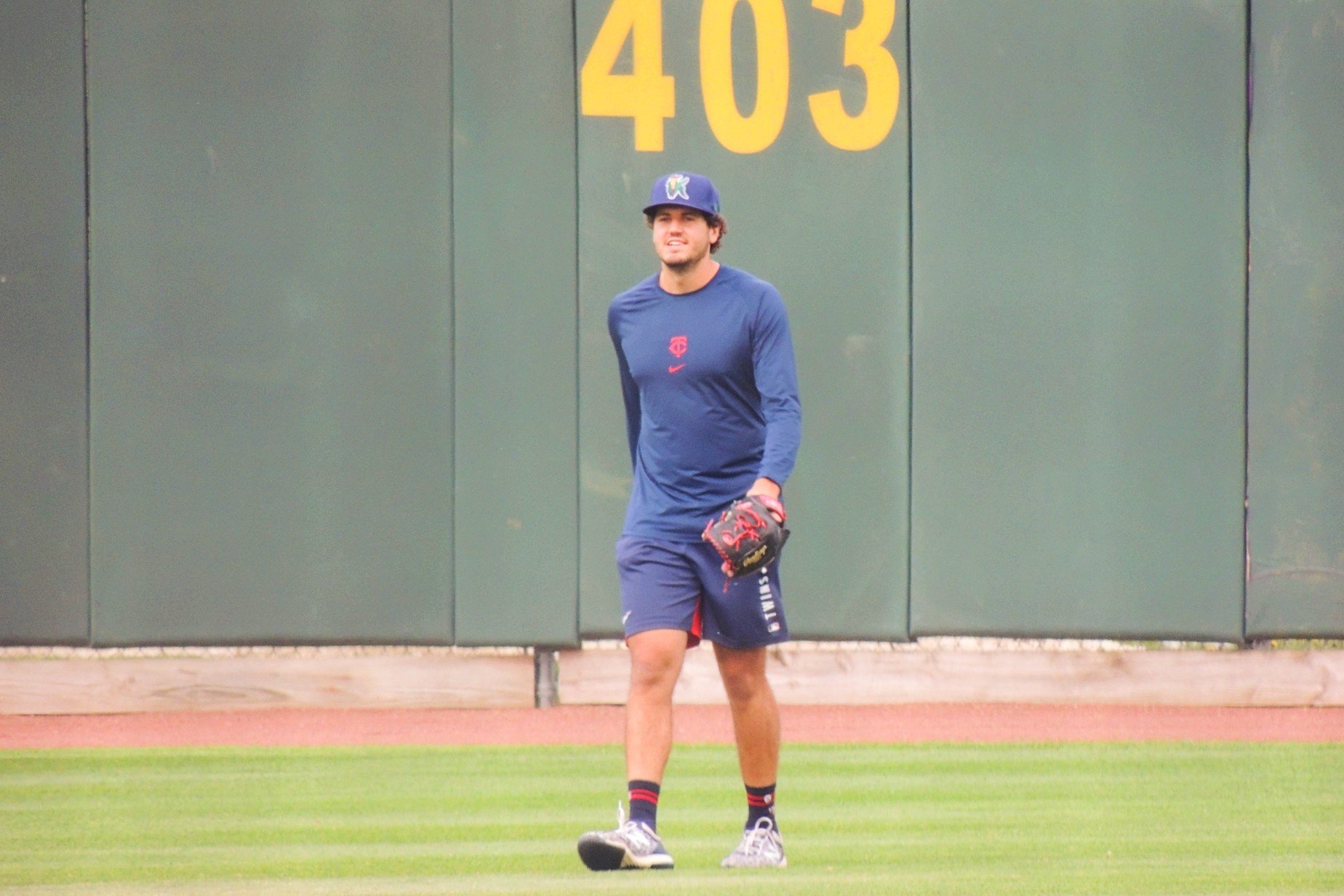 The Twins need some bullpen help in 2022 in addition to significant rotation help. Unfortunately, there’s only so much money to go around. Transitioning some younger arms into bullpen pieces could benefit the players and team alike and get them into the majors that much quicker. The Twins have some great young arms who could be primed to make this switch. Matt Canterino Canterino was a 2nd round pick and has been a starting pitcher for much of his minor league career. His highest ERA in a single season was 1.80 as he’s dominated every stop of the minors to this point. He sports a devastating slider and a solid complementary changeup. His fastball took a big step forward during the pandemic forced break in minor league action. He can now run it up to the high 90s consistently. With such a deep pitch mix, why shouldn’t Canterino be a starting pitcher? Canterino is already 24 years old and has only made it as high as A+ ball in his three years with the Twins. He’s thrown 48 total innings in his professional career thus far. This is partially due to the lost 2020 season, but Canterino also dealt with multiple forearm injuries which eventually ended his 2021 season. Headed into 2022, Canterino has a long way to go in developing as a starter. Staying the course not only would likely keep him out of the majors for another year or two at least, but more innings also make a recurrence of the recent arm troubles more likely. Canterino has the raw stuff to debut very soon and be an effective reliever. It’s an option the Twins could very well consider at this point. Chris Vallimont Recently added to the 40 man roster, Vallimont had too much raw talent for the Twins to risk letting him go. His 6.06 ERA across 91 innings in AA aren’t impressive, but his raw skills were. Vallimont struck out 31.1% of his hitters faced, but walked a crippling 14.6% while allowing a 1.48 HR/9. He has a decent mix of pitches featuring a low to mid 90s fastball and a decent slider, curve and change. Pitchers like Vallimont move to the bullpen all the time. Jorge Alcala was the Twins' latest iteration. Moving into a short burst role actually helped iron out the walks and allowing his stuff to play up in 1-2 inning stints helped him work around the walks he was still issuing. Unlike Alcala however, Vallimont already has a steady pitch mix to immediately have a third option. The Twins protected him in the rule 5 draft because even with his walks and homer issues, Vallimont may have the floor to join a team’s bullpen and contribute in some fashion immediately. With his 40 man spot secured, I wouldn’t be surprised to see the Twins make this move and fast track him to Minneapolis sometime in 2022. Drew Strotman Acquired with Joe Ryan from the Rays, Strotman also already has a 40 man spot. He also has already reached AAA, although he struggled mightily in St. Paul, posting a 7.33 ERA in 54 innings down the stretch after posting a 3.86 mark with the Rays affiliate in his 58 innings prior. It’s very possible he faded down the stretch as 2021 was his first full season coming off Tommy John. He has an impressive 60 grade fastball which he mostly pairs with the strong duo that is his cutter and slider. He also has impressive control. The Twins may be tempted to see if Strotman can hold out his performance in a rotation role again in 2022. It’s possible however, especially if they’re trying to compete, that they acclimate him to the bullpen to start the season and quickly bring him up. His big fastball and command of his pitches give him a solid floor in the bullpen and he lacks a strong changeup which could have him bullpen bound eventually anyways. Strotman also was a reliever for much of his college career. It would be far from a failure given what we’ve already gotten from Joe Ryan if Drew Strotman simply turns out to be a reliable reliever. Are there any other pitchers in the Twins system that are bullpen bound? Would you like to see any of these three stay the course? Let us know below! — Latest Twins coverage from our writers — Recent Twins discussion in our forum — Follow Twins Daily via Twitter, Facebook or email — Follow Cody Pirkl on Twitter here
- 20 comments
-
- 3
-
-
- matt canterino
- chris vallimont
- (and 2 more)
-
Royce Lewis may be the shortstop of the future. He also may not. This is likely the biggest question in the Twins system as they figure out how to move forward into 2022. Royce Lewis was drafted as a shortstop with the possibility of center field as a fallback option. Players with such athleticism are often the type to go number one overall. His performance has been a bit inconsistent offensively and his defensive future remains in question as well. Still, he remains one of the top prospects in baseball, despite two consecutive lost seasons, because of his perceived ceiling. The Twins future has changed a lot since Lewis was taken #1 overall in 2017. Their desperate need for a shortstop remains, but Lewis’s center field fallback option has been complicated by a Byron Buxton contract extension and the acquisition of Austin Martin who appears to be another fringe shortstop option bound to fill in at center field. Unlike Lewis however, Martin has shown consistent offensive tools that foreshadow a surefire Major League career very soon. The Twins have a question they have to ask themselves this winter. They not only have a long term need at shortstop, but an immediate one if they want to contend. The stopgap options on the market dwindled before the CBA lockout although several star options remain that could be signed to long term deals. They also have a desperate need for starting pitching, a market that has been picked over when it comes to the high-end options. Could the Twins cash in on their former number one overall pick on the trade market? Before Lewis’s injury some within the system considered him questionable at best to stick at shortstop. Much like the recently-acquired Austin Martin, without the ability to play that premier position he could still be a valuable player, but not one that fills the biggest hole in the system. The Twins would be years away from an inhouse option taking the reins at shortstop. Prospect value is fluid. On one hand, Lewis took a hit to his prospect value by missing 2020 and 2021. On the other hand, if he truly isn’t a future shortstop then his time off hasn’t made that abundantly clear to the Twins or any of the teams that may be interested in acquiring him. It’s safe to say right now that some teams would still be willing to take a sizable gamble on Royce Lewis, the shortstop. It’s just a matter of whether the Twins would. There’s no doubt that Lewis could still be a major piece of a trade for a significant pitching acquisition. With one decision the Twins could pivot to signing a shortstop like Trevor Story to a long term deal while also bringing in an anchor for the rotation via trade. It’s the kind of move a team would make if they’re truly serious about contending right now, which the Twins should be. In the end, it all comes down to how the Twins value Royce Lewis. It’s possible he’s lost some shine, but the same front office saw him as the best prospect on a draft board including players such as Hunter Greene, Trevor Rogers and Shane Baz. This isn’t necessarily a call to trade Royce Lewis. We have to assume that nobody knows what to expect from Lewis’ future better than the Twins. I would say however that if they think Lewis is another player without a sure position to add to a list that already includes Austin Martin and Luis Arraez, it may be time to start considering getting creative with how to address their needs in the rotation and the middle infield. Do you think the Twins should at least consider trading their former number one overall pick this winter? Let us know below! — Latest Twins coverage from our writers — Recent Twins discussion in our forums — Follow Twins Daily via Twitter, Facebook or email — Follow Cody Pirkl on Twitter here View full article
-
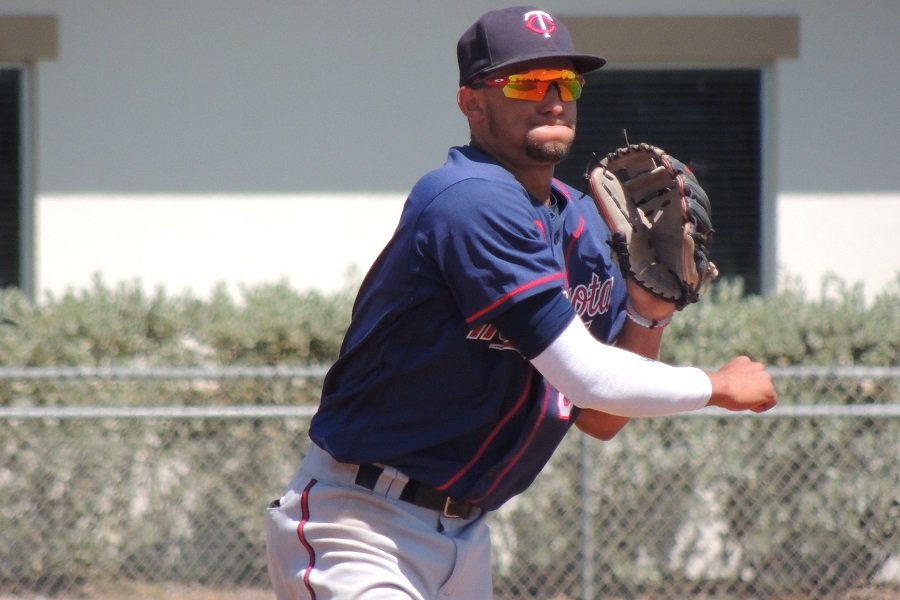 Royce Lewis was drafted as a shortstop with the possibility of center field as a fallback option. Players with such athleticism are often the type to go number one overall. His performance has been a bit inconsistent offensively and his defensive future remains in question as well. Still, he remains one of the top prospects in baseball, despite two consecutive lost seasons, because of his perceived ceiling. The Twins future has changed a lot since Lewis was taken #1 overall in 2017. Their desperate need for a shortstop remains, but Lewis’s center field fallback option has been complicated by a Byron Buxton contract extension and the acquisition of Austin Martin who appears to be another fringe shortstop option bound to fill in at center field. Unlike Lewis however, Martin has shown consistent offensive tools that foreshadow a surefire Major League career very soon. The Twins have a question they have to ask themselves this winter. They not only have a long term need at shortstop, but an immediate one if they want to contend. The stopgap options on the market dwindled before the CBA lockout although several star options remain that could be signed to long term deals. They also have a desperate need for starting pitching, a market that has been picked over when it comes to the high-end options. Could the Twins cash in on their former number one overall pick on the trade market? Before Lewis’s injury some within the system considered him questionable at best to stick at shortstop. Much like the recently-acquired Austin Martin, without the ability to play that premier position he could still be a valuable player, but not one that fills the biggest hole in the system. The Twins would be years away from an inhouse option taking the reins at shortstop. Prospect value is fluid. On one hand, Lewis took a hit to his prospect value by missing 2020 and 2021. On the other hand, if he truly isn’t a future shortstop then his time off hasn’t made that abundantly clear to the Twins or any of the teams that may be interested in acquiring him. It’s safe to say right now that some teams would still be willing to take a sizable gamble on Royce Lewis, the shortstop. It’s just a matter of whether the Twins would. There’s no doubt that Lewis could still be a major piece of a trade for a significant pitching acquisition. With one decision the Twins could pivot to signing a shortstop like Trevor Story to a long term deal while also bringing in an anchor for the rotation via trade. It’s the kind of move a team would make if they’re truly serious about contending right now, which the Twins should be. In the end, it all comes down to how the Twins value Royce Lewis. It’s possible he’s lost some shine, but the same front office saw him as the best prospect on a draft board including players such as Hunter Greene, Trevor Rogers and Shane Baz. This isn’t necessarily a call to trade Royce Lewis. We have to assume that nobody knows what to expect from Lewis’ future better than the Twins. I would say however that if they think Lewis is another player without a sure position to add to a list that already includes Austin Martin and Luis Arraez, it may be time to start considering getting creative with how to address their needs in the rotation and the middle infield. Do you think the Twins should at least consider trading their former number one overall pick this winter? Let us know below! — Latest Twins coverage from our writers — Recent Twins discussion in our forums — Follow Twins Daily via Twitter, Facebook or email — Follow Cody Pirkl on Twitter here
 -
While many fans fret about filling out the rotation, the shortstop position remains vacant. 2022 may hinge on pitching improvements, but it’s time to recognize that the Twins decision at shortstop may be the more important long term position to fill. This winter is likely the greatest in terms of free agent shortstops in the history of baseball. Corey Seager, Javier Baez, Carlos Correa etc. A perfect scenario for the Minnesota Twins who have an opening at the position and a farm system whose two most obvious candidates to grab that role are questionable at best. It’s unclear whether the Twins were ever open to blocking Royce Lewis and Austin Martin with a long term signing of a star free agent, but it appears the market has likely priced them out of it regardless. The Twins just simply were never going to pay this kind of money for any player of any caliber. It is what it is. It’s more likely that their plan was to hope that one of the stud shortstops waited out the market too long and were open to a shorter deal as we neared Spring Training. Something very unlikely when discussing such high profile players. As we enter the lockout and take the temperature of the market, things are continuing to look more and more bleak in terms of adding a shortstop. There are low end names such as a reunion with Andrelton Simmons, bringing in the recently DFAed Jose Iglesias, or checking in on the solid but unspectacular Freddy Galvis if his rumors of signing overseas aren’t true. Think these options are gross? All of them should be preferred to the alternative. It’s certainly a possibility that the Twins refuse to pay up for the studs and don’t see the point in bringing in another Andrelton Simmons type. After all, Jorge Polanco is coming off a year where he was the Twins best all-around player, and technically he could move right back over to being the quarterback of the infield. They could even move Luis Arraez back to second base. At face value this sounds just fine. I’d argue, however, that it would be an absolute disaster. Much of Jorge Polanco’s value in 2021 came from finally being healthy. Perhaps it’s a coincidence, but there were talks attributing his improved health to not having as much wear and tear on his recurring ankle injury at second base. He also was much more valuable due to his ability to effectively play his new position. He posted -1 Outs Above Average at second base and flashed some gold glove caliber plays as he adjusted. He was much improved from his last full season (2019) at shortstop when he posted -22 Outs Above Average. Luis Arraez is also a significantly worse second baseman than Polanco, meaning a significant defensive downgrade at both positions. The Twins quite simply did not make many good decisions in 2021. Moving Polanco to second was probably their best. He reestablished himself as a core piece of the team and appeared to overcome his health issues with a move to a less demanding position. Moving Arraez into a utility role also turned him into a much more valuable player than if he were pitted at a position that he struggles at defensively. If the Twins decide that they don’t want to pay for a top-tier shortstop, that’s fine. If they decide the bottom tier isn’t impactful enough to spend on, that’s fine as well. They can’t do both. Walking back two of the better developments the team made in 2021 could carry consequences far beyond 2022. At this point in regards to Jorge Polanco, the Twins found something that works for both him and the team. He’s reemerged as a star player who’s under team control and can be a force for years to come at only 28 years old. He would immediately lose value by becoming one of the worst defensive shortstops in baseball. He could lose a lot more than that if he moves back to a more physically-demanding position and reinjures his ankle which has been surgically repaired twice. Not worth saving a few bucks in my opinion. The Twins had few bright spots in 2021. They should be taking their shortstop search incredibly seriously to avoid wiping away one of those bright spots in 2022. The Twins don’t need a second baseman moving across the second base bag. They need a shortstop. MORE TWINS CONTENT — Latest Twins coverage from our writers — Recent Twins discussion in our forums — Follow Twins Daily via Twitter, Facebook or email — Follow Cody Pirkl on Twitter here View full article
-
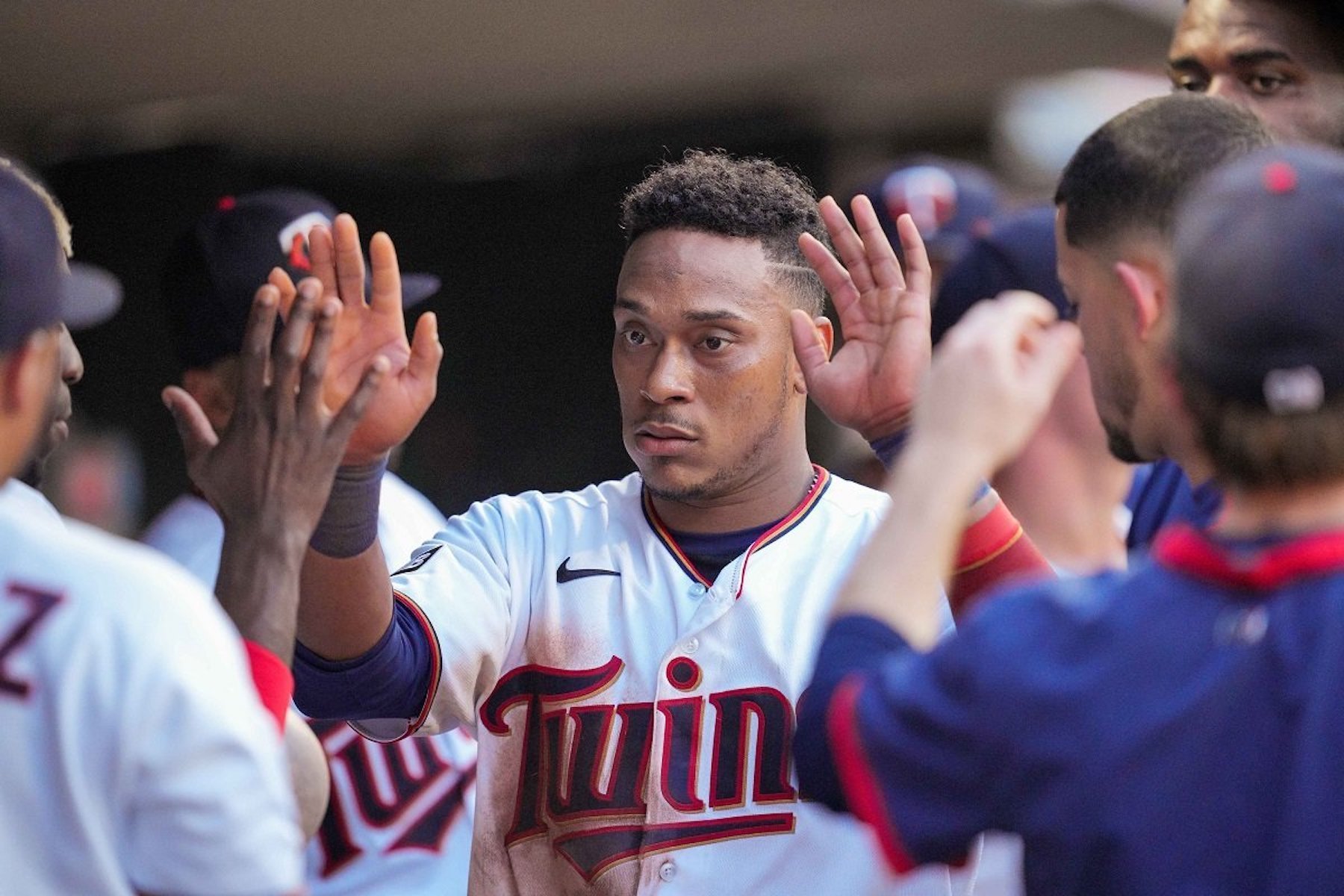 This winter is likely the greatest in terms of free agent shortstops in the history of baseball. Corey Seager, Javier Baez, Carlos Correa etc. A perfect scenario for the Minnesota Twins who have an opening at the position and a farm system whose two most obvious candidates to grab that role are questionable at best. It’s unclear whether the Twins were ever open to blocking Royce Lewis and Austin Martin with a long term signing of a star free agent, but it appears the market has likely priced them out of it regardless. The Twins just simply were never going to pay this kind of money for any player of any caliber. It is what it is. It’s more likely that their plan was to hope that one of the stud shortstops waited out the market too long and were open to a shorter deal as we neared Spring Training. Something very unlikely when discussing such high profile players. As we enter the lockout and take the temperature of the market, things are continuing to look more and more bleak in terms of adding a shortstop. There are low end names such as a reunion with Andrelton Simmons, bringing in the recently DFAed Jose Iglesias, or checking in on the solid but unspectacular Freddy Galvis if his rumors of signing overseas aren’t true. Think these options are gross? All of them should be preferred to the alternative. It’s certainly a possibility that the Twins refuse to pay up for the studs and don’t see the point in bringing in another Andrelton Simmons type. After all, Jorge Polanco is coming off a year where he was the Twins best all-around player, and technically he could move right back over to being the quarterback of the infield. They could even move Luis Arraez back to second base. At face value this sounds just fine. I’d argue, however, that it would be an absolute disaster. Much of Jorge Polanco’s value in 2021 came from finally being healthy. Perhaps it’s a coincidence, but there were talks attributing his improved health to not having as much wear and tear on his recurring ankle injury at second base. He also was much more valuable due to his ability to effectively play his new position. He posted -1 Outs Above Average at second base and flashed some gold glove caliber plays as he adjusted. He was much improved from his last full season (2019) at shortstop when he posted -22 Outs Above Average. Luis Arraez is also a significantly worse second baseman than Polanco, meaning a significant defensive downgrade at both positions. The Twins quite simply did not make many good decisions in 2021. Moving Polanco to second was probably their best. He reestablished himself as a core piece of the team and appeared to overcome his health issues with a move to a less demanding position. Moving Arraez into a utility role also turned him into a much more valuable player than if he were pitted at a position that he struggles at defensively. If the Twins decide that they don’t want to pay for a top-tier shortstop, that’s fine. If they decide the bottom tier isn’t impactful enough to spend on, that’s fine as well. They can’t do both. Walking back two of the better developments the team made in 2021 could carry consequences far beyond 2022. At this point in regards to Jorge Polanco, the Twins found something that works for both him and the team. He’s reemerged as a star player who’s under team control and can be a force for years to come at only 28 years old. He would immediately lose value by becoming one of the worst defensive shortstops in baseball. He could lose a lot more than that if he moves back to a more physically-demanding position and reinjures his ankle which has been surgically repaired twice. Not worth saving a few bucks in my opinion. The Twins had few bright spots in 2021. They should be taking their shortstop search incredibly seriously to avoid wiping away one of those bright spots in 2022. The Twins don’t need a second baseman moving across the second base bag. They need a shortstop. MORE TWINS CONTENT — Latest Twins coverage from our writers — Recent Twins discussion in our forums — Follow Twins Daily via Twitter, Facebook or email — Follow Cody Pirkl on Twitter here
 -
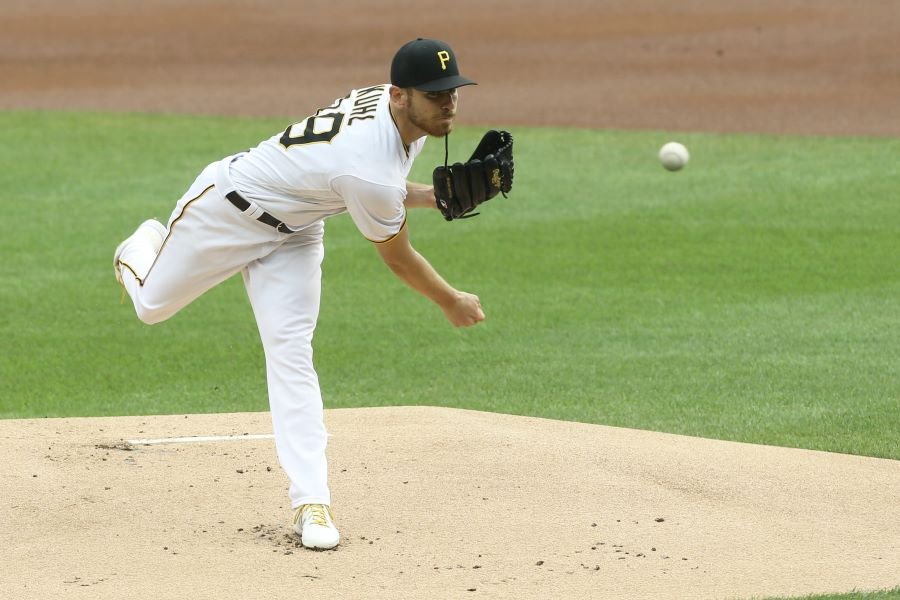 For a pitching needy team like the Twins, the non tender deadline is like Christmas. Position players do get cut loose, but they’re oftentimes much less interesting than the arms that find themselves looking for teams for a multitude of reasons. There are three arms in particular that could go a long way in helping fill a needy pitching staff. LH SP Matthew Boyd Boyd was once a highly-coveted arm that would have brought in a king's ransom. On Tuesday, the Tigers officially decided to ship him out. One can only assume they’d like a do-over as they’ve now let him go for free. Boyd’s home run issues have simply become too much to overcome these last few years, and he’s now recovering from surgery on his forearm. The projected $7.3m turned out to be enough for the Tigers to finally cut bait. 2021 was a resurgent year for Boyd when he was on the field. He posted a 3.89 ERA in 78 innings. His breaking ball and changeup combo was impressive and more than enough to overcome a flawed fastball that has been crushed in his career. He may not be an arm the Twins can lean on too heavily coming off injury, but with so many rotation openings there would be nothing wrong with taking a flier on a cheap arm with significant upside who just turned 30 years old. RH RP Richard Rodriguez This may have been the most surprising non-tender of the day as Rodriguez was only projected to make $3.1m. He would have cost a heavy prospect package as recently as last offseason, but the Pirates held onto him, eventually dealing him to Atlanta for significantly less down the line. His 2.94 ERA was not indicative of his performance under the hood, as his strikeouts completely dried up, dropping from 36.6% in 2020 to an absurd 16.7% in 2021. It’s hard to fathom such a drop off in a pitcher with such incredible raw stuff. The Twins should be heavy on Rodriguez who gutted his way through a successful 2021 in terms of final outcomes and has a history of closing out games. Any return to form on the strikeout rate would give them a tremendous force on the back end of games in a bullpen that let so many opportunities slip away in the last year. RH SP Chad Kuhl The moment we’ve all been waiting for. I actually proposed a package deal last winter for both Richard Rodriguez and Kuhl, and here they are for free! (Well, not free, only dollars rather than prospects and dollars.) I may not be GM material, but I do know that the reason I liked Kuhl last winter is still very much relevant. He did not have a good season, still mostly starting games and posting an ERA north of 4.80. He still had a 33.5% whiff rate on his slider and a 44% whiff rate on a changeup that he should probably be throwing more often. The ship has sailed on Chad Kuhl, the starting pitcher in my mind. Maybe Wes Johnson has other ideas. That being said, he has a five-pitch mix that could easily be trimmed down to two or three with a move to the bullpen. His 94 mph fastball should play up in shorter stints, and he has at least one devastating pitch in the slider, as well as a changeup to mix in. At the very least, Kuhl could be a multi-inning reliever with his pitch mix and still shows signs of being able to figure out how to develop into much more. It's a low risk gamble to take on a pitcher that does a few things extremely well and was cut loose over a projected $2.2m. While these three stand out as obvious options, there is no shortage of players looking for new teams following tonight's deadline. See the full list of non-tendered players who are now free agents below: Diamondbacks: Taylor Clark-RHRP Braves: Johan Camargo-UTIL, Richard Rodriguez, RHRP Red Sox: Tim Locastro-CF Tigers: Matt Boyd-LHSP Angels: Phil Gosselin-2B Brewers: Dan Vogelbach-1B Twins: Danny Coulombe-LHRP, Juan Minaya-RHRP, Trevor Megill-RHRP Marlins: Lewis Brinson-CF (DFAed) Mets: Robert Gsellman-RHRP Pirates: Chad Kuhl-RHP Padres: Jose Castillo-LHRP, Matt Strahm-LHRP, Trey Wingenter-RHRP Nationals: Ryne Harper-RHRP, Wander Suero-LHRP Are there any other non-tendered players you’d like to see the Twins take a flier on? Let us know below! FOR MORE TWINS COVERAGE... — Latest Twins coverage from our writers — Recent Twins discussion in our forums — Follow Twins Daily via Twitter, Facebook or email — Follow Cody Pirkl on Twitter here
- 16 comments
-
- 8
-
-
- 2022 offseason
- richard rodriguez
- (and 2 more)
-
November 30 is the non-tender deadline for baseball which means several players will surprisingly become free agents. Just as in years passed, there are several such players this time around that could fill some of the Twins' needs. For a pitching needy team like the Twins, the non tender deadline is like Christmas. Position players do get cut loose, but they’re oftentimes much less interesting than the arms that find themselves looking for teams for a multitude of reasons. There are three arms in particular that could go a long way in helping fill a needy pitching staff. LH SP Matthew Boyd Boyd was once a highly-coveted arm that would have brought in a king's ransom. On Tuesday, the Tigers officially decided to ship him out. One can only assume they’d like a do-over as they’ve now let him go for free. Boyd’s home run issues have simply become too much to overcome these last few years, and he’s now recovering from surgery on his forearm. The projected $7.3m turned out to be enough for the Tigers to finally cut bait. 2021 was a resurgent year for Boyd when he was on the field. He posted a 3.89 ERA in 78 innings. His breaking ball and changeup combo was impressive and more than enough to overcome a flawed fastball that has been crushed in his career. He may not be an arm the Twins can lean on too heavily coming off injury, but with so many rotation openings there would be nothing wrong with taking a flier on a cheap arm with significant upside who just turned 30 years old. RH RP Richard Rodriguez This may have been the most surprising non-tender of the day as Rodriguez was only projected to make $3.1m. He would have cost a heavy prospect package as recently as last offseason, but the Pirates held onto him, eventually dealing him to Atlanta for significantly less down the line. His 2.94 ERA was not indicative of his performance under the hood, as his strikeouts completely dried up, dropping from 36.6% in 2020 to an absurd 16.7% in 2021. It’s hard to fathom such a drop off in a pitcher with such incredible raw stuff. The Twins should be heavy on Rodriguez who gutted his way through a successful 2021 in terms of final outcomes and has a history of closing out games. Any return to form on the strikeout rate would give them a tremendous force on the back end of games in a bullpen that let so many opportunities slip away in the last year. RH SP Chad Kuhl The moment we’ve all been waiting for. I actually proposed a package deal last winter for both Richard Rodriguez and Kuhl, and here they are for free! (Well, not free, only dollars rather than prospects and dollars.) I may not be GM material, but I do know that the reason I liked Kuhl last winter is still very much relevant. He did not have a good season, still mostly starting games and posting an ERA north of 4.80. He still had a 33.5% whiff rate on his slider and a 44% whiff rate on a changeup that he should probably be throwing more often. The ship has sailed on Chad Kuhl, the starting pitcher in my mind. Maybe Wes Johnson has other ideas. That being said, he has a five-pitch mix that could easily be trimmed down to two or three with a move to the bullpen. His 94 mph fastball should play up in shorter stints, and he has at least one devastating pitch in the slider, as well as a changeup to mix in. At the very least, Kuhl could be a multi-inning reliever with his pitch mix and still shows signs of being able to figure out how to develop into much more. It's a low risk gamble to take on a pitcher that does a few things extremely well and was cut loose over a projected $2.2m. While these three stand out as obvious options, there is no shortage of players looking for new teams following tonight's deadline. See the full list of non-tendered players who are now free agents below: Diamondbacks: Taylor Clark-RHRP Braves: Johan Camargo-UTIL, Richard Rodriguez, RHRP Red Sox: Tim Locastro-CF Tigers: Matt Boyd-LHSP Angels: Phil Gosselin-2B Brewers: Dan Vogelbach-1B Twins: Danny Coulombe-LHRP, Juan Minaya-RHRP, Trevor Megill-RHRP Marlins: Lewis Brinson-CF (DFAed) Mets: Robert Gsellman-RHRP Pirates: Chad Kuhl-RHP Padres: Jose Castillo-LHRP, Matt Strahm-LHRP, Trey Wingenter-RHRP Nationals: Ryne Harper-RHRP, Wander Suero-LHRP Are there any other non-tendered players you’d like to see the Twins take a flier on? Let us know below! FOR MORE TWINS COVERAGE... — Latest Twins coverage from our writers — Recent Twins discussion in our forums — Follow Twins Daily via Twitter, Facebook or email — Follow Cody Pirkl on Twitter here View full article
-
When Jose Berrios was traded last season, the front office described the next chapter as a retool rather than a rebuild. Now rumors swirl of a Byron Buxton trade. Make no mistake, if these rumors come to fruition, there is no such thing as a retool. The Twins find themselves in a difficult situation this winter. After trading their #1 starting pitcher in Jose Berrios, they’re left with only two rotation spots tentatively spoken for, each by a rookie. A pitching staff that sunk the former back-to-back AL Central champs has to be completely reworked on the front end with significant needs in a bullpen that struggled as well. Shortstop, the quarterback of the infield, is also vacant and will require a legitimate impact addition in order to help propel the team back into contention. In addition to on-field tangibles, they’ve also lost the leader of their pitching staff in Berrios, as well as the leader of the team as a whole in Nelson Cruz. A path to a comeback in 2022 is a bumpy one, but it could certainly be done. What can’t be recovered from, however, is adding center field to the list of vacancies. Center field is one of the most important everyday players on any baseball team. In Minnesota, the player manning the position has been the reason the team has sunk or swam. Since the Twins rise to success in 2019, they’ve been 100-64 with Buxton on the field and 106-106 without him. Correlation does not equal causation, but there’s no denying those numbers are indicative of Buxton’s impact when you watch him on the field. Some have called for Buxton to be traded in the past, mainly due to his long list of injuries. There’s no stopping such an opinion, but those who hold it have to realize what they’re advocating. The Twins almost certainly surpass the point of no return if they choose to field a team without Byron Buxton. The best case scenario following a Buxton trade, regardless of the return, is to sell off literally everyone else. Pay part of Josh Donaldson’s contract to get the best possible return. Take advantage of the need for catchers across the league and get a haul for Mitch Garver. See if anyone is willing to make an offer for Taylor Rogers. 2022 will certainly be a wash, and these players would offer more value on the trade market than on a losing team. Does that reality sound painful? Try the alternative where the Twins trade one of the best players in baseball and try to compete in 2022. The path to doing so without emptying the farm system or spending an unrealistic amount in free agency simply doesn’t exist. Pretending that the team marches into the playoffs in 2022 without Buxton manning center field would set Twins baseball back years. At least Option A gives full attention to collecting young talent to try to develop a new core for the near future. The team still has a path to contention in 2022, and even if that doesn’t work out, their upcoming prospects should position them well for 2023. Extending Byron Buxton is a vote of confidence not only in the front office's ability to rebound, but in the current core that’s in place. Trading Byron Buxton is waving a white flag on both fronts. The next move by the front office won’t be forced. It’s a choice. Byron Buxton isn’t asking for anything near record-setting money. There is no better player they’ll ever find to man center field, and the one they have is a home-grown fan favorite. Such a move by the front office would be giving up on a two-year window that earned them so much praise despite it never having been capitalized on. In six years this front office has inherited a stinker of a team and converted it into a core of players that once had fans thinking the stars are the limit. Now they sit on the edge of a decision that would rightfully leave fans wondering “What was it all for?”. For more Twins content: — Latest Twins coverage from our writers — Recent Twins discussion in our forums — Follow Twins Daily via Twitter, Facebook or email — Follow Cody Pirkl on Twitter here View full article
- 50 replies
-
- 1
-
-
- jose berrios
- byron buxton
- (and 1 more)
-
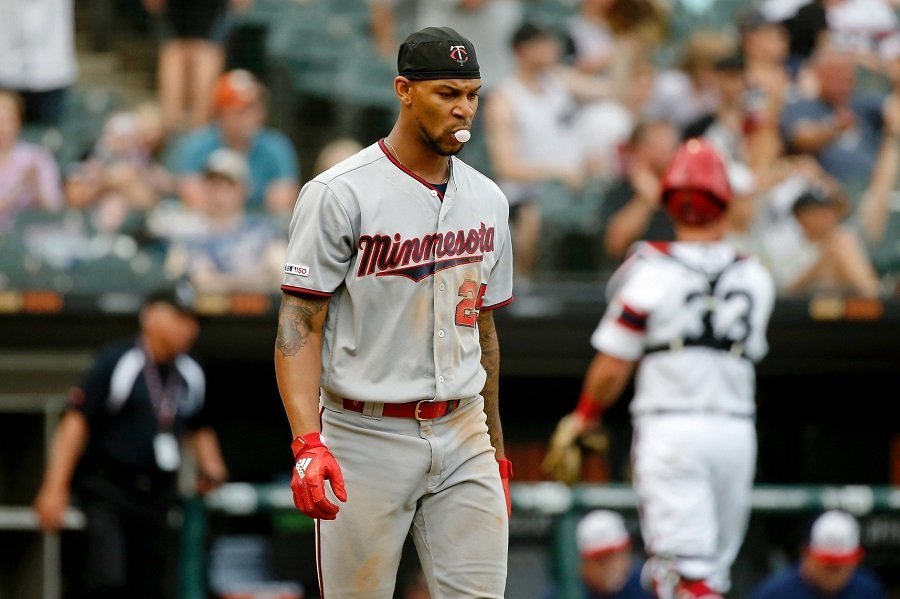 The Twins find themselves in a difficult situation this winter. After trading their #1 starting pitcher in Jose Berrios, they’re left with only two rotation spots tentatively spoken for, each by a rookie. A pitching staff that sunk the former back-to-back AL Central champs has to be completely reworked on the front end with significant needs in a bullpen that struggled as well. Shortstop, the quarterback of the infield, is also vacant and will require a legitimate impact addition in order to help propel the team back into contention. In addition to on-field tangibles, they’ve also lost the leader of their pitching staff in Berrios, as well as the leader of the team as a whole in Nelson Cruz. A path to a comeback in 2022 is a bumpy one, but it could certainly be done. What can’t be recovered from, however, is adding center field to the list of vacancies. Center field is one of the most important everyday players on any baseball team. In Minnesota, the player manning the position has been the reason the team has sunk or swam. Since the Twins rise to success in 2019, they’ve been 100-64 with Buxton on the field and 106-106 without him. Correlation does not equal causation, but there’s no denying those numbers are indicative of Buxton’s impact when you watch him on the field. Some have called for Buxton to be traded in the past, mainly due to his long list of injuries. There’s no stopping such an opinion, but those who hold it have to realize what they’re advocating. The Twins almost certainly surpass the point of no return if they choose to field a team without Byron Buxton. The best case scenario following a Buxton trade, regardless of the return, is to sell off literally everyone else. Pay part of Josh Donaldson’s contract to get the best possible return. Take advantage of the need for catchers across the league and get a haul for Mitch Garver. See if anyone is willing to make an offer for Taylor Rogers. 2022 will certainly be a wash, and these players would offer more value on the trade market than on a losing team. Does that reality sound painful? Try the alternative where the Twins trade one of the best players in baseball and try to compete in 2022. The path to doing so without emptying the farm system or spending an unrealistic amount in free agency simply doesn’t exist. Pretending that the team marches into the playoffs in 2022 without Buxton manning center field would set Twins baseball back years. At least Option A gives full attention to collecting young talent to try to develop a new core for the near future. The team still has a path to contention in 2022, and even if that doesn’t work out, their upcoming prospects should position them well for 2023. Extending Byron Buxton is a vote of confidence not only in the front office's ability to rebound, but in the current core that’s in place. Trading Byron Buxton is waving a white flag on both fronts. The next move by the front office won’t be forced. It’s a choice. Byron Buxton isn’t asking for anything near record-setting money. There is no better player they’ll ever find to man center field, and the one they have is a home-grown fan favorite. Such a move by the front office would be giving up on a two-year window that earned them so much praise despite it never having been capitalized on. In six years this front office has inherited a stinker of a team and converted it into a core of players that once had fans thinking the stars are the limit. Now they sit on the edge of a decision that would rightfully leave fans wondering “What was it all for?”. For more Twins content: — Latest Twins coverage from our writers — Recent Twins discussion in our forums — Follow Twins Daily via Twitter, Facebook or email — Follow Cody Pirkl on Twitter here
- 50 comments
-
- 6
-
-
- jose berrios
- byron buxton
- (and 1 more)
-
Every year a few formerly-successful pitchers hit the free agent market after disappointing campaigns. The Twins famously look for a bargain when possible, and this year there are a few such arms to keep an eye on. It’s easy to get frustrated when the Twins buy low on players, especially when they don’t bounce back as hoped. It’s equally easy to forget how there are several of these bounce-back candidates who pay off big every year. The reality is it’s easier and cheaper to try to find the next Robbie Ray than it is to pay up for the real one. It’s more teams than just the Twins that go chasing bounce-backs every winter to be fair. The formula is to look for a pitcher coming off of a rough showing who still has something to like, whether that’s great success in recent years or something they do well but need to incorporate into their game more. The Twins have significant needs in the rotation. If you think they employed this tactic in recent years, I’d be expecting a whole lot more of it this winter. Here are a few names to watch. Dylan Bundy Bundy looked like a big missed opportunity in 2020. Traded for pennies on the dollar from Baltimore to the Angels, Bundy put up ace-like numbers in LA during the shortened season. His K/9 crept near 10 while limiting walks and homers. He had a 3.29 ERA and 2.0 fWAR through just 11 starts. 2021 was a different story however. Bundy struggled with velocity at times. He also upped his sinker usage by almost 10% at the cost of his changeup and curveball. The results were ugly, as he finished with a 6.06 ERA in 90 innings and lost his rotation spot. Numbers like that don’t draw a ton of attention, but his well performing slider (36% whiff rate in 2021) and incredible stretch in 2020 makes him an excellent flier to take at the back end of the rotation with upside for much more. Still only 29 years old, Bundy will probably carry a price tag that wouldn’t stop the Twins from adding elsewhere. Carlos Martinez Martinez’ time in St. Louis started with a roar and ended in a whimper. Debuting at 21 years old, Martinez was an incredibly valuable arm from 2015-2019. For 2020 and 2021 however, Martinez tallied just over 100 innings with the Cards as he dealt with a rash of injuries and struggles with velocity. His ERA in those two years went from 9.90 in 2020 to 6.23 in 2021. At only 30 years of age, Martinez hits the market with a value that may never be lower. Expecting him to return to his #1 or 2 starter form may be a longshot. It is reasonable however to think that there’s enough talent in his right arm to shore up a rotation spot on a pitching needy team for a very low price. He also has closing and relief experience if durability is an issue. The last time he was used exclusively as a reliever in 2019, Martinez averaged nearly 97 mph on his fastball as opposed to sitting around 94 in the rotation. A Carlos Martinez signing would definitely be a gamble, but likely a low risk one that depends mainly on health. Assuming he can take the mound regularly, it’s easy to imagine the former Cardinal help fill a vacancy of some sort in the Twins tattered pitching staff. Michael Wacha Wacha looked like a future stud in St. Louis when he debuted, peaking in 2017 when he averaged 95.5 mph on his fastball and was a 3 win player. It’s all been downhill since then however, as Wacha has dealt with a decline in velocity and home run issues in the four years since. His 2021 was uninspiring on the surface in Tampa Bay with his ERA over 5.00 in just over 120 innings pitched. Of note however is the fact that 2021 was the first season Wacha has averaged 94 mph on the fastball in four years. While ineffective throughout most of the season, at the end of August he scrapped his cut fastball which allowed a .375 average against and a .586 slugging %. He replaced it with more fastballs and changeups (his best pitch) and finished the last month of the season with a strikeout per inning and a 3.00 ERA. His upside may lack that of Bundy or Martinez, but there’s a decent chance of him being a serviceable starting pitcher for a good MLB team. His price should be incredibly cheap considering he was paid $3m in 2021 and didn’t show much bounce-back potential until the last month of the season. It’s the exact type of move such a pitching needy team would shoot for even though the fanbase would lament it. Are any of these three more enticing than the others? Are there any bounce-back candidates that you’d like to see the Twins go after not on the list? Let us know below. For more Twins content: — Latest Twins coverage from our writers — Recent Twins discussion in our forums — Follow Twins Daily via Twitter, Facebook or email — Follow Cody Pirkl on Twitter here View full article
-
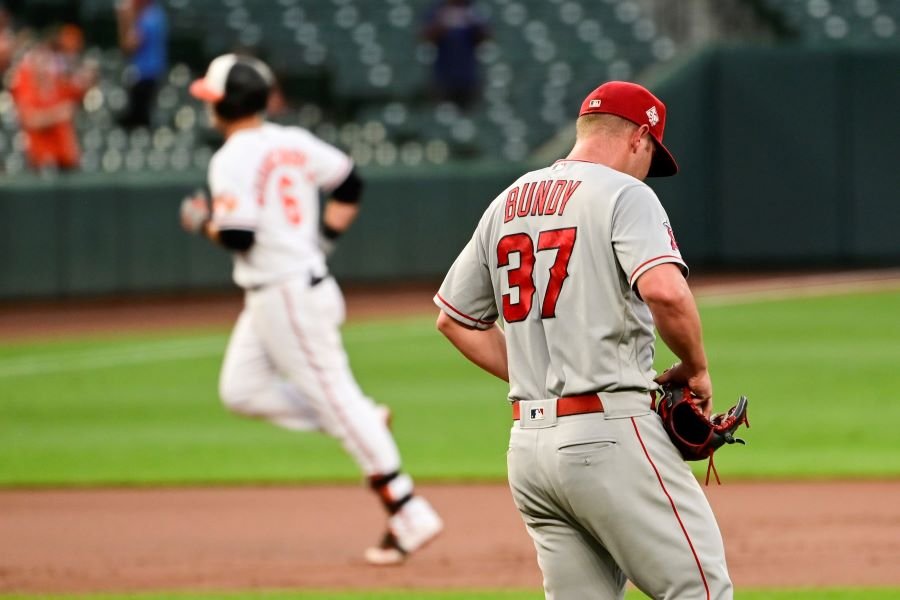 It’s easy to get frustrated when the Twins buy low on players, especially when they don’t bounce back as hoped. It’s equally easy to forget how there are several of these bounce-back candidates who pay off big every year. The reality is it’s easier and cheaper to try to find the next Robbie Ray than it is to pay up for the real one. It’s more teams than just the Twins that go chasing bounce-backs every winter to be fair. The formula is to look for a pitcher coming off of a rough showing who still has something to like, whether that’s great success in recent years or something they do well but need to incorporate into their game more. The Twins have significant needs in the rotation. If you think they employed this tactic in recent years, I’d be expecting a whole lot more of it this winter. Here are a few names to watch. Dylan Bundy Bundy looked like a big missed opportunity in 2020. Traded for pennies on the dollar from Baltimore to the Angels, Bundy put up ace-like numbers in LA during the shortened season. His K/9 crept near 10 while limiting walks and homers. He had a 3.29 ERA and 2.0 fWAR through just 11 starts. 2021 was a different story however. Bundy struggled with velocity at times. He also upped his sinker usage by almost 10% at the cost of his changeup and curveball. The results were ugly, as he finished with a 6.06 ERA in 90 innings and lost his rotation spot. Numbers like that don’t draw a ton of attention, but his well performing slider (36% whiff rate in 2021) and incredible stretch in 2020 makes him an excellent flier to take at the back end of the rotation with upside for much more. Still only 29 years old, Bundy will probably carry a price tag that wouldn’t stop the Twins from adding elsewhere. Carlos Martinez Martinez’ time in St. Louis started with a roar and ended in a whimper. Debuting at 21 years old, Martinez was an incredibly valuable arm from 2015-2019. For 2020 and 2021 however, Martinez tallied just over 100 innings with the Cards as he dealt with a rash of injuries and struggles with velocity. His ERA in those two years went from 9.90 in 2020 to 6.23 in 2021. At only 30 years of age, Martinez hits the market with a value that may never be lower. Expecting him to return to his #1 or 2 starter form may be a longshot. It is reasonable however to think that there’s enough talent in his right arm to shore up a rotation spot on a pitching needy team for a very low price. He also has closing and relief experience if durability is an issue. The last time he was used exclusively as a reliever in 2019, Martinez averaged nearly 97 mph on his fastball as opposed to sitting around 94 in the rotation. A Carlos Martinez signing would definitely be a gamble, but likely a low risk one that depends mainly on health. Assuming he can take the mound regularly, it’s easy to imagine the former Cardinal help fill a vacancy of some sort in the Twins tattered pitching staff. Michael Wacha Wacha looked like a future stud in St. Louis when he debuted, peaking in 2017 when he averaged 95.5 mph on his fastball and was a 3 win player. It’s all been downhill since then however, as Wacha has dealt with a decline in velocity and home run issues in the four years since. His 2021 was uninspiring on the surface in Tampa Bay with his ERA over 5.00 in just over 120 innings pitched. Of note however is the fact that 2021 was the first season Wacha has averaged 94 mph on the fastball in four years. While ineffective throughout most of the season, at the end of August he scrapped his cut fastball which allowed a .375 average against and a .586 slugging %. He replaced it with more fastballs and changeups (his best pitch) and finished the last month of the season with a strikeout per inning and a 3.00 ERA. His upside may lack that of Bundy or Martinez, but there’s a decent chance of him being a serviceable starting pitcher for a good MLB team. His price should be incredibly cheap considering he was paid $3m in 2021 and didn’t show much bounce-back potential until the last month of the season. It’s the exact type of move such a pitching needy team would shoot for even though the fanbase would lament it. Are any of these three more enticing than the others? Are there any bounce-back candidates that you’d like to see the Twins go after not on the list? Let us know below. For more Twins content: — Latest Twins coverage from our writers — Recent Twins discussion in our forums — Follow Twins Daily via Twitter, Facebook or email — Follow Cody Pirkl on Twitter here
 -
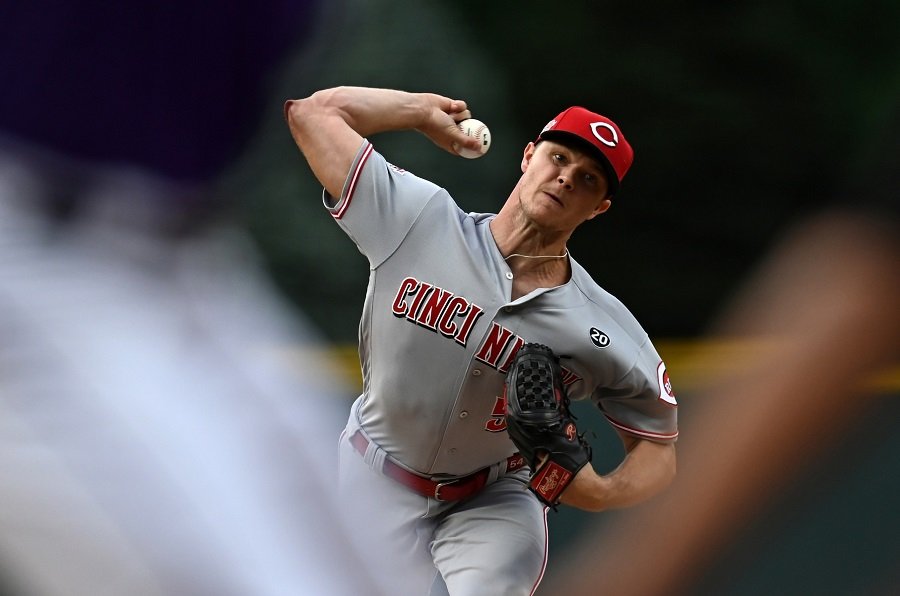 The day after the World Series wrapped up, news surfaced of a trade between the Cincinnati Reds and Detroit Tigers. Nothing major, but definitely surprising to see so early in the offseason. It’s an innocent enough deal, but it sheds the spotlight on a Cincinnati team with plenty of star power who narrowly missed the playoffs. Cincinnati finds themselves in an odd spot. Some high dollar players and regular contributors appear to be major question marks moving forward. Their minor league system is quite frankly not great. They have several players either leaving by way of free agency or possibly opting out. It appears to have led leadership to a disappointing conclusion. It’s never fun to see another team turn towards a possible rebuild, but it creates opportunity for those still willing to go for it. There are a few players the Twins could check in on. Sonny Gray Starting off with a fun name that’s been linked to the Twins before. At 31 years old, Gray threw 135 1/3 innings in 2021 and posted a 4.19 ERA. He did suffer from several injuries throughout the season but still posted a strong 27% K rate and sub 10% walk rate. It may not be realistic to expect 200 innings from Gray in 2022, but one would think that a second consecutive 162 game season could build him up to the 160-170 range assuming he avoids major injuries. Gray is due about $10m in 2022 with a $12m team option in 2023. This is the kind of money and upside that would slot perfectly into the Twins plans to return to contention while leaving wiggle room for plenty more additions. If the Reds are selling they have no reason to hold onto a 30+ year old pitcher for $10m per year. Fellow TwinsDaily writer Nash Walker did some research on the old Trade Simulator and found one viable return including RHP Matt Canterino and OF Trevor Larnach. If the Twins want to return to contention that just may be the cost of doing business. Amir Garrett Garrett has been the topic of Twins trade talk before as well, as the hard-throwing lefty reliever would be a nice arm to slot into the back end of a needy bullpen. The difference this winter is Garrett is much more realistic. The left hander is coming off what could be described as a brutal season after posting an ERA over 6.00 in just under 50 innings. His main issue was a HR/9 nearing 2 for the second year in a row. Garrett still posted a 28.4% K rate and showed every bit of the arm talent that was so impressive in years past. He’s due to make $2m in 2022 with one more year of arbitration, and the Reds may see more value in flipping a reliever nearing the age of 30 if they’re headed toward a rebuild. Getting Garrett out of Great American Ballpark alone may go a long way in improving his performance, and the cost after his 2021 simply can’t be very high. Nick Senzel The former top 100 prospect has fallen a long way from being a possible core piece of a hypothetical Francisco Lindor trade. Injuries are mostly to blame, as 26 year old Senzel has yet to truly get any run at the MLB level for an extended period of time. Senzel has played in just 59 games since his debut in 2019 where he was able to appear in 104 ballgames. The Reds could very well be willing to take what they can get as their former up and coming star continues to miss time. For the Twins, Senzel is a player who can play center field, second base, third, and even fill in at shortstop in a pinch given his history in the minors. It may become a bit crowded in the utilityman position, but making such an acquisition could open up the possibility of a trade of someone like Luis Arraez who would be able to fetch them a higher end arm of the trade market. There are surely other Cincinnati players who would be shopped if they decide to steer into a rebuild. These three however carry relatively low acquisition costs and fit into the Twins plans of acquiring several other players to rebuild after a disappointing year. Are there any other Reds you’d like to see the Twins call on? (Yes I know, Luis Castillo) Let us know below! For More Twins Content — Latest Twins coverage from our writers — Recent Twins discussion in our forums — Follow Twins Daily via Twitter, Facebook or email — Follow Cody Pirkl on Twitter here
- 10 comments
-
- 1
-
-
- 2022 offseason
- sonny gray
- (and 2 more)
-
It’s officially the offseason, which means the possibilities are endless. One familiar team has already kicked off trade season and identified themselves as a potential trade partner for the Twins. The day after the World Series wrapped up, news surfaced of a trade between the Cincinnati Reds and Detroit Tigers. Nothing major, but definitely surprising to see so early in the offseason. It’s an innocent enough deal, but it sheds the spotlight on a Cincinnati team with plenty of star power who narrowly missed the playoffs. Cincinnati finds themselves in an odd spot. Some high dollar players and regular contributors appear to be major question marks moving forward. Their minor league system is quite frankly not great. They have several players either leaving by way of free agency or possibly opting out. It appears to have led leadership to a disappointing conclusion. It’s never fun to see another team turn towards a possible rebuild, but it creates opportunity for those still willing to go for it. There are a few players the Twins could check in on. Sonny Gray Starting off with a fun name that’s been linked to the Twins before. At 31 years old, Gray threw 135 1/3 innings in 2021 and posted a 4.19 ERA. He did suffer from several injuries throughout the season but still posted a strong 27% K rate and sub 10% walk rate. It may not be realistic to expect 200 innings from Gray in 2022, but one would think that a second consecutive 162 game season could build him up to the 160-170 range assuming he avoids major injuries. Gray is due about $10m in 2022 with a $12m team option in 2023. This is the kind of money and upside that would slot perfectly into the Twins plans to return to contention while leaving wiggle room for plenty more additions. If the Reds are selling they have no reason to hold onto a 30+ year old pitcher for $10m per year. Fellow TwinsDaily writer Nash Walker did some research on the old Trade Simulator and found one viable return including RHP Matt Canterino and OF Trevor Larnach. If the Twins want to return to contention that just may be the cost of doing business. Amir Garrett Garrett has been the topic of Twins trade talk before as well, as the hard-throwing lefty reliever would be a nice arm to slot into the back end of a needy bullpen. The difference this winter is Garrett is much more realistic. The left hander is coming off what could be described as a brutal season after posting an ERA over 6.00 in just under 50 innings. His main issue was a HR/9 nearing 2 for the second year in a row. Garrett still posted a 28.4% K rate and showed every bit of the arm talent that was so impressive in years past. He’s due to make $2m in 2022 with one more year of arbitration, and the Reds may see more value in flipping a reliever nearing the age of 30 if they’re headed toward a rebuild. Getting Garrett out of Great American Ballpark alone may go a long way in improving his performance, and the cost after his 2021 simply can’t be very high. Nick Senzel The former top 100 prospect has fallen a long way from being a possible core piece of a hypothetical Francisco Lindor trade. Injuries are mostly to blame, as 26 year old Senzel has yet to truly get any run at the MLB level for an extended period of time. Senzel has played in just 59 games since his debut in 2019 where he was able to appear in 104 ballgames. The Reds could very well be willing to take what they can get as their former up and coming star continues to miss time. For the Twins, Senzel is a player who can play center field, second base, third, and even fill in at shortstop in a pinch given his history in the minors. It may become a bit crowded in the utilityman position, but making such an acquisition could open up the possibility of a trade of someone like Luis Arraez who would be able to fetch them a higher end arm of the trade market. There are surely other Cincinnati players who would be shopped if they decide to steer into a rebuild. These three however carry relatively low acquisition costs and fit into the Twins plans of acquiring several other players to rebuild after a disappointing year. Are there any other Reds you’d like to see the Twins call on? (Yes I know, Luis Castillo) Let us know below! For More Twins Content — Latest Twins coverage from our writers — Recent Twins discussion in our forums — Follow Twins Daily via Twitter, Facebook or email — Follow Cody Pirkl on Twitter here View full article
-
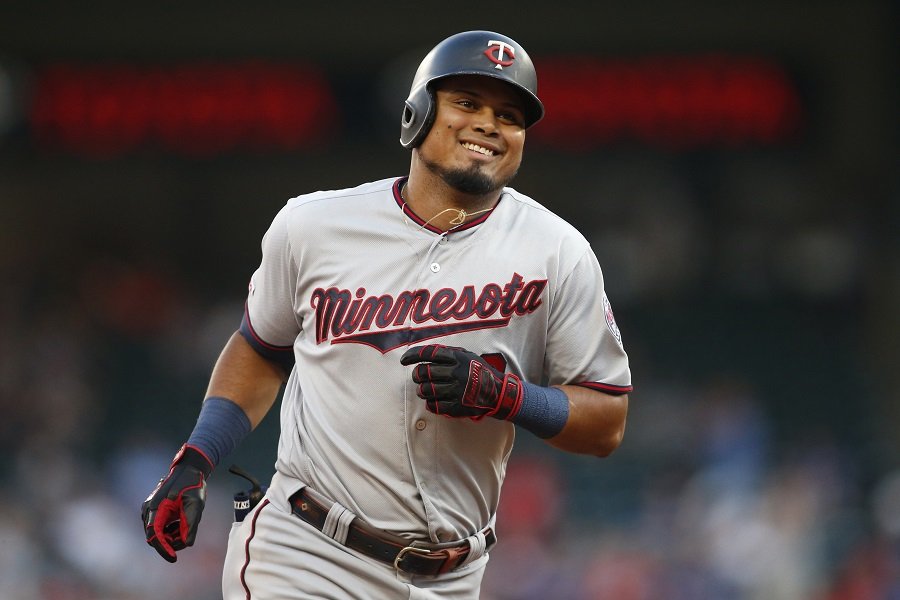 Luis Arraez is one of the most fun players on the Twins roster. Everything from his unmatched ability to get the barrel to the ball to his aggressive head shaking after taking a pitch is entertaining to watch. He wasn’t much of a top prospect, but has made the most of his opportunity after being called up in 2019 due to injuries. Little has changed with Luis Arraez the player, but the Twins’ perception of him may have. Arraez appeared to be the second baseman of the future when he arrived in 2019. The energy and variety he brought to a record-setting power team made it easy to imagine slotting him into the middle infield for years to come. Amid all of that excitement, however, it was easy to overlook his defensive shortcomings. Fast-forward two years. Luis Arraez holds a .313/.374/.403 batting line. He’s more than held up his side of the bargain offensively. In those two years however, so much around him has changed. Jorge Polanco made the permanent switch to Arraez’s home position, pushing him into a rotation between second, third, and corner outfield. The Twins have also signed Josh Donaldson, and now Jose Miranda appears to be the future of the hot corner in Minnesota. Alex Kirilloff and Trevor Larnach debuted and will get solid MLB time in 2022 with several corner outfielders shortly behind them in the minors. Having too many quality players is far from a problem, but the real concern comes from the quickly mounting injury history. At 24 years old, he’s suffered significant injuries to both knees, the side effects of which can commonly be seen on the base paths or following awkward swings. In 2020, injury cost Arraez 28 games out of the 60 game season. In 2021, Arraez missed 41 games and looked to be fighting through some kind of injury a good amount of the time. Unfortunately the game of baseball is unforgiving, and it’s rare to see such long standing recurring knee issues improve with age. Is it possible the Twins see more value in shopping Luis Arraez on the trade market? Regarding highly sought after defensive positions (and positions the Twins have a need at), Arraez can’t fill in at shortstop or center field. He’s also not particularly strong at the positions he does play. In Outs Above Average per Statcast, he was worth -1 in left field, -1 at third base and -3 at second. His defensive flexibility consists of positions that are easy to fill on the market if the Twins already emerging long term solutions there don’t work out as planned. This is not to say the Twins should necessarily actively look to dump Luis Arraez. Heading into 2022 with him platooning and spelling starters to get his bat in the lineup would be far from a bad thing. That being said, everything good about Luis Arraez makes him a valuable trade asset. His bat is special, he’s incredibly cheap and controllable, and he isn’t locked into one single position. In regards to assets the Twins have on their roster to trade, it may not get any better than Luis Arraez. It would be a difficult decision, but someone like Max Kepler or Miguel Sano wouldn’t bring in any kind of impact arm the Twins will certainly be looking for. It may be easy for them to look over the roster and see Arraez as a solid bat in the lineup that’s buried at several positions. They may also weigh the long term health gamble on his knees which could continue costing him significant time. Should the Twins trade Luis Arraez? That question likely has a lot to do with what they can get in return. It’s safe to say the idea has crossed their mind however, and possibly could be looked at more closely this winter for a roster that needs a significant shakeup. Should the Twins even consider it? Let us know below. For More Twins content: — Latest Twins coverage from our writers — Recent Twins discussion in our forums — Follow Twins Daily via Twitter, Facebook or email — Follow Cody Pirkl on Twitter here
 -
Sometimes change hurts. In the Twins case, they’ve opened the door for a whole lot of it after flopping in 2021. Headed into the winter, they’ll have to explore every path to bounce back in 2022. Some of those paths may be surprising. Luis Arraez is one of the most fun players on the Twins roster. Everything from his unmatched ability to get the barrel to the ball to his aggressive head shaking after taking a pitch is entertaining to watch. He wasn’t much of a top prospect, but has made the most of his opportunity after being called up in 2019 due to injuries. Little has changed with Luis Arraez the player, but the Twins’ perception of him may have. Arraez appeared to be the second baseman of the future when he arrived in 2019. The energy and variety he brought to a record-setting power team made it easy to imagine slotting him into the middle infield for years to come. Amid all of that excitement, however, it was easy to overlook his defensive shortcomings. Fast-forward two years. Luis Arraez holds a .313/.374/.403 batting line. He’s more than held up his side of the bargain offensively. In those two years however, so much around him has changed. Jorge Polanco made the permanent switch to Arraez’s home position, pushing him into a rotation between second, third, and corner outfield. The Twins have also signed Josh Donaldson, and now Jose Miranda appears to be the future of the hot corner in Minnesota. Alex Kirilloff and Trevor Larnach debuted and will get solid MLB time in 2022 with several corner outfielders shortly behind them in the minors. Having too many quality players is far from a problem, but the real concern comes from the quickly mounting injury history. At 24 years old, he’s suffered significant injuries to both knees, the side effects of which can commonly be seen on the base paths or following awkward swings. In 2020, injury cost Arraez 28 games out of the 60 game season. In 2021, Arraez missed 41 games and looked to be fighting through some kind of injury a good amount of the time. Unfortunately the game of baseball is unforgiving, and it’s rare to see such long standing recurring knee issues improve with age. Is it possible the Twins see more value in shopping Luis Arraez on the trade market? Regarding highly sought after defensive positions (and positions the Twins have a need at), Arraez can’t fill in at shortstop or center field. He’s also not particularly strong at the positions he does play. In Outs Above Average per Statcast, he was worth -1 in left field, -1 at third base and -3 at second. His defensive flexibility consists of positions that are easy to fill on the market if the Twins already emerging long term solutions there don’t work out as planned. This is not to say the Twins should necessarily actively look to dump Luis Arraez. Heading into 2022 with him platooning and spelling starters to get his bat in the lineup would be far from a bad thing. That being said, everything good about Luis Arraez makes him a valuable trade asset. His bat is special, he’s incredibly cheap and controllable, and he isn’t locked into one single position. In regards to assets the Twins have on their roster to trade, it may not get any better than Luis Arraez. It would be a difficult decision, but someone like Max Kepler or Miguel Sano wouldn’t bring in any kind of impact arm the Twins will certainly be looking for. It may be easy for them to look over the roster and see Arraez as a solid bat in the lineup that’s buried at several positions. They may also weigh the long term health gamble on his knees which could continue costing him significant time. Should the Twins trade Luis Arraez? That question likely has a lot to do with what they can get in return. It’s safe to say the idea has crossed their mind however, and possibly could be looked at more closely this winter for a roster that needs a significant shakeup. Should the Twins even consider it? Let us know below. For More Twins content: — Latest Twins coverage from our writers — Recent Twins discussion in our forums — Follow Twins Daily via Twitter, Facebook or email — Follow Cody Pirkl on Twitter here View full article
