



Cody Pirkl
-
Posts
1,314 -
Joined
-
Last visited
-
Days Won
4
Content Type
Profiles
News
Minnesota Twins Videos
2026 Minnesota Twins Top Prospects Ranking
2022 Minnesota Twins Draft Picks
Minnesota Twins Free Agent & Trade Rumors, Notes, & Tidbits
Guides & Resources
2023 Minnesota Twins Draft Picks
The Minnesota Twins Players Project
2024 Minnesota Twins Draft Picks
2025 Minnesota Twins Draft Pick Tracker
2026 Minnesota Twins Draft Tracker: Picks & Bonuses
Forums
Blogs
Events
Store
Downloads
Gallery
Everything posted by Cody Pirkl
-
Why Isn't Dobnak in the Starting Rotation?
Cody Pirkl replied to Cody Pirkl's topic in Twins Daily Front Page News
Shoemaker has been a starting pitcher for pretty much his entire career and we've got no idea how he'd do in the bullpen. If the Twins weren't confident in Shoemaker's ability to make starts to the point where a bad spring could send him to the bullpen they would have either signed a different starter or just given that $2m to a reliever who could be counted on. -
Why Isn't Dobnak in the Starting Rotation?
Cody Pirkl replied to Cody Pirkl's topic in Twins Daily Front Page News
Personally my hope was to at least open the season with a 6 man rotation but it never sounded like anything the Twins would consider. In all fairness I don't think it would last very long with Happ's age, Shoemaker's injury history and just the overall risk of pitching. Maybe they just figured it would never hold up over an entire season? Who knows. -
Why Isn't Dobnak in the Starting Rotation?
Cody Pirkl replied to Cody Pirkl's topic in Twins Daily Front Page News
I'd encourage everyone to use a broader timeline to determine merit. I had alluded to this in another response, but Happ would have been a staple in the Twins rotation last season with a mid 3s ERA and Shoemaker was a starter in the playoffs. Dobnak has had an exciting spring but he was in AAA when all of this was happening in 2020. If you think Happ and Shoemaker's spring performances are indicative that they're at the end of their careers then that's certainly a fair argument. I just think in regards to merit, Dobnak would be fortunate to compile a career similar to either of the two. -
Why Isn't Dobnak in the Starting Rotation?
Cody Pirkl replied to Cody Pirkl's topic in Twins Daily Front Page News
I do get the argument for sure in favor of the best performer getting the job. It's important to remember though that Dobnak finished 2020 in AAA while Happ put up a mid 3s ERA and Matt Shoemaker threw a scoreless start in the playoffs for Toronto. Dobnak's new strikeouts are exciting but who knows if they'll carry over into the season and gambling on that may cost you one of Happ or Shoemaker if you move them out of the rotation. It's at least understandable that the Twins are taking the safe approach and beginning the season with the two pitchers who have been serviceable for their entire careers. -
Why Isn't Dobnak in the Starting Rotation?
Cody Pirkl replied to Cody Pirkl's topic in Twins Daily Front Page News
The Twins have done quite well bargain shopping recently and likely wouldn't have been back to back Central champs without it. Pineda, Cron, Schoop, Clippard, Martin Perez just to name a few these last few years. Do you look back and see superstars come out of this group? No, but a lot of these players are cheap gambles they make that have hit and been net positives. Signings like Happ and especially Shoemaker at $2m are a big part of what the Twins do to stay competitive. -
Randy Dobnak has proven himself to be a steady groundball pitcher in his first two years. This spring however, he looks like a strikeout machine. So why isn’t Dobnak opening the season in the rotation?Spring training stats as a whole are pretty inconsequential, but Randy Dobnak has looked like an ace with his 18 strikeouts in 13 2/3 innings while only allowing one run. Meanwhile Matt Shoemaker has been pummeled as displayed by his 7.71 ERA through 9 1/3 innings. J.A. Happ has been absolutely battered in both of his outings since returning from COVID. Given the performances of the Twins supposed fourth and fifth starters, people have started to ask the question: Why isn’t Dobnak in the Opening Day rotation? Cash Considerations: J.A. Happ was the Twins big rotation acquisition of the winter coming off a resurgent season posting a 3.47 ERA which cost them $8 million The Twins understandably saw a crafty control artist who could eat up some innings in a season where doing so would be more valuable than ever. The Twins later signed the normally effective but oft injured Matt Shoemaker to a $2 million deal to round out the back of their rotation. There are two considerations when it comes to these two veteran acquisitions. First of all, both were likely interested in coming to Minnesota due to the openings in the rotation. In Shoemaker’s case, it was announced that he was the fifth starter before Spring Training even started, which likely means he signed his contract with the promise of that spot. Things can happen to change such a promise, but using a couple of spring starts as their reasoning would be a bad look for the Twins. Second, the $10 million invested in the pair isn’t a huge amount, but it’s an amount the Twins allocated to the rotation. The best case scenario is to send one of the two to a bullpen role which they may not excel in and certainly wouldn’t be happy with. The worst case scenario is to cut bait altogether and waste the money spent. Roster Depth: The Twins have a lot more flexibility with Dobnak in his Opening Day bullpen role. With the current plan in place, the Twins have five starters who have historically been effective taking the ball every fifth day. Meanwhile Dobnak is always available to step in for a long relief outing whether it’s a planned piggyback for Happ who may still be building up or a short start from anyone else in the rotation. If Dobnak is ever unavailable when the bullpen is worn down, he can be replaced by an arm from St. Paul as well. Also of note, Happ is 38 years old which is never a great indicator of long term health and Shoemaker hasn’t topped 31 innings in three years. Dobnak will almost certainly wind up in the rotation by season’s end, but not before getting as many valuable innings as possible from the Twins winter acquisitions. Plenty of people are frustrated with the Twins failure to utilize Dobnak as a starter given his spring numbers compared to Happ and Shoemaker, but it’s worth trusting the process. Dobnak is still available at a moment's notice to step in and that opportunity will certainly present itself at some point. It’s possible this could finally be the year that one of the two veterans completely falls apart, but their Spring Training stats are not something to look at as an indicator of what’s to come. We’ll see plenty of Randy Dobnak in 2021, but him being in the rotation is not a necessity to open the season. — Latest Twins coverage from our writers — Recent Twins discussion in our forums — Follow Twins Daily via Twitter, Facebook or email — Follow Cody Pirkl on Twitter here Click here to view the article
-
 Spring training stats as a whole are pretty inconsequential, but Randy Dobnak has looked like an ace with his 18 strikeouts in 13 2/3 innings while only allowing one run. Meanwhile Matt Shoemaker has been pummeled as displayed by his 7.71 ERA through 9 1/3 innings. J.A. Happ has been absolutely battered in both of his outings since returning from COVID. Given the performances of the Twins supposed fourth and fifth starters, people have started to ask the question: Why isn’t Dobnak in the Opening Day rotation? https://twitter.com/TFTwins/status/1373040201086464002?s=20 Cash Considerations: J.A. Happ was the Twins big rotation acquisition of the winter coming off a resurgent season posting a 3.47 ERA which cost them $8 million The Twins understandably saw a crafty control artist who could eat up some innings in a season where doing so would be more valuable than ever. The Twins later signed the normally effective but oft injured Matt Shoemaker to a $2 million deal to round out the back of their rotation. There are two considerations when it comes to these two veteran acquisitions. First of all, both were likely interested in coming to Minnesota due to the openings in the rotation. In Shoemaker’s case, it was announced that he was the fifth starter before Spring Training even started, which likely means he signed his contract with the promise of that spot. Things can happen to change such a promise, but using a couple of spring starts as their reasoning would be a bad look for the Twins. Second, the $10 million invested in the pair isn’t a huge amount, but it’s an amount the Twins allocated to the rotation. The best case scenario is to send one of the two to a bullpen role which they may not excel in and certainly wouldn’t be happy with. The worst case scenario is to cut bait altogether and waste the money spent. Roster Depth: The Twins have a lot more flexibility with Dobnak in his Opening Day bullpen role. With the current plan in place, the Twins have five starters who have historically been effective taking the ball every fifth day. Meanwhile Dobnak is always available to step in for a long relief outing whether it’s a planned piggyback for Happ who may still be building up or a short start from anyone else in the rotation. If Dobnak is ever unavailable when the bullpen is worn down, he can be replaced by an arm from St. Paul as well. Also of note, Happ is 38 years old which is never a great indicator of long term health and Shoemaker hasn’t topped 31 innings in three years. Dobnak will almost certainly wind up in the rotation by season’s end, but not before getting as many valuable innings as possible from the Twins winter acquisitions. Plenty of people are frustrated with the Twins failure to utilize Dobnak as a starter given his spring numbers compared to Happ and Shoemaker, but it’s worth trusting the process. Dobnak is still available at a moment's notice to step in and that opportunity will certainly present itself at some point. It’s possible this could finally be the year that one of the two veterans completely falls apart, but their Spring Training stats are not something to look at as an indicator of what’s to come. We’ll see plenty of Randy Dobnak in 2021, but him being in the rotation is not a necessity to open the season. — Latest Twins coverage from our writers — Recent Twins discussion in our forums — Follow Twins Daily via Twitter, Facebook or email — Follow Cody Pirkl on Twitter here
 -
On Friday we learned that Devin Smeltzer was already sent to the minor league side of camp while several other fringe starters and relievers remain with the big league club. What does it mean? What does his future hold?Devin Smeltzer is one of my favorite Twins. His debut in 2019 was electric, he’s interactive with the fan base, and his story is one of the best you’ll find. Smeltzer however is nearing a point where he needs to find his role at the Major League level or risk getting passed up. Smeltzer’s being sent down already doesn’t necessarily mean he’s fallen out of favor with the Twins. Afterall, newly acquired Shaun Anderson was simultaneously sent down who Wes Johnson has been raving about. The issue is that it goes to show that Smeltzer is firmly behind his two competitors for a swingman/rotation role in Dobnak and Thorpe despite all three finishing 2020 in the minors. There’s little doubt in my mind that we see the soft tossing lefty back in the majors this season, but at this point it looks as if it may require at least 3 injuries for it to be in a starting role. Smeltzer spent his 2020 at the MLB level as a bullpen arm which rounded out to be kind of odd. By actual performance standards, Smeltzer put up an ugly season with a 6.75 ERA. All the while, his indicators suggested he pitched better than his impressive debut in 2019 with a 4.07 FIP and 4.13 xERA. Regardless, it was hard to argue that Smeltzer was a necessity in the bullpen by years end with left handers Caleb Thielbar and Taylor Rogers available. All of this leaves Smeltzer in a difficult spot. It’s been made clear that his spot on the depth chart lies behind much if not all of his competition in the rotation as well as almost all of his competition in the bullpen. Meanwhile the young group of arms in the Twins system continues to creep closer to the Major League Level. Where can Smeltzer go from here? At this point it’s difficult to imagine Smeltzer settling into a rotation role. Pairing the Twins current and upcoming rotation options with Smeltzer’s sub 90 mph fastball just doesn’t make him an obvious fit. While there’s a realistic chance he could make a spot start or two this year, I’m hoping to see the Twins make a dedicated effort to integrate Smeltzer into a bullpen role even without an immediate spot to fill. Smeltzer does exactly what a soft tossing lefty should do by leading his pitch mix with a changeup to equalize right handed hitters that may be sitting on his fastball. With a .310 slugging allowed on the pitch paired with a 26% whiff rate he has the #1 tool to make it in short stints as more than just a lefty specialist. Unlike most lefties, Smeltzer’s biggest enemy in his career has been left handed hitters so far. This led to him developing a slider which he threw almost 17% of the time last season. He got unlucky but the 27% whiff rate is encouraging for his first season featuring the pitch. Going into 2021 Smeltzer may just have a strong go to option for hitters on each side of the plate. If Smeltzer’s performance on his offspeed pitches holds, his fastball would be the final piece to the puzzle, as opponents have slugged around .550 against the pitch in his career. Luckily the Twins have shown an affinity for such a problem, as they often target pitchers with a similar profile and have shown success in fixing it. Many fans grew underwhelmed by Smeltzer by the end of 2020, but he’s likely to get at least a few shots in 2021. Target Field may not be on their feet for a 100 mph fastball at any point for the left hander, but Devin Smeltzer’s development so far along with his being left handed could mean that his best days are still ahead of him in a Twins uniform. — Latest Twins coverage from our writers — Recent Twins discussion in our forums — Follow Twins Daily via Twitter, Facebook or email — Follow Cody Pirkl on Twitter here Click here to view the article
-
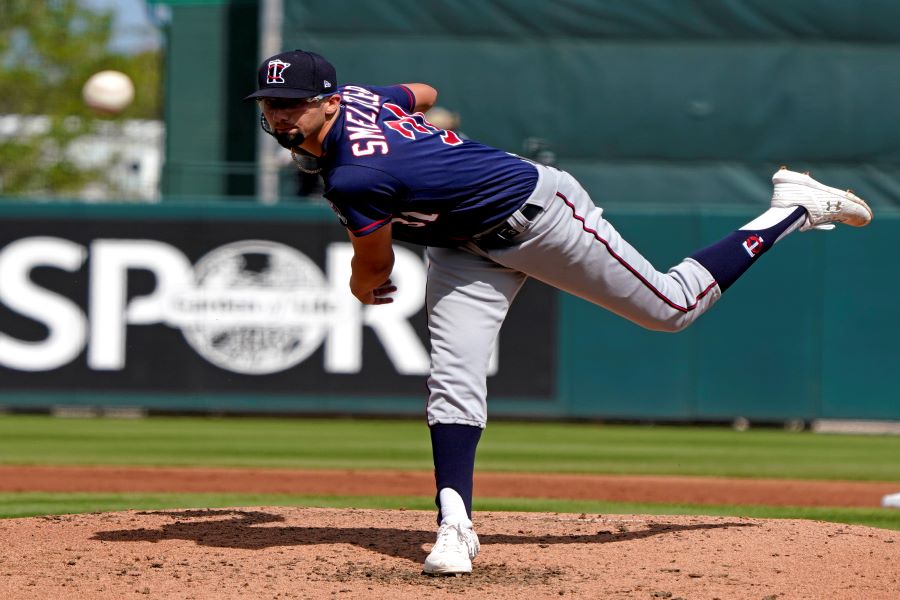 Devin Smeltzer is one of my favorite Twins. His debut in 2019 was electric, he’s interactive with the fan base, and his story is one of the best you’ll find. Smeltzer however is nearing a point where he needs to find his role at the Major League level or risk getting passed up. Smeltzer’s being sent down already doesn’t necessarily mean he’s fallen out of favor with the Twins. Afterall, newly acquired Shaun Anderson was simultaneously sent down who Wes Johnson has been raving about. The issue is that it goes to show that Smeltzer is firmly behind his two competitors for a swingman/rotation role in Dobnak and Thorpe despite all three finishing 2020 in the minors. There’s little doubt in my mind that we see the soft tossing lefty back in the majors this season, but at this point it looks as if it may require at least 3 injuries for it to be in a starting role. Smeltzer spent his 2020 at the MLB level as a bullpen arm which rounded out to be kind of odd. By actual performance standards, Smeltzer put up an ugly season with a 6.75 ERA. All the while, his indicators suggested he pitched better than his impressive debut in 2019 with a 4.07 FIP and 4.13 xERA. Regardless, it was hard to argue that Smeltzer was a necessity in the bullpen by years end with left handers Caleb Thielbar and Taylor Rogers available. All of this leaves Smeltzer in a difficult spot. It’s been made clear that his spot on the depth chart lies behind much if not all of his competition in the rotation as well as almost all of his competition in the bullpen. Meanwhile the young group of arms in the Twins system continues to creep closer to the Major League Level. Where can Smeltzer go from here? At this point it’s difficult to imagine Smeltzer settling into a rotation role. Pairing the Twins current and upcoming rotation options with Smeltzer’s sub 90 mph fastball just doesn’t make him an obvious fit. While there’s a realistic chance he could make a spot start or two this year, I’m hoping to see the Twins make a dedicated effort to integrate Smeltzer into a bullpen role even without an immediate spot to fill. Smeltzer does exactly what a soft tossing lefty should do by leading his pitch mix with a changeup to equalize right handed hitters that may be sitting on his fastball. With a .310 slugging allowed on the pitch paired with a 26% whiff rate he has the #1 tool to make it in short stints as more than just a lefty specialist. Unlike most lefties, Smeltzer’s biggest enemy in his career has been left handed hitters so far. This led to him developing a slider which he threw almost 17% of the time last season. He got unlucky but the 27% whiff rate is encouraging for his first season featuring the pitch. Going into 2021 Smeltzer may just have a strong go to option for hitters on each side of the plate. If Smeltzer’s performance on his offspeed pitches holds, his fastball would be the final piece to the puzzle, as opponents have slugged around .550 against the pitch in his career. Luckily the Twins have shown an affinity for such a problem, as they often target pitchers with a similar profile and have shown success in fixing it. Many fans grew underwhelmed by Smeltzer by the end of 2020, but he’s likely to get at least a few shots in 2021. Target Field may not be on their feet for a 100 mph fastball at any point for the left hander, but Devin Smeltzer’s development so far along with his being left handed could mean that his best days are still ahead of him in a Twins uniform. — Latest Twins coverage from our writers — Recent Twins discussion in our forums — Follow Twins Daily via Twitter, Facebook or email — Follow Cody Pirkl on Twitter here
 -
In 2020 the Twins struggled in many facets of their game but still found themselves atop the AL Central on the final day of the season. In 2021 however, one overall improvement may just bring them their third consecutive title.Last year’s Twins looked far from the juggernaut we saw in 2019 but were certainly a capable team who won the division despite struggling at times. Plenty of articles have been written about the specific triumphs and struggles seen throughout the weirdest baseball season in Twins history. Rather than break down performances on the offensive, defensive and pitching side, I think it’s time to explore the greatest overall problem the 2020 Twins ran into. The shortened season and limited schedule gave the Twins an opportunity to go on some tremendous runs as they were confined to facing likely the two worst divisions in all of baseball in the AL and NL Central. The Twins, like their rivals in Cleveland and Chicago, would look to pad their record against three of baseball's worst teams in the Royals, Tigers and Pirates. Chicago was up to the task, dominating to the tune of a 21-3 record against this trio of teams competing for the #1 overall draft pick. 60% of the Sox total wins came against teams they were quite simply expected to beat. Cleveland had the added benefit of playing the lowly Pirates for an extra series and would finish with an overpowering record of 17-9 against this group. The Twins managed to come away with a record of 14-10 against the Royals, Tigers and Pirates. A .583 winning percentage in baseball is certainly respectable, but it was a bit disappointing against three teams that combined to finish with a .382 winning percentage. The 2020 Twins were a talented squad that at times appeared to play down to the level of their competition. While I admittedly try to separate the 2019 “Bomba Squad '' from any other version of the Minnesota Twins, that team knew how to take advantage of an opportunity, as 69 of their 101 wins came against teams with a losing record. While many used this as a knock on the legitimacy of the A.L. Central champions, it’s what allowed them to finish eight games above Cleveland despite some bad breaks against competitive teams. Any MLB team can beat another on any given day, but when you’re facing Shane Bieber or Lucas Giolito on Wednesday, that matchup against Matt Boyd on Tuesday really becomes a game you want to win (Sorry Matt). “Lucked out” may not be the right phrase to describe the Twins performance against Cleveland in 2020, but their 7-2 record against them paired with Chicago’s 2-8 mark was what drove them to another division title. It might be a safer bet in 2021 to take the expected wins from the teams that are willing to give them rather than counting on beating up on tough opponents as they did in 2020 against a Cleveland team sporting one of the best rotations in baseball. There isn’t much of a tangible fix to suggest moving forward other than to simply beat up on the bad teams in 2021. 2020 was a season of which much can be forgotten, and we can hope that the Twins' struggles against lesser competition was a result of small samples. Chicago still has a lineup that will feast on inferior pitching however and Cleveland’s rotation is built to mow through poor lineups. In what may be a dogfight for the A.L. Central crown, the Twins need to feed off of the teams they’re expected to beat. Will their struggles continue, or will they be able to rebound? — Latest Twins coverage from our writers — Recent Twins discussion in our forums — Follow Twins Daily via Twitter, Facebook or email — Follow Cody Pirkl on Twitter here Click here to view the article
-
 Last year’s Twins looked far from the juggernaut we saw in 2019 but were certainly a capable team who won the division despite struggling at times. Plenty of articles have been written about the specific triumphs and struggles seen throughout the weirdest baseball season in Twins history. Rather than break down performances on the offensive, defensive and pitching side, I think it’s time to explore the greatest overall problem the 2020 Twins ran into. The shortened season and limited schedule gave the Twins an opportunity to go on some tremendous runs as they were confined to facing likely the two worst divisions in all of baseball in the AL and NL Central. The Twins, like their rivals in Cleveland and Chicago, would look to pad their record against three of baseball's worst teams in the Royals, Tigers and Pirates. Chicago was up to the task, dominating to the tune of a 21-3 record against this trio of teams competing for the #1 overall draft pick. 60% of the Sox total wins came against teams they were quite simply expected to beat. Cleveland had the added benefit of playing the lowly Pirates for an extra series and would finish with an overpowering record of 17-9 against this group. The Twins managed to come away with a record of 14-10 against the Royals, Tigers and Pirates. A .583 winning percentage in baseball is certainly respectable, but it was a bit disappointing against three teams that combined to finish with a .382 winning percentage. The 2020 Twins were a talented squad that at times appeared to play down to the level of their competition. https://twitter.com/CodyPirkl/status/1297650924643549192?s=20 While I admittedly try to separate the 2019 “Bomba Squad '' from any other version of the Minnesota Twins, that team knew how to take advantage of an opportunity, as 69 of their 101 wins came against teams with a losing record. While many used this as a knock on the legitimacy of the A.L. Central champions, it’s what allowed them to finish eight games above Cleveland despite some bad breaks against competitive teams. Any MLB team can beat another on any given day, but when you’re facing Shane Bieber or Lucas Giolito on Wednesday, that matchup against Matt Boyd on Tuesday really becomes a game you want to win (Sorry Matt). “Lucked out” may not be the right phrase to describe the Twins performance against Cleveland in 2020, but their 7-2 record against them paired with Chicago’s 2-8 mark was what drove them to another division title. It might be a safer bet in 2021 to take the expected wins from the teams that are willing to give them rather than counting on beating up on tough opponents as they did in 2020 against a Cleveland team sporting one of the best rotations in baseball. There isn’t much of a tangible fix to suggest moving forward other than to simply beat up on the bad teams in 2021. 2020 was a season of which much can be forgotten, and we can hope that the Twins' struggles against lesser competition was a result of small samples. Chicago still has a lineup that will feast on inferior pitching however and Cleveland’s rotation is built to mow through poor lineups. In what may be a dogfight for the A.L. Central crown, the Twins need to feed off of the teams they’re expected to beat. Will their struggles continue, or will they be able to rebound? — Latest Twins coverage from our writers — Recent Twins discussion in our forums — Follow Twins Daily via Twitter, Facebook or email — Follow Cody Pirkl on Twitter here
 -
Some bullpens are starting to informally appoint a “fireman” who can pitch at any point in the game, typically against the best part of the lineup whether they’re right or left handed. Who could be the Twins fireman in 2021?The Twins have some great options that they could use in a shutdown role rather than pitting them in the ninth inning. They now have an option in Alex Colomé for the back end of games who has closing experience and will likely be counted on fairly regularly to get the final three outs. This leaves them with some interesting candidates they can deploy at any point in the game. Taylor Rogers Rogers in 2019 is a perfect example of a successful fireman. He still notched plenty of saves, sometimes of the multi-inning variety depending on the score of the game and what part of the lineup was due up. Rogers has the typical dominant splits against lefties that you’d expect but also has no issues getting right handed hitters out which makes him a great candidate to reclaim this role. His struggles in 2020 looked to be more of a result of a weird season rather than a skills regression. His repertoire consisting of a sinker, four-seam, curveball, and slider as well as his prior experience in this role could find him right back in it. Hansel Robles Robles of course had a 10+ ERA in 2020 which made him available for the low price of $2 million. The impact he could make in the bullpen shouldn’t be overlooked however. Robles is far from just a flamethrower with his upper 90s fastball, as he has what many would consider a starting pitcher’s repertoire with a four-seam, sinker, slider and changeup. The Twins can likely put some work in on his slider which allowed a slugging % over .500 in 2020 to make him more effective against righties. Robles already uses his devastating changeup almost 40% of the time and can use it to equalize left handed hitters. If you mix those two effective pitches in with that power fastball, Robles could find himself stepping up against the heart of the order regularly this season. Jorge Alcala Alcala had a great 2020 and could be a sleeper for this role in 2021. His 28.7% K rate was fantastic and he got by with his 8.5% BB rate. The issue with Alcala lies in his splits. For as nasty as he was with his fastball/slider combo against righties, lefties posted an OPS north of 1.000 against Alcala in 2020. Where Alcala goes from here has a lot to do with his changeup which he periodically sprinkled in last season. His high octane stuff just isn’t enough to get lefties out as is, but one more pitch in his arsenal could make him the best arm in the Twins bullpen. He was also formerly a starter which means he’d slot into a multi inning role nicely as the opportunity arises. Keep an eye on Alcala’s changeup this spring and early in the season. While admittedly counting on some bouncebacks, the Twins have a bullpen full of arms that could contribute in big ways. Someone will likely settle in as the “fireman” this year, who do you think it could be? — Latest Twins coverage from our writers — Recent Twins discussion in our forums — Follow Twins Daily via Twitter, Facebook or email — Follow Cody Pirkl on Twitter here Click here to view the article
-
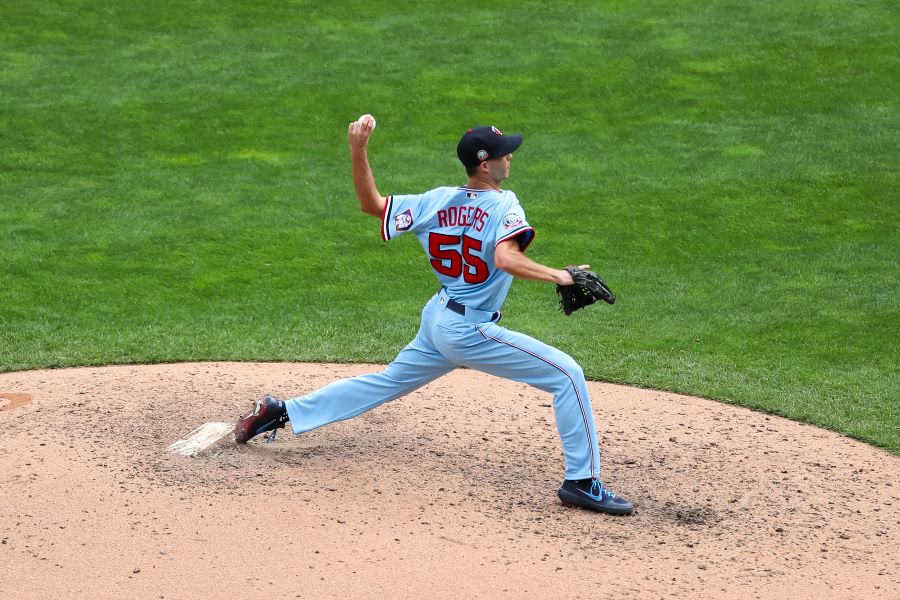 The Twins have some great options that they could use in a shutdown role rather than pitting them in the ninth inning. They now have an option in Alex Colomé for the back end of games who has closing experience and will likely be counted on fairly regularly to get the final three outs. This leaves them with some interesting candidates they can deploy at any point in the game. Taylor Rogers Rogers in 2019 is a perfect example of a successful fireman. He still notched plenty of saves, sometimes of the multi-inning variety depending on the score of the game and what part of the lineup was due up. Rogers has the typical dominant splits against lefties that you’d expect but also has no issues getting right handed hitters out which makes him a great candidate to reclaim this role. His struggles in 2020 looked to be more of a result of a weird season rather than a skills regression. His repertoire consisting of a sinker, four-seam, curveball, and slider as well as his prior experience in this role could find him right back in it. https://twitter.com/TFTwins/status/1147868293044330496?s=20 Hansel Robles Robles of course had a 10+ ERA in 2020 which made him available for the low price of $2 million. The impact he could make in the bullpen shouldn’t be overlooked however. Robles is far from just a flamethrower with his upper 90s fastball, as he has what many would consider a starting pitcher’s repertoire with a four-seam, sinker, slider and changeup. The Twins can likely put some work in on his slider which allowed a slugging % over .500 in 2020 to make him more effective against righties. Robles already uses his devastating changeup almost 40% of the time and can use it to equalize left handed hitters. If you mix those two effective pitches in with that power fastball, Robles could find himself stepping up against the heart of the order regularly this season. https://twitter.com/PitchingNinja/status/1237134365735477248?s=20 Jorge Alcala Alcala had a great 2020 and could be a sleeper for this role in 2021. His 28.7% K rate was fantastic and he got by with his 8.5% BB rate. The issue with Alcala lies in his splits. For as nasty as he was with his fastball/slider combo against righties, lefties posted an OPS north of 1.000 against Alcala in 2020. Where Alcala goes from here has a lot to do with his changeup which he periodically sprinkled in last season. His high octane stuff just isn’t enough to get lefties out as is, but one more pitch in his arsenal could make him the best arm in the Twins bullpen. He was also formerly a starter which means he’d slot into a multi inning role nicely as the opportunity arises. Keep an eye on Alcala’s changeup this spring and early in the season. https://twitter.com/HagemanParker/status/1301531362739060738?s=20 While admittedly counting on some bouncebacks, the Twins have a bullpen full of arms that could contribute in big ways. Someone will likely settle in as the “fireman” this year, who do you think it could be? — Latest Twins coverage from our writers — Recent Twins discussion in our forums — Follow Twins Daily via Twitter, Facebook or email — Follow Cody Pirkl on Twitter here
 -
The Twins may have a good problem on their hands as their farm system begins to mature. As more and more players reach the Major Leagues, it’s one slugger in particular that may struggle to cement themselves into a regular role.Brent Rooker debuted in exciting fashion for the Twins in 2020. He showed Twins territory a glimpse of the 2017 SEC Player of the Year by hitting .316 with 1 homerun and 5 RBI in 7 games before an errant fastball fractured his forearm to end his season. He got to show off why he got the call, but his season was cut short before he could force himself into the Twins future plans. It’s never been the bat holding Rooker back, but rather his defensive ability which kept him entrenched at first base and eventually just the corner outfield. Reports warned that Rooker struggled plenty with both. There wasn’t much opportunity for his shortcomings to show up in his 25 defensive innings, but it’s safe to say that Rooker won’t be making many highlight reel plays. The Twins outfield depth is impressive at this point, barely taking a hit even after trading away the versatile LaMonte Wade Jr. In Buxton and Kepler the Twins have two everyday starters. In Jake Cave the Twins have a capable left handed outfield option who can play all three spots. At this point star prospect Alex Kirilloff’s Opening Day designation is unknown, but it likely won’t be long until he’s handed the keys to left field. Even further complicating things is Luis Arraez taking reps and being a candidate to start in left field on Opening Day. All of this to say the Twins have a dilemma. At 26 years old, Brent Rooker is close to a finished product. With what could turn out to be an overpowering bat, Rooker deserves to play fairly regularly. With his defensive shortcomings however, it’s hard to find that playing time in a deep pool of outfielders who can perform offensively in their own right and can better defend their positions. With these considerations, the Twins are left with a few options. Start Him at AAA Rooker has little to prove at this point in the minor leagues but his 2020 injury could justify a short stay in AAA to give him the regular at bats he wouldn’t get in Minneapolis and make sure he’s fully back in his groove. The issue here is that Kirilloff will be at the Major League level in short order as well and the openings in the outfield (barring injury) will be even more sparse. Give Him an MLB Spot The Twins could simply give Rooker a 26 man spot on Opening Day and mix and match off days for players like Cruz and Kepler with an occasional start in left field. The issue with this opportunistic approach is that the Twins will be doing the same with Luis Arraez (who at least will reportedly get most of his work in the infield). There are only so many at bats to go around. It’s also worth noting that Rooker has the advantage of being right handed but lacks the traditional otherworldly splits against left handers in his minor league career. Make a Trade Brent Rooker’s trade value may be at a low point following injury in 2020 and being a slugger who can only play the corners isn’t the rarest skillset in 2021. Still, Rooker’s age and years of control should be valuable on the trade market for AL teams or NL teams who are willing to give him an everyday role for a year in anticipation of the NL DH in 2022. The Twins could also shop Jake Cave whose backup center field ability can be filled by Max Kepler and whose left handed bat won’t be nearly as valuable in a few months assuming Kirilloff and Larnach make their way to Target Field. In the near future it may become apparent that one of these players will offer more value on the trade market than they do playing a day or two per week. Brent Rooker has a bat that can change games, but his one dimensional skillset puts him in a difficult place on a team that has built itself around depth. 2021 will go a long way in determining Rooker’s career. Will he continue the breakout he showed in 2020? Will he do so wearing a Twins jersey? What do you think? — Latest Twins coverage from our writers — Recent Twins discussion in our forums — Follow Twins Daily via Twitter, Facebook or email — Follow Cody Pirkl on Twitter here Click here to view the article
-
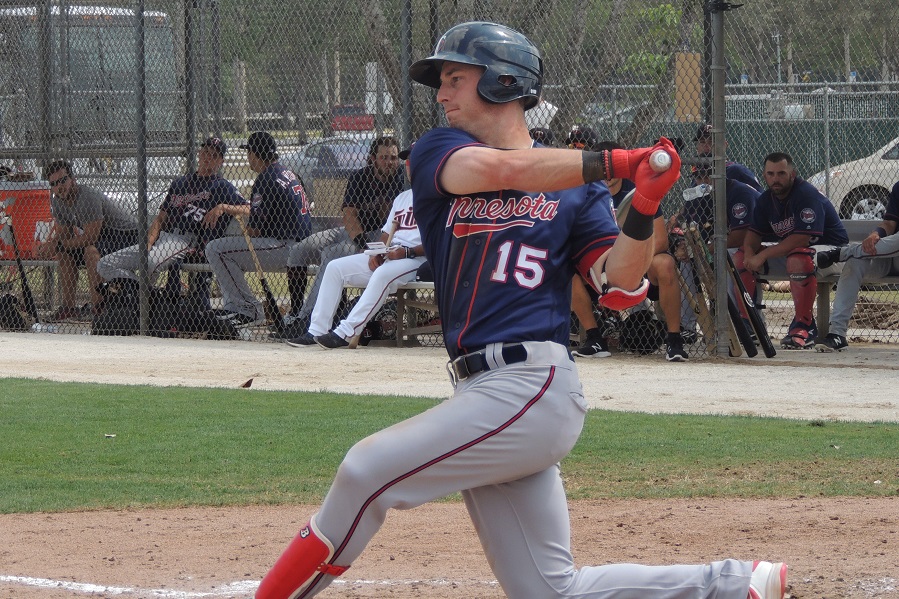 Brent Rooker debuted in exciting fashion for the Twins in 2020. He showed Twins territory a glimpse of the 2017 SEC Player of the Year by hitting .316 with 1 homerun and 5 RBI in 7 games before an errant fastball fractured his forearm to end his season. He got to show off why he got the call, but his season was cut short before he could force himself into the Twins future plans. https://twitter.com/TFTwins/status/1303474541230993409?ref_src=twsrc%5Etfw%7Ctwcamp%5Etweetembed%7Ctwterm%5E1303474541230993409%7Ctwgr%5E%7Ctwcon%5Es1_c10&ref_url=https%3A%2F%2Fpublish.twitter.com%2F%3Fquery%3Dhttps3A2F2Ftwitter.com2FTFTwins2Fstatus2F1303474541230993409widget%3DTweet It’s never been the bat holding Rooker back, but rather his defensive ability which kept him entrenched at first base and eventually just the corner outfield. Reports warned that Rooker struggled plenty with both. There wasn’t much opportunity for his shortcomings to show up in his 25 defensive innings, but it’s safe to say that Rooker won’t be making many highlight reel plays. The Twins outfield depth is impressive at this point, barely taking a hit even after trading away the versatile LaMonte Wade Jr. In Buxton and Kepler the Twins have two everyday starters. In Jake Cave the Twins have a capable left handed outfield option who can play all three spots. At this point star prospect Alex Kirilloff’s Opening Day designation is unknown, but it likely won’t be long until he’s handed the keys to left field. Even further complicating things is Luis Arraez taking reps and being a candidate to start in left field on Opening Day. All of this to say the Twins have a dilemma. At 26 years old, Brent Rooker is close to a finished product. With what could turn out to be an overpowering bat, Rooker deserves to play fairly regularly. With his defensive shortcomings however, it’s hard to find that playing time in a deep pool of outfielders who can perform offensively in their own right and can better defend their positions. With these considerations, the Twins are left with a few options. Start Him at AAA Rooker has little to prove at this point in the minor leagues but his 2020 injury could justify a short stay in AAA to give him the regular at bats he wouldn’t get in Minneapolis and make sure he’s fully back in his groove. The issue here is that Kirilloff will be at the Major League level in short order as well and the openings in the outfield (barring injury) will be even more sparse. Give Him an MLB Spot The Twins could simply give Rooker a 26 man spot on Opening Day and mix and match off days for players like Cruz and Kepler with an occasional start in left field. The issue with this opportunistic approach is that the Twins will be doing the same with Luis Arraez (who at least will reportedly get most of his work in the infield). There are only so many at bats to go around. It’s also worth noting that Rooker has the advantage of being right handed but lacks the traditional otherworldly splits against left handers in his minor league career. Make a Trade Brent Rooker’s trade value may be at a low point following injury in 2020 and being a slugger who can only play the corners isn’t the rarest skillset in 2021. Still, Rooker’s age and years of control should be valuable on the trade market for AL teams or NL teams who are willing to give him an everyday role for a year in anticipation of the NL DH in 2022. The Twins could also shop Jake Cave whose backup center field ability can be filled by Max Kepler and whose left handed bat won’t be nearly as valuable in a few months assuming Kirilloff and Larnach make their way to Target Field. In the near future it may become apparent that one of these players will offer more value on the trade market than they do playing a day or two per week. Brent Rooker has a bat that can change games, but his one dimensional skillset puts him in a difficult place on a team that has built itself around depth. 2021 will go a long way in determining Rooker’s career. Will he continue the breakout he showed in 2020? Will he do so wearing a Twins jersey? What do you think? — Latest Twins coverage from our writers — Recent Twins discussion in our forums — Follow Twins Daily via Twitter, Facebook or email — Follow Cody Pirkl on Twitter here
 -
There were a few disappointing performances in 2020 but perhaps none more worrisome than that of the Twins right fielder Max Kepler. After a step back from his 2019 breakout campaign, 2021 may be the most pivotal season of his career.Max Kepler has become much more than just the entertaining story of a rare German born baseball player reaching the Major Leagues. After his first taste of action in 2015, Kepler has become a mainstay in the Twins lineup and outfield. His middling offense exploded in a 2019 season in which he was 21% above league average according to wRC+. His agility and athleticism made him a gold glove contender in right field. Kepler comes to mind for many when they think of the “core” of this Minnesota Twins team. 2021 however may determine whether that continues to be the case. Offensive Issues Left handed hitters often struggle against same handed pitching and Kepler showed just how ugly this historical trend could get in 2020. In 47 at bats, Kepler mustered just 6 hits and posted a .128/.208/.170 line against southpaws after actually hitting them better than righties in 2019 with a .293/.356/.524 line. Plenty of players struggled to find their rhythm in the shortened season, but looking at Kepler’s career triple slash of .219/.288/.368 against left handed pitching suggests that his 2019 may have been a mirage. His pull the ball in the air approach at the plate sets him up to hit the ball over the fence but really limits his batting average ceiling in the age of the shift. His career 10% walk rate isn’t awful, but it doesn’t offer much of a saving grace in the on base department either. Adding 6% to his K rate against lefties as his career shows gives Kepler little room to be a well rounded and truly consistent hitter. All of this to say, throughout Kepler’s entire career besides 2019, he’s been a deeply flawed hitter. Despite being on the strong side of the platoon splits, continued struggles against left handed pitching would be hard to ignore if another player shows that they can produce regardless of their opponents handedness. Up And Coming Competition Alex Kirilloff needs no introduction at this point, but reports are also beginning to suggest that former 1st round pick Trevor Larnach might not be all that far behind him. Larnach is known for his balanced approach of controlling the strike zone and using all fields. He’s a highly touted hitter who to this point hasn’t shown a weakness to left handed pitching in his minor league career. His offensive profile is one that suggests he could avoid the massive cut in production that Kepler has shown as he matures in the MLB. Defensively, Larnach is far from a gold glove defender in the corners. The former OSU first baseman stands at 6’4 and over 220 lb, lacking the raw athleticism of Max Kepler. That being said, the Twins used positioning to hide Jorge Polanco at shortstop and we saw the Oakland A’s turn Robbie Grossman into a Gold Glove finalist a few years ago. Defensive positioning has come a long way in baseball and having a center fielder like Byron Buxton can hide a lot of blemishes. Larnach’s defense should be adequate enough at the corners for at least the near future. Max Kepler has been valuable to the Twins and will surely continue to be. Top prospects are approaching however, and if Kepler’s offensive output continues with his career trends outside of 2019, the bar for those prospects to clear may not be all that high. Max could rebound in 2021, but what if he doesn’t? Kepler still has his incredibly team friendly contract attached which pays out only a bit over $20m over the next four years. On one hand, using him in a strong platoon/backup center field role wouldn’t be all that much of a waste of money. On the other, it’s a contract that other corner outfield needy teams would be very interested in. If the future of the outfield truly does consist of Kirilloff and Larnach, is Kepler’s left handed bat more valuable as a trade chip? I still expect Max to bounce back from his 2020 performance, but I’m unsure to what degree. I expect Trevor Larnach to debut in 2021 and be a great hitter, but a performance strong enough to dethrone Kepler in right field is a long shot for any prospect. That being said, the Twins strong farm system has opened up a lot of possibilities for what the future of this team looks like. Do you think Max Kepler can continue being a cornerstone of this Twins core? Do you think Trevor Larnach could throw a wrench into those plans? Let us know below. — Latest Twins coverage from our writers — Recent Twins discussion in our forums — Follow Twins Daily via Twitter, Facebook or email — Follow Cody Pirkl on Twitter here Click here to view the article
-
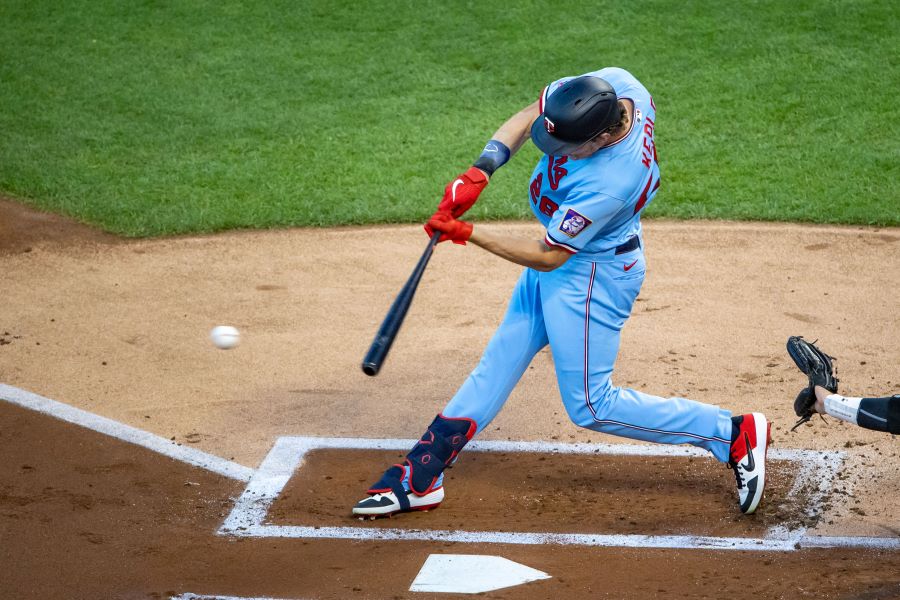 Max Kepler has become much more than just the entertaining story of a rare German born baseball player reaching the Major Leagues. After his first taste of action in 2015, Kepler has become a mainstay in the Twins lineup and outfield. His middling offense exploded in a 2019 season in which he was 21% above league average according to wRC+. His agility and athleticism made him a gold glove contender in right field. Kepler comes to mind for many when they think of the “core” of this Minnesota Twins team. 2021 however may determine whether that continues to be the case. Offensive Issues Left handed hitters often struggle against same handed pitching and Kepler showed just how ugly this historical trend could get in 2020. In 47 at bats, Kepler mustered just 6 hits and posted a .128/.208/.170 line against southpaws after actually hitting them better than righties in 2019 with a .293/.356/.524 line. Plenty of players struggled to find their rhythm in the shortened season, but looking at Kepler’s career triple slash of .219/.288/.368 against left handed pitching suggests that his 2019 may have been a mirage. His pull the ball in the air approach at the plate sets him up to hit the ball over the fence but really limits his batting average ceiling in the age of the shift. His career 10% walk rate isn’t awful, but it doesn’t offer much of a saving grace in the on base department either. Adding 6% to his K rate against lefties as his career shows gives Kepler little room to be a well rounded and truly consistent hitter. All of this to say, throughout Kepler’s entire career besides 2019, he’s been a deeply flawed hitter. Despite being on the strong side of the platoon splits, continued struggles against left handed pitching would be hard to ignore if another player shows that they can produce regardless of their opponents handedness. Up And Coming Competition Alex Kirilloff needs no introduction at this point, but reports are also beginning to suggest that former 1st round pick Trevor Larnach might not be all that far behind him. Larnach is known for his balanced approach of controlling the strike zone and using all fields. He’s a highly touted hitter who to this point hasn’t shown a weakness to left handed pitching in his minor league career. His offensive profile is one that suggests he could avoid the massive cut in production that Kepler has shown as he matures in the MLB. Defensively, Larnach is far from a gold glove defender in the corners. The former OSU first baseman stands at 6’4 and over 220 lb, lacking the raw athleticism of Max Kepler. That being said, the Twins used positioning to hide Jorge Polanco at shortstop and we saw the Oakland A’s turn Robbie Grossman into a Gold Glove finalist a few years ago. Defensive positioning has come a long way in baseball and having a center fielder like Byron Buxton can hide a lot of blemishes. Larnach’s defense should be adequate enough at the corners for at least the near future. Max Kepler has been valuable to the Twins and will surely continue to be. Top prospects are approaching however, and if Kepler’s offensive output continues with his career trends outside of 2019, the bar for those prospects to clear may not be all that high. Max could rebound in 2021, but what if he doesn’t? Kepler still has his incredibly team friendly contract attached which pays out only a bit over $20m over the next four years. On one hand, using him in a strong platoon/backup center field role wouldn’t be all that much of a waste of money. On the other, it’s a contract that other corner outfield needy teams would be very interested in. If the future of the outfield truly does consist of Kirilloff and Larnach, is Kepler’s left handed bat more valuable as a trade chip? I still expect Max to bounce back from his 2020 performance, but I’m unsure to what degree. I expect Trevor Larnach to debut in 2021 and be a great hitter, but a performance strong enough to dethrone Kepler in right field is a long shot for any prospect. That being said, the Twins strong farm system has opened up a lot of possibilities for what the future of this team looks like. Do you think Max Kepler can continue being a cornerstone of this Twins core? Do you think Trevor Larnach could throw a wrench into those plans? Let us know below. — Latest Twins coverage from our writers — Recent Twins discussion in our forums — Follow Twins Daily via Twitter, Facebook or email — Follow Cody Pirkl on Twitter here
 -
This week, MLB came right out and said that they’re attempting to deaden the baseball in 2021. It’s fair to expect that the Twins could feel the effects of this change, but which hitters could be punished the most?We all know that in 2019 several home run records were shattered across baseball. It turns out that MLB had made several changes to the ball that reduced it’s “drag”. Long story short, the makeup of the ball offered less resistance when traveling through the air, thus adding distance onto batted balls. We don’t know what tactics MLB will use to reverse the offensive surge in recent years, but reducing the drag on the ball may be easiest which can presumably be accomplished by altering the surface of the ball to make it less smooth for example. The result is that players who often sneak homers into the bleachers may not get that extra push to get their batted balls over the wall. Making this assumption, let’s see who may be at the top of the list for Twins players that could be affected most. Jorge Polanco Polanco had an average home run distance of 393 feet in 2019 and hit 23 home runs. Statcast uses a measurement called “no doubters” that tracks home runs that would have made it out of every MLB stadium. No doubters are a good way to get a feel for whether a player’s raw ability to drive baseballs out of the park is legit. For context, 47.6% of Nelson Cruz’s home runs were no doubters, while 39.1% of Polanco’s would have left any MLB ballpark. To be fair, Polanco has never been highly touted for his homerun power, and we likely saw a career high in 2019 from the Twins newly converted second baseman. A few feet off of some of his fly balls may hurt him in 2021, but assuming he’s healthy he should still be able to pick up some extra base hits. Mitch Garver Garver suffered a brutal 2020 but it had more to do with swing and miss than anything wrong with the ball. Still, assuming Garv Sauce is back to his normal fastball punishing self in 2021, it may surprise you that while his average home run distance of 400 feet was better than Polanco’s in 2019, his no doubter rate of 38.7% was worse. Looking back, it’s easy to remember plenty of Garver’s homers in 2019 just barely making it out, and it’s evidenced by his 25.1 expected home runs in that stellar season as compared to the 31 he actually hit. While the return of 2019 Garv Sauce is likely out of the question, his elite plate skills and exit velocity should still make him a formidable hitter, even if the 30 home run threshold will be difficult to reach again. Max Kepler Kepler is perhaps the most worrisome when it comes to deadening the baseball. In 2019 Kepler’s average of 392 feet per home run was less than Polanco’s as was his no doubter percentage of 38.9%. The one thing Kepler has going for him is that basically all of his home runs are pulled and therefore don’t have as far to travel to reach the seats. Take a look at his 2020 spray chart. Download attachment: Kepler Spray Chart.PNG Kepler’s pull tendencies may help him avoid completely cratering in his home run production, but taking a few feet off of some of his fly balls would certainly cost him as evidenced by his low average home run distance. Furthermore, Kepler is a low batting average, moderate on base hitter who hasn’t hit left handed pitching for most of his career. Kepler may stand to lose the most if the new ball doesn’t allow him to provide 30 home run power, as aside from defense, the gap between him and an MLB ready Trevor Larnach could quickly close. Bonus: Eddie Rosario Eddie is no longer a Twin but with an average HR distance of 392 feet in 2019 with only one third of his 33 being no doubters, Eddie in particular could feel the pain of the new baseball. With the ball possibly inhibiting the fly balls Eddie creates out of pitches nobody should be swinging at, it wouldn’t be surprising to see a drop off to a 20-25 HR hitter rather than a 30+ bat. He’s not exactly a star on the exit velocity leaderboards and a lot of his batted balls over the fence aren’t well struck. It turned out to be a great year to build around defense and avoid the “Bomba Squad” label, as the Twins should have a well rounded team that doesn’t rely on fly balls leaving the park to be successful. That being said, a few players lacking prominent raw power may not put up the stats we’ve come to expect. Do you think any other Twins may be feeling the pain of the new ball? Let us know below! — Latest Twins coverage from our writers — Recent Twins discussion in our forums — Follow Twins Daily via Twitter, Facebook or email — Follow Cody Pirkl on Twitter here Click here to view the article
-
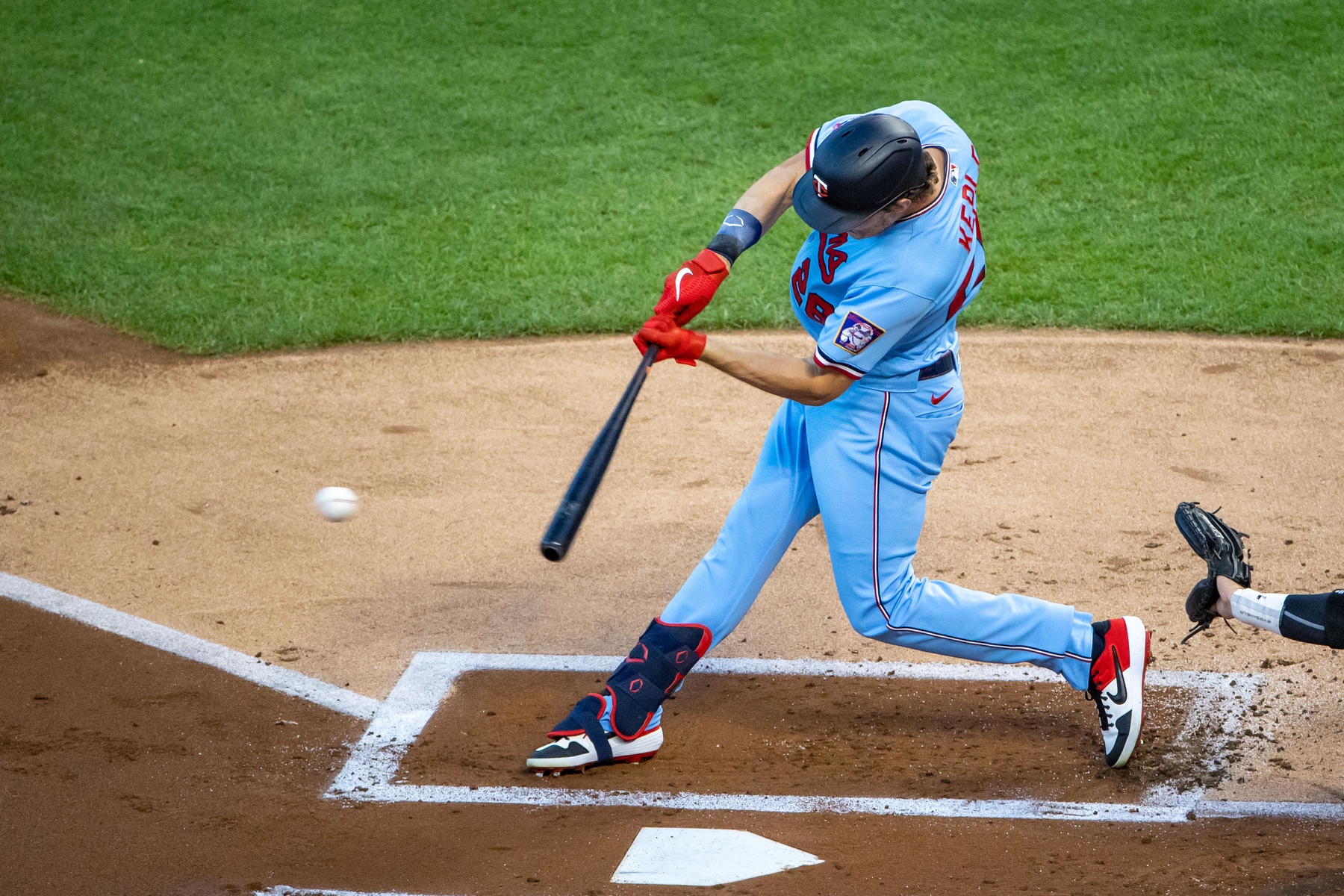 We all know that in 2019 several home run records were shattered across baseball. It turns out that MLB had made several changes to the ball that reduced it’s “drag”. Long story short, the makeup of the ball offered less resistance when traveling through the air, thus adding distance onto batted balls. We don’t know what tactics MLB will use to reverse the offensive surge in recent years, but reducing the drag on the ball may be easiest which can presumably be accomplished by altering the surface of the ball to make it less smooth for example. The result is that players who often sneak homers into the bleachers may not get that extra push to get their batted balls over the wall. Making this assumption, let’s see who may be at the top of the list for Twins players that could be affected most. Jorge Polanco Polanco had an average home run distance of 393 feet in 2019 and hit 23 home runs. Statcast uses a measurement called “no doubters” that tracks home runs that would have made it out of every MLB stadium. No doubters are a good way to get a feel for whether a player’s raw ability to drive baseballs out of the park is legit. For context, 47.6% of Nelson Cruz’s home runs were no doubters, while 39.1% of Polanco’s would have left any MLB ballpark. To be fair, Polanco has never been highly touted for his homerun power, and we likely saw a career high in 2019 from the Twins newly converted second baseman. A few feet off of some of his fly balls may hurt him in 2021, but assuming he’s healthy he should still be able to pick up some extra base hits. Mitch Garver Garver suffered a brutal 2020 but it had more to do with swing and miss than anything wrong with the ball. Still, assuming Garv Sauce is back to his normal fastball punishing self in 2021, it may surprise you that while his average home run distance of 400 feet was better than Polanco’s in 2019, his no doubter rate of 38.7% was worse. Looking back, it’s easy to remember plenty of Garver’s homers in 2019 just barely making it out, and it’s evidenced by his 25.1 expected home runs in that stellar season as compared to the 31 he actually hit. While the return of 2019 Garv Sauce is likely out of the question, his elite plate skills and exit velocity should still make him a formidable hitter, even if the 30 home run threshold will be difficult to reach again. https://twitter.com/fsnorth/status/1170514761366171648?s=20 Max Kepler Kepler is perhaps the most worrisome when it comes to deadening the baseball. In 2019 Kepler’s average of 392 feet per home run was less than Polanco’s as was his no doubter percentage of 38.9%. The one thing Kepler has going for him is that basically all of his home runs are pulled and therefore don’t have as far to travel to reach the seats. Take a look at his 2020 spray chart. Kepler’s pull tendencies may help him avoid completely cratering in his home run production, but taking a few feet off of some of his fly balls would certainly cost him as evidenced by his low average home run distance. Furthermore, Kepler is a low batting average, moderate on base hitter who hasn’t hit left handed pitching for most of his career. Kepler may stand to lose the most if the new ball doesn’t allow him to provide 30 home run power, as aside from defense, the gap between him and an MLB ready Trevor Larnach could quickly close. Bonus: Eddie Rosario Eddie is no longer a Twin but with an average HR distance of 392 feet in 2019 with only one third of his 33 being no doubters, Eddie in particular could feel the pain of the new baseball. With the ball possibly inhibiting the fly balls Eddie creates out of pitches nobody should be swinging at, it wouldn’t be surprising to see a drop off to a 20-25 HR hitter rather than a 30+ bat. He’s not exactly a star on the exit velocity leaderboards and a lot of his batted balls over the fence aren’t well struck. It turned out to be a great year to build around defense and avoid the “Bomba Squad” label, as the Twins should have a well rounded team that doesn’t rely on fly balls leaving the park to be successful. That being said, a few players lacking prominent raw power may not put up the stats we’ve come to expect. Do you think any other Twins may be feeling the pain of the new ball? Let us know below! — Latest Twins coverage from our writers — Recent Twins discussion in our forums — Follow Twins Daily via Twitter, Facebook or email — Follow Cody Pirkl on Twitter here
 -
Keep Plundering the Pirate Ship
Cody Pirkl replied to Cody Pirkl's topic in Twins Daily Front Page News
The thing about Kuhl is he has more of an MLB career to draw projections from than Smeltzer or Thorpe and has more swing and miss than Dobnak. I love Randy and think he'll be around for awhile but I think its about rotation depth at this point. Smeltzer has looked like a AAAA guy so far who makes spot starts for 3 innings/mops up in relief and Thorpe could be cut loose in just a few weeks here since he's out of options. I don't think Kuhl is for sure the answer in the rotation, but he'd be cheap in trade and payroll and controlled for 2 years. I'm not saying pay up for him, I just think he's a nice cheap pickup that can add depth to a rotation that needs it and has signs of more in the tank than he's shown so far. -
Keep Plundering the Pirate Ship
Cody Pirkl replied to Cody Pirkl's topic in Twins Daily Front Page News
Bad teams have good players too and are more open to getting rid of them unlike teams in contention. The Twins could get two players to help them now for a few minor leaguers who very well could never even make the MLB. -
Keep Plundering the Pirate Ship
Cody Pirkl replied to Cody Pirkl's topic in Twins Daily Front Page News
Wade could have been a piece although I don't think he's thought of as even a possible everyday starter for the future. We've still got plenty of MLB depth to deal from. For Kuhl, its not a matter of eliminating the fastball completely, its reducing the usage and sequencing it better. Maeda had the same issue when he was brought over. They had him cut down on the usage and he picked his spots to use it while also throwing his best pitches more often. -
The Twins offseason is coming together as little room on the payroll likely remains. They’ve admirably compiled most of their team without parting with a single prospect this winter. As the numbers add up, perhaps it’s time that changes.The Twins still may benefit from another starting pitcher and reliever following the Cruz and Colomé signings. Things like former Twin Kohl Stewart getting a Major League deal and Chris Archer signing for $6.5m have muddied the waters on price points. Paired with the depth of their farm system and the fact that they haven’t parted with any of it, the real value pick ups could lie on the trade market where payroll hits are already determined. This would be especially valuable for a team with a seemingly small window to fit in. The Pirates have parted with tons of talent this winter including Josh Bell, Joe Musgrove and Jameson Taillon as they continue to sink into irrelevancy. Despite all of this, they’re still reportedly open to discussing what players are left. At first glance it doesn’t look like a whole lot, but there’s some definite help that the Twins could acquire. There’s one pairing in particular that the Twins could explore to possibly make a big improvement in the rotation and bullpen. Chad Kuhl Kuhl has a history that makes you wonder why the Twins would be interested with his 4.36 ERA and 4.45 FIP. At 28 years old, Kuhl has a 5 pitch mix including a sinker he uses over 42% of the time. The issue is that in 2020 the pitch was clubbed for a .667 slugging % and has had similar results his entire career. Some pitchers have no choice but to continue trying to induce groundballs, but Kuhl has two other pitches in a slider and curve that have multiple seasons of much higher overall success and >30% whiff rates. He may not be the second coming of Kenta Maeda, but a change of scenery and pitch mix change could make him a valuable piece of a team’s rotation. Kuhl has two seasons of arbitration left and is due a bit over $2m in 2021.Furthermore, he’s been reported as one of their top candidates to still be traded. With all of that in mind, he’s a cheap option both payroll and prospect wise to come in and compete for the 5th rotation spot with a few indicators saying his ceiling could be higher. Richard Rodriguez Tom Froemming turned me onto Richard Rodriguez a few weeks ago as a possible bullpen target. Rodriguez uses a high spin fastball and slider combo to dominate hitters. In fact, he fell in the 96th percentile in K% and 92nd in Whiff% in 2020. His slider posted a hilarious 63.6% whiff rate. It’s likely Rodriguez would be able to come in and play a big role in a Twins bullpen that has lost so much this winter after posting a very believable 2.70 ERA last season. It’s a role the Twins may not have confidently filled yet after last season’s departures from the bullpen. While Rodriguez may be the closer in Pittsburgh, he’s already 30 years old. Even with his 3 remaining years of control, he likely won’t be playing a big role the next time the Pirates are ready to compete. If they can cash in on him by getting a younger player that better fits their timeline, they would certainly be willing to move the right hander. What Would It Cost? Controllable pitchers are never cheap. The Twins however are in a great situation to make an acquisition. As previously mentioned, they haven’t parted with a single prospect this winter and would likely be willing to do so for the right return. Second, the Twins have some cheap controllable players on their roster who may be best utilized in a trade. Lewis Thorpe may not be perceived as a valuable piece by Twins fans, but he still has plenty of cheap control attached. Pittsburgh would be a perfect place to plug him into the rotation and see if he can capture that former prospect pedigree. Brent Rooker also has a roster crunch on the horizon with Kirilloff and Larnach on their way. The Pirates could give him the everyday opportunity he deserves and likely won’t get in Minnesota. Maybe Jake Cave would even interest them. In any case, it would likely take some prospects attached to one of these current big leaguers to get a deal done, but the Twins need to offset the 40 man roster impact anyways after the flurry of pickups they’ve made in the last week. I’ve expected the Twins to dabble in the trade market all winter and I continue to believe they should do so as the payroll adds up. It’s not Sonny Gray or Luis Castillo but a Chad Kuhl/Richard Rodriguez combo would address the rotation and bullpen in a big way for $4m. The Pirate ship is sinking. The Twins should take advantage and rescue some crew members. — Latest Twins coverage from our writers — Recent Twins discussion in our forums — Follow Twins Daily via Twitter, Facebook or email — Follow Cody Pirkl on Twitter here Click here to view the article
-
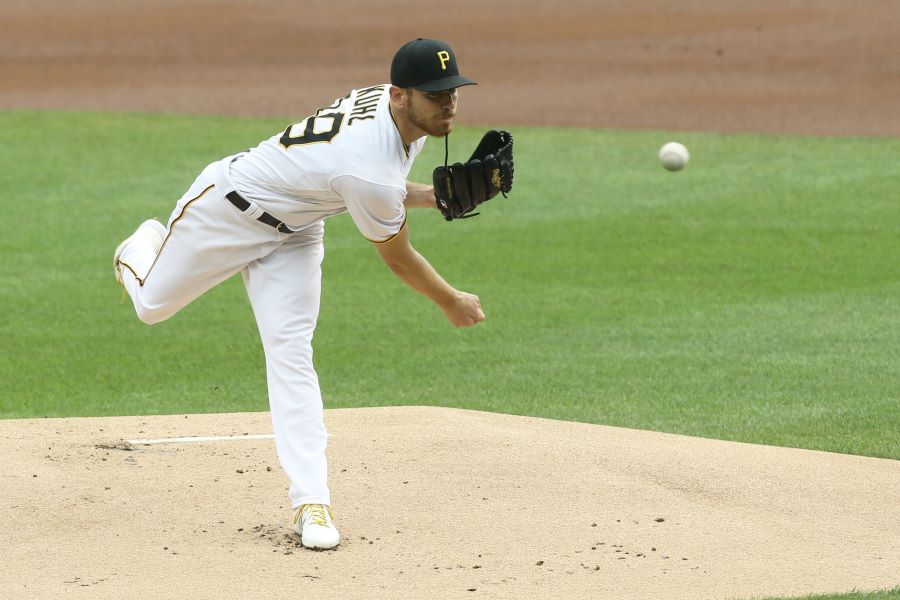 The Twins still may benefit from another starting pitcher and reliever following the Cruz and Colomé signings. Things like former Twin Kohl Stewart getting a Major League deal and Chris Archer signing for $6.5m have muddied the waters on price points. Paired with the depth of their farm system and the fact that they haven’t parted with any of it, the real value pick ups could lie on the trade market where payroll hits are already determined. This would be especially valuable for a team with a seemingly small window to fit in. https://twitter.com/MatthewTaylorMN/status/1357096590478110724?s=20 The Pirates have parted with tons of talent this winter including Josh Bell, Joe Musgrove and Jameson Taillon as they continue to sink into irrelevancy. Despite all of this, they’re still reportedly open to discussing what players are left. At first glance it doesn’t look like a whole lot, but there’s some definite help that the Twins could acquire. There’s one pairing in particular that the Twins could explore to possibly make a big improvement in the rotation and bullpen. Chad Kuhl Kuhl has a history that makes you wonder why the Twins would be interested with his 4.36 ERA and 4.45 FIP. At 28 years old, Kuhl has a 5 pitch mix including a sinker he uses over 42% of the time. The issue is that in 2020 the pitch was clubbed for a .667 slugging % and has had similar results his entire career. Some pitchers have no choice but to continue trying to induce groundballs, but Kuhl has two other pitches in a slider and curve that have multiple seasons of much higher overall success and >30% whiff rates. He may not be the second coming of Kenta Maeda, but a change of scenery and pitch mix change could make him a valuable piece of a team’s rotation. Kuhl has two seasons of arbitration left and is due a bit over $2m in 2021.Furthermore, he’s been reported as one of their top candidates to still be traded. With all of that in mind, he’s a cheap option both payroll and prospect wise to come in and compete for the 5th rotation spot with a few indicators saying his ceiling could be higher. Richard Rodriguez Tom Froemming turned me onto Richard Rodriguez a few weeks ago as a possible bullpen target. Rodriguez uses a high spin fastball and slider combo to dominate hitters. In fact, he fell in the 96th percentile in K% and 92nd in Whiff% in 2020. His slider posted a hilarious 63.6% whiff rate. It’s likely Rodriguez would be able to come in and play a big role in a Twins bullpen that has lost so much this winter after posting a very believable 2.70 ERA last season. It’s a role the Twins may not have confidently filled yet after last season’s departures from the bullpen. https://twitter.com/TFTwins/status/1354596974566240259?s=20 While Rodriguez may be the closer in Pittsburgh, he’s already 30 years old. Even with his 3 remaining years of control, he likely won’t be playing a big role the next time the Pirates are ready to compete. If they can cash in on him by getting a younger player that better fits their timeline, they would certainly be willing to move the right hander. What Would It Cost? Controllable pitchers are never cheap. The Twins however are in a great situation to make an acquisition. As previously mentioned, they haven’t parted with a single prospect this winter and would likely be willing to do so for the right return. Second, the Twins have some cheap controllable players on their roster who may be best utilized in a trade. Lewis Thorpe may not be perceived as a valuable piece by Twins fans, but he still has plenty of cheap control attached. Pittsburgh would be a perfect place to plug him into the rotation and see if he can capture that former prospect pedigree. Brent Rooker also has a roster crunch on the horizon with Kirilloff and Larnach on their way. The Pirates could give him the everyday opportunity he deserves and likely won’t get in Minnesota. Maybe Jake Cave would even interest them. In any case, it would likely take some prospects attached to one of these current big leaguers to get a deal done, but the Twins need to offset the 40 man roster impact anyways after the flurry of pickups they’ve made in the last week. I’ve expected the Twins to dabble in the trade market all winter and I continue to believe they should do so as the payroll adds up. It’s not Sonny Gray or Luis Castillo but a Chad Kuhl/Richard Rodriguez combo would address the rotation and bullpen in a big way for $4m. The Pirate ship is sinking. The Twins should take advantage and rescue some crew members. — Latest Twins coverage from our writers — Recent Twins discussion in our forums — Follow Twins Daily via Twitter, Facebook or email — Follow Cody Pirkl on Twitter here
 -
The Dodgers decided they needed another pitcher this week and inked Trevor Bauer to an expensive deal. The result is that several starting caliber pitchers no longer have a role in the Dodgers rotation. A few teams should be giving LA a call about their glut of starting rotation options, and the Twins should be one of them.David Price Price was traded from the Red Sox with Mookie Betts as a salary dump last offseason before opting out of the 2020 season. Despite the stigma of what many consider a bad contract, Price has thrown about 275 innings the last 3 years to the tune of a 3.94 ERA. The raw numbers say Price would still be a valuable addition to a contending team. The downside of Price is obviously the salary hit by acquiring him with 2 years $64m attached. The Dodgers don’t seem too concerned about saving money these days, but he’d likely be their preferred pitcher to trade and could likely be had for free. Price also has a bit of unknown attached to him given his lack of a 2020 season and number of injuries starting to pile up in recent years. Dustin May May was actually speculated to possibly be the pitcher the Twins were receiving last winter when we got Maeda instead. Dubbed “Gingergaard”, May has a high octane fastball that regularly appears to bend the laws of physics. Despite the wow factor, May hasn’t even managed a 21% K rate in the MLB thus far. His ceiling is still high and he’s a valuable pitcher even in his current form with a 2.98 ERA through about 90 innings. May has always been a hyped Dodgers prospect they love, and any price to acquire him would be a hit to the Twins farm system if not the immediate Major League roster depending on what they want. An investment in a pitcher like May would likely require the Twins to be confident they could turn him into the face of their pitching rotation for the next 4-5 years. Tony Gonsolin Gonsolin was an unheralded star of the Dodgers rotation in 2020 pitching to a 2.31 ERA in 46 innings. Also a former top prospect of the Dodgers, he figures to be the last in line for a rotation spot in 2021.The Dodgers appeared to show their hand in the playoffs in 2021 that Gonsolin appears to be at the bottom of the totem pole for Dodgers starting pitchers. The Dodgers just never seemed like they planned on using Gonsolin in the playoffs in 2021. For that reason, it’s fair to say Gonsolin is a tier below May in the Dodgers minds. That being said, Gonsolin is a young controllable starting pitcher and won’t be cheap. The Dodgers still haven’t re-signed Justin Turner for their infield, and it’s possible they’d come asking for Polanco or Arraez as a starting piece with plenty else included in the deal. Similar to May, The Twins would have to be confident in what they’re getting in Gonsolin to pull the trigger on this one. He’s nasty though. Unlike some trade options available these days, the Dodger options will all cost a fair bit in one way or another. That being said, it would likely be worth the Twins at least checking in. Which Dodgers starter do you think would be the best fit in Minnesota? — Latest Twins coverage from our writers — Recent Twins discussion in our forums — Follow Twins Daily via Twitter, Facebook or email — Follow Cody Pirkl on Twitter here Click here to view the article

