



Matthew Lenz
-
Posts
1,465 -
Joined
-
Last visited
-
Days Won
3
Content Type
Profiles
News
Minnesota Twins Videos
2026 Minnesota Twins Top Prospects Ranking
2022 Minnesota Twins Draft Picks
Minnesota Twins Free Agent & Trade Rumors, Notes, & Tidbits
Guides & Resources
2023 Minnesota Twins Draft Picks
The Minnesota Twins Players Project
2024 Minnesota Twins Draft Picks
2025 Minnesota Twins Draft Pick Tracker
2026 Minnesota Twins Draft Tracker: Picks & Bonuses
Forums
Blogs
Events
Store
Downloads
Gallery
Everything posted by Matthew Lenz
-
 Despite a rough start on Opening Day, the Twins are considered one of the top teams in baseball with some even predicting them to represent the American League in the World Series. It’s a long way until we’re there so let's take a look at the road to October. Image courtesy of Matthew Lenz, Twins Daily Despite a rough start on Opening Day, the Twins are considered one of the top teams in baseball with some even predicting them to represent the American League in the World Series. It’s a long way until we’re there so let's take a look at the road to October. I’m a math teacher who loves baseball, and although the games aren’t played on paper I always like to dive into the schedule to see the lay of the land for the Twins season. I’ve taken the Las Vegas total win over/under for each of the Twins opponents and converted it into a winning percentage. I then used that data to analyze many different splits throughout the season. This is my third year doing such an activity, although last year's exercises ended up being pretty meaningless, and like I’ve done in the past I’ll give a quick synopsis of how each month looks. April (11 home, 15 away, 4 off) Although they will spend half the month on the road, from a project opponent win percentage perspective the Twins should end up looking pretty by the end of April. Their projected opponent win percentage is 47.46% and have 10 games against the Tigers, Mariners, Pirates, and Royals who are all projected for less than 74 wins on the year. Heck, outside of the opening series against the Brewers, the other 13 games are against teams who are expected to hover around .500 for the year. Although it’s only April, it will be important the Twins end the month above .500 as the White Sox have an even easier start to the season, based on projections. May (18 home, 10 away, 3 off) The Twins are fortunate their busiest month of the year is also the month they will spend the most time at home AND has the lowest projected winning percentage. Again, it will still be considered early but it will be vitally important that the Twins beat up on Royals (5 gms), Rangers (4 gms), Tigers (3 gms), and Orioles (4 gms) at the beginning and end of the month. The middle of the month will feature their first tough stretch of the year with nine consecutive games against the Athletics and White Sox. Similarly the White Sox start and end May against weaker teams, but they have their own tough stretch in the middle with games against the Twins (6 gms), Yankees (3 gms), and Cardinals (3 gms). This is a really good opportunity for the Twins to put get an early lead on the division over the White Sox, especially facing them six times in the month. June (12 home, 15 away, 3 off) As the weather starts to warm up so does the Twins schedule who will face the Yankees (3 gms), Astros (3 gms), and White Sox (3 gms) who are all teams favored to win their respective divisions. This is where we will get our first real glimpse of how we stack up against teams that we could end up facing in the playoffs, although we are fortunate to be the home team for six out of those nine games. Outside of that we’ll have the opportunity to beat up on the Orioles (2 gms), Royals (4 gms), Rangers (3 gms) and Mariners (3 gms) again while seeing the Reds for the first time. The White Sox will also have their hands full with games against the Blue Jays, Rays, Astros, and Twins. July (14 home, 12 away, 5 off) and August (13 home, 14 away, 4 off) You’ll see why I grouped these two months together. The Twins will enter the All-Star Break with a projected opponent winning percentage of 47.97% which would be the equivalent of a record of about 48-44 record. Compare that to after the All-Star break where the Twins projected opponent win percentage is 50.65%. After the All-Star break, the Twins will face the toughest stretch of their schedule aside from six games against the Tigers. This stretch will take us through the end of August where the Twins will have a thirty game stretch of facing teams who are projected to finish the season above .500. This includes finishing their season series with six games against the White Sox, three games at Busch Stadium, three games at Yankee Stadium, and hosting the Rays and Brewers for three games apiece. It also includes the longest road trip and homestand off the season, which are nine games apiece back-to-back. The timing of this stretch of games will be interesting as the Twins should have an even better idea of how they stack up against the best teams in baseball as the trade deadline comes and goes, although their schedule for the two months after the deadline is tougher than any other two month stretch they face. The White Sox schedule for these two months isn’t quite as tough as the Twins which is why it will be important for the Twins to build an early division lead. Let's hope the Twins get some rest over the break, are healthy, and can finish around .500 during July and August. September/October (13 home, 15 away, 5 off) After a grueling stretch the Twins won’t get much of a reprieve with games against the Rays (3) and Blue Jays (6), but they also get to face the Royals and Tigers a combined nine times including the last six games of the season. Remember, rosters no longer expand on september 1st so even games against the Indians (6) and Cubs (3), which may typically feature multiple prospects getting their first cup of coffee in the bigs, aren’t going to be quite so simple. Meanwhile, the White Sox toughest competition will be three games apiece against the A’s and Angels in the middle of the month. At this point, Twins fans may decide to look back to April and May to see the importance of those early season games as the season comes to an end. I didn’t do a deep dive on the White Sox schedule like I did with the Twins, but just at a quick glance their schedule is a little easier in the sense that their tough games are more spread out throughout the season. Of course, teams from the same division play the same schedule but that thirty game stretch between July and August is going to be brutal for the Twins. Keep that in mind as we try and minimize the importance of games in April and May! If you want to have a little fun with the data yourself, here is a link to the spreadsheet I created. MORE FROM TWINS DAILY — Latest Twins coverage from our writers — Recent Twins discussion in our forums — Follow Twins Daily via Twitter, Facebook or email View full article
 -
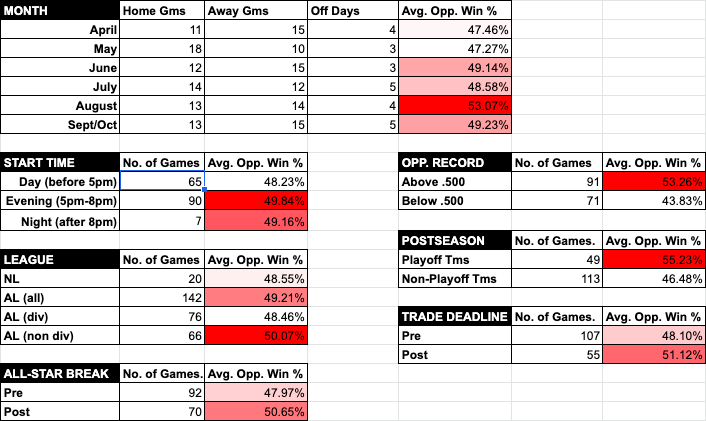 I’m a math teacher who loves baseball, and although the games aren’t played on paper I always like to dive into the schedule to see the lay of the land for the Twins season. I’ve taken the Las Vegas total win over/under for each of the Twins opponents and converted it into a winning percentage. I then used that data to analyze many different splits throughout the season. This is my third year doing such an activity, although last year's exercises ended up being pretty meaningless, and like I’ve done in the past I’ll give a quick synopsis of how each month looks. April (11 home, 15 away, 4 off) Although they will spend half the month on the road, from a project opponent win percentage perspective the Twins should end up looking pretty by the end of April. Their projected opponent win percentage is 47.46% and have 10 games against the Tigers, Mariners, Pirates, and Royals who are all projected for less than 74 wins on the year. Heck, outside of the opening series against the Brewers, the other 13 games are against teams who are expected to hover around .500 for the year. Although it’s only April, it will be important the Twins end the month above .500 as the White Sox have an even easier start to the season, based on projections. May (18 home, 10 away, 3 off) The Twins are fortunate their busiest month of the year is also the month they will spend the most time at home AND has the lowest projected winning percentage. Again, it will still be considered early but it will be vitally important that the Twins beat up on Royals (5 gms), Rangers (4 gms), Tigers (3 gms), and Orioles (4 gms) at the beginning and end of the month. The middle of the month will feature their first tough stretch of the year with nine consecutive games against the Athletics and White Sox. Similarly the White Sox start and end May against weaker teams, but they have their own tough stretch in the middle with games against the Twins (6 gms), Yankees (3 gms), and Cardinals (3 gms). This is a really good opportunity for the Twins to put get an early lead on the division over the White Sox, especially facing them six times in the month. June (12 home, 15 away, 3 off) As the weather starts to warm up so does the Twins schedule who will face the Yankees (3 gms), Astros (3 gms), and White Sox (3 gms) who are all teams favored to win their respective divisions. This is where we will get our first real glimpse of how we stack up against teams that we could end up facing in the playoffs, although we are fortunate to be the home team for six out of those nine games. Outside of that we’ll have the opportunity to beat up on the Orioles (2 gms), Royals (4 gms), Rangers (3 gms) and Mariners (3 gms) again while seeing the Reds for the first time. The White Sox will also have their hands full with games against the Blue Jays, Rays, Astros, and Twins. July (14 home, 12 away, 5 off) and August (13 home, 14 away, 4 off) You’ll see why I grouped these two months together. The Twins will enter the All-Star Break with a projected opponent winning percentage of 47.97% which would be the equivalent of a record of about 48-44 record. Compare that to after the All-Star break where the Twins projected opponent win percentage is 50.65%. After the All-Star break, the Twins will face the toughest stretch of their schedule aside from six games against the Tigers. This stretch will take us through the end of August where the Twins will have a thirty game stretch of facing teams who are projected to finish the season above .500. This includes finishing their season series with six games against the White Sox, three games at Busch Stadium, three games at Yankee Stadium, and hosting the Rays and Brewers for three games apiece. It also includes the longest road trip and homestand off the season, which are nine games apiece back-to-back. The timing of this stretch of games will be interesting as the Twins should have an even better idea of how they stack up against the best teams in baseball as the trade deadline comes and goes, although their schedule for the two months after the deadline is tougher than any other two month stretch they face. The White Sox schedule for these two months isn’t quite as tough as the Twins which is why it will be important for the Twins to build an early division lead. Let's hope the Twins get some rest over the break, are healthy, and can finish around .500 during July and August. September/October (13 home, 15 away, 5 off) After a grueling stretch the Twins won’t get much of a reprieve with games against the Rays (3) and Blue Jays (6), but they also get to face the Royals and Tigers a combined nine times including the last six games of the season. Remember, rosters no longer expand on september 1st so even games against the Indians (6) and Cubs (3), which may typically feature multiple prospects getting their first cup of coffee in the bigs, aren’t going to be quite so simple. Meanwhile, the White Sox toughest competition will be three games apiece against the A’s and Angels in the middle of the month. At this point, Twins fans may decide to look back to April and May to see the importance of those early season games as the season comes to an end. I didn’t do a deep dive on the White Sox schedule like I did with the Twins, but just at a quick glance their schedule is a little easier in the sense that their tough games are more spread out throughout the season. Of course, teams from the same division play the same schedule but that thirty game stretch between July and August is going to be brutal for the Twins. Keep that in mind as we try and minimize the importance of games in April and May! If you want to have a little fun with the data yourself, here is a link to the spreadsheet I created. MORE FROM TWINS DAILY — Latest Twins coverage from our writers — Recent Twins discussion in our forums — Follow Twins Daily via Twitter, Facebook or email
 -
Last week, we previewed the position players from the White Sox and Twins, who are realistically the only two teams competing for the division this year. The Twins “won” the position player battle 7-3, but how do they match up on the mound? Read on to find out. Image courtesy of Jordan Johnson, USA Today Last week, we previewed the position players from the White Sox and Twins, who are realistically the only two teams competing for the division this year. The Twins “won” the position player battle 7-3, but how do they match up on the mound? Read on to find out. The White Sox made a bigger offseason splash by signing the best reliever on the market while the Twins brought in former White Sox closer Alex Colomé and Angels closer Hansel Robles. Especially for the White Sox the signing of Liam Hendriks was a curious move as their bullpen was already one of their strengths and they really like the depth elsewhere, while Colomé and Robles will provide the Twins with some depth and flexibility at the back end of their bullpen. The Twins signed J.A. Happ and Matt Shoemaker who will improve the rotation from 2020 while the White Sox have some top prospects waiting for their shot. Let’s take a more in depth look at each team’s pitching staff. No. 1 Starter: Kenta Maeda versus Lucas Giolito Maeda really flourished in his first full year as a starter finishing second in AL Cy Young voting and now being named the 2021 Opening Day Starter. The projection models (Steamer, ZiPS and PECOTA) disagree on whether this performance is repeatable and although a little regression is likely, his Savant profile would suggest that his 2020 season might not be an outlier. I think the difference between a division title and a wild card team could be determined by how closely Maeda is to his 2020 self. Giolito, who will turn just 27 midseason, is quietly coming off of back-to-back seasons where he finished in the top-seven of Cy Young voting. After posting the worst ERA by a qualified pitcher in Major League history in 2018, he has now established himself as an “ace” for the White Sox. He utilizes a fastball/changeup combo while mixing in a slider to post elite strikeout numbers and solid contact rates. His projection models vary from a 3.00 ERA to a 4.05 where they vary in trusting him to keep the ball in the park, but irregardless I think we’ll see another “ace” season from the White Sox righty. Verdict: I give the edge to Giolito, who has improved in each of the last two seasons, but not by much. No. 2 Starter: Jose Berrios versus Lance Lynn Can Berríos be an “ace”? The question that has plagued Twins fans for the better part of four seasons now, and was already covered on Twins Daily after two strong Spring Training starts. In my opinion, this spring is a perfect snapshot of why I think he will never be an “ace” or even a number one on a World Series contender. 1st two starts: 5 IP, 0 ER, 2 H, 1 BB, 7 K Last two starts: 8.2 IP, 4 ER, 10 H, 4BB, 7 K His inconsistency is what brings him down. To be fair, his third start in particular was dreadful but even against the Braves on Monday he allowed five baserunners in four plus innings of work and needed 82 pitches to get 14 outs. From start to start, he has the ceiling of an “ace” and the floor of a back end starter which is why I’ve long believed that he ultimately is a middle of the rotation starter. His projection models have his ERA in the high-3’s/low-4’s which is exactly where he’s been since 2017. I think we all thought that Lynn was cooked after throwing 102 1/3 innings for the Twins in 2018 posting a 5.10 ERA and walking 5.45 batters per nine. Since then he’s posted a 3.66 ERA (3.23 FIP) and only walked 2.5 batters per nine and finished fifth and sixth in 2019 and 2020 Cy Young voting, respectively. Aside from needing Tommy John surgery and missing the 2016 season, Lynn has been one of the more durable pitchers but like Berríos, struggles with consistency. In fact, Lynn and Berríos are projected to have nearly the same season in 2020. Verdict: At this point, Lynn is what he is, whereas Berríos is only 26 and still has some upside so I give him the slight edge to outperform Lynn in 2021. No. 3 Starter: Michael Pineda versus Dallas Keuchel Despite his struggles this Spring, I generally trust Pineda more than Berrios and would label him as the number two starter but I know the Twins (and most fans) don’t necessarily feel that way. After missing 2018, getting suspended at the end of 2019 and missing the start of 2020, Pineda finally started 2021 with a “normal” offseason and spring training. Ultimately, we will see some regression from 2020 as Pineda did not allow a home run over the 26 2/3 innings pitched, and none of the projection models view him favorably in 2021 with his best ERA at 4.42 which would be the second worst of his career. Pineda has always been susceptible to the long ball, although some of that is inflated by Yankee Stadium, but based on his Savant profile I wouldn't be surprised if he outperforms his projections in 2021. Remember when Keuchel won a Cy Young Award? Wild. He actually had a very good 2020 season earning an MVP vote along with fifth in Cy Young voting. Very similarly to Pineda, he kept the ball in the park at an unsustainable rate which is going to lead to some regression but still posted a 3.08 FIP which was the second best of his career behind his 2017 Cy Young season. Again like Pineda, the projection models do not view him in an overly positive light with an ERA and FIP above 4.00 and his Savant profile would tend to agree that Verdict: I’ll easily take Pineda over Keuchel. No. 4 Starter: J.A. Happ versus Dylan Cease Happ wasn’t a splash or overly popular signing for fans, but as the Twins number four option he provides an upperhand versus most other teams. He’s coming off of a tough couple years with the Yankees as a flyball pitcher in Yankee stadium, but has otherwise been pretty solid and very durable for almost a decade. He’s not a power pitcher but he’s good at generating weak contact, and will be plenty valuable as a back end starter. That’s what you’re going to have to keep in mind in 2021, his numbers won’t pop but they’ll play as our number four starter. Cease is a former top prospect who is still only 25 years old with just 131 1/3 Major League innings under his belt. He may be their number four now, but his Minor League numbers and scouting report would suggest he could be a #1 or #2 starter. He’s had rough start in his short career really struggling with walks and home runs and the projection models don’t see that improving in 2021. It’s always hard to project when or even if a prospect will produce in the bigs, but if Cease can clean things up he’ll be very good. Verdict: Cease has the higher ceiling but Happ has the higher floor which I’ll take in 2021. Happ over Cease. No. 5 Starter: Matt Shoemaker versus Carlos Rodón See how I started Happ’s paragraph and pretend like I was talking about Shoemaker. Unlike Happ, his biggest question mark is going to be his durability as he’s only thrown 166 innings over the last four seasons combined. That said, if he can stay healthy, those last 166 innings have a solid 8.1 K/9, 2.4 BB/9, and a 4.14 FIP which would be phenomenal for a number five. I don’t know how much stock to really put into his projections with so little data over the last five seasons, but they have him with an ERA and FIP in the high 4’s. If he does get hurt, the Twins have the flexibility of plugging in Lewis Thorpe or Randy Dobnak who are having nice spring seasons. I really don’t know why the White Sox aren’t giving Michael Kopech and Garrett Crochet a shot here. Sure, they’re young but at this point we kind of know that Rodón tops out as a #3 starter at best, whereas the two mentioned before him are projected to be frontline starters. I’d get it more if he was already under contract but they re-signed him in January, he’s coming off of five consecutive seasons with some sort of army injury, and have already relegated the other two to the bullpen. All of that said, like Shoemaker, when he’s healthy he’s put up numbers that would be very solid for a fifth option. To make for an easier comparison to Shoemaker, over the last four years Rodón has thrown 232 1/3 innings posting a 8.4 K/9, 4.1 BB/9, and a 4.67 FIP. Verdict: Shoemaker over Rodón, and more generally like the Twins options at number five over the White Sox. Bullpen: Minnesota Twins versus Chicago White Sox The front of a team’s bullpen can be very fluid as players get hurt, struggle with performance, and spot starters are needed. With that said, the back end of the rotation is typically more solid and both the Twins and White Sox have some strong players. Where the Twins lack the top end talent of someone like Hendriks, they make up for it with the experience and production of Taylor Rogers, Colomé, Robles, and Tyler Duffey who all have experienced success in high leverage situations. Moreover, having that many options allows you to not assign a formal role and put your pitchers in the best spots where they can be successful. For example, Rogers in 2020 didn’t impress anyone but he also faced more righties than you’d like him to based on his career splits. I also like having Thielbar (if he’s healthy) and the upside of Alcala to help bridge the gap between starters and the four aforementioned names on this list. On top of Hendriks, Crochet, and Kopech who we already know are elite arms out of the bullpen, the White Sox will hope that Aaron Bummer can stay healthy and Evan Marshall continues his so far successful career as a reliever. If everything comes together the White Sox bullpen will be very, very dangerous and teams will have to get and hold a lead in the first half of the ball game to win. The concern for them will be if they have an injury and need to start relying on their depth to fill in the holes. As with their position players, they don’t have a ton of solid depth in the bullpen. Verdict: Although the Twins will be very good, the White Sox should better and possibly have the best bullpen in baseball. Conclusion: Minnesota Twins Pitching Staff versus Chicago White Sox Pitching Staff In general, the White Sox pitching staff have more top end talent and more upside than the Twins pitching staff but I would argue that the Twins have a safer floor. If everything goes right for the White Sox then they will easily take this matchup between pitching staffs, but over a 162 game stretch I would put my money on who can sustain through adversity and I believe the Twins are in the better spot to do that specifically with their starting rotation. Roster: Minnesota Twins versus Chicago White Sox Verdict: From a (very scientific) purely ✔ mark perspective, the Twins have the clear advantage when we break it down position by position. That said, the gap between many of the positions isn’t that wide on either side. As I’ve stated in both articles, I generally favor the Twins because they have more depth and stability than the White Sox. That said, the race for the division will be close and if some of the White Sox young players can blossom in 2021 then I wouldn’t be surprised to see them take the division either. The division will likely come down to who wins the head-to-head battle between the two teams over the 19-game season series. Either way, I would expect both teams to make the playoffs, even under the pre-COVID format, and maybe they’ll face off in the ALCS?!? MORE FROM TWINS DAILY — Latest Twins coverage from our writers — Recent Twins discussion in our forums — Follow Twins Daily via Twitter, Facebook or email View full article
-
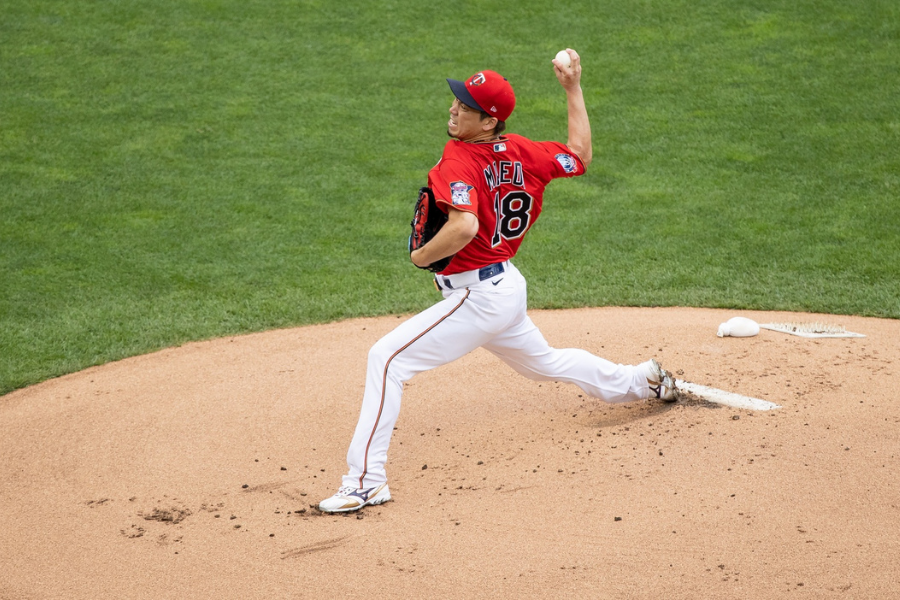 The White Sox made a bigger offseason splash by signing the best reliever on the market while the Twins brought in former White Sox closer Alex Colomé and Angels closer Hansel Robles. Especially for the White Sox the signing of Liam Hendriks was a curious move as their bullpen was already one of their strengths and they really like the depth elsewhere, while Colomé and Robles will provide the Twins with some depth and flexibility at the back end of their bullpen. The Twins signed J.A. Happ and Matt Shoemaker who will improve the rotation from 2020 while the White Sox have some top prospects waiting for their shot. Let’s take a more in depth look at each team’s pitching staff. No. 1 Starter: Kenta Maeda versus Lucas Giolito Maeda really flourished in his first full year as a starter finishing second in AL Cy Young voting and now being named the 2021 Opening Day Starter. The projection models (Steamer, ZiPS and PECOTA) disagree on whether this performance is repeatable and although a little regression is likely, his Savant profile would suggest that his 2020 season might not be an outlier. I think the difference between a division title and a wild card team could be determined by how closely Maeda is to his 2020 self. Giolito, who will turn just 27 midseason, is quietly coming off of back-to-back seasons where he finished in the top-seven of Cy Young voting. After posting the worst ERA by a qualified pitcher in Major League history in 2018, he has now established himself as an “ace” for the White Sox. He utilizes a fastball/changeup combo while mixing in a slider to post elite strikeout numbers and solid contact rates. His projection models vary from a 3.00 ERA to a 4.05 where they vary in trusting him to keep the ball in the park, but irregardless I think we’ll see another “ace” season from the White Sox righty. Verdict: I give the edge to Giolito, who has improved in each of the last two seasons, but not by much. No. 2 Starter: Jose Berrios versus Lance Lynn Can Berríos be an “ace”? The question that has plagued Twins fans for the better part of four seasons now, and was already covered on Twins Daily after two strong Spring Training starts. In my opinion, this spring is a perfect snapshot of why I think he will never be an “ace” or even a number one on a World Series contender. 1st two starts: 5 IP, 0 ER, 2 H, 1 BB, 7 K Last two starts: 8.2 IP, 4 ER, 10 H, 4BB, 7 K His inconsistency is what brings him down. To be fair, his third start in particular was dreadful but even against the Braves on Monday he allowed five baserunners in four plus innings of work and needed 82 pitches to get 14 outs. From start to start, he has the ceiling of an “ace” and the floor of a back end starter which is why I’ve long believed that he ultimately is a middle of the rotation starter. His projection models have his ERA in the high-3’s/low-4’s which is exactly where he’s been since 2017. I think we all thought that Lynn was cooked after throwing 102 1/3 innings for the Twins in 2018 posting a 5.10 ERA and walking 5.45 batters per nine. Since then he’s posted a 3.66 ERA (3.23 FIP) and only walked 2.5 batters per nine and finished fifth and sixth in 2019 and 2020 Cy Young voting, respectively. Aside from needing Tommy John surgery and missing the 2016 season, Lynn has been one of the more durable pitchers but like Berríos, struggles with consistency. In fact, Lynn and Berríos are projected to have nearly the same season in 2020. Verdict: At this point, Lynn is what he is, whereas Berríos is only 26 and still has some upside so I give him the slight edge to outperform Lynn in 2021. No. 3 Starter: Michael Pineda versus Dallas Keuchel Despite his struggles this Spring, I generally trust Pineda more than Berrios and would label him as the number two starter but I know the Twins (and most fans) don’t necessarily feel that way. After missing 2018, getting suspended at the end of 2019 and missing the start of 2020, Pineda finally started 2021 with a “normal” offseason and spring training. Ultimately, we will see some regression from 2020 as Pineda did not allow a home run over the 26 2/3 innings pitched, and none of the projection models view him favorably in 2021 with his best ERA at 4.42 which would be the second worst of his career. Pineda has always been susceptible to the long ball, although some of that is inflated by Yankee Stadium, but based on his Savant profile I wouldn't be surprised if he outperforms his projections in 2021. Remember when Keuchel won a Cy Young Award? Wild. He actually had a very good 2020 season earning an MVP vote along with fifth in Cy Young voting. Very similarly to Pineda, he kept the ball in the park at an unsustainable rate which is going to lead to some regression but still posted a 3.08 FIP which was the second best of his career behind his 2017 Cy Young season. Again like Pineda, the projection models do not view him in an overly positive light with an ERA and FIP above 4.00 and his Savant profile would tend to agree that Verdict: I’ll easily take Pineda over Keuchel. No. 4 Starter: J.A. Happ versus Dylan Cease Happ wasn’t a splash or overly popular signing for fans, but as the Twins number four option he provides an upperhand versus most other teams. He’s coming off of a tough couple years with the Yankees as a flyball pitcher in Yankee stadium, but has otherwise been pretty solid and very durable for almost a decade. He’s not a power pitcher but he’s good at generating weak contact, and will be plenty valuable as a back end starter. That’s what you’re going to have to keep in mind in 2021, his numbers won’t pop but they’ll play as our number four starter. Cease is a former top prospect who is still only 25 years old with just 131 1/3 Major League innings under his belt. He may be their number four now, but his Minor League numbers and scouting report would suggest he could be a #1 or #2 starter. He’s had rough start in his short career really struggling with walks and home runs and the projection models don’t see that improving in 2021. It’s always hard to project when or even if a prospect will produce in the bigs, but if Cease can clean things up he’ll be very good. Verdict: Cease has the higher ceiling but Happ has the higher floor which I’ll take in 2021. Happ over Cease. No. 5 Starter: Matt Shoemaker versus Carlos Rodón See how I started Happ’s paragraph and pretend like I was talking about Shoemaker. Unlike Happ, his biggest question mark is going to be his durability as he’s only thrown 166 innings over the last four seasons combined. That said, if he can stay healthy, those last 166 innings have a solid 8.1 K/9, 2.4 BB/9, and a 4.14 FIP which would be phenomenal for a number five. I don’t know how much stock to really put into his projections with so little data over the last five seasons, but they have him with an ERA and FIP in the high 4’s. If he does get hurt, the Twins have the flexibility of plugging in Lewis Thorpe or Randy Dobnak who are having nice spring seasons. I really don’t know why the White Sox aren’t giving Michael Kopech and Garrett Crochet a shot here. Sure, they’re young but at this point we kind of know that Rodón tops out as a #3 starter at best, whereas the two mentioned before him are projected to be frontline starters. I’d get it more if he was already under contract but they re-signed him in January, he’s coming off of five consecutive seasons with some sort of army injury, and have already relegated the other two to the bullpen. All of that said, like Shoemaker, when he’s healthy he’s put up numbers that would be very solid for a fifth option. To make for an easier comparison to Shoemaker, over the last four years Rodón has thrown 232 1/3 innings posting a 8.4 K/9, 4.1 BB/9, and a 4.67 FIP. Verdict: Shoemaker over Rodón, and more generally like the Twins options at number five over the White Sox. Bullpen: Minnesota Twins versus Chicago White Sox The front of a team’s bullpen can be very fluid as players get hurt, struggle with performance, and spot starters are needed. With that said, the back end of the rotation is typically more solid and both the Twins and White Sox have some strong players. Where the Twins lack the top end talent of someone like Hendriks, they make up for it with the experience and production of Taylor Rogers, Colomé, Robles, and Tyler Duffey who all have experienced success in high leverage situations. Moreover, having that many options allows you to not assign a formal role and put your pitchers in the best spots where they can be successful. For example, Rogers in 2020 didn’t impress anyone but he also faced more righties than you’d like him to based on his career splits. I also like having Thielbar (if he’s healthy) and the upside of Alcala to help bridge the gap between starters and the four aforementioned names on this list. On top of Hendriks, Crochet, and Kopech who we already know are elite arms out of the bullpen, the White Sox will hope that Aaron Bummer can stay healthy and Evan Marshall continues his so far successful career as a reliever. If everything comes together the White Sox bullpen will be very, very dangerous and teams will have to get and hold a lead in the first half of the ball game to win. The concern for them will be if they have an injury and need to start relying on their depth to fill in the holes. As with their position players, they don’t have a ton of solid depth in the bullpen. Verdict: Although the Twins will be very good, the White Sox should better and possibly have the best bullpen in baseball. Conclusion: Minnesota Twins Pitching Staff versus Chicago White Sox Pitching Staff In general, the White Sox pitching staff have more top end talent and more upside than the Twins pitching staff but I would argue that the Twins have a safer floor. If everything goes right for the White Sox then they will easily take this matchup between pitching staffs, but over a 162 game stretch I would put my money on who can sustain through adversity and I believe the Twins are in the better spot to do that specifically with their starting rotation. Roster: Minnesota Twins versus Chicago White Sox Verdict: From a (very scientific) purely ✔ mark perspective, the Twins have the clear advantage when we break it down position by position. That said, the gap between many of the positions isn’t that wide on either side. As I’ve stated in both articles, I generally favor the Twins because they have more depth and stability than the White Sox. That said, the race for the division will be close and if some of the White Sox young players can blossom in 2021 then I wouldn’t be surprised to see them take the division either. The division will likely come down to who wins the head-to-head battle between the two teams over the 19-game season series. Either way, I would expect both teams to make the playoffs, even under the pre-COVID format, and maybe they’ll face off in the ALCS?!? MORE FROM TWINS DAILY — Latest Twins coverage from our writers — Recent Twins discussion in our forums — Follow Twins Daily via Twitter, Facebook or email
 -
The Twins offense continued sputtering today against the Pirates and Alex Kirilloff optioned, making it a tough day for the Twins on social media platforms. That and more in today’s notebook! Image courtesy of Jasen Vinlove-USA TODAY Sports The Twins offense continued sputtering today against the Pirates and Alex Kirilloff optioned, making it a tough day for the Twins on social media platforms. That and more in today’s notebook! Pittsburgh 1, Twins 0 Box Score Twins Takeaways: Standout pitcher: Derek Law (1 IP, 2 K, 11 pitches) Standout hitter: Luis Arraéz (1-for-3) Lineup: https://twitter.com/Twins/status/1374383695260311562?s=20 Highlights: The Twins pitching staff was top notch today allowing just one earned run over nine innings through a solo shot off the bat of Adam Frazier off of Josh Winder. https://twitter.com/Pirates/status/1374454653639876608?s=20 Griffin Jax got the start allowing five baserunners over 3 innings and getting hit hard despite not allowing anyone to cross the plate. Derek Law (2 K), Luke Farrell (1 H, 2 K), Winder, Matt Canterino (2 BB), and Charlie Barnes (2 K) followed Jax with one inning apiece. https://twitter.com/TFTwins/status/1374527609602777088 On the offensive side of the ball, the Twins were only able to muster up three hits getting one hit each from Luis Arraéz, Willians Astudillo, and Andrew Romine. Although we tend not to put a lot of stock in spring training stats, it would feel a little better to see the Twins offense hit. The Twins rank 29th or 30 in nearly every offensive category as a team as we are less than two weeks from the start of the regular season. Other Hippenin’ and Happenin’s Alex Kirilloff was sent down after slashing .129/.182/.258 in 31 at-bats BOY did this cause quite the stir within Twins social media communities. To me it’s simple ... the Twins were not going to use service time as an obvious reason to keep Kirilloff in the minors, BUT if he gave them any reason outside of that I would bet they would take advantage. With nearly any other player, posting those numbers would have the same results and nobody would think anything of it but understandably things are different when you’re the top prospect in the organization. When you let your longest tenured Twin and fan favorite left fielder walk (**whispers** Eddie Rosario is slashing .139/.179/.139 meaning he has ZERO extra base hits **ducks**), you better do it because your top prospect is ready to take over. Optically, it’s not a great look but with Brent Rooker and Kyle Garlick having good springs, it allowed the Twins the flexibility to send Kirilloff to the alternate training site for some extra seasoning. Get a Randy Dobnak shirt while supporting a good cause MORE FROM TWINS DAILY — Latest Twins coverage from our writers — Recent Twins discussion in our forums — Follow Twins Daily via Twitter, Facebook or email View full article
-
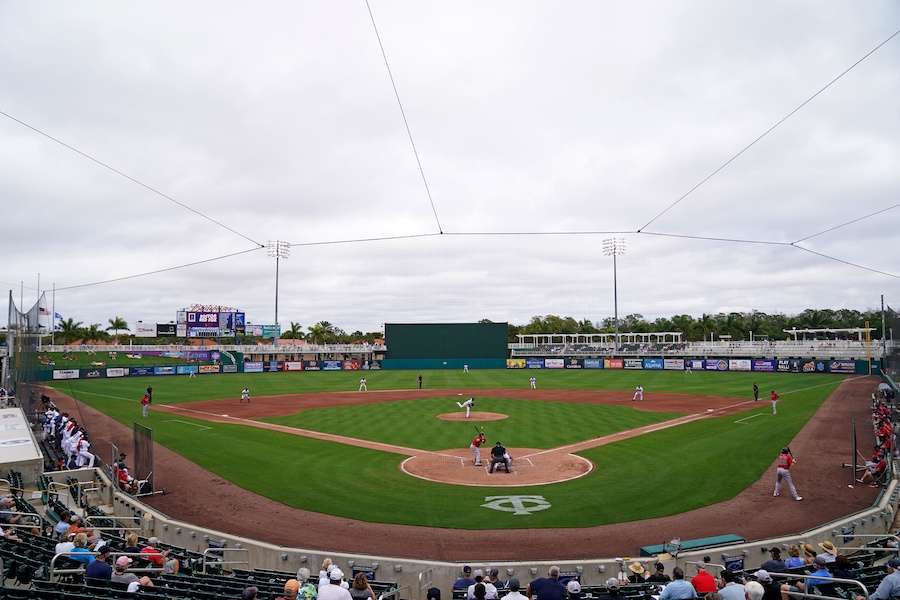 Pittsburgh 1, Twins 0 Box Score Twins Takeaways: Standout pitcher: Derek Law (1 IP, 2 K, 11 pitches) Standout hitter: Luis Arraéz (1-for-3) Lineup: https://twitter.com/Twins/status/1374383695260311562?s=20 Highlights: The Twins pitching staff was top notch today allowing just one earned run over nine innings through a solo shot off the bat of Adam Frazier off of Josh Winder. https://twitter.com/Pirates/status/1374454653639876608?s=20 Griffin Jax got the start allowing five baserunners over 3 innings and getting hit hard despite not allowing anyone to cross the plate. Derek Law (2 K), Luke Farrell (1 H, 2 K), Winder, Matt Canterino (2 BB), and Charlie Barnes (2 K) followed Jax with one inning apiece. https://twitter.com/TFTwins/status/1374527609602777088 On the offensive side of the ball, the Twins were only able to muster up three hits getting one hit each from Luis Arraéz, Willians Astudillo, and Andrew Romine. Although we tend not to put a lot of stock in spring training stats, it would feel a little better to see the Twins offense hit. The Twins rank 29th or 30 in nearly every offensive category as a team as we are less than two weeks from the start of the regular season. Other Hippenin’ and Happenin’s Alex Kirilloff was sent down after slashing .129/.182/.258 in 31 at-bats BOY did this cause quite the stir within Twins social media communities. To me it’s simple ... the Twins were not going to use service time as an obvious reason to keep Kirilloff in the minors, BUT if he gave them any reason outside of that I would bet they would take advantage. With nearly any other player, posting those numbers would have the same results and nobody would think anything of it but understandably things are different when you’re the top prospect in the organization. When you let your longest tenured Twin and fan favorite left fielder walk (**whispers** Eddie Rosario is slashing .139/.179/.139 meaning he has ZERO extra base hits **ducks**), you better do it because your top prospect is ready to take over. Optically, it’s not a great look but with Brent Rooker and Kyle Garlick having good springs, it allowed the Twins the flexibility to send Kirilloff to the alternate training site for some extra seasoning. Get a Randy Dobnak shirt while supporting a good cause MORE FROM TWINS DAILY — Latest Twins coverage from our writers — Recent Twins discussion in our forums — Follow Twins Daily via Twitter, Facebook or email
 -
A couple weeks ago, Twins Daily writers collaborated to bring you a breakdown of each position group in the AL Central for 2021. In reality, only the Twins and White Sox will battle for the AL Central crown so let's take a closer look at how these teams match up. Image courtesy of Michael McLoone, USA Today A couple weeks ago, Twins Daily writers collaborated to bring you a breakdown of each position group in the AL Central for 2021. In reality, only the Twins and White Sox will battle for the AL Central crown so let's take a closer look at how these teams match up. If you based your division winners solely on hype, the White Sox would win the division in a landslide. Not only do they have the reigning MVP at first base, one of the most charismatic players in the game at short, and an up and coming superstar in Luis Robert, but they bolstered their very good bullpen by adding the best reliever in baseball. This has led to them being ranked ahead of the Twins in various power rankings and Vegas making them the odds-on favorite to win the division. On the other hand, the Twins had a nice little offseason themselves adding one of the best defensive shortstops in the history of the game and solidifying the back end of their bullpen by adding Hansel Robles and Alex Colomé. They maybe don’t have the “swag” or big ticket free agent that the White Sox have, but it seems the back-to-back division champions are being overlooked by just about everyone outside of Twins fans themselves. This got me to wondering ... is the hype legit? Let’s take a position by position look at both the White Sox and Twins to see who comes out on top. Catcher: Mitch Garver versus Yasmani Grandal After bursting onto the scene in 2019, Garver really struggled in 2020 which could be due to an intercostal strain that forced him to miss nearly half the shortened season. I would bet a lot of money that he will be better in 2021 and I would bet the same amount of money that he will not hit as well as he did in 2019. Regardless, he’ll still be one of the best hitting catchers in the game as projections have him providing and above average OPS, while also providing solid defense behind the plate. For years now, Grandal has arguably been the best two-way catcher in the game. He consistently ranks as one of the best defensive catchers in baseball, per Baseball Prospectus, and has a career OPS of nearly .800. On top of that, he’s been one of the most durable catchers in the game typically sitting out less than 40 games a season. Despite entering his age-32 season, all of the projection models have him maintaining his durability and level of play in 2021 which will make him a hard out in the middle of a stacked White Sox lineup. The addition of Jonathon LuCroy should allow him to be spelled from behind the plate a little more while still getting at-bats as a designated hitter. Verdict: Grandal based on his consistent track record, but I do think Garver has the higher ceiling. First Base: Miguel Sanó verus José Abreu I was surprised at how serviceable Sanó looked defensively in his first year at first base and no spring training. I’ve always thought that, for his size, he was a pretty athletic and nimble third basemen and I think we’ll see him become a solid first basemen. Offensively, I’m ready to say that Sano is what he is ... a prototypical power hitter. He swings out of his shoes and hits the ball as hard as anyone else in baseball when he makes contact. He’ll go through swoons where he is nearly unplayable and then he’ll go through a stretch where he crushes everything and, at the end of the day, he’ll end up with an above average OPS but it’ll be a wild ride to get there. Abreu is coming off an MVP campaign where he posted the best slash rates of his career and finished second in all of baseball with 19 home runs. He’s always been a very good and consistent hitter, but has also been one of the worst defensive first basemen in the league. Projection models have him regressing back to his career norms in 2021 which would still make him one of the better hitters in the league where he will be an RBI machine in the three-hole. Verdict: Abreu in a landslide. Second Base: Jorge Polanco versus Nick Madrigal Polanco is another Twins who really struggled in 2020 after a monster 2019, but we eventually found out that he was hobbled by his ankle and required surgery for the second consecutive offseason. Like Garver, Polanco is better than his 2020 season but probably not quite as good as his 2019 season. Being that he was injured I’m not actually that concerned about last year as his K/BB rate was similar to his career norms but really struggled with making solid contact on the ball, and even better news ... the projection models aren’t concerned either. Madrigal had a really nice rookie campaign batting .340 and boasting a wRC+ of 112 and providing solid defense. Unfortunately, he hit for almost zero power, had an extremely low walk rate, and his savant profile would say that he should have batted almost 40 points less than he did. As big league pitchers get a scouting report on him they are going to be able to attack these weaknesses and I, along with the projection models, think he’ll need some time to adjust in 2021. He’ll still be a good hitter but he won’t be contending for a batting title. Verdict: A healthy Polanco will easily outhit Madrigal in 2021. Third Base: Josh Donaldson versus Yoán Moncada We all know what Donaldson can be but it will all come down to if he can stay on the field. At 35 years old and now a recurring calf injury there is plenty to be worried about, although the Twins have set themselves up nicely to get him regular rest and are prepared as they could be if he were to miss more time. More on that later. Like so many all around baseball, Moncada had himself the best year of his short career in 2019, but he followed that up in 2020 by dropping his OPS more than 200 points. Oddly enough his swing rates were around his career norms and he actually improved his walk rate in 2020, but he didn’t make hard contact all season. He’ll be turning just 26 in May and all of the projection models have him rebounding in 2021 but that will likely depend on if he can get back to driving the ball. Both he and Donaldson provide solid defense at their positions. Verdict: For reasons, I’ll address later I’m going to bet on the health of Donaldson and take him over Moncada. Shortstop: Andrelton Simmons versus Tim Anderson Since signing with the Twins, we have published a variety of articles on the signing of Andrelton Simmons. In short, he is one of the best defensive shortstops in baseball history but will ultimately settle in the eight or nine spot of the lineup. I don’t want to make it sound like he’s an awful hitter because he’s not, his career OPS is .696 and projection models have him hitting right around there in 2021 which would be considered “below average”. Anderson is the cover athlete for RBI '21 and one of the most charismatic personalities in the game, but is all the attention warranted? He’s not great defensively, but continues to get it done at the plate despite his BABIP and batted ball data suggesting that he’s getting awfully lucky. Although the projection models predicted regression last year and were mostly wrong, they’re back at this year as most are expecting his OPS to drop more than 100 points from 2020. I would expect the same, but I think we all expected that coming into last season. Verdict: Andrelton defense edges Anderson’s bat, especially if he were to regress like he’s projected to. Left Field: Brent Rooker versus Eloy Jiménez As of right now, I would be surprised to see Kirilloff start in left field on Opening Day as he’s been struggling this Spring and despite what the Twins say I think they’ll use that as an out to save his service time. This leaves the position open to a few players, but I think Brent Rooker would be the primary left fielder. In his short stint in the majors he looked like a professional hitter in 2020 before breaking his forearm on a hit by pitch. He won’t be a great defensive outfielder but he will be serviceable and will provide some good pop in the back half of the line up. I think Jiménez is one of the most underrated young players in baseball as he’s only 24 years old and in his two years in the big leagues he has clubbed 45 home runs over 177 games. He has legitimate power while hitting for a respectable average, although is a poor defender. Like many power hitters who struggle with walks and strikeouts, he’ll end up having some tough stretches throughout the season but at the end of the year his projection models have him continuing to hit the cover off the ball. Verdict: Jiménez easily over Kirilloff/Rooker/etc as he’s already shown he can produce at the ML level. Center Field: Byron Buxton versus Luis Robert Buxton’s 2020 season at the plate was a bit of an odd one ... his 1.5-percent walk rate and 51-percent fly ball rate are concerning, but then he posted career highs in hard hit data, OPS, and home runs. He almost turned into a power hitter rather than relying on his speed as one of the fastest players in the game, but if his walk rate trend continues he will not be able to sustain any sort of success at the plate in 2021. The projection models do see some bounce back in his walk percentage but also some regression in his OPS, but still see him as an above average contributor at the plate. All of that said, when healthy, Buxton remains the league's premier center fielder and until he starts losing a step that shouldn’t change for many years. Lovingly known as “Lou Bob” in the southside of Chicago, he has the potential to be on of the most polarizing players in the game throughout his career. He’s projected to hit for power while providing some speed on the base paths and very good defense in center field. He’s almost what everyone thought Byron Buxton could be with a less speed but more pop. He struggled at the plate in 2020 posting a higher K-rate and and lower OPS than he did at any minor league level, and all the projection models see that continuing in 2021. Lou Bob is going to be a start in Chicago but at only 23-years-old it might just take a little time. Verdict: For now, Buxton because of his defense but Robert is, at least figuratively, on his heels. Right Field: Max Kepler versus Adam Eaton Kepler, entering his sixth full season as a pro, has established himself as one of the best all-around right fielders in the game. At the plate he can provide an above average bat while in the field providing some of the best defense in the league. If you’re like me, you might have felt like Kepler really struggled last year but in reality he posted an above average OPS and wRC+ although his hard hit data shows that he didn’t connect with the ball as well as he had in the past. Eaton has actually been better and more reliable than I think he gets credit for as he’s really only suffered from two lower body injuries in back-to-back years in 2017 and 2018. He did struggle at the plate last year and then missed a chunk of time with a broken finger which isn’t something that can really be re-occurring outside of freak accidents. That said, Eaton is on the downturn of his career and projected as an average hitter while providing poor defense. Verdict: Kepler and it’s not close. DH: Nelson Cruz versus ??? Obviously, Cruz will be the primary DH in 2021 but as he enters his age 41 season and is coming off a very bad last month of the season you still have to wonder if father time has struck midnight. Despite those concerns, the Twins have options in who can fill-in at DH to give Cruz some extra time off. I expect to see Donaldson, Sano, and Rooker to all get some time at DH to keep Nelson rested and healthy for the grueling 162-game season. I don’t know that even the White Sox know who their DH will be and it could very well be a rotation. As mentioned before, Grandal is getting older and may start need more breaks behind the plate. When he is catching, you might see Jonathan LuCroy as the DH or maybe they give prospects Zack Collins or Andrew Vaughn some AB’s. Like I said, I don’t know that anyone really knows at this point. Verdict: I’ll take Cruz/Donaldson/Sano/Rooker over the White Sox options. Bench: Ryan Jeffers/Luis Arraéz/Jake Cave/Willians Astudillo versus Jonathan Lucroy/Leury García/Danny Mendick/Adam Engel Here’s where I think the Twins really separate themselves from the White Sox. If the White Sox were to lose a starter they really lose a lot of productivity. Ryan Jeffers excelled last season and we’ll likely see him and Garver split time which should only keep them healthy and rested. With the addition of Simmons, the Twins now move someone who is projected to win the batting title into a fifth infielder which in turn should help keep Donaldson and Cruz healthy and rested, while not sacrificing a ton at the plate. Lastly, Jake Cave inarguably struggled in 2020 after showing some promise in 2019 but projection models have him rebounding a little bit. At some point, he might find himself out of the picture with Rooker, Kirilloff and even Trevor Larnach competing for an active roster spot. All the depth pieces for the White Sox would be significant downgrades if they were to lose a starter, and when you play 162 games in a season ... depth matters. Sure, Lucroy had a couple good seasons but that was five plus years ago. Garcia, Mendick, and Engel will be okay replacements on the defensive side of the ball but will really be weak spots when they are inserted into the batting order. Verdict: Minnesota Twins bench by a lot. Conclusion: Minnesota Twins Position Players versus Chicago White Sox Position Players We’ll take a look at the pitching staff for each team next week, but I give the Twins position players the advantage over the White Sox. I think their offenses will be pretty equal but I think the Twins defense and depth are clearly better than the White Sox, which cannot be understated in a 162-game season. MORE FROM TWINS DAILY — Latest Twins coverage from our writers — Recent Twins discussion in our forums — Follow Twins Daily via Twitter, Facebook or email View full article
-
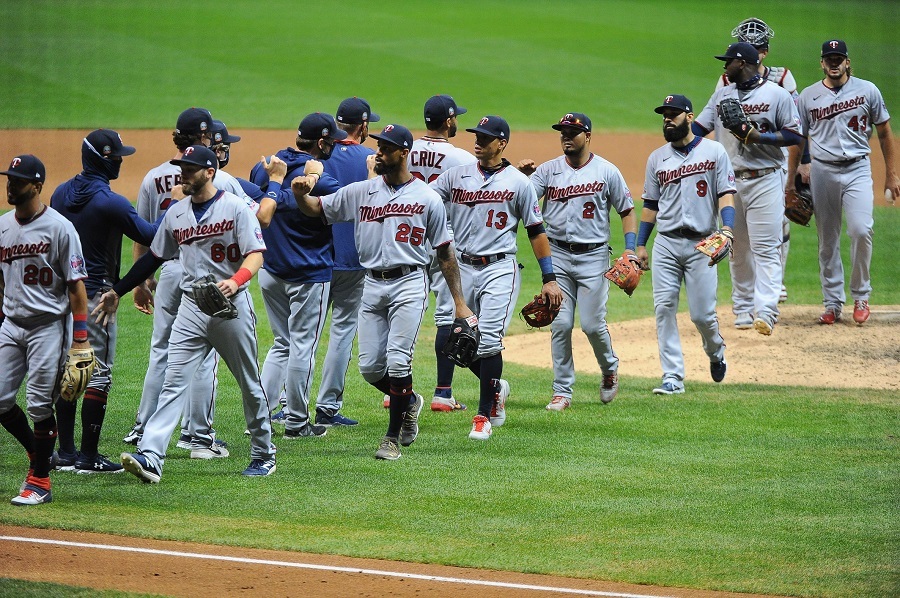 If you based your division winners solely on hype, the White Sox would win the division in a landslide. Not only do they have the reigning MVP at first base, one of the most charismatic players in the game at short, and an up and coming superstar in Luis Robert, but they bolstered their very good bullpen by adding the best reliever in baseball. This has led to them being ranked ahead of the Twins in various power rankings and Vegas making them the odds-on favorite to win the division. On the other hand, the Twins had a nice little offseason themselves adding one of the best defensive shortstops in the history of the game and solidifying the back end of their bullpen by adding Hansel Robles and Alex Colomé. They maybe don’t have the “swag” or big ticket free agent that the White Sox have, but it seems the back-to-back division champions are being overlooked by just about everyone outside of Twins fans themselves. This got me to wondering ... is the hype legit? Let’s take a position by position look at both the White Sox and Twins to see who comes out on top. Catcher: Mitch Garver versus Yasmani Grandal After bursting onto the scene in 2019, Garver really struggled in 2020 which could be due to an intercostal strain that forced him to miss nearly half the shortened season. I would bet a lot of money that he will be better in 2021 and I would bet the same amount of money that he will not hit as well as he did in 2019. Regardless, he’ll still be one of the best hitting catchers in the game as projections have him providing and above average OPS, while also providing solid defense behind the plate. For years now, Grandal has arguably been the best two-way catcher in the game. He consistently ranks as one of the best defensive catchers in baseball, per Baseball Prospectus, and has a career OPS of nearly .800. On top of that, he’s been one of the most durable catchers in the game typically sitting out less than 40 games a season. Despite entering his age-32 season, all of the projection models have him maintaining his durability and level of play in 2021 which will make him a hard out in the middle of a stacked White Sox lineup. The addition of Jonathon LuCroy should allow him to be spelled from behind the plate a little more while still getting at-bats as a designated hitter. Verdict: Grandal based on his consistent track record, but I do think Garver has the higher ceiling. First Base: Miguel Sanó verus José Abreu I was surprised at how serviceable Sanó looked defensively in his first year at first base and no spring training. I’ve always thought that, for his size, he was a pretty athletic and nimble third basemen and I think we’ll see him become a solid first basemen. Offensively, I’m ready to say that Sano is what he is ... a prototypical power hitter. He swings out of his shoes and hits the ball as hard as anyone else in baseball when he makes contact. He’ll go through swoons where he is nearly unplayable and then he’ll go through a stretch where he crushes everything and, at the end of the day, he’ll end up with an above average OPS but it’ll be a wild ride to get there. Abreu is coming off an MVP campaign where he posted the best slash rates of his career and finished second in all of baseball with 19 home runs. He’s always been a very good and consistent hitter, but has also been one of the worst defensive first basemen in the league. Projection models have him regressing back to his career norms in 2021 which would still make him one of the better hitters in the league where he will be an RBI machine in the three-hole. Verdict: Abreu in a landslide. Second Base: Jorge Polanco versus Nick Madrigal Polanco is another Twins who really struggled in 2020 after a monster 2019, but we eventually found out that he was hobbled by his ankle and required surgery for the second consecutive offseason. Like Garver, Polanco is better than his 2020 season but probably not quite as good as his 2019 season. Being that he was injured I’m not actually that concerned about last year as his K/BB rate was similar to his career norms but really struggled with making solid contact on the ball, and even better news ... the projection models aren’t concerned either. Madrigal had a really nice rookie campaign batting .340 and boasting a wRC+ of 112 and providing solid defense. Unfortunately, he hit for almost zero power, had an extremely low walk rate, and his savant profile would say that he should have batted almost 40 points less than he did. As big league pitchers get a scouting report on him they are going to be able to attack these weaknesses and I, along with the projection models, think he’ll need some time to adjust in 2021. He’ll still be a good hitter but he won’t be contending for a batting title. Verdict: A healthy Polanco will easily outhit Madrigal in 2021. Third Base: Josh Donaldson versus Yoán Moncada We all know what Donaldson can be but it will all come down to if he can stay on the field. At 35 years old and now a recurring calf injury there is plenty to be worried about, although the Twins have set themselves up nicely to get him regular rest and are prepared as they could be if he were to miss more time. More on that later. Like so many all around baseball, Moncada had himself the best year of his short career in 2019, but he followed that up in 2020 by dropping his OPS more than 200 points. Oddly enough his swing rates were around his career norms and he actually improved his walk rate in 2020, but he didn’t make hard contact all season. He’ll be turning just 26 in May and all of the projection models have him rebounding in 2021 but that will likely depend on if he can get back to driving the ball. Both he and Donaldson provide solid defense at their positions. Verdict: For reasons, I’ll address later I’m going to bet on the health of Donaldson and take him over Moncada. Shortstop: Andrelton Simmons versus Tim Anderson Since signing with the Twins, we have published a variety of articles on the signing of Andrelton Simmons. In short, he is one of the best defensive shortstops in baseball history but will ultimately settle in the eight or nine spot of the lineup. I don’t want to make it sound like he’s an awful hitter because he’s not, his career OPS is .696 and projection models have him hitting right around there in 2021 which would be considered “below average”. Anderson is the cover athlete for RBI '21 and one of the most charismatic personalities in the game, but is all the attention warranted? He’s not great defensively, but continues to get it done at the plate despite his BABIP and batted ball data suggesting that he’s getting awfully lucky. Although the projection models predicted regression last year and were mostly wrong, they’re back at this year as most are expecting his OPS to drop more than 100 points from 2020. I would expect the same, but I think we all expected that coming into last season. Verdict: Andrelton defense edges Anderson’s bat, especially if he were to regress like he’s projected to. Left Field: Brent Rooker versus Eloy Jiménez As of right now, I would be surprised to see Kirilloff start in left field on Opening Day as he’s been struggling this Spring and despite what the Twins say I think they’ll use that as an out to save his service time. This leaves the position open to a few players, but I think Brent Rooker would be the primary left fielder. In his short stint in the majors he looked like a professional hitter in 2020 before breaking his forearm on a hit by pitch. He won’t be a great defensive outfielder but he will be serviceable and will provide some good pop in the back half of the line up. I think Jiménez is one of the most underrated young players in baseball as he’s only 24 years old and in his two years in the big leagues he has clubbed 45 home runs over 177 games. He has legitimate power while hitting for a respectable average, although is a poor defender. Like many power hitters who struggle with walks and strikeouts, he’ll end up having some tough stretches throughout the season but at the end of the year his projection models have him continuing to hit the cover off the ball. Verdict: Jiménez easily over Kirilloff/Rooker/etc as he’s already shown he can produce at the ML level. Center Field: Byron Buxton versus Luis Robert Buxton’s 2020 season at the plate was a bit of an odd one ... his 1.5-percent walk rate and 51-percent fly ball rate are concerning, but then he posted career highs in hard hit data, OPS, and home runs. He almost turned into a power hitter rather than relying on his speed as one of the fastest players in the game, but if his walk rate trend continues he will not be able to sustain any sort of success at the plate in 2021. The projection models do see some bounce back in his walk percentage but also some regression in his OPS, but still see him as an above average contributor at the plate. All of that said, when healthy, Buxton remains the league's premier center fielder and until he starts losing a step that shouldn’t change for many years. Lovingly known as “Lou Bob” in the southside of Chicago, he has the potential to be on of the most polarizing players in the game throughout his career. He’s projected to hit for power while providing some speed on the base paths and very good defense in center field. He’s almost what everyone thought Byron Buxton could be with a less speed but more pop. He struggled at the plate in 2020 posting a higher K-rate and and lower OPS than he did at any minor league level, and all the projection models see that continuing in 2021. Lou Bob is going to be a start in Chicago but at only 23-years-old it might just take a little time. Verdict: For now, Buxton because of his defense but Robert is, at least figuratively, on his heels. Right Field: Max Kepler versus Adam Eaton Kepler, entering his sixth full season as a pro, has established himself as one of the best all-around right fielders in the game. At the plate he can provide an above average bat while in the field providing some of the best defense in the league. If you’re like me, you might have felt like Kepler really struggled last year but in reality he posted an above average OPS and wRC+ although his hard hit data shows that he didn’t connect with the ball as well as he had in the past. Eaton has actually been better and more reliable than I think he gets credit for as he’s really only suffered from two lower body injuries in back-to-back years in 2017 and 2018. He did struggle at the plate last year and then missed a chunk of time with a broken finger which isn’t something that can really be re-occurring outside of freak accidents. That said, Eaton is on the downturn of his career and projected as an average hitter while providing poor defense. Verdict: Kepler and it’s not close. DH: Nelson Cruz versus ??? Obviously, Cruz will be the primary DH in 2021 but as he enters his age 41 season and is coming off a very bad last month of the season you still have to wonder if father time has struck midnight. Despite those concerns, the Twins have options in who can fill-in at DH to give Cruz some extra time off. I expect to see Donaldson, Sano, and Rooker to all get some time at DH to keep Nelson rested and healthy for the grueling 162-game season. I don’t know that even the White Sox know who their DH will be and it could very well be a rotation. As mentioned before, Grandal is getting older and may start need more breaks behind the plate. When he is catching, you might see Jonathan LuCroy as the DH or maybe they give prospects Zack Collins or Andrew Vaughn some AB’s. Like I said, I don’t know that anyone really knows at this point. Verdict: I’ll take Cruz/Donaldson/Sano/Rooker over the White Sox options. Bench: Ryan Jeffers/Luis Arraéz/Jake Cave/Willians Astudillo versus Jonathan Lucroy/Leury García/Danny Mendick/Adam Engel Here’s where I think the Twins really separate themselves from the White Sox. If the White Sox were to lose a starter they really lose a lot of productivity. Ryan Jeffers excelled last season and we’ll likely see him and Garver split time which should only keep them healthy and rested. With the addition of Simmons, the Twins now move someone who is projected to win the batting title into a fifth infielder which in turn should help keep Donaldson and Cruz healthy and rested, while not sacrificing a ton at the plate. Lastly, Jake Cave inarguably struggled in 2020 after showing some promise in 2019 but projection models have him rebounding a little bit. At some point, he might find himself out of the picture with Rooker, Kirilloff and even Trevor Larnach competing for an active roster spot. All the depth pieces for the White Sox would be significant downgrades if they were to lose a starter, and when you play 162 games in a season ... depth matters. Sure, Lucroy had a couple good seasons but that was five plus years ago. Garcia, Mendick, and Engel will be okay replacements on the defensive side of the ball but will really be weak spots when they are inserted into the batting order. Verdict: Minnesota Twins bench by a lot. Conclusion: Minnesota Twins Position Players versus Chicago White Sox Position Players We’ll take a look at the pitching staff for each team next week, but I give the Twins position players the advantage over the White Sox. I think their offenses will be pretty equal but I think the Twins defense and depth are clearly better than the White Sox, which cannot be understated in a 162-game season. MORE FROM TWINS DAILY — Latest Twins coverage from our writers — Recent Twins discussion in our forums — Follow Twins Daily via Twitter, Facebook or email
 -
The Twins fall to the Pirates in their game on Tuesday and are now 6-8 on the Grapefruit League season. Brent Rooker and Josh Donaldson stay hot on the offensive side of the ball while José Berríos gets roughed up in four innings of work. That and more in today’s notebook. Image courtesy of Jasen Vinlove-USA TODAY Sports The Twins fall to the Pirates in their game on Tuesday and are now 6-8 on the Grapefruit League season. Brent Rooker and Josh Donaldson stay hot on the offensive side of the ball while José Berríos gets roughed up in four innings of work. That and more in today’s notebook. Pittsburgh 4, Twins 2 Box Score Twins Takeaways: Standout pitcher: Tyler Duffey (1.0 IP, 0 H, 0 BB, 2K) Standout hitter: Josh Donaldson (2-for-3, 2B) Lineup: https://twitter.com/Twins/status/1371834375772463113 Highlights: TYLER DUFFEY IS BACK. Okay, sorry ... but Twins fans may be able to take a deep breath after today’s outing by Duffey where he averaged 92.6 miles per hour on his fastball, which was his average in 2020, but had been averaging sub-90 this spring. Aaron Gleeman of The Athletic came to twitter with even more encouraging news… https://twitter.com/AaronGleeman/status/1371921814125867013 We don’t have, or at least I couldn’t find, the data to see if this is his usual approach for spring training but given today’s results I don’t have a reason to believe otherwise. Duffey wasn’t the only talking point out of the bullpen today as Alex Colome, Hansel Robles, Taylor Rogers, and Brandon Waddell threw one shutout inning each while only allowing a combined four baserunners and striking out three. Berríos failed to record a single clean inning today and was really hit hard by the Pirates over four innings by allowing eight hits, walking one, and only striking out one batter. Although players seem to be ramping up, as the Twins play their second nine-inning game in as many days, I still take today’s results with a grain of salt. Although it’s not encouraging, it’s spring training and at the end of the day it’s only one start. Jorge Polanco left today’s tilt early after hurting himself when diving for a ball https://twitter.com/dohyoungpark/status/1371925053080793092 Get a Randy Dobnak shirt while supporting a good cause. https://twitter.com/InfieldChatter/status/1371852584269529088 Check out this beautiful Alex Kirilloff Topps Inception Rookie Card https://twitter.com/NoDakTwinsFan/status/1371889997045850114?s=20 Other News Around the League: Speedster Billy Hamilton, recently released by Cleveland, joins the Chicago White Sox camp on a minor league deal https://twitter.com/JRFegan/status/1371870739960303626 The White Sox lack depth and Hamilton would be a nice option fo the extra-inning rule from 2020. Wouldn’t be surprised to see him stick as the last guy on the bench. Old friend Kyle Gibson to get first Opening Day start of his career https://twitter.com/Rangers/status/1371955478746517506 After six-plus seasons with the Twins, the sinker baller joined Texas in 2020 making 12 starts and sporting a 5.35 ERA (5.70 xERA) and striking out 58 batters over 67.1 innings. MORE FROM TWINS DAILY — Latest Twins coverage from our writers — Recent Twins discussion in our forums — Follow Twins Daily via Twitter, Facebook or email View full article
-
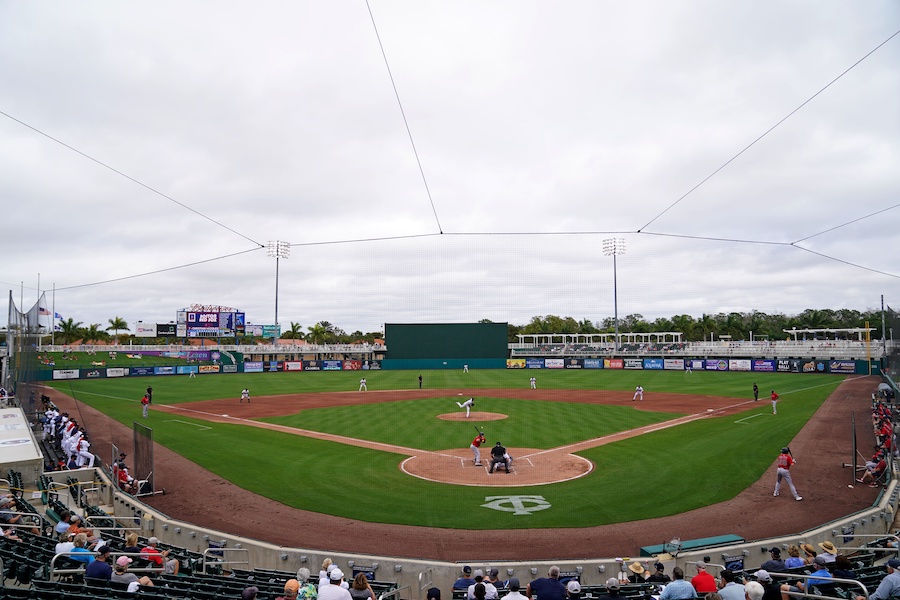 Pittsburgh 4, Twins 2 Box Score Twins Takeaways: Standout pitcher: Tyler Duffey (1.0 IP, 0 H, 0 BB, 2K) Standout hitter: Josh Donaldson (2-for-3, 2B) Lineup: https://twitter.com/Twins/status/1371834375772463113 Highlights: TYLER DUFFEY IS BACK. Okay, sorry ... but Twins fans may be able to take a deep breath after today’s outing by Duffey where he averaged 92.6 miles per hour on his fastball, which was his average in 2020, but had been averaging sub-90 this spring. Aaron Gleeman of The Athletic came to twitter with even more encouraging news… https://twitter.com/AaronGleeman/status/1371921814125867013 We don’t have, or at least I couldn’t find, the data to see if this is his usual approach for spring training but given today’s results I don’t have a reason to believe otherwise. Duffey wasn’t the only talking point out of the bullpen today as Alex Colome, Hansel Robles, Taylor Rogers, and Brandon Waddell threw one shutout inning each while only allowing a combined four baserunners and striking out three. Berríos failed to record a single clean inning today and was really hit hard by the Pirates over four innings by allowing eight hits, walking one, and only striking out one batter. Although players seem to be ramping up, as the Twins play their second nine-inning game in as many days, I still take today’s results with a grain of salt. Although it’s not encouraging, it’s spring training and at the end of the day it’s only one start. Jorge Polanco left today’s tilt early after hurting himself when diving for a ball https://twitter.com/dohyoungpark/status/1371925053080793092 Get a Randy Dobnak shirt while supporting a good cause. https://twitter.com/InfieldChatter/status/1371852584269529088 Check out this beautiful Alex Kirilloff Topps Inception Rookie Card https://twitter.com/NoDakTwinsFan/status/1371889997045850114?s=20 Other News Around the League: Speedster Billy Hamilton, recently released by Cleveland, joins the Chicago White Sox camp on a minor league deal https://twitter.com/JRFegan/status/1371870739960303626 The White Sox lack depth and Hamilton would be a nice option fo the extra-inning rule from 2020. Wouldn’t be surprised to see him stick as the last guy on the bench. Old friend Kyle Gibson to get first Opening Day start of his career https://twitter.com/Rangers/status/1371955478746517506 After six-plus seasons with the Twins, the sinker baller joined Texas in 2020 making 12 starts and sporting a 5.35 ERA (5.70 xERA) and striking out 58 batters over 67.1 innings. MORE FROM TWINS DAILY — Latest Twins coverage from our writers — Recent Twins discussion in our forums — Follow Twins Daily via Twitter, Facebook or email
 -
For this installment of the series, we will take a look at the top three relievers in each bullpen. The White Sox added the best reliever in baseball, but do they have the best bullpen in the division? Let’s find out. Image courtesy of © Matt Marton-USA TODAY Sports For this installment of the series, we will take a look at the top three relievers in each bullpen. The White Sox added the best reliever in baseball, but do they have the best bullpen in the division? Let’s find out. The Rundown Reliever is arguably the hardest position to predict or project, as a vast majority of elite relievers have very short life span, and even if you’re not elite your results can vary pretty drastically from year to year. The Twins are all too familiar with this as Taylor Rogers was one of the best relievers in baseball in 2019 but then really struggled in 2020. On the other hand, Tyler Duffey was very good in 2019 and had an even better 2020 season. Now that’s not to say that relievers cannot be counted on from year to year. Over the last couple of seasons the Twins have relied on sturdy veterans like Tyler Clippard and Sergio Romo who have a combined 24 seasons of relief experience and have accrued 19.4 fWAR between them. With all of that said, I will be utilizing savant profiles and projection models (i.e. ZiPS and Steamer) more than previous statistics to preview and grade the top 3-4 arms in each American League Central team's bullpen. It’s not exact science but I think those resources will provide a better idea than past results. Let’s dive in. Detroit Tigers As is the new norm, Steamer projects the Tigers using a rotation at closer that might also include Joe Jiminez, although he’s never been overly effective in his career. The Tigers do have some up and coming starters, but their bullpen isn’t going to be good in 2021 and is headlined by Buck Farmer, Bryan Garcia, and Gregory Soto. Check out their 2020 savant profiles below...it ain’t pretty. Farmer’s 2020 savant profile doesn’t quite do him justice as he’s more capable of missing bats than his 10th percentile ranking would indicate, while also being more susceptible to walks. His fastball was about two miles-per-hour slower than in 2019 and he pounded the zone a bit more in 2020, which when put together may be why hitters hit him hard last season. Garcia has thrown a total of 461 pitches at the big league level which makes him dually hard to project, but one thing that is clear is that control is always an issue of his. He was successful in 2020 by allowing a lot of soft contact and ground balls, but hitters will quickly learn to make him throw strikes which could be troublesome if he’s not able to locate his pitches on the edges of the zone. Soto is Garcia except with much, much better “stuff”. He has a smaller sample size than Soto and has produced markedly different results in two years as a pro. He was downright awful in 2019 but then showed some promise in 2020 with an xERA of 3.70 and dropping his opponent xwOBA by 100 points. If he can reign in the walks, which neither ZiPS or Steamer project him to do in 2020, he could be their best reliever. Cleveland On paper you might look at the Cleveland bullpen and, aside from James Karinchak, ask ‘who’?? And although Cleveland is at the early stages of their sudden rebuild, their bullpen is actually still in decent shape. It’s not the dominant Cleveland bullpen we’ve come accustomed to over the last few years, but I think they’ll be better than they look if you go by name recognition. It will be interesting to see how Karinchak’s career develops over the next few years. At only 25 years old and just 32.1 innings under his belt, his lack of control has been an issue from the time he entered the Cleveland organization in 2017. Despite this, he consistently posted beyond elite strikeout numbers and flew through the system debuting at the end of 2019. Even considering his elite whiff and contact rates, you have to wonder if hitters will start challenging him to throw strikes and how he will respond. I was somewhat surprised when I saw Maton’s Savant profile as compared to his previous statistics. In his four year career, his numbers are mostly pedestrian despite his Savant profile ranking him in the 80th and 90th percentiles nearly across the board. His projections would agree has all of them have him posting career best numbers this year. Clase missed 2020 due to a PED suspension but threw 23.1 efficient innings in 2019. The 22-year-old rookie will be a force to be reckoned with as he can consistently pump triple digits and does so while limiting walks, but not creating the strikeouts you might assume. Most of his projections have him striking out one batter inning, but you have to think the organization that has developed some elite pitchers in recent years will change that. Chicago White Sox The White Sox already had a solid bullpen in 2020 and then went and added the best reliever in the game in Liam Hendriks. Before teams get to Hendriks they will have to first get through the formidable duo of Aaron Bummer and Evan Marshall along with other very capable relievers. We know Hendriks is very good, and he has been covered well by our Twins Daily crew this offseason. In lieu of restating others' work, feel free to revisit these articles… Why Did the Twins Let Liam Hendriks Go? by Cody Christie Potential Twins Bullpen Target: Liam Hendriks by Andrew Thares ...while also remembering the article I linked earlier on why I was okay with missing out in Hendriks. Bummer missed the majority of the 2020 season with left biceps soreness which is why I used his 2019 savant profile. He’s a hard throwing lefty who doesn’t generate a lot of whiffs and will need to limit walks to reach his full potential. His projections show some regression from 2019 as his expected values (xBA, xSLG, xwOBA) don’t quite match his contact rates. Nonetheless, he’ll still be a solid option to bridge the gap between the starter and Marshall/Hendriks. It’s taken a while for Marshall to get here, and he’s only been “here”...read as ‘a very good reliever’....for the last 35 innings of his career outside of a hot start to the 2019 season. Although his Savant profile is impressive, most of his projections have him regressing a little bit on his 2020 numbers striking out fewer batters while walking more. Kansas City Royals The Royals bullpen is going to be a rough one this year although they do have some decent arms to close out games. They are lead by Scott Barlow, Greg Holland, and Josh Staumont but after that it gets pretty thin quick. Their prospect pool at pitcher is extremely deep and many are projected to make their debuts in 2021, so it’s possible they temporarily convert a couple of their arms to relievers. Barlow has been a solid yet unspectacular reliever for the Royals over the last three seasons. He has a nice fastball, slider mix that he can locate while striking out a good amount of batters. He can be a little susceptible to the long ball for a reliever, but might be the most reliable arm they have heading into 2021 as his projects to be their best reliever. Holland had a really nice 2020 season that is supported by his Savant profile. I’m surprised to see that all of the projections model show a considerable regression in his ERA and FIP, although his 2020 groundball and home run rates weren’t totally inline with his career norms which could partially affect this. He’s lost considerable umph from his fastball over the years as he now sits low-90’s and has become more reliant on his slider. I feel like I’ve profiled Staumont already when I wrote up my blurb on Karinchak. He throws hard, generates lots of whiffs but walks way too many batters and, like Karinchak, if he can reign in the walks he would immediately become one of the best relievers in the game. I imagine an improvement in walk rates is hard to project as it requires a concentrated change in mechanics, pitch selection, and/or mindset that isn’t really possible to predict. That said, his projections have his flyball tendencies catchuping to him, allowing more homeruns, not improving his walk rate, and ultimately allowing too many baserunners and runs. Minnesota Twins I’m going to take a little bit of a different take on the Twins part of this article as we already have a lot of great resources for you to read about. In short, the Twins have the depth to put pitchers in spots that they can succeed with the additions of Alex Colomé and Hansel Robles and have significantly improved one of the best bullpens in baseball. Parker Hageman provided really good insight on Colomé here and here. Although written back in August, Matthew Trueblood did an excellent job of dissecting Taylor Rogers issues in 2020 here. Cooper Carlson and JD Cameron wrote quick hitters in Robles here and here, respectively. Duffey, who was recently ranked the 9th best reliever by MLB Network, isn’t getting the love from Twins Daily-ers. In reality, it’s more likely the writers at Twins Daily were ahead of the curve on identifying him as one of baseball’s best relievers in 2019 and haven’t needed to publish articles convincing the Twins fans otherwise. The projections do show some regression, but I think it can’t be understated how the Twins will be able to put their best relievers in the best positions this year. I expect another outstanding season from the Duff. If you want to take a look at the other names you’ll see pitch in 2021, I projected the Twins bullpen here, which was after the Colomé and Robles signings, but before it was announced that Thorpe was granted a fourth option. Grade ‘Em I didn’t cover every name in every bullpen...this article was long enough! That said, feel free to check out the ZiPS and Steamer projections to see how the rest of the bullpen fares for each team! Detroit Tigers: D The Tigers bullpen doesn’t look pretty but they do have some youn arms with upside that were mentioned in this article, which is really what you need as a non-competitive team. Cleveland: C+ It’s interesting to me that Cleveland is going to have a solid bullpen heading into 2021 despite no plans of competing. I mean I understand that your entire team can’t be awful, but I wouldn’t be surprised to see someone like Maton dealt at the deadline if he’s having a good year. Chicago White Sox: A- The only thing keeping this bullpen from an A are some of the question marks I mentioned surround Marshall and Bummer. That said, even if those two were to falter the White Sox have plenty of weapons to be one of the best bullpens in baseball. Although they lack depth at just about every position, they excel in their bullpen with the likes of Jimmy Cordero, Codi Heuer, and top 100 prospect Garret Crochet at the front end. The one thing I will say is this...Colomé was very good for them over the last two seasons so although Hendriks is inarguably an upgrade, it’s not like they were relying on Fernando Rodney to close out games. Kansas City Royals: C- The top end of the Royals bullpen doesn’t look too bad with the aforementioned names, especially if Staumont can clean things up a bit. They do have some nice pieces to fill-in the gaps with Kyle Zimmer, and like I mentioned before, have enough pitching prospects that we could see them enter the mix at some point this year. Minnesota Twins: B+ I still question the front end of the Twins bullpen and, even at the back end, Hansel Robles isn’t guaranteed to bounce back to his 2019 form. Stashak has been serviceable but has only pitched 40 big league innings while everything says Alcala and Thielbar are legit but again that was only over 20 and 24 innings, respectively. I’m not counting on significant regression from the aforementioned names but that’s what kept them from grading out to an A- for me. How do you feel about the White Sox and Twins bullpens heading into the season? MORE FROM TWINS DAILY — Latest Twins coverage from our writers — Recent Twins discussion in our forums — Follow Twins Daily via Twitter, Facebook or email View full article
-
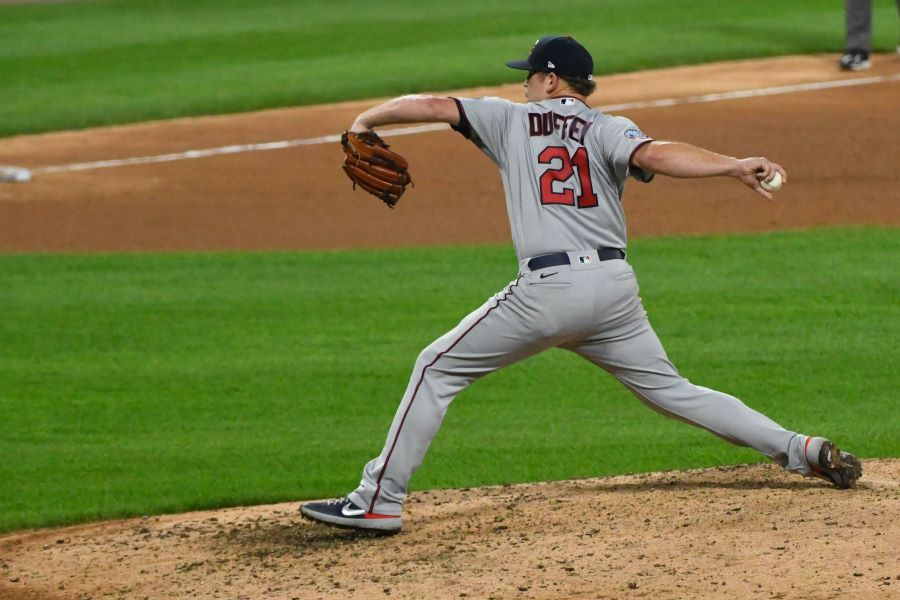 The Rundown Reliever is arguably the hardest position to predict or project, as a vast majority of elite relievers have very short life span, and even if you’re not elite your results can vary pretty drastically from year to year. The Twins are all too familiar with this as Taylor Rogers was one of the best relievers in baseball in 2019 but then really struggled in 2020. On the other hand, Tyler Duffey was very good in 2019 and had an even better 2020 season. Now that’s not to say that relievers cannot be counted on from year to year. Over the last couple of seasons the Twins have relied on sturdy veterans like Tyler Clippard and Sergio Romo who have a combined 24 seasons of relief experience and have accrued 19.4 fWAR between them. With all of that said, I will be utilizing savant profiles and projection models (i.e. ZiPS and Steamer) more than previous statistics to preview and grade the top 3-4 arms in each American League Central team's bullpen. It’s not exact science but I think those resources will provide a better idea than past results. Let’s dive in. Detroit Tigers As is the new norm, Steamer projects the Tigers using a rotation at closer that might also include Joe Jiminez, although he’s never been overly effective in his career. The Tigers do have some up and coming starters, but their bullpen isn’t going to be good in 2021 and is headlined by Buck Farmer, Bryan Garcia, and Gregory Soto. Check out their 2020 savant profiles below...it ain’t pretty. Farmer’s 2020 savant profile doesn’t quite do him justice as he’s more capable of missing bats than his 10th percentile ranking would indicate, while also being more susceptible to walks. His fastball was about two miles-per-hour slower than in 2019 and he pounded the zone a bit more in 2020, which when put together may be why hitters hit him hard last season. Garcia has thrown a total of 461 pitches at the big league level which makes him dually hard to project, but one thing that is clear is that control is always an issue of his. He was successful in 2020 by allowing a lot of soft contact and ground balls, but hitters will quickly learn to make him throw strikes which could be troublesome if he’s not able to locate his pitches on the edges of the zone. Soto is Garcia except with much, much better “stuff”. He has a smaller sample size than Soto and has produced markedly different results in two years as a pro. He was downright awful in 2019 but then showed some promise in 2020 with an xERA of 3.70 and dropping his opponent xwOBA by 100 points. If he can reign in the walks, which neither ZiPS or Steamer project him to do in 2020, he could be their best reliever. Cleveland On paper you might look at the Cleveland bullpen and, aside from James Karinchak, ask ‘who’?? And although Cleveland is at the early stages of their sudden rebuild, their bullpen is actually still in decent shape. It’s not the dominant Cleveland bullpen we’ve come accustomed to over the last few years, but I think they’ll be better than they look if you go by name recognition. It will be interesting to see how Karinchak’s career develops over the next few years. At only 25 years old and just 32.1 innings under his belt, his lack of control has been an issue from the time he entered the Cleveland organization in 2017. Despite this, he consistently posted beyond elite strikeout numbers and flew through the system debuting at the end of 2019. Even considering his elite whiff and contact rates, you have to wonder if hitters will start challenging him to throw strikes and how he will respond. I was somewhat surprised when I saw Maton’s Savant profile as compared to his previous statistics. In his four year career, his numbers are mostly pedestrian despite his Savant profile ranking him in the 80th and 90th percentiles nearly across the board. His projections would agree has all of them have him posting career best numbers this year. Clase missed 2020 due to a PED suspension but threw 23.1 efficient innings in 2019. The 22-year-old rookie will be a force to be reckoned with as he can consistently pump triple digits and does so while limiting walks, but not creating the strikeouts you might assume. Most of his projections have him striking out one batter inning, but you have to think the organization that has developed some elite pitchers in recent years will change that. Chicago White Sox The White Sox already had a solid bullpen in 2020 and then went and added the best reliever in the game in Liam Hendriks. Before teams get to Hendriks they will have to first get through the formidable duo of Aaron Bummer and Evan Marshall along with other very capable relievers. We know Hendriks is very good, and he has been covered well by our Twins Daily crew this offseason. In lieu of restating others' work, feel free to revisit these articles… Why Did the Twins Let Liam Hendriks Go? by Cody Christie Potential Twins Bullpen Target: Liam Hendriks by Andrew Thares ...while also remembering the article I linked earlier on why I was okay with missing out in Hendriks. Bummer missed the majority of the 2020 season with left biceps soreness which is why I used his 2019 savant profile. He’s a hard throwing lefty who doesn’t generate a lot of whiffs and will need to limit walks to reach his full potential. His projections show some regression from 2019 as his expected values (xBA, xSLG, xwOBA) don’t quite match his contact rates. Nonetheless, he’ll still be a solid option to bridge the gap between the starter and Marshall/Hendriks. It’s taken a while for Marshall to get here, and he’s only been “here”...read as ‘a very good reliever’....for the last 35 innings of his career outside of a hot start to the 2019 season. Although his Savant profile is impressive, most of his projections have him regressing a little bit on his 2020 numbers striking out fewer batters while walking more. Kansas City Royals The Royals bullpen is going to be a rough one this year although they do have some decent arms to close out games. They are lead by Scott Barlow, Greg Holland, and Josh Staumont but after that it gets pretty thin quick. Their prospect pool at pitcher is extremely deep and many are projected to make their debuts in 2021, so it’s possible they temporarily convert a couple of their arms to relievers. Barlow has been a solid yet unspectacular reliever for the Royals over the last three seasons. He has a nice fastball, slider mix that he can locate while striking out a good amount of batters. He can be a little susceptible to the long ball for a reliever, but might be the most reliable arm they have heading into 2021 as his projects to be their best reliever. Holland had a really nice 2020 season that is supported by his Savant profile. I’m surprised to see that all of the projections model show a considerable regression in his ERA and FIP, although his 2020 groundball and home run rates weren’t totally inline with his career norms which could partially affect this. He’s lost considerable umph from his fastball over the years as he now sits low-90’s and has become more reliant on his slider. I feel like I’ve profiled Staumont already when I wrote up my blurb on Karinchak. He throws hard, generates lots of whiffs but walks way too many batters and, like Karinchak, if he can reign in the walks he would immediately become one of the best relievers in the game. I imagine an improvement in walk rates is hard to project as it requires a concentrated change in mechanics, pitch selection, and/or mindset that isn’t really possible to predict. That said, his projections have his flyball tendencies catchuping to him, allowing more homeruns, not improving his walk rate, and ultimately allowing too many baserunners and runs. Minnesota Twins I’m going to take a little bit of a different take on the Twins part of this article as we already have a lot of great resources for you to read about. In short, the Twins have the depth to put pitchers in spots that they can succeed with the additions of Alex Colomé and Hansel Robles and have significantly improved one of the best bullpens in baseball. Parker Hageman provided really good insight on Colomé here and here. Although written back in August, Matthew Trueblood did an excellent job of dissecting Taylor Rogers issues in 2020 here. Cooper Carlson and JD Cameron wrote quick hitters in Robles here and here, respectively. Duffey, who was recently ranked the 9th best reliever by MLB Network, isn’t getting the love from Twins Daily-ers. In reality, it’s more likely the writers at Twins Daily were ahead of the curve on identifying him as one of baseball’s best relievers in 2019 and haven’t needed to publish articles convincing the Twins fans otherwise. The projections do show some regression, but I think it can’t be understated how the Twins will be able to put their best relievers in the best positions this year. I expect another outstanding season from the Duff. If you want to take a look at the other names you’ll see pitch in 2021, I projected the Twins bullpen here, which was after the Colomé and Robles signings, but before it was announced that Thorpe was granted a fourth option. Grade ‘Em I didn’t cover every name in every bullpen...this article was long enough! That said, feel free to check out the ZiPS and Steamer projections to see how the rest of the bullpen fares for each team! Detroit Tigers: D The Tigers bullpen doesn’t look pretty but they do have some youn arms with upside that were mentioned in this article, which is really what you need as a non-competitive team. Cleveland: C+ It’s interesting to me that Cleveland is going to have a solid bullpen heading into 2021 despite no plans of competing. I mean I understand that your entire team can’t be awful, but I wouldn’t be surprised to see someone like Maton dealt at the deadline if he’s having a good year. Chicago White Sox: A- The only thing keeping this bullpen from an A are some of the question marks I mentioned surround Marshall and Bummer. That said, even if those two were to falter the White Sox have plenty of weapons to be one of the best bullpens in baseball. Although they lack depth at just about every position, they excel in their bullpen with the likes of Jimmy Cordero, Codi Heuer, and top 100 prospect Garret Crochet at the front end. The one thing I will say is this...Colomé was very good for them over the last two seasons so although Hendriks is inarguably an upgrade, it’s not like they were relying on Fernando Rodney to close out games. Kansas City Royals: C- The top end of the Royals bullpen doesn’t look too bad with the aforementioned names, especially if Staumont can clean things up a bit. They do have some nice pieces to fill-in the gaps with Kyle Zimmer, and like I mentioned before, have enough pitching prospects that we could see them enter the mix at some point this year. Minnesota Twins: B+ I still question the front end of the Twins bullpen and, even at the back end, Hansel Robles isn’t guaranteed to bounce back to his 2019 form. Stashak has been serviceable but has only pitched 40 big league innings while everything says Alcala and Thielbar are legit but again that was only over 20 and 24 innings, respectively. I’m not counting on significant regression from the aforementioned names but that’s what kept them from grading out to an A- for me. How do you feel about the White Sox and Twins bullpens heading into the season? MORE FROM TWINS DAILY — Latest Twins coverage from our writers — Recent Twins discussion in our forums — Follow Twins Daily via Twitter, Facebook or email
 -
Slow news day overall but we have our first sign that Twins baseball is around the corner. Get updated on the day's events in today’s notebook. Image courtesy of Brad Rempel-USA TODAY Sports Slow news day overall but we have our first sign that Twins baseball is around the corner. Get updated on the day's events in today’s notebook. WE HAVE OUR FIRST PROBABLE PITCHER https://twitter.com/millerstrib/status/1365017865368313870?s=21 Smeltzer will be looking to compete for a spot in the rotation or bullpen. Somewhat of an afterthought with the signing of Shoemaker, and before that many penciling Randy Dobnak or even Lewis Thorpe in the starting rotation, Smeltzer could find himself in St. Paul to start the year. Topping out in the high 80’s, Smeltzer will likely find a hard time contributing at the big league level. He does have elite spin rates and vertical movement on his change up which could be serviceable out of the bullpen as a change of pace type. I just don’t see that happening on a team competing for a World Series. Twins to roll with a “closer-less” bullpen https://twitter.com/aarongleeman/status/1364983101508579331?s=21 This shouldn’t be breaking news as Baldelli mentions he’s never named a closer. Especially this year, the Twins have the necessary depth in Taylor Rogers, Alex Colomé, Tyler Duffey, and Hansel Robles to not worry less about what inning to call-in for help. Instead, they can put each player in a position to succeed by pitching to their strengths. This will be outlined in more detail on the last installment of the AL Central Rundown that’s been grading out each position for each team in the division over the last week. Kirilloff, named #1 prospect by Twins Daily, “ready for the Majors” Not any big news here, but on a slow news day this article on MLB.com is another resource for what should be the most followed position battle in Spring Training. Former Twins pitcher Tommy Milone signs Minor League with Blue Jays https://twitter.com/feinsand/status/1365074508185501705?s=21 Milone, who pitched for the Orioles and Braves last season, will be a non-roster invite to Spring Training. He started 9 games in 2020 and had an ERA of 6.69 of 39 innings. Dan Hayes has beef with John Fogerty https://twitter.com/danhayesmlb/status/1364971359772753926?s=21 Okay, maybe I mislead you with the headline but this poses a good question to discuss in the comments. What is YOUR favorite ballpark tune? MORE FROM TWINS DAILY — Latest Twins coverage from our writers — Recent Twins discussion in our forums — Follow Twins Daily via Twitter, Facebook or email View full article
-
Notebook: Smeltzer Named Probable Starter for Grapefruit League Opener
Matthew Lenz posted an article in Twins
 WE HAVE OUR FIRST PROBABLE PITCHER https://twitter.com/millerstrib/status/1365017865368313870?s=21 Smeltzer will be looking to compete for a spot in the rotation or bullpen. Somewhat of an afterthought with the signing of Shoemaker, and before that many penciling Randy Dobnak or even Lewis Thorpe in the starting rotation, Smeltzer could find himself in St. Paul to start the year. Topping out in the high 80’s, Smeltzer will likely find a hard time contributing at the big league level. He does have elite spin rates and vertical movement on his change up which could be serviceable out of the bullpen as a change of pace type. I just don’t see that happening on a team competing for a World Series. Twins to roll with a “closer-less” bullpen https://twitter.com/aarongleeman/status/1364983101508579331?s=21 This shouldn’t be breaking news as Baldelli mentions he’s never named a closer. Especially this year, the Twins have the necessary depth in Taylor Rogers, Alex Colomé, Tyler Duffey, and Hansel Robles to not worry less about what inning to call-in for help. Instead, they can put each player in a position to succeed by pitching to their strengths. This will be outlined in more detail on the last installment of the AL Central Rundown that’s been grading out each position for each team in the division over the last week. Kirilloff, named #1 prospect by Twins Daily, “ready for the Majors” Not any big news here, but on a slow news day this article on MLB.com is another resource for what should be the most followed position battle in Spring Training. Former Twins pitcher Tommy Milone signs Minor League with Blue Jays https://twitter.com/feinsand/status/1365074508185501705?s=21 Milone, who pitched for the Orioles and Braves last season, will be a non-roster invite to Spring Training. He started 9 games in 2020 and had an ERA of 6.69 of 39 innings. Dan Hayes has beef with John Fogerty https://twitter.com/danhayesmlb/status/1364971359772753926?s=21 Okay, maybe I mislead you with the headline but this poses a good question to discuss in the comments. What is YOUR favorite ballpark tune? MORE FROM TWINS DAILY — Latest Twins coverage from our writers — Recent Twins discussion in our forums — Follow Twins Daily via Twitter, Facebook or email
 -
For this installment of the series, we will take a look at the shortstops around the division. Who is the best shortstop now that Lindor is with the Mets? Let's dive in and find out. Image courtesy of © Pool Photo-USA TODAY Sports For this installment of the series, we will take a look at the shortstops around the division. Who is the best shortstop now that Lindor is with the Mets? Let's dive in and find out. The Rundown Outside of the Twins, the state of shortstop in the American League Central doesn’t look good for 2021. That said, four of the five shortstops are 27 or younger and are still looking to develop into better assets for their respective clubs and could brighten the outlook in the years to come. While the Twins are waiting on the arrival of former first overall pick, Royce Lewis, they will employ arguably the game's greatest defensive shortstop in its history. Although he’s below average offensively, he’ll actually also rank as one of the top options within the division making him the best shortstop in the division. Before we dive in too deep there, let’s take a look at what the rest of the division has to offer at the six. Detroit Tigers The Tigers will hand over the starting shortstop gig to their former 11th rated prospect who finished fourth in Rookie of the Year voting last season. Willi Castro had a very nice rookie season in 2020 while splitting time with Niko Goodrum at short as he slashed .349/.381/.550 with a wRC+ of 150 and accumulating 1.3 fWAR, although his BABIP (.448) and Savant profile (below) show us that these numbers probably aren’t sustainable. Based on his minor league numbers and scouting report, he figures to be a solid everyday player for years to come, but is only 23-years old so I wouldn’t be surprised to see quite a bit of regression in 2021 with a bigger sample size of opportunities. Cleveland We are well into the destruction of the Cleveland roster as Francisco Lindor was dealt to the New York Mets leaving only Jose Ramirez looking around wondering when his time will come. Along with a few prospects, Lindor’s replacement at the position was included in the deal in what will be a significant downgrade. Amed Rosario, who somehow is only 25-years-old, brings a career slash line of .268/.302/.403 and a walk rate of just 4.3-percent. For reference, Miguel Sano’s career walk rate is almost triple that mark, although Rosario doesn’t strikeout nearly as often. Twins pitchers will be busier worry about Eddie Rosario more than Amed Rosario. On top of his below average hitting, he’s not going to wow you in the field either as he’s accrued -35 defensive runs saved in over 3,000 innings at short while saving negative six outs above average over the last two seasons. Lindor is a very good defender so Rosario will be a definite downgrade on the defensive side of the ball as well. Chicago White Sox After winning the batting title in 2019, most assumed there would be some regression in 2020 as a BABIP of .399 and a poor hard hit rate isn’t really sustainable. Although he didn’t win the batting in 2020, he basically repeated the same numbers with a .383 BABIP, .322 batting average, and poor hard hit rates. With xBA’s of .296 and .293 in each of the last two seasons, I would still bet on some regression but as you can tell by his xBA’s he is a solid hitter. Like Rosario, his walk rate and defense are both pretty poor which will limit his ceiling as a star...especially if he sees that regression on the offensive side. Specifically, he struggles with balls in the hole between short and third where he has an estimated success rate of 69-percent, according to Savant, which is considerably less than any other location. What I found odd is the changes in his average starting position throughout his career. As you can see, over the course of his career he has shifted closer to 2nd base which is the opposite of the adjustment I’d think he’d make, especially with Yoán Moncada at third. The Twins hitters will be able to take advantage of the left side of the infield which will likely be the case for years to come. Kansas City Royals Adalberto Mondesi enters his third season as the full-time shortstop for the Royals where he would have been considered the best defensive shortstop in the division before the Twins added Simmons. His defense is his calling card as he boasts a career batting average of .251 and, stop me if you’ve heard this before, an awful walk rate which tanks his on base percentage. The scouting report on Mondesi likely reads, don’t give him anything to hit and he’ll still swing. He’s a speedster, finishing in the 98th percentile of sprint speed, which helps him defensively but also at the plate where he has the ninth most bunt hits of players with at least 650 at-bats over the last two years despite having 50 or more fewer at bats than the eight in front of him. Thanks to the next guy on this list, the Twins infield defense should be able to limit his knack to get on base while keeping the ball in the infield. Minnesota Twins At 31-years old Simmons is the elder statesman of the group and the departure of Lindor makes him the best all-around shortstop in the division. It’s been well documented that defense is Simmons’ calling card (check here, here, here, and/or here), so let's take a look at what he brings offensively. As you saw above the offensive side of his game isn’t much to write home about, but he is a respectable enough hitter as he’s only had one season with an OPS below .660. He doesn’t offer much for power has he’s ranked in the bottom five-percent of the league in xSLG in each of the last two seasons, but he’s one of the best in the league in putting the ball in play and is considered “below average” at drawing walks...an improvement over all the other shortstops in the division. Opposing pitchers throw more than a quarter of their pitches low and away as he has a batting average of .211 combined in those corner four zones. On the other hand, his strength is pitches on the inner half of the plate which explains his tendency to pull the ball or hit back up the middle. In a division that is full of suspect defense at short, his tendencies at the plate may result in an improved offensive performance in 2021. Grade ‘Em Detroit Tigers: D+ ZiPS projects Castro to accrue 2.2 WAR in 2021 with an OPS .759, but I think he’ll face added regression in 2021 and still needs a few more years of experience to become a more reliable asset for the Tigers. For me, his age is what gives him the slight edge over Rosario in the competition for worst shortstop in the division. Cleveland: D Although Rosario is only 25-years-old, he’s had enough experience in the bigs to know what to expect out of him. He’ll give you a little bit of batting average and power but not much else on either side of the ball. ZiPS has him at an OPS of .748, which he did eclipse in 2019, but that was when the ball was alive more than ever...I don’t expect a repeat in 2021. Chicago White Sox: B+ Anderson has his faults, but you can’t deny his knack for getting hits and providing a little power in the southside of Chicago. Although I think regression is inevitable, ZiPS projects him for a .793 OPS in 2021 which would likely be the best in the division at the position. Kansas City Royals: C+ Like Rosario, I think Mondesi is what he is at this point. He’s a solid yet unspectacular everyday player who will hit .250 and be a threat on the basepaths with his speed. He’ll be an above average defender which is what will likely keep him in the lineup on nearly a daily basis. Minnesota Twins: A I’m sure some were thinking an A+ here, but I can’t get past Simmons offensive limitations. Honestly, his historic defensive ability is what put him at an A instead of an A-. Either way, the Twins have the best shortstop in the division. MORE FROM TWINS DAILY — Latest Twins coverage from our writers — Recent Twins discussion in our forums — Follow Twins Daily via Twitter, Facebook or email View full article
-
 The Rundown Outside of the Twins, the state of shortstop in the American League Central doesn’t look good for 2021. That said, four of the five shortstops are 27 or younger and are still looking to develop into better assets for their respective clubs and could brighten the outlook in the years to come. While the Twins are waiting on the arrival of former first overall pick, Royce Lewis, they will employ arguably the game's greatest defensive shortstop in its history. Although he’s below average offensively, he’ll actually also rank as one of the top options within the division making him the best shortstop in the division. Before we dive in too deep there, let’s take a look at what the rest of the division has to offer at the six. Detroit Tigers The Tigers will hand over the starting shortstop gig to their former 11th rated prospect who finished fourth in Rookie of the Year voting last season. Willi Castro had a very nice rookie season in 2020 while splitting time with Niko Goodrum at short as he slashed .349/.381/.550 with a wRC+ of 150 and accumulating 1.3 fWAR, although his BABIP (.448) and Savant profile (below) show us that these numbers probably aren’t sustainable. Based on his minor league numbers and scouting report, he figures to be a solid everyday player for years to come, but is only 23-years old so I wouldn’t be surprised to see quite a bit of regression in 2021 with a bigger sample size of opportunities. Cleveland We are well into the destruction of the Cleveland roster as Francisco Lindor was dealt to the New York Mets leaving only Jose Ramirez looking around wondering when his time will come. Along with a few prospects, Lindor’s replacement at the position was included in the deal in what will be a significant downgrade. Amed Rosario, who somehow is only 25-years-old, brings a career slash line of .268/.302/.403 and a walk rate of just 4.3-percent. For reference, Miguel Sano’s career walk rate is almost triple that mark, although Rosario doesn’t strikeout nearly as often. Twins pitchers will be busier worry about Eddie Rosario more than Amed Rosario. On top of his below average hitting, he’s not going to wow you in the field either as he’s accrued -35 defensive runs saved in over 3,000 innings at short while saving negative six outs above average over the last two seasons. Lindor is a very good defender so Rosario will be a definite downgrade on the defensive side of the ball as well. Chicago White Sox After winning the batting title in 2019, most assumed there would be some regression in 2020 as a BABIP of .399 and a poor hard hit rate isn’t really sustainable. Although he didn’t win the batting in 2020, he basically repeated the same numbers with a .383 BABIP, .322 batting average, and poor hard hit rates. With xBA’s of .296 and .293 in each of the last two seasons, I would still bet on some regression but as you can tell by his xBA’s he is a solid hitter. Like Rosario, his walk rate and defense are both pretty poor which will limit his ceiling as a star...especially if he sees that regression on the offensive side. Specifically, he struggles with balls in the hole between short and third where he has an estimated success rate of 69-percent, according to Savant, which is considerably less than any other location. What I found odd is the changes in his average starting position throughout his career. As you can see, over the course of his career he has shifted closer to 2nd base which is the opposite of the adjustment I’d think he’d make, especially with Yoán Moncada at third. The Twins hitters will be able to take advantage of the left side of the infield which will likely be the case for years to come. Kansas City Royals Adalberto Mondesi enters his third season as the full-time shortstop for the Royals where he would have been considered the best defensive shortstop in the division before the Twins added Simmons. His defense is his calling card as he boasts a career batting average of .251 and, stop me if you’ve heard this before, an awful walk rate which tanks his on base percentage. The scouting report on Mondesi likely reads, don’t give him anything to hit and he’ll still swing. He’s a speedster, finishing in the 98th percentile of sprint speed, which helps him defensively but also at the plate where he has the ninth most bunt hits of players with at least 650 at-bats over the last two years despite having 50 or more fewer at bats than the eight in front of him. Thanks to the next guy on this list, the Twins infield defense should be able to limit his knack to get on base while keeping the ball in the infield. Minnesota Twins At 31-years old Simmons is the elder statesman of the group and the departure of Lindor makes him the best all-around shortstop in the division. It’s been well documented that defense is Simmons’ calling card (check here, here, here, and/or here), so let's take a look at what he brings offensively. As you saw above the offensive side of his game isn’t much to write home about, but he is a respectable enough hitter as he’s only had one season with an OPS below .660. He doesn’t offer much for power has he’s ranked in the bottom five-percent of the league in xSLG in each of the last two seasons, but he’s one of the best in the league in putting the ball in play and is considered “below average” at drawing walks...an improvement over all the other shortstops in the division. Opposing pitchers throw more than a quarter of their pitches low and away as he has a batting average of .211 combined in those corner four zones. On the other hand, his strength is pitches on the inner half of the plate which explains his tendency to pull the ball or hit back up the middle. In a division that is full of suspect defense at short, his tendencies at the plate may result in an improved offensive performance in 2021. Grade ‘Em Detroit Tigers: D+ ZiPS projects Castro to accrue 2.2 WAR in 2021 with an OPS .759, but I think he’ll face added regression in 2021 and still needs a few more years of experience to become a more reliable asset for the Tigers. For me, his age is what gives him the slight edge over Rosario in the competition for worst shortstop in the division. Cleveland: D Although Rosario is only 25-years-old, he’s had enough experience in the bigs to know what to expect out of him. He’ll give you a little bit of batting average and power but not much else on either side of the ball. ZiPS has him at an OPS of .748, which he did eclipse in 2019, but that was when the ball was alive more than ever...I don’t expect a repeat in 2021. Chicago White Sox: B+ Anderson has his faults, but you can’t deny his knack for getting hits and providing a little power in the southside of Chicago. Although I think regression is inevitable, ZiPS projects him for a .793 OPS in 2021 which would likely be the best in the division at the position. Kansas City Royals: C+ Like Rosario, I think Mondesi is what he is at this point. He’s a solid yet unspectacular everyday player who will hit .250 and be a threat on the basepaths with his speed. He’ll be an above average defender which is what will likely keep him in the lineup on nearly a daily basis. Minnesota Twins: A I’m sure some were thinking an A+ here, but I can’t get past Simmons offensive limitations. Honestly, his historic defensive ability is what put him at an A instead of an A-. Either way, the Twins have the best shortstop in the division. MORE FROM TWINS DAILY — Latest Twins coverage from our writers — Recent Twins discussion in our forums — Follow Twins Daily via Twitter, Facebook or email
 -
Derek Falvey was quoted as saying the Twins are “likely done adding big ticket contracts” this offseason, which gives us an idea of the Spring Training battles we’ll have this year. This is the second article that previews these battles with under a week until workouts begin. Image courtesy of Tim Heitman-USA TODAY Sports Derek Falvey was quoted as saying the Twins are “likely done adding big ticket contracts” this offseason, which gives us an idea of the Spring Training battles we’ll have this year. This is the second article that previews these battles with under a week until workouts begin. Earlier this week, I previewed the battle for the last rotation spot, and later this week I will look at the players competing for the last bench spot. The competition for left field is a very hard one to predict as there are many different layers to consider aside from just simply picking the best left fielder. Whether the players and fans like it or not, the service time game is always one factor while making sure guys are getting consistent at-bats is another factor. At the end of the day, we may end up seeing somewhat of a rotation or platoon in left field based on who’s hot, match ups, and the need to get some at-bats. Like the fifth starter piece, this article is not meant to make a prediction, but is to provide a quick snippet on each of the players competing for the spot. Jake Cave Of the undermentioned guys in this article, Cave has the most big league experience and has been a regular part of the active roster for the last three seasons. He’s been the primary beneficiary anytime Buxton has missed time and has found moderate success with a career OPS of .795 and 21 home runs over 481 at-bats through his first two seasons with the club. He had established himself as one of the better fourth outfielders in baseball before really struggling in 2020 and casting doubt on whether he could really sustain the production he previously had, especially with news that Major League Baseball is deadening the ball. Furthermore, he may have the least upside of the others he’s competing with. Realistically, I think Cave is better than the 2020 but worse than the 2019 versions of himself and will spend another year as a fourth outfielder with the Twins. Brent Rooker Before fracturing his forearm on Sept. 12, Rooker looked all the part of a Major League hitter through 21 plate appearances sporting a 161 wRC+ including a 390 no-doubter off of Daniel Ponce de Leon. Although a small sample size, I would think that Rooker’s early success would make him a front runner for the starting left field spot and slot in the middle third of the batting order. The Twins, likely planning for Rosario’s departure, had Rooker spend the 2019 season in left field, but he also has the experience to spell Miguel Sano at first from time-to-time which gives him an edge in the competition. They aren’t going to keep Rooker on the active roster to sit on the bench, so if he makes the team expect him to get a lot of reps in left field. All that said, it’s not all sunshine and rainbows when it comes to Rooker who has always been susceptible to strikeouts and, according to his scouting report on MLB.com, doesn’t project to be a very good defensive player. As promising as the first 21 at-bats looked, he will undoubtedly face some of the same swoons and criticism that has plagued Sano throughout his career while offering less power although does have a better knack at drawing walks. Rooker’s calling card is and likely always will be his hitting, which is why I really like having Cruz back, so it will be important he learns to adjust to Major League pitching and cut down on the strikeouts. Luis Arráez With the addition of Andrelton Simmons, Arráez all of a sudden found himself as the odd man out of a starting role as it’s expected that Jorge Polanco will slide over and be the everyday second basemen. Although he may lose some at-bats over the entire season, we will likely see Arráez in the line up on nearly a daily basis as he has previously established himself as a versatile defender which includes left field. He actually spent 161.0 innings in left field in 2019 and ended up with a UZR/150 of 3.6 per FanGraphs, and although that’s too small of a sample to project it’s worth noting that FanGraphs defines that as being “average”. Aside from currently being the most passable option in left field, ZiPS projects him to win the batting title in 2021 which also makes him the best option offensively of the group. I’d imagine that Arráez will still get most of his at bats from Polanco, Simmons, and Josh Donaldson needing rest days but he could also be a nice platoon type against righties if Rooker is the other left field option. Prospects Rooker is still technically a rookie/prospect, but being that he had already debuted in 2020 and would likely have exceeded the minimum 150 at-bats if not for breaking his forearm he was left out of this group. The Twins have Alex Kirilloff (#26 prospect in all of baseball), Trevor Larnach (#80 prospect in all of baseball), and Travis Blankenhorn (#17 Twins prospect in 2020) who are all ready for their shot at the big leagues despite the circumstances of 2020. The challenge of having any one of these guys on the roster, Rooker included, is making sure they are getting consistent playing time, as it would be wasteful to have them sitting on the bench more than once or twice a week. Kirilloff, of course, became the first player ever to make their Major League debut by starting in a playoff game. Furthermore, he is probably the long term solution to left field and expected to be a major part of the Twins organization moving forward. On top of playing either corner outfield position, he’s actually played some first base which gives the Twins some nice versatility. I think the only thing that keeps him off the opening day roster is the Twins playing the service time game, but I’d suspect that we will see him some time this season. Larnach probably isn’t quite as ready for the Big Leagues as Kiriloff as he’s only had 43 games above High-A ball back in 2019. That said, he has a lot of the same hype and expectations as Kiriloff despite being drafted two years after him. He’s in a tough spot as he’s probably behind the aforementioned players on the depth chart while also competing with Royce Lewis (#17 prospect in all of baseball) who is primarily a middle infielder, but does have some outfield experience. More to come on that ... Blankenhorn doesn’t have the tools to be an everyday outfielder but will still be competing for a roster spot as a super utility. That said, with Arráez and (probably) Rooker as utility options for the Twins I don’t see him getting at-bats he would need for the Twins. He’s still only 24-years-old and may be the Marwin Gonzalez type for the future, but he’s stuck behind the same group Larnach is. Free Agents I think most would be shocked if the Twins made any other moves outside of a relief pitcher, but there also isn’t really anyone out there outside of Jackie Bradley Jr. The Twins already have a logjam in the outfield so signing a free agent just wouldn’t make sense. Trading for a Starter One thing I’ll briefly expand upon, is the logjam the Twins currently have and the possible need of improving the rotation at some point. Happ and Shoemaker are solid adds and could provide a lot of value, but the Twins have some young, intriguing prospects mentioned in this article that could allow them to add an even better arm at the deadline. Time will tell. Who would you like to see in left field? One player specifically or a rotation of players? MORE FROM TWINS DAILY — Latest Twins coverage from our writers — Recent Twins discussion in our forums — Follow Twins Daily via Twitter, Facebook or email View full article
-
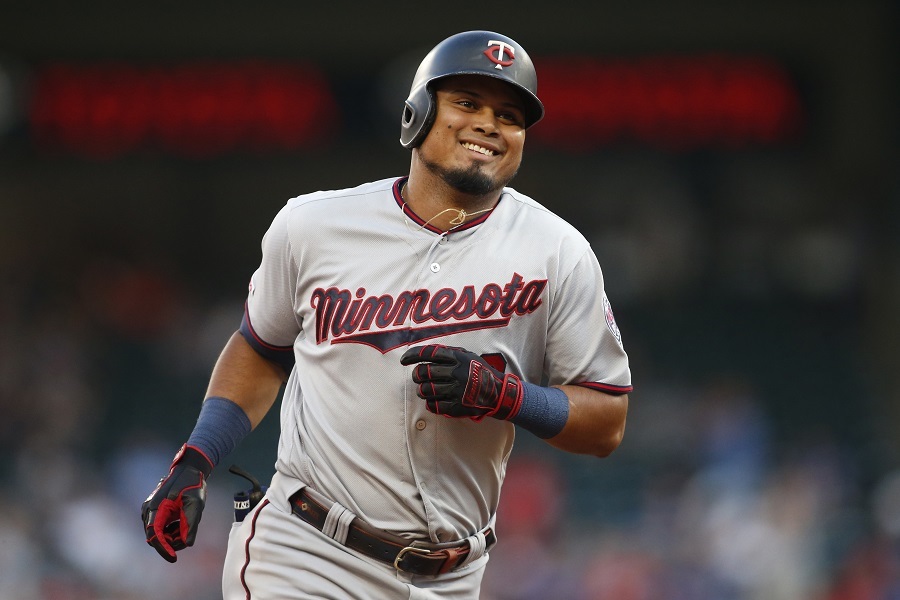 Earlier this week, I previewed the battle for the last rotation spot, and later this week I will look at the players competing for the last bench spot. The competition for left field is a very hard one to predict as there are many different layers to consider aside from just simply picking the best left fielder. Whether the players and fans like it or not, the service time game is always one factor while making sure guys are getting consistent at-bats is another factor. At the end of the day, we may end up seeing somewhat of a rotation or platoon in left field based on who’s hot, match ups, and the need to get some at-bats. Like the fifth starter piece, this article is not meant to make a prediction, but is to provide a quick snippet on each of the players competing for the spot. Jake Cave Of the undermentioned guys in this article, Cave has the most big league experience and has been a regular part of the active roster for the last three seasons. He’s been the primary beneficiary anytime Buxton has missed time and has found moderate success with a career OPS of .795 and 21 home runs over 481 at-bats through his first two seasons with the club. He had established himself as one of the better fourth outfielders in baseball before really struggling in 2020 and casting doubt on whether he could really sustain the production he previously had, especially with news that Major League Baseball is deadening the ball. Furthermore, he may have the least upside of the others he’s competing with. Realistically, I think Cave is better than the 2020 but worse than the 2019 versions of himself and will spend another year as a fourth outfielder with the Twins. Brent Rooker Before fracturing his forearm on Sept. 12, Rooker looked all the part of a Major League hitter through 21 plate appearances sporting a 161 wRC+ including a 390 no-doubter off of Daniel Ponce de Leon. Although a small sample size, I would think that Rooker’s early success would make him a front runner for the starting left field spot and slot in the middle third of the batting order. The Twins, likely planning for Rosario’s departure, had Rooker spend the 2019 season in left field, but he also has the experience to spell Miguel Sano at first from time-to-time which gives him an edge in the competition. They aren’t going to keep Rooker on the active roster to sit on the bench, so if he makes the team expect him to get a lot of reps in left field. All that said, it’s not all sunshine and rainbows when it comes to Rooker who has always been susceptible to strikeouts and, according to his scouting report on MLB.com, doesn’t project to be a very good defensive player. As promising as the first 21 at-bats looked, he will undoubtedly face some of the same swoons and criticism that has plagued Sano throughout his career while offering less power although does have a better knack at drawing walks. Rooker’s calling card is and likely always will be his hitting, which is why I really like having Cruz back, so it will be important he learns to adjust to Major League pitching and cut down on the strikeouts. Luis Arráez With the addition of Andrelton Simmons, Arráez all of a sudden found himself as the odd man out of a starting role as it’s expected that Jorge Polanco will slide over and be the everyday second basemen. Although he may lose some at-bats over the entire season, we will likely see Arráez in the line up on nearly a daily basis as he has previously established himself as a versatile defender which includes left field. He actually spent 161.0 innings in left field in 2019 and ended up with a UZR/150 of 3.6 per FanGraphs, and although that’s too small of a sample to project it’s worth noting that FanGraphs defines that as being “average”. Aside from currently being the most passable option in left field, ZiPS projects him to win the batting title in 2021 which also makes him the best option offensively of the group. I’d imagine that Arráez will still get most of his at bats from Polanco, Simmons, and Josh Donaldson needing rest days but he could also be a nice platoon type against righties if Rooker is the other left field option. Prospects Rooker is still technically a rookie/prospect, but being that he had already debuted in 2020 and would likely have exceeded the minimum 150 at-bats if not for breaking his forearm he was left out of this group. The Twins have Alex Kirilloff (#26 prospect in all of baseball), Trevor Larnach (#80 prospect in all of baseball), and Travis Blankenhorn (#17 Twins prospect in 2020) who are all ready for their shot at the big leagues despite the circumstances of 2020. The challenge of having any one of these guys on the roster, Rooker included, is making sure they are getting consistent playing time, as it would be wasteful to have them sitting on the bench more than once or twice a week. Kirilloff, of course, became the first player ever to make their Major League debut by starting in a playoff game. Furthermore, he is probably the long term solution to left field and expected to be a major part of the Twins organization moving forward. On top of playing either corner outfield position, he’s actually played some first base which gives the Twins some nice versatility. I think the only thing that keeps him off the opening day roster is the Twins playing the service time game, but I’d suspect that we will see him some time this season. Larnach probably isn’t quite as ready for the Big Leagues as Kiriloff as he’s only had 43 games above High-A ball back in 2019. That said, he has a lot of the same hype and expectations as Kiriloff despite being drafted two years after him. He’s in a tough spot as he’s probably behind the aforementioned players on the depth chart while also competing with Royce Lewis (#17 prospect in all of baseball) who is primarily a middle infielder, but does have some outfield experience. More to come on that ... Blankenhorn doesn’t have the tools to be an everyday outfielder but will still be competing for a roster spot as a super utility. That said, with Arráez and (probably) Rooker as utility options for the Twins I don’t see him getting at-bats he would need for the Twins. He’s still only 24-years-old and may be the Marwin Gonzalez type for the future, but he’s stuck behind the same group Larnach is. Free Agents I think most would be shocked if the Twins made any other moves outside of a relief pitcher, but there also isn’t really anyone out there outside of Jackie Bradley Jr. The Twins already have a logjam in the outfield so signing a free agent just wouldn’t make sense. Trading for a Starter One thing I’ll briefly expand upon, is the logjam the Twins currently have and the possible need of improving the rotation at some point. Happ and Shoemaker are solid adds and could provide a lot of value, but the Twins have some young, intriguing prospects mentioned in this article that could allow them to add an even better arm at the deadline. Time will tell. Who would you like to see in left field? One player specifically or a rotation of players? MORE FROM TWINS DAILY — Latest Twins coverage from our writers — Recent Twins discussion in our forums — Follow Twins Daily via Twitter, Facebook or email
 -
Derek Falvey was quoted as saying the Twins are “likely done adding big ticket contracts” this offseason, which gives us an idea of the Spring Training battles we’ll have this year. This article will be the first in a short series previewing those spring training battles. Image courtesy of David Berding-USA TODAY Sports Derek Falvey was quoted as saying the Twins are “likely done adding big ticket contracts” this offseason, which gives us an idea of the Spring Training battles we’ll have this year. This article will be the first in a short series previewing those spring training battles. In the coming days we will look at the battle for left field, as well as the last bench spot. But first, let’s take a look at the candidates for the last spot in the rotation. On Thursday, KSTP’s Darren Wolfson said the Twins have an offer out to veteran right hander Matt Shoemaker who, I don’t believe, would be a lock for the fifth spot if he was signed by the club. Shoemaker, who has been very good when healthy, hasn’t had a healthy season in four years so there is inherent risk in signing him that will still make for an intriguing battle between the current options on the Twins roster. If Shoemaker does sign with the club, I would make him the odds on favorite to win the job but that’s not a guarantee ... you might recall that the Twins signed Anibal Sanchez in 2018 and released him a month later after struggling through Spring Training. Wolfson stated that there were multiple teams interested in Shoemaker, so if he does decide to sign somewhere else then who will compete for that fifth spot? Randy Dobnak After a productive start to his career in 2019 and the first half of 2020, the wheels really fell off for Dobnak which led to getting sent down to the alternate site and being left off the postseason roster last year. I’ve always been a bit wary of Dobnak’s production as it seemed too good to be true, which you can read about in more detail here, and have the same concerns heading into this season. His Savant profile from 2020, seen below, is fairly concerning and moreover his most oft used pitch (fastball/sinker) was normally spotted really well in the bottom corners of the zone yet batters had a xwOBA of .342 against the pitch. All of that said, out of the undermentioned options the Twins have, Dobnak does boast the strongest track record, and the reconfiguration of the infield plays right into his strengths. You see, over the last two seasons, Dobnak has the second best ground ball percentage of all starters who have pitched 70 innings or more and would benefit greatly from the addition of Simmons and Polanco sliding over to second base. If the Twins don’t get Shoemaker, Dobnak will probably be the favorite to be the fifth starter in 2021. Lewis Thorpe Thorpe had a very rough 2020 season both personally and professionally, which was detailed by Twins Daily own Cody Pirkl back in October, and this was following a 2019 where he posted an ERA of 6.18 over 27 2/3 innings pitched. I guess you could say Thorpe has had a rough start to his 44 inning career to this point, BUT we should not forget that he is only 25-years-old and just two years ago was the Twins #11 rated prospect by Major League Baseball. Furthermore, he peaked as the Twins #9 prospect in 2014 and his scouting report read “... Thorpe could be the best to come from Down Under,” which speaks to how highly thought of he once was, but then missed 2015 and 2016 due to Tommy John surgery and contracting mono during rehab. Thorpe has A LOT to prove and will be entering the most pivotal Spring Training of his career as he is out of Minor League options, but that might actually play into his favor as the Twins would need to designate him for assignment which would allow another team to snag him. If he and Dobnak are viewed similarly by the time the season starts, you could see the Twins give him the first opportunity at the back end of the rotation as a “one last shot” situation. Thorpe is truly a wild card, but has a higher ceiling and similar floor compared to Dobank which makes me lean towards giving him the first shot in the rotation. Prospects Although long shots, it’s worth mentioning that Jordan Balazovic (#97 prospect in baseball) and Jhoan Duran (#5 Twins prospect) will also have opportunities to compete for the last rotation spot. That said, a combination of the service time game, a jumbled 2020 season, and neither having much experience above High-A tells me this is highly unlikely. That said, they have some upside and will be fun to see where they are at in their Spring Training opportunities. For Duran, I wouldn’t rule out seeing him in a reliever role at some point in 2021 if the Twins deal with some injuries. Free Agents We’ve already talked about Shoemaker and mentioned that Falvey doesn’t see the Twins adding any more “big ticket contracts.” But for fun, I would love to see Jake Odorizzi or Taijuan Walker added to the mix. Odorizzi would slot ahead of Happ (*whispers* and maybe Berrios) making him the fifth starter, while Walker would likely compete for the fifth starter job with the aforementioned names in this article. Trading for a Starter The Twins are loaded. Keith Law has them as the eighth best Minor League system in the majors and having a surplus of quality outfield prospects in the minors that may be ready for The Show. I don’t foresee a trade happening anytime soon, but the Twins have the assets to add a quality arm if one becomes available at the trade deadline. Who do you think wins the fifth rotation spot? Do you believe in Dobnak? MORE FROM TWINS DAILY — Latest Twins coverage from our writers — Recent Twins discussion in our forums — Follow Twins Daily via Twitter, Facebook or email View full article
-
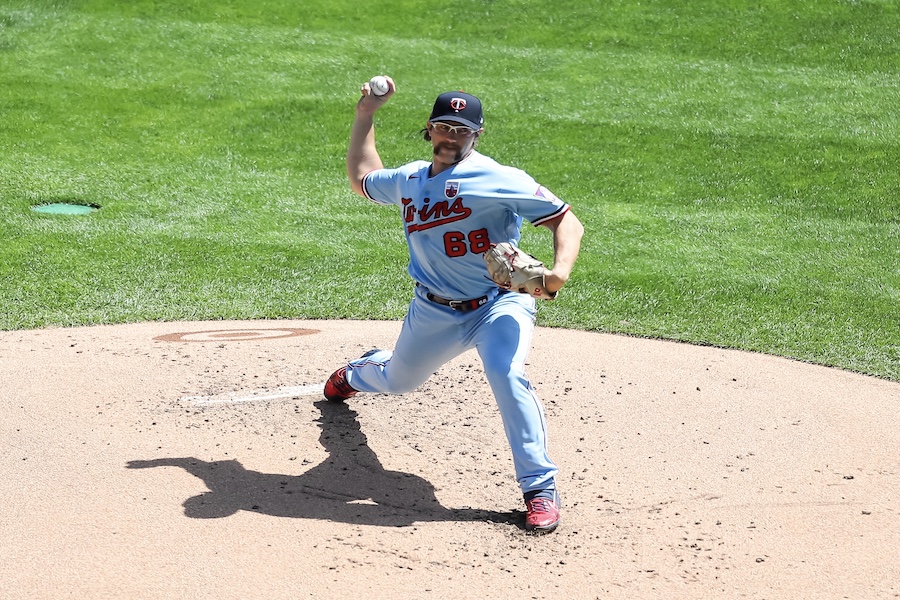 In the coming days we will look at the battle for left field, as well as the last bench spot. But first, let’s take a look at the candidates for the last spot in the rotation. On Thursday, KSTP’s Darren Wolfson said the Twins have an offer out to veteran right hander Matt Shoemaker who, I don’t believe, would be a lock for the fifth spot if he was signed by the club. Shoemaker, who has been very good when healthy, hasn’t had a healthy season in four years so there is inherent risk in signing him that will still make for an intriguing battle between the current options on the Twins roster. If Shoemaker does sign with the club, I would make him the odds on favorite to win the job but that’s not a guarantee ... you might recall that the Twins signed Anibal Sanchez in 2018 and released him a month later after struggling through Spring Training. Wolfson stated that there were multiple teams interested in Shoemaker, so if he does decide to sign somewhere else then who will compete for that fifth spot? Randy Dobnak After a productive start to his career in 2019 and the first half of 2020, the wheels really fell off for Dobnak which led to getting sent down to the alternate site and being left off the postseason roster last year. I’ve always been a bit wary of Dobnak’s production as it seemed too good to be true, which you can read about in more detail here, and have the same concerns heading into this season. His Savant profile from 2020, seen below, is fairly concerning and moreover his most oft used pitch (fastball/sinker) was normally spotted really well in the bottom corners of the zone yet batters had a xwOBA of .342 against the pitch. All of that said, out of the undermentioned options the Twins have, Dobnak does boast the strongest track record, and the reconfiguration of the infield plays right into his strengths. You see, over the last two seasons, Dobnak has the second best ground ball percentage of all starters who have pitched 70 innings or more and would benefit greatly from the addition of Simmons and Polanco sliding over to second base. If the Twins don’t get Shoemaker, Dobnak will probably be the favorite to be the fifth starter in 2021. Lewis Thorpe Thorpe had a very rough 2020 season both personally and professionally, which was detailed by Twins Daily own Cody Pirkl back in October, and this was following a 2019 where he posted an ERA of 6.18 over 27 2/3 innings pitched. I guess you could say Thorpe has had a rough start to his 44 inning career to this point, BUT we should not forget that he is only 25-years-old and just two years ago was the Twins #11 rated prospect by Major League Baseball. Furthermore, he peaked as the Twins #9 prospect in 2014 and his scouting report read “... Thorpe could be the best to come from Down Under,” which speaks to how highly thought of he once was, but then missed 2015 and 2016 due to Tommy John surgery and contracting mono during rehab. Thorpe has A LOT to prove and will be entering the most pivotal Spring Training of his career as he is out of Minor League options, but that might actually play into his favor as the Twins would need to designate him for assignment which would allow another team to snag him. If he and Dobnak are viewed similarly by the time the season starts, you could see the Twins give him the first opportunity at the back end of the rotation as a “one last shot” situation. Thorpe is truly a wild card, but has a higher ceiling and similar floor compared to Dobank which makes me lean towards giving him the first shot in the rotation. Prospects Although long shots, it’s worth mentioning that Jordan Balazovic (#97 prospect in baseball) and Jhoan Duran (#5 Twins prospect) will also have opportunities to compete for the last rotation spot. That said, a combination of the service time game, a jumbled 2020 season, and neither having much experience above High-A tells me this is highly unlikely. That said, they have some upside and will be fun to see where they are at in their Spring Training opportunities. For Duran, I wouldn’t rule out seeing him in a reliever role at some point in 2021 if the Twins deal with some injuries. Free Agents We’ve already talked about Shoemaker and mentioned that Falvey doesn’t see the Twins adding any more “big ticket contracts.” But for fun, I would love to see Jake Odorizzi or Taijuan Walker added to the mix. Odorizzi would slot ahead of Happ (*whispers* and maybe Berrios) making him the fifth starter, while Walker would likely compete for the fifth starter job with the aforementioned names in this article. Trading for a Starter The Twins are loaded. Keith Law has them as the eighth best Minor League system in the majors and having a surplus of quality outfield prospects in the minors that may be ready for The Show. I don’t foresee a trade happening anytime soon, but the Twins have the assets to add a quality arm if one becomes available at the trade deadline. Who do you think wins the fifth rotation spot? Do you believe in Dobnak? MORE FROM TWINS DAILY — Latest Twins coverage from our writers — Recent Twins discussion in our forums — Follow Twins Daily via Twitter, Facebook or email
 -
Four of the five AL Central teams made some moves today, including the Twins who have made an offer to a veteran starting pitcher. Image courtesy of © Paul Rutherford-USA TODAY Sports Four of the five AL Central teams made some moves today, including the Twins who have made an offer to a veteran starting pitcher. Twins have offer out to RHP Matt Shoemaker On Wednesday KSTP’s Darren Wolfson hinted that the Twins had an offer out to a starting pitcher and he’d reveal who on Thursday. Well, without further ado…. https://twitter.com/DWolfsonKSTP/status/1359911547863240707 Shoemaker came onto the scene in 2014 with the Angels finishing second in Rookie of the Year voting to Chicago White Sox first baseman José Abreu. Aside from 2020, he’s been a pretty solid starter in the league when he’s healthy which hasn’t been the case for the last four seasons. Twins Daily own Andrew Thares took a deep dive into Shoemaker today that instills some intrigue in the veternal hurler as a possible final rotation piece. Twins claim OF Kyle Garlick; Designate LHP Brandon Waddell This is a total speculative add and there’s no guarantee his new roster spot isn’t at jeopardy as the Twins still need to make room for Alex Colomé. Check out Seth Stohs article regarding the Twins new 40-man roster member. News with ties to the Twins Former top prosect Andrew Benintendi dealt to the Royals https://twitter.com/JonHeyman/status/1359682307850919939 The outfielder will join a good Royals offense and look to re-establish himself as one of baseball's up and coming stars. The former seventh overall pick had a strong start to his career but struggled in 2019 and really fell off in 2020. He still has two-years of team control but joins an up and coming team that is just waiting for some pitching to develop for the minors to start competing for the division. Cubs and Mets revisit deal involving Kris Bryant The Twins have never been formally tied to the former MVP but there’s no denying how well he fits with the club even after the Simmons signing. The Twins don’t have anyone penned in as the everyday left fielder and he could spell Josh Donaldson at third, as needed. Marwin Gonzalez signs with Red Sox https://twitter.com/Feinsand/status/1360031507197394944 The former Minnesota Twins super-utility takes a significant pay cut which was probably too be expected after two so-so seasons with the Twins and evidence showing that he benefited the most from the Astros cheating scandal. Former Royal, Billy Hamilton, back in the AL Central https://twitter.com/DanielAlvarezEE/status/1360014981513764870 The speedster signed with Cleveland on a minor league contract and figures to compete for a fill-in outfielder role behind Eddie Rosario, Oscar Mercado, and Josh Naylor. Tigers add outfielder Nomar Mazara https://twitter.com/JonHeyman/status/1360019703171674113 After debuting at 21-years old and finding moderate success pretty quickly, Mazara really struggled in the southside of Chicago. Still only 25-years old, the Tigers will give him an opportunity to get semi-regular at-bats in a platoon role while trying to re-establish himself as a promising young player. MORE FROM TWINS DAILY — Latest Twins coverage from our writers — Recent Twins discussion in our forums — Follow Twins Daily via Twitter, Facebook or email View full article
-
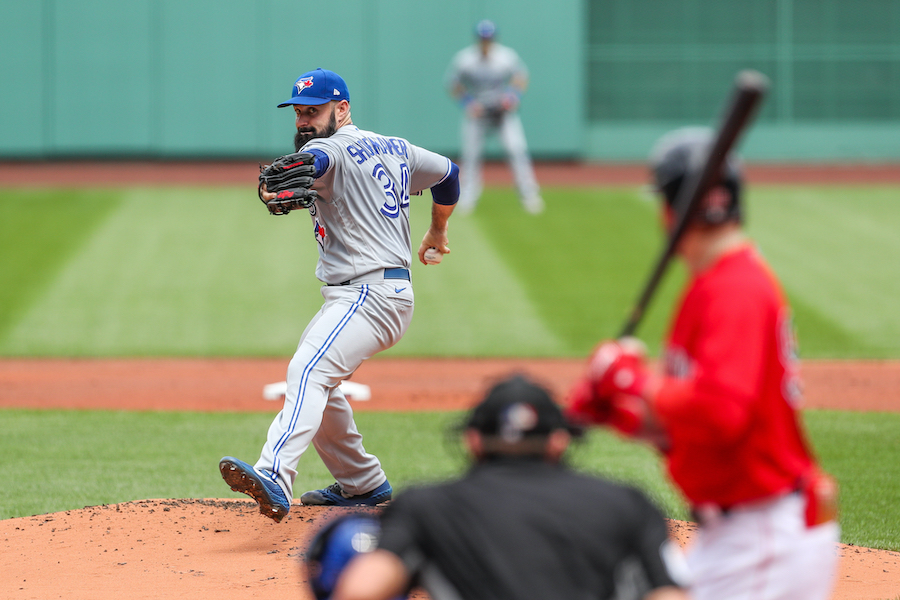 Twins have offer out to RHP Matt Shoemaker On Wednesday KSTP’s Darren Wolfson hinted that the Twins had an offer out to a starting pitcher and he’d reveal who on Thursday. Well, without further ado…. https://twitter.com/DWolfsonKSTP/status/1359911547863240707 Shoemaker came onto the scene in 2014 with the Angels finishing second in Rookie of the Year voting to Chicago White Sox first baseman José Abreu. Aside from 2020, he’s been a pretty solid starter in the league when he’s healthy which hasn’t been the case for the last four seasons. Twins Daily own Andrew Thares took a deep dive into Shoemaker today that instills some intrigue in the veternal hurler as a possible final rotation piece. Twins claim OF Kyle Garlick; Designate LHP Brandon Waddell This is a total speculative add and there’s no guarantee his new roster spot isn’t at jeopardy as the Twins still need to make room for Alex Colomé. Check out Seth Stohs article regarding the Twins new 40-man roster member. News with ties to the Twins Former top prosect Andrew Benintendi dealt to the Royals https://twitter.com/JonHeyman/status/1359682307850919939 The outfielder will join a good Royals offense and look to re-establish himself as one of baseball's up and coming stars. The former seventh overall pick had a strong start to his career but struggled in 2019 and really fell off in 2020. He still has two-years of team control but joins an up and coming team that is just waiting for some pitching to develop for the minors to start competing for the division. Cubs and Mets revisit deal involving Kris Bryant The Twins have never been formally tied to the former MVP but there’s no denying how well he fits with the club even after the Simmons signing. The Twins don’t have anyone penned in as the everyday left fielder and he could spell Josh Donaldson at third, as needed. Marwin Gonzalez signs with Red Sox https://twitter.com/Feinsand/status/1360031507197394944 The former Minnesota Twins super-utility takes a significant pay cut which was probably too be expected after two so-so seasons with the Twins and evidence showing that he benefited the most from the Astros cheating scandal. Former Royal, Billy Hamilton, back in the AL Central https://twitter.com/DanielAlvarezEE/status/1360014981513764870 The speedster signed with Cleveland on a minor league contract and figures to compete for a fill-in outfielder role behind Eddie Rosario, Oscar Mercado, and Josh Naylor. Tigers add outfielder Nomar Mazara https://twitter.com/JonHeyman/status/1360019703171674113 After debuting at 21-years old and finding moderate success pretty quickly, Mazara really struggled in the southside of Chicago. Still only 25-years old, the Tigers will give him an opportunity to get semi-regular at-bats in a platoon role while trying to re-establish himself as a promising young player. MORE FROM TWINS DAILY — Latest Twins coverage from our writers — Recent Twins discussion in our forums — Follow Twins Daily via Twitter, Facebook or email
 -
It was exactly one year ago today that the Twins agreed to trade Brusdar Graterol to the Los Angeles Dodgers for Kenta Maeda. Let's take a look back at the last season for both players to deem how each team fared in the deal. Image courtesy of Ken Blaze-USA TODAY Sports It was exactly one year ago today that the Twins agreed to trade Brusdar Graterol to the Los Angeles Dodgers for Kenta Maeda. Let's take a look back at the last season for both players to deem how each team fared in the deal. After all the drama settled, and the Red Sox were left out of the equation, the Twins and Dodgers agreed to the following deal: Camargo (21-years old) was signed by the Dodgers as an international free agent in 2015. In 665 minor league at-bats he has a .671 OPS with a strikeout rate of almost 29%, and has played 90-percent of his innings at catcher between rookie ball and lo-A. Raley (26-years old), who was dealt to the Twins as part of the Dozier trade in 2018, sports a .833 OPS but is only slightly less prone to strikeouts at about 26-percent of the time in 1,347 at-bats climbing as high as AAA in 2019. Per the 2020 MLB prospect rankings, neither player is in the top 30 of their respective clubs rankings. Being that these two players are at different points in their careers it’s too early to say one has that one team got the better end of this part of the deal, which can be sad about the next part of the deal. The Twins received the competitive balance pick for being “one of the 10 smallest markets or 10 smallest revenue pools” in baseball in 2019, which is not to be confused with a compensation pick which is given when a free-agent-to-be rejects a qualifying offer. Beeter was the 51st ranked draftee and profiled as someone who throws hard and has “stuff” that, if it can be controlled, could make for a solid prospect moving forward. That said, his track record is shaky and he’s already had two elbow surgeries so they drafted him solely based on the potential of “fixing” him. Obviously, it’s too early to tell how this pans out and who knows who the Twins would have grabbed here. I’ll take the $10MM and be happy with how the premier part of the deal has panned out so far. The headliners of this deal were clearly Maeda and Graterol in what could essentially become a one-for-one swap if none of the aforementioned pieces amount to anything more than replacement level players. Although it’s hard to predict the overall impact this trade will have in the years to come, I think we can anoint a “winner” of the trade a year later after reflecting on the years each player and team had. Maeda Makes a Case for the Cy Young Award Maeda’s career with the Dodgers was always a little on the fritz as he would bounce back and forth between a starter and reliever despite having a preference for being a part of the rotation. Although he did well in both roles, I think 2020 showed that knowing he was going to be a starter from day one allowed him to settle in and excel on the mound. He posted career best numbers across the board as a starter and was rewarded earning 2nd place in Cy Young voting behind the unanimous selection of Shane Bieber. His Savant profile, shown below, proves that 2020 was not a total surprise to those reading more than box scores and that it isn’t far fetched for him to post similar numbers moving forward. Maeda provided the Twins with their first true ace dating back to when Johan Santana was with the club and accrued 2.1 fWAR which would extrapolate to about 6.3 over an entire season of work. In addition, he provided the Twins with the consistency from the top spot in the rotation that hasn’t been provided by the likes of Jake Odorizzi and Jose Berrios over the last few years. With three years left on baseball's most team-friendly contract, it’s almost a guarantee he will exceed the value of his contract and provide the Twins with the consistent starter they’ve been missing for over a decade. Graterol Effective but Not Dominant We knew that Graterol was a fireballer as he finished in the 100th percentile for fastball (Savant actually labels it a sinker) velocity, but we weren’t sure whether he’d stick as a starter or reliever. Like the Twins with Maeda, the Dodgers gave Graterol a solid role from day one and he was able to slide into a middle inning role rather nicely. Ultimately, he ended the year accruing 0.3 fWAR in 23.1 innings of work which would extrapolate to about 1.0 if he pitched over an entire season of work. What’s odd about Graterol is, despite being a power pitcher, he doesn’t generate many whiffs and opposing hitters quality of contact against his fastball/sinker is actually fairly solid (xwOBA of .295) compared to some of the games top relievers. That said, throwing his fastball/sinker high to get ahead in the count sets up for an effective slider low to finish off the batter, where they sport an xwOBA of 0.124. At just 22-years old and able to consistently pump triple digits, it’s crazy to think that Graterol cannot improve on his whiff and quality of contact numbers and become one of the game's best relievers. Based on his Savant profile, it may just be a matter of locating that fastball over the outer third of the plate rather than the middle third. He still has four years of team control left in an organization that has a recent history of developing or reinventing players into great relievers, and has the opportunity to make a name for himself on the baseball's biggest stage as the Dodgers appear to be contenders for years to come. And the Winner Is… In the age of the dominant bullpen, a true number one still reigns supreme. There’s a reason why Gerrit Cole and Trever Bauer have an AAV of $36MM and $34MM, respectively, while Liam Hendriks is at “just” $18MM. That’s not to say that Maeda is or will ever be on the same level of Cole and Bauer, but that IS to say that even at Graterol’s best with the Dodgers he will not reach the value of Maeda with the Twins. This is a rare deal where both sides are able to immediately benefit from the trade, but I’d take the Twins side of the trade every time. We’ll revisit this deal in three years when Maeda’s tenure as a Twin may be over and we have a better picture of what Graterol will become (he’ll still only be 25!!!), but as of right now the Twins are the winners of this trade. How do you rate the trade a year later? Hypothetically, if Graterol becomes an elite reliever, who wins the trade in your eyes? MORE FROM TWINS DAILY — Latest Twins coverage from our writers — Recent Twins discussion in our forums — Follow Twins Daily via Twitter, Facebook or email View full article
-
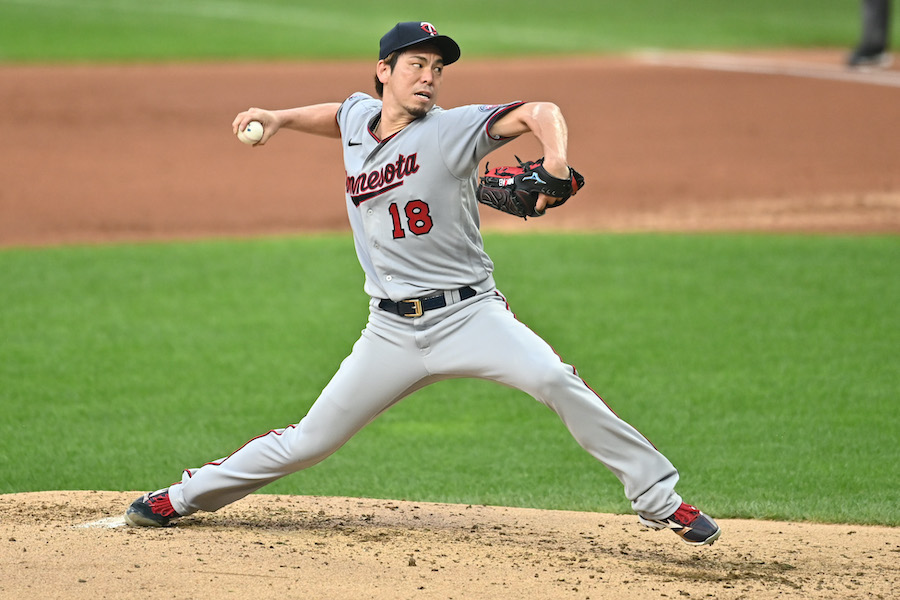 After all the drama settled, and the Red Sox were left out of the equation, the Twins and Dodgers agreed to the following deal: Camargo (21-years old) was signed by the Dodgers as an international free agent in 2015. In 665 minor league at-bats he has a .671 OPS with a strikeout rate of almost 29%, and has played 90-percent of his innings at catcher between rookie ball and lo-A. Raley (26-years old), who was dealt to the Twins as part of the Dozier trade in 2018, sports a .833 OPS but is only slightly less prone to strikeouts at about 26-percent of the time in 1,347 at-bats climbing as high as AAA in 2019. Per the 2020 MLB prospect rankings, neither player is in the top 30 of their respective clubs rankings. Being that these two players are at different points in their careers it’s too early to say one has that one team got the better end of this part of the deal, which can be sad about the next part of the deal. The Twins received the competitive balance pick for being “one of the 10 smallest markets or 10 smallest revenue pools” in baseball in 2019, which is not to be confused with a compensation pick which is given when a free-agent-to-be rejects a qualifying offer. Beeter was the 51st ranked draftee and profiled as someone who throws hard and has “stuff” that, if it can be controlled, could make for a solid prospect moving forward. That said, his track record is shaky and he’s already had two elbow surgeries so they drafted him solely based on the potential of “fixing” him. Obviously, it’s too early to tell how this pans out and who knows who the Twins would have grabbed here. I’ll take the $10MM and be happy with how the premier part of the deal has panned out so far. The headliners of this deal were clearly Maeda and Graterol in what could essentially become a one-for-one swap if none of the aforementioned pieces amount to anything more than replacement level players. Although it’s hard to predict the overall impact this trade will have in the years to come, I think we can anoint a “winner” of the trade a year later after reflecting on the years each player and team had. Maeda Makes a Case for the Cy Young Award Maeda’s career with the Dodgers was always a little on the fritz as he would bounce back and forth between a starter and reliever despite having a preference for being a part of the rotation. Although he did well in both roles, I think 2020 showed that knowing he was going to be a starter from day one allowed him to settle in and excel on the mound. He posted career best numbers across the board as a starter and was rewarded earning 2nd place in Cy Young voting behind the unanimous selection of Shane Bieber. His Savant profile, shown below, proves that 2020 was not a total surprise to those reading more than box scores and that it isn’t far fetched for him to post similar numbers moving forward. Maeda provided the Twins with their first true ace dating back to when Johan Santana was with the club and accrued 2.1 fWAR which would extrapolate to about 6.3 over an entire season of work. In addition, he provided the Twins with the consistency from the top spot in the rotation that hasn’t been provided by the likes of Jake Odorizzi and Jose Berrios over the last few years. With three years left on baseball's most team-friendly contract, it’s almost a guarantee he will exceed the value of his contract and provide the Twins with the consistent starter they’ve been missing for over a decade. Graterol Effective but Not Dominant We knew that Graterol was a fireballer as he finished in the 100th percentile for fastball (Savant actually labels it a sinker) velocity, but we weren’t sure whether he’d stick as a starter or reliever. Like the Twins with Maeda, the Dodgers gave Graterol a solid role from day one and he was able to slide into a middle inning role rather nicely. Ultimately, he ended the year accruing 0.3 fWAR in 23.1 innings of work which would extrapolate to about 1.0 if he pitched over an entire season of work. What’s odd about Graterol is, despite being a power pitcher, he doesn’t generate many whiffs and opposing hitters quality of contact against his fastball/sinker is actually fairly solid (xwOBA of .295) compared to some of the games top relievers. That said, throwing his fastball/sinker high to get ahead in the count sets up for an effective slider low to finish off the batter, where they sport an xwOBA of 0.124. At just 22-years old and able to consistently pump triple digits, it’s crazy to think that Graterol cannot improve on his whiff and quality of contact numbers and become one of the game's best relievers. Based on his Savant profile, it may just be a matter of locating that fastball over the outer third of the plate rather than the middle third. He still has four years of team control left in an organization that has a recent history of developing or reinventing players into great relievers, and has the opportunity to make a name for himself on the baseball's biggest stage as the Dodgers appear to be contenders for years to come. And the Winner Is… In the age of the dominant bullpen, a true number one still reigns supreme. There’s a reason why Gerrit Cole and Trever Bauer have an AAV of $36MM and $34MM, respectively, while Liam Hendriks is at “just” $18MM. That’s not to say that Maeda is or will ever be on the same level of Cole and Bauer, but that IS to say that even at Graterol’s best with the Dodgers he will not reach the value of Maeda with the Twins. This is a rare deal where both sides are able to immediately benefit from the trade, but I’d take the Twins side of the trade every time. We’ll revisit this deal in three years when Maeda’s tenure as a Twin may be over and we have a better picture of what Graterol will become (he’ll still only be 25!!!), but as of right now the Twins are the winners of this trade. How do you rate the trade a year later? Hypothetically, if Graterol becomes an elite reliever, who wins the trade in your eyes? MORE FROM TWINS DAILY — Latest Twins coverage from our writers — Recent Twins discussion in our forums — Follow Twins Daily via Twitter, Facebook or email
 -
Twins Daily 2021 Top Prospects: Honorable Mentions
Matthew Lenz replied to Seth Stohs's topic in Twins Minor League Talk
I just mentioned this in Cody's Lineup Projection 1.0....why Astudillo over Blankenhorn on the active roster to start the season?

