



Matthew Lenz
-
Posts
1,465 -
Joined
-
Last visited
-
Days Won
3
Content Type
Profiles
News
Minnesota Twins Videos
2026 Minnesota Twins Top Prospects Ranking
2022 Minnesota Twins Draft Picks
Minnesota Twins Free Agent & Trade Rumors, Notes, & Tidbits
Guides & Resources
2023 Minnesota Twins Draft Picks
The Minnesota Twins Players Project
2024 Minnesota Twins Draft Picks
2025 Minnesota Twins Draft Pick Tracker
2026 Minnesota Twins Draft Tracker: Picks & Bonuses
Forums
Blogs
Events
Store
Downloads
Gallery
Everything posted by Matthew Lenz
-

Fact or Fiction: The Twins Way Didn't Work for Matt Shoemaker
Matthew Lenz posted an article in Twins
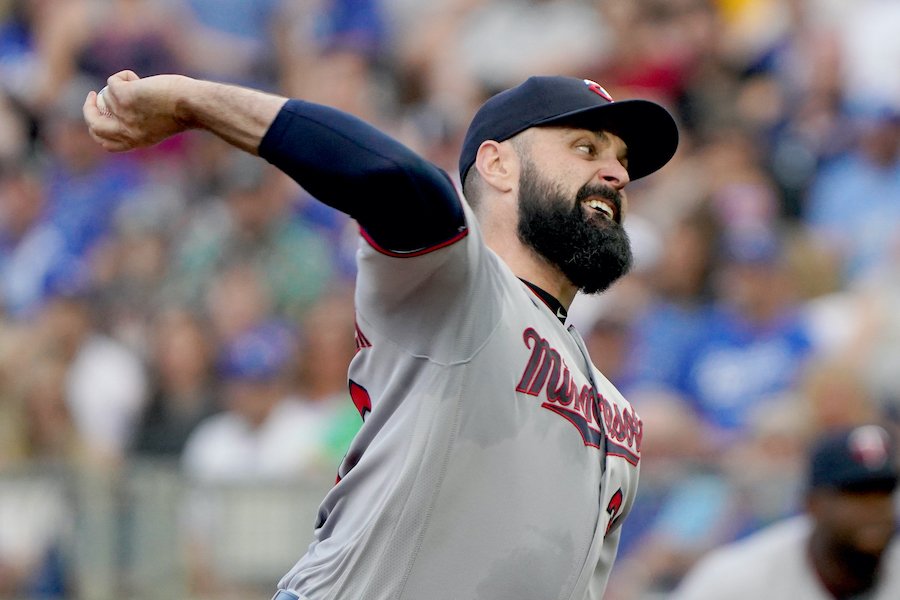 In the article written by Dean Spiros of the Pioneer Press, Shoemaker says he is now pitching "the opposite of how the Twins wanted [him] to pitch." Perhaps this is why in 20 innings with the St. Paul Saints, he has a 1.80/3.82 ERA/FIP with improved strikeout and walk rates compared to the 60 1/3 innings he pitched with the Twins. Although 20 innings is a small sample, he's also keeping opposing hitters in the ballpark, which was a massive problem in his time with the Twins, where he has the third-highest home run per nine innings rate among all pitchers who have thrown 60 or more innings. In fairness to Shoemaker, he didn't completely trash the Twins and shouldered some of the blame by saying that "[he] could have said no." He also hopes to be back with the big league club at some point by saying, "I really like the Twins organization," he said. "The guys up top, the staff, that's where it's tough…." Truthfully, I don't think there is anything wrong with what Shoemaker said and how he said it. I believe that some of the headlines generated from these quotes made Shoemaker out to be the bad guy when in reality, he was taking some responsibility for his struggles. I'm not here to debate the semantics of what was said and how the media and fans interpreted it. But we can look into his claims that the Twins asked him to make adjustments that ultimately lead to him getting DFA'd, unclaimed, and assigned to the St. Paul Saints on July 1st. Pre-Twins Tendencies Before coming to the Twins, Matt Shoemaker had thrown more than 600 innings with a 3.86/4.03 ERA/FIP, 3.7 K/BB, and a 1.3 HR/9 over eight injury-riddled seasons. He finished second in Rookie of the Year voting in 2014 and had an excellent 2016 season, but since then, he hasn't thrown 80 innings in a season due to various injuries to his arm, knee, and shoulder. The Twins were undoubtedly taking a risk on him, but most assumed that he would be a suitable piece for the back end of a rotation that had World Series hopes as long as he's healthy. Even the biggest naysayer couldn't have predicted the season that Shoemaker ended up having. Even Jeremy Maschino, who has no affiliation to the Twins or Shoemaker, was optimistic about the signing. In the aforementioned Pioneer Press article, Shoemaker claims that he's had success when he works up and down in the strike zone with changing speeds. Being that he's been oft-injured from 2017 to 2020, I decided to go back to his last full season in 2016, which also happens to be the most successful season of his career. Reviewing his Statcast Pitch Arsenal on Baseball Savant in that season, you can see that he'd throw his four-seam fastball and sinker up in the zone while Shoemaker threw his change-up and slider down in the zone. Quick note: depending on the year and the source, his change-up can also be classified as a split-finger. That change-up/split-finger, in particular, was about eight miles per hour slower than his four-seam with significantly more vertical movement and, according to Brooks Baseball, hitters slugged just .286 off of the pitch in 2016. These tendencies remained consistent when I looked at his career from 2013 to 2020 and seemingly aligned with what he said in the article. So what does "the opposite" of those tendencies look like for Shoemaker? 2021 Tendencies with the Twins Right away, I'll again point out that what was classified as a "change-up" in 2016 was re-classified as a split-finger in 2017 and every year since. You can also see pretty quickly that Shoemaker did seem to adjust to the "Twins way" by relying more heavily on his slider in 2021 (thrown 24.5-percent of the time) than throughout his entire career (16.5-percent). That change may be what Shoemaker is referring to, which hitters have slugged .484 before the 2021 season. This year hitters are slugging .507 off his slider while his split-finger is still his most effective pitch with an opponent slugging percentage of .392. That said, I think Shoemaker needs to take a little more responsibility than saying, "I could have said no." Despite the increase in slider usage, his fastball, sinker, and split-finger tendencies are primarily in line with what he had done throughout his career. He throws his fastball higher in the zone coupled with his split-finger down in the zone, although his sinker heat map appears to be a little more erratic. In general, all of his heat maps are more erratic than those from his 2016, which is where I think he needs to take some responsibility for his struggles. Moreover, he may disagree with the pitch calling, but I can't imagine that the Twins were asking you to throw 92 mile per hour fastballs down the heart of the plate. Conclusion There is plenty of blame to share here. It's not all on the Twins, and it's not all on Matt Shoemaker. I think the Twins are at fault for asking Shoemaker to increase usage on the least effective pitch in his arsenal. As Shoemaker suggested in the article, what might work for one guy isn't necessarily going to work for the next guy. What's concerning to me is that his career numbers suggested that, yet the Twins went ahead with their heavy slider approach anyway. At the same time, it's clear that Shoemaker isn't as effective with his pitches as he was pre-injuries. Is that something that will improve as he gets more innings under his belt or something that can be fixed with a stint in the Minors? Time will tell, and now that the trade deadline has come and gone, I think it's only a matter of time before we see Shoemaker back in a Twins uniform. What were your thoughts on Shoemaker's claims? Were they legit or just a disgruntled player failing to own up to his struggles? MORE FROM TWINS DAILY — Latest Twins coverage from our writers — Recent Twins discussion in our forums — Follow Twins Daily via Twitter, Facebook or email
 -
Recently, Matt Shoemaker said, "The Twins wanted to get more out of me in spring training...but unfortunately, it failed miserably." Is there legitimacy in his claim, or is this just a struggling player looking to place blame elsewhere? I've investigated his career tendencies to answer this question. Image courtesy of © Denny Medley-USA TODAY Sports Recently, Matt Shoemaker said, "The Twins wanted to get more out of me in spring training...but unfortunately, it failed miserably." Is there legitimacy in his claim, or is this just a struggling player looking to place blame elsewhere? I've investigated his career tendencies to answer this question. In the article written by Dean Spiros of the Pioneer Press, Shoemaker says he is now pitching "the opposite of how the Twins wanted [him] to pitch." Perhaps this is why in 20 innings with the St. Paul Saints, he has a 1.80/3.82 ERA/FIP with improved strikeout and walk rates compared to the 60 1/3 innings he pitched with the Twins. Although 20 innings is a small sample, he's also keeping opposing hitters in the ballpark, which was a massive problem in his time with the Twins, where he has the third-highest home run per nine innings rate among all pitchers who have thrown 60 or more innings. In fairness to Shoemaker, he didn't completely trash the Twins and shouldered some of the blame by saying that "[he] could have said no." He also hopes to be back with the big league club at some point by saying, "I really like the Twins organization," he said. "The guys up top, the staff, that's where it's tough…." Truthfully, I don't think there is anything wrong with what Shoemaker said and how he said it. I believe that some of the headlines generated from these quotes made Shoemaker out to be the bad guy when in reality, he was taking some responsibility for his struggles. I'm not here to debate the semantics of what was said and how the media and fans interpreted it. But we can look into his claims that the Twins asked him to make adjustments that ultimately lead to him getting DFA'd, unclaimed, and assigned to the St. Paul Saints on July 1st. Pre-Twins Tendencies Before coming to the Twins, Matt Shoemaker had thrown more than 600 innings with a 3.86/4.03 ERA/FIP, 3.7 K/BB, and a 1.3 HR/9 over eight injury-riddled seasons. He finished second in Rookie of the Year voting in 2014 and had an excellent 2016 season, but since then, he hasn't thrown 80 innings in a season due to various injuries to his arm, knee, and shoulder. The Twins were undoubtedly taking a risk on him, but most assumed that he would be a suitable piece for the back end of a rotation that had World Series hopes as long as he's healthy. Even the biggest naysayer couldn't have predicted the season that Shoemaker ended up having. Even Jeremy Maschino, who has no affiliation to the Twins or Shoemaker, was optimistic about the signing. In the aforementioned Pioneer Press article, Shoemaker claims that he's had success when he works up and down in the strike zone with changing speeds. Being that he's been oft-injured from 2017 to 2020, I decided to go back to his last full season in 2016, which also happens to be the most successful season of his career. Reviewing his Statcast Pitch Arsenal on Baseball Savant in that season, you can see that he'd throw his four-seam fastball and sinker up in the zone while Shoemaker threw his change-up and slider down in the zone. Quick note: depending on the year and the source, his change-up can also be classified as a split-finger. That change-up/split-finger, in particular, was about eight miles per hour slower than his four-seam with significantly more vertical movement and, according to Brooks Baseball, hitters slugged just .286 off of the pitch in 2016. These tendencies remained consistent when I looked at his career from 2013 to 2020 and seemingly aligned with what he said in the article. So what does "the opposite" of those tendencies look like for Shoemaker? 2021 Tendencies with the Twins Right away, I'll again point out that what was classified as a "change-up" in 2016 was re-classified as a split-finger in 2017 and every year since. You can also see pretty quickly that Shoemaker did seem to adjust to the "Twins way" by relying more heavily on his slider in 2021 (thrown 24.5-percent of the time) than throughout his entire career (16.5-percent). That change may be what Shoemaker is referring to, which hitters have slugged .484 before the 2021 season. This year hitters are slugging .507 off his slider while his split-finger is still his most effective pitch with an opponent slugging percentage of .392. That said, I think Shoemaker needs to take a little more responsibility than saying, "I could have said no." Despite the increase in slider usage, his fastball, sinker, and split-finger tendencies are primarily in line with what he had done throughout his career. He throws his fastball higher in the zone coupled with his split-finger down in the zone, although his sinker heat map appears to be a little more erratic. In general, all of his heat maps are more erratic than those from his 2016, which is where I think he needs to take some responsibility for his struggles. Moreover, he may disagree with the pitch calling, but I can't imagine that the Twins were asking you to throw 92 mile per hour fastballs down the heart of the plate. Conclusion There is plenty of blame to share here. It's not all on the Twins, and it's not all on Matt Shoemaker. I think the Twins are at fault for asking Shoemaker to increase usage on the least effective pitch in his arsenal. As Shoemaker suggested in the article, what might work for one guy isn't necessarily going to work for the next guy. What's concerning to me is that his career numbers suggested that, yet the Twins went ahead with their heavy slider approach anyway. At the same time, it's clear that Shoemaker isn't as effective with his pitches as he was pre-injuries. Is that something that will improve as he gets more innings under his belt or something that can be fixed with a stint in the Minors? Time will tell, and now that the trade deadline has come and gone, I think it's only a matter of time before we see Shoemaker back in a Twins uniform. What were your thoughts on Shoemaker's claims? Were they legit or just a disgruntled player failing to own up to his struggles? MORE FROM TWINS DAILY — Latest Twins coverage from our writers — Recent Twins discussion in our forums — Follow Twins Daily via Twitter, Facebook or email View full article
-
Game Score: Cardinals 5, Twins 1
Matthew Lenz replied to Matthew Lenz's topic in Twins Daily Front Page News
Oh duh. Totally forgot about that scenario. Darn National League rules. -
Game Score: Cardinals 5, Twins 1
Matthew Lenz replied to Matthew Lenz's topic in Twins Daily Front Page News
I don’t think it’s negative necessarily. I’d agree he’s unlikely to be a back end of that rotation piece especially when their window of contention re-opens. -
Game Score: Cardinals 5, Twins 1
Matthew Lenz replied to Matthew Lenz's topic in Twins Daily Front Page News
I agree. He also needs to be afforded the opportunity. At this point, what’s the harm in letting him go out in the 6th? Maybe he’s on an innings limit. Not sure. -
Game Score: Cardinals 5, Twins 1
Matthew Lenz replied to Matthew Lenz's topic in Twins Daily Front Page News
Haha, I appreciate the honesty! I'm not scout here...just my opinion based off where he falls in our list of prospects. But I think a middle reliever is probably a realistic role for him depending on the state of the big league club. Next year, when we likely don't contend, he might get some more time as a starter but as our next window opens...assuming he sticks...a bullpen role is probably more likely. -
Game Score: Cardinals 5, Twins 1
Matthew Lenz replied to Matthew Lenz's topic in Twins Daily Front Page News
What are your expectations for him? Coming into this season he was a non top-30 prospect in the organization who shouldn't have sniffed Target Field had things gone as planned. Any production he can give to the Twins over the next couple years is probably more than would have been expected of him, especially if it comes as a starter. -
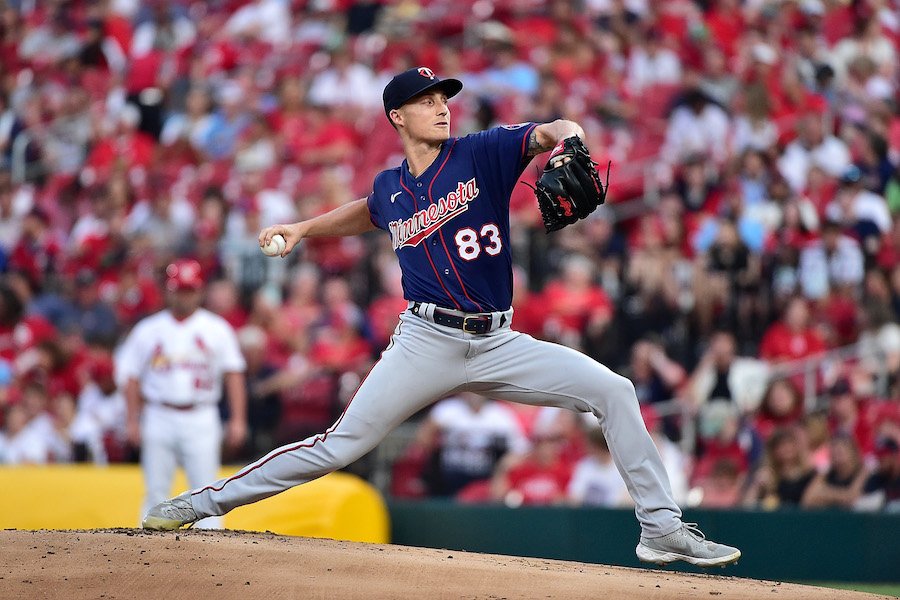 Box Score Griffin Jax: 5 IP, 2 H, 1 ER, 2 BB, 2 K (62.7% strikes) Home Runs: none Bottom 3 WPA: Duffey (-.332), Gordon (-.134), Rooker (-.132), Win Probability Chart (via Fangraphs) Jax Impresses Again In First Interleague Start Jax had a solid start against the St. Louis Cardinals on Friday, allowing just four baserunners over five innings and one earned run despite generating just two strikeouts and four whiffs on the night. Still, the Cardinals are one of the better teams in baseball in fighting off pitches despite being a mediocre offensive team. Even the one run scored was indeed “earned” by the Cardinals when Tyler O’Neil led off the fourth inning with a sharp single on a hanging curveball, followed by a steal and then back-to-back sacrifice flies to score him. Outside of that, Jax didn’t allow a baserunner to reach third base all night. Even after a 1-2-3 fifth inning, Jax was pulled after just 83 pitches, likely due to the Cardinals bringing the 2-3-4 hitters to the plate in the 6th inning. Twins Continue to Struggle to Push Runs Across The Twins combined for 11 baserunners with nine hits and two walks, but that only led to one run on an Andrelton Simmons singled in the top of the second inning. That hit was one of three Simmons had on the night, and Simmons was one of three Twins hitters who had three hits. The other two were Jorge Polanco, who went 3-for-5, upping his average to .270, and Willians Astudillo, who went 3-for-4, upping his average to .271 on the season. The rest of the Twins lineup combined to go 0-for-22, and, as you would assume, Miguel Sanó was responsible for both of the Twins walks.As I pointed out with Jax, I like to find little tidbits for you to track moving forward so you feel like there are reasons to watch the Twins for the next two months. One storyline is the continued rebound and health of Jorge Polanco, who is still under contract for the next four seasons. Other storylines would be the development of prospects like Trevor Larnach, whose slump is going on almost a month now, Brent Rooker, and Ryan Jeffers. All these guys will likely be around in 2023 or 2024 when the next competitive window opens for the Twins. Bullpen Usage Chart Tyler Duffey came on into the 6th and was hit hard by the Cardinals giving up three hits, including a bases-clearing, two-out double that gave the Cardinals a 4-1 lead. Despite the rough outing, he finished the inning needing 32 pitches, likely making him unavailable for the rest of the series. Danny Coulombe came on in the 7th and 8th inning, getting knocked around a little bit himself, but ultimately was able to finish off the game for the Twins. One thing to note on the table below is that Hansel Robles has been removed and John Gant added. The pitch counts reflect Gant’s last five days he pitched for the Cardinals. SUN MON TUE WED THU FRI TOT Coulombe 18 0 10 0 0 23 28 Thielbar 0 13 16 0 0 0 29 Alcala 24 0 11 0 0 0 35 Gant 0 0 0 24 0 0 24 Colomé 10 16 0 0 0 0 26 Minaya 0 0 0 45 0 0 45 Duffey 0 11 7 0 0 32 18 Burrows 0 0 0 63 0 0 63
 -
The Twins fell to the St. Louis Cardinals 5-1 in the series opener. Griffin Jax has another solid outing but wasn't given the run support to have an opportunity to earn the win. That and more in tonight's recap. Image courtesy of © Jeff Curry-USA TODAY Sports The Twins fell to the St. Louis Cardinals 5-1 in the series opener. Griffin Jax has another solid outing but wasn't given the run support to have an opportunity to earn the win. That and more in tonight's recap. Box Score Griffin Jax: 5 IP, 2 H, 1 ER, 2 BB, 2 K (62.7% strikes) Home Runs: none Bottom 3 WPA: Duffey (-.332), Gordon (-.134), Rooker (-.132), Win Probability Chart (via Fangraphs) Jax Impresses Again In First Interleague Start Jax had a solid start against the St. Louis Cardinals on Friday, allowing just four baserunners over five innings and one earned run despite generating just two strikeouts and four whiffs on the night. Still, the Cardinals are one of the better teams in baseball in fighting off pitches despite being a mediocre offensive team. Even the one run scored was indeed “earned” by the Cardinals when Tyler O’Neil led off the fourth inning with a sharp single on a hanging curveball, followed by a steal and then back-to-back sacrifice flies to score him. Outside of that, Jax didn’t allow a baserunner to reach third base all night. Even after a 1-2-3 fifth inning, Jax was pulled after just 83 pitches, likely due to the Cardinals bringing the 2-3-4 hitters to the plate in the 6th inning. Twins Continue to Struggle to Push Runs Across The Twins combined for 11 baserunners with nine hits and two walks, but that only led to one run on an Andrelton Simmons singled in the top of the second inning. That hit was one of three Simmons had on the night, and Simmons was one of three Twins hitters who had three hits. The other two were Jorge Polanco, who went 3-for-5, upping his average to .270, and Willians Astudillo, who went 3-for-4, upping his average to .271 on the season. The rest of the Twins lineup combined to go 0-for-22, and, as you would assume, Miguel Sanó was responsible for both of the Twins walks.As I pointed out with Jax, I like to find little tidbits for you to track moving forward so you feel like there are reasons to watch the Twins for the next two months. One storyline is the continued rebound and health of Jorge Polanco, who is still under contract for the next four seasons. Other storylines would be the development of prospects like Trevor Larnach, whose slump is going on almost a month now, Brent Rooker, and Ryan Jeffers. All these guys will likely be around in 2023 or 2024 when the next competitive window opens for the Twins. Bullpen Usage Chart Tyler Duffey came on into the 6th and was hit hard by the Cardinals giving up three hits, including a bases-clearing, two-out double that gave the Cardinals a 4-1 lead. Despite the rough outing, he finished the inning needing 32 pitches, likely making him unavailable for the rest of the series. Danny Coulombe came on in the 7th and 8th inning, getting knocked around a little bit himself, but ultimately was able to finish off the game for the Twins. One thing to note on the table below is that Hansel Robles has been removed and John Gant added. The pitch counts reflect Gant’s last five days he pitched for the Cardinals. SUN MON TUE WED THU FRI TOT Coulombe 18 0 10 0 0 23 28 Thielbar 0 13 16 0 0 0 29 Alcala 24 0 11 0 0 0 35 Gant 0 0 0 24 0 0 24 Colomé 10 16 0 0 0 0 26 Minaya 0 0 0 45 0 0 45 Duffey 0 11 7 0 0 32 18 Burrows 0 0 0 63 0 0 63 View full article
-
Caleb Thielbar first became a Twins pitcher nearly a decade ago and is one of the most under-appreciated Twins of recent memory. In short, he’s more than a great story, and in length, let’s take a look at the value he could provide on the trade market. Image courtesy of © Jesse Johnson-USA TODAY Sports Caleb Thielbar first became a Twins pitcher nearly a decade ago and is one of the most under-appreciated Twins of recent memory. In short, he’s more than a great story, and in length, let’s take a look at the value he could provide on the trade market. The Minnesota-native, drafted by the Milwaukee Brewers, was released in December of 2010 and signed with the Twins on August 19th, 2011, after playing for the St. Paul Saints Much has been made about his return to the big leagues, (after a two-year stint with the Saints) but that’s overshadowed how effective he’s been in a Twins uniform. In the history of the Twins franchise, dating back to the inaugural season in 1961, Thielbar has the tenth best ERA of any pitcher who has thrown at least 150 innings in relief. Moreover, his FIP bumps him up to ninth on the list, yet he doesn’t get nearly the same fanfare of other recent Twins. He’s not the coveted new-age high-velocity pitcher, but he gets the job done and will undoubtedly have value on the trade market. As previously suggested, Thielbar’s fastball sits low 90’s, and he throws the pitch about 50-percent of the time while he flashes a sweeping slider and looping curveball for his second and third pitches, respectively. Thielbar is not an elite arm by any means, and teams won’t be clamoring over him to be their closer or even set up guy. But he brings value as a low to mid leverage reliever that can bridge the gap between the starter and the back end of the bullpen. Due to his age (34) and limited ceiling, teams won’t be giving up a lot for the lefty reliever, but one interesting thing to note is that Thielbar still has three years of team control after 2021. That’s to say that Thielbar isn’t just a rental but could be a solid piece for teams that look to be contenders for the foreseeable future, like the Padres and Dodgers, for years to come. In fact, I think a trade just completed on Thursday is nearly a perfect comp for what the Twins could look to net in a trade involving Caleb Thielbar. The Chicago Cubs sent 33-year-old right-hander Ryan Tepera to the Chicago White Sox for 23-year-old right-handed pitcher Bailey Horn. Horn was a fifth round pick in 2020 with limited success over 38 1/3 minor league innings. I think this is a pretty good idea of what the Twins would be looking at for Thielbar. A low-level, albeit top-30, prospect. Tepera doesn’t have the team control that Thielbar has, but I don’t know how much pull that has with a 34-year-old reliever. All that said, I know some of you are thinking the Twins could use him for years to come. So what do you say...should he stay or should he go? View full article
-
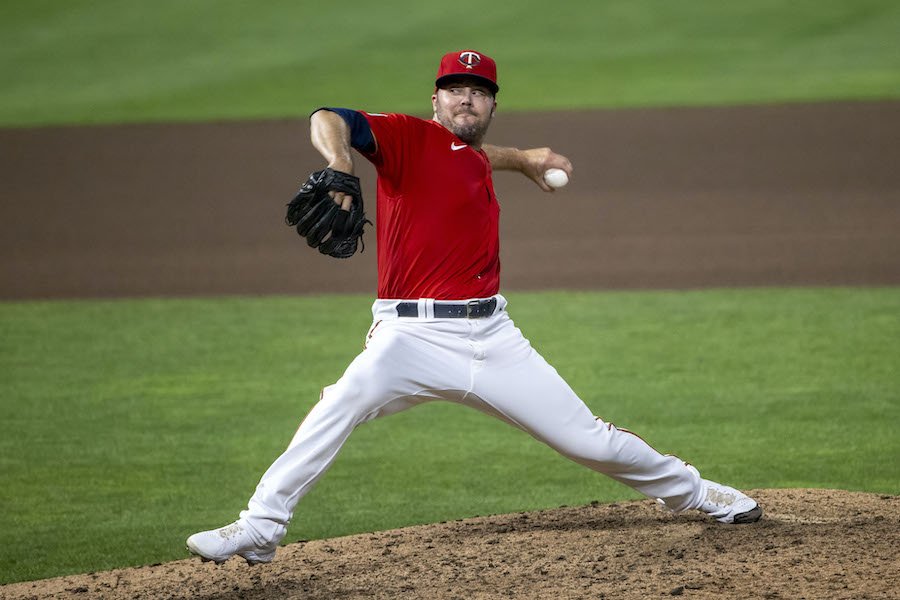 The Minnesota-native, drafted by the Milwaukee Brewers, was released in December of 2010 and signed with the Twins on August 19th, 2011, after playing for the St. Paul Saints Much has been made about his return to the big leagues, (after a two-year stint with the Saints) but that’s overshadowed how effective he’s been in a Twins uniform. In the history of the Twins franchise, dating back to the inaugural season in 1961, Thielbar has the tenth best ERA of any pitcher who has thrown at least 150 innings in relief. Moreover, his FIP bumps him up to ninth on the list, yet he doesn’t get nearly the same fanfare of other recent Twins. He’s not the coveted new-age high-velocity pitcher, but he gets the job done and will undoubtedly have value on the trade market. As previously suggested, Thielbar’s fastball sits low 90’s, and he throws the pitch about 50-percent of the time while he flashes a sweeping slider and looping curveball for his second and third pitches, respectively. Thielbar is not an elite arm by any means, and teams won’t be clamoring over him to be their closer or even set up guy. But he brings value as a low to mid leverage reliever that can bridge the gap between the starter and the back end of the bullpen. Due to his age (34) and limited ceiling, teams won’t be giving up a lot for the lefty reliever, but one interesting thing to note is that Thielbar still has three years of team control after 2021. That’s to say that Thielbar isn’t just a rental but could be a solid piece for teams that look to be contenders for the foreseeable future, like the Padres and Dodgers, for years to come. In fact, I think a trade just completed on Thursday is nearly a perfect comp for what the Twins could look to net in a trade involving Caleb Thielbar. The Chicago Cubs sent 33-year-old right-hander Ryan Tepera to the Chicago White Sox for 23-year-old right-handed pitcher Bailey Horn. Horn was a fifth round pick in 2020 with limited success over 38 1/3 minor league innings. I think this is a pretty good idea of what the Twins would be looking at for Thielbar. A low-level, albeit top-30, prospect. Tepera doesn’t have the team control that Thielbar has, but I don’t know how much pull that has with a 34-year-old reliever. All that said, I know some of you are thinking the Twins could use him for years to come. So what do you say...should he stay or should he go?
 -
Trade Deadline Preview: The Los Angeles Dodgers
Matthew Lenz replied to Matthew Lenz's topic in Twins Daily Front Page News
How does this add up on baseball trade values? My initial thought is that a pitcher like May, who has shown he can be effective in the bigs, is more valuable than Gray. If we can get May, I think the rest of the package would be less than if Gray was the headliner. Unless us eating Price salary is what makes it more enticing for Dodgers, in your mind? -
The defending World Series Champions have made the playoffs in each of the last eight years, including three World Series appearances, and will be looking to improve their roster in the next few weeks. Can the Twins and Dodgers agree on a third trade in four seasons? Let's see! The defending World Series Champions have made the playoffs in each of the last eight years, including three World Series appearances, and will be looking to improve their roster in the next few weeks. Can the Twins and Dodgers agree on a third trade in four seasons? Let's see! What's Their Situation? Coming into the season, everyone expected the Dodgers and Padres to be battling it out for the NL Central crown, which has belonged to the Dodgers for eight consecutive seasons. To almost everyone's surprise, neither team is in first place, as the San Francisco Giants have been baseball's best team over the first 94 games of the season. Nonetheless, the Dodgers are only one game back from the division lead, four-and-a-half games ahead of the Padres, and their odds to make the playoffs are at 99.8-percent, according to Fangraphs. Moreover, they are currently the odds-on favorite to win the 2021 World Series, per Fangraphs and nearly every Sports Book. What Do They Need? The Dodgers are one of the best teams in baseball across the board but could benefit from adding some combination of multiple relievers and starters at the deadline. They've been without young phenom Dustin May, who was putting up Cy Young numbers through the first month of the season before needing Tommy John Surgery at the beginning of May, and it's likely they are down Trevor Bauer for the rest of the season as well. Adding to their list of unknowns, they placed future Hall of Famer Clayton Kershaw on the IL before the All-Star Break with elbow soreness. They have top-end bullpen arms in Kenley Jansen, Blake Treinen, Jimmy Nelson, not to mention getting solid production from Phil Bickford but could use another reliever to bridge the gap between their starters and the backend of their bullpen. I can't imagine adding offense will be much of a priority for the Dodgers, but adding a right-handed bat isn't out of the question as they have struggled against left-handed pitching. Which Twins Are The Best Fit? Theoretically, the Twins have arms that could fit the Dodgers need, but, unfortunately, those same guys are a big part of why the Twins are sellers at the 2021 deadline and likely wouldn't garner a lot of interest or return on investment. Alex Colomé, Hansel Robles, J.A. Happ, and Matt Shoemaker are the players referenced above, who are undoubtedly available. Still, their collective performance makes you wonder if they'll be DFA'd on August 1st rather than traded on July 31st. That brings us to the most valuable MLB-ready arms the Twins have: Michael Pineda, José Berríos, Taylor Rogers, and Tyler Duffey. Except for Michael Pineda, a free agent at the end of this season, the other three are all slated to enter free agency following the 2022 season. I'd even add the most under-appreciated Twins pitcher, 34-year-old Caleb Thielbar, to the list of trade candidates, especially considering he's cheap with three years of team control remaining. What Could the Twins Get Back? Despite their successes over the last eight years, they still have one of the better farm systems in all of baseball boasting three to four top-100 prospects depending on the source. I believe that the Twins need to retool in 2022 and be ready to compete again in 2023, so I'd like to see them add pieces that might be ready to contribute at that point. As previously pointed out, the Twins have a wide range of parts that could create a blockbuster deal all the way down to a deal that makes the bottom of the back page in the sports section. Josiah Gray, RHP, 23yo - up until 2018 Gray was a shortstop but has since transitioned to pitching and sports a 2.41 ERA and a 10.4 K/9 over 200 minor league innings. Despite the 2020 season mainly being a loss for Minor Leaguers, Gray did well enough at the alternate site to be added to the Dodgers playoff bubble roster, although he never pitched an inning. He's a top-100 guy across the board and would likely require Berríos plus one of Rogers or Duffey to make his way to the Twins organization. Michael Busch, Util, 23yo - although he's played primarily at second with the Dodgers, he has experience at first and in the outfield from his time at the University of North Carolina. He was drafted 31st overall in 2019 but almost immediately broke his hand on a hit-by-pitch making 2021 his first real season as a pro. From Keith Law in February of 2021: "...his hit tool gives him the chance to become an All-Star," and he goes on to say "...could be an impact regular even just as a walks/power guy, but I think he's going to hit for average as well." Busch is another top-100 guy across the board and would likely require a significant package to grab him from the Dodgers. Oh, and he is from Inver Grove Heights and was a three-sport star at Simley High School. Bobby Miller, RHP, 22yo Andre Jackson, RHP, 25yo Mitch White, RHP, 26yo I group these guys because they are at least a tier lower than the Gray and Busch, have their own flaws, but also have reasons they can contribute to the Twins soon. Miller is the Twins prototype mid-high 90's fastball with a slider that needs work along with his command of the zone. Jackson was a two-way player in college who needs more seasoning as a pitcher and is already 25-years-old and thus would be cheaper while offering a decent ceiling. White is another Twins prototype and, when he's healthy, which is an issue, he's been good and has been a decent arm for the Dodgers this year. View full article
-
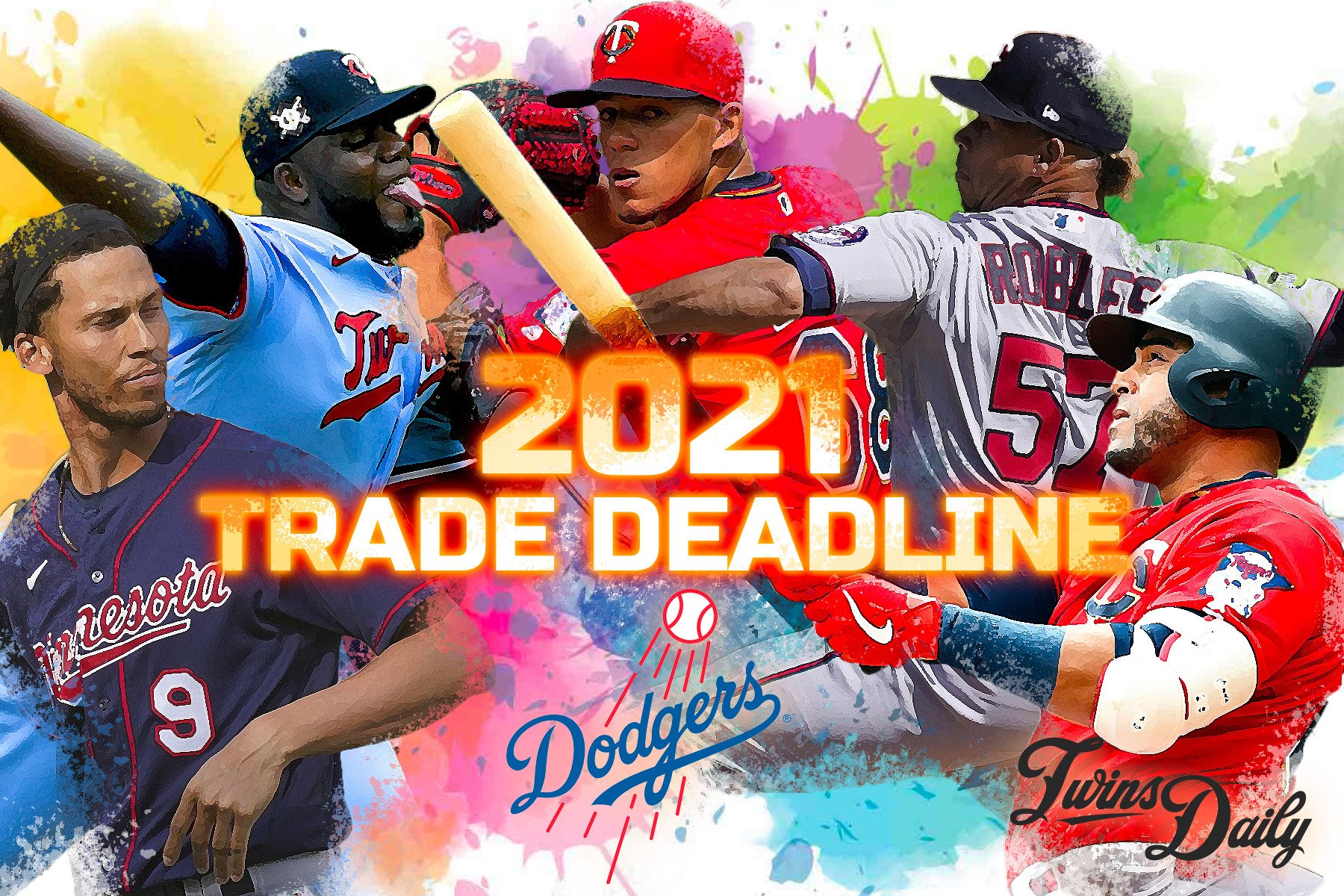 What's Their Situation? Coming into the season, everyone expected the Dodgers and Padres to be battling it out for the NL Central crown, which has belonged to the Dodgers for eight consecutive seasons. To almost everyone's surprise, neither team is in first place, as the San Francisco Giants have been baseball's best team over the first 94 games of the season. Nonetheless, the Dodgers are only one game back from the division lead, four-and-a-half games ahead of the Padres, and their odds to make the playoffs are at 99.8-percent, according to Fangraphs. Moreover, they are currently the odds-on favorite to win the 2021 World Series, per Fangraphs and nearly every Sports Book. What Do They Need? The Dodgers are one of the best teams in baseball across the board but could benefit from adding some combination of multiple relievers and starters at the deadline. They've been without young phenom Dustin May, who was putting up Cy Young numbers through the first month of the season before needing Tommy John Surgery at the beginning of May, and it's likely they are down Trevor Bauer for the rest of the season as well. Adding to their list of unknowns, they placed future Hall of Famer Clayton Kershaw on the IL before the All-Star Break with elbow soreness. They have top-end bullpen arms in Kenley Jansen, Blake Treinen, Jimmy Nelson, not to mention getting solid production from Phil Bickford but could use another reliever to bridge the gap between their starters and the backend of their bullpen. I can't imagine adding offense will be much of a priority for the Dodgers, but adding a right-handed bat isn't out of the question as they have struggled against left-handed pitching. Which Twins Are The Best Fit? Theoretically, the Twins have arms that could fit the Dodgers need, but, unfortunately, those same guys are a big part of why the Twins are sellers at the 2021 deadline and likely wouldn't garner a lot of interest or return on investment. Alex Colomé, Hansel Robles, J.A. Happ, and Matt Shoemaker are the players referenced above, who are undoubtedly available. Still, their collective performance makes you wonder if they'll be DFA'd on August 1st rather than traded on July 31st. That brings us to the most valuable MLB-ready arms the Twins have: Michael Pineda, José Berríos, Taylor Rogers, and Tyler Duffey. Except for Michael Pineda, a free agent at the end of this season, the other three are all slated to enter free agency following the 2022 season. I'd even add the most under-appreciated Twins pitcher, 34-year-old Caleb Thielbar, to the list of trade candidates, especially considering he's cheap with three years of team control remaining. What Could the Twins Get Back? Despite their successes over the last eight years, they still have one of the better farm systems in all of baseball boasting three to four top-100 prospects depending on the source. I believe that the Twins need to retool in 2022 and be ready to compete again in 2023, so I'd like to see them add pieces that might be ready to contribute at that point. As previously pointed out, the Twins have a wide range of parts that could create a blockbuster deal all the way down to a deal that makes the bottom of the back page in the sports section. Josiah Gray, RHP, 23yo - up until 2018 Gray was a shortstop but has since transitioned to pitching and sports a 2.41 ERA and a 10.4 K/9 over 200 minor league innings. Despite the 2020 season mainly being a loss for Minor Leaguers, Gray did well enough at the alternate site to be added to the Dodgers playoff bubble roster, although he never pitched an inning. He's a top-100 guy across the board and would likely require Berríos plus one of Rogers or Duffey to make his way to the Twins organization. Michael Busch, Util, 23yo - although he's played primarily at second with the Dodgers, he has experience at first and in the outfield from his time at the University of North Carolina. He was drafted 31st overall in 2019 but almost immediately broke his hand on a hit-by-pitch making 2021 his first real season as a pro. From Keith Law in February of 2021: "...his hit tool gives him the chance to become an All-Star," and he goes on to say "...could be an impact regular even just as a walks/power guy, but I think he's going to hit for average as well." Busch is another top-100 guy across the board and would likely require a significant package to grab him from the Dodgers. Oh, and he is from Inver Grove Heights and was a three-sport star at Simley High School. Bobby Miller, RHP, 22yo Andre Jackson, RHP, 25yo Mitch White, RHP, 26yo I group these guys because they are at least a tier lower than the Gray and Busch, have their own flaws, but also have reasons they can contribute to the Twins soon. Miller is the Twins prototype mid-high 90's fastball with a slider that needs work along with his command of the zone. Jackson was a two-way player in college who needs more seasoning as a pitcher and is already 25-years-old and thus would be cheaper while offering a decent ceiling. White is another Twins prototype and, when he's healthy, which is an issue, he's been good and has been a decent arm for the Dodgers this year.
 -
Pohlad: Twins "Absolutely Not" Having a Firesale
Matthew Lenz replied to Brock Beauchamp's topic in Minnesota Twins Talk
I don't think the Twins should trade anyone who is under contract beyond this season, unless they are admitting to a full rebuild. And if that's case, then we better see the FO overhauled. If I'm GM for a day, here's how I would handle the current roster: trade all expiring contracts, even if it's for a bucket o' balls. trade Astudillo because watching him play drives me nuts. Continue to work with Buxton on a deal. Keep Berrios until at least the 2022 deadline and see where he/the team is at in terms of the World Series (not just playoffs) picture. If they're out of it (likely)...deal him. If they're in it (long shot)...keep him and gain a comp pick when he signs elsewhere. Keep Maeda, Donaldson, Kepler, and Polanco for the duration of their contracts. We'll see the core change over the next few years (Kirilloff, Larnach, Lewis, Balazovich, Wallner, etc) and we will need their veteran presence/leadership. Garver and Arraez are valuable and should stay. Sano has no value so needs to stay. -
The San Diego Padres are nearly a lock to make the playoffs, but they need to add some pieces to compete for their first World Series title in their 53 season history, where they've otherwise been primarily bottom dwellers. Can they strike a deal with the Twins to take the next step? The San Diego Padres are nearly a lock to make the playoffs, but they need to add some pieces to compete for their first World Series title in their 53 season history, where they've otherwise been primarily bottom dwellers. Can they strike a deal with the Twins to take the next step? What's Their Situation? Coming into the season, everyone expected the Padres and Dodgers to be battling it out for the NL Central crown, which the Padres haven't won since they went back-to-back in 2006 and 2007. To almost everyone's surprise, neither team is in first place, as the San Francisco Giants have been baseball's best team over the first 94 games of the season. And even though they find themselves 5.5 games behind the division leader and in third place, FanGraphs has their odds to make the postseason at 92.3-percent, making them the second Wild Card team and likely facing the Dodgers or Giants in the Wild Card round. Currently, the Padres are tied with the Mets with an 8.0-percent chance to win the World Series, which is 5th best in the league. What Do They Need? Like the Dodgers, but even more so, the Padres need starting and relief pitching. The Padres are 23rd in all of baseball in getting innings from their starters, leading them to use their relievers the most in baseball. Aside from Yu Darvish, who is currently on the IL and has struggled since the MLB cracked down on "sticky stuff," they don't have any top-end arms in their rotation or bullpen. That said, they have gotten good production from Joe Musgrove (SP), Emilio Pagan (RP), Pierce Johnson (RP), and Austin Adams (RP). They could also use a right-handed bat as they are a mediocre team against left-handed pitching. Which Twins Are The Best Fit? It remains to be seen if anyone will be willing to add any of the Twins expiring contracts who are at least partially responsible for the Twins being sellers in 2021. That said, I think the Twins could DFA Alex Colomé, Hansel Robles, J.A. Happ, or Matt Shoemaker on August 1st if they aren't moved the day before. In short, they would likely take anything (PTBNL or cash) as their return on investment rather than just giving up the players for free. Of course, the headliners for the Twins are José Berríos, Taylor Rogers, and Tyler Duffey, but I think Michael Pineda and Caleb Thielbar could be intriguing trade candidates as well. Thielbar is one of the most under-appreciated Twins, and despite being 34-years-old, he still has three years of team control remaining. What Could the Twins Get Back? The Padres have been very active on the trade market in recent years yet boast one of the best farm systems in baseball. They feature four to five top-100 guys depending on the source and two guys in the top-10. Moreover, many of their top prospects are close to getting their crack at contributing in the Major Leagues. You'll notice that shortstop CJ Abrams, a headliner prospect, isn't on this list because he recently fractured his leg, and I don't see the Padres willing to "sell low" on a player with such a high ceiling. MacKenzie Gore, LHP, 22yo - Gore is one the best prospects in all of baseball and would require a haul to acquire from the Padres if he's even available at all. That said, aside from 101 innings in 2019, he's struggled in the Minors, where he has a 5.85 ERA and is issuing 5.4 walks per nine innings. He fits the current Twins mold, high 90's fastball with a slider, and maybe his struggles have the Padres ready to move on. Robert Hassel, OF, 19yo - I'd be remiss if I didn't have Hassel on this list as he's a high-level prospect that would be hard to pass up if he's available, but he is another left-handed hitter of which the Twins are loaded (Luis Arraez, Jorge Polanco, Alex Kirilloff, Trevor Larnach, and Matt Walner). That said, with his upside, it could provide a future replacement if they were unable to extend Byron Buxton, although his defense obviously would be a significant downgrade. Ryan Weathers, LHP, 21yo - despite having less than 130 innings in the minors, Weathers has been forced to the Majors, where he has fared pretty well thru 58.2 innings. His xERA (5.29) and FIP (4.54) aren't favorable, but to this point, he has posted a 2.91 ERA and a K/BB of 2.33, which is decent. Like Gore, Weathers has a high-velocity fastball and a slider, although his best secondary pitch is his change-up. He's a step down from the first three prospects mentioned and thus more available and cheaper. Reggie Lawson, RHP, 23yo Justin Lange, RHP, 19yo Anderson Espinoza, RHP, 23yo I grouped these guys because they are intriguing, a tier or two below weathers, and have flaws that would make them cheaper. All would be a risk to take on, especially Lawson and Espinoza, who have battled injuries in their time in the Minors. Lawson, who just recently returned to the mound, has a mid-90's fastball with plus offspeed. Espinoza, who hadn't pitched since 2016, has struggled this year to be expected after such a long layoff and was pumping high 90's in spring training. The risk in adding Lange is that he's only 19-years-old who can hit triple digits, making his health and development a bit of a wild card. View full article
- 14 replies
-
- 1
-

-
- 2021 trade deadline
- michael pineda
- (and 1 more)
-
 What's Their Situation? Coming into the season, everyone expected the Padres and Dodgers to be battling it out for the NL Central crown, which the Padres haven't won since they went back-to-back in 2006 and 2007. To almost everyone's surprise, neither team is in first place, as the San Francisco Giants have been baseball's best team over the first 94 games of the season. And even though they find themselves 5.5 games behind the division leader and in third place, FanGraphs has their odds to make the postseason at 92.3-percent, making them the second Wild Card team and likely facing the Dodgers or Giants in the Wild Card round. Currently, the Padres are tied with the Mets with an 8.0-percent chance to win the World Series, which is 5th best in the league. What Do They Need? Like the Dodgers, but even more so, the Padres need starting and relief pitching. The Padres are 23rd in all of baseball in getting innings from their starters, leading them to use their relievers the most in baseball. Aside from Yu Darvish, who is currently on the IL and has struggled since the MLB cracked down on "sticky stuff," they don't have any top-end arms in their rotation or bullpen. That said, they have gotten good production from Joe Musgrove (SP), Emilio Pagan (RP), Pierce Johnson (RP), and Austin Adams (RP). They could also use a right-handed bat as they are a mediocre team against left-handed pitching. Which Twins Are The Best Fit? It remains to be seen if anyone will be willing to add any of the Twins expiring contracts who are at least partially responsible for the Twins being sellers in 2021. That said, I think the Twins could DFA Alex Colomé, Hansel Robles, J.A. Happ, or Matt Shoemaker on August 1st if they aren't moved the day before. In short, they would likely take anything (PTBNL or cash) as their return on investment rather than just giving up the players for free. Of course, the headliners for the Twins are José Berríos, Taylor Rogers, and Tyler Duffey, but I think Michael Pineda and Caleb Thielbar could be intriguing trade candidates as well. Thielbar is one of the most under-appreciated Twins, and despite being 34-years-old, he still has three years of team control remaining. What Could the Twins Get Back? The Padres have been very active on the trade market in recent years yet boast one of the best farm systems in baseball. They feature four to five top-100 guys depending on the source and two guys in the top-10. Moreover, many of their top prospects are close to getting their crack at contributing in the Major Leagues. You'll notice that shortstop CJ Abrams, a headliner prospect, isn't on this list because he recently fractured his leg, and I don't see the Padres willing to "sell low" on a player with such a high ceiling. MacKenzie Gore, LHP, 22yo - Gore is one the best prospects in all of baseball and would require a haul to acquire from the Padres if he's even available at all. That said, aside from 101 innings in 2019, he's struggled in the Minors, where he has a 5.85 ERA and is issuing 5.4 walks per nine innings. He fits the current Twins mold, high 90's fastball with a slider, and maybe his struggles have the Padres ready to move on. Robert Hassel, OF, 19yo - I'd be remiss if I didn't have Hassel on this list as he's a high-level prospect that would be hard to pass up if he's available, but he is another left-handed hitter of which the Twins are loaded (Luis Arraez, Jorge Polanco, Alex Kirilloff, Trevor Larnach, and Matt Walner). That said, with his upside, it could provide a future replacement if they were unable to extend Byron Buxton, although his defense obviously would be a significant downgrade. Ryan Weathers, LHP, 21yo - despite having less than 130 innings in the minors, Weathers has been forced to the Majors, where he has fared pretty well thru 58.2 innings. His xERA (5.29) and FIP (4.54) aren't favorable, but to this point, he has posted a 2.91 ERA and a K/BB of 2.33, which is decent. Like Gore, Weathers has a high-velocity fastball and a slider, although his best secondary pitch is his change-up. He's a step down from the first three prospects mentioned and thus more available and cheaper. Reggie Lawson, RHP, 23yo Justin Lange, RHP, 19yo Anderson Espinoza, RHP, 23yo I grouped these guys because they are intriguing, a tier or two below weathers, and have flaws that would make them cheaper. All would be a risk to take on, especially Lawson and Espinoza, who have battled injuries in their time in the Minors. Lawson, who just recently returned to the mound, has a mid-90's fastball with plus offspeed. Espinoza, who hadn't pitched since 2016, has struggled this year to be expected after such a long layoff and was pumping high 90's in spring training. The risk in adding Lange is that he's only 19-years-old who can hit triple digits, making his health and development a bit of a wild card.
- 14 comments
-
- 1
-
-
- 2021 trade deadline
- michael pineda
- (and 1 more)
-
Game Score: Twins 3, White Sox 2
Matthew Lenz replied to Matthew Lenz's topic in Twins Daily Front Page News
I hope you comeback and read the recap now that I have it done. I give you some tidbits to watch for moving forward and address why you should have hope for Jax! -
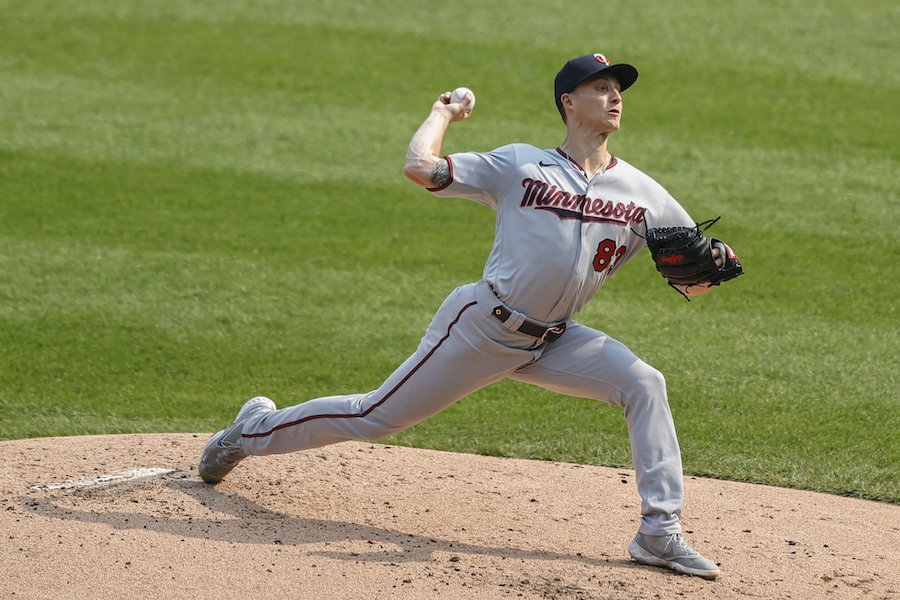
It took “extras” but the Twins were able to open the four-game series against the White Sox with a 3-2 win. They improved to 40-53 on the season and 6-9 in “extra innings” all thanks to a rookie and a seasoned vet. That and more in today’s first recap! Image courtesy of © Kamil Krzaczynski-USA TODAY Sports It took “extras” but the Twins were able to open the four-game series against the White Sox with a 3-2 win. They improved to 40-53 on the season and 6-9 in “extra innings” all thanks to a rookie and a seasoned vet. That and more in today’s first recap! Box Score Griffin Jax: 4.0 IP, 1 H, 1 ER, 1 BB, 6 K (63.2% strikes) Homeruns: Cruz (19) Top 3 WPA: Cruz (.310), Duffey (.310), Robles (.201) Win Probability Chart (via Fangraphs) Griffin Jax Lights Out If things had gone as planned in 2021, Jax would likely be enjoying an off day in St. Paul recovering after celebrating a walk off victory against the Columbus Clippers on Sunday night. Instead, the Twins plans were more-or-less thwarted by mid-April and Jax has been thrusted into a semi-regular role as a spot starter for the Big League Club. All things considered, he’s fared well in most of his starts and had a banner day in game one against the White Sox. Albeit a short career to this point, he set a career high striking out six batters over four frames with the lone hit and earned run coming on a pitch that you can barely call a mistake. If we really want to nitpick you could say he left the ball up just a bit too much, especially considering Tim Anderson has a career .490 slugging on low and away fastballs in his career. That said, I think I’ll give the rookie a break here considering the day he had. So was today just a guy having a day or is there more to it? I’ll let Jeremy Maschino of State Street Podcast and our own Parker Hageman answer that. Thanks to the increased movement, Jax was able to generate 16 whiffs on just 68 pitches which equates to an ungodly rate of 23.5-percent. It’s hard to know what the near future plans are for Jax, but undoubtedly we will be seeing more of him this season and he’s set a new standard of what to watch for. It’ll be little tidbits like that that should keep you watching the Twins in a lost season. Offense 2nd Half Struggles Continue To be fair, Lance Lynn has been really good this year for the White Sox...like sub-2.00 ERA good. Had he not given up a 375 foot bomb to Nelson Cruz in the top of the sixth, he would have been credited with his second complete game shutout of the season. It was Cruz’s 436th career home run, the 46th most all-time, and his 76th homerun as a member of the Minnesota Twins. The only guy to defeat “father time”, at least for now, wasn’t done as he gave the Twins the lead in the top of the eighth with a broken bat sacrifice fly that scored pinch-runner Gilbert Celestino. Jorge Polanco added his second hit and first RBI on the day in the very next at-bat with a single to right that scored Luis Arraez, who just snuck in thanks to a crafty slide at the plate. Also of note was Arraez adding two more hits and surpassing the .300 plateau on the season and Ryan Jeffers notching two hits of his own. Speaking of Arraez, he is very close to having enough at-bats to qualify for 11th in all of baseball and one spot ahead of Cruz. Again, little tidbits to keep an eye that will make the Twins a little more enjoyable. Bullpen Usage Jorge Alcala and Taylor Rogers came on in the fifth and sixth, respectively, combining for two hits and three strikeouts. Things got verrrrrry interesting in the bottom of the 7th when Tyler Duffey was one pitch away from walking the bases loaded with two outs, but was bailed out by an Anderson pop up on a 3-0 count that would have been ball four. Aside from giving up a ground rule double to Jose Abreu, Hansel Robles earned the save striking out two batters in the bottom of the eighth. THU FRI SAT SUN MON TOT Burrows 0 0 32 0 0 32 Rogers 0 0 21 0 19 40 Robles 0 0 18 0 19 37 Minaya 0 0 0 13 0 13 Thielbar 0 0 0 0 0 0 Duffey 0 0 0 0 16 16 Colomé 0 0 0 0 0 0 Alcala 0 0 0 0 23 23 View full article
-
 Box Score Griffin Jax: 4.0 IP, 1 H, 1 ER, 1 BB, 6 K (63.2% strikes) Homeruns: Cruz (19) Top 3 WPA: Cruz (.310), Duffey (.310), Robles (.201) Win Probability Chart (via Fangraphs) Griffin Jax Lights Out If things had gone as planned in 2021, Jax would likely be enjoying an off day in St. Paul recovering after celebrating a walk off victory against the Columbus Clippers on Sunday night. Instead, the Twins plans were more-or-less thwarted by mid-April and Jax has been thrusted into a semi-regular role as a spot starter for the Big League Club. All things considered, he’s fared well in most of his starts and had a banner day in game one against the White Sox. Albeit a short career to this point, he set a career high striking out six batters over four frames with the lone hit and earned run coming on a pitch that you can barely call a mistake. If we really want to nitpick you could say he left the ball up just a bit too much, especially considering Tim Anderson has a career .490 slugging on low and away fastballs in his career. That said, I think I’ll give the rookie a break here considering the day he had. So was today just a guy having a day or is there more to it? I’ll let Jeremy Maschino of State Street Podcast and our own Parker Hageman answer that. Thanks to the increased movement, Jax was able to generate 16 whiffs on just 68 pitches which equates to an ungodly rate of 23.5-percent. It’s hard to know what the near future plans are for Jax, but undoubtedly we will be seeing more of him this season and he’s set a new standard of what to watch for. It’ll be little tidbits like that that should keep you watching the Twins in a lost season. Offense 2nd Half Struggles Continue To be fair, Lance Lynn has been really good this year for the White Sox...like sub-2.00 ERA good. Had he not given up a 375 foot bomb to Nelson Cruz in the top of the sixth, he would have been credited with his second complete game shutout of the season. It was Cruz’s 436th career home run, the 46th most all-time, and his 76th homerun as a member of the Minnesota Twins. The only guy to defeat “father time”, at least for now, wasn’t done as he gave the Twins the lead in the top of the eighth with a broken bat sacrifice fly that scored pinch-runner Gilbert Celestino. Jorge Polanco added his second hit and first RBI on the day in the very next at-bat with a single to right that scored Luis Arraez, who just snuck in thanks to a crafty slide at the plate. Also of note was Arraez adding two more hits and surpassing the .300 plateau on the season and Ryan Jeffers notching two hits of his own. Speaking of Arraez, he is very close to having enough at-bats to qualify for 11th in all of baseball and one spot ahead of Cruz. Again, little tidbits to keep an eye that will make the Twins a little more enjoyable. Bullpen Usage Jorge Alcala and Taylor Rogers came on in the fifth and sixth, respectively, combining for two hits and three strikeouts. Things got verrrrrry interesting in the bottom of the 7th when Tyler Duffey was one pitch away from walking the bases loaded with two outs, but was bailed out by an Anderson pop up on a 3-0 count that would have been ball four. Aside from giving up a ground rule double to Jose Abreu, Hansel Robles earned the save striking out two batters in the bottom of the eighth. THU FRI SAT SUN MON TOT Burrows 0 0 32 0 0 32 Rogers 0 0 21 0 19 40 Robles 0 0 18 0 19 37 Minaya 0 0 0 13 0 13 Thielbar 0 0 0 0 0 0 Duffey 0 0 0 0 16 16 Colomé 0 0 0 0 0 0 Alcala 0 0 0 0 23 23
 -
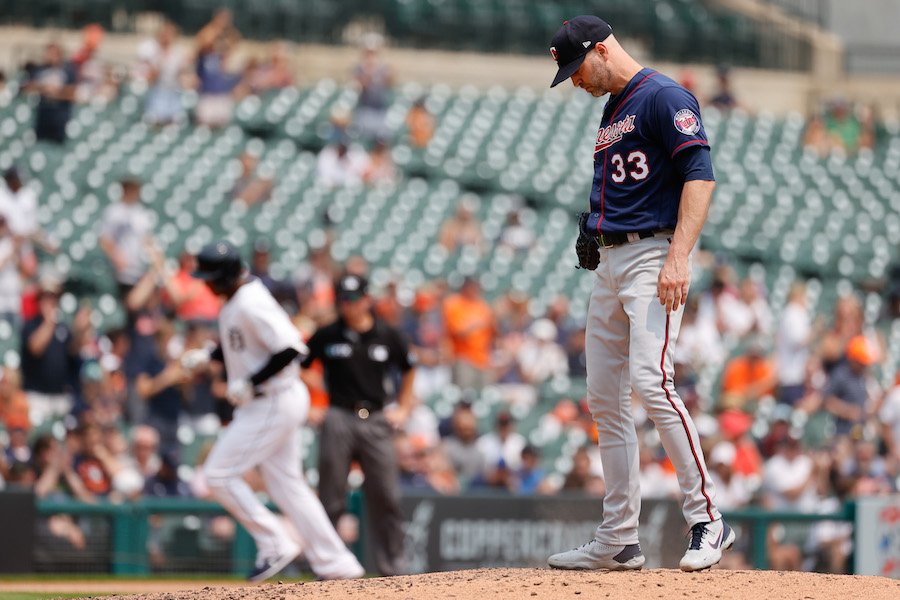
The Twins couldn’t make another late inning comeback and fell to the Tigers 7-0 in Sunday matinee. They fall to 39-53 on the season after getting swept in Detroit. That and more in today’s recap. Image courtesy of © Rick Osentoski-USA TODAY Sports The Twins couldn’t make another late inning comeback and fell to the Tigers 7-0 in Sunday matinee. They fall to 39-53 on the season after getting swept in Detroit. That and more in today’s recap. Box Score J.A. Happ: 7.0 IP, 11 H, 7 ER, 1 BB, 4 K (65% strikes) Homeruns: none Bottom 3 WPA: Happ (-.195), Cruz (-.134), Larnach (-.111) Win Probability Chart (via Fangraphs) Happ Eats Innings...And That’s About It. I don’t mean to sound ungrateful about Happ giving the Twins seven innings in a single game surrounded by double headers, but it’s hard to be appreciative when his heat map looked like this through five innings. The red zone in the middle only got bigger throughout his last two innings, which is how you end up with 1 walk and 65% strikes (good) but allowing 11 hits and seven earned runs (baaad). He was efficient to a fault on Sunday and even generated a 15.4-percent swinging strike rate, but ultimately threw too many hittable pitches as the Tigers had an xBA of .299 against Happ. On the year, Happ’s ERA now sits at 6.15 and, using FanGraphs Game Score metric, has pitched as many below average games as above average. Furthermore, his “above average” games are barely that, whereas a few of his below average games have been really, really bad. At this point, it’s hard to see Happ having any value to anyone and it will be interesting to see how long he’s on the roster, if he makes it to the trade deadline. Offense Lifeless Against Detroit..Again The Twins were only able to muster up six hits against the Tigers, and three of those hits were quickly erased with double plays from Nelson Cruz, Max Kepler, and Trevor Larnach. It's worth noting that the Twins may have had a bit of bad luck today as they're xBA was .308 and their actual team batting average was a measly .206. As if scoring zero runs wasn't enough to show the lack of highlights for the day, I usually like to embed tweets from the Twins or Bally's Sports North for replays but even they didn't have anything to tweet during the game. Ouch. It was encouraging to see Larnach get two hits today as he was in a considerable slump in the week leading up to the All-Star break and had gone a combined 0-for-6 during the Saturday doubleheader. The other lone bright spot on the day was Luis Arraez who had a couple great at-bats and ended the day with two hits of his own, including the Twins only extra-base hit of the day. Getting shutout by a team that is eight games below .500 isn't good and the Twins did it twice in two days. Along with the offense, the only thing that is going to make this team enjoyable to watch is the emergence of the young talent over the next couple months. We may not have a lot of highlights but hopefully we'll have a lot of hopeful signs for 2022 and beyond. Bullpen Usage Juan Minaya, who was just recalled from St. Paul, came on to pitch the eighth inning where he faced the minimum and struck out a batter. He's only thrown 7.1 innings in 2021 but with the state of the Twins season and bullpen, I'd hope to see him stick with the club and improve on his 3.68 ERA. WED THU FRI SAT SUN TOT Burrows 0 0 0 32 0 32 Rogers 0 0 0 21 0 21 Robles 0 0 0 18 0 18 Minaya 0 0 0 0 13 13 Thielbar 0 0 0 0 0 0 Duffey 0 0 0 0 0 0 Colomé 0 0 0 0 0 0 Alcala 0 0 0 0 0 0 The Twins travel to Chicago for another double header against the White Sox on Monday followed by night caps on Tuesday and Wednesday before coming back home on Thursday. View full article
-
 Box Score J.A. Happ: 7.0 IP, 11 H, 7 ER, 1 BB, 4 K (65% strikes) Homeruns: none Bottom 3 WPA: Happ (-.195), Cruz (-.134), Larnach (-.111) Win Probability Chart (via Fangraphs) Happ Eats Innings...And That’s About It. I don’t mean to sound ungrateful about Happ giving the Twins seven innings in a single game surrounded by double headers, but it’s hard to be appreciative when his heat map looked like this through five innings. The red zone in the middle only got bigger throughout his last two innings, which is how you end up with 1 walk and 65% strikes (good) but allowing 11 hits and seven earned runs (baaad). He was efficient to a fault on Sunday and even generated a 15.4-percent swinging strike rate, but ultimately threw too many hittable pitches as the Tigers had an xBA of .299 against Happ. On the year, Happ’s ERA now sits at 6.15 and, using FanGraphs Game Score metric, has pitched as many below average games as above average. Furthermore, his “above average” games are barely that, whereas a few of his below average games have been really, really bad. At this point, it’s hard to see Happ having any value to anyone and it will be interesting to see how long he’s on the roster, if he makes it to the trade deadline. Offense Lifeless Against Detroit..Again The Twins were only able to muster up six hits against the Tigers, and three of those hits were quickly erased with double plays from Nelson Cruz, Max Kepler, and Trevor Larnach. It's worth noting that the Twins may have had a bit of bad luck today as they're xBA was .308 and their actual team batting average was a measly .206. As if scoring zero runs wasn't enough to show the lack of highlights for the day, I usually like to embed tweets from the Twins or Bally's Sports North for replays but even they didn't have anything to tweet during the game. Ouch. It was encouraging to see Larnach get two hits today as he was in a considerable slump in the week leading up to the All-Star break and had gone a combined 0-for-6 during the Saturday doubleheader. The other lone bright spot on the day was Luis Arraez who had a couple great at-bats and ended the day with two hits of his own, including the Twins only extra-base hit of the day. Getting shutout by a team that is eight games below .500 isn't good and the Twins did it twice in two days. Along with the offense, the only thing that is going to make this team enjoyable to watch is the emergence of the young talent over the next couple months. We may not have a lot of highlights but hopefully we'll have a lot of hopeful signs for 2022 and beyond. Bullpen Usage Juan Minaya, who was just recalled from St. Paul, came on to pitch the eighth inning where he faced the minimum and struck out a batter. He's only thrown 7.1 innings in 2021 but with the state of the Twins season and bullpen, I'd hope to see him stick with the club and improve on his 3.68 ERA. WED THU FRI SAT SUN TOT Burrows 0 0 0 32 0 32 Rogers 0 0 0 21 0 21 Robles 0 0 0 18 0 18 Minaya 0 0 0 0 13 13 Thielbar 0 0 0 0 0 0 Duffey 0 0 0 0 0 0 Colomé 0 0 0 0 0 0 Alcala 0 0 0 0 0 0 The Twins travel to Chicago for another double header against the White Sox on Monday followed by night caps on Tuesday and Wednesday before coming back home on Thursday.
 -
Interesting! I stand corrected. I still can't imagine they'll go less than that but maybe they'll do something like the NFL with the split-screen commercials.
-
That rule isn't changing and it has nothing to do with the players. Less time between innings means less commercials means less money.
-
But we know that the mid innings aren't 2 minutes long to get the pitchers and position players their warm ups...right?
