


Twins Video
Prospect rankings are constantly changing, but some jumps are more meaningful than others. MLB Pipeline recently completed its final Top 100 update of the 2026 calendar year. Those rankings can provide plenty of entertainment for fans, but they also have practical value for organizations trying to determine which prospects could be moved in trades to strengthen a big-league roster.
For the Minnesota Twins, one of the biggest risers on the list was shortstop Marek Houston. Houston jumped from No. 71 to No. 54, tied for the second-largest rise among all prospects in the latest update. That movement is even more impressive when considering where Houston started the year. He wasn't even included in MLB Pipeline's Top 100 entering the 2026 season.
So, what changed? Quite a bit.
Houston's Bat Took a Significant Step Forward
Houston entered professional baseball with a reputation for being an outstanding defensive shortstop who could hit enough to become an everyday player. The question was whether his offensive game would develop enough to raise his overall ceiling.
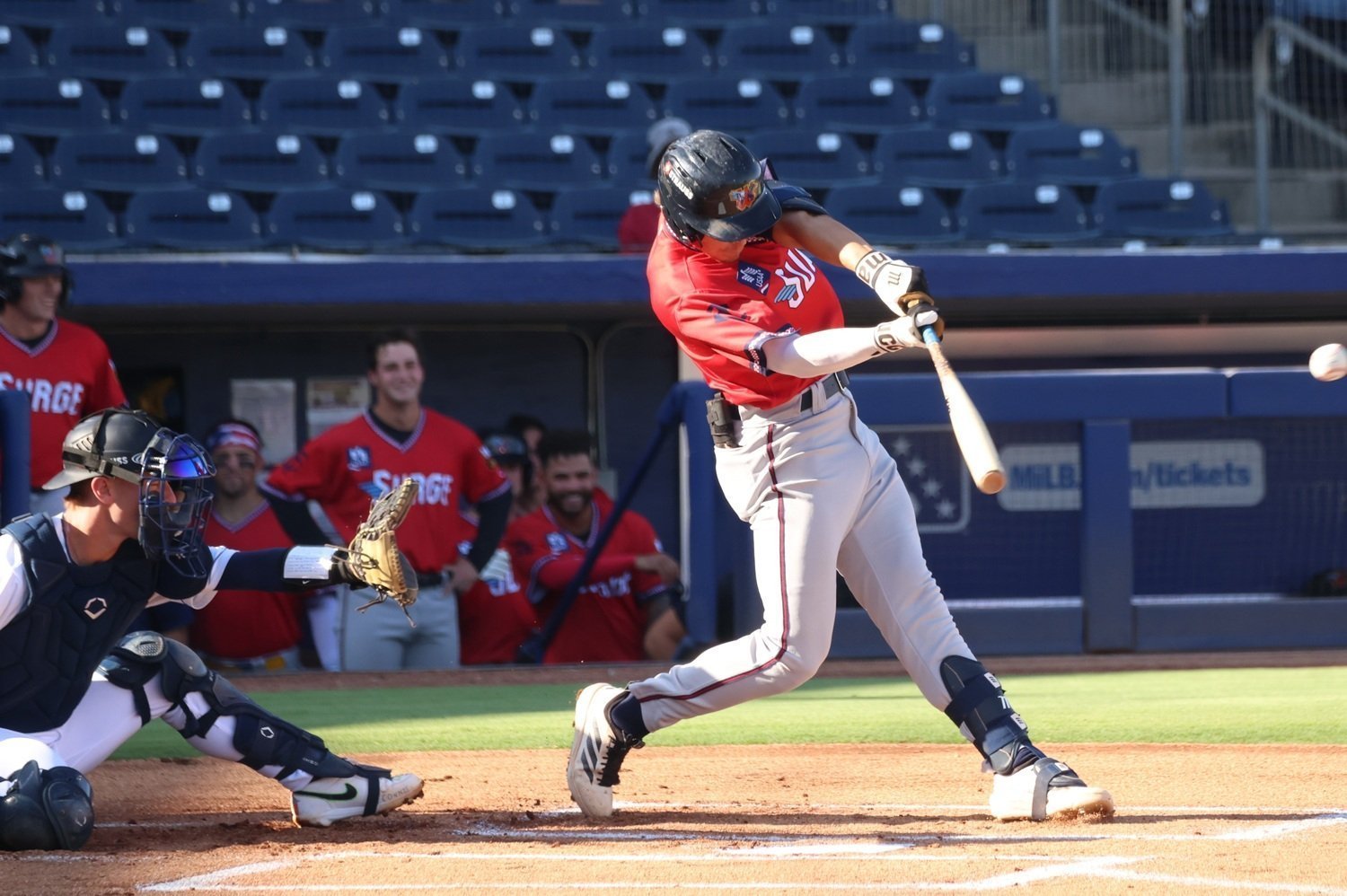
His 2026 season provided an encouraging answer. Houston spent the entire year between High-A Cedar Rapids and Double-A Wichita, producing a .312/.392/.455 slash line with 12 home runs, 28 doubles, 50 stolen bases and a 120 wRC+ over 116 games.
The production remained relatively consistent after his promotion to Double-A. At Cedar Rapids, Houston hit .325/.406/.461 with an .867 OPS. He posted a .301/.379/.450 line with an .829 OPS at Wichita. His wRC+ remained above league average at both stops, a particularly encouraging development for a player who was viewed more as a glove-first prospect coming out of college.
Houston's offensive profile isn't built around one overwhelming tool. Instead, it is becoming a combination of contact ability, plate discipline, speed and enough emerging power to make pitchers pay for mistakes.
There was a brief period late in the summer when it looked like the grind of his first full professional season might be catching up with him. Houston struggled during August (.580 OPS), but he quickly found his stroke again. He finished the season on a 10-game hitting streak, batting .405 with eight strikeouts and seven walks across 50 plate appearances. He had a .941 OPS in September, which was higher than his season average.
That type of finish matters. Houston didn't simply survive his first full season. He responded to his first significant slump and finished the year looking like the player who had forced the Twins to challenge him with a Double-A assignment.
The Glove Gives Houston a High Floor
Even if Houston's offensive development had been slower, there would still be plenty to like about his long-term outlook because of his defense. Houston was regarded as one of the best defensive shortstops in the 2025 draft class, and that reputation has carried into professional baseball. His actions are smooth, his range allows him to make plays on both sides of the bag, and he has more than enough arm strength for the position.
That combination is important. There are plenty of prospects who can hit their way into a Top 100 ranking. Houston's defensive ability gives him a much stronger floor because he doesn't need to become an elite offensive player to provide value.
He has a chance to be a plus defender at shortstop at the major-league level, with the range and arm strength to remain at the position. That gives the Twins an extremely valuable combination: a player who can potentially provide Gold Glove-caliber defense while also contributing offensively. It's also one reason Houston could move relatively quickly through the organization.
Speed is another major part of the profile. Houston's speed is easy to overlook when discussing his development, because his defensive ability and improving bat receive so much attention. It shouldn't be overlooked, though, if only because it augments and facilitates both of those tools.
He stole 27 bases during his three-year Wake Forest career, including 19 steals in 2025. He was successful on 19 of 21 attempts during his junior season, helping establish the speed that would become an even bigger part of his professional game.
Houston took that part of his game to another level in 2026. He stole 50 bases between Cedar Rapids and Wichita, giving him 57 stolen bases in his first two professional seasons. That is more than just a nice statistical addition. His speed complements the rest of his offensive profile. A player who gets on base at a solid clip, puts the ball in play and can immediately turn a single or walk into scoring position becomes much more dangerous when he also plays a premium defensive position.
Houston doesn't need to become a 20-home-run hitter to have an impact. His ability to get on base and create pressure with his legs gives the offensive profile another dimension.
Where Can Houston Still Improve?
The biggest question is consistency at the plate. Houston has already made significant strides, but there is still room for the offensive profile to become more complete. The easiest path toward a Top 50 ranking would be adding a little more power without sacrificing the skills that have made him successful.
Houston will probably always be more of a hit-and-on-base player than a pure power hitter. That's not a bad thing. But he can continue adjusting his swing to create more loft and generate harder contact in the air.
That was an area of focus throughout the 2026 season. Houston has continued working with the Twins on his swing path since joining the organization, and the results have been encouraging. The goal hasn't been to sell out for power. Instead, he has worked to find better line-drive angles and barrel the baseball more consistently.
Adding strength and muscle has also helped address some of the questions surrounding his future impact at the plate. If Houston can turn some of those line drives into extra-base hits without losing his contact skills, patience or speed, his offensive ceiling will continue to rise.
Houston's jump from No. 71 to No. 54 on MLB Pipeline's Top 100 isn't simply the result of a strong batting average or a prospect evaluator falling in love with a hot streak. It's the result of a player improving in multiple areas at once.
The defense was already a major strength. The speed was already evident. What Houston needed to show was that his bat could hold up against professional pitching and eventually against more advanced competition. He did that.
Houston went from being outside the Top 100 entering the season to becoming a Top 55 prospect after completing his first full professional campaign. He reached Double-A, stole 50 bases, posted a 120 wRC+ and demonstrated that his offensive game has more upside than originally expected.
There is still work to do. More power would make his profile considerably more dangerous and could eventually push him into the Top 50. But that's the exciting part for the Twins. Houston doesn't need to completely reinvent himself to become a legitimate major-league shortstop. He already has the glove, speed and contact ability. If the offensive adjustments he's making continue to produce better quality of contact, his prospect stock could keep climbing in 2027.
And considering where he started this year, it would be foolish to assume No. 54 is anywhere close to his final destination.
How high will Houston rise on other national top-100 lists? Leave a comment and start the discussion.
Do you approve of the job Derek Shelton is doing as Twins manager?

Interested in learning more about the Minnesota Twins' top prospects? Check out our comprehensive top prospects list that includes up-to-date stats, articles and videos about every prospect, scouting reports, and more!
View Twins Top ProspectsFollow Twins Daily For Minnesota Twins News & Analysis



- Hrbeks Divot, DocBauer, arby58 and 6 others
-
 9


Recommended Comments
Create an account or sign in to comment
You need to be a member in order to leave a comment
Create an account
Sign up for a new account in our community. It's easy!
Register a new accountSign in
Already have an account? Sign in here.
Sign In Now