


Twins Video
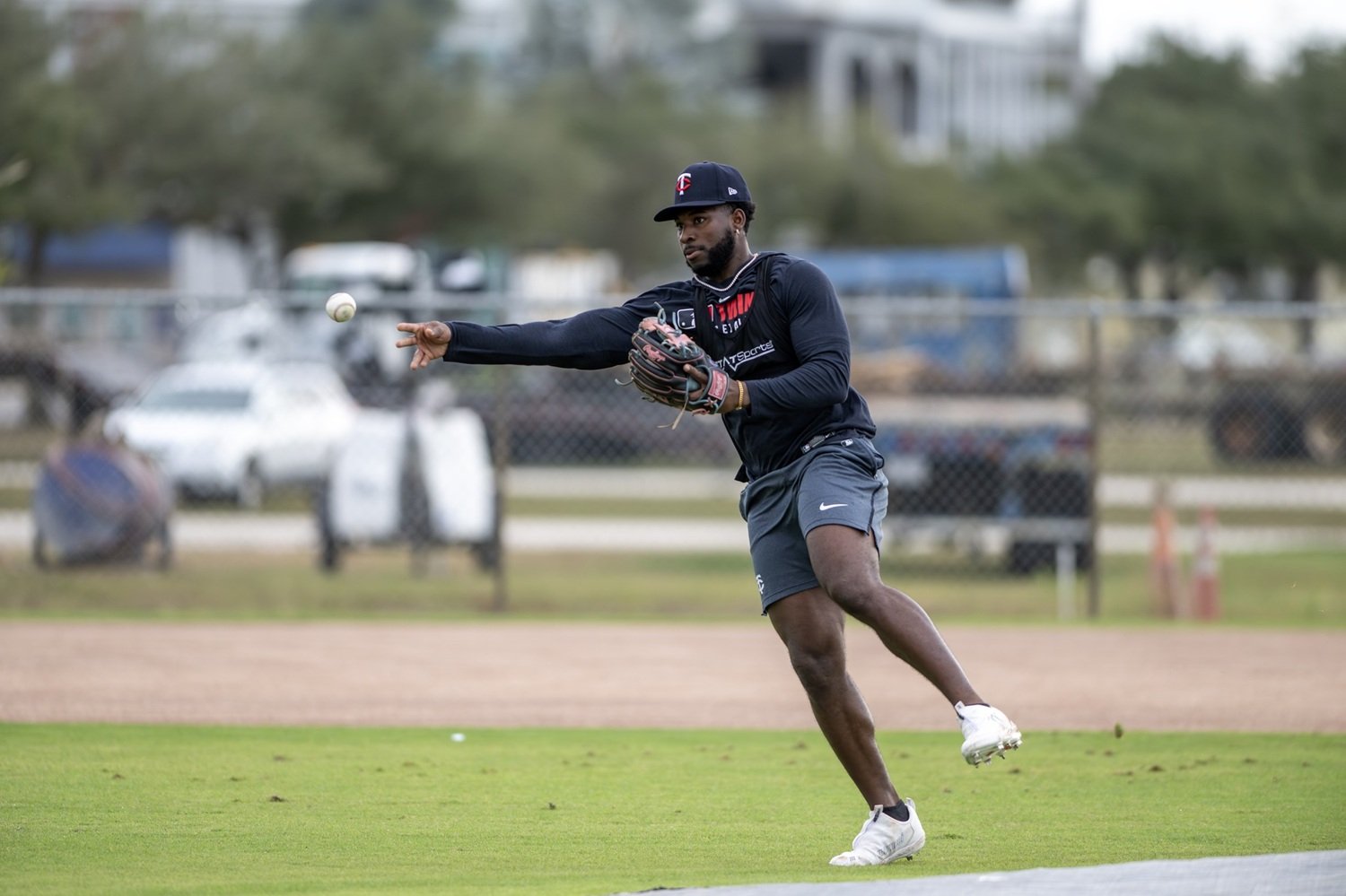
Some prospects move because an organization believes it is time, while others move because the player leaves them little choice. Kaelen Culpepper spent his first full professional season doing everything possible to fall into the latter category, and the Twins are more than happy to let him keep applying that pressure.
“It was Kaelen’s first full season, and he had an awesome year,” Twins general manager Jeremy Zoll told FanGraphs of the 23-year-old shortstop, whom the Twins drafted 21st overall in 2024 out of Kansas State University. “He was between High-A and Double-A, and we couldn’t have asked for it go much better. We’re really pleased. He had the opportunity to go to the Futures Game.”
Culpepper’s 2025 season reads like the blueprint for a breakout. Between Cedar Rapids and Wichita, he slashed .289/.375/.469 (.844) with 20 home runs, 25 steals, and a 133 wRC+ across 517 plate appearances. He was named the Twins’ minor league player of the year, emerged as a consensus top-100 prospect, and finished the season as one of the most productive hitters in the system. Even more impressive, he did it while making the jump to Double-A, a level that has a reputation for exposing weaknesses. Culpepper never blinked.
“I don’t really look at it as there being a big jump,” Culpepper told MLB's Matthew Leach late in the season, after his promotion. “I mean, there is the age gap and stuff like that. The competition here is pristine. Guys are more polished, more mature. But when it comes to the skill gap, it’s pretty similar. It’s still baseball. Baseball is hard. It’s not meant to be easy. If it was, everybody would do it. But I just look at it as two leagues, big leagues and the Minor Leagues.”
That mindset shows up every time he steps in the box. Culpepper has hit at every stop, from college to wood-bat leagues to his first taste of pro ball. In 2025, the power that some evaluators questioned before the draft arrived in force, even as he maintained his ability to hit for average and control the strike zone. He walked 50 times and struck out just 90 times, a better ratio than many expected, especially given his aggressive approach.
There is still refinement ahead. Culpepper can be prone to chasing off-speed pitches out of the zone, and his groundball rate was the third highest in the system. Yet reaching the 20-homer mark while keeping the ball on the ground that often hints at more power to come if he can elevate with more consistency. That is the kind of problem teams love to have.
Following his professional debut in 2024, Culpepper made a conscious effort to get better. He worked to add bat speed, and according to a club official, he did just that, boosting his swing speed by about 3 miles per hour and maintaining it throughout the season.
“He’s confident in his abilities and also willing to work hard, and I think those are two traits that are going to take guys a long way,” said Bryce Berg, the organization’s minor league hitting coordinator, in Leach's article.
The offensive performance alone would be enough to push a player up the ladder, but Culpepper has also given the Twins plenty to think about defensively. He has primarily played shortstop, where reviews of his range, instincts, and arm have been encouraging. At the same time, the organization has begun expanding his versatility.
“He’s primarily playing shortstop, but he’s also getting some early work at second base and third base, as well as a little bit of game exposure at both spots,” Zoll told FanGraphs. “We’ll continue to let that play out as we get through spring training and into the season. We’ll figure it out exactly in terms of placement and proximity. We always kind of let the player dictate that with his performance, but he’s put just about as much pressure on us in terms of us wanting to keep moving him, and keeping him challenged.”
That flexibility only raises Culpepper’s value. His arm would play comfortably at third base, and his instincts and hands give him a chance to remain at shortstop longer than some initially believed. Wherever he ultimately lands, the bat profiles as an above-average regular with legitimate All-Star upside.
For 2026, the question is less about whether Culpepper is ready for a challenge and more about how quickly the Twins choose to escalate it. He has yet to face Triple-A pitching and has played just 139 minor league games, but if he keeps hitting the way he has, a big league debut at some point this season is far from unrealistic.
Culpepper understands there is still work to do, especially when it comes to pitch selection.
“Hitters hit, you know what I mean?” Culpepper told MLB.com. “I consider myself a hitter. A very good hitter. So I’m always going to want to hit pitches a little off the plate, so I’m going to chase a little bit. It’s OK to chase as long as you’re not chasing too much. Sometimes I find myself chasing a little too much, and I’ve got to get back to being patient, seeing the ball deep, trusting my hands.”
The Twins are confident that balance will come.
“It’s a special combination of confidence, and I think that comes from a level of preparedness, and then openness to feedback and improving,” said Twins director of player development Drew MacPhail. “That’s a rare combo, that I think he has both in an incredibly healthy amount.”
Ultimately, Culpepper’s path will be determined the same way it has been so far. He will keep hitting, keep adjusting, and keep forcing the organization to respond. If 2025 was any indication, the pressure will only increase in 2026.
What should the Twins expect from Culpepper this season? Leave a comment and start the discussion.
Do you approve of Twins ownership?

Interested in learning more about the Minnesota Twins' top prospects? Check out our comprehensive top prospects list that includes up-to-date stats, articles and videos about every prospect, scouting reports, and more!
View Twins Top Prospects






Recommended Comments
Create an account or sign in to comment
You need to be a member in order to leave a comment
Create an account
Sign up for a new account in our community. It's easy!
Register a new accountSign in
Already have an account? Sign in here.
Sign In Now