


Twins Video
On Tuesday, MLB’s Joint Competition Committee voted to implement the ABS Challenge System that teams and fans saw in spring training this season. Something of a compromise between true robo-umps and the system baseball uses today, the arrangement will allow hitters, catchers, or pitchers to challenge a ball/strike call made by a human umpire. The player will tap their helmet, and the pitch will be reviewed within 15 seconds or so; there shouldn’t be a significant change to the pace of play. Each team starts the game with two challenges. Any pitch call can be challenged, but teams aren’t charged one of their challenges unless they are unsuccessful.
Why It’s Being Introduced
Now that we have discussed what the ABS Challenge System actually is, you might be asking yourself why it exists, and why it's being implemented now. Over the past decade and change, with the advent of high-speed cameras, advanced analytics, and massive improvements to biomechanics training, pitchers have gotten better, faster, and filthier. Pitches like the sweeper, kick-change, and splinker are recent additions that have been invented based on a better understanding of concepts like spin and induced vertical break. As a result, offense has been suppressed league-wide, and teams have largely embraced the three true outcomes as strategies to defeat advances in pitching. After all, the likelihood of scoring multiple runs from singles off of pitchers who can do things that only lived in dreams 20 years ago is low.
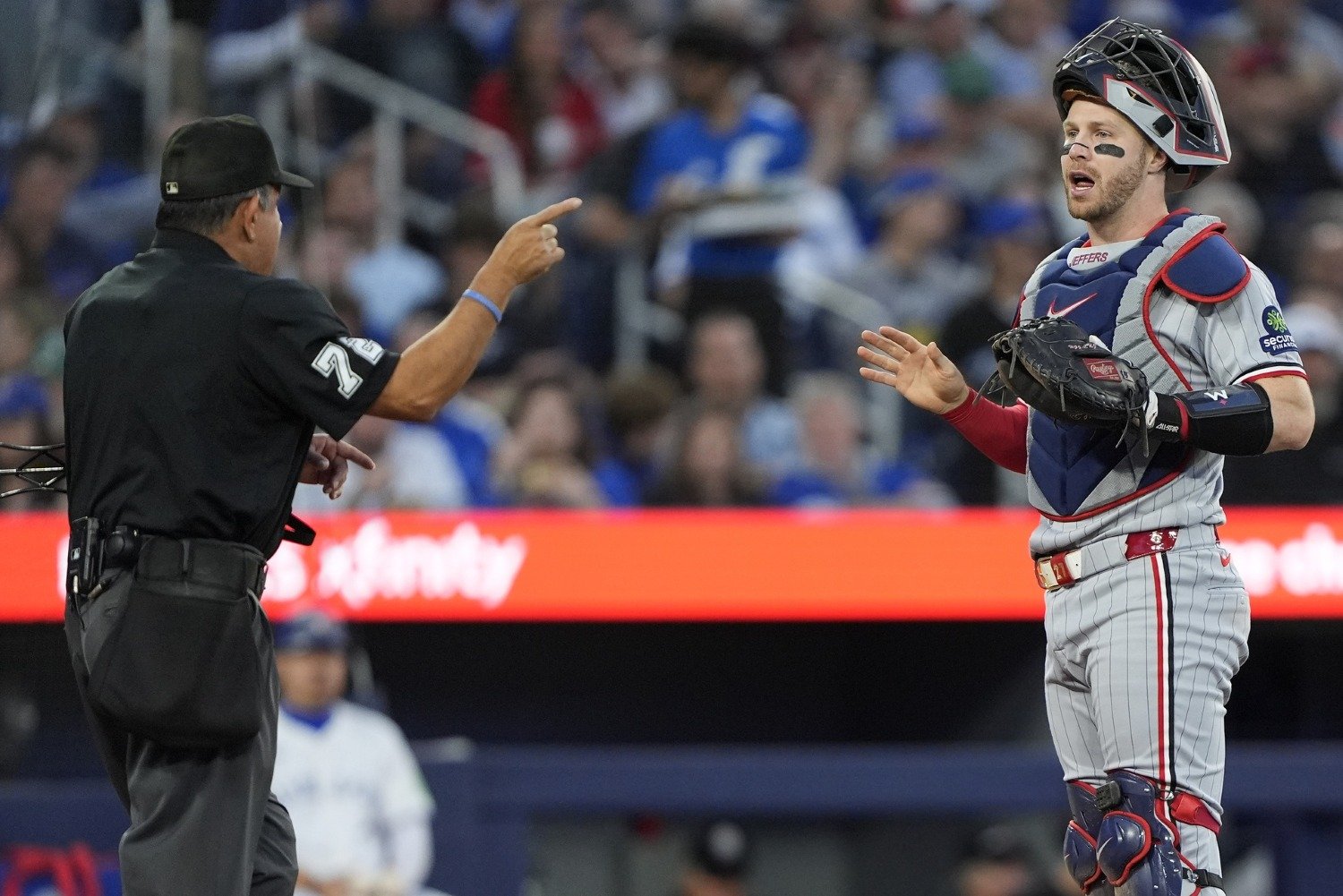
This dynamic shift directly led to other recent changes: pitch clocks, larger bases, and limitations on shifts, all of which were meant to pace up the game and give hitters a fighting chance. The advent of the challenge system will further tip the scales back toward hitters. Teams with the best pitch framers will give up additional walks and runs. Pitchers may be forced to attempt to nibble in the shadow band around the edges of the zone less often, and leave more pitches over the fat part of the plate when they can’t afford a walk. Ryan Jeffers, speaking as a catcher but also as a hitter during January's Twins Daily Winter Meltdown, articulated that aspect of the rationale.
"I think it adds a level of excitement to the game that MLB wants … you’re going to eliminate the big time misses, the big calls that 90% of the ballpark knew were wrong,” Jeffers said.
Of course, things can swing the other way, too—albeit to a lesser extent. The strike zone shrank slightly this year, due not to any anticipatory move toward an automated zone but to a change in the way MLB grades umpires. A patient hitter might find themselves taking a borderline pitch, only to have it flipped from a ball to a strike.
How Will The Twins Utilize Their Challenges?
Data has shown that catchers, not pitchers, are the most reliable judges of what’s actually in the zone or out of it. This makes perfect sense, as catchers are closer to the pitch as it crosses the plane of the plate. Their heads are also much more still, and their eyes are more directly fixed on the ball. Plus, pitchers have a very vested interest in getting additional strikes, and may not be the most clear-minded about the broader team interest.
Some Twins pitchers see this as something that makes their job a bit harder. After the news broke, Audra Martin interviewed several members of the Twins. Kody Funderburk said the zone called by ABS "looks a little small,” and Joe Ryan called it “a little inconsistent." Sounds like bias to me. This isn’t to say that all pitchers see the introduction as a negative. Pablo López told Cory Provus during Tuesday’s game that the new system keeps hurlers honest.
"I went three-for-three [with challenges] in spring training, [but] in a rehab game, I challenged once but I was way off. It adds pressure, for sure,” López said. Really, what it does is enforce a strike zone the way it’s laid out in the rule book.
Rocco Baldelli has been clear that it will be the catching staff that makes the majority of challenges.
“The catchers, as a whole, have such a great view of this," Baldelli said during the spring experiment. "We heard that from all the minor-league coaches that operated under this previously. They say to just let the catchers do their thing … they have been right significantly more than they have been off.”
What Does This Mean For Catchers Going Forward?
Jeffers, again at the Meltdown, spoke about how this will further alter the role of a catcher.
“Our jobs are still going to be important back there," he said. "The skills might shift a little bit, but I think there’s an additional level of responsibility that we take on knowing what pitches to challenge or what not to.”
Beyond that, teams will be incentivized to continue developing the pitch framing skillset. Most teams will only challenge pitches they are certain were incorrect, or those that could make a material impact on the game. While a team could theoretically make 30 challenges a game, as long as they are successful, no team will want to be without challenges when they matter most. This is borne out by data, as well: spring training games showed that roughly four pitches per game were challenged.
The good news is that what can be measured can be improved. In recent years, pitch framing became the hot new thing, a way for catchers to impact the game in an additional way that gives their team an advantage. With the introduction of ABS, challenge success rates will likely be a metric that shows up in Baseball Savant next season, and a new way to grade catchers. For those (like Jeffers) who take a cerebral approach to the game, it’s likely to be a new source of positive value.
"I’m excited, it’s been rumored for a while," Jeffers said Tuesday. "We used it in spring training and the majority of guys liked it … it gives everybody a safety net”.
The Impact
Maybe, just maybe, this will create true balance, and make it easier for teams to be successful when following the approach the Brewers and Guardians have used. That style of play certainly fits into the Twins' budget a bit better than the current environment necessitates.
Speaking of how this may benefit the Twins: 2026 will almost certainly feature the debuts of (and hopefully extended run for) Walker Jenkins, Emmanuel Rodriguez, Gabriel Gonzalez, and Kaelen Culpepper. Add Luke Keaschall to that group, and it’s a core of players who have already experienced ABS in the minors. Hopefully, this will give them a leg up over some divisional foes who are less likely to experience the sort of roster turnover that the Twins will heading into the season. It could also give a bit more life to Edouard Julien, patient to a fault, but with an elite understanding of the strike zone. What will his game look like when some of the looking strikeouts are removed? Or will he succumb even more often, as he tries to keep a small zone but catchers challenge borderline calls and reclaim some of them? Even Byron Buxton, as his plate discipline improves, has been called out on strikes out of the zone a handful of times recently. What impact will a few more walks (or a pitcher throwing a meatball to avoid a walk) have for them?
I, for one, am all for this implementation. It will make the game slightly more efficient, and hopefully Jeffers is right about it adding another level of excitement.
Are you optimistic about the Twins right now?

Follow Twins Daily For Minnesota Twins News & Analysis



- nclahammer, glunn and SF Twins Fan
-
 3
3


Recommended Comments
Create an account or sign in to comment
You need to be a member in order to leave a comment
Create an account
Sign up for a new account in our community. It's easy!
Register a new accountSign in
Already have an account? Sign in here.
Sign In Now