


Twins Video
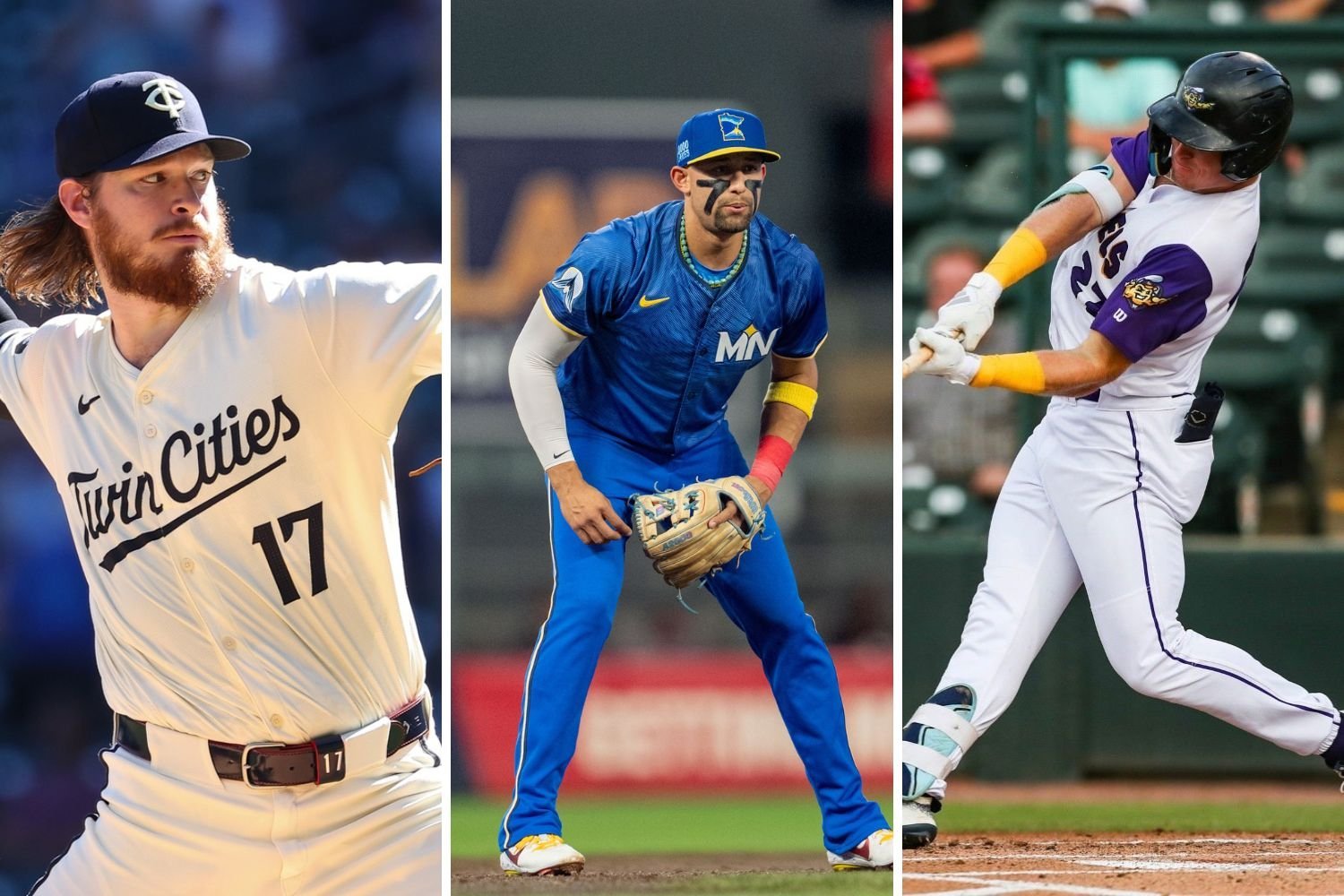
A new era is coming for the Minnesota Twins. Sometime in the first half of 2025, the franchise is expected to change hands, and while the new ownership group’s vision remains unknown, one thing seems inevitable: they’ll want to make an immediate impact. One way to do that? Locking in the team’s core talent for years to come.
Extensions have long been a strategy for medium- and small-market teams to maintain competitiveness. By buying out arbitration years and securing players through their early free-agent seasons, the Twins can provide stability for the roster and the payroll. Minnesota saw the long-term benefits of this with Max Kepler and Jorge Polanco, who signed team-friendly deals early in their careers. Here’s a look at the top extension candidates, as a new ownership group is on the horizon.
1. Joe Ryan - A Clear Priority
When the Twins acquired Ryan in the Nelson Cruz trade, few expected him to develop into one of the team’s top starters. However, since arriving in Minnesota, Ryan has established himself as a frontline pitcher while taking steps to improve his overall numbers. Last season, Ryan posted a 3.60 ERA (115 ERA+) with a 0.96 WHIP and a 27.3% strikeout rate. It was arguably his best season at the big-league level, thanks primarily to his emerging ability to fill up the strike zone; he walked a career-low 4.3% of opposing batters.
The 28-year-old is arbitration-eligible for the first time in 2025 (making $3 million) and won’t hit free agency until after the 2027 season. Locking him up now would provide cost certainty for a potential ace, a move the Twins failed to make with past arms like José Berríos. A five- or six-year deal could secure Ryan’s best years (especially for a player who was older when he debuted) while ensuring the rotation has a dependable anchor.
2. Bailey Ober - A Reliable Rotation Piece
Ober might not be as flashy as Ryan, but his importance to the Twins’ rotation can’t be overlooked. The 6-foot-9 right-hander has shown elite command, making him a stabilizing force for a team that has long battled pitching inconsistency. Over 178 2/3 innings last year, he posted a 3.98 ERA, 1.00 WHIP, and a career-high 191 strikeouts. His increased reliance on a devastating changeup and deceptive fastball has helped him keep hitters off-balance, leading to one of the lowest hard-hit rates among American League starters (83rd percentile).
Like Ryan, Ober was eligible for arbitration for the first time ($3.55 million), and a new deal could provide value for both sides. There have been some comparable extensions in recent seasons, including the five-year, $77-million deal Mitch Keller signed with the Pirates and the five-year, $64-million deal Cristian Javier signed with the Astros. Given his profile, a deal between those two price points might be a sweet spot.
3. Royce Lewis - The Superstar Bet
If the Twins want to bet big on the future face of the franchise, Lewis is that guy. He’s shown MVP-level potential when healthy, delivering clutch moments and elite offensive production in limited action. In 2023, he posted a .921 OPS with 15 home runs and seven doubles in 58 games. However, injuries have clouded his long-term outlook and hurt his performance; he had a merely solid 107 OPS+ last season.
Lewis reached arbitration this year and is set to make $1.625 million, but the Twins could try to lock him in early in his career. If the new ownership group believes in his durability, a long-term deal (perhaps in the seven- or eight-year range) could be their signature move.
4. Ryan Jeffers - Locking Down the Catching Position
The Twins don’t have a clear-cut catcher in the pipeline, and the catching market is always volatile. These two factors might open a new ownership group to an extension with Ryan Jeffers. His offensive breakout in 2023 and steady defensive work have positioned him as a legitimate everyday catcher. Jeffers took strides backward offensively and defensively last season, but the Twins might believe in his long-term value and potential performance. He played in a career-high 122 games and had a .791 OPS in the first half.
Minnesota has used a two-catcher rotation for years, so Jeffers would need another catching partner. He is in his second arbitration year ($4.55 million), meaning his price tag is only going up. Catchers with offensive upside don’t come cheap, so a deal in the three- or four-year range could provide security at a key position while keeping payroll flexibility intact.
A new ownership group means a fresh approach to roster building. If they want to make an immediate splash, prioritizing contract extensions for core players is a smart way to do it. Investing in homegrown talent has been a winning formula for many successful franchises, and perhaps the Twins’ next era will follow suit.
How should the Twins prioritize these extensions? Are there any the team should avoid? Leave a comment and start the discussion.
Which team do you dislike the most in the AL Central?
Follow Twins Daily For Minnesota Twins News & Analysis



- Karbo, Hrbeks Divot, Patzky and 1 other
-
 4
4



Recommended Comments
Create an account or sign in to comment
You need to be a member in order to leave a comment
Create an account
Sign up for a new account in our community. It's easy!
Register a new accountSign in
Already have an account? Sign in here.
Sign In Now