


Twins Video
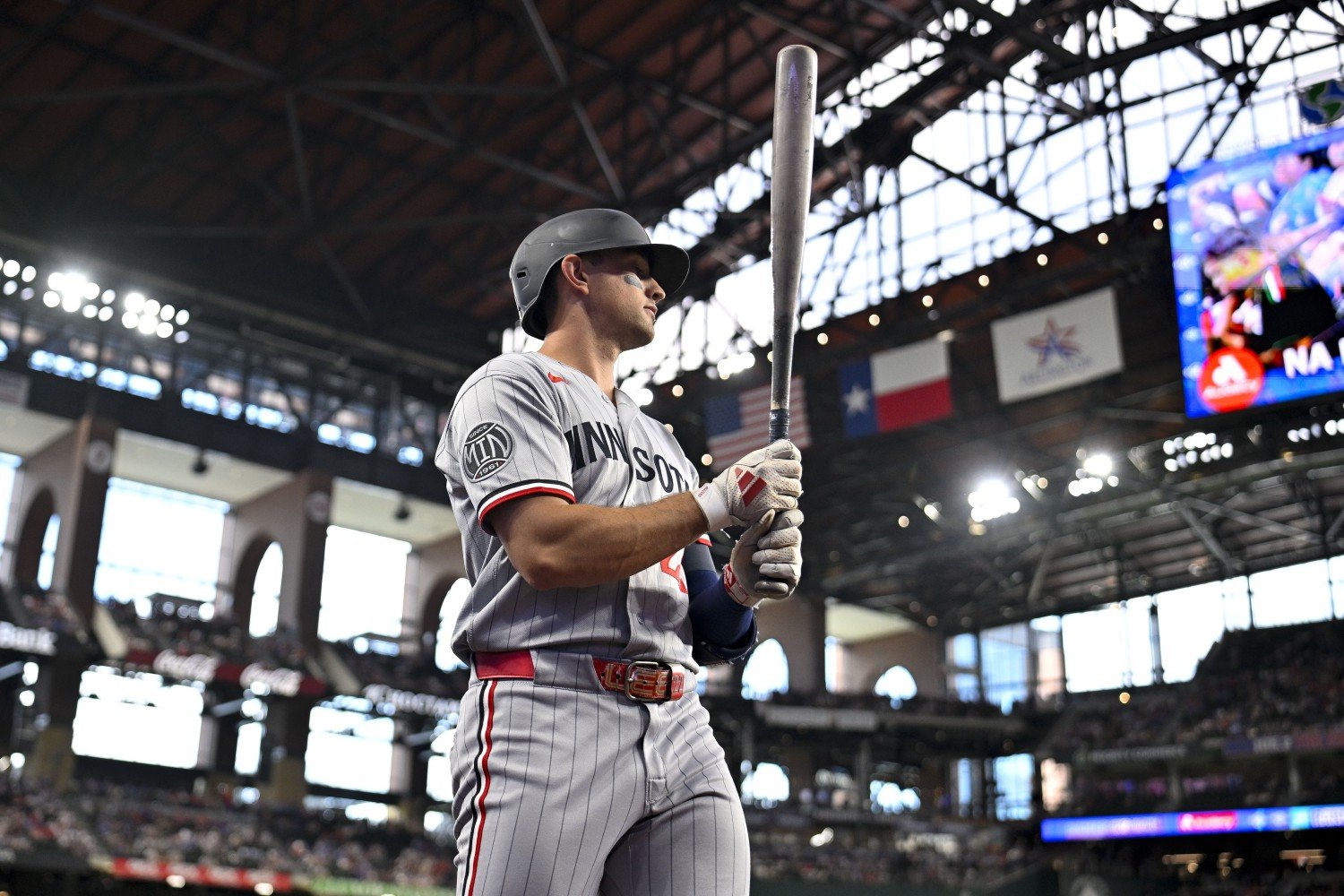
Technically speaking, in his third big-league season, Brooks Lee is playing his third different primary position. He's wearing his third jersey number. It's third base at which he appears to be settling in for the long haul. But the key number around Lee will always be two: two swings, two plans at the plate, two tracks on which he's trying to simultaneously develop into a solid big-leaguer. This year, he's 2-for-2, which is why he's finally becoming that solid player the team expected and hoped for.
As a rookie in 2024, Lee found time at three infield spots and showed flashes of a natural feel for the barrel. Overall, though, he hit an anemic .221/.265/.320. It was ugly. His approach was horrendous. He looked not so much overmatched, as confused, which isn't all that surprising. He was a 23-year-old who'd only had about 800 total professional plate appearances before he arrived in the bigs, and as a switch-hitter with two pretty different plans from the two sides of the dish, he needed more reps than that. Despite the atrocious numbers, that first exposure to the majors seemed likely to be good for him.
If the seeds of success were sown in that soil of failure, though, the tree didn't bear fruit in 2025. Lee batted just .236/.285/.370 last season, playing virtually full-time in his first full season with the parent club. Technically, it was forward progress, but it felt woefully insufficient, especially as he demonstrated that his athleticism would be a lasting limitation on his value as a defender and baserunner. He was a bad player, even if he was a little less bad than he'd been the year before—and it was harder to wave away the badness on the basis of injuries or inexperience.
That's what makes this year so refreshing. He's not some sudden superstar, but you don't have to squint to see the progress or hunt and plead to make the case that he's a viable regular. The move to third base is good for him, defensively. More importantly, he's batting .242/.297/.429. You'll rarely hear me praise a player with merely moderate defensive value and power whose OBP comes in on the light side of .300, but Lee has made some important strides that are much easier to see below the surface. Specifically, as is true of so many switch-hitters, you have to break him down into his two component selves to properly understand him.
From the left side, Lee has made some vital improvements in the way he addresses the ball. His swing isn't massively overhauled, but it's a tick faster, and his timing is better. Here are the distributions of his swing timing on fastballs when batting left-handed for his three seasons in the majors:

From left to right, these images show: the frequency with which Lee centers the ball on his barrel, horizontally; the frequency with which he's on time, as opposed to early or late; and the frequency with which he hits the ball off the center, the top or bottom side of the bat, or misses above or below it. The easiest way to see what he's changed, in this case, comes on the left, where Lee has gone from most often hitting the ball just toward the end of his bat from the sweet spot when he came up in 2024 to most often hitting the ball just toward the label or handle.
Like most hitters, Lee mostly centers up fastballs well, in general, but the fact that he's more often catching the fastball toward the hands a little now tells us something important about what he's looking for and how flexible his approach is. Remember, as a switch-hitter, he's only facing righties when he bats lefty. Being on time for the fastball (as he's done more consistently this year, which you can see in the center image) but catching it slightly off the center of the barrel toward the hands means that he's extending better through the ball. That might mean slightly less hard contact on the heater, but then come the breaking balls:

Breaking stuff moves in on a switch-hitter at all times, and Lee is getting them in on his label a bit more this year, but look at the righthand image. He's hitting the ball with the center of the bat, vertically, more often than last year, too. He's not swinging over the top of it as much or as often. And the story is different on offspeed stuff, but similar:

Lee's hitting the top half of the ball a bit more on changeups and splitters this season, which might sound bad—but that's coming instead of whiffing altogether, which he's doing less often. Put the whole profile together, and Lee has a much better batted-ball profile from the left side this season. Here's his spray chart from the left side for last year:

And here's the same image for 2026 to date:

Lee hasn't hit the ball harder this year, left-handed. He's not even effecting a huge change in the frequency with which he lifts the ball. When he does hit it in the air, though, it's much more often going to the pull field, rather than to center. When he hits it well (at least 88 MPH off the bat and a launch angle of at least 10°), he's hitting it on a line more often, rather than hitting the bottom of the ball and flying out lazily. Here's the distribution of his launch angles on such batted balls in 2025:

And here's 2026:

This stuff is why Lee batted .220/.278/.365 last season from the left side, but is at .253/.299/.463 this season. He's tapped into more power and more overall value on contact. From the left side, he's a low-OBP guy, but the power is legitimate. Twenty of his 25 extra-base hits this year have come as a lefty.
From the right side, alas, there's been no significant change to bat path, timing and contact profile. Indeed, there's been (so far) no actual improvement. He had a .677 OPS against lefties last year; he has a .642 OPS against them this year. But there's been one important change: Lee knows what he's looking for now. From the right side, he's become more selective within the zone, which has more than doubled his walk rate from last year, from 3.4% to 7.5%.

He's not actually swinging less often, as a whole. He's not even chasing less often. By being willing to let some pitches his righty swing can't generate any punch on go by, though, Lee has made himself a viable hitter from the right side, with more upside. He's striking out less, in addition to walking more. The contact is pretty empty, but he's gotten slightly unlucky from that side, too.
This version of Lee can be a useful player for multiple big-league seasons. He might always be the infielder you're hoping to replace with a better one, but plenty of good teams go far with players they always hoped to replace but never got around to actually shaking. Lee's two positions this year mirror his two different swings and two different approaches. He's made two different adjustments this year, based on handedness, and he's increasingly looking like a useful player—even though he's had to do two (or more) things at once almost since the moment he put on a uniform.
Do you approve of the job Derek Shelton is doing as Twins manager?

Follow Twins Daily For Minnesota Twins News & Analysis



- Patzky and Hrbeks Divot
-
 2
2


Recommended Comments
Create an account or sign in to comment
You need to be a member in order to leave a comment
Create an account
Sign up for a new account in our community. It's easy!
Register a new accountSign in
Already have an account? Sign in here.
Sign In Now