


Twins Video
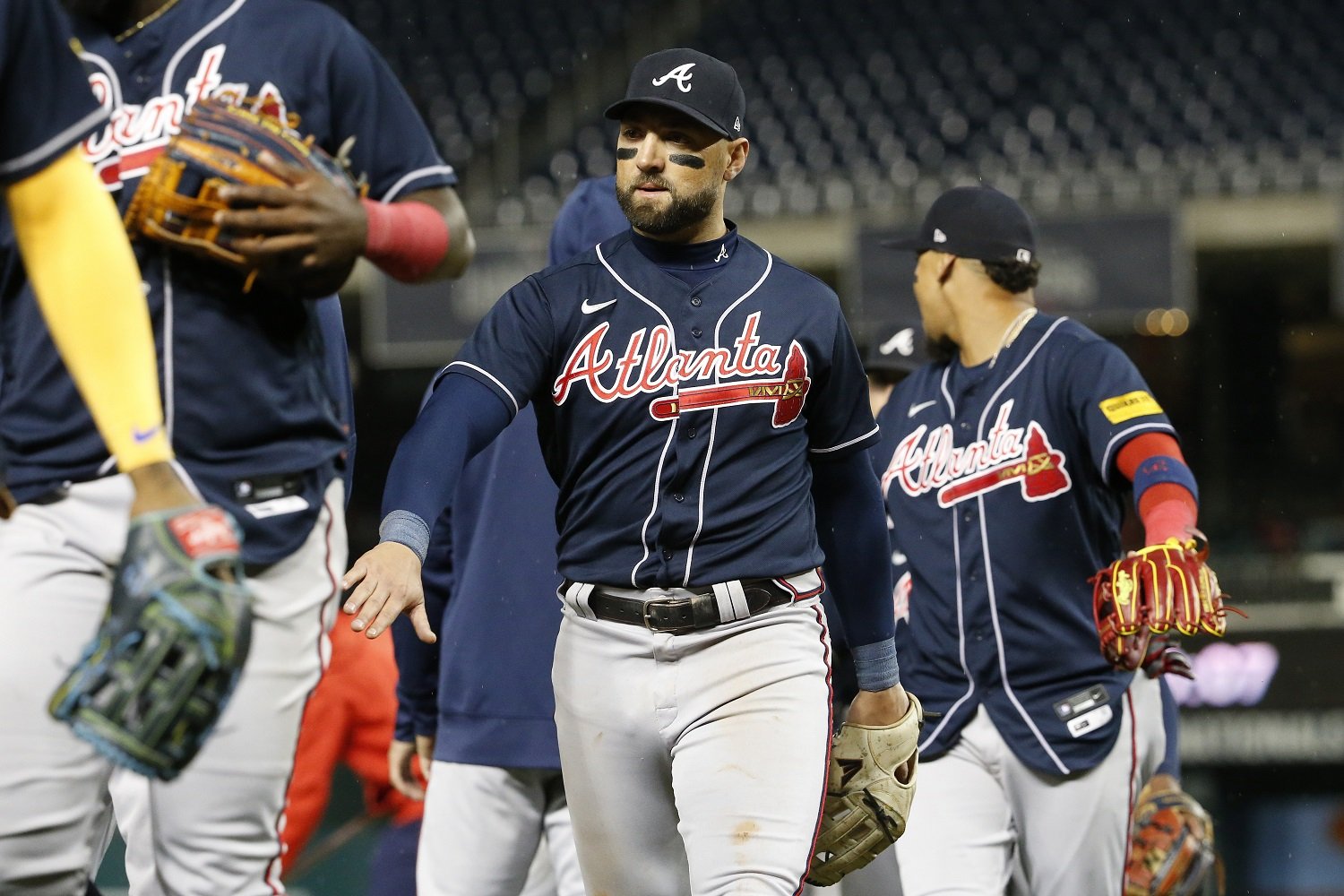
The Atlanta Braves are the class of MLB right now, and the breathless admiration of them from those in the game and those who analyze will continue whether you like it or not. The Braves tied the 2019 Twins home run record of 307 and have steamrolled the competition, including a decisive sweep of the Twins in June. They possess the best record in baseball and have all the underlying numbers to back it up. Don’t misunderstand me; they are really good. But how did they build this?
A key aspect of their success is their penchant for extending star core players early in their career to team-friendly extensions. Ronald Acuna Jr., Ozzie Albies, Austin Riley, Michael Harris II, Matt Olson, Spencer Strider and Sean Murphy are all excellent players under the age of thirty and will be with the team through at least 2028. None of those contracts have turned into regrets, either (so far) like the contracts for Evan White, Jon Singleton, or even Randy Dobnak did.
Max Fried and Strider lead the rotation, and are great development stories. Bryce Elder is too, but their strength isn’t pitching, and they don’t have much beyond those three and Morton. That isn’t the worst thing; two aces and two mid rotation guys will play fine in October, and their team ERA is still a respectable 14th in baseball.
So what makes the Brave's core precarious, and why do the Twins have a chance to supplant them in as the next homegrown powerhouse?
Depth
The Braves are top-heavy in both the pitching and hitting departments. No one has noticed on the hitting side because none of their players are hurt. Almost ever. Carlos Correa leads the Twins with 135 games played, which is solid considering his foot issues. The next highest is Donovan Solano with 127. All eight of the Braves non-catchers have played 130 games or more. And all of them, plus their great catching core, are healthy and available for the playoffs. That’s absurd, bordering on the absurdity of the Cleveland Guardians and their nearly injury-free 2022 season.
Should anyone get hurt, Nicky Lopez and Kevin Pillar are their only options.
The Braves also have the 27th ranked farm system according to MLB Pipeline and they already have $174 million committed to next year’s payroll, not counting arbitration salaries (about $80 million more than the Twins). Their only top 100 prospect is pitcher AJ Smith-Shawver, who is 20 and made it to the majors this year. If he isn’t great right away, Max Fried heads to free agency after next year, leaving Strider and the unproven Elder. Maybe Kyle Wright can return to form (he will miss 2024 rehabbing an injury).
And what should occur if somehow one of their hitters actually deals with a significant injury (or underperformance)? There is no “next man up” outside of Vaughn Grissom, who is a decent prospect but probably can’t handle shortstop, where they are already playing Orlando Arcia and his career .681 OPS. What they are now, is what they are.
Grissom also represents the best trade piece the Braves could use to acquire frontline starting pitching, which they may need as soon as this offseason. If he goes, Nicky Lopez steps in. The Twins have a multitude of A and B level prospects they could flip for pitching if they really needed to.
Comparing Cores
More credit should go towards the Twins front office for building a core similar to the Braves, but for less money and hardly any fanfare. It should last through the Carlos Correa and Byron Buxton contracts since most of the Twins contributors are making the minimum MLB salary.
And although those team-friendly extensions could save the Braves some money, none of those players have hit six years of service time yet. They would still be controllable through this year with only Olson and Albies set to hit free agency this offseason had the Braves gone year to year.
Let's compare the infielders each team has assembled for the future. The Twins have Lewis, Alex Kirilloff, Edouard Julien, and Brooks Lee, with Austin Martin and Jose Miranda as high upside depth pieces. They also signed Carlos Correa. They’ve traded away homegrown talents Luis Arraez, Spencer Steer and Christian Encarnacion-Strand, too. The Braves have Riley, Olson, Albies, Arcia and Grissom. I'm not saying the Twins can bang with that group as currently constructed, but they have a lot more options if things go wrong (they do).
Are the Braves infielders durable and capable of producing great counting stats? Sure. But that has very little predictive value and those 155 game seasons add up quickly in terms of health and performance.
In the outfield, the Twins have Matt Wallner, Lewis, Trevor Larnach, Kirilloff, Martin, Emmanuel Rodriguez and Walker Jenkins (with Buxton once in a while), all system-developed. The Braves have two homegrown (and great) outfielders in Harris and Acuna Jr., but you have to scroll a bit on their prospect lists to even find another hitter, much less an outfielder. Nobody matches Acuna, but in Jenkins and Lewis the Twins at least have some hope to develop a generational superstar of their own.
To Extend or not Extend
The Twins have the opportunity to extend, Braves-style, some of those players, but as luck would have it, none of them are set to become free agents until after the 2027 season. They could lock up guys like Kirilloff, Ryan Jeffers, Julien and Lewis, but only Jeffers will even reach three years of service time when the season is over. They have some time to decide who to commit to long-term, and who, like the Braves with Dansby Swanson, they decide to just go year to year with.
Right now, every extension the Braves have handed out has worked flawlessly. But as I mentioned earlier, none of those contracts has entered into the years of potential free agency yet. It is those "bonus" years that will prove the extensions either smart, or disastrous.
Consider the Twins' extensions of Max Kepler and Jorge Polanco. Their respective performance and health have been up and down, but the contracts they signed only really kicked in this year. Had they been up for free agency last offseason, as they were on track for originally, would the Twins have even offered them a qualifying offer? Probably not, but these things are tricky; Polanco and Kepler have been integral parts of the Twins' second half surge this year.
Contrast that to Riley's contract. He would have been team controlled for two more years after this one, but with his massive contract (ten years, 212M), they are now locked into the next nine years, whether he remains effective or not.
The Twins haven't proven much of anything yet, but they have seven homegrown players who could start on any playoff team, Correa, star-caliber depth in the minor leagues, and some (though not a lot) payroll space to supplement.
The Braves are still good, I promise that I believe that. They have the star power to go 11-0 this October and would wipe the floor with the Twins in a playoff matchup currently. The greater point, is that the Twins have really built something here. Some draft luck played a part, as talents like Lee and Jenkins should not have been available to a contending club. But here we are, with potential/actual star position players as far as the eye can see, and a decent rotation floor with Pablo Lopez, Joe Ryan, and Bailey Ober all team-controlled for at least the next four years.
Not only that, but unlike the Braves lineup, there are backup plans if things go south. Correa may continue to have foot issues, some of the Twins prospects will flame out, and injuries will always be a factor, but you have to like the Twins chances to feel confident in an assortment of plan B's. The Braves have won six straight division titles; the Twins should be able to follow suit in the Central.
Do you approve of the job Derek Shelton is doing as Twins manager?

Follow Twins Daily For Minnesota Twins News & Analysis



- DocBauer, Minny505, ToddlerHarmon and 1 other
-
 4
4


Recommended Comments
Create an account or sign in to comment
You need to be a member in order to leave a comment
Create an account
Sign up for a new account in our community. It's easy!
Register a new accountSign in
Already have an account? Sign in here.
Sign In Now