


Twins Video
The Sporting News has been celebrating its 140th anniversary by examining the greatest baseball players of all time. Rather than simply ranking 140 players from first to last, the publication divided them into 14 position-less rooms, with each group representing a different form of greatness.
The project considers more than 500 candidates and attempts to account for different eras, changes in the game, modern statistics, and the history of the Negro Leagues. According to The Sporting News, “Our ‘rooms’ serve not only to honor the game’s greatest players, but to contextualize their standing in baseball history — for better or worse.”
These categories provide an interesting framework for examining Minnesota Twins history. Some players are remembered for their longevity, while others are defined by a handful of spectacular seasons. A player's place in Twins history might also differ from how national audiences view his overall career.
This series will take two players from Twins history and place them into each of The Sporting News' 14 categories. The goal is not necessarily to duplicate the publication's selections, but to explore how these different forms of greatness have shaped the franchise.
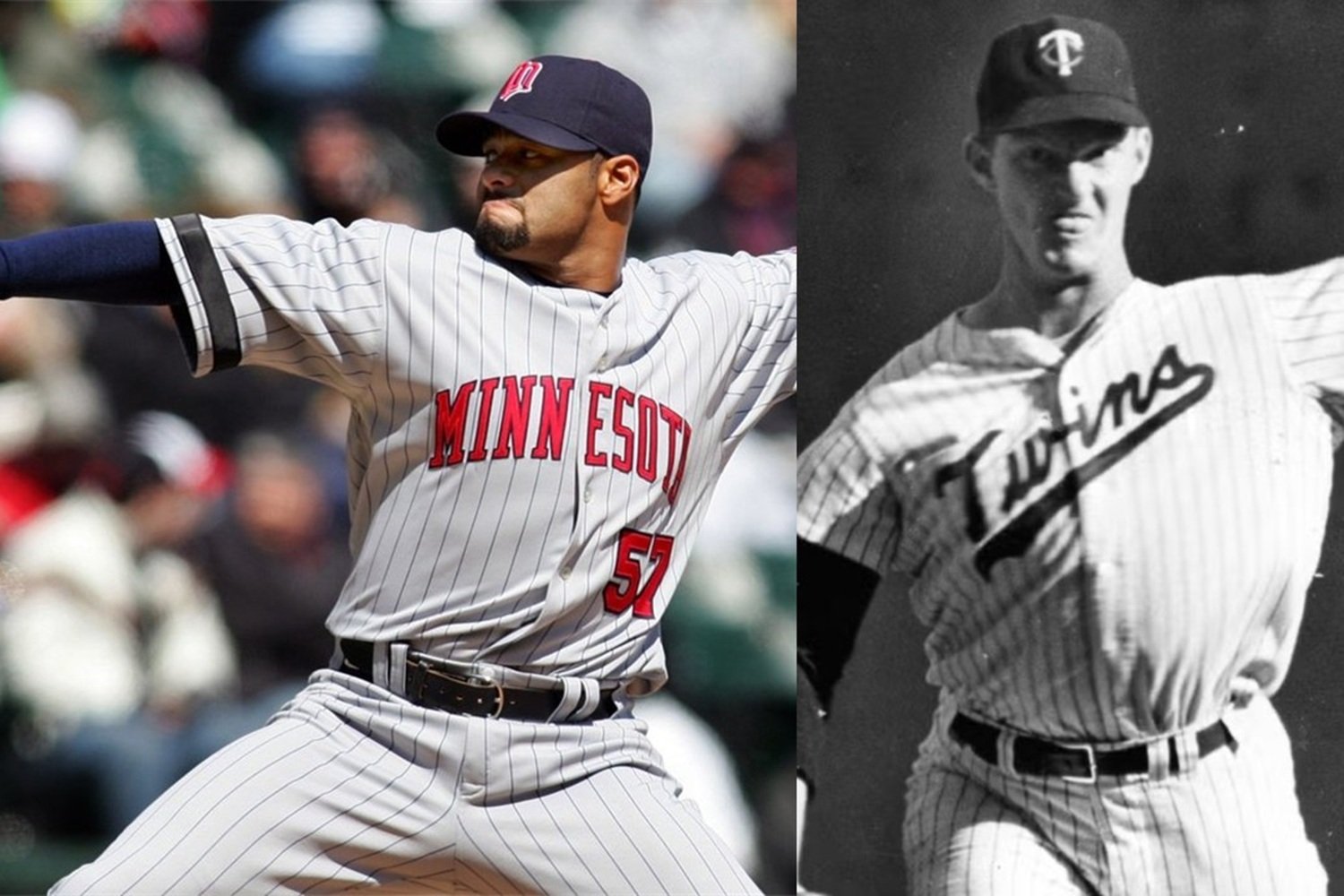
Two veteran pitchers headline the Juggernauts, while a pair of award winning stars represent the Supernovas.
Juggernauts: Jim Kaat and Bert Blyleven
The Sporting News describes its Juggernauts as players who “delivered season after season, authoring some of the game’s most storied chapters.” Their prolonged excellence distinguishes them from players whose greatness was concentrated in a smaller window.
For the Twins, Jim Kaat and Bert Blyleven provide excellent examples of that sustained success. Both built lengthy careers, accumulated impressive statistics, and left a lasting mark on Minnesota baseball.
Jim Kaat
Kaat's career stretched across 25 major league seasons, making him one of the most durable pitchers of his generation. His career began with the Washington Senators before the franchise moved to Minnesota, and he remained a fixture in the team's rotation for more than a decade.
Kaat was not merely collecting innings while hanging around the league. He consistently gave his teams quality starts and developed into one of baseball's best defensive pitchers. His 16 consecutive Gold Glove Awards from 1962 through 1977 remain an extraordinary accomplishment. The first 12 came with the Twins.
Kaat's place in the franchise record book further demonstrates his importance. He remains the franchise leader in wins with 189, starts with 422, and innings pitched with 2,959 1/3. He also ranks among the organization's leaders in complete games and strikeouts.
His time in Minnesota featured some memorable individual seasons. Kaat went 18 and 11 during the Twins' 1965 American League pennant winning campaign, helping the franchise reach its first World Series after moving to Minnesota. He started three games against the Los Angeles Dodgers, including a complete game victory over Sandy Koufax in Game 2.
The following season, Kaat delivered arguably the best statistical year of his career. He finished 25 and 13 in 1966, leading the American League with 19 complete games while throwing 304 2/3 innings. He finished fifth in the league's Most Valuable Player voting.
Those accomplishments help explain why Kaat belongs in the Juggernauts discussion. His career was about far more than one outstanding season. He combined durability, regular production, defensive excellence, and the ability to remain valuable through changing stages of his career.
Kaat eventually earned induction into the National Baseball Hall of Fame in 2022. His Cooperstown recognition added another achievement to a career that already placed him among the most important pitchers in franchise history.
Bert Blyleven
Blyleven offers another example of sustained pitching excellence, although his career followed a different path. Blyleven spent 11 of his 22 major league seasons with the Twins, pitching for Minnesota from 1970 through 1976 before returning from 1985 through 1988. His devastating curveball became one of the defining pitches of his era, and he consistently demonstrated the ability to miss bats over a lengthy career.
Blyleven finished with 287 victories, 3,701 strikeouts, and 4,970 innings pitched. He ranks fifth in major league history in strikeouts, a remarkable accomplishment for a pitcher who was not always surrounded by championship caliber teams. His contributions to Minnesota were equally significant. Blyleven recorded 149 victories with the Twins, second in franchise history, and his 2,035 strikeouts remain the organization's career record.
His two Minnesota stints also connected different eras of Twins baseball. The first came when the club was establishing itself as an American League contender. His return helped the organization build toward its 1987 championship, giving Blyleven a World Series title with Minnesota after previously winning one with Pittsburgh in 1979.
Blyleven's career was not defined by one brief stretch of dominance. Instead, he sustained his effectiveness across two decades, building a résumé that ultimately earned him election to the Hall of Fame in 2011.
Kaat and Blyleven reached greatness through durability and consistency. They remained relevant across multiple seasons and left behind statistical records that still define the Twins' pitching history. Those qualities make them fitting representatives of the Juggernauts.
Supernovas: Johan Santana and Zoilo Versalles
The Supernovas represent a different kind of baseball greatness. The Sporting News describes this group as players who “reached the game’s highest level, if only briefly,” with their legacies defined by extraordinary peaks rather than career longevity.
These players showed what was possible when everything came together. Whether their prime was shortened by injuries, circumstances, or an inability to maintain their previous production, their best seasons placed them alongside the game's elite.
Johan Santana and Zoilo Versalles fit that description from a Twins perspective. Their career paths were different, but both produced performances that remain among the franchise's most remarkable individual achievements.
Johan Santana
Santana's rise from Rule 5 Draft selection to dominant ace remains one of the best player development stories in Twins history. Minnesota acquired him through a trade involving the Florida Marlins and Houston Astros, and he eventually developed into one of the most effective starting pitchers in baseball.
Santana's peak from 2003 through 2007 was exceptional. During that five season stretch, he went 82 and 35 with a 2.92 ERA and 1,152 strikeouts across 1,070 2/3 innings. He combined overpowering stuff with pinpoint command and an excellent changeup.
The individual seasons were just as impressive. In 2004, Santana finished 20 and 6 with a 2.61 ERA and 265 strikeouts. He led the American League in ERA and strikeouts while winning his first Cy Young Award unanimously.
Two years later, he reached another level. Santana went 19 and 6 with a 2.77 ERA and 245 strikeouts in 2006, leading the American League in all three categories and capturing another unanimous Cy Young Award.
Those two awards placed Santana among the best pitchers of his generation. He also finished in the top five of Cy Young voting in 2003, 2005, and 2007, showing that his dominance extended beyond his two award winning campaigns.
Santana's overall major league career did not last as long as those of Kaat or Blyleven, but that is precisely what makes the Supernovas category so appropriate. His best seasons were so dominant that they remain the standard against which Minnesota's modern starting pitchers are measured.
Zoilo Versalles
Versalles reached a similarly remarkable height during the 1965 season. The Cuban born shortstop put together one of the greatest all around campaigns in Twins history, earning American League Most Valuable Player honors while helping Minnesota capture the pennant.
Versalles hit .273/.319/.462 with 19 home runs, 77 RBIs, and 27 stolen bases. He also scored 126 runs, collected 45 doubles, and hit 12 triples. Those totals led the American League in runs, doubles, triples, and total bases.
His offensive production was especially impressive considering his position. Shortstops were expected to provide defensive value, but Versalles contributed at the plate, on the bases, and in the field. He earned a Gold Glove Award to go with his MVP trophy, completing an outstanding season.
Versalles received 19 of the 20 first place votes for MVP, edging teammate Tony Oliva for the award. His 7.2 Wins Above Replacement, according to Baseball Reference, further illustrates how much value he provided during that pennant winning season.
The performance was difficult to sustain. Versalles remained a major league player for several more years, but he never again approached the level he reached in 1965. His WAR dropped to 1.3 in 1966, underscoring the dramatic difference between his career defining season and the years that followed.
That does not diminish what he accomplished. The Twins needed a complete team effort to reach the World Series, and Versalles became one of the central figures in the franchise's breakthrough season. His MVP award remains part of the organization's history, and his 1965 campaign stands alongside the best individual seasons produced by a Minnesota shortstop.
Versalles fits the Supernovas because his greatest season was extraordinary. He demonstrated how a player could reach the sport's highest level for a concentrated period and leave behind a legacy that outlasted his prime.
Different Paths to Greatness
The Juggernauts and Supernovas illustrate two distinct ways players become legends. Kaat and Blyleven built their reputations through longevity, consistency, and production across many seasons. Their careers show how sustained excellence can create a lasting place in baseball history.
Santana and Versalles reached greatness through particularly dominant peaks. Santana gave the Twins some of the best pitching seasons of the modern era, while Versalles delivered an MVP campaign that helped bring a pennant to Minnesota.
All four players made a lasting contribution to the franchise, even though their career paths looked very different. That is the appeal of The Sporting News' room concept. Baseball greatness cannot always be measured by one statistic or a single ranking. Sometimes it is about how long a player excels, and sometimes it is about how spectacularly he performs when everything comes together.
Who else should be included in the above categories? Leave a comment and start the discussion.
Are you optimistic about the Twins right now?

Are you interested in Twins history? Then check out the Minnesota Twins Players Project, a community-driven project to discover and collect great information on every player to wear a Twins uniform!
View The Players Project



Recommended Comments
There are no comments to display.
Create an account or sign in to comment
You need to be a member in order to leave a comment
Create an account
Sign up for a new account in our community. It's easy!
Register a new accountSign in
Already have an account? Sign in here.
Sign In Now