


Twins Video
The Minnesota Twins have spent years trying to figure out how to make pitchers throw harder. This offseason, they are apparently going in the opposite direction.
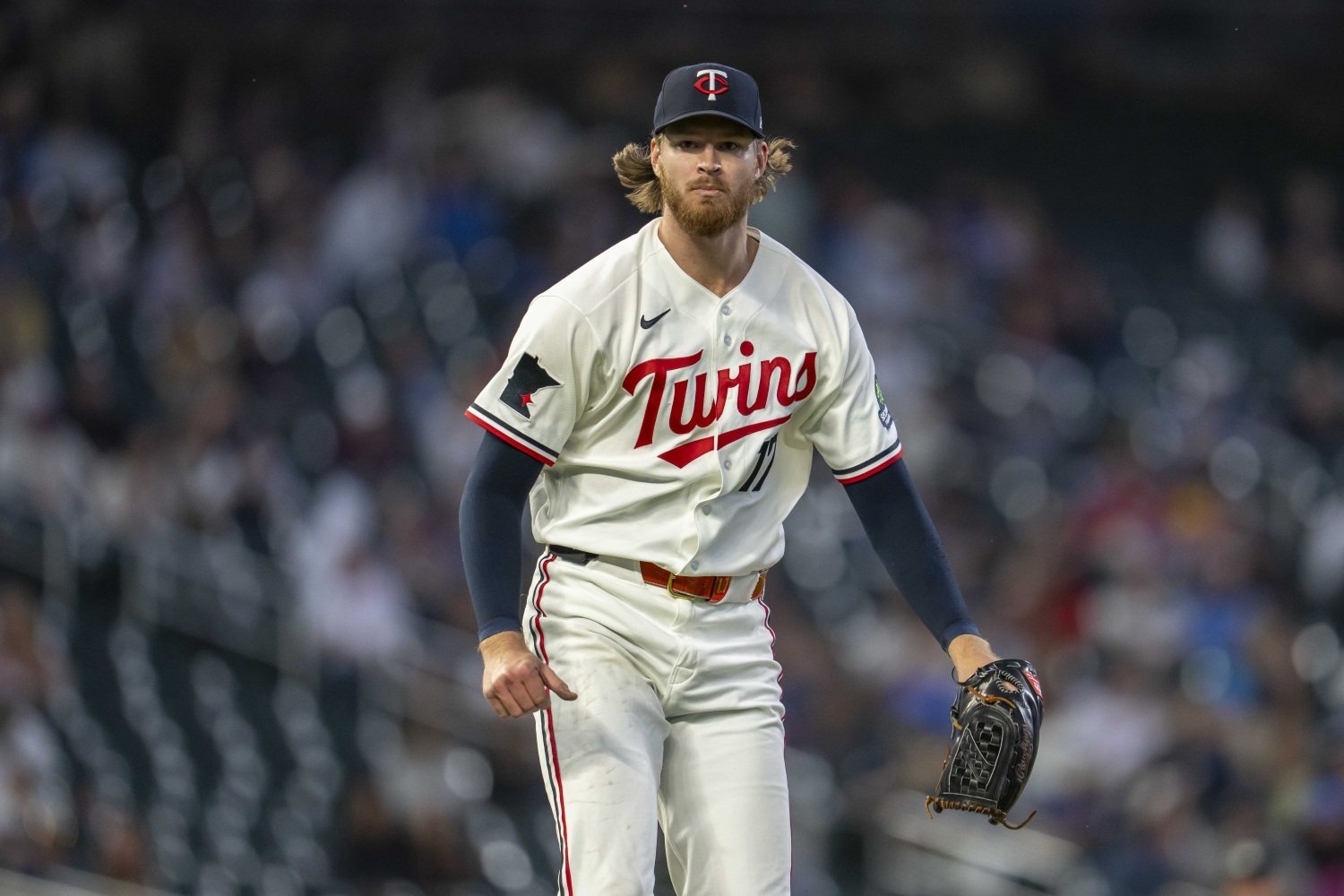
Bailey Ober has already established himself as one of baseball's most unusual starting pitchers. His fastball velocity has fallen into the high-80s, making him the slowest-throwing starting pitcher in Major League Baseball. His strikeout rate has followed the same trajectory, dropping from 26.9% in 2024 to 19.2% in 2025 and 17.1% this season.
Most organizations would look at those numbers and start asking how to get the velocity back. The Twins are asking a different question. What if they make him throw even slower?
"We've seen what happens when Bailey throws 88," Twins general manager Jeremy Zoll said. "Now we're interested in finding out what happens at 82."
"And 80."
"Potentially 76."
Zoll stressed that the organization isn't necessarily trying to make Ober worse. It's trying to make him different.
"Pitching is about evolution," Zoll said. "We've seen velocity continue to increase. We've seen pitchers change shapes, grips, arm slots and usage patterns. We're constantly looking for the next competitive advantage."
The Twins believe they may have found it somewhere between a Division II college pitcher and a position player asked to throw an inning in a 12-2 game.
There is a theory behind this. At 98 mph, hitters know they need to react immediately. At 88 mph, hitters have slightly more time. At 82 mph, they may have enough time to wonder why the baseball is taking so long to arrive. At 78 mph, perhaps they simply stop swinging.
"We don't know where the floor is," one Twins front office member said. "That's what the offseason is for."
The organization reportedly has a series of experiments planned for Ober's offseason program. The first bullpen will focus on 87 mph. The second will target 85. The third will be conducted with a radar gun turned off because the Twins don't want anyone to become psychologically attached to the number.
Eventually, the organization hopes to discover the exact velocity at which a hitter becomes so confused that the pitch qualifies as a breaking ball simply because of how long it takes to reach the plate.
Ober, for his part, is willing to try anything.
"I want to pitch," Ober said. "Whatever gives me the best chance to stay in the big leagues, I'm open to it."
"What if the fastball is slower than the changeup?" he was asked.
Ober paused.
"Then I guess we have a new problem."
The Twins aren't necessarily concerned about that problem yet. They're excited about the possibilities. Ober finished 2026 with a 4.47 ERA and 96 strikeouts in 131 innings. His 17.1% strikeout rate was well below league average, but his career has already demonstrated that he can succeed without premium velocity. The question is whether he can succeed with even less.
"Everyone wants to talk about velocity," another member of the front office said. "We want to talk about deception."
"What happens if the pitch is so slow that the hitter loses interest halfway to the plate? That's deception."
The Twins are also reportedly studying whether Ober's 6-foot-9 frame can create additional psychological confusion. A hitter sees a giant man on the mound. He prepares for something coming quickly. Then the pitch arrives at approximately the speed of a moderately ambitious lawn mower.
"We think there's something there," the front office member said.
There is, however, one person who may be even more excited about the Ober experiment than Zoll. Tom Pohlad. The Twins chairman has spent much of the year answering questions about payroll and the organization's plans to increase spending. Pohlad recently reiterated that Minnesota intends to meaningfully invest in the roster in 2027 after finishing the 2026 season with a payroll around $100 million.
The organization would apparently prefer to discuss something else.
"We've been thinking about the fans," Pohlad said. "We've been thinking about the media. We've been thinking about what we can do to create some positive offseason conversation."
Then came the real plan.
"If we can get Bailey Ober down to 79 miles per hour, Aaron Gleeman could spend four hours explaining why it doesn't make any sense," Pohlad said. "That's four hours where he isn't talking about our payroll."
At that point, the Twins' analytics department reportedly began calculating the exact relationship between Ober's velocity and the amount of time Gleeman could spend discussing it. The early projections are encouraging.
The Twins don't seem worried. They've already started preparing for the next phase. The goal isn't to make Ober throw harder. It isn't even to make him throw better. The goal is to make him throw so slowly that nobody has any idea what they're watching. And if that keeps the conversation away from payroll for a few hours? The Twins may have finally discovered their offseason ace.





Recommended Comments
Create an account or sign in to comment
You need to be a member in order to leave a comment
Create an account
Sign up for a new account in our community. It's easy!
Register a new accountSign in
Already have an account? Sign in here.
Sign In Now