The Twins have optioned outfielder Kyler Fedko to Triple-A after Thursday's loss against Cleveland. This likely makes room for Ryan Jeffers to return from the injured list in the upcoming series against the Angels.
Fedko was on the major league roster for about three weeks, where he played in 14 games, going 0-16 with eight strikeouts. His first major league hit will have to wait, as he will be back with Triple-A St. Paul this weekend. He was mostly used as a pinch runner and defensive replacement in his appearances with the Twins.
In his latest article, Bobby Nightengale reported that the Twins had talks with the Mariners at the trade deadline, but a deal never came together because Seattle was unwilling to include two of their best prospects. Minnesota’s ask? Two top-100 prospects.
Nightengale also noted that the Twins actually preferred 18-year-old catcher Eduardo Tait over Phillies shortstop prospect Aidan Miller. The hesitation with Miller, ranked #17 in baseball by MLB Pipeline, came from concerns about his ability to stick at shortstop long-term. Miller, currently in Double A, has posted a .740 OPS this season. The Twins felt Tait carried more upside and made him their request from Philadelphia instead.
It's hard to predict how this offseason will unfold, as there is an increasing chance of (yet another) MLB lockout following the 2026 season. Will teams spend big this offseason, hoping to create surety in the face of an unknown collective bargaining agreement? Or will they be hesitant in hopes of a favorable outcome for ownership groups?
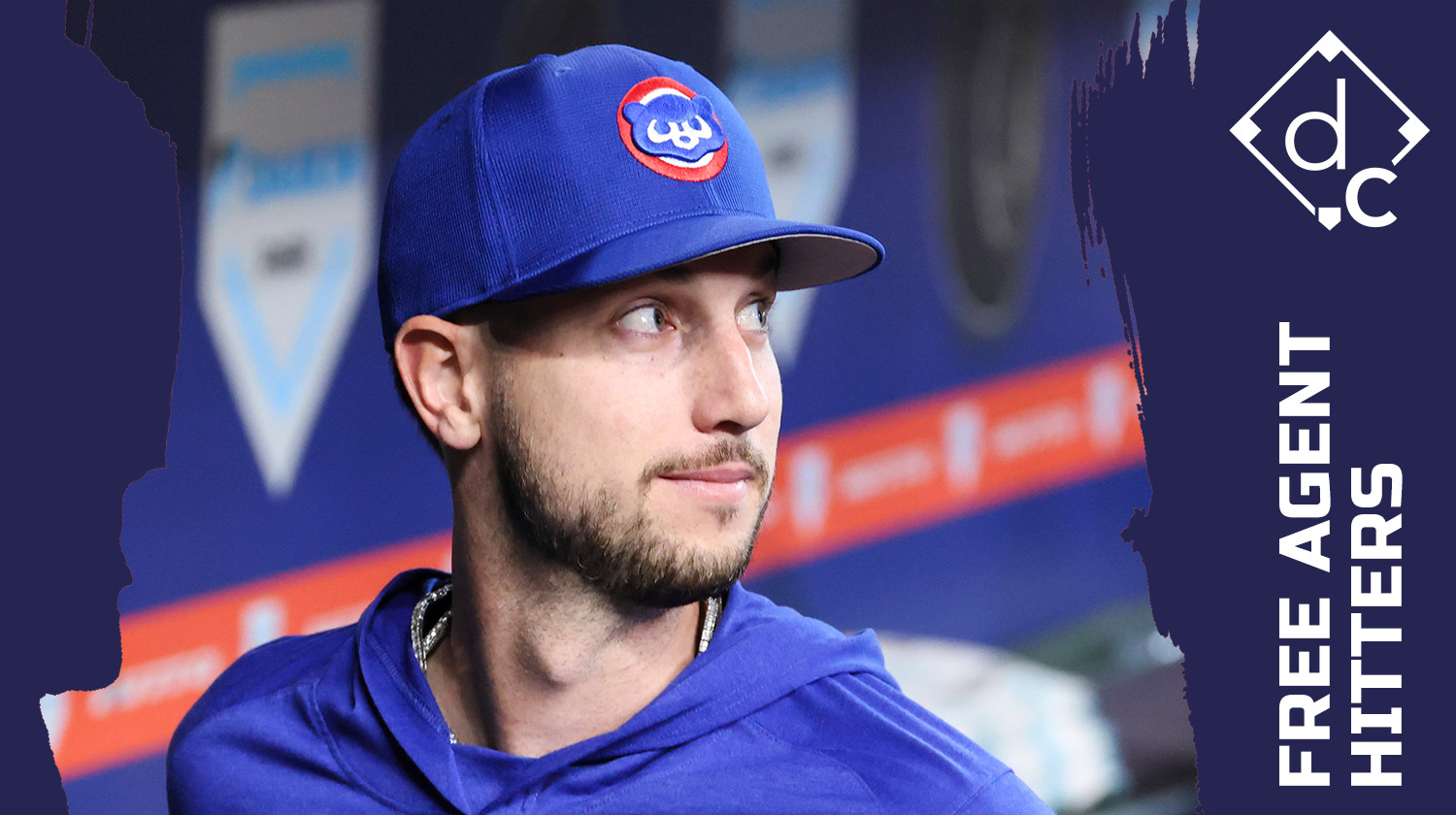
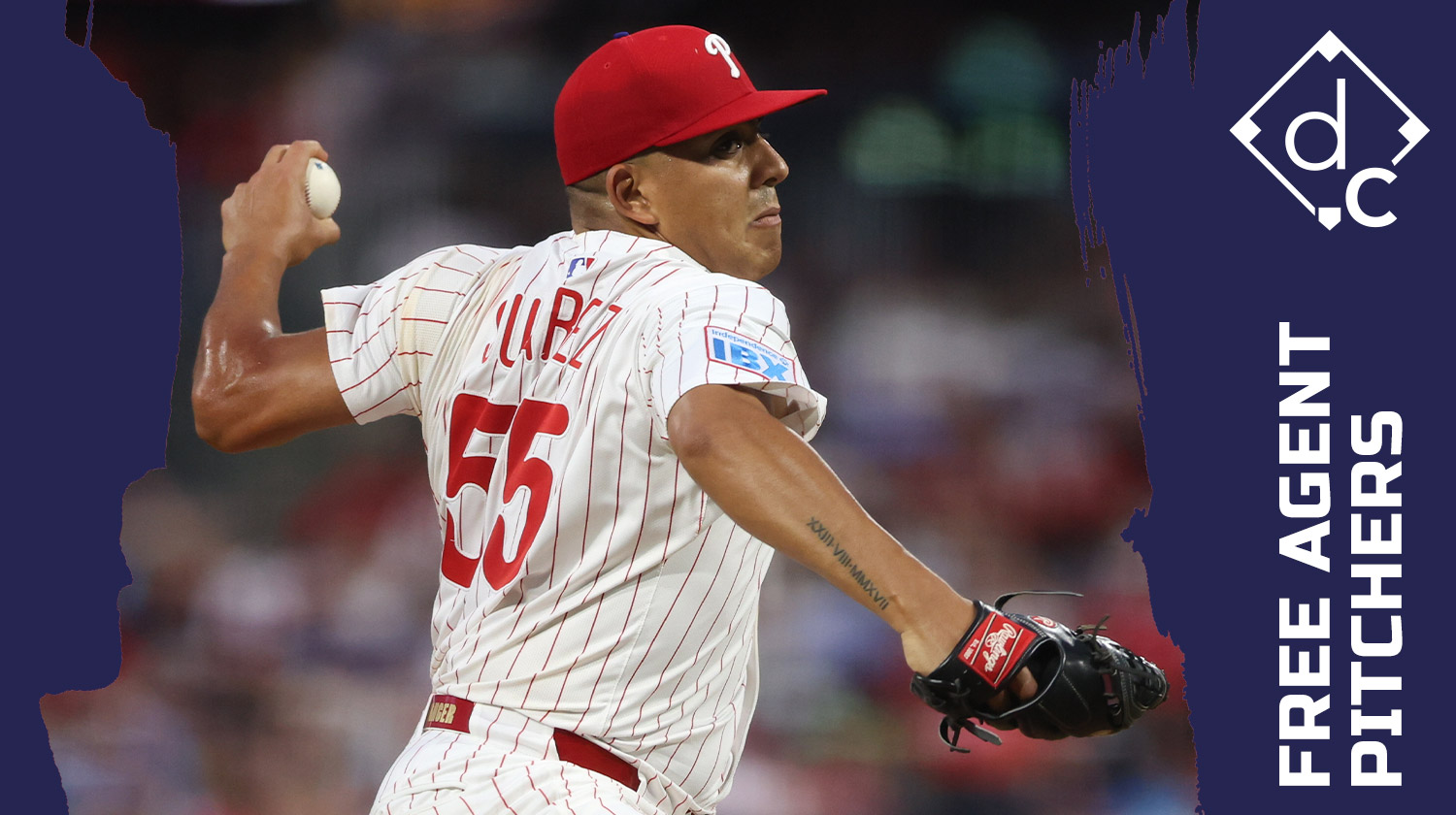
No matter how it shakes out, teams will need to compete in the 2026 season, and they'll need to sign free agents this winter. DiamondCentric has compiled a complete list of free agents, sortable and searchable by pretty much any metric you need. Looking for a first baseman? A catcher? We have you covered. We offer two pages for your reference: one for position players, the other for pitchers.
Baseball America released their June top 100 prospect rankings and it doesn't come as a surprise to see one name fall. While Luke Keaschall and Emmanuel Rodriguez saw their stocks jump two spots, Walker Jenkins saw his fall two spots despite two people ahead of him in the May rankings graduate.
It's not surprising to see Jenkins drop on the list, going from #11 in May to #13 in June, as he's been out for a majority of the season. He just returned on June 3rd in the Florida Complex League. A good month could see him back in the top 10 for the July Update.
On the other hand, Rodriguez has been his typical "on-base machine" self with the St. Paul Saints this year carrying a .400 OBP. Along with a high walk rate, he has a high strikeout rate due to his patient plate approach. He's annually towards the bottom of the Minor League leaderboard in swing and contact rates. More than most prospects, Rodriguez is a massive wild card as to whether the prospect pedigree will turn into production at the big-league level.
Finally, Keaschall was moved to the 60-day IL and is expected to be out for the foreseeable future although should return this season.
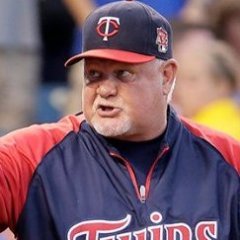
Dan Gladden has been a fixture on Twins radio broadcasts since 2000. Recently, he was named a 2026 inductee into the Minnesota Broadcasters Hall of Fame.
Gladden came to the Twins organization just before the 1987 season began. He is often referred to as the sparkplug that helped the Twins to World Series championships in 1987 and 1991. His final play with the Twins came in the bottom of the 10th inning of Game 7 of the 1991 World Series. He hit a hustle double, advanced to third on a bunt, and scored on Gene Larkin's "single" to give the Twins the 1-0 win.
He continued to play for a few more years, including time in Japan. In 2000, he began his time in the Twins radio broadcast booth. He became the full-time analyst in 203. He has worked in the booth with Herb Carneal, John Gordon, Cory Provus and now Kris Atteberry.
In fact, it was Provus who was able to tell Gladden about his latest career honor.
The honor clearly means a lot to Gladden who got emotional responding to Provus. He thanked Dave St. Peter for giving him an opportunity.
He said, "I didn't even cry when Rod Carew called me (to tell him he'd made the Twins Hall of Fame)." Gladden joined the Minnesota Twins Hall of Fame in 2022.
Join us in congratulating Dan Gladden on this terrific honor.
There was plenty for the Minnesota Twins to celebrate on Tuesday night at Target Field after a 6-0 win over the Boston Red Sox. Still, by the time the clubhouse doors opened and the postgame conversations began, the focus had shifted away from the box score.
The moment everyone wanted to talk about happened in the fifth inning, and it had nothing to do with a pitch or a swing.
As Boston’s Jarren Duran returned to the dugout following a groundout, he directed an obscene gesture toward a fan seated near the Twins’ dugout. The interaction quickly became the center of attention, especially after Duran explained what led to his reaction.
"Somebody just told me to kill myself," Duran said. "I'm used to it at this point, you know? I mean, s--- happens. I mean, I'm going to flip somebody off if they say something to me, but it is what it is. I shouldn't react like that, but that kind of stuff is still kind of triggering."
It is a jarring quote, and it reframes the moment immediately. What may have looked like a simple loss of composure becomes something far more complicated when placed in that context.
Duran has been open about his mental health journey, including severe depression and a past suicide attempt that he discussed publicly in a Netflix series released last year. That transparency has helped humanize a player often seen only through the lens of performance, but it has also opened the door to a darker side of fan interaction.
"Honestly, it's my fault for talking about my mental health because I kind of brought in the haters. So I've just got to get used to it," Duran said. "I was just trying to hold it in and not really bring that up to the team. I mean, we're trying to win a game. I shouldn't even bring that up to anybody. ... It just happens."
There is a lot to unpack in those words. The idea that speaking openly about mental health invites abuse is a troubling reflection of how conversations like these are still handled in public spaces. At the same time, Duran acknowledges that his reaction crossed a line, even if the comment that sparked it went far beyond anything acceptable.
Boston manager Alex Cora said he did not see the incident unfold and had not yet reviewed the video afterward, leaving the situation to be addressed more fully at a later time.
This is not the first time Duran has found himself in the spotlight for an interaction with a fan. In 2024, he served a two game suspension after directing an anti gay slur during a separate incident. That history adds another layer to how moments like this are perceived, both inside the game and across social media, where reactions were predictably split.
Some defended Duran’s response, arguing that players should not be expected to absorb deeply personal and harmful comments without reacting. Others pointed to the need for professionalism, regardless of circumstance, especially given his prior discipline. Both perspectives exist because this is not a simple issue.
What should be simple is the baseline expectation for fan behavior. There is a difference between heckling and crossing a line into something personal and dangerous. Players are public figures, but they are not immune to the impact of words that go well beyond the boundaries of the game.
But baseball does not exist in a vacuum. Moments like this serve as reminders that what happens in the stands can carry just as much weight as what happens between the lines.
Durability has never quite matched the talent for Byron Buxton. Over the course of his 12-year big league career, he has dealt with a wide range of injuries, many of them coming in ways that are hard to prevent. Whether it is crashing into walls, colliding with teammates, or wearing pitches, Buxton’s all-out style has often come at a physical cost.
That reality made Friday night feel all too tense. In the seventh inning of Minnesota’s home opener against the Tampa Bay Rays, Buxton was struck on the right forearm by a 92 mile per hour fastball from Kevin Kelly. The reaction was immediate. He signaled for assistance and headed off the field, leaving a quiet concern hanging over the ballpark.
It was not the first time this spring that Buxton had been in that situation. While playing for Team USA in the World Baseball Classic, he was hit in a game against Team Brazil and forced out shortly after. That incident ultimately proved minor, with imaging showing no structural damage.
This one followed a similar path. Shortly after exiting Friday’s game, the Twins announced that Buxton’s X-rays came back clean. The official diagnosis was a forearm contusion, meaning the injury is more about soreness than anything long-term.
Buxton did not make much of it in his postgame remarks, keeping his outlook straightforward.
“It’s an arm,” he said. “It ain’t broken, so I’m good.”
That kind of update is about as positive as it gets, given the circumstances. On the field, Minnesota made sure the game itself did not slip away. After Buxton departed, the lineup came alive with a seven-run inning that flipped the night completely. Tristan Gray delivered the biggest swing with his first career grand slam, helping push the Twins to a comfortable 10-4 win.
Even with the victory, Buxton’s status remains the real storyline. The Twins are still finding their rhythm with a 3-3 record to open the year, and his presence plays a major role in what this team can be. His early numbers at the plate have been modest, but his impact extends well beyond the box score when he is healthy and in center field.
For now, the organization appears to have avoided a worst-case outcome. Buxton missed Saturday's game, but the early signs point to a manageable situation. Considering his history, that alone is enough to feel like a win.
The Minnesota Twins have spent much of the season trying to keep Byron Buxton healthy while still allowing him to impact games in center field. On Friday night, that balancing act took another concerning turn.
Buxton exited Minnesota’s game against the Kansas City Royals in the third inning after crashing into the center field wall while making a catch on a deep drive from Carter Jensen. The Twins later announced that Buxton suffered a right shoulder contusion.
The play immediately drew concern at Target Field. Buxton raced back on Jensen’s drive, secured the out, and slammed into the wall at full speed. Although he remained in the game initially and stayed in center field for the next two outs, the situation quickly changed once he returned to the dugout.
“I was concerned about it because he ran into it full speed, hard,” Twins manager Derek Shelton said. “He was shook up a little bit. When he came in, and he said he hit that shoulder, the same shoulder that he had the issue with — he wanted to hit, and I was like, ‘Nah, there's no chance if you’re feeling it in the same spot.’ "
Head trainer Nick Paparesta spoke with Buxton after the collision, and the veteran center fielder initially believed he could continue playing. However, after remaining on the field for the rest of the inning, Buxton informed Shelton that the shoulder had taken the brunt of the impact.
“He’s way too important to us to take an at-bat to try, so I just took it out of his hands and said no,” Shelton said.
The injury is particularly concerning because it involves the same shoulder that recently limited Buxton's ability to play center field. He jammed his shoulder on a slide on May 23, affecting his throwing for roughly a week. Combined with a sore right hip flexor that forced him to miss five games in May, the Twins have been carefully managing his workload over the last several weeks.
Buxton was playing center field for only the fourth time since May 13, entering Friday's game. Much of his recent playing time had come as the designated hitter while the Twins tried to keep his bat in the lineup without placing additional stress on his body.
That bat has been one of the biggest reasons Minnesota remains in contention. Buxton entered Friday tied for fourth in Major League Baseball with 18 home runs and had homered against Kansas City on Thursday night. He has appeared in 55 of the Twins' first 65 games, an encouraging total for a player whose availability has often been one of the club's biggest questions.
Unfortunately, Friday's collision created another health concern at a time when the Twins can least afford to lose him. Shelton said it’s unlikely Buxton will be in Saturday’s lineup because the first pitch was about 13 hours after last night’s game ended.
The Twins should have a clearer picture of Buxton's status over the next couple of days, but Friday served as another reminder of both his value and the fine line Minnesota must walk in keeping one of baseball's most dynamic players on the field.
When the MLB All-Star Game rolls around each summer, it serves as more than just a midseason showcase of the game’s brightest stars. It is also a reflection of the people shaping the sport behind the scenes. This year, the Minnesota Twins will have representation in the dugout as well, with manager Derek Shelton earning a spot on the American League coaching staff.
Shelton has been tapped to join the American League staff for the 2026 All-Star Game in Philadelphia, a role extended by John Schneider, who will lead the AL squad after guiding the Toronto Blue Jays to the AL pennant. While All-Star managers typically lean on their own coaching staff, they are also given the opportunity to bring in an outside voice. Schneider’s choice of Shelton speaks volumes.
The connection between the two goes back nearly a decade. In 2017, Shelton was working in a quality control role within Toronto’s system, while Schneider was managing at the High-A level. Their paths crossed early, and the respect built during that time clearly stuck. That relationship resurfaced this spring when Schneider reached out personally to invite Shelton to join him for the Midsummer Classic.
This will not be Shelton’s first experience on an All-Star staff. Back in 2023, he was managing the Pittsburgh Pirates when Philadelphia’s Rob Thomson selected him to be part of the National League staff. That opportunity came during a difficult stretch in Pittsburgh, but it underscored how Shelton was viewed across the league. Even as the results lagged, his peers recognized his baseball acumen and leadership.
That reputation has carried over to his current role in Minnesota. Early in the 2026 season, the Twins have looked like a club with direction and energy. Whether it is lineup construction, bullpen usage, or simply the tone set in the clubhouse, Shelton has helped guide a team that is outperforming expectations. Managers rarely get full credit when things go right, but they are often first in line when things go wrong. In this case, Shelton deserves acknowledgment for helping steady the ship.
The All-Star Game coaching nod is not about one hot stretch or a handful of wins in April. It is about trust, relationships, and respect built over years in the game. Being chosen twice by two different managers in separate leagues reinforces that Shelton is valued well beyond his own clubhouse.
As the All-Star break approaches, Shelton will step onto one of baseball’s biggest stages once again. This time, he does so representing a Twins team that is attempting to build something meaningful. It may only be a few days in July, but it is another sign that Minnesota’s manager is earning his place among the game’s most respected voices.
For a franchise looking to turn the page and establish consistency, that is exactly the kind of recognition that matters.
Major League Baseball spent years testing the automated ball strike system in the minors before finally rolling it out at the big league level in 2026. The early days of any new rule come with a learning curve, and on Sunday, that adjustment period produced a moment that will live in the record books.
Twins manager Derek Shelton became the first manager to be ejected in Major League Baseball history over an ABS-related dispute. The moment came in the ninth inning of Minnesota’s 8-6 loss against Baltimore, and it unfolded in a way that perfectly captures both the promise and the confusion surrounding the league’s newest technology.
With two outs and the Twins mounting a potential rally, Ryan Helsley appeared to issue a walk to Josh Bell. That would have brought the tying run aboard and shifted the pressure squarely onto Baltimore. Instead, Helsley signaled for a challenge, tapping his hat to trigger the ABS system. The call was overturned to a strikeout, abruptly ending Bell’s plate appearance and changing the complexion of the inning.
Shelton immediately took issue, not necessarily with the result of the challenge, but with its timing. Under MLB’s ABS guidelines, players must initiate a challenge almost instantly after the umpire’s call. The unofficial benchmark has been about two seconds, leaving little room for hesitation. In real time, Helsley’s motion looked quick, but Shelton clearly saw it differently from the dugout.
"I didn't think Helsley tapped his hat quick enough," Shelton said after the game. "Maybe he did, maybe he didn't. But I didn't feel he did. I feel it's gotta be something that's in the three seconds and I didn't think it was there. But the umpiring crew thought it was."
The disagreement escalated quickly, and Shelton was tossed, cementing his place in MLB history as the first casualty of the ABS era.
From Helsley’s perspective, the sequence was not as clear-cut either.
"I understood where he was coming from, because I felt like the umpire didn't see me right away and so I was kind of confused," he said after the game. "(Home plate umpire Laz Díaz) behind me kind of took up for him. He was like, 'He did it right away,' which I know we're probably going to go through some growing pains with this since it's so new and I think we saw that today. And I can respect Shelton for trying to not get him to do it there, because it did seem like it was a little long in that moment."
That last part might be the most important takeaway. MLB’s ABS system is designed to eliminate missed calls, but it introduces a new layer of subjectivity in how and when challenges are initiated. What feels immediate to one person may look delayed to another, especially in a high-leverage situation with the game on the line.
The inning did not end quietly after the ejection. The next batter reached on an error, briefly extending Minnesota’s hopes, but Helsley regrouped and induced a game-ending flyout to shut the door.
MLB and the ABS system will have some kinks in the season’s early weeks. Shelton’s ejection might be just the first step as the league and teams adjust to a new normal.
There was a brief moment of concern surrounding Mick Abel this week, but the Minnesota Twins appear to have avoided a worst-case scenario. When Abel experienced soreness following a bullpen session, the organization opted for caution, and the MRI results delivered encouraging news.
“We felt like if we aggressively treat it, get him on some anti-inflammatories and play it safe on the front end, it’ll be something that will be relatively quick and short,” general manager Jeremy Zoll said. “We didn’t want to try to chase it and then make it potentially worse later by trying to prolong this.”
That measured approach reflects both the Twins' current pitching depth and the importance of Abel to the organization’s long-term plans.
Originally selected 15th overall by the Philadelphia Phillies in 2020, Abel arrived in Minnesota with plenty of intrigue. He was part of last summer’s headline-grabbing deal that sent Jhoan Duran to Philadelphia, with catching prospect Eduardo Tait also coming back in return. At the time, the move signaled a shift toward reshaping the Twins' pitching pipeline.
Now 24 years old, Abel’s development path has not been perfectly linear. Once a staple on top 100 prospect lists, his stock dipped entering 2025 before rebounding in a big way. He reached the majors with Philadelphia and pitched well enough to reestablish himself as a meaningful trade asset.
Abel did not enter spring training with a guaranteed role, but he forced the Twins’ hand with a dominant showing in the Grapefruit League. Across 22 innings, he posted a 2.05 ERA with a 32.9% strikeout rate and just a 4.9% walk rate, looking every bit like a pitcher ready to contribute at the major league level.
The regular season has brought some ups and downs, which is to be expected for a young arm finding his footing. After being hit hard in his first two outings, Abel responded with authority. He delivered 13 consecutive shutout innings across starts against Detroit and Boston, compiling a 16-to-3 strikeout-to-walk ratio in the process.
Through 20 1/3 innings, Abel owns a 3.98 ERA with a 24.7% strikeout rate and a 10% walk rate. Underlying metrics paint an even more encouraging picture. His 2.79 FIP suggests better days ahead, while a 3.93 SIERA reinforces the idea that he has been a steady contributor.
For the Twins, the decision to pause rather than push reflects both confidence and caution. Elbow inflammation is not something to ignore, especially for a pitcher with Abel’s workload trajectory, but it is far from a devastating diagnosis.
The focus now shifts to recovery and timing. If the inflammation responds well to treatment, Abel could return without missing significant time and continue building on what has been a promising start.
In a season where pitching depth is already being tested, keeping Abel healthy matters. The early signs suggest the Twins have navigated this situation correctly, giving themselves a chance to have one of their most intriguing young arms back on the mound sooner rather than later.
Royce Lewis’ difficult 2026 season took another frustrating turn on Sunday. The Minnesota Twins announced that Lewis exited Sunday’s 9-2 loss to the Cleveland Guardians after five innings because of left shoulder soreness. Lewis made a diving play to record the final out of the fourth inning at first base, and it appears that play caused the issue to flare up again.
Lewis remained in the game for the bottom of the fourth, where he flew out to right field in his final at-bat. Victor Caratini replaced Lewis at first base to begin the sixth inning.
Following the game, Twins manager Derek Shelton said Lewis aggravated the soreness during the defensive play that ended the fourth inning.
“Two pitches before he had the F9, I think he kind of tweaked it a little bit again,” Shelton said. “He’s day to day, and we’ll kind of see how he is tomorrow.”
The injury is another concern for a player who has struggled to find consistency throughout the 2026 season. Lewis has appeared in 114 games for Minnesota, hitting .230/.297/.391 (.6880 with 14 home runs and 53 RBI.
It has been a particularly challenging year for Lewis after the Twins gave him a reset in the minor leagues earlier this season. Minnesota sent Lewis to Triple-A in an effort to get him regular at-bats and allow him to work through some of the issues that had plagued him at the major-league level. The reset provided some reason for optimism, but Lewis has struggled to maintain any momentum since returning to Minnesota.
His recent stretch has been especially difficult. Lewis has hit just one home run since August 7, and over his last 131 plate appearances, he has slashed .228/.267/.317 for a .584 OPS. He has struck out 34 times during that span while drawing only seven walks.
Those numbers help put Sunday's injury into a larger context. Lewis was already trying to find his footing at the plate, and now the Twins will have to wait and see whether his shoulder soreness forces him to miss additional time.
For a player Minnesota once viewed as a potential cornerstone of its lineup, the 2026 season has been filled with more questions than answers. The Twins will hope Sunday's issue is minor and that Lewis can get back on the field quickly. For now, though, Lewis is officially day-to-day.
Minnesota Twins fans can officially stop refreshing trade rumor websites looking for Byron Buxton updates. On Tuesday, Twins general manager Jeremy Zoll delivered something front office executives rarely offer: a definitive answer.
"We have no plans to trade Byron," Zoll said. "It's not something we're exploring. It's not something we plan to explore."
That statement alone carries significant weight. Front offices are typically careful with their wording, especially as the trade deadline approaches. Executives often leave themselves flexibility, speaking in vague terms about listening on players or evaluating opportunities. Even when a team has little intention of moving a player, they rarely remove the possibility altogether.
Zoll did exactly that. With the August 3 trade deadline approaching and Minnesota sitting in the middle of a crowded American League playoff race, recent speculation had connected Buxton's name to potential trade discussions. A national report from ESPN even suggested he could become the second best player traded if the Twins decided to pivot toward selling. Zoll's comments leave little room for interpretation.
Buxton Has Been Carrying the Twins
Part of the reason trade rumors gained traction is because Buxton's value has never been higher. Through 306 plate appearances, the Twins center fielder owns a .275/.333/.596 slash line with an American League-leading 25 home runs. When healthy, he's playing like one of the best players in baseball and has positioned himself squarely in the MVP conversation.
Of course, health remains the lingering question. Durability has followed Buxton throughout his career, and it's impossible to discuss his value without acknowledging that reality. However, when he's on the field, few players impact a game the way he does.
The Twins know that. Even though Minnesota sits four games below .500, they remain very much alive in both the AL Wild Card race and the AL Central. They're only two games out of a playoff spot and 3.5 games behind both Chicago and Cleveland in the division standings.
Trading Buxton would signal a dramatically different organizational direction. Instead, Zoll made it clear the Twins aren't interested in taking that path.
A Different Tone Than Last Year
What's perhaps most interesting about Zoll's comments is how different they are from the organization's approach a year ago. Last summer, rumors circulated around several veteran players as Minnesota struggled to find consistency. While there was never any concrete indication that the Twins seriously considered moving Buxton, the organization never publicly dismissed the possibility either.
That silence didn't go unnoticed. When Buxton arrived at spring training, he acknowledged some frustration with how the situation had been handled.
"All it takes is for somebody at the top to go to the media, 'We're not trading you,'" Buxton said in February. "Trade rumors stop and now we don't have those conversations. That's how simple this could get."
At the time, the comments stood out because Buxton rarely speaks publicly about front-office matters. While the situation clearly didn't damage the relationship between player and organization, it offered a glimpse into how unnecessary speculation can affect even veteran stars.
Fast forward a few months and Zoll essentially provided the exact public backing Buxton had requested. Whether intentional or not, the message was received.
Looking Beyond the Deadline
The bigger story may not be whether Buxton gets traded, but whether the Twins eventually explore keeping him in Minnesota beyond his current contract.
If both sides remain aligned, this offseason could present an opportunity to discuss an extension that allows Buxton to finish his career where it started. That's still speculative, but it's a far more realistic conversation than trade rumors at this point.
For now, both the player and the organization are delivering the same message. Buxton said he isn't interested in leaving. The Twins say they aren't interested in moving him.
Trade rumors may never completely disappear when a star player is involved, but Zoll's comments are about as close to a final answer as a front office executive can provide.
There was a time not long ago when optimism around the Minnesota Twins felt sustainable. Competitive rosters, postseason appearances, and a growing core gave fans reason to believe. Now, according to The Athletic’s annual Hope-O-Meter, that belief has all but vanished.
The latest fan survey, which included more than 11,000 respondents, paints a fascinating picture of the sport’s emotional landscape. Across Major League Baseball, optimism is actually trending upward. A strong 72% of fans reported feeling hopeful about their favorite team, a notable jump from 66% a year ago. Baseball, broadly speaking, is in a good place when it comes to fan confidence.
That makes what is happening in Minnesota stand out even more.
At the top of the rankings sit perennial contenders and rising powers. The Los Angeles Dodgers lead the way at an eye-popping 99.8% optimism, followed by the Toronto Blue Jays, Seattle Mariners, Detroit Tigers, and Kansas City Royals. The presence of Detroit and Kansas City is particularly notable for Twins fans, as two division rivals have surged into the league’s emotional elite.
Minnesota, meanwhile, sits alone at the bottom. The Twins posted a staggering 4.3% optimism rating, the lowest mark in all of baseball. The only team even within shouting distance is the Los Angeles Angels at 5.7%. After that, the gap widens significantly, with no other franchise falling below 24%. This is not just pessimism. It is a complete erosion of belief.
What makes the drop more jarring is how recent the optimism once was. In 2022, the Twins checked in at 70.1 %, placing them squarely in the middle of the league. By 2023, that number jumped to 91.3%, good for 10th overall, and they remained near that level in 2024 at 86.3%. Even entering 2025, there was still a baseline level of confidence at 52%.
Now, that foundation has collapsed, and the reasons are not difficult to identify. On the field, inconsistency and underperformance have chipped away at expectations. Off the field, uncertainty surrounding ownership has only deepened the frustration. There was a moment last winter when it seemed possible the Pohlad family might explore a sale of the team, offering a potential reset and renewed direction. That possibility has since faded, and with it, a significant portion of fan optimism.
The result is a five-year trend line that looks less like a normal fluctuation and more like a free fall. The Twins Hope-O-Meter arc resembles a slow climb to a peak followed by a sudden and dramatic plunge. There were real highs, but the landing has been hard.
Rebuilding that trust will not happen overnight. It will take more than a hot streak or a promising prospect. Fans are looking for a clear vision, a commitment to winning, and signs that the organization understands the weight of this moment. That responsibility falls on everyone, from the front office to the clubhouse to ownership itself.
For now, the numbers tell the story. In a league where hope is rising, Minnesota has run out of it. The next chapter for the Twins will not just be about wins and losses. It will be about convincing a disillusioned fan base that there is something worth believing in again.
When Tom Pohlad stepped into the role of Twins chairman last winter, he promised that the organization would provide the resources necessary for the front office to build a sustainable contender. For much of the season, those comments were met with skepticism after years of payroll criticism. The 2026 trade deadline offered the first tangible evidence of that commitment.
Minnesota aggressively upgraded its roster by acquiring A.J. Minter, Dean Kremer, and Jeff Hoffman, adding impact talent while taking on more than $8 million in prorated salary for the remainder of the season. The moves also created meaningful financial obligations beyond 2026, with Hoffman owed $11 million next season and Kremer expected to receive another raise through arbitration after earning $5.75 million this year. Although Toronto will cover $3.75 million of Hoffman's 2027 salary, the Twins still accepted a larger financial commitment than many expected.
According to Pohlad, that willingness to spend was intentional.
“I, and we as an ownership group, were committed to giving [general manager Jeremy Zoll] the financial flexibility to make this team better,” Pohlad said. “I think the results of what happened at the Trade Deadline were in no small part a function of having that financial flexibility and that clarity at the outset. Now, somebody has to go out and execute that, and that is a very hard thing to do, and he did that masterfully.”
The deadline additions addressed immediate needs while also strengthening the roster beyond this season. More importantly, they represented a shift from simply managing payroll to actively investing in a club that believes it can contend over multiple years.
Pohlad made it clear those deadline moves were not a one-time exception. When asked whether Minnesota's willingness to add salary at the deadline signaled an increase in payroll for 2027, he didn't hesitate.
“I’m not hoping -- it will be higher,” he said. “I’ve been consistent, right? For us to accomplish the things that we want to accomplish, and be a consistently competitive team in the playoffs, and going deep, we have to make an investment into this team. We did that in a small way at the Trade Deadline. You’ll see more of it next year.”
That statement could become one of the organization's most significant developments of the season. The Twins have spent the last several years answering questions about shrinking payrolls and financial limitations. Now, ownership is publicly committing to moving in the opposite direction.
Of course, words alone won't erase years of frustration among the fan base. The real test will come this offseason as Minnesota looks to supplement a roster that already appears capable of competing in the American League. If Pohlad follows through on his promise, Jeremy Zoll could have considerably more flexibility to address remaining needs instead of relying solely on internal improvements.
The trade deadline showed the Twins are willing to spend when they believe they have a chance to win. Pohlad's latest comments suggest that philosophy won't end with this season. Instead, they could mark the beginning of a new financial approach—one designed to keep Minnesota in contention not only for the rest of 2026, but well into 2027 and beyond.
Major League Baseball’s ABS system has brought changes to the game, and teams are still ironing out its wrinkles. With only a limited number of challenges available, every decision carries weight.
It did not take long for players to realize that this system is not just about accuracy, it is also about strategy. On Tuesday night, Victor Caratini may have given the clearest example yet of how gamesmanship can play a role in this new era.
Catchers have traditionally built their value around pitch framing, subtly moving their glove to influence an umpire’s call. The ABS system changes that dynamic. With the ability to challenge pitches, framing becomes less essential in the traditional sense. But that does not mean it is irrelevant. In fact, Caratini showed it can still be a weapon, just in a different way.
With Andruw Monasterio at the plate, Caratini received a pitch that clearly went through the bottom half of the strike zone. Instead of presenting it cleanly, he exaggerated his glove movement well outside the zone. The visual suggested a clear ball, even though the pitch itself was a strike.
That was the trap. Monasterio took the bait and called for a challenge, convinced the pitch had missed. Moments later, the review confirmed what Caratini already knew. The pitch was a strike. The Red Sox lost a challenge, and Monasterio was left with a long, quiet walk back to the dugout.
It was a small moment in the game, but one that could have larger implications. Challenges are a finite resource, and burning one on a pitch that was never close is a costly mistake. By manipulating perception, Caratini essentially gave his pitcher an advantage without throwing another pitch.
This kind of thinking is exactly what many expected when ABS was first implemented. Players and coaches are constantly looking for edges, and this is simply the latest example.
Aaron and John talked about this scenario playing out on Wednesday’s mailbag episode of Gleeman and the Geek. Aaron agreed that it could be something that is seen more regularly this season. However, John had a tough time imagining the situation playing out the way it did for Monasterio.
There is also a psychological layer to it. Hitters trust their eyes and instincts, but when a catcher presents a pitch in a misleading way, it introduces doubt. In a system where players can challenge calls, that doubt can turn into a costly decision.
For Minnesota, it was another example of doing the little things right in a win over Boston. Now, fans will have to wait and see if any other batters fall for a similar tactic.
Finalized rosters dropped on Wednesday, trimming each organization’s initial 40-player pool down into something much more game-ready. For the Twins, that means a prospect group in the mid-20s taking the field on Thursday afternoon, with a chance to show what the next wave of talent might look like in Minnesota.
Major League Baseball’s third annual Spring Breakout event runs from March 19 through March 22, serving as a four-day window into the future of the sport. The Twins will host the Philadelphia Phillies prospects on Thursday at 12:05 p.m. CT, giving fans a midday look at some of the organization’s most intriguing names. The game will be widely accessible, airing on MLB Network and Twins.TV while also streaming for free on MLB.TV, MLB.com, and the MLB app.
For Minnesota, this is more than just a novelty on the spring calendar. The roster is packed with players who could realistically factor into the club’s long-term plans, and in some cases, sooner rather than later.
Spring Breakout rosters are built primarily from MLB Pipeline’s Top 30 prospects list for each organization, with eligibility tied to players who still qualify as rookies for the 2026 season. This year’s format again featured a two-step process: a 40-player pool, then a final group announced on Wednesday.
One notable absence is Walker Jenkins, who will miss the event for the second straight year. The outfielder dealt with a hamstring injury earlier in camp, but the Twins have indicated he is progressing well. The expectation is that he will return to action later this week and be ready for Opening Day with St. Paul.
Even without Jenkins, the Twins are not lacking in star power. Fourteen of Twins Daily’s top 20 prospects made the cut, giving this roster a legitimate amount of upside across the diamond.
On the position player side, Emmanuel Rodriguez remains one of the most electric bats in the system, capable of changing a game with one swing or one sprint out of the box. Kaelen Culpepper continues to generate buzz as a fast-rising infielder with the tools to stick on the left side. Marek Houston, last year's first-round pick, will also get his first chance to show his lauded defensive skills at shortstop. Behind the plate, Eduardo Tait and Khadim Diaw give the Twins a pair of catching prospects that bring both intrigue and upside, each carving out their own path toward the upper minors.
On the mound, Dasan Hill headlines the group as the highest-ranked pitching prospect on the roster. The left-hander has already turned heads this spring after touching 100 mph, and this setting feels tailor-made for a breakout performance. Marco Raya will be another arm to watch, especially as he continues transitioning into a bullpen role. Short bursts in a showcase environment could play directly into his strengths.
All told, this is a roster that blends proximity with projection. Some of these players are a few adjustments away from knocking on the big league door, while others are just beginning to scratch the surface of what they might become. Either way, Thursday offers a rare opportunity to see that spectrum all at once.
When the World Baseball Classic rosters were unveiled, it appeared the Minnesota Twins would have a healthy presence on the international stage. Now, that presence may be nonexistent.
Right-hander Taj Bradley has elected to withdraw from the World Baseball Classic, opting to remain in Fort Myers and continue building toward what the organization hopes will be a breakout season. Bradley had been slated to pitch for Mexico, but after conversations with the coaching staff, he decided his focus belonged in Twins camp.
“He just approached me and said that he would like to stay in camp and be with the club,” manager Derek Shelton said. “And I just listened to him because we committed to him playing, and he committed to playing, and let him express himself. And I think the biggest thing was he felt his priority should be in this camp. He stated, new manager, new staff to some extent, new catcher in terms of Victor Caratini, and he just felt that the best use of his workload during Spring Training was going to be to be in our camp. So we supported him in terms of his decision.”
It is hard to argue with that reasoning. The Twins acquired Bradley from the Tampa Bay Rays at last year’s trade deadline in a deal that sent Griffin Jax the other way. Minnesota was buying into upside. Two years ago, Bradley was viewed as one of the most electric young arms in baseball, ranking as a consensus top-50 prospect entering the 2023 season.
His initial run in Minnesota was uneven. Bradley posted a 6.61 ERA in six starts after the trade, struggling at times to command the zone and keep the ball in the yard. Still, there were flashes. The Twins believe there is another level to reach, and with club control through 2029, they are invested in helping him find it.
At just 25 years old, Bradley already has 385 1/3 innings in the majors between the Rays and Twins. That experience matters, especially for a pitcher still working to harness premium stuff. He owns a 4.86 career ERA, largely inflated by a 1.49 HR/9 rate. The underlying numbers paint a more optimistic picture. Bradley carries a 25 K%, an 8.6 BB%, and a 41.1% ground ball rate. His 4.38 FIP suggests he has pitched better than the surface results indicate.
By staying in camp, Bradley can continue building chemistry with Caratini and work closely with a pitching group that has undergone changes. For a pitcher expected to slot in as the third or fourth starter, those relationships and routines could prove more valuable than a handful of high-intensity innings in March.
Minnesota’s Classic outlook has shifted dramatically. Pablo López underwent season-ending Tommy John surgery earlier this week, and Joe Ryan’s availability remains uncertain as he manages lower back inflammation. What once looked like a showcase of the Twins' arms on the global stage now looks like a spring devoted entirely to getting healthy and aligned.
For Bradley, that alignment starts now. If the Twins are going to surprise people in 2026, they will need their rotation to outperform expectations. Choosing camp over Classic may not generate headlines in the same way, but it could pay dividends when the games start to count.
The final stretch of spring training is supposed to be about decisions, not diagnoses. For the Twins, that equation shifted quickly on Monday when Austin Martin exited Minnesota’s game against the Pirates with a concussion, creating uncertainty just days before the roster is finalized.
Martin was lifted from the contest after sustaining the injury during Minnesota’s 5-1 victory. The play in question came in the third inning when he tracked a ball into right field off the bat of Henry Davis. Attempting to make a diving grab, Martin hit the ground awkwardly and appeared shaken up as he got back to his feet.
After the impact, Martin remained in the game and collected a single in the bottom of the third. However, he showed signs of discomfort and was removed before the start of the fourth inning, with James Outman replacing him in right field.
Twins manager Derek Shelton provided an update after the game, outlining the immediate plan for Martin’s recovery.
“He won’t do anything through the next two days, and then we’ll reevaluate him,” Shelton said.
The sequence of events raised concern in real time, particularly as Martin began to show signs of discomfort after the play.
“When he dove, I think he kind of jarred himself a little bit,” Shelton said. “I think once he got on the bases, he realized he was a little bit dizzy. And then as he walked past [bench coach Mark Hallberg] and I, we kind of saw a little bit of hesitation, and then [head athletic trainer Nick Paparesta] got to him.”
At this point, there is no firm timetable for Martin’s return, which is less than ideal given how firmly he had worked his way into the roster conversation. The former top prospect had been trending toward a role in the outfield mix, offering defensive flexibility with the ability to handle center field and even contribute at second base if needed.
His trajectory dates back to last season, when he capitalized on an opportunity late in the year following Minnesota’s trade deadline selloff. Martin responded with some of the most productive baseball of his career by posting a 106 OPS+, putting himself squarely on the radar entering camp this spring.
The timing of the injury is what stings most. With Opening Day looming, Martin represented one of the few right-handed-hitting outfield options expected to break camp with the club. If he is unable to clear concussion protocol in time, the Twins may need to pivot quickly.
That could open the door for players on the roster bubble. Ryan Kreidler brings right-handed balance and defensive versatility. Alan Roden offers a left-handed bat with upside. Veteran Orlando Arcia also remains a possibility as a depth option if the team prioritizes experience.
For now, though, the focus remains on Martin. Concussions are unpredictable, and even minor symptoms can linger longer than expected. In a camp where every at-bat and inning matters, the Twins will have to wait and see if one of their most intriguing roster pieces can get back on the field in time.
Joe Ryan's return to the Minnesota Twins rotation took another step forward Tuesday afternoon. Nearly two weeks after being placed on the injured list with a mild left glute strain, Ryan climbed back onto the mound at Target Field for his first bullpen session since the injury. The session was brief — just 25 pitches — but it represented a meaningful checkpoint for a Twins rotation that desperately needs reinforcements.
Ryan left the Twins shortly after his August 4 start against the Kansas City Royals to undergo an MRI. The examination revealed the glute strain, which has kept him sidelined since. While he has been cautious about the injury, Ryan said he has continued throwing regularly because he wanted to keep his arm moving.
Tuesday marked the first time he tested the injured area from a pitching mound.
“It’s a step in the right direction for sure,” Ryan said.
For the Twins, that was exactly what they wanted to see.
“Very encouraging,” manager Derek Shelton said before Tuesday's game against Atlanta. “He looked free and easy. He’s a very important part of our team. To see him out there and be healthy — (it’s the) first step in the progression to getting him back.”
Ryan Tests the Glute
Ryan's bullpen was intentionally limited. He threw 25 pitches, all fastballs and sinkers, as the Twins continued to ease him through the recovery process. The goal wasn't to recreate a normal bullpen session. It was to see how Ryan's body responded to pitching off the mound. So far, so good.
“I think it’s good to get off the mound and see how we feel,” Ryan said. “Just check in that area and, yeah, just do my job out there.”
Shelton emphasized that Ryan still has several steps to complete before the Twins can consider activating him. The next bullpen session should include breaking pitches, adding another layer to the physical test.
“I think anytime a guy’s dealing with an injury, to be able to cross hurdles like that, it’s extremely important,” Shelton said. “We diagnose what we think the situation is. And then we treat it and then we take the step of him getting out on the mound.”
A Much-Needed Rotation Boost
Ryan has struggled since returning from the All-Star Game, posting a stretch that included three consecutive losses before the injury. In his final three starts before landing on the IL, he surrendered seven home runs and 16 earned runs across 15 1/3 innings.
Now, the Twins are hoping the time away allows him to get healthy and return to something closer to the pitcher who earned All-Star honors in both 2025 and 2026. Ryan has gone 6-8 with a 3.65 ERA this season. He also represented the American League in this year's All-Star Game in Philadelphia, throwing a scoreless inning while allowing one hit and striking out two batters in the AL's 4-0 victory.
Minnesota's rotation has not exactly provided much stability since the All-Star break. Entering Tuesday, Twins starters had posted a 5.81 ERA across 29 games since the break. That ranked 29th in baseball during that stretch. The rotation had also allowed 24 home runs while issuing 59 walks.
Those numbers make Ryan's progression particularly important. The Twins remain in a crowded American League Wild Card race, and every quality starting pitcher becomes increasingly valuable as the schedule moves toward September. Minnesota doesn't need Ryan to return simply because he's one of its best starters. It needs him because the current rotation needs another reliable arm.
Ryan's return won't solve every problem facing the Twins, but getting a healthy two-time All-Star back into the rotation could dramatically change their outlook. The first step is now complete. The next few will determine just how quickly Minnesota can get its ace back on a big-league mound.
The Minnesota Twins have spent much of the 2026 season trying to keep Byron Buxton on the field. Once again, they have been unable to do it.
Buxton was placed on the 10-day injured list over the weekend with a right hip impingement, marking his third IL stint of the season related to hip issues. Minnesota made the move ahead of Sunday's game against the Chicago White Sox, calling up outfielder Gabriel Gonzalez from Triple-A St. Paul.
At this point, the problem isn't simply that Buxton is missing games. The bigger concern is that the issue could follow him into the offseason and require surgery.
Buxton hinted Wednesday that he would eventually need to work with the Twins' training staff to develop a plan for addressing his hip during the offseason. General manager Jeremy Zoll took that possibility a step further Friday, telling reporters that a surgical procedure remains on the table.
“(It’s) definitely a potential option as we sort through everything,” Zoll said. “It would be some type of hip procedure, but not at that point right now. … (We) just need to see how these symptoms progress over this next stretch, and then we’ll continue to assess options.”
That doesn't mean Buxton is headed for surgery. The Twins aren't at that point yet, and there is still time for the symptoms to improve. But the fact that surgery has entered the conversation is significant.
Buxton has dealt with his share of physical setbacks throughout his career, and the Twins have become increasingly careful about managing his workload. This season was supposed to provide another opportunity for the veteran to put together a lengthy stretch of games. Instead, the hip has continued to interrupt his season.
Manager Derek Shelton's comments Sunday reflected the frustration surrounding the situation.
“We can’t just magically snap our fingers and all of a sudden it’s the Jetsons and he’s healthy,” Shelton said. “If he could, it would be a lot cooler that way … in terms of it just automatically getting better. We just need to give it time.”
Unfortunately for the Twins, time has been a difficult solution with Buxton's hip. The three-time All-Star has still produced when he's been available, hitting .254 with 25 home runs and 46 RBIs across 93 games. He was on pace to reach 100 games for the third consecutive season, something he has accomplished only four times in his 12-year career.
That availability matters as much as the production. Minnesota's offense has relied heavily on Buxton's power and ability to change a game with one swing. His presence in the lineup also impacts how opposing pitchers approach the rest of the order. When he's healthy, the Twins are a different team.
That's why the next few weeks could be important beyond simply determining whether Buxton returns this season. The Twins need to learn whether rest and rehabilitation can get him back to full strength or whether a more permanent solution is necessary.
For a Twins team trying to figure out what comes next, finding a way to get its best players consistently onto the field remains one of the biggest challenges. And right now, Buxton's hip is at the center of that conversation.
Spring training is always about optimism, but it is also about information. The Minnesota Twins added a healthy dose of both on Friday when they announced their internal non-roster invites for major league camp. These are players already in the organization but not on the 40-man roster who will get a chance to share fields, lockers, and moments with the big-league group in Fort Myers.
The headliners are impossible to miss. Walker Jenkins and Kaelen Culpepper are two of the most important position players in the system, and both arrive with plenty of helium. Jenkins continues to look like the rare prospect who forces timelines to move, not because of need but because of undeniable talent. He finished last season at Triple-A after posting a 154 wRC+ at Double-A.
Culpepper took a massive step forward last season, showing he can impact the game with his bat while sticking at shortstop. In 113 games, he posted a 138 wRC+. The organization named him the minor league player of the year, and he enters 2026 as a consensus top-100 prospect. His presence, along with Jenkins's, guarantees that early-morning workouts will draw extra eyes.
The list also rewards performance: Kala'i Rosario and Kyler Fedko were among the system’s most productive hitters last year. Spring training is typically where that type of momentum earns recognition. Rosario brings loud contact (25 homers, 131 wRC+) and improved plate discipline, while Fedko made his mark on the bases (38 steals, 130 wRC+). Neither is expected to break camp, but both gain from time around the major league staff early.
Beyond the marquee names, this group offers a little of everything. Trent Baker and Cory Lewis provide rotation depth and a chance to evaluate arms against higher-level competition, while Christian MacLeod continues his push back into the picture after showing signs of life last season. Meanwhile, Ricardo Olivar and Noah Cardenas give the catching group extra reps and flexibility during long camp days.
On the position player side, Aaron Sabato, a former first-round pick, remains one of the more fascinating cases in the system. The power is real, and spring training offers another opportunity to show progress in the rest of his game. Tanner Schobel and Patrick Winkel are solid organizational performers who do many things well and help keep the environment competitive.
Non-roster invites rarely tell a complete story on their own, but together these players offer clues about the Twins’ current priorities. By bringing in their best prospects, recent standouts, and valuable depth, the Twins reinforce that spring training isn’t just about preparing the Opening Day roster; it’s also about developing the next wave by giving them firsthand experience of what it takes to succeed.
The Minnesota Twins will have one of their most important bullpen pieces unavailable for the final two games of the season, but they are getting a key piece of their future back on Saturday. The Twins activated shortstop Kaelen Culpepper from the injured list Saturday while placing veteran reliever Jeff Hoffman on the 15-day injured list with right forearm inflammation.
Minnesota acquired Hoffman from the Toronto Blue Jays ahead of the August 3rd Trade Deadline, hoping the 2024 All-Star could provide another reliable option in the late innings. He has done exactly that since arriving, posting a 2.50 ERA with 27 strikeouts across 18 innings for the Twins.
Hoffman last pitched Tuesday against the San Francisco Giants, earning his first save with Minnesota in a 3-2 victory. The right-hander allowed one run while walking two and hitting a batter in his lone inning of work. It was an unusual blemish for a pitcher who had not allowed a run in his previous 11 appearances, covering 9 1/3 innings.
Now, Hoffman will have to watch the final two games from the sidelines. His absence leaves the Twins without one of their most dependable bullpen arms, but the timing also gives the organization a chance to get Culpepper back on the field.
The 23-year-old shortstop landed on the 10-day IL after suffering a mild left hamstring strain against the New York Yankees. Culpepper tweaked the hamstring in the sixth inning while running out a ground ball, with an MRI the following morning confirming the strain. Minnesota recalled infielder Ben Ross from Triple-A St. Paul when Culpepper went on the IL.
Culpepper has given the Twins plenty of reasons to want an extended look at him. He has hit .275/.333/.404 across 31 games, with three home runs, five doubles and 11 RBIs. While the offensive numbers are still developing, his defensive work at shortstop has been particularly encouraging. Culpepper has looked comfortable at a premium position and has graded out as an above-average defender up the middle. That matters as the Twins continue looking toward a younger core for 2027 and beyond.
There isn't much left to accomplish in the standings for Minnesota, but these final games still provide an opportunity to evaluate pieces of the roster. Hoffman won't be part of that evaluation because of his forearm issue, but Culpepper will. And after spending nearly two weeks on the injured list, getting Culpepper back on the field for the final weekend gives the Twins one more opportunity to see what they have in a player who could be an important part of their next roster.
Since 2017, MLB has awarded compensation picks to teams based on a combination of revenue, market size, and record in two separate rounds. Fifteen teams receive these picks in two groups (one of seven teams, one of eight). Comp Round A takes place between the compensation picks following the first and second rounds. Comp Round B takes place immediately following the second round.
Teams alternate between Comp Round A and Comp Round B selections depending on the year. In 2025, the Twins used their Comp Round A selection on Alabama RHP Riley Quick. In 2026, they will have a Comp Round B pick. The order of those selections was released today.
The Twins were awarded the final selection in Comp Round B. In 2025, that pick was 74th overall and carried a slot value of $1,111,000. While this isn't great news, it won't have a massive effect on the Twins' bonus pool. The difference between the slot values of the first pick in Comp Round B and the last pick in 2025 was $209,400. We can expect slot values for draft picks to increase by between 4% and 9% in a given year.
Let's hope the Twins' bad luck is behind them, with the Draft Lottery scheduled for December 9th. The Twins currently have the second-best odds of landing the first overall pick. The outcome of the lottery will have a massive impact on the Twins' ability to spend (and have access to the best talent) in the 2026 MLB Draft.
The Twins selected their third pitcher of the draft with their fourth-round pick. Reitz is an Oregon product and ranked 191st on MLB Pipeline's draft rankings. A 20-year-old junior set to turn 21 in a little over a week, this spring was Reitz's first year with Oregon after he spent his freshman and sophomore years at Saint Mary's.
Reitz made 11 starts and 16 total appearances for the Ducks this spring, posting a 3.50 ERA while striking out 73 in 64 1/3 innings. What immediately stands out about Reitz is his height. At 6'11", Reitz is easily the tallest player in this year's class, and surprisingly moves fairly well. However, his long levers have made it harder for him to repeat his delivery and command the strike zone with consistency. His command has improved throughout his college career, but there's still a lot of progress to be made before you can start dreaming of him as a big league starter.
It's a four-pitch mix right now with Reitz throwing a fastball, cutter, slider, and a changeup. His fastball has reached the upper-90s but actually doesn't create a whole lot of extension. Suppose the Twins can get him down the mound further, that fastball can become quite the weapon. He is pretty reliant on his mid-80s cutter, which has the potential to be an above-average offering, as does his slider and changeup. Aside from his height, there isn't too much that jumps off the page here, but there is definitely a high enough floor for the Twins to work with, potentially turning him into an effective starter at the next level.