



Ted Schwerzler
-
Posts
5,149 -
Joined
-
Last visited
Content Type
Profiles
News
Minnesota Twins Videos
2026 Minnesota Twins Top Prospects Ranking
2022 Minnesota Twins Draft Picks
Minnesota Twins Free Agent & Trade Rumors, Notes, & Tidbits
Guides & Resources
2023 Minnesota Twins Draft Picks
The Minnesota Twins Players Project
2024 Minnesota Twins Draft Picks
2025 Minnesota Twins Draft Pick Tracker
2026 Minnesota Twins Draft Tracker: Picks & Bonuses
Forums
Blogs
Events
Store
Downloads
Gallery
Everything posted by Ted Schwerzler
-
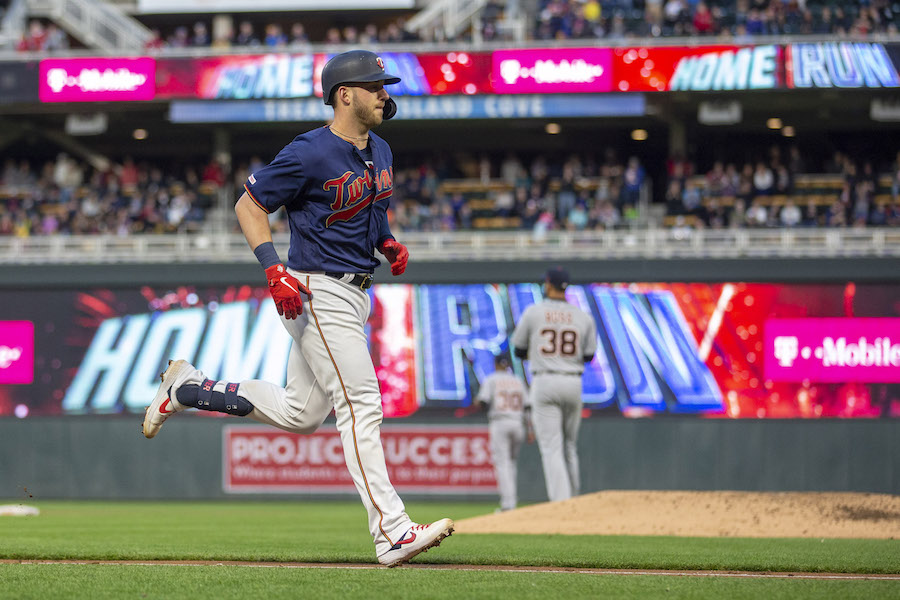 After assuming regular work in a season that Jason Castro found himself hurt, Mitch Garver began a breakout in 2018. He posted a .268/.335/.414 slash line en route to a 104 OPS+. Essentially, he was just above league average while showing some pop and having a good display of plate discipline. In September Willians Astudillo came onto the scene and caused the collective whole of Minnesota Twins fans to lose their minds. He raked, and didn’t so unconventionally, while being the living embodiment of a shelled animal. When Spring Training kicked off, there were discussion that the option eligible Garver could be the one sent back to Triple-A to accommodate a roster crunch. Fast forward to today, and any downplaying of Garver’s ability looks sillier than it ever has. To be certain, the New Mexico native needed to work on his defense behind the dish. Consulting Tanner Swanson for help from within, Mitch changed his receiving style and looked to push his abilities behind the plate to an average at worst barometer, instead of that being his ceiling. The -16 DRS in 2018 was abysmal, and the strike percentage was far from where it needed to be. Both of those statistics have been addressed in a big way this year, and it’s made the offensive swoon that much more enjoyable. Without yet going into the how, here’s the what. Garver came into Tuesday night’s game with a ridiculous .333/.425/.733 slash line and a 204 OPS+. He’d surpassed his career total in homers (7) through just 24 games and launched his 9th early in game 25. The 19/11 K/BB isn’t indicative of a guy that’s selling out for power, and that strong plate discipline has earned him multiple starts out of the leadoff position for the Twins. So, where is this all coming from? Basically, Mitch took a part of the game he was already good at (hitting) and launched it into another universe. His already strong whiff rate Is now down to 6.3% (1.5% drop from 2018), while he’s gone from chasing 22% of the time to just 16%. Nothing has changed in his contact rates, and his swing rates have actually taken a dip. Now, get ready for it, this is where it gets fun. Garver owns a career best 42.9% hard hit rate in 2019. That is only a 2% lead from 2018; he was already hitting the ball hard a year ago. Instead of hitting ground balls nearly 40% of the time however, he’s putting balls in the air nearly 50% of the time. It’s jumped his HR/FB rate from 8% to 30%. In 2018 Garver had a 9.5-degree launch angle on base hits. In 2019, that number is 13.6 degrees. He’s using a similar approach while hitting the ball harder and higher, enjoying the flight of it going even further. To be fair it’d be crazy to expect any player to continue this level of production over the course of a full season. Garver is on an impressive tear, and a slump will certainly come. What is good new though, is that nothing about his approach leaves him susceptible to being beaten ober the course of an extended period. Forcing pitchers to work, he’ll still be able to attack the offering that suits him best and has the ability to do damage. Right now, Garver is the best catcher in baseball. He’s posted a better fWAR mark than anyone at the position, despite playing a handful less games. He’s tracking towards an All-Star berth, and we are getting out of the small sample size realm. This is fun, he’s for real, and Minnesota probably found their long-term solution behind the dish.
-
Holding Up the Bargain’s Other End
Ted Schwerzler commented on Ted Schwerzler 's blog entry in Off The Baggy
Couple of things here. I think the resurgence of the division is a bit overstated. The Indians are going to get worse, and their farm is awful. I’m not buying the White Sox yet either. Eloy is great, and Dylan Cease looks nice, but Kopech is hurt and now Rodin is too. They’ve got pieces, but to assume they’re going to jump up in one year seems hopeful to me. Regarding the teams Minnesota has beaten, the Twins are doing EXACTLY what good teams do. Playing .500 or better against good teams is a big win, and then crushing the bad teams is how it’s supposed to work. Because the rest of the division is bad, and really so much of the AL Central, there should be a few teams with gaudy records at the top.- 7 comments
-
- 1
-

-
- minnesota twins
- byron buxton
- (and 3 more)
-
Holding Up the Bargain’s Other End
Ted Schwerzler commented on Ted Schwerzler 's blog entry in Off The Baggy
My guess is that will remain Kohl Stewart for the immediate future. Stephen Gonsalves is still working his way back, and while Zack Littell could factor in, Kohl has seen MLB success too. If there's continued improvement, Lewis Thorpe could be the guy by summer. -
Over the offseason a consistent narrative from the Minnesota Twins front office was one of patience. Derek Falvey and Thad Levine consistently suggested that many of the near-future decisions would hinge on the production of Byron Buxton and Miguel Sano. Back in early February I wondered if that reality didn’t make Sano and Buxton out to be scapegoats. Fortunately for all parties involved, one half of the duo has forced the hand of the Front Office. Through the first 39 games Minnesota has 25 wins, is leading the AL Central, and owns the best record in all of baseball. This team is hitting a ridiculous amount of home runs, the starting pitching has been exceptional, and the bullpen has been far better than expected. Looking at the two-headed monster discussed from the outset, Byron Buxton owns an .816 OPS while being arguably the best defender in the game, and Miguel Sano is yet to step on the field. Following the publishing of that February piece one large move was made that both addressed some payroll concerns, as well as adding significant talent to the roster. Marwin Gonzalez was inked to a two-year pact for $21 million. As arguably the best super-utility player in baseball, he provided a level of insurance against slumps and injuries all over the field. Called upon to start at third base from the get-go with Sano’s injury, he’ll now slot back into a versatile role once Miguel is activated later this week. In fact, it’s the return of Sano that brings up this talking point sooner than the July 31st trade deadline. All we know about the Dominican slugger at this point is that he showed up to Spring Training in a shape reflective of a commitment level not yet seen from him. Despite an injury delaying his debut, he put up solid numbers in a very small rehab sample size. He also has a profile that fits in nicely with what this team is attempting to accomplish when he is right. Looking for a floor, Miguel Sano is the hitter who owned a .679 OPS a season ago. There’s a ton of power, way too many swings and misses, along with some questionable-at-best defense over at the hot corner. His ceiling looks something like the 2015 version where he posted a .916 OPS across 80 games and showed both plate discipline as well as prowess. A reality lying somewhere in the middle, lots of home runs, a good number of walks, and a handful of swings and misses, would be an optimal outcome for Rocco Baldelli to dispose. For the Twins, Byron Buxton already is that. He hasn’t flashed his peak, but he’s also nowhere near his floor. Performing at the level he is now, serious consideration for some personal accolades could be given, and he’s doing it within the structure of a team capable of making a run. For Falvey and Levine, the two linchpins of the equation are now forcing them to re-evaluate. There’s no denying that the window is just beginning to open in Twins Territory. The division should remain down for some time, the farm system is among the best in baseball, and the big-league club has talent capable of high production for the next three to five years. Supplementing this team, and the ones that come after it is now a must, and it’s this front office that I’d pick to have in charge. With the focus being put on Buxton and Sano, Falvey and Levine effectively said when we win, we’ll go to work. Knowing that this team has holes but is capable of more, there’s reason to believe additions prior to the July 31st deadline make a ton of sense. A bigger price tag may come with the earlier acquisition cost, but for a team looking to add in 2019 and beyond, reinforcements should be of the long-term view as well. Whether under team control into 2020 and beyond, or free agent deals with multiple years, commitment and buy in is where moves need to lean. It’s not time to push Falvey and Levine on execution just yet, we haven’t even hit mid-May. If we’re through min-June before this club is adding additional talent though, they’ll have suggested a wait and see approach only to close their eyes. I don’t foresee that result taking place, and if trade returns like that of Brian Dozier or Jermaine Palacios are any indication, the duo at the top for Minnesota should be trusted with full authority. For more from Off The Baggy, click here. Follow @tlschwerz
- 7 comments
-
- 1
-
-
- minnesota twins
- byron buxton
- (and 3 more)
-
It’s early May but we’re well beyond the point of still categorizing the results as being reflective of a small sample size. Right now, the Twins own the best record in baseball, the lineup has thump throughout, and the pitching staff is performing at a clip few could’ve seen coming. As good teams do, and Minnesota has not recently been in position to experience, adding big league talent for the stretch run is a must. Derek Falvey and Thad Levine will have options, but where do they turn?Looking at how well the lineup has performed, and the depth that should be available to keep a long and dismal slump at bay, pitching is where Minnesota can look to improve. The starting rotation went into the year with a clear ace, but the performances from Martin Perez and Jake Odorizzi have been a welcomed addition. Michael Pineda doesn’t look like a great bet at this point however, and the 5th turn in the rotation could be expanded upon. In the bullpen Minnesota left themselves open to plenty of criticism. Banking on unknown commodities such as Matt Magill and Ryne Harper, while hanging onto a miscast starter in Adalberto Mejia, there was plenty to worry about. The back end of the pen has been solid, and really the group has stayed afloat. Bringing in a high-level arm that can push everyone down a notch would only strengthen the unit. On the starting front, here’s who some of those names may be: Marcus Stroman- Blue Jays 28 years old FA 2021 I’ve been crushing on Stroman’s numbers for years now. He’s routinely put up better peripherals than the ERA suggests, and he’s a guy that’s previously performed at a very high level. Under team control for another season he won’t come cheap, but it’d be in the Blue Jays best interests to move him sooner rather than later. On the season he owns a 2.96 ERA with a 3.09 FIP. His ERA+ sits at 145, or exactly where it was when he finished 8th in Cy Young voting during 2017. Madison Bumgarner- Giants 29 years old FA 2020 It’s crazy to think Bumgarner is just 29 (almost 30) given how long he’s been around. He’s approaching 2,000 big league innings but pitched at least 200 innings every year from 2011-2016. The velocity has remained consistent over the past four seasons, and his track record speaks for itself. The Giants ace is amid his best season since 2016 and would slot in nicely behind Jose Berrios. Given his impending free agency, this could be a situation in which the Twins operate on a try before you buy model. Miguel Sano to the National League is questionable, but a straight up swap may be enticing for Minnesota. Mike Minor- Rangers 31 years old FA 2021 The least of the options on this list, Minor has plenty of intrigue in his own right. He’s coming off a mediocre 2018, but his 2019 has seen a nice resurgence. Minor has jumped his whiff rate roughly 2% from 2018, and it’s come on the heels of a career high in changeup usage. Being under team control for another year, he’ll cost a bit more than his numbers may warrant, but as a stabilizing force to round out the rotation he has some appeal. Relief help has some interesting names as well: Craig Kimbrel- 31 years old Unsigned At this point Kimbrel won’t be signed until after the June amateur draft. Without being tied to pick compensation, he may find suitors offering both long-term and one-year pacts. Kimbrel is arguably the best closer in the game, and while he’ll need some ramp up time, he’s coming off a 2.74 ERA and 13.9 K/9 season. Sure, he had some blowups in the postseason, and if you’d like to nitpick, there’re warts here. At the end of the day though, this is an elite talent that costs a team nothing but cash to acquire. Ken Giles- Blue Jays 28 years old FA 2021 Here’s another guy from Toronto and still under team control for another season. Giles comes with personality questions, as the Houston Astros shipped him out growing tired of his inconsistencies on and off the mound. He’s already on his third big league team, and despite being ultra-talented, he’s proven to be expandable. If that can be vetted out, the Blue Jays are offering a reliever with a 1.65 ERA 1.79 FIP, and 13.8 K/9. Walks have never been much of a problem, strikeouts are aplenty, and velocity is through the roof. He can operate as a closer or setup man, and that would give the Twins some flexibility. Sean Doolittle- Nationals 32 years old FA 2020 ($6.5MM team option) An unexpected name on this list given where the Nationals assumed they’d be this season. The reality is that Davey Martinez hasn’t done well taking over for Dusty Baker, and the team is a mess. For the opposition, a guy like Doolittle becoming available would be a massive boost. He’s been one of the best relievers in baseball for nearly a decade, and his numbers in 2019 are equally eye-popping. A lefty with strong strikeout stuff, he’s not a platoon pitcher, and Baldelli could use another Taylor Rogers type in relief. When it comes to execution on any deals they’ll do, the Twins have some very different options to consider. Miguel Sano could establish himself as an expandable, and valuable piece. They have prospect capital behind the untouchables of Royce Lewis, Alex Kirilloff, and Brusdar Graterol. There’s also no reason to believe this club is cash poor, and simply doling out money is a possibility as well. If it’s up to me, I’d prefer to see Minnesota land a starter they believe can help them in 2019 and beyond. Someone that slides in at the middle of the rotation or higher, and will be around for another run, is a guy I’d give up some pieces for. In relief, choosing the cash route on Kimbrel makes the most sense. I’m not sure you want to part with assets in both areas, but it depends on the names you’d have to give up. We’re at least a month out from some of these deals potentially coming to fruition, but you can bet plans are in place to make sure the decision is a clear one when the time comes. Click here to view the article
- 70 replies
-
- 1
-
-
- minnesota twins
- marcus stroman
- (and 3 more)
-
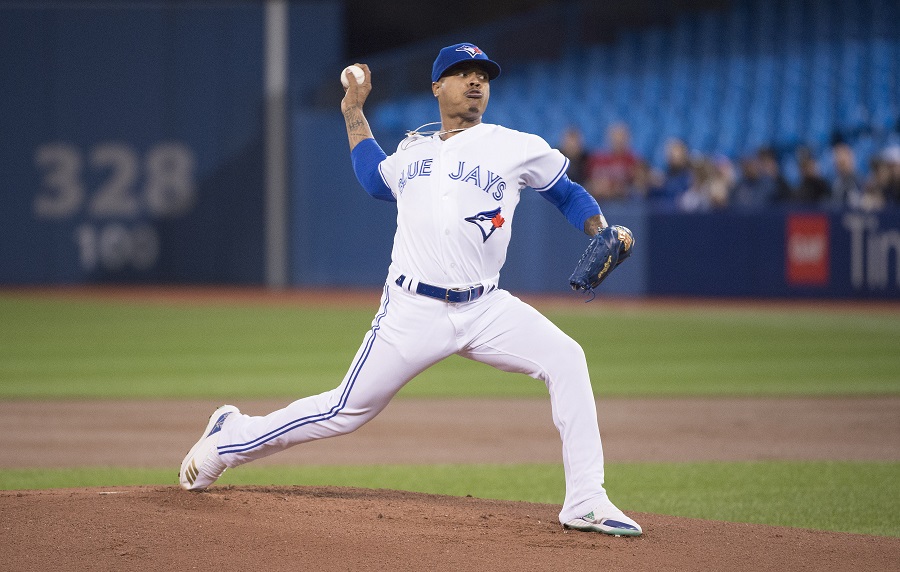 Looking at how well the lineup has performed, and the depth that should be available to keep a long and dismal slump at bay, pitching is where Minnesota can look to improve. The starting rotation went into the year with a clear ace, but the performances from Martin Perez and Jake Odorizzi have been a welcomed addition. Michael Pineda doesn’t look like a great bet at this point however, and the 5th turn in the rotation could be expanded upon. In the bullpen Minnesota left themselves open to plenty of criticism. Banking on unknown commodities such as Matt Magill and Ryne Harper, while hanging onto a miscast starter in Adalberto Mejia, there was plenty to worry about. The back end of the pen has been solid, and really the group has stayed afloat. Bringing in a high-level arm that can push everyone down a notch would only strengthen the unit. On the starting front, here’s who some of those names may be: Marcus Stroman- Blue Jays 28 years old FA 2021 I’ve been crushing on Stroman’s numbers for years now. He’s routinely put up better peripherals than the ERA suggests, and he’s a guy that’s previously performed at a very high level. Under team control for another season he won’t come cheap, but it’d be in the Blue Jays best interests to move him sooner rather than later. On the season he owns a 2.96 ERA with a 3.09 FIP. His ERA+ sits at 145, or exactly where it was when he finished 8th in Cy Young voting during 2017. Madison Bumgarner- Giants 29 years old FA 2020 It’s crazy to think Bumgarner is just 29 (almost 30) given how long he’s been around. He’s approaching 2,000 big league innings but pitched at least 200 innings every year from 2011-2016. The velocity has remained consistent over the past four seasons, and his track record speaks for itself. The Giants ace is amid his best season since 2016 and would slot in nicely behind Jose Berrios. Given his impending free agency, this could be a situation in which the Twins operate on a try before you buy model. Miguel Sano to the National League is questionable, but a straight up swap may be enticing for Minnesota. Mike Minor- Rangers 31 years old FA 2021 The least of the options on this list, Minor has plenty of intrigue in his own right. He’s coming off a mediocre 2018, but his 2019 has seen a nice resurgence. Minor has jumped his whiff rate roughly 2% from 2018, and it’s come on the heels of a career high in changeup usage. Being under team control for another year, he’ll cost a bit more than his numbers may warrant, but as a stabilizing force to round out the rotation he has some appeal. Relief help has some interesting names as well: Craig Kimbrel- 31 years old Unsigned At this point Kimbrel won’t be signed until after the June amateur draft. Without being tied to pick compensation, he may find suitors offering both long-term and one-year pacts. Kimbrel is arguably the best closer in the game, and while he’ll need some ramp up time, he’s coming off a 2.74 ERA and 13.9 K/9 season. Sure, he had some blowups in the postseason, and if you’d like to nitpick, there’re warts here. At the end of the day though, this is an elite talent that costs a team nothing but cash to acquire. Ken Giles- Blue Jays 28 years old FA 2021 Here’s another guy from Toronto and still under team control for another season. Giles comes with personality questions, as the Houston Astros shipped him out growing tired of his inconsistencies on and off the mound. He’s already on his third big league team, and despite being ultra-talented, he’s proven to be expandable. If that can be vetted out, the Blue Jays are offering a reliever with a 1.65 ERA 1.79 FIP, and 13.8 K/9. Walks have never been much of a problem, strikeouts are aplenty, and velocity is through the roof. He can operate as a closer or setup man, and that would give the Twins some flexibility. Sean Doolittle- Nationals 32 years old FA 2020 ($6.5MM team option) An unexpected name on this list given where the Nationals assumed they’d be this season. The reality is that Davey Martinez hasn’t done well taking over for Dusty Baker, and the team is a mess. For the opposition, a guy like Doolittle becoming available would be a massive boost. He’s been one of the best relievers in baseball for nearly a decade, and his numbers in 2019 are equally eye-popping. A lefty with strong strikeout stuff, he’s not a platoon pitcher, and Baldelli could use another Taylor Rogers type in relief. When it comes to execution on any deals they’ll do, the Twins have some very different options to consider. Miguel Sano could establish himself as an expandable, and valuable piece. They have prospect capital behind the untouchables of Royce Lewis, Alex Kirilloff, and Brusdar Graterol. There’s also no reason to believe this club is cash poor, and simply doling out money is a possibility as well. If it’s up to me, I’d prefer to see Minnesota land a starter they believe can help them in 2019 and beyond. Someone that slides in at the middle of the rotation or higher, and will be around for another run, is a guy I’d give up some pieces for. In relief, choosing the cash route on Kimbrel makes the most sense. I’m not sure you want to part with assets in both areas, but it depends on the names you’d have to give up. We’re at least a month out from some of these deals potentially coming to fruition, but you can bet plans are in place to make sure the decision is a clear one when the time comes.
-
Brusdar Graterol was on the bump for the Pensacola Blue Wahoos this morning. A dominant outing was cut short after he left with an injury, but it looks like something severe may have been avoided. Low scoring action was the name of the game in matinees, and the night games featured some comeback action with plenty of offense.TRANSACTIONS Rochester Red Wings LHP Andrew Vasquez placed on IL with left shoulder impingement RED WINGS REPORT Rochester 7, Toledo 1 Box Score Zack Littell toed the rubber in this contest, and despite twirling a gem, the bats put him at ease when he exited after six strong innings of work. Littell didn't allow an earned run, and he fanned seven while allowing just three hits and three walks. Trailing 1-0 entering the home half of the fourth inning, Rochester jumped out in front for good. Zander Wiel continues to hit, and his single drove in Brent Rooker for the Red Wings first run. John Andreoli then notched his third dinger of the season and the crooked number was a three. The rest of the scoring was done in the next inning. Rooker came across on a wild pitch, Jordany Valdespin singled in Wiel, and the hot-hitting Nick Gordon ripped a two RBI double to give us the eventual final score of 7-1. Gordon posted another multi-hit evening, and is now batting .417 on the season, being completely on fire since his activation off of the Injured List. Some of the middle of the order bats are really settling in for Rochester, and guys like Wiel and Rooker could make compelling cases for the Twins in 2019 should they continue with this momentum. Also, it's a good thing that the Red Wings didn't let this fan pitch tonight. BLUE WAHOOS BITES Pensacola 1, Mississippi 0 Box Score Star prospect Brusdar Graterol was on the bump for the Blue Wahoos in this one, and he looked dominant once again. Working with a fastball that sat around 98 mph most of the day, he gave up just two hits while striking out three and walking one in 5 1/3 innings of work. Graterol did leave the game early, and was just at 69 pitches, but according to KSTP’s Darren Wolfson it doesn’t sound too serious. Luis Arraez singled in the game's only run, driving in Taylor Grzelakowski in the fourth inning. Getting shutdown work from the recently promoted Tom Hackimer, as well as Sam Clay and Ryan Mason, Pensacola was able to close out a tight contest. Picking up his sixth save, Mason has now pushed his scoreless innings streak to 15 in 2019. Since converting to a reliever in 2017, he’s been lights out. It’s worth noting that Miguel Sano did not play in this game. He wasn’t in the lineup, but was reportedly still in Pensacola. The plan could be for him to be promoted up to Rochester prior to Thursday’s action, with a light knock on the Twins door beginning to be heard. MIRACLE MATTERS Fort Myers 4, Charlotte 3 Box Score Started by Jhoan Duran, the outing was an abbreviated one with mother nature wreaking havoc in the 4th inning. One out into the frame, a rain delay forced the tarp onto the field. Duran finished with five strikeouts and three walks allowing two runs on four hits. Trailing by two, and now without their starting pitcher, the Miracle needed to come up with answers. On the mound, that was Melvi Acosta. Working four and one-third innings of relief, he allowed just one run while fanning four. Because of his lockdown performance, the bats were able to chip away. Jose Miranda drove in Trevor Larnach to get Fort Myers on the board, and then Lewin Diaz followed with his 6th double of the season tying things at 2. Trailing again after the lone run crossed against Acosta, the Miracle responded. In the 6th, it was a Diaz single driving in Larnach, and the 7th featured the go ahead tally on a Michael Helman single to left field. The bats seem to have come alive in recent days for the Miracle, and the hope is that they'll continue to pace what should remain a very impressive lineup. KERNELS NUGGETS South Bend 2, Cedar Rapids 1 Box Score Andrew Cabezas came just one out shy of completing seven innings in this one and allowing just one run on six hits during his day of work. He put the Kernels in a great spot to win. The bats were cold as Cedar Rapids generated just four hits, and the one run wasn’t enough to come out on top. Trailing 1-0 after the first, Cedar Rapids was able to knot things up when Gabriel Maciel scampered home on a wild pitch in the sixth. Looking to force extras, the Kernels found themselves on the wrong side of a walkoff with a throwing error spelling their eventual demise. Cedar Rapids heads to West Michigan to begin a new series with the Whitecaps tomorrow. TWINS DAILY PLAYERS OF THE DAY Twins Daily Pitcher of the Day – Brusdar Graterol (Pensacola) – 5.1 IP, 2 H, 0 R, 0 ER, 1 BB, 3 K Twins Daily Hitter of the Day – Zander Wiel (Rochester) - 3-4, 2 R, RBI, 2B PROSPECT SUMMARY Here’s a look at how the Twins Daily Top 20 Twins Prospects performed: #1 - Royce Lewis (Ft. Myers) - 0-4, K #2 - Alex Kirilloff (Pensacola) – 0-5, 3 K #3 - Brusdar Graterol (Pensacola) – 5.1 IP, 2 H, 0 R, 0 ER, 1 BB, 3 K #4 - Trevor Larnach (Ft. Myers) - 1-3, 2 R, BB #5 - Wander Javier (EST) - No Game #6 - Brent Rooker (Rochester) - 2-4, 2 R, 2B, K #7 - Jhoan Duran (Ft. Myers) - 3.1 IP 4 H, 2 R, 2 ER, 3 BB, 5 K #8 - Lewis Thorpe (Rochester) - Did Not Pitch #9 - Blayne Enlow (Cedar Rapids) - Did Not Pitch #10 - Akil Baddoo (Ft. Myers) – Did Not Play #11 - Nick Gordon (Rochester) - 2-5, 2 RBI, K #12 - Stephen Gonsalves (Rochester) - Injured list #13 - Ryan Jeffers (Ft. Myers) - 0-3 K #14 - Ben Rortvedt (Ft. Myers) - 0-2, R, K #15 - Yunior Severino (Cedar Rapids) - Injured List #16 - Gilberto Celestino (Cedar Rapids) – 0-3, BB, K #17 - Zack Littell (Rochester) - 6.0 IP, 3 H, 1 R, 0 ER, 3 BB, 7 K #18 - LaMonte Wade (Rochester) - 0-3, BB #19 - Jorge Alcala (Pensacola) – Did Not Pitch #20 - Jose Miranda (Ft. Myers) - 2-4, R, RBI THURSDAY’S PROBABLE STARTERS Toledo @ Rochester (6:05PM CST) – RHP Chase De Jong (0-3, 16.20 ERA) Pensacola @ Mississippi (6:35PM CST) – RHP Randy Dobnak (0-0, 4.50 ERA) Tampa @ Fort Myers (5:30PM CST) – LHP Tyler Watson (1-3, 5.06 ERA) Cedar Rapids @ West Michigan (6:05PM CST) – TBD Please feel free to ask questions and discuss Wednesday’s games! Click here to view the article
- 14 replies
-
- 3
-
-
- minnesota twins
- minor league
- (and 3 more)
-
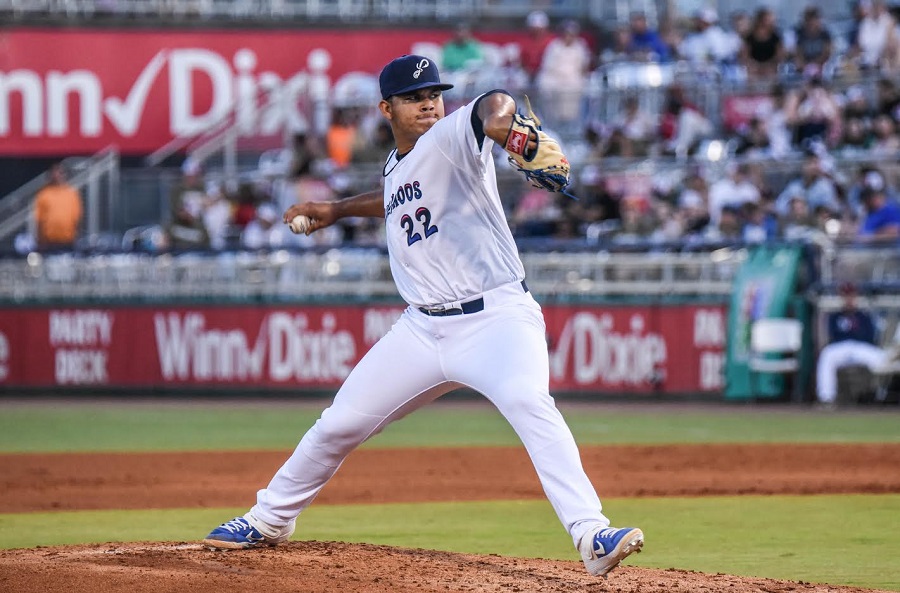 TRANSACTIONS Rochester Red Wings LHP Andrew Vasquez placed on IL with left shoulder impingement RED WINGS REPORT Rochester 7, Toledo 1 Box Score Zack Littell toed the rubber in this contest, and despite twirling a gem, the bats put him at ease when he exited after six strong innings of work. Littell didn't allow an earned run, and he fanned seven while allowing just three hits and three walks. Trailing 1-0 entering the home half of the fourth inning, Rochester jumped out in front for good. Zander Wiel continues to hit, and his single drove in Brent Rooker for the Red Wings first run. John Andreoli then notched his third dinger of the season and the crooked number was a three. https://twitter.com/RocRedWings/status/1126317938963824645 The rest of the scoring was done in the next inning. Rooker came across on a wild pitch, Jordany Valdespin singled in Wiel, and the hot-hitting Nick Gordon ripped a two RBI double to give us the eventual final score of 7-1. Gordon posted another multi-hit evening, and is now batting .417 on the season, being completely on fire since his activation off of the Injured List. Some of the middle of the order bats are really settling in for Rochester, and guys like Wiel and Rooker could make compelling cases for the Twins in 2019 should they continue with this momentum. Also, it's a good thing that the Red Wings didn't let this fan pitch tonight. https://twitter.com/byrnes22/status/1126303173331836929 BLUE WAHOOS BITES Pensacola 1, Mississippi 0 Box Score Star prospect Brusdar Graterol was on the bump for the Blue Wahoos in this one, and he looked dominant once again. Working with a fastball that sat around 98 mph most of the day, he gave up just two hits while striking out three and walking one in 5 1/3 innings of work. Graterol did leave the game early, and was just at 69 pitches, but according to KSTP’s Darren Wolfson it doesn’t sound too serious. https://twitter.com/DWolfsonKSTP/status/1126181293824278528 Luis Arraez singled in the game's only run, driving in Taylor Grzelakowski in the fourth inning. Getting shutdown work from the recently promoted Tom Hackimer, as well as Sam Clay and Ryan Mason, Pensacola was able to close out a tight contest. Picking up his sixth save, Mason has now pushed his scoreless innings streak to 15 in 2019. Since converting to a reliever in 2017, he’s been lights out. https://twitter.com/SLeagueBaseball/status/1126194011197321216 It’s worth noting that Miguel Sano did not play in this game. He wasn’t in the lineup, but was reportedly still in Pensacola. The plan could be for him to be promoted up to Rochester prior to Thursday’s action, with a light knock on the Twins door beginning to be heard. MIRACLE MATTERS Fort Myers 4, Charlotte 3 Box Score Started by Jhoan Duran, the outing was an abbreviated one with mother nature wreaking havoc in the 4th inning. One out into the frame, a rain delay forced the tarp onto the field. Duran finished with five strikeouts and three walks allowing two runs on four hits. Trailing by two, and now without their starting pitcher, the Miracle needed to come up with answers. On the mound, that was Melvi Acosta. Working four and one-third innings of relief, he allowed just one run while fanning four. Because of his lockdown performance, the bats were able to chip away. Jose Miranda drove in Trevor Larnach to get Fort Myers on the board, and then Lewin Diaz followed with his 6th double of the season tying things at 2. Trailing again after the lone run crossed against Acosta, the Miracle responded. In the 6th, it was a Diaz single driving in Larnach, and the 7th featured the go ahead tally on a Michael Helman single to left field. The bats seem to have come alive in recent days for the Miracle, and the hope is that they'll continue to pace what should remain a very impressive lineup. KERNELS NUGGETS South Bend 2, Cedar Rapids 1 Box Score Andrew Cabezas came just one out shy of completing seven innings in this one and allowing just one run on six hits during his day of work. He put the Kernels in a great spot to win. The bats were cold as Cedar Rapids generated just four hits, and the one run wasn’t enough to come out on top. Trailing 1-0 after the first, Cedar Rapids was able to knot things up when Gabriel Maciel scampered home on a wild pitch in the sixth. Looking to force extras, the Kernels found themselves on the wrong side of a walkoff with a throwing error spelling their eventual demise. Cedar Rapids heads to West Michigan to begin a new series with the Whitecaps tomorrow. TWINS DAILY PLAYERS OF THE DAY Twins Daily Pitcher of the Day – Brusdar Graterol (Pensacola) – 5.1 IP, 2 H, 0 R, 0 ER, 1 BB, 3 K Twins Daily Hitter of the Day – Zander Wiel (Rochester) - 3-4, 2 R, RBI, 2B PROSPECT SUMMARY Here’s a look at how the Twins Daily Top 20 Twins Prospects performed: #1 - Royce Lewis (Ft. Myers) - 0-4, K #2 - Alex Kirilloff (Pensacola) – 0-5, 3 K #3 - Brusdar Graterol (Pensacola) – 5.1 IP, 2 H, 0 R, 0 ER, 1 BB, 3 K #4 - Trevor Larnach (Ft. Myers) - 1-3, 2 R, BB #5 - Wander Javier (EST) - No Game #6 - Brent Rooker (Rochester) - 2-4, 2 R, 2B, K #7 - Jhoan Duran (Ft. Myers) - 3.1 IP 4 H, 2 R, 2 ER, 3 BB, 5 K #8 - Lewis Thorpe (Rochester) - Did Not Pitch #9 - Blayne Enlow (Cedar Rapids) - Did Not Pitch #10 - Akil Baddoo (Ft. Myers) – Did Not Play #11 - Nick Gordon (Rochester) - 2-5, 2 RBI, K #12 - Stephen Gonsalves (Rochester) - Injured list #13 - Ryan Jeffers (Ft. Myers) - 0-3 K #14 - Ben Rortvedt (Ft. Myers) - 0-2, R, K #15 - Yunior Severino (Cedar Rapids) - Injured List #16 - Gilberto Celestino (Cedar Rapids) – 0-3, BB, K #17 - Zack Littell (Rochester) - 6.0 IP, 3 H, 1 R, 0 ER, 3 BB, 7 K #18 - LaMonte Wade (Rochester) - 0-3, BB #19 - Jorge Alcala (Pensacola) – Did Not Pitch #20 - Jose Miranda (Ft. Myers) - 2-4, R, RBI THURSDAY’S PROBABLE STARTERS Toledo @ Rochester (6:05PM CST) – RHP Chase De Jong (0-3, 16.20 ERA) Pensacola @ Mississippi (6:35PM CST) – RHP Randy Dobnak (0-0, 4.50 ERA) Tampa @ Fort Myers (5:30PM CST) – LHP Tyler Watson (1-3, 5.06 ERA) Cedar Rapids @ West Michigan (6:05PM CST) – TBD Please feel free to ask questions and discuss Wednesday’s games!
-
During 2019 much has been made of the Minnesota Twins aggressive approach at the dish. The lineup is full of sluggers that are ambushing opposing pitchers. With a focus on attacking early and often, they’ve gotten their best hacks in against fastballs and offerings flipped across early in the count. What has been talked about less, is that the pitching staff is pounding the zone and tipping the scales in their favor as well.As of Tuesday, Wes Johnson’s staff is sending first-pitch strikes into the zone at a 62.1% rate. That’s ninth in all of baseball, and fourth in the American League. Right now, the major league average sits at 60.6%, and it’s a far cry from where this team has been previously. A year ago, Minnesota’s first-pitch strike percentage was 58.4% (28th), with preceding years sitting at 60.5% (13th), and 60.0% (16th). Getting the ball into the zone early doesn’t create a benefit in and of itself, but it allows for an increased opportunity to gain the upper hand. Trailing only the Tampa Bay Rays, Minnesota has given opposing batters fits with 0-2 counts showing up 29.4% of the time. Putting the pitcher in a dominant position nearly one-third of the time, the opportunity to force chase swings or generate less than ideal contact only rises. Often, good pitchers aren’t giving away at-bats either. In 2018 Minnesota’s staff turned in 91 four-pitch walks. That was the ninth-worst mark in baseball, and certainly did no favors for a group that needed to avoid extra baserunners at all costs. Through their 33 games in 2019 the Twins have allowed just 13 four-pitch walks, fifth lowest in baseball. Throwing more strikes, and more early strikes also, isn’t going to transform pitchers into strikeout stalwarts. Right now, Baldelli’s group owns the 19th-best strikeout rate in baseball. That says they can't easily put the ball past opposing hitters, and it’s evidence that that’s not the strength of this group. What we should see though, is the results be reflective of lackluster chances for the opposing batters. That has played out. Batted balls off Twins pitches have resulted in soft contact exactly one-fifth of the time. Exit velocities in the soft contact realm are the easiest to convert into outs, and Minnesota is getting the fourth most chances at them in all of baseball. As would also be expected, the 36.8% hard-hit rate ranks well, checking in at the 10th lowest in the sport. As pitchers get ahead, batters are forced to react as opposed to dictating the action at the plate. Regardless of who’s on the mound, being in a position of control helps to heighten the effectiveness of each offering. While this isn’t an exercise you may want to undertake before making sure you’ve got the correct ratios down, Minnesota has flipped the script on a long-time mantra for the organization. Pitch to contact is predicated on getting ground ball outs and allowing your fielders to do the work. Right now, the Twins' 39.5% ground ball rate is third lowest in all of baseball. If they were allowing hard hit balls, and getting behind in counts, that would be a recipe for disaster. Instead, this group is giving up the fifth-lowest HR/FB rate because it’s a perfect storm for dominance. Over the winter, and really since this front office has taken over, the emphasis has been on overhauling processes and putting people in place to drive quality results at the highest level. Most notably this offseason things took shape on the pitching mound, and that’s helped to drive a results that include getting ahead early, throwing strikes often, and generating weak popups that become immediate outs. In a strikeout-driven league, the Minnesota Twins have a stable of starters that include just one pitcher (Jake Odorizzi) with a current K/9 over 9.0. I’d imagine Jose Berrios will push this total to two by the end of the season, but the reality is that this group isn’t relying on dominance by way of the K. Pitching to their strengths, Johnson has his starters working ahead and dictating the action. When and if the strikeouts do pop up in any given game, it only raises the effectiveness of the blueprint up another notch. We are at a place where the sample size is not substantial relative to a full season, but ignoring the current merits would be a foolish proposition as well. Minnesota is challenging opposing batters, forcing their hand, and benefiting from it. The plan is working right now, and there’s no sign of an impending slow down. Click here to view the article
-
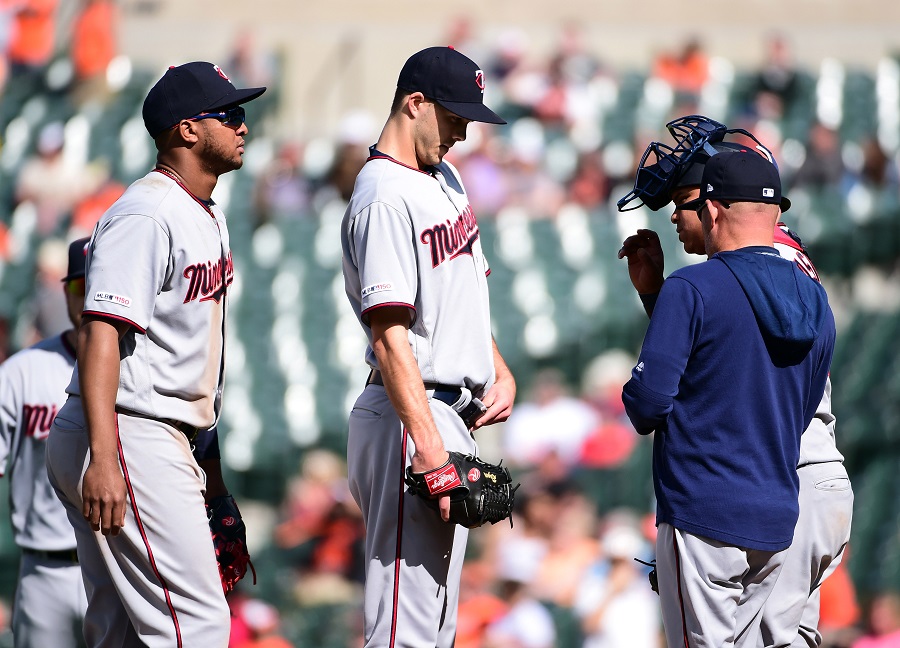 As of Tuesday, Wes Johnson’s staff is sending first-pitch strikes into the zone at a 62.1% rate. That’s ninth in all of baseball, and fourth in the American League. Right now, the major league average sits at 60.6%, and it’s a far cry from where this team has been previously. A year ago, Minnesota’s first-pitch strike percentage was 58.4% (28th), with preceding years sitting at 60.5% (13th), and 60.0% (16th). Getting the ball into the zone early doesn’t create a benefit in and of itself, but it allows for an increased opportunity to gain the upper hand. Trailing only the Tampa Bay Rays, Minnesota has given opposing batters fits with 0-2 counts showing up 29.4% of the time. Putting the pitcher in a dominant position nearly one-third of the time, the opportunity to force chase swings or generate less than ideal contact only rises. Often, good pitchers aren’t giving away at-bats either. In 2018 Minnesota’s staff turned in 91 four-pitch walks. That was the ninth-worst mark in baseball, and certainly did no favors for a group that needed to avoid extra baserunners at all costs. Through their 33 games in 2019 the Twins have allowed just 13 four-pitch walks, fifth lowest in baseball. Throwing more strikes, and more early strikes also, isn’t going to transform pitchers into strikeout stalwarts. Right now, Baldelli’s group owns the 19th-best strikeout rate in baseball. That says they can't easily put the ball past opposing hitters, and it’s evidence that that’s not the strength of this group. What we should see though, is the results be reflective of lackluster chances for the opposing batters. That has played out. Batted balls off Twins pitches have resulted in soft contact exactly one-fifth of the time. Exit velocities in the soft contact realm are the easiest to convert into outs, and Minnesota is getting the fourth most chances at them in all of baseball. As would also be expected, the 36.8% hard-hit rate ranks well, checking in at the 10th lowest in the sport. As pitchers get ahead, batters are forced to react as opposed to dictating the action at the plate. Regardless of who’s on the mound, being in a position of control helps to heighten the effectiveness of each offering. While this isn’t an exercise you may want to undertake before making sure you’ve got the correct ratios down, Minnesota has flipped the script on a long-time mantra for the organization. Pitch to contact is predicated on getting ground ball outs and allowing your fielders to do the work. Right now, the Twins' 39.5% ground ball rate is third lowest in all of baseball. If they were allowing hard hit balls, and getting behind in counts, that would be a recipe for disaster. Instead, this group is giving up the fifth-lowest HR/FB rate because it’s a perfect storm for dominance. Over the winter, and really since this front office has taken over, the emphasis has been on overhauling processes and putting people in place to drive quality results at the highest level. Most notably this offseason things took shape on the pitching mound, and that’s helped to drive a results that include getting ahead early, throwing strikes often, and generating weak popups that become immediate outs. In a strikeout-driven league, the Minnesota Twins have a stable of starters that include just one pitcher (Jake Odorizzi) with a current K/9 over 9.0. I’d imagine Jose Berrios will push this total to two by the end of the season, but the reality is that this group isn’t relying on dominance by way of the K. Pitching to their strengths, Johnson has his starters working ahead and dictating the action. When and if the strikeouts do pop up in any given game, it only raises the effectiveness of the blueprint up another notch. We are at a place where the sample size is not substantial relative to a full season, but ignoring the current merits would be a foolish proposition as well. Minnesota is challenging opposing batters, forcing their hand, and benefiting from it. The plan is working right now, and there’s no sign of an impending slow down.
-
After a couple of weeks off from Topps pumping out product, a new offering is ready to hit the collecting market in 2019. Tier One has been a product with a longstanding hobby presence, and it’s most notable for chase cards including bat knobs and barrels. Including game used pieces of lumber from some of the biggest names in the sport, it’s generally been a set that the big cards are void of Minnesota Twins. In 2019 that isn’t the case. Autographs With a suggested retail price north of $120 for a three-card product, there’s no traditional base cards to be had here. The main set in the product is the “Tier One Autographs.” With single player images, and on card signatures, the design has a few different signing parallels. Given his youth, Fernando Romero is an easy inclusion into the “Break Out Autographs” checklist. He has been a popular addition to Topps products over the past few years, but this will be his first Tier One offering. Torii Hunter finds himself in the “Clear Ones” checklist, and a host of Minnesota players make appearances on the “Prime Performers” list. Many usual subjects can be found in this product for Twins fans, including Eddie Rosario, Jose Berrios, Byron Buxton, and Max Kepler. Hunter has been signing more in 2019, and he’ll be joined by fellow retiree Bert Blyleven. The single card only dual autograph of the product for Minnesota is a good one. Featuring both Byron Buxton and Torii Hunter, serial numbered to 25 or less, the Twins pipeline in centerfield gets recognition. Buxton and Rosario are both depicted on a Tier One Relic book card as dual signers. Relics Offering a lower end hit, there’s a 91 subject relic checklist in the product as well. It’s nice to see Joe Mauer continue to be included among 2019 Topps products, and he’ll have a game used swatch in this group. Rosario and Kepler help to round of the trio of Twins available here. Chase Cards Two of the biggest cut signature subjects in recent Minnesota memory have been both Kirby Puckett and Harmon Killebrew. Numbered as a 1/1, Puckett is a part of the 25 card Cut checklist in Tier One. Over the entire lifecycle of Tier One, the grails come in the form of game used bats. For the first time in a while the Twins land an offering on the checklist. Limited to one copy each, both Byron Buxton and Joe Mauer make an appearance here. Buxton has both a bat knob and a “Limited Lumber” card, which is normally the nameplate of his barrel. Each of these offerings will be autographed. Mauer’s bat knob and barrel cards are also both 1/1 but will not be signed. For more from Off The Baggy, click here. Follow @tlschwerz
-
Coming off a week in which the Minnesota Twins faced a schedule akin to death itself, we can’t describe a 4-3 record as anything short of exceptional. The Houston Astros look the part of a World Series champion, and while the New York Yankees aren’t close to full strength, they’re holding serve in the AL East. For Rocco Baldelli’s club, there’s plenty of positive momentum, and rather than focus on one specific area, now seemed like a good time to highlight some standouts. Byron Buxton is currently cruising. He has 14 doubles which is the amount of hits he tallied in total during 2018. Offensively he’s posted an .805 OPS which is well north of the average among big league centerfielders, and he’s pacing the defensive leaderboards. Buxton is first in outs above average, is the only player with two completed five star catches and has accumulated 3 DRS across just 247 innings. Without a significant dip taking place over the course of a full season, this is production that will have him earning MVP votes. For some reason there was some concern about Nelson Cruz in the early going. With the layout of Minnesota’s schedule, and early interleague play, he missed plenty of at bats to get going. Now 28 games into his season, he owns a .972 OPS (best mark since 2008) and is on pace for 35 homers. Also sitting fourth in average exit velocity among big league hitters, the boomstick is just fine. The roster continues to be paced by two players at some of the most important positions. Jorge Polanco leads the club in fWAR, while Jose Berrios is tops for pitchers. Polanco’s bat has played exceptionally well, which has always been expected. The .393 wOBA is just outside the top 20 in baseball, but the best part is the peripheral numbers suggest a level of sustainability. Add in that Polanco is now providing plus value at short, and you’ve got a strong asset. Berrios has turned from staff ace into a bonafide big deal. Command has been ramped up a notch halving his walk rate, and the WHIP is beyond fantastic. If Jose wants to push even higher, limiting the longball is maybe the last piece of the puzzle. You may not find a bigger believer in the Twins blogosphere when it comes to Mitch Garver. His offensive profile has long looked the part of a big leaguer. As a receiver and defender behind the plate, there’s been concerns as to whether the position would be a long-term fit. Although not yet above average, he’s upped his strike rate over 4% this season. Mitch has also developed a much stronger presence at the bottom and edges of the zone, while addressing his blocking ability in a big way. Right now, it seems fair to wonder about his fit as the long-term solution. I recently wrote about Martin Perez and the development of his cutter. He introduced a new offering into his repertoire and now looks like an entirely new pitcher. Minnesota targeted him based on the feeling that his stuff could be tweaked to unleash ability yet to be harnessed and there’s no denying that the front office looks spot on in that thinking. There are still some question marks in the bullpen, but the trio of Taylor Rogers, Trevor Hildenberger, and Blake Parker looks to be a good one. Trevor May continues to settle into a higher leverage role and Ryne Harper appears to be a diamond in the rough. If acquisitions are yet to be made, it’s here that the most obvious avenue for an upgrade is. Give some credit to Baldelli in the way he’s managed this group as well. Despite more length from his starters, initial burnout could be attributed in some degree to his deployment of the arms. In backing off and being more strategic, there’s been no instances of taxed throwers during a consistent stretch of action. Looking at the schedule, the Twins have played a lot of good teams early. With so much action within the division still ahead of them, and some less than ideal road destinations out of the way, the remaining action tilts in their favor. Leading the AL Central at the end of April won’t vault Minnesota to the Postseason, but it keeps that possibility centrally focused ahead of them. This team is good, and I felt like I was out on a limb suggesting 92 wins. At this point, coming up shy of that would probably be a disappointment.
-
During the offseason the Minnesota Twins signed Martin Perez to a one-year deal worth $4 million. They were able to add a team option for 2020, and the former Rangers top prospect appeared to be someone the front office intentionally targeted. Coming off a season with a 6.22 ERA and pedestrian supporting numbers, the fit looked like an odd one. Given Thad Levine’s familiarity with Perez and Derek Falvey’s pitching prowess, the outlier was a belief from the top. It certainly appears like that was well founded.Coming into 2019 Perez had a five-pitch mix featuring a fastball, sinker, changeup, slider, and a curveball. He flipped those offerings with velocities ranging from 78 mph all the way up to 93 mph. As a starter, things weren’t all that impressive in 2018, but late work out of the pen seemed to capture reason for future belief. The Twins overhauled their coaching infrastructure this offseason and made a concerted effort to change how they both evaluated and implemented new ideas. Wes Johnson was brought in as the big-league pitching coach and has long been regarded as a velocity guru and someone well regarded at the top of the college ranks. A further implementation of Edgertronic cameras allowed more information to be captured during Spring Training, and guys like Josh Kalk and Jeremy Hefner were then able to turn it into actionable data. This process no doubt helped to influence one significant change for Perez. Download attachment: Webp.net-gifmaker.gif Having flirted with the idea previously, and in talking with his agent. Martin gave in and decided now was the time to introduce a cutter to his repertoire. Having never thrown the pitch in big league action previously, he is now using it one-third of the time in 2019. Scrapping the slider altogether, and halving the sinker usage, he’s prioritized his new weapon. Pushing his fastball velocity up two ticks to 95 mph, the cutter averages just under 90 mph and creates a nice pairing. Introducing something new like this, and being all in immediately, is indicative of trust and buy in for a coaching staff committed to your success. On top of turning to a new offering, Perez is certainly feeling confident with the pitch. Looking at the count profile, he’s turning to the cutter early and often. Whether behind or ahead in the count, his cutter is being paired and tunneled with other offerings to consistently keep it present in the mind of hitters. Download attachment: Martin Perez.png It’s one thing to be excited about something new, but Perez also has reason to celebrate the results. Not only is his velocity a career high, but he’s generating a 10.6% whiff rate which is nearly 3% above his career average. He’s getting batters to chase more often, and he’s allowing contact less than at any previously point in his career. We’re only 34 innings into his Twins tenure but calling the work thus far anything but extraordinary would be selling it short. Athletes are not robots and feeling positive momentum about such a significant development is evident of normal human emotion. Seeing Perez express gratitude following his outing against the Astros was hard not to read and immediately picture the smile beaming off his face. For a guy who has previously been highly regarded, never has seen it all come together, and now has reinvented himself to reach new heights, feeling on top of the world should be more than warranted. There’s no telling how this story ends, or how the 2019 season progresses for Minnesota’s offseason acquisition. Right now, though, the narrative is Martin Perez has found a cutter that has him looking like an asset with unrealized and untapped potential. For the Minnesota Twins, it’s nice to see a redefined infrastructure and process bear fruit in such a welcomed form. Click here to view the article
-
 Coming into 2019 Perez had a five-pitch mix featuring a fastball, sinker, changeup, slider, and a curveball. He flipped those offerings with velocities ranging from 78 mph all the way up to 93 mph. As a starter, things weren’t all that impressive in 2018, but late work out of the pen seemed to capture reason for future belief. The Twins overhauled their coaching infrastructure this offseason and made a concerted effort to change how they both evaluated and implemented new ideas. Wes Johnson was brought in as the big-league pitching coach and has long been regarded as a velocity guru and someone well regarded at the top of the college ranks. A further implementation of Edgertronic cameras allowed more information to be captured during Spring Training, and guys like Josh Kalk and Jeremy Hefner were then able to turn it into actionable data. This process no doubt helped to influence one significant change for Perez. Having flirted with the idea previously, and in talking with his agent. Martin gave in and decided now was the time to introduce a cutter to his repertoire. Having never thrown the pitch in big league action previously, he is now using it one-third of the time in 2019. Scrapping the slider altogether, and halving the sinker usage, he’s prioritized his new weapon. Pushing his fastball velocity up two ticks to 95 mph, the cutter averages just under 90 mph and creates a nice pairing. Introducing something new like this, and being all in immediately, is indicative of trust and buy in for a coaching staff committed to your success. On top of turning to a new offering, Perez is certainly feeling confident with the pitch. Looking at the count profile, he’s turning to the cutter early and often. Whether behind or ahead in the count, his cutter is being paired and tunneled with other offerings to consistently keep it present in the mind of hitters. It’s one thing to be excited about something new, but Perez also has reason to celebrate the results. Not only is his velocity a career high, but he’s generating a 10.6% whiff rate which is nearly 3% above his career average. He’s getting batters to chase more often, and he’s allowing contact less than at any previously point in his career. We’re only 34 innings into his Twins tenure but calling the work thus far anything but extraordinary would be selling it short. Athletes are not robots and feeling positive momentum about such a significant development is evident of normal human emotion. Seeing Perez express gratitude following his outing against the Astros was hard not to read and immediately picture the smile beaming off his face. For a guy who has previously been highly regarded, never has seen it all come together, and now has reinvented himself to reach new heights, feeling on top of the world should be more than warranted. There’s no telling how this story ends, or how the 2019 season progresses for Minnesota’s offseason acquisition. Right now, though, the narrative is Martin Perez has found a cutter that has him looking like an asset with unrealized and untapped potential. For the Minnesota Twins, it’s nice to see a redefined infrastructure and process bear fruit in such a welcomed form.
-
More rainouts on the farm made for somewhat of a muted schedule on Wednesday, but the Kernels helped the organization to avoid a sweep with a big win in game two of their doubleheader. Rochester tallied runs despite coming up short, and Pensacola saw a 2018 breakout have an impact once again. Read about it below.TRANSACTIONS Fort Myers Miracle RHP Bailey Ober placed on the seven-day IL with a right ulnar nerve subluxation RED WINGS REPORT Scranton/WB 8, Rochester 6 Box Score Zack Littell got the start for Rochester tonight and turned in seven innings of strong work. Fanning seven while walking two and allowing seven hits, he ceded four earned runs and needed some offensive help once he departed. The runs came, but unfortunately they weren’t unanswered. Scranton got on the board first in this one, scoring one run in the bottom of the second. In the third, Randy Cesar drove in John Andreoli with an RBI single to knot things up on the road. The Railriders pulled away in the fourth with a three-run tally. Attempting to chip away, Rochester added runs in the sixth, eighth, and ninth innings drawing even on another Cesar RBI. Headed to extras, Luke Raley got things started with his fifth homer of the season, a two-run shot. In the bottom half of the 10th, Scranton pushed across four and ended the game in walkoff fashion. BLUE WAHOOS BITES Biloxi 7, Pensacola 3 Box Score Taking the ball in this one was Sean Poppen, and needing 51 pitches to get through just two innings, this turned out to be an abbreviated start for the otherwise impressive prospect. The Shuckers pushed across seven runs through the first three innings and the Blue Wahoos had an ugly hole to climb out of. A fielder’s choice in the third allowed Pensacola’s first run to score, but it wasn’t followed by bunches. Taylor Grzelakowski grabbed an RBI on a sac fly in the fourth, and generated the same result in the sixth. Down 7—3 at that point, the score stood as the home side fell. MIRACLE MATTERS Postponed – Rain KERNELS NUGGETS Game 1- Bowling Green 3, Cedar Rapids 2 Box Score After a rainout yesterday, the Kernels and Hot Rods attempted a shot at two today. In the first half of the doubleheader Luis Rijo was on the bump. Turning in six solid innings of work, he allowed just one earned run (three total) while fanning five and walking none. Uber prospect Wander Franco generated the game’s first run on an RBI single, but a passed ball allowed the Kernels to even the score at one in the bottom of the third. David Banuelos homered in the fourth giving the home team the lead, but a 2-run shot in the fifth wiped that away and gave us the final tally. Game 2- Cedar Rapids 6, Bowling Green 4 Box Score Working game two on the day, Austin Schulfer turned in four innings allowing just one earned (two total) run. He picked up six strikeouts and walked just two batters. Leaving with the game knotted, a decision remained up in the air. Cedar Rapids found themselves looking at a 2-0 deficit when the entered the bottom half of the third inning. A Ben Rodriguez double wiped that out as both Gabriel Maciel and Chris Williams scampered home. Once again the Hot Rods would lead by two, but this one would be overcome quickly. In the fifth Rodriguez drove in Williams again, and Jacob Pearson crossed the plate on a double play. Andrew Bechtold cracked his second dinger of the season, and when the inning was over, the Kernels led 5-4 into the 6th. Having done damage all night long, Williams added to the lead with his fifth homer of the season, and Cedar Rapids was ahead by the eventual winning score of 6-4. Joe Record was able to pick up his fifth save on the season, which is a Midwest League season high. TWINS DAILY PLAYERS OF THE DAY Twins Daily Pitcher of the Day – Luis Rijo (Cedar Rapids) 6.0 IP 5 H, 3 R, 1 ER, 0 BB, 5 K Twins Daily Hitter of the Day – Chris Williams (Cedar Rapids) 2-3, 3 R, RBI, BB, K, HR(5) PROSPECT SUMMARY Here’s a look at how the Twins Daily Top 20 Twins Prospects performed: #1 - Royce Lewis (Ft. Myers) - No game #2 - Alex Kirilloff (Pensacola) - Injured List #3 - Brusdar Graterol (Pensacola) – Did not pitch #4 - Trevor Larnach (Ft. Myers) – No game #5 - Wander Javier (EST) - No Game #6 - Brent Rooker (Rochester) - Did not play #7 - Jhoan Duran (Ft. Myers) - Did not pitch #8 - Lewis Thorpe (Rochester) - Did not pitch #9 - Blayne Enlow (Cedar Rapids) - Did not pitch #10 - Akil Baddoo (Ft. Myers) - No game #11 - Nick Gordon (Rochester) - Injured list #12 - Stephen Gonsalves (Rochester) - Injured list #13 - Ryan Jeffers (Ft. Myers) - No game #14 - Ben Rortvedt (Ft. Myers) - No game #15 - Yunior Severino (Cedar Rapids) - Injured List #16 - Gilberto Celestino (Cedar Rapids) – 0-3, BB, K #17 - Zack Littell (Rochester) – 7.0 IP, 7 H, 4 R, 4 ER, 2 BB, 7 K #18 - LaMonte Wade (Rochester) – 0-4 #19 - Jorge Alcala (Pensacola) – Did not pitch #20 - Jose Miranda (Ft. Myers) - No game THURSDAY’S PROBABLE STARTERS Rochester @ Scranton/Wilkes-Barre (5:35PM CST) – RHP Chase De Jong (0-2, 21.00 ERA) Biloxi @ Pensacola (6:35PM CST) – RHP Jorge Alcala (4-1, 5.70 ERA) Clearwater @ Fort Myers, Game 1 (3:00PM CST) – RHP Jhoan Duran (0-3, 3.63 ERA) Clearwater @ Fort Myers, Game 2 – LHP Tyler Watson (0-3, 4.98 ERA) Bowling Green @ Cedar Rapids (6:35 PM CST) – TBD Please feel free to ask questions and discuss Wednesday’s games! Click here to view the article
- 20 replies
-
- 2
-
-
- minnesota twins
- minor league
- (and 3 more)
-
 TRANSACTIONS Fort Myers Miracle RHP Bailey Ober placed on the seven-day IL with a right ulnar nerve subluxation RED WINGS REPORT Scranton/WB 8, Rochester 6 Box Score Zack Littell got the start for Rochester tonight and turned in seven innings of strong work. Fanning seven while walking two and allowing seven hits, he ceded four earned runs and needed some offensive help once he departed. The runs came, but unfortunately they weren’t unanswered. Scranton got on the board first in this one, scoring one run in the bottom of the second. In the third, Randy Cesar drove in John Andreoli with an RBI single to knot things up on the road. The Railriders pulled away in the fourth with a three-run tally. Attempting to chip away, Rochester added runs in the sixth, eighth, and ninth innings drawing even on another Cesar RBI. Headed to extras, Luke Raley got things started with his fifth homer of the season, a two-run shot. In the bottom half of the 10th, Scranton pushed across four and ended the game in walkoff fashion. BLUE WAHOOS BITES Biloxi 7, Pensacola 3 Box Score Taking the ball in this one was Sean Poppen, and needing 51 pitches to get through just two innings, this turned out to be an abbreviated start for the otherwise impressive prospect. The Shuckers pushed across seven runs through the first three innings and the Blue Wahoos had an ugly hole to climb out of. A fielder’s choice in the third allowed Pensacola’s first run to score, but it wasn’t followed by bunches. Taylor Grzelakowski grabbed an RBI on a sac fly in the fourth, and generated the same result in the sixth. Down 7—3 at that point, the score stood as the home side fell. MIRACLE MATTERS Postponed – Rain KERNELS NUGGETS Game 1- Bowling Green 3, Cedar Rapids 2 Box Score After a rainout yesterday, the Kernels and Hot Rods attempted a shot at two today. In the first half of the doubleheader Luis Rijo was on the bump. Turning in six solid innings of work, he allowed just one earned run (three total) while fanning five and walking none. Uber prospect Wander Franco generated the game’s first run on an RBI single, but a passed ball allowed the Kernels to even the score at one in the bottom of the third. David Banuelos homered in the fourth giving the home team the lead, but a 2-run shot in the fifth wiped that away and gave us the final tally. Game 2- Cedar Rapids 6, Bowling Green 4 Box Score Working game two on the day, Austin Schulfer turned in four innings allowing just one earned (two total) run. He picked up six strikeouts and walked just two batters. Leaving with the game knotted, a decision remained up in the air. Cedar Rapids found themselves looking at a 2-0 deficit when the entered the bottom half of the third inning. A Ben Rodriguez double wiped that out as both Gabriel Maciel and Chris Williams scampered home. Once again the Hot Rods would lead by two, but this one would be overcome quickly. In the fifth Rodriguez drove in Williams again, and Jacob Pearson crossed the plate on a double play. Andrew Bechtold cracked his second dinger of the season, and when the inning was over, the Kernels led 5-4 into the 6th. Having done damage all night long, Williams added to the lead with his fifth homer of the season, and Cedar Rapids was ahead by the eventual winning score of 6-4. Joe Record was able to pick up his fifth save on the season, which is a Midwest League season high. TWINS DAILY PLAYERS OF THE DAY Twins Daily Pitcher of the Day – Luis Rijo (Cedar Rapids) 6.0 IP 5 H, 3 R, 1 ER, 0 BB, 5 K Twins Daily Hitter of the Day – Chris Williams (Cedar Rapids) 2-3, 3 R, RBI, BB, K, HR(5) PROSPECT SUMMARY Here’s a look at how the Twins Daily Top 20 Twins Prospects performed: #1 - Royce Lewis (Ft. Myers) - No game #2 - Alex Kirilloff (Pensacola) - Injured List #3 - Brusdar Graterol (Pensacola) – Did not pitch #4 - Trevor Larnach (Ft. Myers) – No game #5 - Wander Javier (EST) - No Game #6 - Brent Rooker (Rochester) - Did not play #7 - Jhoan Duran (Ft. Myers) - Did not pitch #8 - Lewis Thorpe (Rochester) - Did not pitch #9 - Blayne Enlow (Cedar Rapids) - Did not pitch #10 - Akil Baddoo (Ft. Myers) - No game #11 - Nick Gordon (Rochester) - Injured list #12 - Stephen Gonsalves (Rochester) - Injured list #13 - Ryan Jeffers (Ft. Myers) - No game #14 - Ben Rortvedt (Ft. Myers) - No game #15 - Yunior Severino (Cedar Rapids) - Injured List #16 - Gilberto Celestino (Cedar Rapids) – 0-3, BB, K #17 - Zack Littell (Rochester) – 7.0 IP, 7 H, 4 R, 4 ER, 2 BB, 7 K #18 - LaMonte Wade (Rochester) – 0-4 #19 - Jorge Alcala (Pensacola) – Did not pitch #20 - Jose Miranda (Ft. Myers) - No game THURSDAY’S PROBABLE STARTERS Rochester @ Scranton/Wilkes-Barre (5:35PM CST) – RHP Chase De Jong (0-2, 21.00 ERA) Biloxi @ Pensacola (6:35PM CST) – RHP Jorge Alcala (4-1, 5.70 ERA) Clearwater @ Fort Myers, Game 1 (3:00PM CST) – RHP Jhoan Duran (0-3, 3.63 ERA) Clearwater @ Fort Myers, Game 2 – LHP Tyler Watson (0-3, 4.98 ERA) Bowling Green @ Cedar Rapids (6:35 PM CST) – TBD Please feel free to ask questions and discuss Wednesday’s games!
-
Big Bert and the Hard Road Ahead
Ted Schwerzler commented on Ted Schwerzler 's blog entry in Off The Baggy
Yeah, situational or matchup lefties lose importance in a year anyways given the rule changes. Rogers has shown an ability to get guys out from either side, and that's a valuable asset. If it were me, I'd probably pick between Reed, Vasquez, and Moya basing it off of who you believe has the most immediate success.- 5 comments
-
- 1
-
-
- adalberto mejia
- minnesota twins
- (and 1 more)
-
Article: More Boom Coming for Bombing Twins
Ted Schwerzler replied to Ted Schwerzler 's topic in Twins Daily Front Page News
A .906 OPS through 82 games prior to the 2017 All Star game would say otherwise. Also, I'm of the belief that it's never been a talent thing for Sano as much as it has been desire. All the ability in the world is there, but he's rarely shown a consistent dedication towards production or improvement. The weight issue was never the problem, but rather a symptom of lacking commitment. Given how he came into spring looking, I'm willing to believe he may have bought in for the first time in his big league career. If he hasn't nothing else is going to matter anyways.- 22 replies
-
- 5
-
-
- minnesota twins
- miguel sano
- (and 2 more)
-
It’s long been a thing in baseball that struggling or failed starting pitchers could simply head out to the bullpen and find another path to success. From the short burst outings, to avoiding multiple lineup turns, and even decreasing the total pitch mitch, it’s a whole different recipe beyond the outfield wall. Adalberto Mejia was thrust into this role for 2019, but it doesn’t appear to be going as smoothly as Minnesota may have hoped. Let me start out by saying that we’re still dealing with a small sample size. Only 27 games have been played, and with the Twins housed in the Midwest, weather has been the enemy more often than it hasn’t. There’s reason to believe that the Dominican native could settle in as the weather warms up, but the flip side of that argument is in the benefit provided to the hitter and batted baseball in those same circumstances. While not dismissing and of these realities, looking at the generated inputs is a must. Prior to 2019 Mejia had operated solely as a starter for Minnesota. With a full rotation for Rocco Baldelli’s squad, the out of options lefty got moved to the bullpen. There was never any indication that this was a more logical path to success as it was a necessity to get all the pieces on the 25-man roster to coexist. Now that we have some actionable data to work with, we can start to make some comments regarding how the transition is working out. Through 11.1 IP Mejia owns an ugly 8.74 ERA having given up earned runs in four of his 11 outings. On three of those occasions, the damage has been in the form of a crooked number. As expected, the velocity and strikeout rates have spiked a bit in short bursts, but the greatest problem has been a complete lack of command. He’s sporting a 7.1 BB/9 and an 11/9 K/BB ratio. Adding in the 8.7 H/9 and a HR/9 rate nearing 2.0 only helps to complete a recipe for disaster. Typically, the thought process of moving a starter to relief would be in the hope that a smaller repertoire and enhanced velocity would provide a two-headed approach towards a more effective arm. Mejia has jumped his velocity, but only minimally. Averaging 93.8 mph he’s up one mph on his number from 2018, but there’s an argument to be made that more is in the tank once the weather warms up. Maximizing effectiveness in his offerings though, the pitch mix is far from specialized. Utilizing the same repertoire as when he was starting, Mejia throws a four-seam fastball, sinker, changeup, slider, and has lightly mixed in a curveball. The four main offerings are all utilized at a relatively high clip, and the greatest change this season has been in muting the traditional fastball while turning to the changeup more often. The lack of specialization, however, is indicative of a guy without a true out pitch. There isn’t enough velocity on the fastball to make it a plus pitch, and just a 9% whiff rate doesn’t scream that any other offering is missing bats either. If you could construct Mejia in the model that Minnesota would like to see, it’d be a lefty that is able to generate power from his size into his fastball. Pairing that one pitch with an off-speed slider or changeup would allow him to effectively keep opponents off balance. Just 2.8% of Adalberto’s fastballs have been whiffed on, with sliders generating a 3.7% whiff rate. That’s far too much contact allowed from a relief pitcher often tasked with keeping opportunities at bay. Add in that you’re giving out free passes at an alarming clip, and you’ve got a recipe for disaster. At this point the Twins are getting closer to a point in which they’ll need to decide. It’s unfortunate to lose out on starting pitching talent, and there’s reason to believe that Mejia could bolster the back of a rotation. At almost 26 though, we’re getting to the point that there needs to be more of a plan than just reliance on stuff. He can’t go down without passing through waivers, so unless a flip-flop is being made with Martin Perez in the starting five now, continuing to employ him in the bullpen looks like a losing proposition. As good as Taylor Rogers is, having him be your sole lefty in relief is probably not a path you’d choose to go down. Jake Reed deserves a shot in Minnesota but is of the wrong-handedness for this discussion. Right now, that leaves one of Andrew Vasquez or Gabriel Moya. Both of those guys could certainly take their lumps but investing in them as long-term relief solutions seems to be a better idea than fitting this square peg in a round hole. We can wait another couple of weeks to see if warmth is able to correct any of Adalberto Mejia’s situation, but right now it looks to be larger than something the mercury can correct. For more from Off The Baggy, click here. Follow @tlschwerz
- 5 comments
-
- 2
-
-
- adalberto mejia
- minnesota twins
- (and 1 more)
-
No team in baseball has played fewer games than the Minnesota Twins. Despite that fact, their 50 homers in 2019 rank third in baseball. Yes, Minnesota has pulverized Baltimore Orioles pitching to begin 2019, but this lineup is raking against just about every pitcher who steps on the mound against them. With bats like Nelson Cruz, C.J. Cron, and Eddie Rosario there was always going to be a realistic expectation of power in 2019, but we’re a few weeks away from that being taken up a notch.Miguel Sano has officially started his major league rehab assignment and debuts with the Fort Myers Miracle. The plan is for Sano to progress from High-A to Double-A before eventually getting in a couple of games with Triple-A Rochester. Per MLB rules, his rehab stint can run 20 days barring any setbacks. Last playing in a big-league game on September 18 and getting in just 71 games last year, this will serve as Sano’s spring training. It’s not lost on anyone that Sano’s immense talent has gone unrealized in recent seasons. He was worth 0 fWAR in 2018, and after an impressive rookie campaign, only flashed his talent through a fast start to the 2017 season. The Dominican native has never played more than 116 games in a season, and conditioning issues, reflective of drive and desire, seemed to be the largest reason for the under-performance of the owner of Minnesota’s hot corner. Here’s the reality though: This is a very good baseball player. Miguel Sano has all the tools to be an incredible asset in Rocco Baldelli’s lineup, and regardless of the early production, it’s clear this club could use him. Marwin Gonzalez was signed to be an asset through his utility. The ability to spell players all over the diamond is one of the chief contributors to his value. Playing as the regular third baseman in Sano’s absence, the former Astro owns just a .501 OPS and has only three extra-base hits in 86 plate appearances. It’d be silly to think that level of production continues for the newly signed free agent, but getting him out of regular duty could help to allow him a chance to settle in. At his best, Sano is an all-star talent that lengthens Minnesota’s lineup. Like the sluggers that already litter it, he can put the ball in the seats. Unlike some of his teammates however, a locked in Sano is also a disciplined hitter with an eye for free passes. Like many power bats he’ll strike out plenty, but his .352 OBP in 2017 is a realistic expectation when he’s going right. One of the most exciting things about inserting Sano back into the lineup is how his swing profile meshes so perfectly with how Minnesota has operated this year. The Twins have made a concentrated effort to hit the ball harder and higher, and ambush pitchers earlier in the count. Whether or not that’s a directive from somewhere in the organization or not, it’s what is taking place on the field. Sano owns a 42% career hard hit rate and is routinely among the league leaders in both barreled balls and exit velocity. His 43.8% ground ball rate in 2018 did him no favors but getting back closer to the 37% career mark will leave more room for elevation. When things fell apart for Miguel last year, there seemed to be a level of doubt in him, more than a reflection of a systemic change in his approach. Check swings were far too present, and an established knowledge of the strike zone was near non-existent. The swinging strike rate wasn’t out of whack, and the contact rate jumped. If anything, Sano wasn’t hitting the pitches he’d normally want to, and the approach was one full of apprehension. You can bet that when Sano returns to Minnesota in 2019, he’ll be ready to go. This staff isn’t going to let the same habits play out again, and we saw that start to bear fruit as he showed up to spring training in considerably better shape. For the first time in his professional career it appears as though he’s committed to getting the most out of his talent as opposed to simply relying on it. The Twins will need to make sure the rehab is both effective and productive over the course of the next three weeks, and then it’ll be all systems go. Miguel Sano has fallen flat at times during his career. He’s also a guy who has hit 25 home runs twice despite limited action. He’s been a legitimate power threat despite the tendency to strike out. Miguel Sano has generated a handful of hype without ever fully buying into himself. The floor is a pretty good bat, but the ceiling for the guy who showed up to Fort Myers this spring is something we haven’t yet seen from him in a Twins uniform. Click here to view the article
- 22 replies
-
- 5
-
-
- minnesota twins
- miguel sano
- (and 2 more)
-
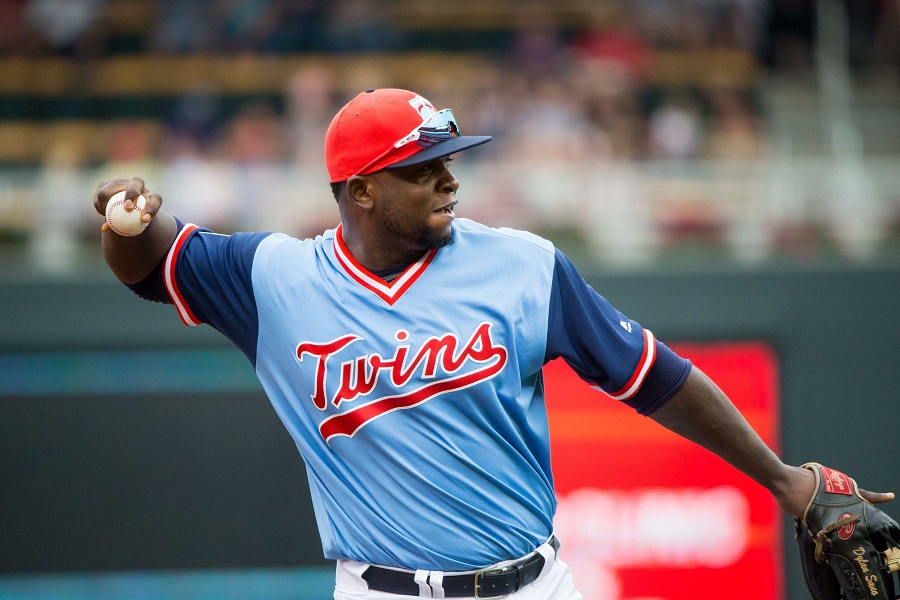 Miguel Sano has officially started his major league rehab assignment and debuts with the Fort Myers Miracle. The plan is for Sano to progress from High-A to Double-A before eventually getting in a couple of games with Triple-A Rochester. Per MLB rules, his rehab stint can run 20 days barring any setbacks. Last playing in a big-league game on September 18 and getting in just 71 games last year, this will serve as Sano’s spring training. It’s not lost on anyone that Sano’s immense talent has gone unrealized in recent seasons. He was worth 0 fWAR in 2018, and after an impressive rookie campaign, only flashed his talent through a fast start to the 2017 season. The Dominican native has never played more than 116 games in a season, and conditioning issues, reflective of drive and desire, seemed to be the largest reason for the under-performance of the owner of Minnesota’s hot corner. Here’s the reality though: This is a very good baseball player. Miguel Sano has all the tools to be an incredible asset in Rocco Baldelli’s lineup, and regardless of the early production, it’s clear this club could use him. Marwin Gonzalez was signed to be an asset through his utility. The ability to spell players all over the diamond is one of the chief contributors to his value. Playing as the regular third baseman in Sano’s absence, the former Astro owns just a .501 OPS and has only three extra-base hits in 86 plate appearances. It’d be silly to think that level of production continues for the newly signed free agent, but getting him out of regular duty could help to allow him a chance to settle in. At his best, Sano is an all-star talent that lengthens Minnesota’s lineup. Like the sluggers that already litter it, he can put the ball in the seats. Unlike some of his teammates however, a locked in Sano is also a disciplined hitter with an eye for free passes. Like many power bats he’ll strike out plenty, but his .352 OBP in 2017 is a realistic expectation when he’s going right. One of the most exciting things about inserting Sano back into the lineup is how his swing profile meshes so perfectly with how Minnesota has operated this year. The Twins have made a concentrated effort to hit the ball harder and higher, and ambush pitchers earlier in the count. Whether or not that’s a directive from somewhere in the organization or not, it’s what is taking place on the field. Sano owns a 42% career hard hit rate and is routinely among the league leaders in both barreled balls and exit velocity. His 43.8% ground ball rate in 2018 did him no favors but getting back closer to the 37% career mark will leave more room for elevation. When things fell apart for Miguel last year, there seemed to be a level of doubt in him, more than a reflection of a systemic change in his approach. Check swings were far too present, and an established knowledge of the strike zone was near non-existent. The swinging strike rate wasn’t out of whack, and the contact rate jumped. If anything, Sano wasn’t hitting the pitches he’d normally want to, and the approach was one full of apprehension. You can bet that when Sano returns to Minnesota in 2019, he’ll be ready to go. This staff isn’t going to let the same habits play out again, and we saw that start to bear fruit as he showed up to spring training in considerably better shape. For the first time in his professional career it appears as though he’s committed to getting the most out of his talent as opposed to simply relying on it. The Twins will need to make sure the rehab is both effective and productive over the course of the next three weeks, and then it’ll be all systems go. Miguel Sano has fallen flat at times during his career. He’s also a guy who has hit 25 home runs twice despite limited action. He’s been a legitimate power threat despite the tendency to strike out. Miguel Sano has generated a handful of hype without ever fully buying into himself. The floor is a pretty good bat, but the ceiling for the guy who showed up to Fort Myers this spring is something we haven’t yet seen from him in a Twins uniform.
-
In writing this yesterday, I was hoping he'd put a nice bow on it last night. It was definitely a bit of a bump, but he has certainly been rolling of late. To me, it seems like Thorpe's floor is the ceiling that the Twins could hope for with Mejia.
-
Over the course of the past decade the Minnesota Twins have shown some scouting prowess in their findings down under. From the early stories of Peter Moylan and Liam Hendriks, to a recent hat tip pointed at James Beresford, Australia has produced big leagues in a Twins uniform. Although Todd Van Steensel displayed some nice minor league numbers, he got to Minnesota by way of the St. Paul Saints. The system still has more talent from down under, and one could be on his way north soon. Lewis Thorpe has worked four times in 2019 for Triple-A Rochester. After two very bad outings against the same Lehigh Valley club to start the year, he’s settled in as the pitcher that previously appeared on top 100 prospect lists. Thorpe’s last two outings have seen him work 13.2 IP with a 1.98 ERA and .497 OPS against. He’s fanned 24 batters and walked just one. To call his work dominant would be putting it lightly. As a lefty, Thorpe isn’t the traditional soft-tossing type. This is a guy who can blow the fastball by professional hitters, and his career 10.9 K/9 is plenty indicative of that reality. Since returning from both Tommy John surgery, and then mononucleosis, Lewis has picked up right where he left off. His walk rate hovers around 3.0 BB/9 which is probably a bit higher than you’d like but combatting that with solid hit and strikeout rates make for a strong profile. To date Thorpe has just eight career starts at the Triple-A level. At just 23 years-old, that’s plenty impressive, but it’s also not a seasoned amount that reflects an immediate need for a promotion. Given the volatility at the back end of a starting rotation, we know that a need will arise in Minnesota sooner rather than later. Long term the Twins would like to see Thorpe come up and stick, but a spot start or something to get his feet wet could soon be on the horizon. Over the past year we’ve seen Zack Littell, Kohl Stewart, and Stephen Gonsalves all make their debuts for the Twins. Thorpe trends more heavily towards the highly-touted prospect that Gonsalves resembles and could be handled in a similar fashion. That would mean he’d be destined for a later season role in which he’d stick long term. If the current level of production remains though, it’d be plenty logical for Rocco Baldelli to run him out on a day he simply needs a starter. Back in February I opined that Thorpe was the guy to watch this season. He’s done very little to pump the brakes on that notion and making it a reality in the immediate future continues to become something to keep an eye on. For more from Off The Baggy, click here. Follow @tlschwerz
- 3 comments
-
- 1
-
-
- minnesota twins
- lewis thorpe
- (and 2 more)
-
Brian Dozier left the Minnesota Twins during the 2018 season. After being dealt to the Los Angeles Dodgers following months of speculation, his tenure in Twins Territory had come to an end. There was little reason to expect him back on a free agent deal over the winter, and the reality looked like the organization was ready to move on from the self-made slugger. That conclusion seemed forgone, but there was a question regarding how he would be replaced.Jorge Polanco missed the first half of last year due to a PED suspension, and his arm has always appeared questionable from a position demanding strength. There was thought that Jorge could slide to second with Minnesota filling the void by inking a Freddy Galvis- or Jose Iglesias-type shortstop in the winter. It didn’t play out that way, a second basemen was acquired, and Polanco stayed put. The Baltimore Orioles sent their All -Star second basemen, Jonathan Schoop, to the Brewers midseason. Like Dozier, he was a one-organization player, and had turned himself into a slugger at an offensively deprived position. Also, like Dozier, success was something that slipped away from him after reaching the top of the mountain. An All-Star in 2017 with an .841 OPS, Schoop posted a .720 OPS in 2018 with Baltimore before dropping to .577 in 46 games with the Brewers. When the dust had settled on his season, he was non-tendered even though Milwaukee had no other obvious answer to start in his place. Looking outside the box, and waiting for an opportunity to pounce, Derek Falvey picked Schoop as the answer to Minnesota’s vacancy. Knowing the club wasn’t ready for Nick Gordon to make an impact, and seemingly not keen on the shortstop options, the decision was made to believe in a bounce back. Despite 2017 being the All-Star breakthrough, Schoop owned a .795 OPS from 2015-2017, and did so while averaging 24 long balls a year. If there was going to be a drop from what Dozier was to what Schoop could be, the impact wouldn’t be much. We’re only 20 games into the current season, but Schoop has already outperformed his 0.5 fWAR from a year ago. He’s never been a guy who takes walks, but there’s been a 3% dip in the strikeout rate from 2018. It took a little while for the first ball to leave the yard, but a career best 41.8% hard-hit rate suggests there should be plenty more to follow. We could stand to see a bit more plate discipline in hopes of doing more with the hard-hit rate, but the inputs are in place for a productive year. Manning second base, he follows in the footsteps of Logan Forsythe before him, and so far is proving to be an upgrade for Minnesota. Arm strength isn’t an issue, and Schoop has produced positive DRS numbers each of the past two seasons. It’s not like he’ll be up for any glove-based awards but helping Polanco up the middle is more than a fair expectation. This is the best start Schoop has ever seen, and that’s a positive development for a guy only a year removed from his first All-Star appearance. In his final year of arbitration, Minnesota doesn’t have team control going into 2020. They banked on this working out for this season, and so far, it has. If this is the consistent version we’re set to see the rest of the way, all parties must be thrilled. Click here to view the article
- 30 replies
-
- 1
-
-
- brian dozier
- minnesota twins
- (and 2 more)
-
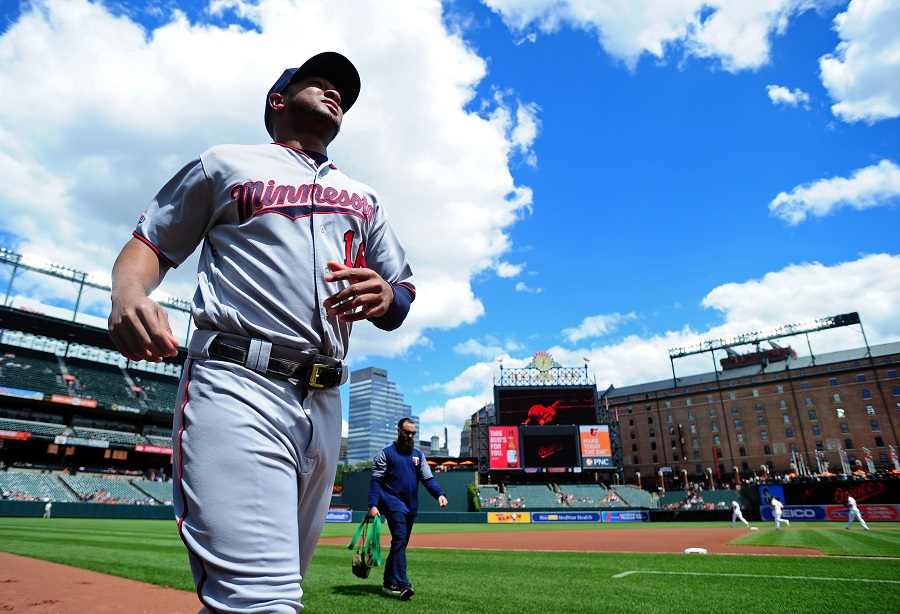 Jorge Polanco missed the first half of last year due to a PED suspension, and his arm has always appeared questionable from a position demanding strength. There was thought that Jorge could slide to second with Minnesota filling the void by inking a Freddy Galvis- or Jose Iglesias-type shortstop in the winter. It didn’t play out that way, a second basemen was acquired, and Polanco stayed put. The Baltimore Orioles sent their All -Star second basemen, Jonathan Schoop, to the Brewers midseason. Like Dozier, he was a one-organization player, and had turned himself into a slugger at an offensively deprived position. Also, like Dozier, success was something that slipped away from him after reaching the top of the mountain. An All-Star in 2017 with an .841 OPS, Schoop posted a .720 OPS in 2018 with Baltimore before dropping to .577 in 46 games with the Brewers. When the dust had settled on his season, he was non-tendered even though Milwaukee had no other obvious answer to start in his place. Looking outside the box, and waiting for an opportunity to pounce, Derek Falvey picked Schoop as the answer to Minnesota’s vacancy. Knowing the club wasn’t ready for Nick Gordon to make an impact, and seemingly not keen on the shortstop options, the decision was made to believe in a bounce back. Despite 2017 being the All-Star breakthrough, Schoop owned a .795 OPS from 2015-2017, and did so while averaging 24 long balls a year. If there was going to be a drop from what Dozier was to what Schoop could be, the impact wouldn’t be much. We’re only 20 games into the current season, but Schoop has already outperformed his 0.5 fWAR from a year ago. He’s never been a guy who takes walks, but there’s been a 3% dip in the strikeout rate from 2018. It took a little while for the first ball to leave the yard, but a career best 41.8% hard-hit rate suggests there should be plenty more to follow. We could stand to see a bit more plate discipline in hopes of doing more with the hard-hit rate, but the inputs are in place for a productive year. Manning second base, he follows in the footsteps of Logan Forsythe before him, and so far is proving to be an upgrade for Minnesota. Arm strength isn’t an issue, and Schoop has produced positive DRS numbers each of the past two seasons. It’s not like he’ll be up for any glove-based awards but helping Polanco up the middle is more than a fair expectation. This is the best start Schoop has ever seen, and that’s a positive development for a guy only a year removed from his first All-Star appearance. In his final year of arbitration, Minnesota doesn’t have team control going into 2020. They banked on this working out for this season, and so far, it has. If this is the consistent version we’re set to see the rest of the way, all parties must be thrilled.
