



Ted Schwerzler
-
Posts
5,149 -
Joined
-
Last visited
Content Type
Profiles
News
Minnesota Twins Videos
2026 Minnesota Twins Top Prospects Ranking
2022 Minnesota Twins Draft Picks
Minnesota Twins Free Agent & Trade Rumors, Notes, & Tidbits
Guides & Resources
2023 Minnesota Twins Draft Picks
The Minnesota Twins Players Project
2024 Minnesota Twins Draft Picks
2025 Minnesota Twins Draft Pick Tracker
2026 Minnesota Twins Draft Tracker: Picks & Bonuses
Forums
Blogs
Events
Store
Downloads
Gallery
Everything posted by Ted Schwerzler
-
Potential Twins Bullpen Target: Greg Holland, RHP, Diamondbacks
Ted Schwerzler posted an article in Twins
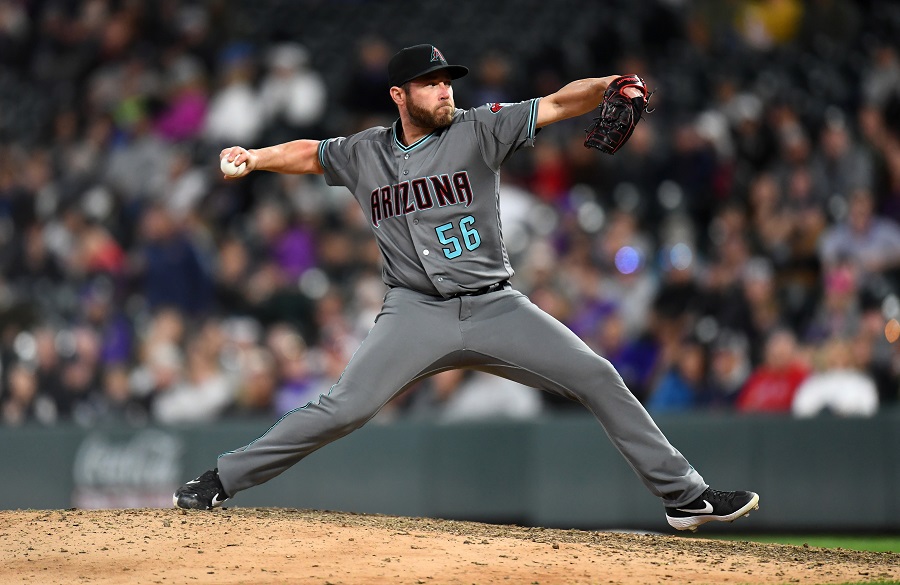 *You're going to see a lot of speculation and analysis on potential bullpen additions at the site over the coming weeks. Cody led things off earlier this week with a great overview of 10 potential trade targets. We'll continue to explore the reliever market by running profiles on specific pitchers each day. Greg Holland, RHP, 33-years-old Arizona Diamondbacks (35-33, 3rd place in NL West) Free agent following 2019 season 2019: 2.08 ERA, 1.015 WHIP, 11.6 K/9, 4.2 BB/9 in 21.2 IP 2018: 4.66 ERA, 1.619 WHIP, 9.1 K/9, 6.2 BB/9 in 46.1 IP What’s to Like? This season Holland found an immediate suitor and was able to start his year on a traditional note. After a shortened spring and two teams in 2018, being back on track with the Diamondbacks has had to feel good. His 2.08 ERA is the lowest it’s been since 2014 and neither the FIP nor xFIP numbers suggest a crazy amount of regression is ahead. Holland has operated in the closer role previously, leading the league in saves during the 2017 season. With just shy of 200 saves in his career the 9th inning, or similar high leverage, is nothing new to him. This season Holland has skirted trouble be keeping opponents bats at bay allowing just a 5.0 H/9. A 14% whiff rate is an improvement over last season and his 37% chase rate is a career best. He remains predominantly a fastball and slider pitcher, and that’s been his blueprint for most of his career. Concerns He's 33-years-old, surgery in the rear view, and just shy of 500 miles on his arm, Holland is working to stave off Father Time with each year that goes by. He has lost a bit more velocity (down to 92.2 mph) on his fastball, and his 4.2 BB/9 is on par with career norms. Prior to surgery he was a guy that never allowed the long ball, but he’s doing so now at a 1.2 HR/9 clip. A trade would have Holland on his fourth team in the past two seasons, and while it’s not reflective of clubhouse issues, no one has bought entirely into his ability to help them long term either. An impending free agent, his acquisition cost should be relatively low, but there’s no future benefit to this deal either. If there’s a way to define what Holland is right now, it’s probably a bit softer throwing Fernando Rodney of 2018. That worked out well for the Twins, but I’m still not sure if he’s the guy Minnesota would’ve wanted at the end of a must-win playoff game. If the club is making two moves, this could be that secondary level. See Also Sean Doolittle, LHP, Nationals Kirby Yates, RHP, Padres 10 Relievers Minnesota Could Target
-
Midseason 2019 Minnesota Twins Top 15 Prospects
Ted Schwerzler commented on Ted Schwerzler 's blog entry in Off The Baggy
You could probably see him rise based on how he starts out, but I think it’s more indicative of the system as a whole. Cavaco is a ceiling pick, but that floor could be dangerous too. When they have a system like they do, you can be a bit more aggressive.- 16 comments
-
- 2
-

-
- minnesota twins
- mlb draft
- (and 3 more)
-
Tonight the farm saw a handful of total team efforts. Lewis Thorpe looked as sharp as he’s been at any point this year, while Andrew Bechtold put up a strong performance for Cedar Rapids. The Wahoos walked it off in extras and there were fireworks from a former Twins minor league coach.RED WINGS REPORT Columbus 3, Rochester 2 Box Score All good things must come to an end, and unfortunately in this one that end was for the Red Wings winning streak. Dropping this one by a single run, their eight-game winning streak comes to a halt. Lewis Thorpe was on the bump and his nine strikeouts and one hit over five innings kept the Clippers down in the early going. La Tortuga kept up his hot hitting with a first inning solo shot, his third in just four games. A Nick Gordon RBI double in the eighth inning was the only other run the home team could muster, and it wouldn’t be enough to match the three plated by Columbus. Zack Littell continues to work in relief for Rochester. Going two innings tonight, he allowed one run on two hits but fanned five. The Red Wings can get revenge tomorrow when the two square off in the rubber match. BLUE WAHOO BITES Pensacola 7, Tennessee 6 (12 innings) Box Score Bryan Sammons put in five innings of work and the bats kept him in it despite allowing five runs (four earned) on six hits. He did also record six punchouts. The Blue Wahoos nearly got four scoreless from Anthony Vizcaya and Sam Clay in relief, but a ninth inning run spoiled the near-spotless effort. Taylor Grzelakowski knotted things at one with an RBI single in the 2nd, and Joe Cronin’s three-run shot in the fourth gave the Blue Wahoos their first lead. After allowing Tennessee to take the lead 5-4 in the sixth, Pensacola got back in front in the bottom half. Travis Blankenhorn stayed hot to drive in the tying run, and Jaylin Davis record an RBI on a sac fly scoring Cronin. Unfortunately, the Smokies plated a run in the top of the ninth to draw back even. Clay wound up working three innings in relief, with that ninth inning run being the only one he allowed. Former Triple-A Rochester hitting coach Chad Allen was ejected in the middle of the 11th but Pensacola couldn’t continue the fireworks in the bottom half. After getting two shutdown innings from Zack Weiss, Ben Rortvedt stepped to the dish. With Travis Blankenhorn on the bases thanks to international rule, a single allowed him to cross the plate and the Wahoos walked it off. MIRACLE MATTERS Tampa 6, Fort Myers 2 Box Score Fresh off of a doubleheader sweep to clinch first half FSL South Division title, the Miracle couldn’t keep up the winning ways. Despite being outhit by just one, Fort Myers mustered just two runs in the contest. Jordan Balazovic fanned seven over five innings, but he also gave up four runs on six hits. Miracle runs came in the third and sixth innings on Mark Contreras and Jose Miranda RBI singles. Rehabbing New York Yankees outfielder Giancarlo Stanton played again for the Tarpons, and tonight he launched two homers and accounted for three of the runs driven in. Tampa plays host to Fort Myers again tomorrow night for the final game of the series. KERNELS NUGGETS Cedar Rapids 4, Wisconsin 3 Box Score For the second night in a row it was four runs that were enough to get the Kernels in the win column. Kody Funderburk made it to just one out into the fifth inning but leaving having allowed only three runs, the rest of his team picked him up. Jose Martinez and Moises Gomez combined to throw 4 2/3 innings of scoreless baseball allowing just three hits and punching out five. Cedar Rapids answered twice in this one thanks to a two-RBI double from Gabriel Maciel in the second, and a Yeltsin Encarnacion sac fly in the fifth. Andrew Bechtold put the good guys ahead in a decisive manner after launching his fifth homer of the season in the bottom of the sixth inning. The homer rounded out a nice game for Bechtold who went 2-for-2 with a walk on the day. A series sweep is possible if Cedar Rapids can take a third straight from the Timber Rattlers tomorrow night. TWINS DAILY PLAYERS OF THE DAY TD Pitcher of the Day- Lewis Thorpe (Rochester) – 5.0 IP, 1 H, 0 R, 0 ER, 2 BB, 9 K TD Hitter of the Day- Andrew Bechtold (Cedar Rapids) – 2-2, HR, 2 R, RBI, BB PROSPECT SUMMARY Here’s a look at how the Twins Daily Top 20 Twins Prospects performed: #1 - Royce Lewis (Ft. Myers) – Did Not Play #2 - Alex Kirilloff (Pensacola) – Injured list #3 - Brusdar Graterol (Pensacola) – Injured list (shoulder) #4 - Trevor Larnach (Ft. Myers) – 0-4 #5 - Wander Javier (Cedar Rapids) – Did Not Play #6 - Brent Rooker (Rochester) – 0-4, 2 K #7 - Jhoan Duran (Ft. Myers) – Did Not Pitch #8 - Lewis Thorpe (Rochester) –5.0 IP, 1 H, 0 R, 0 ER, 2 BB, 9 K #9 - Blayne Enlow (Ft. Myers) – Did Not Pitch #10 - Akil Baddoo (Ft. Myers) – Injured List (Tommy John surgery) #11 - Nick Gordon (Rochester) – 2-4, RBI, 2B #12 - Stephen Gonsalves (Rochester) – Injured list (elbow) #13 - Ryan Jeffers (Ft. Myers) – 1-4, R #14 - Ben Rortvedt (Pensacola) – 2-6, RBI, K #15 - Yunior Severino (Cedar Rapids) – Injured List (thumb) #16 - Gilberto Celestino (Cedar Rapids) – 1-4, K #17 - Zack Littell (Rochester) – 2.0 IP, 2 H, 1 R, 1 ER, 0 BB, 5 K #18 - LaMonte Wade (Rochester) – Did Not Play #19 - Jorge Alcala (Pensacola) – Did Not Pitch #20 - Jose Miranda (Ft. Myers) – 2-3, RBI, BB THURSDAY’S PROBABLE STARTERS Rochester vs. Columbus (11:35AM CST) – RHP Sean Poppen (3-1, 1.57 ERA) Pensacola vs. Tennessee (6:35PM CST) – TBD Fort Myers @ Tampa (5:30PM CST) – TBD Cedar Rapids vs. Wisconsin (6:35PM CST) – TBD Please feel free to ask any questions and discuss Wednesday’s games. Click here to view the article
-
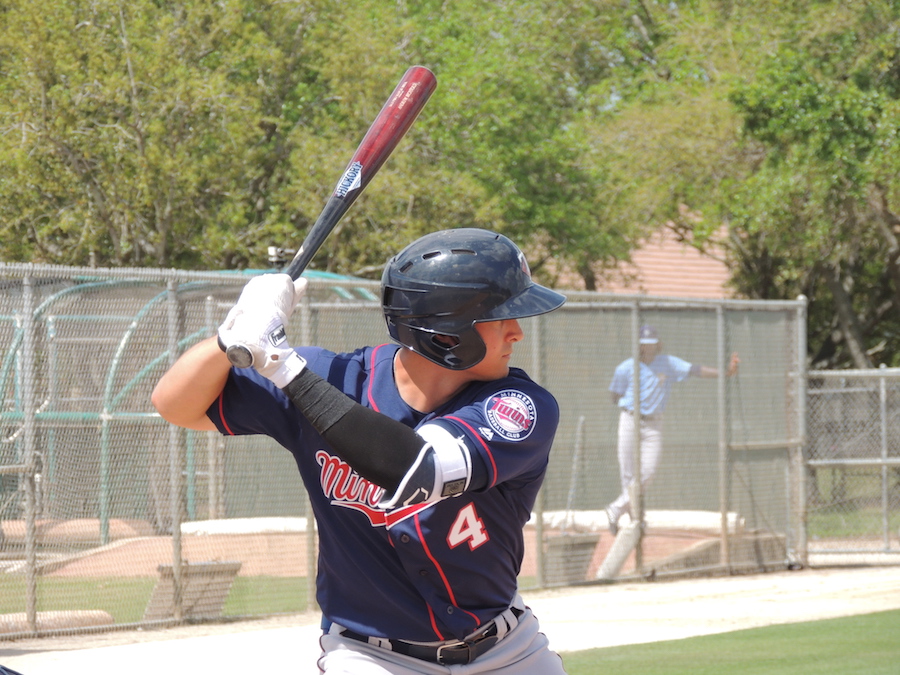 RED WINGS REPORT Columbus 3, Rochester 2 Box Score All good things must come to an end, and unfortunately in this one that end was for the Red Wings winning streak. Dropping this one by a single run, their eight-game winning streak comes to a halt. Lewis Thorpe was on the bump and his nine strikeouts and one hit over five innings kept the Clippers down in the early going. https://twitter.com/RocRedWings/status/1138968167743725569 La Tortuga kept up his hot hitting with a first inning solo shot, his third in just four games. A Nick Gordon RBI double in the eighth inning was the only other run the home team could muster, and it wouldn’t be enough to match the three plated by Columbus. https://twitter.com/RocRedWings/status/1138958187653206016 Zack Littell continues to work in relief for Rochester. Going two innings tonight, he allowed one run on two hits but fanned five. The Red Wings can get revenge tomorrow when the two square off in the rubber match. BLUE WAHOO BITES Pensacola 7, Tennessee 6 (12 innings) Box Score Bryan Sammons put in five innings of work and the bats kept him in it despite allowing five runs (four earned) on six hits. He did also record six punchouts. The Blue Wahoos nearly got four scoreless from Anthony Vizcaya and Sam Clay in relief, but a ninth inning run spoiled the near-spotless effort. Taylor Grzelakowski knotted things at one with an RBI single in the 2nd, and Joe Cronin’s three-run shot in the fourth gave the Blue Wahoos their first lead. After allowing Tennessee to take the lead 5-4 in the sixth, Pensacola got back in front in the bottom half. Travis Blankenhorn stayed hot to drive in the tying run, and Jaylin Davis record an RBI on a sac fly scoring Cronin. Unfortunately, the Smokies plated a run in the top of the ninth to draw back even. Clay wound up working three innings in relief, with that ninth inning run being the only one he allowed. Former Triple-A Rochester hitting coach Chad Allen was ejected in the middle of the 11th but Pensacola couldn’t continue the fireworks in the bottom half. After getting two shutdown innings from Zack Weiss, Ben Rortvedt stepped to the dish. With Travis Blankenhorn on the bases thanks to international rule, a single allowed him to cross the plate and the Wahoos walked it off. MIRACLE MATTERS Tampa 6, Fort Myers 2 Box Score Fresh off of a doubleheader sweep to clinch first half FSL South Division title, the Miracle couldn’t keep up the winning ways. Despite being outhit by just one, Fort Myers mustered just two runs in the contest. Jordan Balazovic fanned seven over five innings, but he also gave up four runs on six hits. Miracle runs came in the third and sixth innings on Mark Contreras and Jose Miranda RBI singles. Rehabbing New York Yankees outfielder Giancarlo Stanton played again for the Tarpons, and tonight he launched two homers and accounted for three of the runs driven in. Tampa plays host to Fort Myers again tomorrow night for the final game of the series. KERNELS NUGGETS Cedar Rapids 4, Wisconsin 3 Box Score For the second night in a row it was four runs that were enough to get the Kernels in the win column. Kody Funderburk made it to just one out into the fifth inning but leaving having allowed only three runs, the rest of his team picked him up. Jose Martinez and Moises Gomez combined to throw 4 2/3 innings of scoreless baseball allowing just three hits and punching out five. Cedar Rapids answered twice in this one thanks to a two-RBI double from Gabriel Maciel in the second, and a Yeltsin Encarnacion sac fly in the fifth. Andrew Bechtold put the good guys ahead in a decisive manner after launching his fifth homer of the season in the bottom of the sixth inning. The homer rounded out a nice game for Bechtold who went 2-for-2 with a walk on the day. A series sweep is possible if Cedar Rapids can take a third straight from the Timber Rattlers tomorrow night. TWINS DAILY PLAYERS OF THE DAY TD Pitcher of the Day- Lewis Thorpe (Rochester) – 5.0 IP, 1 H, 0 R, 0 ER, 2 BB, 9 K TD Hitter of the Day- Andrew Bechtold (Cedar Rapids) – 2-2, HR, 2 R, RBI, BB PROSPECT SUMMARY Here’s a look at how the Twins Daily Top 20 Twins Prospects performed: #1 - Royce Lewis (Ft. Myers) – Did Not Play #2 - Alex Kirilloff (Pensacola) – Injured list #3 - Brusdar Graterol (Pensacola) – Injured list (shoulder) #4 - Trevor Larnach (Ft. Myers) – 0-4 #5 - Wander Javier (Cedar Rapids) – Did Not Play #6 - Brent Rooker (Rochester) – 0-4, 2 K #7 - Jhoan Duran (Ft. Myers) – Did Not Pitch #8 - Lewis Thorpe (Rochester) –5.0 IP, 1 H, 0 R, 0 ER, 2 BB, 9 K #9 - Blayne Enlow (Ft. Myers) – Did Not Pitch #10 - Akil Baddoo (Ft. Myers) – Injured List (Tommy John surgery) #11 - Nick Gordon (Rochester) – 2-4, RBI, 2B #12 - Stephen Gonsalves (Rochester) – Injured list (elbow) #13 - Ryan Jeffers (Ft. Myers) – 1-4, R #14 - Ben Rortvedt (Pensacola) – 2-6, RBI, K #15 - Yunior Severino (Cedar Rapids) – Injured List (thumb) #16 - Gilberto Celestino (Cedar Rapids) – 1-4, K #17 - Zack Littell (Rochester) – 2.0 IP, 2 H, 1 R, 1 ER, 0 BB, 5 K #18 - LaMonte Wade (Rochester) – Did Not Play #19 - Jorge Alcala (Pensacola) – Did Not Pitch #20 - Jose Miranda (Ft. Myers) – 2-3, RBI, BB THURSDAY’S PROBABLE STARTERS Rochester vs. Columbus (11:35AM CST) – RHP Sean Poppen (3-1, 1.57 ERA) Pensacola vs. Tennessee (6:35PM CST) – TBD Fort Myers @ Tampa (5:30PM CST) – TBD Cedar Rapids vs. Wisconsin (6:35PM CST) – TBD Please feel free to ask any questions and discuss Wednesday’s games.
-
Each passing day that goes by gives us another opportunity to see that the Minnesota Twins bullpen could use some help. Trevor May picked up his first save of the season last night as Taylor Rogers was on the shelf. Needing the back-end guys to get a break, acquiring a quality upgrade is a must for the front office. Today’s target is Nationals closer Sean Doolittle.*You're going to see a lot of speculation and analysis on potential bullpen additions at the site over the coming weeks. Cody led things off earlier this week with a great overview of 10 potential trade targets. We'll continue to explore the reliever market by running profiles on specific pitchers each day. Sean Doolittle, LHP, 32-years-old Washington Nationals (31-36, 4th in NL East) $6.5MM team option for 2020 2019: 3.58 ERA, 1.337 WHIP, 11.4 K/9, 2.3 BB/9 in 27.2 IP 2018: 1.60 ERA, 0.600 WHIP, 12.0 K/9, 1.2 BB/9 in 45.0 IP What’s to Like? Doolittle has been a model of consistency over the entirety of his big-league career. He’s worked as a reliever for eight years and has operated in high leverage or save situations for a vast majority of it. It remains to be seen whether the Nationals sell, but they’re certainly fighting an uphill battle in the NL East right now. Over the course of his career Doolittle’s 2.88 ERA is paired with a 2.44 FIP. He’s been a double-digit strikeout pitcher on a yearly basis and has displayed a level of command that keeps his walks well into the manageable range. Washington has really scuffled in 2019, especially considering their expectations, but it wasn’t the fault of Doolittle out of the gate. In his first 18 games Doolittle owned a 0.95 ERA and a 22/5 K/BB. The Nats were 15-3 in games he pitches, and he recorded six saves (against just one blown save.) Another lefty is something Baldelli could certainly use, and a hard thrower would be the ideal variety. Concerns There’s more here than I’d like to see for a target the Twins should have some interest in. The 2.89 FIP is fine, but the 4.48 xFIP is not a great sign. Pair that with velocity that has dropped a full mph on his fastball, and a whiff rate that’s 3% below where he was a season ago. Doolittle started out the year on a great note as referenced above, but it’s been anything but smooth sledding since. He owns a 9.35 ERA and 1.019 OPS against in his last 8.2 IP. The 13/2 K/BB is still plenty good, but with 15 hits in that span pitches simply aren’t missing bats. Worth mentioning is that Sean Doolittle removed the toe tap from mechanics after a protest by the Chicago Cubs. That game took place on May 18, and his next outing (May 22nd) saw him surrender four runs on two hits without recording an out against the Mets. He has a 9.45 ERA and 1.039 OPS against since that point. There could be some mechanical tweaks in order to restore him to previous form. See Also Kirby Yates, RHP, Padres 10 Relievers Minnesota Could Target Click here to view the article
- 14 replies
-
- 1
-
-
- minnesota twins
- washington nationals
- (and 1 more)
-
Potential Twins Bullpen Target: Sean Doolittle, LHP, Nationals
Ted Schwerzler posted an article in Twins
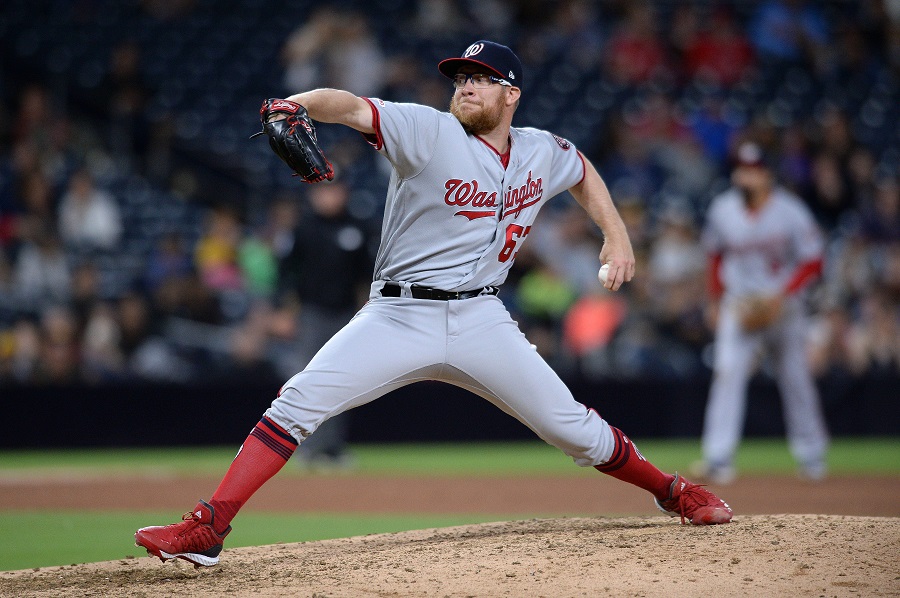 *You're going to see a lot of speculation and analysis on potential bullpen additions at the site over the coming weeks. Cody led things off earlier this week with a great overview of 10 potential trade targets. We'll continue to explore the reliever market by running profiles on specific pitchers each day. Sean Doolittle, LHP, 32-years-old Washington Nationals (31-36, 4th in NL East) $6.5MM team option for 2020 2019: 3.58 ERA, 1.337 WHIP, 11.4 K/9, 2.3 BB/9 in 27.2 IP 2018: 1.60 ERA, 0.600 WHIP, 12.0 K/9, 1.2 BB/9 in 45.0 IP What’s to Like? Doolittle has been a model of consistency over the entirety of his big-league career. He’s worked as a reliever for eight years and has operated in high leverage or save situations for a vast majority of it. It remains to be seen whether the Nationals sell, but they’re certainly fighting an uphill battle in the NL East right now. Over the course of his career Doolittle’s 2.88 ERA is paired with a 2.44 FIP. He’s been a double-digit strikeout pitcher on a yearly basis and has displayed a level of command that keeps his walks well into the manageable range. Washington has really scuffled in 2019, especially considering their expectations, but it wasn’t the fault of Doolittle out of the gate. In his first 18 games Doolittle owned a 0.95 ERA and a 22/5 K/BB. The Nats were 15-3 in games he pitches, and he recorded six saves (against just one blown save.) Another lefty is something Baldelli could certainly use, and a hard thrower would be the ideal variety. Concerns There’s more here than I’d like to see for a target the Twins should have some interest in. The 2.89 FIP is fine, but the 4.48 xFIP is not a great sign. Pair that with velocity that has dropped a full mph on his fastball, and a whiff rate that’s 3% below where he was a season ago. Doolittle started out the year on a great note as referenced above, but it’s been anything but smooth sledding since. He owns a 9.35 ERA and 1.019 OPS against in his last 8.2 IP. The 13/2 K/BB is still plenty good, but with 15 hits in that span pitches simply aren’t missing bats. https://twitter.com/PitchingNinja/status/1133709588916781062 Worth mentioning is that Sean Doolittle removed the toe tap from mechanics after a protest by the Chicago Cubs. That game took place on May 18, and his next outing (May 22nd) saw him surrender four runs on two hits without recording an out against the Mets. He has a 9.45 ERA and 1.039 OPS against since that point. There could be some mechanical tweaks in order to restore him to previous form. See Also Kirby Yates, RHP, Padres 10 Relievers Minnesota Could Target
-
It’s that time of year again, and with the 2019 Major League Baseball amateur draft in the books we can update the prospect rankings. After picking 13th in the draft this season the Twins took more of a developmental approach with their first-round pick. Going heavy on college players following that selection the system gets much deeper. With early season performances influencing those already into their pro careers this list has some movement to it. My Top 15 Prospects were last updated in December prior to the season starting. You can see that list, as well as the others dating back to 2016 below. Also, in this offering, I’ve expanded the total names to go 30 deep. While those names past 15 don’t have any breakdown, know that they are certainly names worth monitoring. 2016 Top 15 Prospects 2017 Top 15 Prospects 2018 Top 15 Prospects 2019 Top 15 Prospects 2019 Twins Draft Picks 30. Gabriel Maciel 29. Travis Blankenhorn 28. Griffin Jax. 27. Zack Littell 26. Jose Miranda 25. Yunior Severino 24. Gilberto Celestino 23. LaMonte Wade 22. Ryan Jeffers 21. Misael Urbina 20. Stephen Gonsalves 19. Akil Baddoo 18. Matt Canterino 17. Ben Rortvedt 16. Luis Arraez 15. Luke Raley OF Dropping a couple of spots from the first 2019 list, Raley’s positioning is indicative of a strengthened system. He has posted an .878 OPS for Triple-A Rochester and is right there with teammate Brent Rooker when it comes to a big power bat. Unfortunately, he just dislocated his ankle and is going to miss significant time due to surgery. He’ll return late this year and hopefully end on a high note. 14. Jorge Alcala RHP His first full season in the Twins organization has been spent entirely at Double-A Pensacola. The 5.25 ERA isn’t good, but the FIP and xFIP numbers suggest that’s not indicative of true performance. His 9.6 K/9 is impressive, and the walks are below his career average. There’s lot of life on this fastball, and he could pop up to make a splash for the big-league club as early as this season. 13. Nick Gordon INF Starting the season on the shelf Gordon has just 26 games to his credit thus far. He got out to a quick start and has continued to produce for Triple-A Rochester. The .784 OPS with an ok OBP is about what you should expect from the contact bat and speed profile Nick possesses. At this point he’s probably more 2B than shortstop, and while he may be a big league regular, it’s becoming less certain that happens here. Gordon could push for his debut later this season if he continues along this path. 12. Matt Wallner OF Originating from Forest Lake, Minnesota Wallner was selected with the Twins first round compensatory pick. He’s a corner outfield bomber from Southern Mississippi that should have an advanced approach at the dish when getting to the next level. He’s played in the Cape with wood bats previously and could take a similar path to that of Trevor Larnach. 11. Keoni Cavaco 3B After quickly jumping up draft boards the high schooler from California found himself going to the Twins in the top half of the first round. Announced as a SS but likely destined for the hot corner, Cavaco’s bat is going to be what carries him. He possesses an above average defensive profile at third but should continue to display pop as he further develops his frame. 10. Blayne Enlow RHP Recently promoted to Fort Myers after making eight starts for Cedar Rapids this season, Enlow has turned in 18 strong innings with the Miracle. The strikeout numbers aren’t quite there yet, but he’s continued to work on both control and command. Just 20 years old, Enlow remains one of the most exciting developmental pitching prospects in the entire organization. 9. Lewis Thorpe LHP Putting more distance behind his missed time, Thorpe has turned in 11 starts at Triple-A Rochester this season. While the 5.95 ERA isn’t good, he’s been much better of later. The 11.3 K/9 and 2.3 BB/9 are beyond impressive, and if he can keep the ball in the park the numbers really pop. I’d expect a major league debut to come at some point in 2019, and he’ll have a real chance to be a difference maker being more than your traditional soft-tossing southpaw. 8. Jhoan Duran RHP A model of consistency over the past two seasons, Duran has struck out 10+ per nine while walking roughly three over the course of his last 31 starts. He’s just 21 years old and can pump his fastball towards triple digits. Finishing at Low-A Cedar Rapids in 2018, he’s made 10 starts for the Miracle this season. There’s an outside chance he could progress to Double-A this year. Minnesota is stockpiling some fireballing arms to be sure. 7. Jordan Balazovic RHP The Canadian has seen a rise like no one in the Twins system this season. After a strong 2018 for Cedar Rapids as a 19-year-old his 2019 has only taken him to new heights. Making four starts for the Kernels before a promotion to Fort Myers, Balazovic owns a ridiculous 13.1 K/9 and 1.7 BB/9. His 2.09 ERA is beyond impressive and the body of work spans 51 innings. He’s still so young and is going to blow by his previous career innings totals, but if he keeps this up there’s no reason to think another challenge is out of the question. 6. Wander Javier SS Having made it through plenty of setbacks over the course of his early career, Javier is finally healthy and on the field for the Kernels. He’s got as good of a chance as anyone to stick at SS defensively, and this is one of the best prospects in the system. He hasn’t leapt out to a fast start at Low-A Cedar Rapids, but we’re dealing with a sample size under 15 games thus far. 5. Trevor Larnach OF The 2018 first round pick was drafted for his bat and since turning pro all he’s done is hit. Making it to Cedar Rapids in his debut season, he began 2019 with High-A Fort Myers. In his first 61 games he has an .863 OPS and has displayed a very strong approach at the plate. At 22 he could be pushed with a new test getting to Pensacola in the next couple of months. 4. Brent Rooker OF/1B Taken in the first round of the 2017 draft Rooker has done nothing but crushed his way through the minors as well. Now 24 and at Triple-A Rochester, he owns a .908 OPS through 35 games with seven longballs. The exact positioning at the next level is still up in the air, but this is a power bat that doesn’t have a ton of swing and miss and is going to rake anywhere he goes. A Twins debut this season isn’t beyond comprehension. 3. Brusdar Graterol RHP Pitching all season at Double-A despite being just 20 years old, Graterol has been dominant in his nine starts. A 1.89 ER and 8.7 K/9 are both plenty to marvel at. He needs to hone in the command some, but for a guy who can hit 100 mph on his fastball there’s just so much to like here. Unfortunately, he’s shut down with a shoulder impingement, but the hope is that there’s no long-term damaging effects. 2. Alex Kirilloff OF It took some time for Kirilloff to get healthy and into action starting 2019, and then it took a bit more time for his bat to warm up. Across his last 11 games for Double-A Pensacola however, Kirilloff owns a 1.033 OPS and has six extra base hits (two homers). He’s a great athlete who has hit in each stop across the minor leagues and expecting the numbers to climb as the season goes on is a very good bet. He’s probably missed the window for 2019 time with the Twins, but 2020 should have him more than ready. 1. Royce Lewis SS Entering the season as a top 10 prospect across all the big leagues Lewis has scuffled a bit in his second tour with High-A Fort Myers. A .726 OPS in 46 games last year has been followed up by a .606 OPS in 62 contests this season. The plate discipline has worn down a bit with walks not being as plentiful. He’s also tallied less extra base hits and seen the power production take a dive. Just recently turning 20, Royce is still so young and remains and elite prospect who should stick at shortstop as he rises the ranks. It’s time for him to adjust, but there’s no reason to believe he won’t.
- 16 comments
-
- 2
-
-
- minnesota twins
- mlb draft
- (and 3 more)
-
Couple of things I want to address here: 1. Astudillo is not a bad ball hitter. He chases because that's his process, swing and make contact with everything. He doesn't hit anything hard, so he's not really a hitter at all yet. Bad ball hitters make it work because they still barrel pitches out of the zone. They aren't just chasing. 2. He's below average defensively everywhere, the metrics and eye test both corroborate that. A catcher by trade, that actually may be one of his worst positions defensively. Because he can occupy the space doesn't, in and of itself, provide value. Marwin Gonzalez CAN play SS, but you never WANT him to. 3. Mitch Garver rated well below average defensively in 2018. After the work he put in with Tanner Swanson this offseason, he rates avg or slightly above across the board. Adding in the fact that he can hit, he's produced as the best catcher in baseball (when healthy) to start 2019. Is that sustainable? No. Defining him as "a catcher who can hit" drastically downplays the fact that he's a high level regular for the position.
- 11 comments
-
- 2
-
-
- willians astudillo
- andrelton simmons
- (and 2 more)
-
Miguel Sano has played in 17 games for the Minnesota Twins in 2019. He missed the beginning of the season rehabbing from an Achilles injury, and joined the club in the middle of May. Through his first 75 plate appearances Sano has fanned 28 times while drawing nine walks. Each of those strikeouts has drawn the ire of Twins fans and stirred up a vocal minority suggesting the club deserves more. They are wrong, it doesn’t matter, and the slugger has been great.Here’s the deal, Miguel Sano currently owns a .949 OPS which is the third best among Minnesota hitters. Rocco Baldelli’s club has the best OPS in baseball, and the next closest team (Houston) is over 40 points in the rear-view mirror. While Sano’s impact hasn’t been felt for a considerable amount of time this season, he’s been adding to what is already the most feared lineup in the game. Now, let’s get into the merits of Sano based on this year alone. His 37.3% strikeout rate is down just slightly from the 2018 mark (38.5%), and up just slightly from the 2017 mark (35.8%). Essentially, he’s striking out a third of the time as he always has. There’s nothing wrong with that in and of itself. The other part of this equation is what takes place the other two-thirds of the time. Right now, Miguel Sano owns a 12% walk rate for the Twins, which is the highest it’s been at any point since his 15.8% tally in 2015 as a rookie. There is some reason for concern regarding his plate discipline, however. The 31.1% chase rate and 20.1% whiff rates are both career highs. He’s generating contact just 61% of the time, and while that’s lower than his career mark, it’s right in line with what he’s done in his two best years (2015 and 2017). A silver lining here is that his 4.34 pitches per plate appearance is a career best mark. When it comes to this piece of the puzzle, the walks are an encouraging sign even if there are lots of opportunities left on the table. That brings us to batted ball opportunities. As he was billed to do when coming through the system, the Dominican native is absolutely destroying the baseball. In a year with the ball being juiced and flying out of the park more than it ever has, a 50% hard hit rate is going to do significant damage. Across 361 players with over 70 plate appearances this season, no one has a lower soft hit rate than Sano’s 5.3%. Miguel is also not a stranger to elevating the baseball. He’s putting it on the ground just 21.1% of the time and hitting fly balls 44.7% of the time. Because of the hard-hit rate, and lift on his batted balls, 35.3% of them have left the yard (eighth best in baseball). At the end of the day the reality is Miguel Sano is essentially the perfect version of himself. If you’re looking for him to hit for a high average and be some sort of MVP candidate, you’ve probably misunderstood his skillset all along. If you’re on board with him batting around .250, having a OBP around .330, and SLG in the upper .500’s celebrate because that’s what you’ll get. Sano isn’t a franchise cornerstone, but he’s definitely a middle-of-the-order bat that can hold his own against the best in the game. There’s been some goofy suggestions thrown out over the course of the season. Trading Sano for peanuts, preferring the likes of Willians Astudillo, or demeaning his production because he produces outs are all foolish reasons to be down on him. Although he’s been lumped in with Byron Buxton from a timeline perspective, Sano has never been in the same boat from a 100th percentile impact expectation. At his best Buxton is a perennial MVP candidate. At his best Sano is an all-star who challenges for the yearly home run title. At some point we need to get to a place where the head trash that strikeouts are bad is removed from our memory. In baseball the most important commodity is the out, and you get 27 of them. Striking out is no worse than any other out and given the inability to be doubled up in that scenario, it may even be better. Enjoy how much Sano is demolishing the ball, hope he can rein in the plate discipline even a bit more, and allow whatever happens in between to be the gray area providing a reminder that baseball is hard. Click here to view the article
-
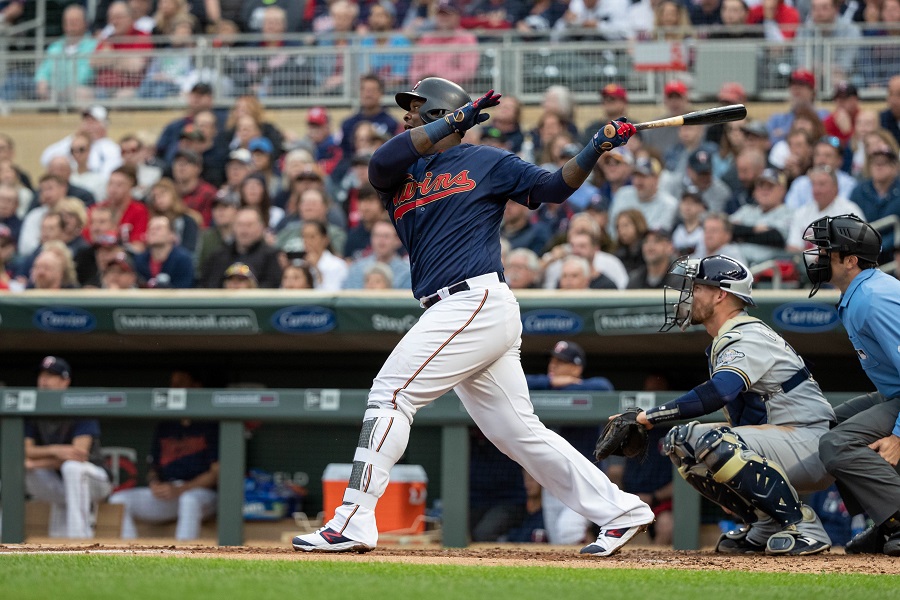 Here’s the deal, Miguel Sano currently owns a .949 OPS which is the third best among Minnesota hitters. Rocco Baldelli’s club has the best OPS in baseball, and the next closest team (Houston) is over 40 points in the rear-view mirror. While Sano’s impact hasn’t been felt for a considerable amount of time this season, he’s been adding to what is already the most feared lineup in the game. Now, let’s get into the merits of Sano based on this year alone. His 37.3% strikeout rate is down just slightly from the 2018 mark (38.5%), and up just slightly from the 2017 mark (35.8%). Essentially, he’s striking out a third of the time as he always has. There’s nothing wrong with that in and of itself. The other part of this equation is what takes place the other two-thirds of the time. Right now, Miguel Sano owns a 12% walk rate for the Twins, which is the highest it’s been at any point since his 15.8% tally in 2015 as a rookie. There is some reason for concern regarding his plate discipline, however. The 31.1% chase rate and 20.1% whiff rates are both career highs. He’s generating contact just 61% of the time, and while that’s lower than his career mark, it’s right in line with what he’s done in his two best years (2015 and 2017). A silver lining here is that his 4.34 pitches per plate appearance is a career best mark. When it comes to this piece of the puzzle, the walks are an encouraging sign even if there are lots of opportunities left on the table. That brings us to batted ball opportunities. As he was billed to do when coming through the system, the Dominican native is absolutely destroying the baseball. In a year with the ball being juiced and flying out of the park more than it ever has, a 50% hard hit rate is going to do significant damage. Across 361 players with over 70 plate appearances this season, no one has a lower soft hit rate than Sano’s 5.3%. Miguel is also not a stranger to elevating the baseball. He’s putting it on the ground just 21.1% of the time and hitting fly balls 44.7% of the time. Because of the hard-hit rate, and lift on his batted balls, 35.3% of them have left the yard (eighth best in baseball). At the end of the day the reality is Miguel Sano is essentially the perfect version of himself. If you’re looking for him to hit for a high average and be some sort of MVP candidate, you’ve probably misunderstood his skillset all along. If you’re on board with him batting around .250, having a OBP around .330, and SLG in the upper .500’s celebrate because that’s what you’ll get. Sano isn’t a franchise cornerstone, but he’s definitely a middle-of-the-order bat that can hold his own against the best in the game. There’s been some goofy suggestions thrown out over the course of the season. Trading Sano for peanuts, preferring the likes of Willians Astudillo, or demeaning his production because he produces outs are all foolish reasons to be down on him. Although he’s been lumped in with Byron Buxton from a timeline perspective, Sano has never been in the same boat from a 100th percentile impact expectation. At his best Buxton is a perennial MVP candidate. At his best Sano is an all-star who challenges for the yearly home run title. At some point we need to get to a place where the head trash that strikeouts are bad is removed from our memory. In baseball the most important commodity is the out, and you get 27 of them. Striking out is no worse than any other out and given the inability to be doubled up in that scenario, it may even be better. Enjoy how much Sano is demolishing the ball, hope he can rein in the plate discipline even a bit more, and allow whatever happens in between to be the gray area providing a reminder that baseball is hard.
-
Well worded by Seth up there. I think "entirely change" is drastic and meant for effect as much as it is in practice. Realistically the change is that he has to swing at pitches in the zone that he can hit hard. Right now he swings at everything, and hits very little hard.
- 11 comments
-
- 1
-
-
- willians astudillo
- andrelton simmons
- (and 2 more)
-
If you’ve followed me for any amount of time on Twitter, you know that I’m skeptical when it comes to the Minnesota Twins cult hero. Willians Astudillo made his MLB debut last season, and after a September explosion, fans around Twins Territory lost their collective minds. Both from a conceptual and statistical perspective he’s been a lightning rod player for me, and someone I’ve struggled to get on board with. Rather than tweeting in short bursts I thought it pertinent to organize my thoughts in a single blog post with supporting facts and use this as a point of reference. Maybe some number of months from now this will be something that you can point to as a massive miss for me. If that ends up being the case, Minnesota likely benefits, so we all win in that case. To date Astudillo has 62 games in his major league career. 29 of those games came during September 2018 in which he posted an .887 OPS. He swatted eight extra-base hits (three homers), .379 wOBA and 139 wRC+. On top of his offensive contributions, he also played six defensive positions for Minnesota. The next 33 games came to open the 2019 season, in which he posted a .630 OPS, .267 wOBA, and a 62 wRC+. As Twins Daily’s Nick Nelson alluded to me on Twitter, we’re dealing with two sample sizes spanning roughly 100 plate appearances. Generating definitive conclusions off either scenario is not entirely fair, but I’m attempting to tie feelings into statistical output. Without being completely dismissive of those 97 September plate appearances, they took place during the most watered-down portion of the big-league schedule. His slump or injury has been credited with the slide in 2019, but the reality is that aside from his first three games (6-for-9), he owns a .537 OPS across 110 plate appearances. My belief is that Astudillo must entirely shift his approach at the plate in order to see sustained big-league success. Astudillo saw 2.93 P/PA this season, the lowest in baseball, with the next closest being the Angels Andrelton Simmons (3.03). It’s not that swinging early and often isn’t a viable process, it’s the way in which Astudillo uses it that’s the problem. Minnesota’s utility man owned just a 28.8% hard hit rate this season (31.9% in 2018) and puts the ball on the ground 40% of the time. He also popped up on one-fifth of his batted balls. With as much swinging as Astudillo does, while avoiding strikeouts and walks, it’s not a surprise he has a 95% contact rate. Unfortunately, he also has chased 47% of the time (40% in 2018). The summary of his plate discipline and approach is a guy who doesn’t hit the ball hard, puts it on the ground, and isn’t fast enough to make a difference. If there’s going to be a successful career ahead with the Twins or elsewhere, something must give for Astudillo. He’s done this swing early, avoid strikeouts, and don’t walk for the entirety of his pro career. A pop-up season in the PCL saw a strong OPS, but his minor league OPS is .759. There’s some pop in the bat, but he doesn’t work counts enough to find good pitches. Major league hurlers make him eat out of their hand, and he obliges regularly. This profile is the exact representation of why strikeouts aren’t bad and are arguably worse than any other out. I touched on a guy who isn’t patient earlier. The Angels Simba swings often too, but he’s become a strong hitter (for average) with a hard-hit rate in the upper 30’s. The ground ball rate isn’t good (and it’s why his SLG will never be favorable), but he only chases pitches out of the zone roughly 30% of the time. Not a slugger by any means, Simmons finds a strike and attacks it while Astudillo attacks almost any pitch thrown his way. The greatest asset Astudillo provided Minnesota in the early going this year was that he had positional flexibility. He’s able to stand almost anywhere on the diamond but grades out as roughly average at all those places. Lacking a standout defensive skill, and currently employing an approach not conducive to big league success, there’s an uphill battle ahead of him. It’s great when players like this excite a fanbase or represent a polarizing figure in the clubhouse. What’s worth keeping in perspective, however, is that there’s still a game being played between the lines and casting aside reality, or the merits of other players is something that will only make the letdown that much more difficult. Here’s to hoping an overhaul can be made during his stint on the farm. The more contributors Rocco Baldelli has, the better. For more from Off The Baggy, click here. Follow @tlschwerz
- 11 comments
-
- 3
-
-
- willians astudillo
- andrelton simmons
- (and 2 more)
-
The year was 2017 and the month was August. Byron Buxton had just been shelved since mid-July, entered with a .604 OPS, and was ready to get back on the field. The Minnesota Twins needed a jolt to push towards the playoffs and man did his month of August provide it. A .973 OPS across 29 games ended up vaulting him onto the national scene and he was rewarded with an 18th place finish in the American League MVP voting. Fast forward to 2019 and we’re watching it happen again. Right now, Buxton doesn’t own a .973 OPS, and no 29-game sample size has jumped off the page quite like that final month of summer did. However, it’s what Byron Buxton has done this season that is getting deserved recognition across the sport. He isn’t going to win an MVP award because Mike Trout exists, but behind arguably the greatest player to ever step on the diamond, Buxton is currently the second-best centerfielder in the game. On May 13th Buxton had played 37 games for the Twins and his 17 doubles led all of baseball. He had just one homer, but his .275 average and .806 OPS were plenty promising. This date is significant as it was then that I offered the following thoughts on Twitter: We’re now roughly a month out from that Tweet, and things have gone as expected. Buxton’s hard-hit rate since that date is 38.6%. He has jumped the 2% HR/FB rate all the way up to 25% and has six dingers. He still leads the American League with 21 doubles (trailing only Josh Bell’s 25 across baseball), but the longball is now being incorporated back into his game. I have long believed Buxton won’t hit for average as much as he’ll combine to hit for power. If the .270 sticks, so be it, but the .500+ SLG is exactly what I’d like to see. You already know about the defensive acumen. Buxton leads baseball in Outs Above Average (10) and Actual Catch Percentage (94%). His 9 DRS is third in the big leagues, and his UZR is also off the charts. It’s fair to suggest that, when healthy, he’s the most dynamic player on defense that the sport currently employs. What is great, and maybe less known, is that the offensive outburst looks sustainable. He’s decreased his chase and whiff rates. His contact rate is a career high, and the hard-hit rate is a substantial improvement. The ball is on the ground nearly 10% less than career averages, and he’s not just trying to beat out ground balls as has been previously suggested to him. This is a good hitter that allowing his tools to work and is creating absolute nightmares for opposing pitchers because of it. It really doesn’t matter where he hits in Rocco Baldelli’s lineup. I’ve talked about moving him up previously, and something like 6th or 7th seems to make sense. Even if he stays in the 9-hole though, this is a guy that’s settled in and finally comfortable showing off the ability that has been there all along. While he won’t win the MVP award, he’s a top 10 candidate at this point in the season, and even that may be a bit too light.
-
Baseball collectors of yesteryear remember when the full set of cards were offered in one large grouping. For years now, Topps has expanded the players covered by introducing their full yearly sets in three installments. January pumps out Series 1, with Series 2 coming in June, and Update covering the rookies near the end of the Major League season. Now Series 2 is upon us, and this could be one of the best releases in recent memory. Vladimir Guerrero Jr. is getting his first flagship card in this set, despite being a shortprinted offering. There’s also Eloy Jimenez and Fernando Tatis Jr. cards to be had here, so with the expected career paths of the three premiere rookies, you can bet this is a set that will be chased after for years to come. Looking at Minnesota Twins cards specifically, there’s plenty to get excited about here. Let’s dive into what fans in Twins Territory should be on the hunt for. Base Set- The Twins base set consists of 14 different subjects. Rookies include Willians Astudillo, Jake Cave, and Stephen Gonsalves’ first standalone flagship card. There’s some reliever love with both Taylor Rogers and Trevor Hildenberger being depicted, and The Boomstick himself has a card to collect. Arguably the most interesting inclusion is Ronald Torreyes, who has never played a game for the big-league club but is on the team’s 40-man roster. Each of the rookies, as well as Cruz, are chase cards in the extremely limited (to 10) clear acetate parallels. Inserts- Continuing with the Series 1 theme, 1984 is the throwback year here. Twins rookies are depicted on throwback cards, while Stadiums and Franchise greats give nods to that era as well. Bert Blyleven is depicted as an Iconic Card reprint, and some of Killer’s career feats are displayed on cardboard as well. Hits- None of the flagship products are driven heavily by hits. With autographs generally being of the sticker variety and relics being small swatches or manufactured patches, it’s more about the cards themselves than the added flair. That said Minnesota is well represented in the hits category. Byron Buxton and Jose Berrios are among the veteran signers, with all three rookies offering up their penmanship as well. There’s a Killebrew cut auto to chase, and four Twins (Buxton/Sano/Rosario/Kepler) are all worked into the 1/1 ‘In The Name” checklist. For more from Off The Baggy, click here. Follow @tlschwerz
-
During the 2018 Major League Baseball draft Oakland dipped down into the Division 2 ranks and selected Gus Varland from Concordia University St. Paul. Mark “Lunch” McKenzie isn’t unfamiliar to working with big league talent. He’s been involved with USA Baseball for over two decades, has a half century of coaching experience, and had both Jake Schmidt (2009) and Bryan Lippincott (2012) selected in the amateur draft. A year later, Varland’s brother Louie was the top candidate to go and Minnesota nabbed him with their 15th round selection.Louie is a North St. Paul graduate, and being selected as a junior, this was a prioritized signing by Minnesota. Like Matt Wallner before him, Varland falls in the category of Twins selections that have grown up watching the evolution of the organization. It’s one thing to have your professional dream realized but doing so in the jersey of the organization from your own backyard is another level. Louie provided some insight into who he is and what lies ahead. Twins Daily: You often hear about talent standing out no matter where it plays. You went the D2 route at Concordia and have now followed in the footsteps of your brother being drafted last year. What has set you up for success and allowed you to shine with the Golden Bears? Louie Varland: What really set me up for success was the atmosphere and coaching staff of the CSP (Concordia St. Paul) baseball program. Concordia being my only D2 offer, it was always the plan to shine and stand out. I could not have done it without the help of Lunch McKenzie, Neil Lerner, John Gaub, Marcus McKenzie, and Alex Alverez. They helped me make huge leaps with pitching and helped me tremendously to stand out, shine, and give me the opportunity to play professionally. The competition and support from the teammates I’ve had through my three years here really helped. I’d like to give special thanks to Gus Varland and Zach Lauzon. TD: You played for baseball royalty in Minnesota being coached by “Lunch.” He’s had ties to the Twins and USA Baseball forever. What can you tell us about his impression on you and guidance over the years? LV: "Lunch" is the mastermind behind all the baseball at Concordia. Starting fall season of my freshman year I remember a teammate saying, "When Lunch talks, you shut up and listen" because you knew he was going to spill some knowledge that could be useful. Lunch is the real deal and his impression and guidance has shaped me into the ball player I am today. He always has tidbits of information to add. With many connections, and a special friendship with Tom Kelly, he has insight at the big-league level. TD: Speaking of your brother, he’s now been in pro ball for roughly a year after being a 14th round selection by the Athletics. What has he told you about what to expect, what’s next, and this process as a whole? LV: Gus has been very helpful with the whole draft preparation. Seeing him go through it last year and him telling me what he figured out through it all, he’s really paved a straight path for me that made it easier to organize it all. This past year he would always call me after he got an update from me and say, "Ok now this is what you have to do, and this is what’s going to be coming for you". Pretty cool to have him in my corner helping me out. One helpful thing he told me on what to expect is that it is just like the Northwoods (League) schedule. With all the travel and food and what the team is like. He also told me that I may think I know a lot about pitching right now, but just to wait to get to rookie camp, a lot more information is coming my way that I haven’t heard before. TD: Being a Twin Cities kid, what does it feel like to be selected by your hometown team? Obviously, you’ve grown up with the organization. What are some of your fondest memories of the big-league club? LV: It is an honor and a dream come true to be selected by my childhood favorite team. I couldn't believe it when the Twins were the first to pull the trigger on me, really cool experience. My fondest memory of the Twins is watching Joe Mauer get drafted and play for the Twins my whole childhood. I met him at the Twins fest in 2008 thinking it was the greatest day of my life. Another memory is pestering Juan Rincon as he warms up in the pen at the Metrodome, I was telling him, "Hey Juan, give me the ball, hey Juan right here, can I have the ball?” Over and over I was in his ear until finally he got tired of me and pointed at me saying, "OK!" I sat back down and waited till he was done warming up before he flipped me the ball. TD: Without the benefit of television your repertoire and stuff hasn’t been widely viewed by Twins fans. What’s your approach on the mound and what do you feature? LV: My approach on the mound is a heavy fastball approach. I like to challenge hitters up with my fastball before I use my slider or change up. Especially early in the game, hitters must prove they can hit my fastball before I will start pulling out the slider and change up. This has been my approach through college but now obviously this is better competition and I might have to adapt or adjust my approach. TD: Lastly, is there a big league you’ve modeled your game after of emulate? If not, who’s someone you just look up to as a competitor? LV: I really like to compare myself to Justin Verlander. The last name is similar along with the delivery, but the aspect that I like the most is his high spin rate fastball that gives him a rising illusion and a high vertical break number. Sort of like my fastball. He’s also really fun to watch and an amazing pitcher. Louie did attribute much of his growth to coaches Lunch (Head Coach) and Marcus (Pitching Coach) McKenzie. Here’s what they had to say about him. "Louie is a hard working dedicated player, that understands the process of becoming a baseball player, or in his case a baseball pitcher. He possesses self discipline. His fastball sits at 92-94, he's quick to the plate and is a strike thrower. Louie is extremely coachable, respectful and driven to succeed." Lunch McKenzie “Louie Varland is an incredible young man that comes from an amazing family. He came in from day one and wanted to get better at his craft. No one was going to outwork him in the weight room or during baseball activities. He was always asking questions and came with a smile and energy that was contagious. I have no doubt that Louie is going to work as hard as he can to make his dream come true of becoming an MLB player. He will be missed around campus and our program and I wish him nothing but the best in this next journey of his life.” Marcus McKenzie Click here to view the article
-
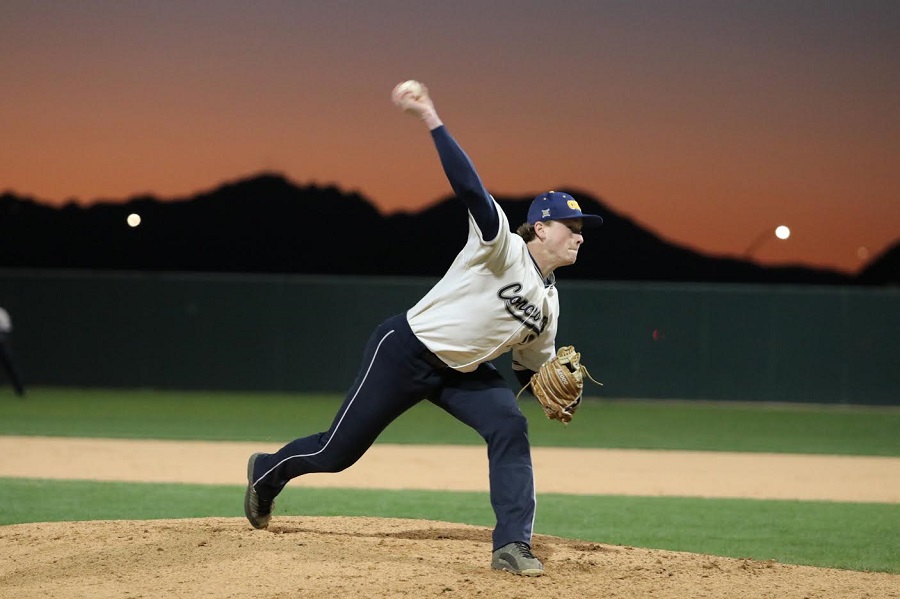 Louie is a North St. Paul graduate, and being selected as a junior, this was a prioritized signing by Minnesota. Like Matt Wallner before him, Varland falls in the category of Twins selections that have grown up watching the evolution of the organization. It’s one thing to have your professional dream realized but doing so in the jersey of the organization from your own backyard is another level. Louie provided some insight into who he is and what lies ahead. Twins Daily: You often hear about talent standing out no matter where it plays. You went the D2 route at Concordia and have now followed in the footsteps of your brother being drafted last year. What has set you up for success and allowed you to shine with the Golden Bears? Louie Varland: What really set me up for success was the atmosphere and coaching staff of the CSP (Concordia St. Paul) baseball program. Concordia being my only D2 offer, it was always the plan to shine and stand out. I could not have done it without the help of Lunch McKenzie, Neil Lerner, John Gaub, Marcus McKenzie, and Alex Alverez. They helped me make huge leaps with pitching and helped me tremendously to stand out, shine, and give me the opportunity to play professionally. The competition and support from the teammates I’ve had through my three years here really helped. I’d like to give special thanks to Gus Varland and Zach Lauzon. TD: You played for baseball royalty in Minnesota being coached by “Lunch.” He’s had ties to the Twins and USA Baseball forever. What can you tell us about his impression on you and guidance over the years? LV: "Lunch" is the mastermind behind all the baseball at Concordia. Starting fall season of my freshman year I remember a teammate saying, "When Lunch talks, you shut up and listen" because you knew he was going to spill some knowledge that could be useful. Lunch is the real deal and his impression and guidance has shaped me into the ball player I am today. He always has tidbits of information to add. With many connections, and a special friendship with Tom Kelly, he has insight at the big-league level. TD: Speaking of your brother, he’s now been in pro ball for roughly a year after being a 14th round selection by the Athletics. What has he told you about what to expect, what’s next, and this process as a whole? LV: Gus has been very helpful with the whole draft preparation. Seeing him go through it last year and him telling me what he figured out through it all, he’s really paved a straight path for me that made it easier to organize it all. This past year he would always call me after he got an update from me and say, "Ok now this is what you have to do, and this is what’s going to be coming for you". Pretty cool to have him in my corner helping me out. One helpful thing he told me on what to expect is that it is just like the Northwoods (League) schedule. With all the travel and food and what the team is like. He also told me that I may think I know a lot about pitching right now, but just to wait to get to rookie camp, a lot more information is coming my way that I haven’t heard before. TD: Being a Twin Cities kid, what does it feel like to be selected by your hometown team? Obviously, you’ve grown up with the organization. What are some of your fondest memories of the big-league club? LV: It is an honor and a dream come true to be selected by my childhood favorite team. I couldn't believe it when the Twins were the first to pull the trigger on me, really cool experience. My fondest memory of the Twins is watching Joe Mauer get drafted and play for the Twins my whole childhood. I met him at the Twins fest in 2008 thinking it was the greatest day of my life. Another memory is pestering Juan Rincon as he warms up in the pen at the Metrodome, I was telling him, "Hey Juan, give me the ball, hey Juan right here, can I have the ball?” Over and over I was in his ear until finally he got tired of me and pointed at me saying, "OK!" I sat back down and waited till he was done warming up before he flipped me the ball. TD: Without the benefit of television your repertoire and stuff hasn’t been widely viewed by Twins fans. What’s your approach on the mound and what do you feature? LV: My approach on the mound is a heavy fastball approach. I like to challenge hitters up with my fastball before I use my slider or change up. Especially early in the game, hitters must prove they can hit my fastball before I will start pulling out the slider and change up. This has been my approach through college but now obviously this is better competition and I might have to adapt or adjust my approach. TD: Lastly, is there a big league you’ve modeled your game after of emulate? If not, who’s someone you just look up to as a competitor? LV: I really like to compare myself to Justin Verlander. The last name is similar along with the delivery, but the aspect that I like the most is his high spin rate fastball that gives him a rising illusion and a high vertical break number. Sort of like my fastball. He’s also really fun to watch and an amazing pitcher. Louie did attribute much of his growth to coaches Lunch (Head Coach) and Marcus (Pitching Coach) McKenzie. Here’s what they had to say about him. "Louie is a hard working dedicated player, that understands the process of becoming a baseball player, or in his case a baseball pitcher. He possesses self discipline. His fastball sits at 92-94, he's quick to the plate and is a strike thrower. Louie is extremely coachable, respectful and driven to succeed." Lunch McKenzie “Louie Varland is an incredible young man that comes from an amazing family. He came in from day one and wanted to get better at his craft. No one was going to outwork him in the weight room or during baseball activities. He was always asking questions and came with a smile and energy that was contagious. I have no doubt that Louie is going to work as hard as he can to make his dream come true of becoming an MLB player. He will be missed around campus and our program and I wish him nothing but the best in this next journey of his life.” Marcus McKenzie
-
Texas is synonymous with baseball talent, and Rice University has long been one of the greatest cultivators of said talent. Minnesota waited until the second round and the 54th overall pick, but they were able to nab the Owls ace. Having excelled for every team and in every league he’s played in Matt Canterino brings quite the track record to Minnesota.Selected right after fellow Conference USA competitor, and Cape Cod teammate Matt Wallner, Canterino joins the Twins organization with some familiarity on his side. One of the things most obvious about Canterino is his unique delivery, but whatever questions remain about it, the results seem to provide plenty of answers. Here’s some answers to the burning questions we had for the newest draftee. Twins Daily: As a Texas kid going to a baseball power like Rice, was playing for the Owls always one of the benchmarks or goals in your baseball career? Matt Canterino: Rice was always my first choice for college ever since my older brother, Daniel, looked at it while he was applying for college. I knew that Rice was a prestigious university and had a great pedigree in baseball also, so it felt like a perfect fit. I was so happy that Rice was my first offer for baseball, and I have had no regrets about the University. TD: Having dominated Conference USA for the last two seasons what would attribute your success too? Both your fastball and slider have been noted as strong pitches, but what about the way you attack hitters or prepare has set you up for success? MC: I believe that I know the game relatively well. I can keep up with what’s going on and understand the nuances of various parts of the game, such as pitch calling and pressure situations. My philosophy is that I make sure I put in all the preparation I need to succeed. That preparation has resulted in the quality stuff that I have, such as my slider and fastball. Now, it is just about having the confidence to use that stuff to my advantage in games. TD: You have faced fellow Twins draftee Matt Wallner plenty over your college career. What can you tell us about his presence in the box, his ability, and him as a competitor? MC: Matt Wallner was always somebody that stood out on our scouting report and was someone that we felt like we had to plan extra for. He and I are similar in the fact that we have both had relative success since our freshman year, so you can just see his confidence grow and grow after each year as well. We played with each other over the summer too and got to know each other as teammates, so I know he wants to win just as much as I do. TD: Pitching has become more than just a feel on the mound, or trial and error type of process. With Edgertronic cameras and a focus on things like spin rate to find analytical advantages, have you been able to incorporate any of the new technology into your preparation? MC: I have had limited interaction with the next-level technology that is being incorporated into baseball. I am, however, extremely excited in becoming more familiar with it. It has helped so many pitchers refine their stuff just from numbers on a screen. It’s a new approach to the game of baseball that can improve most anybody to some degree, if analyzed correctly. TD: You have a unique delivery and it no doubt creates a level of deception on the mound. Has there been any big leaguer you've emulated or modeled your game after over the course of your career? MC: I have had my unorthodox delivery since my junior year of high school, and it just was something that came about in order to keep my top-half and lower-half in sync. I did not start doing it in order to emulate someone in particular. The part of my game that emulate after professionals the most is how I attack hitters. I love getting ahead with all my pitches and putting hitters in uncomfortable counts. In that way I think I might be similar to someone like Kyle Hendricks or maybe Jon Lester. TD: A 3.99 GPA is no joke and doing it within a Mechanical Engineering field is only that much more impressive. How has your level of intelligence allowed you a competitive advantage on the diamond? Are there specific or unique ways in which you prepare to attack an opposing lineup? MC: While being a good baseball player and a good mechanical engineer are obviously very different tasks, I think both are similar a bit in terms of a lot of adjustments are needed in order to succeed. I think this is one of my strengths when I pitch. I know the scouting report well when I go out on the mound, so I have a game plan. Then, when I see something that doesn’t quite add up, I am able to change that game plan so that it improves and gives my team the best chance to win. Baseball is a game of failure for hitters, so my job as a pitcher is to try to exploit that by maintaining that advantage. TD: Being selected by the Minnesota Twins, have you been to the state before? Target Field? What do you know about the organization? MC: I have never been to Minnesota before, but I have heard nothing but great things about the Twin Cities and Target Field. I know that two of the past three Rice pitchers to pitch in the MLB have been with the Minnesota Twins in J.T. Chargois and Tyler Duffey. I want to be able to keep that legacy going and improve upon it. Click here to view the article
-
Baseball Hotbed Produces Another Hurler: Q&A with Matt Canterino
Ted Schwerzler posted an article in Twins
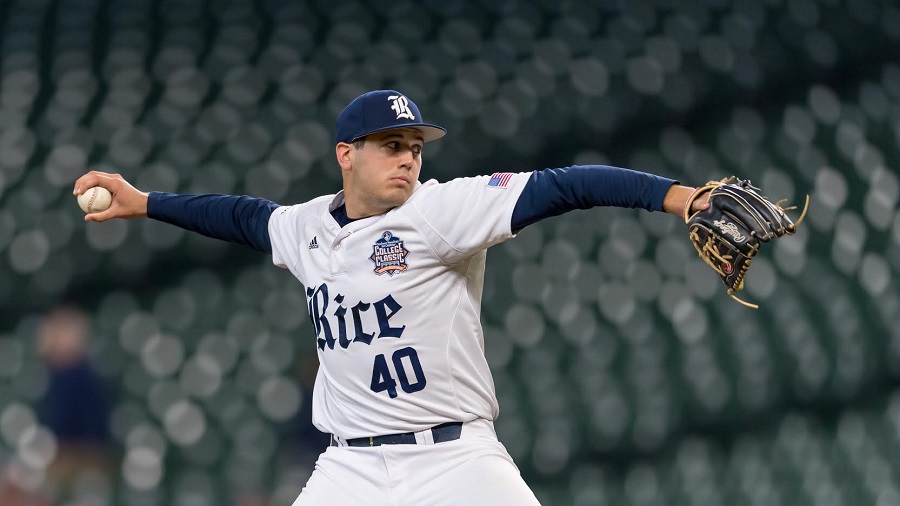 Selected right after fellow Conference USA competitor, and Cape Cod teammate Matt Wallner, Canterino joins the Twins organization with some familiarity on his side. One of the things most obvious about Canterino is his unique delivery, but whatever questions remain about it, the results seem to provide plenty of answers. Here’s some answers to the burning questions we had for the newest draftee. Twins Daily: As a Texas kid going to a baseball power like Rice, was playing for the Owls always one of the benchmarks or goals in your baseball career? Matt Canterino: Rice was always my first choice for college ever since my older brother, Daniel, looked at it while he was applying for college. I knew that Rice was a prestigious university and had a great pedigree in baseball also, so it felt like a perfect fit. I was so happy that Rice was my first offer for baseball, and I have had no regrets about the University. TD: Having dominated Conference USA for the last two seasons what would attribute your success too? Both your fastball and slider have been noted as strong pitches, but what about the way you attack hitters or prepare has set you up for success? MC: I believe that I know the game relatively well. I can keep up with what’s going on and understand the nuances of various parts of the game, such as pitch calling and pressure situations. My philosophy is that I make sure I put in all the preparation I need to succeed. That preparation has resulted in the quality stuff that I have, such as my slider and fastball. Now, it is just about having the confidence to use that stuff to my advantage in games. TD: You have faced fellow Twins draftee Matt Wallner plenty over your college career. What can you tell us about his presence in the box, his ability, and him as a competitor? MC: Matt Wallner was always somebody that stood out on our scouting report and was someone that we felt like we had to plan extra for. He and I are similar in the fact that we have both had relative success since our freshman year, so you can just see his confidence grow and grow after each year as well. We played with each other over the summer too and got to know each other as teammates, so I know he wants to win just as much as I do. TD: Pitching has become more than just a feel on the mound, or trial and error type of process. With Edgertronic cameras and a focus on things like spin rate to find analytical advantages, have you been able to incorporate any of the new technology into your preparation? MC: I have had limited interaction with the next-level technology that is being incorporated into baseball. I am, however, extremely excited in becoming more familiar with it. It has helped so many pitchers refine their stuff just from numbers on a screen. It’s a new approach to the game of baseball that can improve most anybody to some degree, if analyzed correctly. TD: You have a unique delivery and it no doubt creates a level of deception on the mound. Has there been any big leaguer you've emulated or modeled your game after over the course of your career? MC: I have had my unorthodox delivery since my junior year of high school, and it just was something that came about in order to keep my top-half and lower-half in sync. I did not start doing it in order to emulate someone in particular. The part of my game that emulate after professionals the most is how I attack hitters. I love getting ahead with all my pitches and putting hitters in uncomfortable counts. In that way I think I might be similar to someone like Kyle Hendricks or maybe Jon Lester. TD: A 3.99 GPA is no joke and doing it within a Mechanical Engineering field is only that much more impressive. How has your level of intelligence allowed you a competitive advantage on the diamond? Are there specific or unique ways in which you prepare to attack an opposing lineup? MC: While being a good baseball player and a good mechanical engineer are obviously very different tasks, I think both are similar a bit in terms of a lot of adjustments are needed in order to succeed. I think this is one of my strengths when I pitch. I know the scouting report well when I go out on the mound, so I have a game plan. Then, when I see something that doesn’t quite add up, I am able to change that game plan so that it improves and gives my team the best chance to win. Baseball is a game of failure for hitters, so my job as a pitcher is to try to exploit that by maintaining that advantage. TD: Being selected by the Minnesota Twins, have you been to the state before? Target Field? What do you know about the organization? MC: I have never been to Minnesota before, but I have heard nothing but great things about the Twin Cities and Target Field. I know that two of the past three Rice pitchers to pitch in the MLB have been with the Minnesota Twins in J.T. Chargois and Tyler Duffey. I want to be able to keep that legacy going and improve upon it.
-
Helium is the word generally used to describe players who rocket up draft boards as the Major League Baseball amateur draft draws near. No one had more of that then California native Keoni Cavaco. After being out of the spotlight for most of his junior season, it was a senior year of high school that skyrocketed him to the 13th overall pick by the Minnesota Twins.Cavaco joins Royce Lewis, Travis Harrison, Aaron Hicks, Chris Parmelee, Matt Garza, Trevor Plouffe, and Adam Johnson as first rounders selected from California by the Twins since the year 2000. He’s expected to play on the left side of the infield, and it’s the bat that immediately jumps off the page as one of his most exciting tools. Having been under the radar for quite some time, and now on center stage, it seems this would be a great time to learn a bit more about him. Twins Daily: Plenty of draft analysts have described you as a "helium" player rocketing up draft boards this spring. Tell us about your senior year and what it's been like to see your name vault into the first round. Keoni Cavaco: I didn’t think my name would’ve been called in the first round a year ago today, but all my hard work and dedication finally paid off. I knew there was going to be a chance after I finished my last summer of travel ball because teams started to pop up here and there. Then this season comes along and teams started to swarm in and my draft stock just continued to rise. TD: You were announced as a SS but also play a very solid third base. Is there a position on the left side you feel most comfortable? How would you describe your defensive profile? KC: I feel more comfortable at third base but shortstop is more fun to me. I only played there a few games but I felt comfortable, and I know I can play there at the next level if I put the work in. As defensive player, I feel like I have some things to improve on since I’ve been only playing infield for two years. I’ve been getting better and better every day but there is still room for improvement. TD: Obviously playing a corner infield spot the goal is to have the bat play. What can you tell us about your approach at the plate and your production over the course of your high school career? KC: My approach going into the box is to hit the ball hard, swing to do damage but also stay controlled and use all parts of the field. I like to hunt the fastball early and not get into deep counts so I have a better chance to get a better pitch to do damage. TD: Having committed to San Diego State but now looking at a professional future, what are you most looking forward to as your career gets started? What parts of your game do you want to develop most? KC: I’m looking forward to the grind of the minor leagues and the new journey I’m about to go on. I’m looking forward to getting to the show as fast as possible and help us get to the World Series and get a ring. TD: California has long been a hotbed for professional talent. Growing up, has there been a player or players that you've modeled your game after? KC: I model my game after Javier Baez. I love the way he plays the game and how much he loves to compete and his will to win. That’s the biggest thing for me is to have fun out there but always compete. TD: As a West Coast kid have you been to Minnesota before? What do you know about the Twins, Target Field, and the organization as a whole? KC: I know that it’s a good young team that has a lot of potential to win a title this year or in the next upcoming years. I know that Target Field is a beautiful stadium and that it gets really cold there. I’m excited to play in this organization and to be a huge factor for the team. Click here to view the article
- 7 replies
-
- 3
-
-
- keoni cavaco
- minnesota twins
- (and 1 more)
-
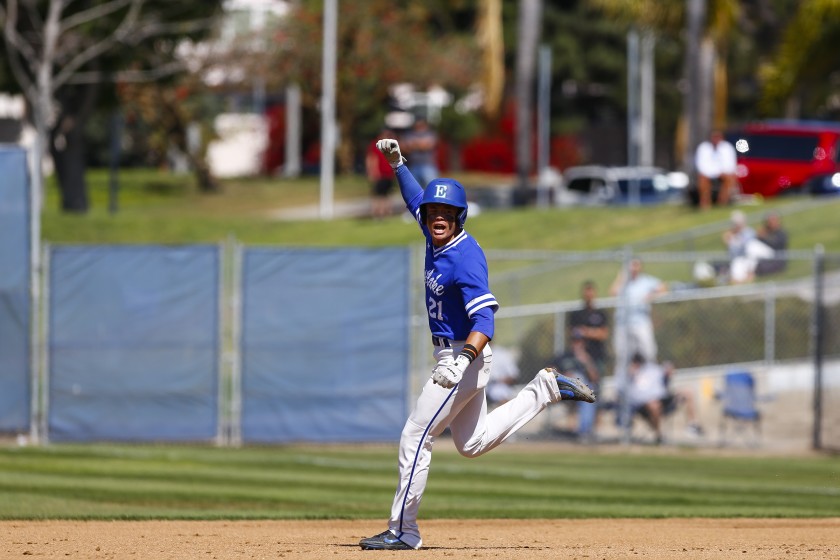 Cavaco joins Royce Lewis, Travis Harrison, Aaron Hicks, Chris Parmelee, Matt Garza, Trevor Plouffe, and Adam Johnson as first rounders selected from California by the Twins since the year 2000. He’s expected to play on the left side of the infield, and it’s the bat that immediately jumps off the page as one of his most exciting tools. Having been under the radar for quite some time, and now on center stage, it seems this would be a great time to learn a bit more about him. https://twitter.com/MSinclairKUSI/status/1135708847480250368 Twins Daily: Plenty of draft analysts have described you as a "helium" player rocketing up draft boards this spring. Tell us about your senior year and what it's been like to see your name vault into the first round. Keoni Cavaco: I didn’t think my name would’ve been called in the first round a year ago today, but all my hard work and dedication finally paid off. I knew there was going to be a chance after I finished my last summer of travel ball because teams started to pop up here and there. Then this season comes along and teams started to swarm in and my draft stock just continued to rise. TD: You were announced as a SS but also play a very solid third base. Is there a position on the left side you feel most comfortable? How would you describe your defensive profile? KC: I feel more comfortable at third base but shortstop is more fun to me. I only played there a few games but I felt comfortable, and I know I can play there at the next level if I put the work in. As defensive player, I feel like I have some things to improve on since I’ve been only playing infield for two years. I’ve been getting better and better every day but there is still room for improvement. TD: Obviously playing a corner infield spot the goal is to have the bat play. What can you tell us about your approach at the plate and your production over the course of your high school career? KC: My approach going into the box is to hit the ball hard, swing to do damage but also stay controlled and use all parts of the field. I like to hunt the fastball early and not get into deep counts so I have a better chance to get a better pitch to do damage. TD: Having committed to San Diego State but now looking at a professional future, what are you most looking forward to as your career gets started? What parts of your game do you want to develop most? KC: I’m looking forward to the grind of the minor leagues and the new journey I’m about to go on. I’m looking forward to getting to the show as fast as possible and help us get to the World Series and get a ring. TD: California has long been a hotbed for professional talent. Growing up, has there been a player or players that you've modeled your game after? KC: I model my game after Javier Baez. I love the way he plays the game and how much he loves to compete and his will to win. That’s the biggest thing for me is to have fun out there but always compete. TD: As a West Coast kid have you been to Minnesota before? What do you know about the Twins, Target Field, and the organization as a whole? KC: I know that it’s a good young team that has a lot of potential to win a title this year or in the next upcoming years. I know that Target Field is a beautiful stadium and that it gets really cold there. I’m excited to play in this organization and to be a huge factor for the team.
-
The Minnesota Twins picked 13th overall in the 2019 Major League Baseball amateur draft. After going the high school route with that selection, they turned to a familiar name with the 39th overall pick. After being named the 2016 East Metro Player of the Year Matt Wallner was taken by Minnesota in the 32nd round. Opting to go to school at Southern Miss, things came full circle earlier this week.Wallner is a Forest Lake, MN native and lit up the Metro prep scene prior to putting on a big blast barrage in Conference USA. Now headed to the organization he grew up watching, it’s time to learn a bit more about the Twins draft pick. Twins Daily: Being a local product and having been drafted by the Twins previously, what's it like to have this process come full circle and start a pro career with the organization you likely grew up watching? Matt Wallner: It’s a dream come true, watching the Twins in some of their “glory days” with Gardy, Santana, Hunter, Mauer and Morneau was a huge part of my childhood. I touched this dream a little bit with the opportunity in high school in the 32nd round but knew I wasn’t going to sign. However, this time is the real deal, a dream come true and can’t wait to get started with the Twins Organization. TD: After being drafted in 2016 you decided to go to school. With three really good years at Southern Miss what do you feel like most developed about your game? MW: I feel like I just matured as a person, I learned what it takes to compete against the best players in the country. Southern Miss has provided me with some of the greatest coaches and players in the country to learn from. They are the true reason for the success I am fortunate enough to have and have this opportunity with the Twins today. TD: Leaving school as one of Conference USA's most accomplished hitters what can you tell us about your approach at the plate? Obviously, you possess plenty of power, but what else is there? MW: I’m trying to get a pitch up that I can drive, when I’m at my best I feel as if I can handle almost any pitch. But at the same time, I want to be patient with the approach and get the best pitch to drive during the at bat. I’m always looking to drive the ball to the center of the field and have my hands react pull or opposite field. This certainly helps me stay on pitches and tap into my power. TD: You have experience facing fellow Twins draftee Matt Canterino. What can you say about him on the mound and as a competitor? MW: I was fortunate enough to play with Canterino briefly at Team USA and the rest of the summer with the Falmouth Commodores of the Cape Cod League. So, I know him well, but I certainly have faced him far too many times for my liking. He is the guy on the opposing team that you always circle, and everyone is paying attention to. He is a fierce competitor and me and him have had some good battles over the years - we’ll leave it at that! TD: Is your power production something that you focus on or more a result of the way you attack the baseball? Given the analytical age we're in and the ability to fine tune your results, have you focused on launch angles and utilized any of the technology available? MW: I really have not focused on that - I’m just trying to drive the ball and if I miss up - I miss up and hopefully the ball will carry out of the park. TD: You have pitched previously and pushed a fastball into the upper 90's. Has there been any thought as to whether you'd be getting on a pro mound as well? MW: I do not believe that will be in my repertoire to at least start my pro career. I have always loved to hit and focusing solely on that is my hope. TD: Thinking back over the course of your entire career has there been any single player you've emulated, looked up to, or modeled your game after? MW: I haven’t necessarily modeled my game after him but someone I have always seen comparisons in is Justin Morneau. He is a big power hitting lefty like myself and I hope to follow somewhat in his footsteps moving forward. Click here to view the article
-
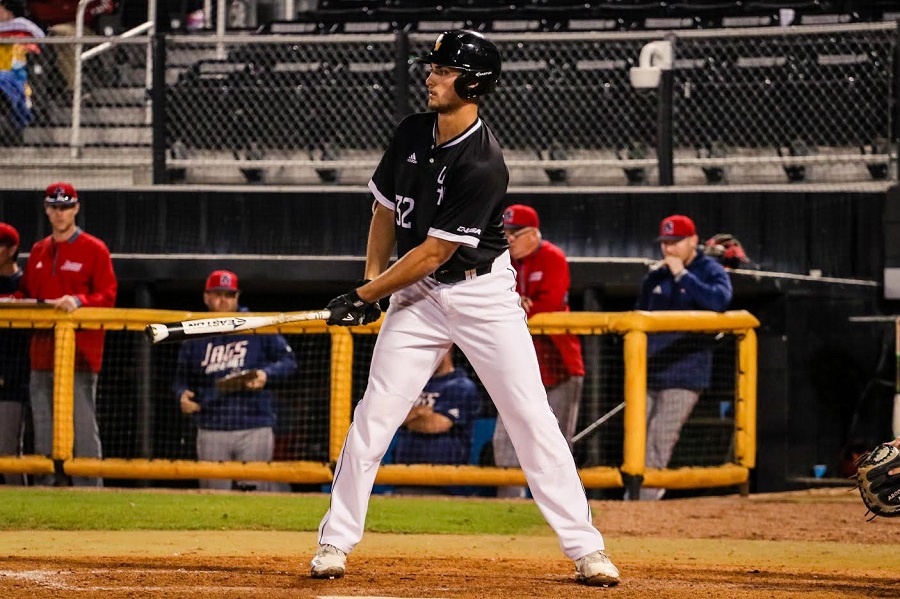 Wallner is a Forest Lake, MN native and lit up the Metro prep scene prior to putting on a big blast barrage in Conference USA. Now headed to the organization he grew up watching, it’s time to learn a bit more about the Twins draft pick. Twins Daily: Being a local product and having been drafted by the Twins previously, what's it like to have this process come full circle and start a pro career with the organization you likely grew up watching? Matt Wallner: It’s a dream come true, watching the Twins in some of their “glory days” with Gardy, Santana, Hunter, Mauer and Morneau was a huge part of my childhood. I touched this dream a little bit with the opportunity in high school in the 32nd round but knew I wasn’t going to sign. However, this time is the real deal, a dream come true and can’t wait to get started with the Twins Organization. TD: After being drafted in 2016 you decided to go to school. With three really good years at Southern Miss what do you feel like most developed about your game? MW: I feel like I just matured as a person, I learned what it takes to compete against the best players in the country. Southern Miss has provided me with some of the greatest coaches and players in the country to learn from. They are the true reason for the success I am fortunate enough to have and have this opportunity with the Twins today. TD: Leaving school as one of Conference USA's most accomplished hitters what can you tell us about your approach at the plate? Obviously, you possess plenty of power, but what else is there? MW: I’m trying to get a pitch up that I can drive, when I’m at my best I feel as if I can handle almost any pitch. But at the same time, I want to be patient with the approach and get the best pitch to drive during the at bat. I’m always looking to drive the ball to the center of the field and have my hands react pull or opposite field. This certainly helps me stay on pitches and tap into my power. TD: You have experience facing fellow Twins draftee Matt Canterino. What can you say about him on the mound and as a competitor? MW: I was fortunate enough to play with Canterino briefly at Team USA and the rest of the summer with the Falmouth Commodores of the Cape Cod League. So, I know him well, but I certainly have faced him far too many times for my liking. He is the guy on the opposing team that you always circle, and everyone is paying attention to. He is a fierce competitor and me and him have had some good battles over the years - we’ll leave it at that! TD: Is your power production something that you focus on or more a result of the way you attack the baseball? Given the analytical age we're in and the ability to fine tune your results, have you focused on launch angles and utilized any of the technology available? MW: I really have not focused on that - I’m just trying to drive the ball and if I miss up - I miss up and hopefully the ball will carry out of the park. TD: You have pitched previously and pushed a fastball into the upper 90's. Has there been any thought as to whether you'd be getting on a pro mound as well? MW: I do not believe that will be in my repertoire to at least start my pro career. I have always loved to hit and focusing solely on that is my hope. TD: Thinking back over the course of your entire career has there been any single player you've emulated, looked up to, or modeled your game after? MW: I haven’t necessarily modeled my game after him but someone I have always seen comparisons in is Justin Morneau. He is a big power hitting lefty like myself and I hope to follow somewhat in his footsteps moving forward.
-
Prior to the 2018 Major League Baseball season the Minnesota Twins acquired Jake Odorizzi in exchange for Jermaine Palacios. At the time, Palacios was a second or third tier prospect that had some internal fanfare. Swapping him for a big-league starter was a no-brainer though. Jake’s first season with the Twins was mostly mediocre, but there was reason to believe he was better than the numbers. Across 32 starts a season ago Odorizzi owned a 4.49 ERA, 8.9 K/9, and a 3.8 BB/9. He dropped his home run rate significantly, and while the WHIP was a career worst, a 4.20 FIP suggested a bit more was in the tank. Fast forward to where we are today and Odorizzi owns a league best 1.96 ERA, 9.8 K/9, and 2.9 BB/9. His 226 ERA+ leads the league and he has all the makings of a Cy Young candidate. In terms of increased production, nothing has substantially jumped off the page. The step forward has been the culmination of tweaks made across the board. Jake now owns a strikeout rate of 28%, a 6% increase over his 2018 mark. The walks are down while both the homers and hits have tailed off as well. If there’s something substantial to note, it’s the incredible 83.6% strand rate. Batted ball profiles suggest that hitters are producing the same type of contact against the former Rays starter. Hard hit rates are static over the past two years, and trajectories are also all in line. The difference in induced contact likely comes in the form of velocity and offering. Odorizzi has added 2 mph to his average fastball, and the 11% curveball usage is over double the rate that it’s been since any point following 2013. You’d have been hard pressed to see comments with a positive tone regarding many of Odorizzi’s starts a season ago. Despite the mediocre results, and a bit better in terms of peripherals, there wasn’t much excitement about the possibility of a 2019 rebound. Today we’re in a place that Odorizzi is often looked upon as a certainty when toeing the rubber, and the results have followed. It’s hard not to be happy about the reality that the changes haven’t been dramatic. If there’s an extension candidate in the Twins rotation, then Odorizzi is it. Still just 29 years old, he should have more than a few years of high-level production still ahead of him. Knowing Minnesota has a few rotation holes to fill for the year ahead, Odorizzi slotting in as one of the guarantees would be a welcomed presence. Unfortunately, by waiting through this season Minnesota will have to deal with an inflated price tag. At the end of the day though, the Twins aren’t hurting for cash flow and wrapping up a starter this good is something they should jump at. Derek Falvey and Wes Johnson have helped to overhaul the Twins pitching process, and the infrastructure set up throughout the system makes it a sustainable solution for years to come. For more from Off The Baggy, click here. Follow @tlschwerz
-
It’s only May but the Minnesota Twins have an incredibly important series to kick off tonight. The Tampa Bay Rays welcome Rocco Baldelli’s club to the Trop for a four-game set, and the latest roster moves suggest that the away team is viewing this one as a good measuring stick. For a team with the best record in baseball, it’s weird to think they’re still proving it, but there’s plenty more to watch than just wins and losses here.Devin Smeltzer got the call for his big-league debut against the Milwaukee Brewers on Wednesday night at Target Field. His promotion was in part because Michael Pineda needed an IL stint, but also because the front office decided to juggle the rotation a bit. Without changing up the order, each starter was bumped a day allowing Minnesota’s top four arms to square off with one of the best teams in the American League. The Rays currently sit at 33-19 and have largely been led by unexpected performances, and pitching that has been top notch. Reigning AL Cy Young winner Blake Snell has been great again, and even in losing Tyler Glasnow after an amazing start, they’ve gotten strong contributions from Charlie Morton, Ryne Stank, and Yonny Chirinos. The complete pitching staff boasts baseball’s best fWAR at 9.3. The Yankees come in second at 8.6 and Minnesota lands in the top four at 8.1. Tampa’s 2.93 ERA is the lowest in baseball and they strand runners at a big league-leading 79.1% rate. No matter what avenue you explore, this Rays pitching staff is getting the job done. Maybe most integral against the powerful Twins is that 11.3% HR/FB rate, the second lowest total in baseball. Tampa hurlers are the only team in the majors allowing less than one HR/9 (0.88) and they’ll need to flex that metric against Minnesota’s bats. Zeroing in solely on the bullpen, Tampa owns the third lowest ERA, second lowest HR/9, and a HR/FB rate only trumped by the Athletics. To put it simply, getting past the starter isn’t the only challenge here, and sending the ball over the fence is beyond a tough ask. Then there’s the likely place balls will land when the Twins hot bats come into St. Petersburg, the outfield. Tampa’s outfield is second in baseball with 19 DRS, one spot ahead of the Twins and their 17 DRS. Kevin Kiermaier is maybe the only player in the sport that can hold a candle to Byron Buxton, and he’s been flanked most often by Avisail Garcia and Tommy Pham, who have both put up strong metrics of their own. So, what does this all mean? Well, the Twins are going to need production from their guys on the mound, and they’ll need top notch defensive efforts facing the fifth most potent offense (in terms of fWAR) across baseball. On top of that though, they’ve blasted their way through the competition and that’s where the Rays keep opponents at bay. Baldelli’s crew hasn’t been free swinging, and they aren’t up there with many empty at-bats, but will the big blasts come and how often will we see them? You can’t deny that the Twins are in the driver’s seat for the AL Central Division title. They aren’t going to look ahead to the postseason at this point, and the results of this Tampa series likely will have no bearing on October baseball. For an early season test of the working blueprint though, this is the narrative to keep an eye on. Click here to view the article
-
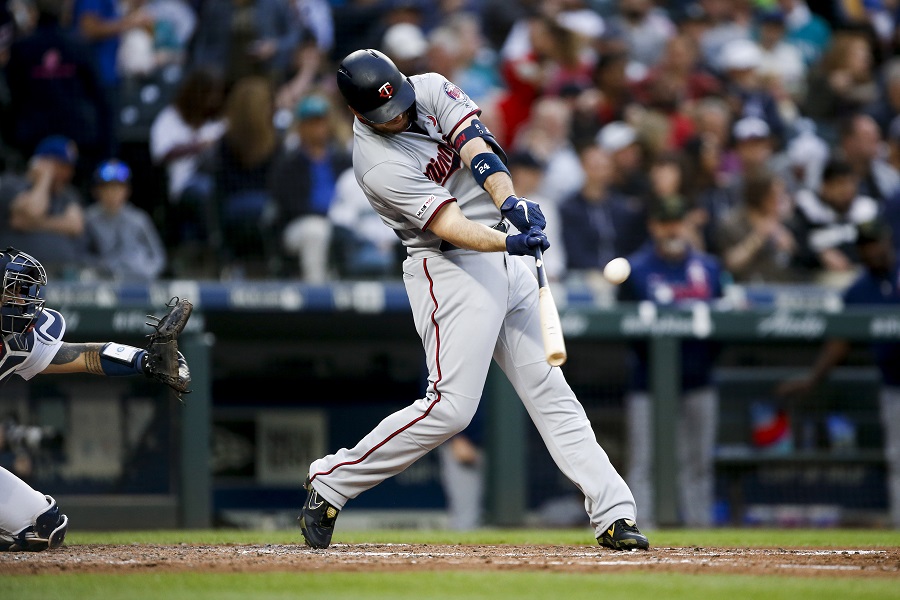 Devin Smeltzer got the call for his big-league debut against the Milwaukee Brewers on Wednesday night at Target Field. His promotion was in part because Michael Pineda needed an IL stint, but also because the front office decided to juggle the rotation a bit. Without changing up the order, each starter was bumped a day allowing Minnesota’s top four arms to square off with one of the best teams in the American League. The Rays currently sit at 33-19 and have largely been led by unexpected performances, and pitching that has been top notch. Reigning AL Cy Young winner Blake Snell has been great again, and even in losing Tyler Glasnow after an amazing start, they’ve gotten strong contributions from Charlie Morton, Ryne Stank, and Yonny Chirinos. The complete pitching staff boasts baseball’s best fWAR at 9.3. The Yankees come in second at 8.6 and Minnesota lands in the top four at 8.1. Tampa’s 2.93 ERA is the lowest in baseball and they strand runners at a big league-leading 79.1% rate. No matter what avenue you explore, this Rays pitching staff is getting the job done. Maybe most integral against the powerful Twins is that 11.3% HR/FB rate, the second lowest total in baseball. Tampa hurlers are the only team in the majors allowing less than one HR/9 (0.88) and they’ll need to flex that metric against Minnesota’s bats. Zeroing in solely on the bullpen, Tampa owns the third lowest ERA, second lowest HR/9, and a HR/FB rate only trumped by the Athletics. To put it simply, getting past the starter isn’t the only challenge here, and sending the ball over the fence is beyond a tough ask. Then there’s the likely place balls will land when the Twins hot bats come into St. Petersburg, the outfield. Tampa’s outfield is second in baseball with 19 DRS, one spot ahead of the Twins and their 17 DRS. Kevin Kiermaier is maybe the only player in the sport that can hold a candle to Byron Buxton, and he’s been flanked most often by Avisail Garcia and Tommy Pham, who have both put up strong metrics of their own. So, what does this all mean? Well, the Twins are going to need production from their guys on the mound, and they’ll need top notch defensive efforts facing the fifth most potent offense (in terms of fWAR) across baseball. On top of that though, they’ve blasted their way through the competition and that’s where the Rays keep opponents at bay. Baldelli’s crew hasn’t been free swinging, and they aren’t up there with many empty at-bats, but will the big blasts come and how often will we see them? You can’t deny that the Twins are in the driver’s seat for the AL Central Division title. They aren’t going to look ahead to the postseason at this point, and the results of this Tampa series likely will have no bearing on October baseball. For an early season test of the working blueprint though, this is the narrative to keep an eye on.
