



Ted Schwerzler
-
Posts
5,149 -
Joined
-
Last visited
Content Type
Profiles
News
Minnesota Twins Videos
2026 Minnesota Twins Top Prospects Ranking
2022 Minnesota Twins Draft Picks
Minnesota Twins Free Agent & Trade Rumors, Notes, & Tidbits
Guides & Resources
2023 Minnesota Twins Draft Picks
The Minnesota Twins Players Project
2024 Minnesota Twins Draft Picks
2025 Minnesota Twins Draft Pick Tracker
2026 Minnesota Twins Draft Tracker: Picks & Bonuses
Forums
Blogs
Events
Store
Downloads
Gallery
Everything posted by Ted Schwerzler
-
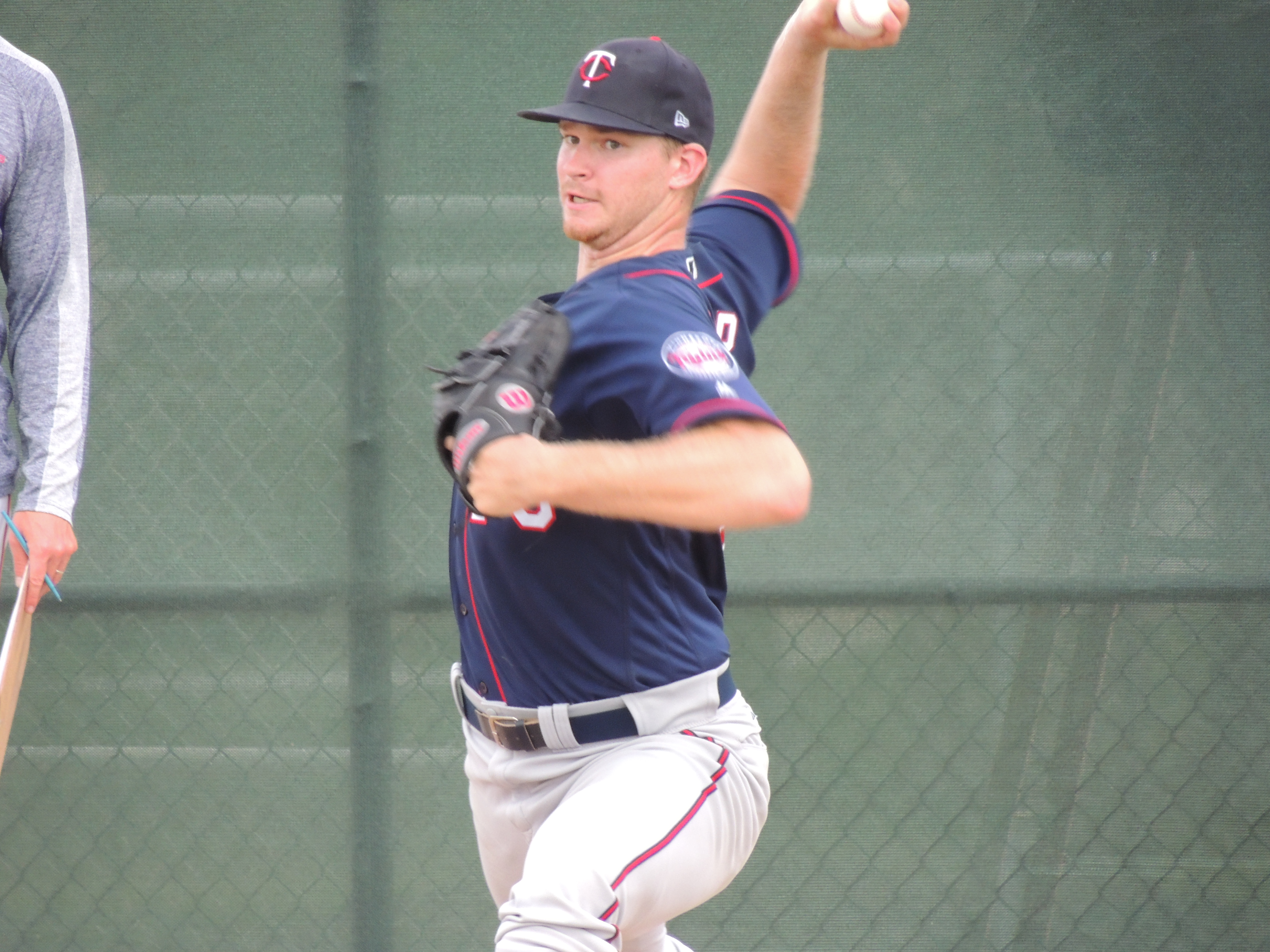 TRANSACTIONS Rochester Cibney Bello joins coaching staff as assistant pitching coach C Willians Astudillo rehab assignment transferred from Pensacola RHP Zack Littell optioned by Minnesota LHP Jeremy Bleich placed on IL with hamstring strain Fort Myers OF Gilberto Celestino promoted from Cedar Rapids INF Michael Davis placed on IL with meniscus tear Cedar Rapids OF Matt Wallner promoted from Elizabethton RED WINGS REPORT Buffalo 7, Rochester 4 Box Score Charlie Barnes had the starting duties for Rochester tonight. He recorded one out in the fifth inning and gave up four runs (three earned) on seven hits while walking two and doubling that amount in strikeouts. Down 4-0 by the middle of the fifth inning, it would be on the home team to mount a comeback. Wilin Rosario continued his hot hitting with his 22nd double to open up the scoring in the eighth. Zander Wiel then roped his 34th double to drive in two, pulled the Red Wings within one. Unfortunately three Bison batters scored in the top of the ninth, and a Rosario RBI single in the bottom half was all Rochester could muster. Likely eyeing a September return to the Twins, Willians Astudillo went 1-for-5 with an RBI in this one. Brusdar Graterol worked two innings of relief. He struck out three, walked one, and gave up a single. It’s a double dose of Stewart on the mound in the series finale tomorrow night. https://twitter.com/RocRedWings/status/1164358776369156101 BLUE WAHOOS BITES Pensacola 8, Mississippi 2 Box Score Bailey Ober is having one of the best seasons on the Twins farm, and you still may not know it. He made his second Double-A start tonight and turned in seven-shutout innings of three-hit ball while fanning 12 and walking none. He’s now 2-0 with Pensacola and owns a 0.64 ERA. With their starter on cruise control, the Wahoos lineup went to work. A three-run third featured RBIs from the prospect trio of Alex Kirilloff, Royce Lewis, and Trevor Larnach. Mark Contreras and Jimmy Kerrigan went back-to-back in the 4th before Larnach drove in two more. The fourth inning came to a close and Pensacola was already on top 7-0. The Wahoos added an insurance tally in the eighth that was wiped out by two from the Braves in the bottom half. That’s where this one finished though. Early offense and dominant starting pitching was the theme. MIRACLE MATTERS Fort Myers 7, Charlotte 5 Box Score Tyler Watson wasn’t exactly economical tonight for the Miracle, but he was good in what he gave them. Needing 84 pitches to make it through four innings turned it into a short outing. He left with a no-hitter though, and had struck out six while walking three. The Miracle bats came ready to work tonight as well. Pushing across seven runs on eleven hits, they scored in four straight innings from the fourth through the seventh. Brian Schales notched an RBI single to grab the game's first lead, and a Jacob Pearson double knotted it at two in the fifth. Ernie De La Trinidad tallied an RBI single in the sixth, and then Schales grabbed his first double to drive in two in the seventh. De La Trinidad added another on a sac fly before a Yeltsin Encarnacion single pushed the margin to five. Facing a very good Stone Crabs team the Miracle would need to hang on until the end. Three runs came across between the eighth and ninth, but the opposing rally ended two runs short. Phenom Wander Franco got his in a 2-for-3 night, but Schales and newly promoted Gilberto Celestino matched the effort. Celestino led off in his first Florida State game, and he turned in a 3-for-5 effort with two runs and a double. KERNELS NUGGETS Clinton 9, Cedar Rapids 0 Box Score Luis Rijo has been nothing short of lights out all season, but Clinton figured him out in this one. He lasted just one out into the sixth inning and had given up five runs (all earned) on seven hits. The lone bright spot was a 7/0 K/BB ratio on the evening. Cedar Rapids got behind by three in the first, and then allowed a six run inning in the sixth to seal the deal. The Kernels only put three hits on the board tonight, so not much of a comeback could’ve been expected. Recently promoted 2019 draft pick Matt Wallner picked up a hit in his second at-bat, and drew the start in right, batting sixth. E-TWINS E-NOTES Johnson City 3, Elizabethton 2 Box Score After Brent Headrick opened with an inning of scoreless work, Ryan Shreve got the next 4 2/3 innings. He gave up just a single run on five hits while walking two and striking out three. Elizabethton held Johnson City to just three runs, and outhit them seven to six, but the rally run never came. Kidany Salva launched his third homer of the year to open the scoring in the third, and Seth Gray knocked another in on a sac fly. After giving back a run in the sixth, the Twins watched the lead evaporate on a two-run Cardinals eighth. Only four E-Twins batters would come to the plate in the ninth, and Ruben Santana couldn’t advance beyond his two-out single. GCL TWINS TAKES GCL Orioles 2, GCL Twins 0 Box Score Still working his way back on a rehab assignment, Stephen Gonsalves began this one on the mound. He turned in two strong innings allowing a single hit, fanning four, and walking none. He’s missed a significant amount of time this season, but is looking closer and closer to making a return. The Twins squad tallied just four hits, and Alec Craig was responsible for two of them out of the leadoff spot. Keoni Cavaco was back in the lineup after dealing with a quad injury, however he was lifted after an 0-3 start. TWINS DAILY MINOR LEAGUE PLAYERS OF THE DAY Pitcher of the Day – Bailey Ober (Pensacola) 7.0 IP, 3 H, 0 R, 0 ER, 0 BB, 12 K Hitter of the Day – Trevor Larnach (Pensacola) - 3-5, 3 RBI PROSPECT SUMMARY Here’s a look at how the Twins Daily Midseason Top 20 Twins Prospects performed: #1 - Royce Lewis (Pensacola) - 2-4, 2B, R, RBI, BB, 2 K #2 - Alex Kirilloff (Pensacola) - 2-4, 2 R, RBI, BB #3 - Brusdar Graterol (Rochester) - 2.0 IP, 1 H, 0 R, 0 ER, 1 BB, 3 K #4 - Trevor Larnach (Pensacola) - 3-5, 3 RBI #5 - Wander Javier (Cedar Rapids) - 0-4, 2 K #6 - Jordan Balazovic (Fort Myers) - Did not pitch #7 - Keoni Cavaco (GCL) - 0-3, K #8 - Brent Rooker (Rochester) - Injured List (groin) #9 - Jhoan Duran (Pensacola) - Did not pitch #10 - Blayne Enlow (Fort Myers) - Injured List (hamstring) #11 - Lewis Thorpe (Minnesota) - Did not pitch #12 - Nick Gordon (Rochester) - Injured List (leg contusion) #13 - Ryan Jeffers (Pensacola) - 0-5, K #14 - Luis Arraez (Minnesota) - 0-3, K #15 - Matt Wallner (Cedar Rapids) - 1-3 #16 - Ben Rortvedt (Pensacola) - Did not play #17 - Akil Baddoo (Fort Myers) - Injured List (Tommy John surgery) #18 - Jorge Alcala (Rochester) - Did not pitch #19 - Misael Urbina (DSL) - 2-3, 2B, R, RBI, BB #20 - Travis Blankenhorn (Pensacola) - Did not play THURSDAY’S PROBABLE STARTERS Buffalo @ Rochester (6:05PM CST) - RHP Kohl Stewart (7-5, 5.56 ERA) Pensacola @ Mississippi (6:35PM CST) - TBD Charlotte @ Fort Myers (6:00PM CST) - RHP Jordan Balazovic (6-2, 2.98 ERA) Cedar Rapids @ Clinton (6:30PM CST) - RHP Matt Canterino (1-0, 0.90 ERA) Elizabethton @ Johnson City (5:30PM CST) - TBD GCL Twins @ GCL Orioles (11:00AM CST) - TBD Please feel free to ask questions and discuss Wednesday’s games!
-
We’ve got less than six full weeks left in the 2019 Major League Baseball regular season. The Minnesota Twins are looking for their first AL Central Division title since 2010, and despite having an 11.5 game lead midway through the year, they’re facing an intense race to the finish. Have no fear though, this club is going to win the division, and there’re more than a few key reasons why.1. It's Building Not Chasing Let’s start with the basics. Minnesota isn’t coming back from anything. Sure, the lead was once 11.5 games, but the current lead doesn’t have “games back” tied to it. Rocco Baldelli’s club owns a two-game (three now, after Tuesday's action) lead over the Cleveland Indians, and that cushion still provides significant value. Minnesota and Cleveland meet six more times in September, and those matchups will obviously have the greatest direct impact on the standings. 2. Sota Pop is Alive and Well The Twins still own one of the best offenses in baseball, and the direct competition isn’t particularly close. It was great that Carlos Santana launched a grand slam for the Indians, and Puig has hit well since coming over from Cincinnati, but the Twins have a lineup that just keeps coming. Still fourth in the majors in terms of fWAR, and pacing the field with the long ball, Minnesota’s lineup is relentless, 1-through-9. Miguel Sano has been arguably the clubs best hitter for a few weeks, Nelson Cruz is a man possessed, and hot streaks by players like Marwin Gonzalez and Jake Cave continue to supplement things nicely. 3. The Bump is Bruised Not Broken Pitching isn’t the black hole it’s viewed as. Jose Berrios is certainly not right, and Martin Perez hasn’t been the same guy he was early in the year. Looking across the sport as a whole however, there’re warts on every team. Minnesota is still a top five staff in baseball (one off the Indians) and the 4.15 team ERA checks in eighth. The bullpen has gotten better with additions of Sam Dyson and Sergio Romo, while the emergence of Zack Littell, Lewis Thorpe, and Devin Smeltzer has been invaluable. 4. Next Man Up Still Works Reinforcements are coming from within. Roster expansion comes in 12 days and the Twins have a handful of intriguing options. This is the last year that the active roster expands to 40 and the big-league club could take full advantage of it. The 40-man roster has just one opening, likely for Brusdar Graterol, but there’re a few current 40- man options that make sense. Nick Gordon could be sprinkled in as he’ll compete for a job in 2020, and Willians Astudillo will return. LaMonte Wade could get the run he’s missed out on, and the whole taxi squad of arms could be rewarded for their service. None of these guys should be expected to shoulder a huge load, but they can provide rest for starters down the stretch and play in some of the most meaningful games of their careers. 5. Rainbows and Butterflies on the Calendar The schedule is cake and Minnesota gobbles that up. The rest of the way Minnesota’s opponents have a combined .457 winning percentage. Houston’s is the next closest at .476 and the Indians are third at .481. Baldelli has seen his squad do a good job against tough competition this season, but no one has played better baseball against bad opponents than the Twins. At 50-17 against sub-.500 teams the team has ripped off wins nearly 75% of the time. The next 12 games all come against the White Sox and the Tigers, while the final 13 come against the three worst teams in the division. You can’t dictate who you play, but Minnesota is set up nicely to be the favorite much of the time they take the field the rest of the way. 6. Veteran Presence Carries Weight Despite a core of homegrown talent Minnesota has the veteran presence needed to keep the clubhouse focused. Nelson Cruz and Marwin Gonzalez have obviously had an impact on their teammates all year. The two of them combined have played over 70 postseason games with three World Series appearances and a ring. They know what it takes to win on the biggest stage, and they aren’t just here for motivational support. Minnesota signed both players to be contributors and they have certainly led by example. These two will be integral in finishing the job during the final month and using that momentum to make a mark in October. There’s no denying that the torrid early-season pace has slowed, and the post-All Star break slate was tough. Minnesota persevered though and while their lead shrunk, they’ve built it back up. Expecting the gap to grow and maybe push five or six games by the end of the month is a pretty fair bet. The AL Central remains up for grabs, but there’s plenty of reason to believe the Twins have the pennant well within their grasp. Click here to view the article
- 8 replies
-
- 3
-

-
- minnesota twins
- nelson cruz
- (and 2 more)
-
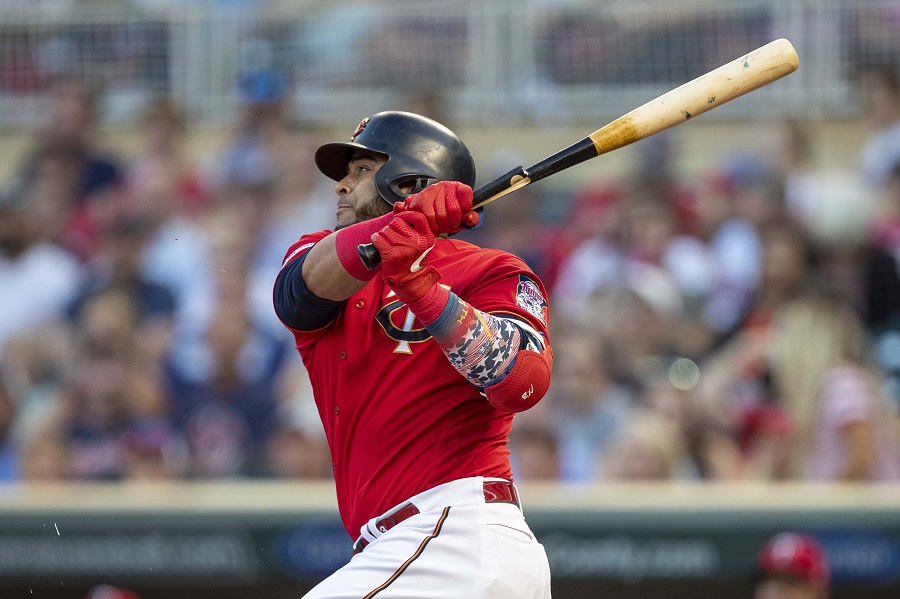 1. It's Building Not Chasing Let’s start with the basics. Minnesota isn’t coming back from anything. Sure, the lead was once 11.5 games, but the current lead doesn’t have “games back” tied to it. Rocco Baldelli’s club owns a two-game (three now, after Tuesday's action) lead over the Cleveland Indians, and that cushion still provides significant value. Minnesota and Cleveland meet six more times in September, and those matchups will obviously have the greatest direct impact on the standings. 2. Sota Pop is Alive and Well The Twins still own one of the best offenses in baseball, and the direct competition isn’t particularly close. It was great that Carlos Santana launched a grand slam for the Indians, and Puig has hit well since coming over from Cincinnati, but the Twins have a lineup that just keeps coming. Still fourth in the majors in terms of fWAR, and pacing the field with the long ball, Minnesota’s lineup is relentless, 1-through-9. Miguel Sano has been arguably the clubs best hitter for a few weeks, Nelson Cruz is a man possessed, and hot streaks by players like Marwin Gonzalez and Jake Cave continue to supplement things nicely. 3. The Bump is Bruised Not Broken Pitching isn’t the black hole it’s viewed as. Jose Berrios is certainly not right, and Martin Perez hasn’t been the same guy he was early in the year. Looking across the sport as a whole however, there’re warts on every team. Minnesota is still a top five staff in baseball (one off the Indians) and the 4.15 team ERA checks in eighth. The bullpen has gotten better with additions of Sam Dyson and Sergio Romo, while the emergence of Zack Littell, Lewis Thorpe, and Devin Smeltzer has been invaluable. 4. Next Man Up Still Works Reinforcements are coming from within. Roster expansion comes in 12 days and the Twins have a handful of intriguing options. This is the last year that the active roster expands to 40 and the big-league club could take full advantage of it. The 40-man roster has just one opening, likely for Brusdar Graterol, but there’re a few current 40- man options that make sense. Nick Gordon could be sprinkled in as he’ll compete for a job in 2020, and Willians Astudillo will return. LaMonte Wade could get the run he’s missed out on, and the whole taxi squad of arms could be rewarded for their service. None of these guys should be expected to shoulder a huge load, but they can provide rest for starters down the stretch and play in some of the most meaningful games of their careers. 5. Rainbows and Butterflies on the Calendar The schedule is cake and Minnesota gobbles that up. The rest of the way Minnesota’s opponents have a combined .457 winning percentage. Houston’s is the next closest at .476 and the Indians are third at .481. Baldelli has seen his squad do a good job against tough competition this season, but no one has played better baseball against bad opponents than the Twins. At 50-17 against sub-.500 teams the team has ripped off wins nearly 75% of the time. The next 12 games all come against the White Sox and the Tigers, while the final 13 come against the three worst teams in the division. You can’t dictate who you play, but Minnesota is set up nicely to be the favorite much of the time they take the field the rest of the way. 6. Veteran Presence Carries Weight Despite a core of homegrown talent Minnesota has the veteran presence needed to keep the clubhouse focused. Nelson Cruz and Marwin Gonzalez have obviously had an impact on their teammates all year. The two of them combined have played over 70 postseason games with three World Series appearances and a ring. They know what it takes to win on the biggest stage, and they aren’t just here for motivational support. Minnesota signed both players to be contributors and they have certainly led by example. These two will be integral in finishing the job during the final month and using that momentum to make a mark in October. There’s no denying that the torrid early-season pace has slowed, and the post-All Star break slate was tough. Minnesota persevered though and while their lead shrunk, they’ve built it back up. Expecting the gap to grow and maybe push five or six games by the end of the month is a pretty fair bet. The AL Central remains up for grabs, but there’s plenty of reason to believe the Twins have the pennant well within their grasp.
-
As analytics have crept into the game of baseball and taken a foothold as the chief form of evaluation, players from all different eras rail against the game in its current state. The game has definitely changed to cater towards the exceptional athletes that play it today, and the sport has taken notice as well. Unwritten rules have forever (and will always) be part of baseball, but there’s a certain aspect still waiting to be phased out. The idea that baseball polices itself has long been one that has held weight. As the game has adapted to use slogans like “Let the kids play” and adopted rule changes at bases and the plate, it’s clear there’s an emphasis on keeping these elite athletes on the field of play. With that in mind, it’s beyond time to put an end to the retaliatory pitch. In last night’s Twins and Rangers game, outfielder Jake Cave swung on a 3-0 pitch and lined a single into the outfield. It was a 13-6 game and in the top of the 9th inning. Cave immediately apologized to pitcher Shawn Kelley upon reaching first base, and he appeared to have lost track of the count. Kelley overlooked the acknowledgement and after going 3-0 to the Max Kepler, plunked him on the arm. Discussion from the booth, from Roy Smalley and Dick Bremer, immediately turned to that act as retaliation for Cave’s transgression. In a game that Minnesota was blowing out Texas, he had the audacity to swing his bat. Kelley couldn’t find the zone for a second straight batter, and then quit competing to hurl a ball into the arm of the Twins centerfielder. A sport that now has rules in place to protect its players, watched as a pitcher hurled a pitch into a batter, simply because he was upset. I have no problem with avoidance of the mound, looking presentable on the field, carrying yourself with a level of self-respect, or any number of lesser unwritten rules. I do have an issue with the idea that a pitcher gets to throw a projectile at a batter any time they feel scorned or upset. While wearing a pitch isn’t the end of the world, taking a 90-mph baseball to any part of your body doesn’t feel good, and can certainly open the door to a more substantial injury. There’s a level of respect shown to an opponent taking one base at a time or giving away pitches in a blowout game. That’s not a necessity though and is something the winning team does to show mercy. Expecting that to be the practice, and then reacting negatively when it doesn’t take place is lunacy. Minnesota wouldn’t have been afforded the good graces of the Rangers simply striking out should they have mounted a 9th inning comeback. Deciding when the game no longer is worth playing in the middle of it is not for any one person to opine. On top of that, this instance stemmed from a guy who clearly stated his intentions and felt bad for what he considered a misstep. At the end of the day it isn’t that Jake Cave got his teammate Max Kepler hit. That’s what happened, but it was the idiocy of Rangers pitcher Shawn Kelley that decided an attempt to injure an opponent was fair response to him failing at his job. The easiest way to avoid having your feelings hurt in defeat is to steer clear of situations where you cause self-embarrassment. Last night the Rangers were an abomination, and then they doubled down on that fact in how they carried out the 9th inning. Hopefully the Twins find no need to keep the beanball war going tonight, but I certainly hope every dinger that leaves the park ends with a bat flip landing mere feet from the mound and the pitcher that offered it up. For more from Off The Baggy, click here. Follow @tlschwerz
- 3 comments
-
- 6
-
-
- minnesota twins
- jake cave
- (and 3 more)
-
In 2019 you can define the Minnesota Twins efforts as a tale of two seasons. While this club was coming off 84 losses a year ago the turnaround was expected to begin. Despite this writer pegging them for 92 wins and a division title, that seemed lofty prior to “Play Ball.” Fast forward through May and Rocco Baldelli’s club was the best in baseball. Fast forward again and things have slowed considerably. The full 162 game cycle will tell us what this team is, but the slide has been facilitated by shortcomings in part of the game you’d hope remains consistent: defense.Back in July I penned an article here at Twins Daily about the improvement no one was talking about. Bad defensive teams had become synonymous with the Minnesota Twins in recent history and seeing them take such a significant step forward was beyond noteworthy. Through July 11 Minnesota had the fourth best defensive fWAR in baseball and trailed only the Kansas City Royals in the American League. They were also fourth in DRS and second in UZR. At that point I defined it simply by saying the Twins were, as a whole, playing “Gold Glove Caliber defense.” The biggest boost for the Twins could be felt up the middle. Mitch Garver had taken significant strides forward, while Jorge Polanco was now an above average shortstop, and the tandem of Byron Buxton and Max Kepler rounded out the best outfield the sport had to offer. Evaluating defensive metrics in a small sample is an extremely difficult ask, and it’s the full season that gives us the clearer picture. The shifting numbers tells us something has fallen out of whack however, and it starts with these up-the-middle pieces. Garver is still performing admirably behind the plate. He’s made such considerable strides on defense that he’s now arguably the best all-around catcher in baseball, and the Twins have definitely felt that boost. On defense though, that’s where the good news ends for Minnesota. Since July, Polanco has lost 3 DRS and dropped 1.2 UZR on the season. In just a month’s sample, that’s a considerable movement. He’s also part of an infield responsible for the most errors in baseball, and the arm accuracy has become a massive problem. At shortstop there was always concern whether the strength would be there to get the ball across the diamond. Having changed arm slots and working with different tweaks, things have gotten substantially worse as the season has worn on. Polanco has become more adept with his glove, but it’s the post-fielding process that creates a very negative effect on balls in play. It isn’t just Polanco in the dirt either. Miguel Sano has the ninth most throwing errors in baseball with 8, and despite a career best -1 DRS, his -2.9 UZR is a career worst and further highlights the stretch he feels from a range perspective playing the hot corner. On the other side of the diamond C.J. Cron leads baseball with five drops, and although he’s fielding suboptimal offerings from his fielders, he hasn’t been otherworldly on his own merits. The -2.7 UZR is trending toward a career worst and the very good early season performance has long been missed. Byron Buxton doesn’t create a significant cascade effect in the infield, but his defense is solely missed in the grass. Max Kepler once had a 10 DRS roughly a month ago and has slumped all the way back to just 5 DRS on the season. A good to great right fielder, Kepler is stretched in center. He gets better jumps than Buxton does, but there’s no number of strong routes that can make up for the speed deficiency. Add in that moving Kepler means more of Marwin Gonzalez (who is OK) or Jake Cave (who is not) in right field, and you’ve effectively taken the best outfield and turned it into a mediocre-at-best group. Since that initial writing Buxton has played in just nine games for the Twins. He’s out with a shoulder dislocation and it doesn’t seem like his return is imminent. Defense is commonly referred to as something that shouldn’t slump, and it’s largely effort based. That’s not to suggest the Twins are tanking in their responsibilities, but there’s also not been evidence of guys picking up the slack. Both the infield and outfield need to find avenues to make the weaknesses more muted. While putting up runs will wipe away some miscues, you can’t give opponents too many additional opportunities. In a matter of a month the Twins have dropped nine spots in the overall defensive rankings, five spots in terms of DRS, and 12 in UZR. If that isn’t cause for concern, I don’t know what is. There’s been plenty of things that have ailed this club since their amazing start, but if they aren’t going to add runs throughout games, they can’t be finding ways to give them back either. Baldelli and his field staff must find a way to position and work through these deficiencies, and changes must be implemented sooner rather than later. A throwing error compounded with a seeing eye single was what led to their latest defeat, and more of that will be on the way if the issues aren’t rectified soon. Click here to view the article
-
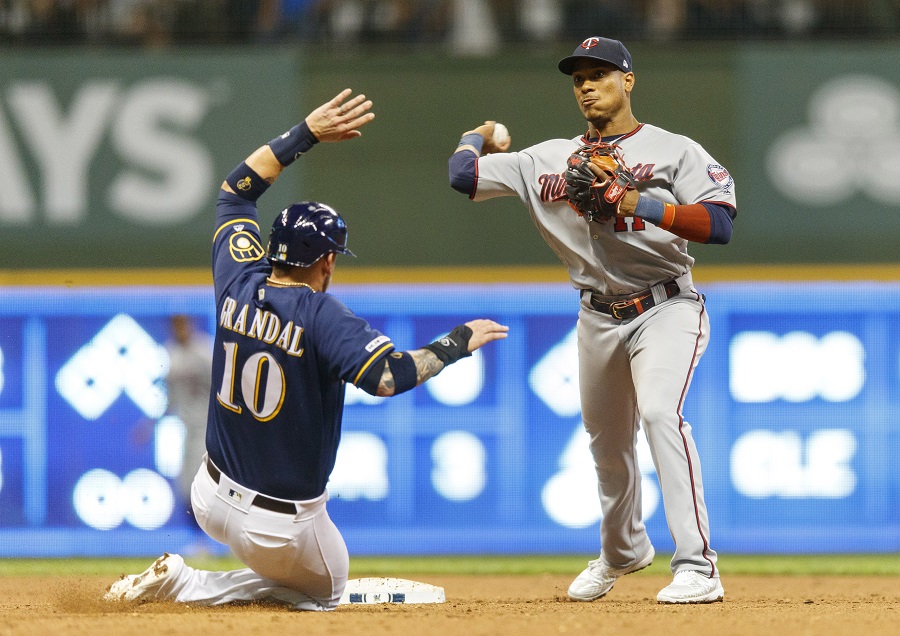 Back in July I penned an article here at Twins Daily about the improvement no one was talking about. Bad defensive teams had become synonymous with the Minnesota Twins in recent history and seeing them take such a significant step forward was beyond noteworthy. Through July 11 Minnesota had the fourth best defensive fWAR in baseball and trailed only the Kansas City Royals in the American League. They were also fourth in DRS and second in UZR. At that point I defined it simply by saying the Twins were, as a whole, playing “Gold Glove Caliber defense.” The biggest boost for the Twins could be felt up the middle. Mitch Garver had taken significant strides forward, while Jorge Polanco was now an above average shortstop, and the tandem of Byron Buxton and Max Kepler rounded out the best outfield the sport had to offer. Evaluating defensive metrics in a small sample is an extremely difficult ask, and it’s the full season that gives us the clearer picture. The shifting numbers tells us something has fallen out of whack however, and it starts with these up-the-middle pieces. Garver is still performing admirably behind the plate. He’s made such considerable strides on defense that he’s now arguably the best all-around catcher in baseball, and the Twins have definitely felt that boost. On defense though, that’s where the good news ends for Minnesota. Since July, Polanco has lost 3 DRS and dropped 1.2 UZR on the season. In just a month’s sample, that’s a considerable movement. He’s also part of an infield responsible for the most errors in baseball, and the arm accuracy has become a massive problem. At shortstop there was always concern whether the strength would be there to get the ball across the diamond. Having changed arm slots and working with different tweaks, things have gotten substantially worse as the season has worn on. Polanco has become more adept with his glove, but it’s the post-fielding process that creates a very negative effect on balls in play. https://twitter.com/AaronGleeman/status/1162023278614941696 It isn’t just Polanco in the dirt either. Miguel Sano has the ninth most throwing errors in baseball with 8, and despite a career best -1 DRS, his -2.9 UZR is a career worst and further highlights the stretch he feels from a range perspective playing the hot corner. On the other side of the diamond C.J. Cron leads baseball with five drops, and although he’s fielding suboptimal offerings from his fielders, he hasn’t been otherworldly on his own merits. The -2.7 UZR is trending toward a career worst and the very good early season performance has long been missed. Byron Buxton doesn’t create a significant cascade effect in the infield, but his defense is solely missed in the grass. Max Kepler once had a 10 DRS roughly a month ago and has slumped all the way back to just 5 DRS on the season. A good to great right fielder, Kepler is stretched in center. He gets better jumps than Buxton does, but there’s no number of strong routes that can make up for the speed deficiency. Add in that moving Kepler means more of Marwin Gonzalez (who is OK) or Jake Cave (who is not) in right field, and you’ve effectively taken the best outfield and turned it into a mediocre-at-best group. Since that initial writing Buxton has played in just nine games for the Twins. He’s out with a shoulder dislocation and it doesn’t seem like his return is imminent. Defense is commonly referred to as something that shouldn’t slump, and it’s largely effort based. That’s not to suggest the Twins are tanking in their responsibilities, but there’s also not been evidence of guys picking up the slack. Both the infield and outfield need to find avenues to make the weaknesses more muted. While putting up runs will wipe away some miscues, you can’t give opponents too many additional opportunities. In a matter of a month the Twins have dropped nine spots in the overall defensive rankings, five spots in terms of DRS, and 12 in UZR. If that isn’t cause for concern, I don’t know what is. There’s been plenty of things that have ailed this club since their amazing start, but if they aren’t going to add runs throughout games, they can’t be finding ways to give them back either. Baldelli and his field staff must find a way to position and work through these deficiencies, and changes must be implemented sooner rather than later. A throwing error compounded with a seeing eye single was what led to their latest defeat, and more of that will be on the way if the issues aren’t rectified soon.
-
As the season has worn on for the Minnesota Twins, manager Rocco Baldelli has utilized the end of his bullpen as a revolving door. Names like Zack Littell, Kohl Stewart, Cody Stashak, Randy Dobnak, and Sean Poppen have all been shuttled back and forth from Triple-A Rochester. Trading for Sam Dyson and Sergio Romo at the deadline aimed for some stability, but this practice will likely continue until something (err someone) sticks. That could very well take place from among a trio of guys currently on the mend.Apart from Littell, the group that has filtered into the Twins bullpen has largely been composed of rising prospects earning a look. Although Stewart was a former first- round pick by Minnesota, it has been just Littell that is still considered a relatively high-level prospect. His performances have had Minnesota working on a plan designed towards more relief success, and in short bursts, the former Yankees prospect has certainly looked the part. The next man up could be coming from a trio of arms that were never considered to be in a position of fluctuation. Trevor Hildenberger was once the Twins reliever in the highest leverage situations. Stephen Gonsalves is a former top pitching prospect, and Brusdar Graterol has seen his name appear on plenty of current top 100 lists. It’s in this group that the front office has some interesting options, and significantly different paths at their disposal. Sidewinding Star Hildenberger owned a 3.21 ERA in just over 40 innings two years ago. His FIP suggested he was even better, and the 9.4 K/9 compared to the 1.3 BB/9 was exceptional. Minnesota had turned a 22nd-round pick into a valuable weapon. Then as that season, and the next wore on, Paul Molitor appeared to ride the hot arm into the ground. Through July 13, 2018 Hildenberger had already made 42 appearances for the Twins and turned in a 2.80 ERA. He was called on for another 28 innings from that point forward and his ERA in that stretch was an ugly 9.64 with a .995 OPS against. The result was a 5.42 ERA and a pitcher that looked anything but the 2017 version of himself. Entering 2019 the hope was that there’d be a turnaround, but an ugly 14 innings to start, and then an eventual injury at Triple-A shelved that promise. Now healthy and on a rehab stint for Triple-A Rochester, Trevor is battling his way back. He’ll need to prove 2019’s start, at both the MLB and Triple-A levels, are behind him and that there’s a very good pitcher in there somewhere. Having thrown significant high-leverage innings previously, something close to the 2017 version of him would be a massive addition for Minnesota down the stretch and in the postseason. Lanky Lefty A former top 100 prospect, Stephen Gonsalves getting a clean bill of health is among the best developments he’s had in 2019. Dealing with shoulder issues since the get go, he pitched just two innings at Triple-A Rochester before shutting it back down. Now rehabbing at the GCL level, he’s turned in two successful outings and the arm has come through unscathed. Gonsalves isn’t a huge strikeout guy, and walks have plagued him over the course of his career, but this is certainly an arm with upside. In 100 Triple-A innings during 2018 he posted a 2.96 ERA. Working out of the bullpen would be new for him, as he’s started 118 of the 126 professional appearances he’s made, but it could be a role in which he could help the Twins. Having utilized spot-starters in certain situations this year, Gonsalves could also factor into that mix. His pitch counts are likely going to be scrutinized with the non-existent workload this season, but letting it fly may be easier without the additional miles. Having talked to him this spring, Wes Johnson had implemented some impactful velocity knowledge on the minor league group, and Gonsalves’ maturity combined with the MLB experience from 2018, may work in his favor for a September contribution. Little La Makina Arguably the best pitching prospect in Minnesota’s system at present, Graterol could find his way to the big leagues in relief this year. He’s been a starter since signing out of Venezuela, but there’s some thought his long term role comes in the bullpen anyway. He too has dealt with shoulder issues this year, but has been cleared and is back pumping triple digits. A guy like Graterol could fill the role Minnesota talked up for prospect Fernando Romero coming into spring training. Turning in two or three inning bursts out of the pen, Graterol wouldn’t need to worry about pitch counts and could immediately attack opposing hitters. As referenced above, he’s got a fastball that can break the radar gun, and his career K/BB rates are plenty fine. It would be an aggressive jump from Double-A to a major league bullpen, but Graterol would be working more on refinement in Triple-A than anything else. Where both Hildenberger and Gonsalves provide somewhat of a safe but predictable option for the Twins, Graterol is the boom or bust type that represents the highest ceiling the rest of the way. No more trades are happening for this club, and there’s a low probability that clubs are designating relievers of substance at this point. If Minnesota wants to right the ship on the mound, starting or relieving, the performances will need to come from within. Turnover at the end of the bullpen has seen plenty of arms get their shot, but this unique trio provides an avenue for a true answer if everything breaks right. This season is the last in which big league rosters expand to the full 40-man come September. Should any of these arms be right as evidenced by their rehab assignments, it’s a good bet to see one, if not all, in the next few weeks. Click here to view the article
-
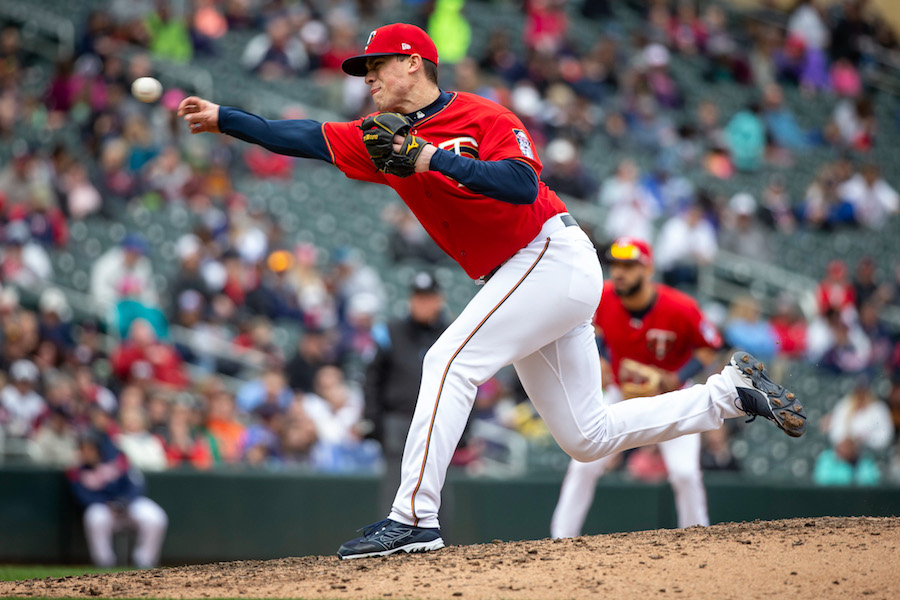 Apart from Littell, the group that has filtered into the Twins bullpen has largely been composed of rising prospects earning a look. Although Stewart was a former first- round pick by Minnesota, it has been just Littell that is still considered a relatively high-level prospect. His performances have had Minnesota working on a plan designed towards more relief success, and in short bursts, the former Yankees prospect has certainly looked the part. The next man up could be coming from a trio of arms that were never considered to be in a position of fluctuation. Trevor Hildenberger was once the Twins reliever in the highest leverage situations. Stephen Gonsalves is a former top pitching prospect, and Brusdar Graterol has seen his name appear on plenty of current top 100 lists. It’s in this group that the front office has some interesting options, and significantly different paths at their disposal. Sidewinding Star Hildenberger owned a 3.21 ERA in just over 40 innings two years ago. His FIP suggested he was even better, and the 9.4 K/9 compared to the 1.3 BB/9 was exceptional. Minnesota had turned a 22nd-round pick into a valuable weapon. Then as that season, and the next wore on, Paul Molitor appeared to ride the hot arm into the ground. Through July 13, 2018 Hildenberger had already made 42 appearances for the Twins and turned in a 2.80 ERA. He was called on for another 28 innings from that point forward and his ERA in that stretch was an ugly 9.64 with a .995 OPS against. The result was a 5.42 ERA and a pitcher that looked anything but the 2017 version of himself. Entering 2019 the hope was that there’d be a turnaround, but an ugly 14 innings to start, and then an eventual injury at Triple-A shelved that promise. Now healthy and on a rehab stint for Triple-A Rochester, Trevor is battling his way back. He’ll need to prove 2019’s start, at both the MLB and Triple-A levels, are behind him and that there’s a very good pitcher in there somewhere. Having thrown significant high-leverage innings previously, something close to the 2017 version of him would be a massive addition for Minnesota down the stretch and in the postseason. Lanky Lefty A former top 100 prospect, Stephen Gonsalves getting a clean bill of health is among the best developments he’s had in 2019. Dealing with shoulder issues since the get go, he pitched just two innings at Triple-A Rochester before shutting it back down. Now rehabbing at the GCL level, he’s turned in two successful outings and the arm has come through unscathed. Gonsalves isn’t a huge strikeout guy, and walks have plagued him over the course of his career, but this is certainly an arm with upside. In 100 Triple-A innings during 2018 he posted a 2.96 ERA. Working out of the bullpen would be new for him, as he’s started 118 of the 126 professional appearances he’s made, but it could be a role in which he could help the Twins. Having utilized spot-starters in certain situations this year, Gonsalves could also factor into that mix. His pitch counts are likely going to be scrutinized with the non-existent workload this season, but letting it fly may be easier without the additional miles. Having talked to him this spring, Wes Johnson had implemented some impactful velocity knowledge on the minor league group, and Gonsalves’ maturity combined with the MLB experience from 2018, may work in his favor for a September contribution. Little La Makina Arguably the best pitching prospect in Minnesota’s system at present, Graterol could find his way to the big leagues in relief this year. He’s been a starter since signing out of Venezuela, but there’s some thought his long term role comes in the bullpen anyway. He too has dealt with shoulder issues this year, but has been cleared and is back pumping triple digits. A guy like Graterol could fill the role Minnesota talked up for prospect Fernando Romero coming into spring training. Turning in two or three inning bursts out of the pen, Graterol wouldn’t need to worry about pitch counts and could immediately attack opposing hitters. As referenced above, he’s got a fastball that can break the radar gun, and his career K/BB rates are plenty fine. It would be an aggressive jump from Double-A to a major league bullpen, but Graterol would be working more on refinement in Triple-A than anything else. Where both Hildenberger and Gonsalves provide somewhat of a safe but predictable option for the Twins, Graterol is the boom or bust type that represents the highest ceiling the rest of the way. No more trades are happening for this club, and there’s a low probability that clubs are designating relievers of substance at this point. If Minnesota wants to right the ship on the mound, starting or relieving, the performances will need to come from within. Turnover at the end of the bullpen has seen plenty of arms get their shot, but this unique trio provides an avenue for a true answer if everything breaks right. This season is the last in which big league rosters expand to the full 40-man come September. Should any of these arms be right as evidenced by their rehab assignments, it’s a good bet to see one, if not all, in the next few weeks.
-
Following a high tension set with the Cleveland Indians, and a much needed off day, the Minnesota Twins head to Milwaukee for a quick two-gamer with the Brewers. The Crew is in roughly the same spot we saw them back in May, fighting a tight battle in the NL Central, but now the season series concludes on their home turf. For a Twins team looking up in the standings for the first time since April, the interleague matchup is one they need to grab.Brief Overview: Milwaukee is 2.5 games behind the Chicago Cubs in the NL Central. They’ve never been a juggernaut at any point this season, but they’ve remained close on the heels of both the North Siders and the St. Louis Cardinals. Christian Yelich is looking like a repeat MVP, and despite the negative run differential, Craig Counsell’s club continues to get the job done. What They Do Well: Milwaukee isn’t a top-third team in any category, but if there’s a notable area of success it’s in the best of their bullpen. This team has an offense that ranks 12th in baseball, and while the relievers trump that by just one position, it’s the back end of the unit that takes things up a notch. At 10.02 K/9 only the Boston Red Sox strike out more batters out of the pen than the Brew Crew. Josh Hader owns the 5th best fWAR in baseball among relievers and his 16.59 K/9 is the best of any bullpen pitcher in the sport. The dominant lefty isn’t a command problem either with just 2.44 BB/9. If there’s a spot you may get him, it’s the 1.95 (11th worst) HR/9 among all relievers. Although it’s Hader who bolsters the big K/9 mark out of Counsell’s pen, Freddy Peralta is another guy who can strike batters out at a high clip. He was a terrible starter this season, and still walks too many batters in relief, but if you don’t make him work there’s certainly an ability to blow it by you. What They Do Not Do Well: As one would expect with a team hovering around mediocrity, there isn’t an exceptional amount they do above average. The Brewers hover in that middle-ground virtually across the board. If there’s something to point out it’s that they do rank in the bottom-third of the sport when it comes to defense. For everything that Lorenzo Cain and Yasmani Grandal give this club up the middle, rookie Keston Hiura does a decent job at giving it away. Hiura is a stud at the plate right now, but he’s well below average at second base and that’s a notable issue for their infield defense. Much like the New York Mets before them, Milwaukee should give Minnesota opportunity when the ball is put in play before reaching the outfield grass. Individuals Of Note: Having briefly touched on both above, Hader and Hiura are two of the most impactful players on this club. The rookie second basemen owns a .955 OPS through 55 games, while Hader is as dominant in high-leverage as he’s ever been. Yasmani Grandal looked like a steal this offseason and he’s certainly lived up to that billing. Playing as arguably the best defensive catcher in baseball, he sports an .837 OPS and is one homer shy of 20 on the season. Making his second All-Star Game this season, Grandal has been everything the Brewers could’ve hoped for and then some. You can’t mention Milwaukee without touching on Christian Yelich. Having won his first MVP last season at age 26 with a 1.000 OPS, he’s followed it up in year two with The Crew by posting a 1.130 OPS. He’s already trumped the 2018 homer total with 39, and could challenge for 60 by season’s end. Stealing bases, hitting for average and power, while playing strong defense, he’s up there with Mike Trout as the best the game currently has to offer. Recent History: These two teams met in May at Target Field. Milwaukee took the first game by a one run margin before Minnesota answered back with a 5-3 victory of their own. Minnesota will be looking to win the season series again after going 1-5 against the Brewers last year. Recent Trajectories: The Twins come into this one having lost their last game and are an even .500 over the past ten games. Milwaukee matches that perfectly on a one game losing streak themselves, and .500 in their last 10. Pitching Matchups: Tuesday: Perez vs Anderson Wednesday: Gibson vs TBD Ending Thoughts: This is certainly a team that the Minnesota Twins should be able to beat. A two-game series is just a quick getaway, but as part of a five-game road swing, a sweep would be a great way to start things off. Milwaukee owns a -20 run differential and likely has some more regressing to do. I don’t love how Martin Perez has pitched of late and that’s plenty of reason to be uncertain about game one. Anderson has a 2.63 ERA across his last nine starts and has put up a great year in 2019. If Minnesota can steal game one however, a sweep is definitely in the cards. Click here to view the article
-
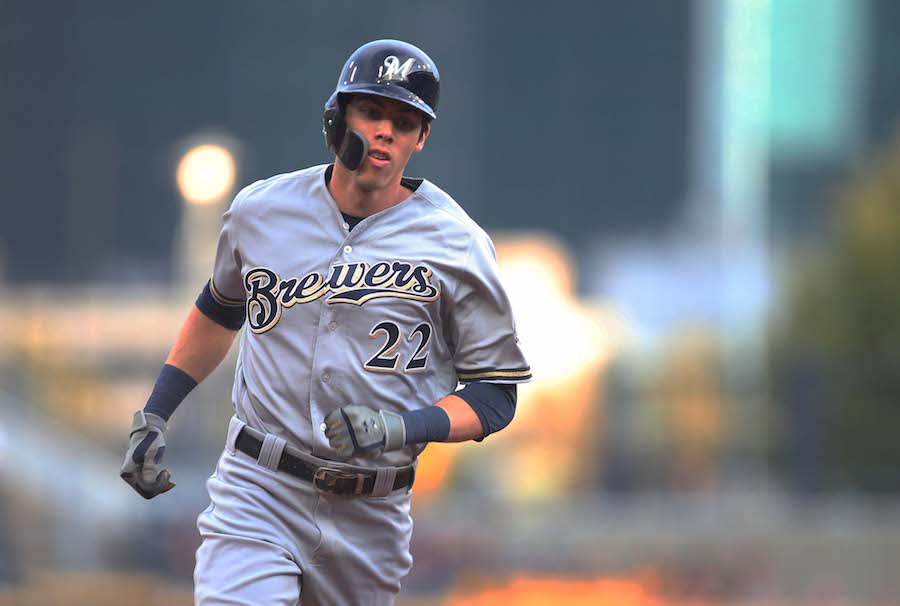 Brief Overview: Milwaukee is 2.5 games behind the Chicago Cubs in the NL Central. They’ve never been a juggernaut at any point this season, but they’ve remained close on the heels of both the North Siders and the St. Louis Cardinals. Christian Yelich is looking like a repeat MVP, and despite the negative run differential, Craig Counsell’s club continues to get the job done. What They Do Well: Milwaukee isn’t a top-third team in any category, but if there’s a notable area of success it’s in the best of their bullpen. This team has an offense that ranks 12th in baseball, and while the relievers trump that by just one position, it’s the back end of the unit that takes things up a notch. At 10.02 K/9 only the Boston Red Sox strike out more batters out of the pen than the Brew Crew. Josh Hader owns the 5th best fWAR in baseball among relievers and his 16.59 K/9 is the best of any bullpen pitcher in the sport. The dominant lefty isn’t a command problem either with just 2.44 BB/9. If there’s a spot you may get him, it’s the 1.95 (11th worst) HR/9 among all relievers. Although it’s Hader who bolsters the big K/9 mark out of Counsell’s pen, Freddy Peralta is another guy who can strike batters out at a high clip. He was a terrible starter this season, and still walks too many batters in relief, but if you don’t make him work there’s certainly an ability to blow it by you. What They Do Not Do Well: As one would expect with a team hovering around mediocrity, there isn’t an exceptional amount they do above average. The Brewers hover in that middle-ground virtually across the board. If there’s something to point out it’s that they do rank in the bottom-third of the sport when it comes to defense. For everything that Lorenzo Cain and Yasmani Grandal give this club up the middle, rookie Keston Hiura does a decent job at giving it away. Hiura is a stud at the plate right now, but he’s well below average at second base and that’s a notable issue for their infield defense. Much like the New York Mets before them, Milwaukee should give Minnesota opportunity when the ball is put in play before reaching the outfield grass. Individuals Of Note: Having briefly touched on both above, Hader and Hiura are two of the most impactful players on this club. The rookie second basemen owns a .955 OPS through 55 games, while Hader is as dominant in high-leverage as he’s ever been. Yasmani Grandal looked like a steal this offseason and he’s certainly lived up to that billing. Playing as arguably the best defensive catcher in baseball, he sports an .837 OPS and is one homer shy of 20 on the season. Making his second All-Star Game this season, Grandal has been everything the Brewers could’ve hoped for and then some. You can’t mention Milwaukee without touching on Christian Yelich. Having won his first MVP last season at age 26 with a 1.000 OPS, he’s followed it up in year two with The Crew by posting a 1.130 OPS. He’s already trumped the 2018 homer total with 39, and could challenge for 60 by season’s end. Stealing bases, hitting for average and power, while playing strong defense, he’s up there with Mike Trout as the best the game currently has to offer. Recent History: These two teams met in May at Target Field. Milwaukee took the first game by a one run margin before Minnesota answered back with a 5-3 victory of their own. Minnesota will be looking to win the season series again after going 1-5 against the Brewers last year. Recent Trajectories: The Twins come into this one having lost their last game and are an even .500 over the past ten games. Milwaukee matches that perfectly on a one game losing streak themselves, and .500 in their last 10. Pitching Matchups: Tuesday: Perez vs Anderson Wednesday: Gibson vs TBD Ending Thoughts: This is certainly a team that the Minnesota Twins should be able to beat. A two-game series is just a quick getaway, but as part of a five-game road swing, a sweep would be a great way to start things off. Milwaukee owns a -20 run differential and likely has some more regressing to do. I don’t love how Martin Perez has pitched of late and that’s plenty of reason to be uncertain about game one. Anderson has a 2.63 ERA across his last nine starts and has put up a great year in 2019. If Minnesota can steal game one however, a sweep is definitely in the cards.
-
As a society we are a “What have you done for me lately” group of people. In all facets of life, we concern ourselves with the here and now, often misremembering even the most recent past. This is true in sports as well, and while just one team among 30 or more win a championship each year, that becomes the measuring stick for greatness. As the Minnesota Twins enter play on August 8 with a 70-44 record, this perspective seems all but lost.Through May the Twins had compiled an MLB best 38-18 record. Over the course of a full season that’s a 110-win pace which would be the franchise record (102 in 1965) by nearly double-digits. To expect the continuation of that level of dominance over 162 games seemed like a longshot. What it did do however, was set up strong positioning for the stretch run. Since June 1st the Twins have played to just a 32-25 record. Obviously, that isn’t the torrid pace that the first three months of the season saw, but that still plays out to a 91-win pace. In 2018, 91 wins would’ve won two different divisions and have been worth of a postseason berth. It’s also representative of a 13-game improvement year over year for Minnesota. If at their worst the Twins play at a 91-win clip this season, I’d imagine Rocco Baldelli would take that any day of the week. So, as things have cooled for the big-league club, let’s get out in front of some common misconceptions. Beating Good Teams All season long there’s been plenty made regarding the Twins record against teams over .500. While this is somewhat of a silly practice given the volatility of records for teams hovering around that midpoint, it’s worth noting Minnesota has held their own against the best. Baldelli’s club has played six different teams that are at least 16 games over .500 (NYY, HOU, CLE, TB, ATL, and OAK). They own a 20-19 record against those clubs who have a combined winning percentage of .604. That winning percentage would be fifth best in baseball, and Minnesota is beating them at over a .500 clip. In any sport, the goal is to hold serve with the best teams while cleaning up against the lackluster competition. Minnesota has done exactly that and has far more opportunity to expand on the latter as the calendar closes out the year. 9 games remain with Cleveland (four of which take place this week) and then just 11 games remain with clubs north of the .500 mark (MIL, TEX, BOS, and WAS). Starting Rotation Issues A point of discontent among fans since the season began, the Twins pitching staff has performed largely above expectations. Martin Perez isn’t close to the pitcher he started the year as, but you can’t discredit what he gave Minnesota from the get-go. Michael Pineda was scoffed at plenty early on, but he’s been one of the best and most consistent arms in baseball during 2019. This grouping isn’t bolstered just by early season performance either. Only eight different pitchers have made starts for Minnesota, the fewest in baseball, and the Twins rotation still has the seventh best fWAR since June 1st. Pineda and Jose Berrios both have ERA’s south of 3.20 since June 1st, and Kyle Gibson is performing well with a 3.97 mark. Throwing out his nine-run blowup against the Yankees, Jake Odorizzi owns a 3.18 ERA in his last 4 turns and was the ERA leader early in the season. Wanting a starter at the deadline was a fair hope for the front office and fans alike, but with only Marcus Stroman as a realistic option, opportunity was hardly missed by passing on guys like Mike Leake, Tanner Roark, and Jordan Lyles. The Competition is Stiff There’s no denying that Minnesota should be eyeing up their postseason prospects at this point. They’ll need to finish out the slate strong, but they’re trending towards a berth and a division title. Despite losing two of three at home to Atlanta, run differentials suggest Minnesota may be the superior team. There were clunker pitching performances in the set, but it’s clear the clubs are evenly matched throughout their 25-man rosters. It’s not just the Twins looking for answers either. New York has the best record in the American League, and second in baseball. Since June 1st their rotation ranks 26th in baseball. Atlanta leads the NL East by a healthy six game margin, but they have just the 14th best rotation in baseball during that same time period. Neither team made starting acquisitions at the deadline, and Atlanta even parted with an option. You’re going to run into good teams during the postseason, but each one of them will have warts. Peaking in May After going gangbusters to open 2019 and distance themselves from a disappointing 2018 season, Minnesota has been consistently tied to their start. Getting out of the gates that fast makes it understandable to reference that point, but a mediocre stretch doesn’t trump Minnesota still making their mark. Since July 1st the Twins have a 17-13 record, which is a 92-win pace. That would’ve won four of six divisions a season ago and getting into the postseason is the only regular season goal. Record doesn’t matter once you’re there, and the opponent doesn’t care how you’ve arrived in the other dugout. We can break the season into chunks from an evaluation standpoint, but 162 games exist to legitimize trends over a significant period. At the end of the day, there’re a few takeaways here. First and foremost, this Twins team is very, very good. They absolutely have deficiencies but so does every team in baseball. Even the Zack Greinke-bolstered Houston Astros have a World Series probability of less than 30%. In a sport where five or seven games can be so closely contested, calling anything a wrap before the final pitch seems foolish. Since 2010 the Twins have looked like a lost franchise chasing a competitive window without much luck. Now they are not only well positioned to make waves in 2019, but for multiple years beyond. Reacting to contests without the context of a new game tomorrow or the opportunity that lies ahead is shortsighted. Smart money says there’s lots more winning to come, and the level we soak that in should only further the experience. Click here to view the article
-
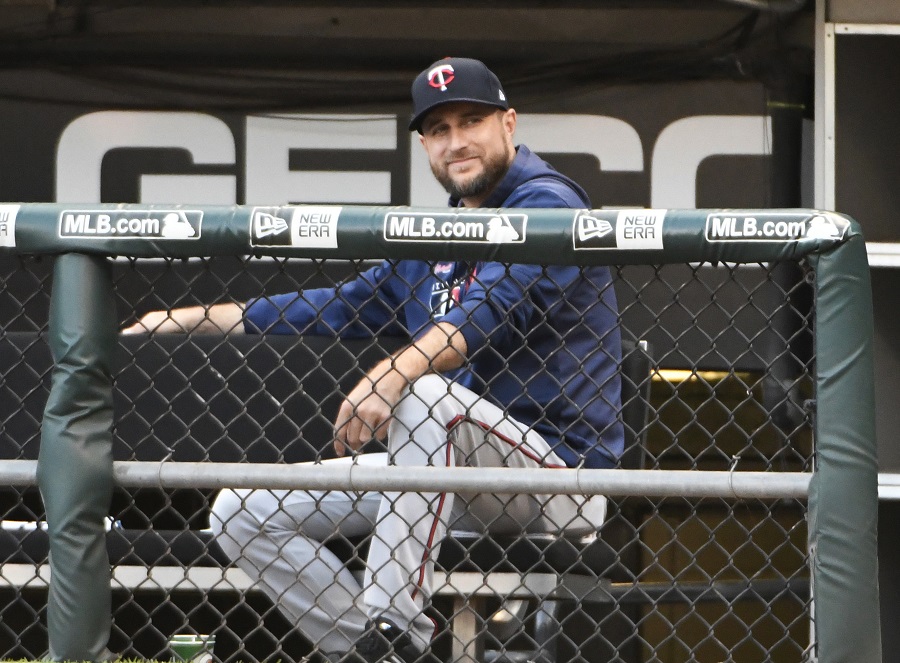 Through May the Twins had compiled an MLB best 38-18 record. Over the course of a full season that’s a 110-win pace which would be the franchise record (102 in 1965) by nearly double-digits. To expect the continuation of that level of dominance over 162 games seemed like a longshot. What it did do however, was set up strong positioning for the stretch run. Since June 1st the Twins have played to just a 32-25 record. Obviously, that isn’t the torrid pace that the first three months of the season saw, but that still plays out to a 91-win pace. In 2018, 91 wins would’ve won two different divisions and have been worth of a postseason berth. It’s also representative of a 13-game improvement year over year for Minnesota. If at their worst the Twins play at a 91-win clip this season, I’d imagine Rocco Baldelli would take that any day of the week. So, as things have cooled for the big-league club, let’s get out in front of some common misconceptions. Beating Good Teams All season long there’s been plenty made regarding the Twins record against teams over .500. While this is somewhat of a silly practice given the volatility of records for teams hovering around that midpoint, it’s worth noting Minnesota has held their own against the best. Baldelli’s club has played six different teams that are at least 16 games over .500 (NYY, HOU, CLE, TB, ATL, and OAK). They own a 20-19 record against those clubs who have a combined winning percentage of .604. That winning percentage would be fifth best in baseball, and Minnesota is beating them at over a .500 clip. In any sport, the goal is to hold serve with the best teams while cleaning up against the lackluster competition. Minnesota has done exactly that and has far more opportunity to expand on the latter as the calendar closes out the year. 9 games remain with Cleveland (four of which take place this week) and then just 11 games remain with clubs north of the .500 mark (MIL, TEX, BOS, and WAS). Starting Rotation Issues A point of discontent among fans since the season began, the Twins pitching staff has performed largely above expectations. Martin Perez isn’t close to the pitcher he started the year as, but you can’t discredit what he gave Minnesota from the get-go. Michael Pineda was scoffed at plenty early on, but he’s been one of the best and most consistent arms in baseball during 2019. This grouping isn’t bolstered just by early season performance either. Only eight different pitchers have made starts for Minnesota, the fewest in baseball, and the Twins rotation still has the seventh best fWAR since June 1st. Pineda and Jose Berrios both have ERA’s south of 3.20 since June 1st, and Kyle Gibson is performing well with a 3.97 mark. Throwing out his nine-run blowup against the Yankees, Jake Odorizzi owns a 3.18 ERA in his last 4 turns and was the ERA leader early in the season. Wanting a starter at the deadline was a fair hope for the front office and fans alike, but with only Marcus Stroman as a realistic option, opportunity was hardly missed by passing on guys like Mike Leake, Tanner Roark, and Jordan Lyles. The Competition is Stiff There’s no denying that Minnesota should be eyeing up their postseason prospects at this point. They’ll need to finish out the slate strong, but they’re trending towards a berth and a division title. Despite losing two of three at home to Atlanta, run differentials suggest Minnesota may be the superior team. There were clunker pitching performances in the set, but it’s clear the clubs are evenly matched throughout their 25-man rosters. It’s not just the Twins looking for answers either. New York has the best record in the American League, and second in baseball. Since June 1st their rotation ranks 26th in baseball. Atlanta leads the NL East by a healthy six game margin, but they have just the 14th best rotation in baseball during that same time period. Neither team made starting acquisitions at the deadline, and Atlanta even parted with an option. You’re going to run into good teams during the postseason, but each one of them will have warts. Peaking in May After going gangbusters to open 2019 and distance themselves from a disappointing 2018 season, Minnesota has been consistently tied to their start. Getting out of the gates that fast makes it understandable to reference that point, but a mediocre stretch doesn’t trump Minnesota still making their mark. Since July 1st the Twins have a 17-13 record, which is a 92-win pace. That would’ve won four of six divisions a season ago and getting into the postseason is the only regular season goal. Record doesn’t matter once you’re there, and the opponent doesn’t care how you’ve arrived in the other dugout. We can break the season into chunks from an evaluation standpoint, but 162 games exist to legitimize trends over a significant period. At the end of the day, there’re a few takeaways here. First and foremost, this Twins team is very, very good. They absolutely have deficiencies but so does every team in baseball. Even the Zack Greinke-bolstered Houston Astros have a World Series probability of less than 30%. In a sport where five or seven games can be so closely contested, calling anything a wrap before the final pitch seems foolish. Since 2010 the Twins have looked like a lost franchise chasing a competitive window without much luck. Now they are not only well positioned to make waves in 2019, but for multiple years beyond. Reacting to contests without the context of a new game tomorrow or the opportunity that lies ahead is shortsighted. Smart money says there’s lots more winning to come, and the level we soak that in should only further the experience.
-
The Twins had a ton of action taking place on the farm today with multiple affiliates playing doubleheaders. Lewis Thorpe got the start for Rochester and looked like a big leaguer overpowering lesser competition, while 2019 draft picks Matt Wallner and Keoni Cavaco both homered, and Brusdar Graterol returned to the active roster. Check all of the excitement out below.Transactions Minnesota RHP Kohl Stewart optioned to Triple-A Pensacola RHP Brusdar Graterol activated from 7-day IL There's also this RED WINGS REPORT Gwinnett 4, Rochester 3 Box Score Lewis Thorpe was nails in this one as he went six innings allowing just a single hit and striking out seven. He’s looked strong for the Twins this year, and a performance like this won’t keep him in Triple-A for long. In the second inning Zander Wiel hit his 20th homer of the season, which was notable beyond just putting Rochester on the board. The 427-foot blast was Rochester’s 155th of the season setting a new franchise record. The 154 single-season home run record had stood since 1959. Scoring was at a premium in this one with stud Atlanta prospect Kyle Wright opposing the Red Wings. Caleb Hamilton doubled the score in the seventh on his secondTriple-A two-bagger. That’s where the momentum stopped for the home team. A four-run eighth inning, complete with a Pedro Florimon triple for the Stripers had the Red Wings looking up at the wrong side of the scoreboard. With two runners on in the ninth Rochester threatened, but Brandon Barnes’ RBI single was the only run they managed to push across. BLUE WAHOOS BITES Mobile 5, Pensacola 1 Box Score Star Twins prospect Jhoan Duran was tonight’s starter and he was hit around a bit during his six innings of work. Despite striking out six and walking just one, he gave up five earned on seven hits. Recently activated Travis Blankenhorn blasted his 17th homer of the year to open the scoring, but that was the only run the Blue Wahoos brought home. Giving up four in the bottom of the third, they trailed for the majority of this contest. Trying to claw their way back, Pensacola did generate a ninth inning threat but Mobile’s bullpen was able to hold things in check. MIRACLE MATTERS Game 1: St. Lucie 5, Fort Myers 2 Box Score Playing a twin bill after wet grounds postponed yesterday’s action it was Dakota Chalmers on the bump for game one. He went four innings allowing three runs (two earned) and striking out six. Unfortunately he also walked six and with just one hit given up, the free passes are where the damage came from. Trailing 1-0 in the fifth Fort Myers took the lead. Michael Davis drove in the first run on a sac fly and Gabriel Maciel followed suit for run number two. The lead didn’t last long as a two run shot in the bottom of the inning put St. Lucie back in the lead, and a sixth inning tally made it a three run margin for good measure. Game 2: Fort Myers 9, St. Lucie 2 Box Score Attempting to avoid the sweep on the day, the ball was handed to Melvi Acosta. He turned in five innings of solid work allowing just two runs, and the offense put him in the driver’s seat early. Jose Miranda gave the Miracle a 1-0 lead on a first inning single, and then the away team broke it open. Fort Myers plated five in the second with the most damage coming on a two-RBI triple from Andrew Bechtold. He got the last 90 feet on a wild pitch and the lead then was two field goals. A fourth inning triple from David Banuelos plated another run before Miranda ripped his sixth dinger of the year, a solo shot, in the fourth. Up 8-2 heading into the final from, Ernie De La Trinadad wore a pitch with the bases loaded to generate the game’s final run. KERNELS NUGGETS Kane County 3, Cedar Rapids 1 Box Score Kody Funderburk was on the bump and despite there not being much offense tonight, he was worth the price of admission. Twirling five innings of two-hit ball, Funderburk struck out five walking just two. The Kernels were able to generate just four hits on the evening and their only run came on a ninth inning error. This was a bit of a sloppy affair with the two clubs combining for six errors on the evening. E-TWINS E-NOTES Elizabethton 6, Kingsport 3 Box Score Cody Lawyerson got the nod for the E-Twins tonight and worked three scoreless innings. He gave up no hits while walking one and striking out two. Erik Cha worked 3 1/3 innings of relief to pick up his fifth victory of the season, moving him to a 5-1 record. In the top of the first inning Matt Wallner launched his fourth homer of the season. A two-run shot that scored DaShawn Keirsey had the E-Twins on the board. After allowing the Mets to even things up, Keirsey singled in the sixth driving in Trevor Jensen and putting the E-Twins back on top. Looking for some breathing room Elizabethton found it in the late innings. Janigson Villalobos recorded his fourth double of the season driving in two, and a Max Smith single in the ninth added another. Kingsport attempted a comeback in the final frame but could only push a single run across. With the victory Elizabethton avoided a series sweep on the road and continue their trip tomorrow in Johnson City. GCL TWINS TAKES Game 1: GCL Twins 5, GCL Orioles 4 Box Score Regi Grace started today’s contest for the Twins and turned in four innings of work. He surrendered four runs on four hits while striking out two and walking one. In line for the win, he couldn’t make it through the fifth inning to satisfy the necessary requirement. The damage was done by the top of the Twins lineup in this one. Third baseman Alec Craig had a two-hit game scoring twice, while Jeferson Morales added two hits of his own (both doubles). Cleanup hitter Victor Heredia was the third member of the multi-hit trio on the afternoon with a two-hit effort as well. Runs were scored in the first, third, and fourth innings by the GCL Twins and the five tallies were enough to stay afloat after a three-run fourth inning by the Orioles. Game 2: GCL Twins 5 GCL Orioles 4 Box Score Matthew Swain got behind by a 4-0 tally through the first two innings of work in game two today, but this one would see the lineup come through once again. Turning the ball over to the bullpen down 4-1, the GCL Twins evened things up with quickness. In the top of the third inning 2019 first-round pick Keoni Cavaco launched his first professional home run. It was a three-run blast and knotted the score at 4. Waiting all the way until the final frame, the Twins then added another in the top half of the seventh to win the second half of the doubleheader with the same score as the first. TWINS DAILY MINOR LEAGUE PLAYERS OF THE DAY Pitcher of the Day – Lewis Thorpe (Rochester) – 6.0 IP, 1 H, 0 R, 0 ER, 0 BB, 7 K Hitter of the Day – Matt Wallner (Elizabethton) – 2-5, 2 R, 2 RBI, HR(4) PROSPECT SUMMARY Here’s a look at how the Twins Daily Midseason Top 20 Twins Prospects performed: #1 - Royce Lewis (Pensacola) – 0-4, BB, K #2 - Alex Kirilloff (Pensacola) – 1-4 #3 - Brusdar Graterol (Pensacola) – Did Not Pitch #4 - Trevor Larnach (Pensacola) – 0-3, BB, K #5 - Wander Javier (Cedar Rapids) – 0-3, R, 2 K #6 - Jordan Balazovic (Fort Myers) – Did Not Pitch #7 - Keoni Cavaco (GCL) – 1-4, R, HR(1), 3 RBI, 2 K #8 - Brent Rooker (Rochester) - Injured List (groin) #9 - Jhoan Duran (Pensacola) – 6.0 IP, 7 H, 5 R, 5 ER, 1 BB, 6 K #10 - Blayne Enlow (Fort Myers) – Did Not Pitch #11 - Lewis Thorpe (Rochester) – 6.0 IP, 1 H, 0 R, 0 ER, 0 BB, 7 K #12 - Nick Gordon (Rochester) - Did not play #13 - Ryan Jeffers (Pensacola) – Did Not Play #14 - Luis Arraez (Minnesota) – Did Not Play #15 - Matt Wallner (Elizabethton) – 2-5, 2 R, 2 RBI, HR(4) #16 - Ben Rortvedt (Pensacola) – 1-3, BB #17 - Akil Baddoo (Fort Myers) - Injured List (Tommy John surgery) #18 - Jorge Alcala (Pensacola) – Did Not Pitch #19 - Misael Urbina (DSL) – 1-4, RBI #20 - Travis Blankenhorn (Pensacola) – 1-4, R, RBI, HR(17) THURSDAY’S PROBABLE STARTERS Gwinnett @ Rochester (6:05PM CST) – RHP Griffin Jax (Triple-A Debut) Pensacola @ Mobile (6:35PM CST) – LHP Bryan Sammons (4-4, 4.18 ERA) Jupiter @ Fort Myers (6:00PM CST) - TBD Cedar Rapids @ Kane County (6:30PM CST) – RHP Luis Rijo (4-6, 2.58 ERA) Elizabethton @ Johnson City (5:30PM CST) - TBD Please feel free to ask questions and discuss Wednesday’s games! Click here to view the article
-
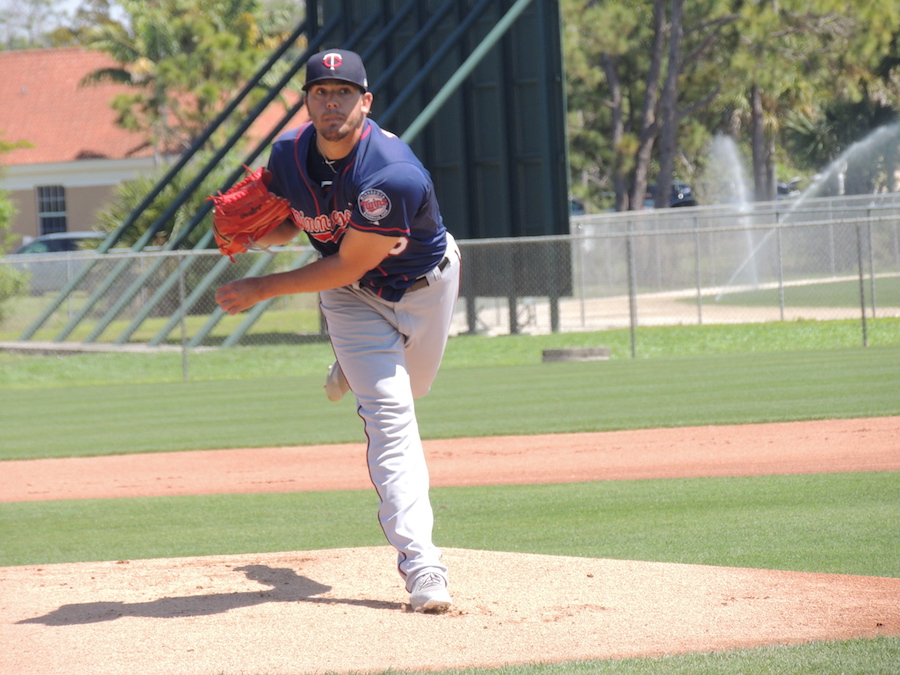 Transactions Minnesota RHP Kohl Stewart optioned to Triple-A Pensacola RHP Brusdar Graterol activated from 7-day IL There's also this https://twitter.com/DWolfsonKSTP/status/1159219085571502082 RED WINGS REPORT Gwinnett 4, Rochester 3 Box Score Lewis Thorpe was nails in this one as he went six innings allowing just a single hit and striking out seven. He’s looked strong for the Twins this year, and a performance like this won’t keep him in Triple-A for long. https://twitter.com/RocRedWings/status/1159251771816140803 In the second inning Zander Wiel hit his 20th homer of the season, which was notable beyond just putting Rochester on the board. The 427-foot blast was Rochester’s 155th of the season setting a new franchise record. The 154 single-season home run record had stood since 1959. Scoring was at a premium in this one with stud Atlanta prospect Kyle Wright opposing the Red Wings. Caleb Hamilton doubled the score in the seventh on his secondTriple-A two-bagger. That’s where the momentum stopped for the home team. https://twitter.com/RocRedWings/status/1159286073085890560 A four-run eighth inning, complete with a Pedro Florimon triple for the Stripers had the Red Wings looking up at the wrong side of the scoreboard. With two runners on in the ninth Rochester threatened, but Brandon Barnes’ RBI single was the only run they managed to push across. BLUE WAHOOS BITES Mobile 5, Pensacola 1 Box Score Star Twins prospect Jhoan Duran was tonight’s starter and he was hit around a bit during his six innings of work. Despite striking out six and walking just one, he gave up five earned on seven hits. Recently activated Travis Blankenhorn blasted his 17th homer of the year to open the scoring, but that was the only run the Blue Wahoos brought home. Giving up four in the bottom of the third, they trailed for the majority of this contest. Trying to claw their way back, Pensacola did generate a ninth inning threat but Mobile’s bullpen was able to hold things in check. https://twitter.com/BlueWahoosBBall/status/1159191468680065030 MIRACLE MATTERS Game 1: St. Lucie 5, Fort Myers 2 Box Score Playing a twin bill after wet grounds postponed yesterday’s action it was Dakota Chalmers on the bump for game one. He went four innings allowing three runs (two earned) and striking out six. Unfortunately he also walked six and with just one hit given up, the free passes are where the damage came from. Trailing 1-0 in the fifth Fort Myers took the lead. Michael Davis drove in the first run on a sac fly and Gabriel Maciel followed suit for run number two. The lead didn’t last long as a two run shot in the bottom of the inning put St. Lucie back in the lead, and a sixth inning tally made it a three run margin for good measure. Game 2: Fort Myers 9, St. Lucie 2 Box Score Attempting to avoid the sweep on the day, the ball was handed to Melvi Acosta. He turned in five innings of solid work allowing just two runs, and the offense put him in the driver’s seat early. Jose Miranda gave the Miracle a 1-0 lead on a first inning single, and then the away team broke it open. Fort Myers plated five in the second with the most damage coming on a two-RBI triple from Andrew Bechtold. He got the last 90 feet on a wild pitch and the lead then was two field goals. A fourth inning triple from David Banuelos plated another run before Miranda ripped his sixth dinger of the year, a solo shot, in the fourth. Up 8-2 heading into the final from, Ernie De La Trinadad wore a pitch with the bases loaded to generate the game’s final run. KERNELS NUGGETS Kane County 3, Cedar Rapids 1 Box Score Kody Funderburk was on the bump and despite there not being much offense tonight, he was worth the price of admission. Twirling five innings of two-hit ball, Funderburk struck out five walking just two. The Kernels were able to generate just four hits on the evening and their only run came on a ninth inning error. This was a bit of a sloppy affair with the two clubs combining for six errors on the evening. E-TWINS E-NOTES Elizabethton 6, Kingsport 3 Box Score Cody Lawyerson got the nod for the E-Twins tonight and worked three scoreless innings. He gave up no hits while walking one and striking out two. Erik Cha worked 3 1/3 innings of relief to pick up his fifth victory of the season, moving him to a 5-1 record. https://twitter.com/ETwinsBaseball/status/1159235783334813697 In the top of the first inning Matt Wallner launched his fourth homer of the season. A two-run shot that scored DaShawn Keirsey had the E-Twins on the board. After allowing the Mets to even things up, Keirsey singled in the sixth driving in Trevor Jensen and putting the E-Twins back on top. Looking for some breathing room Elizabethton found it in the late innings. Janigson Villalobos recorded his fourth double of the season driving in two, and a Max Smith single in the ninth added another. Kingsport attempted a comeback in the final frame but could only push a single run across. With the victory Elizabethton avoided a series sweep on the road and continue their trip tomorrow in Johnson City. GCL TWINS TAKES Game 1: GCL Twins 5, GCL Orioles 4 Box Score Regi Grace started today’s contest for the Twins and turned in four innings of work. He surrendered four runs on four hits while striking out two and walking one. In line for the win, he couldn’t make it through the fifth inning to satisfy the necessary requirement. The damage was done by the top of the Twins lineup in this one. Third baseman Alec Craig had a two-hit game scoring twice, while Jeferson Morales added two hits of his own (both doubles). Cleanup hitter Victor Heredia was the third member of the multi-hit trio on the afternoon with a two-hit effort as well. Runs were scored in the first, third, and fourth innings by the GCL Twins and the five tallies were enough to stay afloat after a three-run fourth inning by the Orioles. Game 2: GCL Twins 5 GCL Orioles 4 Box Score Matthew Swain got behind by a 4-0 tally through the first two innings of work in game two today, but this one would see the lineup come through once again. Turning the ball over to the bullpen down 4-1, the GCL Twins evened things up with quickness. In the top of the third inning 2019 first-round pick Keoni Cavaco launched his first professional home run. It was a three-run blast and knotted the score at 4. Waiting all the way until the final frame, the Twins then added another in the top half of the seventh to win the second half of the doubleheader with the same score as the first. TWINS DAILY MINOR LEAGUE PLAYERS OF THE DAY Pitcher of the Day – Lewis Thorpe (Rochester) – 6.0 IP, 1 H, 0 R, 0 ER, 0 BB, 7 K Hitter of the Day – Matt Wallner (Elizabethton) – 2-5, 2 R, 2 RBI, HR(4) PROSPECT SUMMARY Here’s a look at how the Twins Daily Midseason Top 20 Twins Prospects performed: #1 - Royce Lewis (Pensacola) – 0-4, BB, K #2 - Alex Kirilloff (Pensacola) – 1-4 #3 - Brusdar Graterol (Pensacola) – Did Not Pitch #4 - Trevor Larnach (Pensacola) – 0-3, BB, K #5 - Wander Javier (Cedar Rapids) – 0-3, R, 2 K #6 - Jordan Balazovic (Fort Myers) – Did Not Pitch #7 - Keoni Cavaco (GCL) – 1-4, R, HR(1), 3 RBI, 2 K #8 - Brent Rooker (Rochester) - Injured List (groin) #9 - Jhoan Duran (Pensacola) – 6.0 IP, 7 H, 5 R, 5 ER, 1 BB, 6 K #10 - Blayne Enlow (Fort Myers) – Did Not Pitch #11 - Lewis Thorpe (Rochester) – 6.0 IP, 1 H, 0 R, 0 ER, 0 BB, 7 K #12 - Nick Gordon (Rochester) - Did not play #13 - Ryan Jeffers (Pensacola) – Did Not Play #14 - Luis Arraez (Minnesota) – Did Not Play #15 - Matt Wallner (Elizabethton) – 2-5, 2 R, 2 RBI, HR(4) #16 - Ben Rortvedt (Pensacola) – 1-3, BB #17 - Akil Baddoo (Fort Myers) - Injured List (Tommy John surgery) #18 - Jorge Alcala (Pensacola) – Did Not Pitch #19 - Misael Urbina (DSL) – 1-4, RBI #20 - Travis Blankenhorn (Pensacola) – 1-4, R, RBI, HR(17) THURSDAY’S PROBABLE STARTERS Gwinnett @ Rochester (6:05PM CST) – RHP Griffin Jax (Triple-A Debut) Pensacola @ Mobile (6:35PM CST) – LHP Bryan Sammons (4-4, 4.18 ERA) Jupiter @ Fort Myers (6:00PM CST) - TBD Cedar Rapids @ Kane County (6:30PM CST) – RHP Luis Rijo (4-6, 2.58 ERA) Elizabethton @ Johnson City (5:30PM CST) - TBD Please feel free to ask questions and discuss Wednesday’s games!
-
The dust surrounding the 2019 Major League Baseball trade deadline has all but settled. The Minnesota Twins were linked to every available name, and needing help in the pen more than any other area, they ended their pursuit acquiring Sergio Romo and Sam Dyson. For some, the notable development at the end of July was the names that didn’t move, and specifically Minnesota’s lack on an “all-in” type acquisition. Patience isn’t easy here, but it is the blueprint successful teams have followed.Two avenues exist when it comes to acquiring external talent in baseball. After you’ve developed your own players, bringing in reinforcements requires some sort of capital. Organizations can decide if that’s done through a cash transaction on the free agent market, or if it makes more sense to utilize a farm system and explore a swap including prospect capital. The Twins have now been presented with opportunities to go down both paths in the past calendar year and have taken neither thus far. That decision looms but isn’t yet one they should be criticized for not making. Prior to 2018 theTwins' front office offered a $100 million contract to former Texas Rangers ace Yu Darvish. It went terribly in year one with the Chicago Cubs for the 31-year-old, and aside from the current stretch of strength, year two has followed a similar path. Bullet dodged or otherwise, Darvish was representative of a free agent ace that Minnesota pursued. The second path came in the form of a controllable starter. The ask for Marcus Stroman was both top Twins prospects, while the Mets wanted Byron Buxton to headline a return for Thor. Both of those proposals were intelligently declined, but the conversations are indicative of the timing trending right. Looking at the 2019 season so far, it’s fair to suggest that the Twins push all their chips forward. That notion would be shortsighted however and effectively negate much of the strong foundation built by Derek Falvey and Thad Levine. The AL Central is a poor division, and Minnesota is on a collision course with 100 wins, but opportunity doesn’t seem to be tied solely to the current season. Postseason baseball is about good teams getting hot and spurning a consistent seasons-long run for the sake of an impulse buy doesn’t seem a smart move. Blueprints designed by good teams like the Chicago Cubs and Houston Astros are often referenced when hoping for that next World Series trophy. It’s in truly understanding how those teams were built that outlines a process Minnesota can follow. Joe Maddon took over as Cubs manager in 2015. He was coming to an organization that had the fifth best farm system in baseball the year prior and was ready to take the next step. The North-Siders won 97 games that year (good enough for just third in the NL Central) en route to an appearance in the NLCS. They were swept in four games by the New York Mets and had a winter to mull things over. A 63-41 record at the 2016 trade deadline saw them get better as they swung a massive trade to nab Aroldis Chapman from the Yankees for Gleyber Torres. That team went on to win 103 games and take the World Series by a tally of four games to three. They have won 90+ games in the two years since and are well positioned for a fifth straight postseason in 2019. Houston went from Bo Porter to A.J. Hinch prior to the 2015 season. Hinch joined an organization coming off a 92-loss season, but with the third best farm system in baseball. The Astros popped up with an ALDS defeat following an 86-win campaign in his first year. 2016 was a slight step back winning just 84 games, and then 2017 opportunity knocked again. Owning a 69-36 record with a mature big-league roster, Jeff Lunhow struck a trade to acquire Justin Verlander. Houston won 101 games and the World Series in 2017. Another big move was made that winter when Gerrit Cole was netted from the Pirates, and Houston turned their 103-win season into an ALCS defeat. During 2019 the Astros look like the odds-on favorites in the American League. In both of those examples we can see a successful organization making an impact move. Neither of them did so prior to a strong infrastructure being in place, a level of consistency being established, and future benefit also being somewhat certain. Even after the Astros swung the third straight blockbuster, this year for Zack Greinke, they have just a 27.9% chance to win the World Series. Obviously, that’s exponentially more than most of the competition, but it still places them at less than a one in three opportunity. What that highlights is that banking on postseason success still involves a significant amount of luck. Minnesota’s front office is still going to need to decide which avenue of player acquisition they’ll be committing to. There’s a good deal of roster turnover expected to take place over the offseason, and while the core remains intact, figuring out the key additions is a must. The Twins probably aren’t ever going to be able to outspend the competition, and Gerrit Cole is likely the only arm worthy of a big payday. They could absolutely swing a big trade though, and by showing patience this year they’ll have the assets necessary at a much more opportune time. Rocco Baldelli will return as an established manager next season, his support system will remain strong, and Minnesota will have aspirations raised substantially higher than they were entering the 2019 season. Assuming everything follows suit, it’s year two in a window of prolonged contention that a dive into the deep end should be explored. Hoarding prospects is great until the system bears fruit, but then graduating or utilizing them to extend a championship window as long as possible becomes the focus. Being a team like the Astros or Cubs is far more fulfilling for a fanbase than the prospects of a pop-up title and years back in the doldrums (a la Kansas City). The time is coming for the big splash. It wasn’t this summer, but it very well may be the next. Click here to view the article
-
 Two avenues exist when it comes to acquiring external talent in baseball. After you’ve developed your own players, bringing in reinforcements requires some sort of capital. Organizations can decide if that’s done through a cash transaction on the free agent market, or if it makes more sense to utilize a farm system and explore a swap including prospect capital. The Twins have now been presented with opportunities to go down both paths in the past calendar year and have taken neither thus far. That decision looms but isn’t yet one they should be criticized for not making. Prior to 2018 theTwins' front office offered a $100 million contract to former Texas Rangers ace Yu Darvish. It went terribly in year one with the Chicago Cubs for the 31-year-old, and aside from the current stretch of strength, year two has followed a similar path. Bullet dodged or otherwise, Darvish was representative of a free agent ace that Minnesota pursued. The second path came in the form of a controllable starter. The ask for Marcus Stroman was both top Twins prospects, while the Mets wanted Byron Buxton to headline a return for Thor. Both of those proposals were intelligently declined, but the conversations are indicative of the timing trending right. Looking at the 2019 season so far, it’s fair to suggest that the Twins push all their chips forward. That notion would be shortsighted however and effectively negate much of the strong foundation built by Derek Falvey and Thad Levine. The AL Central is a poor division, and Minnesota is on a collision course with 100 wins, but opportunity doesn’t seem to be tied solely to the current season. Postseason baseball is about good teams getting hot and spurning a consistent seasons-long run for the sake of an impulse buy doesn’t seem a smart move. Blueprints designed by good teams like the Chicago Cubs and Houston Astros are often referenced when hoping for that next World Series trophy. It’s in truly understanding how those teams were built that outlines a process Minnesota can follow. Joe Maddon took over as Cubs manager in 2015. He was coming to an organization that had the fifth best farm system in baseball the year prior and was ready to take the next step. The North-Siders won 97 games that year (good enough for just third in the NL Central) en route to an appearance in the NLCS. They were swept in four games by the New York Mets and had a winter to mull things over. A 63-41 record at the 2016 trade deadline saw them get better as they swung a massive trade to nab Aroldis Chapman from the Yankees for Gleyber Torres. That team went on to win 103 games and take the World Series by a tally of four games to three. They have won 90+ games in the two years since and are well positioned for a fifth straight postseason in 2019. Houston went from Bo Porter to A.J. Hinch prior to the 2015 season. Hinch joined an organization coming off a 92-loss season, but with the third best farm system in baseball. The Astros popped up with an ALDS defeat following an 86-win campaign in his first year. 2016 was a slight step back winning just 84 games, and then 2017 opportunity knocked again. Owning a 69-36 record with a mature big-league roster, Jeff Lunhow struck a trade to acquire Justin Verlander. Houston won 101 games and the World Series in 2017. Another big move was made that winter when Gerrit Cole was netted from the Pirates, and Houston turned their 103-win season into an ALCS defeat. During 2019 the Astros look like the odds-on favorites in the American League. In both of those examples we can see a successful organization making an impact move. Neither of them did so prior to a strong infrastructure being in place, a level of consistency being established, and future benefit also being somewhat certain. Even after the Astros swung the third straight blockbuster, this year for Zack Greinke, they have just a 27.9% chance to win the World Series. Obviously, that’s exponentially more than most of the competition, but it still places them at less than a one in three opportunity. What that highlights is that banking on postseason success still involves a significant amount of luck. Minnesota’s front office is still going to need to decide which avenue of player acquisition they’ll be committing to. There’s a good deal of roster turnover expected to take place over the offseason, and while the core remains intact, figuring out the key additions is a must. The Twins probably aren’t ever going to be able to outspend the competition, and Gerrit Cole is likely the only arm worthy of a big payday. They could absolutely swing a big trade though, and by showing patience this year they’ll have the assets necessary at a much more opportune time. Rocco Baldelli will return as an established manager next season, his support system will remain strong, and Minnesota will have aspirations raised substantially higher than they were entering the 2019 season. Assuming everything follows suit, it’s year two in a window of prolonged contention that a dive into the deep end should be explored. Hoarding prospects is great until the system bears fruit, but then graduating or utilizing them to extend a championship window as long as possible becomes the focus. Being a team like the Astros or Cubs is far more fulfilling for a fanbase than the prospects of a pop-up title and years back in the doldrums (a la Kansas City). The time is coming for the big splash. It wasn’t this summer, but it very well may be the next.
-
Over the weekend the Minnesota Twins were dealt a blow they’ve too often been a victim of this season. Byron Buxton, arguably the most important player on this club, hit the injured list with what essentially boils down to a shoulder dislocation. The play in question was hardly an aggressive jolt to his body, but what initially resulted in a lineup scratching for soreness has turned into a month-long question mark. For Byron this theme gets examined again, and for Jake Cave the time is now.Last season much was made of Buxton being injury-prone. He dealt with migraines during an unfortunate time with the team down in Puerto Rico, and then broke a toe during a potentially unnecessary rehab stint. Minnesota rushed him back to the lineup and ultimately, he played just 28 games before being shut down (reluctantly) in September. After a promising end to 2017, it was hardly the year anyone involved wanted. In 2019 he’s made a couple of different appearances on the IL, and while frustrating, no one in the room is more disappointed than Byron himself. Concussions have been a thing for Buxton over the course of his career, and the latest one suffered while simply diving forward for a fly ball had all the appearances of a fluke. With his head and neck surging forward and his face/chin driving into the ground, the jarring movement was enough to do damage. He missed roughly two weeks before being cleared (although that was complicated by the removal of his wisdom teeth). The current shoulder injury was caused when tracking down a ball in the gap. The collision with the wall was seemingly not significant, but enough force was there to cause harm. For me neither of the most recent maladies would fall into the category of reckless aggression. Minnesota has made strides in Buxton’s positioning, and through conversation with Byron, in hopes of sparing him from unnecessary hits. Taking matters into his own hands as well, Buxton told Dan Hayes of The Athletic that he bulked up this winter in hopes of a more durable stature. In short, I’m not sure there’s much to be done here than blame bad luck. One of the most spectacular catches Byron has ever made happened in May 2017 against the Cleveland Indians. Flying towards the right-center gap, he leapt and used the wall as the sole stop for his momentum. The catch was great, the fallout was not. It’s plays like this that while spectacular, Minnesota is undoubtedly trying to avoid. Byron has the ability to generate 5-star catches (per Statcast) and lead the big leagues in Outs Above Average while rarely sacrificing himself going back on the baseball. Discussion about avoiding the wall has taken place, and even with a well ingrained instinct to make all sacrifices, I believe the message of staying healthy and available to the team has been given. Whenever he returns, we’ll have to hope that the hot hitting follows suit (10-26, 7 XBH since his concussion return). The Twins will continue working with him to find ways to avoid preventable injury, and they’ll chalk up situations like this one as an unfortunate result and opportunity for strengthened health. Now it’s on Jake Cave to step up. There’s no denying that Minnesota is worse without Buxton. He patrols the outfield and allows the corners to remain strong, while giving utility players one less spot they need to key in on. Max Kepler is an above average centerfielder, but he’s not Byron, and the guys around him now must pick up the slack. So far, we haven’t seen Cave do that, but the evidence is there. Cave is not a good center fielder. He lacks the instincts to adequately cover so much ground at Target Field. He is a serviceable right fielder though and that’s what Minnesota needs from him for much of the next month. The defense shouldn’t be called into question as much down the line, but that bat must begin to play. Though sporadic, his 103 plate appearances have resulted in a paltry .198/.320/.302 slash line. He’s got just five extra-base hits and has only been a fraction of the .786 OPS player we saw a season ago. Still 26-years-old and having played less than 130 big league games, Cave is continuing through an acclimation process. 2018 showed us that the ability is there, and in 48 Triple-A games this season he owns a .352/.393/.592 slash line with 29 extra-base hits (seven homers). Jake has nearly doubled his big-league walk rate this year, and he’s trimmed a bit off his strikeout rate. Whiffing the same amount but chasing a bit less, his hard-hit rate is now over 41%. Download attachment: Webp.net-gifmaker.gif Arguably the most significant issue Cave is dealing with this season is his launch angle. Hitting the ball harder matters little when he dropped to a 16.1% line drive rate (from 25.7%) and a 17.9% fly ball rate (from 30.6%). A 10-degree launch angle a season ago has dropped to the tune of a 3.7 degree mark this season. Opportunity for success lies most within addressing this problem. It will be on James Rowson to work with Cave on getting back to what he was doing last season. Lifting the ball must be a part of his game and wasting significant quality barreled balls isn’t something a fringe batter can afford. Over the next month we’ll definitely miss Byron Buxton. We need to spend less time worrying about how to change or overhaul his style of play though. This is an unfortunate situation that the Twins face, but it isn’t one that’s been created by carelessness on Buxton’s part. To mitigate the impact of his presence, or lack thereof in the lineup, it will be on Jake Cave to improve his 2019 output and bring the numbers he’s posted in Rochester to Minnesota. This was pulled over from our blogs section originally appearing from Off The Baggy. You can start your own blog here. Click here to view the article
- 39 replies
-
- 1
-
-
- minnesota twins
- byron buxton
- (and 2 more)
-
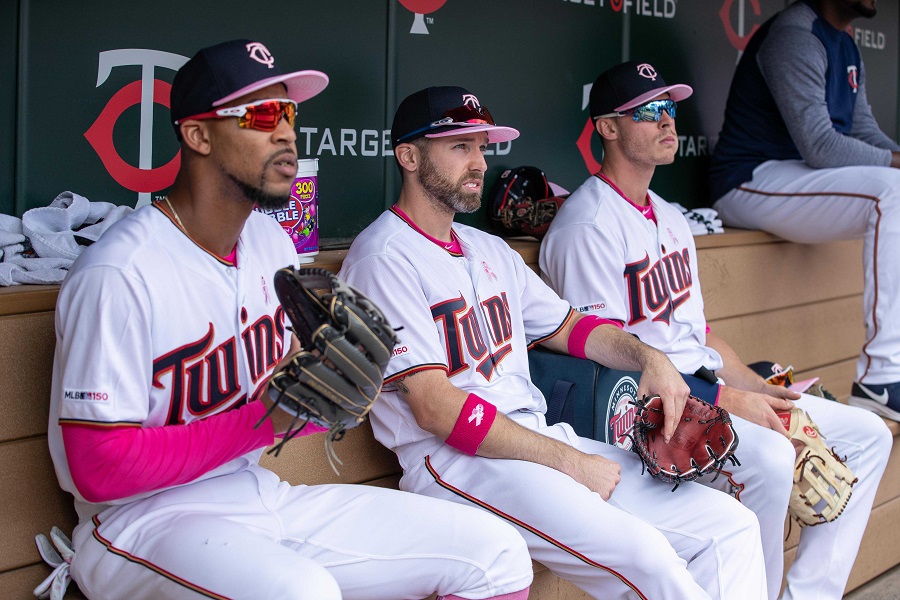 Last season much was made of Buxton being injury-prone. He dealt with migraines during an unfortunate time with the team down in Puerto Rico, and then broke a toe during a potentially unnecessary rehab stint. Minnesota rushed him back to the lineup and ultimately, he played just 28 games before being shut down (reluctantly) in September. After a promising end to 2017, it was hardly the year anyone involved wanted. In 2019 he’s made a couple of different appearances on the IL, and while frustrating, no one in the room is more disappointed than Byron himself. Concussions have been a thing for Buxton over the course of his career, and the latest one suffered while simply diving forward for a fly ball had all the appearances of a fluke. With his head and neck surging forward and his face/chin driving into the ground, the jarring movement was enough to do damage. He missed roughly two weeks before being cleared (although that was complicated by the removal of his wisdom teeth). The current shoulder injury was caused when tracking down a ball in the gap. The collision with the wall was seemingly not significant, but enough force was there to cause harm. For me neither of the most recent maladies would fall into the category of reckless aggression. Minnesota has made strides in Buxton’s positioning, and through conversation with Byron, in hopes of sparing him from unnecessary hits. Taking matters into his own hands as well, Buxton told Dan Hayes of The Athletic that he bulked up this winter in hopes of a more durable stature. In short, I’m not sure there’s much to be done here than blame bad luck. One of the most spectacular catches Byron has ever made happened in May 2017 against the Cleveland Indians. Flying towards the right-center gap, he leapt and used the wall as the sole stop for his momentum. The catch was great, the fallout was not. It’s plays like this that while spectacular, Minnesota is undoubtedly trying to avoid. Byron has the ability to generate 5-star catches (per Statcast) and lead the big leagues in Outs Above Average while rarely sacrificing himself going back on the baseball. Discussion about avoiding the wall has taken place, and even with a well ingrained instinct to make all sacrifices, I believe the message of staying healthy and available to the team has been given. Whenever he returns, we’ll have to hope that the hot hitting follows suit (10-26, 7 XBH since his concussion return). The Twins will continue working with him to find ways to avoid preventable injury, and they’ll chalk up situations like this one as an unfortunate result and opportunity for strengthened health. Now it’s on Jake Cave to step up. There’s no denying that Minnesota is worse without Buxton. He patrols the outfield and allows the corners to remain strong, while giving utility players one less spot they need to key in on. Max Kepler is an above average centerfielder, but he’s not Byron, and the guys around him now must pick up the slack. So far, we haven’t seen Cave do that, but the evidence is there. Cave is not a good center fielder. He lacks the instincts to adequately cover so much ground at Target Field. He is a serviceable right fielder though and that’s what Minnesota needs from him for much of the next month. The defense shouldn’t be called into question as much down the line, but that bat must begin to play. Though sporadic, his 103 plate appearances have resulted in a paltry .198/.320/.302 slash line. He’s got just five extra-base hits and has only been a fraction of the .786 OPS player we saw a season ago. Still 26-years-old and having played less than 130 big league games, Cave is continuing through an acclimation process. 2018 showed us that the ability is there, and in 48 Triple-A games this season he owns a .352/.393/.592 slash line with 29 extra-base hits (seven homers). Jake has nearly doubled his big-league walk rate this year, and he’s trimmed a bit off his strikeout rate. Whiffing the same amount but chasing a bit less, his hard-hit rate is now over 41%. Arguably the most significant issue Cave is dealing with this season is his launch angle. Hitting the ball harder matters little when he dropped to a 16.1% line drive rate (from 25.7%) and a 17.9% fly ball rate (from 30.6%). A 10-degree launch angle a season ago has dropped to the tune of a 3.7 degree mark this season. Opportunity for success lies most within addressing this problem. It will be on James Rowson to work with Cave on getting back to what he was doing last season. Lifting the ball must be a part of his game and wasting significant quality barreled balls isn’t something a fringe batter can afford. Over the next month we’ll definitely miss Byron Buxton. We need to spend less time worrying about how to change or overhaul his style of play though. This is an unfortunate situation that the Twins face, but it isn’t one that’s been created by carelessness on Buxton’s part. To mitigate the impact of his presence, or lack thereof in the lineup, it will be on Jake Cave to improve his 2019 output and bring the numbers he’s posted in Rochester to Minnesota. This was pulled over from our blogs section originally appearing from Off The Baggy. You can start your own blog here.
-
Over the weekend the Minnesota Twins were dealt a blow they’ve too often been a victim of this season. Byron Buxton, arguably the most important player on this club, hit the Injured List with what essentially boils down to a shoulder dislocation. The play in question was hardly an aggressive jolt to his body, but what initially resulted in a lineup scratching for soreness has turned into a month-long question mark. For Byron this theme gets examined again, and for Jake Cave the time is now. Last season much was made of Buxton being injury prone. He dealt with migraines during an unfortunate time with the team down in Puerto Rico, and then broke a toe during a potentially unnecessary rehab stint. Minnesota rushed him back to the lineup and ultimately, he played just 28 games before being shut down (begrudgingly) in September. After a promising end to 2017, it was hardly the year anyone involved wanted. In 2019 he’s made a couple of different appearances on the Injured List, and while frustrating, no one in the room is more disappointed than Byron himself. Concussions have been a thing for Buxton over the course of his career, and the latest one suffered while simply diving forward for a fly ball had all the parameters of a fluke. With his head and neck surging forward and his face/chin driving into the ground, the jarring movement was enough to do damage. He missed roughly two weeks before being cleared (although that was complicated by the removal of his wisdom teeth). The shoulder injury was caused when tracking down a ball in the gap. There wasn’t a significant collision with the wall, but enough pressure was forced to cause harm. Neither of the most recent maladies would fall into the category of reckless aggression for me. Minnesota has made strides in Buxton’s positioning, and through conversation with Byron, in hopes of sparing him from unnecessary hits. Taking matters into his own hands as well, Buxton told Dan Hayes of The Athletic that he bulked up this winter in hopes of a more durable stature. In short, I’m not sure there’s much to be done here than blame bad luck. One of the most spectacular catches Byron has ever made happened in May 2017 against the Cleveland Indians. Flying towards the right-center gap, he leapt and used the wall as a sole stopping power for his momentum. The catch was great, the fallout was not. It’s plays like this that while spectacular, Minnesota is undoubtedly trying to avoid. Byron has the ability to generate 5-star catches (per Statcast) and lead the big leagues in Outs Above Average while rarely sacrificing himself going back on the baseball. Discussion about avoiding the wall has taken place, and even with a well engrained instinct to make all sacrifices, I believe the message of availability is there. Whenever he returns, we’ll have to hope that the hot hitting follows suit (10-26 7 XBH since his concussion return). The Twins will continue working with him to find ways to avoid preventable injury, and they’ll chalk up situations like this one, as an unfortunate result and opportunity for strengthened health. Now it’s on Jake Cave to step up. There’s no denying that Minnesota is worth without Buxton. He patrols the outfield and allows the corners to remain strong, while giving utility players one less spot they need to key in on. Max Kepler is an above average centerfielder, but he’s not Byron, and the guys around him now must pick up the slack. So far, we haven’t seen Cave do that, but the evidence is there. Cave is not a good centerfielder. He lacks the instincts to adequately cover so much ground at Target Field. He is a serviceable right fielder though and that’s what Minnesota needs from him for much of the next month. The defense shouldn’t be called into question as much down the line, but that bat must begin to play. Though sporadic, his 103 plate appearances have results in a paltry .198/.320/.302 slash line. He’s got just five extra-base hits and hasn’t been a shred of the .786 OPS player we saw a season ago. Still 26-years-old and having played less than 130 big league games, Cave is continuing through an acclimation process. 2018 showed us that the ability is there, and in 48 Triple-A games this season he owns a .352/.393/.592 slash line with 29 extra-base hits (seven homers). Jake has nearly doubled his big-league walk rate this year, and he’s trimmed a bit off his strikeout rate. Whiffing the same amount but chasing a bit less, his hard-hit rate is now over 41%. Arguably the most egregious issue Cave has dealt with this season is his launch angle. Hitting the ball harder matters little when he dropped to a 16.1% line drive rate (from 25.7%) and a 17.9% fly ball rate (from 30.6%). A 10-degree launch angle a season ago has bottomed out to the tune of a 3.7 degree mark this season. Opportunity for success lies most within addressing this problem. It will be on James Rowson to work with Cave on getting back to what he was doing last season. Lifting the ball must be a part of his game and wasting significant quality barreled balls isn’t something a fringe batter can afford. Over the next month we’ll definitely miss Byron Buxton. We need to spend less time worrying about how to change or overhaul his play style though. This is an unfortunate situation that the Twins face, but it isn’t one that’s been created by carelessness on Buxton’s part. To mitigate the impact of his presence, or lack thereof in the lineup, it will be on Jake Cave to rectify his 2019 output and bring the numbers he’s posted in Rochester to Minnesota. For more from Off The Baggy, click here. Follow @tlschwerz
-
Updated with the news of Gausman being sent to the Reds
- 15 replies
-
- 1
-
-
- minnesota twins
- atlanta braves
- (and 3 more)
-
Returning home following a seven game road trip that saw the Minnesota Twins go 5-2, reinforcements made their debuts at Target Field during a three-game set with the hapless Kansas City Royals. Fresh off their first sweep since the end of May, Minnesota plays another interleague foe, this time without the silly caveat of a pitcher stepping into the box. The beginning of a seven-game tilt against Native- named teams, the Twins will look to chop down Atlanta.Brief Overview: These two clubs last faced each other in 2016 when sweeps were traded at the opposing teams ballparks. Atlanta leads the NL East by a healthy seven game margin, but their +58 run differential is nearly one-third of Minnesota’s +141 mark. The Braves have played at Target Field just five times, and the Twins will be looking for their first home win against the unusual foe since their debut game in the new digs. What They Do Well: Atlanta doesn’t possess a lineup quite to the level of Minnesota’s “A” group, but they aren’t far behind. Brian Snitker’s club is second in the National League in terms of offensive fWAR. They are top 10 in baseball when it comes to the long ball, and although the 103 wRC+ puts them near an average baseline, a .334 wOBA is just 4 points (.334) shy of the Dodgers for the top spot in the National League. It’s because of their offense that the Braves have created the lead they have in the NL East, and the run differential is a byproduct of them being able to score in bunches. It’s there where the positives begin to run out however, and if that differential seems like it’s because the Pythag suggests a 61-51 record is more appropriate. What They Do Not Do Well: For a team this good you’d expect the problems to be a bit more muted. Unfortunately on both the pitching and defensive fronts, there aren’t a ton of positives. As a whole, Atlanta’s pitching staff ranks 23rd in baseball. The starters are a respectable 17th but the abomination of a bullpen comes in at 29th. The front office attempted to address this by acquiring Chris Martin, Shane Greene, and Mark Melancon. Martin is a K/BB hero and brings a solid run in 2019 with the Rangers to the senior circuit. Melancon isn’t the guy he was a few years ago, but still has the chops to be a difference maker. Greene was supposed to be the headliner, but peripherals suggested likely regression and that’s come at the Braves expense thus far. In the field Atlanta is 25th in baseball. There’s no area that they significantly lack talent on defense, but the group as a whole falls short of mediocrity. This isn’t the Mets defense that Minnesota had a chance at a couple of weeks ago, but Atlanta does come in behind the divisional foe Chicago White Sox. Individuals Of Note: You can’t talk about Atlanta without first bringing up Ronald Acuna Jr. After winning the NL Rookie of the Year in 2018 he’s had an amazing encore performance. Through the exact same number of games (111) he’s surpassed his 2018 fWAR (3.7) by 0.1. Batting for both power and average, he’s among the most fearsome hitters in the game today. Freddie Freeman continues to be a model of consistency at first base. While not producing defensively to the same Gold Glove-caliber of 2018, he should still be in the conversation. Continuing to fall out of bed and hit for a .300 average has been his MO for years, and the .950 OPS is the third best mark of his career. It wasn’t groundbreaking to expect a healthy Josh Donaldson to contribute for this club. He’s posted a 2.6 fWAR in 2019 and has a wRC+ (127) one point higher than teammate Acuna. Looking at Ozzie Albies as a thrown in would be doing him a disservice, but the point here is that this lineup packs some punch. On the bump it’s impossible to overlook game one starter Mike Soroka. This was always Julio Teheran’s rotation until the former first-round pick took over. He’s 22 years old, gives up the lowest HR/9 in the league, and totes a sparkling 2.37 ERA. Minnesota loves the long ball, but they could have their hands full in this one. Recent History: As noted above, these two teams don’t link up often. Since 2013 they’ve played a grand total of seven times with Atlanta winning five of them. In 2016 Minnesota took the last two contests between the clubs, winning 4-2 and 10-3 in Georgia. Recent Trajectories: Atlanta comes to Target Field having won six of their last ten, but did lose in extras to Cincinnati on Sunday. Minnesota has held serve against a trio of hapless opponents going 8-2 over their last ten, and is currently riding a three-game winning streak. Pitching Matchups: Monday: Odorizzi vs Soroka Tuesday: Berrios vs Fried Foltynewicz Wednesday: Perez vs Fried (Gausman claimed by Reds) Ending Thoughts: This seven game stretch is as about as important as it gets for the Fightin’ Baldelli's the rest of the way. Atlanta is no slouch and Minnesota can’t get caught looking ahead to Cleveland. They’ll take these teams on without Byron Buxton, and neither Michael Pineda nor Sam Dyson will be at their disposal. Getting through this upcoming week with five wins would be massive to set up the final stretch. I think Atlanta gets one of the trio, but give me Minnesota exposing the soft run differential a bit. Having not made predictions for the first few series previews, this prediction would makes it two in a row. Click here to view the article
- 15 replies
-
- 1
-
-
- minnesota twins
- atlanta braves
- (and 3 more)
-
 Brief Overview: These two clubs last faced each other in 2016 when sweeps were traded at the opposing teams ballparks. Atlanta leads the NL East by a healthy seven game margin, but their +58 run differential is nearly one-third of Minnesota’s +141 mark. The Braves have played at Target Field just five times, and the Twins will be looking for their first home win against the unusual foe since their debut game in the new digs. What They Do Well: Atlanta doesn’t possess a lineup quite to the level of Minnesota’s “A” group, but they aren’t far behind. Brian Snitker’s club is second in the National League in terms of offensive fWAR. They are top 10 in baseball when it comes to the long ball, and although the 103 wRC+ puts them near an average baseline, a .334 wOBA is just 4 points (.334) shy of the Dodgers for the top spot in the National League. It’s because of their offense that the Braves have created the lead they have in the NL East, and the run differential is a byproduct of them being able to score in bunches. It’s there where the positives begin to run out however, and if that differential seems like it’s because the Pythag suggests a 61-51 record is more appropriate. What They Do Not Do Well: For a team this good you’d expect the problems to be a bit more muted. Unfortunately on both the pitching and defensive fronts, there aren’t a ton of positives. As a whole, Atlanta’s pitching staff ranks 23rd in baseball. The starters are a respectable 17th but the abomination of a bullpen comes in at 29th. The front office attempted to address this by acquiring Chris Martin, Shane Greene, and Mark Melancon. Martin is a K/BB hero and brings a solid run in 2019 with the Rangers to the senior circuit. Melancon isn’t the guy he was a few years ago, but still has the chops to be a difference maker. Greene was supposed to be the headliner, but peripherals suggested likely regression and that’s come at the Braves expense thus far. In the field Atlanta is 25th in baseball. There’s no area that they significantly lack talent on defense, but the group as a whole falls short of mediocrity. This isn’t the Mets defense that Minnesota had a chance at a couple of weeks ago, but Atlanta does come in behind the divisional foe Chicago White Sox. Individuals Of Note: You can’t talk about Atlanta without first bringing up Ronald Acuna Jr. After winning the NL Rookie of the Year in 2018 he’s had an amazing encore performance. Through the exact same number of games (111) he’s surpassed his 2018 fWAR (3.7) by 0.1. Batting for both power and average, he’s among the most fearsome hitters in the game today. Freddie Freeman continues to be a model of consistency at first base. While not producing defensively to the same Gold Glove-caliber of 2018, he should still be in the conversation. Continuing to fall out of bed and hit for a .300 average has been his MO for years, and the .950 OPS is the third best mark of his career. It wasn’t groundbreaking to expect a healthy Josh Donaldson to contribute for this club. He’s posted a 2.6 fWAR in 2019 and has a wRC+ (127) one point higher than teammate Acuna. Looking at Ozzie Albies as a thrown in would be doing him a disservice, but the point here is that this lineup packs some punch. On the bump it’s impossible to overlook game one starter Mike Soroka. This was always Julio Teheran’s rotation until the former first-round pick took over. He’s 22 years old, gives up the lowest HR/9 in the league, and totes a sparkling 2.37 ERA. Minnesota loves the long ball, but they could have their hands full in this one. Recent History: As noted above, these two teams don’t link up often. Since 2013 they’ve played a grand total of seven times with Atlanta winning five of them. In 2016 Minnesota took the last two contests between the clubs, winning 4-2 and 10-3 in Georgia. Recent Trajectories: Atlanta comes to Target Field having won six of their last ten, but did lose in extras to Cincinnati on Sunday. Minnesota has held serve against a trio of hapless opponents going 8-2 over their last ten, and is currently riding a three-game winning streak. Pitching Matchups: Monday: Odorizzi vs Soroka Tuesday: Berrios vs Fried Foltynewicz Wednesday: Perez vs Fried (Gausman claimed by Reds) Ending Thoughts: This seven game stretch is as about as important as it gets for the Fightin’ Baldelli's the rest of the way. Atlanta is no slouch and Minnesota can’t get caught looking ahead to Cleveland. They’ll take these teams on without Byron Buxton, and neither Michael Pineda nor Sam Dyson will be at their disposal. Getting through this upcoming week with five wins would be massive to set up the final stretch. I think Atlanta gets one of the trio, but give me Minnesota exposing the soft run differential a bit. Having not made predictions for the first few series previews, this prediction would makes it two in a row.
-
I don't think that was the point at all, and did make sure to not that opening packs are essentially gambling. If you are interested in the hobby solely as a means to connect with the game as I am, then buying singles off of eBay, forums, or other websites is certainly the more fiscally feasible avenue.
-
I don't really "collect" football, but I'm a huge Ducks and Marcus Mariota fan. I have a nice PC of his. You can see that here: https://www.flickr.com/photos/21173475@N05/albums/72157702721830081
-
I think almost any commodity has a monetary value, it's just about whether or not it appreciates or depreciates after use. Buying wax boxes of cards is almost certainly a losing proposition given it's a gamble and you're likely never going to match the ROI. However, if you do it solely because you want to collect a player or team, there's a lot of fun to be had. Each year I try to pick a rookie or two that may be under the radar and see if I can't grab some of their prospect cards at $1 or 2 and then make some money if they have a big year.
