Peter Labuza
-
Posts
228 -
Joined
-
Last visited
Content Type
Profiles
News
Minnesota Twins Videos
2026 Minnesota Twins Top Prospects Ranking
2022 Minnesota Twins Draft Picks
Minnesota Twins Free Agent & Trade Rumors, Notes, & Tidbits
Guides & Resources
2023 Minnesota Twins Draft Picks
The Minnesota Twins Players Project
2024 Minnesota Twins Draft Picks
2025 Minnesota Twins Draft Pick Tracker
2026 Minnesota Twins Draft Tracker: Picks & Bonuses
Forums
Blogs
Events
Store
Downloads
Gallery
Everything posted by Peter Labuza
-
 Huge performance by Gray tonight leading into tomorrow's double header.
- 17 replies
-
- 4
-

-
- sonny gray
- mark contreras
- (and 3 more)
-
Pitching Coach Wes Johnson to Abruptly Leave Twins
Peter Labuza replied to John Bonnes's topic in Twins Daily Front Page News
Fwiw, this story from The Athletic in May does not sound like someone particularly upset with his job. It may just be a preference for college ball: Baldelli has one rule: Respect your teammates. Johnson has only one, too: He can’t be the only one in that dugout believing in you. It’s one of the first things he said to Paddack when he came over: You’re one of the best in the world, don’t forget that. It resonated. “The past few years I’ve been searching with a little doubt on the mound not having that conviction and confidence every single pitch. Getting hit around a little bit you can search up there on the mound,” Paddack said. “(Johnson) was like, ‘Look at what you did in ’19 before you had a curveball and a slider.’ He said, you’re a better pitcher than you were in ’19. Our goal is to put it all together now.” Paddack calls Johnson “a little firecracker” infusing the clubhouse with positive energy. Johnson is quick to credit the staff Baldelli has assembled and the way all the new pitchers have quickly bought into what the Twins are doing. The learning is just beginning. The competition to constantly one-up the last guy and push the Twins rotation and the team forward — what Buxton dubs the “bulldog mentality” — is something Minnesota’s starters aim to continue all season. -
Pitching Coach Wes Johnson to Abruptly Leave Twins
Peter Labuza replied to John Bonnes's topic in Twins Daily Front Page News
Two teams fired managers in the middle of the season already. These are jobs and workers have as much right to leave as the employer has to fire them. -
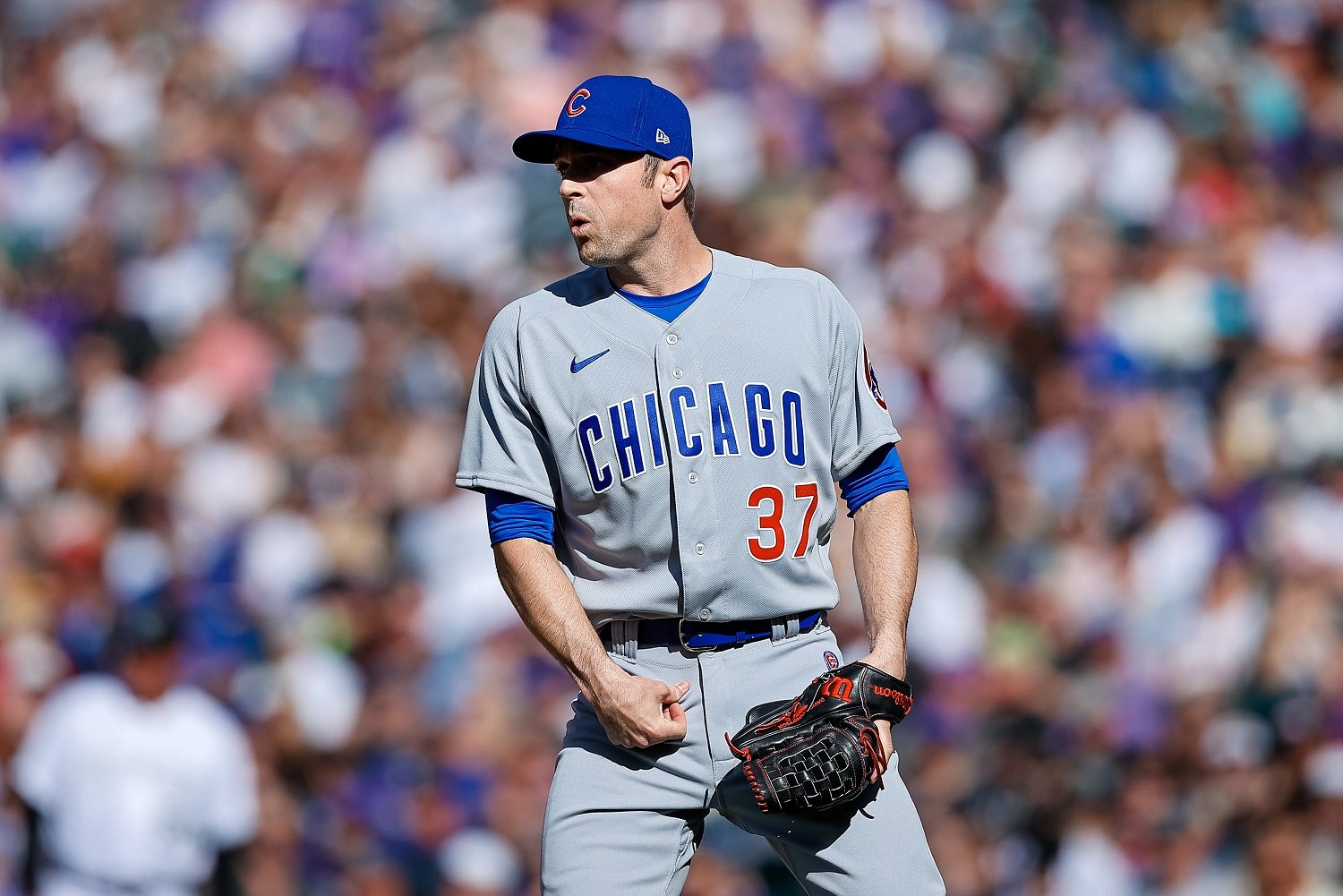 Anyone watching this team meanwhile can see a different problem: a shaky bullpen in need of backup. The Twins currently have a high win percentage but a notably high FIP, which we have already seen act as a recipe for disaster (especially against playoff contending teams). The Twins might be in a better position to snatch a high-caliber arm to slot in every other day—if not two of them—to fill in some of their more questionable pieces. I’ve decided to highlight five arms from teams likely to be sellers at the deadline that the Twins might pursue. David Robertson (Chicago Cubs) K/9: 12.4, BB/9: 4.7 Like Joe Smith, David Robertson is a veteran pitcher at 37 with his fifth major league ball club, filling in a small role for the depleted Cubs as they enter what can only be described as their Pirates phase. After Tommy John, Robertson played a critical role on the 2021 Olympics squad, before signing with the Rays where he demonstrated a strong strikeout rate and low walk rate in his twelve appearances and four postseason appearances. Now with the Cubs, Robertson looks even better, quickly working his way to the closer role, where hitters are going .150 against him with a single home run in 23 innings of work. Unlike the younger pitchers like Duran who just throw for heat, Robertson is all about that spin. His cutter is now mixed into both a slider and a curveball, the latter two which have produced two hits total. Robertson basically is moving his ball all over the plate and players cannot get a barrel on it. The Cubs are eager for some prospects to rebuild the greatness of 2016 and following the model of quick signings they can flip for a high caliber prospect. Robertson’s surprising bargain contract is one the Twins should be immediately eying, either to play a late inning against the heart of the order. Anthony Bass (MIA) K/9: 8.3, BB/9: 2.1 Kim Ng’s Marlins are yet to become a playoff contending team, but she’s slowly building a set of arms that are just waiting to see the Phillies or Mets do the things that have made those fan bases literally a health hazard and sneak into the NL East top spot. But until then, they will need to flip some players and hope the owners actually allow for some serious spending. I tracked Anthony Bass while listening to some spring training games and the booth seems quite enthused. After struggling in 2021, Bass has become an eighth inning set up man with one of the hardest to hit pitches in the game. Hitters are barely making contact with his slider, which has produced a 38% whiffs. His sinker can be a problem, when pitchers are making solid contact. Miami hasn’t had too many competitive games, but Bass seems like a more reliable swing and miss guy to throw into the pen to come out maybe for the third time through the order. Plus, Bass has a $3 million club option for 2023, and it might be the right time to bring his arm into the Twins. Michael Fulmer (DET) K/9: 9.4, BB/9: 4.1 It’s not usual that the competition deals a player to their division rivals, but I don’t think the Detroit Tigers will be too picky about who gets one of their bright stars of their bullpen. Two seasons ago, the former Rookie of the Year was getting lit up for an ERA just under 9.00. Now he’s sitting at 2.35 over 23 innings with a slider that batters are barely touching and a fastball that’s touching 100 while becoming a bit of a mentor for the young arms out in Detroit. The walk rate is a problem—Fulmer is great with getting into the zone but hitters are rarely chasing anything out—and he hasn’t performed well in high leverage situations, so Fulmer might slide in for a mid-inning appearance against the bottom of a few line ups as the Twins make it through the dog days of summer. Given the necessity of the divorce from the Tiger, this might just be the cheapest trade the Twins can do and one they can easily depart if it doesn't work out. Daniel Bard (COL) K/9: 11.6, BB/9: 4.1 Daniel Bard plays at Coors Field, but he’s also kept players to a BABIP under 200 in the hitter friendly park (on the road, it’s .130). Bard’s basically abandoned his fastball by throwing a 98mph sinker alongside a much slower slider that hitters can’t tell the difference. Bard at once seemed done with the majors, but the success of that sinker with its incredible change up movement has been a secret sauce in his comeback in Colorado. Sporting a WHIP under 1.00 and almost as many strikeouts as the Rockies’ starters, opponents are averaging a paltry .141. He’s turning numerous ground balls, which is a perfect concoction when you had a defensive line of Carlos Correa and Gio Urshela to work with. Now we just need to get the Rockies to actually pick up their phones this year. Tanner Rainey (WSN) K/9: 11.1, BB/9: 3.4 On paper, Tanner Rainey might not look like the kind of player you trade for, but relief trades are about experimentation. Rainey mostly depends on a fastball that tops around 97 and a slider that hitters are missing half the time he throws it. Rainey essentially abandoned his change up from last year, focusing on increasing the spin on his fastball. He strikes players out about the same level as Griffin Jax with just a dent of a higher walk rate. Rainer has saved seven games in his 20 innings of work, and he hasn’t been as sharp in June, but he might be a critical piece for the bullpen in need of revival. Any other relievers you’ve been eyeing this season? Sound off in the comments.
 -
When it comes to the looming trade deadline, most Twins mostly have their eyes on a number of high level starting pitchers. Of course, the Twins will be contending with a number of other teams for those players and haven't necessarily outbid in the past. As strong as the farm system is, the Twins have been less keen to trade core pieces in the past, while teams like the Dodgers and the Rays can easily depart with a literal starting ace pitcher in the hope of October glory (call it a bad trade that the Twins scored on, but the Rays are still playoff contenders and are hardly crying over the loss). Anyone watching this team meanwhile can see a different problem: a shaky bullpen in need of backup. The Twins currently have a high win percentage but a notably high FIP, which we have already seen act as a recipe for disaster (especially against playoff contending teams). The Twins might be in a better position to snatch a high-caliber arm to slot in every other day—if not two of them—to fill in some of their more questionable pieces. I’ve decided to highlight five arms from teams likely to be sellers at the deadline that the Twins might pursue. David Robertson (Chicago Cubs) K/9: 12.4, BB/9: 4.7 Like Joe Smith, David Robertson is a veteran pitcher at 37 with his fifth major league ball club, filling in a small role for the depleted Cubs as they enter what can only be described as their Pirates phase. After Tommy John, Robertson played a critical role on the 2021 Olympics squad, before signing with the Rays where he demonstrated a strong strikeout rate and low walk rate in his twelve appearances and four postseason appearances. Now with the Cubs, Robertson looks even better, quickly working his way to the closer role, where hitters are going .150 against him with a single home run in 23 innings of work. Unlike the younger pitchers like Duran who just throw for heat, Robertson is all about that spin. His cutter is now mixed into both a slider and a curveball, the latter two which have produced two hits total. Robertson basically is moving his ball all over the plate and players cannot get a barrel on it. The Cubs are eager for some prospects to rebuild the greatness of 2016 and following the model of quick signings they can flip for a high caliber prospect. Robertson’s surprising bargain contract is one the Twins should be immediately eying, either to play a late inning against the heart of the order. Anthony Bass (MIA) K/9: 8.3, BB/9: 2.1 Kim Ng’s Marlins are yet to become a playoff contending team, but she’s slowly building a set of arms that are just waiting to see the Phillies or Mets do the things that have made those fan bases literally a health hazard and sneak into the NL East top spot. But until then, they will need to flip some players and hope the owners actually allow for some serious spending. I tracked Anthony Bass while listening to some spring training games and the booth seems quite enthused. After struggling in 2021, Bass has become an eighth inning set up man with one of the hardest to hit pitches in the game. Hitters are barely making contact with his slider, which has produced a 38% whiffs. His sinker can be a problem, when pitchers are making solid contact. Miami hasn’t had too many competitive games, but Bass seems like a more reliable swing and miss guy to throw into the pen to come out maybe for the third time through the order. Plus, Bass has a $3 million club option for 2023, and it might be the right time to bring his arm into the Twins. Michael Fulmer (DET) K/9: 9.4, BB/9: 4.1 It’s not usual that the competition deals a player to their division rivals, but I don’t think the Detroit Tigers will be too picky about who gets one of their bright stars of their bullpen. Two seasons ago, the former Rookie of the Year was getting lit up for an ERA just under 9.00. Now he’s sitting at 2.35 over 23 innings with a slider that batters are barely touching and a fastball that’s touching 100 while becoming a bit of a mentor for the young arms out in Detroit. The walk rate is a problem—Fulmer is great with getting into the zone but hitters are rarely chasing anything out—and he hasn’t performed well in high leverage situations, so Fulmer might slide in for a mid-inning appearance against the bottom of a few line ups as the Twins make it through the dog days of summer. Given the necessity of the divorce from the Tiger, this might just be the cheapest trade the Twins can do and one they can easily depart if it doesn't work out. Daniel Bard (COL) K/9: 11.6, BB/9: 4.1 Daniel Bard plays at Coors Field, but he’s also kept players to a BABIP under 200 in the hitter friendly park (on the road, it’s .130). Bard’s basically abandoned his fastball by throwing a 98mph sinker alongside a much slower slider that hitters can’t tell the difference. Bard at once seemed done with the majors, but the success of that sinker with its incredible change up movement has been a secret sauce in his comeback in Colorado. Sporting a WHIP under 1.00 and almost as many strikeouts as the Rockies’ starters, opponents are averaging a paltry .141. He’s turning numerous ground balls, which is a perfect concoction when you had a defensive line of Carlos Correa and Gio Urshela to work with. Now we just need to get the Rockies to actually pick up their phones this year. Tanner Rainey (WSN) K/9: 11.1, BB/9: 3.4 On paper, Tanner Rainey might not look like the kind of player you trade for, but relief trades are about experimentation. Rainey mostly depends on a fastball that tops around 97 and a slider that hitters are missing half the time he throws it. Rainey essentially abandoned his change up from last year, focusing on increasing the spin on his fastball. He strikes players out about the same level as Griffin Jax with just a dent of a higher walk rate. Rainer has saved seven games in his 20 innings of work, and he hasn’t been as sharp in June, but he might be a critical piece for the bullpen in need of revival. Any other relievers you’ve been eyeing this season? Sound off in the comments. View full article
-
4 Shortstop Options for the 2023 Twins
Peter Labuza replied to Cody Christie's topic in Twins Daily Front Page News
I think worth considering that if Correa were to sign long term (a) he would accept a lower year average (not by much, but think $31-32, at 10 years; if the Twins can afford him at this level, they can afford him a bit lower). This is a team currently with two of its three biggest contracts ever, but it's still about $10 million below its highest total. Secondly, if Correa signs, all the SS prospects become either backup candidates or trade candidates. At some point, the Twins are going to need to trade for something, whether starting pitchers or most likely a top catching candidate. Of course you want a back up SS, but it will make it useful to have these players who could be used by other teams if Correa becomes a long term figure in this org. -
I think as Nick Nelson pointed out on Twitter, we can maybe be frustrated with how Rocco is resting players, but at least he isn't doing an intentional walk on a 1-2 count and literally getting a "Fire Rocco" chant going.
- 76 replies
-
- 3
-
-
- luis arraez
- chi chi gonzalez
- (and 1 more)
-
Ranking the Twins Designated Hitters So Far
Peter Labuza replied to Peter Labuza's topic in Twins Daily Front Page News
My thought is this wouldn't be a bad off season for the Twins to court Willson Contreras. -
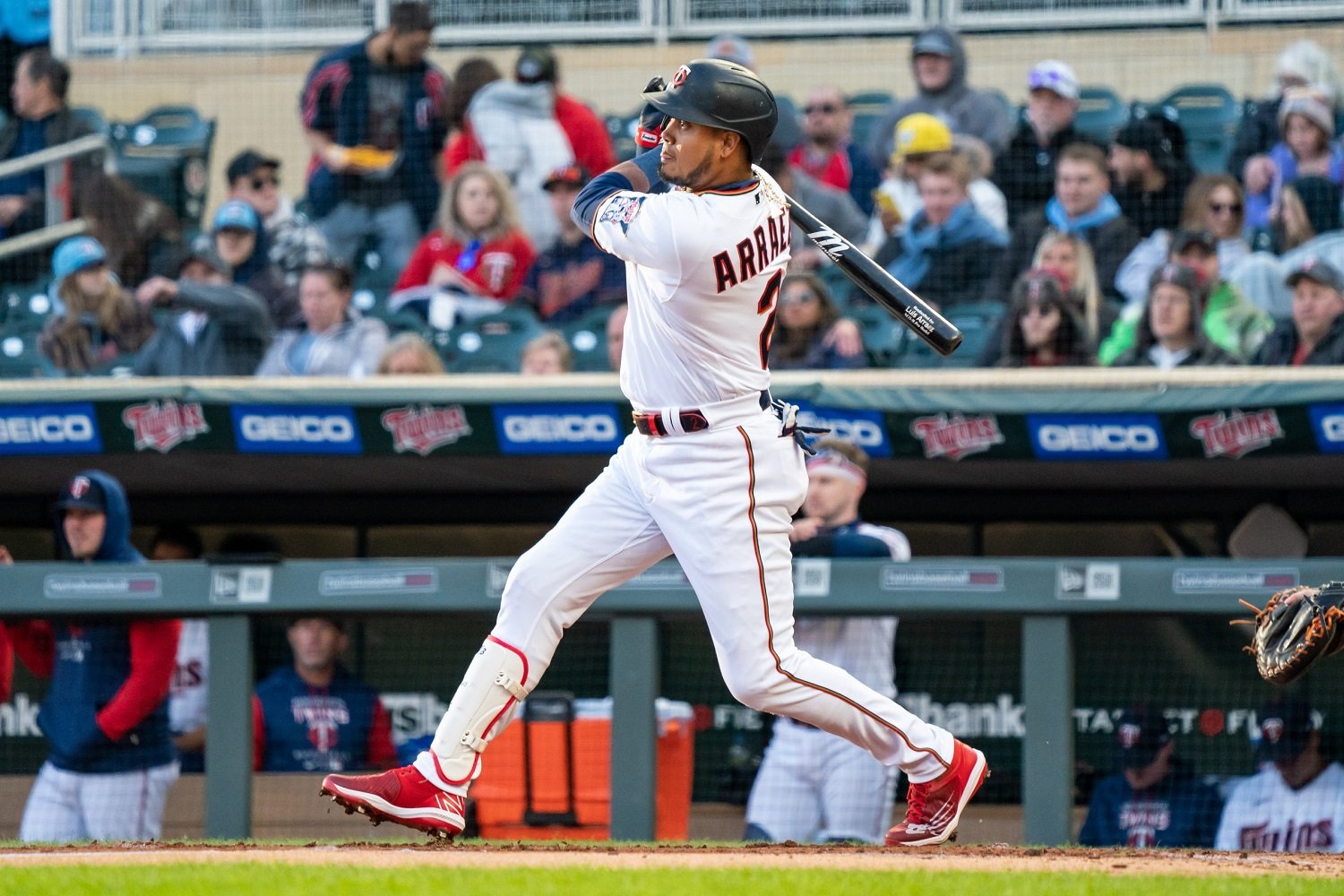 But if the Twins would like to see more than a pair of Wild Card games and a continued playoff losing streak, they need to find an effective way to use the DH. Without Cruz this year, the Twins have given a number of players a parade through the position. However, these hitters are currently batting around .234, which is essentially middle of the league. By breaking down who is taking those plate appearances, it becomes clear who has excelled in the position and who might just be better taking a full day of rest. I removed those who basically have a game or two to their name and looked at how these players have faired, and it will of course be seen how returning minor leaguers like Alex Kirilloff or Royce Lewis might fare down the stretch. 5. Byron Buxton As DH: 41 PAs, .114/.244/.200 As CF: 124 PAs, .250/.315/.607 It actually seems quite surprising in retrospect, but Byron Buxton never stood in the plate as DH a single time before this season. His 41 appearances at the plate are the definition of small sample, particularly when most have come after his unfortunate knee injury, but one thing is clear: the Twins could just rest Buxton when it comes to when he’s not playing CF. I’m as big of a Buxton defender as they come, but something doesn’t seem to sit right when he only appears from the bench. All reports about his continued knee injury seem to point to it effecting his hitting more than his defense. Does getting loose out in CF help him out? Again, we probably need to see Buxton look like April Buxton before we can make a final ruling, but it is clear that he might not be needed in this position if he can play full time in the field. 4. Ryan Jeffers As DH: 20 PAs, .167/.250/.167 As Catcher: 117 PAs, .165/.259/.301 It was close to see who was worse between Buxton and Jeffers, but I'm giving the edge to Jeffers on the advantage that he has only appeared as DH three times since the beginning of May, and two in these last couple weeks where bats have been depleted, But Jeffers has struggled at the plate; his WRC+ in the last month is a brutal 16 (where 100 is league average). The Twins have a troubling lack of prospects underneath their pair of catchers, meaning Jeffers is here to stay as long as he can frame. But given their plan to forgo a backup catcher in the roster, his lack of DH hitting should be a clear sign to keep him on the bench in case Gary Sánchez goes down. With only three singles in his 20 PAs, Jeffers doesn’t belong in the role, which seems to be now in the plan. 3. Kyle Garlick and Luis Arráez Garlick as DH: 11 PAs, .375/.455/.750 Garlick as Outfielder: 48 PAs, .250/.313/.614 Arráez as DH: 17 PAs, .333/.412/.333 Arráez as Infielder: 159 PAs, .348/.434/.406 I’m pairing the two mashers here for this team given their similarities: they have barely played more than a few games each as DH, yet both have shown tremendous numbers. Their problem is they could easily be put in the field. Garlick has proven himself entirely capable as an outfielder, while Arráez has triumphed at first base in his unexpected role. Garlick's three hits as DH have all scored runs, cementing his role as a bench weapon. Arráez DH role—particularly minimized after Miguel Sanó’s exit gave him a more permanent position,, essentially matched his now league leading batting average. But his DH performance on Sunday was the kind that makes him essential, reaching base in every at bat with four singles and a walk. As the Twins shuffle the line up through the season, having Arráez out of any line up will seem insane. 2. Trevor Larnach As DH: 26 PAs, .375/.423/.667 As Outfielder: 102 PAs, .225/.304/.416 In a year where minor leaguers have shown both greatness and questions, Trevor Larnach has quietly proven his weight in the big leagues. His playing time has been limited in right field behind a hot hitting Max Kepler, though he got to show some of his talents this weekend in Toronto because of…choices. Larnach’s lefty bat makes perfect for platooning out in the field, though notably has shown some incredible defensive skill in recent games. But the bat is what matters here, and Larnach has smashed four doubles and a homer alongside a handful of singles and walks when appearing as DH. As the outfield becomes a bit crowded with the likely return of Alex Kirilloff and Royce Lewis, Larnach will prove himself as capable bat by stepping into DH roles when needed. 1. Gary “El Gary” Sánchez As DH: 75 PAs, .246/.307/.449 As Catcher: 96 PAs, .221/.281/.453 Hot streaks are fickle. Players can burn bright for just a week and then seemingly disappear into the ether. And yet, it is hard not to feel joy when a hitter finds that sweet spot and pretend it might not last forever. Given how it felt like he was kicked to the curb in New York, Gary Sánchez’s hot streak has been the kind that brings a tear to your eye after every launched ball. Let’s put it this way. The Twins have 14 doubles from their designated hitters; Sánchez has hit 8 of them. Beyond the obvious candidates, Sánchez has justified having himself in the batting line up every day right now as the leading catchers in baseball in RBIs. He's hitting a lot like early season Buxton with some of the top percentiles in Hard Hit balls, Exit Velocity, and Barrels off the bat. His ISO during the last month puts him in the same conversation as franchise leaders like Manny Machado and George Springer. His strikeout rate is obviously not the best, but the opportunities it creates is why he has slowly moved up in the batting order. Put it this way: if you erased all the names from baseball, Rocco Baldelli would put Sánchez as lead off DH in lieu of Buxton. Not everything has clicked—most of Sánchez’s home runs have come on his catching days, but this is a man who is making the most of these extra ABs as a catcher. And when these bats are unreliable, Sánchez is proving his worth behind the plate with essentially now the same framing rate as Jeffers. In fact, Sanchez has a 0.5 fWAR to the Yankees' Kyle Higashioka with a -0.1 fWAR. Feeling out of place in New York, Sánchez seems at home in Minnesota according to the recent profile by Dan Hayes. In a line up where the Twins need power, Sánchez has quietly shown what it might look like. Who should DH for the Twins? Sound off in the comments.
- 10 comments
-
- 3
-
-
- gary sanchez
- trevor larnach
- (and 3 more)
-
Like many teams throughout the league, the Twins have forgone a typical Designated Hitter, instead using the position to help some of the usual starters find a semi-rest day. The decision to forgo a permanent hitter in the decision has paid off— with MLB's strange ball tactics this season flying them barely out to the warning tracks, only three DHs are above .300. and it certainly looks like Father Time has finally caught up to Nelson Cruz. But if the Twins would like to see more than a pair of Wild Card games and a continued playoff losing streak, they need to find an effective way to use the DH. Without Cruz this year, the Twins have given a number of players a parade through the position. However, these hitters are currently batting around .234, which is essentially middle of the league. By breaking down who is taking those plate appearances, it becomes clear who has excelled in the position and who might just be better taking a full day of rest. I removed those who basically have a game or two to their name and looked at how these players have faired, and it will of course be seen how returning minor leaguers like Alex Kirilloff or Royce Lewis might fare down the stretch. 5. Byron Buxton As DH: 41 PAs, .114/.244/.200 As CF: 124 PAs, .250/.315/.607 It actually seems quite surprising in retrospect, but Byron Buxton never stood in the plate as DH a single time before this season. His 41 appearances at the plate are the definition of small sample, particularly when most have come after his unfortunate knee injury, but one thing is clear: the Twins could just rest Buxton when it comes to when he’s not playing CF. I’m as big of a Buxton defender as they come, but something doesn’t seem to sit right when he only appears from the bench. All reports about his continued knee injury seem to point to it effecting his hitting more than his defense. Does getting loose out in CF help him out? Again, we probably need to see Buxton look like April Buxton before we can make a final ruling, but it is clear that he might not be needed in this position if he can play full time in the field. 4. Ryan Jeffers As DH: 20 PAs, .167/.250/.167 As Catcher: 117 PAs, .165/.259/.301 It was close to see who was worse between Buxton and Jeffers, but I'm giving the edge to Jeffers on the advantage that he has only appeared as DH three times since the beginning of May, and two in these last couple weeks where bats have been depleted, But Jeffers has struggled at the plate; his WRC+ in the last month is a brutal 16 (where 100 is league average). The Twins have a troubling lack of prospects underneath their pair of catchers, meaning Jeffers is here to stay as long as he can frame. But given their plan to forgo a backup catcher in the roster, his lack of DH hitting should be a clear sign to keep him on the bench in case Gary Sánchez goes down. With only three singles in his 20 PAs, Jeffers doesn’t belong in the role, which seems to be now in the plan. 3. Kyle Garlick and Luis Arráez Garlick as DH: 11 PAs, .375/.455/.750 Garlick as Outfielder: 48 PAs, .250/.313/.614 Arráez as DH: 17 PAs, .333/.412/.333 Arráez as Infielder: 159 PAs, .348/.434/.406 I’m pairing the two mashers here for this team given their similarities: they have barely played more than a few games each as DH, yet both have shown tremendous numbers. Their problem is they could easily be put in the field. Garlick has proven himself entirely capable as an outfielder, while Arráez has triumphed at first base in his unexpected role. Garlick's three hits as DH have all scored runs, cementing his role as a bench weapon. Arráez DH role—particularly minimized after Miguel Sanó’s exit gave him a more permanent position,, essentially matched his now league leading batting average. But his DH performance on Sunday was the kind that makes him essential, reaching base in every at bat with four singles and a walk. As the Twins shuffle the line up through the season, having Arráez out of any line up will seem insane. 2. Trevor Larnach As DH: 26 PAs, .375/.423/.667 As Outfielder: 102 PAs, .225/.304/.416 In a year where minor leaguers have shown both greatness and questions, Trevor Larnach has quietly proven his weight in the big leagues. His playing time has been limited in right field behind a hot hitting Max Kepler, though he got to show some of his talents this weekend in Toronto because of…choices. Larnach’s lefty bat makes perfect for platooning out in the field, though notably has shown some incredible defensive skill in recent games. But the bat is what matters here, and Larnach has smashed four doubles and a homer alongside a handful of singles and walks when appearing as DH. As the outfield becomes a bit crowded with the likely return of Alex Kirilloff and Royce Lewis, Larnach will prove himself as capable bat by stepping into DH roles when needed. 1. Gary “El Gary” Sánchez As DH: 75 PAs, .246/.307/.449 As Catcher: 96 PAs, .221/.281/.453 Hot streaks are fickle. Players can burn bright for just a week and then seemingly disappear into the ether. And yet, it is hard not to feel joy when a hitter finds that sweet spot and pretend it might not last forever. Given how it felt like he was kicked to the curb in New York, Gary Sánchez’s hot streak has been the kind that brings a tear to your eye after every launched ball. Let’s put it this way. The Twins have 14 doubles from their designated hitters; Sánchez has hit 8 of them. Beyond the obvious candidates, Sánchez has justified having himself in the batting line up every day right now as the leading catchers in baseball in RBIs. He's hitting a lot like early season Buxton with some of the top percentiles in Hard Hit balls, Exit Velocity, and Barrels off the bat. His ISO during the last month puts him in the same conversation as franchise leaders like Manny Machado and George Springer. His strikeout rate is obviously not the best, but the opportunities it creates is why he has slowly moved up in the batting order. Put it this way: if you erased all the names from baseball, Rocco Baldelli would put Sánchez as lead off DH in lieu of Buxton. Not everything has clicked—most of Sánchez’s home runs have come on his catching days, but this is a man who is making the most of these extra ABs as a catcher. And when these bats are unreliable, Sánchez is proving his worth behind the plate with essentially now the same framing rate as Jeffers. In fact, Sanchez has a 0.5 fWAR to the Yankees' Kyle Higashioka with a -0.1 fWAR. Feeling out of place in New York, Sánchez seems at home in Minnesota according to the recent profile by Dan Hayes. In a line up where the Twins need power, Sánchez has quietly shown what it might look like. Who should DH for the Twins? Sound off in the comments. View full article
-
I know when the rumors of Correa expressing interest in a long term deal in Minnesota felt very cool, but I feel it's going to be difficult for the Twins to look at the combo of Lewis and Palacios and feel this is where they need to spend their money.
- 93 replies
-
- 6
-
-
- luis arraez
- gary sanchez
- (and 3 more)
-
The Twins are pinch-hitting more than ever, finding success through surprising depth and smart deployment of these utility, platoon hitters. Injuries can kill a season, and Twins fans know this all too well. Watching this week as players like Carlos Correa, Royce Lewis, Gilberto Celestino, and Sonny Gray all take IL stints for various issues have all given fans a bit more anxiety as they hope the team can hold their own against some of baseball's most brutal rotations in Toronto and New York (the less said about players who will not be crossing the border, the better). These injuries are also forcing the Twins to essentially miss out on their top advantage this year so far: pinch hitting. Watching this year, it is hard to not notice the amount of shuffling in the lineup during a game. Despite a strong core, it has become almost expected to see players like Kyle Garlick, Nick Gordon, and Celestino appearing in the latter half of a game. Until Miguel Sanó's injury found him a more permanent home at first, the plan with Luis Arráez was to go for his devastating bat against left-handed pitchers only. The Twins have leaned into platoons. So far in 2022, the Twins are fifth in baseball in pinch-hitting plate appearances, trailing the Giants, Rangers, Diamondbacks, and Cubs, and only by a few plate appearances. Of those teams that are leaning into the strategy, Minnesota leads in batting average and on-base percentage. This is not a new development for the Twins, who have been near the top of the American League in pinch-hitting for some time (the absence of a DH made NL pinch-hitting dwarf attempts in the AL until this year’s CBA). But the Twins are on track for more pinch-hitting this season than their previous years. More so, their depth is paying off. Let’s cover the usual caveat: pinch hitting might fall under the umbrella of Rocco Baldelli, but he rarely makes these decisions in isolation. There is a whole management team creating game plans for the manager to help develop these strategies. If you find yourself not a fan of these moves, it is highly unlikely you would see a different game plan under Jayce Tingler or another manager. And pinch hitting has its analytical track record; the Giants took 639 PAs by pinch hitters last season and made off with a record 25 home runs (plus the nickname "Late Night LaMonte" for one particularly successful pinch hitter in former Twins prospect LaMonte Wade Jr.). Using Baseball Savant, I looked at every time a batter came up to the plate who had not started the game by team and season. This system has its defects—it does not necessarily see a difference between Garlick coming in for a good southpaw matchup as opposed to his replacement of Max Kepler after his leg injury in Saturday’s game against Kansas City—but I decided to assume most teams have the same number of PAs that are the results of game injuries. More so, teams need to account for those moments; good teams are built on depth beyond the starters. As of Wednesday morning, the Twins have had 76 pinch-hitting plate appearances so far this season. Since the Baldelli Era began, they have pinch hit 189 and 226 times in the 2019 and 2021 seasons, respectively, and 68 times in the shortened sixty-game season. Given the Twins just rounded the quarter mark of the season, this means they could go just shy of 300 pinch-hitting attempts if they continue on course, a significant jump for the squad. More so, they’ve had more success in these PAs. 27 of the 76 plate appearances have resulted in a hit or a walk. They are batting .281/.382/.406 in these plate appearances, which puts them third in the league On Base Percentage behind only the Royals and the Red Sox (both whom are only around 50 PAs). Over half of these PAs have come on the traditional left-handed batters facing right-handed pitchers and resulted in a .355 batting average, the highest in the league for those teams with over 50 pinch hits this season. The biggest problem has been the power. Of the 27 PAs resulting in some sort of movement on the bases, all have been for singles and walks with the exception of a Kepler home run and a Trevor Larnach double, both during blowouts against the Rays. Even Gio Urshela's game-winning base hit in the amazing Kansas City comeback was a single scoring a single run with bases loaded when more would have put less pressure for the bottom of the ninth. I’m not about to criticize singles and walks—if the #9 batter can reach base, then that means Luis Arráez, (a hopefully better hitting) Buxton, or Correa have an opportunity to unleash. And a good two-thirds of these PAs are coming with at least a man on first if not in scoring position, where the Twins are batting .310 (the league average is .240 in these situations). In part, the Twins’ ability to pinch-hit demonstrates the success of this team with its surprising combination of great rookies with solid veterans. Falvey and Levine learned the hard way last year by trying to replace Buxton in Center Field only to find whiff after whiff within their minor league rosters,. Obviously, many of these pinch hitters are the same as last year, but now in dependable utility roles rather than being thrown into the lions' den to start these games. More so, if prospects like Lewis and Jose Miranda deliver along with possibilities like Spencer Steer, this could be a team with options all over the field. This is the construction every team should want: a mix of rookies all finding their edge as veterans lead the way. They just need to remain healthy for it to work. View full article
-
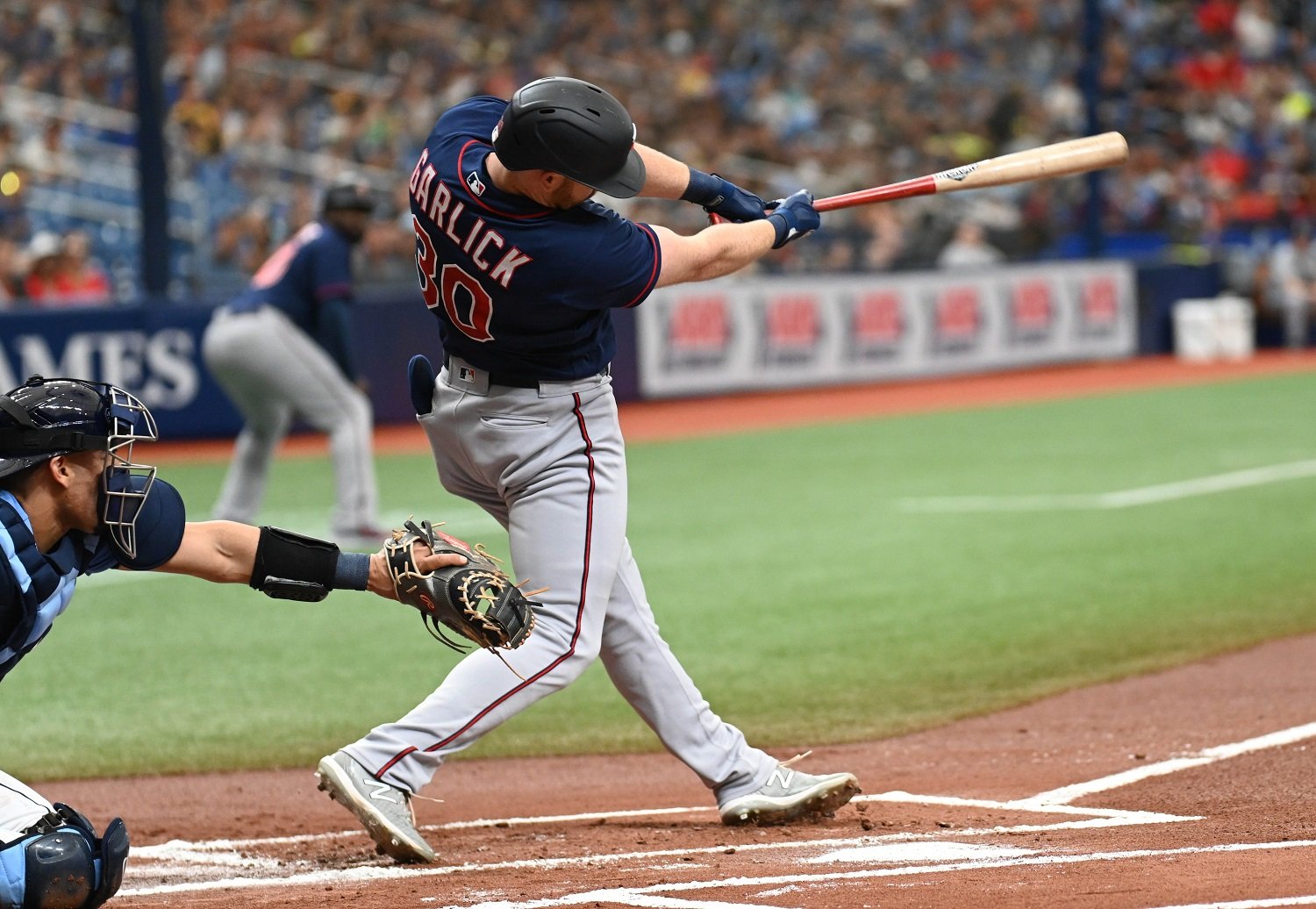 Injuries can kill a season, and Twins fans know this all too well. Watching this week as players like Carlos Correa, Royce Lewis, Gilberto Celestino, and Sonny Gray all take IL stints for various issues have all given fans a bit more anxiety as they hope the team can hold their own against some of baseball's most brutal rotations in Toronto and New York (the less said about players who will not be crossing the border, the better). These injuries are also forcing the Twins to essentially miss out on their top advantage this year so far: pinch hitting. Watching this year, it is hard to not notice the amount of shuffling in the lineup during a game. Despite a strong core, it has become almost expected to see players like Kyle Garlick, Nick Gordon, and Celestino appearing in the latter half of a game. Until Miguel Sanó's injury found him a more permanent home at first, the plan with Luis Arráez was to go for his devastating bat against left-handed pitchers only. The Twins have leaned into platoons. So far in 2022, the Twins are fifth in baseball in pinch-hitting plate appearances, trailing the Giants, Rangers, Diamondbacks, and Cubs, and only by a few plate appearances. Of those teams that are leaning into the strategy, Minnesota leads in batting average and on-base percentage. This is not a new development for the Twins, who have been near the top of the American League in pinch-hitting for some time (the absence of a DH made NL pinch-hitting dwarf attempts in the AL until this year’s CBA). But the Twins are on track for more pinch-hitting this season than their previous years. More so, their depth is paying off. Let’s cover the usual caveat: pinch hitting might fall under the umbrella of Rocco Baldelli, but he rarely makes these decisions in isolation. There is a whole management team creating game plans for the manager to help develop these strategies. If you find yourself not a fan of these moves, it is highly unlikely you would see a different game plan under Jayce Tingler or another manager. And pinch hitting has its analytical track record; the Giants took 639 PAs by pinch hitters last season and made off with a record 25 home runs (plus the nickname "Late Night LaMonte" for one particularly successful pinch hitter in former Twins prospect LaMonte Wade Jr.). Using Baseball Savant, I looked at every time a batter came up to the plate who had not started the game by team and season. This system has its defects—it does not necessarily see a difference between Garlick coming in for a good southpaw matchup as opposed to his replacement of Max Kepler after his leg injury in Saturday’s game against Kansas City—but I decided to assume most teams have the same number of PAs that are the results of game injuries. More so, teams need to account for those moments; good teams are built on depth beyond the starters. As of Wednesday morning, the Twins have had 76 pinch-hitting plate appearances so far this season. Since the Baldelli Era began, they have pinch hit 189 and 226 times in the 2019 and 2021 seasons, respectively, and 68 times in the shortened sixty-game season. Given the Twins just rounded the quarter mark of the season, this means they could go just shy of 300 pinch-hitting attempts if they continue on course, a significant jump for the squad. More so, they’ve had more success in these PAs. 27 of the 76 plate appearances have resulted in a hit or a walk. They are batting .281/.382/.406 in these plate appearances, which puts them third in the league On Base Percentage behind only the Royals and the Red Sox (both whom are only around 50 PAs). Over half of these PAs have come on the traditional left-handed batters facing right-handed pitchers and resulted in a .355 batting average, the highest in the league for those teams with over 50 pinch hits this season. The biggest problem has been the power. Of the 27 PAs resulting in some sort of movement on the bases, all have been for singles and walks with the exception of a Kepler home run and a Trevor Larnach double, both during blowouts against the Rays. Even Gio Urshela's game-winning base hit in the amazing Kansas City comeback was a single scoring a single run with bases loaded when more would have put less pressure for the bottom of the ninth. I’m not about to criticize singles and walks—if the #9 batter can reach base, then that means Luis Arráez, (a hopefully better hitting) Buxton, or Correa have an opportunity to unleash. And a good two-thirds of these PAs are coming with at least a man on first if not in scoring position, where the Twins are batting .310 (the league average is .240 in these situations). In part, the Twins’ ability to pinch-hit demonstrates the success of this team with its surprising combination of great rookies with solid veterans. Falvey and Levine learned the hard way last year by trying to replace Buxton in Center Field only to find whiff after whiff within their minor league rosters,. Obviously, many of these pinch hitters are the same as last year, but now in dependable utility roles rather than being thrown into the lions' den to start these games. More so, if prospects like Lewis and Jose Miranda deliver along with possibilities like Spencer Steer, this could be a team with options all over the field. This is the construction every team should want: a mix of rookies all finding their edge as veterans lead the way. They just need to remain healthy for it to work.
 -
As an Oaklander, had to teach today so only got to go to last night's game. Grrr. But to go back to a question. The line last night was to make sure the bullpen rested, but Duran was brought out for the ninth today in a blow out. That suggests that he needed a go but....was that not really possible last night? When Thielbar could have taken the seventh to start and then Duran either the eighth and/or ninth? Maybe one more night's rest really helped, and this isn't meant to be Monday Quarterbacking, but "we can't touch the bullpen last night" didn't seem true about Duran today.
- 37 replies
-
- 7
-
-
- gary sanchez
- sonny gray
- (and 2 more)
-
Luis Arráez sometimes looks more like a court jester than a batter. His performances at the plate seem almost acrobatic as he chases outside the zone, providing a dance move after laying off a pitch. How else can one describe the short king of the team? At a (reported, though Seth Stohs believes it to be true) 5 foot 10 inches—the shortest hitter on the Twins roster— Arráez often feels like the little batter than could. Since coming back from the COVID IL, Luis Arráez has returned to a tricky role for his short stature: first base. After some questionable defensive plays at third base had a few too many Twins fans in agony, Rocco Baldelli began shifting Arráez across the diamond. Although Arráez is only a few inches shorter than most of his teammates, the position does raise questions: does size matter at first? The common assumption among most baseball experts, and one that Miguel Sanó easily fit, is that the player should be a big target. Lumbering at 6’3” and 270ish pounds, the big man could often be seen stretching for balls from various players over the years. With Sanó out for some time, prospect call up Jose Miranda seems like a more conventional choice for the position at 6’2” and 210 pounds. But as much as everything in baseball can be questioned to find an advantage, perhaps Arráez is not as much of a problem as one might expect. Although you can find the height of every baseball player on their BRef page, actual height data is rarely provided in data sets among hitting or fielding. That makes comparison across the league a bit harder, so I mostly focused on the 2021 performances at first base. These players range from big boys like Matt Olson and Freddie Freeman (6’5”), to players closer to Arráez like Carlos Santana and Ty France (5’11”). Over its history, the league has made way for small hitters like Jose Ramirez and Mookie Betts, but these players are rarely found at first base. Even when first basemen might show some vertical challenge, they might have some size to make up for it. Max Muncy played most of first for the Dodgers in their 2021 season, sitting only two inches above Arráez, but with 50 more pounds of muscle. He can stretch those legs much further than what we’ve seen from Arráez so far. As baseball has transformed, the decrease in the height of a first baseman has changed as well. First base has often been the place, for lack of a better word, smashers with bad defense. As Matt Eddy reported for Baseball America just last year, “A 6-foot player was once deemed too short to play first base, with exceptions made for the most prodigious sluggers, such as Prince Fielder.” But particularly in a game where grounders are going the way of the dodo, that means having excellent defenders at first base has become even more critical than it was even a decade ago. If Arráez’s defense is questionable, it will feel even less important in 2022 Baseball. But the question is not whether Arráez’s defense matters, but whether a tall boy makes for better defense at first base. Although bigger men in 2021 did usually better in Outs Above Average and Defensive Runs Saved, so did Mariners hitter Ty France, who lives only an inch about Arráez. France was close to top in the league in the advance metric UZR, considered by many to be the gold standard of infield defensive stats. At the bottom of this list? Miguel Sanó. UZR can be tricky—Josh Donaldson was close to Sanó in the metric, and the eye test would tell you that the former third basemen was hardly a schlub in the role. But the closer we look, the correlation between height and defense falls apart. There is one key difference that might assist Arráez’s defense over either Miranda or Sanó, which might sound surprising, his speed. Over in Los Angeles, the Dodgers were constantly shifting Max Muncy around, which worked due to his quick reactions and acceleration speed. Muncy is hardly a speed demon, but he is extremely quick in his reflexes. It’s something the Dodgers liked about Freeman as well to bring him over from Atlanta. Arráez’s speed puts him at the same level as Vlad Guerrero Jr., Yuli Gurriel, and Ty France. None of these men are in Muncy’s elite level, but it allows for more flexibility there rather than a single target and might assist in building unique positioning. Most giants at first base do not show a lot of speed, and while Arráez is hardly a demon, his average speed could make for a bit more positioning work through the season. Arráez’s bat, as we’ve seen even in this first month, is too important to not put somewhere in this lineup to drive in runs. As long as the player can manage the role, the singles smasher will play an unsung advantage in a position where the combined first baseman of the league hit for only 108 wRC+ in 2019. So far, he hasn’t missed any balls at first in his few game sample. But in a game that depends on finding advantages in every nook and cranny, perhaps the front office might find a hidden advantage in putting a short king slugger at first. View full article
-
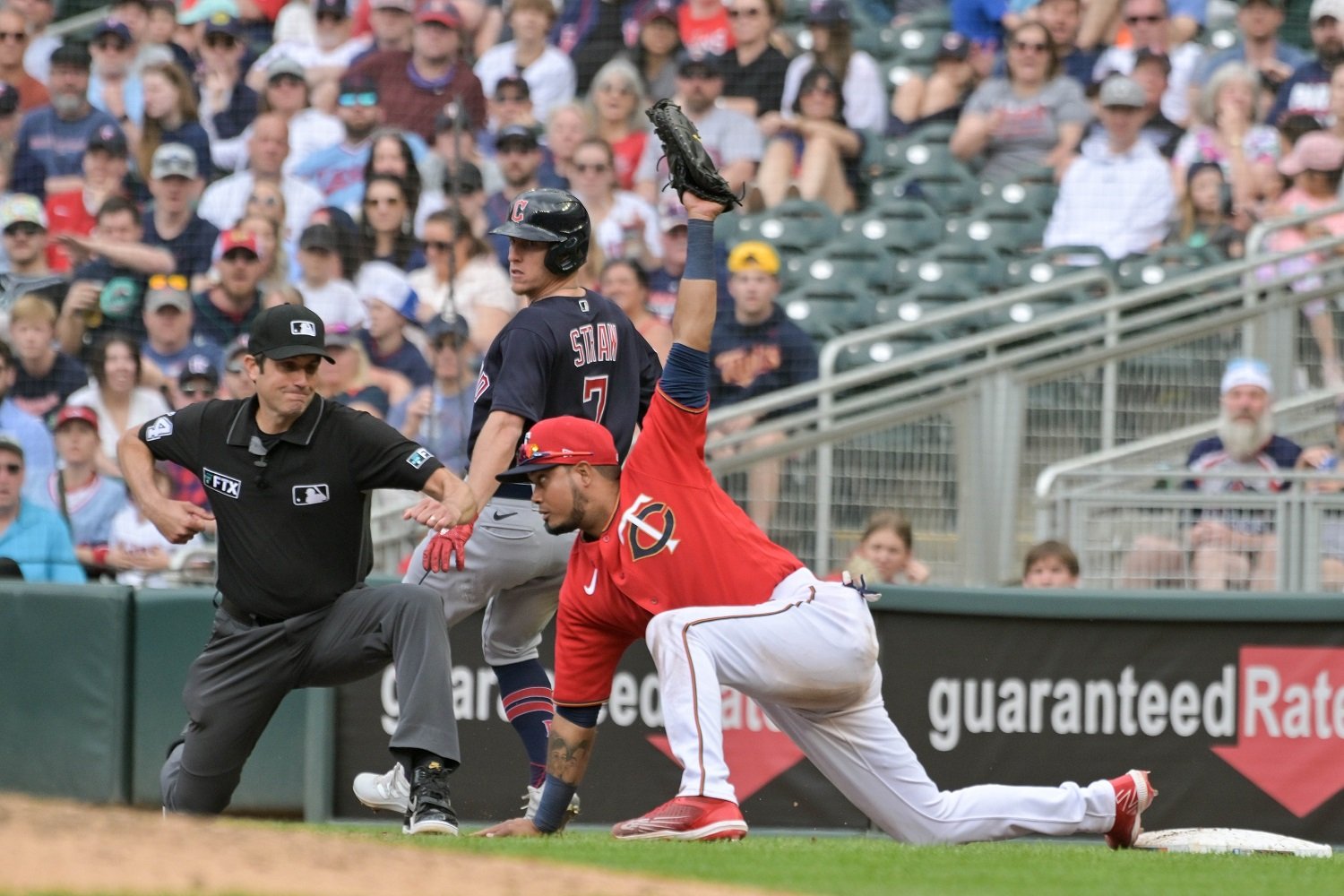 Since coming back from the COVID IL, Luis Arráez has returned to a tricky role for his short stature: first base. After some questionable defensive plays at third base had a few too many Twins fans in agony, Rocco Baldelli began shifting Arráez across the diamond. Although Arráez is only a few inches shorter than most of his teammates, the position does raise questions: does size matter at first? The common assumption among most baseball experts, and one that Miguel Sanó easily fit, is that the player should be a big target. Lumbering at 6’3” and 270ish pounds, the big man could often be seen stretching for balls from various players over the years. With Sanó out for some time, prospect call up Jose Miranda seems like a more conventional choice for the position at 6’2” and 210 pounds. But as much as everything in baseball can be questioned to find an advantage, perhaps Arráez is not as much of a problem as one might expect. Although you can find the height of every baseball player on their BRef page, actual height data is rarely provided in data sets among hitting or fielding. That makes comparison across the league a bit harder, so I mostly focused on the 2021 performances at first base. These players range from big boys like Matt Olson and Freddie Freeman (6’5”), to players closer to Arráez like Carlos Santana and Ty France (5’11”). Over its history, the league has made way for small hitters like Jose Ramirez and Mookie Betts, but these players are rarely found at first base. Even when first basemen might show some vertical challenge, they might have some size to make up for it. Max Muncy played most of first for the Dodgers in their 2021 season, sitting only two inches above Arráez, but with 50 more pounds of muscle. He can stretch those legs much further than what we’ve seen from Arráez so far. As baseball has transformed, the decrease in the height of a first baseman has changed as well. First base has often been the place, for lack of a better word, smashers with bad defense. As Matt Eddy reported for Baseball America just last year, “A 6-foot player was once deemed too short to play first base, with exceptions made for the most prodigious sluggers, such as Prince Fielder.” But particularly in a game where grounders are going the way of the dodo, that means having excellent defenders at first base has become even more critical than it was even a decade ago. If Arráez’s defense is questionable, it will feel even less important in 2022 Baseball. But the question is not whether Arráez’s defense matters, but whether a tall boy makes for better defense at first base. Although bigger men in 2021 did usually better in Outs Above Average and Defensive Runs Saved, so did Mariners hitter Ty France, who lives only an inch about Arráez. France was close to top in the league in the advance metric UZR, considered by many to be the gold standard of infield defensive stats. At the bottom of this list? Miguel Sanó. UZR can be tricky—Josh Donaldson was close to Sanó in the metric, and the eye test would tell you that the former third basemen was hardly a schlub in the role. But the closer we look, the correlation between height and defense falls apart. There is one key difference that might assist Arráez’s defense over either Miranda or Sanó, which might sound surprising, his speed. Over in Los Angeles, the Dodgers were constantly shifting Max Muncy around, which worked due to his quick reactions and acceleration speed. Muncy is hardly a speed demon, but he is extremely quick in his reflexes. It’s something the Dodgers liked about Freeman as well to bring him over from Atlanta. Arráez’s speed puts him at the same level as Vlad Guerrero Jr., Yuli Gurriel, and Ty France. None of these men are in Muncy’s elite level, but it allows for more flexibility there rather than a single target and might assist in building unique positioning. Most giants at first base do not show a lot of speed, and while Arráez is hardly a demon, his average speed could make for a bit more positioning work through the season. Arráez’s bat, as we’ve seen even in this first month, is too important to not put somewhere in this lineup to drive in runs. As long as the player can manage the role, the singles smasher will play an unsung advantage in a position where the combined first baseman of the league hit for only 108 wRC+ in 2019. So far, he hasn’t missed any balls at first in his few game sample. But in a game that depends on finding advantages in every nook and cranny, perhaps the front office might find a hidden advantage in putting a short king slugger at first.
- 22 comments
-
- 6
-
-
- luis arraez
- miguel sano
- (and 1 more)
-
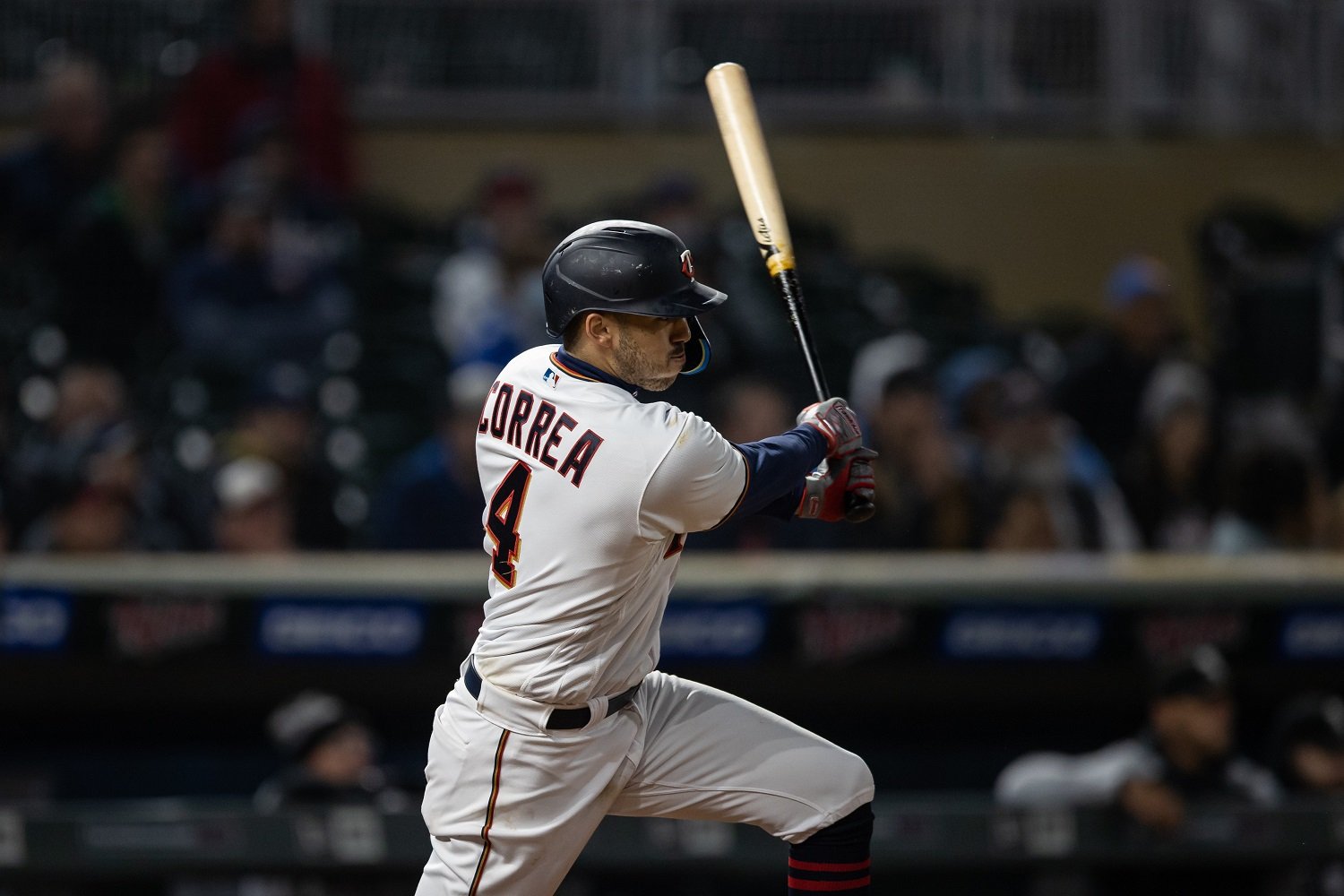 For some players like Miguel Sano and Ryan Jeffers, this has been a bit expected given their past records. What is more surprising however is the very slow start of Carlos Correa. Signing as the biggest free agent in the history of a franchise is always going to lead toward lofty expectations, but until Thursday’s notable performance, Correa’s 62 plate appearances had resulted in a disastrous .182/.274/.273 slash line (two big nights, however, can give a lofty improvement; he now sits at .217/.289/.304). As noted by Ken Rosenthal, Correa is a slow starter who hits his best at the height of summer and takes time to find his swing. But looking at past April appearances, the shortstop isn’t entirely following his usual playbook. Beyond slow starts in 2016 and 2017, Correa has managed to post a healthy WRC+ above 120 by the end of the first few weeks of each previous season, including posting a .291/.350/.509 slash line in 60 plate appearances in 2021. Correa has made up for the problems with his particularly fun to watch defense, and it’s hard to think that the Twins rotation’s ERA wouldn’t be where it is without some of his most exciting plays on the field that have pitchers in awe. And given a breakout night against the Tigers and a solid outing against Rays pitching, those fears might be over. But it might be also worth asking whether Correa actually approaches the ball differently. I wanted to look at the data of Correa’s past Aprils, looking at how else he faired around 60 plate appearances in each of his starts. April data is notoriously unpredictable, but can often reveal issues that players might find places to readjust their approach at the place. And as a stathead himself, he might appreciate seeing this laid out (Carlos, if you’re reading, sign off in the comments!) Perhaps the most notable change from past Aprils is Correa’s strikeout rate, which was sitting right above 30% before Thursday. Previously, Correa has usually started the season by keeping his strikeouts below 20% with only his 2019 season resulting in a quarter of plate appearances as strikeouts. But Correa isn’t just missing the ball; he has been chasing much more and finding less contact on those hits. Correa has usually averaged toward making contact at about 65-75% of balls outside of the zone in April, while this year he’s been closer to just over half, the lowest in Correa’s career Aprils. More so, it’s allowing pitchers to avoid trying to sneak something down Broadway where he often punishes them. That shouldn’t be a problem in some respects. Buxton has done the exact same: high whiff rate, chasing at a lot of pitches, but then smashing them out of the park at opportune moment. But Correa has another issue that is hurting his production: he isn’t connecting with balls in the zone in the right way. Before Thursday, his BABIP was sitting at a paltry 265, putting him in Kepler territory when it comes to not simply putting the right kind of hit into the field. As others have noted, the Twins have had an unfortunate series of fly balls in the air, landing softly into outfielder’s gloves given the reportedly de-juiced ball and the cold weather. Not Correa. He’s flying out at almost half the rate of other players, instead grounding it out much more often and leading the AL by grounding into five double plays. As Correa makes contact outside the zone, he’s simply putting it right in the hands of infielders for easy outs. What makes this strange, however, is Correa is actually hitting the ball harder than ever before as he hits the ground. As the amusing anecdote by MLB’s Do-Hyoung Park, Correa is focused on exit velocity. He’s leading the team in hard-hit balls—even more than Buxton—but not getting any reward for it. In previous seasons, Correa has had an average exit velocity in his early appearances in the high 80s. This season he’s hitting balls about 93mph on average, coming out to the 93rd percentile for hitters this season so far. Over half of his swings are coming on hard-hit balls, one of the highest in the league. Both those numbers are notably above what he usually puts on for the full season, which might just be statistical noise, but is notable when it becomes the focus on Correa’s goal as a batter. His plan should be grounds for success—Rays wunderkind Wander Franco has put up almost symmetrical numbers of hard-hit grounders as Correa and is sitting with a .316 batting average. Correa simply isn’t putting the ball in play in the same way; where Franco has found a way to connect his bat with practically anything in the zone and turn them into line drives, Correa’s grounding out to infielders. There might be a direct reason that’s keeping Correa down and why he’s not putting the right kind of power on his pitches, which may have to do with his perceived adjustment to Target Field. Minute Maid Park is very kind to hitters like Correa that can control their swing and smash to the opposite side of the field. Its home run line sits at an easy 326 feet compared to Target Field’s 387; nine of Correa’s twenty-six dingers last year were oppo shots. When Correa appeared on MLB Tonight in 2018, he discussed how he liked to get in front of the ball and then control his follow-through to put the ball all over the field. It seems like Correa, perhaps knowing the bad conditions, has tried to adjust accordingly by avoiding pulling the ball. He’s currently going oppo under 9% of the time, well below the league average and notably different from past Aprils where it has ranged from 25% to almost 41%. If you look at his previous season spray charts, you’ll see a player whose specialty is hitting almost anywhere on the field. In fact, one of his most notable hits of Thursday’s game against the Tigers was the oppo dribbler that scored Gio Urshela. Correa already seems to be finding a way to course-correct; during his 3-for-5 on Thursday, he almost entirely avoided swinging outside of the zone, while his Friday game against the Rays he avoided a single whiff. As Dan Hayes reported, he’s already feeling more comfortable after getting a shortened spring training with only half his usual plate appearances. But how Correa decides to approach the rest of his mechanics as he continues to tinker might be worth following. What separates Correa—and the reason he can haul the salaries he can—is that he knows how to make these adjustments. Throughout his career, the shortstop has slumped again and again only to find the magic again. When Astros fans questioned him in September 2020, he went onto smash six homers and rake 17 RBIs during the postseason. It’s that ability that led to the Twins signing. Let’s hope he’s turning it around.
 -
Twins fans have had a decent amount to be excited for this year so far, particularly the surprisingly great rotation, and the majesty of watching Byron Buxton literally outpace every player in baseball. But beyond these highlights, a particular frustration for fans has been the poor hitting. For some players like Miguel Sano and Ryan Jeffers, this has been a bit expected given their past records. What is more surprising however is the very slow start of Carlos Correa. Signing as the biggest free agent in the history of a franchise is always going to lead toward lofty expectations, but until Thursday’s notable performance, Correa’s 62 plate appearances had resulted in a disastrous .182/.274/.273 slash line (two big nights, however, can give a lofty improvement; he now sits at .217/.289/.304). As noted by Ken Rosenthal, Correa is a slow starter who hits his best at the height of summer and takes time to find his swing. But looking at past April appearances, the shortstop isn’t entirely following his usual playbook. Beyond slow starts in 2016 and 2017, Correa has managed to post a healthy WRC+ above 120 by the end of the first few weeks of each previous season, including posting a .291/.350/.509 slash line in 60 plate appearances in 2021. Correa has made up for the problems with his particularly fun to watch defense, and it’s hard to think that the Twins rotation’s ERA wouldn’t be where it is without some of his most exciting plays on the field that have pitchers in awe. And given a breakout night against the Tigers and a solid outing against Rays pitching, those fears might be over. But it might be also worth asking whether Correa actually approaches the ball differently. I wanted to look at the data of Correa’s past Aprils, looking at how else he faired around 60 plate appearances in each of his starts. April data is notoriously unpredictable, but can often reveal issues that players might find places to readjust their approach at the place. And as a stathead himself, he might appreciate seeing this laid out (Carlos, if you’re reading, sign off in the comments!) Perhaps the most notable change from past Aprils is Correa’s strikeout rate, which was sitting right above 30% before Thursday. Previously, Correa has usually started the season by keeping his strikeouts below 20% with only his 2019 season resulting in a quarter of plate appearances as strikeouts. But Correa isn’t just missing the ball; he has been chasing much more and finding less contact on those hits. Correa has usually averaged toward making contact at about 65-75% of balls outside of the zone in April, while this year he’s been closer to just over half, the lowest in Correa’s career Aprils. More so, it’s allowing pitchers to avoid trying to sneak something down Broadway where he often punishes them. That shouldn’t be a problem in some respects. Buxton has done the exact same: high whiff rate, chasing at a lot of pitches, but then smashing them out of the park at opportune moment. But Correa has another issue that is hurting his production: he isn’t connecting with balls in the zone in the right way. Before Thursday, his BABIP was sitting at a paltry 265, putting him in Kepler territory when it comes to not simply putting the right kind of hit into the field. As others have noted, the Twins have had an unfortunate series of fly balls in the air, landing softly into outfielder’s gloves given the reportedly de-juiced ball and the cold weather. Not Correa. He’s flying out at almost half the rate of other players, instead grounding it out much more often and leading the AL by grounding into five double plays. As Correa makes contact outside the zone, he’s simply putting it right in the hands of infielders for easy outs. What makes this strange, however, is Correa is actually hitting the ball harder than ever before as he hits the ground. As the amusing anecdote by MLB’s Do-Hyoung Park, Correa is focused on exit velocity. He’s leading the team in hard-hit balls—even more than Buxton—but not getting any reward for it. In previous seasons, Correa has had an average exit velocity in his early appearances in the high 80s. This season he’s hitting balls about 93mph on average, coming out to the 93rd percentile for hitters this season so far. Over half of his swings are coming on hard-hit balls, one of the highest in the league. Both those numbers are notably above what he usually puts on for the full season, which might just be statistical noise, but is notable when it becomes the focus on Correa’s goal as a batter. His plan should be grounds for success—Rays wunderkind Wander Franco has put up almost symmetrical numbers of hard-hit grounders as Correa and is sitting with a .316 batting average. Correa simply isn’t putting the ball in play in the same way; where Franco has found a way to connect his bat with practically anything in the zone and turn them into line drives, Correa’s grounding out to infielders. There might be a direct reason that’s keeping Correa down and why he’s not putting the right kind of power on his pitches, which may have to do with his perceived adjustment to Target Field. Minute Maid Park is very kind to hitters like Correa that can control their swing and smash to the opposite side of the field. Its home run line sits at an easy 326 feet compared to Target Field’s 387; nine of Correa’s twenty-six dingers last year were oppo shots. When Correa appeared on MLB Tonight in 2018, he discussed how he liked to get in front of the ball and then control his follow-through to put the ball all over the field. It seems like Correa, perhaps knowing the bad conditions, has tried to adjust accordingly by avoiding pulling the ball. He’s currently going oppo under 9% of the time, well below the league average and notably different from past Aprils where it has ranged from 25% to almost 41%. If you look at his previous season spray charts, you’ll see a player whose specialty is hitting almost anywhere on the field. In fact, one of his most notable hits of Thursday’s game against the Tigers was the oppo dribbler that scored Gio Urshela. Correa already seems to be finding a way to course-correct; during his 3-for-5 on Thursday, he almost entirely avoided swinging outside of the zone, while his Friday game against the Rays he avoided a single whiff. As Dan Hayes reported, he’s already feeling more comfortable after getting a shortened spring training with only half his usual plate appearances. But how Correa decides to approach the rest of his mechanics as he continues to tinker might be worth following. What separates Correa—and the reason he can haul the salaries he can—is that he knows how to make these adjustments. Throughout his career, the shortstop has slumped again and again only to find the magic again. When Astros fans questioned him in September 2020, he went onto smash six homers and rake 17 RBIs during the postseason. It’s that ability that led to the Twins signing. Let’s hope he’s turning it around. View full article