Peter Labuza
-
Posts
230 -
Joined
-
Last visited
Content Type
Profiles
News
Minnesota Twins Videos
2026 Minnesota Twins Top Prospects Ranking
2022 Minnesota Twins Draft Picks
Minnesota Twins Free Agent & Trade Rumors, Notes, & Tidbits
Guides & Resources
2023 Minnesota Twins Draft Picks
The Minnesota Twins Players Project
2024 Minnesota Twins Draft Picks
2025 Minnesota Twins Draft Pick Tracker
2026 Minnesota Twins Draft Tracker: Picks & Bonuses
Forums
Blogs
Events
Store
Downloads
Gallery
Everything posted by Peter Labuza
-

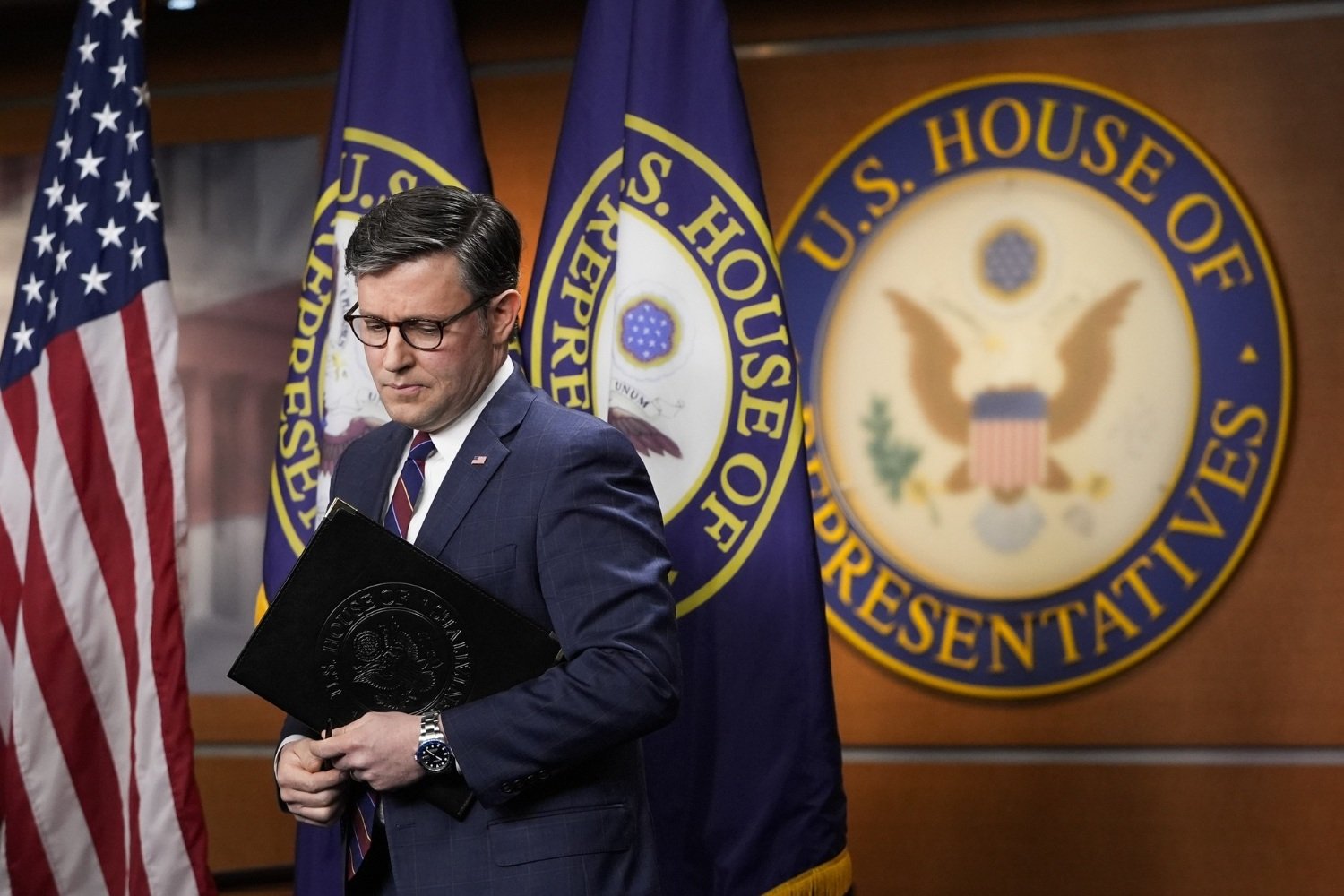 Since January, many Americans have felt the transformation of various structures and functions under the second Donald Trump administration. However, the new omnibus tax bill currently making its way through Congress introduces a new wrinkle that will particularly upset Minnesota Twins fans; it could end up killing the sale of the team. President Trump’s signature legislative plan, the so-called “One Big Beautiful Bill Act,” has passed the House and arrived at the Senate. The bill, which runs over 1,000 pages, generally comes down to broad tax cuts for the top earners in America by raising taxes on the poorest, alongside cutting 13.7 million Americans off health insurance. Radically sweeping in scope, the bill includes a ban on any regulation of artificial intelligence, neuters the judiciary’s power to limit abuses by the executive branch, and removes the requirement for citizens to register gun silencers. The bill projects to increase the federal deficit by $4.6 trillion over the next decade. Most of the bill heavily favors the ultra-wealthy, but right where the Pohlad family needs a break most, it might bite them hardest. Specifically, the bill includes a dangerous poison pill for new sports owners and their tax bills. Buried on page 966 of the bill is a “Limitation on Amortization of Certain Sports Franchises.” The clause replaces language in the current tax code, reducing “the adjusted basis” of various team assets from 100% to “50 percent.” As the New York Times reports, those assets “include player contracts, media rights and sponsorships … Under the House plan, team owners would be able to deduct from their taxes only half the value of those intangible assets over that period.” To put it plainly, many teams would be accepting a much higher bill than any cuts they might get. While the White House has claimed this is to punish owners for “overcharging ticketholders,” it is difficult to see why owners would respond to the situation by reducing prices. Don’t cry for the owners, of course, but any current sports group will not be hit with the bill. Only new owners of teams purchased after the passage of the bill will feel the brunt. It's a difference of, depending on the situation, tens or scores of millions in tax breaks lost. Not even billionaires can take such a hit without their eyes watering a bit. That would likely have a chilling effect on the market for teams across every league, leaving most current owners—whether John Fisher of the Athletics or Jerry Reinsdorf of the White Sox—in place for another decade. New owners would probably want a discount on a sale, as they must spend extra years recovering their costs, something that the Pohlads have been unwilling to do. Unless the Pohlads are dead set on selling, the bill would likely keep them as owners for the foreseeable future; it would certainly prevent them from getting the kind of price they've sought thus far. Because the sale of teams is a long and thorny process, the idea that the Pohlads could “rush” a transaction is far-fetched. When the Baltimore Orioles sale occurred last year, the timeline was slow: January 30th: ESPN Reports Sale of Orioles March 27th: MLB Owners Approve of Sale August 1st: Sale Finalized. The Pohlads could cut through as much red tape as possible to ensure a sale, but it seems unlikely. Trump has suggested the bill should be on his desk before the July 4 holiday, and selling before that would be an extraordinary feat, given where things appear to stand now. The best chance to find ownership will likely rely on MLB agreeing to ownership from abroad by those willing to overspend, which would most likely “sportswashing” ownership from the Middle East. For decades, foreign ownership has been bandied about, but the league has always treated it as anathema, and that's unlikely to change now. Because of the danger of the bill, NFL owners have already spent time lobbying various senators, where the bill is currently being debated. The politics of the One Big Beautiful Bill Act have been complicated even within the Republican Party, from those hoping to ensure Americans have access to Medicare to those who wish to see the bill’s enormous deficit cost reduced. The sports ownership clause could well be amended in the Senate before returning the bill to the House for reconciliation. The major leagues (MLB included) will surely lobby heavily for that outcome, but how effective that advocacy will be is hard to guess. If it does pass, one might call it poetic justice. After all, Trump had a higher bid than Carl Pohlad to buy the team in the 1980s. But for fans, this is a rare moment where helping billionaires might actually be the best move. If the Act were to pass in its current form, the Pohlads and Twins fans could be stuck with each other for a long while.
 -
Image courtesy of © Jack Gruber-USA TODAY via Imagn Images Since January, many Americans have felt the transformation of various structures and functions under the second Donald Trump administration. However, the new omnibus tax bill currently making its way through Congress introduces a new wrinkle that will particularly upset Minnesota Twins fans; it could end up killing the sale of the team. President Trump’s signature legislative plan, the so-called “One Big Beautiful Bill Act,” has passed the House and arrived at the Senate. The bill, which runs over 1,000 pages, generally comes down to broad tax cuts for the top earners in America by raising taxes on the poorest, alongside cutting 13.7 million Americans off health insurance. Radically sweeping in scope, the bill includes a ban on any regulation of artificial intelligence, neuters the judiciary’s power to limit abuses by the executive branch, and removes the requirement for citizens to register gun silencers. The bill projects to increase the federal deficit by $4.6 trillion over the next decade. Most of the bill heavily favors the ultra-wealthy, but right where the Pohlad family needs a break most, it might bite them hardest. Specifically, the bill includes a dangerous poison pill for new sports owners and their tax bills. Buried on page 966 of the bill is a “Limitation on Amortization of Certain Sports Franchises.” The clause replaces language in the current tax code, reducing “the adjusted basis” of various team assets from 100% to “50 percent.” As the New York Times reports, those assets “include player contracts, media rights and sponsorships … Under the House plan, team owners would be able to deduct from their taxes only half the value of those intangible assets over that period.” To put it plainly, many teams would be accepting a much higher bill than any cuts they might get. While the White House has claimed this is to punish owners for “overcharging ticketholders,” it is difficult to see why owners would respond to the situation by reducing prices. Don’t cry for the owners, of course, but any current sports group will not be hit with the bill. Only new owners of teams purchased after the passage of the bill will feel the brunt. It's a difference of, depending on the situation, tens or scores of millions in tax breaks lost. Not even billionaires can take such a hit without their eyes watering a bit. That would likely have a chilling effect on the market for teams across every league, leaving most current owners—whether John Fisher of the Athletics or Jerry Reinsdorf of the White Sox—in place for another decade. New owners would probably want a discount on a sale, as they must spend extra years recovering their costs, something that the Pohlads have been unwilling to do. Unless the Pohlads are dead set on selling, the bill would likely keep them as owners for the foreseeable future; it would certainly prevent them from getting the kind of price they've sought thus far. Because the sale of teams is a long and thorny process, the idea that the Pohlads could “rush” a transaction is far-fetched. When the Baltimore Orioles sale occurred last year, the timeline was slow: January 30th: ESPN Reports Sale of Orioles March 27th: MLB Owners Approve of Sale August 1st: Sale Finalized. The Pohlads could cut through as much red tape as possible to ensure a sale, but it seems unlikely. Trump has suggested the bill should be on his desk before the July 4 holiday, and selling before that would be an extraordinary feat, given where things appear to stand now. The best chance to find ownership will likely rely on MLB agreeing to ownership from abroad by those willing to overspend, which would most likely “sportswashing” ownership from the Middle East. For decades, foreign ownership has been bandied about, but the league has always treated it as anathema, and that's unlikely to change now. Because of the danger of the bill, NFL owners have already spent time lobbying various senators, where the bill is currently being debated. The politics of the One Big Beautiful Bill Act have been complicated even within the Republican Party, from those hoping to ensure Americans have access to Medicare to those who wish to see the bill’s enormous deficit cost reduced. The sports ownership clause could well be amended in the Senate before returning the bill to the House for reconciliation. The major leagues (MLB included) will surely lobby heavily for that outcome, but how effective that advocacy will be is hard to guess. If it does pass, one might call it poetic justice. After all, Trump had a higher bid than Carl Pohlad to buy the team in the 1980s. But for fans, this is a rare moment where helping billionaires might actually be the best move. If the Act were to pass in its current form, the Pohlads and Twins fans could be stuck with each other for a long while. View full article
-
Image courtesy of © Jesse Johnson-Imagn Images Box Score SP: Simeon Woods Richardson: 4 2/3 IP, 5 H, 2 R, 2 ER, 1 BB, 1 K, 61 pitches, 33 strikes (54.1%) Home Runs: Byron Buxton (9), Harrison Bader (4) Top 3 WPA: Byron Buxton (.225), Harrison Bader (.145), Danny Columbe (.112) Win Probability Chart (via FanGraphs): Mr. Softee Making his sixth start (seven if you count the Justin Topa opener game in Atlanta), Simeon Woods Richardson played a soft contact game. He easily ran through the top of Baltimore's order with a pair of harmless pop-ups and a groundout to begin the game, and then induced two easy outs in the second before walking Jackson Holliday. Before that could spell trouble, Ryan Jeffers gave his hurler an assist by catching Holliday on a steal of second (in part thanks to a challenge initiated by Joey Casey, in the video room). That proved essential, as Ramón Laureano returned to the plate in the next inning and launched one deep to center field off Wood Richardson's curveball. Thankfully, the pitcher remained steadfast, easily pushing through the next two innings. The Baltimore Orioles have the league's worst strikeout rate since April 24, at 28,.2%, but Woods Richardson relied quite evenly on his various off-speed pitches to work grounders and easy fly balls. Buck Around and Bang Out Byron Buxton continued to prove himself the team's heart and soul, with Rocco Baldelli putting the hot hitter at the top of the lineup even against a right-handed starter. Charlie Morton allowed a single to Willi Castro and then clipped Kody Clemens on what would have been ball four to start the third inning. Buxton then stepped up to the plate (after striking out to begin the game) and hammered one to the second deck, making it three straight games with a dinger. Since the end of his slump to start the year, his slugging percentage sits at a mammoth .652. Morton entered this game with an ERA nearing 10.00, which ticked over that brightline after the smash hit. The 41-year-old continued to touch 96 mph with his fastball and limited his walks, but manager Brandon Hyde had seen enough after four innings and 70 pitches. Buxton promptly scored another hit off reliever Bryan Baker, though was left stranded at first. Bullpen Acrobatics It was a short start for Woods Richardson, who had cruised through 4 2/3 innings at only 50 pitches before three straight hits added a run. With a 3-2 game and runners on the corner, Baldelli called upon lefty Danny Coulombe to clean up the mess—and the trusty lefty did, with a strikeout against Cedric Mullins. Columbe returned for the sixth, getting two outs before missing a cover of first base that pushed Ryan O'Hearn onto first. Things then looked like they were up for an ugly turn with Louis Varland on the mound. Ryan Mountcastle edged out a single on a slow dribbler to Brooks Lee, and Jackson Holliday rolled one over to the right side that would have loaded the bases. But the former wrestler-turned-pitcher dived, rolled, and tossed the ball into Ty France's glove to beat out the hustling Holliday. As Justin Morneau commented, "Who said pitchers aren't athletes?" (Provus reminded him that Mourney had said it "many times".) Swap Meet After Royce Lewis walked to start the seventh, Baldelli began moving his chess pieces by subbing DaShawn Keirsey Jr. to run for the still-recovering slugger, in hopes of a steal; and swapping left-hander Kody Clemens for Harrison Bader to face the southpaw Keegan Akin. Bader only needed two pitches to launch a 408-foot homer to up the lead to three. That would be enough to finish the game. Bader would make a nice catch to help keep extra traffic out of Griffin Jax's way as he took the eighth, while Castro—moving into 2nd after beginning in the outfield—made a nice double play to assist the set-up man. Jhoan Duran cleaned up the ninth with three strikeouts. News & Notes —The Twins are now on a four-game winning streak, which is the longest the team has had since a four game streak than began on July 31st. —NBA Broadcaster Brian Anderson joined Cory Provus and Justin Morneau during the game to talk Wolves. Anderson asked when Provus would get his statue; Provus suggested he should get one above a urinal. —Twins players are participating in a Week of Service and spent the day packing meal kits. Former Twin Kyle Gibson joined his old team to help put together the meals and invited various Orioles to participate as well. What’s Next? The Twins look for a sweep to the three-game series, with Joe Ryan (2-2, 2.93 ERA) facing off against Dean Kremer (3-4, 5.73 ERA) at high noon—before the Giants come into town on Friday, coinciding with other battles amongst Minnesota and the Bay Area. Postgame Interview Bullpen Usage Spreadsheet SAT SUN MON TUE WED TOT Stewart 13 16 0 0 17 46 Durán 16 9 0 0 14 39 Jax 7 14 0 0 17 38 Varland 0 7 0 12 10 29 Coulombe 0 0 0 11 17 28 Sands 12 0 0 10 0 22 Alcalá 0 0 0 20 0 20 Topa 0 0 0 0 0 0 View full article
-
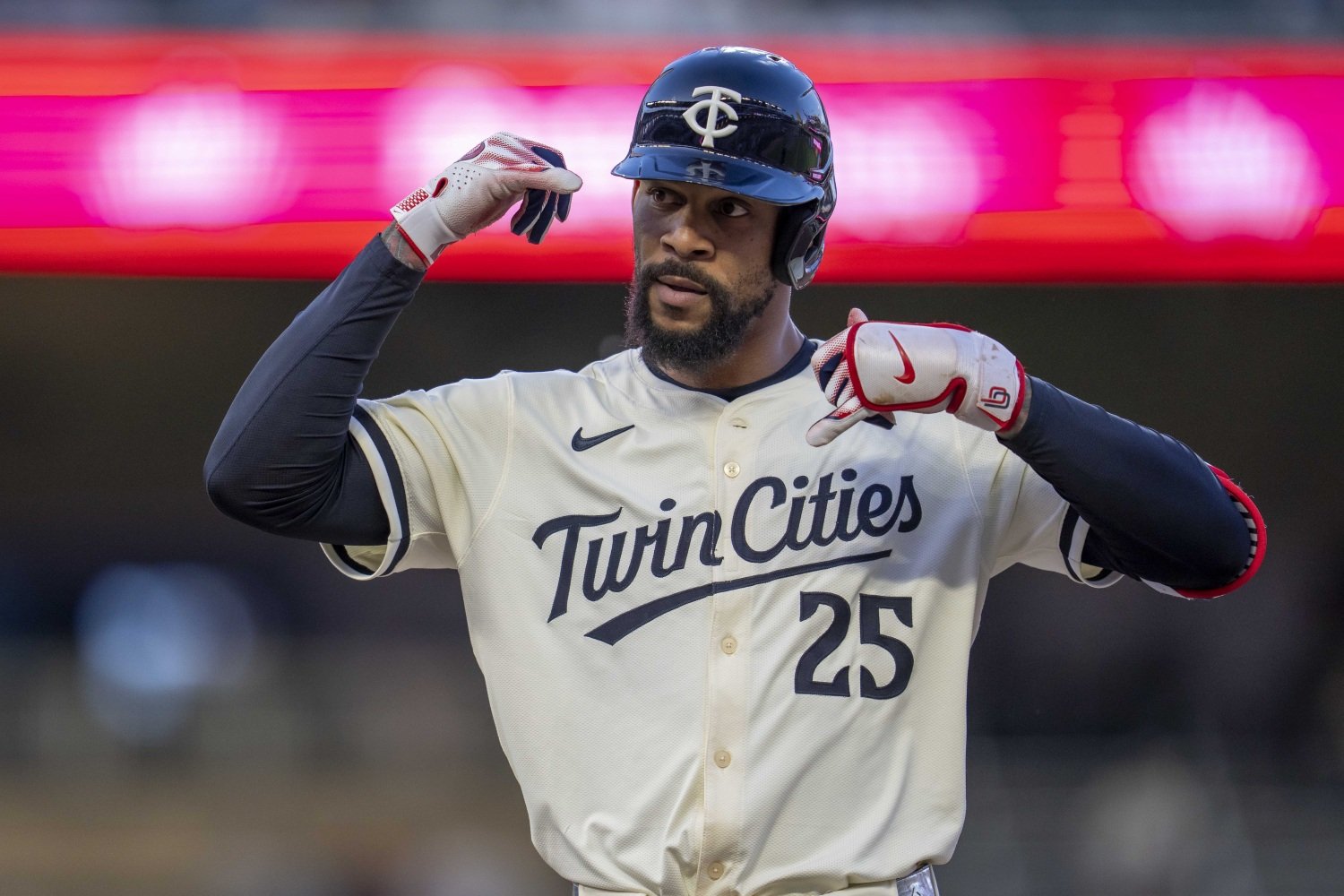 Box Score SP: Simeon Woods Richardson: 4 2/3 IP, 5 H, 2 R, 2 ER, 1 BB, 1 K, 61 pitches, 33 strikes (54.1%) Home Runs: Byron Buxton (9), Harrison Bader (4) Top 3 WPA: Byron Buxton (.225), Harrison Bader (.145), Danny Columbe (.112) Win Probability Chart (via FanGraphs): Mr. Softee Making his sixth start (seven if you count the Justin Topa opener game in Atlanta), Simeon Woods Richardson played a soft contact game. He easily ran through the top of Baltimore's order with a pair of harmless pop-ups and a groundout to begin the game, and then induced two easy outs in the second before walking Jackson Holliday. Before that could spell trouble, Ryan Jeffers gave his hurler an assist by catching Holliday on a steal of second (in part thanks to a challenge initiated by Joey Casey, in the video room). That proved essential, as Ramón Laureano returned to the plate in the next inning and launched one deep to center field off Wood Richardson's curveball. Thankfully, the pitcher remained steadfast, easily pushing through the next two innings. The Baltimore Orioles have the league's worst strikeout rate since April 24, at 28,.2%, but Woods Richardson relied quite evenly on his various off-speed pitches to work grounders and easy fly balls. Buck Around and Bang Out Byron Buxton continued to prove himself the team's heart and soul, with Rocco Baldelli putting the hot hitter at the top of the lineup even against a right-handed starter. Charlie Morton allowed a single to Willi Castro and then clipped Kody Clemens on what would have been ball four to start the third inning. Buxton then stepped up to the plate (after striking out to begin the game) and hammered one to the second deck, making it three straight games with a dinger. Since the end of his slump to start the year, his slugging percentage sits at a mammoth .652. Morton entered this game with an ERA nearing 10.00, which ticked over that brightline after the smash hit. The 41-year-old continued to touch 96 mph with his fastball and limited his walks, but manager Brandon Hyde had seen enough after four innings and 70 pitches. Buxton promptly scored another hit off reliever Bryan Baker, though was left stranded at first. Bullpen Acrobatics It was a short start for Woods Richardson, who had cruised through 4 2/3 innings at only 50 pitches before three straight hits added a run. With a 3-2 game and runners on the corner, Baldelli called upon lefty Danny Coulombe to clean up the mess—and the trusty lefty did, with a strikeout against Cedric Mullins. Columbe returned for the sixth, getting two outs before missing a cover of first base that pushed Ryan O'Hearn onto first. Things then looked like they were up for an ugly turn with Louis Varland on the mound. Ryan Mountcastle edged out a single on a slow dribbler to Brooks Lee, and Jackson Holliday rolled one over to the right side that would have loaded the bases. But the former wrestler-turned-pitcher dived, rolled, and tossed the ball into Ty France's glove to beat out the hustling Holliday. As Justin Morneau commented, "Who said pitchers aren't athletes?" (Provus reminded him that Mourney had said it "many times".) Swap Meet After Royce Lewis walked to start the seventh, Baldelli began moving his chess pieces by subbing DaShawn Keirsey Jr. to run for the still-recovering slugger, in hopes of a steal; and swapping left-hander Kody Clemens for Harrison Bader to face the southpaw Keegan Akin. Bader only needed two pitches to launch a 408-foot homer to up the lead to three. That would be enough to finish the game. Bader would make a nice catch to help keep extra traffic out of Griffin Jax's way as he took the eighth, while Castro—moving into 2nd after beginning in the outfield—made a nice double play to assist the set-up man. Jhoan Duran cleaned up the ninth with three strikeouts. News & Notes —The Twins are now on a four-game winning streak, which is the longest the team has had since a four game streak than began on July 31st. —NBA Broadcaster Brian Anderson joined Cory Provus and Justin Morneau during the game to talk Wolves. Anderson asked when Provus would get his statue; Provus suggested he should get one above a urinal. —Twins players are participating in a Week of Service and spent the day packing meal kits. Former Twin Kyle Gibson joined his old team to help put together the meals and invited various Orioles to participate as well. What’s Next? The Twins look for a sweep to the three-game series, with Joe Ryan (2-2, 2.93 ERA) facing off against Dean Kremer (3-4, 5.73 ERA) at high noon—before the Giants come into town on Friday, coinciding with other battles amongst Minnesota and the Bay Area. Postgame Interview Bullpen Usage Spreadsheet SAT SUN MON TUE WED TOT Stewart 13 16 0 0 17 46 Durán 16 9 0 0 14 39 Jax 7 14 0 0 17 38 Varland 0 7 0 12 10 29 Coulombe 0 0 0 11 17 28 Sands 12 0 0 10 0 22 Alcalá 0 0 0 20 0 20 Topa 0 0 0 0 0 0
- 73 comments
-
- 3
-

-
- byron buxton
- harrison bader
- (and 2 more)
-
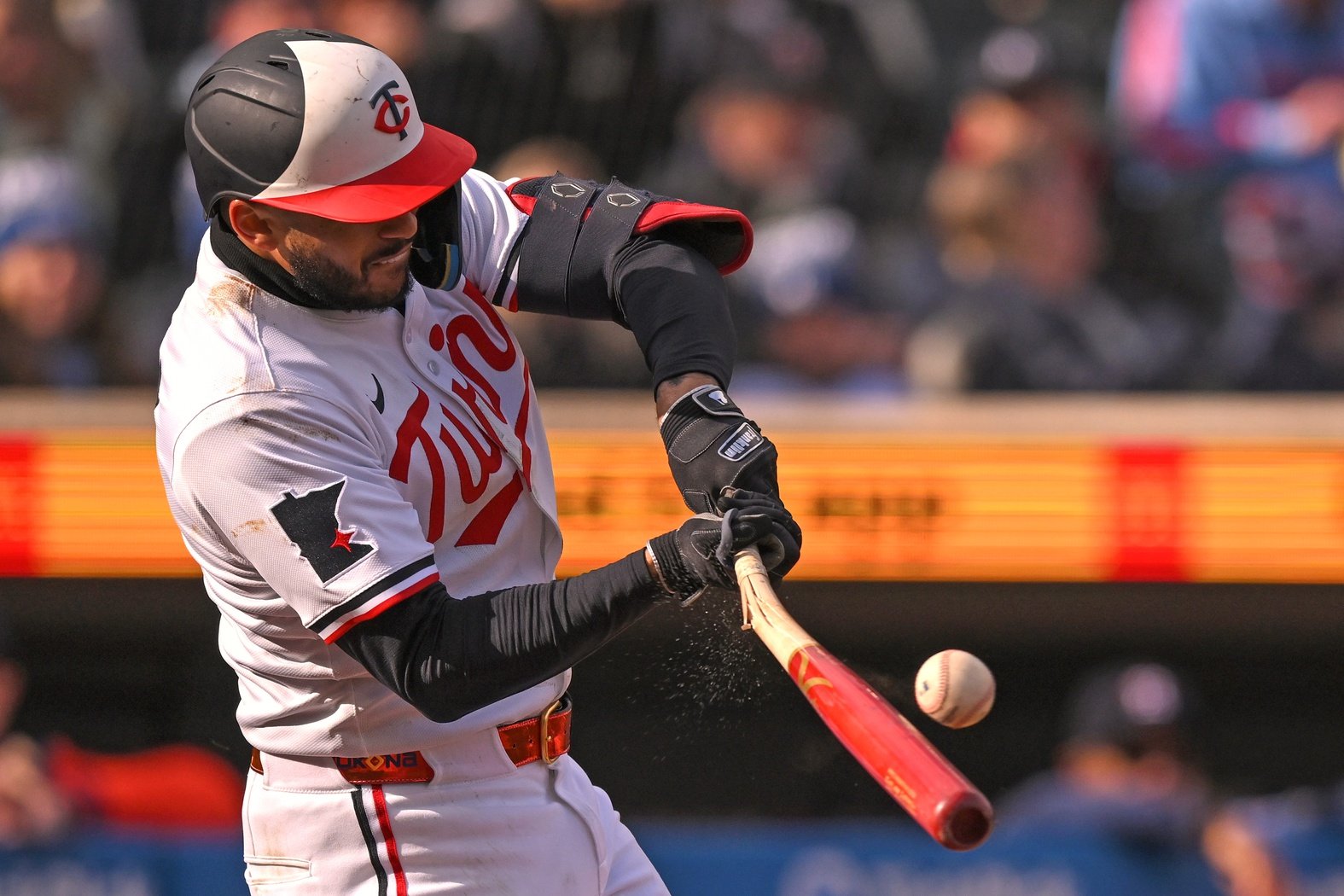 Despite my most wishful thinking, Vladimir Guerrero Jr. is now a Blue Jay for life. That’s a good deal for Toronto—as well as the sport of baseball—but it opens up questions for the Twins. While the famed pitching pipeline has been able to flex its muscles, the Twins once again are hampered by a lineup that simply cannot compete with the kinds of bats out there. While Carlos Correa and Byron Buxton will provide strong offense for a few years, the team will may simply need the kind of large investment that other teams have done. More so, extensions like the one for Vlad or Jackson Merrill of the Padres are becoming more and more common throughout the league. Even hitters without a single day of service time in MLB are locked into team-friendly extensions to secure both their own and the team’s future success. For the Twins, what does free agency even look like? The obvious answer is likely nothing as we have seen for two straight off seasons. But for this scenario, let’s imagine a Pohlad-less world where the Twins will have some money to spend. And even in one with the Pohlads, the team will see approximately around $30 million coming off the books (though with some likely pricey arbitrations that will likely eat at least a third of that). But let’s assume that the Twins had $25 million to drop on a free agent going forward. This is where things get trickier than simply “find big hitter.” Here’s a current chart of current top free agent hitters in the near future, the year they reach free agency, and their likely AAV: Player Free Agent Year Projected AAV Options? Kyle Tucker 2026 $44.40 Alex Bregman 2026 $29.96 Opt-Out Pete Alonso 2026 $29.00 Player Option Adley Rutschman 2028 $25.39 Jeremy Peña 2028 $23.97 Teoscar Hernández 2028 $23.75 Club Option Christian Walker 2028 $22.06 Jarren Duran 2026 $20.57 Club Option Alec Bohm 2027 $20.33 Brandon Lowe 2026 $20.10 Club Option Josh Naylor 2026 $20.01 Steven Kwan 2028 $19.83 Marcell Ozuna 2026 $19.33 Randy Arozarena 2027 $19.20 Brendan Donovan 2028 $19.16 Bryan de la Cruz 2028 $19.16 Lourdes Gurriel Jr. 2026 $19.10 Nathaniel Lowe 2027 $17.95 William Contreras 2026 $17.70 Club Option Luis Arráez 2026 $17.16 Jazz Chisholm 2027 $16.94 Tyler O'Neil 2026 $16.23 Opt-Out Ryan Mountcastle 2027 $15.00 This list is likely a little more than what we need, but it also proves a point at what the market will look like. If the Twins are signing a big bopper, the kind due for 40 homer power, you likely are spending no less than the Jarren Duran (the Twins have been in the Luis Arraez business before, and while a fantastic presence at the plate, they simply need a different type of hitter). But a few of the guys above that are approaching their mid-30s by their next free agency. Others like Alex Bregman and Pete Alonso have serious question marks. And I highly doubt the Twins are planning to be in the Kyle Tucker business, who is likely due even more than Guerreo. So how can the Twins compete in the hitting department? Some of that will be on the prospects—Walker Jenkins, Luke Keshall, Emmanuel Rodriguez—to develop into true talents (never an easy feat). But more likely, the Twins will have to begin parting ways with their pitching. The question is what style of trade will work, and what to pair alongside that. If the Twins continue to disappoint this season and find themselves as sellers, would Joe Ryan or Bailey Ober become obvious candidates? Rather than target a new set of prospects, the Twins could at least try for a pre-arbitration ready slugger. Using Ben Clemens’s Trade Value series from 2024, here’s the names that would be useful for the Twins if these teams felt their window was closing. I’ve kept off the names signed to massive contracts, but looked at a mix of pre-arb kids and those under team-friendly extension contracts: Player Current Status Gunnar Henderson Arb in 2026 Elly de la Cruz Arb in 2027 Yordan Álvarez $96.2/4 Years Riley Greene Arb in 2026 Corbin Carroll $72/5 Years Ronald Acuña Jr. $68/4 Years Michael Harris II $45/5 Years Luis Robert Jr. $55/3 Years Within this group, you could see some teams willing to get creative. The Astros may finally feel the need to rebuild, and the Twins could use an all time slugger like Yordon Alverez. The Braves might try and close their window and ship of Ronald Acuña Jr. or Michael Harris II. But beyond prospects, how much would the Twins have to let go? Consider this challenge trade: Adley Rutschman has essentially three full seasons in Baltimore, and they already have another top catching prospect and a desperate need for pitching. Would they take Zebby Matthews or David Festa (along with Mike Elias’s preferred payroll flexibility) to essentially drive them far into October? Would that cost be enough to get a player that makes it done? And would they be willing to trade now rather than wait till the deadline? The Twins seem to be in dire help of slugging. Royce Lewis will return, but the question marks all over his injury list have had some of my colleagues discussing a de-centering of his role. And most of all, the Twins have the arms ready to go to, with three full-fledged starters in AAA that seem major league ready. Like the Padres grabbing out Luis Arráez in May from the Marlins, waiting for the deadline can be a sucker’s game. If the Twins want to shake up a team that already looks lifeless, a new bat might make the difference.
- 61 comments
-
- 2
-
-
- carlos correa
- peter alonso
- (and 2 more)
-
Recent extensions are putting more and more bats out of reach for even a more spend-friendly Twins team. Trading—and trading now—might be the best option. Image courtesy of © Nick Wosika-Imagn Images Despite my most wishful thinking, Vladimir Guerrero Jr. is now a Blue Jay for life. That’s a good deal for Toronto—as well as the sport of baseball—but it opens up questions for the Twins. While the famed pitching pipeline has been able to flex its muscles, the Twins once again are hampered by a lineup that simply cannot compete with the kinds of bats out there. While Carlos Correa and Byron Buxton will provide strong offense for a few years, the team will may simply need the kind of large investment that other teams have done. More so, extensions like the one for Vlad or Jackson Merrill of the Padres are becoming more and more common throughout the league. Even hitters without a single day of service time in MLB are locked into team-friendly extensions to secure both their own and the team’s future success. For the Twins, what does free agency even look like? The obvious answer is likely nothing as we have seen for two straight off seasons. But for this scenario, let’s imagine a Pohlad-less world where the Twins will have some money to spend. And even in one with the Pohlads, the team will see approximately around $30 million coming off the books (though with some likely pricey arbitrations that will likely eat at least a third of that). But let’s assume that the Twins had $25 million to drop on a free agent going forward. This is where things get trickier than simply “find big hitter.” Here’s a current chart of current top free agent hitters in the near future, the year they reach free agency, and their likely AAV: Player Free Agent Year Projected AAV Options? Kyle Tucker 2026 $44.40 Alex Bregman 2026 $29.96 Opt-Out Pete Alonso 2026 $29.00 Player Option Adley Rutschman 2028 $25.39 Jeremy Peña 2028 $23.97 Teoscar Hernández 2028 $23.75 Club Option Christian Walker 2028 $22.06 Jarren Duran 2026 $20.57 Club Option Alec Bohm 2027 $20.33 Brandon Lowe 2026 $20.10 Club Option Josh Naylor 2026 $20.01 Steven Kwan 2028 $19.83 Marcell Ozuna 2026 $19.33 Randy Arozarena 2027 $19.20 Brendan Donovan 2028 $19.16 Bryan de la Cruz 2028 $19.16 Lourdes Gurriel Jr. 2026 $19.10 Nathaniel Lowe 2027 $17.95 William Contreras 2026 $17.70 Club Option Luis Arráez 2026 $17.16 Jazz Chisholm 2027 $16.94 Tyler O'Neil 2026 $16.23 Opt-Out Ryan Mountcastle 2027 $15.00 This list is likely a little more than what we need, but it also proves a point at what the market will look like. If the Twins are signing a big bopper, the kind due for 40 homer power, you likely are spending no less than the Jarren Duran (the Twins have been in the Luis Arraez business before, and while a fantastic presence at the plate, they simply need a different type of hitter). But a few of the guys above that are approaching their mid-30s by their next free agency. Others like Alex Bregman and Pete Alonso have serious question marks. And I highly doubt the Twins are planning to be in the Kyle Tucker business, who is likely due even more than Guerreo. So how can the Twins compete in the hitting department? Some of that will be on the prospects—Walker Jenkins, Luke Keshall, Emmanuel Rodriguez—to develop into true talents (never an easy feat). But more likely, the Twins will have to begin parting ways with their pitching. The question is what style of trade will work, and what to pair alongside that. If the Twins continue to disappoint this season and find themselves as sellers, would Joe Ryan or Bailey Ober become obvious candidates? Rather than target a new set of prospects, the Twins could at least try for a pre-arbitration ready slugger. Using Ben Clemens’s Trade Value series from 2024, here’s the names that would be useful for the Twins if these teams felt their window was closing. I’ve kept off the names signed to massive contracts, but looked at a mix of pre-arb kids and those under team-friendly extension contracts: Player Current Status Gunnar Henderson Arb in 2026 Elly de la Cruz Arb in 2027 Yordan Álvarez $96.2/4 Years Riley Greene Arb in 2026 Corbin Carroll $72/5 Years Ronald Acuña Jr. $68/4 Years Michael Harris II $45/5 Years Luis Robert Jr. $55/3 Years Within this group, you could see some teams willing to get creative. The Astros may finally feel the need to rebuild, and the Twins could use an all time slugger like Yordon Alverez. The Braves might try and close their window and ship of Ronald Acuña Jr. or Michael Harris II. But beyond prospects, how much would the Twins have to let go? Consider this challenge trade: Adley Rutschman has essentially three full seasons in Baltimore, and they already have another top catching prospect and a desperate need for pitching. Would they take Zebby Matthews or David Festa (along with Mike Elias’s preferred payroll flexibility) to essentially drive them far into October? Would that cost be enough to get a player that makes it done? And would they be willing to trade now rather than wait till the deadline? The Twins seem to be in dire help of slugging. Royce Lewis will return, but the question marks all over his injury list have had some of my colleagues discussing a de-centering of his role. And most of all, the Twins have the arms ready to go to, with three full-fledged starters in AAA that seem major league ready. Like the Padres grabbing out Luis Arráez in May from the Marlins, waiting for the deadline can be a sucker’s game. If the Twins want to shake up a team that already looks lifeless, a new bat might make the difference. View full article
-
The Twins' TV Cable Channels Are Here
Peter Labuza replied to Peter Labuza's topic in Twins Daily Front Page News
It's in the list at the top of the article under Xfinity / Comcast. -
The Twins' TV Cable Channels Are Here
Peter Labuza replied to Peter Labuza's topic in Twins Daily Front Page News
This article took the info from us. We were first to report. -
The Twins' TV Cable Channels Are Here
Peter Labuza replied to Peter Labuza's topic in Twins Daily Front Page News
MLB is saying to "Call YouTube and demand they add it," which seems like a losing battle. Likely they balked at the costs. -
The Twins' TV Cable Channels Are Here
Peter Labuza replied to Peter Labuza's topic in Twins Daily Front Page News
No info on DISH, but Rockies, Padres, and Diamondbacks (the three teams partnered with MLB last year) did not appear on the carrier last year. -
Not ready to rest on the laurels of a cold-weather October curse, it turned out the Twins are also under a hex in the Sunshine State each spring. Image courtesy of © Jonathan Dyer-Imagn Images Everyone knows: Spring training games do not matter. When all is said and done, spring training is for training. So why are the Twins so bad at it? This year, the Twins wound up with a losing record for the Grapefruit League. They're the only team to post a losing spring record in Florida each year of this decade. The Pirates haven't had a winning one, but they have at least had a couple of seasons at exactly .500. Over in the Cactus League, only one other team has matched the Twins' run of ineptitude: the Cleveland Guardians. Both teams had their last winning preseason in 2019. We all know these games do not matter. As study after study has demonstrated, there is no correlation between these records and those posted in the regular season. Some studies have gone further, to suggest even some advanced stats do not help us predict league performance in games that count. Yet, there's more than random chance happening here. Randomly, the chances of six straight losing Grapefruit League slots are around 1%. The Cleveland example seems important; they have been the Twins’ central rival for the last half-decade. They're continually over-performing projections, often through a hitting style that befuddles Twins pitchers by wearing them down. What lessons could we draw from that? I was curious: where was the bad production from the Twins coming from? Was it some sloppy work in the final innings by lower-minors prospects? Or was there something else afoot? I took all results from both Cactus and Grapefruit League from 2020 to 2024 (the 2020 Grapefruit season was shortened due to the COVID-19 pandemic, but a fair number of games were played first). I grouped innings together: 1st to 3rd, 4th to 6th, 7th to 9th. Usually, starting pitchers will only go two or three innings until the last week, and most starting lineup batters will take their three swings into the 4th or 5th inning before leaving. That likely means that these divisions generally demonstrated the transition between certified major leaguers and newly minted prospects coming in for a few innings. My idea was to simply look at run differential: which group of players scored more or allowed more runs? To make the chart easier to read, I only focused on Grapefruit League teams: It’s not hard to miss the Twins here. They are, notably, doing their worst work early in games—worse than any other team in Grapefruit League baseball (though if you included the Cactus League, Cleveland would perform the worst). So what does it look like if we only look at the Twins, inning by inning? Again, this suggests that the problems with Twins’ Grapefruit League records have much more to do with their starters. Specifically, the problem seems to be pitching. If we convert runs to “Runs+,” where 100 would be the league average, Twins hitters have a 98 Runs+ in the first though third frames. Meanwhile, the pitchers have allowed a 111 Runs+. For comparison, the Dodgers seemingly bring eight or nine top-line starters to camp before losing them to injury, and have an 81.5 Runs+. There's a chance that Grapefruit League struggles have carried the seeds of regular-season trouble, then. However, there's also a chance that the problem we're seeing has already been solved. If the so-called Falvey pitching pipeline is really reaching its peak productivity, it makes sense that the starters have struggled at camp, while the minor leaguers have succeeded. Twins pitchers have allowed an 89 Runs+ in the 7th through the 9th innings. If widespread reporting is correct, the Twins (perhaps more so than other teams) seem to have let players use the exhibition season to experiment with new pitches. But we will still have questions. In all these seasons, the Twins have posted a losing record in April—until last year, which was saved by a 12-game winning streak that began after starting 7-13. Carlos Correa tells us that his spring does not matter, but it’s hard to look at a .337 OPS and not have some concern, especially when it was the third-worst performance for a spring training hitter in all of baseball with over 40 plate appearances. Should we be worried about Jhoan Durán’s lack of swings and misses? Rocco Baldelli has spoken all spring about the changes they made this camp, and many of us have been wondering about the efficacy of that. Maybe there was a greater need for those changes than we realized, though. Those questions will be answered in a matter of weeks. The Twins probably won’t wear this spring training monkey on their back, but if we come to the end of the season with some of the same befuddlement as last year, maybe we should start looking at this awkward losing streak more closely. It might be capturing a failure of process we can't quite articulate, but which is still real and telling. View full article
-
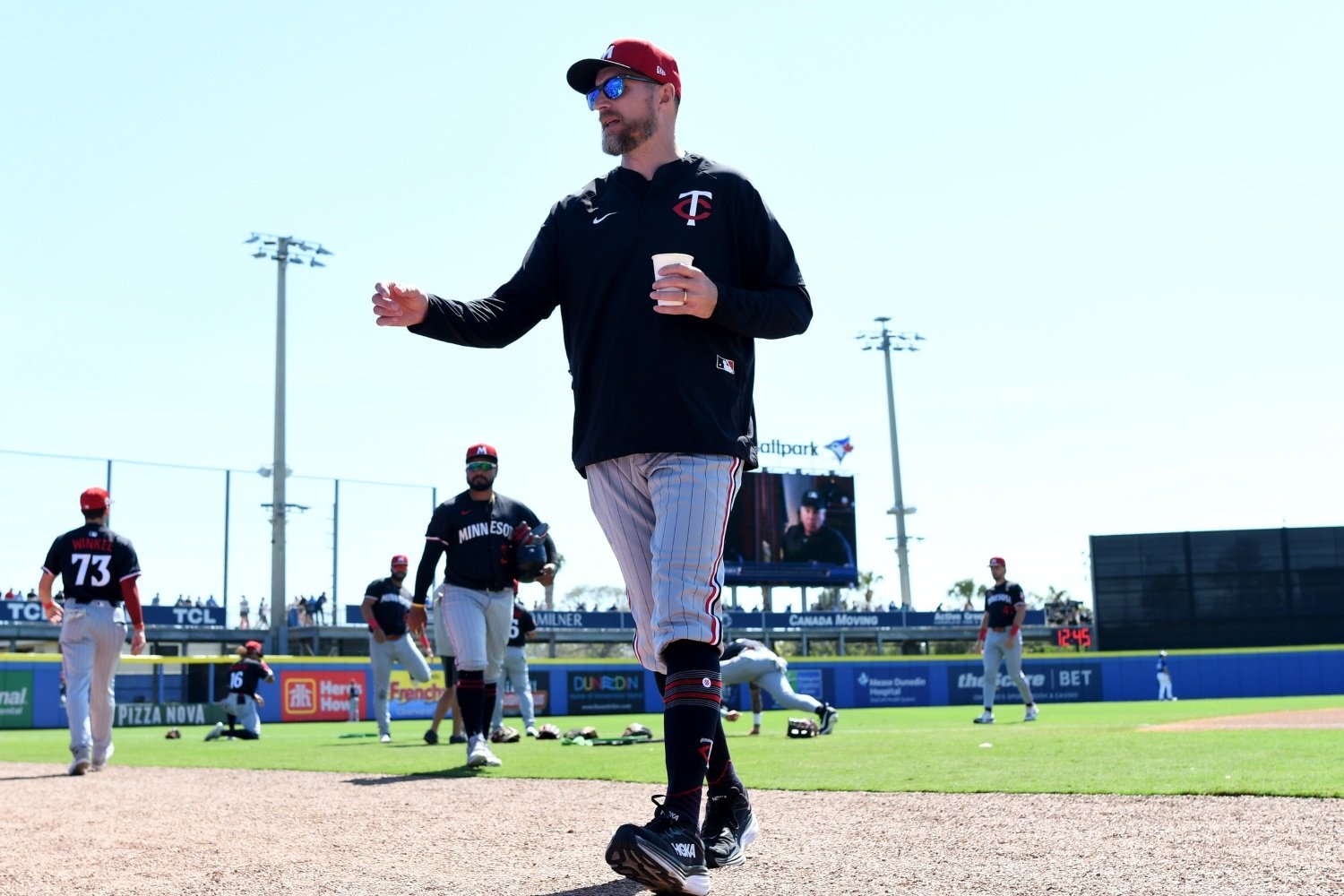 Everyone knows: Spring training games do not matter. When all is said and done, spring training is for training. So why are the Twins so bad at it? This year, the Twins wound up with a losing record for the Grapefruit League. They're the only team to post a losing spring record in Florida each year of this decade. The Pirates haven't had a winning one, but they have at least had a couple of seasons at exactly .500. Over in the Cactus League, only one other team has matched the Twins' run of ineptitude: the Cleveland Guardians. Both teams had their last winning preseason in 2019. We all know these games do not matter. As study after study has demonstrated, there is no correlation between these records and those posted in the regular season. Some studies have gone further, to suggest even some advanced stats do not help us predict league performance in games that count. Yet, there's more than random chance happening here. Randomly, the chances of six straight losing Grapefruit League slots are around 1%. The Cleveland example seems important; they have been the Twins’ central rival for the last half-decade. They're continually over-performing projections, often through a hitting style that befuddles Twins pitchers by wearing them down. What lessons could we draw from that? I was curious: where was the bad production from the Twins coming from? Was it some sloppy work in the final innings by lower-minors prospects? Or was there something else afoot? I took all results from both Cactus and Grapefruit League from 2020 to 2024 (the 2020 Grapefruit season was shortened due to the COVID-19 pandemic, but a fair number of games were played first). I grouped innings together: 1st to 3rd, 4th to 6th, 7th to 9th. Usually, starting pitchers will only go two or three innings until the last week, and most starting lineup batters will take their three swings into the 4th or 5th inning before leaving. That likely means that these divisions generally demonstrated the transition between certified major leaguers and newly minted prospects coming in for a few innings. My idea was to simply look at run differential: which group of players scored more or allowed more runs? To make the chart easier to read, I only focused on Grapefruit League teams: It’s not hard to miss the Twins here. They are, notably, doing their worst work early in games—worse than any other team in Grapefruit League baseball (though if you included the Cactus League, Cleveland would perform the worst). So what does it look like if we only look at the Twins, inning by inning? Again, this suggests that the problems with Twins’ Grapefruit League records have much more to do with their starters. Specifically, the problem seems to be pitching. If we convert runs to “Runs+,” where 100 would be the league average, Twins hitters have a 98 Runs+ in the first though third frames. Meanwhile, the pitchers have allowed a 111 Runs+. For comparison, the Dodgers seemingly bring eight or nine top-line starters to camp before losing them to injury, and have an 81.5 Runs+. There's a chance that Grapefruit League struggles have carried the seeds of regular-season trouble, then. However, there's also a chance that the problem we're seeing has already been solved. If the so-called Falvey pitching pipeline is really reaching its peak productivity, it makes sense that the starters have struggled at camp, while the minor leaguers have succeeded. Twins pitchers have allowed an 89 Runs+ in the 7th through the 9th innings. If widespread reporting is correct, the Twins (perhaps more so than other teams) seem to have let players use the exhibition season to experiment with new pitches. But we will still have questions. In all these seasons, the Twins have posted a losing record in April—until last year, which was saved by a 12-game winning streak that began after starting 7-13. Carlos Correa tells us that his spring does not matter, but it’s hard to look at a .337 OPS and not have some concern, especially when it was the third-worst performance for a spring training hitter in all of baseball with over 40 plate appearances. Should we be worried about Jhoan Durán’s lack of swings and misses? Rocco Baldelli has spoken all spring about the changes they made this camp, and many of us have been wondering about the efficacy of that. Maybe there was a greater need for those changes than we realized, though. Those questions will be answered in a matter of weeks. The Twins probably won’t wear this spring training monkey on their back, but if we come to the end of the season with some of the same befuddlement as last year, maybe we should start looking at this awkward losing streak more closely. It might be capturing a failure of process we can't quite articulate, but which is still real and telling.
 -
The Twins' TV Cable Channels Are Here
Peter Labuza replied to Peter Labuza's topic in Twins Daily Front Page News
Hi Linus — in this research, I've learned that MLB is basically asking a lot of channels to push FanDuel to another channel and make the Twins TV channel what FanDuel was. I guess theoretically the idea is to keep continuity. My guess is that's what DirecTV has agreed to. -
How and where to watch the Twins, and what we can glean from recent changes in the cable and streaming markets. Image courtesy of © Raj Mehta-Imagn Images First off, here’s what you need to know. If you have a cable subscription, here is where you can watch the Twins on TV: Provider Channel More Information Ace Telephone (AcenTek) Channel 30 Algona Municipal Utilities Will not partner due to costs Announcement BEVCOMM HD = channel 36, non-HD = channel 436 Listed on guide Celect Communications No Service Provided Consolidated Telcom Channel 117 Announcement Consolidated Telephone Company (CTC) Channel 32 Announcement DirecTV Channel 668 or 668-3 MLB Announcement DISH No Service Provided MLB Channel Finder Dickey Rural Services Channel 217 DRN ReadiTech Channel 217 Announcement Fubo Available MLB Channel Finder Garden Valley Technologies Channel 76 Announcement Gardonville Cooperative Telephone Channel 37 Announcement Halstad Telephone Company Channel 30 Announcement Hiawatha Broadband Channel 121 Hulu + Live TV No Service Provided MLB Channel Finder Interstate Telecommunications Company HD = Channel 185; SD = 42 Announcement Mediacom No Service Provided MidCo (MidConnect Cable) Channel 638 MLB Announcement MLGC Channel 123 Moore and Liberty Telephone Will Be Availible North Dakota Telephone Company Channel 46 Announcement Northwest Communications Cooperative Channel 305; (Advanced TV = Channel 23) Announcement Park Region Channel 103 Announcement Paul Bunyan Television HD = channel 558, non-HD = channel 58 Announcement Philo No Service Provided MLB Channel Finder Red River Telephone Channel 35 Announcement Reservation Telephone Company Channel 35 / Channel 335 Rockwell Cooperative Telephone Association Channel 25 & 30 Announcement Runestone Telephone HD = channel 26.1, non-HD = channel 27 Announcement SCI Broadband Will Be Availible Sjoberg's Inc. Digital Box: 45 or 645 HD, digital TV: 83 Announcement Sling TV No Service Provided MLB Channel Finder Sparklight No Service Provided Spectrum (Minnesota) Channel 428 or 468 MLB Announcement Spectrum (Wisconsin) Channel 319 MLB Announcement Spring Grove Communication Channel 30 Announcement Tremolo Communications HD = Channel 397; SD = Channel 97 Announcement Tri-County Communications No Service Provided United Telephone Mutual Aid (United and Turtle Mountain Communications) Channel 71 Venture Communications Channel 24 Announcement West Central Telephone Association HD = Channel 325; non-HD: Channel 25 Announcement Windomnet HD = Channel 421; non HD= 60 Announcement Wikstrom Telephone Company Channel 646 Xfinity / Comcast Channel 1261 MLB Announcement YouTube TV No Service Provided MLB Channel Finder If you do not see your provider, check your zip code via the MLB Channel Finder. As previously reported, the channel will be empty for most hours of the day and “turn on” before the game (30 minutes before home games, but only a few minutes before the start of road games). Some cable providers will only be giving access to the channel to those who pony up for “elite” or “premier” service, as had been part of the central debate in last year’s Diamond Sports/Comcast debacle. For example, the North Dakota-based Consolidated Television will only offer Twins.TV on plans that our research suggests are around $60 extra per month. That these deals took time and are being announced right before Opening Day is pretty much in line with what other markets went through in previous iterations. The Rockies and Diamondbacks announced their deals last year on March 28th. As the team has emphasized, MLB’s own negotiators are likely negotiating these deals. The expected money from these cable deals is minimal, compared to the lucrative terms of former broadcast deals. They're meant purely as bridges—short-term patches as the team pushes its primary customer base to sign up for their streaming service—but the reality is that the Twins (like other teams) have a long road ahead to complete that conversion. Last year, the Padres saw only 40,000 subscribers on their DTC plan. The league will likely also continue to negotiate local ad sales for those channels to supplement the direct revenue from the carriers. Some reports suggested that teams under MLB's umbrella earned about $15 million from the league, though those details cannot be confirmed. As of this week, 26 teams—including those with premium cable packages like the Dodgers and the Mets—offer direct-to-consumer options for in-market consumers. Some of the top markets will require a little more out of pocket. The Dodgers will charge $29.99 a month (and $199.99 for the year—double the Twins' rate) to watch them defend their World Series title. This also comes just when the league has officially opted out of its contract with ESPN, which included $550 million a year for Sunday Night Baseball, the All-Star Game, and various playoff games—a portion of which, as is the case with all national broadcast revenue, went to the Twins. Behind the scenes, there's some optimism that the two sides will reunite on a renegotiated deal and that the network will still be a league partner come 2026, but that's far from certain. At every level, there's upheaval ahead for the league and its member clubs where TV money is concerned. Rob Manfred continues to discuss a “master plan” that would bundle up the streaming rights to all 30 teams and facilitate a nationalized approach to broadcast rights similar to the what Adam Silver has done with the NBA. However, some teams (most notably, the Dodgers) are under traditional RSN contracts for another 10 years. Others might not be easy to sell on the collectivized mode; Yankees owner Hal Steinbrenner has stated his preference that any league-wide plan be purely "optional," which is the sanitized way of saying that he'll do everything in his power to thwart it. But by the time those contracts are up, teaming up with Manfred might be the only way forward. While most urban and suburban residents may be eager to cut the cord and find all their sports via streaming options, it is important to remember that there are still over 68 million Americans who subscribe to cable. For some, this is by choice, but for as many as a third of households, it's essentially by necessity. Wide swaths of Minnesotans, Dakotans, and Iowans in rural areas often rely on cable because broadband has yet to expand into their area. Plans to expand fiber broadband access were part of the Inflation Reduction Act of 2021, under a program called BEAD, which would have included $652 million in federal funds to cover almost 200,000 households in rural Minnesota: These plans had been slow to roll out amid careful examination of broadband options and feasibility across the entire United States. However, Secretary of Commerce Howard Lutnick paused BEAD funding due to its “woke mandates.” According to BEAD director Evan Feinman, while the program included some political messaging, those messages were “never central to the mission of the program, nor were they significant in the actual conduct of the program.” However, Feinman (whose contract was not renewed this week) suggested to staff that the program will likely see major delays under Lutnick's plans. Meanwhile, the Wall Street Journal reported that Lutnick's department is considering revisions to the program that would transfer around $20 billion of the BEAD funds to Starlink, a satellite-based internet company founded by Elon Musk, As some experts have noted, Starlink satellites have a five-year service life, after which they are programmed to crash to Earth. By contrast, fiber cables could last decades and include future-proofing for any higher speeds necessary down the road. At any rate, these changes to the program mean that it will be quite a while before teams or the league can rely primarily on DTC streaming, since they can ill afford to alienate suburban and exurban fans whose cable subscriptions are quasi-required utilities and will balk at added costs. This debate over internet access may seem tangential, but it remains critical for both the Twins and broader MLB's future. The Twins need to deliver their product to as many consumers as possible, and many of those consumers will be unwilling to switch to a standalone streaming product until they can access the internet at the required speeds. It's far from an ideal solution, for all involved, but it's something. Please watch out for falling satellites, and enjoy Twins.TV! View full article
-
 First off, here’s what you need to know. If you have a cable subscription, here is where you can watch the Twins on TV: Provider Channel More Information Ace Telephone (AcenTek) Channel 30 Algona Municipal Utilities Will not partner due to costs Announcement BEVCOMM HD = channel 36, non-HD = channel 436 Listed on guide Celect Communications No Service Provided Consolidated Telcom Channel 117 Announcement Consolidated Telephone Company (CTC) Channel 32 Announcement DirecTV Channel 668 or 668-3 MLB Announcement DISH No Service Provided MLB Channel Finder Dickey Rural Services Channel 217 DRN ReadiTech Channel 217 Announcement Fubo Available MLB Channel Finder Garden Valley Technologies Channel 76 Announcement Gardonville Cooperative Telephone Channel 37 Announcement Halstad Telephone Company Channel 30 Announcement Hiawatha Broadband Channel 121 Hulu + Live TV No Service Provided MLB Channel Finder Interstate Telecommunications Company HD = Channel 185; SD = 42 Announcement Mediacom No Service Provided MidCo (MidConnect Cable) Channel 638 MLB Announcement MLGC Channel 123 Moore and Liberty Telephone Will Be Availible North Dakota Telephone Company Channel 46 Announcement Northwest Communications Cooperative Channel 305; (Advanced TV = Channel 23) Announcement Park Region Channel 103 Announcement Paul Bunyan Television HD = channel 558, non-HD = channel 58 Announcement Philo No Service Provided MLB Channel Finder Red River Telephone Channel 35 Announcement Reservation Telephone Company Channel 35 / Channel 335 Rockwell Cooperative Telephone Association Channel 25 & 30 Announcement Runestone Telephone HD = channel 26.1, non-HD = channel 27 Announcement SCI Broadband Will Be Availible Sjoberg's Inc. Digital Box: 45 or 645 HD, digital TV: 83 Announcement Sling TV No Service Provided MLB Channel Finder Sparklight No Service Provided Spectrum (Minnesota) Channel 428 or 468 MLB Announcement Spectrum (Wisconsin) Channel 319 MLB Announcement Spring Grove Communication Channel 30 Announcement Tremolo Communications HD = Channel 397; SD = Channel 97 Announcement Tri-County Communications No Service Provided United Telephone Mutual Aid (United and Turtle Mountain Communications) Channel 71 Venture Communications Channel 24 Announcement West Central Telephone Association HD = Channel 325; non-HD: Channel 25 Announcement Windomnet HD = Channel 421; non HD= 60 Announcement Wikstrom Telephone Company Channel 646 Xfinity / Comcast Channel 1261 MLB Announcement YouTube TV No Service Provided MLB Channel Finder If you do not see your provider, check your zip code via the MLB Channel Finder. As previously reported, the channel will be empty for most hours of the day and “turn on” before the game (30 minutes before home games, but only a few minutes before the start of road games). Some cable providers will only be giving access to the channel to those who pony up for “elite” or “premier” service, as had been part of the central debate in last year’s Diamond Sports/Comcast debacle. For example, the North Dakota-based Consolidated Television will only offer Twins.TV on plans that our research suggests are around $60 extra per month. That these deals took time and are being announced right before Opening Day is pretty much in line with what other markets went through in previous iterations. The Rockies and Diamondbacks announced their deals last year on March 28th. As the team has emphasized, MLB’s own negotiators are likely negotiating these deals. The expected money from these cable deals is minimal, compared to the lucrative terms of former broadcast deals. They're meant purely as bridges—short-term patches as the team pushes its primary customer base to sign up for their streaming service—but the reality is that the Twins (like other teams) have a long road ahead to complete that conversion. Last year, the Padres saw only 40,000 subscribers on their DTC plan. The league will likely also continue to negotiate local ad sales for those channels to supplement the direct revenue from the carriers. Some reports suggested that teams under MLB's umbrella earned about $15 million from the league, though those details cannot be confirmed. As of this week, 26 teams—including those with premium cable packages like the Dodgers and the Mets—offer direct-to-consumer options for in-market consumers. Some of the top markets will require a little more out of pocket. The Dodgers will charge $29.99 a month (and $199.99 for the year—double the Twins' rate) to watch them defend their World Series title. This also comes just when the league has officially opted out of its contract with ESPN, which included $550 million a year for Sunday Night Baseball, the All-Star Game, and various playoff games—a portion of which, as is the case with all national broadcast revenue, went to the Twins. Behind the scenes, there's some optimism that the two sides will reunite on a renegotiated deal and that the network will still be a league partner come 2026, but that's far from certain. At every level, there's upheaval ahead for the league and its member clubs where TV money is concerned. Rob Manfred continues to discuss a “master plan” that would bundle up the streaming rights to all 30 teams and facilitate a nationalized approach to broadcast rights similar to the what Adam Silver has done with the NBA. However, some teams (most notably, the Dodgers) are under traditional RSN contracts for another 10 years. Others might not be easy to sell on the collectivized mode; Yankees owner Hal Steinbrenner has stated his preference that any league-wide plan be purely "optional," which is the sanitized way of saying that he'll do everything in his power to thwart it. But by the time those contracts are up, teaming up with Manfred might be the only way forward. While most urban and suburban residents may be eager to cut the cord and find all their sports via streaming options, it is important to remember that there are still over 68 million Americans who subscribe to cable. For some, this is by choice, but for as many as a third of households, it's essentially by necessity. Wide swaths of Minnesotans, Dakotans, and Iowans in rural areas often rely on cable because broadband has yet to expand into their area. Plans to expand fiber broadband access were part of the Inflation Reduction Act of 2021, under a program called BEAD, which would have included $652 million in federal funds to cover almost 200,000 households in rural Minnesota: These plans had been slow to roll out amid careful examination of broadband options and feasibility across the entire United States. However, Secretary of Commerce Howard Lutnick paused BEAD funding due to its “woke mandates.” According to BEAD director Evan Feinman, while the program included some political messaging, those messages were “never central to the mission of the program, nor were they significant in the actual conduct of the program.” However, Feinman (whose contract was not renewed this week) suggested to staff that the program will likely see major delays under Lutnick's plans. Meanwhile, the Wall Street Journal reported that Lutnick's department is considering revisions to the program that would transfer around $20 billion of the BEAD funds to Starlink, a satellite-based internet company founded by Elon Musk, As some experts have noted, Starlink satellites have a five-year service life, after which they are programmed to crash to Earth. By contrast, fiber cables could last decades and include future-proofing for any higher speeds necessary down the road. At any rate, these changes to the program mean that it will be quite a while before teams or the league can rely primarily on DTC streaming, since they can ill afford to alienate suburban and exurban fans whose cable subscriptions are quasi-required utilities and will balk at added costs. This debate over internet access may seem tangential, but it remains critical for both the Twins and broader MLB's future. The Twins need to deliver their product to as many consumers as possible, and many of those consumers will be unwilling to switch to a standalone streaming product until they can access the internet at the required speeds. It's far from an ideal solution, for all involved, but it's something. Please watch out for falling satellites, and enjoy Twins.TV!
 -
Will the Twins Ever Invest in Size at First Base?
Peter Labuza replied to Peter Labuza's topic in Twins Daily Front Page News
sometimes we like to have a little fun at TD... -
The team hasn’t necessarily struggled at the slug-first position, but they are once again disregarding size. Image courtesy of © Chris Tilley-Imagn Images Ever since Luis Arráez made the switch to first base, the Twins have embraced their short kings. A team that once played the towering Miguel Sanó has seemingly taken a different approach quite different from much of the league, where first basemen like Freddie Freeman and Matt Olson (both 6’5”) are often front and center. Due to a myriad of factors, they are set to go down the same path once again. And while the Twins lack a true big bopper, they have actually done solid at the position. Carlos Santana (5’11”) won a Gold Glove last year while becoming a rock solid bat. Donovan Solano (5’9”) fit in well. And Arráez (5’10”) certainly played better at first than any other position. While none were sluggers, the offense has thus been solid enough for 13th in the league since 2021 in offensive fWAR. That suggests a modicum of talent. Just how short are the Twins? In a recent study, first basemen were the tallest by height (as well as the heaviest by weight) of all the non-pitching positions. But I wanted to see if the eye test matched the data. To determine how teams have used height at first base, I looked at the height of every person to field for even a third of an inning at first base, and how many innings they played between 2022 and 2024: In addition to BIG1, I made a plus stat entitled BIG1+, similar to BIG1+ where 100 is the average league score, helping show the difference: Team BIG1 BIG1+ ATL 686.03 114.9 LAD 685.25 114.5 BAL 673.41 108.6 TEX 669.05 106.5 PHI 668.62 106.3 NYY 668.35 106.2 BOS 667.15 105.6 COL 663.99 104.1 STL 663.05 103.7 NYM 661.64 103 MIA 661.48 103 MIL 659.93 102.2 Average 649.95 100 TOR 654.81 99.9 LAA 652.71 98.9 HOU 651.51 98.4 CHC 651.4 98.3 SFG 651.26 98.3 WSN 651.24 98.3 KCR 651.2 98.2 CHW 650.06 97.7 SDP 649.69 97.6 TBR 649.56 97.5 OAK 647.44 96.5 MIN 641.98 94.1 ARI 641.71 94 CIN 638.39 92.6 DET 637.68 92.2 PIT 636.38 91.7 SEA 636.37 91.7 CLE 635.81 91.4 As we can see, the Twins have ranked quite close to the bottom of the league, though perhaps closer to the average than what might we imagine. But the top teams are more than twice above the average compared to how the far the Twins are back from the average. But diving further, a curious pattern emerges. The Twins have had not just a single short king at first but a steady diet of them over the years. For example, Ty France (5’10”) recorded over 3,000 innings with Seattle at first base since 2022 with only a handful of Mariner players filling in around 250 innings. The Twins, on the other hand, have had five player record over 500 innings at the position (and doesn’t even include Joey Gallo). That’s the most in the league (only the Pirates have had four). Notably, the Twins are seemingly set to do the same again, and not just with France, but the whole range of new first basemen this season. Not only is there no set first baseman, likely meaning a wide variety of players in the position. But also, none of them need to duck when crossing doorways: Player Height (Inches) Projected Games (ZIPS) Ty France 70 136 Edouard Julien 70 134 Jose Miranda 72 121 Mickey Gasper 68 96 Mike Ford 70 88 So why go down this path and continue to do so? Mostly, their big boppers have simply not panned out. Alex Kirilloff ended his career after a bizarre spine injury pushed him out. No team bothered to even send Sanó a non-roster invite for spring training. Gallo...happened. And Miranda has only received minimal playing time this spring there, suggesting the team might prefer him over in the other corner. Notably all these taller kids have performed poorly by defensive metrics like Outs About Average, while the short kings have at least been neutral to positive (or in Santana’s case, stellar). Secondly, the Twins are about to hit an infield crunch. Brooks Lee has essentially already arrived and Luke Keaschall is close beyond. While Willi Castro will depart at the end of the season, someone over at second or third might find a permanent relocation to the right. Plus, if France has the season the Twins hope, he might not come cheap for 2026. For a team in need of improvements, only right field (where Max Kepler occupied for the same seasons) has ranked lower in terms of offensive output since 2021. It remains an obvious hole that could be filled with a trade (for Vladimir Guerrero Jr. at the deadline) or a free agent (by signing Vladimir Guerrero Jr. this winter). The Twins are well aware of the choice. After a recent spring training game, Rocco Baldelli responded to a question about Gasper’s profile a first base and specifically his height. “It’s not conventional, but we’ve done it here before…It’s certainly not an excluding factor.” And yet, what becomes clear is that while many teams set a first basemen in place and sit comfortably for years, the Twins have yet to develop a clear plan for the future. Perhaps if a ball or two goes sailing above someone’s head, that will change. View full article
-
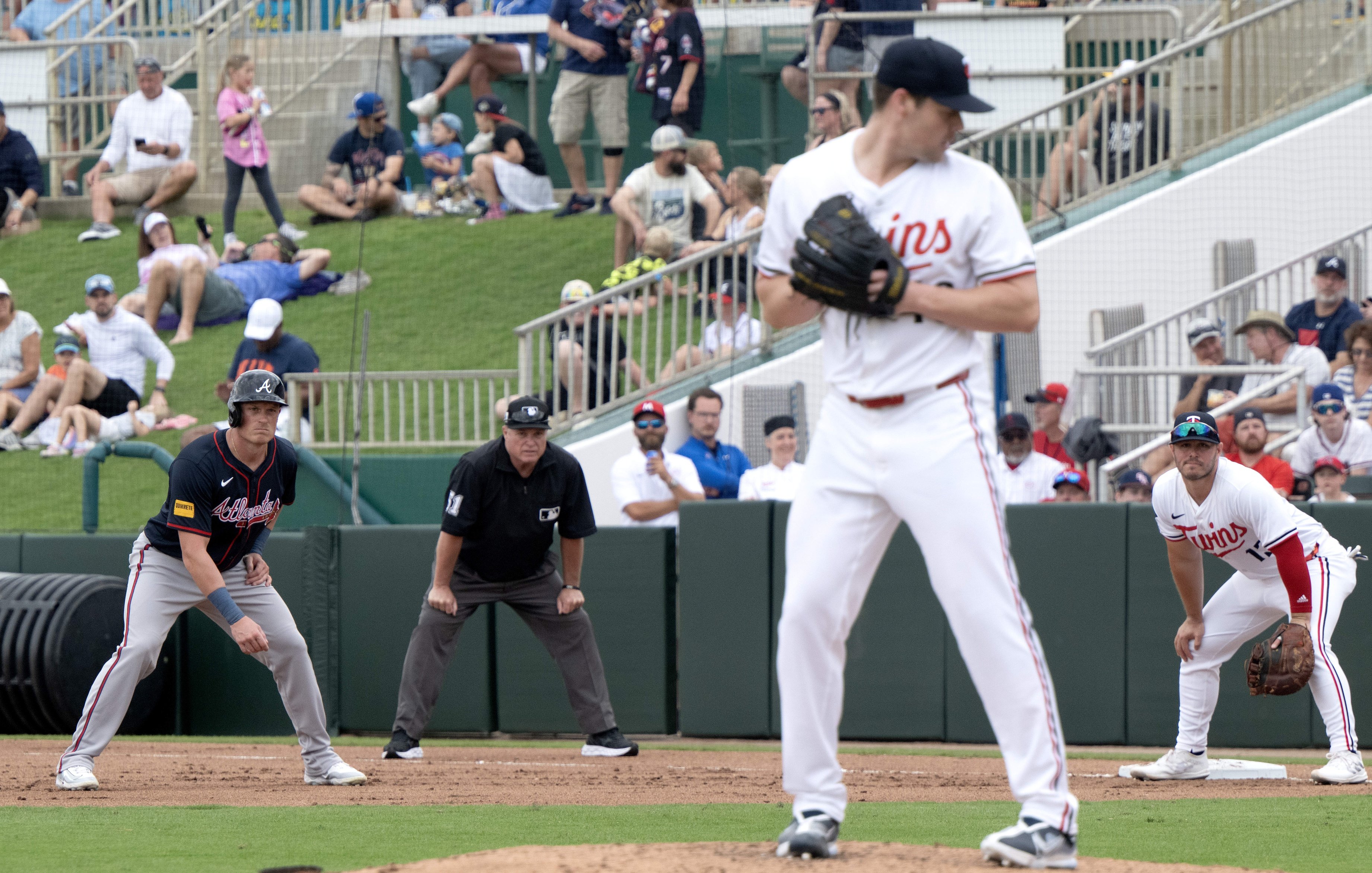 Ever since Luis Arráez made the switch to first base, the Twins have embraced their short kings. A team that once played the towering Miguel Sanó has seemingly taken a different approach quite different from much of the league, where first basemen like Freddie Freeman and Matt Olson (both 6’5”) are often front and center. Due to a myriad of factors, they are set to go down the same path once again. And while the Twins lack a true big bopper, they have actually done solid at the position. Carlos Santana (5’11”) won a Gold Glove last year while becoming a rock solid bat. Donovan Solano (5’9”) fit in well. And Arráez (5’10”) certainly played better at first than any other position. While none were sluggers, the offense has thus been solid enough for 13th in the league since 2021 in offensive fWAR. That suggests a modicum of talent. Just how short are the Twins? In a recent study, first basemen were the tallest by height (as well as the heaviest by weight) of all the non-pitching positions. But I wanted to see if the eye test matched the data. To determine how teams have used height at first base, I looked at the height of every person to field for even a third of an inning at first base, and how many innings they played between 2022 and 2024: In addition to BIG1, I made a plus stat entitled BIG1+, similar to BIG1+ where 100 is the average league score, helping show the difference: Team BIG1 BIG1+ ATL 686.03 114.9 LAD 685.25 114.5 BAL 673.41 108.6 TEX 669.05 106.5 PHI 668.62 106.3 NYY 668.35 106.2 BOS 667.15 105.6 COL 663.99 104.1 STL 663.05 103.7 NYM 661.64 103 MIA 661.48 103 MIL 659.93 102.2 Average 649.95 100 TOR 654.81 99.9 LAA 652.71 98.9 HOU 651.51 98.4 CHC 651.4 98.3 SFG 651.26 98.3 WSN 651.24 98.3 KCR 651.2 98.2 CHW 650.06 97.7 SDP 649.69 97.6 TBR 649.56 97.5 OAK 647.44 96.5 MIN 641.98 94.1 ARI 641.71 94 CIN 638.39 92.6 DET 637.68 92.2 PIT 636.38 91.7 SEA 636.37 91.7 CLE 635.81 91.4 As we can see, the Twins have ranked quite close to the bottom of the league, though perhaps closer to the average than what might we imagine. But the top teams are more than twice above the average compared to how the far the Twins are back from the average. But diving further, a curious pattern emerges. The Twins have had not just a single short king at first but a steady diet of them over the years. For example, Ty France (5’10”) recorded over 3,000 innings with Seattle at first base since 2022 with only a handful of Mariner players filling in around 250 innings. The Twins, on the other hand, have had five player record over 500 innings at the position (and doesn’t even include Joey Gallo). That’s the most in the league (only the Pirates have had four). Notably, the Twins are seemingly set to do the same again, and not just with France, but the whole range of new first basemen this season. Not only is there no set first baseman, likely meaning a wide variety of players in the position. But also, none of them need to duck when crossing doorways: Player Height (Inches) Projected Games (ZIPS) Ty France 70 136 Edouard Julien 70 134 Jose Miranda 72 121 Mickey Gasper 68 96 Mike Ford 70 88 So why go down this path and continue to do so? Mostly, their big boppers have simply not panned out. Alex Kirilloff ended his career after a bizarre spine injury pushed him out. No team bothered to even send Sanó a non-roster invite for spring training. Gallo...happened. And Miranda has only received minimal playing time this spring there, suggesting the team might prefer him over in the other corner. Notably all these taller kids have performed poorly by defensive metrics like Outs About Average, while the short kings have at least been neutral to positive (or in Santana’s case, stellar). Secondly, the Twins are about to hit an infield crunch. Brooks Lee has essentially already arrived and Luke Keaschall is close beyond. While Willi Castro will depart at the end of the season, someone over at second or third might find a permanent relocation to the right. Plus, if France has the season the Twins hope, he might not come cheap for 2026. For a team in need of improvements, only right field (where Max Kepler occupied for the same seasons) has ranked lower in terms of offensive output since 2021. It remains an obvious hole that could be filled with a trade (for Vladimir Guerrero Jr. at the deadline) or a free agent (by signing Vladimir Guerrero Jr. this winter). The Twins are well aware of the choice. After a recent spring training game, Rocco Baldelli responded to a question about Gasper’s profile a first base and specifically his height. “It’s not conventional, but we’ve done it here before…It’s certainly not an excluding factor.” And yet, what becomes clear is that while many teams set a first basemen in place and sit comfortably for years, the Twins have yet to develop a clear plan for the future. Perhaps if a ball or two goes sailing above someone’s head, that will change.
 -
Twins.TV Will Feature Upgraded Cameras, But Skimp on Content
Peter Labuza posted an article in Twins
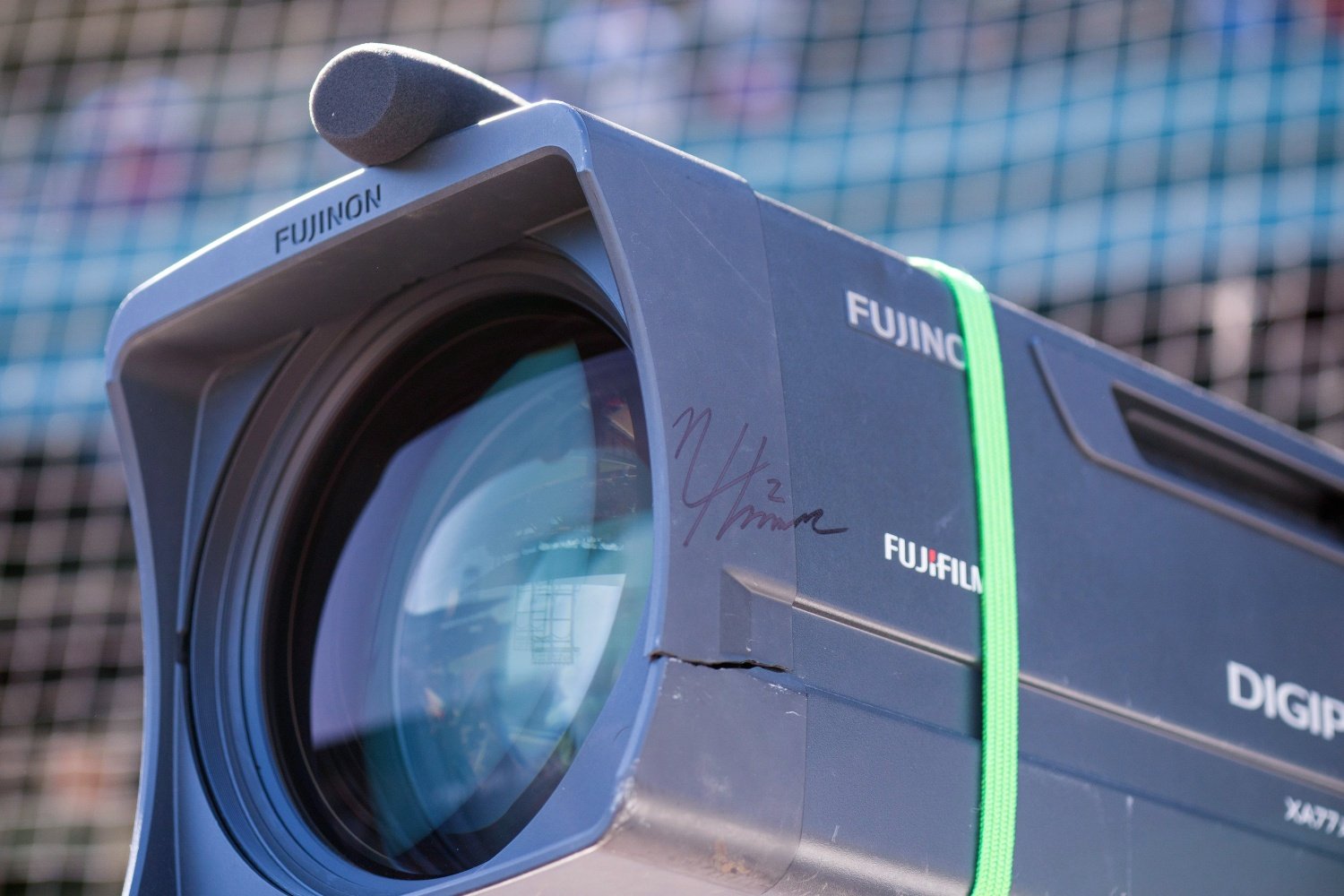 As will be true for many teams this season and in the few ahead, the coming of Twins.TV brings a new viewing dynamic to Minnesota Twins baseball. Finally free from cable carrier deals, the Twins are free to produce their games however they want and avoid blackouts. For many, the Twins’ decision to bring back its entire broadcast crew—including fan favorite Audra Martin—is a welcome surprise. More so, the Twins are introducing new cameras, which translates to good union jobs, in their attempts to modernize the show. But buried in the new details of the new streaming-forward broadcast, new details suggest that the Twins are finding ways to cut their broadcast costs down. As Dan Hayes reports, “When the team is home, the Twins will continue to air 30-minute pregame and postgame shows. But the move to Twins.TV means pregame shows on the road have been eliminated, while postgame shows are limited to 15 minutes.” I’m not necessarily a pre- and post-game obsessive, but I find them enjoyable and a good mood setter. The Twins have found a great team in Katie Storm, Tim Laudner, and Martin, and some of the pre-recorded segments can be the place where the players’ personalities can shine. If you haven’t checked out a game in a given week, the pregame can be the place to discover the current “vibe” of the team. Part of the driving force behind these choices is the distinction between which parts of the broadcast are union-made vs. non-union. Twins broadcasts are part together by the crew of the International Alliance of Theatrical Stage Employees (IATSE) Local 745. However, they actually don’t negotiate with the Twins. Instead, they work with a company colloquially known as a “crewer” called Program Productions Inc. (PPI), which works with broadcast groups all over the nation. PPI ensures a good crew is available for not just local broadcasts, but also visiting teams and national broadcasts, depending on the needs of the broadcasting partner. When PPI negotiated their contract with IATSE last year (which runs through 2029), it was officially before the Twins left their contract with Diamond Sports Holding (aka Ballys, now Main Street Sports Group presents FanDuel... you don't need to care anymore). But the Twins, just as other teams have done when partnering with MLB, have kept the same crewers, to ensure continuity with broadcast workers who know the ins and outs of shooting Target Field. For both the union and fans, the new cameras are a huge win. These include, as Cory Provus revealed at the Winter Meltdown and shared with The Athletic, a wire camera that has been a staple at T-Mobile Park in Seattle for some time, as well as what cinematographers call the “Megalodon,” which gives a high resolution, shallow focus shot of players after they return to the dugout from a home run. According to Dustin Wasserman, Business Agent for Local 745, "The local is excited that with MLB being in charge of production of the games, the broadcast has added back some camera positions lost in previous years, along with the new cable camera system." While unions often have to fight a scaling-back in jobs, IATSE workers are getting a nice boost as the Twins look to upgrade the look and feel of the games. However, the union doesn’t cover the pre- and post-game shows, giving MLB the flexibility to make changes and create job loss. Those are usually done by in-house staff members. Sources suggest that many of the same crew behind the scenes are being brought from Ballys/FanDuel to MLB, but the cuts in hours will certainly hamper the living wage of those who return. The choice is simple: the Twins do not have a dedicated broadcast space, and bringing in a whole crew for pre- and post-game coverage is considered onerous. MLB dictates the choices, so the Twins will follow in the same style that the Rockies and Padres have pursued. As for the 15-minute post-game show, those will only feature a wrap-up by Cory Provus and the analysts, as well as a brief clip of a post-game interview if available. Fans might go over a week barely hearing from the broadcast, beyond what is provided during the game. More so, fans of teams with MLB producing the broadcasts last year often experienced issues such as the broadcast beginning just seconds before first pitch, and because of the imprecision of technology, they sometimes actually came in after the at-bat had already begun. A little lead time as the teams take the field (and thus a better fan experience) should not be seen as burdensome. But it seems clear the Twins have done what the Pohlads do best: trying to cut every corner. As Provus joked at the Winter Meltdown, when you lose $60 million in television revenue, a lot of choices get made. The Twins have the opportunity to change things up, and should take advantage of the chance to reach new blocs of fans, but it also seems like a good opportunity to do more. Making fans care about the players, learning about their background, seeing Rocco Baldelli talk about the team—these are not just “niceties” in the baseball world. They're what connect us to the team. Some of this might be growing pains, and in a world where switching off cable can create so many new possibilities, let's hope the Twins see the value beyond the first and last innings, eventually.
 -
The new format for Twins.TV means changes ahead, but not everything will be to fans' liking. Image courtesy of © Allan Henry-Imagn Images As will be true for many teams this season and in the few ahead, the coming of Twins.TV brings a new viewing dynamic to Minnesota Twins baseball. Finally free from cable carrier deals, the Twins are free to produce their games however they want and avoid blackouts. For many, the Twins’ decision to bring back its entire broadcast crew—including fan favorite Audra Martin—is a welcome surprise. More so, the Twins are introducing new cameras, which translates to good union jobs, in their attempts to modernize the show. But buried in the new details of the new streaming-forward broadcast, new details suggest that the Twins are finding ways to cut their broadcast costs down. As Dan Hayes reports, “When the team is home, the Twins will continue to air 30-minute pregame and postgame shows. But the move to Twins.TV means pregame shows on the road have been eliminated, while postgame shows are limited to 15 minutes.” I’m not necessarily a pre- and post-game obsessive, but I find them enjoyable and a good mood setter. The Twins have found a great team in Katie Storm, Tim Laudner, and Martin, and some of the pre-recorded segments can be the place where the players’ personalities can shine. If you haven’t checked out a game in a given week, the pregame can be the place to discover the current “vibe” of the team. Part of the driving force behind these choices is the distinction between which parts of the broadcast are union-made vs. non-union. Twins broadcasts are part together by the crew of the International Alliance of Theatrical Stage Employees (IATSE) Local 745. However, they actually don’t negotiate with the Twins. Instead, they work with a company colloquially known as a “crewer” called Program Productions Inc. (PPI), which works with broadcast groups all over the nation. PPI ensures a good crew is available for not just local broadcasts, but also visiting teams and national broadcasts, depending on the needs of the broadcasting partner. When PPI negotiated their contract with IATSE last year (which runs through 2029), it was officially before the Twins left their contract with Diamond Sports Holding (aka Ballys, now Main Street Sports Group presents FanDuel... you don't need to care anymore). But the Twins, just as other teams have done when partnering with MLB, have kept the same crewers, to ensure continuity with broadcast workers who know the ins and outs of shooting Target Field. For both the union and fans, the new cameras are a huge win. These include, as Cory Provus revealed at the Winter Meltdown and shared with The Athletic, a wire camera that has been a staple at T-Mobile Park in Seattle for some time, as well as what cinematographers call the “Megalodon,” which gives a high resolution, shallow focus shot of players after they return to the dugout from a home run. According to Dustin Wasserman, Business Agent for Local 745, "The local is excited that with MLB being in charge of production of the games, the broadcast has added back some camera positions lost in previous years, along with the new cable camera system." While unions often have to fight a scaling-back in jobs, IATSE workers are getting a nice boost as the Twins look to upgrade the look and feel of the games. However, the union doesn’t cover the pre- and post-game shows, giving MLB the flexibility to make changes and create job loss. Those are usually done by in-house staff members. Sources suggest that many of the same crew behind the scenes are being brought from Ballys/FanDuel to MLB, but the cuts in hours will certainly hamper the living wage of those who return. The choice is simple: the Twins do not have a dedicated broadcast space, and bringing in a whole crew for pre- and post-game coverage is considered onerous. MLB dictates the choices, so the Twins will follow in the same style that the Rockies and Padres have pursued. As for the 15-minute post-game show, those will only feature a wrap-up by Cory Provus and the analysts, as well as a brief clip of a post-game interview if available. Fans might go over a week barely hearing from the broadcast, beyond what is provided during the game. More so, fans of teams with MLB producing the broadcasts last year often experienced issues such as the broadcast beginning just seconds before first pitch, and because of the imprecision of technology, they sometimes actually came in after the at-bat had already begun. A little lead time as the teams take the field (and thus a better fan experience) should not be seen as burdensome. But it seems clear the Twins have done what the Pohlads do best: trying to cut every corner. As Provus joked at the Winter Meltdown, when you lose $60 million in television revenue, a lot of choices get made. The Twins have the opportunity to change things up, and should take advantage of the chance to reach new blocs of fans, but it also seems like a good opportunity to do more. Making fans care about the players, learning about their background, seeing Rocco Baldelli talk about the team—these are not just “niceties” in the baseball world. They're what connect us to the team. Some of this might be growing pains, and in a world where switching off cable can create so many new possibilities, let's hope the Twins see the value beyond the first and last innings, eventually. View full article
-
The Pohlad Empire (Part Five): Downtown Drain
Peter Labuza replied to Peter Labuza's topic in Twins Daily Front Page News
Thank you (and to all who found these articles interesting!). I will definitely consider that if/when we have a new owner—TD has already reported on some of the Ishbia financial dealings that made the press a couple years back. Part of the idea of this series was "we are constantly told by the Pohlads that they cannot spend anymore money on the team, so what are they spending their money on?" But especially in an era of sportswashing from Saudi Arabia to Steve Cohen, it is always important to ask how and why material power is built and how it is used. -
The Pohlad Empire (Part Five): Downtown Drain
Peter Labuza replied to Peter Labuza's topic in Twins Daily Front Page News
“To be clear, strong wage growth is a good thing, But for wage growth to be sustainable, it needs to be consistent with two percent inflation.” -Jerome Powell at the Brookings Institute, not sure how else to read this beyond “workers should make less money and have less spending power.” -
In the final part of our look at the Pohlad's financial history, we look at how the modern real estate boom kept the family's finances alive, and how changes in the market are likely forcing a sale. Image courtesy of © Kirby Lee-Imagn Images "I'm so sick of defending myself, my credibility, my family, I should just sell the {expletive} team. There's a limit." —Carl Pohlad In 2021, the RBC Gateway became the new gem of the Minneapolis skyline. Years in the making, and developed with all private capital—no special tax district needed—it brought a Four Seasons to downtown. This particularly excited Mayor Jacob Frey, who was sick of seeing artists play venues like First Avenue and immediately hop on a plane back to Chicago. But just above the hotel was office space that needed to be filled. Several businesses moved in there: United Properties, a real estate building company owned by the Pohlads; Northmarq, a real estate finance company owned by the Pohlads; Carousel Motor Group, an automotive group owned by the Pohlads; and even the Pohlad Family Foundation, which, you get the drill. Practically every business owned by the Pohlads relocated from the suburbs into this new place downtown, which, if you hadn’t guessed, was built by United Properties. Of course, 2021 was an interesting time considering how most businesses were in a panic about their downtown real estate, assuming workers might never return to the office. For more on the history of the Pohlad family and their business interests, please see Part 1, Part 2, Part 3, and Part 4, of this series. In our final piece, I wanted to explore why the Pohlads are selling. When editor Matt Trueblood proposed this series, our goal (in part) was to try and understand how other business ventures of the Pohlads might explain why they operated the Twins as they did. Now that a sale is at least in the works, this final piece looks at the origin of the sale. As much as they would insist otherwise, the Twins have made the Pohlads rich beyond what Carl could have ever dreamed when he forked over $38 million. But even if the streaming and cable network bubble chaos has made the business less lucrative than it could be, the reasons for selling seem to go far beyond that. Instead, the real estate world has taken an unwelcome turn, and the Pohlads are desperate, to use their own language, “right-size our business.” As the Pohlads moved out of banking and bottling, real estate became the prime business. They acquired United Properties in 1998, mostly focused on suburban office parks. It was “poised” to build commercial real estate following the 2008 crash as a set of new jobs in major suburban spaces came to replace older companies. From 2016-18, no company developed more real estate in Minnesota than the Pohlads'. Like many similar companies, United has relied on moving toward “mixed-use” building, meaning properties might include high-rise condos as part of its broader commercial use. Like many real estate builders, United has often relied on tax credits and incentives to build. This includes the Loose-Wiles Biscuit Company Building ($1.8 million). A better example is Kenwood Village in Duluth. In order to ensure United Properties would build the complex, the city council handed United Properties $2.8 million in tax relief on United’s $21 million investment, despite research from the County suggesting it should take no more than $10 million. When United sold the enterprise to a New York firm for $21 million, St. Louis County valued the cost of the property at $8.34 million. When it opened, Kenwood Village had the highest prices for studio apartments in the entire Duluth area. Another vision of United’s public-private “partnerships” comes in the continuing drama of the Upper Harbor Area, which was sold by the city to develop parks, affordable housing, and an outdoor venue run by First Avenue in 2017. Lawsuits have ensued, and financing has been slow to get going. The property has remained controversial, with the city spending over $350 million in 2021 despite United and others technically owning the underlying real estate. The city recently learned that it may be able to retain the venue in full control. And despite all the promises of affordable housing, United’s main developer has recently suggested it may not succeed. But the real problem for United has been its bet on the downtown area. In 2021, United was able to sell both Gateway and Gaviidae Common on Nicollet Mall. However, reports suggest these deals came at prices below their true value. With interest rates soaring due to Jerome Powell’s attempts to hurt worker power and unionization drives during 2021 and 2022, real estate transactions became harder. Office vacancies remained particularly high into 2023, though a series of punishing return-to-work policies from various companies have attempted to level the playing field for developers. In a profile covering the Pohlads from 2022, United’s CEO Bill Katter suggested, “The city is going to find its way to a new set of priorities and a new norm. How do we make places people want to return to? The Pohlads want to help create that future.” Four days after Katter made these comments, he left the organization. The next venture for United is to transition to senior living, one of the most lucrative and exploitative industries at the moment. United is currently building a $40-million senior living center, which will give 147 individuals amenities like “a pet wash station, a bike repair station, yoga studio and saunas, art studio, hobby shop, library and clubhouse.” This would triple the amount of assets it has or is building in the sector. According to one report, “Senior housing accounted for just 9% of the value of United's long-term holdings three years ago, with the rest being a mix of industrial, office and retail properties. [Newly appointed CEO] Matt Van Slooten expects that figure to increase to about 40%.” To back up these moves in new directions, the Pohlads have always relied on Northmarq, a firm that does financing and brokerage for real estate investments. In 2024, they were the sixth-largest intermediary for real estate deals in the nation. In 2023, the company made deals and sales worth around $22 billion. In 2024, S&P Global raised its rankings as a commercial private loan company. To give just a flavor, it has sold a 97-unit property in Baltimore ($54 million), 17 acres near Phoenix ($14.5 million), and three manufacturing properties in the Pacific Northwest ($14.3 million). That said, more and more deals by Northmarq appear to be those where they are mere brokers, rather than something they themselves acquire. They’re passing money between hands, but not gaining it themselves. The business is changing though. Northmarq recently acquired Morrison Street Capital, which specializes in investment management to fund real estate deals. Whether that means just investing in Fortune 500 companies or, say, cryptocurrency, is for the future to decide. Notably, perhaps, United and Northmarq haven't been plagued by the dramatic conflicts with regulators or competitors that marked so many of the Pohlads' earlier ventures. They've been involved in a few lawsuits, but there's nothing as salacious or as shady as several of the things that happened under Carl Pohlad in his various ventures in other sectors. United has come under scrutiny for foregoing unionized workforces, despite the owners' Progressive bona fides. Centro de Trabajadores Unidos en la Lucha (CTUL) is trying to stop such working abuse. But this is ultimately small potatoes compared to the stories we could tell about Carl. The last two decades have been good for real estate developers, and thus good for the Pohlads. But like the end of the RSN payday, that bubble is popping. Most of the talk in the real estate world is about being more targeted. You can learn on the Northmarq website how to target success. As Van Slooten pointed out, United has survived because they “are able to develop properties with our own equity” as well as “selectively start several projects with our capital,” which is to say, when you have billionaires, you sometimes can get a head up in the real estate game by having access to capital when others do not. And with federal interest rates still high, a quick cash infusion—say around $1.5 to $2 billion—might be able to do the job. But sometimes you might have a little pain. In November of this year, Bob Pohlad quietly put his RBC Gateway Condo inside the Four Seasons up for sale. Bought for $4.3 million, it might sell for only $4.5 million. If you asked a casual Minnesota sports fan about the Pohlads, you would probably get an answer about how often they've felt nickeled and dimed. It always felt so silly—when you have access to billions, why not waste a little to break a silly curse and create a generation of new fans? But the truth is, the Pohlads aren’t being cheap on their teams to spend it on other businesses. Being cheap is the way the Pohlads have always done business. There’s no guarantee of a new owner changing the system or infusing cash, and there’s even more to worry about if the new owners have little to no connection to the state where the team plays. But that’s the truth about private ownership in sports: They get to run it, and you don’t. And unless you fight for a different system—one where we can all invest into a team—the only thing you can scream is “Sell the Team.” View full article
-
 "I'm so sick of defending myself, my credibility, my family, I should just sell the {expletive} team. There's a limit." —Carl Pohlad In 2021, the RBC Gateway became the new gem of the Minneapolis skyline. Years in the making, and developed with all private capital—no special tax district needed—it brought a Four Seasons to downtown. This particularly excited Mayor Jacob Frey, who was sick of seeing artists play venues like First Avenue and immediately hop on a plane back to Chicago. But just above the hotel was office space that needed to be filled. Several businesses moved in there: United Properties, a real estate building company owned by the Pohlads; Northmarq, a real estate finance company owned by the Pohlads; Carousel Motor Group, an automotive group owned by the Pohlads; and even the Pohlad Family Foundation, which, you get the drill. Practically every business owned by the Pohlads relocated from the suburbs into this new place downtown, which, if you hadn’t guessed, was built by United Properties. Of course, 2021 was an interesting time considering how most businesses were in a panic about their downtown real estate, assuming workers might never return to the office. For more on the history of the Pohlad family and their business interests, please see Part 1, Part 2, Part 3, and Part 4, of this series. In our final piece, I wanted to explore why the Pohlads are selling. When editor Matt Trueblood proposed this series, our goal (in part) was to try and understand how other business ventures of the Pohlads might explain why they operated the Twins as they did. Now that a sale is at least in the works, this final piece looks at the origin of the sale. As much as they would insist otherwise, the Twins have made the Pohlads rich beyond what Carl could have ever dreamed when he forked over $38 million. But even if the streaming and cable network bubble chaos has made the business less lucrative than it could be, the reasons for selling seem to go far beyond that. Instead, the real estate world has taken an unwelcome turn, and the Pohlads are desperate, to use their own language, “right-size our business.” As the Pohlads moved out of banking and bottling, real estate became the prime business. They acquired United Properties in 1998, mostly focused on suburban office parks. It was “poised” to build commercial real estate following the 2008 crash as a set of new jobs in major suburban spaces came to replace older companies. From 2016-18, no company developed more real estate in Minnesota than the Pohlads'. Like many similar companies, United has relied on moving toward “mixed-use” building, meaning properties might include high-rise condos as part of its broader commercial use. Like many real estate builders, United has often relied on tax credits and incentives to build. This includes the Loose-Wiles Biscuit Company Building ($1.8 million). A better example is Kenwood Village in Duluth. In order to ensure United Properties would build the complex, the city council handed United Properties $2.8 million in tax relief on United’s $21 million investment, despite research from the County suggesting it should take no more than $10 million. When United sold the enterprise to a New York firm for $21 million, St. Louis County valued the cost of the property at $8.34 million. When it opened, Kenwood Village had the highest prices for studio apartments in the entire Duluth area. Another vision of United’s public-private “partnerships” comes in the continuing drama of the Upper Harbor Area, which was sold by the city to develop parks, affordable housing, and an outdoor venue run by First Avenue in 2017. Lawsuits have ensued, and financing has been slow to get going. The property has remained controversial, with the city spending over $350 million in 2021 despite United and others technically owning the underlying real estate. The city recently learned that it may be able to retain the venue in full control. And despite all the promises of affordable housing, United’s main developer has recently suggested it may not succeed. But the real problem for United has been its bet on the downtown area. In 2021, United was able to sell both Gateway and Gaviidae Common on Nicollet Mall. However, reports suggest these deals came at prices below their true value. With interest rates soaring due to Jerome Powell’s attempts to hurt worker power and unionization drives during 2021 and 2022, real estate transactions became harder. Office vacancies remained particularly high into 2023, though a series of punishing return-to-work policies from various companies have attempted to level the playing field for developers. In a profile covering the Pohlads from 2022, United’s CEO Bill Katter suggested, “The city is going to find its way to a new set of priorities and a new norm. How do we make places people want to return to? The Pohlads want to help create that future.” Four days after Katter made these comments, he left the organization. The next venture for United is to transition to senior living, one of the most lucrative and exploitative industries at the moment. United is currently building a $40-million senior living center, which will give 147 individuals amenities like “a pet wash station, a bike repair station, yoga studio and saunas, art studio, hobby shop, library and clubhouse.” This would triple the amount of assets it has or is building in the sector. According to one report, “Senior housing accounted for just 9% of the value of United's long-term holdings three years ago, with the rest being a mix of industrial, office and retail properties. [Newly appointed CEO] Matt Van Slooten expects that figure to increase to about 40%.” To back up these moves in new directions, the Pohlads have always relied on Northmarq, a firm that does financing and brokerage for real estate investments. In 2024, they were the sixth-largest intermediary for real estate deals in the nation. In 2023, the company made deals and sales worth around $22 billion. In 2024, S&P Global raised its rankings as a commercial private loan company. To give just a flavor, it has sold a 97-unit property in Baltimore ($54 million), 17 acres near Phoenix ($14.5 million), and three manufacturing properties in the Pacific Northwest ($14.3 million). That said, more and more deals by Northmarq appear to be those where they are mere brokers, rather than something they themselves acquire. They’re passing money between hands, but not gaining it themselves. The business is changing though. Northmarq recently acquired Morrison Street Capital, which specializes in investment management to fund real estate deals. Whether that means just investing in Fortune 500 companies or, say, cryptocurrency, is for the future to decide. Notably, perhaps, United and Northmarq haven't been plagued by the dramatic conflicts with regulators or competitors that marked so many of the Pohlads' earlier ventures. They've been involved in a few lawsuits, but there's nothing as salacious or as shady as several of the things that happened under Carl Pohlad in his various ventures in other sectors. United has come under scrutiny for foregoing unionized workforces, despite the owners' Progressive bona fides. Centro de Trabajadores Unidos en la Lucha (CTUL) is trying to stop such working abuse. But this is ultimately small potatoes compared to the stories we could tell about Carl. The last two decades have been good for real estate developers, and thus good for the Pohlads. But like the end of the RSN payday, that bubble is popping. Most of the talk in the real estate world is about being more targeted. You can learn on the Northmarq website how to target success. As Van Slooten pointed out, United has survived because they “are able to develop properties with our own equity” as well as “selectively start several projects with our capital,” which is to say, when you have billionaires, you sometimes can get a head up in the real estate game by having access to capital when others do not. And with federal interest rates still high, a quick cash infusion—say around $1.5 to $2 billion—might be able to do the job. But sometimes you might have a little pain. In November of this year, Bob Pohlad quietly put his RBC Gateway Condo inside the Four Seasons up for sale. Bought for $4.3 million, it might sell for only $4.5 million. If you asked a casual Minnesota sports fan about the Pohlads, you would probably get an answer about how often they've felt nickeled and dimed. It always felt so silly—when you have access to billions, why not waste a little to break a silly curse and create a generation of new fans? But the truth is, the Pohlads aren’t being cheap on their teams to spend it on other businesses. Being cheap is the way the Pohlads have always done business. There’s no guarantee of a new owner changing the system or infusing cash, and there’s even more to worry about if the new owners have little to no connection to the state where the team plays. But that’s the truth about private ownership in sports: They get to run it, and you don’t. And unless you fight for a different system—one where we can all invest into a team—the only thing you can scream is “Sell the Team.”
 -
The Pohlad Empire (Part Four): Art for Art's Sake
Peter Labuza replied to Peter Labuza's topic in Twins Daily Front Page News
No and you know that I was trying to respond to what the whole point of this article was, not address every issue while genuinely trying to respond to you. If you want to be a jerk though, please continue to be. But everyone in these comments can see you're just trying to be a jerk at this point.