



Parker Hageman
-
Posts
4,162 -
Joined
-
Last visited
-
Days Won
6
Content Type
Profiles
Minnesota Twins News, Rumors & Analysis
Minnesota Twins Videos
2026 Minnesota Twins Top Prospect Rankings
2022 Minnesota Twins Draft Picks & Signing Bonuses
Minnesota Twins Trade & Free Agent Rumors
Minnesota Twins Fan Guides & Resources
2023 Minnesota Twins Draft Picks & Signing Bonuses
2024 Minnesota Twins Draft Picks & Signing Bonuses
2025 Minnesota Twins Draft Picks & Signing Bonuses
2026 Minnesota Twins Draft Picks & Signing Bonuses
Forums
Blogs
Events
Store
Downloads
Gallery
Everything posted by Parker Hageman
-

Can Kennys Vargas Make The Adjustment?
Parker Hageman replied to Parker Hageman's topic in Twins Daily Front Page News
113 mph according to the StatsCast data. According to BaseballSavant.com, he's managed to drive the ball over 110 mph three times -- only 20 hitters have done that this year -- one was the home run, the other two were double plays. He hit the ball hard last year too with the minimal movement mechanics, he's definitely strong. -
Can Kennys Vargas Make The Adjustment?
Parker Hageman replied to Parker Hageman's topic in Twins Daily Front Page News
It is an assortment of things that is leading to the swing-and-misses. Pitch recognition is one. His timing has been scattered. He gets his front foot down at different times on different pitches. His head moves a ton as well as he swings. Going back to the minimal movement would help reduce all that but it is about comfort for the player. If Vargas feels more comfortable with the leg kick, he's going to keep using it. -
Can Kennys Vargas Make The Adjustment?
Parker Hageman replied to Parker Hageman's topic in Twins Daily Front Page News
Sure but couple things -- Santana is at a position where his manager has stated he is his guy and, because the Twins used him in center field last year, the team is giving him a longer leash before making a switch. http://twinsdaily.com/_/minnesota-twins-news/twins-to-let-santana-stick-it-out-at-short-r3578 Now with Vargas, he plays a position that is can be replaced with Josmil Pinto easily and allow him to make whatever adjustments the Twins feel he needs to make by playing regularly. Santana may be getting to the point where he's showing some better stick. Over the last 5 games, he's 8-for-19 (.421). Small sample size, to be sure, but he has a good swing from both sides. He won't walk but early in the year, teams pumped in-zone pitches and forced him to swing. He missed a lot and hit into outs a lot. Once he starts hitting, I would assume pitchers will give him fewer strikes and he may actually mix in a walk or two. -
There is no denying the fact that Kennys Vargas has been mired in an extended slump. The Twins watched as their designated hitter swung like he was in quicksand in Seattle, making the situation worse with every swing. For the next two games he sat. The starting lineup time-out was intended to recalibrate and get him to realize that he needed to refocus on his mechanics. Collect, gather and go. As the smoke cleared after Thursday night’s 12-2 drubbing of the Chicago White Sox, the only Twins hitter in the lineup to not reach base or score was Kennys Vargas. He struck out twice. There is no denying the fact that Kennys Vargas has been mired in an extended slump. The Twins watched as their designated hitter swung like he was in quicksand in Seattle, making the situation worse with every swing. For the next two games he sat. The starting lineup time-out was intended to recalibrate and get him to realize that he needed to refocus on his mechanics. Collect, gather and go. As the smoke cleared after Thursday night’s 12-2 drubbing of the Chicago White Sox, the only Twins hitter in the lineup to not reach base or score was Kennys Vargas. He struck out twice. When he takes a cut, everyone in a three block radius of the ballpark can feel it as the wind changes direction on the plaza. And it is not just dirty breaking balls that have been giving Vargas fits. He is swinging through fastballs in the zone regularly as well. For instance, last year he missed a fastball 17% of the time when he offered. This year that has ballooned to 32% of his swings. Only seven other hitters this season have a higher rate than Vargas. Trevor Plouffe, who battled through his own adjustments entering the league, recently discussed how the game of baseball is a progression for hitters. Pitchers will start a new player with fastballs in the four-spot of the strike zone and once they prove they can hit that pitch, they will start to pick at other weaknesses. For Vargas, that has been being pitches down in the zone and away. His need to hit the ball as hard as he can has resulted in empty swings or weak groundouts. In spring training the coaching staff made it clear that Vargas should focus less on hitting for show during batting practice and work on driving the ball where it is pitched. “I think that's a constant message we have with him and (Oswaldo) Arcia and some of the guys that have a tendency to want to have that home-run competition in BP, which doesn't mean a thing," Paul Molitor told reporters in March. "It's fun once in a while at the end of your rounds to go ahead and do some things that break up the mundane routine of having to perfect your craft, but in general it's not how you want to go about getting better as a hitter." It was stressed that the message was not to tone down the power but rather prepare for being attacked by major league pitchers with major league velocity. Eddie Guardado’s BP fastball would be no substitute for that of Chris Sale. As the Twins were ready to leave Florida, Molitor announced that he would be starting the year with Torii Hunter or Trevor Plouffe as his cleanup candidates despite the fact that the imposing Vargas was hitting balls into the gulf on the reg. The Twins manager recognized that the young slugger was not ready to assume the demands of batting fourth. As the first month of the regular season progressed, the question transitioned from where Vargas should hit in the lineup to whether he should be in the lineup at all. From the perspective of the coaching staff, Vargas continued to treat his pregame work as his own personal home run derby which affected his in-game performance. “You [should] try to take batting practice that is more game-realistic. Don’t become too concerned with how far you hit them when a guy is throwing 60 mph,” Molitor told reporters this week. “It’s about trying to keep it crisp, use your barrel, keep it short, see the ball first.” Vargas’ 2015 has been marred by not adjusting to how pitchers are approaching him. For example in the Kansas City series, Vargas was in a favorable 2-1 count against the left-handed slopper Jason Vargas (no relation). For most of his professional career, Vargas was likely used to seeing a high percentage of in-zone fastballs by minor league pitchers who were afraid of the count going 3-1. However, the pitcher Vargas threw an offspeed pitch down and away which hitter Vargas was not expecting and turned over. http://i.imgur.com/QH8PAx4.gif Like batting practice, the approach was all-or-nothing. He seemed to be thinking fastball the whole way and was only going to swing like it was a fastball. To be sure, Vargas’ big leg kick and loading process are sound power generators. The issue surfaces when his pitch recognition and anticipation are out of whack and the timing mechanism breaks down. Last season after using the leg kick for the season in the minors, the Twins convinced Vargas to reduce the leg kick and load in order to cover the range of speed and breaks that he would see. In comparison to the Vargas-on-Vargas action above, in this at bat against the White Sox Sale last year shows how balanced he was and not overcommitting to a pitch. http://i.imgur.com/qUmK1Zb.gif By the end of last season, with his confidence inflated, Vargas had returned to the big leg kick swing. Now hitting .172 and 21 strikeouts in 64 at-bats, is it time to return to the muted mechanics of 2014? Twins hitting coach Tom Brunansky noted how difficult it is to get hitters who did well in the minors to revamp their mechanics - even if it is needed. “You can't come and change,” said Brunansky. “The hardest thing to do is tell a young hitter who has had success in the minor leagues who needs to change it at the major league level because they are going to say 'I hit like this'...but [the major leagues are] a different animal.” Brunansky stresses process. The process of making small adjustments outside the game and bring that over to the field following the national anthem. But convincing someone to make changes becomes increasingly challenging when the prep work becomes about seeing how far the ball flies. Then gain, Vargas did just fine last year with the reduced movement swing and was still able to hit the ball a country mile. http://i.imgur.com/ci1bG3X.gif The Twins know that Vargas is in need of adjustments and they sat him several games to drive the point home. There is an established track record for Vargas: tone it down or get the timing down. Clearly his potential is worth the trouble but with Josmil Pinto performing well with the bat in Rochester, it may be time to consider the swap. View full article
-
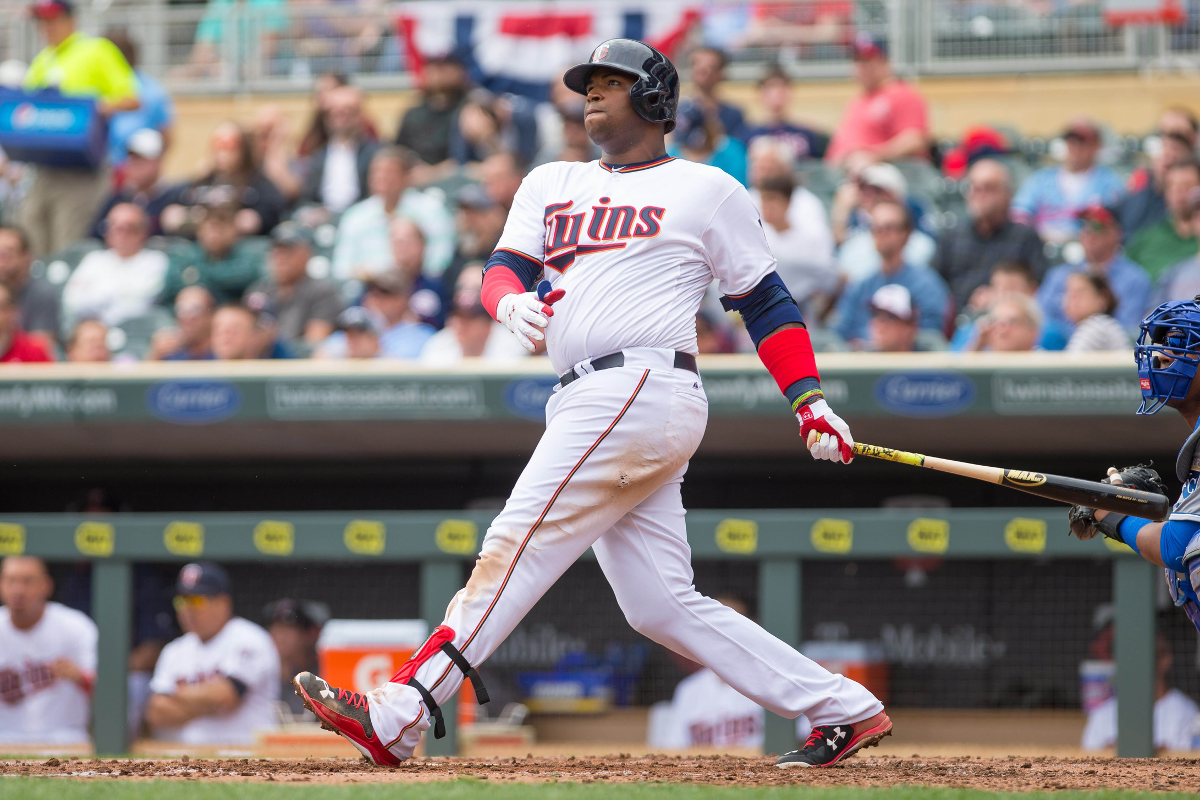 When he takes a cut, everyone in a three block radius of the ballpark can feel it as the wind changes direction on the plaza. And it is not just dirty breaking balls that have been giving Vargas fits. He is swinging through fastballs in the zone regularly as well. For instance, last year he missed a fastball 17% of the time when he offered. This year that has ballooned to 32% of his swings. Only seven other hitters this season have a higher rate than Vargas. Trevor Plouffe, who battled through his own adjustments entering the league, recently discussed how the game of baseball is a progression for hitters. Pitchers will start a new player with fastballs in the four-spot of the strike zone and once they prove they can hit that pitch, they will start to pick at other weaknesses. For Vargas, that has been being pitches down in the zone and away. His need to hit the ball as hard as he can has resulted in empty swings or weak groundouts. In spring training the coaching staff made it clear that Vargas should focus less on hitting for show during batting practice and work on driving the ball where it is pitched. “I think that's a constant message we have with him and (Oswaldo) Arcia and some of the guys that have a tendency to want to have that home-run competition in BP, which doesn't mean a thing," Paul Molitor told reporters in March. "It's fun once in a while at the end of your rounds to go ahead and do some things that break up the mundane routine of having to perfect your craft, but in general it's not how you want to go about getting better as a hitter." It was stressed that the message was not to tone down the power but rather prepare for being attacked by major league pitchers with major league velocity. Eddie Guardado’s BP fastball would be no substitute for that of Chris Sale. As the Twins were ready to leave Florida, Molitor announced that he would be starting the year with Torii Hunter or Trevor Plouffe as his cleanup candidates despite the fact that the imposing Vargas was hitting balls into the gulf on the reg. The Twins manager recognized that the young slugger was not ready to assume the demands of batting fourth. As the first month of the regular season progressed, the question transitioned from where Vargas should hit in the lineup to whether he should be in the lineup at all. From the perspective of the coaching staff, Vargas continued to treat his pregame work as his own personal home run derby which affected his in-game performance. “You [should] try to take batting practice that is more game-realistic. Don’t become too concerned with how far you hit them when a guy is throwing 60 mph,” Molitor told reporters this week. “It’s about trying to keep it crisp, use your barrel, keep it short, see the ball first.” Vargas’ 2015 has been marred by not adjusting to how pitchers are approaching him. For example in the Kansas City series, Vargas was in a favorable 2-1 count against the left-handed slopper Jason Vargas (no relation). For most of his professional career, Vargas was likely used to seeing a high percentage of in-zone fastballs by minor league pitchers who were afraid of the count going 3-1. However, the pitcher Vargas threw an offspeed pitch down and away which hitter Vargas was not expecting and turned over. http://i.imgur.com/QH8PAx4.gif Like batting practice, the approach was all-or-nothing. He seemed to be thinking fastball the whole way and was only going to swing like it was a fastball. To be sure, Vargas’ big leg kick and loading process are sound power generators. The issue surfaces when his pitch recognition and anticipation are out of whack and the timing mechanism breaks down. Last season after using the leg kick for the season in the minors, the Twins convinced Vargas to reduce the leg kick and load in order to cover the range of speed and breaks that he would see. In comparison to the Vargas-on-Vargas action above, in this at bat against the White Sox Sale last year shows how balanced he was and not overcommitting to a pitch. http://i.imgur.com/qUmK1Zb.gif By the end of last season, with his confidence inflated, Vargas had returned to the big leg kick swing. Now hitting .172 and 21 strikeouts in 64 at-bats, is it time to return to the muted mechanics of 2014? Twins hitting coach Tom Brunansky noted how difficult it is to get hitters who did well in the minors to revamp their mechanics - even if it is needed. “You can't come and change,” said Brunansky. “The hardest thing to do is tell a young hitter who has had success in the minor leagues who needs to change it at the major league level because they are going to say 'I hit like this'...but [the major leagues are] a different animal.” Brunansky stresses process. The process of making small adjustments outside the game and bring that over to the field following the national anthem. But convincing someone to make changes becomes increasingly challenging when the prep work becomes about seeing how far the ball flies. Then gain, Vargas did just fine last year with the reduced movement swing and was still able to hit the ball a country mile. http://i.imgur.com/ci1bG3X.gif The Twins know that Vargas is in need of adjustments and they sat him several games to drive the point home. There is an established track record for Vargas: tone it down or get the timing down. Clearly his potential is worth the trouble but with Josmil Pinto performing well with the bat in Rochester, it may be time to consider the swap.
-
I'm not ready to say he's done. Bad plate discipline aside, when he does put the ball in play in some ways he's gotten the short end of the stick. ESPN/TruMedia says he's got the team's third-highest well-hit average (.182) but one of the lower BABIPs on the team (.245). If he continues to hit the ball well at that clip, the BABIP should increase. Batting him fourth was a big disservice. He saw more breaking balls and out of zone pitches but was locked in on trying to be the guy to drive people in. Switching him to hitting second has shown better results in the short-term. Cleanup: 24 PA .136/.167/.303 1/5 BB/K Second: 45 PA .262/.311/.420 3/7 BB/K As he told me in the spring, there is a big difference in his approach between trying to be a run producer and a table-setter: http://twinsdaily.com/_/minnesota-twins-news/minnesota-twins/older-and-wiser-torii-hunter-continues-to-hit-r3526 Give it time. He can hit. Defensively...that's gonna be another story.
-
It's captured a little differently. Baseball Reference uses Retrosheet's delineation of the field which has a bigger middle area. ESPN/TruMedia/Inside Edge slashes their Left/Center/Right area a bit more evenly which means balls that BR is classifying as "middle" are in the TruMedia pull side. http://www.retrosheet.org/hitloc.jpg
-
WARNE: The Twins' Secret Extension Candidate
Parker Hageman replied to Brandon Warne's topic in Twins Daily Front Page News
I am really impressed by his maturity as a hitter over the last several years. He has a very good understanding of how pitchers are approaching him which led to him going the other way more: http://twinsdaily.com/_/minnesota-twins-news/minnesota-twins/for-young-hitters-the-struggle-is-real-r3561 Plouffe was as lost as anybody early on in his career. If he can pull it together to be an average major leaguer hitter, there is hope for the other young hitters in this lineup can at least do the same. -
On this week's NO JUICE PODCAST, Dan Anderson and Parker Hageman are joined at JL Beers in Northeast Minneapolis with MLB.com's Twins beat writer Rhett Bollinger to review where the Twins are at three weeks into the season. Topics include baserunning blunders, defensive lapses, starting pitching and roster moves. Listen up. JL Beers' Mike Evans joins the crew to talk about upcoming beer events that you can find more about on the JL Beers' app and explains to us why Minnesota restaurants can't sell Spotted Cow. In addition to Twins talk, Parker revisits his Tucker Maxx moment in Seattle, the Wild playoff run, getting busted with drugs in Vegas, possible Vikings draft picks and so much more. Listen below, on iTunes or on Stitcher: NO JUICE PODCAST, EPISODE #53: SUNDAYS WITH RHETT, VOL 2 View full article
-
 JL Beers' Mike Evans joins the crew to talk about upcoming beer events that you can find more about on the JL Beers' app and explains to us why Minnesota restaurants can't sell Spotted Cow. In addition to Twins talk, Parker revisits his Tucker Maxx moment in Seattle, the Wild playoff run, getting busted with drugs in Vegas, possible Vikings draft picks and so much more. Listen below, on iTunes or on Stitcher: NO JUICE PODCAST, EPISODE #53: SUNDAYS WITH RHETT, VOL 2
-
Mauer's Pull%/Line Drive%: 2011 - 28.5%/14.9% 2012 - 34.9%/12.4% 2013 - 32.7%/12.0% 2014 - 23.5%/16.5% 2015 - 40.4%/43.5% (Interestingly enough, while he has more line drives ESPN/TruMedia data says he has had a lower well-hit average overall on pitches he has pulled.) Oppo% 2011 - 37.7% 2012 - 33.8% 2013 - 34.9% 2014 - 40.2% 2015 - 29.8% I asked him this spring why he feels like he can turn on the inside pitch better and his response was increased flexibility after recovering from injury. That completely makes sense.
-
Mauer first-pitch swing%: 2012: 7.8% - .462 BA 2013: 7.7% - .533 BA 2014: 12.3% - .577 BA 2015: 15.2% - .333 BA
-
What To Make Of Mike Pelfrey
Parker Hageman replied to Parker Hageman's topic in Twins Daily Front Page News
Pelfrey's stuff has been better this year (better velocity, better secondary pitch). Luck is the residual of design. Yes, he's been very fortunate that he has had players there but Pelfrey's had a lower hard-hit average on balls in play so far this year (weaker contact). Constantly adding baserunners is a bad program and playing with fire. Based on his FIP-ERA difference, if he does not shave his BB rate or increase his K rate, he's in line for regression. -
Right, the two rules that speak to that are (1) catcher has to have at least one foot in the box (he did)* and (2) catchers are not allowed to step in front of or on home plate without possession of the ball (Perez stayed back). *There was an Ask the Umpire with Tim McClelland who was asked about that rule and he said: I feel like a lot of balk rules operate that way. The rules are there but they are never enforced.
-
Don’t look now but the team’s ERA leader is none other than Mike Pelfrey. Is this performance legit or should we all brace for more impact? This post should come with a disclaimer in a big, bold font that screams out SMALL SAMPLE SIZE AHEAD but most people should realize that three outings is nothing to base any long-term projection on. That being said, in this small sampling Pelfrey has shown some indication that he may actually be a serviceable back-of-the-rotation starter. Don’t look now but the team’s ERA leader is none other than Mike Pelfrey. Is this performance legit or should we all brace for more impact? This post should come with a disclaimer in a big, bold font that screams out SMALL SAMPLE SIZE AHEAD but most people should realize that three outings is nothing to base any long-term projection on. That being said, in this small sampling Pelfrey has shown some indication that he may actually be a serviceable back-of-the-rotation starter. Wait. Serviceable? Yes, I know 4/20 was on Monday but believe me, I am not high. There are several reasons why maybe -- just maybe -- he might be able to provide decent innings for the Twins as a starter. For example, he has shown in his first three outings that he can miss a few bats on occasion. Pelfrey’s 2015 season has seen him hit double-digits in swinging strikes in two of the three starts. That’s mildly impressive since the last time he was healthy -- in 2013 -- he managed to induce double-digit swings-and-misses in just two of his 29 starts. Prior to his Tommy John surgery, he induced double-digit swing-and-misses in three of his 34 starts in 2011. Admittedly, even Pelfrey’s 9% swinging strike rate is still below the league’s average of 10% but it is a vast improvement from where it was. Missing bats means he is showing opponents a new wrinkle and hitting his spots just off the plate. This was something that he did not do in either of the last two seasons. During those two seasons, while recovering from Tommy John and battling a new injury, he throttled down on his mediocre fastball and opponents pasted it all over the field. In 2013, they posted an .801 OPS against it. Last year, it was at .972. The reality was that Pelfrey was unable to generate enough velocity to make the pitch effective. Over the last two years that average velocity has been 92.3 and 90.3 respectively. Now, in his first three games, he is averaging 93.4 with the fastball. Not only that, but he’s throwing it less frequently and mixing in more slow curves and introducing a split-finger that he has not used in quite some time. The change in velocity has helped keep hitters off his fastball. With the Mets, Pelfrey threw the pitch as a split-finger fastball with modest velocity. He abandoned the pitch with the Twins but has since resurrected it as more of a changeup-type offering, slowing it down some in the delivery. This has been a very effective pitch for him against left-handed hitters as he’s held that side to a .162 average. As you can see in this 2-2 splitter to the Royals’ Eric Hosmer and the 0-2 one to Kendrys Morales, this pitch has the potential to be a genuine swing-and-miss pitch against lefties: http://i.imgur.com/IAn9wzv.gif http://i.imgur.com/RUYN8uI.gif While he’s thrown the pitch in each of his three starts, he threw it 24 times against the Royals which led to three of his strikeouts including Hosmer and Morales. Oh, and the strikeout of the right-handed hitting Paulo Orlando as well. http://i.imgur.com/DOT4iSn.gif Keep in mind that although he is missing more bats on the season, he is not necessarily striking more people out. Until the game in Kansas City where he used his splitter more, he really lacked a put away pitch. If he can continue to locate this pitch like he did on Wednesday night, it could become a lethal pitch. All that is good for the Mike Pelfrey brand but there are also indications that this is all smoke-and-mirrors, such as the fact that Pelfrey has struggled to get ahead of hitters. His 56% first-pitch strike rate is well below the league’s average of 61% meaning that he is pitching from behind in the count more often than his fellow pitchers. From a deficit, it is more likely that bad things happen as he is forced to come into the zone. What’s more is that Pelfrey has continuously flirted with disaster when he puts runners on. From the stretch he hits the zone at a much lower clip and has ended up adding more base-runners via a walk. It seems like a miracle that he has been able to work out of the situations that he has created and to have a 2.65 ERA. If he cannot stop compounding the problem, at some point those base-runners will start to come home. The fact is that Pelfrey’s ceiling, based on his track record and pitch mix, is lower than most. Even with the improvements to his velocity and new pitch his upside feels like a fifth-starter in a rotation filled with fifth starters. If these improvements are sustained, the needle would move only slightly. Ultimately, he may serve better as a bullpen replacement for Blaine Boyer or Tim Stauffer. With Ricky Nolasco’s rehab start pushed to Sunday in Cedar Rapids due to inclement weather, Pelfrey should be allotted at least one more start against the Detroit Tigers to build on what he did to the Royals lineup before the team needs to make a rotation decision. The Twins will have an interesting decision to make when and if Nolasco is ready to rejoin the team, but there is one thing for certain, Trevor May should not be a casualty. View full article
-
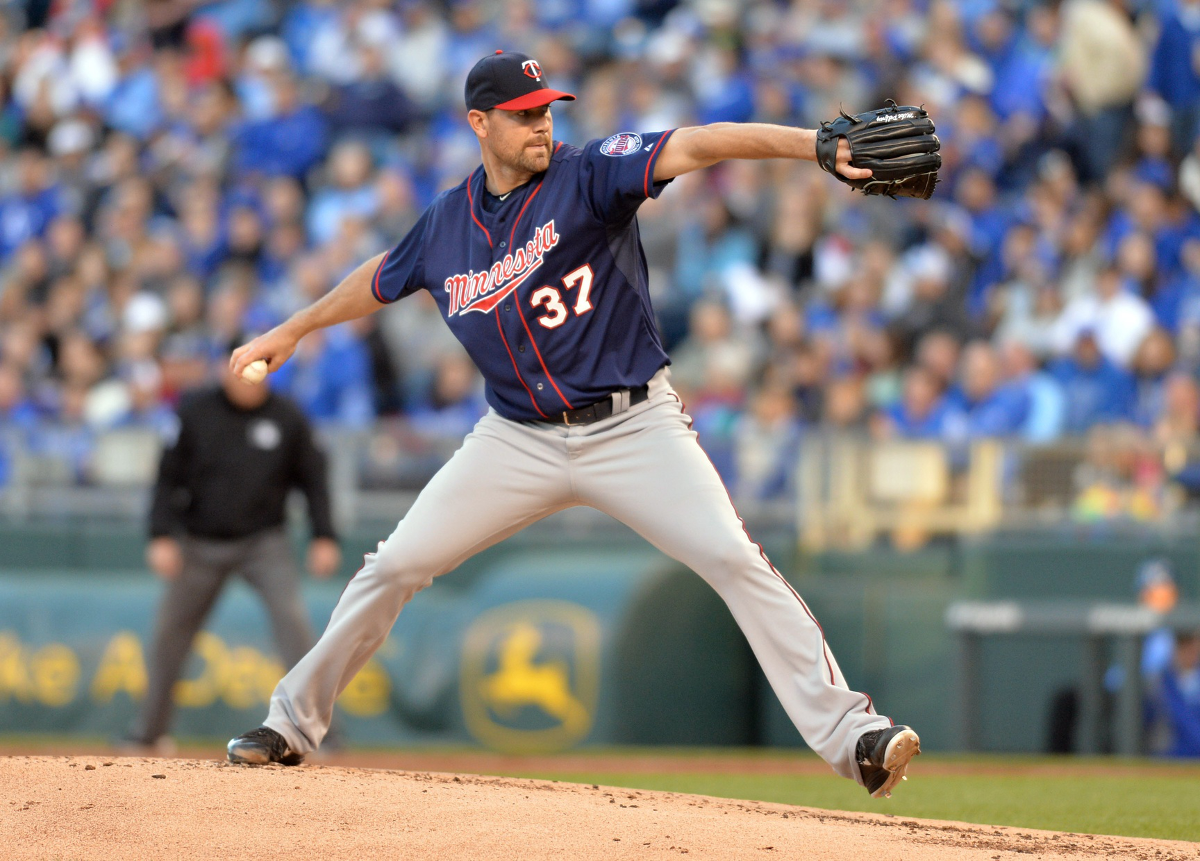 Wait. Serviceable? Yes, I know 4/20 was on Monday but believe me, I am not high. There are several reasons why maybe -- just maybe -- he might be able to provide decent innings for the Twins as a starter. For example, he has shown in his first three outings that he can miss a few bats on occasion. Pelfrey’s 2015 season has seen him hit double-digits in swinging strikes in two of the three starts. That’s mildly impressive since the last time he was healthy -- in 2013 -- he managed to induce double-digit swings-and-misses in just two of his 29 starts. Prior to his Tommy John surgery, he induced double-digit swing-and-misses in three of his 34 starts in 2011. Admittedly, even Pelfrey’s 9% swinging strike rate is still below the league’s average of 10% but it is a vast improvement from where it was. Missing bats means he is showing opponents a new wrinkle and hitting his spots just off the plate. This was something that he did not do in either of the last two seasons. During those two seasons, while recovering from Tommy John and battling a new injury, he throttled down on his mediocre fastball and opponents pasted it all over the field. In 2013, they posted an .801 OPS against it. Last year, it was at .972. The reality was that Pelfrey was unable to generate enough velocity to make the pitch effective. Over the last two years that average velocity has been 92.3 and 90.3 respectively. Now, in his first three games, he is averaging 93.4 with the fastball. Not only that, but he’s throwing it less frequently and mixing in more slow curves and introducing a split-finger that he has not used in quite some time. The change in velocity has helped keep hitters off his fastball. With the Mets, Pelfrey threw the pitch as a split-finger fastball with modest velocity. He abandoned the pitch with the Twins but has since resurrected it as more of a changeup-type offering, slowing it down some in the delivery. This has been a very effective pitch for him against left-handed hitters as he’s held that side to a .162 average. As you can see in this 2-2 splitter to the Royals’ Eric Hosmer and the 0-2 one to Kendrys Morales, this pitch has the potential to be a genuine swing-and-miss pitch against lefties: http://i.imgur.com/IAn9wzv.gif http://i.imgur.com/RUYN8uI.gif While he’s thrown the pitch in each of his three starts, he threw it 24 times against the Royals which led to three of his strikeouts including Hosmer and Morales. Oh, and the strikeout of the right-handed hitting Paulo Orlando as well. http://i.imgur.com/DOT4iSn.gif Keep in mind that although he is missing more bats on the season, he is not necessarily striking more people out. Until the game in Kansas City where he used his splitter more, he really lacked a put away pitch. If he can continue to locate this pitch like he did on Wednesday night, it could become a lethal pitch. All that is good for the Mike Pelfrey brand but there are also indications that this is all smoke-and-mirrors, such as the fact that Pelfrey has struggled to get ahead of hitters. His 56% first-pitch strike rate is well below the league’s average of 61% meaning that he is pitching from behind in the count more often than his fellow pitchers. From a deficit, it is more likely that bad things happen as he is forced to come into the zone. What’s more is that Pelfrey has continuously flirted with disaster when he puts runners on. From the stretch he hits the zone at a much lower clip and has ended up adding more base-runners via a walk. It seems like a miracle that he has been able to work out of the situations that he has created and to have a 2.65 ERA. If he cannot stop compounding the problem, at some point those base-runners will start to come home. The fact is that Pelfrey’s ceiling, based on his track record and pitch mix, is lower than most. Even with the improvements to his velocity and new pitch his upside feels like a fifth-starter in a rotation filled with fifth starters. If these improvements are sustained, the needle would move only slightly. Ultimately, he may serve better as a bullpen replacement for Blaine Boyer or Tim Stauffer. With Ricky Nolasco’s rehab start pushed to Sunday in Cedar Rapids due to inclement weather, Pelfrey should be allotted at least one more start against the Detroit Tigers to build on what he did to the Royals lineup before the team needs to make a rotation decision. The Twins will have an interesting decision to make when and if Nolasco is ready to rejoin the team, but there is one thing for certain, Trevor May should not be a casualty.
-
Again, I value everyone's OPINIONS here. This has led to a fun debate about an innocuous April play.
-
That is a very weak argument in comparison to this instance. In Capps' case, he delivers it the same way every time that way. Guthrie altered his delivery for this instance. By the book, they are balking. But then again so is everyone when their back foot leaves the contact of the rubber. MLB just said, meh, whatever and told Capps not to jump so high when delivering. I'm not surprised this wasn't called but I would love it if one of the beat writers got a comment from the umpire crew on their discussion or interpretation of the rule.
-
Again, you are not reading the rules correctly and seem to be adding things that are not there. (1) When it mentions alterations in the windup, the rules do not mention any examples (nothing like step off, throw to a base, trip, etc). Those are definitely some examples but there are no listed examples within the official rules. The rules do not specifically state what is considered an alteration and what is not. (2) The second part of that ("He shall not...") is not a description explaining alterations. It is a continuation of the definition of what the windup consists of. Everyone can read those rules here (http://mlb.mlb.com/mlb/official_info/official_rules/pitcher_8.jsp) but nothing within suggest that it is either definitively a balk or not. In this case, MLB should be clear what is an alteration to the delivery.
-
As the Rule 8.05 begins "If there is a runner, or runners, it is a balk when --" and what follows is a list of those examples. Some of them are illegal pitches but not a list of the only examples of illegal pitches. For example, Rule 8.05h is about delay of game which has nothing to do with a pitch. Rule 8.05k is about dropping the ball, which is also not a pitch. An illegal pitch is basically anything deviating from what is allowed in the 8.01 "legal pitch delivery" plus other situations. Going back to the non-balk call, Guthrie seemingly "altered" his delivery from the windup. That's my sticking point. What I want to know from someone on that umpire crew is what about that delivery does not meet that standard.
-
No, you are reading that section incorrectly. Section 8.05 covers examples of balk situations, not illegal pitches. 8.05e states that "The pitcher makes an illegal pitch;" and then specifies that a quick pitch is one illegal pitch. Man, rule interpretation is the best part about baseball.
-
A quick pitch is not the only form of an illegal pitch. What Guthrie did was clearly not a quick pitch but he seemingly did not following the set of rules prescribed by the definitions of the Windup and Set -- which constitutes illegal pitches according to the MLB rules. What it boils down to is whether or not what Guthrie did was an alteration to his delivery in the windup. There are no examples given in the rules of what an alteration would be. Some pitchers have been known to change things up in a plate appearance -- like what Mark Hamburger did to this Gophers hitter (https://vine.co/v/O0P6gYZUKj6). That wouldn't have been called a balk although the rules could be interpreted as such. The rule definitely could use some clarification as well as the ability to review the play.
-
Well that's simply not true: I think the question is whether or not what Guthrie did was enough to be considered an alteration.
-
Rhett Bollinger had a good quote from Hunter: I think he's right. If that ball was elevated, Hunter may have slid underneath a tag.