Parker Hageman
-
Posts
4,152 -
Joined
-
Last visited
-
Days Won
6
Content Type
Profiles
News
Minnesota Twins Videos
2026 Minnesota Twins Top Prospects Ranking
2022 Minnesota Twins Draft Picks
Minnesota Twins Free Agent & Trade Rumors, Notes, & Tidbits
Guides & Resources
2023 Minnesota Twins Draft Picks
The Minnesota Twins Players Project
2024 Minnesota Twins Draft Picks
2025 Minnesota Twins Draft Pick Tracker
2026 Minnesota Twins Draft Tracker: Picks & Bonuses
Forums
Blogs
Events
Store
Downloads
Gallery
Everything posted by Parker Hageman
-

Article: First Round Busts?
Parker Hageman replied to Parker Hageman's topic in Twins Daily Front Page News
No, the statement is the Twins have not had success drafting in the first round from 2006 through 2011. By the measurement of WAR, they have had the lowest returns. It is a factual statement. Everything you are pointing to are reasons why the WAR has been low. You are trying to explain why in the years between 2006 and 2011 they have been bad. Those points are valid but do not necessarily change the fact that the Twins have had one of the lowest producing first round selections in those years. Revere has been the bright spot (gaining 4.2 WAR in a spot in the latter round is good) but I will add that Gibson's track record is not long enough to be considered a "success" as of yet (particularly in comparison to the rest of his draft class). Injures account for his delayed production but it doesn't change the fact that he has not produced well *yet*. There is still time for players from 2011 to also rebound as well as Hicks or maybe even Parmelee in Baltimore. All of this is acknowledged in the post. As it stands right here and now -- based on WAR and to a lesser extent the ability to get their players major league ready -- the Twins have performed poorly with their first round picks. That is what it is telling you. -
Article: First Round Busts?
Parker Hageman replied to Parker Hageman's topic in Twins Daily Front Page News
1) Yes it was... http://i.imgur.com/YARiOQO.png 2) That was the point. It was just a look at the first round picks. -
Article: First Round Busts?
Parker Hageman replied to Parker Hageman's topic in Twins Daily Front Page News
No question. Mills, Garbe & Johnson all fizzled. -
Article: First Round Busts?
Parker Hageman replied to Parker Hageman's topic in Twins Daily Front Page News
And, to me, that's the hardest part for an outsider to do a comprehensive analysis of the draft. We can certainly measure how the Twins (or any team did) versus each individual draft position but there are plenty of other factors that influence whether or not that player met expectations or why they did not meet expectations. -
Article: First Round Busts?
Parker Hageman replied to Parker Hageman's topic in Twins Daily Front Page News
The Twins were fairly consistent with the signing bonus recommendations with the exception of Ben Revere. He signed for well below slot. -
Article: First Round Busts?
Parker Hageman replied to Parker Hageman's topic in Twins Daily Front Page News
There's going to be plenty of unknown factors if we try to understand the process of a team's draft. On paper, Bashore seemed fantastic. But you wonder what a medical staff or someone analyzing mechanics may have advised. I'd love to hear from the Twins and see what they may have changed when preparing for the draft. -
Article: First Round Busts?
Parker Hageman replied to Parker Hageman's topic in Twins Daily Front Page News
Again, if this were a comprehensive review of the performance of the entire draft, all of that would be valid. This is just a look at the shortcomings of the first round picks from 2006-2011. Is it because of the staff? Or luck? Or development? Or whatever? More analysis is needed to address that. If you want to do a more comprehensive analysis and dive into the why the 2006-2011 first round picks came up short, we would enjoy having a blog post on that subject at Twins Daily. I should add that the 2004 draft for the Cardinals was the year before Jeff Luhnow took over the drafting. Whether or not that was a factor -- or just coincidence -- the team's drafting improved greatly when they adjusted that system. -
Article: First Round Busts?
Parker Hageman replied to Parker Hageman's topic in Twins Daily Front Page News
The Twins selected at 28th. Nine of the 12 teams selecting at a higher position did better in that time. -
Article: First Round Busts?
Parker Hageman replied to Parker Hageman's topic in Twins Daily Front Page News
And I would have liked to have been paid for my work. We can't always get what we want. I completely agree with you though while running my analysis, there are plenty of questions raised that if one were to look at why things went wrong, they would want to take a look at. If I were on a research team, I would be doing that type of analysis. However, for just a story highlight the fact that the team has grossly underperformed, this will suffice. I will tell you that 12 teams had a higher median draft position in the first round during that time. Only three of those teams have had less success than the Twins. -
For the Minnesota Twins, two events in this past week bookend a disappointing era for first-round draft picks. On Friday it was announced that the team’s 55th pick overall in 2011, pitcher Hudson Boyd, was suspended for 50 games for a second violation of a drug of abuse. Two days later, Chris Parmelee, who was drafted 20th overall in 2006, signed a minor league contract with the Baltimore Orioles after he was released by the Twins earlier in the offseason. Without much to show from their first-round picks from 2006 through 2011, how bad has it been for the Twins compared to other teams?When you consider the production provided from 11 first-round picks in those six years, the Twins are near the bottom of the league. The 6.5 wins above replacement (WAR) is the sixth-lowest return on investment among all the major league teams in that span. Only the Indians, Rockies, Padres, Red Sox and Phillies managed to get less value out of their first round picks. http://i.imgur.com/YARiOQO.png To make matters worse, it is not just the fact that first-round picks have failed to perform for the Twins, it is that they have had troubles even reaching the game’s highest level. Just four of the 11 picks have made it through the system. Only the Atlanta Braves, San Diego Padres and Tampa Bay Rays have churned out a lower percentage of major league players than Minnesota. Draft position factors in quite a lot as to what level of talent is available, but having a high pick does not guarantee success either. For instance, in those six years the Kansas City Royals found themselves selecting at a median spot of fourth but wound up with 15.7 runs above replacement for seven players in what were highly coveted draft positions. On the other hand, the Cincinnati Reds drafted at a median spot of 15 and had a return of 44.5 wins above replacement (the fourth best in that time) on their nine players. “You cannot go into the draft saying, ‘we’re going to take position players this year,” said Roy Clark, a former Atlanta Braves scouting director and recent national cross-checker for the Los Angeles Dodgers, in the book ‘Scouts Honor’. “And then all of a sudden, we’re picking seventy-first, and all of the position players are gone or all of the good pitchers are gone. You never know who is going to be there. I like picking thirtieth every year. I want to pick thirtieth every year.” Based on that, Clark surely must have been envious of the Reds’ recent draft positions which were huddled in his sweet spot of the first rounds. Those selections turned into major league contributors in Drew Stubbs, Devin Mesoraco and Yasmani Grandal and resulted in the fourth most wins above replacement in that time frame. Meanwhile, in the same period, the Twins were drafting slightly lower than Clark’s ideal spot - and certainly further down the list than the Reds. **** It didn’t always used to be this way for the Twins. While sitting in Terry Ryan’s office earlier this winter, the topic of the 1989 amatuer draft came up. When reviewing the first four picks by the Twins at Baseball-Reference.com, one cannot help but be impressed by the fruit that that draft bore. It was a work of art in the scouting world -- probably something veteran scouts talk about over bourbon and cigars. That year’s draft provided the Twins with two vital components to their eventual World Series title in 1991: a top of the lineup catalyst and an excellent defender at a key up-the-middle position in Chuck Knoblauch (1st round, 25th overall) and a 20-game winner in Scott Erickson (4th, 112th overall). In between was left-handed pitcher Denny Neagle (3rd, 85th) from the University of Minnesota, who would later be flipped to Pittsburgh in 1992 so the Twins could acquire 20-game winner John Smiley, and go on to have a solid career of his own. Of course, in addition to noticing the noteworthy careers of Knoblauch, Neagle and Erickson, one cannot also help but be drawn to the one name on the Baseball-Reference.com list that does not include a hyperlink to a major league career: John Gumpf. “Gumpf,” Ryan said to himself in his office while reminiscing about the draft that helped lay a foundation for the organization’s second World Series title. He shook his head and seemed to be kicking himself all over again. He and his staff had gone three-for-four but swung and missed badly on that second pitch. As the team’s scouting director, Ryan was at the helm of his third amateur draft in 1989. They were looking to supplement the farm system with power and Gumpf’s name surfaced in the war room while the team was on the clock. Reports on the high school kid from Riverside, CA said he had plenty of pop in his bat. With the fifty-fifth overall pick -- the same spot in which the Twins would take high school pitcher Hudson Boyd twenty-two years later -- they added their slugger. Or so they thought. Gumpf’s professional career never amount to much. Over four seasons in the minors, he knocked out 15 home runs in 291 games and retired with a .329 slugging percentage over his minor league career. How did that happen? How did the Twins who were on a roll miss so poorly with their second pick? Ryan shrugged. Couldn’t make an adjustment here or didn’t make an adjustment there or maybe the reports were overblown. Either way, Gumpf was out of professional baseball and that year’s draft was a resounding success. Sometimes you just miss. **** Did the Twins scouting department lose its innovative edge from the era in which they were winning drafts? Have they since been outmaneuvered by other teams who have found ways to exploit the draft? Did the development system fail the players? Is this simply a case of bad luck in what is after all a small sample size? Going back to 2006 through 2011, teams with picks in the top ten -- the Rays, the Giants, the Dodgers -- were able to lock in marquee picks like David Price, Madison Bumgarner and Clayton Kershaw. Naturally they wound up getting plenty of value from those players. Those outside of that area either had to spend additional money (like the Tigers in landing Rick Porcello) or just simply had to be better than everyone else at evaluating talent. The St. Louis Cardinals seemed to exemplify that. With their lowest pick at 13th, much like the Minnesota Twins, the majority of the Cardinals' first rounders came on the wrong side of 25. Nevertheless, they were able to generate 23.7 WAR while graduating 72% of their first rounders so they could help the parent company. Part of it helps to be lucky but, like Branch Rickey touted, luck is the residue of design. As a team that was selecting players in the latter portions of the draft, the Cardinals found success by ensuring the lines of communication were open among all departments. “[W]e had a great interaction between scouting and player development,” former Cardinals scouting director and now Astros’ GM Jeff Luhnow told FoxSports.com in regard to what made his 2009 draft class so special. “[Cardinals chairman and CEO] Bill DeWitt’s responsible for that; it’s his vision. My first charter was to coordinate between different silos – there was a scouting silo, a player-development silo; it happens – so I took everyone on an international trip. Eventually there was a process in place. Analytics, scouting, medical, mechanics: Ultimately everything has to come together in a ranking. It’s not absolute, but a guide. Partly art, partly science.” **** Despite losing Parmelee for nothing, the Twins still have several players who could provide value to rescue their numbers. Kyle Gibson (22nd overall, 2009) is coming off a year where he became a stabilizing force in the rotation and could make big steps forward in 2015. Meanwhile, from 2006 to 2011, the highest the Twins drafted was 14th in 2008 and that resulted in Aaron Hicks. At his age, Hicks still has every opportunity to provide positive value but has plenty of adjustments to make in order to do so. Same goes for Levi Michael, Travis Harrison, Alex Wimmers and Boyd. But picks like Matt Bashore, Carlos Gutierrez and Shooter Hunt are forever filed under missed opportunities. The cyclical nature of the draft seems to have paved the way for a brighter future for the team. After several years of underperforming because of poor returns in the first round, the Twins were able to make selections when premium talent was still on the board. Byron Buxton, Jose Berrios, Luke Bard, Kohl Stewart and Nick Gordon have the makings to provide a solid foundation. Of course, if and/or when the team begins to win again, learning from mistakes and ensuring that the draft continues to provide major league talent should be a top priority. Click here to view the article
-
 When you consider the production provided from 11 first-round picks in those six years, the Twins are near the bottom of the league. The 6.5 wins above replacement (WAR) is the sixth-lowest return on investment among all the major league teams in that span. Only the Indians, Rockies, Padres, Red Sox and Phillies managed to get less value out of their first round picks. http://i.imgur.com/YARiOQO.png To make matters worse, it is not just the fact that first-round picks have failed to perform for the Twins, it is that they have had troubles even reaching the game’s highest level. Just four of the 11 picks have made it through the system. Only the Atlanta Braves, San Diego Padres and Tampa Bay Rays have churned out a lower percentage of major league players than Minnesota. Draft position factors in quite a lot as to what level of talent is available, but having a high pick does not guarantee success either. For instance, in those six years the Kansas City Royals found themselves selecting at a median spot of fourth but wound up with 15.7 runs above replacement for seven players in what were highly coveted draft positions. On the other hand, the Cincinnati Reds drafted at a median spot of 15 and had a return of 44.5 wins above replacement (the fourth best in that time) on their nine players. “You cannot go into the draft saying, ‘we’re going to take position players this year,” said Roy Clark, a former Atlanta Braves scouting director and recent national cross-checker for the Los Angeles Dodgers, in the book ‘Scouts Honor’. “And then all of a sudden, we’re picking seventy-first, and all of the position players are gone or all of the good pitchers are gone. You never know who is going to be there. I like picking thirtieth every year. I want to pick thirtieth every year.” Based on that, Clark surely must have been envious of the Reds’ recent draft positions which were huddled in his sweet spot of the first rounds. Those selections turned into major league contributors in Drew Stubbs, Devin Mesoraco and Yasmani Grandal and resulted in the fourth most wins above replacement in that time frame. Meanwhile, in the same period, the Twins were drafting slightly lower than Clark’s ideal spot - and certainly further down the list than the Reds. **** It didn’t always used to be this way for the Twins. While sitting in Terry Ryan’s office earlier this winter, the topic of the 1989 amatuer draft came up. When reviewing the first four picks by the Twins at Baseball-Reference.com, one cannot help but be impressed by the fruit that that draft bore. It was a work of art in the scouting world -- probably something veteran scouts talk about over bourbon and cigars. That year’s draft provided the Twins with two vital components to their eventual World Series title in 1991: a top of the lineup catalyst and an excellent defender at a key up-the-middle position in Chuck Knoblauch (1st round, 25th overall) and a 20-game winner in Scott Erickson (4th, 112th overall). In between was left-handed pitcher Denny Neagle (3rd, 85th) from the University of Minnesota, who would later be flipped to Pittsburgh in 1992 so the Twins could acquire 20-game winner John Smiley, and go on to have a solid career of his own. Of course, in addition to noticing the noteworthy careers of Knoblauch, Neagle and Erickson, one cannot also help but be drawn to the one name on the Baseball-Reference.com list that does not include a hyperlink to a major league career: John Gumpf. “Gumpf,” Ryan said to himself in his office while reminiscing about the draft that helped lay a foundation for the organization’s second World Series title. He shook his head and seemed to be kicking himself all over again. He and his staff had gone three-for-four but swung and missed badly on that second pitch. As the team’s scouting director, Ryan was at the helm of his third amateur draft in 1989. They were looking to supplement the farm system with power and Gumpf’s name surfaced in the war room while the team was on the clock. Reports on the high school kid from Riverside, CA said he had plenty of pop in his bat. With the fifty-fifth overall pick -- the same spot in which the Twins would take high school pitcher Hudson Boyd twenty-two years later -- they added their slugger. Or so they thought. Gumpf’s professional career never amount to much. Over four seasons in the minors, he knocked out 15 home runs in 291 games and retired with a .329 slugging percentage over his minor league career. How did that happen? How did the Twins who were on a roll miss so poorly with their second pick? Ryan shrugged. Couldn’t make an adjustment here or didn’t make an adjustment there or maybe the reports were overblown. Either way, Gumpf was out of professional baseball and that year’s draft was a resounding success. Sometimes you just miss. **** Did the Twins scouting department lose its innovative edge from the era in which they were winning drafts? Have they since been outmaneuvered by other teams who have found ways to exploit the draft? Did the development system fail the players? Is this simply a case of bad luck in what is after all a small sample size? Going back to 2006 through 2011, teams with picks in the top ten -- the Rays, the Giants, the Dodgers -- were able to lock in marquee picks like David Price, Madison Bumgarner and Clayton Kershaw. Naturally they wound up getting plenty of value from those players. Those outside of that area either had to spend additional money (like the Tigers in landing Rick Porcello) or just simply had to be better than everyone else at evaluating talent. The St. Louis Cardinals seemed to exemplify that. With their lowest pick at 13th, much like the Minnesota Twins, the majority of the Cardinals' first rounders came on the wrong side of 25. Nevertheless, they were able to generate 23.7 WAR while graduating 72% of their first rounders so they could help the parent company. Part of it helps to be lucky but, like Branch Rickey touted, luck is the residue of design. As a team that was selecting players in the latter portions of the draft, the Cardinals found success by ensuring the lines of communication were open among all departments. “[W]e had a great interaction between scouting and player development,” former Cardinals scouting director and now Astros’ GM Jeff Luhnow told FoxSports.com in regard to what made his 2009 draft class so special. “[Cardinals chairman and CEO] Bill DeWitt’s responsible for that; it’s his vision. My first charter was to coordinate between different silos – there was a scouting silo, a player-development silo; it happens – so I took everyone on an international trip. Eventually there was a process in place. Analytics, scouting, medical, mechanics: Ultimately everything has to come together in a ranking. It’s not absolute, but a guide. Partly art, partly science.” **** Despite losing Parmelee for nothing, the Twins still have several players who could provide value to rescue their numbers. Kyle Gibson (22nd overall, 2009) is coming off a year where he became a stabilizing force in the rotation and could make big steps forward in 2015. Meanwhile, from 2006 to 2011, the highest the Twins drafted was 14th in 2008 and that resulted in Aaron Hicks. At his age, Hicks still has every opportunity to provide positive value but has plenty of adjustments to make in order to do so. Same goes for Levi Michael, Travis Harrison, Alex Wimmers and Boyd. But picks like Matt Bashore, Carlos Gutierrez and Shooter Hunt are forever filed under missed opportunities. The cyclical nature of the draft seems to have paved the way for a brighter future for the team. After several years of underperforming because of poor returns in the first round, the Twins were able to make selections when premium talent was still on the board. Byron Buxton, Jose Berrios, Luke Bard, Kohl Stewart and Nick Gordon have the makings to provide a solid foundation. Of course, if and/or when the team begins to win again, learning from mistakes and ensuring that the draft continues to provide major league talent should be a top priority.
 -
Correct. Laudner was unable to make the Meltdown or TwinsFest due to a family obligation.
-
On this week's No Juice Podcast, Dan Anderson and Parker Hageman review, rehash and piece together what happened at the Twins Daily Winter Meltdown. Positive grades all around. But don't take it from us, check out these attendees thoughts below. Other topics include signing Brian Duensing, analytics in the NFL, Johnny Manziel ruining football and Dan being a terrible high school quarterback. Listen below, on iTunes or on Stitcher: NO JUICE PODCAST, EPISODE #40: WINTER MELTDOWN REVIEW Click here to view the article
-
 https://twitter.com/visionsaul/status/559191746823745536 https://twitter.com/papadff/status/559145321792802816 https://twitter.com/TCAnelle/status/559144994913529856 https://twitter.com/DanaWessel/status/559483154717626369 https://twitter.com/jeremynygaard/status/559202956491255808 https://twitter.com/TwinsGeek/status/559402007602397184 https://twitter.com/MikeBerardino/status/559230191944622080 https://twitter.com/612Brew/status/559147023572951041 Other topics include signing Brian Duensing, analytics in the NFL, Johnny Manziel ruining football and Dan being a terrible high school quarterback. Listen below, on iTunes or on Stitcher: NO JUICE PODCAST, EPISODE #40: WINTER MELTDOWN REVIEW
 -
I'm going to preface this by saying I want Trevor May to have the fifth spot in 2015. I think he has the tools and track record. I do agree with Nick's take here... ...but in speaking to evaluators, plenty will say they put the same weight in September performances as they do spring training performances. The one thing that plagued May throughout his MLB debut was his inability to pitch well from the stretch, which I outlined here: http://twinsdaily.com/articles.html/_/minnesota-twins-news/minnesota-twins/trevor-may-and-pitching-from-the-stretch-r3066 He never really solved for that: http://www.baseball-reference.com/players/split.cgi?id=maytr01&year=2014&t=p#bases::none Certainly, I think it is something he can work to improve. Perhaps Neil Allen can help hasten that process. Either way, looking forward to May in 2015.
-
On this week's No Juice Podcast, Dan Anderson and Parker Hageman record from Christos Greek Restaurant in Minnetonka and discuss the recently released projections for the 2015 Minnesota Twins, Trevor Plouffe's improving defense, Phil Hughes' chances for regression as well as reminisce about the baseball card industry. Click to listen.Other topics include a review of Parker's birthday night out and being too optimistic about the Minnesota Vikings. Download attachment: Cards.jpg Listen below, on iTunes or on Stitcher: NO JUICE PODCAST, EPISODE #39: PROJECTING THE TWINS Click here to view the article
-
 Other topics include a review of Parker's birthday night out and being too optimistic about the Minnesota Vikings. Listen below, on iTunes or on Stitcher: NO JUICE PODCAST, EPISODE #39: PROJECTING THE TWINS
 -
Article: Trevor Plouffe's Improved Defense
Parker Hageman replied to Parker Hageman's topic in Twins Daily Front Page News
Data versus the eye test is fun with Plouffe. Data at Fangraphs says he's 4th among qualified 3B in defense. The Runs Saved from Baseball Info Solutions says he's 12th. When run through SABR.org's SABR Defensive Index (which accounts for 25% of the Gold Glove vote), he wound up a top-4 defender in the LA. On the other hand, those that voted in Fangraphs' Fan Scouting Report had him as the 22nd defensive 3B overall. There clearly is a divide in the perception of his defense based on previous seasons versus what actually happened this season (created more outs, etc). Is he an elite defender? Probably not. Biggest takeaway should be that in 2014 almost every measurement was an improvement over the last season.- 28 replies
-
- 4
-

-
- trevor plouffe
- scouting
- (and 1 more)
-
Trevor Plouffe’s 2014 was quietly impressive. With super prospect Miguel Sano out for the season with UCL surgery, there was little pressure on Plouffe’s job security. Some believed he would not be able to respond without the push but not only did the 28-year-old infielder make strides at the plate, supplying value in the lineup as a run producer, he turned a corner in the field as well.Lately the Twins have been lacking severely in the department of defense but Plouffe defensive capabilities were markedly improved in 2014 and the data backs that up. Mark Simon at ESPN Stats & Info passed along the critical defensive data that highlights in what areas the third baseman has improved: Simply put, Plouffe has increased the number of runs saved by reducing the number of errors and misplays (plays that don’t result in outs but are not necessarily errors), converting on more of the plays that are in a standard third baseman’s zone, and increasing the number of out-of-zone plays. According to BillJamesOnline.com, Plouffe finished ranked 12th among third basemen in runs saved. Ultimate Zone Rating says he was sixth. Inside Edge’s Fielding rated him 23rd in terms of making the plays right at him this season. While the last one might be a bitter pill, all of those stats show progress in his defense. He has come a long way since his inaugural season at third. What has led to this improvement? This first factor is better throws. Early in his career, a lot of misplays and errors were a product of his throws. He was coming off a season in which he made 11 throwing errors at short and continued that in 2012. In his first season at third, Plouffe demonstrated a side-arm slinging motion when throwing the ball across the diamond. That year, while playing 801 innings at third, he made eight throwing errors. That was the sixth most among third basemen with a minimum of 500 innings, yet the ones ahead of Plouffe found themselves with nearly twice as many chances. Additionally, after reviewing clips of his plays, opportunity for more errors were there had veteran first baseman Justin Morneau not saved some of his offline throws. Watch this play in which Plouffe makes a nice pick up only to throw wide and pull Morneau off the bag. Look at Plouffe's throw. He tilts his shoulders and delivers an almost submarine side-arm sling. http://i.imgur.com/qMylmpy.gif Here is another example of this in 2012. The Orioles have the bases loaded so the Twins bring the infield in. Plouffe makes a good play on a grounder to him but rushes the throw home, once again tilting and delivering a submarine side-armed throw that sails above Mauer's head. http://i.imgur.com/jlM1oYg.gif Now here is an example from 2014 of almost the exact same play. Notice how Plouffe sets himself and keeps his shoulders square on his throw to Suzuki at home: http://i.imgur.com/QJaFXXy.gif When asked heading into the 2013 season about his throwing woes, then manager Ron Gardenhire told reporters that Plouffe is “doing fine. He'll be fine. We all know about the throwing part and all those things. I know Plouffie worked his butt off out there trying to get better. That's half the battle. You've got a guy willing to go out and do extra work, tried a lot of different things.” The second factor for improvement is his position. There is an observable difference in his method that has led to fewer miscues and errors stemming from his throws. While he has made the same number of throwing errors this past season as he did in 2012, he put himself in position for more chances. Some are a result of still rushing throws or trying to make a play when he should have eaten the ball. In terms of playing the infield, where and how you field a ball will dictate how a throw will be made. Making a play deep down the line will necessitate a full overhand to get as much mustard on the ball as possible. Fielding a medium paced chopper towards the mound with a quick runner heading down the line may require a quick flip throw from whatever angle you can. A slow roller down the line might require a bare-hand and a submarine throw to first. What makes the difference is comfort and experience. In regards to the two plays at home, Plouffe had rarely been in that situation before and likely just rushed his throw. Meanwhile, in 2014, he had plenty of practice and was able to avoid making a hasty play. Another area that Plouffe has improved is his ability to get to more balls. No, he has not increased his speed but his instincts and his coaching have led him to putting himself in better positions to get to those balls. Take a look at how his plays made has expanded east-and-west from the two previous season: http://i.imgur.com/3LeKjjO.png There is a noticeable difference in the number of balls he has been able to get to to his left (towards short) than he had gotten to in the previous seasons. Some of that may be due to experience but positioning also appears to play a key role. "I think overall his confidence level in catching and throwing the ball is as high as it's ever been," Twins infielder coach Paul Molitor told reporters in September. "We still try to tweak different things about positioning and try to find ways to help him maybe get to a few more balls. I think everyone would like to do that if they could." It is no secret that Molitor played in significant role in the positioning of the Twins’ defense last year -- which likely was the reason behind Plouffe’s increased out-of-zone plays -- and now as the manager this year, there likely will be the same emphasis (if not more) on shifting and positioning to maximize coverage. Plouffe has shown improvement over his three seasons at third base for the Twins -- both statistically and through the eye-test. With the tantalizing bat of Miguel Sano putting the finishing touches on his major league preparation, Plouffe better continue to show that he can be a high caliber third baseman both offensively and defensively if he wants to avoid another position (or maybe even a uniform) change. Click here to view the article
- 28 replies
-
- 1
-
-
- trevor plouffe
- scouting
- (and 1 more)
-
 Lately the Twins have been lacking severely in the department of defense but Plouffe defensive capabilities were markedly improved in 2014 and the data backs that up. Mark Simon at ESPN Stats & Info passed along the critical defensive data that highlights in what areas the third baseman has improved: https://twitter.com/msimonespn/status/554676703239237632 Simply put, Plouffe has increased the number of runs saved by reducing the number of errors and misplays (plays that don’t result in outs but are not necessarily errors), converting on more of the plays that are in a standard third baseman’s zone, and increasing the number of out-of-zone plays. According to BillJamesOnline.com, Plouffe finished ranked 12th among third basemen in runs saved. Ultimate Zone Rating says he was sixth. Inside Edge’s Fielding rated him 23rd in terms of making the plays right at him this season. While the last one might be a bitter pill, all of those stats show progress in his defense. He has come a long way since his inaugural season at third. What has led to this improvement? This first factor is better throws. Early in his career, a lot of misplays and errors were a product of his throws. He was coming off a season in which he made 11 throwing errors at short and continued that in 2012. In his first season at third, Plouffe demonstrated a side-arm slinging motion when throwing the ball across the diamond. That year, while playing 801 innings at third, he made eight throwing errors. That was the sixth most among third basemen with a minimum of 500 innings, yet the ones ahead of Plouffe found themselves with nearly twice as many chances. Additionally, after reviewing clips of his plays, opportunity for more errors were there had veteran first baseman Justin Morneau not saved some of his offline throws. Watch this play in which Plouffe makes a nice pick up only to throw wide and pull Morneau off the bag. Look at Plouffe's throw. He tilts his shoulders and delivers an almost submarine side-arm sling. http://i.imgur.com/qMylmpy.gif Here is another example of this in 2012. The Orioles have the bases loaded so the Twins bring the infield in. Plouffe makes a good play on a grounder to him but rushes the throw home, once again tilting and delivering a submarine side-armed throw that sails above Mauer's head. http://i.imgur.com/jlM1oYg.gif Now here is an example from 2014 of almost the exact same play. Notice how Plouffe sets himself and keeps his shoulders square on his throw to Suzuki at home: http://i.imgur.com/QJaFXXy.gif When asked heading into the 2013 season about his throwing woes, then manager Ron Gardenhire told reporters that Plouffe is “doing fine. He'll be fine. We all know about the throwing part and all those things. I know Plouffie worked his butt off out there trying to get better. That's half the battle. You've got a guy willing to go out and do extra work, tried a lot of different things.” The second factor for improvement is his position. There is an observable difference in his method that has led to fewer miscues and errors stemming from his throws. While he has made the same number of throwing errors this past season as he did in 2012, he put himself in position for more chances. Some are a result of still rushing throws or trying to make a play when he should have eaten the ball. In terms of playing the infield, where and how you field a ball will dictate how a throw will be made. Making a play deep down the line will necessitate a full overhand to get as much mustard on the ball as possible. Fielding a medium paced chopper towards the mound with a quick runner heading down the line may require a quick flip throw from whatever angle you can. A slow roller down the line might require a bare-hand and a submarine throw to first. What makes the difference is comfort and experience. In regards to the two plays at home, Plouffe had rarely been in that situation before and likely just rushed his throw. Meanwhile, in 2014, he had plenty of practice and was able to avoid making a hasty play. Another area that Plouffe has improved is his ability to get to more balls. No, he has not increased his speed but his instincts and his coaching have led him to putting himself in better positions to get to those balls. Take a look at how his plays made has expanded east-and-west from the two previous season: http://i.imgur.com/3LeKjjO.png There is a noticeable difference in the number of balls he has been able to get to to his left (towards short) than he had gotten to in the previous seasons. Some of that may be due to experience but positioning also appears to play a key role. "I think overall his confidence level in catching and throwing the ball is as high as it's ever been," Twins infielder coach Paul Molitor told reporters in September. "We still try to tweak different things about positioning and try to find ways to help him maybe get to a few more balls. I think everyone would like to do that if they could." It is no secret that Molitor played in significant role in the positioning of the Twins’ defense last year -- which likely was the reason behind Plouffe’s increased out-of-zone plays -- and now as the manager this year, there likely will be the same emphasis (if not more) on shifting and positioning to maximize coverage. Plouffe has shown improvement over his three seasons at third base for the Twins -- both statistically and through the eye-test. With the tantalizing bat of Miguel Sano putting the finishing touches on his major league preparation, Plouffe better continue to show that he can be a high caliber third baseman both offensively and defensively if he wants to avoid another position (or maybe even a uniform) change.
 -
Interesting note from an article on Arcia's return: Arcia was asked if the Minnesota Twins had contacted him when he was out of action. "They (Twins) have not called me, they always tell me to play far as it goes," Arcia said. "You're always waiting for a call, but so far has not happened." I find it interesting that the Twins did not reach out after Arcia became hurt. He's a starter. You would think you would want to know the situation.
-
Article: No Juice Podcast #38: Marney Gellner
Parker Hageman replied to Parker Hageman's topic in Twins Daily Front Page News
Thanks Seth. She was terrific, simply a pro's pro. As a quick behind-the-scenes peek: AJ Pettersen -- who recorded stuff with us for a later podcast -- actually entertained Marney's kids while she chatted with us rubes. -
Article: On Phil Hughes And Regression
Parker Hageman replied to Parker Hageman's topic in Twins Daily Front Page News
http://www.reactiongifs.com/r/cut.gif -
Article: On Phil Hughes And Regression
Parker Hageman replied to Parker Hageman's topic in Twins Daily Front Page News
Add it to the law firm: -
Article: On Phil Hughes And Regression
Parker Hageman replied to Parker Hageman's topic in Twins Daily Front Page News
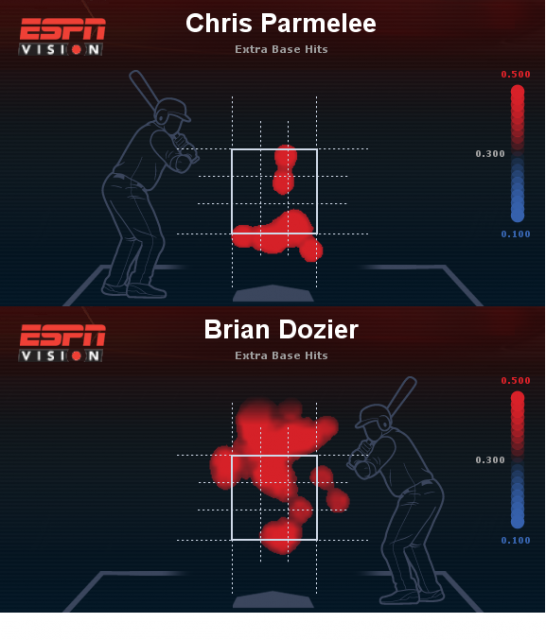
Eh...Parmelee likes the ball down. I feel like I have to address this every time I post two clips: they are representative of the sample as a whole. These two were chosen because of the same venue (providing the same camera angle) and situation (from the stretch). Both are excellent pitches. The first example is indicative of what clips show from his 2013 season -- erratic mechanics, pulling off line, dropping low with his body. The second clip shows a more controlled delivery as has been the case thorough the 2014 season and staying back/taller.