



Parker Hageman
-
Posts
4,152 -
Joined
-
Last visited
-
Days Won
6
Content Type
Profiles
News
Minnesota Twins Videos
2026 Minnesota Twins Top Prospects Ranking
2022 Minnesota Twins Draft Picks
Minnesota Twins Free Agent & Trade Rumors, Notes, & Tidbits
Guides & Resources
2023 Minnesota Twins Draft Picks
The Minnesota Twins Players Project
2024 Minnesota Twins Draft Picks
2025 Minnesota Twins Draft Pick Tracker
2026 Minnesota Twins Draft Tracker: Picks & Bonuses
Forums
Blogs
Events
Store
Downloads
Gallery
Everything posted by Parker Hageman
-
 Minnesota Twins closer Glen Perkins was in a very enviable position a year ago. He was coming off two consecutive very strong seasons as the Twins closer, a representative at his first All-Star Game in New York, and had just signed a contract that kept him well-compensated and in a Twins uniform for the next five seasons. But after a superb start to the 2014 season, an injury torpedoed the latter portion of the year. Now, recovering from injury and a decline in velocity, Perkins is looking to make adjustments that will ensure he remains one of the game’s premier closers. “You are always trying to adjust. And if you want to be successful you have to adjust ahead of the curve and not behind it. That’s in the back of my mind.” When he thinks about it, Perkins believes that the knee surgery he had in the offseason prior to 2014 may have played a role in his velocity decline last year. At the same time, as a consumer of baseball analytics and advanced research, the Twins closer is also acutely aware of the realities of getting older. “I felt like I was playing catch-up a little bit all last year,” Perkins said. “I felt I was out of my comfort zone, kind of the whole season. I’m probably around the same [velocity] this year than I was last year so maybe it has got something to do with being 32 instead of 28.” Research has found that starting around the age-30 season, a pitcher’s velocity tends to make a southward turn. No one stays young forever. Save for a catastrophic arm injury, it typically is a gradual decline, but a decline nonetheless. A reduction in velocity does not necessarily doom a closer, either. For instance, former Twin Joe Nathan saw his velocity begin to slip after 2007 and followed that in 2008 with just as successful a season if not better. He continued to produce at high levels even after having Tommy John surgery and with a slower fastball. Whereas Nathan remained primarily fastball-slider pitcher, Perkins entertains the idea of adding to his pitch selection, even if not in the near future. The change-up has become the pitch du jour and Perkins toys with it when playing catch with guys like Brian Duensing just to ensure he can pull it out when necessary. “I play catch with it, I work on it, but I don’t throw it until I have to,” said Perkins. “I’ve already started to work on that because it was a good pitch when I was a starter and became a bad pitch when I was a reliever. It’s something that I don’t all of a sudden want to be like ‘oh crap, I can’t throw a fastball by anybody I need to throw a change-up, how do I throw a change-up?’” The new change-up revolution in the Twins clubhouse intrigues Perkins, to say the least, and pitching coach Neil Allen’s theories have grabbed his attention. “I don’t want to give away all his secrets. I know that he’s a little bit analytical but not really but the stuff that he tells me that I see from an analytical side and it’s stuff that makes a lot of sense. I talk to hitters when we are playing cards after the game or standing in the dugout or whatever and the kinda things they are thinking, so he’s thinking from a hitter’s perspective on it.” Perkins does not feel like he needs to a third pitch at this point in his career. He will cross that bridge when he gets to it. More importantly, he needs to stay healthy. “Last year, for five months, whatever my velocity was I was probably having my best season as a reliever up until August.” From April until the end of June the closer was striking out 32 percent of all opponents faced while walking 4 percent. Those figures put him among the American League’s elite relievers. Even with a slightly slower fastball he was in the middle of what was shaping up to be a career year. However Perkins said his forearm started to respond differently after outings, bullpen sessions and throwing in general. Perkins described the injury and the effect on his pitching as the sensation of after maxing out on arm curls. His forearm would be exhausted and numb. It was difficult to engage the muscles and resulted in an overall lack of connection with the ball. For pitchers, this is a significant problem. “You can’t finish a pitch,” he said. “I would try to throw a slider I just couldn’t get the last little bit of the whip. You don’t have the spin. So you lose movement, you lose the life. The life and movement is the spin. Guy with late life spins the ball faster than a guy without late life.” The lack of that “last little bit of whip” on his slider played particularly poorly in the second-half of the season. While it had been the premier pitch in his arsenal in the first-half, racking up a swing-and-miss rate of 43 percent and a .118 opponent average, it became a considerable liability in the season’s back-end. The swing-and-miss rate dropped to 21 percent and hitters managed to levy a .282 average off of it. Download attachment: strike-zone (4).png Download attachment: strike-zone (5).png You do not have to be a baseball expert to see the contrast between his slider location as the season progressed. Without the slider diving down, his ability to induce swinging strikes suffered. Like most baseball players who thrive on competitiveness and pride, Perkins continued to try to take the ball whenever summoned. He went out to pitch “five or six times” while trying to get additional treatment and a few extra days of rest. Each time he would hope to rebound and that the muscle inflammation would go away and he would return to being the team’s shutdown closer. It was then when he started to consider the alternatives. “You try to tell [the staff] how you feel and it’s not getting better, it’s getting worse and you are hoping that they say ‘you know what? let’s shut it down’ and then it’s not me doing it. Even though that’s what I wanted, that's what I needed to do.” On September 16 Perkins was called on to hold a 2-0 lead against Detroit. After allowing several base-runners, Perkins was close to escaping the inning when he surrendered a three-run home run off the bat of JD Martinez. It was a 92 mile per hour fastball that didn’t come out of his hand well, like others before that one. That was the moment he knew he had gone from shutdown closer to shut it down, closer. “I had no business being out there. I knew I had no business getting major league hitters out.” Tests revealed that he had a combination of muscle and nerve irritation and inflammation in his forearm. One was getting inflamed and irritating the other. The consequence was a disconnect when finishing his pitches. “It wasn’t a hurt, it wasn’t a pain,” he said trying to make sense of the ailment. “It was a lack of any pain or feeling. Pitchers talk about feel and there wasn’t any of that. There was no feel for pitches, no feel for getting out front, no feel for being able to finish a pitch.” That, Perkins says, is no longer an issue at this point. In his outing on Wednesday, throwing in consecutive games for the first time in the spring season, Perkins was hitting 91 to 92 with his fastball. Down but not entirely unexpected for this time of year. An oblique strain slowed his spring this year and limited his appearances. He’s aware that he has been behind but is catching up quickly. Even with time off, Perkins feels that he is in a much better place now than at this time last year. Manager Paul Molitor agrees that his closer is starting to return to form. “It seems with each outing he’s been a little crisper,” Molitor observed after the game. “His breaking ball was a little better today that’s one pitch that I think has been a little slow for him to come around with.” At least on paper the Twins bullpen appears shaky, From his perspective Glen Perkins feels that he is more than ready to provide the same high-quality pitching he did prior to the second-half of 2014. “I feel a lot better," Perkins says reflected on how he felt this year compared to a year ago. "I always felt like I was a week behind and my arm wasn’t catching up. As far as this spring from last spring, I feel a lot better. I just don’t want to have this forearm thing to crop up. If I can avoid that, I’ll be just fine.” Click here to view the article
 -
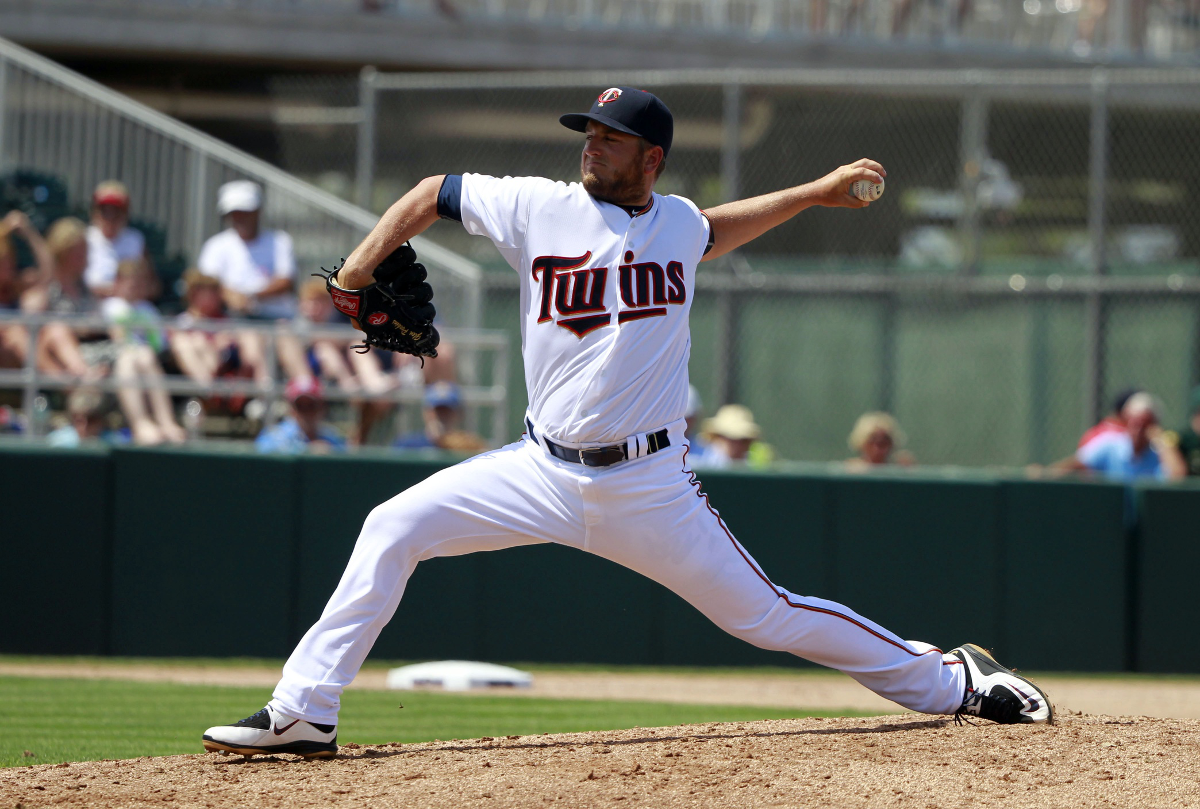 “You are always trying to adjust. And if you want to be successful you have to adjust ahead of the curve and not behind it. That’s in the back of my mind.” When he thinks about it, Perkins believes that the knee surgery he had in the offseason prior to 2014 may have played a role in his velocity decline last year. At the same time, as a consumer of baseball analytics and advanced research, the Twins closer is also acutely aware of the realities of getting older. “I felt like I was playing catch-up a little bit all last year,” Perkins said. “I felt I was out of my comfort zone, kind of the whole season. I’m probably around the same [velocity] this year than I was last year so maybe it has got something to do with being 32 instead of 28.” Research has found that starting around the age-30 season, a pitcher’s velocity tends to make a southward turn. No one stays young forever. Save for a catastrophic arm injury, it typically is a gradual decline, but a decline nonetheless. A reduction in velocity does not necessarily doom a closer, either. For instance, former Twin Joe Nathan saw his velocity begin to slip after 2007 and followed that in 2008 with just as successful a season if not better. He continued to produce at high levels even after having Tommy John surgery and with a slower fastball. Whereas Nathan remained primarily fastball-slider pitcher, Perkins entertains the idea of adding to his pitch selection, even if not in the near future. The change-up has become the pitch du jour and Perkins toys with it when playing catch with guys like Brian Duensing just to ensure he can pull it out when necessary. “I play catch with it, I work on it, but I don’t throw it until I have to,” said Perkins. “I’ve already started to work on that because it was a good pitch when I was a starter and became a bad pitch when I was a reliever. It’s something that I don’t all of a sudden want to be like ‘oh crap, I can’t throw a fastball by anybody I need to throw a change-up, how do I throw a change-up?’” The new change-up revolution in the Twins clubhouse intrigues Perkins, to say the least, and pitching coach Neil Allen’s theories have grabbed his attention. “I don’t want to give away all his secrets. I know that he’s a little bit analytical but not really but the stuff that he tells me that I see from an analytical side and it’s stuff that makes a lot of sense. I talk to hitters when we are playing cards after the game or standing in the dugout or whatever and the kinda things they are thinking, so he’s thinking from a hitter’s perspective on it.” Perkins does not feel like he needs to a third pitch at this point in his career. He will cross that bridge when he gets to it. More importantly, he needs to stay healthy. “Last year, for five months, whatever my velocity was I was probably having my best season as a reliever up until August.” From April until the end of June the closer was striking out 32 percent of all opponents faced while walking 4 percent. Those figures put him among the American League’s elite relievers. Even with a slightly slower fastball he was in the middle of what was shaping up to be a career year. However Perkins said his forearm started to respond differently after outings, bullpen sessions and throwing in general. Perkins described the injury and the effect on his pitching as the sensation of after maxing out on arm curls. His forearm would be exhausted and numb. It was difficult to engage the muscles and resulted in an overall lack of connection with the ball. For pitchers, this is a significant problem. “You can’t finish a pitch,” he said. “I would try to throw a slider I just couldn’t get the last little bit of the whip. You don’t have the spin. So you lose movement, you lose the life. The life and movement is the spin. Guy with late life spins the ball faster than a guy without late life.” The lack of that “last little bit of whip” on his slider played particularly poorly in the second-half of the season. While it had been the premier pitch in his arsenal in the first-half, racking up a swing-and-miss rate of 43 percent and a .118 opponent average, it became a considerable liability in the season’s back-end. The swing-and-miss rate dropped to 21 percent and hitters managed to levy a .282 average off of it. You do not have to be a baseball expert to see the contrast between his slider location as the season progressed. Without the slider diving down, his ability to induce swinging strikes suffered. Like most baseball players who thrive on competitiveness and pride, Perkins continued to try to take the ball whenever summoned. He went out to pitch “five or six times” while trying to get additional treatment and a few extra days of rest. Each time he would hope to rebound and that the muscle inflammation would go away and he would return to being the team’s shutdown closer. It was then when he started to consider the alternatives. “You try to tell [the staff] how you feel and it’s not getting better, it’s getting worse and you are hoping that they say ‘you know what? let’s shut it down’ and then it’s not me doing it. Even though that’s what I wanted, that's what I needed to do.” On September 16 Perkins was called on to hold a 2-0 lead against Detroit. After allowing several base-runners, Perkins was close to escaping the inning when he surrendered a three-run home run off the bat of JD Martinez. It was a 92 mile per hour fastball that didn’t come out of his hand well, like others before that one. That was the moment he knew he had gone from shutdown closer to shut it down, closer. “I had no business being out there. I knew I had no business getting major league hitters out.” Tests revealed that he had a combination of muscle and nerve irritation and inflammation in his forearm. One was getting inflamed and irritating the other. The consequence was a disconnect when finishing his pitches. “It wasn’t a hurt, it wasn’t a pain,” he said trying to make sense of the ailment. “It was a lack of any pain or feeling. Pitchers talk about feel and there wasn’t any of that. There was no feel for pitches, no feel for getting out front, no feel for being able to finish a pitch.” That, Perkins says, is no longer an issue at this point. In his outing on Wednesday, throwing in consecutive games for the first time in the spring season, Perkins was hitting 91 to 92 with his fastball. Down but not entirely unexpected for this time of year. An oblique strain slowed his spring this year and limited his appearances. He’s aware that he has been behind but is catching up quickly. Even with time off, Perkins feels that he is in a much better place now than at this time last year. Manager Paul Molitor agrees that his closer is starting to return to form. “It seems with each outing he’s been a little crisper,” Molitor observed after the game. “His breaking ball was a little better today that’s one pitch that I think has been a little slow for him to come around with.” At least on paper the Twins bullpen appears shaky, From his perspective Glen Perkins feels that he is more than ready to provide the same high-quality pitching he did prior to the second-half of 2014. “I feel a lot better," Perkins says reflected on how he felt this year compared to a year ago. "I always felt like I was a week behind and my arm wasn’t catching up. As far as this spring from last spring, I feel a lot better. I just don’t want to have this forearm thing to crop up. If I can avoid that, I’ll be just fine.”
 -
Ryan on Meyer's change-up: "That's not the issue here. He's OK with the change-up. I'm good with that pitch...I'm a little bit more interested in making sure his fastball is where he wants to go and stuff like that. Change-up's fine. We gotta get him to get fastball command and pitch ahead and not burn pitches and stuff like that."
-
With today's move has the Twins' pitching staff been finalized? How did Josmil Pinto feel about his second game back from the concussion? Read about these and more at today's Report From The Fort.Twins Option Caleb Thielbar To AAA The Twins announced on Wednesday morning that left-handed reliever Caleb Thielbar has been optioned to Rochester. The 28-year-old Randolph, MN native had pitched in 103 games for the Twins over the past two seasons, amassing a 5-3 record, 2.59 ERA and a 74/30 K/BB ratio over 93.2 innings. READ: Which Righty Relievers Can Get Lefties Out? Thielbar’s spring was spotty, as he allowed 19 hits over 11 innings which led to seven earned runs. Was the March performance the reason he was optioned? "There were other people performing," Twins general manager Terry Ryan said before Wednesday's game against the Red Sox. "Some different people that came in. There are other people still here who haven't performed quite as well as he did." A day after optioning left-hander Aaron Thompson to Rochester, the Twins continue to purge southpaws from the bullpen, leaving Brian Duensing and Glen Perkins as the left-handed arms. Yesterday, Ryan said that Thompson’s camp was decent and that he along with pitchers like Thielbar could be back in Minnesota quickly. “He threw OK. He came up last September and did OK. We tried to encourage him to keep his head up, it was a disappointing day for him. It should be. But I can see him surfacing with us. He’s left-handed,” said Ryan. “He’ll be down in AAA just a phone call away with a few others down there.” For now, the Twins have their pitching staff that they will begin the season with but Ryan acknowledged that things do change. "You could always adjust whether it is this week or its in the middle of April or as you go through the spring or summer. Right now, this is the way we are headed." Will The Twins Bring The Heat? When asked if hard-throwers like Jake Reed and Nick Burdi will be ready this year, Ryan left that answer up to the players. "That's up to them," Ryan said of the pair of relievers who combined to strike out 77 in 51.1 innings in 2015. "We got people who are farther ahead than those two guys. Those two guys haven't even had a year of pro ball." Josmil Pinto Happy With Performance On Tuesday, catcher Josmil Pinto played five innings of a minor league game at the Twins’ complex. After his first game back where his swing was described as “late” by Terry Ryan, Pinto had a better time of it, finishing the day 1-for-3 with an impressive home run. When asked if he got all of it, Pinto smiled and said “Oh yes.” The Twins are still concerned over his ability to be ready for opening day in Detroit. “He started out with that hamstring and he was doing fine after that,” Ryan said. “Now’s he’s gotten into those concussion symptoms. So he had to sit nine days for that. So it’s been a little bit of an inconsistent, sketchy look. Not that we don’t know him, we do. So we’ll see how he feels after today and we’ll make a decision after tomorrow.” Pinto will play four of five innings in Wednesday's minor league game but will not catch. Clubhouse Sickness Pitcher Kyle Gibson said he felt significantly better after battling a stomach bug that caused him to miss his last start against Boston. The Twins said he will maintain his current schedule and pitch again on Saturday. While Gibson was recovering, the Twins had to make a quick lineup change before Wednesday’s game. Outfielder Oswaldo Arcia was slated to play against the Red Sox but was replaced with Eduardo Escobar in left field as Arcia was reportedly ill. Escobar has hit safely in 12 of 16 games this spring and launched his fourth home run of the spring off of Yankees’ starter Masahiro Tanaka on Tuesday. There’s no question that Escobar has had a great spring and Ryan knows his offense will have him playing on a consistent basis in the regular season. “We value his contributions here highly and I know Paul [Molitor] is very interested in make sure he gets his due in terms of at-bats.” The swirling sickness in the clubhouse which crippled numerous players and manager Paul Molitor raised questions regarding the cleanliness of the facilities. Ryan was quick to dispel any notion that the sanitation of the clubhouse played any role in the sickness. “We’re very sensitive about locker room cleanliness and issues that would come about in the locker room. And we do that and we’re very protective of that locker room. Unfortunately we have had a lot of guys who have had flu symptoms this spring. I’m not so sure it is out of the ordinary.” Minor League Coach Riccardo Ingram Passes Long-time minor league coach Riccardo Ingram, 48, passed away in Atlanta, Georgia after a prolonged battle with brain cancer. The News-Press’s David Dorsey wrote an article this week detailing how Ingram would be renewing his battle with cancer which first sidelined him from the game for 12 months from July 2009 to 2010. After coaching and managing at various levels in the organization, Ingram spent the last three seasons as a hitting instructor in Triple-A and Double-A. "It'd be very difficult for me to find a person who didn't have good things to say about Ingram," Ryan said of the news. "He's one of those guys who has a lot of charisma. He can tell a story." Ingram leaves behind his wife, Allison, and daughters, Kacey and Kristen. Click here to view the article
- 19 replies
-
- 1
-

-
- josmil pinto
- terry ryan
- (and 1 more)
-
Wednesday Notes: More Cuts, Pinto Power And Lineup Changes
Parker Hageman posted an article in Twins
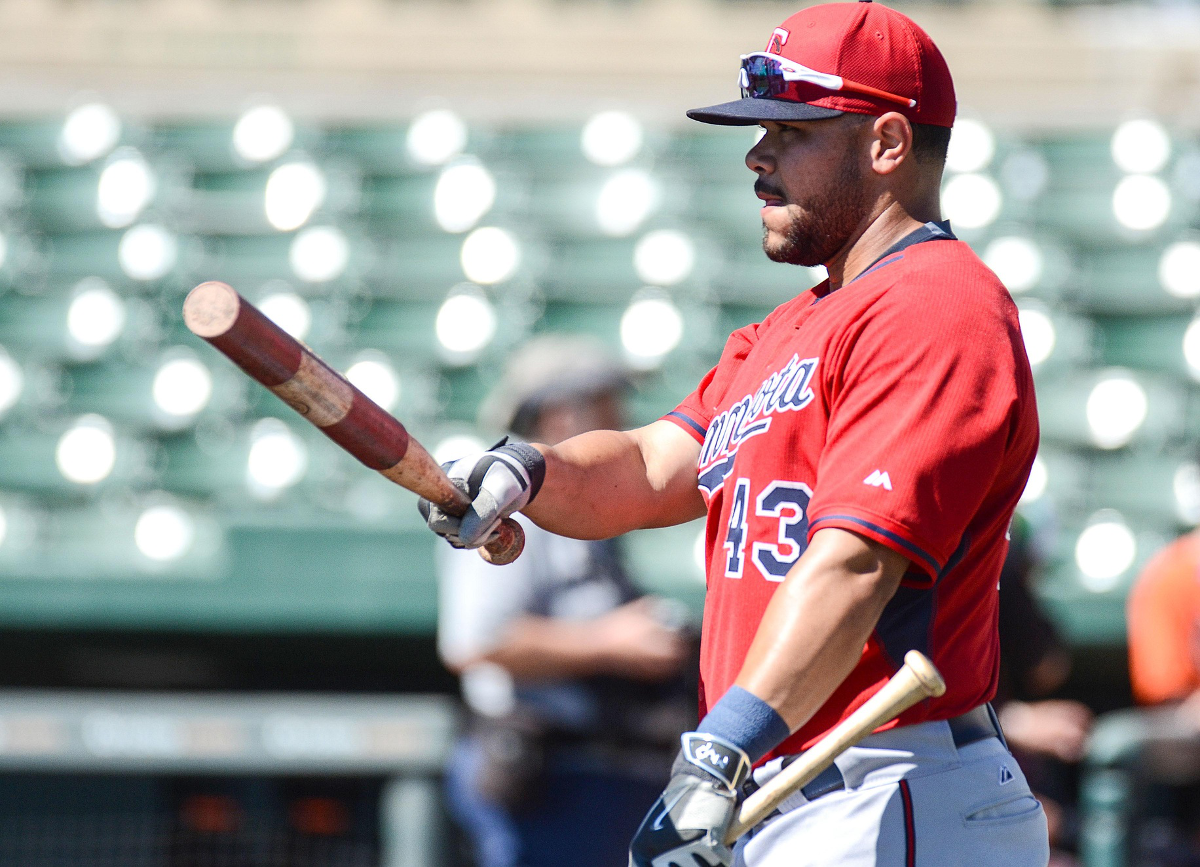 Twins Option Caleb Thielbar To AAA The Twins announced on Wednesday morning that left-handed reliever Caleb Thielbar has been optioned to Rochester. The 28-year-old Randolph, MN native had pitched in 103 games for the Twins over the past two seasons, amassing a 5-3 record, 2.59 ERA and a 74/30 K/BB ratio over 93.2 innings. READ: Which Righty Relievers Can Get Lefties Out? Thielbar’s spring was spotty, as he allowed 19 hits over 11 innings which led to seven earned runs. Was the March performance the reason he was optioned? "There were other people performing," Twins general manager Terry Ryan said before Wednesday's game against the Red Sox. "Some different people that came in. There are other people still here who haven't performed quite as well as he did." A day after optioning left-hander Aaron Thompson to Rochester, the Twins continue to purge southpaws from the bullpen, leaving Brian Duensing and Glen Perkins as the left-handed arms. Yesterday, Ryan said that Thompson’s camp was decent and that he along with pitchers like Thielbar could be back in Minnesota quickly. “He threw OK. He came up last September and did OK. We tried to encourage him to keep his head up, it was a disappointing day for him. It should be. But I can see him surfacing with us. He’s left-handed,” said Ryan. “He’ll be down in AAA just a phone call away with a few others down there.” For now, the Twins have their pitching staff that they will begin the season with but Ryan acknowledged that things do change. "You could always adjust whether it is this week or its in the middle of April or as you go through the spring or summer. Right now, this is the way we are headed." Will The Twins Bring The Heat? When asked if hard-throwers like Jake Reed and Nick Burdi will be ready this year, Ryan left that answer up to the players. "That's up to them," Ryan said of the pair of relievers who combined to strike out 77 in 51.1 innings in 2015. "We got people who are farther ahead than those two guys. Those two guys haven't even had a year of pro ball." Josmil Pinto Happy With Performance On Tuesday, catcher Josmil Pinto played five innings of a minor league game at the Twins’ complex. After his first game back where his swing was described as “late” by Terry Ryan, Pinto had a better time of it, finishing the day 1-for-3 with an impressive home run. When asked if he got all of it, Pinto smiled and said “Oh yes.” The Twins are still concerned over his ability to be ready for opening day in Detroit. “He started out with that hamstring and he was doing fine after that,” Ryan said. “Now’s he’s gotten into those concussion symptoms. So he had to sit nine days for that. So it’s been a little bit of an inconsistent, sketchy look. Not that we don’t know him, we do. So we’ll see how he feels after today and we’ll make a decision after tomorrow.” Pinto will play four of five innings in Wednesday's minor league game but will not catch. Clubhouse Sickness Pitcher Kyle Gibson said he felt significantly better after battling a stomach bug that caused him to miss his last start against Boston. The Twins said he will maintain his current schedule and pitch again on Saturday. While Gibson was recovering, the Twins had to make a quick lineup change before Wednesday’s game. Outfielder Oswaldo Arcia was slated to play against the Red Sox but was replaced with Eduardo Escobar in left field as Arcia was reportedly ill. Escobar has hit safely in 12 of 16 games this spring and launched his fourth home run of the spring off of Yankees’ starter Masahiro Tanaka on Tuesday. There’s no question that Escobar has had a great spring and Ryan knows his offense will have him playing on a consistent basis in the regular season. “We value his contributions here highly and I know Paul [Molitor] is very interested in make sure he gets his due in terms of at-bats.” The swirling sickness in the clubhouse which crippled numerous players and manager Paul Molitor raised questions regarding the cleanliness of the facilities. Ryan was quick to dispel any notion that the sanitation of the clubhouse played any role in the sickness. “We’re very sensitive about locker room cleanliness and issues that would come about in the locker room. And we do that and we’re very protective of that locker room. Unfortunately we have had a lot of guys who have had flu symptoms this spring. I’m not so sure it is out of the ordinary.” Minor League Coach Riccardo Ingram Passes Long-time minor league coach Riccardo Ingram, 48, passed away in Atlanta, Georgia after a prolonged battle with brain cancer. The News-Press’s David Dorsey wrote an article this week detailing how Ingram would be renewing his battle with cancer which first sidelined him from the game for 12 months from July 2009 to 2010. After coaching and managing at various levels in the organization, Ingram spent the last three seasons as a hitting instructor in Triple-A and Double-A. "It'd be very difficult for me to find a person who didn't have good things to say about Ingram," Ryan said of the news. "He's one of those guys who has a lot of charisma. He can tell a story." https://twitter.com/PatNeshek/status/583243066984792064 Ingram leaves behind his wife, Allison, and daughters, Kacey and Kristen.
 -
I could see him being like a Casey Fien or Jared Burton type pick up. I don't think he's going to strike guys out at Fien/Burton rates but the 7/1 K9/BB9 similar to Fien last year might be reasonable.
-
After listening to his story about the things he learned in Japan -- throwing strikes namely -- and the difference in his data between before and after that time period, I'm convinced he may have turned a corner in his career.
-
From what insiders are telling us, the Rays have found some stats that show that in certain sequences (fastball down-change down) makes the pitch damn-near unhittable. Allen is bringing that to this team. It is still a matter of executing but it could be a huge boon to this pitching staff.
-
It was not long ago that Twins pitcher Blaine Boyer might have been doing things other than throwing a baseball in a major league uniform this time of year. He might have been hunting, fishing or golfing. He might have been traveling more. Whatever it might have been, it would have been with his family. The game’s lifestyle which separated him from his growing family played a role in his decision to take a year off from baseball. Players on the fringe who step away seldom get a second chance but Boyer’s decision to walk away put him on the path that led him to being a better pitcher.Beginning in 2011, Boyer was constantly finding a new employer every few months. FIrst it was several months with the Mets, then the Pirates, followed by the Cardinals (who had him for exactly the month of May in 2009). In August 2011 he was released by St. Louis and decided that he would put his family first over the career which had been one big, long moving day. “I was coming and going and I wasn’t consistently there for my boys and my wife and that brought back a lot of what I went through when I was little, so she understood that,” Boyer told MLB Trade Rumors this spring of his leave of absence. “It wasn’t about me not wanting to play baseball anymore, it was much deeper.” The love of the game pulled him back after the year off. Boyer returned to baseball and signed a minor league deal with the Kansas City Royals but sought his release in May to join the Hanshin Tigers of Japan. That experience helped mold him into the pitcher he is today. “They just do little things different,” the 33-year-old Boyer said of the season he played in 2013 in Japan. “It’s funny, like we go out and warm up, they don’t warm up on the [chalk] line. They throw across the field. They do stuff that, to us, it doesn’t make any sense. They got three guys taking batting practice at the same time on the field. They got guys that will go out and swing the bat 700-800 times before a game.” Boyer missed that league’s spring training season and considers himself fortunate for having avoided the infamously rigorous conditioning methods that are better suited for raising an army rather than preparing for a child's game played by grown men. “Their work ethic over there is different too,” Twins general manager Terry Ryan said of the methods used in Japan’s version of loosening up for a game. “They get after it over there. It’s long and tedious. It’s important. Their practice time is a heck of a lot more urgent than ours. When they take BP they go balls out.” Ryan said the game in Japan can sometimes aid a pitcher who was spit out of the majors rediscover his talents or make adjustments. Pitchers who have been baptized in the American version may get too consumed with throwing harder and snapping off bigger breaking pitches. Without the eye-popping velocity, Japan’s pitchers historically have focused more on addition and subtraction. Beyond the physical aspect of the game, Ryan believes that there is a mental side that plays a role for pitchers. Landing in Japan means that MLB’s evaluators no longer have interest - a realization that can land a kick square in the jock. From Boyer’s perspective, the cross-Pacific experience help revive his career. The dimensions of Major League Baseball’s zone has created a wellspring of studies suggesting it is expanding, but in Japan the exact opposite effect is happening. Boyer believes having to pitch to a strike zone in Japan which he described as the size of a tennis ball was a blessing in disguise. “It made me better over here for sure,” Boyer said reflecting on the frustrating lesson imparted by Nippon Baseball League’s miniscule zone. “If there is one thing that made me a better pitcher over there it was that for sure. I was forced to pound that zone and aim small, miss small.” When he returned from Japan his ability to locate his pitches with precision paid dividends. In his time before leaving the country, Boyer issued 94 walks in 234 innings of work (9% walk rate). After signing a minor league deal with the Padres, the parent club summoned him in May 2014 and he walked just eight batters in 40.1 innings (5%). Boyer’s not the only MLB pitcher to spend time in Japan and reduce his walk rate on his return. The Rangers’ Colby Lewis is another success story of someone who went to Japan and came back with improved command. Before leaving, Lewis had a walk rate of 12% but returned and cut that in half. That’s not to say everything Boyer learned came from his time in Japan. While in the Cardinals system, pitching guru Dave Duncan taught Boyer a sinker that he uses frequently. What makes his sinker unusual is that it is the pitch he throws when he wants to bring the heat. “The velocity ticks up when I throw my sinker, which is backwards,” he said following an outing which saw him amp a few pitches up to 95 when facing David Ortiz. “I kinda get through the ball better when I throw my sinker so that tends to tick the velocity up a little bit.” http://i.imgur.com/gGPHZal.gif Boyer flicked his wrist to demonstrate the follow through which he says generates the added velocity. “I have always been able to sit 92 to 94 or 95. I can go up and get 98 on a good day,” Boyer said of his radar readings. "Really it's the sinker. When I went to St. Louis I was just a strictly 92 to 94 guy and Dave Duncan showed me the sinker and I started throwing the sinker and all of sudden I got a huge tick. My velocity just went up. So I say it’s kind of backwards because when I throw my sinker it’s usually harder than my four-seamer.” The Twins have been pleasantly surprised by the speed. Ryan said Boyer showed “a little bit more velocity this spring” than he was expecting - which was around 91 or 92 -- but he is also mixing in his new change-up too. With multiple fastballs -- the sinker, four-seam and a cutter which acts more like a slider ("Adam Wainwright has been trying to tell me the last couple years that it is just a slider") -- Boyer is also embracing the change-up philosophy encouraged by pitching coach Neil Allen. “I haven’t thrown a change-up my entire life,” Boyer confessed. “I maybe have thrown two in a game but they just have been just a fake. I’m not fooling anybody with that. This is a legit change-up. I can’t wait to use that in my arsenal.” http://i.imgur.com/ZmYjDKr.gif With the Padres last year Boyer exuded dominance over right-handed hitters, limiting them to a .178 average in 97 plate appearances, but was cuffed around by left-handers who posted a .305 average against in 63 match-ups. Adding the change-up could help keep those bats at bay. The Twins were obviously pleased with what they saw on the mound and in the clubhouse as well. “He seems like a solid guy,” Ryan levied. “He’s just a good teammate, it looks like. He’s gone about his business professionally and he’s gone out there and when we needed him to take the ball he took it and he’s not had any setbacks. So far, it’s worked out for both of us.” The expanded arsenal combined with the ability to pound the strike zone and surprising velocity should have Boyer contributing out of the bullpen effectively. As the season starts manager Paul Molitor said that he envisions him acting as a bridge between his starters and the back-end of the bullpen in Casey Fien, Brian Duensing and eventually Glen Perkins. There's no telling where Boyer might have been had he not stepped away from the game several years ago. His career has been given a second life since the day he almost walked away and the Twins are hoping to benefit from that. “I’m happy for him,” Molitor said of Boyer’s achievements. “He came over here and he’s been solid from the beginning.” Click here to view the article
-
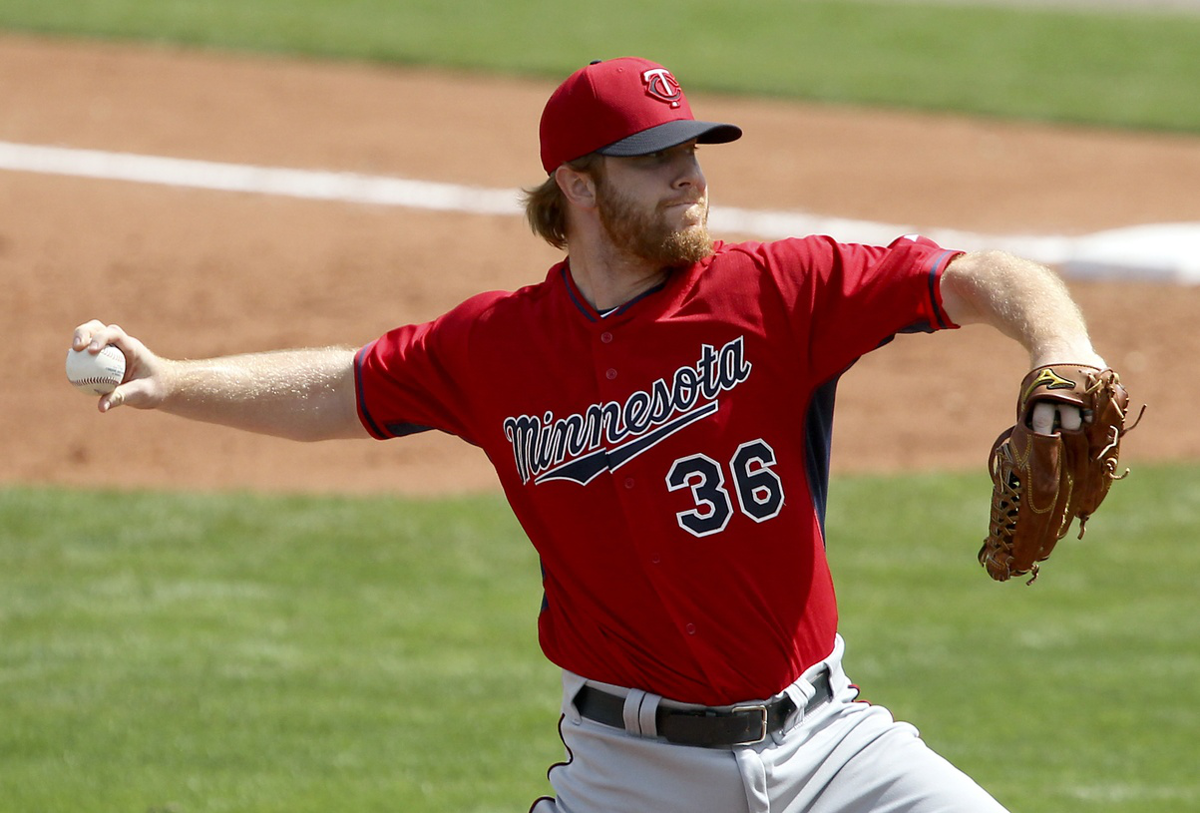 Beginning in 2011, Boyer was constantly finding a new employer every few months. FIrst it was several months with the Mets, then the Pirates, followed by the Cardinals (who had him for exactly the month of May in 2009). In August 2011 he was released by St. Louis and decided that he would put his family first over the career which had been one big, long moving day. “I was coming and going and I wasn’t consistently there for my boys and my wife and that brought back a lot of what I went through when I was little, so she understood that,” Boyer told MLB Trade Rumors this spring of his leave of absence. “It wasn’t about me not wanting to play baseball anymore, it was much deeper.” The love of the game pulled him back after the year off. Boyer returned to baseball and signed a minor league deal with the Kansas City Royals but sought his release in May to join the Hanshin Tigers of Japan. That experience helped mold him into the pitcher he is today. “They just do little things different,” the 33-year-old Boyer said of the season he played in 2013 in Japan. “It’s funny, like we go out and warm up, they don’t warm up on the [chalk] line. They throw across the field. They do stuff that, to us, it doesn’t make any sense. They got three guys taking batting practice at the same time on the field. They got guys that will go out and swing the bat 700-800 times before a game.” Boyer missed that league’s spring training season and considers himself fortunate for having avoided the infamously rigorous conditioning methods that are better suited for raising an army rather than preparing for a child's game played by grown men. “Their work ethic over there is different too,” Twins general manager Terry Ryan said of the methods used in Japan’s version of loosening up for a game. “They get after it over there. It’s long and tedious. It’s important. Their practice time is a heck of a lot more urgent than ours. When they take BP they go balls out.” Ryan said the game in Japan can sometimes aid a pitcher who was spit out of the majors rediscover his talents or make adjustments. Pitchers who have been baptized in the American version may get too consumed with throwing harder and snapping off bigger breaking pitches. Without the eye-popping velocity, Japan’s pitchers historically have focused more on addition and subtraction. Beyond the physical aspect of the game, Ryan believes that there is a mental side that plays a role for pitchers. Landing in Japan means that MLB’s evaluators no longer have interest - a realization that can land a kick square in the jock. From Boyer’s perspective, the cross-Pacific experience help revive his career. The dimensions of Major League Baseball’s zone has created a wellspring of studies suggesting it is expanding, but in Japan the exact opposite effect is happening. Boyer believes having to pitch to a strike zone in Japan which he described as the size of a tennis ball was a blessing in disguise. “It made me better over here for sure,” Boyer said reflecting on the frustrating lesson imparted by Nippon Baseball League’s miniscule zone. “If there is one thing that made me a better pitcher over there it was that for sure. I was forced to pound that zone and aim small, miss small.” When he returned from Japan his ability to locate his pitches with precision paid dividends. In his time before leaving the country, Boyer issued 94 walks in 234 innings of work (9% walk rate). After signing a minor league deal with the Padres, the parent club summoned him in May 2014 and he walked just eight batters in 40.1 innings (5%). Boyer’s not the only MLB pitcher to spend time in Japan and reduce his walk rate on his return. The Rangers’ Colby Lewis is another success story of someone who went to Japan and came back with improved command. Before leaving, Lewis had a walk rate of 12% but returned and cut that in half. That’s not to say everything Boyer learned came from his time in Japan. While in the Cardinals system, pitching guru Dave Duncan taught Boyer a sinker that he uses frequently. What makes his sinker unusual is that it is the pitch he throws when he wants to bring the heat. “The velocity ticks up when I throw my sinker, which is backwards,” he said following an outing which saw him amp a few pitches up to 95 when facing David Ortiz. “I kinda get through the ball better when I throw my sinker so that tends to tick the velocity up a little bit.” http://i.imgur.com/gGPHZal.gif Boyer flicked his wrist to demonstrate the follow through which he says generates the added velocity. “I have always been able to sit 92 to 94 or 95. I can go up and get 98 on a good day,” Boyer said of his radar readings. "Really it's the sinker. When I went to St. Louis I was just a strictly 92 to 94 guy and Dave Duncan showed me the sinker and I started throwing the sinker and all of sudden I got a huge tick. My velocity just went up. So I say it’s kind of backwards because when I throw my sinker it’s usually harder than my four-seamer.” The Twins have been pleasantly surprised by the speed. Ryan said Boyer showed “a little bit more velocity this spring” than he was expecting - which was around 91 or 92 -- but he is also mixing in his new change-up too. With multiple fastballs -- the sinker, four-seam and a cutter which acts more like a slider ("Adam Wainwright has been trying to tell me the last couple years that it is just a slider") -- Boyer is also embracing the change-up philosophy encouraged by pitching coach Neil Allen. “I haven’t thrown a change-up my entire life,” Boyer confessed. “I maybe have thrown two in a game but they just have been just a fake. I’m not fooling anybody with that. This is a legit change-up. I can’t wait to use that in my arsenal.” http://i.imgur.com/ZmYjDKr.gif With the Padres last year Boyer exuded dominance over right-handed hitters, limiting them to a .178 average in 97 plate appearances, but was cuffed around by left-handers who posted a .305 average against in 63 match-ups. Adding the change-up could help keep those bats at bay. The Twins were obviously pleased with what they saw on the mound and in the clubhouse as well. “He seems like a solid guy,” Ryan levied. “He’s just a good teammate, it looks like. He’s gone about his business professionally and he’s gone out there and when we needed him to take the ball he took it and he’s not had any setbacks. So far, it’s worked out for both of us.” The expanded arsenal combined with the ability to pound the strike zone and surprising velocity should have Boyer contributing out of the bullpen effectively. As the season starts manager Paul Molitor said that he envisions him acting as a bridge between his starters and the back-end of the bullpen in Casey Fien, Brian Duensing and eventually Glen Perkins. There's no telling where Boyer might have been had he not stepped away from the game several years ago. His career has been given a second life since the day he almost walked away and the Twins are hoping to benefit from that. “I’m happy for him,” Molitor said of Boyer’s achievements. “He came over here and he’s been solid from the beginning.”
 -
Have the Twins pitchers embraced Neil Allen's change-up philosophy? How is catcher Josmil Pinto feeling since his concussion? Which Twins pitcher was cut from the 40-man on Tuesday? Read about these topics and more in the latest Report From The Fort.Pitchers Buying In On Changeup One of the bigger stories of the year has been the hiring of Neil Allen who brings with him the change-up secrets from the Rays organization. Over the last three seasons, no team has thrown more change-ups than Tampa Bay -- almost 1,000 more than the next closest team. Their .604 OPS against on the pitch was the fourth-lowest. Throwing more change-ups was a point of emphasis and Allen has his staff confident that they can succeed with the pitch. “My change-up is my best offspeed pitch so why not throw it to both sides?” left-handed starter Tommy Milone said of the philosophy of more changes. Coming into the spring, Milone had thrown a same-sided change-up 7% of his mix to lefties. And it clearly is his best pitch considering it gained him the highest number of swinging strikes of his repertoire. Expanding the offering to lefties should making him more effective. In his most recent spring start, Ricky Nolasco battled through a tough first inning but was able to limit the Orioles after that because he focused on using his change-up. “I threw a lot of good change-ups which is what I wanted to do.” Relief pitcher Blaine Boyer, who was informed that he made the opening day roster this week, said that he had rarely thrown a change-up in his career but has incorporated a change-up that he has enjoyed this spring. Boyer uses a non-standard change-up grip that is similar to a two-seamer with a slightly wider split and he places his thumb on the side and he said it has been sitting at 84 mph for him in his bullpen sessions. “This is a legit change-up,” Boyer said of the new pitch. “I can’t wait to use it in my arsenal.” READ: Walking Away Gave Blaine Boyer's Career A Second Life Starter Kyle Gibson has had a plus-change-up for most of his baseball career dating back to high school when he first began throwing the pitch because his Dad would not allow him to throw curves. According to PitchF/X data, like Milone, Gibson did not use his change as much against same-sided hitters, throwing a change just 3% of the time to righties. “Coming into spring, that was the one thing Neil and I were talking about a lot and that I really wanted to work on: executing change-ups to righties,” said Gibson. “It’s a pitch that looks really similar to my sinker whenever I have the same release point and I think it is something that will help my sinker against righties.” So far this spring, Gibson has seen a spike in strikeouts which he attributes to being able to throw the change to righties. “I know the one things that has gotten me a few more strikeouts is throwing the change-up to righties,” Gibson said. Allen brings with him the data that the analytic Rays organization uncovered that supports the logic behind increasing the change-up in certain counts and throwing it to same-sided batters. More importantly, he has been able to impart confidence to his pitchers. Josmil Pinto “Feeling Good” After Passing Concussion Test Josmil Pinto was all smiles in the Twins’ clubhouse this morning after returning to action on Monday for the first time since taking three blows to the head from Orioles’ Adam Jones bat on March 21. “He played well,” Ryan said. “I think he was back there for three innings. He did a nice job actually. He handled [Tyler] Duffey, which was good, because he was somewhat familiar with him. It made sense to put him back there when Duffey was pitching. We just got him reacclimated.” Ryan said Pinto did not have any complications but they will continue to have him play in minor league games. “We’ll ease him in on the minor league side and it accomplishes two things: it will get him reacclimated and just in case something happens, we won’t jeopardize days.” Twins Cut LHP Aaron Thompson With the roster deadline nearing, the Twins continued to trim numbers. This morning left-handed pitcher Aaron Thompson was notified that he would be optioned to Rochester. Thompson did well in the spring, working 8.1 innings and allowing only two earned runs with six strikeouts and two walks. The Twins are now down to 29 players in camp. Napoli Destroys Bat, Ball and Duensing In the middle of Monday night’s rough inning at JetBlue Park, Boston Red Sox Mike Napoli was able to drive a Brian Duensing fastball over the faux Green Monster despite his bat breaking in two at the handle. WATCH: Mike Napoli Destroys Bat, Ball And Duensing While NESN commentator Jerry Remy mentioned that the broken-bat home run was a prime example of how strong Napoli is, Alan Nathan, a professor of physics at the University of Illinois and a baseball researcher, shared research on Twitter that the act has less to do with strength or “muscling” the pitch out of the park than two other factors. Napoli’s quick reflexes played a role but his ability to get the barrel to square the ball was more of a factor. The home run sent Duensing into a downward spiral and an inning that just wouldn’t end. After allowing runs in only one previous spring training outing, the Sox on six runs on eight hits. “I told him, I said, that’s obviously not a good night for yourself. You couldn’t make pitches, you got behind but he has had a good spring overall,” said Molitor after the game. “Things snowballed on him. The broken-bat home run was certainly a bad omen of things to come.” Click here to view the article
-
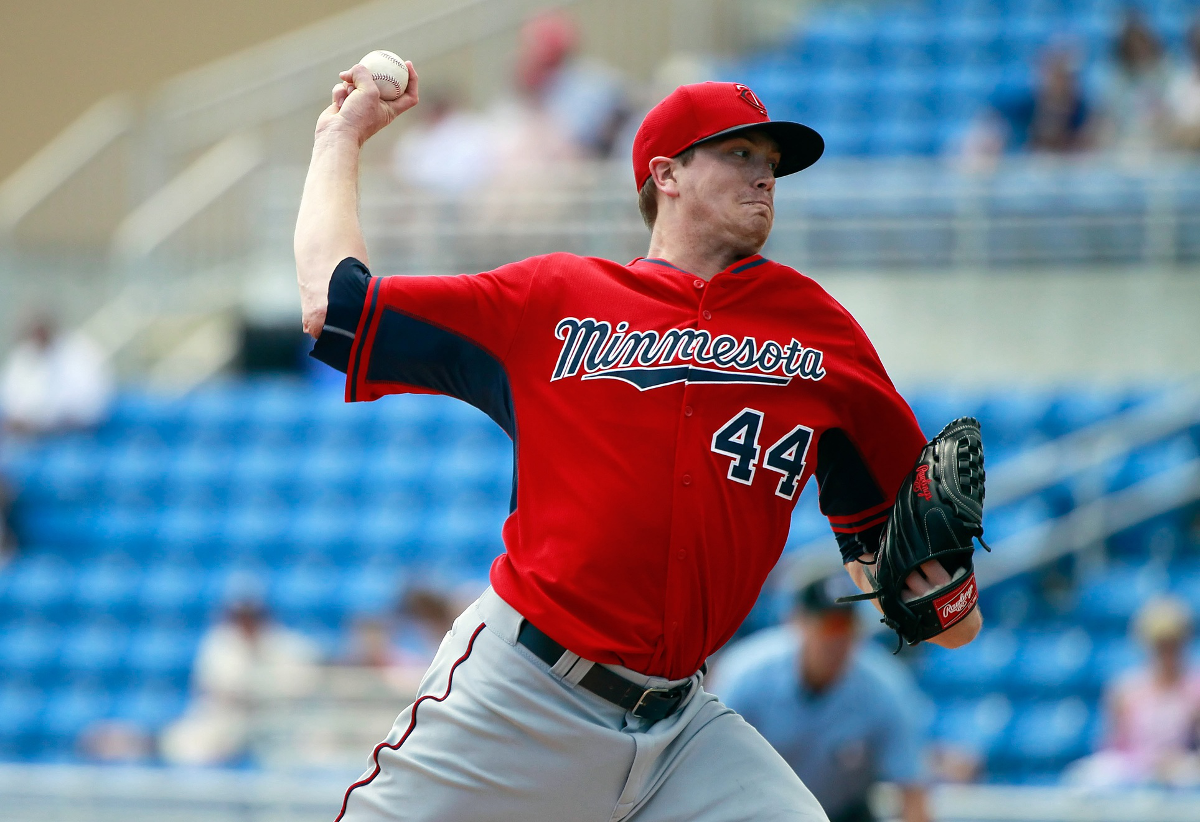 Pitchers Buying In On Changeup One of the bigger stories of the year has been the hiring of Neil Allen who brings with him the change-up secrets from the Rays organization. Over the last three seasons, no team has thrown more change-ups than Tampa Bay -- almost 1,000 more than the next closest team. Their .604 OPS against on the pitch was the fourth-lowest. Throwing more change-ups was a point of emphasis and Allen has his staff confident that they can succeed with the pitch. “My change-up is my best offspeed pitch so why not throw it to both sides?” left-handed starter Tommy Milone said of the philosophy of more changes. Coming into the spring, Milone had thrown a same-sided change-up 7% of his mix to lefties. And it clearly is his best pitch considering it gained him the highest number of swinging strikes of his repertoire. Expanding the offering to lefties should making him more effective. In his most recent spring start, Ricky Nolasco battled through a tough first inning but was able to limit the Orioles after that because he focused on using his change-up. “I threw a lot of good change-ups which is what I wanted to do.” Relief pitcher Blaine Boyer, who was informed that he made the opening day roster this week, said that he had rarely thrown a change-up in his career but has incorporated a change-up that he has enjoyed this spring. Boyer uses a non-standard change-up grip that is similar to a two-seamer with a slightly wider split and he places his thumb on the side and he said it has been sitting at 84 mph for him in his bullpen sessions. “This is a legit change-up,” Boyer said of the new pitch. “I can’t wait to use it in my arsenal.” READ: Walking Away Gave Blaine Boyer's Career A Second Life Starter Kyle Gibson has had a plus-change-up for most of his baseball career dating back to high school when he first began throwing the pitch because his Dad would not allow him to throw curves. According to PitchF/X data, like Milone, Gibson did not use his change as much against same-sided hitters, throwing a change just 3% of the time to righties. “Coming into spring, that was the one thing Neil and I were talking about a lot and that I really wanted to work on: executing change-ups to righties,” said Gibson. “It’s a pitch that looks really similar to my sinker whenever I have the same release point and I think it is something that will help my sinker against righties.” So far this spring, Gibson has seen a spike in strikeouts which he attributes to being able to throw the change to righties. “I know the one things that has gotten me a few more strikeouts is throwing the change-up to righties,” Gibson said. Allen brings with him the data that the analytic Rays organization uncovered that supports the logic behind increasing the change-up in certain counts and throwing it to same-sided batters. More importantly, he has been able to impart confidence to his pitchers. Josmil Pinto “Feeling Good” After Passing Concussion Test Josmil Pinto was all smiles in the Twins’ clubhouse this morning after returning to action on Monday for the first time since taking three blows to the head from Orioles’ Adam Jones bat on March 21. “He played well,” Ryan said. “I think he was back there for three innings. He did a nice job actually. He handled [Tyler] Duffey, which was good, because he was somewhat familiar with him. It made sense to put him back there when Duffey was pitching. We just got him reacclimated.” Ryan said Pinto did not have any complications but they will continue to have him play in minor league games. “We’ll ease him in on the minor league side and it accomplishes two things: it will get him reacclimated and just in case something happens, we won’t jeopardize days.” Twins Cut LHP Aaron Thompson With the roster deadline nearing, the Twins continued to trim numbers. This morning left-handed pitcher Aaron Thompson was notified that he would be optioned to Rochester. Thompson did well in the spring, working 8.1 innings and allowing only two earned runs with six strikeouts and two walks. The Twins are now down to 29 players in camp. Napoli Destroys Bat, Ball and Duensing In the middle of Monday night’s rough inning at JetBlue Park, Boston Red Sox Mike Napoli was able to drive a Brian Duensing fastball over the faux Green Monster despite his bat breaking in two at the handle. WATCH: Mike Napoli Destroys Bat, Ball And Duensing While NESN commentator Jerry Remy mentioned that the broken-bat home run was a prime example of how strong Napoli is, Alan Nathan, a professor of physics at the University of Illinois and a baseball researcher, shared research on Twitter that the act has less to do with strength or “muscling” the pitch out of the park than two other factors. Napoli’s quick reflexes played a role but his ability to get the barrel to square the ball was more of a factor. The home run sent Duensing into a downward spiral and an inning that just wouldn’t end. After allowing runs in only one previous spring training outing, the Sox on six runs on eight hits. “I told him, I said, that’s obviously not a good night for yourself. You couldn’t make pitches, you got behind but he has had a good spring overall,” said Molitor after the game. “Things snowballed on him. The broken-bat home run was certainly a bad omen of things to come.”
 -
Prior to Sunday's game in Sarasota, Twins' general manager Terry Ryan said that he and pitcher Mike Pelfrey had a closed door discussion regarding the comments Pelfrey made the day before. Pelfrey was informed that he would not be the team's fifth starter, he was upset by the staff's decision that he would join the bullpen. When he was asked if he would be open to a trade, a frustrated Pelfrey said he would welcome the opportunity to start again.READ: SUNDAY NOTES “It’s one of those situations and I listened and it was a healthy exchange. That’s as much as I can say,” Ryan said of his conversation but wouldn’t address whether or not the topic of a trade came up. Following Sunday's game Pelfrey said he was happy with the outcome of the morning talk. "I let some things off my chest, he let things off his and it was a very good discussion. Obviously my emotions probably got the best of me yesterday and I told him I am going to be a professional and go to the pen and I'm going to give you everything I have. We're going to figure this thing out and it's going to work. Being a good teammate and everything, I told him not to worry. It was a very good talk." Pelfrey refrained from sharing what message Ryan had for the pitcher. "He told me his side, I told him my side,” Pelfrey said. “No hard feelings. I told you going in but I have a lot of respect for [Ryan]. I don't want to be the guy who is upset or you guys can see that or hold grudges. That's not me. Like I said, I said my piece. It's time to move on.” Click here to view the article
-
How did Ricky Nolasco adjust after a rough first inning against the Orioles? How was Mike Pelfrey's Twins bullpen debut? Who will be the backup to Kurt Suzuki if Josmil Pinto is not ready? Find the answer to these questions and more in the latest Report From The Fort.Ricky Nolasco Rebounds After Rough First Inning The fifth start of Nolasco’s spring did not begin the way he would have liked, allowing back-to-back home runs to Adam Jones and Travis Snider to put the Orioles up 3-0 in the first inning “He tried another curveball on Jones after he had a pretty good swing on the one he fouled back,” Paul Molitor said of Nolasco’s first inning. “I think Ricky misread that foul ball swing as maybe he had him if he threw a better one but he didn’t. He got it. Then Snider, two strikes, he tried to slip a fastball upstairs after throwing some offspeed stuff.” The right-hander settled down to allow just one more run over the next five innings of work. “Those are things you are looking for,” Molitor said. “He came back, I think he got the next nine straight. Three clean innings in a row and gave us a chance to get back in the game. So that was really good. He got through six [innings] under his [pitch] count. I was a nice response to kind of a rough first inning.” “I was just trying to locate and they were definitely hacking so tried to use that to my advantage,” Nolasco said of his outing. “I think they’re ready to get out of here just like we are. Just try not to do too much, when you don’t feel great.” Nolasco said he threw plenty of changeups, which was a part of his game plan for the day but it also helped that the Orioles hitters were gripping and ripping. “Those guys were hacking so I think they did me favor of swinging a ton at everything. So once you figure that out you try to take a little bit off the ball and change your approach and try to get themselves out.” In his final start of the spring, Nolasco said he'll shorten up his pitch count. Mike Pelfrey’s Bullpen Debut Pelfrey also made his bullpen debut on Sunday afternoon in a Twins uniform. Molitor said that either pitching coach Neil Allen or bullpen coach Eddie Guardado will have conversations with Pelfrey and provide suggestions on how to smooth his transition from the rotation to the bullpen. Molitor also reiterated that he would use Pelfrey strictly to start innings until he feels comfortable warming up and entering in the middle of an inning. “I was worried about how it was going to feel but I felt good and got ready quick. And I think this transition is going to be easier than I thought,” he said after his seven-pitch inning. Based on his initial outing from the bullpen, Pelfrey seemed prepared, setting down the Orioles one-two-three in the bottom of the seventh. The big right-hander worked out of the stretch and threw his fastball around 92 mph. Overall, Pelfrey said he was happy with the experience. “It was weird but I got into the game and the phone rang to get ready. You know what was fun is that I had some juices flowing, the heart started pounding and I was thinking ‘man, this is good, this is kind of fun.’” Moving forward, Pelfrey was asked if he would be open to expanding or contracting his arsenal in the shorter outings. He did not think he would but thought twice. “Maybe I’ll get into situations using the curveball. That was always kind of a second-time around [pitch] or to a lefty earlier.” Pelfrey, who said he typically throws 60 pitches to get ready in the pen before a start threw about 10 or 12 pitches before he knew he was loose. The difficult part was the downtime before his time to pitch came but Gaurdado kept the staff entertained. “It’s kind of like comedy hour,” said Pelfrey. Josmil Pinto Close To Return Both the catcher and the Twins were hopeful that the projected backup catcher would be available shortly but after failing his last test, he took a follow-up test on Sunday. The Twins were uncertain as to when the results of that test would be available but Pinto was in good spirits and performed all activities are usual in camp. When asked if he would throw at the Orioles’ Adam Jones -- who had hit Pinto on the helmet three times in one at-bat causing the concussion -- Molitor offered a long pause and then said “No.” If Pinto is not ready before the regular season, the Twins are monitoring the play of catchers Chris Herrmann and Eric Fryer. Molitor mentioned that Herrmann’s defensive abilities needed “tightening up” to improve his receiving and being able to throw out runners. In the first inning, Nolasco buried a pitch that Herrmann took a moment to find before making an offline throw to second in an effort to get the advancing runner. Molitor said that Fryer had the staff’s “confidence” in his defensive skills. As a designated hitter in Sunday’s game, went 1-for-2 with a two-run home run that started the Twins’ scoring. Asked if Herrmann held an advantage over Fryer because he was on the 40-man roster, Ryan said that it would not play a factor in the final decision. Prospect Walker Has Power Potential Twins prospect Adam Brett Walker started in right field for Sunday’s game and found himself sandwiched in the lineup between two of the Twins’ top power sources in Kennys Vargas and Oswaldo Arcia. “I’ve seen Adam enough to know he’s a gifted kid, very athletic,” Molitor said about the 23-year-old outfielder. “Runs well for a big man. He’s got a lot of power. I think he’s learning on how to try to be a little bit of a better hitter.” Molitor mentioned that Walker needed to cut down on the strikeouts, a fact that seemed evident as he led all of the system with 156 whiffs in 2014. He also pounded 25 home runs -- in the home run suppressing environment of the Florida State League, no less -- and led all of the Twins minor leaguers in that category as well. Baseball America recognized Walker as having the farm’s best power. WATCH: Adam Walker Takes A Swing Versus The Orioles Twins general manager Terry Ryan echoed Molitor’s assessment regarding Walker’s power and athleticism but added the rest of his game needed to be refined. “You look at him physically and you expect to see some raw power out of the man. He has that. It’s just the matter of the rest of his game. He’s athletic. He can run. We’ve had him in the outfield and he’s OK. Now it’s just a matter of firming up the bat, taking good at-bats. He’s certainly a threat.” Can the big man stay in the outfield or is he a DH-type waiting in the wings? “He can go get a ball. His range, his ability to cover ground is fine. That bat of his is something we are anxiously awaiting to see how it develops.” Click here to view the article
-
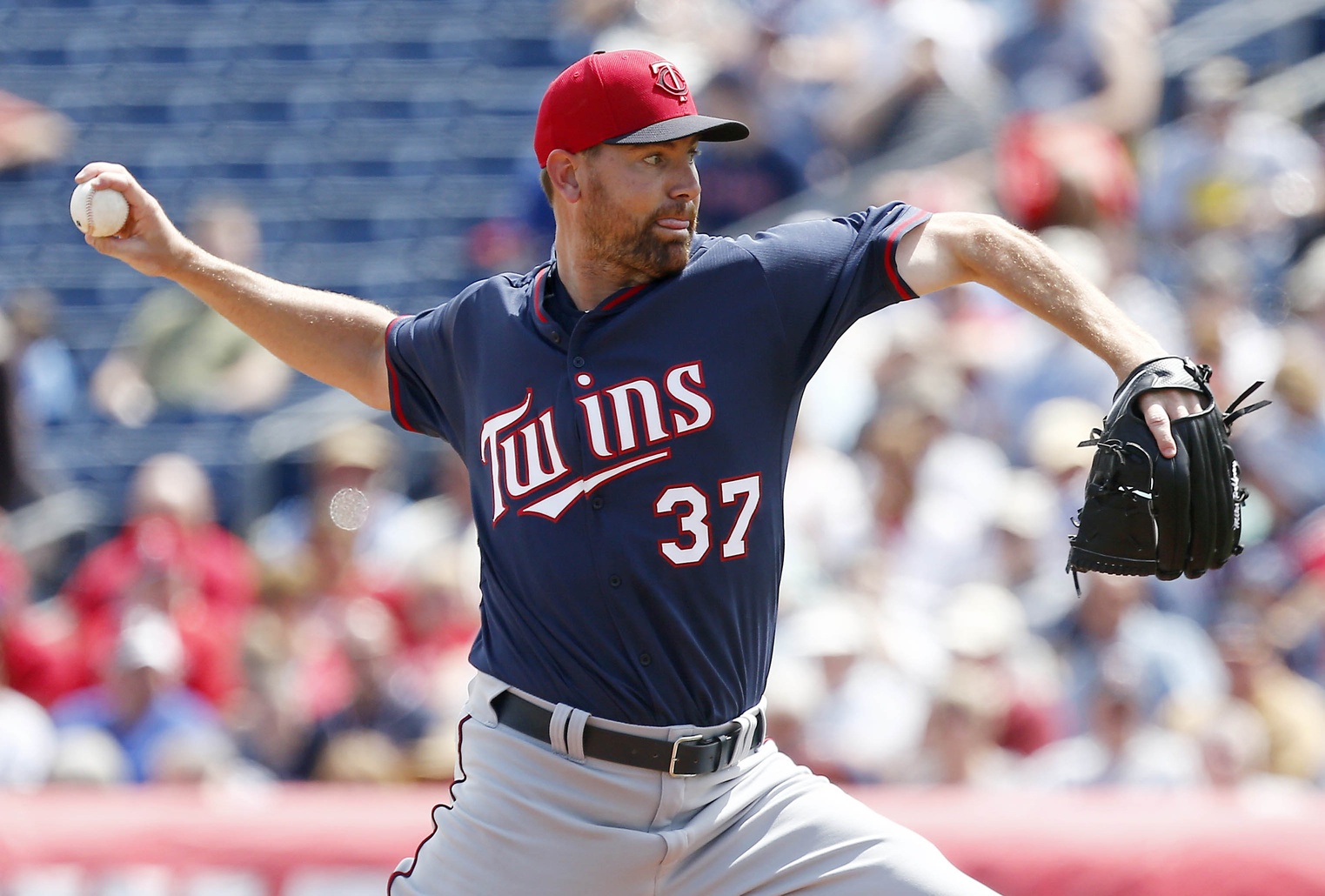 READ: SUNDAY NOTES “It’s one of those situations and I listened and it was a healthy exchange. That’s as much as I can say,” Ryan said of his conversation but wouldn’t address whether or not the topic of a trade came up. Following Sunday's game Pelfrey said he was happy with the outcome of the morning talk. "I let some things off my chest, he let things off his and it was a very good discussion. Obviously my emotions probably got the best of me yesterday and I told him I am going to be a professional and go to the pen and I'm going to give you everything I have. We're going to figure this thing out and it's going to work. Being a good teammate and everything, I told him not to worry. It was a very good talk." Pelfrey refrained from sharing what message Ryan had for the pitcher. "He told me his side, I told him my side,” Pelfrey said. “No hard feelings. I told you going in but I have a lot of respect for [Ryan]. I don't want to be the guy who is upset or you guys can see that or hold grudges. That's not me. Like I said, I said my piece. It's time to move on.”
 -
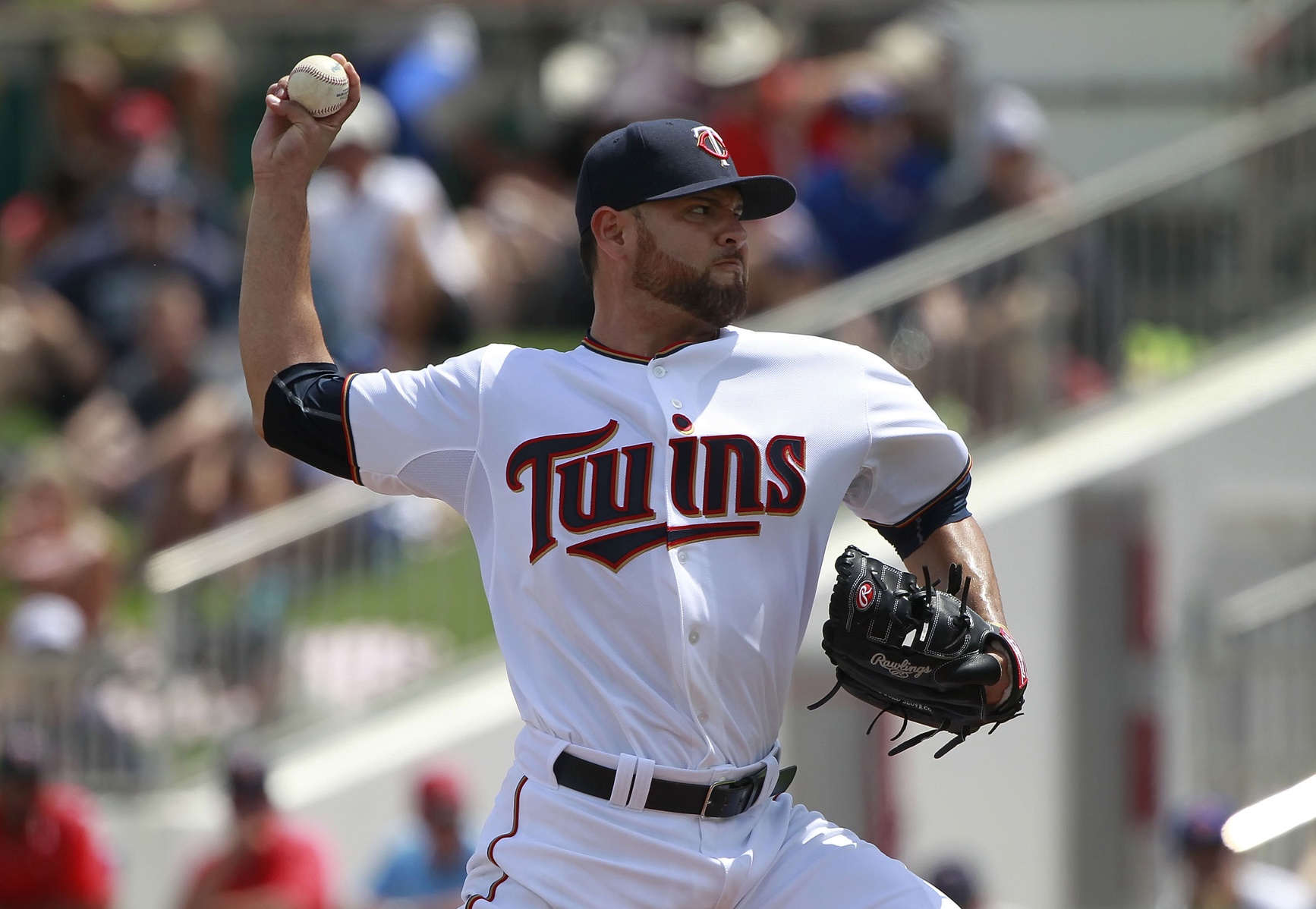 Ricky Nolasco Rebounds After Rough First Inning The fifth start of Nolasco’s spring did not begin the way he would have liked, allowing back-to-back home runs to Adam Jones and Travis Snider to put the Orioles up 3-0 in the first inning “He tried another curveball on Jones after he had a pretty good swing on the one he fouled back,” Paul Molitor said of Nolasco’s first inning. “I think Ricky misread that foul ball swing as maybe he had him if he threw a better one but he didn’t. He got it. Then Snider, two strikes, he tried to slip a fastball upstairs after throwing some offspeed stuff.” The right-hander settled down to allow just one more run over the next five innings of work. “Those are things you are looking for,” Molitor said. “He came back, I think he got the next nine straight. Three clean innings in a row and gave us a chance to get back in the game. So that was really good. He got through six [innings] under his [pitch] count. I was a nice response to kind of a rough first inning.” “I was just trying to locate and they were definitely hacking so tried to use that to my advantage,” Nolasco said of his outing. “I think they’re ready to get out of here just like we are. Just try not to do too much, when you don’t feel great.” Nolasco said he threw plenty of changeups, which was a part of his game plan for the day but it also helped that the Orioles hitters were gripping and ripping. “Those guys were hacking so I think they did me favor of swinging a ton at everything. So once you figure that out you try to take a little bit off the ball and change your approach and try to get themselves out.” In his final start of the spring, Nolasco said he'll shorten up his pitch count. Mike Pelfrey’s Bullpen Debut Pelfrey also made his bullpen debut on Sunday afternoon in a Twins uniform. Molitor said that either pitching coach Neil Allen or bullpen coach Eddie Guardado will have conversations with Pelfrey and provide suggestions on how to smooth his transition from the rotation to the bullpen. Molitor also reiterated that he would use Pelfrey strictly to start innings until he feels comfortable warming up and entering in the middle of an inning. “I was worried about how it was going to feel but I felt good and got ready quick. And I think this transition is going to be easier than I thought,” he said after his seven-pitch inning. Based on his initial outing from the bullpen, Pelfrey seemed prepared, setting down the Orioles one-two-three in the bottom of the seventh. The big right-hander worked out of the stretch and threw his fastball around 92 mph. Overall, Pelfrey said he was happy with the experience. “It was weird but I got into the game and the phone rang to get ready. You know what was fun is that I had some juices flowing, the heart started pounding and I was thinking ‘man, this is good, this is kind of fun.’” Moving forward, Pelfrey was asked if he would be open to expanding or contracting his arsenal in the shorter outings. He did not think he would but thought twice. “Maybe I’ll get into situations using the curveball. That was always kind of a second-time around [pitch] or to a lefty earlier.” Pelfrey, who said he typically throws 60 pitches to get ready in the pen before a start threw about 10 or 12 pitches before he knew he was loose. The difficult part was the downtime before his time to pitch came but Gaurdado kept the staff entertained. “It’s kind of like comedy hour,” said Pelfrey. Josmil Pinto Close To Return Both the catcher and the Twins were hopeful that the projected backup catcher would be available shortly but after failing his last test, he took a follow-up test on Sunday. The Twins were uncertain as to when the results of that test would be available but Pinto was in good spirits and performed all activities are usual in camp. When asked if he would throw at the Orioles’ Adam Jones -- who had hit Pinto on the helmet three times in one at-bat causing the concussion -- Molitor offered a long pause and then said “No.” If Pinto is not ready before the regular season, the Twins are monitoring the play of catchers Chris Herrmann and Eric Fryer. Molitor mentioned that Herrmann’s defensive abilities needed “tightening up” to improve his receiving and being able to throw out runners. In the first inning, Nolasco buried a pitch that Herrmann took a moment to find before making an offline throw to second in an effort to get the advancing runner. Molitor said that Fryer had the staff’s “confidence” in his defensive skills. As a designated hitter in Sunday’s game, went 1-for-2 with a two-run home run that started the Twins’ scoring. Asked if Herrmann held an advantage over Fryer because he was on the 40-man roster, Ryan said that it would not play a factor in the final decision. Prospect Walker Has Power Potential Twins prospect Adam Brett Walker started in right field for Sunday’s game and found himself sandwiched in the lineup between two of the Twins’ top power sources in Kennys Vargas and Oswaldo Arcia. “I’ve seen Adam enough to know he’s a gifted kid, very athletic,” Molitor said about the 23-year-old outfielder. “Runs well for a big man. He’s got a lot of power. I think he’s learning on how to try to be a little bit of a better hitter.” Molitor mentioned that Walker needed to cut down on the strikeouts, a fact that seemed evident as he led all of the system with 156 whiffs in 2014. He also pounded 25 home runs -- in the home run suppressing environment of the Florida State League, no less -- and led all of the Twins minor leaguers in that category as well. Baseball America recognized Walker as having the farm’s best power. WATCH: Adam Walker Takes A Swing Versus The Orioles Twins general manager Terry Ryan echoed Molitor’s assessment regarding Walker’s power and athleticism but added the rest of his game needed to be refined. “You look at him physically and you expect to see some raw power out of the man. He has that. It’s just the matter of the rest of his game. He’s athletic. He can run. We’ve had him in the outfield and he’s OK. Now it’s just a matter of firming up the bat, taking good at-bats. He’s certainly a threat.” Can the big man stay in the outfield or is he a DH-type waiting in the wings? “He can go get a ball. His range, his ability to cover ground is fine. That bat of his is something we are anxiously awaiting to see how it develops.”
 -
The average age of MLB pitchers is 28.5. 25 is younger than 28.5. 25 is young compared to the average. Your point is valid though. May has had plenty of experience and is probably on the older "young" side of things.
-
Most organizations might view 2015 as an opportunity to have a young starter who has little left to prove at the minor league level to build upon those numbers. Trevor May, however, will not be doing so for Minnesota. Not to start the season anyway. Are the Twins making the right decision?According to ESPN/TruMedia, May’s 9.8 K/9 in September was the ninth-best among all American League pitchers with four starts or more. In all of 2014, with the exception of May, not one Twins starting pitcher managed to eclipse that nine strikeouts per nine innings mark in a single month. His 12% swinging strike rate topped the rotation as well and ranked alongside brand name AL pitchers. On top of that, May was just familiarizing himself with major league opponents. The strikeout-poor Twins starting rotation should be thankful to have found that kind of contributor. READ: TWINS MAKE CUTS, NAME STARTERS Instead the Twins decided that the left-handed Tommy Milone made the most sense for the rotation to start the year and opted to have May begin the season in Rochester. While Milone will be tapped to be the fifth starter, general manager Terry Ryan was bursting with complimentary words when he told the media that he was not “displeased with Trevor May either.” May’s “not displeasing” spring was truncated by a bout with the flu which limited his innings at the beginning of the exhibition season. Nevertheless, in the ten innings of work he struck out nine and walked just two -- a much better K/BB ratio than either Milone or Mike Pelfrey. READ: TREVOR MAY STATES HIS CASE The news was a let down for the 25-year-old right-hander. After two consecutive seasons in camp with early reassignments this decision felt different for May. “It’s completely different because the first cut you feel like you are just there to get your innings and go get your work in. I felt like I have a chance. I feel like this is the level I am going to be at but it’s just not going to be right now.” Teams cannot make costly decisions based on a body of work that stretches for a month. The strikeout-filled September also contain plenty of issues when hitters did make contact. In addition to the robust strikeout rate, May also had one of the league’s highest hard-hit averages and owned the AL’s highest slugging percentage against. Missing bats is good but elevating pitches and allowing hard contact is not. In his final start against the Pirates, May was not as stretched out in comparison to his competition. Over 4.2 innings of work, he threw 33 pitches -- his highest total pitch count of the spring. That start also came with loud contact combined with wind-aided extra base hits. Despite the results, May felt good about the process but recognized when the kinetic chain broke down. “I got a little long sometimes and some things flattened out a little bit. Especially elevating,” May said after his final start. “When I was trying to elevate usually that’s has more life than it did. Things stayed a little bit flatter when I would more often than not get bad swings but they squared up pretty good. They got me a couple times.” After struggling from the stretch in 2014 and refining his mechanics this spring, May felt like he was headed in the right direction. His takeaway from his last start was positive. “For the most part my body feels under control and I’m definitely happy with the progress I am making in those areas and being able to get ahead of guys and keeping the ball down in the zone, for the most part, has been better than it has been in the past.” READ: TREVOR MAY AND PITCHING FROM THE STRETCH One area that May improved upon in 2014 was his ability to control the run game. After allowing 22 stolen bases on 28 attempts in 2013 in New Britain, he allowed just one stolen base in four attempts split between Rochester and the Twins. The attention to runners required additional focus on execution and location on his secondary pitches from the stretch -- something that he felt was progressing well in the spring. Manager Paul Molitor mentioned that May did not pitch himself out of contention for the spot this spring. It was different variables that played a role in choosing Milone. The message to May for the immediate future was simple. “Go down and keep working,” said May in regards to the instructions he received from the Twins. “I felt like I made a lot of steps and improved in areas that needed to improvement, composure-wise and poise and being aggressive. That’s how it shakes out sometimes.” Click here to view the article
-
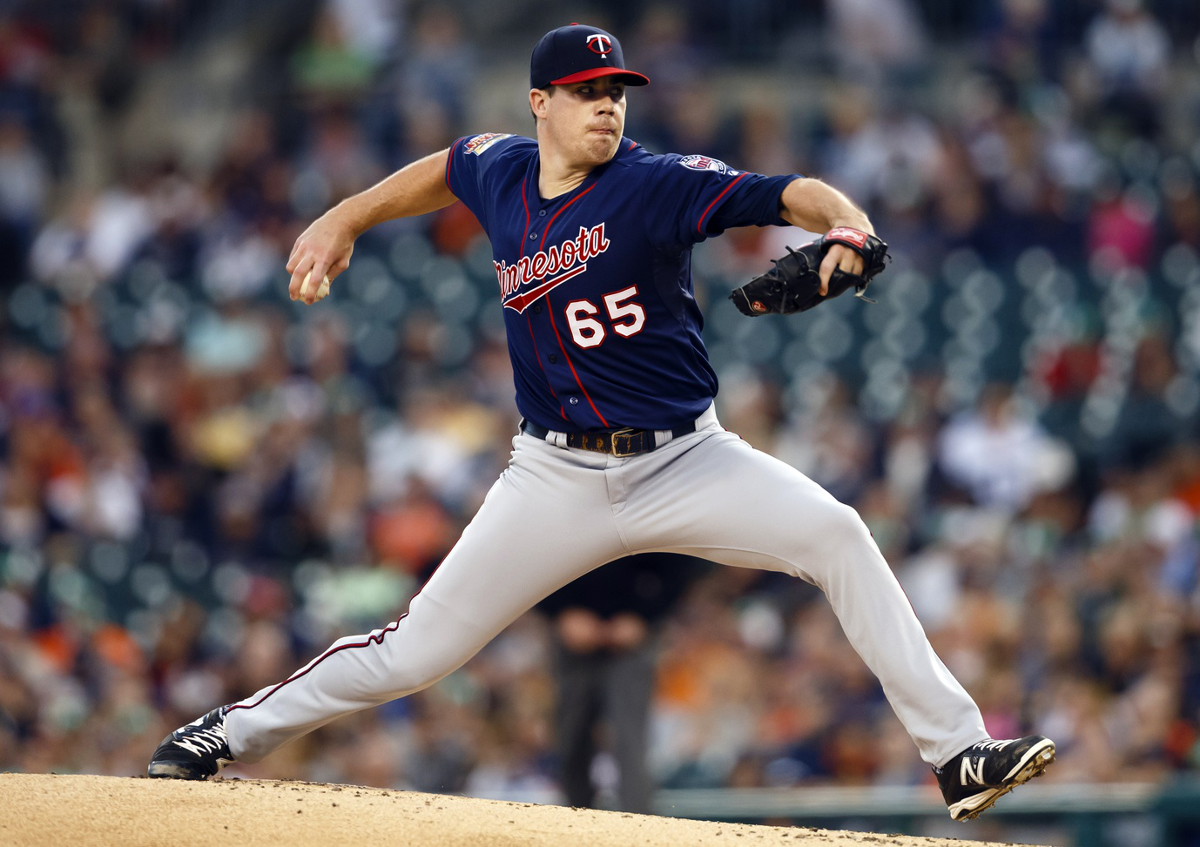 According to ESPN/TruMedia, May’s 9.8 K/9 in September was the ninth-best among all American League pitchers with four starts or more. In all of 2014, with the exception of May, not one Twins starting pitcher managed to eclipse that nine strikeouts per nine innings mark in a single month. His 12% swinging strike rate topped the rotation as well and ranked alongside brand name AL pitchers. On top of that, May was just familiarizing himself with major league opponents. The strikeout-poor Twins starting rotation should be thankful to have found that kind of contributor. READ: TWINS MAKE CUTS, NAME STARTERS Instead the Twins decided that the left-handed Tommy Milone made the most sense for the rotation to start the year and opted to have May begin the season in Rochester. While Milone will be tapped to be the fifth starter, general manager Terry Ryan was bursting with complimentary words when he told the media that he was not “displeased with Trevor May either.” May’s “not displeasing” spring was truncated by a bout with the flu which limited his innings at the beginning of the exhibition season. Nevertheless, in the ten innings of work he struck out nine and walked just two -- a much better K/BB ratio than either Milone or Mike Pelfrey. READ: TREVOR MAY STATES HIS CASE The news was a let down for the 25-year-old right-hander. After two consecutive seasons in camp with early reassignments this decision felt different for May. “It’s completely different because the first cut you feel like you are just there to get your innings and go get your work in. I felt like I have a chance. I feel like this is the level I am going to be at but it’s just not going to be right now.” Teams cannot make costly decisions based on a body of work that stretches for a month. The strikeout-filled September also contain plenty of issues when hitters did make contact. In addition to the robust strikeout rate, May also had one of the league’s highest hard-hit averages and owned the AL’s highest slugging percentage against. Missing bats is good but elevating pitches and allowing hard contact is not. In his final start against the Pirates, May was not as stretched out in comparison to his competition. Over 4.2 innings of work, he threw 33 pitches -- his highest total pitch count of the spring. That start also came with loud contact combined with wind-aided extra base hits. Despite the results, May felt good about the process but recognized when the kinetic chain broke down. “I got a little long sometimes and some things flattened out a little bit. Especially elevating,” May said after his final start. “When I was trying to elevate usually that’s has more life than it did. Things stayed a little bit flatter when I would more often than not get bad swings but they squared up pretty good. They got me a couple times.” After struggling from the stretch in 2014 and refining his mechanics this spring, May felt like he was headed in the right direction. His takeaway from his last start was positive. “For the most part my body feels under control and I’m definitely happy with the progress I am making in those areas and being able to get ahead of guys and keeping the ball down in the zone, for the most part, has been better than it has been in the past.” READ: TREVOR MAY AND PITCHING FROM THE STRETCH One area that May improved upon in 2014 was his ability to control the run game. After allowing 22 stolen bases on 28 attempts in 2013 in New Britain, he allowed just one stolen base in four attempts split between Rochester and the Twins. The attention to runners required additional focus on execution and location on his secondary pitches from the stretch -- something that he felt was progressing well in the spring. Manager Paul Molitor mentioned that May did not pitch himself out of contention for the spot this spring. It was different variables that played a role in choosing Milone. The message to May for the immediate future was simple. “Go down and keep working,” said May in regards to the instructions he received from the Twins. “I felt like I made a lot of steps and improved in areas that needed to improvement, composure-wise and poise and being aggressive. That’s how it shakes out sometimes.”
 -
That's clearly what happened. As he explained, in the ESPN interview he rattled off eliminating defensive shifts as a possibility to solve for offensive struggles but there was no research or in-depth study was performed on either the offensive struggles or the effects of defensive shifts. Created quite a tizzy.
-
Article: Twins Make Cuts, Name Starters
Parker Hageman replied to Parker Hageman's topic in Twins Daily Front Page News
The crux is as a timing mechanism but being able to engage his lower half better than he did before (see: http://twinsdaily.com/_/minnesota-twins-news/can-aaron-hicks-be-fixed-r3262) -
Article: Twins Make Cuts, Name Starters
Parker Hageman posted a topic in Twins Daily Front Page News
The Minnesota Twins made several significant moves on Saturday morning. Read all about them in the latest Report From The Fort.Twins Trim Roster To 31 The Twins trimmed their roster to 31 this morning with the announcement that Aaron Hicks, Eddie Rosario and Trevor May will be optioned, while Mark Hamburger will be reassigned to the minor league camp. Hicks acknowledged that players have to continue to show results but didn’t necessarily think his spring training stats played a role in the decision. “You gotta show that you are producing,” Hicks said. “You gotta show that you’re having good ideas. You gotta show that you are driving guys in and moving them along, you’re doing all that stuff. Whether it is spring training or not. They're looking to make the best team for this team. Every spot is not certain.” “You gotta prove that you are the best player at that position, at that time and that’s what it is about.” Hicks had made inroads towards improving his offense, incorporating a leg kick in his swing to generate more power. “I feel like I am making more aggressive swings, attacking in the zone and I feel like I was making good swings. I feel like I lined out a couple times and sent the ball deep and that’s the results that I want.” Molitor confirmed that the move was predicated on Hicks’ entire body of work in March. “I told him I appreciate his work down here and his desire to try to improve various aspects of his game. I think the bottom line was that he didn’t perform particularly well. There were times when we saw some good things obviously," said Molitor Molitor said his message to Hicks was clear: Work hard and there is a chance he will be back in Minnesota soon. "Let him know that the opening day roster isn’t critical to what his year can be about. He needs to be a good defender and a guy who knows how to score runs and consistency in the quality of at-bat.” When asked if some of the mental mistakes such as the base-running issues and forgetting how many outs there were in an inning were factors in the decision to go a different direction, Molitor admitted it did. “You take full consideration of how spring goes, obviously. I told him after that happened that the next day after we talked about it that I like to move on and wipe the slate clean. But when you look at the body of work you have to consider all things that happen down here that was part of that. He understands that he needs to be engaged in the game.” “He’s a guy who if he defends well and has good at-bat and stays aggressive on the basepaths he can be helpful up here. And not make mental mistakes.” Center Field Picture Becoming Clear With Hicks’ demotion, the Twins’ center field race has been won by Jordan Schafer and Shane Robinson, who will share duties in the field. “We’re going to have to probably use more than one person out there in center field, at least in the short-term.” Molitor said this morning after cuts were announced. The Twins manager, however, stopped short of declaring the situation a platoon. “Because you have Hunter that needs rest, you have Arcia who you want to get better against lefties and some days you might feel that it is not a good lefty to do that one. That’s why I would say it is not a straight platoon.” The right-handed hitting Robinson does not have an overly impressive track record against left-handed pitching. Since 2011, he’s batted .248/.333/.296 in 142 minor league plate appearances and .220/.308/.283 in 237 major league plate appearances against southpaws In addition to Schafer and Robinson, Molitor said that Eduardo Escobar will be used to spell some of the outfielders on occasion but tiptoed around the idea of using Eduardo Nunez in the outfield, suggesting his role is on the bench. “For Nunnie, it is possible that he could see play out there,” said Molitor, “but realistically he’s gonna be a good guy and you want to use all your players at some point but he’s a guy who can pinch run and pinch hit and you want to get him some at-bat to keep him sharp.” Tommy Milone Named Fifth Starter With May’s demotion, the Twins announced that Tommy Milone would start the year as the fifth man in the rotation. Milone pieced together a spring performance that saw 15 hits and 7 runs over 14 innings but Molitor said that the staff was impressed by his ability to “minimize” damage. “Tommy pitched fine down here. He’s healthy. We saw glimpses that were really good. He never pitched poorly,” said Molitor. “He minimized, he’s experienced and when evaluating my options in the short-term here get him off to a good start from the left-side.” Milone’s edge over the other two candidates was not that significant. “I thought May and Pelfrey didn’t really pitch themselves out of that role and it wasn’t like Milone was way better than those guys but given all variables, it makes the most sense for Tommy to be our guy.” Mike Pelfrey To The Pen With Milone as the final member of the rotation, Mike Pelfrey was informed that he would be moving to the bullpen. The decision did not sit well with Pelfrey as he told reporters that he would be open to a trade if it would lead to a spot in a rotation. For now, Molitor said he would treat him as a member of his bullpen. “He’s stretched out, he can pitch multiple innings if we run into trouble early in the game. I told him in the short-term that I was going to stay away from bringing him in in the middle of an inning until he figures out his routine for getting ready out there. He’s gonna get some opportunities out there this week.” Molitor said he was aware that Pelfrey was disappointed but wouldn’t address his comments. “I’m sure he’s disappointed. He put in a lot of effort to get himself back to a competitive spot. He’s looking at a little bit of a crossroad with his career after his injury and contract and all those things. I tried to be as transparent and forthcoming as I could.” Danny Santana At Short It may have been inevitable but Molitor made it official: Danny Santana will be his opening day shortstop in Detroit. Click here to view the article- 71 replies
-
- 1
-
-
- aaron hicks
- eddie rosario
- (and 1 more)
-
 Twins Trim Roster To 31 The Twins trimmed their roster to 31 this morning with the announcement that Aaron Hicks, Eddie Rosario and Trevor May will be optioned, while Mark Hamburger will be reassigned to the minor league camp. Hicks acknowledged that players have to continue to show results but didn’t necessarily think his spring training stats played a role in the decision. “You gotta show that you are producing,” Hicks said. “You gotta show that you’re having good ideas. You gotta show that you are driving guys in and moving them along, you’re doing all that stuff. Whether it is spring training or not. They're looking to make the best team for this team. Every spot is not certain.” “You gotta prove that you are the best player at that position, at that time and that’s what it is about.” Hicks had made inroads towards improving his offense, incorporating a leg kick in his swing to generate more power. “I feel like I am making more aggressive swings, attacking in the zone and I feel like I was making good swings. I feel like I lined out a couple times and sent the ball deep and that’s the results that I want.” Molitor confirmed that the move was predicated on Hicks’ entire body of work in March. “I told him I appreciate his work down here and his desire to try to improve various aspects of his game. I think the bottom line was that he didn’t perform particularly well. There were times when we saw some good things obviously," said Molitor Molitor said his message to Hicks was clear: Work hard and there is a chance he will be back in Minnesota soon. "Let him know that the opening day roster isn’t critical to what his year can be about. He needs to be a good defender and a guy who knows how to score runs and consistency in the quality of at-bat.” When asked if some of the mental mistakes such as the base-running issues and forgetting how many outs there were in an inning were factors in the decision to go a different direction, Molitor admitted it did. “You take full consideration of how spring goes, obviously. I told him after that happened that the next day after we talked about it that I like to move on and wipe the slate clean. But when you look at the body of work you have to consider all things that happen down here that was part of that. He understands that he needs to be engaged in the game.” “He’s a guy who if he defends well and has good at-bat and stays aggressive on the basepaths he can be helpful up here. And not make mental mistakes.” Center Field Picture Becoming Clear With Hicks’ demotion, the Twins’ center field race has been won by Jordan Schafer and Shane Robinson, who will share duties in the field. “We’re going to have to probably use more than one person out there in center field, at least in the short-term.” Molitor said this morning after cuts were announced. The Twins manager, however, stopped short of declaring the situation a platoon. “Because you have Hunter that needs rest, you have Arcia who you want to get better against lefties and some days you might feel that it is not a good lefty to do that one. That’s why I would say it is not a straight platoon.” The right-handed hitting Robinson does not have an overly impressive track record against left-handed pitching. Since 2011, he’s batted .248/.333/.296 in 142 minor league plate appearances and .220/.308/.283 in 237 major league plate appearances against southpaws In addition to Schafer and Robinson, Molitor said that Eduardo Escobar will be used to spell some of the outfielders on occasion but tiptoed around the idea of using Eduardo Nunez in the outfield, suggesting his role is on the bench. “For Nunnie, it is possible that he could see play out there,” said Molitor, “but realistically he’s gonna be a good guy and you want to use all your players at some point but he’s a guy who can pinch run and pinch hit and you want to get him some at-bat to keep him sharp.” Tommy Milone Named Fifth Starter With May’s demotion, the Twins announced that Tommy Milone would start the year as the fifth man in the rotation. Milone pieced together a spring performance that saw 15 hits and 7 runs over 14 innings but Molitor said that the staff was impressed by his ability to “minimize” damage. “Tommy pitched fine down here. He’s healthy. We saw glimpses that were really good. He never pitched poorly,” said Molitor. “He minimized, he’s experienced and when evaluating my options in the short-term here get him off to a good start from the left-side.” Milone’s edge over the other two candidates was not that significant. “I thought May and Pelfrey didn’t really pitch themselves out of that role and it wasn’t like Milone was way better than those guys but given all variables, it makes the most sense for Tommy to be our guy.” Mike Pelfrey To The Pen With Milone as the final member of the rotation, Mike Pelfrey was informed that he would be moving to the bullpen. The decision did not sit well with Pelfrey as he told reporters that he would be open to a trade if it would lead to a spot in a rotation. For now, Molitor said he would treat him as a member of his bullpen. “He’s stretched out, he can pitch multiple innings if we run into trouble early in the game. I told him in the short-term that I was going to stay away from bringing him in in the middle of an inning until he figures out his routine for getting ready out there. He’s gonna get some opportunities out there this week.” Molitor said he was aware that Pelfrey was disappointed but wouldn’t address his comments. “I’m sure he’s disappointed. He put in a lot of effort to get himself back to a competitive spot. He’s looking at a little bit of a crossroad with his career after his injury and contract and all those things. I tried to be as transparent and forthcoming as I could.” Danny Santana At Short It may have been inevitable but Molitor made it official: Danny Santana will be his opening day shortstop in Detroit.
 -
On Thursday against the Red Sox, Minnesota Twins’ third baseman Trevor Plouffe was station on the right side of second base. This is certainly a not uncommon alignment to use against David Ortiz but also becoming increasingly common in an era that has seen a massive proliferation in the use of the strategy overall. The Twins were late adaptors but they have almost gone all-in on the defense, deploying the shift more liberally with most of the credit given to now-manager Paul Molitor. The organization went from 66 shifts in 2013 to over 500 instances in 2014. Like seeing someone take a selfie, baseball’s defensive shifts went from being a weird practice to commonplace.There is precedent to embrace the shift. For example, according to Baseball Info Solutions, shifting has been rewarding to the teams who move their players around the most, those having “saved” an average of 8 runs per season or a rough translation of about one win per season. Data-driven teams saw this edge and were aggressive in placing their players in a position to maximize their odds of converting a batted ball into an out. However at the beginning of the year new commissioner Rob Manfred seemingly placed the shift on the endangered species list. Would he really kill the shift? In his tour around spring training facilities, the commissioner made a whistle-stop at the Lee County Sports Complex camp to discuss the state of Major League Baseball and the game’s future with the team’s ownership as well as providing face time with the players. Manfred fielded questions from the media that ranged from the early feedback on the new pace-of-game initiatives (“really been positive”) to a childhood memory of a Twins-Yankees series in 1968 (“everybody remembers the first time they went to a major league game”) to Scott Boras’ comments about the Cubs’ decision to send client Kris Bryant to the minors (“that really isn’t any of Scott Boras’ business”). When prompted to elaborate his stance regarding banning defensive shifts, Manfred had to laugh. “I’m so tired of this topic,” Manfred told the media scrum with a chuckle and then humored the internet writer with an explanation behind the charge he made on ESPN in January that a ban on defensive shifts was under consideration by his office. “My comment on defensive shifts came after a series of questions so without repeating them all, we are looking at the issue of offense in the game. We wouldn’t be doing our jobs if we’re not because there is a lot of conversation in the game about the fact that offense is down. Where we are on that issue analytically is we haven’t even decided whether we have an aberration or a trend that may require a remedy. I went through all that before I got to defensive shifts. As a follow, somebody said ‘If and when you decide you have a problem what might you talk about, what might you be willing to consider?’ In that context I mentioned defensive shifts. Nothing more serious than that.” There is no grand plan to build a fence between short and second or tethering the third baseman to the base. What Manfred made clear is that there is no imminent danger to the shift lifestyle and that all the blowback has him reconsidering that option. “Frankly, given the feedback that I’ve gotten since I made that comment I’m not even certain that I would even consider it anymore.” So defensive enthusiasts can rest easy knowing that there will be no restrictions placed on fielders in the foreseeable future. The Twins can continue to rearrange their infielders as they see fit to try to minimize the damage from their pitching staff. Click here to view the article
