



Parker Hageman
-
Posts
4,152 -
Joined
-
Last visited
-
Days Won
6
Content Type
Profiles
News
Minnesota Twins Videos
2026 Minnesota Twins Top Prospects Ranking
2022 Minnesota Twins Draft Picks
Minnesota Twins Free Agent & Trade Rumors, Notes, & Tidbits
Guides & Resources
2023 Minnesota Twins Draft Picks
The Minnesota Twins Players Project
2024 Minnesota Twins Draft Picks
2025 Minnesota Twins Draft Pick Tracker
2026 Minnesota Twins Draft Tracker: Picks & Bonuses
Forums
Blogs
Events
Store
Downloads
Gallery
Everything posted by Parker Hageman
-
 There's little doubt that Santana can get to everything. He seems to lack the soft hands to make every play -- that's where he and Escobar differentiate. He's made some rushed throws -- there was one routine one last series in which Vargas bailed him out by scooping and there's the example above at second. He had another ground ball that he misplayed but was able to pick it back up and fire out the slow-footed Jose Abreu. To me, it looking like pressing. As Ryan said, he has all the tools. Whether it is consistent playing time to feel comfortable or just getting more exposure at short after the time off, the Twins appear set to give him development time.
 -
Fair point. The eye test tells me it is a strong play. How we measure it compared to his peers will certainly be up to StatsCast but even with all that data, I'm not sure it will provide an apples-to-apples comparison on that specific play. What we will be able to find is release time, velocity and maybe accuracy overall (which was lacking on that play) that will help define where Santana is at in comparison to other shortstops. Regardless of where he ranks among his peers, Danny Santana displayed a very strong arm on that particular play.
-
Perez was rounding third before Santana even had the ball and still got him by 10 steps. Yes, the throw was up the line, a problem he's had, but the quick release and velocity was very impressive.
-
There’s no hiding the fact that Danny Santana’s first few weeks as the Twins starting shortstop have been rough. ESPN’s stats guru Mark Simon tweeted out earlier this week that at -6, Santana’s defensive runs saved total was the worst metric among all qualified defenders. The fact is any defensive metric at this sampling size is not going to be able to give an accurate portrayal of a player’s true performance. After all, by another defensive rating system, total zone, Santana is an above average defender at short (+1). But wait, revised zone rating says he’s one of the worst at converting balls into outs so far this year.Do you see why it is hard to convince average fans to buy into the validity of defensive metrics? Twins second baseman Brian Dozier, whose defense has been considered an aspect of his game that doesn’t receive enough attention, doesn’t believe that those metrics -- good or bad -- tell the entire story of a player. “The big thing for me is that I know someone’s a good defensive player,” said the eye test advocate. Dozier is not alone. Most inside the game will tell you that they can say whether or not a player can play defense based on observations. For Dozier, his main criticism of the defensive metrics is the plays that are not included in the numbers. “As far as sabermetrics, it is mindboggling to me sometimes when I see that around the league when someone is the best fielder in the game and everyone knows he’s the best and he covers the most ground and always throws to the right bases,” Dozier said. “And some of those things don’t get factored into the sabermetrical stat that you are given at the end of the year.” Although “sabermetrical” is a made-up word derived from another made-up word, Dozier is right -- there are things that players can do defensively that will not show up in the UZRs or plus/minuses and may not give an wholly accurate representation of a player’s defense. In Santana’s case, that includes the recent relay play on Monday in which he threw the Royals’ Salvador Perez out from shallow center field. http://i.imgur.com/vdA1dol.gif Those intangible-type plays -- a play that Santana is able to convert because he is blessed with a legit GoldenEye N64 rocket launcher -- should be added to any discussion about his defensive capabilities. However when it comes to making the everyday plays a shortstop should make Santana has performed at a deficit this year. Revised zone rating, a metric based on video scouting that adds batted ball speed and trajectory, is straightforward in the sense that it categorizes if it was hit within a shortstop’s zone and whether or not the play was converted into an out. Simple. Thanks to his contact-oriented pitching staff, Santana has had 39 balls in his zone so far this year but he has only converted 27 (.692 RZR) into outs. That’s 25th of 30 shortstops. The Twins want you to take that early season production with a grain because they are convinced he is talented enough to be an everyday major league shortstop. “He can run, he can throw, he’s got range, he’s athletic, he can make the play in the hole,” Twins general manager Terry Ryan offered in regards to Santana’s ability to play shortstop. “It’s just a matter consistency, like a lot of our young players. He has all the tools to be a very quality-oriented shortstop.” Quality has been lacking in the season’s opening month both with the glove and at the plate. As Nick Nelson pointed out on Monday, part of that early season shakiness may be due to inexperience or rust from missing a year of development at the position. There may also be some issues on the field that he is carrying over from his at-bats. After eyebrow-raising production in his first season at the plate, the early returns in his sophomore season have been disappointing. As a leadoff hitter who is expected to set the table for the heart of the order, Santana has failed to get on base at even a modest clip and he has not drawn a walk in 45 plate appearances. What’s more is that his zone comprehension, while lacking to begin with, has taken severe steps backward. According to Fangraphs.com, Santana’s 52.4% out-of-zone swinging% is the highest among all qualified hitters. As a top-of-the-order presence, he needs to be able to command that zone at a much better clip. Does that poor performance with the bat get carried over to the field with him? It seems that he could be pressing in the infield. While blessed with the strong arm, he has also demonstrated that it can potentially get him into trouble, just like this throw to middle infield mate Dozier that sent him contorting in order to glove the ball. http://i.imgur.com/AcKw56X.gif Those types of plays make managers squeamish. If he continues to make these unforced errors and misplays will the Twins be quick to swap him with Eduardo Escobar who performed well in his service at short last year? “He’s basically a rookie coming up here at shortstop now,” said Ryan. “It’s not like he’s been out there four or five years. But we’ll probably have a little leniency with him because he hasn’t been up here playing shortstop on an everyday basis yet.” For the time being, the Twins will continue to roll with Santana at shortstop -- at least until either he cannot be trusted in the field or his bat never recovers from the early season slump. That being said, Ryan thinks Santana will come around and begin to impress with his raw tools. “He should make some of those plays or all of those plays that are routine, of course, but he’s capable of making some of those fantastic plays too.” Click here to view the article
-
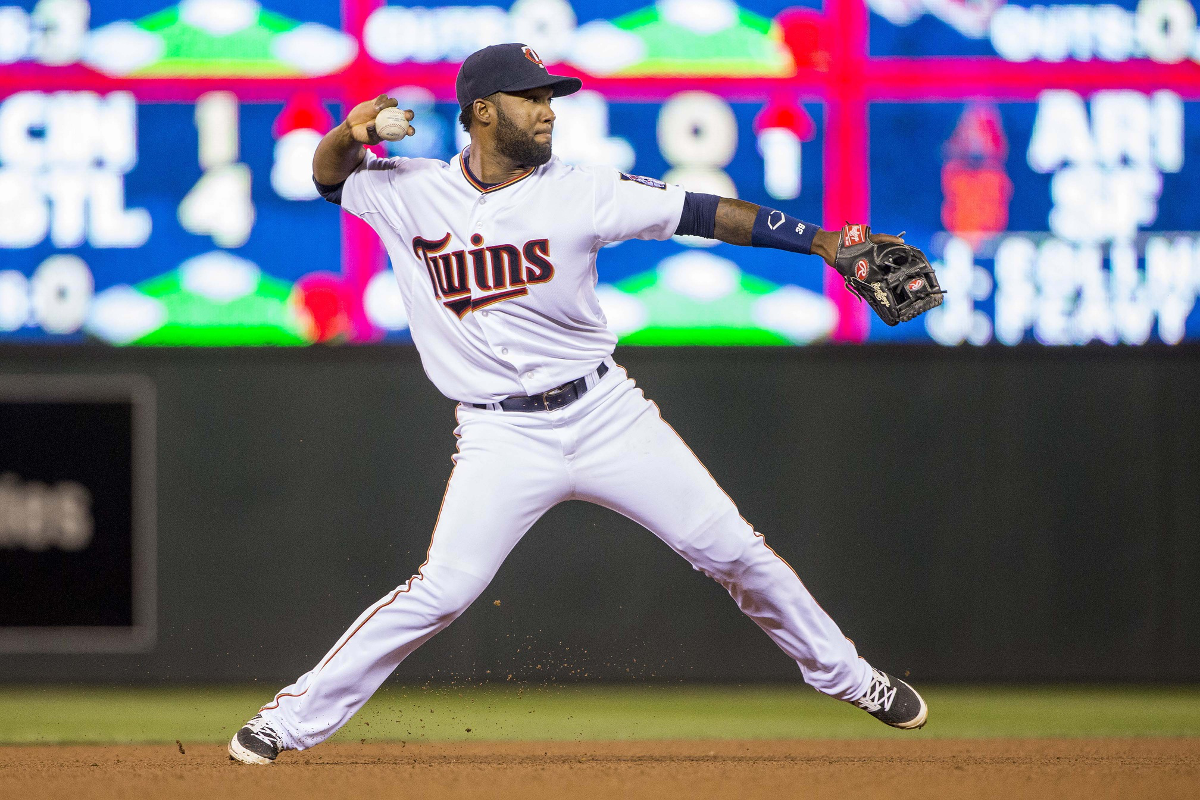 Do you see why it is hard to convince average fans to buy into the validity of defensive metrics? Twins second baseman Brian Dozier, whose defense has been considered an aspect of his game that doesn’t receive enough attention, doesn’t believe that those metrics -- good or bad -- tell the entire story of a player. “The big thing for me is that I know someone’s a good defensive player,” said the eye test advocate. Dozier is not alone. Most inside the game will tell you that they can say whether or not a player can play defense based on observations. For Dozier, his main criticism of the defensive metrics is the plays that are not included in the numbers. “As far as sabermetrics, it is mindboggling to me sometimes when I see that around the league when someone is the best fielder in the game and everyone knows he’s the best and he covers the most ground and always throws to the right bases,” Dozier said. “And some of those things don’t get factored into the sabermetrical stat that you are given at the end of the year.” Although “sabermetrical” is a made-up word derived from another made-up word, Dozier is right -- there are things that players can do defensively that will not show up in the UZRs or plus/minuses and may not give an wholly accurate representation of a player’s defense. In Santana’s case, that includes the recent relay play on Monday in which he threw the Royals’ Salvador Perez out from shallow center field. http://i.imgur.com/vdA1dol.gif Those intangible-type plays -- a play that Santana is able to convert because he is blessed with a legit GoldenEye N64 rocket launcher -- should be added to any discussion about his defensive capabilities. However when it comes to making the everyday plays a shortstop should make Santana has performed at a deficit this year. Revised zone rating, a metric based on video scouting that adds batted ball speed and trajectory, is straightforward in the sense that it categorizes if it was hit within a shortstop’s zone and whether or not the play was converted into an out. Simple. Thanks to his contact-oriented pitching staff, Santana has had 39 balls in his zone so far this year but he has only converted 27 (.692 RZR) into outs. That’s 25th of 30 shortstops. The Twins want you to take that early season production with a grain because they are convinced he is talented enough to be an everyday major league shortstop. “He can run, he can throw, he’s got range, he’s athletic, he can make the play in the hole,” Twins general manager Terry Ryan offered in regards to Santana’s ability to play shortstop. “It’s just a matter consistency, like a lot of our young players. He has all the tools to be a very quality-oriented shortstop.” Quality has been lacking in the season’s opening month both with the glove and at the plate. As Nick Nelson pointed out on Monday, part of that early season shakiness may be due to inexperience or rust from missing a year of development at the position. There may also be some issues on the field that he is carrying over from his at-bats. After eyebrow-raising production in his first season at the plate, the early returns in his sophomore season have been disappointing. As a leadoff hitter who is expected to set the table for the heart of the order, Santana has failed to get on base at even a modest clip and he has not drawn a walk in 45 plate appearances. What’s more is that his zone comprehension, while lacking to begin with, has taken severe steps backward. According to Fangraphs.com, Santana’s 52.4% out-of-zone swinging% is the highest among all qualified hitters. As a top-of-the-order presence, he needs to be able to command that zone at a much better clip. Does that poor performance with the bat get carried over to the field with him? It seems that he could be pressing in the infield. While blessed with the strong arm, he has also demonstrated that it can potentially get him into trouble, just like this throw to middle infield mate Dozier that sent him contorting in order to glove the ball. http://i.imgur.com/AcKw56X.gif Those types of plays make managers squeamish. If he continues to make these unforced errors and misplays will the Twins be quick to swap him with Eduardo Escobar who performed well in his service at short last year? “He’s basically a rookie coming up here at shortstop now,” said Ryan. “It’s not like he’s been out there four or five years. But we’ll probably have a little leniency with him because he hasn’t been up here playing shortstop on an everyday basis yet.” For the time being, the Twins will continue to roll with Santana at shortstop -- at least until either he cannot be trusted in the field or his bat never recovers from the early season slump. That being said, Ryan thinks Santana will come around and begin to impress with his raw tools. “He should make some of those plays or all of those plays that are routine, of course, but he’s capable of making some of those fantastic plays too.”
 -
The Minnesota Twins showed in their first homestand of the year that they are capable of winning, finishing the week 4-2 against Kansas City and Cleveland. On this week's NO JUICE PODCAST, Dan Anderson and Parker Hageman discuss the their observations from the Home Opener, the week in review and other topics. Listen up.Other topics include Tinder’s endgame, Varsity Blues Fan Fiction, and hockey. Parker supplies some audio showing just how amazing Sid Hartman is during press conferences. Dan provides the teams in the TCMABL with some bulletin board material. Listen below, on iTunes or on Stitcher: NO JUICE PODCAST, EPISODE #52: ONE-YEAR ANNIVESARY Click here to view the article
-
 Other topics include Tinder’s endgame, Varsity Blues Fan Fiction, and hockey. Parker supplies some audio showing just how amazing Sid Hartman is during press conferences. Dan provides the teams in the TCMABL with some bulletin board material. Listen below, on iTunes or on Stitcher: NO JUICE PODCAST, EPISODE #52: ONE-YEAR ANNIVESARY
 -
"No offense to Parker but this is why we have a pitching coach and hitting coach at each level." Offense taken.
- 38 replies
-
- 6
-

-
- jake mauer
- nick gordon
- (and 1 more)
-
Using Arcia's minor league track record as a gauge for future production is a bit misleading. When he was spending full seasons in the minors, he used a different approach that allowed him to use the entire field more but with less power potential. Brunansky said he did not want to change him from what he is now back to where he was but he wants to refine the approach so that he can have the power potential with a higher batting average. http://twinsdaily.com/_/minnesota-twins-news/minnesota-twins/twins-trying-to-make-oswaldo-arcia-a-complete-hitter-r3045 http://i.imgur.com/AoaBdR0.gif http://i.imgur.com/4IOzAsG.gif
-
And when the media and coaching staff are in the clubhouse the average age gets much older too. Way too literal of an interpretation of that line. But I understand your overall point -- the offense is young that the league's average but certainly not the youngest. Three players under the age of 25 are expected to play key roles in the lineup this year and there should be more up at some point before the end of the season.
-
Tom Brunansky was recently asked what he saw as the biggest difference between handling veteran hitters and young hitters. “The young hitters put the horse before the carriage,” Brunansky said about the desire for hits. “The young hitters, they see success as the result. The veteran hitter knows that the result is something we can't control and it is about the process. So that's where we step in and let them know that it is process, process, process. We have to change that mindset.” With a clubhouse filled with hitters like Danny Santana, Kennys Vargas and Oswaldo Arcia -- all under the age of 25 and all expected to play key roles in the offense -- Brunansky will be busy spreading that message.Of course the Twins have players who are not far removed from being where those hitters are now and have come out on the other side in good shape. Third baseman Trevor Plouffe discovered that trying to perform consistently at the major league level was a daunting task as an inexperienced hitter. After scuffling through several stretches of feeling overmatched, Plouffe would piece together a handful of at bats that would feed his confidence. It would be a fleeting feeling as opponents would introduce a new wrinkle that would send him back to the cages searching for answers. “You have to show you can hit the four-spot fastball,” Plouffe said. “Once you do that, then teams start to make adjustments on you. That’s how this game works. As a hitter, you have to make adjustments to counteract those.” The adjustments came easier after multiple seasons with steady playing time. The three-year stretch from 2012 through 2014 provided him with 1,500 plate appearances in which to learn what adjustments he needed to make. Plouffe’s results in that span showed an uptick in power and patience and a slight reduction in walks. Plouffe did not just ground to second or flare one to right, he was able to do more damage last year going the other way than he had in previous seasons. He collected 13 doubles when driving the ball to the opposite field. That, he said, was the result of knowing how pitchers were approaching him. “I know for me they like to show me [fastball] in and then go soft away,” Plouffe explained. “In those big situations where there’s runners on base, last year Bruno and I talked about using that whole field, just take what they give. When you get up there you are going to want to get those runs in no matter what, any way you can. If that means I gotta hit a groundball to second base or I gotta fly one out to right, that’s what I've got to do. Once I got the hang of that it was ‘alright, let’s drive some balls over there’. I think that makes you a more complete hitter.” On the right side of the infield, teammate Brian Dozier experienced a similar learning curve in the majors. His first season with the Twins was an exercise in weak contact and an overeagerness that led to the count often being in the pitcher’s favor. Dozier leaned on the teachings of Brunansky as well as the guys in the clubhouse that had seen it all. “One of the big things, especially coming up, a lot of different guys -- Morneau, Willingham and those guys -- that they could do a lot of good things hitting a fastball in this league,” Dozier said. “Always hunt the fastball.” Dozier, an avid hunter off the field of all types of game, has been quite the marksman with the bat on the field. Over the past two seasons he has compiled a .509 slugging percentage while smacking 32 of his 41 home runs versus the heat. In addition to repeated hard hit balls, Dozier also has increased his zone awareness and getting deeper into the count and drawing more walks as of late. “It might be geared towards pitchers tipping pitches or just knowing what’s coming,” Dozier said about his ability to ambush his opponent at the plate. “That’s another thing: a feel for the game. Knowing what the pitcher is trying do to you. Is he trying to elevate? Is he trying to come inside? Once you figure that out, it makes it a lot easier.” Plouffe and Dozier were once overmatched kids trying to maintain at the majors. Now the lineup is filled with similarly promising talent that is striving for consistency. Oswaldo Arcia is one such talent who has shown flashes of light-tower power interspersed in periods of prolonged droughts. It is early in the 2015 season but the Twins left fielder is leading the league in striking out and faking like he is going to break his bat over his knee. But Brunansky believes the outfielder has made significant improvements to his approach and mechanics that will allow him to avoid those extended pitfalls. “Cleaner. Cleaner is a good word,” Brunansky said of the left-handed power hitter’s current swing. “Any young hitter that comes up and has the ability to be here, there's always kind of movement that goes on that they're going to have to clean up a little bit once they get used to the league and the pace of the league and the league shows them as hitters what they need to do. That's where we are at right now.” When he first arrived barely old enough to enjoy an adult beverage, Arcia displayed impressive power promise. In 2013, he launched 14 home runs including four to the opposite field. It was difficult to not envision a world in which a mature Arcia could mash two or three times that number over a full season. Of course, it didn’t take long for opponents to begin to use his aggressiveness against him. “The first time he came up he was swinging at everything and we talked and worked on cleaning up the zone,” said Brunansky. “I didn't even talk mechanics to him. It was more about pitch awareness. That helped, he did better. And once he got that under control then we went to the next part. We went to the hands that got too low and never got back up in the zone which helped promote the uppercut so now we're trying to clean the bat path.” Dropping his hands played a key role in how teams began to adjust to Arcia. As it became increasingly apparent that the Venezuelan could not handle pitches up in the zone, that became the target for pitchers to exploit. In his first season, Arcia did a lot of his damage in hitter’s counts. Now when pitchers fell behind, they would just go upstairs and avoid his powerful swing. Brunansky said that he did not want to change Arcia’s swing to counter the attack but rather instill the notion that he should simply lay off those pitches. As appetizing as a high fastball looks coming in, Arcia’s game is down in the zone. To correct Brunansky would occasionally flip him a high pitch in their front toss drills. If Arcia chased, the Twins’ hitting coach would remind him that that is not his real zone. Arcia’s ability to perform against left-handed pitching was another deteriorating skill set that needed attention. After hitting a serviceable .254 against the sinister in 2013, he turned in a .198 batting line last year. Brunansky said the issue is pitch awareness. Pitch awareness and the point of contact. “I think his bat path that we see against the left side it is kind of long and he pulls off just because he thinks he's going to hit the ball out here,” Brunansky said while gesturing to an imaginary location well out in front of himself. “And by the time the ball and bat should meet he's long gone.” For a solution, this spring, Brunansky had Arcia do tee work and toss drills while using a fungo bat. The longer and end-loaded bat helped create a better feel for the barrel path for Arcia which Brunansky said he sees as much improved. One of the more frustrating examples of a player unable to break through on the field has been the switch-hitting Aaron Hicks. Over the last few years Brunansky said the pair would drill endlessly during spring training or during practice on things that they felt needed to be fixed. In those conditions, Hicks would appear strong and ready. Once in the game, he would move back into bad habits that they spent so many man-hours to correct. “The first couple years it was inconsistent,” Brunansky said about Hicks’ swing. “He couldn't find and then he'd find it and lose it and then he'd get frustrated. I think he's more mature and he's got an idea both right-handed and left-handed what his swing feels like and what it should feel like -- which should help make it repeatable. Which he has been in the cage. It's just the consistency in the game.” Brunansky believes that they may have finally found something that could give Hicks sustained success: the leg kick. “Hicksy moved his head a lot,” said Brunansky. “What's going to stop your head movement is a strong base. What's a strong base is your legs and core. So you have to get that under control to keep everything strong here which will stop your head from movement.” In a small sample size at Rochester, Hicks has collected six hits so far this year, four of which went for extra bases. It is still too early to tell if the improved swing is paying off for Hicks but the takeaway for Brunansky is that those types of returns help a hitter trust the process and believe in themselves. It may sound cliche but Brunansky and the Twins emphasize trusting the process with their young hitters. And Brunansky will be busy spreading that message. Beyond Arcia and Hicks, the lineup features rookie Kennys Vargas and Danny Santana in his sophomore season. Behind them, Josmil Pinto, Miguel Sano, Eddie Rosario and Byron Buxton. They will come up, fail at some point and that is when it is time to go to work. As Brunansky said, process, process, process. Click here to view the article
-
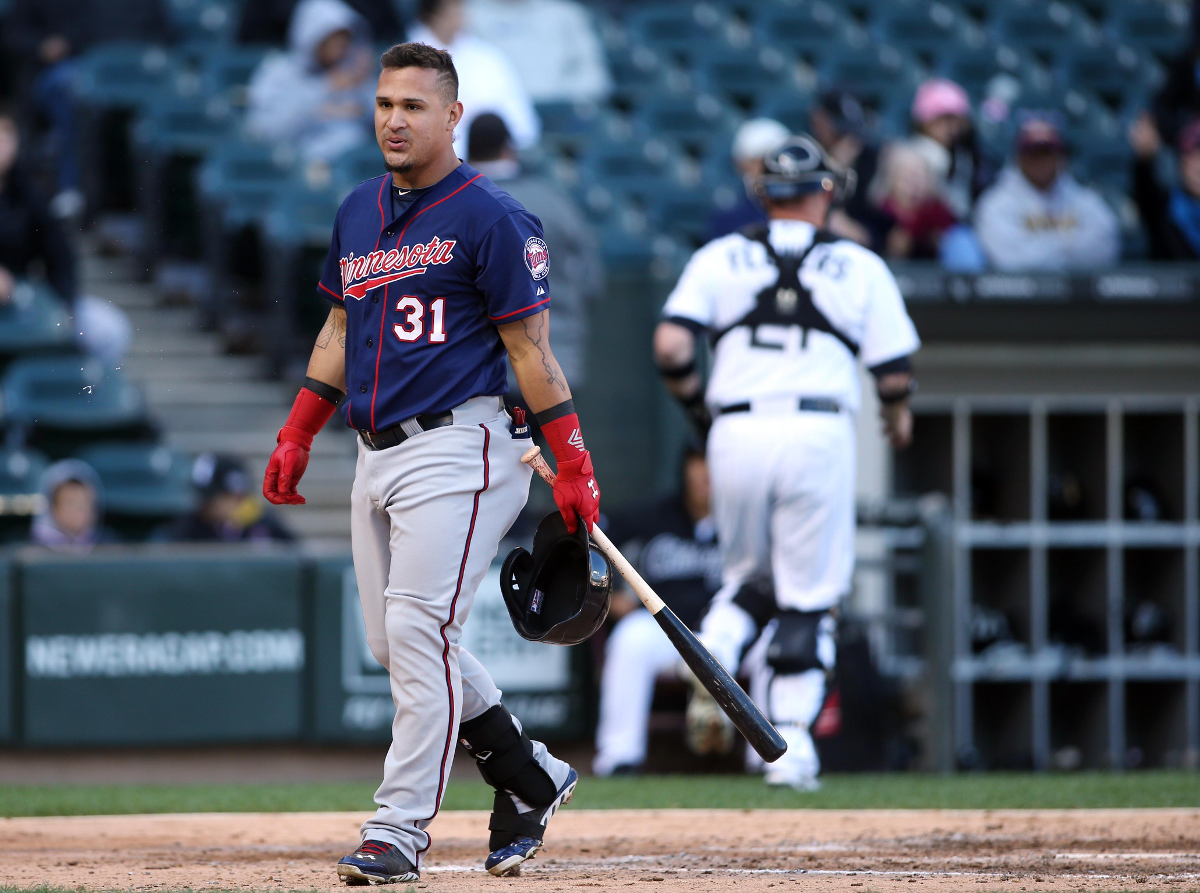 Of course the Twins have players who are not far removed from being where those hitters are now and have come out on the other side in good shape. Third baseman Trevor Plouffe discovered that trying to perform consistently at the major league level was a daunting task as an inexperienced hitter. After scuffling through several stretches of feeling overmatched, Plouffe would piece together a handful of at bats that would feed his confidence. It would be a fleeting feeling as opponents would introduce a new wrinkle that would send him back to the cages searching for answers. “You have to show you can hit the four-spot fastball,” Plouffe said. “Once you do that, then teams start to make adjustments on you. That’s how this game works. As a hitter, you have to make adjustments to counteract those.” The adjustments came easier after multiple seasons with steady playing time. The three-year stretch from 2012 through 2014 provided him with 1,500 plate appearances in which to learn what adjustments he needed to make. Plouffe’s results in that span showed an uptick in power and patience and a slight reduction in walks. Plouffe did not just ground to second or flare one to right, he was able to do more damage last year going the other way than he had in previous seasons. He collected 13 doubles when driving the ball to the opposite field. That, he said, was the result of knowing how pitchers were approaching him. “I know for me they like to show me [fastball] in and then go soft away,” Plouffe explained. “In those big situations where there’s runners on base, last year Bruno and I talked about using that whole field, just take what they give. When you get up there you are going to want to get those runs in no matter what, any way you can. If that means I gotta hit a groundball to second base or I gotta fly one out to right, that’s what I've got to do. Once I got the hang of that it was ‘alright, let’s drive some balls over there’. I think that makes you a more complete hitter.” On the right side of the infield, teammate Brian Dozier experienced a similar learning curve in the majors. His first season with the Twins was an exercise in weak contact and an overeagerness that led to the count often being in the pitcher’s favor. Dozier leaned on the teachings of Brunansky as well as the guys in the clubhouse that had seen it all. “One of the big things, especially coming up, a lot of different guys -- Morneau, Willingham and those guys -- that they could do a lot of good things hitting a fastball in this league,” Dozier said. “Always hunt the fastball.” Dozier, an avid hunter off the field of all types of game, has been quite the marksman with the bat on the field. Over the past two seasons he has compiled a .509 slugging percentage while smacking 32 of his 41 home runs versus the heat. In addition to repeated hard hit balls, Dozier also has increased his zone awareness and getting deeper into the count and drawing more walks as of late. “It might be geared towards pitchers tipping pitches or just knowing what’s coming,” Dozier said about his ability to ambush his opponent at the plate. “That’s another thing: a feel for the game. Knowing what the pitcher is trying do to you. Is he trying to elevate? Is he trying to come inside? Once you figure that out, it makes it a lot easier.” Plouffe and Dozier were once overmatched kids trying to maintain at the majors. Now the lineup is filled with similarly promising talent that is striving for consistency. Oswaldo Arcia is one such talent who has shown flashes of light-tower power interspersed in periods of prolonged droughts. It is early in the 2015 season but the Twins left fielder is leading the league in striking out and faking like he is going to break his bat over his knee. But Brunansky believes the outfielder has made significant improvements to his approach and mechanics that will allow him to avoid those extended pitfalls. “Cleaner. Cleaner is a good word,” Brunansky said of the left-handed power hitter’s current swing. “Any young hitter that comes up and has the ability to be here, there's always kind of movement that goes on that they're going to have to clean up a little bit once they get used to the league and the pace of the league and the league shows them as hitters what they need to do. That's where we are at right now.” When he first arrived barely old enough to enjoy an adult beverage, Arcia displayed impressive power promise. In 2013, he launched 14 home runs including four to the opposite field. It was difficult to not envision a world in which a mature Arcia could mash two or three times that number over a full season. Of course, it didn’t take long for opponents to begin to use his aggressiveness against him. “The first time he came up he was swinging at everything and we talked and worked on cleaning up the zone,” said Brunansky. “I didn't even talk mechanics to him. It was more about pitch awareness. That helped, he did better. And once he got that under control then we went to the next part. We went to the hands that got too low and never got back up in the zone which helped promote the uppercut so now we're trying to clean the bat path.” Dropping his hands played a key role in how teams began to adjust to Arcia. As it became increasingly apparent that the Venezuelan could not handle pitches up in the zone, that became the target for pitchers to exploit. In his first season, Arcia did a lot of his damage in hitter’s counts. Now when pitchers fell behind, they would just go upstairs and avoid his powerful swing. Brunansky said that he did not want to change Arcia’s swing to counter the attack but rather instill the notion that he should simply lay off those pitches. As appetizing as a high fastball looks coming in, Arcia’s game is down in the zone. To correct Brunansky would occasionally flip him a high pitch in their front toss drills. If Arcia chased, the Twins’ hitting coach would remind him that that is not his real zone. Arcia’s ability to perform against left-handed pitching was another deteriorating skill set that needed attention. After hitting a serviceable .254 against the sinister in 2013, he turned in a .198 batting line last year. Brunansky said the issue is pitch awareness. Pitch awareness and the point of contact. “I think his bat path that we see against the left side it is kind of long and he pulls off just because he thinks he's going to hit the ball out here,” Brunansky said while gesturing to an imaginary location well out in front of himself. “And by the time the ball and bat should meet he's long gone.” For a solution, this spring, Brunansky had Arcia do tee work and toss drills while using a fungo bat. The longer and end-loaded bat helped create a better feel for the barrel path for Arcia which Brunansky said he sees as much improved. One of the more frustrating examples of a player unable to break through on the field has been the switch-hitting Aaron Hicks. Over the last few years Brunansky said the pair would drill endlessly during spring training or during practice on things that they felt needed to be fixed. In those conditions, Hicks would appear strong and ready. Once in the game, he would move back into bad habits that they spent so many man-hours to correct. “The first couple years it was inconsistent,” Brunansky said about Hicks’ swing. “He couldn't find and then he'd find it and lose it and then he'd get frustrated. I think he's more mature and he's got an idea both right-handed and left-handed what his swing feels like and what it should feel like -- which should help make it repeatable. Which he has been in the cage. It's just the consistency in the game.” Brunansky believes that they may have finally found something that could give Hicks sustained success: the leg kick. “Hicksy moved his head a lot,” said Brunansky. “What's going to stop your head movement is a strong base. What's a strong base is your legs and core. So you have to get that under control to keep everything strong here which will stop your head from movement.” In a small sample size at Rochester, Hicks has collected six hits so far this year, four of which went for extra bases. It is still too early to tell if the improved swing is paying off for Hicks but the takeaway for Brunansky is that those types of returns help a hitter trust the process and believe in themselves. It may sound cliche but Brunansky and the Twins emphasize trusting the process with their young hitters. And Brunansky will be busy spreading that message. Beyond Arcia and Hicks, the lineup features rookie Kennys Vargas and Danny Santana in his sophomore season. Behind them, Josmil Pinto, Miguel Sano, Eddie Rosario and Byron Buxton. They will come up, fail at some point and that is when it is time to go to work. As Brunansky said, process, process, process.
 -
A 1-5 road trip through Detroit and Chicago have put the Twins firmly in the basement of the AL Central. On this week's NO JUICE PODCAST, Dan Anderson and Parker Hageman discuss what has gone wrong, how to fix it and other observation’s from the first six games. Listen up.They also answer your Twitter questions, get envious of the Minnesota Wild and other things. Listen below, on iTunes or on Stitcher: NO JUICE PODCAST, EPISODE #51: OPENING WEEK IN REVIEW Click here to view the article
-
 They also answer your Twitter questions, get envious of the Minnesota Wild and other things. Listen below, on iTunes or on Stitcher: NO JUICE PODCAST, EPISODE #51: OPENING WEEK IN REVIEW
 -
Article: Twins Drop Ball, Home Opener
Parker Hageman replied to Parker Hageman's topic in Twins Daily Front Page News
He definitely pitched well. He attacked the strike zone and managed to get some big strikeouts. May got shorted a bit by his defense. He needed better. Molitor was right that he was getting hit a bit in the sixth but probably doesn't have the pitch count he did at that point if more plays were made behind him earlier in the game.- 24 replies
-
- 1
-
-
- oswaldo arcia
- royals
- (and 1 more)
-
The Twins’ home opening crowd gathered early in downtown, filling the area’s establishments with a hum that can only come from the exhilaration of skipping a day of responsibility in order to consume the first baseball game of the season in gorgeous weather. Even after several years of ineptitude and 90+ losses, Monday would still bring the first sellout at Target Field since August 2013 and all would be forgiven with a clean slate. Well, as clean as a one-and-five slate can be. Credit the Twins for doing the best they could to distract everyone with the new items around the ballpark. There were new bars, new food offerings, new drink rails, new hooded sweatshirts. But the festivities and feelgoodery would last only until the end of the seventh inning when it became clear that the same old problems exist.A mixture of poor defense, bad bullpen and unproductive chunks of the lineup would sink the Twins for their first home loss in 2015. Before the start of the game, Trevor Plouffe was asked if the team was looking for respite from the steady barrage of elite pitchers like David Price, Anibal Sanchez and Chris Sale. With a 2-for-19 start to his season, no one would fault the Twins’ third baseman for seeking more humane matchups. Plouffe just shook his head. “This is the big leagues and you gotta want to face those guys and if you don’t want to face those guys then you shouldn’t be here. We are also in a tough division for pitching and we have to face them all year.” After striking out in each of his first two at bats against Royals’ starter Danny Duffy, in the bottom of the seventh Plouffe launched Duffy’s 1-1 offering into the left field bleachers to bring the Twins within two. The home run would be his 36th at Target Field - the most by any hitter. Before the game Plouffe acknowledged that the team’s offensive shortcomings but believed there would be a feast at the end of the famine. “We obviously didn’t hit like we wanted to hit the first six games but I think that we’re going to be very capable and score some runs this year. So I don’t think anyone is going to be too worry about the way we started. We’d like to have hit better but we’re not worried about it.” Plouffe’s contribution on Monday would not be nearly enough to help starting pitcher Trevor May, who would pitch well but ultimately be undone by the stomach-turning performance from his defense behind him. In the third, Lorenzo Cain was able to score Salvador Perez on a sacrifice fly which was set up earlier in the inning by several middle infield misplays by Danny Santana and Brian Dozier. In the sixth, Cain doubled to right with Mike Moustakas on base. Cain moved up to third and Moustakas scored when Torii Hunter threw the ball back to the infield to simply no one in particular. In the following at-bat, Cain scored on Eric Hosmer’s deep drive to the spacious left-center field bullpen alley. Twins left fielder Oswaldo Arcia gave chase and covered just enough real estate to have the ball deflect off his glove at the wall. May left the game after 78 pitches and several effective innings with a scattering of a few hard hit balls, including Kendrys Morales’ 405' shot to right-center field. Manager Paul Molitor said he opted to remove him from the game after the Royals’ contact grew louder in the sixth despite the low pitch count. “All the guys behind me earned their way here and deserve to be here and I know everyone’s working and doing everything they can,” May said after the game refusing to place the blame on his teammates in the field. “Sometimes you just need them to hit it a little bit harder or softer.” Following Plouffe’s seventh inning home run, the Twins were within two but a six-run eighth inning put the game firmly out of reach. The inning was punctuated by two hit batsmen, a fumbled grounder by Danny Santana and four Twins pitchers needed to record three outs. When asked whether the defense of the game was concerning to him, Molitor was straightforward. “We just have to play better.” Easier said than done around these parts as the defensive blunders are more of the same for the Twins. Sunday’s matinee in Chicago featured several routine plays fall that general manager Terry Ryan called out during his pregame media session. “We gave them way too many outs. Ironically they didn’t come back and hurt us, the three misses,” Ryan said of Eduardo Nunez, Eduardo Escobar and Kurt Suzuki’s inability to catch pop flies. True, Sunday’s White Sox game mistakes did not hurt but the Royals took their ounce of flesh like good teams do. Continuing the trend of giving away outs -- either because of fielding miscues or because of inferior coverage -- will be painful. The Twins entered Monday’s game as one of the worst teams at turning batted balls into outs. Only the Yankees and the Dodgers have converted fewer balls into outs. Based on a seven game sample, this team has a lot of repairs to make before it will be able to win games consistently. As far as the home opener goes, at least the weather was good. Click here to view the article
-
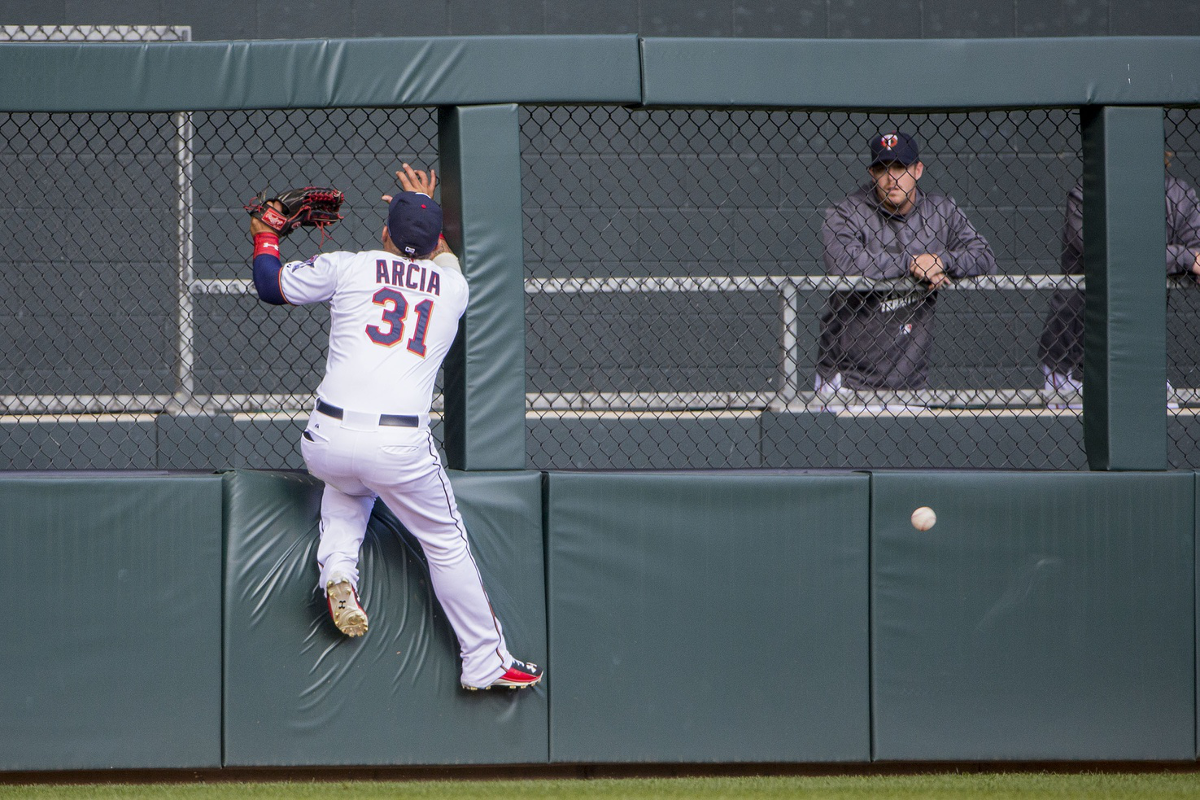 A mixture of poor defense, bad bullpen and unproductive chunks of the lineup would sink the Twins for their first home loss in 2015. Before the start of the game, Trevor Plouffe was asked if the team was looking for respite from the steady barrage of elite pitchers like David Price, Anibal Sanchez and Chris Sale. With a 2-for-19 start to his season, no one would fault the Twins’ third baseman for seeking more humane matchups. Plouffe just shook his head. “This is the big leagues and you gotta want to face those guys and if you don’t want to face those guys then you shouldn’t be here. We are also in a tough division for pitching and we have to face them all year.” After striking out in each of his first two at bats against Royals’ starter Danny Duffy, in the bottom of the seventh Plouffe launched Duffy’s 1-1 offering into the left field bleachers to bring the Twins within two. The home run would be his 36th at Target Field - the most by any hitter. Before the game Plouffe acknowledged that the team’s offensive shortcomings but believed there would be a feast at the end of the famine. “We obviously didn’t hit like we wanted to hit the first six games but I think that we’re going to be very capable and score some runs this year. So I don’t think anyone is going to be too worry about the way we started. We’d like to have hit better but we’re not worried about it.” Plouffe’s contribution on Monday would not be nearly enough to help starting pitcher Trevor May, who would pitch well but ultimately be undone by the stomach-turning performance from his defense behind him. In the third, Lorenzo Cain was able to score Salvador Perez on a sacrifice fly which was set up earlier in the inning by several middle infield misplays by Danny Santana and Brian Dozier. In the sixth, Cain doubled to right with Mike Moustakas on base. Cain moved up to third and Moustakas scored when Torii Hunter threw the ball back to the infield to simply no one in particular. In the following at-bat, Cain scored on Eric Hosmer’s deep drive to the spacious left-center field bullpen alley. Twins left fielder Oswaldo Arcia gave chase and covered just enough real estate to have the ball deflect off his glove at the wall. May left the game after 78 pitches and several effective innings with a scattering of a few hard hit balls, including Kendrys Morales’ 405' shot to right-center field. Manager Paul Molitor said he opted to remove him from the game after the Royals’ contact grew louder in the sixth despite the low pitch count. “All the guys behind me earned their way here and deserve to be here and I know everyone’s working and doing everything they can,” May said after the game refusing to place the blame on his teammates in the field. “Sometimes you just need them to hit it a little bit harder or softer.” Following Plouffe’s seventh inning home run, the Twins were within two but a six-run eighth inning put the game firmly out of reach. The inning was punctuated by two hit batsmen, a fumbled grounder by Danny Santana and four Twins pitchers needed to record three outs. When asked whether the defense of the game was concerning to him, Molitor was straightforward. “We just have to play better.” Easier said than done around these parts as the defensive blunders are more of the same for the Twins. Sunday’s matinee in Chicago featured several routine plays fall that general manager Terry Ryan called out during his pregame media session. “We gave them way too many outs. Ironically they didn’t come back and hurt us, the three misses,” Ryan said of Eduardo Nunez, Eduardo Escobar and Kurt Suzuki’s inability to catch pop flies. True, Sunday’s White Sox game mistakes did not hurt but the Royals took their ounce of flesh like good teams do. Continuing the trend of giving away outs -- either because of fielding miscues or because of inferior coverage -- will be painful. The Twins entered Monday’s game as one of the worst teams at turning batted balls into outs. Only the Yankees and the Dodgers have converted fewer balls into outs. Based on a seven game sample, this team has a lot of repairs to make before it will be able to win games consistently. As far as the home opener goes, at least the weather was good.
 -
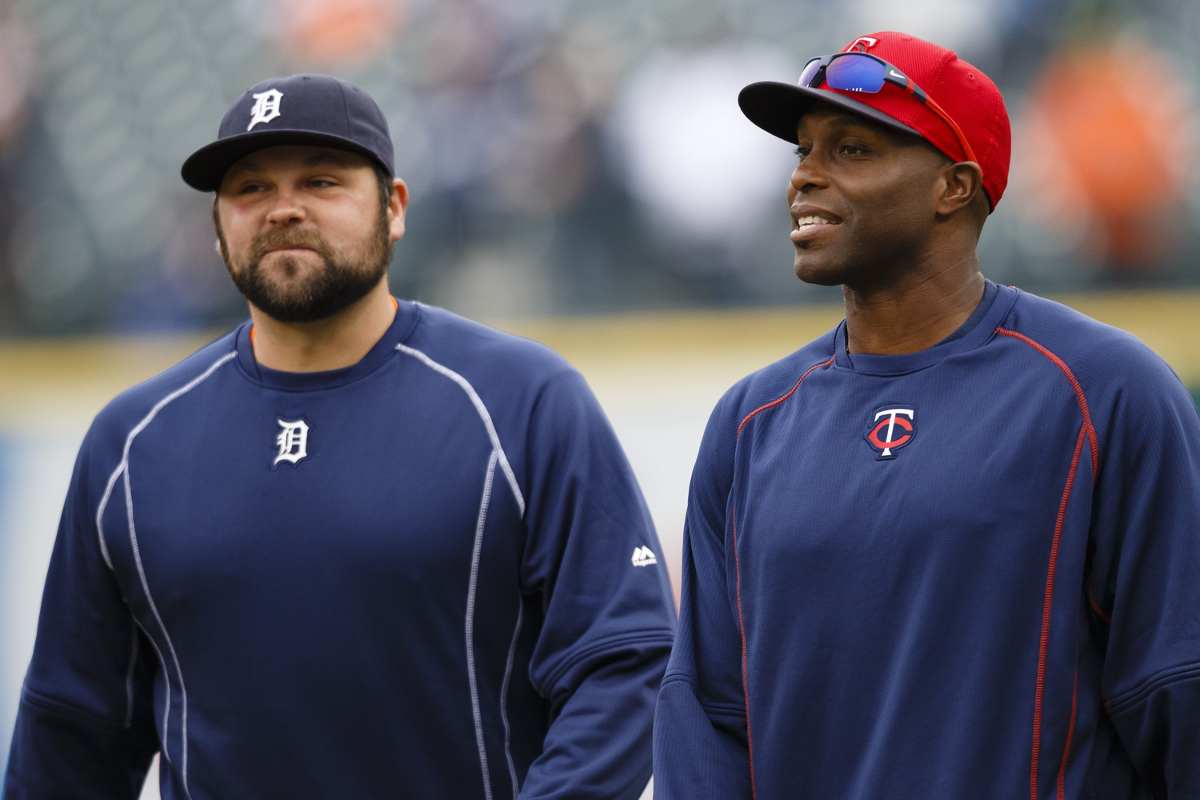 As he nears the end of his second decade in baseball, what has allowed him to continue to be a viable contributor has been his unquenchable and relentless work ethic. “Me hitting is just a lot of heel pain,” Hunter explains as the reason that at his age he is able to keep pace and evolve in an young man’s game. Endless amounts of work with the bat in his hands. Tee work. Front toss. Pitching machines. Batting practice. Hunter says he goes through this routine until something is bleeding. When he’s not swinging lumber, he is visualizing his at-bats. In discussing what has allowed him to remain relevant at the plate for almost 20 years while the game has chewed up and spit out countless other talented athletes, Hunter sounds like one part hitting coach, one part life coach. “I just kind of know what guys are trying to do to me. I make adjustments a lot quicker than I did when I was younger of course. You can say that in life as well. In baseball, if you don’t make adjustments, you don’t succeed. Just like in life: If you don’t make adjustments in life, you don’t succeed.” Sure, it is an oversimplified look at the game (and life) -- make adjustments and you will succeed -- but a glance at the Twins lineup will show several young hitters who need to follow that instruction. Of course, it is not that simple. Players in the early stages of their career can be told to make adjustments but they lack the experience to understand how -- like a soldier who hasn’t seen combat. Meanwhile, Hunter’s been in the trenches for years now. “I was that type of guy that couldn’t have a weakness,” he confesses, sounding dangerously close to an applicant spouting a cliche in a job interview. “If I had a weakness on a slider away I’m going to work on it so much that I can take that weakness and make it a strength.” Had it really become a strength or was it rhetoric? Since 2009 Hunter has hit .352 as a right-hander on sliders from same-sided pitchers down and away in the strike zone. The rest of MLB’s righties hit just .238 on those types of pitches. Only Hanley Ramirez (.379) and Vladimir Guerrero (.353) fared better. Whether the success was a product of hard work or a conveniently shared statistic, either way, if you leave a slider at the bottom of the zone, Hunter will figure out how to turn it into a hit. The reason he worked so hard at improving that aspect of the game is because that is where pitchers were attacking him when he first came up in Minnesota. His free-swinging tendencies earlier in his career created a hole that he set out to close. More heel pain from repetition in the cages. Over the course of his career, Hunter has seen an ebb and flow of different strategies from opposing teams. One time it might be an abundance of breaking balls or another might be fastballs inside. Three years ago pitchers would try to throw breaking balls down and away, which Hunter said he solved by driving them to the opposite field. “They were pitching me away in 2012 and 2013 and I just shot the ball the other way. I had to go where they were pitching me and then I saw they were started pitching me in, I made the adjustment as well.” In those two years Hunter accumulated 102 hits when going the other way. In 2013 his 57 hits tied him with Joe Mauer for the ninth most opposite field hits. As pitchers began to throw him inside more again last season, Hunter's rate for driving the ball to right field dropped too. Does he have a sense for how pitchers might approach him this coming season? "This year I don’t know. I don’t know where they are going to pitch me or what style they are going to pitch me, might get more off-speeds because I think I’m gonna hit fourth and fifth and maybe sixth sometimes so you get in those power positions, you are going to get more off-speeds so I might have to go the other way.” With a younger player, the response might have ended at "I don't know”. Hunter doesn't know but that's because he knows the circumstances change depending on the situation. It’s much more complicated than that. "There’s a lot more to baseball than just hitting. You have to know what is going on, what count, what inning, who’s on the mound, who’s on base for you, is it a speed guy or is it a slow guy -- if it is a slow guy you are going to get more off-speed, if it is a speed guy you are going to get a little more fastballs. Who’s hitting behind you, is it a lefty or righty or is it Miguel [Cabrera] or [Albert] Pujols or whoever it is. There’s a lot into the game and you just gotta know that and that’s being a good student of the game." Hunter begins to tread into the territory of lineup protection, a notion that statisticians and the analytically inclined suggest has little effect on the outcome. From the Baseball Prospectus book Baseball Inside The Numbers, former BP writer and current member of the Rays organization James Click said that “there's no evidence that having a superior batter behind another batter provides the initial batter with better pitches to hit; if it does, those batters see no improvement as a result.” Hunter says his experience tells him that effect exists. Hitting ahead of Pujols or Cabrera has given him the opportunity to see better pitches compared to the times when an unproven player follows him. For Hunter this season, if he does hit fourth, fifth or sixth, there is a strong likelihood that he could be batting ahead of some powerful yet unpolished hitters like Oswaldo Arcia and Kennys Vargas or possibly lighter hitters like Eduardo Nunez or Kurt Suzuki. “In the end, I could hit you out as well so if it’s a guy who is hitting behind me who really is not a power threat or just getting to the big leagues and hasn’t proven himself yet, they are going to pitch more around [me] and try to get me to chase,” Hunter explains. “And if they walk me and it’s like ‘alright I’ll go for the guy who hasn’t done anything yet’. Of course if it is a guy hitting behind me and he’s hitting for power and he’s done some great things in the game, now he has to be careful to both of us and he has to throw strikes and he has to go after me before he goes after this guy who is proven as well. So it makes a big difference.” Hunter has witnessed his walk rate drop over the last several seasons, going from near 10% in 2011 to 7% in 2012 to 4% in 2013 and finally 3% last year. Did he feel like he chased more? Pressed because he was in the middle of a potent lineup? Just felt that he had to swing to drive in runs? Hunter had a perfectly good explanation for why he rejected free passes. “My walks went down because of hitting second,” he says. “I think in any lineup you hit second they are coming after you. They don’t want to get to the three-four-five guy I don’t care who it is, they are going to go after that guy -- the number one and number two guy. So I’ve been hitting second since 2012, so of course my walks go down because I’ve got [Mike] Trout at first base who is going to steal so they gotta try to throw a fastball so they can try to throw him out. Then I had Austin Jackson who’s at first base, he’s a base-stealer, gotta throw a fastball to try to get him out. All plays a part of it.” Hunter’s “you gotta swing” attitude seemingly flies in the face of what the analytics community wants to see out of a two-spot. That particular spot in the lineup has morphed from a light-hitting player who was focused on moving runners over to one who needs to occupy the base behind the leadoff guy. As far as an on-base threat goes, Hunter has compiled a .339 OBP from the two-spot which ranked 50th among 86 total two-hitters with a minimum of 1000 plate appearances since 2000. Hunter has also walked just 66 times (79th out of 86) which pales in comparison to Nick Swisher who drew 239 walks in just 400 more plate appearance in that time. But Hunter approaches that spot with a run-producer’s mindset. He has registered just four sac bunts. Mentally, he says that if pitchers are peppering the zone in order to avoid putting more runners on for the heart of the order, he will take advantage. His .304 batting average was the seventh highest in that group and his .460 slugging percentage was the 14th highest showing that he can provide punch. Where the rest of the game has seen its strikeout rates increase as velocity has climbed and the strike zone has expanded, over the last two years Hunter has seen his strikeout rate dip. Again, he attributes this phenomenon to hitting at the top of the order rather than at the middle of it where he was swinging with lethal intent. “Even before I got to the two-hole with the Twins and all that, the reason why I had more strikeouts is because I was hitting fourth, I was hitting fifth. I had to supply power. All your guys that hit for power they have high strikeouts -- except for Barry Bonds, he’s a different animal. Jim Thome, [Ken] Griffey, Ryan Howard, [Giancarlo] Stanton, I don’t care who it is, if you hit for power you are going to strike out.” Based on what Hunter sees from his approach by batting order position as well as the hitters surrounding him, the 2015 season might be an interesting mix of power and strikeouts. With manager Paul Molitor’s desire to have Hunter hit cleanup, frequently combined with the probability of having a less than polished hitter like Vargas batting behind him (as he was on Opening Day), then the natural conclusion is that Hunter will try to supply more power but have a higher number of strikeouts as pitchers go after him with off-speed stuff without the fear of having to face Cabrera or Pujols. Would Hunter rather be the two-hitter or does he have a preference for driving in runs and letting it fly? “Doesn’t matter. At this stage, I don’t care. Especially over here with Paul Molitor, I told Paul even before I got here I said wherever you need me, I’m there. Because I’ve hit everywhere. I’ve hit leadoff early in my career. I’ve hit second the last three years and had great results, hitting .300 in the two-hole since 2012. I’ve hit third, I’ve hit fourth, I’ve hit fifth. I’ve been a power guy for a whole lineup, I’ve been that guy that wasn’t just a power guy that was the guy who would try to control the game hitting second. It doesn’t matter. I can make adjustments in any position.” Hunter finishes his thought and pauses. He then flashes his trademark smile. “Wherever I am as long as it isn’t lower than sixth.”
 -
The Twins season kicks off this week and is already a glorious mess. On this week's No Juice Podcast Dan Anderson and Parker Hageman discuss the final 25-man roster, Ervin Santana's suspension and the subsequent moves, and adjust their expectations for the season. Listen up.Other topics include Wisconsin sports success, a new Indoor Football League team in Minnesota and more. Listen below, on iTunes or on Stitcher: NO JUICE PODCAST, EPISODE #50: 2015 TWINS SEASON PREVIEW Click here to view the article
-
 Other topics include Wisconsin sports success, a new Indoor Football League team in Minnesota and more. Listen below, on iTunes or on Stitcher: NO JUICE PODCAST, EPISODE #50: 2015 TWINS SEASON PREVIEW
 -
When it comes to hitting, Torii Hunter is less a student of the game and more of a scholar. At 39 years old, whether he wants to admit it or not, Hunter has slowed a few steps in the outfield. Advanced fielding metrics have pointed out that he is no longer able to chase down fly balls like he once did. But that's not the reason the Twins signed him. They were most interested in his offense. During batting practice, if he is not honing his own swing he’s lobbing observations and tips to other hitters. He is pulling teammates aside and showing them a better bat plane, a more efficient hand path, a way to open their hips on an inside pitch and more suggestions. He will grab a young player and head to the cages for numerous tee swings, hop to impart some wisdom that will help make the player’s swing better.As he nears the end of his second decade in baseball, what has allowed him to continue to be a viable contributor has been his unquenchable and relentless work ethic. “Me hitting is just a lot of heel pain,” Hunter explains as the reason that at his age he is able to keep pace and evolve in an young man’s game. Endless amounts of work with the bat in his hands. Tee work. Front toss. Pitching machines. Batting practice. Hunter says he goes through this routine until something is bleeding. When he’s not swinging lumber, he is visualizing his at-bats. In discussing what has allowed him to remain relevant at the plate for almost 20 years while the game has chewed up and spit out countless other talented athletes, Hunter sounds like one part hitting coach, one part life coach. “I just kind of know what guys are trying to do to me. I make adjustments a lot quicker than I did when I was younger of course. You can say that in life as well. In baseball, if you don’t make adjustments, you don’t succeed. Just like in life: If you don’t make adjustments in life, you don’t succeed.” Sure, it is an oversimplified look at the game (and life) -- make adjustments and you will succeed -- but a glance at the Twins lineup will show several young hitters who need to follow that instruction. Of course, it is not that simple. Players in the early stages of their career can be told to make adjustments but they lack the experience to understand how -- like a soldier who hasn’t seen combat. Meanwhile, Hunter’s been in the trenches for years now. “I was that type of guy that couldn’t have a weakness,” he confesses, sounding dangerously close to an applicant spouting a cliche in a job interview. “If I had a weakness on a slider away I’m going to work on it so much that I can take that weakness and make it a strength.” Had it really become a strength or was it rhetoric? Since 2009 Hunter has hit .352 as a right-hander on sliders from same-sided pitchers down and away in the strike zone. The rest of MLB’s righties hit just .238 on those types of pitches. Only Hanley Ramirez (.379) and Vladimir Guerrero (.353) fared better. Whether the success was a product of hard work or a conveniently shared statistic, either way, if you leave a slider at the bottom of the zone, Hunter will figure out how to turn it into a hit. Download attachment: strike-zone.png The reason he worked so hard at improving that aspect of the game is because that is where pitchers were attacking him when he first came up in Minnesota. His free-swinging tendencies earlier in his career created a hole that he set out to close. More heel pain from repetition in the cages. Over the course of his career, Hunter has seen an ebb and flow of different strategies from opposing teams. One time it might be an abundance of breaking balls or another might be fastballs inside. Three years ago pitchers would try to throw breaking balls down and away, which Hunter said he solved by driving them to the opposite field. “They were pitching me away in 2012 and 2013 and I just shot the ball the other way. I had to go where they were pitching me and then I saw they were started pitching me in, I made the adjustment as well.” In those two years Hunter accumulated 102 hits when going the other way. In 2013 his 57 hits tied him with Joe Mauer for the ninth most opposite field hits. As pitchers began to throw him inside more again last season, Hunter's rate for driving the ball to right field dropped too. Does he have a sense for how pitchers might approach him this coming season? "This year I don’t know. I don’t know where they are going to pitch me or what style they are going to pitch me, might get more off-speeds because I think I’m gonna hit fourth and fifth and maybe sixth sometimes so you get in those power positions, you are going to get more off-speeds so I might have to go the other way.” With a younger player, the response might have ended at "I don't know”. Hunter doesn't know but that's because he knows the circumstances change depending on the situation. It’s much more complicated than that. "There’s a lot more to baseball than just hitting. You have to know what is going on, what count, what inning, who’s on the mound, who’s on base for you, is it a speed guy or is it a slow guy -- if it is a slow guy you are going to get more off-speed, if it is a speed guy you are going to get a little more fastballs. Who’s hitting behind you, is it a lefty or righty or is it Miguel [Cabrera] or [Albert] Pujols or whoever it is. There’s a lot into the game and you just gotta know that and that’s being a good student of the game." Hunter begins to tread into the territory of lineup protection, a notion that statisticians and the analytically inclined suggest has little effect on the outcome. From the Baseball Prospectus book Baseball Inside The Numbers, former BP writer and current member of the Rays organization James Click said that “there's no evidence that having a superior batter behind another batter provides the initial batter with better pitches to hit; if it does, those batters see no improvement as a result.” Hunter says his experience tells him that effect exists. Hitting ahead of Pujols or Cabrera has given him the opportunity to see better pitches compared to the times when an unproven player follows him. For Hunter this season, if he does hit fourth, fifth or sixth, there is a strong likelihood that he could be batting ahead of some powerful yet unpolished hitters like Oswaldo Arcia and Kennys Vargas or possibly lighter hitters like Eduardo Nunez or Kurt Suzuki. “In the end, I could hit you out as well so if it’s a guy who is hitting behind me who really is not a power threat or just getting to the big leagues and hasn’t proven himself yet, they are going to pitch more around [me] and try to get me to chase,” Hunter explains. “And if they walk me and it’s like ‘alright I’ll go for the guy who hasn’t done anything yet’. Of course if it is a guy hitting behind me and he’s hitting for power and he’s done some great things in the game, now he has to be careful to both of us and he has to throw strikes and he has to go after me before he goes after this guy who is proven as well. So it makes a big difference.” Download attachment: USATSI_7245561_154617946_lowres.jpg Hunter has witnessed his walk rate drop over the last several seasons, going from near 10% in 2011 to 7% in 2012 to 4% in 2013 and finally 3% last year. Did he feel like he chased more? Pressed because he was in the middle of a potent lineup? Just felt that he had to swing to drive in runs? Hunter had a perfectly good explanation for why he rejected free passes. “My walks went down because of hitting second,” he says. “I think in any lineup you hit second they are coming after you. They don’t want to get to the three-four-five guy I don’t care who it is, they are going to go after that guy -- the number one and number two guy. So I’ve been hitting second since 2012, so of course my walks go down because I’ve got [Mike] Trout at first base who is going to steal so they gotta try to throw a fastball so they can try to throw him out. Then I had Austin Jackson who’s at first base, he’s a base-stealer, gotta throw a fastball to try to get him out. All plays a part of it.” Hunter’s “you gotta swing” attitude seemingly flies in the face of what the analytics community wants to see out of a two-spot. That particular spot in the lineup has morphed from a light-hitting player who was focused on moving runners over to one who needs to occupy the base behind the leadoff guy. As far as an on-base threat goes, Hunter has compiled a .339 OBP from the two-spot which ranked 50th among 86 total two-hitters with a minimum of 1000 plate appearances since 2000. Hunter has also walked just 66 times (79th out of 86) which pales in comparison to Nick Swisher who drew 239 walks in just 400 more plate appearance in that time. But Hunter approaches that spot with a run-producer’s mindset. He has registered just four sac bunts. Mentally, he says that if pitchers are peppering the zone in order to avoid putting more runners on for the heart of the order, he will take advantage. His .304 batting average was the seventh highest in that group and his .460 slugging percentage was the 14th highest showing that he can provide punch. Where the rest of the game has seen its strikeout rates increase as velocity has climbed and the strike zone has expanded, over the last two years Hunter has seen his strikeout rate dip. Again, he attributes this phenomenon to hitting at the top of the order rather than at the middle of it where he was swinging with lethal intent. “Even before I got to the two-hole with the Twins and all that, the reason why I had more strikeouts is because I was hitting fourth, I was hitting fifth. I had to supply power. All your guys that hit for power they have high strikeouts -- except for Barry Bonds, he’s a different animal. Jim Thome, [Ken] Griffey, Ryan Howard, [Giancarlo] Stanton, I don’t care who it is, if you hit for power you are going to strike out.” Based on what Hunter sees from his approach by batting order position as well as the hitters surrounding him, the 2015 season might be an interesting mix of power and strikeouts. With manager Paul Molitor’s desire to have Hunter hit cleanup, frequently combined with the probability of having a less than polished hitter like Vargas batting behind him (as he was on Opening Day), then the natural conclusion is that Hunter will try to supply more power but have a higher number of strikeouts as pitchers go after him with off-speed stuff without the fear of having to face Cabrera or Pujols. Would Hunter rather be the two-hitter or does he have a preference for driving in runs and letting it fly? “Doesn’t matter. At this stage, I don’t care. Especially over here with Paul Molitor, I told Paul even before I got here I said wherever you need me, I’m there. Because I’ve hit everywhere. I’ve hit leadoff early in my career. I’ve hit second the last three years and had great results, hitting .300 in the two-hole since 2012. I’ve hit third, I’ve hit fourth, I’ve hit fifth. I’ve been a power guy for a whole lineup, I’ve been that guy that wasn’t just a power guy that was the guy who would try to control the game hitting second. It doesn’t matter. I can make adjustments in any position.” Hunter finishes his thought and pauses. He then flashes his trademark smile. “Wherever I am as long as it isn’t lower than sixth.” Click here to view the article
-
With just days to go before the 2015 regular season, the Minnesota Twins’ rotation took a huge blow on Saturday when Major League Baseball announced that starting pitcher Ervin Santana had violated the Joint Drug Prevention and Treatment Program policy and will be suspended for 80 games.In the Twins official statement, the team says they “were disappointed to learn of the suspension” but supports MLB efforts in ridding the game of the banned substances and will not comment further on the matter. Santana released a response as well saying “I am frustrated that I can't pinpoint how the substance in question entered my body” and “I will be more vigilant of medications I take so that I don't commit another mistake”. Reports says that Santana tested positive for Stanozolol (also known as Winstrol), an anabolic steroid. The drug has a reputation for aiding in the recovery process while avoiding adding bulk which is why it has been associated with pitchers. Just this year relievers Arodys Vizcaino and David Rollins and now Santana have tested positive for the drug. Still, stanozolol has been considered one of the more easily traceable performance enhancing drugs said ESPN. According to medical experts, the drug had no known masking agents as of 2005 and can linger in the system for several week to a month to allow for detection and needs six to eight weeks of use to have a benefit to the athlete. READ: Twins And Ervin Santana Agree On A Four-Year Deal The Twins signed Santana in December to a four-year, $55 million contract which required forfeiting a second round draft pick in order to do so. Minnesota announces that left-handed reliever Aaron Thompson will be recalled to the roster and Mike Pelfrey will return to the starting rotation in Santana’s place. Click here to view the article
-
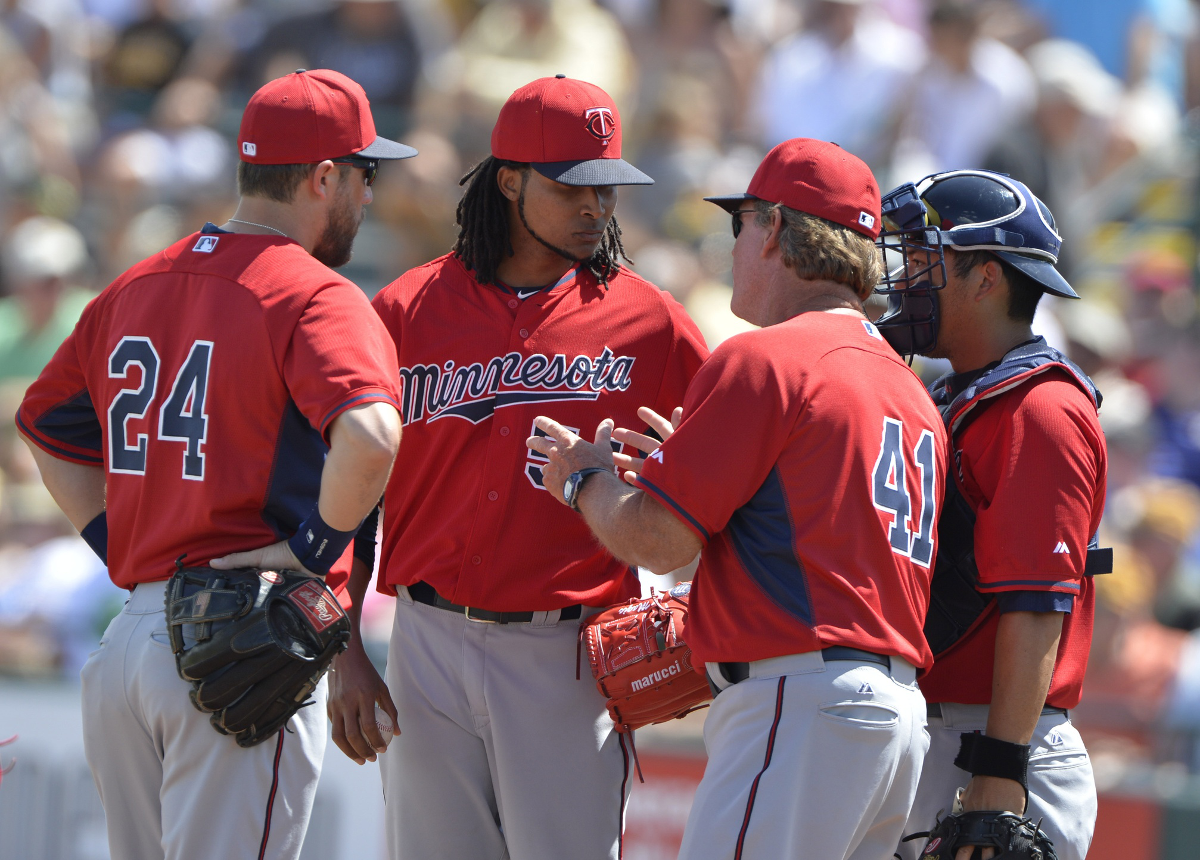 In the Twins official statement, the team says they “were disappointed to learn of the suspension” but supports MLB efforts in ridding the game of the banned substances and will not comment further on the matter. Santana released a response as well saying “I am frustrated that I can't pinpoint how the substance in question entered my body” and “I will be more vigilant of medications I take so that I don't commit another mistake”. Reports says that Santana tested positive for Stanozolol (also known as Winstrol), an anabolic steroid. The drug has a reputation for aiding in the recovery process while avoiding adding bulk which is why it has been associated with pitchers. Just this year relievers Arodys Vizcaino and David Rollins and now Santana have tested positive for the drug. Still, stanozolol has been considered one of the more easily traceable performance enhancing drugs said ESPN. According to medical experts, the drug had no known masking agents as of 2005 and can linger in the system for several week to a month to allow for detection and needs six to eight weeks of use to have a benefit to the athlete. READ: Twins And Ervin Santana Agree On A Four-Year Deal The Twins signed Santana in December to a four-year, $55 million contract which required forfeiting a second round draft pick in order to do so. Minnesota announces that left-handed reliever Aaron Thompson will be recalled to the roster and Mike Pelfrey will return to the starting rotation in Santana’s place.
 -
Article: Glen Perkins Looking To Move On
Parker Hageman replied to Parker Hageman's topic in Twins Daily Front Page News
RE: Trading Perkins The reason this hasn't happened or won't happen in the near future is 1. The Twins have made it clear they don't want to sign long-term contracts and flip the player. This is why Willingham was not traded after year one. For whatever reason, they do not want to treat players like commodities. 2. The Twins are often overly optimistic about their chances of being competitive. If you think you are close to competing, you would need a closer. Frankly I don't see it happening unless Perkins eventually asks for a trade. And even then because of his contract which states his last year becomes an option if traded (he could lose money) and playing in his backyard, I don't see that happening. -
Article: Glen Perkins Looking To Move On
Parker Hageman replied to Parker Hageman's topic in Twins Daily Front Page News
"Parker, you old clickbaitin' so and so."
