



Parker Hageman
-
Posts
4,152 -
Joined
-
Last visited
-
Days Won
6
Content Type
Profiles
News
Minnesota Twins Videos
2026 Minnesota Twins Top Prospects Ranking
2022 Minnesota Twins Draft Picks
Minnesota Twins Free Agent & Trade Rumors, Notes, & Tidbits
Guides & Resources
2023 Minnesota Twins Draft Picks
The Minnesota Twins Players Project
2024 Minnesota Twins Draft Picks
2025 Minnesota Twins Draft Pick Tracker
2026 Minnesota Twins Draft Tracker: Picks & Bonuses
Forums
Blogs
Events
Store
Downloads
Gallery
Everything posted by Parker Hageman
-
 http://sports.cbsimg.net/images//visual/whatshot/gardy-hicks2.gif
 -
Not that I am aware of.
-
Article: Is The Rotation Turning Around?
Parker Hageman replied to Nick Nelson's topic in Twins Daily Front Page News
Pointed this out on the last No Juice Podcast: Will they regress? Sure, to some extent. You can't keep putting runners on base without allowing some run eventually. Now, the caveat as Nick pointed out is whether they can continue to avoid surrendering hard contact -- the home runs, the extra base hits -- with those runners on base. -
Overall, I don't think he was as resistant to change as most people believe, it still took until the point of having multiple 90-loss seasons before playing the percentages in this case. Not that it would have changed the outcome of those seasons or his ultimate dismissal but I wouldn't consider him a champion of change.
-
When Paul Molitor joined the Minnesota Twins’ coaching staff in 2014, one of his biggest initiatives was to add a robust shift program for the defense. With experience at all the infield positions over his career, Molitor recognized the advantage gained by stacking his fielders. “He’s really big on shifts,” Brian Dozier said when asked about Molitor's penchant to play the odds. “He loves shifting. And it’s a part of the game now, you see it more than ever in the history of the game. I don’t know if a lot of people like it, dislike it, whatever it is, but Molly loves shifting and we’ve bought into that and especially this so you’re going to see a lot of different shifts.”In reality, the Twins were well behind the curve when it came to the use of the shift. As far back as 2004, Baseball Info Solutions was offering packages to teams to help them align their infields in shifts. Most organizations found it difficult to eschew tradition. It wasn’t until about 2009 that the Tampa Bay Rays began to see the value. More and more other teams joined the Rays. It took until 2014 for the Twins to throw their hats in the ring. With Molitor now in charge of the entire on-field operation, the question was raised if he would have time to focus on that aspect of the game as he did so well as a coach last year. After all, the Twins’ analytics team lauded Molitor for using both the available data and video necessary to implement a strategy that would include the use of defensive shifts. Overnight, the Twins went from using the three-man infield shift 31 times in 2013 to 327 times in 2014. Now the responsibility for positioning players in the field would be handed to third base coach Gene Glynn. Glynn is the person in the dugout charged with routing and re-routing his fielders. Sometime it is shading a bit here, bringing the outfield in or sending Trevor Plouffe on a short jog to the other side of the infield world. He is the guy at the pre-game and pre-series meetings reviewing the charts, data and scouting reports in order to help concoct a defensive game plan. Now in his 11th season as a third base coach, Glynn spent several years as a pro scout in the Rays organization during the height of their Extra 2% craze. Perhaps it was experience within an analytic-influenced organization that helped convince him of the benefits of playing the percentages but when Glynn took charge as manager of the Rochester Red Wings, he brought with him the tendency to employ the shift. It is a bold move, to be sure. Information on players in the minor leagues is often lacking. Some players have an extended stay but others make a brief appearance and are on to other teams or other leagues. Procuring the proper data is a challenge. “Mostly it was information done on the scouting reports that came through the office of the Twins. Then they did a lot of work to get us that information,” Glynn said of the distribution of knowledge. In addition to the flow coming from the front office, Glynn and his staff would keep diligent spray charts on the league’s players. If an opposing player happened to be still with the team on the next meeting, they would incorporate those findings and move their infielders accordingly. This is a more recent phenomenon in the Twins organization. When Dozier was ascending the system as a shortstop, he did not have any experience in the overshift situation. “When I was coming up we never shifted,” said Dozier. “We would shade guys. Step-pull, two steps pull, that kind of stuff. But as far as shifting we never did that.” Part of the reason was the parent club's long-time lack of interest. The other part is simply the archaic data available. Deciding to shift without the proper data is like choosing to hit on an 18 because you like the song that is playing in the casino. “We didn't have the statistical information or graphs that come out on where guys hit balls off righties or lefties or in two-strike situations,” Glynn said. Some of the decision to move guys around came from some gut modeling, Glynn admits, but even the basic data can help reveal a lot about a hitter. That, and truths he learned over a lifetime in the game. “If you are a pull hitter, you are pretty much a pull hitter. And you live with the one or two that they happen to spray that way because they are late or the velocity is greater with some pitchers but again, we try to make that adjustment because we have that knowledge.” Whereas the next generation of Twins infielders will have been exposed to the shift alignment at the minor league levels, the current crop of infielders had to get used to the new positioning in the majors. Was that a difficult task? Third baseman Trevor Plouffe just smiles when he thinks about his responsibility on the overshift plays. “You got a lot of time,” he said with the inflection of a man who appreciates the reprieve from ground rockets hit his direction less than ninety feet away from a batter. “So that’s a position where when I am over there just smother the ball and throw to first base.” But even as the Twins ramped up their use of the big shifts in 2014 -- using the three-man infield for 327 match-ups -- Plouffe said he never got to smother a single ball in live-game action. That changed earlier this season when the first ball came his direction at Target Field as he stood on the right side of the second base bag. The former middle infielder handled the play flawlessly. Several feet to his right and positioned midway between the infield and the right fielder is the usual spot for second baseman Brian Dozier. Of all the shift configurations, the second baseman may have to play the most out of position. Rather than grass infield-dirt, the batted ball now travels grass infield-dirt-grass outfield before it reaches the player. That’s just one more layer of things to go wrong. Plus, you have to make a throw from shallow right. http://i.imgur.com/llCnvXW.gif “The toughest thing for me is obviously you see a lot with big lefties and stuff and I’m back in shallow right field sometimes and your exact positioning is not always perfect but obviously we do it, everyone does it to get a better percentage.” There are plenty of other challenges to get used to when shifting, like responsibilities when there are runners on the bases. “I don't think everything is concrete when it comes to the shift,” Glynn said of the different roles of the infielders. “It's a team effort, really, some assignments might change. Is the catcher going to cover third when the shortstop goes or the third baseman help turn the double play with the ball hit to him but he's up the middle now.” “One of the main things is when you are shifting is ‘know your runner’,” said Dozier. “How much time. You see me, you take double play depth you are supposed to play in and over and closer to the bag. But if Victor Martinez is up I’m almost 90 feet from the bag. That means I don’t have coverage.” It takes some getting used to, said Dozier, but he has bought in to the strategy. However, as a guy who considers himself anti-sabermetrics, he acknowledges that the human element sometimes has to trump what the numbers say. “You gotta have a feel for the game,” Dozier said. “If we’re playing Big Papi in right -- I’m playing him in shallow right -- but I see he has slow hands on the day, you gotta go against odds and you gotta have feel for the game where I’m not going to play him deep.” Download attachment: Twins And Shift.png The Twins have now shifted 107 times in 31 games and are on pace to obliterate last year’s useage. Has it worked? In the early going, the shifting has led to a slightly lower batting average on balls compared to the rest of the teams. On the notion that the aggressive shifting is able saving a single, Glynn summarized the team’s position on the matter in a refreshing way. “If can give us an edge of saving even one hit, it's important. I'm all in when it comes to information like that.” Click here to view the article
-
 In reality, the Twins were well behind the curve when it came to the use of the shift. As far back as 2004, Baseball Info Solutions was offering packages to teams to help them align their infields in shifts. Most organizations found it difficult to eschew tradition. It wasn’t until about 2009 that the Tampa Bay Rays began to see the value. More and more other teams joined the Rays. It took until 2014 for the Twins to throw their hats in the ring. With Molitor now in charge of the entire on-field operation, the question was raised if he would have time to focus on that aspect of the game as he did so well as a coach last year. After all, the Twins’ analytics team lauded Molitor for using both the available data and video necessary to implement a strategy that would include the use of defensive shifts. Overnight, the Twins went from using the three-man infield shift 31 times in 2013 to 327 times in 2014. Now the responsibility for positioning players in the field would be handed to third base coach Gene Glynn. Glynn is the person in the dugout charged with routing and re-routing his fielders. Sometime it is shading a bit here, bringing the outfield in or sending Trevor Plouffe on a short jog to the other side of the infield world. He is the guy at the pre-game and pre-series meetings reviewing the charts, data and scouting reports in order to help concoct a defensive game plan. Now in his 11th season as a third base coach, Glynn spent several years as a pro scout in the Rays organization during the height of their Extra 2% craze. Perhaps it was experience within an analytic-influenced organization that helped convince him of the benefits of playing the percentages but when Glynn took charge as manager of the Rochester Red Wings, he brought with him the tendency to employ the shift. It is a bold move, to be sure. Information on players in the minor leagues is often lacking. Some players have an extended stay but others make a brief appearance and are on to other teams or other leagues. Procuring the proper data is a challenge. “Mostly it was information done on the scouting reports that came through the office of the Twins. Then they did a lot of work to get us that information,” Glynn said of the distribution of knowledge. In addition to the flow coming from the front office, Glynn and his staff would keep diligent spray charts on the league’s players. If an opposing player happened to be still with the team on the next meeting, they would incorporate those findings and move their infielders accordingly. This is a more recent phenomenon in the Twins organization. When Dozier was ascending the system as a shortstop, he did not have any experience in the overshift situation. “When I was coming up we never shifted,” said Dozier. “We would shade guys. Step-pull, two steps pull, that kind of stuff. But as far as shifting we never did that.” Part of the reason was the parent club's long-time lack of interest. The other part is simply the archaic data available. Deciding to shift without the proper data is like choosing to hit on an 18 because you like the song that is playing in the casino. “We didn't have the statistical information or graphs that come out on where guys hit balls off righties or lefties or in two-strike situations,” Glynn said. Some of the decision to move guys around came from some gut modeling, Glynn admits, but even the basic data can help reveal a lot about a hitter. That, and truths he learned over a lifetime in the game. “If you are a pull hitter, you are pretty much a pull hitter. And you live with the one or two that they happen to spray that way because they are late or the velocity is greater with some pitchers but again, we try to make that adjustment because we have that knowledge.” Whereas the next generation of Twins infielders will have been exposed to the shift alignment at the minor league levels, the current crop of infielders had to get used to the new positioning in the majors. Was that a difficult task? Third baseman Trevor Plouffe just smiles when he thinks about his responsibility on the overshift plays. “You got a lot of time,” he said with the inflection of a man who appreciates the reprieve from ground rockets hit his direction less than ninety feet away from a batter. “So that’s a position where when I am over there just smother the ball and throw to first base.” But even as the Twins ramped up their use of the big shifts in 2014 -- using the three-man infield for 327 match-ups -- Plouffe said he never got to smother a single ball in live-game action. That changed earlier this season when the first ball came his direction at Target Field as he stood on the right side of the second base bag. The former middle infielder handled the play flawlessly. Several feet to his right and positioned midway between the infield and the right fielder is the usual spot for second baseman Brian Dozier. Of all the shift configurations, the second baseman may have to play the most out of position. Rather than grass infield-dirt, the batted ball now travels grass infield-dirt-grass outfield before it reaches the player. That’s just one more layer of things to go wrong. Plus, you have to make a throw from shallow right. http://i.imgur.com/llCnvXW.gif “The toughest thing for me is obviously you see a lot with big lefties and stuff and I’m back in shallow right field sometimes and your exact positioning is not always perfect but obviously we do it, everyone does it to get a better percentage.” There are plenty of other challenges to get used to when shifting, like responsibilities when there are runners on the bases. “I don't think everything is concrete when it comes to the shift,” Glynn said of the different roles of the infielders. “It's a team effort, really, some assignments might change. Is the catcher going to cover third when the shortstop goes or the third baseman help turn the double play with the ball hit to him but he's up the middle now.” “One of the main things is when you are shifting is ‘know your runner’,” said Dozier. “How much time. You see me, you take double play depth you are supposed to play in and over and closer to the bag. But if Victor Martinez is up I’m almost 90 feet from the bag. That means I don’t have coverage.” It takes some getting used to, said Dozier, but he has bought in to the strategy. However, as a guy who considers himself anti-sabermetrics, he acknowledges that the human element sometimes has to trump what the numbers say. “You gotta have a feel for the game,” Dozier said. “If we’re playing Big Papi in right -- I’m playing him in shallow right -- but I see he has slow hands on the day, you gotta go against odds and you gotta have feel for the game where I’m not going to play him deep.” The Twins have now shifted 107 times in 31 games and are on pace to obliterate last year’s useage. Has it worked? In the early going, the shifting has led to a slightly lower batting average on balls compared to the rest of the teams. On the notion that the aggressive shifting is able saving a single, Glynn summarized the team’s position on the matter in a refreshing way. “If can give us an edge of saving even one hit, it's important. I'm all in when it comes to information like that.”
 -
On this week's NO JUICE PODCAST, Dan Anderson and Parker Hageman talk about the team with the best home record in the American League and wonder how long the good times with last. Listen up.Other topics include mother's day activities, the Vikings quarterback going to prom and the worst possible way to reheat a pizza. Listen below, on iTunes or on Stitcher: NO JUICE PODCAST, EPISODE #55: IS THIS TEAM GOOD OR WHAT? Click here to view the article
-
 Other topics include mother's day activities, the Vikings quarterback going to prom and the worst possible way to reheat a pizza. Listen below, on iTunes or on Stitcher: NO JUICE PODCAST, EPISODE #55: IS THIS TEAM GOOD OR WHAT?
 -
Good stats usage discussion topic out of this: I'm going to start with RBI is not worthless. It is just a counting stat. Certainly isn't predictive or provides any context to the performance but, like pitching wins (boo, hiss) it just tallies an event. Like those wins which requires a pitcher's offense to score more runs than the other team, RBI require teammates reaching base. Even with the factors out of a player's control, a pitcher or hitter still has to execute at some level in order to achieve those results. Don't use it as a predictive stat. Don't use it to say someone is good because they reached a certain milestone. Don't use it to compare one player to another. The Clutch metric, on the other hand, is good in a large sampling and puts less emphasis on a 3-run home run hit at the end of a 18-2 ballgame. Plouffe's positive clutch rating so far this year indicates that he's come through in some big spots. It's a great stat to use at a glace to see if a player's been contributing in key moments. However, say someone hits a well timed walk-off home run like the Cardinals' Kolton Wong did the other night, the Clutch metric shoots sky-high. Or take Adam Eaton of the White Sox. He is currently batting .200/.250/.267 with no runs driven in but he has a higher Clutch figure than Plouffe at this point. Like RBI, it too is not useful as a predictive stat. Hitters who were clutch one year are not the next and vice versa. RBI is just how often he's done it while Clutch is in what capacity he has done it. When it comes down to it in most cases, a pitcher is not treating any situation with a runner in scoring position any different from the 1st inning to the 9th. No one wants to let that runner score. Data shows that pitchers often change their pitch mix to favor breaking balls (swing and miss pitches) when runners are in scoring position. Hitters like Oswaldo Arcia and Kennys Vargas have struggled in those situations for a reason -- they swing-and-miss a lot and expand the strike zone. Good hitters are able to put those balls in play in a way that gets a runner home and better hitters are able to put those balls in play in a way that gets a runner home AND puts them on base. /stat nerd out
-
Good question. There is a minimum but I'm not entirely sure what that is.
-
Before the 2015 season began, Minnesota Twins manager Paul Molitor discussed his options for cleanup hitter. His first choice he said would be Torii Hunter. Based on Hunter’s experience, approach and ability to put the ball in play, Molitor felt like the veteran would be a sound run producer. Behind Hunter, Molitor listed Trevor Plouffe as another candidate for the meat-of-the-order role. Players like Kennys Vargas or Oswaldo Arcia, with their game-changing swings and imposing presence in the batter's box, have the appearance of an archetype cleanup hitter yet Molitor felt their approach did not match that of what should be a run producer's approach. Someday, sure, but their all-or-nothing swings would leave them tied in knots in valuable RBI opportunities.Yes, Mr. RBIs-Are-Overrated-Guy, RBIs are overrated and explain little toward a hitter's true abilities, plus require the players in the lineup ahead of him to get on base. Still, there are guys that fail to drive in runs for various reasons when faced with RBI opportunities. In 2014, the Twins lineup had several talented power-hitters that they viewed as trying to do too much -- swinging for the fences when a well-placed grounder would have done the trick. Instead, the at-bat would conclude in a strikeout. Once upon a time, Trevor Plouffe was that type of hitter. He would swing from his heels trying to drive himself and the run in on one pitch. Seemingly overnight, Plouffe improved his production and in 2014 he led the team in RBIs with 80. Now he is the guy you want at the plate with a runner in scoring position. Quick history lesson: early in his career right-handed pitchers had Plouffe's number like Tommy Tutone had Jenny's. From 2011 through 2013, he struck out in 22% of his plate appearances while chasing balls out of the zone at a near 30% clip against righties. His .673 OPS was well below the. 727 OPS that other right-handed hitters averaged when facing righties. Despite the disappointing performance against righties, his success against left-handed pitching helped buoy his overall numbers and kept him in the lineup continuously in that time. The young version of Trevor Plouffe figured that if you turned on an inside pitch, you could send the ball on a direct flight to the outfield bleachers the quickest. That philosophy helped him hammer out 46 home runs in his mid-twenties. Of course, pitchers and scouts recognized this trait and peppered him with a steady diet of offspeed offerings away which sent him into chase mode as he still tried to pull everything. His power binges were filled with spats of strikeouts. Last year, however, Plouffe began to understand what was happening and how pitchers were setting him up. He knew couldn’t survive taking the giant swing at every pitch. “I know for me they like to show me [fastball] in and then go soft away,” Plouffe said. He would have to look at the outer-half as his zone as well and he could no longer continue to turn that ball over. As a middle-of-the-order bat rife with RBI opportunities, he accepted that his approach had to be focused on putting the ball in play and get that runner to cross the plate -- even if it meant slapping a grounder to second or sending a can-o-corn to right field. “In those big situations where there are runners on base last year Bruno and I talked about using that whole field, just take what they give,” said Plouffe reflecting back on what he felt was the moment that made him a better hitter. “When you get up there you are going to want to get those runs in no matter what, any way you can.” The focus on covering the far reaches of the strike zone eventually translated into power the other way. “Once I got the hang of that it was alright, let’s drive some balls over there. I think that make you a more complete hitter.” As his career has progressed, his power numbers going to right have increased dramatically. In 2012 he posted a .333 slugging percentage to the opposite field. That dropped to .284 in 2013 but ramped up incredibly to .422 last season as he began to bang doubles off the wall. This season? He is posting a robust .556 slugging so far. There’s an element of respect when a hitter demonstrates he can use the entire field. Defenses are not able to shade or shift regularly. Pitchers are not as confident in where they should attack. Teams still adhere to the hard in/soft away tactic with Plouffe but now the Twins’ third baseman is ready. Download attachment: trumedia_baseball_grid (1).png Download attachment: trumedia_baseball_grid.png The experienced Plouffe appears ready for whatever a pitcher wants to throw at him. Plouffe admits he still hunts for inside fastballs but he has hit five of his home runs on five different types of pitches (fastball, change, slider, curve and cutter) varying in speed and location. In contrast, 10 of his 14 home runs in 2012 came on fastballs. Beyond that, Plouffe has increased his walk rate over the last several seasons which has shown that (1) pitchers are more inclined to pitch around him rather than let him beat them and (2) he is mature enough not to expand the strike zone. When it comes to hitting, the Twins coaching staff stresses understanding the process: recognizing what pitchers are doing to you and what you are doing in response to that. Some players develop that early in their careers and some, like Plouffe in his late twenties, it may take a little bit longer. So far in 2015, it has been worth the wait. Click here to view the article
-
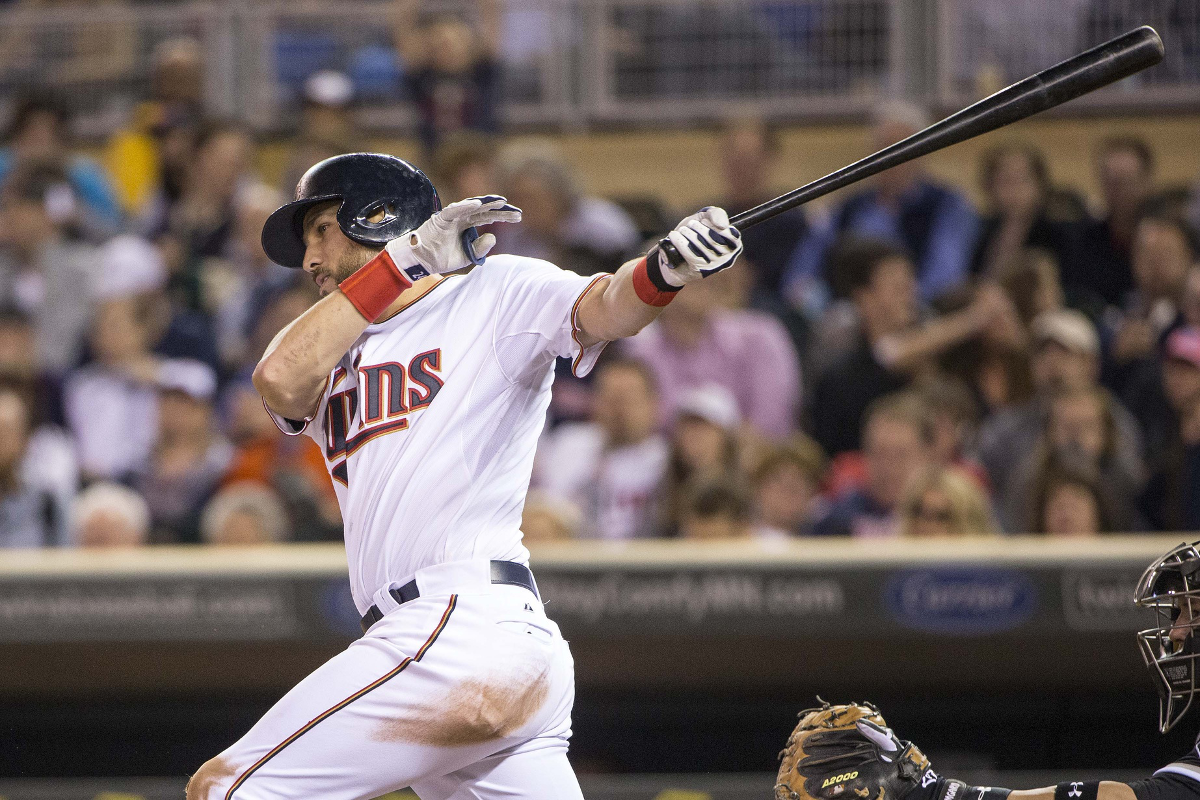 Yes, Mr. RBIs-Are-Overrated-Guy, RBIs are overrated and explain little toward a hitter's true abilities, plus require the players in the lineup ahead of him to get on base. Still, there are guys that fail to drive in runs for various reasons when faced with RBI opportunities. In 2014, the Twins lineup had several talented power-hitters that they viewed as trying to do too much -- swinging for the fences when a well-placed grounder would have done the trick. Instead, the at-bat would conclude in a strikeout. Once upon a time, Trevor Plouffe was that type of hitter. He would swing from his heels trying to drive himself and the run in on one pitch. Seemingly overnight, Plouffe improved his production and in 2014 he led the team in RBIs with 80. Now he is the guy you want at the plate with a runner in scoring position. Quick history lesson: early in his career right-handed pitchers had Plouffe's number like Tommy Tutone had Jenny's. From 2011 through 2013, he struck out in 22% of his plate appearances while chasing balls out of the zone at a near 30% clip against righties. His .673 OPS was well below the. 727 OPS that other right-handed hitters averaged when facing righties. Despite the disappointing performance against righties, his success against left-handed pitching helped buoy his overall numbers and kept him in the lineup continuously in that time. The young version of Trevor Plouffe figured that if you turned on an inside pitch, you could send the ball on a direct flight to the outfield bleachers the quickest. That philosophy helped him hammer out 46 home runs in his mid-twenties. Of course, pitchers and scouts recognized this trait and peppered him with a steady diet of offspeed offerings away which sent him into chase mode as he still tried to pull everything. His power binges were filled with spats of strikeouts. Last year, however, Plouffe began to understand what was happening and how pitchers were setting him up. He knew couldn’t survive taking the giant swing at every pitch. “I know for me they like to show me [fastball] in and then go soft away,” Plouffe said. He would have to look at the outer-half as his zone as well and he could no longer continue to turn that ball over. As a middle-of-the-order bat rife with RBI opportunities, he accepted that his approach had to be focused on putting the ball in play and get that runner to cross the plate -- even if it meant slapping a grounder to second or sending a can-o-corn to right field. “In those big situations where there are runners on base last year Bruno and I talked about using that whole field, just take what they give,” said Plouffe reflecting back on what he felt was the moment that made him a better hitter. “When you get up there you are going to want to get those runs in no matter what, any way you can.” The focus on covering the far reaches of the strike zone eventually translated into power the other way. “Once I got the hang of that it was alright, let’s drive some balls over there. I think that make you a more complete hitter.” As his career has progressed, his power numbers going to right have increased dramatically. In 2012 he posted a .333 slugging percentage to the opposite field. That dropped to .284 in 2013 but ramped up incredibly to .422 last season as he began to bang doubles off the wall. This season? He is posting a robust .556 slugging so far. There’s an element of respect when a hitter demonstrates he can use the entire field. Defenses are not able to shade or shift regularly. Pitchers are not as confident in where they should attack. Teams still adhere to the hard in/soft away tactic with Plouffe but now the Twins’ third baseman is ready. The experienced Plouffe appears ready for whatever a pitcher wants to throw at him. Plouffe admits he still hunts for inside fastballs but he has hit five of his home runs on five different types of pitches (fastball, change, slider, curve and cutter) varying in speed and location. In contrast, 10 of his 14 home runs in 2012 came on fastballs. Beyond that, Plouffe has increased his walk rate over the last several seasons which has shown that (1) pitchers are more inclined to pitch around him rather than let him beat them and (2) he is mature enough not to expand the strike zone. When it comes to hitting, the Twins coaching staff stresses understanding the process: recognizing what pitchers are doing to you and what you are doing in response to that. Some players develop that early in their careers and some, like Plouffe in his late twenties, it may take a little bit longer. So far in 2015, it has been worth the wait.
 -
Do you have any links to that? I remember the narrative being that he might be a DH full-time right away but not that he wouldn't be able to hit.
-
113 mph according to the StatsCast data. According to BaseballSavant.com, he's managed to drive the ball over 110 mph three times -- only 20 hitters have done that this year -- one was the home run, the other two were double plays. He hit the ball hard last year too with the minimal movement mechanics, he's definitely strong.
-
It is an assortment of things that is leading to the swing-and-misses. Pitch recognition is one. His timing has been scattered. He gets his front foot down at different times on different pitches. His head moves a ton as well as he swings. Going back to the minimal movement would help reduce all that but it is about comfort for the player. If Vargas feels more comfortable with the leg kick, he's going to keep using it.
-
Sure but couple things -- Santana is at a position where his manager has stated he is his guy and, because the Twins used him in center field last year, the team is giving him a longer leash before making a switch. http://twinsdaily.com/_/minnesota-twins-news/twins-to-let-santana-stick-it-out-at-short-r3578 Now with Vargas, he plays a position that is can be replaced with Josmil Pinto easily and allow him to make whatever adjustments the Twins feel he needs to make by playing regularly. Santana may be getting to the point where he's showing some better stick. Over the last 5 games, he's 8-for-19 (.421). Small sample size, to be sure, but he has a good swing from both sides. He won't walk but early in the year, teams pumped in-zone pitches and forced him to swing. He missed a lot and hit into outs a lot. Once he starts hitting, I would assume pitchers will give him fewer strikes and he may actually mix in a walk or two.
-
There is no denying the fact that Kennys Vargas has been mired in an extended slump. The Twins watched as their designated hitter swung like he was in quicksand in Seattle, making the situation worse with every swing. For the next two games he sat. The starting lineup time-out was intended to recalibrate and get him to realize that he needed to refocus on his mechanics. Collect, gather and go. As the smoke cleared after Thursday night’s 12-2 drubbing of the Chicago White Sox, the only Twins hitter in the lineup to not reach base or score was Kennys Vargas. He struck out twice.When he takes a cut, everyone in a three block radius of the ballpark can feel it as the wind changes direction on the plaza. And it is not just dirty breaking balls that have been giving Vargas fits. He is swinging through fastballs in the zone regularly as well. For instance, last year he missed a fastball 17% of the time when he offered. This year that has ballooned to 32% of his swings. Only seven other hitters this season have a higher rate than Vargas. Trevor Plouffe, who battled through his own adjustments entering the league, recently discussed how the game of baseball is a progression for hitters. Pitchers will start a new player with fastballs in the four-spot of the strike zone and once they prove they can hit that pitch, they will start to pick at other weaknesses. For Vargas, that has been being pitches down in the zone and away. His need to hit the ball as hard as he can has resulted in empty swings or weak groundouts. In spring training the coaching staff made it clear that Vargas should focus less on hitting for show during batting practice and work on driving the ball where it is pitched. “I think that's a constant message we have with him and (Oswaldo) Arcia and some of the guys that have a tendency to want to have that home-run competition in BP, which doesn't mean a thing," Paul Molitor told reporters in March. "It's fun once in a while at the end of your rounds to go ahead and do some things that break up the mundane routine of having to perfect your craft, but in general it's not how you want to go about getting better as a hitter." It was stressed that the message was not to tone down the power but rather prepare for being attacked by major league pitchers with major league velocity. Eddie Guardado’s BP fastball would be no substitute for that of Chris Sale. As the Twins were ready to leave Florida, Molitor announced that he would be starting the year with Torii Hunter or Trevor Plouffe as his cleanup candidates despite the fact that the imposing Vargas was hitting balls into the gulf on the reg. The Twins manager recognized that the young slugger was not ready to assume the demands of batting fourth. As the first month of the regular season progressed, the question transitioned from where Vargas should hit in the lineup to whether he should be in the lineup at all. From the perspective of the coaching staff, Vargas continued to treat his pregame work as his own personal home run derby which affected his in-game performance. “You [should] try to take batting practice that is more game-realistic. Don’t become too concerned with how far you hit them when a guy is throwing 60 mph,” Molitor told reporters this week. “It’s about trying to keep it crisp, use your barrel, keep it short, see the ball first.” Vargas’ 2015 has been marred by not adjusting to how pitchers are approaching him. For example in the Kansas City series, Vargas was in a favorable 2-1 count against the left-handed slopper Jason Vargas (no relation). For most of his professional career, Vargas was likely used to seeing a high percentage of in-zone fastballs by minor league pitchers who were afraid of the count going 3-1. However, the pitcher Vargas threw an offspeed pitch down and away which hitter Vargas was not expecting and turned over. http://i.imgur.com/QH8PAx4.gif Like batting practice, the approach was all-or-nothing. He seemed to be thinking fastball the whole way and was only going to swing like it was a fastball. To be sure, Vargas’ big leg kick and loading process are sound power generators. The issue surfaces when his pitch recognition and anticipation are out of whack and the timing mechanism breaks down. Last season after using the leg kick for the season in the minors, the Twins convinced Vargas to reduce the leg kick and load in order to cover the range of speed and breaks that he would see. In comparison to the Vargas-on-Vargas action above, in this at bat against the White Sox Sale last year shows how balanced he was and not overcommitting to a pitch. http://i.imgur.com/qUmK1Zb.gif By the end of last season, with his confidence inflated, Vargas had returned to the big leg kick swing. Now hitting .172 and 21 strikeouts in 64 at-bats, is it time to return to the muted mechanics of 2014? Twins hitting coach Tom Brunansky noted how difficult it is to get hitters who did well in the minors to revamp their mechanics - even if it is needed. “You can't come and change,” said Brunansky. “The hardest thing to do is tell a young hitter who has had success in the minor leagues who needs to change it at the major league level because they are going to say 'I hit like this'...but [the major leagues are] a different animal.” Brunansky stresses process. The process of making small adjustments outside the game and bring that over to the field following the national anthem. But convincing someone to make changes becomes increasingly challenging when the prep work becomes about seeing how far the ball flies. Then gain, Vargas did just fine last year with the reduced movement swing and was still able to hit the ball a country mile. http://i.imgur.com/ci1bG3X.gif The Twins know that Vargas is in need of adjustments and they sat him several games to drive the point home. There is an established track record for Vargas: tone it down or get the timing down. Clearly his potential is worth the trouble but with Josmil Pinto performing well with the bat in Rochester, it may be time to consider the swap. Click here to view the article
-
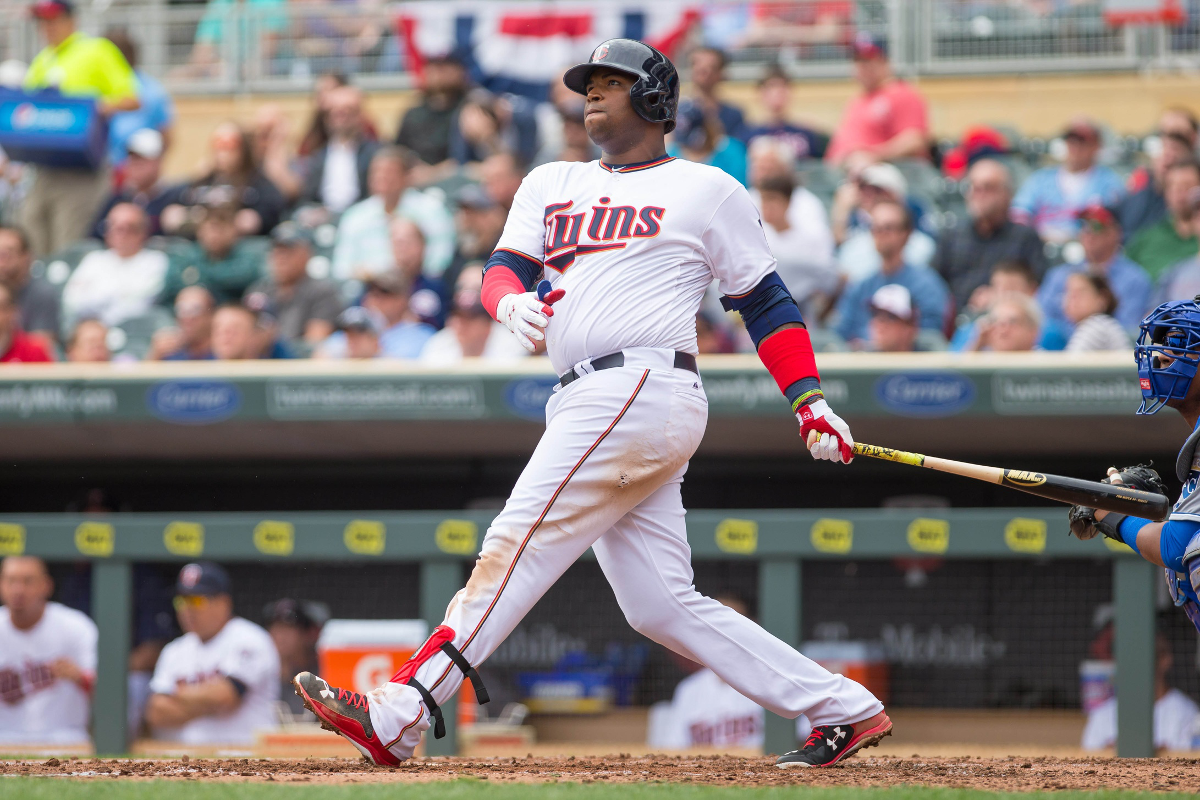 When he takes a cut, everyone in a three block radius of the ballpark can feel it as the wind changes direction on the plaza. And it is not just dirty breaking balls that have been giving Vargas fits. He is swinging through fastballs in the zone regularly as well. For instance, last year he missed a fastball 17% of the time when he offered. This year that has ballooned to 32% of his swings. Only seven other hitters this season have a higher rate than Vargas. Trevor Plouffe, who battled through his own adjustments entering the league, recently discussed how the game of baseball is a progression for hitters. Pitchers will start a new player with fastballs in the four-spot of the strike zone and once they prove they can hit that pitch, they will start to pick at other weaknesses. For Vargas, that has been being pitches down in the zone and away. His need to hit the ball as hard as he can has resulted in empty swings or weak groundouts. In spring training the coaching staff made it clear that Vargas should focus less on hitting for show during batting practice and work on driving the ball where it is pitched. “I think that's a constant message we have with him and (Oswaldo) Arcia and some of the guys that have a tendency to want to have that home-run competition in BP, which doesn't mean a thing," Paul Molitor told reporters in March. "It's fun once in a while at the end of your rounds to go ahead and do some things that break up the mundane routine of having to perfect your craft, but in general it's not how you want to go about getting better as a hitter." It was stressed that the message was not to tone down the power but rather prepare for being attacked by major league pitchers with major league velocity. Eddie Guardado’s BP fastball would be no substitute for that of Chris Sale. As the Twins were ready to leave Florida, Molitor announced that he would be starting the year with Torii Hunter or Trevor Plouffe as his cleanup candidates despite the fact that the imposing Vargas was hitting balls into the gulf on the reg. The Twins manager recognized that the young slugger was not ready to assume the demands of batting fourth. As the first month of the regular season progressed, the question transitioned from where Vargas should hit in the lineup to whether he should be in the lineup at all. From the perspective of the coaching staff, Vargas continued to treat his pregame work as his own personal home run derby which affected his in-game performance. “You [should] try to take batting practice that is more game-realistic. Don’t become too concerned with how far you hit them when a guy is throwing 60 mph,” Molitor told reporters this week. “It’s about trying to keep it crisp, use your barrel, keep it short, see the ball first.” Vargas’ 2015 has been marred by not adjusting to how pitchers are approaching him. For example in the Kansas City series, Vargas was in a favorable 2-1 count against the left-handed slopper Jason Vargas (no relation). For most of his professional career, Vargas was likely used to seeing a high percentage of in-zone fastballs by minor league pitchers who were afraid of the count going 3-1. However, the pitcher Vargas threw an offspeed pitch down and away which hitter Vargas was not expecting and turned over. http://i.imgur.com/QH8PAx4.gif Like batting practice, the approach was all-or-nothing. He seemed to be thinking fastball the whole way and was only going to swing like it was a fastball. To be sure, Vargas’ big leg kick and loading process are sound power generators. The issue surfaces when his pitch recognition and anticipation are out of whack and the timing mechanism breaks down. Last season after using the leg kick for the season in the minors, the Twins convinced Vargas to reduce the leg kick and load in order to cover the range of speed and breaks that he would see. In comparison to the Vargas-on-Vargas action above, in this at bat against the White Sox Sale last year shows how balanced he was and not overcommitting to a pitch. http://i.imgur.com/qUmK1Zb.gif By the end of last season, with his confidence inflated, Vargas had returned to the big leg kick swing. Now hitting .172 and 21 strikeouts in 64 at-bats, is it time to return to the muted mechanics of 2014? Twins hitting coach Tom Brunansky noted how difficult it is to get hitters who did well in the minors to revamp their mechanics - even if it is needed. “You can't come and change,” said Brunansky. “The hardest thing to do is tell a young hitter who has had success in the minor leagues who needs to change it at the major league level because they are going to say 'I hit like this'...but [the major leagues are] a different animal.” Brunansky stresses process. The process of making small adjustments outside the game and bring that over to the field following the national anthem. But convincing someone to make changes becomes increasingly challenging when the prep work becomes about seeing how far the ball flies. Then gain, Vargas did just fine last year with the reduced movement swing and was still able to hit the ball a country mile. http://i.imgur.com/ci1bG3X.gif The Twins know that Vargas is in need of adjustments and they sat him several games to drive the point home. There is an established track record for Vargas: tone it down or get the timing down. Clearly his potential is worth the trouble but with Josmil Pinto performing well with the bat in Rochester, it may be time to consider the swap.
 -
I am really impressed by his maturity as a hitter over the last several years. He has a very good understanding of how pitchers are approaching him which led to him going the other way more: http://twinsdaily.com/_/minnesota-twins-news/minnesota-twins/for-young-hitters-the-struggle-is-real-r3561 Plouffe was as lost as anybody early on in his career. If he can pull it together to be an average major leaguer hitter, there is hope for the other young hitters in this lineup can at least do the same.
-
On this week's NO JUICE PODCAST, Dan Anderson and Parker Hageman are joined at JL Beers in Northeast Minneapolis with MLB.com's Twins beat writer Rhett Bollinger to review where the Twins are at three weeks into the season. Topics include baserunning blunders, defensive lapses, starting pitching and roster moves. Listen up.JL Beers' Mike Evans joins the crew to talk about upcoming beer events that you can find more about on the JL Beers' app and explains to us why Minnesota restaurants can't sell Spotted Cow. In addition to Twins talk, Parker revisits his Tucker Maxx moment in Seattle, the Wild playoff run, getting busted with drugs in Vegas, possible Vikings draft picks and so much more. Listen below, on iTunes or on Stitcher: NO JUICE PODCAST, EPISODE #53: SUNDAYS WITH RHETT, VOL 2 Click here to view the article
-
 JL Beers' Mike Evans joins the crew to talk about upcoming beer events that you can find more about on the JL Beers' app and explains to us why Minnesota restaurants can't sell Spotted Cow. In addition to Twins talk, Parker revisits his Tucker Maxx moment in Seattle, the Wild playoff run, getting busted with drugs in Vegas, possible Vikings draft picks and so much more. Listen below, on iTunes or on Stitcher: NO JUICE PODCAST, EPISODE #53: SUNDAYS WITH RHETT, VOL 2
 -
Article: What To Make Of Mike Pelfrey
Parker Hageman replied to Parker Hageman's topic in Twins Daily Front Page News
Pelfrey's stuff has been better this year (better velocity, better secondary pitch). Luck is the residual of design. Yes, he's been very fortunate that he has had players there but Pelfrey's had a lower hard-hit average on balls in play so far this year (weaker contact). Constantly adding baserunners is a bad program and playing with fire. Based on his FIP-ERA difference, if he does not shave his BB rate or increase his K rate, he's in line for regression. -
Don’t look now but the team’s ERA leader is none other than Mike Pelfrey. Is this performance legit or should we all brace for more impact? This post should come with a disclaimer in a big, bold font that screams out SMALL SAMPLE SIZE AHEAD but most people should realize that three outings is nothing to base any long-term projection on. That being said, in this small sampling Pelfrey has shown some indication that he may actually be a serviceable back-of-the-rotation starter.Wait. Serviceable? Yes, I know 4/20 was on Monday but believe me, I am not high. There are several reasons why maybe -- just maybe -- he might be able to provide decent innings for the Twins as a starter. For example, he has shown in his first three outings that he can miss a few bats on occasion. Pelfrey’s 2015 season has seen him hit double-digits in swinging strikes in two of the three starts. That’s mildly impressive since the last time he was healthy -- in 2013 -- he managed to induce double-digit swings-and-misses in just two of his 29 starts. Prior to his Tommy John surgery, he induced double-digit swing-and-misses in three of his 34 starts in 2011. Admittedly, even Pelfrey’s 9% swinging strike rate is still below the league’s average of 10% but it is a vast improvement from where it was. Missing bats means he is showing opponents a new wrinkle and hitting his spots just off the plate. This was something that he did not do in either of the last two seasons. During those two seasons, while recovering from Tommy John and battling a new injury, he throttled down on his mediocre fastball and opponents pasted it all over the field. In 2013, they posted an .801 OPS against it. Last year, it was at .972. The reality was that Pelfrey was unable to generate enough velocity to make the pitch effective. Over the last two years that average velocity has been 92.3 and 90.3 respectively. Now, in his first three games, he is averaging 93.4 with the fastball. Not only that, but he’s throwing it less frequently and mixing in more slow curves and introducing a split-finger that he has not used in quite some time. The change in velocity has helped keep hitters off his fastball. With the Mets, Pelfrey threw the pitch as a split-finger fastball with modest velocity. He abandoned the pitch with the Twins but has since resurrected it as more of a changeup-type offering, slowing it down some in the delivery. This has been a very effective pitch for him against left-handed hitters as he’s held that side to a .162 average. As you can see in this 2-2 splitter to the Royals’ Eric Hosmer and the 0-2 one to Kendrys Morales, this pitch has the potential to be a genuine swing-and-miss pitch against lefties: http://i.imgur.com/IAn9wzv.gif http://i.imgur.com/RUYN8uI.gif While he’s thrown the pitch in each of his three starts, he threw it 24 times against the Royals which led to three of his strikeouts including Hosmer and Morales. Oh, and the strikeout of the right-handed hitting Paulo Orlando as well. http://i.imgur.com/DOT4iSn.gif Keep in mind that although he is missing more bats on the season, he is not necessarily striking more people out. Until the game in Kansas City where he used his splitter more, he really lacked a put away pitch. If he can continue to locate this pitch like he did on Wednesday night, it could become a lethal pitch. All that is good for the Mike Pelfrey brand but there are also indications that this is all smoke-and-mirrors, such as the fact that Pelfrey has struggled to get ahead of hitters. His 56% first-pitch strike rate is well below the league’s average of 61% meaning that he is pitching from behind in the count more often than his fellow pitchers. From a deficit, it is more likely that bad things happen as he is forced to come into the zone. What’s more is that Pelfrey has continuously flirted with disaster when he puts runners on. From the stretch he hits the zone at a much lower clip and has ended up adding more base-runners via a walk. It seems like a miracle that he has been able to work out of the situations that he has created and to have a 2.65 ERA. If he cannot stop compounding the problem, at some point those base-runners will start to come home. The fact is that Pelfrey’s ceiling, based on his track record and pitch mix, is lower than most. Even with the improvements to his velocity and new pitch his upside feels like a fifth-starter in a rotation filled with fifth starters. If these improvements are sustained, the needle would move only slightly. Ultimately, he may serve better as a bullpen replacement for Blaine Boyer or Tim Stauffer. With Ricky Nolasco’s rehab start pushed to Sunday in Cedar Rapids due to inclement weather, Pelfrey should be allotted at least one more start against the Detroit Tigers to build on what he did to the Royals lineup before the team needs to make a rotation decision. The Twins will have an interesting decision to make when and if Nolasco is ready to rejoin the team, but there is one thing for certain, Trevor May should not be a casualty. Click here to view the article
-
 Wait. Serviceable? Yes, I know 4/20 was on Monday but believe me, I am not high. There are several reasons why maybe -- just maybe -- he might be able to provide decent innings for the Twins as a starter. For example, he has shown in his first three outings that he can miss a few bats on occasion. Pelfrey’s 2015 season has seen him hit double-digits in swinging strikes in two of the three starts. That’s mildly impressive since the last time he was healthy -- in 2013 -- he managed to induce double-digit swings-and-misses in just two of his 29 starts. Prior to his Tommy John surgery, he induced double-digit swing-and-misses in three of his 34 starts in 2011. Admittedly, even Pelfrey’s 9% swinging strike rate is still below the league’s average of 10% but it is a vast improvement from where it was. Missing bats means he is showing opponents a new wrinkle and hitting his spots just off the plate. This was something that he did not do in either of the last two seasons. During those two seasons, while recovering from Tommy John and battling a new injury, he throttled down on his mediocre fastball and opponents pasted it all over the field. In 2013, they posted an .801 OPS against it. Last year, it was at .972. The reality was that Pelfrey was unable to generate enough velocity to make the pitch effective. Over the last two years that average velocity has been 92.3 and 90.3 respectively. Now, in his first three games, he is averaging 93.4 with the fastball. Not only that, but he’s throwing it less frequently and mixing in more slow curves and introducing a split-finger that he has not used in quite some time. The change in velocity has helped keep hitters off his fastball. With the Mets, Pelfrey threw the pitch as a split-finger fastball with modest velocity. He abandoned the pitch with the Twins but has since resurrected it as more of a changeup-type offering, slowing it down some in the delivery. This has been a very effective pitch for him against left-handed hitters as he’s held that side to a .162 average. As you can see in this 2-2 splitter to the Royals’ Eric Hosmer and the 0-2 one to Kendrys Morales, this pitch has the potential to be a genuine swing-and-miss pitch against lefties: http://i.imgur.com/IAn9wzv.gif http://i.imgur.com/RUYN8uI.gif While he’s thrown the pitch in each of his three starts, he threw it 24 times against the Royals which led to three of his strikeouts including Hosmer and Morales. Oh, and the strikeout of the right-handed hitting Paulo Orlando as well. http://i.imgur.com/DOT4iSn.gif Keep in mind that although he is missing more bats on the season, he is not necessarily striking more people out. Until the game in Kansas City where he used his splitter more, he really lacked a put away pitch. If he can continue to locate this pitch like he did on Wednesday night, it could become a lethal pitch. All that is good for the Mike Pelfrey brand but there are also indications that this is all smoke-and-mirrors, such as the fact that Pelfrey has struggled to get ahead of hitters. His 56% first-pitch strike rate is well below the league’s average of 61% meaning that he is pitching from behind in the count more often than his fellow pitchers. From a deficit, it is more likely that bad things happen as he is forced to come into the zone. What’s more is that Pelfrey has continuously flirted with disaster when he puts runners on. From the stretch he hits the zone at a much lower clip and has ended up adding more base-runners via a walk. It seems like a miracle that he has been able to work out of the situations that he has created and to have a 2.65 ERA. If he cannot stop compounding the problem, at some point those base-runners will start to come home. The fact is that Pelfrey’s ceiling, based on his track record and pitch mix, is lower than most. Even with the improvements to his velocity and new pitch his upside feels like a fifth-starter in a rotation filled with fifth starters. If these improvements are sustained, the needle would move only slightly. Ultimately, he may serve better as a bullpen replacement for Blaine Boyer or Tim Stauffer. With Ricky Nolasco’s rehab start pushed to Sunday in Cedar Rapids due to inclement weather, Pelfrey should be allotted at least one more start against the Detroit Tigers to build on what he did to the Royals lineup before the team needs to make a rotation decision. The Twins will have an interesting decision to make when and if Nolasco is ready to rejoin the team, but there is one thing for certain, Trevor May should not be a casualty.


