



Parker Hageman
-
Posts
4,152 -
Joined
-
Last visited
-
Days Won
6
Content Type
Profiles
News
Minnesota Twins Videos
2026 Minnesota Twins Top Prospects Ranking
2022 Minnesota Twins Draft Picks
Minnesota Twins Free Agent & Trade Rumors, Notes, & Tidbits
Guides & Resources
2023 Minnesota Twins Draft Picks
The Minnesota Twins Players Project
2024 Minnesota Twins Draft Picks
2025 Minnesota Twins Draft Pick Tracker
2026 Minnesota Twins Draft Tracker: Picks & Bonuses
Forums
Blogs
Events
Store
Downloads
Gallery
Everything posted by Parker Hageman
-
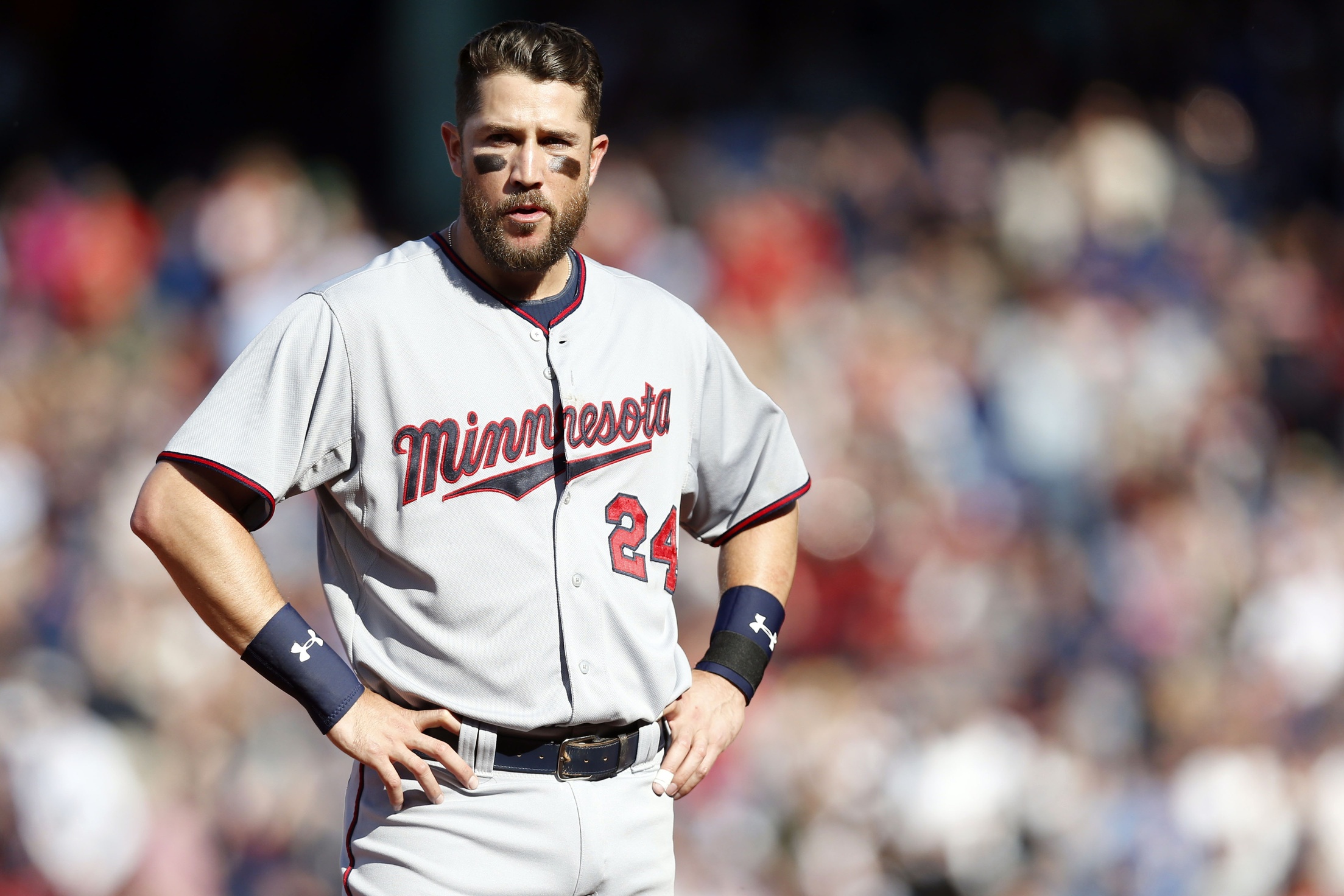 For Plouffe, April and May were extremely successful months in the batter's’ box. In the season’s first two months he helped buoy the middle of the order -- one that was vacated by Torii Hunter early in the season. At the end of May, he was holding the second-highest OPS on the team as well as a robust .721 slugging percentage with runners in scoring position. Plouffe was productive at all the right times which helped propel the Twins’ offense forward and confounded analysts attempting to explain how the Minnesota ballclub was on top of their division. Admittedly, the turn of the calendar is an arbitrary moment in the baseball season; nothing changes in the competition or in the player just because it is Ms. June’s time to shine on the clubhouse wall. That notwithstanding, Plouffe has appeared like an entirely different hitter this stretch. Mired in an extended 2-for-32 slump -- one which he showed signs of shaking off on Tuesday night by lashing a triple off the wall in right field -- Plouffe is wrestling with the toughest element of the game: adjusting to a new plan of attack. In the days bygone, reports traveled by word of tobacco-filled mouth. Now information is binary and able to be downloaded, disseminated and acted upon by the very next game. But baseball’s information game is a two-way street. The pitchers are armed with data and the hitters are prepared in kind. “We get so much information it can choke a cow,” Twins hitting coach Tom Brunansky likes to say about the flow of knowledge pertaining to his area of expertise. So shouldn’t hitters be just as prepared as their pitcher counterparts? While baseball’s hitter-pitcher matchup should behave like a stalemate cold war, the fact is the advantage often goes to the player who possesses the ball and is able to throw the pitch he wants. The problem for hitters is that the game never sleeps. Not for a second. Coaches, pitchers, scouts, and front office analysts are all trying to find the right combination that will get you out. If you were hitting balls hard in a certain situations, with a certain pitch, in a certain area of the zone, there is a strong chance that things will change the next time around. That has essentially happened to Plouffe. After showing that he could drive the ball on the outer-half to the opposite field, teams have tried something else. Somewhere between the end of May and the beginning of June, pitchers started to add another wrinkle. In the first two months pitchers would hammer him away with fastballs (40% inner-half of the zone). However, since the beginning of his slump, they have shifted that attack inside just off the plate (60% inner-half) and Plouffe has been unable to resist or put the ball in play effectively. The ESPN TruMedia heat maps below show how pitchers have shifted from throwing fastballs away to the inside portion: There has been a concerted effort particularly by right-handed pitchers to pound two-seamers in off the plate on Plouffe. In Fenway against the Red Sox, Plouffe offered at a running fastball that was down-and-in on a an one-one count: http://i.imgur.com/J00dTNw.gif When the Brewers visited, Milwaukee reliever Jeremy Jeffress also ran a fastball in off the plate which Plouffe bounced out on a one-oh count: http://i.imgur.com/9tVPm4o.gif Those types of pitches look appetizing coming in before they burrow their way into the bat handle at the point of contact. Not surprising, Plouffe’s chase rate grew in June as well with the majority being swings at pitches inside off the plate. This expansion of the zone has led to weaker contact as well as a drop in walks. Possibly because of his determination to drive runners in, Plouffe’s walk rate suffered in this time as well. Dating back to May 21, he has drawn just one walk in 62 plate appearances. To be fair, 30-plus plate appearances is not a real concern. It just takes a few decent at-bats to help pull a hitter out of the funk and the stretch will be forgotten. However, with the added issue of Joe Mauer’s lack of production in front of him, it has exacerbated the problem for the team overall. If the Twins expect to continue to battle for a top spot in the division, they will need Trevor Plouffe to re-calibrate quickly.
 -
 https://twitter.com/ParkerHageman/status/608343132120481794
 -
https://twitter.com/ParkerHageman/status/608333348012982274 *BlankenHORN, I've been told. Twins system has been pretty light in regards to left-handed power bats and I suspected that Kyle Tucker was on the top of the list due to the low numbers in that department. So I'm not entirely surprised by the decision to go back-to-back left-handed bats.
-
On this week's NO JUICE PODCAST, Dan Anderson and Parker Hageman head to Target Field to meet up with Twins official scorer Stew Thornley. In addition to assigning errors to Twins' fielders, Stew has not only been called “the most recognizable and respected local baseball historian and writer” by the City Pages but he has also been called "the most interesting man in baseball" by the No Juice Podcast. LISTEN UP.Some topics: Are errors a worthwhile statistic? Can the Twins keep it up? St. Paul Saints* and Minneapolis Millers history. Can a gynecologist be a good scorekeeper? Listen below, on iTunes or on Stitcher: NO JUICE PODCAST, EPISODE #58: STEW THORNLEY *PLUG: You should order Stew’s latest book, The St Paul Saints. Do it. Do it now. Click here to view the article
-
 Some topics: Are errors a worthwhile statistic? Can the Twins keep it up? St. Paul Saints* and Minneapolis Millers history. Can a gynecologist be a good scorekeeper? Listen below, on iTunes or on Stitcher: NO JUICE PODCAST, EPISODE #58: STEW THORNLEY *PLUG: You should order Stew’s latest book, The St Paul Saints. Do it. Do it now.
 -
Indeed we did. I believe I was your ride.
-
Still an amazing performance:
-
JR "Moonlight" Graham will get the start on Saturday.
-
That was another fantastic Twins/Brewers game. I thoroughly enjoyed Anthony Swarzak's first career start in 2009 -- that was actually the game where TwinsCentric was created and ultimately produced TwinsDaily.com. So, really, we all have Anthony Swarzak to thank for this website.
-
The energy is always a little bit different when the Milwaukee Brewers come to town. When the Brewers come to town, there’s suddenly an increase of people who claim that Spotted Cow is beer’s gift to God and wear ‘Party Like It’s 1982’ T-shirts. There are comments made about the lack of tailgating facilities and how the concourses are not spacious enough and, ugh, what is that, sky? Isn’t there some way to blot out that unsightly glowing orb? The standings never really seem to matter. One team could be on top of their division, like the Twins, and another, like the Brewers for example, could be so far out of the race that the Cubs are thinking about dropping them as their minor league affiliate. It doesn’t matter. For the Twins-Brewers series happens in a six-game microcosm. Winner of the series retains bragging rights until football season. It is the place to be in the summer. And, for the first time in several years, this series falls on a weekend. Need more convincing to get down to Target Field this weekend? Check out these on-field moments from when the Brewers came to town.June 17, 2007: Prince Fielder’s Inside The Park Home Run The Metrodome was teeming with 30,000 fans on a Sunday afternoon and the Brewers were well represented. Milwaukee, at 38-30, had the National League Central’s only record above .500 in mid-June. The Twins, on the other hand, were in the middle of the AL Central, barely keeping their heads above .500. After dropping the first two games, the Twins’ offense surged out on top of Brewers’ Jeff Suppan. Led by Justin Morneau (3 RBI) and Lew Ford (4 RBI) -- who was an early substitute after Torii Hunter was struck by a Suppan pitch in his first at-bat -- the Twins took a 9-4 lead into the top of the eighth. Reliever Juan Rincon allowed an RBI single to current Brewers manager Craig Counsell, followed by a home run to Corey Hart. Clinging to a 9-7 led, Ron Gardenhire turned to closer Joe Nathan for the final three outs. Brewers’ designated hitter Prince Fielder led off the inning by lofting what should have been a sure out to Ford in center field. The result was this: One of Fielder’s NL-best 50 home runs in 2007, his inside-the-park home run would be followed by three straight singles, a strikeout and then a sacrifice fly by Counsell to tie the game. Fortunately for Twins fans, Morneau led off the bottom of the ninth with a solo home run to send everyone home happy. This game had it all -- the Metrodome’s quirkiness front-and-center, Lew Ford acting a fool, and Prince Fielder chugging all the way around the bases. Morneau’s walk-off home run was just icing on the cake. April 14, 1992: Paul Molitor Steals Home For the defending World Series champions, the 1992 season started off slow. Prior to the season, the Twins had traded a highly thought of pitching prospect (Denny Neagle) for the 27-year-old John Smiley who had won 20 games the previous season with the Pirates in an effort to replace Jack Morris, who had departed to Toronto. High hopes were placed on the arm that finished third in the NL Cy Young voting. However, the year opened with a three-game series in Milwaukee and the Twins’ key offseason acquisition lasted just five innings in a 9-5 loss at County Stadium. His second start on April 14 against the Brewers at the Metrodome would be substantially worse. In the third inning of the Tuesday night game, the Brewers started with a pair of singles followed by two walks -- the latter of which was a bases-loaded version to none other than Paul Molitor. After a single and sacrifice fly, Molitor found himself on second but wanted to go another ninety feet. With Greg Vaughn batting, Molitor swiped third on Smiley and catcher Brian Harper. Vaughn popped out, leaving Molitor on third with two outs. With two down and Robin Yount -- a future Hall of Famer himself -- at the plate, Molitor took a walking lead against Smiley, who is in the full windup, and does this: The steal of home was impressive. It’s a feat that is reserved for the players with turbo-charged motors, razor sharp instincts as well as some hefty cojones. Those traits propelled Molitor throughout his Hall of Fame career and through his coaching tenure. That said, the play was actually pretty meaningless in that inning and the grand scheme of the game: Yount walked (Smiley’s third) and the next batter, Franklin Stubbs, lashed a triple and the final wound up being 11-1, but an act of athleticism like Molitor’s should be celebrated. April 27, 1994: Scott Erickson No-Hits The Brewers This was a different Brewers team, to be sure. After the 1992 season, they had allowed Molitor to leave Milwaukee via free agency to division rival Toronto. As Molitor helped the Blue Jays build a dynasty, the Brewers sank to the bottom of the AL East. General manager Sal Bando struggled to find a suitable replacement for Molitor’s bat in the designated hitter spot. By 1994, they were using the Twins’ 1991 World Series catcher Brian Harper in that role. In 1994 the Twins were not in much better shape. They had a core of Kirby Puckett, Kent Hrbek, Shane Mack, Chuck Knoblauch and recent free agent signee Dave Winfield, but the rest of the roster was a skeleton crew. The pitching rotation was also bad. Kevin Tapani was aging and the young arms like Willie Banks and Pat Mahomes that the Twins expected to rise never took flight. Then there was Scott Erickson. Scott Erickson was never the same pitcher he was at his peak in mid-1991. The velocity was always inconsistent, he was losing the darting fastball/diving slider and hitters simply weren’t missing much. In 1993, he led the league in losses (19) and hits allowed (266) in 218.2 innings. Through his first four starts of the 1994 season, he had allowed 38 hits in 21.2 innings resulting in a shiny 7.48 ERA. Then he went out and did this against the new Brew Crew: It had been over 26 years since the last Minnesota Twins no-hitter. The Twins would win 6-0 behind the blast of Kent Hrbek’s home run and Kirby Puckett’s two doubles. Erickson’s next start would come in Milwaukee where the Brewers would get vengeance -- they tagged him for seven runs on nine hits and chased him after the fifth inning. May 30, 2013: Joe Mauer Goes Back-to-Back With Brian Dozier The Twins and Brewers were both well on their way out of the 2013 race when 32,000 showed up to Target Field for the last of the four game series between the two border rivals. Minnesota had seized the first three games behind the starting pitching of Kevin Correia, Scott Diamond and Samuel Deduno. Minor league free agent P.J. Walters was entrusted with the sweep game. Minnesota’s lineup -- headlined by lead-off hitter Jamey Carroll’s 574 OPS -- jumped all over former Twin and Brewers’ starter Kyle Lohse. In the fourth, Brian Dozier led off with a solo home run and was followed by Joe Mauer: Mauer’s home runs have become few and far between these days but witnessing one is a thing of beauty that will be reminisced about to the following generation. Mauer home runs are not the epic, mouth-dropping moon-shots shared by Jim Thome or Harmon Killebrew. Mauer’s are unique in that the vast majority of them slip gently over the left field wall, like they were intentionally placed just one row in, with English from his left-handed swing. In retrospect, the 2013 Twins season felt like it was close to if not the deepest, darkest period in Minnesota Twins history. Nothing was going right and there seemed to be no end to the losing in sight. Nevertheless, it still felt great to sweep the Brewers. Interestingly enough, on the broadcast, Paul Molitor happened to be in Fox Sports North’s booth. As Mauer circled the bases, Molitor asked in jest “Should I stick around for a while?” I suppose the current Twins fans should be glad that he did. Click here to view the article
-
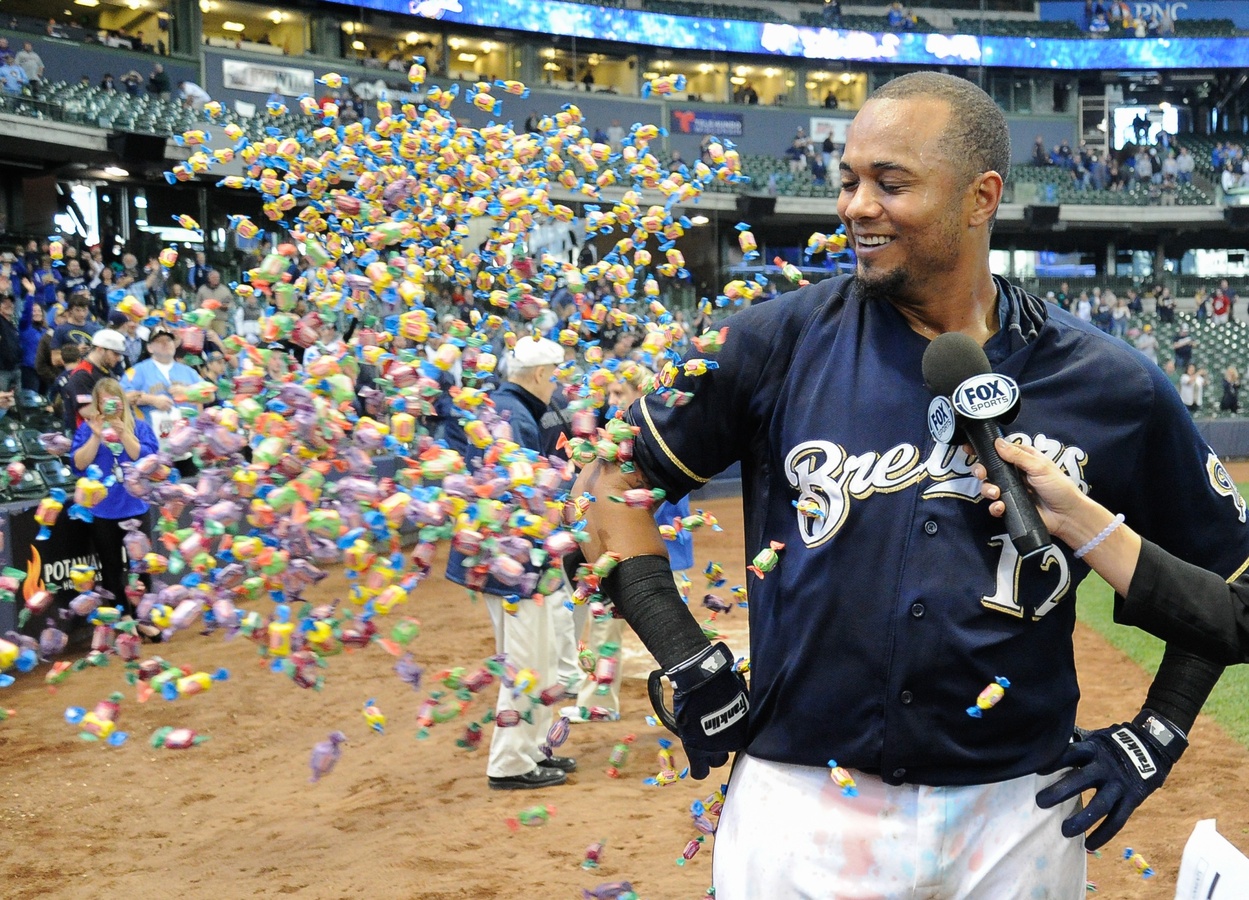 June 17, 2007: Prince Fielder’s Inside The Park Home Run The Metrodome was teeming with 30,000 fans on a Sunday afternoon and the Brewers were well represented. Milwaukee, at 38-30, had the National League Central’s only record above .500 in mid-June. The Twins, on the other hand, were in the middle of the AL Central, barely keeping their heads above .500. After dropping the first two games, the Twins’ offense surged out on top of Brewers’ Jeff Suppan. Led by Justin Morneau (3 RBI) and Lew Ford (4 RBI) -- who was an early substitute after Torii Hunter was struck by a Suppan pitch in his first at-bat -- the Twins took a 9-4 lead into the top of the eighth. Reliever Juan Rincon allowed an RBI single to current Brewers manager Craig Counsell, followed by a home run to Corey Hart. Clinging to a 9-7 led, Ron Gardenhire turned to closer Joe Nathan for the final three outs. Brewers’ designated hitter Prince Fielder led off the inning by lofting what should have been a sure out to Ford in center field. The result was this: One of Fielder’s NL-best 50 home runs in 2007, his inside-the-park home run would be followed by three straight singles, a strikeout and then a sacrifice fly by Counsell to tie the game. Fortunately for Twins fans, Morneau led off the bottom of the ninth with a solo home run to send everyone home happy. This game had it all -- the Metrodome’s quirkiness front-and-center, Lew Ford acting a fool, and Prince Fielder chugging all the way around the bases. Morneau’s walk-off home run was just icing on the cake. April 14, 1992: Paul Molitor Steals Home For the defending World Series champions, the 1992 season started off slow. Prior to the season, the Twins had traded a highly thought of pitching prospect (Denny Neagle) for the 27-year-old John Smiley who had won 20 games the previous season with the Pirates in an effort to replace Jack Morris, who had departed to Toronto. High hopes were placed on the arm that finished third in the NL Cy Young voting. However, the year opened with a three-game series in Milwaukee and the Twins’ key offseason acquisition lasted just five innings in a 9-5 loss at County Stadium. His second start on April 14 against the Brewers at the Metrodome would be substantially worse. In the third inning of the Tuesday night game, the Brewers started with a pair of singles followed by two walks -- the latter of which was a bases-loaded version to none other than Paul Molitor. After a single and sacrifice fly, Molitor found himself on second but wanted to go another ninety feet. With Greg Vaughn batting, Molitor swiped third on Smiley and catcher Brian Harper. Vaughn popped out, leaving Molitor on third with two outs. With two down and Robin Yount -- a future Hall of Famer himself -- at the plate, Molitor took a walking lead against Smiley, who is in the full windup, and does this: The steal of home was impressive. It’s a feat that is reserved for the players with turbo-charged motors, razor sharp instincts as well as some hefty cojones. Those traits propelled Molitor throughout his Hall of Fame career and through his coaching tenure. That said, the play was actually pretty meaningless in that inning and the grand scheme of the game: Yount walked (Smiley’s third) and the next batter, Franklin Stubbs, lashed a triple and the final wound up being 11-1, but an act of athleticism like Molitor’s should be celebrated. April 27, 1994: Scott Erickson No-Hits The Brewers This was a different Brewers team, to be sure. After the 1992 season, they had allowed Molitor to leave Milwaukee via free agency to division rival Toronto. As Molitor helped the Blue Jays build a dynasty, the Brewers sank to the bottom of the AL East. General manager Sal Bando struggled to find a suitable replacement for Molitor’s bat in the designated hitter spot. By 1994, they were using the Twins’ 1991 World Series catcher Brian Harper in that role. In 1994 the Twins were not in much better shape. They had a core of Kirby Puckett, Kent Hrbek, Shane Mack, Chuck Knoblauch and recent free agent signee Dave Winfield, but the rest of the roster was a skeleton crew. The pitching rotation was also bad. Kevin Tapani was aging and the young arms like Willie Banks and Pat Mahomes that the Twins expected to rise never took flight. Then there was Scott Erickson. Scott Erickson was never the same pitcher he was at his peak in mid-1991. The velocity was always inconsistent, he was losing the darting fastball/diving slider and hitters simply weren’t missing much. In 1993, he led the league in losses (19) and hits allowed (266) in 218.2 innings. Through his first four starts of the 1994 season, he had allowed 38 hits in 21.2 innings resulting in a shiny 7.48 ERA. Then he went out and did this against the new Brew Crew: It had been over 26 years since the last Minnesota Twins no-hitter. The Twins would win 6-0 behind the blast of Kent Hrbek’s home run and Kirby Puckett’s two doubles. Erickson’s next start would come in Milwaukee where the Brewers would get vengeance -- they tagged him for seven runs on nine hits and chased him after the fifth inning. May 30, 2013: Joe Mauer Goes Back-to-Back With Brian Dozier The Twins and Brewers were both well on their way out of the 2013 race when 32,000 showed up to Target Field for the last of the four game series between the two border rivals. Minnesota had seized the first three games behind the starting pitching of Kevin Correia, Scott Diamond and Samuel Deduno. Minor league free agent P.J. Walters was entrusted with the sweep game. Minnesota’s lineup -- headlined by lead-off hitter Jamey Carroll’s 574 OPS -- jumped all over former Twin and Brewers’ starter Kyle Lohse. In the fourth, Brian Dozier led off with a solo home run and was followed by Joe Mauer: Mauer’s home runs have become few and far between these days but witnessing one is a thing of beauty that will be reminisced about to the following generation. Mauer home runs are not the epic, mouth-dropping moon-shots shared by Jim Thome or Harmon Killebrew. Mauer’s are unique in that the vast majority of them slip gently over the left field wall, like they were intentionally placed just one row in, with English from his left-handed swing. In retrospect, the 2013 Twins season felt like it was close to if not the deepest, darkest period in Minnesota Twins history. Nothing was going right and there seemed to be no end to the losing in sight. Nevertheless, it still felt great to sweep the Brewers. Interestingly enough, on the broadcast, Paul Molitor happened to be in Fox Sports North’s booth. As Mauer circled the bases, Molitor asked in jest “Should I stick around for a while?” I suppose the current Twins fans should be glad that he did.
 -
On this week's NO JUICE PODCAST, Dan Anderson and Parker Hageman talk about the first-place Minnesota Twins which leads to a discussion about what the team's playoff rotation would look like. LISTEN UP.Other topics include Terry Ryan on stats and more. Listen below, on iTunes or on Stitcher: NO JUICE PODCAST, EPISODE #57: SETTING THE PLAYOFF ROTATION --------- As always, the coolest Twin ever is Kent Hrbek. Click here to view the article
-
 Other topics include Terry Ryan on stats and more. Listen below, on iTunes or on Stitcher: NO JUICE PODCAST, EPISODE #57: SETTING THE PLAYOFF ROTATION --------- One day older? Actually, probably pretty similar to what you see now. There may be a replacement at short either internally (Eduardo Escobar) or from the farm system (Jorge Polanco is crushing right now) but I can't see the Twins going out for an upgrade in the trade market. Then again, I was very surprised when they traded for Orlando Cabrera in 2009. Other than that, the DH spot will likely be different than it is right now. With a lot of those at-bats going to Eduardo Nunez right now, I would suspect you see either Kennys Vargas back, Josmil Pinto recalled or (gasp) maybe even Miguel Sano during the playoff stretch run. There will be regression but I'm not certain there will be a collapse. On the show, I said I felt like they've run into trouble during their west coast road trips and if they do so again this year, let's say the heavy regression begins on July 17 when the Twins begin a six-game road trip through Oakland and Anaheim. The Twins also have to tangle with Cleveland 13 more times and with Corey Kluber and Danny Salazar clicking, man. Man oh man. http://www.fangraphs.com/fantasy/wp-content/uploads/2013/06/klubercurveball.gif Dan shares some of his stories on the podcast but even with a few days to think about it, I've got little to offer in this department. More power to Shock G, aka Humpty Hump, for doing what he did in a Burger King bathroom. Selfishly, yeah, I want this to happen. Would save me a ton on commuting and parking downtown. Obviously it would be super inefficient as far as parade-routing goes but, as I type this, the Alabama Shakes are playing a mile down the road at Prince's Paisley Park and the Vikings are interested in building a new practice facility in Chanhassen as well. I got to say, this has been a big year for Chanhassen. Dan has stated numerous times on the last few podcasts that he does not want this season to be real for the Twins. Frankly, I don't think anyone really cares how a team wins a World Series so long as they win a World Series, or hell, even just reach the postseason. Believe it or not, there are other ways to have winning seasons that does not involve blowing up the organization. Yes, ideally, there would be a long-term vision which results in years of sustainable winning -- and that may be coming in Minnesota with the arrival of various prospects in the pipeline. I would love to believe the Twins brain trust sat down and created a five-year plan which involved analytical studies that only Will Hunting could understand. I would love to read something later that somehow one of their stats people discovered via the StatsCast data a way to steal one win a season by never using a cut-off man or something like that. Or that using light-hitting infielders as your Designated Hitter actually helps increase your WAR. That would be amazing. But, hey, Torii Hunter's got a great smile, right? As always, the coolest Twin ever is Kent Hrbek.
 -
Article: Twins Draft Preview: Kyle Tucker
Parker Hageman replied to Parker Hageman's topic in Twins Daily Front Page News
http://www.reactiongifs.com/wp-content/uploads/2013/02/go-on.gif http://www.reactiongifs.com/wp-content/uploads/2013/02/ok-then1.gif -
Article: Twins Draft Preview: Kyle Tucker
Parker Hageman replied to Parker Hageman's topic in Twins Daily Front Page News
In theory, Byron Buxton will be in center field for 10+ years if all goes right but Baseball America raved about Tucker's instincts and route running suggesting those two elements could keep him in center for a while. He's probably a more polished version of Max Kepler in that regard. -
Article: Twins Draft Preview: Kyle Tucker
Parker Hageman replied to Parker Hageman's topic in Twins Daily Front Page News
Gonzalez swing may not be a the accurate comp in this case. Gonzalez keeps his hands held high, has a significant leg kicks and covers the outer half of the zone better than almost anyone not named Joe Mauer. http://i.imgur.com/EUMqgXO.gif What I see is Tucker's swing comp closer to A-Gon's teammate Joc Pederson. Pederson remains upright like Tucker and has his hands on a low plane to begin his swing (Pederson's stays low while Tucker drops his). Pederson keeps his hands relatively still while Tucker keeps his moving up to and through the load process (which is fine). Ideally, Tucker would adopt the athletic leg kicks like Pederson and use that lower half better. http://i.imgur.com/FOG1GO0.gif In the clip above, Tucker handled 94 up and away well. There will certainly be adjustments coming when he begins to face pitchers who can locate their secondary pitches better than the competition that he faced. -
As far as adding position players to their system, the Minnesota Twins could do a lot worse than high school outfielder Kyle Tucker. The six-foot-five outfielder from Hillsborough County outside of Tampa -- a sun-soaked and highly competitive baseball region -- has all the projectability in the world including an advanced approach at the plate. His plus-hit tool and ability to mash could see him become the next Twins’ first-round draft pick. That is, unless someone else gets to him first.Who is this guy? Tucker comes from a line with a baseball pedigree as his brother Preston was a standout at the University of Florida (where Kyle is currently committed) and has been called up to the Houston Astros this season. While Preston’s power earned him the nickname “Bamm-Bamm”, his younger brother Kyle has five inches on his older sibling and is said to be more athletic (able to play center field) with similar power projectability. According to Perfect Game -- a well-respected amatuer scouting organization which holds showcases and invitationals to pit the nation’s best high school talent against one another -- Tucker’s power tool was rated as the fourth-best in the country. Meanwhile MLB.com said that Tucker has a smooth swing and lauded his “advanced approach at the plate” and Baseball America’s review said that the left-handed outfielder makes “consistent hard contact” with the majority of his power coming to his pull side. http://i.imgur.com/9D6hFbk.gif Tucker’s swing is smooth if slightly unorthodox. He lowers his hands (not unlike the Ted Williams method, for a mental comparison) which some evaluators question may cause issues against more professional grade pitching. Keep in mind, rarely is there a high school prospect who does not make some adjustments to his swing mechanics as he continues to face better competition. http://i.imgur.com/je6UbkP.gif “When he was a sophomore, they called him Ted Williams,” Tucker’s high school baseball coach Dennis Braun told USA Today. “Boy, there’s nowhere to go but down from that. They throw out so many names of I can’t keep track of them. All I know is Kyle, like his brother, can hit. You can’t teach putting the barrel on the ball and that’s the quality everybody is looking for.” Tucker finished his senior year at Plant High School in Tampa with a .484 average and 10 home runs in 64 at-bats. He also added 25 walks to his stats. Often, elite high school hitters are not given many good pitches and Tucker’s reputation earned him a fair share of unintentional intentional walks. Some hitters try to expand the zone just to be able to swing the bat but Tucker stayed within himself -- a skill which cannot always be developed. His fielding abilities are viewed as strong -- good instincts, routes in the outfield and a decent enough arm (he was the high school team’s closer). While he is playing center field now, his future will eventually find him in a corner outfield spot. Why the Twins will pick him Not long ago, the Twins front office confessed their love affair with left-handed bats. For a while they stockpiled this swing-side preference in the farm system, hoping to gain an advantage over the league’s pitching which has a right-handed tilt. Now the pipeline has a right-handed bat slant with Miguel Sano and Byron Buxton aiming to be long-term lineup contributors, adding a left-handed power source like Tucker would be a nice complement to the offense for years to come. In addition to the on-field abilities, Tucker reportedly has outstanding character traits that make teams swoon. Because of his academics and volunteer track record, coupled with his athletic achievements, he was selected as the Gatorade Florida Baseball Player of the Year. In terms of talent, Tucker wouldn’t be a reach and would provide the Twins’ system with some needed left-handed power. Why the Twins will not pick him There’s a decent chance Tucker might not make it to the sixth slot in the draft. The Houston Astros, who have the fifth overall pick, also have Tucker’s older brother, Preston, in their system have kept a close eye on the younger Tucker who is considered to be more athletic than the one currently in an Astros uniform. Outside of that, he is not a pitcher. The Twins have seen what happens when you fail to draft and develop starting pitching -- you either have to overpay for it on the free agent market or you get subpar performer who get shelled (or both). They have added depth over the last few drafts but because developing pitchers is a war of attrition it never hurts to have too much starting pitching. Click here to view the article
-
 Who is this guy? Tucker comes from a line with a baseball pedigree as his brother Preston was a standout at the University of Florida (where Kyle is currently committed) and has been called up to the Houston Astros this season. While Preston’s power earned him the nickname “Bamm-Bamm”, his younger brother Kyle has five inches on his older sibling and is said to be more athletic (able to play center field) with similar power projectability. According to Perfect Game -- a well-respected amatuer scouting organization which holds showcases and invitationals to pit the nation’s best high school talent against one another -- Tucker’s power tool was rated as the fourth-best in the country. Meanwhile MLB.com said that Tucker has a smooth swing and lauded his “advanced approach at the plate” and Baseball America’s review said that the left-handed outfielder makes “consistent hard contact” with the majority of his power coming to his pull side. http://i.imgur.com/9D6hFbk.gif Tucker’s swing is smooth if slightly unorthodox. He lowers his hands (not unlike the Ted Williams method, for a mental comparison) which some evaluators question may cause issues against more professional grade pitching. Keep in mind, rarely is there a high school prospect who does not make some adjustments to his swing mechanics as he continues to face better competition. http://i.imgur.com/je6UbkP.gif “When he was a sophomore, they called him Ted Williams,” Tucker’s high school baseball coach Dennis Braun told USA Today. “Boy, there’s nowhere to go but down from that. They throw out so many names of I can’t keep track of them. All I know is Kyle, like his brother, can hit. You can’t teach putting the barrel on the ball and that’s the quality everybody is looking for.” Tucker finished his senior year at Plant High School in Tampa with a .484 average and 10 home runs in 64 at-bats. He also added 25 walks to his stats. Often, elite high school hitters are not given many good pitches and Tucker’s reputation earned him a fair share of unintentional intentional walks. Some hitters try to expand the zone just to be able to swing the bat but Tucker stayed within himself -- a skill which cannot always be developed. His fielding abilities are viewed as strong -- good instincts, routes in the outfield and a decent enough arm (he was the high school team’s closer). While he is playing center field now, his future will eventually find him in a corner outfield spot. Why the Twins will pick him Not long ago, the Twins front office confessed their love affair with left-handed bats. For a while they stockpiled this swing-side preference in the farm system, hoping to gain an advantage over the league’s pitching which has a right-handed tilt. Now the pipeline has a right-handed bat slant with Miguel Sano and Byron Buxton aiming to be long-term lineup contributors, adding a left-handed power source like Tucker would be a nice complement to the offense for years to come. In addition to the on-field abilities, Tucker reportedly has outstanding character traits that make teams swoon. Because of his academics and volunteer track record, coupled with his athletic achievements, he was selected as the Gatorade Florida Baseball Player of the Year. In terms of talent, Tucker wouldn’t be a reach and would provide the Twins’ system with some needed left-handed power. Why the Twins will not pick him There’s a decent chance Tucker might not make it to the sixth slot in the draft. The Houston Astros, who have the fifth overall pick, also have Tucker’s older brother, Preston, in their system have kept a close eye on the younger Tucker who is considered to be more athletic than the one currently in an Astros uniform. Outside of that, he is not a pitcher. The Twins have seen what happens when you fail to draft and develop starting pitching -- you either have to overpay for it on the free agent market or you get subpar performer who get shelled (or both). They have added depth over the last few drafts but because developing pitchers is a war of attrition it never hurts to have too much starting pitching.
 -
He is favoring the fastball in two-strike counts more than he did last year. In two-strike situations last year, opponents hit .190 and it is up to .231 this year. In just 0-2 counts, he's gone from .185 to .276.
-
Quality pitches does not mean "in the strike zone". Quality pitches means hitting the right spots in the strike zone.
-
Respect the information and thoughts but that middle clip is a well executed cutter with very good spin. It may give the impression of a lower rotation because of the slow video GIF but it has a high spin rate. The "hop" wasn't something a part of his regular mechanics, either: http://i.imgur.com/RlbxTQU.gif To me, the arm extension isn't really a problem/issue overall. As you can see from this clip, the hand finishes in a very comparable spot as last year. To the bigger critique about his mechanics -- Hughes had made some adjustments heading into last season (credited Rick Anderson a lot of those) and one of those was to finish higher to maintain consistency (here you will see the Yankees model was a bit more haphazard with his finish as he was taught to drop-and-drive -- http://twinsdaily.com/articles.html/_/minnesota-twins-news/on-phil-hughes-and-regression-r3303?st=25#commentsStart). When you suggest he is cutting off his motion, it usually has been his lower half that he has truncated. I would like to see a stronger finish in that regard.
-
He's getting a little more horizontal run with the four-seamer which likely means he might not be driving behind the pitch at release as well as he did last year. That's a feel aspect to pitching. I honestly don't know why he's trying to throw down with his fastball at all. If it is the 2-seamer, those you generally want to have down in the zone. His certainly does not have the drop like Pelfrey. http://i.imgur.com/iAVcMwX.gif
-
He doesn't seem too far off. It's not like he has an injury or drop in velocity or anything. He is missing the feel on two of his better pitches. Sometimes it takes a few more starts to get that down. His first 10 starts last year were pretty comparable to what he is doing now. He caught fire after that.
-
The Minnesota Twins are at the top of the American League Central thanks to an unexpected surge in strong starting pitching. While some pitchers like Mike Pelfrey continue to defy expectations, starters like Phil Hughes has turned in an average performance up to this point. There were no signs that Hughes’ 2014 season was driven by luck. He missed bats, he limited walks and, thanks to a roomier ballpark, reduced the number of home runs. Still, with a historically good strikeout-to-walk ratio and a career-best home run-to-fly ball rate, there was room for things to go the other way but a solid foundation existed to build upon. The Twins felt the same way and offered him a contract extension this past offseason. After 10 starts this season, Hughes has not been the same starter he was in 2014.His expected performance indicator, xFIP, is almost one full run higher than last year, jiving with his ERA, which is also one run higher this season than it was a year ago. The catalyst has been a decline in strikeouts and a sharp climb in the number of home runs allowed. On the surface, Hughes is not doing much different than he did the previous season -- constantly in the zone, throwing first pitch strikes like his life depends on it, etc -- but a deeper review of PitchF/X data shows that there is a slight contrast between his first season with the Twins and this one. One of those small changes is that he has started to use a two-seam fastball more in lieu of the four-seam variety. “I have thrown a lot more [two-seamers] probably because I am trying to find something else to go to until I get my fastball back to where it needs to be,” Hughes acknowledged. “I'm trying to make some adjustments on the fly.” “It seems like I haven't been able to go in with my four-seamer to lefties as effectively so I figure the best alternative to that is my two-seamer down and away and I've gotten quite a few ground balls with it,” Hughes explained as the impetus for the heater swap. “As the season picks up and my arm strength gets a little better and I find my four-seam fastball a little bit more hopefully that will be something I can go to more.” Hughes said that he found when he turned to the four-seamer this year to hit the glove-side of the zone, the ball has drifted back over the plate. http://i.imgur.com/GNmXJm1.gif “I don't think the velocity has been all that different but just trying to get that late ride that I get, being able to command it in and keep it in to lefties as opposed to where it is running back over the plate a little bit more.” Velocity certainly has not been the problem. Sure it is down a tick according to Fangraphs.com’s PitchF/X date but the increase in two-seamers would account for the slight downturn for Hughes, which are typically thrown with less velocity than the four-seamer. And control has not been the problem either as evident by the few walks issued. His real enemy has been command -- getting the pitch do what he wants it to do once it is out of his hand. He can hit a strike zone, it is hitting the small sections within the zone that matters. While Hughes maintains a miniscule walk rate and has a lower batting average on balls that don’t leave the playing surface, it is the long ball which has been been his detriment. After allowing 16 in 209.2 innings in 2014 he’s surrendered 12 in 64.2 innings this year. He is outpacing all of his other seasons for home runs allowed, a considerable surprise after he left the hitter’s haven in New York for the more balanced play of Target Field. It’s not just the fastball that has been a factor in the inflated home run totals, his cutter has not been up to the same grade as it was last year. Hughes developed the cutter in 2014 as another pitch after using a big slider and changeup in New York. The cutter acts like a fastball but has late movement down and glove-side run which resulted in 79 strikeouts, many of which were looking. Hitters see what appears to be a fastball that is heading off the plate but darts back over at the last second. “It comes out like a fastball,” said catcher Kurt Suzuki on what made Hughes’ cutter such a good pitch. “I don't know if he does anything different but from my side is that it just looks like a fastball and it just has that late cut. That’s what makes pitchers so tough is when pitches come out looking just like a fastball and just moves at the last second.” http://i.imgur.com/iTWOCC4.gif When on, it has been a plus-plus pitch for Hughes. “It’s more being able to locate it exactly where I want to,” Hughes said about his cutter this year. “It kind of comes and goes in spurts. I know in Seattle, it was automatic for me to go out there with it. And it other games I've been constantly missing a tiny bit. The more I try to go away, I'll try to make the adjustment and it will run back over the plate a little bit more.” Missing a little bit, like he did to Dustin Pedroia in his most recent start, has resulted in some long flights. http://i.imgur.com/ikw7QlI.gif Another element of his game, his plus-curveball, has not been the same either. In 2014 hitters missed on a quarter of their swings. This season, however, hitters are missing on less than 10 percent. Hughes says splitting his nail has played a role early in the season. In the handful of starts in which his nail actually split, it was “extremely painful” to continue to try to throw his knuckle-curve but has since had that nail heal. “I feel like I can throw my curveball confidently and it has been something I needed to incorporate more but for whatever reason I haven't done it,” Hughes said. “So hopefully the curveball is something that makes its way into my pitch sequences more often because I feel like I can really use that pitch to get guys off my fastball.” True to his word, Hughes has been spinning more curves in his arsenal since the beginning of May. In his five April starts he mixed it in 6% of the time but has increased that to 20% in his five May outings. His biggest reasoning for adding in more was to keep hitters from attacking his first-pitch fastball. “I've tried to throw some first-pitch curveballs to get guys into a count where I can dictate the at-bat instead of guys trying to sell out for the first-pitch fastball,” Hughes said as he noticed hitters swinging out of their cleats and realized something needed to change. “I think it was [Rays outfielder Kevin] Kiermaier the other day swung at the first pitch of the game and it was above his head. Guys are really selling out for first-pitch fastballs. And good for them -- that's a good game plan especially for a guy who throws a lot of fastballs, usually the best you are going to see is the first in the count. I've just got to stay one pitch ahead.” So if hitters are just swinging out of their shoes, why not just start the at-bat with a fastball well out of the strike zone occasionally to keep them honest? “That's not something you necessarily want to do unless a guy is just absolutely selling out for a fastball they usually see the ball coming out of your hand before they make a decision at whether they want to swing at it. I can't just throw an intentional ball and hope they swing, it's more about throwing the quality pitch where I'm on the corners I'll take my chances. When I've gotten burned, it's been on pitches that guys have sold out for and they haven't been good location pitches. That's something I have to be better with.” Fewer missed bats in general has been an issue for Hughes as well. After posting on of his best swinging strikes seasons, he now is one of the bottom 10 qualified pitchers when it comes to making hitters whiff. On two-strike counts, he has turned to his fastball more over his curveball or cutter which he favored in that situation heavily last year. Hughes relied on a four-seamer from hell last year. It lived up in the zone and feasted on hitters’ souls. Four-seam fastballs, while not able to rise because of the laws of physics, stay on the same plane and can battle gravity to give hitters the perception that they are rising. When located up in the zone with the type of velocity that Hughes can generate, it can led to empty swings or foul balls. On the other hand two-seamers by nature are sinking fastballs. They reside down in the zone and are geared towards contact; where it is located depends on how damaging that contact can be. The high fastball also expanded the zone a hitter needed to cover with his swing. With a two-seamer, cutter and curveball all heading toward the lower third of the zone, it helps remove some of the guess work. Hughes said he understands that and is working toward getting back to that part of his game. “Obviously with my two-seamer I want to be down in the zone but I feel like I haven't been able to effectively live up in the zone with my four-seamer as much as I have been in the past,” Hughes said of his body of work during strikeout situations. “Again, small sample size and I feel like I'm not really in a groove right now but hopefully when I start getting on a roll, you will start to see more riding four-seamers up in the zone and then getting some two-seamers down if I have to but my bread-and-butter is living up and that something I've always done but right now I've gotten burned a few times on pitches that I've tried to go up on the corners that I've just left over the plate. As my confidence with my four-seamer starts to pick up, you'll see more of those up in the zone.” Staying ahead of the competition is what makes good pitchers great, Hughes understands this. He never intended to rest on his laurels which was one of the reasons he explored using changeups more during spring training. While there is an emphasis placed on the change from the staff, Hughes said he feels the pitch is at a point where it is his fourth-best and doesn’t want to live and die by it, reserving it for low-risk situations. “It's an adjustment but that's what you do constantly in this game. Hitters are getting all these reports and info just like we are and obviously trying to exploit a weakness. I just gotta stay one step ahead of it.” It cannot be stressed enough that pitching -- and in the big picture, baseball as a whole -- is organic. There are adjustments and adaptations needed every season, every start, every inning, and even every pitch. With a few adjustments, Hughes believes he will finish the year closer to where he was a year ago. Click here to view the article

