



Parker Hageman
-
Posts
4,152 -
Joined
-
Last visited
-
Days Won
6
Content Type
Profiles
Minnesota Twins News, Rumors & Analysis
Minnesota Twins Videos
2026 Minnesota Twins Top Prospect Rankings
2022 Minnesota Twins Draft Picks & Signing Bonuses
Minnesota Twins Trade & Free Agent Rumors
Minnesota Twins Fan Guides & Resources
2023 Minnesota Twins Draft Picks & Signing Bonuses
The Minnesota Twins Players Project
2024 Minnesota Twins Draft Picks & Signing Bonuses
2025 Minnesota Twins Draft Picks & Signing Bonuses
2026 Minnesota Twins Draft Picks & Signing Bonuses
Forums
Blogs
Events
Store
Downloads
Gallery
Everything posted by Parker Hageman
-
 You can view the page at http://twinsdaily.com/content.php?772-On-Mitch-Williams-horrible-non-balk-explanation
-
For Twins fans who were fortunate enough to tune into last night's Twins-Rangers broadcast on FOX, they were treated with the soothing baritone of former pitcher Mitch "Wild Thing" Williams. Turns out, Williams is the new Joe Morgan of saying semi-crazy things on the air. In the top of the first, Denard Span on first base and discussing Texas's starter Derek Holland return from the disabled list, Williams said that he "does not believe in the slide step" - the abbreviated leg kick in which a pitcher expedites his throw home in order to keep the runner from stealing a base. His reasoning behind that was that it "leads to injuries". Interesting. I had not heard that theory from anyone, anywhere. The kicker of the evening which forced me to head to the bar and watch the game without any volume was his explanation of the non-balk call on Holland once Ben Revere reached first. Here is the video (forgive the quality of the video, it is shot of the TV from my camera phone). During the play, you will hear Williams emphatically deny that Holland's move to first to pick off Revere is not a balk. (Also, in the background you will hear FOX's microphones picking up Ron Gardenhire's choice words towards the umpiring crew for their miss on that call.) Williams' central argument revolves around the landing point of Holland's front foot - that it "has to be in the middle between home and first". Prior to that, he tells the viewing audience that Holland's foot does not come "closing to crossing" and that he is at least "45 degrees". The problem with Williams' call is twofold: (1) It was not what the Twins had beef with and (2) by MLB's rule, it was almost certainly a balk. According the MLB's rule, section 8.05: What you see in the clip is Holland's lead foot crossing his body during the leg kick - indicating that he is going to pitch to home plate or, as per the rules, it was a "motion naturally associated with his pitch." Revere breaks on this movement convinced that Holland is going towards the plate. That is what Gardy and the team is so worked up about. Holland's motion clearly was an attempt to deceive the runner. Needless to say, the balk rule is pretty muddled and open for interpretation. However, Williams, who is, again, a former pitcher and a part-time broadcaster, is completely unfamiliar with the balk rules. Nowhere in the written rules do they discuss a "45 degree" angle in which a left-handed pitcher's foot must land. Much like some imaginary line in which a batter crosses when check-swinging for a strike, this also does not exist in the rules. Hopefully before his next national broadcast somebody at FOX gives Williams a copy of MLB's rules to read.
-
On Mitch Williams' horrible non-balk explanation
Parker Hageman commented on Parker Hageman's blog entry in Over the Baggy
[ATTACH=CONFIG]1491[/ATTACH]For Twins fans who were fortunate enough to tune into last night's Twins-Rangers broadcast on FOX, they were treated with the soothing baritone of former pitcher Mitch "Wild Thing" Williams. Turns out, Williams is the new Joe Morgan of saying semi-crazy things on the air. In the top of the first, Denard Span on first base and discussing Texas's starter Derek Holland return from the disabled list, Williams said that he "does not believe in the slide step" - the abbreviated leg kick in which a pitcher expedites his throw home in order to keep the runner from stealing a base. His reasoning behind that was that it "leads to injuries". Interesting. I had not heard that theory from anyone, anywhere. The kicker of the evening which forced me to head to the bar and watch the game without any volume was his explanation of the non-balk call on Holland once Ben Revere reached first. Here is the video (forgive the quality of the video, it is shot of the TV from my camera phone). During the play, you will hear Williams emphatically deny that Holland's move to first to pick off Revere is not a balk. (Also, in the background you will hear FOX's microphones picking up Ron Gardenhire's choice words towards the umpiring crew for their miss on that call.) Williams' central argument revolves around the landing point of Holland's front foot - that it "has to be in the middle between home and first". Prior to that, he tells the viewing audience that Holland's foot does not come "closing to crossing" and that he is at least "45 degrees". The problem with Williams' call is twofold: (1) It was not what the Twins had beef with and (2) by MLB's rule, it was almost certainly a balk. According the MLB's rule, section 8.05: What you see in the clip is Holland's lead foot crossing his body during the leg kick - indicating that he is going to pitch to home plate or, as per the rules, it was a "motion naturally associated with his pitch." Revere breaks on this movement convinced that Holland is going towards the plate. That is what Gardy and the team is so worked up about. Holland's motion clearly was an attempt to deceive the runner. Needless to say, the balk rule is pretty muddled and open for interpretation. However, Williams, who is, again, a former pitcher and a part-time broadcaster, is completely unfamiliar with the balk rules. Nowhere in the written rules do they discuss a "45 degree" angle in which a left-handed pitcher's foot must land. Much like some imaginary line in which a batter crosses when check-swinging for a strike, this also does not exist in the rules. Hopefully before his next national broadcast somebody at FOX gives Williams a copy of MLB's rules to read. -
On Mitch Williams' horrible non-balk explanation
Parker Hageman posted a blog entry in Over the Baggy
-
One we have the tickets in hand, we will distribute. Should be at the end of the month. Email me directly if you have any other questions (TwinsFanc1981@gmail.com) Thanks, Parker
-
TMZ has the "arrest video". Nothing you can take away from it, other than there is one club-goer who states she is "Adrian's friend" really loudly. http://www.tmz.com/2012/07/08/adrian-peterson-arrest-video/
-
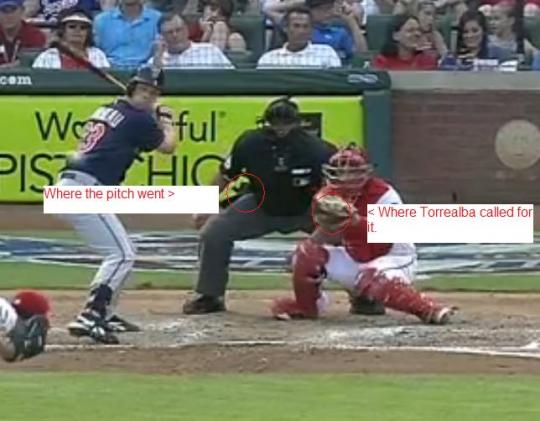
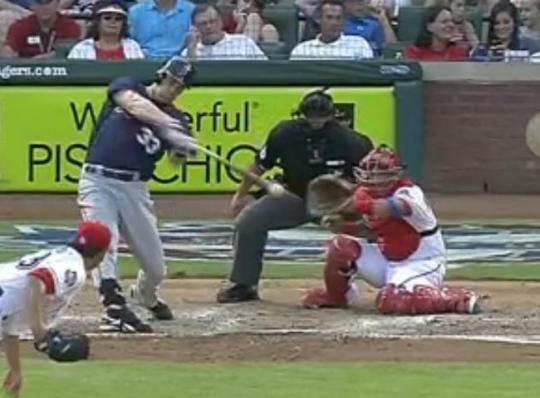
Agree. The first at bat was completely brutal and what we had seen for the majority of the season from him. In the AB in which he got the hit Morneau certainly battled but there was far less "sweep" to Perez's curveball on the pitch he hit than was intended. Torrealba was set up for the pitch off the plate away. That curve spun and hung on the inner half: Now, this is not to discredit Morneau's ability to dump the pitch into right field for a hit -- he kept his front side locked in and he stayed stacked rather than opening up before his hands go through the hitting zone: At the same time, Perez had troubles hitting his spots away on Morneau in the final two at-bats (in the third AB, Morneau tagged a first-pitch hanging curve that stayed inside as well). While those two ABs, as Coomer said, were very positive, I'm still curious to see how he will match up against another left-hander in Derek Holland tonight.
-
Article: Thursday's Minor League Round-up
Parker Hageman replied to Jeremy Nygaard's topic in Twins Daily Front Page News
I am looking forward to seeing Deduno pitch. Hard-thrower with good curve. Terrible command but a different type of pitcher anyways. -
You can view the page at http://twinsdaily.com/content.php?768-Morneau-s-Struggles-Against-Southpaws-Persist
-
So far this season Justin Morneau has seemed as comfortable facing lefties as Mitt Romney would as the opening act for a Phish concert. In spite of performing quite well against right-handed pitchers (hitting .310/.386/.561 and smacking 8 of his 10 home runs), among qualified hitters Morneau’s .100 average off of left-handed pitching (8-for-80 as of Wednesday) is the lowest in baseball. This is not simply a fluky situation; the Twins first baseman is completely lost mechanically at the plate against his left-handed brethren. Prior to the nasty concussion in 2010 Morneau had handled lefties decent enough over his career. Dating back to 2004, he had hit lefties at a .269/.319/.468 clip. However, since the knee to the head in Toronto, he has posted a .124/.167/.200 line against southpaws. Perhaps it is simply rust, an injury or maybe something psychologically about being in the batter’s box and a 90 mile per hour plus fastball that cross in front of your head. Maybe it is a combination of all three. Either way, whatever is responsible for this decline does not seem like an easy fix. Lending credence to the notion that it may be more rust or psychological rather than a physical ailment like his wrist or shoulder is the amount of times he is fool by sliders from left-handers now versus two years ago. According to pitch f/x data, in 2010, left-handed opponents threw him sliders 21% of the time. Morneau elected to swing at 53% of those thrown his way while whiffing at 14%. This year, opposing team’s have had their lefties increase the number of sliders (31%) in response to Morneau’s inability to layoff of the breaking pitch as he has swung at 70% of all left-handed sliders thrown his way while whiffing at 26% of them. This statistical breakdown leads one to believe that Morneau is struggling with pitch recognition out of the pitcher’s hand. To make matters worse, his mechanics – particularly against left-handed pitching – has become so abysmal that he’s unable to keep himself locked in on pitches when teams attack him on the outer-half of the plate. His batted ball distribution chart paints a disconcerting portrait of how far his skills against left-handers have eroded. Back in 2010 Morneau was much better at using the entire field. As same-sided hurlers would throw sliders and fastballs on the outer half of the strike zone, he would be able to deposit them all over the field. Now, as we have seen more recently this year, Morneau is having difficulty doing anything against lefties besides yanking the ball: http://apps.startribune.com/blogs/user_images/Morneau_batted_balls_v_lefties.jpg This is particularly ineffective when the majority of pitches to him are being thrown away. As noted above, Morneau is mechanically out of whack as well when it comes to swinging against lefties. Focus on his front side (hip) and compare his swing from 2010 (top) versus one from this past June against the Phillies’ Antonio Bastardo (bottom): http://apps.startribune.com/blogs/user_images/Morneau_2010_leg_kick.gif http://apps.startribune.com/blogs/user_images/Morneau_2012_June.gif You will notice that in his 2010 stance and mechanics, Morneau kept his feet closer together and made a long stride at the ball. Once he began his swing, he demonstrated the ability to keep his hip on the ball and open up along with his swing as his hands come to the ball. These traits were consistent throughout many of his clips that season. In the more recent version however, he had widen his stance thereby shortening his stride (perhaps in efforts to reduce the movement and improve contact). When he swings, his front side basically splays wide open well before his hands come through the hitting zone. Because his front side has already committed to opening up, Morneau has no choice but to pull the ball – even if it is located on the outer-half of the plate. This too, unfortunately, is a trait that also carries with him throughout many of his swing clips from this year and is not unique just to this match-up. With his issues at the plate continuing to progress, it became apparent that in the past week or so Morneau and hitting coach Joe Vavra have made some changes to his approach to combat this slide. The most notable of which is removing his leg kick altogether. Instead of the prominent leg lift and stride as seen in the clips above, Morneau is now simply lifting the heel of his front foot while keeping his toes firmly in the dirt: http://apps.startribune.com/blogs/user_images/Morneau_2012_July.gif http://apps.startribune.com/blogs/user_images/Morneau_2012_July2.gif Additionally, there seems to be more concentration on keeping his weight back and going the other way with the pitch (at least you can see this in the clip against Bruce Chen and the Royals or today with Darin Downs on the mound for the Tigers). The rationale behind this alteration seems to be focused on making contact by keeping him from drifting out with his front side. By not having a stride, Morneau’s hips will have less of a tendency to open up. Likewise, by minimizing the movement it allows him to keep his head still and in theory see the ball better. Of course, at the same time, this significantly reduces his power potential and it may be the reason why during Thursday’s game, Morneau went back to his original stride (with little success): http://apps.startribune.com/blogs/user_images/Morneau_2012_July3.gif In addition to the season long woes against lefties, Morneau’s power has been MIA since June 4 when he hit his last home run. The ball just is not coming off of his bat the way it had previously. According to BaseballHeatMaps.com, before June 4 Morneau’s fly balls and line drives were travelling an average of 298.27 feet. Since then, that average has dropped to 259.89 and has resulted in five extra base hits in 101 plate appearances since his last home run. Given that he has made some changes, this indicates that he is not wholly comfortable at the plate. While he and Vavra are attempting to get back on course, it raises the larger question on whether he should continue to be used regularly against left-handed pitchers. With Morneau inserted in the fifth spot against southpaws and having him continue to produce at the abysmal rate that he has greatly diminishes the effectiveness of the lineup. The Twins have three games remaining before the All Star Break and in two of those they will be facing southpaws. This should be a good time to sit the first baseman out for a few games, giving him some added rest and time to concoct a game plan against lefties.
-
Morneau's Struggles Against Southpaws Persist
Parker Hageman commented on Parker Hageman's blog entry in Over the Baggy
So far this season Justin Morneau has seemed as comfortable facing lefties as Mitt Romney would as the opening act for a Phish concert. In spite of performing quite well against right-handed pitchers (hitting .310/.386/.561 and smacking 8 of his 10 home runs), among qualified hitters Morneau’s .100 average off of left-handed pitching (8-for-80 as of Wednesday) is the lowest in baseball. This is not simply a fluky situation; the Twins first baseman is completely lost mechanically at the plate against his left-handed brethren. Prior to the nasty concussion in 2010 Morneau had handled lefties decent enough over his career. Dating back to 2004, he had hit lefties at a .269/.319/.468 clip. However, since the knee to the head in Toronto, he has posted a .124/.167/.200 line against southpaws. Perhaps it is simply rust, an injury or maybe something psychologically about being in the batter’s box and a 90 mile per hour plus fastball that cross in front of your head. Maybe it is a combination of all three. Either way, whatever is responsible for this decline does not seem like an easy fix. Lending credence to the notion that it may be more rust or psychological rather than a physical ailment like his wrist or shoulder is the amount of times he is fool by sliders from left-handers now versus two years ago. According to pitch f/x data, in 2010, left-handed opponents threw him sliders 21% of the time. Morneau elected to swing at 53% of those thrown his way while whiffing at 14%. This year, opposing team’s have had their lefties increase the number of sliders (31%) in response to Morneau’s inability to layoff of the breaking pitch as he has swung at 70% of all left-handed sliders thrown his way while whiffing at 26% of them. This statistical breakdown leads one to believe that Morneau is struggling with pitch recognition out of the pitcher’s hand. To make matters worse, his mechanics – particularly against left-handed pitching – has become so abysmal that he’s unable to keep himself locked in on pitches when teams attack him on the outer-half of the plate. His batted ball distribution chart paints a disconcerting portrait of how far his skills against left-handers have eroded. Back in 2010 Morneau was much better at using the entire field. As same-sided hurlers would throw sliders and fastballs on the outer half of the strike zone, he would be able to deposit them all over the field. Now, as we have seen more recently this year, Morneau is having difficulty doing anything against lefties besides yanking the ball: http://apps.startribune.com/blogs/user_images/Morneau_batted_balls_v_lefties.jpg This is particularly ineffective when the majority of pitches to him are being thrown away. As noted above, Morneau is mechanically out of whack as well when it comes to swinging against lefties. Focus on his front side (hip) and compare his swing from 2010 (top) versus one from this past June against the Phillies’ Antonio Bastardo (bottom): http://apps.startribune.com/blogs/user_images/Morneau_2010_leg_kick.gif http://apps.startribune.com/blogs/user_images/Morneau_2012_June.gif You will notice that in his 2010 stance and mechanics, Morneau kept his feet closer together and made a long stride at the ball. Once he began his swing, he demonstrated the ability to keep his hip on the ball and open up along with his swing as his hands come to the ball. These traits were consistent throughout many of his clips that season. In the more recent version however, he had widen his stance thereby shortening his stride (perhaps in efforts to reduce the movement and improve contact). When he swings, his front side basically splays wide open well before his hands come through the hitting zone. Because his front side has already committed to opening up, Morneau has no choice but to pull the ball – even if it is located on the outer-half of the plate. This too, unfortunately, is a trait that also carries with him throughout many of his swing clips from this year and is not unique just to this match-up. With his issues at the plate continuing to progress, it became apparent that in the past week or so Morneau and hitting coach Joe Vavra have made some changes to his approach to combat this slide. The most notable of which is removing his leg kick altogether. Instead of the prominent leg lift and stride as seen in the clips above, Morneau is now simply lifting the heel of his front foot while keeping his toes firmly in the dirt: http://apps.startribune.com/blogs/user_images/Morneau_2012_July.gif http://apps.startribune.com/blogs/user_images/Morneau_2012_July2.gif Additionally, there seems to be more concentration on keeping his weight back and going the other way with the pitch (at least you can see this in the clip against Bruce Chen and the Royals or today with Darin Downs on the mound for the Tigers). The rationale behind this alteration seems to be focused on making contact by keeping him from drifting out with his front side. By not having a stride, Morneau’s hips will have less of a tendency to open up. Likewise, by minimizing the movement it allows him to keep his head still and in theory see the ball better. Of course, at the same time, this significantly reduces his power potential and it may be the reason why during Thursday’s game, Morneau went back to his original stride (with little success): http://apps.startribune.com/blogs/user_images/Morneau_2012_July3.gif In addition to the season long woes against lefties, Morneau’s power has been MIA since June 4 when he hit his last home run. The ball just is not coming off of his bat the way it had previously. According to BaseballHeatMaps.com, before June 4 Morneau’s fly balls and line drives were travelling an average of 298.27 feet. Since then, that average has dropped to 259.89 and has resulted in five extra base hits in 101 plate appearances since his last home run. Given that he has made some changes, this indicates that he is not wholly comfortable at the plate. While he and Vavra are attempting to get back on course, it raises the larger question on whether he should continue to be used regularly against left-handed pitchers. With Morneau inserted in the fifth spot against southpaws and having him continue to produce at the abysmal rate that he has greatly diminishes the effectiveness of the lineup. The Twins have three games remaining before the All Star Break and in two of those they will be facing southpaws. This should be a good time to sit the first baseman out for a few games, giving him some added rest and time to concoct a game plan against lefties. -
So far this season Justin Morneau has seemed as comfortable facing lefties as Mitt Romney would as the opening act for a Phish concert. In spite of performing quite well against right-handed pitchers (hitting .310/.386/.561 and smacking 8 of his 10 home runs), among qualified hitters Morneau’s .100 average off of left-handed pitching (8-for-80 as of Wednesday) is the lowest in baseball. This is not simply a fluky situation; the Twins first baseman is completely lost mechanically at the plate against his left-handed brethren. Prior to the nasty concussion in 2010 Morneau had handled lefties decent enough over his career. Dating back to 2004, he had hit lefties at a .269/.319/.468 clip. However, since the knee to the head in Toronto, he has posted a .124/.167/.200 line against southpaws. Perhaps it is simply rust, an injury or maybe something psychologically about being in the batter’s box and a 90 mile per hour plus fastball that cross in front of your head. Maybe it is a combination of all three. Either way, whatever is responsible for this decline does not seem like an easy fix. Lending credence to the notion that it may be more rust or psychological rather than a physical ailment like his wrist or shoulder is the amount of times he is fool by sliders from left-handers now versus two years ago. According to pitch f/x data, in 2010, left-handed opponents threw him sliders 21% of the time. Morneau elected to swing at 53% of those thrown his way while whiffing at 14%. This year, opposing team’s have had their lefties increase the number of sliders (31%) in response to Morneau’s inability to layoff of the breaking pitch as he has swung at 70% of all left-handed sliders thrown his way while whiffing at 26% of them. This statistical breakdown leads one to believe that Morneau is struggling with pitch recognition out of the pitcher’s hand. To make matters worse, his mechanics – particularly against left-handed pitching – has become so abysmal that he’s unable to keep himself locked in on pitches when teams attack him on the outer-half of the plate. His batted ball distribution chart paints a disconcerting portrait of how far his skills against left-handers have eroded. Back in 2010 Morneau was much better at using the entire field. As same-sided hurlers would throw sliders and fastballs on the outer half of the strike zone, he would be able to deposit them all over the field. Now, as we have seen more recently this year, Morneau is having difficulty doing anything against lefties besides yanking the ball: http://apps.startribune.com/blogs/user_images/Morneau_batted_balls_v_lefties.jpg This is particularly ineffective when the majority of pitches to him are being thrown away. As noted above, Morneau is mechanically out of whack as well when it comes to swinging against lefties. Focus on his front side (hip) and compare his swing from 2010 (top) versus one from this past June against the Phillies’ Antonio Bastardo (bottom): http://apps.startribune.com/blogs/user_images/Morneau_2010_leg_kick.gif http://apps.startribune.com/blogs/user_images/Morneau_2012_June.gif You will notice that in his 2010 stance and mechanics, Morneau kept his feet closer together and made a long stride at the ball. Once he began his swing, he demonstrated the ability to keep his hip on the ball and open up along with his swing as his hands come to the ball. These traits were consistent throughout many of his clips that season. In the more recent version however, he had widen his stance thereby shortening his stride (perhaps in efforts to reduce the movement and improve contact). When he swings, his front side basically splays wide open well before his hands come through the hitting zone. Because his front side has already committed to opening up, Morneau has no choice but to pull the ball – even if it is located on the outer-half of the plate. This too, unfortunately, is a trait that also carries with him throughout many of his swing clips from this year and is not unique just to this match-up. With his issues at the plate continuing to progress, it became apparent that in the past week or so Morneau and hitting coach Joe Vavra have made some changes to his approach to combat this slide. The most notable of which is removing his leg kick altogether. Instead of the prominent leg lift and stride as seen in the clips above, Morneau is now simply lifting the heel of his front foot while keeping his toes firmly in the dirt: http://apps.startribune.com/blogs/user_images/Morneau_2012_July.gif http://apps.startribune.com/blogs/user_images/Morneau_2012_July2.gif Additionally, there seems to be more concentration on keeping his weight back and going the other way with the pitch (at least you can see this in the clip against Bruce Chen and the Royals or today with Darin Downs on the mound for the Tigers). The rationale behind this alteration seems to be focused on making contact by keeping him from drifting out with his front side. By not having a stride, Morneau’s hips will have less of a tendency to open up. Likewise, by minimizing the movement it allows him to keep his head still and in theory see the ball better. Of course, at the same time, this significantly reduces his power potential and it may be the reason why during Thursday’s game, Morneau went back to his original stride (with little success): http://apps.startribune.com/blogs/user_images/Morneau_2012_July3.gif In addition to the season long woes against lefties, Morneau’s power has been MIA since June 4 when he hit his last home run. The ball just is not coming off of his bat the way it had previously. According to BaseballHeatMaps.com, before June 4 Morneau’s fly balls and line drives were travelling an average of 298.27 feet. Since then, that average has dropped to 259.89 and has resulted in five extra base hits in 101 plate appearances since his last home run. Given that he has made some changes, this indicates that he is not wholly comfortable at the plate. While he and Vavra are attempting to get back on course, it raises the larger question on whether he should continue to be used regularly against left-handed pitchers. With Morneau inserted in the fifth spot against southpaws and having him continue to produce at the abysmal rate that he has greatly diminishes the effectiveness of the lineup. The Twins have three games remaining before the All Star Break and in two of those they will be facing southpaws. This should be a good time to sit the first baseman out for a few games, giving him some added rest and time to concoct a game plan against lefties.
-
On International Signing Day, the Twins locked in Dominican shortstop Amaurys Minier for $1.4 million - leaving them with approximately $1.5 million to divvy up among any other international signings. According to Baseball America, the six-foot-two Minier ranked 12th among available prospects and was the fourth-best rated shortstop prospect. The switch-hitting Minier has a decent sized frame including a stout lower-half making many evaluators believe that he will eventually move from his original position to third base. Here's what the scouting report on him from the Dominican Prospect League has to say:[PRBREAK][/PRBREAK] Twins Daily members have found additional information on Minier. You can find their contributions and comments here.
-
Article: Sunday Game Notes and Highlights
Parker Hageman replied to Seth Stohs's topic in Twins Daily Front Page News
Giving yourself Tweet of the Day?!? -
Twins sign International Prospect Amaurys Minier
Parker Hageman replied to Parker Hageman's topic in Twins Minor League Talk
16... maybe. Birthday says 1/30/1996. -
On International Signing Day, the Twins locked in Dominican shortstop Amaurys Minier for $1.4 million - leaving them with approximately $1.5 million to divvy up among any other international signings. According to Baseball America, the six-foot-two Minier ranked 12th among available prospects and was the fourth-best rated shortstop prospect. The switch-hitting Minier has a decent sized frame including a stout lower-half making many evaluators believe that he will eventually move from his original position to third base. Here's what the scouting report on him from the Dominican Prospect League has to say:
-
Priorities: The Best Backup Catcher in Baseball
Parker Hageman commented on jorgenswest's blog entry in Blog jorgenswest
Good thoughts on this subject. Thanks for sharing! -
ESPN.com's Jerry Crasnick reports that the Twins and Ryan Doumit are close to a multi-year deal. 1500ESPN.com's Darren Wolfson says that the deal will be for two additional seasons. UPDATE: Wolfson says it's a two year, $7 million deal. What do you think of this decision?
-
You can view the page at http://twinsdaily.com/content.php?733-Can-Nick-Blackburn-be-fix
-
For the 9-to-5ers in Twins Territory, those who did not attend the game should consider themselves lucky they stayed in the office rather than witness Nick Blackburn’s last start on Wednesday afternoon. For the second consecutive start, Blackburn was punished across the field, allowing another pair of home runs to Chicago’s Adam Dunn and Alex Rios. [PRBREAK][/PRBREAK] The one-time groundball-getter has failed to induce the batted ball types that earned him that label. In those two starts, he managed to get 12 grounders to 26 fly balls – hardly the worm-burning ratio. At a point when the Twins are in desperate need of a starter to just throw consistent innings Blackburn, the guy they paid millions to supply just that, has been unable to fulfill their needs. Is there any hope of Blackburn turning things around or is he simply a casualty waiting to happen? In March 2010, the Twins made the decision to sign Blackburn to a four-year deal -- in spite of coming off a season in which he led the league in hits allowed (240) -- effectively buying out his arbitration years and a year of free agency for $14 million. Not long after that Rob Antony, the team’s assistant general manager, explained the logic behind locking in Blackburn saying that the organization believed he was capable of providing the team with more than his nearly 400 innings (399.0 to be exact), 22-22 record and 4.04 ERA which he had already put up in 2008 and 2009. “You start putting down the numbers and all the comps that he has and you base it off of if he just does what he has done,” Antony said. “You don’t project that he is getting better – although we believe there is more in there. Instead of being an 11-11 guy, we believe he could easily be a 15-9 guy.” Had he simply sustained his previous production, Blackburn would have been a huge bargain for the Twins. In his first two seasons, Fangraphs.com’s value metric said that he was worth $24.8 million mostly based on working 200 innings. Of course, he would not be able to maintain that level of output. Injuries and general ineffectiveness has made it look like he hornswoggled the team out of millions. Over the past three seasons, Fangraphs.com’s value metric has said he has been only worth $2.4 million while the Twins have paid him $8.25 million in actual money. Blackburn has always been a pitcher who seems to work in a delicately balanced universe. As a high contact groundballer with the propensity to give up long home runs, he requires sterling defense behind him and laser-sharp command to guide him through his starts. If one of those items falls out of equilibrium, the levee breaks. To his credit, Blackburn seems very cognizant of his abilities and his reliance on his mechanics to help the movement in his sinker. This spring, Blackburn headed into camp talking about changes he had made to him mechanics and approach. The first was shifting to the middle of the pitching rubber away from the first base side he had lived at for most of his career. This, he said, would give added deception. The second change was getting to a more “over-the-top” release point to alleviate stress on his arm. In considering his season thus far, clearly neither addition has been the answer. While pitchers are always adapting, Blackburn’s latest mechanics seem further and further away from his successful 2009 season which landed him his large payday. Take a look at his 2009 version compared to his current one: http://apps.startribune.com/blogs/user_images/theeight_1340946905_Blackburn_OAK09.gif http://apps.startribune.com/blogs/user_images/Blackburn_CIN12.gif If you are looking for it, you will notice several differences but the most critical difference is in his leg stride. Notice in his 2009 model that he gets his front leg up higher and instead of bringing it back down immediately, he stretches it further out towards home. There is a brief hesitation as he gets to the peak of his leg lift before bringing his leg forward. As that is happening, his weight stays back extremely well. Meanwhile, his current mechanics involve bringing the front leg down and then drifting it forward rather than stretching it as he did in 2009. Compare the two motions at the point in which he is beginning to move his front leg forward. Here you can see how much more he elevations his front leg in 2009 and how the 2012 version is taking more of a swinging path towards home. http://apps.startribune.com/blogs/user_images/Blackburn_tpost2009-OAK.jpg http://apps.startribune.com/blogs/user_images/Blackburn_tpost2012-CIN.jpg Pitch F/X data details a significantly different story in the path of his sinker (classified as a two-seamer) from 2009 and 2012. In 2009, while lining up on the first base side of the rubber, Blackburn’s sinker most often was thrown on the black of the plate (in on righties, away from lefties). This, more or less, is an ideal spot for that pitch. Notice in the overhead below that the pitch has some pitcher’s glove side run to it as well. This season, with the relocation to the middle of the slab, the sinker is thrown smack dab in the center of the plate and, unlike the 2009 version, does not have much run if any. http://apps.startribune.com/blogs/user_images/Blackburn_Overhead.jpg From the strike zone view, you will see how the 2009 sinker ran in on the hands of right-handed hitters and away from the left-handed hitters’ swings. This season a solid majority of his offerings have been within the zone, giving hitters something they can square up on: http://apps.startribune.com/blogs/user_images/Blackburn_Zone.jpg In short, in 2009 he stayed back well and was able to get outstanding movement and location. In 2012, he is rushing a bit towards home which creates a timing issue and has less movement on the sinker. As has been discussed at length at Twins Daily’s forum, Blackburn is currently a sunk cost to the Twins. He now has thrown several stinkers in a row without any signs of improving. The general attitude among the community appears to be to cut him loose and give those innings to another pitcher. Unfortunately, the team is on the hook again for $5.5 million next year and, with the current state of the rotation, the Twins could certainly use the 2009 version of Blackburn again. There are probably some very good reasons behind Blackburn’s mechanical changes since 2009. However, given his struggles, I would submit that it cannot hurt to attempt to return to the motion he was using back when the front office invested $14 million in him and his power sinker.
-
For the 9-to-5ers in Twins Territory, those who did not attend the game should consider themselves lucky they stayed in the office rather than witness Nick Blackburn’s last start on Wednesday afternoon. For the second consecutive start, Blackburn was punished across the field, allowing another pair of home runs to Chicago’s Adam Dunn and Alex Rios. The one-time groundball-getter has failed to induce the batted ball types that earned him that label. In those two starts, he managed to get 12 grounders to 26 fly balls – hardly the worm-burning ratio. At a point when the Twins are in desperate need of a starter to just throw consistent innings Blackburn, the guy they paid millions to supply just that, has been unable to fulfill their needs. Is there any hope of Blackburn turning things around or is he simply a casualty waiting to happen? In March 2010, the Twins made the decision to sign Blackburn to a four-year deal -- in spite of coming off a season in which he led the league in hits allowed (240) -- effectively buying out his arbitration years and a year of free agency for $14 million. Not long after that Rob Antony, the team’s assistant general manager, explained the logic behind locking in Blackburn saying that the organization believed he was capable of providing the team with more than his nearly 400 innings (399.0 to be exact), 22-22 record and 4.04 ERA which he had already put up in 2008 and 2009. “You start putting down the numbers and all the comps that he has and you base it off of if he just does what he has done,” Antony said. “You don’t project that he is getting better – although we believe there is more in there. Instead of being an 11-11 guy, we believe he could easily be a 15-9 guy.” Had he simply sustained his previous production, Blackburn would have been a huge bargain for the Twins. In his first two seasons, Fangraphs.com’s value metric said that he was worth $24.8 million mostly based on working 200 innings. Of course, he would not be able to maintain that level of output. Injuries and general ineffectiveness has made it look like he hornswoggled the team out of millions. Over the past three seasons, Fangraphs.com’s value metric has said he has been only worth $2.4 million while the Twins have paid him $8.25 million in actual money. Blackburn has always been a pitcher who seems to work in a delicately balanced universe. As a high contact groundballer with the propensity to give up long home runs, he requires sterling defense behind him and laser-sharp command to guide him through his starts. If one of those items falls out of equilibrium, the levee breaks. To his credit, Blackburn seems very cognizant of his abilities and his reliance on his mechanics to help the movement in his sinker. This spring, Blackburn headed into camp talking about changes he had made to him mechanics and approach. The first was shifting to the middle of the pitching rubber away from the first base side he had lived at for most of his career. This, he said, would give added deception. The second change was getting to a more “over-the-top” release point to alleviate stress on his arm. In considering his season thus far, clearly neither addition has been the answer. While pitchers are always adapting, Blackburn’s latest mechanics seem further and further away from his successful 2009 season which landed him his large payday. Take a look at his 2009 version compared to his current one: http://apps.startribune.com/blogs/user_images/theeight_1340946905_Blackburn_OAK09.gif http://apps.startribune.com/blogs/user_images/Blackburn_CIN12.gif If you are looking for it, you will notice several differences but the most critical difference is in his leg stride. Notice in his 2009 model that he gets his front leg up higher and instead of bringing it back down immediately, he stretches it further out towards home. There is a brief hesitation as he gets to the peak of his leg lift before bringing his leg forward. As that is happening, his weight stays back extremely well. Meanwhile, his current mechanics involve bringing the front leg down and then drifting it forward rather than stretching it as he did in 2009. Compare the two motions at the point in which he is beginning to move his front leg forward. Here you can see how much more he elevations his front leg in 2009 and how the 2012 version is taking more of a swinging path towards home. http://apps.startribune.com/blogs/user_images/Blackburn_tpost2009-OAK.jpg http://apps.startribune.com/blogs/user_images/Blackburn_tpost2012-CIN.jpg Pitch F/X data details a significantly different story in the path of his sinker (classified as a two-seamer) from 2009 and 2012. In 2009, while lining up on the first base side of the rubber, Blackburn’s sinker most often was thrown on the black of the plate (in on righties, away from lefties). This, more or less, is an ideal spot for that pitch. Notice in the overhead below that the pitch has some pitcher’s glove side run to it as well. This season, with the relocation to the middle of the slab, the sinker is thrown smack dab in the center of the plate and, unlike the 2009 version, does not have much run if any. http://apps.startribune.com/blogs/user_images/Blackburn_Overhead.jpg From the strike zone view, you will see how the 2009 sinker ran in on the hands of right-handed hitters and away from the left-handed hitters’ swings. This season a solid majority of his offerings have been within the zone, giving hitters something they can square up on: http://apps.startribune.com/blogs/user_images/Blackburn_Zone.jpg In short, in 2009 he stayed back well and was able to get outstanding movement and location. In 2012, he is rushing a bit towards home which creates a timing issue and has less movement on the sinker. As has been discussed at length at Twins Daily’s forum, Blackburn is currently a sunk cost to the Twins. He now has thrown several stinkers in a row without any signs of improving. The general attitude among the community appears to be to cut him loose and give those innings to another pitcher. Unfortunately, the team is on the hook again for $5.5 million next year and, with the current state of the rotation, the Twins could certainly use the 2009 version of Blackburn again. There are probably some very good reasons behind Blackburn’s mechanical changes since 2009. However, given his struggles, I would submit that it cannot hurt to attempt to return to the motion he was using back when the front office invested $14 million in him and his power sinker.
-
Can Nick Blackburn be fix?
Parker Hageman commented on Parker Hageman's blog entry in Over the Baggy
For the 9-to-5ers in Twins Territory, those who did not attend the game should consider themselves lucky they stayed in the office rather than witness Nick Blackburn’s last start on Wednesday afternoon. For the second consecutive start, Blackburn was punished across the field, allowing another pair of home runs to Chicago’s Adam Dunn and Alex Rios. The one-time groundball-getter has failed to induce the batted ball types that earned him that label. In those two starts, he managed to get 12 grounders to 26 fly balls – hardly the worm-burning ratio. At a point when the Twins are in desperate need of a starter to just throw consistent innings Blackburn, the guy they paid millions to supply just that, has been unable to fulfill their needs. Is there any hope of Blackburn turning things around or is he simply a casualty waiting to happen? In March 2010, the Twins made the decision to sign Blackburn to a four-year deal -- in spite of coming off a season in which he led the league in hits allowed (240) -- effectively buying out his arbitration years and a year of free agency for $14 million. Not long after that Rob Antony, the team’s assistant general manager, explained the logic behind locking in Blackburn saying that the organization believed he was capable of providing the team with more than his nearly 400 innings (399.0 to be exact), 22-22 record and 4.04 ERA which he had already put up in 2008 and 2009. “You start putting down the numbers and all the comps that he has and you base it off of if he just does what he has done,” Antony said. “You don’t project that he is getting better – although we believe there is more in there. Instead of being an 11-11 guy, we believe he could easily be a 15-9 guy.” Had he simply sustained his previous production, Blackburn would have been a huge bargain for the Twins. In his first two seasons, Fangraphs.com’s value metric said that he was worth $24.8 million mostly based on working 200 innings. Of course, he would not be able to maintain that level of output. Injuries and general ineffectiveness has made it look like he hornswoggled the team out of millions. Over the past three seasons, Fangraphs.com’s value metric has said he has been only worth $2.4 million while the Twins have paid him $8.25 million in actual money. Blackburn has always been a pitcher who seems to work in a delicately balanced universe. As a high contact groundballer with the propensity to give up long home runs, he requires sterling defense behind him and laser-sharp command to guide him through his starts. If one of those items falls out of equilibrium, the levee breaks. To his credit, Blackburn seems very cognizant of his abilities and his reliance on his mechanics to help the movement in his sinker. This spring, Blackburn headed into camp talking about changes he had made to him mechanics and approach. The first was shifting to the middle of the pitching rubber away from the first base side he had lived at for most of his career. This, he said, would give added deception. The second change was getting to a more “over-the-top” release point to alleviate stress on his arm. In considering his season thus far, clearly neither addition has been the answer. While pitchers are always adapting, Blackburn’s latest mechanics seem further and further away from his successful 2009 season which landed him his large payday. Take a look at his 2009 version compared to his current one: http://apps.startribune.com/blogs/user_images/theeight_1340946905_Blackburn_OAK09.gif http://apps.startribune.com/blogs/user_images/Blackburn_CIN12.gif If you are looking for it, you will notice several differences but the most critical difference is in his leg stride. Notice in his 2009 model that he gets his front leg up higher and instead of bringing it back down immediately, he stretches it further out towards home. There is a brief hesitation as he gets to the peak of his leg lift before bringing his leg forward. As that is happening, his weight stays back extremely well. Meanwhile, his current mechanics involve bringing the front leg down and then drifting it forward rather than stretching it as he did in 2009. Compare the two motions at the point in which he is beginning to move his front leg forward. Here you can see how much more he elevations his front leg in 2009 and how the 2012 version is taking more of a swinging path towards home. http://apps.startribune.com/blogs/user_images/Blackburn_tpost2009-OAK.jpg http://apps.startribune.com/blogs/user_images/Blackburn_tpost2012-CIN.jpg Pitch F/X data details a significantly different story in the path of his sinker (classified as a two-seamer) from 2009 and 2012. In 2009, while lining up on the first base side of the rubber, Blackburn’s sinker most often was thrown on the black of the plate (in on righties, away from lefties). This, more or less, is an ideal spot for that pitch. Notice in the overhead below that the pitch has some pitcher’s glove side run to it as well. This season, with the relocation to the middle of the slab, the sinker is thrown smack dab in the center of the plate and, unlike the 2009 version, does not have much run if any. http://apps.startribune.com/blogs/user_images/Blackburn_Overhead.jpg From the strike zone view, you will see how the 2009 sinker ran in on the hands of right-handed hitters and away from the left-handed hitters’ swings. This season a solid majority of his offerings have been within the zone, giving hitters something they can square up on: http://apps.startribune.com/blogs/user_images/Blackburn_Zone.jpg In short, in 2009 he stayed back well and was able to get outstanding movement and location. In 2012, he is rushing a bit towards home which creates a timing issue and has less movement on the sinker. As has been discussed at length at Twins Daily’s forum, Blackburn is currently a sunk cost to the Twins. He now has thrown several stinkers in a row without any signs of improving. The general attitude among the community appears to be to cut him loose and give those innings to another pitcher. Unfortunately, the team is on the hook again for $5.5 million next year and, with the current state of the rotation, the Twins could certainly use the 2009 version of Blackburn again. There are probably some very good reasons behind Blackburn’s mechanical changes since 2009. However, given his struggles, I would submit that it cannot hurt to attempt to return to the motion he was using back when the front office invested $14 million in him and his power sinker. -
I also find it interesting that I write about Daniel Hudson and today we learn that his UCL has crapped out.
-
To combat Morosi's point, Buster Olney spoke to some evaluators who were "skittish" about pursuing Liriano and favored the Cubs' Matt Garza in spite of his higher salary. Can't say I don't disagree. http://www.mlbtraderumors.com/2012/06/central-notes-greinke-brewers-liriano-byrd.html?utm_source=twitterfeed&utm_medium=twitter
-
You can view the page at http://twinsdaily.com/content.php?719-What-Would-a-Francisco-Liriano-Trade-Look-Like

