



Nick Nelson
-
Posts
8,325 -
Joined
-
Last visited
-
Days Won
56
Content Type
Profiles
News
Minnesota Twins Videos
2026 Minnesota Twins Top Prospects Ranking
2022 Minnesota Twins Draft Picks
Minnesota Twins Free Agent & Trade Rumors, Notes, & Tidbits
Guides & Resources
2023 Minnesota Twins Draft Picks
The Minnesota Twins Players Project
2024 Minnesota Twins Draft Picks
2025 Minnesota Twins Draft Pick Tracker
2026 Minnesota Twins Draft Tracker: Picks & Bonuses
Forums
Blogs
Events
Store
Downloads
Gallery
Everything posted by Nick Nelson
-
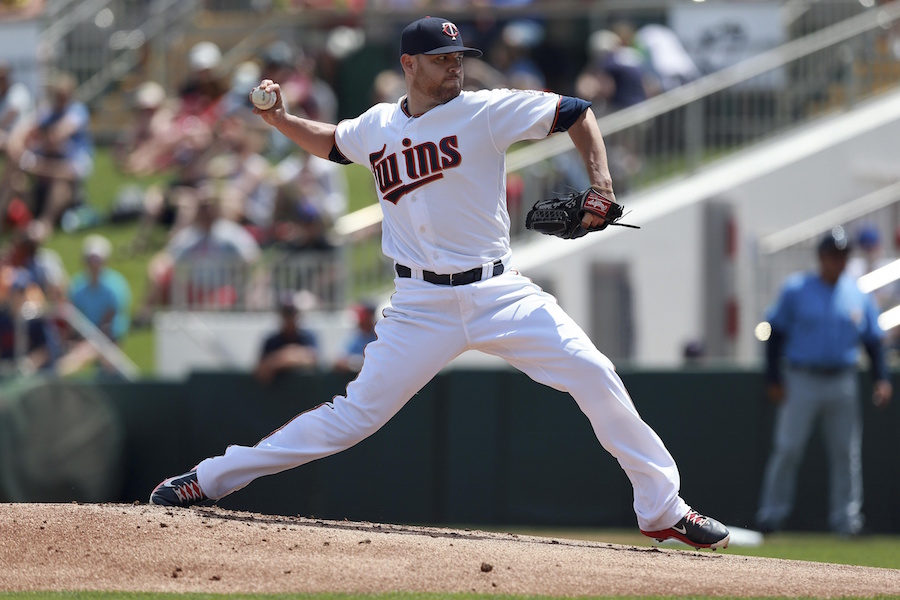 * It’s hard to say whether these coinciding events could be construed as “significant.” No one puts much stock into results on the minor-league fields, and Nolasco was facing a Rays lineup that was beyond watered down, since the team flew back from an exhibition in Cuba last night. Still, the big curve ball from Nolasco that drew rave reviews during his last outing was on full display today. He got more than half of his seven strikeouts with the hook, and said he thought his slider was even better. Of course, breaking balls have always been a strength for the 33-year-old. He claims the big difference-maker today was his fastball command. “Felt it pretty decent that last time out in the minor league game and it kind of carried over,” Nolasco said. “I think everything just kind of goes off that.” And as for his status in the rotation competition? "It’s not my decision. I’ll leave it up to those guys ... They know how I feel. We’ll see what happens." * Is there any scenario in which Paul Molitor would consider bringing Duffey, a former college closer, north as a reliever if Nolasco and Tommy Milone end up in the last two rotation spots? "I haven't really thought about that as an option for the circumstances that we're looking at," the manager said. In other words, probably not. * Molitor confirmed after the game that Ervin Santana will be the team’s starter on Opening Day, with Kyle Gibson and Phil Hughes following him in Baltimore. That lines up Gibson to pitch the home opener against the White Sox at Target Field on April 11th. I wrote about Santana setting a tone for the rotation earlier this week. * The Twins announced during the game that they had outrighted lefty Mike Strong from the 40-man roster, creating an opening that will likely be filled by non-roster invite Fernando Abad. The veteran Abad was always likely to win a bullpen spot, and it looks like he’s had a solid enough spring to lock it up. * Danny Santana was in the lineup at second base today, after starting at shortstop on Tuesday and in center field on Monday. Molitor said earlier this week that he’s trying to get a gauge on Santana’s capacity to serve in a utility role. “His positional experience is somewhat limited,” Molitor said. “I wouldn’t say we’re at that point where we’re convinced he can do all those things. It’s still something we’re trying to decide.” The general manager likes what Santana brings to the table as a bench piece. “He’s been around the diamond quite a bit this spring,” Terry Ryan said. “Of course he can really run. There’s a lot of value in that type of player.” * The Twins cut six from camp this morning, trimming the total number of remaining players to 37. I wrote up a quick article about what the cuts – which included one reliever who was in the bullpen for all of 2015 – mean for the bullpen competition. * Daniel Palka raised some eyebrows by hitting a pair of home runs when he traveled to Clearwater with the split-squad on Tuesday, including a mammoth blast that he pulled over the right field wall. Today, while playing with the Triple-A group in the game Duffey started, Palka hit another bomb, this time an opposite-field shot. “He has power, there’s no doubt,” Ryan said. “Go across there (to the minor-league side) and just watch him take batting practice.” The pop this spring has been as advertised from Palka, who has hit 51 home runs over the last two years between two levels of A-ball. Acquired in exchange for Chris Herrmann in the offseason, the 24-year-old is looking like a nice find, infusing more power into a system that is suddenly rather flush with it.
 -
 The Twins optioned two players from camp this morning and reassigned four others. Taylor Rogers, J.R. Graham, Buddy Boshers, Carlos Paulino, Buck Britton and Wilfredo Tovar were all shipped out, trimming the number of remaining players to 37.This round of cuts brings more clarity to the bullpen race. Assuming that Fernando Abad and the loser of the fifth starter competition (Ricky Nolasco?) are both in, that leaves one remaining spot in a seven-man unit. Boshers (who I wrote about in yesterday’s notes) was not really a factor in the race, but Rogers and Graham – both on the 40-man roster – were in the mix. The remaining contenders for the job: Michael Tonkin, Ryan Pressly, Brandon Kintzler, Ryan O’Rourke, Dan Runzler. Presumably they’re going to go with a righty, and in my opinion, it’s between hard-throwers Tonkin and Pressly. Who would you like to see round out the Minnesota bullpen? Click here to view the article
 -
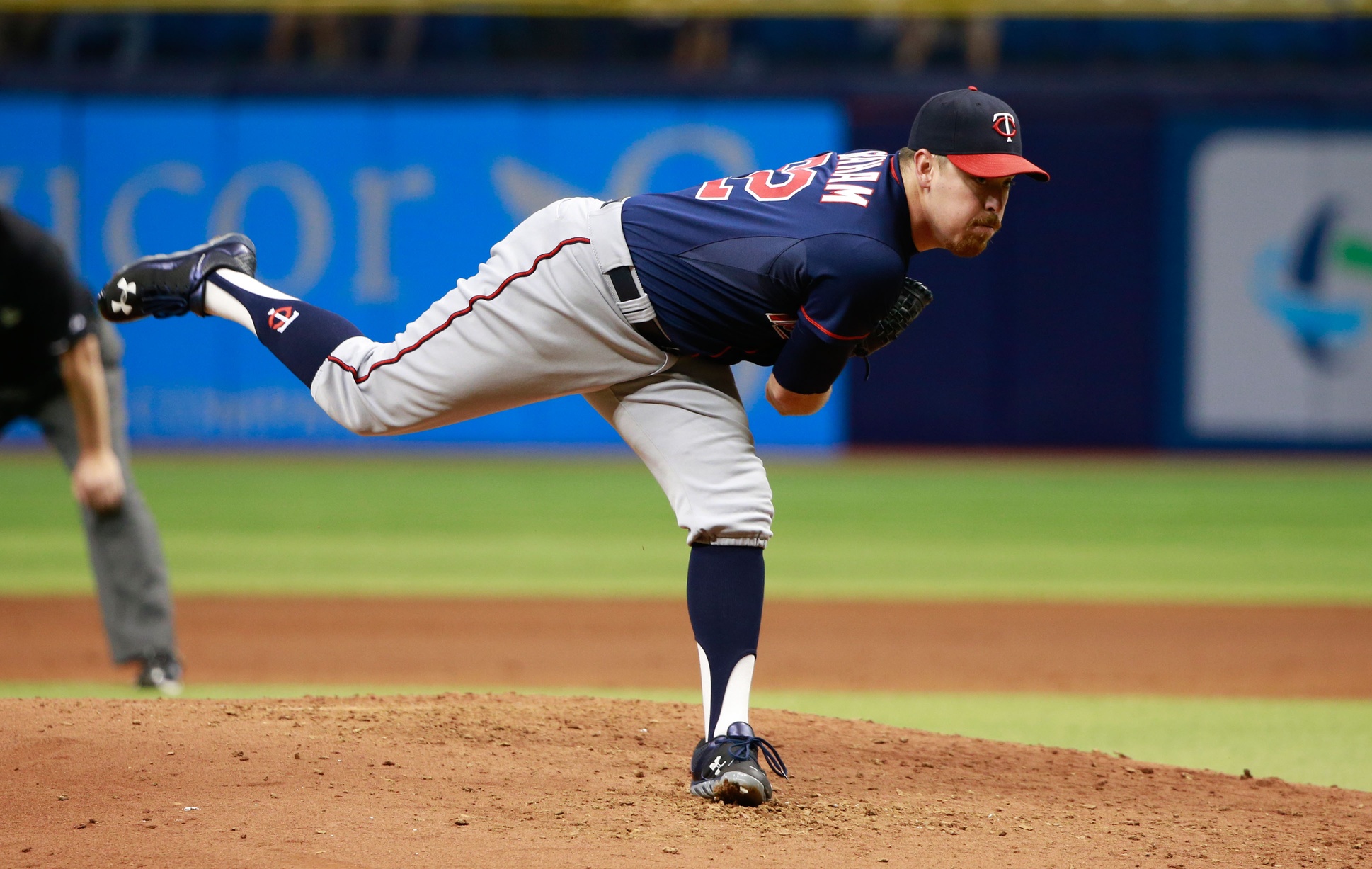 This round of cuts brings more clarity to the bullpen race. Assuming that Fernando Abad and the loser of the fifth starter competition (Ricky Nolasco?) are both in, that leaves one remaining spot in a seven-man unit. Boshers (who I wrote about in yesterday’s notes) was not really a factor in the race, but Rogers and Graham – both on the 40-man roster – were in the mix. The remaining contenders for the job: Michael Tonkin, Ryan Pressly, Brandon Kintzler, Ryan O’Rourke, Dan Runzler. Presumably they’re going to go with a righty, and in my opinion, it’s between hard-throwers Tonkin and Pressly. Who would you like to see round out the Minnesota bullpen?
 -
Prior to attending TwinsFest in January, John Ryan Murphy had only visited Minnesota once in his life. It was last summer, when the Yankees faced the Twins at Target Field, and it was a memorable trip for the young backstop. He hit the biggest home run of his career on a Saturday night in late July, taking Glen Perkins deep for a three-run shot to snap a ninth-inning tie and lift New York to an 8-5 victory.The power flashes haven’t been all that frequent for Murphy, who has four homers and a .374 slugging percentage in 284 career plate appearances, but the Twins are counting on his continued growth in that department as well as others. “I don’t think he’s reached his peak,” said assistant general manager Rob Antony. “I think he has more potential." Adapting to his new surroundings in the Midwest will be the least of Murphy’s worries. For now, he’s more focused on building a rapport with his new battery-mates and learning their individual styles and tendencies. Having spent his entire career up to this point in one organization, he admits that the process of acclimating to a new staff has been a little more challenging than he expected. "It’s one thing to talk about the pitches, and talk about what they like to do, but you have to catch them,” Murphy said. "It comes with time. You have to be back there and see them, see what their curveball does. Everyone’s a little bit different." As Twins bench coach Joe Vavra sees it, Murphy is coming along nicely. Vavra was acting manager on Tuesday when the 24-year-old served as catcher for eight innings in a game where five Minnesota relievers combined to hold the Baltimore Orioles to one run on four hits. He credited Murphy for developing a “good ebb and flow” with the pitchers and pointed out that you rarely saw a call shaken off. “He’s real responsive to me,” Vavra said. “Real quick and understands the pitchers’ tempos.” Murphy didn’t take up catching full-time until his sophomore year of high school, after pitching and playing third base a freshman. He would have continued to refine his skills behind the plate in college at the University of Miami, but the Yankees lured him away with a $1.25 million signing bonus as a 2009 second-round draft pick after Murphy batted .627 with 11 homers as a senior. Antony said that the Twins had eyes on Murphy back then, but it wasn’t clear where he would play. “The Yankees took him and made him a catcher, and he really developed into a good receiver.” So six years later, with a blatant need at the position, the Twins traded away former first-round pick Aaron Hicks to bring Murphy aboard. Now, they’re hoping that he’ll continue to evolve both offensively and defensively. By all accounts, they’re pleased with where he’s at on the defensive end. But it looks as though his bat will be what makes or breaks him. That’s an area where Murphy has something to prove. While he was viewed as a strong offensive prospect as a prep (“He was a guy coming out of the draft we thought could hit,” said Antony), his .263/.327/.406 line in the minors doesn’t suggest a ton of upside, and this spring he hasn’t done much at all. After going 0-for-3 on Tuesday, he’s now batting .091 with zero extra-base hits in Grapefruit action. He has, however, shown a decent eye at the plate, drawing six walks against six strikeouts. And while his 685 career OPS in the big leagues is hardly impressive, he has improved his production each year. In 2015, as Brian McCann’s backup with the Yankees, he slashed .277/.327/.406. For a catcher who gets it done defensively, that’s more than adequate. Vavra, a former hitting coach, doesn’t put a ton of stock into Murphy’s spring slump. “He’s underneath a lot,” he said. “Underneath and probably a little late. It’s timing more than anything.” Maybe a little bit too much self-imposed pressure, as well. “First impression with us, obviously. He wants to do it all right away.” Fortunately, he doesn’t have to do it all right away. He’ll be splitting time this year with Kurt Suzuki, whose locker in the Hammond Stadium clubhouse is right next to his. With a veteran mentor, a fully supportive coaching staff and no obstacles blocking him from ultimately taking the reins as full-time starter, Murphy could hardly ask for a more ideal situation. “I’m certainly in a good position,” he acknowledges. Now, all he needs to do is grow. Click here to view the article
-
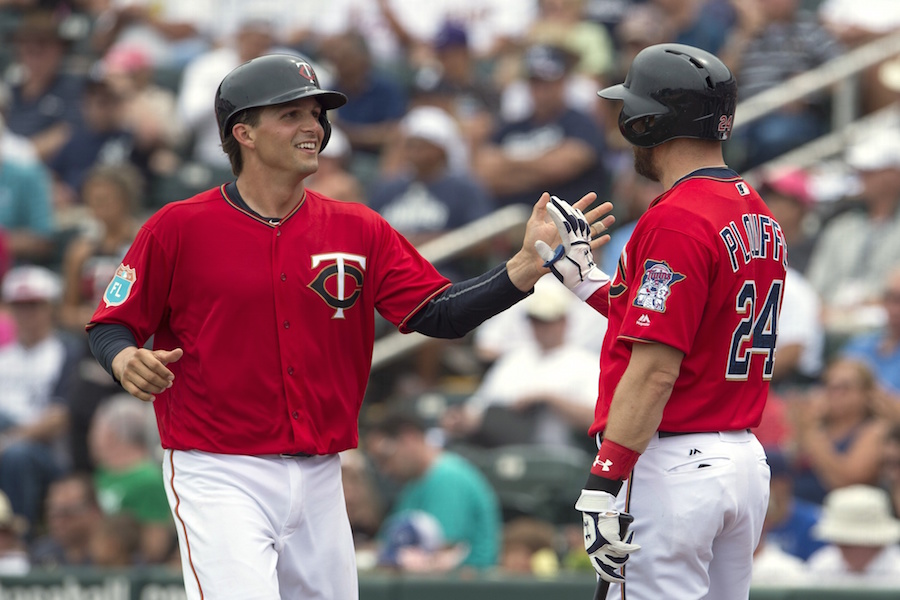 The power flashes haven’t been all that frequent for Murphy, who has four homers and a .374 slugging percentage in 284 career plate appearances, but the Twins are counting on his continued growth in that department as well as others. “I don’t think he’s reached his peak,” said assistant general manager Rob Antony. “I think he has more potential." Adapting to his new surroundings in the Midwest will be the least of Murphy’s worries. For now, he’s more focused on building a rapport with his new battery-mates and learning their individual styles and tendencies. Having spent his entire career up to this point in one organization, he admits that the process of acclimating to a new staff has been a little more challenging than he expected. "It’s one thing to talk about the pitches, and talk about what they like to do, but you have to catch them,” Murphy said. "It comes with time. You have to be back there and see them, see what their curveball does. Everyone’s a little bit different." As Twins bench coach Joe Vavra sees it, Murphy is coming along nicely. Vavra was acting manager on Tuesday when the 24-year-old served as catcher for eight innings in a game where five Minnesota relievers combined to hold the Baltimore Orioles to one run on four hits. He credited Murphy for developing a “good ebb and flow” with the pitchers and pointed out that you rarely saw a call shaken off. “He’s real responsive to me,” Vavra said. “Real quick and understands the pitchers’ tempos.” Murphy didn’t take up catching full-time until his sophomore year of high school, after pitching and playing third base a freshman. He would have continued to refine his skills behind the plate in college at the University of Miami, but the Yankees lured him away with a $1.25 million signing bonus as a 2009 second-round draft pick after Murphy batted .627 with 11 homers as a senior. Antony said that the Twins had eyes on Murphy back then, but it wasn’t clear where he would play. “The Yankees took him and made him a catcher, and he really developed into a good receiver.” So six years later, with a blatant need at the position, the Twins traded away former first-round pick Aaron Hicks to bring Murphy aboard. Now, they’re hoping that he’ll continue to evolve both offensively and defensively. By all accounts, they’re pleased with where he’s at on the defensive end. But it looks as though his bat will be what makes or breaks him. That’s an area where Murphy has something to prove. While he was viewed as a strong offensive prospect as a prep (“He was a guy coming out of the draft we thought could hit,” said Antony), his .263/.327/.406 line in the minors doesn’t suggest a ton of upside, and this spring he hasn’t done much at all. After going 0-for-3 on Tuesday, he’s now batting .091 with zero extra-base hits in Grapefruit action. He has, however, shown a decent eye at the plate, drawing six walks against six strikeouts. And while his 685 career OPS in the big leagues is hardly impressive, he has improved his production each year. In 2015, as Brian McCann’s backup with the Yankees, he slashed .277/.327/.406. For a catcher who gets it done defensively, that’s more than adequate. Vavra, a former hitting coach, doesn’t put a ton of stock into Murphy’s spring slump. “He’s underneath a lot,” he said. “Underneath and probably a little late. It’s timing more than anything.” Maybe a little bit too much self-imposed pressure, as well. “First impression with us, obviously. He wants to do it all right away.” Fortunately, he doesn’t have to do it all right away. He’ll be splitting time this year with Kurt Suzuki, whose locker in the Hammond Stadium clubhouse is right next to his. With a veteran mentor, a fully supportive coaching staff and no obstacles blocking him from ultimately taking the reins as full-time starter, Murphy could hardly ask for a more ideal situation. “I’m certainly in a good position,” he acknowledges. Now, all he needs to do is grow.
 -
Article: Tuesday Camp Notes: Splitsville
Nick Nelson replied to Nick Nelson's topic in Twins Daily Front Page News
I think it's basically about deferring to the veteran. Plouffe has been the third baseman for the last three years, and he's an entrenched guy at this point. I too think he'd fare better out there than Sano but I get it, I guess. Believe me, as much as they try to sugarcoat it, the Twins have no illusions about what they're getting into. They know this is far from ideal. -
Article: Dozier Tries To Find A Balance
Nick Nelson replied to Nick Nelson's topic in Twins Daily Front Page News
I was too, to be honest. After he said that, I blinked a few times and said, "So, you didn't notice any difference in the second half?" And he basically replied, "Nah, not really." I think he's just frustrated about hearing it over and over again, and maybe a little peeved that this narrative has overshadowed what was a strong season overall. Obviously he knows that pitchers started taking advantage of his tendencies, and obviously he's doing something about it. He's always been pretty good about making adjustments (it's what has turned him from 8th round draft pick into All Star) so I'm fairly optimistic. -
Today was a split-squad today for the Twins, with Phil Hughes and a few regulars heading to Clearwater to face the Phillies while most of the positional mainstays remained in Fort Myers for a match-up against the Orioles at Hammond. The Twins won 5-1 in their home park, with Joe Mauer and Trevor Plouffe each chipping in two-run homers. Carlos Quentin and Oswaldo Arcia, competing for a bench spot, were slotted back-to-back in the lineup for a second straight day, while several relievers vying for bullpen jobs got the chance to make key impressions.* With Quentin having a June 1st opt-out built into his minor-league deal, there has been some speculation that the Twins might send him to Rochester as depth in case somebody gets hurt or Arcia fizzles early on. But assistant GM Rob Antony says that the veteran outfielder, who sat out the 2015 season, was signed with an agreement that he’d only be shipped to Triple-A if he had a clear path to the majors. “He had no problem going to the minor leagues if we saw him as a fit, if he just needed at-bats or something,” Antony explained. “But if we said we don’t see it happening or whatever, I basically verbally told him … I’m not just going to run you down to Rochester and hold you there for two months.” In other words, if the Twins decide Arcia is their guy, don’t expect Quentin to stick around. But it’s overly hasty to presume that outcome. “He’s had a very good spring,” the AGM noted of Quentin, who went 1-for-3 with a double and walk today. * Will it be good enough to unseat the front-runner Arcia? The 24-year-old had himself a solid game with a double and a walk of his own. He also struck out for a 10th time (tying Byung Ho Park for the team lead), but his approach at the plate has been noticeably better. “Bruno’s happy with his progress, so that’s enough said,” according to bench coach Joe Vavra, who watched things play out today as acting manager. Meanwhile, Arcia's improvement in the outfield and on the base paths has been as obvious as the trimmed down physique that’s contributed to it. Today he made a heads-up play scrambling from second to third on a ball that skipped away from Orioles catcher Caleb Joseph. This after sprinting about 100 feet to make a nice running catch in left on Monday. “Those are all big plays, and we’re watching,” Vavra said. “Those are important." * Spring training is interesting. For established veterans who have been through the grind repeatedly and are just trying to stay healthy into the regular season, it becomes a nuisance that drags on. For guys like Buddy Boshers, it’s an opportunity worth savoring. The non-roster invite was out of organized ball last year, pitching in an independent league where he caught the attention of the Twins and a few other teams by posting a 1.00 ERA with a 71-to-14 K/BB ratio in 54 innings. When he had the choice between a couple of different suitors on minor-league deals, Minnesota’s bullpen composition appealed to him and his agent. “That was a big key for signing here,” said the 27-year-old southpaw. “They needed some left-handed depth in the bullpen.” He ended up pitching for the Somerset Patriots after being released from Rockies camp last March and receiving no calls. The resounding success he achieved in the Somerset bullpen with his mid-90s fastball and big curve led to his landing with the Twins and getting a shot to compete for a relief job. Given that he isn’t on the 40-man roster, Boshers is a long shot to win a spot on Opening Day, but right now he’s got all he wants: a chance. “I’m getting some opportunities so I can’t really complain,” he said. He made the most of the one he got today. Boshers worked two scoreless frames, including a 1-2-3 sixth against three intimidating big-league righties: Manny Machado, Adam Jones and Mark Trumbo. * Boshers wasn’t the only reliever battling for a job who got an extended look today. It was a bullpen game for Minnesota, with lefty Logan Darnell getting the start and pitching just a couple innings, so the Twins were able to stretch out a few arms, giving two innings apiece to Boshers, Brandon Kintzler and Michael Tonkin. The stakes are high for Tonkin, in terms of his future with the organization, because he’s out of options and would almost certainly be claimed if he hit waivers. He’s been enduring a miserable spring but had an excellent outing today, retiring all six batters he faced. The big righty was repeatedly painting the outside corner with his 95 MPH power fastball, making it almost unhittable, and mixed in a sharp breaking ball that drew strong reviews from Vavra after the game. * A couple hours away in Clearwater, the other half of the split-squad dispatched the Phillies 7-5. Byron Buxton had a pair of hits but struck out three times. Park drove in a couple of runs. Slugging prospect Daniel Palka, acquired in exchange for Chris Herrmann during the offseason, launched two home runs. * The Twins released a number of minor-leaguers over the past couple days, and most of the names wouldn’t be recognized by anyone other than our guy Seth. One that stuck out, however, was pitcher Brandon Poulson. You may remember him as the the big 6’6” righty with a triple-digit fastball who received a shocking $250,000 bonus to sign with the Twins in July of 2014 despite being undrafted. If they could get the kid to throw it in the zone, it was said, he could be a story destined for Hollywood. Unfortunately, that just never happened. “Couldn’t throw it over,” Antony said. “He had a terrific arm, and we tried a lot of different things, but he wasn’t able to throw enough strikes.” Poulson is now 26, and still hadn’t appeared in a full-season league. In 20 rookie ball appearances over the last two seasons, he issued 32 walks in 27 2/3 innings. * Tomorrow Ricky Nolasco will take the mound against the Rays at 12:05 CT. It'll be my last day in camp, sadly, but Parker will be checking in to wrap up our spring training coverage. Click here to view the article
- 26 replies
-
- 2
-

-
- carlos quentin
- oswaldo arcia
- (and 2 more)
-
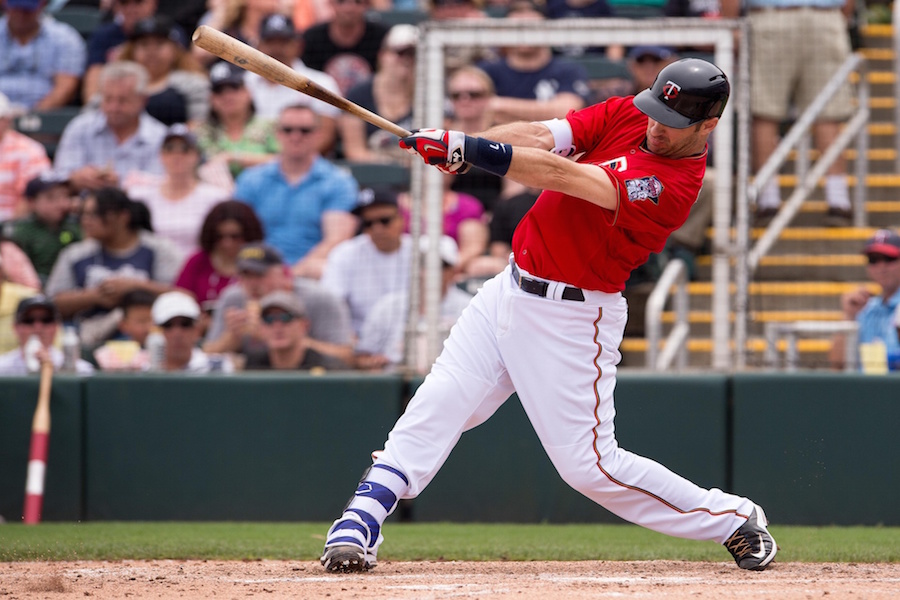 * With Quentin having a June 1st opt-out built into his minor-league deal, there has been some speculation that the Twins might send him to Rochester as depth in case somebody gets hurt or Arcia fizzles early on. But assistant GM Rob Antony says that the veteran outfielder, who sat out the 2015 season, was signed with an agreement that he’d only be shipped to Triple-A if he had a clear path to the majors. “He had no problem going to the minor leagues if we saw him as a fit, if he just needed at-bats or something,” Antony explained. “But if we said we don’t see it happening or whatever, I basically verbally told him … I’m not just going to run you down to Rochester and hold you there for two months.” In other words, if the Twins decide Arcia is their guy, don’t expect Quentin to stick around. But it’s overly hasty to presume that outcome. “He’s had a very good spring,” the AGM noted of Quentin, who went 1-for-3 with a double and walk today. * Will it be good enough to unseat the front-runner Arcia? The 24-year-old had himself a solid game with a double and a walk of his own. He also struck out for a 10th time (tying Byung Ho Park for the team lead), but his approach at the plate has been noticeably better. “Bruno’s happy with his progress, so that’s enough said,” according to bench coach Joe Vavra, who watched things play out today as acting manager. Meanwhile, Arcia's improvement in the outfield and on the base paths has been as obvious as the trimmed down physique that’s contributed to it. Today he made a heads-up play scrambling from second to third on a ball that skipped away from Orioles catcher Caleb Joseph. This after sprinting about 100 feet to make a nice running catch in left on Monday. “Those are all big plays, and we’re watching,” Vavra said. “Those are important." * Spring training is interesting. For established veterans who have been through the grind repeatedly and are just trying to stay healthy into the regular season, it becomes a nuisance that drags on. For guys like Buddy Boshers, it’s an opportunity worth savoring. The non-roster invite was out of organized ball last year, pitching in an independent league where he caught the attention of the Twins and a few other teams by posting a 1.00 ERA with a 71-to-14 K/BB ratio in 54 innings. When he had the choice between a couple of different suitors on minor-league deals, Minnesota’s bullpen composition appealed to him and his agent. “That was a big key for signing here,” said the 27-year-old southpaw. “They needed some left-handed depth in the bullpen.” He ended up pitching for the Somerset Patriots after being released from Rockies camp last March and receiving no calls. The resounding success he achieved in the Somerset bullpen with his mid-90s fastball and big curve led to his landing with the Twins and getting a shot to compete for a relief job. Given that he isn’t on the 40-man roster, Boshers is a long shot to win a spot on Opening Day, but right now he’s got all he wants: a chance. “I’m getting some opportunities so I can’t really complain,” he said. He made the most of the one he got today. Boshers worked two scoreless frames, including a 1-2-3 sixth against three intimidating big-league righties: Manny Machado, Adam Jones and Mark Trumbo. * Boshers wasn’t the only reliever battling for a job who got an extended look today. It was a bullpen game for Minnesota, with lefty Logan Darnell getting the start and pitching just a couple innings, so the Twins were able to stretch out a few arms, giving two innings apiece to Boshers, Brandon Kintzler and Michael Tonkin. The stakes are high for Tonkin, in terms of his future with the organization, because he’s out of options and would almost certainly be claimed if he hit waivers. He’s been enduring a miserable spring but had an excellent outing today, retiring all six batters he faced. The big righty was repeatedly painting the outside corner with his 95 MPH power fastball, making it almost unhittable, and mixed in a sharp breaking ball that drew strong reviews from Vavra after the game. * A couple hours away in Clearwater, the other half of the split-squad dispatched the Phillies 7-5. Byron Buxton had a pair of hits but struck out three times. Park drove in a couple of runs. Slugging prospect Daniel Palka, acquired in exchange for Chris Herrmann during the offseason, launched two home runs. * The Twins released a number of minor-leaguers over the past couple days, and most of the names wouldn’t be recognized by anyone other than our guy Seth. One that stuck out, however, was pitcher Brandon Poulson. You may remember him as the the big 6’6” righty with a triple-digit fastball who received a shocking $250,000 bonus to sign with the Twins in July of 2014 despite being undrafted. If they could get the kid to throw it in the zone, it was said, he could be a story destined for Hollywood. Unfortunately, that just never happened. “Couldn’t throw it over,” Antony said. “He had a terrific arm, and we tried a lot of different things, but he wasn’t able to throw enough strikes.” Poulson is now 26, and still hadn’t appeared in a full-season league. In 20 rookie ball appearances over the last two seasons, he issued 32 walks in 27 2/3 innings. * Tomorrow Ricky Nolasco will take the mound against the Rays at 12:05 CT. It'll be my last day in camp, sadly, but Parker will be checking in to wrap up our spring training coverage.
 -
When Brian Dozier refers to spring training as “Groundhog Day,” he’s talking about the repetitive routine that is inherent to this annual six-week stretch. But he might as well be talking about his production. This year, just like last year, Dozier is putting up monster numbers in the Grapefruit League.After going 1-for-3 as the No. 3 hitter on Monday, Dozier is batting .364 this spring with six extra-base hits. A year ago he hit .367/.436/.694 in exhibition play. That paved the way for a phenomenal first half of the 2015 season. His 871 OPS and 16 homers through the first three months led to his first All-Star nod and even some low-key MVP buzz. His drop-off after the break, though, was quite striking to most observers. Not to him. “I hear that all the time and I don’t really know why people always make a big deal out of the last couple months,” Dozier says. “I didn’t hit as many home runs, but I actually scored the same amount of runs, which is what I intend to do.” “I don’t really see it as a lot of other people do as far as a down second half." Well, that’s not exactly true. Even if we’re looking strictly at his frequency of crossing the plate, Dozier scored 67 runs in 88 games before the All-Star break (0.76 R/G) and 34 runs in 69 games thereafter (0.49 R/G), despite the entrenched presence of rookie slugger Miguel Sano behind him in the lineup. He did still finish near the top of the American League in that particular category, tied for fifth with Lorenzo Cain, so perhaps that’s what he’s driving at. But of course, the decline extended beyond homers and runs scored. His OPS dropped off by more than 200 points from the first half to the second as his gap power diminished and his on-base percentage took a dive. The latter development was particularly troubling given his role as a table-setter atop the order. But the second baseman insists there’s more to it than numbers. “You find other ways to help your team win. You do things that the normal person does not see but everyone in here sees.” Even if he believes that the second-half swoon narrative is overblown, Dozier is making adjustments that he hopes will be conducive to end-to-end production. A quick glance at his 2015 spray chart from FanGraphs shows just how pull-heavy he was at the plate. Dozier swatted the occasional fly ball or grounder the other way, but sent only a handful of liners (and two of his 28 home runs) toward right. http://s13.postimg.org/eo2swup1j/dozierspray2015.png Given the starkness of this trend, it’s been impossible not to notice this spring that Dozier has already hit several hard balls to the opposite field, including one of his two homers. He says this hasn’t been a specific focus, but rather the natural offshoot of another point of emphasis. “Training my swing to cover more of the plate is something Bruno (hitting coach Tom Brunansky) and I have been working on this spring,” he says. “Whether it correlates to more balls going to right field or not I could really care less.” These efforts have already yielded results in Grapefruit play. In one at-bat on Monday, Dozier flicked a borderline outside pitch back into the screen, then later got another on the outer half and drove it over the right side of second base into center for a single. He knows his bread and butter – “being a pull hitter is definitely a strength of mine” – but being able to waste those pitches away that don’t play to his strength will prevent opposing pitchers from being able to take advantage. As Albert Einstein once said, "Life is like riding a bicycle. To keep your balance, you must keep moving.” Hopefully a more balanced approach at the plate will allow Dozier to keep moving all the way to the regular-season finish line and beyond. Click here to view the article
-
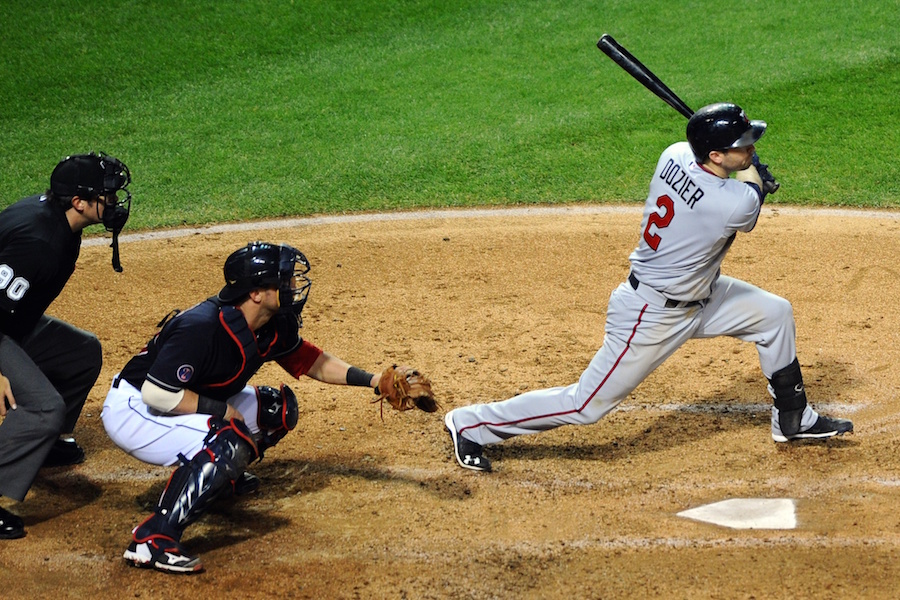 After going 1-for-3 as the No. 3 hitter on Monday, Dozier is batting .364 this spring with six extra-base hits. A year ago he hit .367/.436/.694 in exhibition play. That paved the way for a phenomenal first half of the 2015 season. His 871 OPS and 16 homers through the first three months led to his first All-Star nod and even some low-key MVP buzz. His drop-off after the break, though, was quite striking to most observers. Not to him. “I hear that all the time and I don’t really know why people always make a big deal out of the last couple months,” Dozier says. “I didn’t hit as many home runs, but I actually scored the same amount of runs, which is what I intend to do.” “I don’t really see it as a lot of other people do as far as a down second half." Well, that’s not exactly true. Even if we’re looking strictly at his frequency of crossing the plate, Dozier scored 67 runs in 88 games before the All-Star break (0.76 R/G) and 34 runs in 69 games thereafter (0.49 R/G), despite the entrenched presence of rookie slugger Miguel Sano behind him in the lineup. He did still finish near the top of the American League in that particular category, tied for fifth with Lorenzo Cain, so perhaps that’s what he’s driving at. But of course, the decline extended beyond homers and runs scored. His OPS dropped off by more than 200 points from the first half to the second as his gap power diminished and his on-base percentage took a dive. The latter development was particularly troubling given his role as a table-setter atop the order. But the second baseman insists there’s more to it than numbers. “You find other ways to help your team win. You do things that the normal person does not see but everyone in here sees.” Even if he believes that the second-half swoon narrative is overblown, Dozier is making adjustments that he hopes will be conducive to end-to-end production. A quick glance at his 2015 spray chart from FanGraphs shows just how pull-heavy he was at the plate. Dozier swatted the occasional fly ball or grounder the other way, but sent only a handful of liners (and two of his 28 home runs) toward right. http://s13.postimg.org/eo2swup1j/dozierspray2015.png Given the starkness of this trend, it’s been impossible not to notice this spring that Dozier has already hit several hard balls to the opposite field, including one of his two homers. He says this hasn’t been a specific focus, but rather the natural offshoot of another point of emphasis. “Training my swing to cover more of the plate is something Bruno (hitting coach Tom Brunansky) and I have been working on this spring,” he says. “Whether it correlates to more balls going to right field or not I could really care less.” These efforts have already yielded results in Grapefruit play. In one at-bat on Monday, Dozier flicked a borderline outside pitch back into the screen, then later got another on the outer half and drove it over the right side of second base into center for a single. He knows his bread and butter – “being a pull hitter is definitely a strength of mine” – but being able to waste those pitches away that don’t play to his strength will prevent opposing pitchers from being able to take advantage. As Albert Einstein once said, "Life is like riding a bicycle. To keep your balance, you must keep moving.” Hopefully a more balanced approach at the plate will allow Dozier to keep moving all the way to the regular-season finish line and beyond.
 -
Article: Monday Camp Notes: Roster Battle Royale
Nick Nelson replied to Nick Nelson's topic in Twins Daily Front Page News
IMO the two "battles" here are Santana vs Sweeney (and maybe Mastro, I guess?) and Quentin vs Arcia. I think they want one backup OF who can play all three positions, and one slugger off the bench. Can't see any reason they'd carry both Santana and Mastroianni. Regardless of how well Mastro is hitting in spring, it'd be ridiculous to take a guy north who didn't play in the majors last year and hasn't even sniffed a .200 average since 2013. But I guess you can't discount the possibility after the Bartlett fiasco. -
Most of the Twins position players have essentially locked up their spots on the roster, but a couple of jobs on the bench remain in play. Four who are in that mix – Danny Santana, Oswaldo Arcia, Carlos Quentin, Ryan Sweeney – were all in the starting lineup in today’s 2-0 loss to the Pirates.* Quentin and Sweeney are facing an uphill battle given that they are non-roster invites going against homegrown players who are out of options, but both have been productive enough this spring to spark some intrigue. Today, however, was not a banner day for either. The only hit between the two was a Sweeney single that was generously scored as such when Pittsburgh second baseman Cole Figueroa took a wrong first step on a flare and couldn’t recover. Quentin, in particular, had a rough one. He batted cleanup and struck out in both of his first two at-bats, each time with a runner on third and fewer than two outs. He finished 0-for-3 but Paul Molitor viewed it as more of an isolated bad day than a general sign of weakness for the veteran hitter. “He’s been pretty good at shortening his swing with two strikes in camp, today it didn’t work out particularly well.” * Two-strike approach is an area where the manager drew a distinction between Quentin and Oswaldo Arcia, who might be in direct competition for the final bench job. On a quiet day for Quentin, Arcia did little to distinguish himself at the plate, finishing 0-for-4 with two strikeouts and failing to cash in on a pair of early scoring opportunities. “He gets a little long with his swing,” Molitor said. “People have a tendency to get him to climb the ladder, especially with two strikes.” I’d say Arcia has a clear leg up, since the Twins recognize that losing him on waivers would be unfortunate, but I wouldn’t look at this one as a lock just yet. Having a veteran on the bench who can come in and take a quality at-bat is something that the Twins have valued in the past, and while Arcia has shown a somewhat improved approach at the plate this spring, it hasn’t led to much in the way of results. Today’s 0-fer dropped his average to .179. * Danny Santana, meanwhile, had himself a nice ballgame. He collected a couple of hits, including a single that he flicked through the wide-open left side when the Pirates shifted him. Given his lack of remaining options and his ability to play both infield and outfield, it’s tough to see Santana being left off the roster. His versatility, combined with his speed and switch-hitting, make him a nice bench piece. “Danny can spray the ball," Molitor said after the game. “He stayed on the ball better today I thought." * Starting pitcher Kyle Gibson was on top of his game. His 10-to-0 grounder-to-fly ratio is exactly what you like to see from a sinkerballer, and in the second inning he shattered the bat of former Twins farmhand Danny Ortiz with a pitch in on the handle. As usual, Gibson lamented his walks after the outing (he had two), but he generally seemed pleased with where he’s at. “The pitches I’ve been working on are where I want them to be, and they’re getting better,” he said. * Taylor Rogers was first to come on in relief for Twins after Gibson was removed in the fifth. Rogers is involved in one of the other remaining position battles on the roster: the left-handed relief gig. Fernando Abad is considered the front-runner in that race. The 30-year-old veteran has a sizable experience edge over Rogers and others, but he historically lacks the platoon splits that might come in handy for a situational bullpen role. I asked Molitor on Sunday if that weighs into his decision. “I’m kinda looking for guys who are pitching the best,” he replied. “The season [Abad] had in 2014 it seemed like he dominated lefties and righties fairly well. Last year was a little bit of a step back.” “He’s not afraid to throw that changeup to lefties and he can throw that curveball over, which is a good pitch to have. I am aware of the history and the numbers, but I’m just looking for the guys who are throwing the best and give us the best chance." * Glen Perkins fired a scoreless sixth frame with a pair of strikeouts. He has now worked six innings this spring with three hits allowed, a 6-to-0 K/BB ratio and a 0.00 ERA. Sure, it’s spring training and the numbers are ultimately meaningless. But it’s still nice to see after the way he finished last year. * Eduardo Escobar went 1-for-2 with a hustle triple, his second three-bagger of the spring. He also made a couple of slick plays defensively at short. Before the game, Brian Dozier called his double play partner “one of the most underrated players in the game,” and it’s hard to disagree with his assessment, given how many Twins fans I saw beckoning the team to explore options at shortstop this past offseason. "You put his stats up, anything regarding defense, offense, everything, it’s up there with the elite shortstops in the league,” Dozier said. "He’s going to have a chance to play every single day this year. You’ll see his numbers get even better." * David Freese was batting third in the Pirates lineup. I mention him because his situation over the winter was reflective of a lukewarm (at best) third base market that might have contributed to the Twins not trading Trevor Plouffe. Freese was far and away the best third baseman in free agency, and really the only quality starting option, yet he went unsigned until 10 days ago when Pittsburgh acquired him on a meager one-year, $3 million deal. The lack of a market for Freese, and the underwhelming return that the Reds got for dealing Al-Star Todd Frazier to the White Sox, suggest that Ryan made the right choice by holding onto Plouffe. Whether or not it was prudent to send Miguel Sano to right field to make all of the pieces fit is another discussion. * On Sunday I mentioned that Ryan had expressed an inclination to keep Alex Meyer in the rotation at Class-AAA Rochester rather than relegating him to a bullpen role. Today, the general manager made it official that they’ll go with Meyer as a starter for now, with the caveat that it’s not necessarily an assignment that will stick for his career of even for the entirety of the 2016 season. Ryan specifically pointed out that working as a starter enables the big righty to utilize and refine the entirety of his pitch repertoire (particularly his so-so change), which is much more easily done from the rotation than the bullpen. But you also have to think that his fantastic 2014 performance as a starter in the International League – which really isn't all that far in the past – factored in. Click here to view the article
- 24 replies
-
- 3
-
-
- carlos quentin
- oswaldo arcia
- (and 3 more)
-
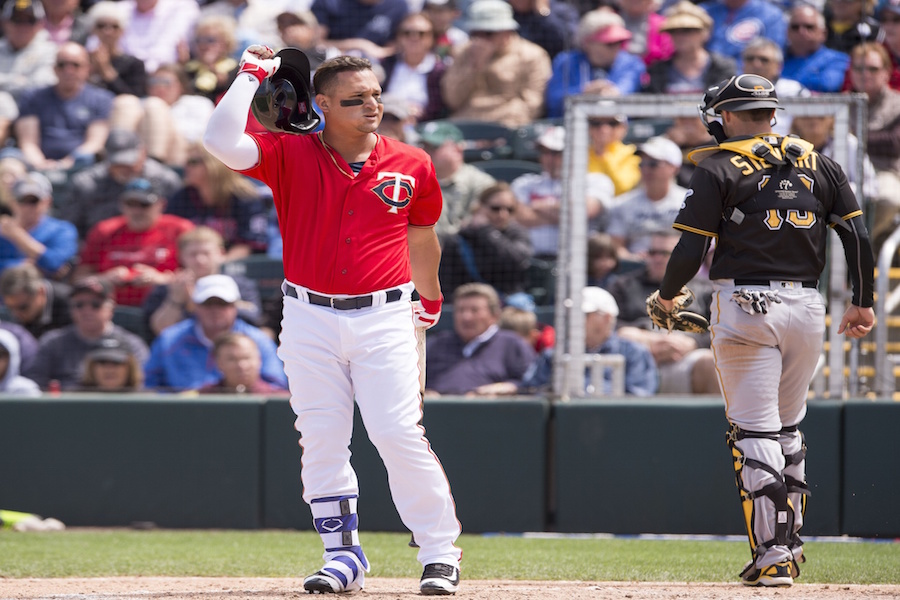 * Quentin and Sweeney are facing an uphill battle given that they are non-roster invites going against homegrown players who are out of options, but both have been productive enough this spring to spark some intrigue. Today, however, was not a banner day for either. The only hit between the two was a Sweeney single that was generously scored as such when Pittsburgh second baseman Cole Figueroa took a wrong first step on a flare and couldn’t recover. Quentin, in particular, had a rough one. He batted cleanup and struck out in both of his first two at-bats, each time with a runner on third and fewer than two outs. He finished 0-for-3 but Paul Molitor viewed it as more of an isolated bad day than a general sign of weakness for the veteran hitter. “He’s been pretty good at shortening his swing with two strikes in camp, today it didn’t work out particularly well.” * Two-strike approach is an area where the manager drew a distinction between Quentin and Oswaldo Arcia, who might be in direct competition for the final bench job. On a quiet day for Quentin, Arcia did little to distinguish himself at the plate, finishing 0-for-4 with two strikeouts and failing to cash in on a pair of early scoring opportunities. “He gets a little long with his swing,” Molitor said. “People have a tendency to get him to climb the ladder, especially with two strikes.” I’d say Arcia has a clear leg up, since the Twins recognize that losing him on waivers would be unfortunate, but I wouldn’t look at this one as a lock just yet. Having a veteran on the bench who can come in and take a quality at-bat is something that the Twins have valued in the past, and while Arcia has shown a somewhat improved approach at the plate this spring, it hasn’t led to much in the way of results. Today’s 0-fer dropped his average to .179. * Danny Santana, meanwhile, had himself a nice ballgame. He collected a couple of hits, including a single that he flicked through the wide-open left side when the Pirates shifted him. Given his lack of remaining options and his ability to play both infield and outfield, it’s tough to see Santana being left off the roster. His versatility, combined with his speed and switch-hitting, make him a nice bench piece. “Danny can spray the ball," Molitor said after the game. “He stayed on the ball better today I thought." * Starting pitcher Kyle Gibson was on top of his game. His 10-to-0 grounder-to-fly ratio is exactly what you like to see from a sinkerballer, and in the second inning he shattered the bat of former Twins farmhand Danny Ortiz with a pitch in on the handle. As usual, Gibson lamented his walks after the outing (he had two), but he generally seemed pleased with where he’s at. “The pitches I’ve been working on are where I want them to be, and they’re getting better,” he said. * Taylor Rogers was first to come on in relief for Twins after Gibson was removed in the fifth. Rogers is involved in one of the other remaining position battles on the roster: the left-handed relief gig. Fernando Abad is considered the front-runner in that race. The 30-year-old veteran has a sizable experience edge over Rogers and others, but he historically lacks the platoon splits that might come in handy for a situational bullpen role. I asked Molitor on Sunday if that weighs into his decision. “I’m kinda looking for guys who are pitching the best,” he replied. “The season [Abad] had in 2014 it seemed like he dominated lefties and righties fairly well. Last year was a little bit of a step back.” “He’s not afraid to throw that changeup to lefties and he can throw that curveball over, which is a good pitch to have. I am aware of the history and the numbers, but I’m just looking for the guys who are throwing the best and give us the best chance." * Glen Perkins fired a scoreless sixth frame with a pair of strikeouts. He has now worked six innings this spring with three hits allowed, a 6-to-0 K/BB ratio and a 0.00 ERA. Sure, it’s spring training and the numbers are ultimately meaningless. But it’s still nice to see after the way he finished last year. * Eduardo Escobar went 1-for-2 with a hustle triple, his second three-bagger of the spring. He also made a couple of slick plays defensively at short. Before the game, Brian Dozier called his double play partner “one of the most underrated players in the game,” and it’s hard to disagree with his assessment, given how many Twins fans I saw beckoning the team to explore options at shortstop this past offseason. "You put his stats up, anything regarding defense, offense, everything, it’s up there with the elite shortstops in the league,” Dozier said. "He’s going to have a chance to play every single day this year. You’ll see his numbers get even better." * David Freese was batting third in the Pirates lineup. I mention him because his situation over the winter was reflective of a lukewarm (at best) third base market that might have contributed to the Twins not trading Trevor Plouffe. Freese was far and away the best third baseman in free agency, and really the only quality starting option, yet he went unsigned until 10 days ago when Pittsburgh acquired him on a meager one-year, $3 million deal. The lack of a market for Freese, and the underwhelming return that the Reds got for dealing Al-Star Todd Frazier to the White Sox, suggest that Ryan made the right choice by holding onto Plouffe. Whether or not it was prudent to send Miguel Sano to right field to make all of the pieces fit is another discussion. * On Sunday I mentioned that Ryan had expressed an inclination to keep Alex Meyer in the rotation at Class-AAA Rochester rather than relegating him to a bullpen role. Today, the general manager made it official that they’ll go with Meyer as a starter for now, with the caveat that it’s not necessarily an assignment that will stick for his career of even for the entirety of the 2016 season. Ryan specifically pointed out that working as a starter enables the big righty to utilize and refine the entirety of his pitch repertoire (particularly his so-so change), which is much more easily done from the rotation than the bullpen. But you also have to think that his fantastic 2014 performance as a starter in the International League – which really isn't all that far in the past – factored in.
 -
Entering his second season in Minnesota, Ervin Santana has some serious expectations to live up to, and it’s not because he’s the first Twins pitcher to sport the name Santana on the back of his jersey since some guy named Johan.Santana’s first season with the Twins was an oddity, even beyond the 80-game suspension that struck before it started. When he returned to the team in July, the right-hander came out firing on all cylinders. In his first four starts, he pitched into the eighth inning three times, posting a 2.60 ERA and holding opponents to a .196 average. Then, the bottom fell out. Santana fell into a slump of epic proportions over his next six starts, allowing 31 earned runs on 47 hits over 30 innings with more walks (15) than strikeouts (14). Even for a traditionally streaky pitcher like him, this dauntingly bad stretch of performance was tough to figure. Whatever the issue, though, he bounced back and finished brilliantly, with a 1.62 ERA over his final seven turns. Ultimately, through all of those dramatic ups and downs, Santana’s numbers at the end of the season were about what you’d expect based on his track record. But the stretches of dominance were tantalizing, and exactly what the Twins had zeroed in on when they signed him to the largest contract in franchise history back in December of 2014. Paul Molitor has not yet announced his Opening Day starter – he said he expects to do so after Monday’s game – but all signs point to Santana getting the nod. If he continues to pitch every fifth day between now and the start of the regular season, he’ll be on the hill for Minnesota’s April 4th tilt against the Orioles in Baltimore. It would be a first for the 33-year-old in a big-league career that launched back in 2005, but for his part, he downplays the significance. “It would be good, one more game in the big leagues,” he said with a shrug after his outing against the Yankees on Sunday. That start – while underwhelming on paper (5 IP, 2 ER, 3 BB, 2 K) – served as a reminder of the promise that Santana offers. He attacked hitters. He induced weak contact and feeble grounders. He routinely worked at 92 and 93 MPH, even dialing it up to 96 and 97 on the radar while working off the frustration-driven adrenaline induced by a run-scoring balk. That kind of velocity has been missing in Minnesota’s starting corps for quite some time. His average fastball speed of 92.5 MPH in 2015 was the highest of any Twins starter in the last five years save for Mike Pelfrey, who had nothing BUT a fastball (a rather straight and hittable one at that). Santana faced 21 hitters on Sunday and allowed only two hits, both singles. And that speaks to a strength that should appeal greatly to fans of a Twins team that has allowed the most hits in the American League four years in a row. In seasons where Santana has been healthy enough to make 30-plus starts (and that’s all but two since his rookie campaign in ’05), he has never allowed more than a hit per inning on average. In that regard, he would be a fitting tone-setter for a 2016 season in which the Twins are hoping to reverse some negative trends and take the step forward that their sizable investment in him was intended to aid. Click here to view the article
-
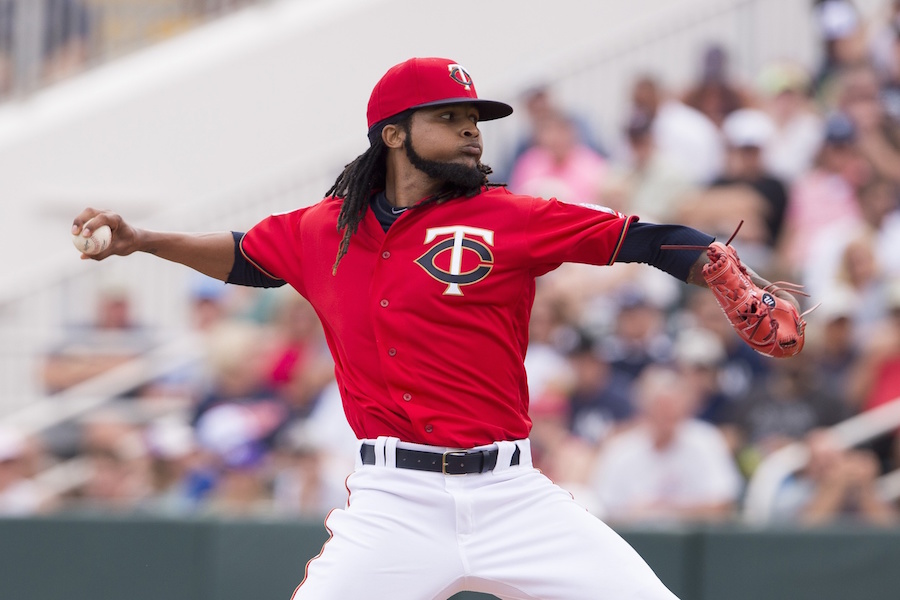 Santana’s first season with the Twins was an oddity, even beyond the 80-game suspension that struck before it started. When he returned to the team in July, the right-hander came out firing on all cylinders. In his first four starts, he pitched into the eighth inning three times, posting a 2.60 ERA and holding opponents to a .196 average. Then, the bottom fell out. Santana fell into a slump of epic proportions over his next six starts, allowing 31 earned runs on 47 hits over 30 innings with more walks (15) than strikeouts (14). Even for a traditionally streaky pitcher like him, this dauntingly bad stretch of performance was tough to figure. Whatever the issue, though, he bounced back and finished brilliantly, with a 1.62 ERA over his final seven turns. Ultimately, through all of those dramatic ups and downs, Santana’s numbers at the end of the season were about what you’d expect based on his track record. But the stretches of dominance were tantalizing, and exactly what the Twins had zeroed in on when they signed him to the largest contract in franchise history back in December of 2014. Paul Molitor has not yet announced his Opening Day starter – he said he expects to do so after Monday’s game – but all signs point to Santana getting the nod. If he continues to pitch every fifth day between now and the start of the regular season, he’ll be on the hill for Minnesota’s April 4th tilt against the Orioles in Baltimore. It would be a first for the 33-year-old in a big-league career that launched back in 2005, but for his part, he downplays the significance. “It would be good, one more game in the big leagues,” he said with a shrug after his outing against the Yankees on Sunday. That start – while underwhelming on paper (5 IP, 2 ER, 3 BB, 2 K) – served as a reminder of the promise that Santana offers. He attacked hitters. He induced weak contact and feeble grounders. He routinely worked at 92 and 93 MPH, even dialing it up to 96 and 97 on the radar while working off the frustration-driven adrenaline induced by a run-scoring balk. That kind of velocity has been missing in Minnesota’s starting corps for quite some time. His average fastball speed of 92.5 MPH in 2015 was the highest of any Twins starter in the last five years save for Mike Pelfrey, who had nothing BUT a fastball (a rather straight and hittable one at that). Santana faced 21 hitters on Sunday and allowed only two hits, both singles. And that speaks to a strength that should appeal greatly to fans of a Twins team that has allowed the most hits in the American League four years in a row. In seasons where Santana has been healthy enough to make 30-plus starts (and that’s all but two since his rookie campaign in ’05), he has never allowed more than a hit per inning on average. In that regard, he would be a fitting tone-setter for a 2016 season in which the Twins are hoping to reverse some negative trends and take the step forward that their sizable investment in him was intended to aid.
 -
Article: Sunday Camp Notes: Spring Hiccups
Nick Nelson replied to Nick Nelson's topic in Twins Daily Front Page News
There was like one solidly hit line drive to the outfield. For the most part when Berrios put it in the zone they couldn't do anything with it. -
Article: Sunday Camp Notes: Spring Hiccups
Nick Nelson posted a topic in Twins Daily Front Page News
My first day at the Lee County Sports Complex in Fort Myers was a bustling one, with the Yankees coming to town and bringing along their typically large throngs of fans and media. The Twins lost 6-4 in a game that featured some striking miscues and gaffes – a run-scoring balk by Ervin Santana, a costly error in right field by Miguel Sano, a misguided baserunning mistake by Eddie Rosario. But hey, that’s what spring training is for, right? Read on for a smattering of notes on Minnesota’s 17th exhibition contest of the year, as well as other sights and sounds around camp.* The batting cages at Hammond Stadium were largely quiet early on Sunday morning, with one exception. In the last stall, center fielder Byron Buxton worked with hitting coach Tom Brunansky, who fed him underhand tosses and offered tips on keeping his head still and staying back on the ball. Buxton has been set back over the past week, first by an illness that caused him to miss a few games and then by Saturday’s rainout. “It’s not been ideal,” Terry Ryan acknowledged, although he added that the team can use some different methods to get him caught up on at-bats, such as having him lead off every inning in a minor-league game. Manager Paul Molitor also expressed urgency to get Buxton back up to speed at the plate, and mentioned that he plans to have him DH in Monday’s game against the Pirates. * Sano’s rawness in right field was quite evident when he failed to reel in a relatively routine line drive to his left in the third inning. He got a bit of a bad read and had the spinning ball clank off his glove, resulting in an error and contributing to a rocky frame for the starter Santana. As you might expect from a 260 lb 22-year-old playing outfield for the first time, Sano has not looked very fluid in right, and it’s particularly noticeable when he’s playing alongside Buxton, the very definition of grace and quickness in center. “There’s going to be times where we’re going to to see plays like that, plays that you hope he’d learn to make more consistently,” Molitor said. “I’m kind of happy when they hit way his ball now, so he gets to see more action.” With only two weeks left of spring training, it is nearly certain that this learning process will carry over into the regular season. * Aaron Hicks got the chance to face his former team for the first time since being traded for John Ryan Murphy in November. He reminded the Twins of his arm strength when Rosario attempted to tag on a fly ball to medium center with two outs in the fourth and was gunned down on a perfect throw. Molitor is typically a fan of aggressive baserunning but not in this instance. “It’s just not a play that you can risk getting thrown out on,” he said. “A little over-aggressive there. We talked about it in the dugout." * Murphy, too, was getting his first look at the team that traded him away in November. He went 0-for-2 with a walk and strikeout at the plate, but the most notable moment of his day came in the fifth inning, when New York right fielder Ben Gamel attempted to steal second against him. Murphy’s throw sailed into center and Gamel slid in safely. It’s not the first time the newly acquired catcher has misfired on a throw this spring, and he is now 1-for-6 on stolen base attempts. That’s noteworthy in part because of the low success rate, but more so because of the sheer volume. Opponents have attempted seven steals in Murphy's 43 innings behind the plate; comparatively, they’ve only tried stealing twice in Kurt Suzuki’s 31 innings. Murphy’s career throw-out rate in the majors is 28 percent, which is roughly average, so there’s no huge cause for concern, but it’s something to monitor. * Three relievers who are vying for one of the last remaining bullpen spots appeared in Sunday’s game: Fernando Abad, J.R. Graham and Ryan Pressly. Graham was roughed up, and took the loss. Abad looked fine. But the most impressive of the bunch was Pressly, who worked the ninth and flashed the velocity that makes him an intriguing middle relief option. He touched 96 with his fastball on the Hammond radar gun and his hard slider was clocking at 88 and 89. “He’s had flashes, I think consistency has kind of held him back,” Molitor said of the right-hander, who missed much of the 2015 season with a lat strain. “He’s had a good spring coming off the layoff, and I’m encouraged by what he’s given us so far." * Ryan said before the game that a decision on Alex Meyer’s role hasn’t been made but will come soon. Although indications from Molitor, and Meyer himself, have been that the organization is leaning toward keeping the hard-throwing righty in the bullpen, where he finished last year, Ryan (who has the final say) sounded somewhat inclined to give starting another shot. “It’s easier to bring him up here as a starter or reliever if he’s starting in Rochester,” the GM said. “That’ll weigh into my decision. We’d like to have an avenue to be able to bring him up either way." * I had the opportunity to watch two of the organization’s best pitching prospects work on adjacent fields in minor-league scrimmages in the morning. On one field, Jose Berrios (Twins Daily’s No. 2 prospect) was working, while lefty Stephen Gonsalves (No. 7) toed the rubber about 100 feet away. Berrios was repeatedly registering between 92 and 94 MPH on the gun with his fastball, and he complemented it with quality offspeed stuff that elicited several whiffs. In those regards, he’s pretty much in midseason form, but his command continued to lag behind. Tracking stats in these scrimmages is even more pointless than usual, since hitters weren’t even running the bases, but I saw Berrios issue several walks and plunk a batter in the arm. For the most part, though, he wasn’t missing by much. He’s close. Gonsalves is another story. In the couple innings I watched, he worked mostly in the high 80s with his fastball and I didn’t see him top 90. He has never really profiled as a hard-thrower but at his peak he’ll inch up a few ticks. He threw some nice changeups but his curveball was inconsistent, occasionally dropping sharply through the zone and occasionally bouncing in front of the plate. The breaking ball may turn out to be a make-or-break (no pun intended) pitch for the lanky left-hander. Reining in that offering and getting it over with more regularity will be vital to his succeeding at the higher levels. * The Twins host the Pirates on Monday at 12:05. Follow @TwinsDaily on Twitter throughout the game for updates and insights. Click here to view the article- 4 replies
-
- 1
-
-
- byron buxton
- miguel sano
- (and 1 more)
-
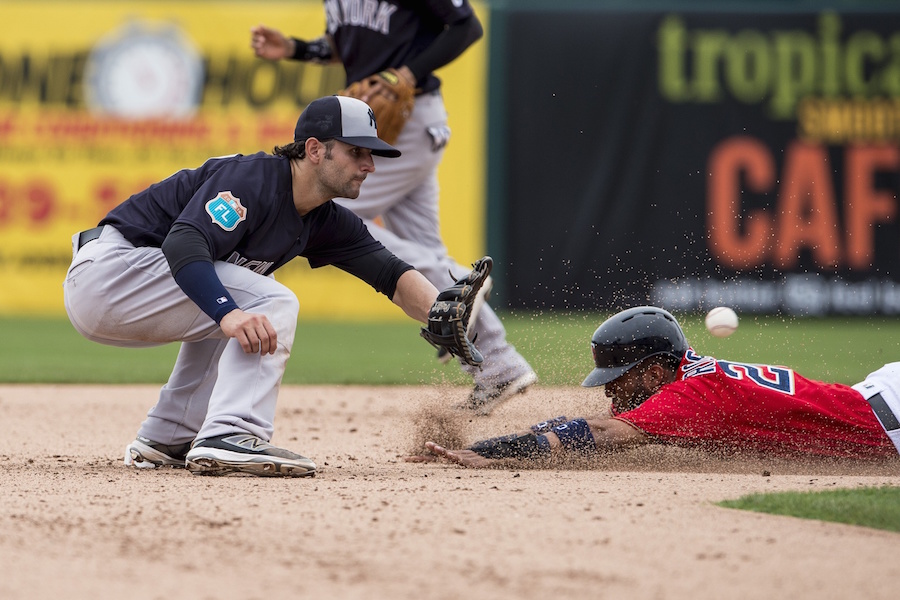 * The batting cages at Hammond Stadium were largely quiet early on Sunday morning, with one exception. In the last stall, center fielder Byron Buxton worked with hitting coach Tom Brunansky, who fed him underhand tosses and offered tips on keeping his head still and staying back on the ball. Buxton has been set back over the past week, first by an illness that caused him to miss a few games and then by Saturday’s rainout. “It’s not been ideal,” Terry Ryan acknowledged, although he added that the team can use some different methods to get him caught up on at-bats, such as having him lead off every inning in a minor-league game. Manager Paul Molitor also expressed urgency to get Buxton back up to speed at the plate, and mentioned that he plans to have him DH in Monday’s game against the Pirates. * Sano’s rawness in right field was quite evident when he failed to reel in a relatively routine line drive to his left in the third inning. He got a bit of a bad read and had the spinning ball clank off his glove, resulting in an error and contributing to a rocky frame for the starter Santana. As you might expect from a 260 lb 22-year-old playing outfield for the first time, Sano has not looked very fluid in right, and it’s particularly noticeable when he’s playing alongside Buxton, the very definition of grace and quickness in center. “There’s going to be times where we’re going to to see plays like that, plays that you hope he’d learn to make more consistently,” Molitor said. “I’m kind of happy when they hit way his ball now, so he gets to see more action.” With only two weeks left of spring training, it is nearly certain that this learning process will carry over into the regular season. * Aaron Hicks got the chance to face his former team for the first time since being traded for John Ryan Murphy in November. He reminded the Twins of his arm strength when Rosario attempted to tag on a fly ball to medium center with two outs in the fourth and was gunned down on a perfect throw. Molitor is typically a fan of aggressive baserunning but not in this instance. “It’s just not a play that you can risk getting thrown out on,” he said. “A little over-aggressive there. We talked about it in the dugout." * Murphy, too, was getting his first look at the team that traded him away in November. He went 0-for-2 with a walk and strikeout at the plate, but the most notable moment of his day came in the fifth inning, when New York right fielder Ben Gamel attempted to steal second against him. Murphy’s throw sailed into center and Gamel slid in safely. It’s not the first time the newly acquired catcher has misfired on a throw this spring, and he is now 1-for-6 on stolen base attempts. That’s noteworthy in part because of the low success rate, but more so because of the sheer volume. Opponents have attempted seven steals in Murphy's 43 innings behind the plate; comparatively, they’ve only tried stealing twice in Kurt Suzuki’s 31 innings. Murphy’s career throw-out rate in the majors is 28 percent, which is roughly average, so there’s no huge cause for concern, but it’s something to monitor. * Three relievers who are vying for one of the last remaining bullpen spots appeared in Sunday’s game: Fernando Abad, J.R. Graham and Ryan Pressly. Graham was roughed up, and took the loss. Abad looked fine. But the most impressive of the bunch was Pressly, who worked the ninth and flashed the velocity that makes him an intriguing middle relief option. He touched 96 with his fastball on the Hammond radar gun and his hard slider was clocking at 88 and 89. “He’s had flashes, I think consistency has kind of held him back,” Molitor said of the right-hander, who missed much of the 2015 season with a lat strain. “He’s had a good spring coming off the layoff, and I’m encouraged by what he’s given us so far." * Ryan said before the game that a decision on Alex Meyer’s role hasn’t been made but will come soon. Although indications from Molitor, and Meyer himself, have been that the organization is leaning toward keeping the hard-throwing righty in the bullpen, where he finished last year, Ryan (who has the final say) sounded somewhat inclined to give starting another shot. “It’s easier to bring him up here as a starter or reliever if he’s starting in Rochester,” the GM said. “That’ll weigh into my decision. We’d like to have an avenue to be able to bring him up either way." * I had the opportunity to watch two of the organization’s best pitching prospects work on adjacent fields in minor-league scrimmages in the morning. On one field, Jose Berrios (Twins Daily’s No. 2 prospect) was working, while lefty Stephen Gonsalves (No. 7) toed the rubber about 100 feet away. Berrios was repeatedly registering between 92 and 94 MPH on the gun with his fastball, and he complemented it with quality offspeed stuff that elicited several whiffs. In those regards, he’s pretty much in midseason form, but his command continued to lag behind. Tracking stats in these scrimmages is even more pointless than usual, since hitters weren’t even running the bases, but I saw Berrios issue several walks and plunk a batter in the arm. For the most part, though, he wasn’t missing by much. He’s close. Gonsalves is another story. In the couple innings I watched, he worked mostly in the high 80s with his fastball and I didn’t see him top 90. He has never really profiled as a hard-thrower but at his peak he’ll inch up a few ticks. He threw some nice changeups but his curveball was inconsistent, occasionally dropping sharply through the zone and occasionally bouncing in front of the plate. The breaking ball may turn out to be a make-or-break (no pun intended) pitch for the lanky left-hander. Reining in that offering and getting it over with more regularity will be vital to his succeeding at the higher levels. * The Twins host the Pirates on Monday at 12:05. Follow @TwinsDaily on Twitter throughout the game for updates and insights.
 -
Article: Twins Appear To Be All In On Buxton
Nick Nelson replied to Nick Nelson's topic in Twins Daily Front Page News
Good points, tweaked that bit. -
Minnesota's 2015 season concluded with Byron Buxton stranded at third base. He had reached second on a two-base error to open the ninth inning and moved up on a groundout, but came short of scoring when Miguel Sano flied out to end the game and the season. The Twins went home. The Royals, who beat them that day, went on to win the World Series. Buxton looked ahead to an offseason of uncertainty. His location between third base and home plate at season's end was reflective of his time in Minnesota as a whole: close but not quite there. Had he shown enough during his debut to convince the brass that he was ready to stick?At the time, most would have probably guessed no. Buxton appeared overwhelmed at times during his introduction to the big leagues, striking out in 32 percent of his plate appearances and never really settling into a comfortable groove. Terry Ryan has admitted, with tinges of regret, that he rushed the 21-year-old to the majors out of necessity last summer. Factor in the commonly held belief, right or wrong, that former center field prospects such as Carlos Gomez and Aaron Hicks had their development impaired by a lack of minor-league seasoning, and no one could blame the front office for tentatively slotting Buxton at Triple-A, where he has a grand total of 59 plate appearances. Halfway through March, however, all evidence points to the contrary. It looks like Buxton has the Twins center field job all but locked up. What was shaping up to be one of the most compelling position battles this spring has turned out to be rather anticlimactic. As John wrote last week from Fort Myers: "This is clearly not a competition, at least not yet. It's Buxton's job to lose." The grip has only tightened in the week since that post. John noted at the time that Buxton had started four of the first six games in center; he has started on four of six days since, and the player spelling him has been Max Kepler instead of Danny Santana. That's a very positive sign for Buck, since Kepler is a likely early cut. Santana, who stood to be Buxton's primary competition in center, is clearly being groomed for a utility role. In the past week he has appeared in all three outfield spots and both middle infield spots. It's becoming plain to see that the Twins entered this camp intent on bringing Buxton north. And while you might not be wowed by his overall Grapefruit numbers (his .200 average and .561 OPS are almost identical to the marks he posted in Minnesota last year), he's showing the type of progress that reinforces this approach. On Sunday, Buxton had perhaps his best game yet this spring. He doubled and walked, and scored both times. He had a good day on the base paths, including a heads-up tag on a fly ball. That sort of stuff is all the Twins are looking for right now from their 22-year-old top prospect. It appears the collective assessment is that Buxton's best plan for learning to hit MLB pitching is to face MLB pitching. Even if that process is still playing out as we head into the regular season, his impact in the outfield and on the bases enables the Twins to let him learn on the job without hurting themselves much if at all. The narratives connecting Buxton to Hicks and Gomez are conveniently tidy but they've never been all that apt given that Buck is in another class entirely than either predecessor. He has quickly stopped being challenged at each level of the minors, and that's why every prospect publication remains bullish on his status as one of the game's absolute best young talents. I'm pleased to see that the Twins are ready to let that talent off the leash and don't seem inclined to let their resolve waver on the basis of a couple of dozen exhibition contests. I'm also excited by the idea of a Rosario-Buxton-Sano Opening Day outfield alignment, with Kepler waiting in the wings. Nowhere is the fruitfulness of Minnesota's pipeline more evident than in the outfield, which is bustling with young talent to an extent we've never before witnessed. Giddy up. Click here to view the article
-
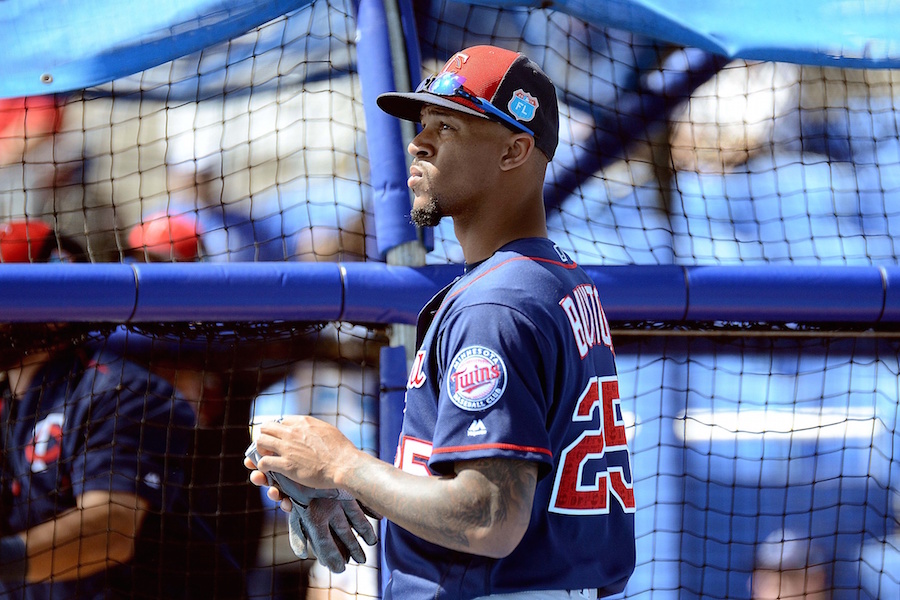 At the time, most would have probably guessed no. Buxton appeared overwhelmed at times during his introduction to the big leagues, striking out in 32 percent of his plate appearances and never really settling into a comfortable groove. Terry Ryan has admitted, with tinges of regret, that he rushed the 21-year-old to the majors out of necessity last summer. Factor in the commonly held belief, right or wrong, that former center field prospects such as Carlos Gomez and Aaron Hicks had their development impaired by a lack of minor-league seasoning, and no one could blame the front office for tentatively slotting Buxton at Triple-A, where he has a grand total of 59 plate appearances. Halfway through March, however, all evidence points to the contrary. It looks like Buxton has the Twins center field job all but locked up. What was shaping up to be one of the most compelling position battles this spring has turned out to be rather anticlimactic. As John wrote last week from Fort Myers: "This is clearly not a competition, at least not yet. It's Buxton's job to lose." The grip has only tightened in the week since that post. John noted at the time that Buxton had started four of the first six games in center; he has started on four of six days since, and the player spelling him has been Max Kepler instead of Danny Santana. That's a very positive sign for Buck, since Kepler is a likely early cut. Santana, who stood to be Buxton's primary competition in center, is clearly being groomed for a utility role. In the past week he has appeared in all three outfield spots and both middle infield spots. It's becoming plain to see that the Twins entered this camp intent on bringing Buxton north. And while you might not be wowed by his overall Grapefruit numbers (his .200 average and .561 OPS are almost identical to the marks he posted in Minnesota last year), he's showing the type of progress that reinforces this approach. On Sunday, Buxton had perhaps his best game yet this spring. He doubled and walked, and scored both times. He had a good day on the base paths, including a heads-up tag on a fly ball. That sort of stuff is all the Twins are looking for right now from their 22-year-old top prospect. It appears the collective assessment is that Buxton's best plan for learning to hit MLB pitching is to face MLB pitching. Even if that process is still playing out as we head into the regular season, his impact in the outfield and on the bases enables the Twins to let him learn on the job without hurting themselves much if at all. The narratives connecting Buxton to Hicks and Gomez are conveniently tidy but they've never been all that apt given that Buck is in another class entirely than either predecessor. He has quickly stopped being challenged at each level of the minors, and that's why every prospect publication remains bullish on his status as one of the game's absolute best young talents. I'm pleased to see that the Twins are ready to let that talent off the leash and don't seem inclined to let their resolve waver on the basis of a couple of dozen exhibition contests. I'm also excited by the idea of a Rosario-Buxton-Sano Opening Day outfield alignment, with Kepler waiting in the wings. Nowhere is the fruitfulness of Minnesota's pipeline more evident than in the outfield, which is bustling with young talent to an extent we've never before witnessed. Giddy up.
 -
Earlier this week we posted an overview of the Minnesota Twins' farm system, touching on its strengths and weaknesses. It is a pipeline that weighs heavily in importance because the Twins are relying so strongly on internally developed players to fuel their rise to contention. Of course, they're not the only team in the division counting on prospects to figure prominently into future success. Today, I thought it would be a fun exercise to put together a lineup featuring the best prospects in the American League Central as we head into the 2016 campaign.This list is, of course, quite subjective. I took into account both the team-by-team and overall rankings from publications such as Baseball America and MLB.com, and adjusted a little bit based on readiness (in borderline situations, I opted for the guy who figures to make an impact more quickly). Here's what I came up with for a starting lineup plus three pitchers. C: Francisco Mejia, CLE Age: 20 | ETA: 2018 Catcher is a thin position throughout the entire division. Of the 50 players to appear on Baseball America's Top 10 lists for the Central, there's ONE backstop. It's Mejia, who was ranked 10th in the Cleveland system. He's not a great prospect by any means, and is coming off a season where he posted a .670 OPS at Single-A, but he's young and has strong defensive skills. That's enough to rise to the top of an unimpressive crop. 1B: Max Kepler, MIN Age: 23 | ETA: 2016 Kepler has played mostly in the outfield during his ascension through the minors, but he has played plenty of first and many believe that's his best defensive position. He's certainly superior to any of the division's strictly first base prospects, so he gets the nod coming off a breakout season at Double-A. 2B: Raul Mondesi Jr, KC Age: 20 | ETA: 2017 The son of a former big-leaguer, Mondesi's tools and pedigree have always overshadowed his on-field production – he's a .246/.293/.365 hitter in the minors – but there's a reason the Dominican import keeps climbing prospect lists in spite of his meager offensive numbers. He is a phenomenal athlete with outstanding defensive skills, and despite the fact that he won't turn 21 until July, he has already put in a full season at Double-A and appeared in a World Series game. Mondesi will probably play shortstop in the majors, but has played some second so we'll flex him there in order to get a Royal into the mix. SS: Tim Anderson, CWS Age: 22 | ETA: 2016 Chicago's No. 1 prospect, Anderson is a wiry shortstop in the Dee Gordon mold, with a bit less speed and a bit more pop. Last year at Double-A he batted .312 and led the Southern League with 49 steals. The Sox let Alexei Ramirez walk during the offseason and signed only stopgap veteran Jimmy Rollins as a fill-in, so the door is wide open for this former first-round pick. 3B: Trey Michalczewski, CWS Age: 21 | ETA: 2018 Much like catcher, this is a weak position for the division. Michalczewski is the only third baseman to appear on any of BA's Top 10 lists; he ranks fourth for the White Sox despite a .257/.335/.387 slash line through three minor-league seasons. He's mostly projection at this point, but shows patience at the plate that is uncommon for his age and scouts believe the power will come. LF: Clint Frazier, CLE Age: 21 | ETA: 2017 The Indians selected Frazier in the 2013 draft, one pick after Minnesota took shortstop Nick Gordon at No. 4. He is renowned for his smooth swing and excellent bat speed. Last year he hit .285/.377/.465 with 16 homers and 15 steals as a 20-year-old at High-A. He has played mostly center in the minors but is better suited for a corner. CF: Byron Buxton, MIN Age: 22 | ETA: 2016 A guy who needs no introduction. Buxton remains the consensus No. 2 prospect in baseball (behind Dodgers shortstop Corey Seager) in spite of the injuries and MLB struggles that have marred his last two seasons. That tells you all you need to know about how strongly evaluators everywhere believe in his ability and upside. RF: Bradley Zimmer, CLE Age: 23 | ETA: 2017 One year after selecting Frazier out of high school with their first-round pick, the Indians used their top selection in 2014 (21st overall) to acquire Zimmer out of the University of San Francisco. Both decisions have paid initial dividends. Last year was Zimmer's first full season as a pro, and he spent the second half of it holding his own at Double-A. SP: Jose Berrios, MIN Age: 21 | ETA: 2016 Berrios is the most highly-rated, and MLB-ready, pitching prospect in the division. With his combination of command, velocity, durability and tremendous stuff, he easily sets himself apart. SP: Carson Fulmer, CWS Age: 22 | ETA: 2017 The Vanderbilt product was arguably the best collegiate starter in last year's draft, and the Twins considered him at No. 6 before going with Tyler Jay. The White Sox ended up taking Fulmer two picks later. In his first taste of the pros, the righty lived up to the hype, posting a 25-to-9 K/BB ratio and 2.05 ERA in 22 innings at High-A. He's on the fast track to the Chicago rotation. SP: Michael Fulmer, DET Age: 22 | ETA: 2016 This Fulmer was the centerpiece of last year's deadline deal that sent Yoenis Cespedes to the Mets, who had quality young pitching to spare. He has a hard sinking fastball that induces plenty of grounders and he complements it with a swing-and-miss slider. The Tigers could use a youthful jolt in their rotation, so they are hoping he can emerge this season. Representatives By Team Twins: 3 Indians: 3 White Sox: 3 Royals: 1 Tigers: 1 THOUGHTS AND TAKEAWAYS * We already knew this, but the Twins have the best system in the division by far and that's reflected here. They may have the same number of reps as the Indians and White Sox, but Minnesota's prospects are uniformly of a higher grade. Buxton and Berrios are decisively the two best on the list. * Looking around the division makes me feel a little bit better about the weakness at catcher in the Twins' system, which I talked about on Monday. The truth is that quality prospects behind the plate are at a premium around the league. Only four appear on MLB.com's Top 100 list, and only five on Baseball America's (mostly toward the bottom). It's really tough to find players that are functional behind the plate and can actually offer something with the bat. The Twins are hoping they've found one in John Ryan Murphy. * It goes without saying that this All-Prospect Team would have looked a lot better with Francisco Lindor and Miguel Sano comprising the left side of the infield, but both graduated to the majors in 2015, finishing second and third for Rookie of the Year. * The Twins' bounty of premier prospects is, to an extent, the byproduct of their half-decade in the cellar. Buxton and Berrios came in the same 2012 draft, at the front ends of the first two rounds. Nick Gordon and Tyler Jay, who both merited consideration for a spot in the All-Prospect group, were also top picks made possible by 90-loss seasons. Detroit's system reflects the other end of the spectrum. Their annual success, combined with a willingness to forfeit first-round draft picks in order to sign big-name free agents, resulted in few opportunities to select from the top tier of amateur talent. Their one representative on this squad is Michael Fulmer, who is maybe the third-best pitching prospect in the division, and he wasn't in their organization until August of last year. Click here to view the article
- 10 replies
-
- 3
-
-
- byron buxton
- jose berrios
- (and 1 more)
-
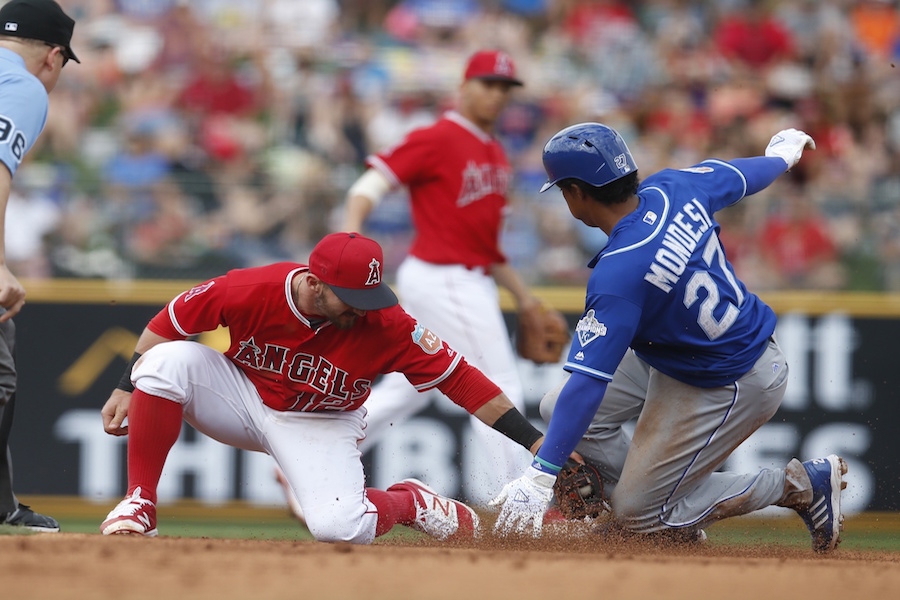 This list is, of course, quite subjective. I took into account both the team-by-team and overall rankings from publications such as Baseball America and MLB.com, and adjusted a little bit based on readiness (in borderline situations, I opted for the guy who figures to make an impact more quickly). Here's what I came up with for a starting lineup plus three pitchers. C: Francisco Mejia, CLE Age: 20 | ETA: 2018 Catcher is a thin position throughout the entire division. Of the 50 players to appear on Baseball America's Top 10 lists for the Central, there's ONE backstop. It's Mejia, who was ranked 10th in the Cleveland system. He's not a great prospect by any means, and is coming off a season where he posted a .670 OPS at Single-A, but he's young and has strong defensive skills. That's enough to rise to the top of an unimpressive crop. 1B: Max Kepler, MIN Age: 23 | ETA: 2016 Kepler has played mostly in the outfield during his ascension through the minors, but he has played plenty of first and many believe that's his best defensive position. He's certainly superior to any of the division's strictly first base prospects, so he gets the nod coming off a breakout season at Double-A. 2B: Raul Mondesi Jr, KC Age: 20 | ETA: 2017 The son of a former big-leaguer, Mondesi's tools and pedigree have always overshadowed his on-field production – he's a .246/.293/.365 hitter in the minors – but there's a reason the Dominican import keeps climbing prospect lists in spite of his meager offensive numbers. He is a phenomenal athlete with outstanding defensive skills, and despite the fact that he won't turn 21 until July, he has already put in a full season at Double-A and appeared in a World Series game. Mondesi will probably play shortstop in the majors, but has played some second so we'll flex him there in order to get a Royal into the mix. SS: Tim Anderson, CWS Age: 22 | ETA: 2016 Chicago's No. 1 prospect, Anderson is a wiry shortstop in the Dee Gordon mold, with a bit less speed and a bit more pop. Last year at Double-A he batted .312 and led the Southern League with 49 steals. The Sox let Alexei Ramirez walk during the offseason and signed only stopgap veteran Jimmy Rollins as a fill-in, so the door is wide open for this former first-round pick. 3B: Trey Michalczewski, CWS Age: 21 | ETA: 2018 Much like catcher, this is a weak position for the division. Michalczewski is the only third baseman to appear on any of BA's Top 10 lists; he ranks fourth for the White Sox despite a .257/.335/.387 slash line through three minor-league seasons. He's mostly projection at this point, but shows patience at the plate that is uncommon for his age and scouts believe the power will come. LF: Clint Frazier, CLE Age: 21 | ETA: 2017 The Indians selected Frazier in the 2013 draft, one pick after Minnesota took shortstop Nick Gordon at No. 4. He is renowned for his smooth swing and excellent bat speed. Last year he hit .285/.377/.465 with 16 homers and 15 steals as a 20-year-old at High-A. He has played mostly center in the minors but is better suited for a corner. CF: Byron Buxton, MIN Age: 22 | ETA: 2016 A guy who needs no introduction. Buxton remains the consensus No. 2 prospect in baseball (behind Dodgers shortstop Corey Seager) in spite of the injuries and MLB struggles that have marred his last two seasons. That tells you all you need to know about how strongly evaluators everywhere believe in his ability and upside. RF: Bradley Zimmer, CLE Age: 23 | ETA: 2017 One year after selecting Frazier out of high school with their first-round pick, the Indians used their top selection in 2014 (21st overall) to acquire Zimmer out of the University of San Francisco. Both decisions have paid initial dividends. Last year was Zimmer's first full season as a pro, and he spent the second half of it holding his own at Double-A. SP: Jose Berrios, MIN Age: 21 | ETA: 2016 Berrios is the most highly-rated, and MLB-ready, pitching prospect in the division. With his combination of command, velocity, durability and tremendous stuff, he easily sets himself apart. SP: Carson Fulmer, CWS Age: 22 | ETA: 2017 The Vanderbilt product was arguably the best collegiate starter in last year's draft, and the Twins considered him at No. 6 before going with Tyler Jay. The White Sox ended up taking Fulmer two picks later. In his first taste of the pros, the righty lived up to the hype, posting a 25-to-9 K/BB ratio and 2.05 ERA in 22 innings at High-A. He's on the fast track to the Chicago rotation. SP: Michael Fulmer, DET Age: 22 | ETA: 2016 This Fulmer was the centerpiece of last year's deadline deal that sent Yoenis Cespedes to the Mets, who had quality young pitching to spare. He has a hard sinking fastball that induces plenty of grounders and he complements it with a swing-and-miss slider. The Tigers could use a youthful jolt in their rotation, so they are hoping he can emerge this season. Representatives By Team Twins: 3 Indians: 3 White Sox: 3 Royals: 1 Tigers: 1 THOUGHTS AND TAKEAWAYS * We already knew this, but the Twins have the best system in the division by far and that's reflected here. They may have the same number of reps as the Indians and White Sox, but Minnesota's prospects are uniformly of a higher grade. Buxton and Berrios are decisively the two best on the list. * Looking around the division makes me feel a little bit better about the weakness at catcher in the Twins' system, which I talked about on Monday. The truth is that quality prospects behind the plate are at a premium around the league. Only four appear on MLB.com's Top 100 list, and only five on Baseball America's (mostly toward the bottom). It's really tough to find players that are functional behind the plate and can actually offer something with the bat. The Twins are hoping they've found one in John Ryan Murphy. * It goes without saying that this All-Prospect Team would have looked a lot better with Francisco Lindor and Miguel Sano comprising the left side of the infield, but both graduated to the majors in 2015, finishing second and third for Rookie of the Year. * The Twins' bounty of premier prospects is, to an extent, the byproduct of their half-decade in the cellar. Buxton and Berrios came in the same 2012 draft, at the front ends of the first two rounds. Nick Gordon and Tyler Jay, who both merited consideration for a spot in the All-Prospect group, were also top picks made possible by 90-loss seasons. Detroit's system reflects the other end of the spectrum. Their annual success, combined with a willingness to forfeit first-round draft picks in order to sign big-name free agents, resulted in few opportunities to select from the top tier of amateur talent. Their one representative on this squad is Michael Fulmer, who is maybe the third-best pitching prospect in the division, and he wasn't in their organization until August of last year.
 -
We have spent the past two weeks counting down our choices for the top 20 prospects in the Minnesota Twins organization, culminating with Parker's profile on Byron Buxton last Friday. Today, we'll reflect on that list and where the farm system stands as we enter this 2016 season.Twins Daily Top 20 Prospects For 2016 20. Jake Reed, RHP 19. Randy Rosario, LHP 18. Lewin Diaz, 1B 17. Engelb Vielma, SS 16. Taylor Rogers, LHP 15. JT Chargois, RHP 14. Jermaine Palacios, SS 13. Wander Javier, SS 12. Lewis Thorpe, LHP 11. Adam Brett Walker, OF 10. Nick Burdi, RHP 9. Kohl Stewart, RHP 8. Alex Meyer, RHP 7. Jorge Polanco, SS 6. Stephen Gonsalves, LHP 5. Tyler Jay, LHP 4. Nick Gordon, SS 3. Max Kepler, OF 2. Jose Berrios, RHP 1. Byron Buxton, OF Positional Breakdown Right-handed Pitchers: 6 Left-handed Pitchers: 5 Infielders: 6 Outfielders: 3 Catchers: 0 System Ranking Among MLB Baseball America: 10th out of 30 ESPN: 3rd out of 30 MLB.com: 5th out of 30 No Park? One thing that differentiates our top prospect listing from many other sources is that we elected not to include Byung Ho Park. We certainly could have, since he qualifies for this conversation based on his MLB rookie eligibility. Ultimately we decided that given his status as a 29-year-old longtime pro from Korea, and considering the lack of any common baseline to compare him against the prospects we were profiling, we'd be blindly guessing even more than usual by trying to rank him. John Bonnes wrote from Ft. Myers about Byung Ho Park's early progress. Reinforcements In The (Red) Wings The Twins are going to be heading into this season with their top three prospects on the verge of the major leagues. Buxton, Berrios and Kepler could all be reasonably written into the Opening Day lineup, even if two or all three are likely to open in Triple-A. Few if any other teams can boast that level of MLB-ready impact talent, and it bodes well for Minnesota's chances heading into a season with some question marks in the rotation and outfield. Glaring Weakness The one thing that sticks out from an otherwise fairly balanced positional breakdown is the lack of any catchers. Mitch Garver and Stuart Turner are viewed as the best prospective backstops on the farm but they would have appeared in the 20-30 range if we extended out our list. It's simply not a position that the Twins have prioritized; since 2010 they have drafted a catcher in the first five rounds only once (Turner was a third-rounder in 2013). This increases the pressure on the John Ryan Murphy move to pay off. John Hicks, claimed off waivers from Seattle in December, is also one to watch. He had been ranked by Baseball America as the best defensive catcher in the Mariners system and he has shown offensive ability at times in the minors. Strong At Short Of the 20 players on our list, four are shortstops – at least currently. Not all will stick there, but starting at the highest end of the defensive spectrum is a good thing. This represents a very welcome changing of the tide for a Twins organization that has been dreadfully ineffective at producing quality shortstops over the years. The fruitless pipeline has led to a revolving door on the big-league roster. Gordon, the most promising name among this group, is still multiple years away from the majors, but with Eduardo Escobar's emergence (and Polanco on hand at Triple-A), the Twins can afford to be patient. Heat Rising During his brief MLB debut last year, Alex Meyer's average fastball velocity of 95.3 MPH, per FanGraphs, was the highest for a Twins pitcher since Juan Morillo's 97.6 in 2009. Meyer's arrival was only a taste of what's to come. Nick Burdi (10) has reportedly been hitting 99 on the radar gun repeatedly here in the first week of spring training games. Jake Reed (20) can touch the upper 90s. Tyler Jay (5) and Lewis Thorpe (12) are rare lefties who can push it to 95-plus. Never before has this club seen an infusion of power arms quite like this. Arrival Timelines Based on our ETA projections, here's a loose timeline of when you can expect the top 20 prospects to start helping the big-league club. 2016: Buxton, Berrios, Kepler, Polanco, Meyer, Burdi, Walker, Chargois, Rogers 2017: Vielma, Rosario, Reed 2018: Gordon, Jay, Gonsalves, Stewart 2019: Thorpe, Palacios, Diaz 2021: Javier Click here to view the article
- 10 replies
-
- 3
-
-
- byron buxton
- jose berrios
- (and 1 more)
