



Nick Nelson
-
Posts
8,323 -
Joined
-
Last visited
-
Days Won
56
Content Type
Profiles
News
Minnesota Twins Videos
2026 Minnesota Twins Top Prospects Ranking
2022 Minnesota Twins Draft Picks
Minnesota Twins Free Agent & Trade Rumors, Notes, & Tidbits
Guides & Resources
2023 Minnesota Twins Draft Picks
The Minnesota Twins Players Project
2024 Minnesota Twins Draft Picks
2025 Minnesota Twins Draft Pick Tracker
2026 Minnesota Twins Draft Tracker: Picks & Bonuses
Forums
Blogs
Events
Store
Downloads
Gallery
Everything posted by Nick Nelson
-
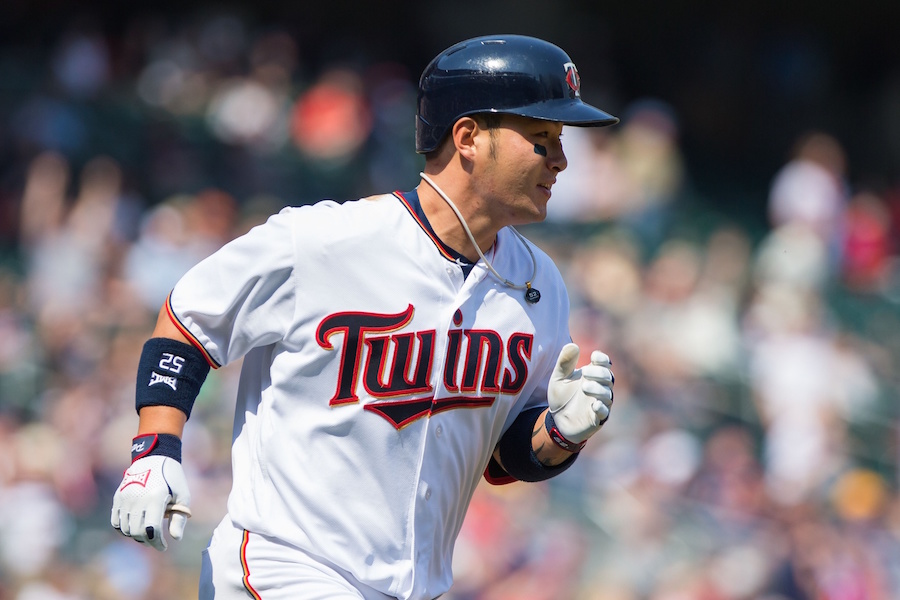 In just his last four games, Park has launched mammoth home runs to all fields. His epic blast to center off Joe Smith on Saturday was pegged by Home Run Tracker as the longest in the stadium's history. Two days later he became one of the few right-handed batters to ever clear the heightened right field fence with an oppo shot when he took Chase Anderson deep. And on Tuesday, Park got hold of a hanger and deposited it in the second deck in left. He leads the Twins with four home runs and not a single one of them has been remotely cheap. The South Korean import has jaw-dropping power. But of course, that was never really in question. The uncertainty with the 29-year-old always surrounded his ability to make enough contact to be a quality offensive player overall, rather than an out machine who occasionally gets a hold of one. On that matter, the jury was out after a spring training in which Park struck out 17 times with only one walk in 61 plate appearances. Concern grew during Minnesota's season-opening homestand, in which he struck out 11 times in 21 plate appearances. When the rookie put up a golden sombrero in the final game at Kansas City, it became reasonable to wonder if some time in the minors might be appropriate. Those contact issues subsided in a big way during the Twins' just-completed homestand. He hasn't had a game with multiple strikeouts since leaving KC. At Target Field he fanned only five times total in 27 trips. Sure, the team has been facing lighter opposition than in those first two series. But these are big-league pitchers and Park has had the look of a big-league hitter while standing in against them, which was not really the case in Week One. It appears that he's making some adjustments or at least getting more comfortable – an aspect of his game that initially drew the Twins to him. At the time of the signing, front office officials expressed confidence in Park's adaptability. This is a guy, after all, who improved in each of his five seasons with Nexen in the Korean Baseball Organization, going from solid slugger to MVP superstar. When asked about his impressions of the new acquisition in spring training, assistant general manager Rob Antony remarked that he was struck by Park's patience. "You see the strikeouts," Antony said, "so you think, OK, he takes a huge hack, or he chases a lot of bad pitches. I think he's been fairly disciplined." While his 16-to-4 K/BB ratio doesn't exactly illustrate it, Park has been better than expected in that area. He has swung at 26.8 percent of pitches outside the strike zone, placing him in the middle of the pack among Twins hitters and actually a tad below the major-league average. Inexperience has shone through for several pressing hitters in the lineup but the 29-year-old was unfazed by his challenging initial exposure to the majors. His aptitude for the game has been on display all over – solid defense at first, heads-up base running, even his celebratory handshakes are on point – and that it's all come to him so quickly is awfully impressive. Park has raw power that stands out even on a roster with Miguel Sano and Oswaldo Arcia, and he's demonstrated it, but we've also seen him slash a single between first and second to beat the shift, deliver in several clutch spots, and consistently work deep counts (he leads the team in pitches per plate appearance). The Twins might have found themselves a truly special player here. At the very least, Park appears to be pretty damn comfortable hitting at Target Field, which would seem to bode well for the next four years.
 -
Referring to Joe Mauer as "Average Joe" during the past two years has been a disparagement – a reference to his utterly pedestrian performance, which could only generously be described as mediocre in comparison to his peers at first base. But that's not how he earned the nickname. In his earlier days, and even all the way up until his tenure at catcher ended in 2013, it was a nod to his extraordinary, elite ability to hit for average. Mauer led the American League in that category three times in four years from 2006 through 2009, and his lifetime batting average (.313) ranks third among active players, trailing only surefire Hall of Famers Miguel Cabrera and Ichiro Suzuki. Obviously, that aspect of his game has been amiss these last two seasons, in which Mauer has batted .277 and .265 respectively. But this year we're seeing early signs that Average Joe might be back, and the positive implications of that would stretch well beyond the nostalgic charm of seeing his BA start with a three.Through the first two weeks of the season, Mauer ranks third in the AL with a .372 average. He already has his first home run – a feat he didn't accomplish last year until May 20th. Through 53 plate appearances, he has drawn eight walks with only four strikeouts. That last piece is the most encouraging. Batting averages can be fluky over short stretches and homers come at random times with him. But Mauer's control of the strike zone suggests that he is seeing the ball better than he has in years. Since his last full strong season in 2012, his walk rate has dropped (from 12.0 percent to 11.6 percent to 10.1 percent) while he has struck out at rates of 17.5 percent, 18.5 percent and 16.8 percent – his previous career rate was 10.4 percent. Over the first half of April, Mauer has been controlling the strike zone masterfully, signaling a return to his bread and butter. The result has been a phenomenal .472 on-base percentage, and to say that his skills in that department are sorely needed would be a tremendous understatement. The rest of the offense entered play Sunday with a .270 OBP, and all seven of Minnesota's home runs have been solo shots. The Twins need base-runners. Even when some of the other hitters get on track more, that will continue to be the case. It's an area that Average Joe specializes in, so if these early indicators prove legitimate, it will bode extremely well for the team's chances of continuing to win and dig out of this early hole. Heck, Mauer might even be on his way to earning a label that many have been reluctant to bestow upon him: Leader. How else can you frame his consistent quality at-bats and outstanding production while the youth-infused lineup has almost roundly struggled? Mauer factored heavily into Sunday's sweep-clinching victory, reaching base in four of six plate appearances. While Oswaldo Arcia gets the headlines – and Gatorade shower – for his walk-off hit, it was Mauer who sparked the 12th-inning rally with a leadoff walk. Two nights earlier, he made Byung Ho Park's go-ahead double in the eighth possible with a clutch two-out RBI single in the seventh. Average Joe is back to being the subtle, underrated, beating heart of the Twins offense, at least so far. It's a good look. Click here to view the article
-
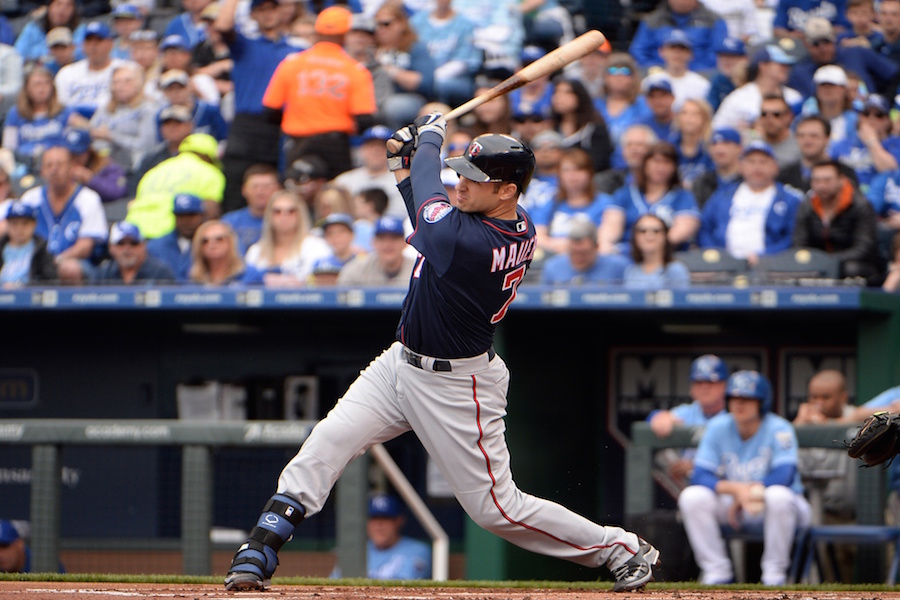 Through the first two weeks of the season, Mauer ranks third in the AL with a .372 average. He already has his first home run – a feat he didn't accomplish last year until May 20th. Through 53 plate appearances, he has drawn eight walks with only four strikeouts. That last piece is the most encouraging. Batting averages can be fluky over short stretches and homers come at random times with him. But Mauer's control of the strike zone suggests that he is seeing the ball better than he has in years. Since his last full strong season in 2012, his walk rate has dropped (from 12.0 percent to 11.6 percent to 10.1 percent) while he has struck out at rates of 17.5 percent, 18.5 percent and 16.8 percent – his previous career rate was 10.4 percent. Over the first half of April, Mauer has been controlling the strike zone masterfully, signaling a return to his bread and butter. The result has been a phenomenal .472 on-base percentage, and to say that his skills in that department are sorely needed would be a tremendous understatement. The rest of the offense entered play Sunday with a .270 OBP, and all seven of Minnesota's home runs have been solo shots. The Twins need base-runners. Even when some of the other hitters get on track more, that will continue to be the case. It's an area that Average Joe specializes in, so if these early indicators prove legitimate, it will bode extremely well for the team's chances of continuing to win and dig out of this early hole. Heck, Mauer might even be on his way to earning a label that many have been reluctant to bestow upon him: Leader. How else can you frame his consistent quality at-bats and outstanding production while the youth-infused lineup has almost roundly struggled? Mauer factored heavily into Sunday's sweep-clinching victory, reaching base in four of six plate appearances. While Oswaldo Arcia gets the headlines – and Gatorade shower – for his walk-off hit, it was Mauer who sparked the 12th-inning rally with a leadoff walk. Two nights earlier, he made Byung Ho Park's go-ahead double in the eighth possible with a clutch two-out RBI single in the seventh. Average Joe is back to being the subtle, underrated, beating heart of the Twins offense, at least so far. It's a good look.
 -

Article: One Step Backward
Nick Nelson replied to Nick Nelson's topic in Twins Daily Front Page News
The lineup also has four starters with fewer than 500 MLB plate appearances. How many other teams around the league can make that claim?- 64 replies
-
- 1
-

-
- byron buxton
- eddie rosario
- (and 2 more)
-
Article: One Step Backward
Nick Nelson replied to Nick Nelson's topic in Twins Daily Front Page News
I mean, that simply isn't true. Dozier has 9 K in 39 PA (23% K-rate). Plouffe has 8 K in 32 PA (25%). Those are reasonable strikeout rates for a major-league ballplayer. Buxton, Park and Sano are all at 44+ percent, which is not, and beyond the stats, it is the quality of ABs. Like I said, they've been largely uncompetitive. The intent of this article is not to "blame" the young players, but rather to point out that it appears some may need to be sent back because they're not ready. Are you suggesting that Dozier and Plouffe should be sent to Triple-A? -
At one of his pregame lunchroom press scrums on a mid-March day in Fort Myers, Terry Ryan was asked about his level of concern with the young and inexperienced players who would figure prominently into the team's plans this year. "I worry about almost every guy that comes up here," the GM said. "They have instant success and things are looking good. Sometimes when guys come back it doesn't fall into place, it starts to unravel a bit. We send them back."Ryan obviously has a lot of faith in his youthful core, and with good reason. But he's been doing this long enough to recognize that things don't always play out according to plan. "Every guy that's come through here with the exception of maybe a handful in the last 20 years has had to go back. Mauer didn't go back. Knoblauch didn't go back. Those types of guys." Of course, we'd all like to believe that transcendent talents like Byron Buxton and Miguel Sano are "those types of guys," but Ryan pointed to a number of players who needed to be sent back to the minors after their initial call-up – sometimes multiple times – before going on to have long and successful big-league careers. Included on that list are names like Torii Hunter, Corey Koskie and LaTroy Hawkins. A.J. Pierzynski shuttled back and forth between the minors and majors repeatedly back in the late '90s, and he's still playing today. So as we watch Buxton, Eddie Rosario, and even Byung Ho Park scuffle along, it's important to keep in mind that a step backward is sometimes required before taking two steps forward. I have a hard time envisioning a demotion for Sano but with the other three it's quickly going to become a consideration as the uncompetitive at-bats pile up. On a larger scale, it's looking like the Twins, as a team, will need to take a step backward before they can move forward. They've dug themselves a deep hole at the start of the season and being forced to send down one or more of their key young players, while replacing them with mediocrities like David Murphy, would almost surely peg this year as a developmental one aimed toward getting everything in place for a 2017 run. Perhaps that was always the most realistic outcome given the level of inexperience on the roster, but one can hardly be blamed for being impatient after a five-year playoff drought, or for feeling optimistic in light of the elite abilities of these admittedly green youngsters. Unfortunately, it looks like they're just not there yet, and neither are the Twins. Click here to view the article
- 64 replies
-
- 1
-
-
- byron buxton
- eddie rosario
- (and 2 more)
-
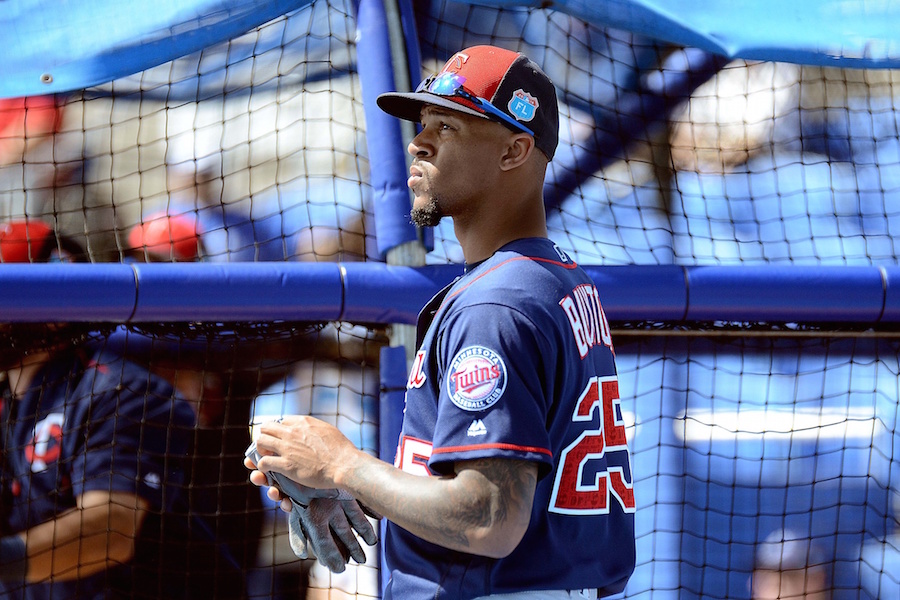 Ryan obviously has a lot of faith in his youthful core, and with good reason. But he's been doing this long enough to recognize that things don't always play out according to plan. "Every guy that's come through here with the exception of maybe a handful in the last 20 years has had to go back. Mauer didn't go back. Knoblauch didn't go back. Those types of guys." Of course, we'd all like to believe that transcendent talents like Byron Buxton and Miguel Sano are "those types of guys," but Ryan pointed to a number of players who needed to be sent back to the minors after their initial call-up – sometimes multiple times – before going on to have long and successful big-league careers. Included on that list are names like Torii Hunter, Corey Koskie and LaTroy Hawkins. A.J. Pierzynski shuttled back and forth between the minors and majors repeatedly back in the late '90s, and he's still playing today. So as we watch Buxton, Eddie Rosario, and even Byung Ho Park scuffle along, it's important to keep in mind that a step backward is sometimes required before taking two steps forward. I have a hard time envisioning a demotion for Sano but with the other three it's quickly going to become a consideration as the uncompetitive at-bats pile up. On a larger scale, it's looking like the Twins, as a team, will need to take a step backward before they can move forward. They've dug themselves a deep hole at the start of the season and being forced to send down one or more of their key young players, while replacing them with mediocrities like David Murphy, would almost surely peg this year as a developmental one aimed toward getting everything in place for a 2017 run. Perhaps that was always the most realistic outcome given the level of inexperience on the roster, but one can hardly be blamed for being impatient after a five-year playoff drought, or for feeling optimistic in light of the elite abilities of these admittedly green youngsters. Unfortunately, it looks like they're just not there yet, and neither are the Twins.
 -
Article: Perkins To DL, Rogers Called Up
Nick Nelson replied to Nick Nelson's topic in Twins Daily Front Page News
Why are we assuming this is not what happened? Just because they announced the move this morning doesn't mean that's when they reached the decision. -
Article: Perkins To DL, Rogers Called Up
Nick Nelson replied to Nick Nelson's topic in Twins Daily Front Page News
I just feel bad for him personally. He was a dominant closer for three years on terrible teams, then when the Twins finally appear poised to return to relevance, his body breaks down. It's not like he pitched through a long stretch of the regular season while hiding an injury. He had one bad outing and went on the shelf. -
The Minnesota Twins have placed closer Glen Perkins on the disabled list with a shoulder strain and called up left-hander Taylor Rogers from Class-AAA Rochester. Rogers was "coincidentally" the subject of Seth's Prospect Retrospective today.In spring training, Rogers was competing for a lefty specialist role in the bullpen and he lasted deep into camp before being optioned on March 23rd. Last year in Rochester he went 11-12 with a 3.98 ERA, 1.35 WHIP and 126-to-44 K/BB ratio over 174 innings. He pitched two scoreless innings in his lone appearance there this year. The 25-year-old has served mostly as a starter in the minors but profiles better as a reliever due to his consistent success against left-handed hitters. In Triple-A last season he held them to a .177/.209/.193 slash line with 55 strikeouts and five walks. Rogers now stands out as Paul Molitor's best option against tough lefty swingers late in games. Perkins showed decreased velocity in his two appearances, which included a blown save against the Royals on Sunday. Obviously it's an ominous sign that he's going on the shelf one week into the season, but hopefully some time off will enable him to come back strong with more life on his fastball. Presumably Kevin Jepsen, who served as the team's closer down the stretch last year, will take over ninth-inning duties for the time being. Click here to view the article
-
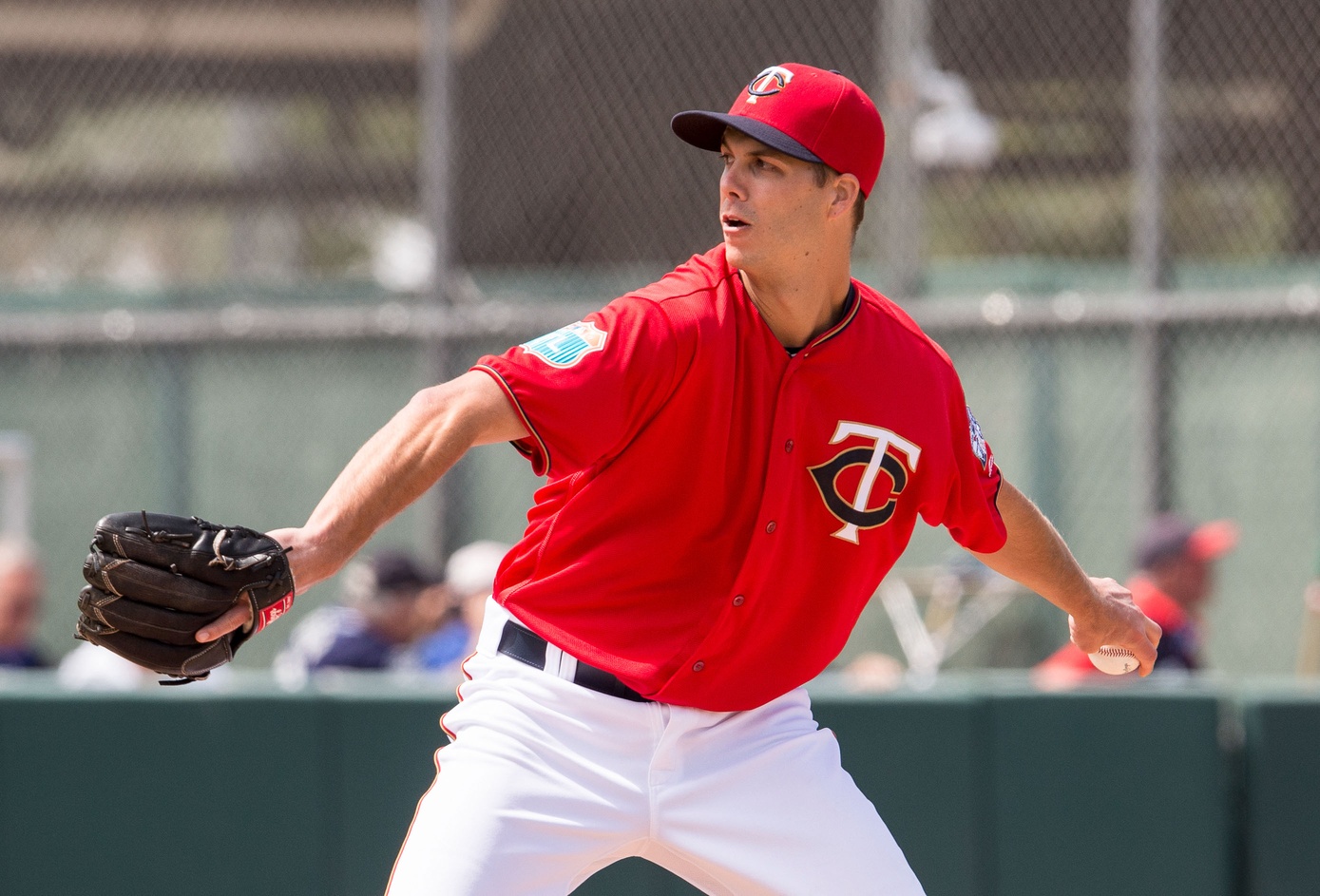 In spring training, Rogers was competing for a lefty specialist role in the bullpen and he lasted deep into camp before being optioned on March 23rd. Last year in Rochester he went 11-12 with a 3.98 ERA, 1.35 WHIP and 126-to-44 K/BB ratio over 174 innings. He pitched two scoreless innings in his lone appearance there this year. The 25-year-old has served mostly as a starter in the minors but profiles better as a reliever due to his consistent success against left-handed hitters. In Triple-A last season he held them to a .177/.209/.193 slash line with 55 strikeouts and five walks. Rogers now stands out as Paul Molitor's best option against tough lefty swingers late in games. Perkins showed decreased velocity in his two appearances, which included a blown save against the Royals on Sunday. Obviously it's an ominous sign that he's going on the shelf one week into the season, but hopefully some time off will enable him to come back strong with more life on his fastball. Presumably Kevin Jepsen, who served as the team's closer down the stretch last year, will take over ninth-inning duties for the time being.
 -
The Twins could have hardly asked for a better finish to the month of March. During their last eight days in Fort Myers, they went 8-0, receiving strong outing after strong outing as their starters stretched out to season-ready form. Hitters looked to be ahead of the curve; six regulars posted a Grapefruit OPS above 850. Everyone was healthy. Then, the calendar flipped to April, and the team has been under some cruel hex ever since.During an unprecedented 0-7 start, the Twins have been outplayed so thoroughly that it's hard to remember a day where they actually did string together a rally or capitalize upon an advantageous situation. The game of baseball, with its marathon regular season, has taught us again and again that it is folly to draw conclusions or reach judgments based on a week's worth of contests. It seems fair to say that the Twins haven't played as badly during this opening stretch as they did during last year's 1-7 start, and as we all recall, that team rebounded to overtake first place in the division – albeit with an historic month of May. The season ebbs and flows, so there's little doubt that this dreadful slump will be offset, to some degree, by a hot streak in the relatively near future. There's no need to press the panic button simply because of the 0-7 record, even though the history of MLB teams who have gotten off to such a start is dreary. Eventually we will see some of the positive aspects of this club, the ones that compelled many people including myself to believe that they had a good shot at contending for a playoff spot, becoming more prominent. It will likely happen very soon. But what's alarming is that during this first week, the issues that have plagued the Twins and resulted in a steady stream of losses are the very same ones that we all envisioned in our "what if" scenario wherein this club was going to suffer a major backslide. When you looked at the most pressing potential problem areas coming out of spring, they shaped up like this: bullpen, K-prone lineup filled with inexperienced hitters, and Miguel Sano in right field. It'd be tough for any of those things to be playing out more poorly. Bullpen? That unit is 0-3 and has yet to successfully protect a lead. Each of the three back-end staples has blown a key opportunity, with Glen Perkins' crushing appearance on Sunday standing out as the most painful. Strikeouts in the lineup? Yeah, there have been plenty of those – more than even the most pessimistic skeptic could have guessed. The Twins entered play on Tuesday leading the majors in whiffs, with a team K-rate of 30.3 percent. In 2015, Baltimore's Chris Davis led all MLB hitters with 31.0 percent strikeout rate. Inexperience? It certainly appears to be a major hindrance. Minnesota entered the campaign with four players in the starting lineup who had less than one full season's worth of MLB at-bats; each of those players has an OPS below .540 and a strikeout rate of 38 percent or above. The worst part is that they don't appear equipped to handle these struggles and are pressing more and more with each unsuccessful plate appearance, creating a snowball effect throughout the batting order. And of course, the Sano-in-right field experiment has been adventurous, to be kind. The ball hasn't been hit to him a ton but he has still committed multiple gaffes, and his mechanics and movements on even the more routine plays suggest that he's a long way from being so much as serviceable out there. A long way. So while the amount of losing is unsettling – only one of the Twins' division-winning teams since the turn of the century has ever lost seven straight – it's the foundational roots of all the losing that really stings. I'm not talking about the typical frustrating miscues that always accompany a losing spell, like Eduardo Escobar uncharacteristically committing three errors in a week, or Kurt Suzuki popping up a bunt and sparking a double-play in the most facepalm-inducing moment of Monday's home opener. I'm talking about deeper symptoms that speak to the severity of this roster's flaws. Those, much more than the results, make it difficult to believe that these Twins are ready to take a big step forward. Click here to view the article
-
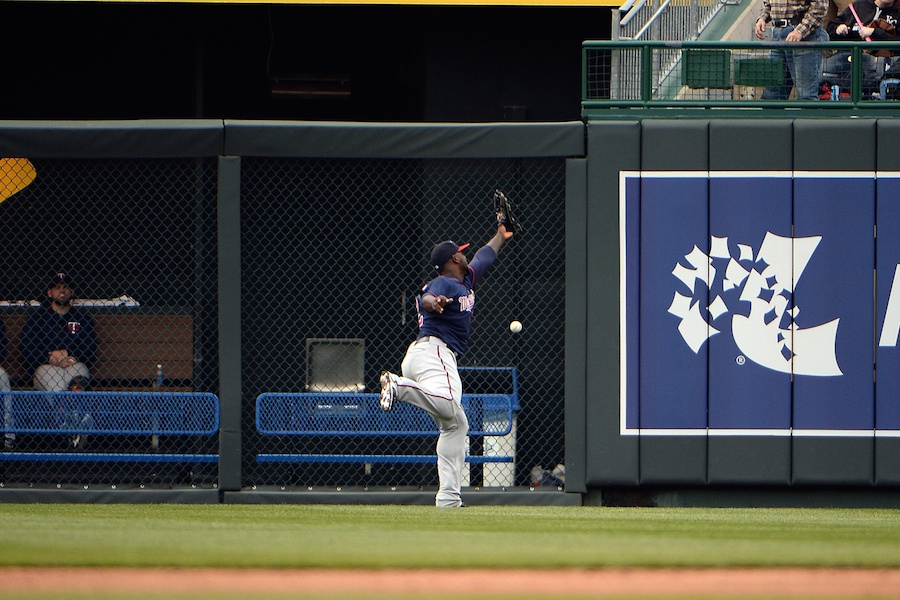 During an unprecedented 0-7 start, the Twins have been outplayed so thoroughly that it's hard to remember a day where they actually did string together a rally or capitalize upon an advantageous situation. The game of baseball, with its marathon regular season, has taught us again and again that it is folly to draw conclusions or reach judgments based on a week's worth of contests. It seems fair to say that the Twins haven't played as badly during this opening stretch as they did during last year's 1-7 start, and as we all recall, that team rebounded to overtake first place in the division – albeit with an historic month of May. The season ebbs and flows, so there's little doubt that this dreadful slump will be offset, to some degree, by a hot streak in the relatively near future. There's no need to press the panic button simply because of the 0-7 record, even though the history of MLB teams who have gotten off to such a start is dreary. Eventually we will see some of the positive aspects of this club, the ones that compelled many people including myself to believe that they had a good shot at contending for a playoff spot, becoming more prominent. It will likely happen very soon. But what's alarming is that during this first week, the issues that have plagued the Twins and resulted in a steady stream of losses are the very same ones that we all envisioned in our "what if" scenario wherein this club was going to suffer a major backslide. When you looked at the most pressing potential problem areas coming out of spring, they shaped up like this: bullpen, K-prone lineup filled with inexperienced hitters, and Miguel Sano in right field. It'd be tough for any of those things to be playing out more poorly. Bullpen? That unit is 0-3 and has yet to successfully protect a lead. Each of the three back-end staples has blown a key opportunity, with Glen Perkins' crushing appearance on Sunday standing out as the most painful. Strikeouts in the lineup? Yeah, there have been plenty of those – more than even the most pessimistic skeptic could have guessed. The Twins entered play on Tuesday leading the majors in whiffs, with a team K-rate of 30.3 percent. In 2015, Baltimore's Chris Davis led all MLB hitters with 31.0 percent strikeout rate. Inexperience? It certainly appears to be a major hindrance. Minnesota entered the campaign with four players in the starting lineup who had less than one full season's worth of MLB at-bats; each of those players has an OPS below .540 and a strikeout rate of 38 percent or above. The worst part is that they don't appear equipped to handle these struggles and are pressing more and more with each unsuccessful plate appearance, creating a snowball effect throughout the batting order. And of course, the Sano-in-right field experiment has been adventurous, to be kind. The ball hasn't been hit to him a ton but he has still committed multiple gaffes, and his mechanics and movements on even the more routine plays suggest that he's a long way from being so much as serviceable out there. A long way. So while the amount of losing is unsettling – only one of the Twins' division-winning teams since the turn of the century has ever lost seven straight – it's the foundational roots of all the losing that really stings. I'm not talking about the typical frustrating miscues that always accompany a losing spell, like Eduardo Escobar uncharacteristically committing three errors in a week, or Kurt Suzuki popping up a bunt and sparking a double-play in the most facepalm-inducing moment of Monday's home opener. I'm talking about deeper symptoms that speak to the severity of this roster's flaws. Those, much more than the results, make it difficult to believe that these Twins are ready to take a big step forward.
 -
I take it Seth was not a fan of the idea to have Mauer switch positions? After all, a guy can get a concussion anywhere.
- 67 replies
-
- 7
-
-
- miguel sano
- byron buxton
- (and 2 more)
-
I mean, if you want to remove all nuance from the discussion, sure, it's accurate to say that anyone on the baseball field can get hurt. We're talking about levels of risk. If you think a lifelong 3B like Sano isn't at greater risk of getting hurt while learning/playing a brand new position in the major leagues, I'd respectfully disagree. Obviously both 3B and RF involve much less risk than DH, where you're on the field only a fraction of the time.
- 67 replies
-
- 6
-
-
- miguel sano
- byron buxton
- (and 2 more)
-
Berrios' command was off all spring, and now in his first turn he issues 4 walks in 5 innings, more than he had in any of his 15 starts at Rochester last year. I don't think we're at a point where we need to worry yet, but it'd be nice to see him start throwing more strikes in a hurry.
-
At 0-6, the Twins are off to the worst start in franchise history. To say it was an ugly first week would be an understatement. Today, we’ll look at three noteworthy storylines that have emerged.* Last year, while Miguel Sano was enjoying an explosive second half with the Twins as a rookie, Kyle Schwarber was doing the same thing in the north side of Chicago. After joining the Cubs in mid-June, Schwarber slugged 16 home runs in 69 games, a debut that would have garnered more attention if it weren’t overshadowed by his teammate Kris Bryant. Much like Sano, Schwarber is a big power hitter who probably fits best at DH. But of course, those don’t exist in the National League, and so the 23-year-old was slotted to play primarily in left field this year. That’s where his season came to an abrupt end last Thursday. While going full bore after a fly ball in the gap, Schwarber collided with speedy center fielder Dexter Fowler, and writhed on the field in pain for several minutes before being carted off. An MRI later found that Schwarber had suffered full tears of the ACL and LCL in his left leg. Brutal. As a Twins fan, it’s hard not to look at this series of events and think about Sano. He’s bigger and faster, has considerably less experience in the outfield than Schwarber, and plays next to a rangier center fielder (who of course has his own history with collisions). The incident serves as another reminder that the risks of using Sano in the outfield extend beyond missed plays and extra runs. And while the Cubs have enough depth to survive the loss of Schwarber’s potent bat, Minnesota's lineup would be crippled by losing Sano for an extended period of time. * Of course, that’s not an easy argument to make right now. Sano has looked rough in the first week of his sophomore campaign, striking out in 11 of his first 22 plate appearances while sputtering to a .431 OPS. Incredibly, he hasn’t been the least productive hitter in Minnesota’s outfield. That distinction belongs to Byron Buxton, who looks flat-out overwhelmed. On the season, he is 3-for-19 with 11 strikeouts and zero walks. Everything is trending in the wrong direction. He’s watching hittable pitches sail by and he’s whiffing on everything when he does offer. Last year he swung through 13.5 percent of the pitches he saw in a rough debut; this year he’s at 18.2 percent. Buxton’s defense redeems him somewhat and it’s hard to point a finger at any individual in Minnesota’s struggling lineup. But when he’s this tied up, you’ve got to start wondering if his development is being hindered. Paul Molitor knows what he has in the 22-year-old, and he knew going in that patience was going to be required. But it gets trickier to be patient at 0-6, with the struggles this profound. * Was the surprising call-up of Max Kepler over the weekend a reflection of this waning patience? Historically, the Twins have often shown reluctance to disable players with “day-to-day” type injuries, but when Danny Santana came up with a lame hamstring on Saturday, the team wasted no time placing him on the DL and calling up Kepler, who had played only two games with the Rochester affiliate that he’d been assigned to two weeks earlier. Molitor said on Sunday that he doesn’t expect Kepler to have a prominent role during his time here, but the top prospect’s presence clearly increases the pressure on Buxton (not to mention Eddie Rosario, who’s batting .200 and swinging at 60 percent of pitches outside the zone). If the kid comes in and takes better at-bats, the manager will need to adjust accordingly. With Buxton and Rosario, who have a combined 20-to-0 K/BB ratio, the bar is not set high. And sure enough, in his first plate appearance of the year on Sunday, Kepler battled back from an 0-2 count and drew a walk. Click here to view the article
- 67 replies
-
- 3
-
-
- miguel sano
- byron buxton
- (and 2 more)
-
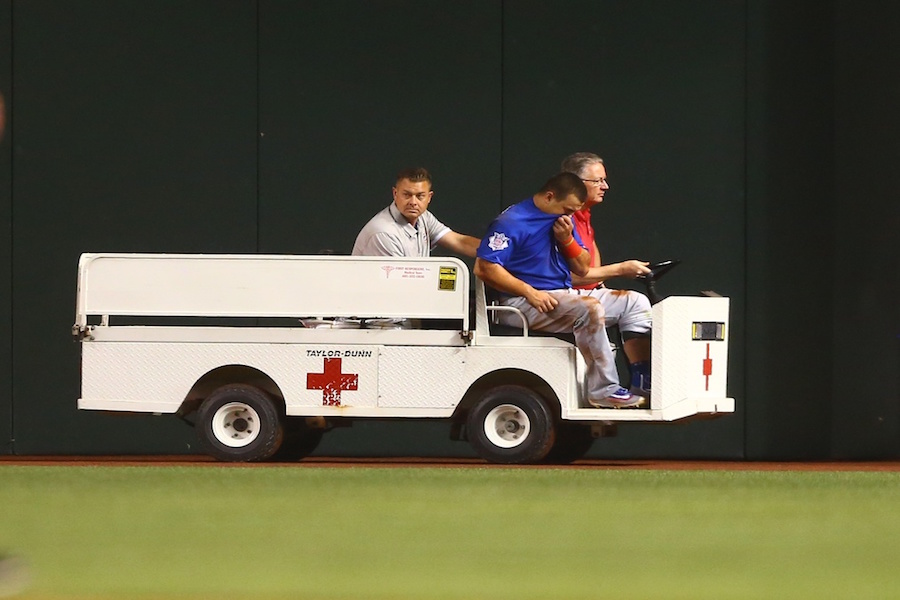 * Last year, while Miguel Sano was enjoying an explosive second half with the Twins as a rookie, Kyle Schwarber was doing the same thing in the north side of Chicago. After joining the Cubs in mid-June, Schwarber slugged 16 home runs in 69 games, a debut that would have garnered more attention if it weren’t overshadowed by his teammate Kris Bryant. Much like Sano, Schwarber is a big power hitter who probably fits best at DH. But of course, those don’t exist in the National League, and so the 23-year-old was slotted to play primarily in left field this year. That’s where his season came to an abrupt end last Thursday. While going full bore after a fly ball in the gap, Schwarber collided with speedy center fielder Dexter Fowler, and writhed on the field in pain for several minutes before being carted off. An MRI later found that Schwarber had suffered full tears of the ACL and LCL in his left leg. Brutal. As a Twins fan, it’s hard not to look at this series of events and think about Sano. He’s bigger and faster, has considerably less experience in the outfield than Schwarber, and plays next to a rangier center fielder (who of course has his own history with collisions). The incident serves as another reminder that the risks of using Sano in the outfield extend beyond missed plays and extra runs. And while the Cubs have enough depth to survive the loss of Schwarber’s potent bat, Minnesota's lineup would be crippled by losing Sano for an extended period of time. * Of course, that’s not an easy argument to make right now. Sano has looked rough in the first week of his sophomore campaign, striking out in 11 of his first 22 plate appearances while sputtering to a .431 OPS. Incredibly, he hasn’t been the least productive hitter in Minnesota’s outfield. That distinction belongs to Byron Buxton, who looks flat-out overwhelmed. On the season, he is 3-for-19 with 11 strikeouts and zero walks. Everything is trending in the wrong direction. He’s watching hittable pitches sail by and he’s whiffing on everything when he does offer. Last year he swung through 13.5 percent of the pitches he saw in a rough debut; this year he’s at 18.2 percent. Buxton’s defense redeems him somewhat and it’s hard to point a finger at any individual in Minnesota’s struggling lineup. But when he’s this tied up, you’ve got to start wondering if his development is being hindered. Paul Molitor knows what he has in the 22-year-old, and he knew going in that patience was going to be required. But it gets trickier to be patient at 0-6, with the struggles this profound. * Was the surprising call-up of Max Kepler over the weekend a reflection of this waning patience? Historically, the Twins have often shown reluctance to disable players with “day-to-day” type injuries, but when Danny Santana came up with a lame hamstring on Saturday, the team wasted no time placing him on the DL and calling up Kepler, who had played only two games with the Rochester affiliate that he’d been assigned to two weeks earlier. Molitor said on Sunday that he doesn’t expect Kepler to have a prominent role during his time here, but the top prospect’s presence clearly increases the pressure on Buxton (not to mention Eddie Rosario, who’s batting .200 and swinging at 60 percent of pitches outside the zone). If the kid comes in and takes better at-bats, the manager will need to adjust accordingly. With Buxton and Rosario, who have a combined 20-to-0 K/BB ratio, the bar is not set high. And sure enough, in his first plate appearance of the year on Sunday, Kepler battled back from an 0-2 count and drew a walk.
 -
If there's one thing last season taught us, it's that we shouldn't put too much stock into rough beginnings. As we all remember, the 2015 Twins lost six of their first seven games, getting outscored 45-16 in the process. By the end of May, they were in first place. Still, given that Minnesota ended up finishing so close to a postseason spot, one can't help but wonder how differently things might have played out if they'd gotten off to a slightly less disastrous start. This weekend, they head to Kauffman Stadium with a chance to avoid another extended early-April swoon.The Twins know that their path to the the top of the AL Central goes through Kansas City and the defending World Series champs. Last year, the Twins went 7-12 against the Royals, and a dominating sweep that took place at Target Field on the final weekend put the nail in the coffin for their season. Obviously, it would be a big boost if the Twins could make a statement over the next three days. It would be especially important because of the starters that will be taking the hill for Minnesota. Ervin Santana, whose outing was cut short by rain on Opening Day, figures to get his first real start of the season in a ballpark with which he's quite familiar; of course, he played for the Royals in 2013, and had one of his better seasons. Then we get our first looks at the fourth and fifth starters, Tommy Milone and Ricky Nolasco. The makeup of the Twins rotation, which lacks elite talent at the top, means that the team needs to get quality production from the bottom half in order to have a shot. So the early success (or lack thereof) for Milone and Nolasco could loom large. Milone sort of is what he is at this point: solid, not great, but very consistently so. He had a nice spring marked by sharp command. The key for him will be spotting his pitches with precision and working inside against an extremely aggressive Kansas City lineup. With Nolasco, who knows what to expect. He's got as much to prove as anyone on the roster, and he'll get his first chance on Sunday. If he's commanding his fastball he can certainly get people out, and that would be big. From my view, the best-case scenario for the Twins is that Nolasco performs well over the first couple months and entices an SP-needy team to pick up a good portion of his remaining salary, opening the door for a higher-upside alternative such as Tyler Duffey or Jose Berrios. Heck, maybe Minnesota could even get a decent little prospect back in such a scenario, though I wouldn't hold my breath. Either way, I'm intrigued to see what these two back-end starters, who both have plenty of doubters, can do here in an early-season series that carries plenty of redemptive storylines. Which pitcher will prove the most this weekend? And will the offense rebound after striking out (figuratively and literally) in Baltimore? Click here to view the article
- 15 replies
-
- 1
-
-
- ricky nolasco
- tommy milone
- (and 1 more)
-
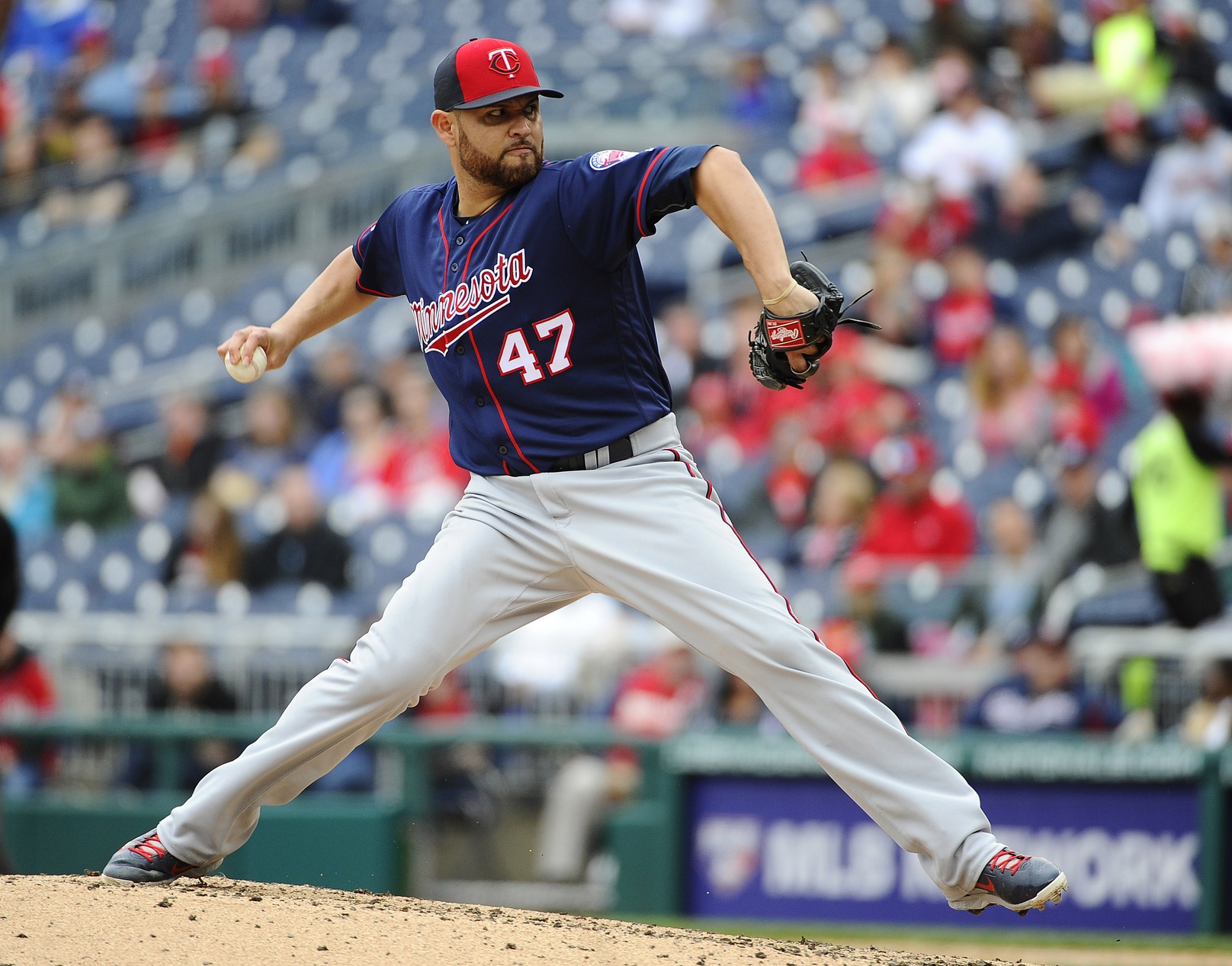 The Twins know that their path to the the top of the AL Central goes through Kansas City and the defending World Series champs. Last year, the Twins went 7-12 against the Royals, and a dominating sweep that took place at Target Field on the final weekend put the nail in the coffin for their season. Obviously, it would be a big boost if the Twins could make a statement over the next three days. It would be especially important because of the starters that will be taking the hill for Minnesota. Ervin Santana, whose outing was cut short by rain on Opening Day, figures to get his first real start of the season in a ballpark with which he's quite familiar; of course, he played for the Royals in 2013, and had one of his better seasons. Then we get our first looks at the fourth and fifth starters, Tommy Milone and Ricky Nolasco. The makeup of the Twins rotation, which lacks elite talent at the top, means that the team needs to get quality production from the bottom half in order to have a shot. So the early success (or lack thereof) for Milone and Nolasco could loom large. Milone sort of is what he is at this point: solid, not great, but very consistently so. He had a nice spring marked by sharp command. The key for him will be spotting his pitches with precision and working inside against an extremely aggressive Kansas City lineup. With Nolasco, who knows what to expect. He's got as much to prove as anyone on the roster, and he'll get his first chance on Sunday. If he's commanding his fastball he can certainly get people out, and that would be big. From my view, the best-case scenario for the Twins is that Nolasco performs well over the first couple months and entices an SP-needy team to pick up a good portion of his remaining salary, opening the door for a higher-upside alternative such as Tyler Duffey or Jose Berrios. Heck, maybe Minnesota could even get a decent little prospect back in such a scenario, though I wouldn't hold my breath. Either way, I'm intrigued to see what these two back-end starters, who both have plenty of doubters, can do here in an early-season series that carries plenty of redemptive storylines. Which pitcher will prove the most this weekend? And will the offense rebound after striking out (figuratively and literally) in Baltimore?
 -
Awesome writeup. I'll be watching the slider very closely early on. Guessing we'll see Perkins tonight for the first time one way or another.
-
Great stuff here. Well researched and very illuminating. Indeed, digging into this kind of stuff illustrates the challenges of turning around a bad farm system. I think that bodes pretty well for the Twins given the states of other organizations within the division.
- 23 replies
-
- 1
-
-
- byron buxton
- lewin diaz
- (and 3 more)
-
The start of the season is such a tease. The first game is typically a weekday affair that most nine-to-fivers have to miss, although multiple rain delays pushed this year’s opener into the evening. Then there’s that customary day off. It’s like giving someone a bite of ice cream and then putting the carton back in the freezer. Come on. Tonight, things really get going. The Twins are opening a stretch of 21 games in 22 days. There’s a whole lot of baseball on tap. This next one between Minnesota and Baltimore feels like a do-over, after weird weather and shortened starts turned Monday’s contest into a bullpen game. It seems fitting that in their – shall we say – second season opener, the Twins will be sending a starter to the mound who probably deserved the nod the first time around.In the grand scheme of things, the order of pitchers in the first two games of the season isn’t all that important. Maybe the Twins consider starting the home opener, which Kyle Gibson is in line to do next Monday, a more meaningful honor. But by all means, the 28-year-old has earned the distinction of top dog in the Minnesota rotation. Last year, Gibson led Twins starters in innings and his ERA (3.84) was lower than all but Tyler Duffey, who made 10 starts. While Ervin Santana was sitting out the first half with a suspension, Gibson was helping propel the team toward the top of the division. From start to finish, he was the rock in the starting unit. It’s impressive that the righty held opponents to a .257/.306/.387 line in 2015, but even more impressive when you consider that his 17.7 percent K-rate ranked near the bottom of the league. When hitters put the ball in play against Gibson, they batted .287, which is lower than the expected rate of about .300. That’s a testament to his sharp late-breaking pitches and the weak contact they produce. But contact is contact, and invariably when bat meets ball that much there are going to be hits, errors, runs. Since Gibson lacks elite control, the key for him to take his game to the next level is going to be making more people miss. Fortunately, there are promising signs on that front. In spring training, Gibson led the staff in strikeouts with 22 in his 22.2 frames. Of course, his stuff always looks nasty in spring training, and side sessions, but hasn't translated to an above-average whiff rate. Not yet. His strikeout percentage has risen each year he’s been in the majors, from 12 to 14 to last year’s 18. Now, three years removed from losing a season to Tommy John surgery and coming off a 2015 campaign that featured a career-high 194 innings and no significant arm issues, he looks about as strong as he ever has. Among the five Twins starters, Gibson is the youngest, the least experienced, the lowest paid. But for all intents and purposes, he’s the leader of this rotation, and tonight he’ll lead the team into the real start of the 2016 season. Click here to view the article
-
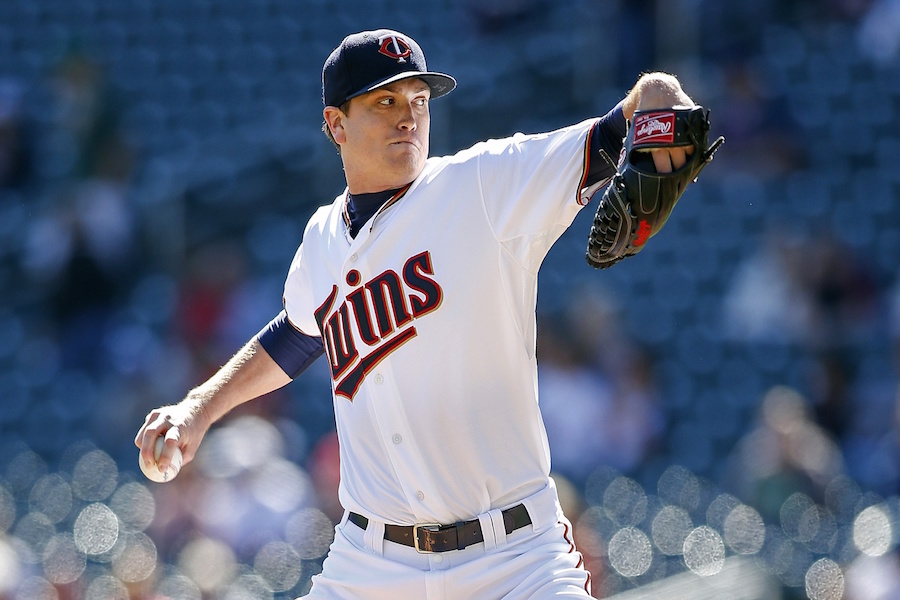 In the grand scheme of things, the order of pitchers in the first two games of the season isn’t all that important. Maybe the Twins consider starting the home opener, which Kyle Gibson is in line to do next Monday, a more meaningful honor. But by all means, the 28-year-old has earned the distinction of top dog in the Minnesota rotation. Last year, Gibson led Twins starters in innings and his ERA (3.84) was lower than all but Tyler Duffey, who made 10 starts. While Ervin Santana was sitting out the first half with a suspension, Gibson was helping propel the team toward the top of the division. From start to finish, he was the rock in the starting unit. It’s impressive that the righty held opponents to a .257/.306/.387 line in 2015, but even more impressive when you consider that his 17.7 percent K-rate ranked near the bottom of the league. When hitters put the ball in play against Gibson, they batted .287, which is lower than the expected rate of about .300. That’s a testament to his sharp late-breaking pitches and the weak contact they produce. But contact is contact, and invariably when bat meets ball that much there are going to be hits, errors, runs. Since Gibson lacks elite control, the key for him to take his game to the next level is going to be making more people miss. Fortunately, there are promising signs on that front. In spring training, Gibson led the staff in strikeouts with 22 in his 22.2 frames. Of course, his stuff always looks nasty in spring training, and side sessions, but hasn't translated to an above-average whiff rate. Not yet. His strikeout percentage has risen each year he’s been in the majors, from 12 to 14 to last year’s 18. Now, three years removed from losing a season to Tommy John surgery and coming off a 2015 campaign that featured a career-high 194 innings and no significant arm issues, he looks about as strong as he ever has. Among the five Twins starters, Gibson is the youngest, the least experienced, the lowest paid. But for all intents and purposes, he’s the leader of this rotation, and tonight he’ll lead the team into the real start of the 2016 season.
 -
For many years, the Minnesota Twins were driven by philosophies that eschewed power, both on the mound and at the plate. When it came to pitching, they embraced the idea that allowing contact wasn't the worst thing, so long as they had hurlers who threw strikes and fielders who made plays. It worked for them at times, but as a result they have routinely ranked near the bottom of the league in strikeouts, and they fell embarrassingly far behind the competition in terms of velocity. In the lineup, they often gravitated toward "scrappy" players that could put the bat on the ball and apply pressure on the base paths. Sure, they've had some sluggers over the past couple of decades, but rarely have the Twins fielded lineups crowded with imposing bats, a deficiency that many believe has held them back in the postseason. Now, the era of Piranhas and Pitch-to-Contact is reaching its end. This has been in the works for some time, but in 2016, we'll really see their efforts to infuse more power into the offense and pitching staff come to fruition. One thing hasn't changed: As ever, they're focused on building this newly styled roster from within.Looking back, the decision to sign Byung Ho Park out of of Korea signaled a monumental shift in the organization's mindset. By making this move – evidently with no plans to trade Trevor Plouffe – the front office was essentially saying, "Defense is a secondary concern. We want more power in the lineup." Well, they've got that. This offense looks like a good bet to finish among the top five in franchise history for home runs. Whether you're looking at the starting lineup, the bench, or the minor leagues, the Twins have power to spare. And they have a young slugger at the heart of the order who I truly believe will be one of the most valuable hitters in the game. READ: Could the Twins hit 200 home runs this year? Even accounting for some potential areas of concern – sophomore regression from Eddie Rosario, continued introductory struggles from Byron Buxton, a difficult transition from Park – this team should score runs. Preventing them will be the make-or-break factor. The starting rotation is moving in the right direction, but still can't be described as a particularly threatening bunch. Kyle Gibson is the de facto No. 1 at this point and he's coming off a year that would best be described as good, not great. Ervin Santana and Phil Hughes are hot-and-cold. Tommy Milone and Ricky Nolasco don't offer a ton of upside. The good news is that, in Tyler Duffey and Jose Berrios, the Twins have better reinforcements on deck than most teams can boast. They like their rotation depth enough that they felt comfortable moving one of their most promising starters to the bullpen, where he lines up as a pivotal piece. Trevor May's presence is the only reason that the lack of any meaningful offseason action on the relief front makes any sense. He might have a larger impact than any free agent the team could have signed. READ: May's strikeout mentality is much-needed in the bullpen. But he might not be enough. Glen Perkins is trying to reverse a two-year declining trend. Kevin Jepsen had been more of a solid middle reliever than dominant setup man before coming to Minnesota. Casey Fien appears to be on the downslope. Fernando Abad is an iffy choice as the go-to lefty. Just like with the rotation, the availability of legitimate impact replacements serves to lessen the bullpen concern. Nick Burdi, Jake Reed, Alex Meyer, J.R. Graham, Taylor Rogers and Ryan O'Rourke are the kinds of arms that profile as meaningful in-season additions, and they'll all be just a phone call away. This dynamic is perhaps the most exciting aspect of the club heading into this 2016 season. The pipeline that the Twins have been putting in place over the past five years is now paying full dividends, with the majority of their best prospects either in the fold or right on the verge. Even if you don't love the composition of the Opening Day roster, there is a lot of quality at the highest levels of the minors. READ: After breakout season, Max Kepler looking toward next level That might not result in a playoff berth. This is a young and inexperienced club that surely has some lumps to take before reaching its true potential. With their quiet offseason, the Twins made a full commitment to letting the kids take the reins, and now we'll really get a chance to see what this group can do. This is a team that warrants more optimism and intrigue than any we've seen around here for at least a half-decade. It's a good time to be a Twins fan. Click here to view the article
