



Lucas Seehafer PT
-
Posts
522 -
Joined
-
Last visited
-
Days Won
2
Content Type
Profiles
News
Minnesota Twins Videos
2026 Minnesota Twins Top Prospects Ranking
2022 Minnesota Twins Draft Picks
Minnesota Twins Free Agent & Trade Rumors, Notes, & Tidbits
Guides & Resources
2023 Minnesota Twins Draft Picks
The Minnesota Twins Players Project
2024 Minnesota Twins Draft Picks
2025 Minnesota Twins Draft Pick Tracker
2026 Minnesota Twins Draft Tracker: Picks & Bonuses
Forums
Blogs
Events
Store
Downloads
Gallery
Everything posted by Lucas Seehafer PT
-
The Minnesota Twins mustered just three hits in a 6-2 loss to the Pirates Saturday afternoon at Target Field. Read more about the game in today's recap.Box Score Michael Pineda: 4.1 IP, 6, 5 R, 4 ER, 1 BB, 5 K Home Runs: None Bottom 3 WPA: Pineda -.275, Arraez -.083, Donaldson -.080 Win Probability Chart (via FanGraphs): Download attachment: chart.png Unfortunately for the Minnesota Twins, a win streak — even one as minor as two games — just wasn’t in the cards. The Twins fell Saturday afternoon to the Pittsburgh Pirates, 6-2, evening up the series at one win apiece. The team is now 7-12 overall. Michael Pineda — who has been arguably the Twins’ best and most consistent starting pitcher during the early portion of the season — struggled in this one, allowing two home runs and surrendering five runs, though only four were earned, over 4 1/3 innings. The team didn’t fare much better at the plate either, as they managed to drive in an anemic two runners and picked up only three hits, two being doubles off the bat of Jake Cave. Willians Astudillo picked up the team’s only other hit, a single. However, Saturday didn’t contain only doom and gloom — just mostly — for the Twins, who did manage to have a couple of bright spots shine through. For starters, Byron Buxton did this: Additionally, Cave stayed hot, picking up two extra base hits after hitting his first home run of the season Friday night. Finally, Devin Smeltzer pitched 4 2/3 shutout innings in his 2021 debut. He struck out three and only threw 52 pitches. Other than that, things were pretty dreary. Jorge Polanco’s batting average dipped back below the Mendoza line following an 0-for-3 day, Ryan Jeffers continues to strike out at an alarming rate and Alex Kirilloff remains (officially) hitless in his major league career. However, there is some evidence that the Twins got a little unlucky Saturday afternoon. They managed to hit nine balls — two less than the Pirates — that qualified as being hard hit by Baseball Savant, though only two — Cave’s doubles — were converted into hits. They also hit six balls that had an xBA of at least .500, including Astudillo’s single and one of Cave’s doubles; Kirilloff's fly out in the second inning had an xBA of .700 and Polanco's line out in the fourth an xBA of .870. So it goes sometimes in the game of baseball. While frustrating due to the greater context of the first 19 games of the season, Saturday's loss was of the run-of-the-mill variety that occur many times throughout the course of the season, even among the league's best teams. The Twins will look to bounce back Sunday afternoon and claim the series two games to one. Matt Shoemaker will take the hill and will face off against and as yet undetermined Pirates pitcher. First pitch is scheduled for 1:10 p.m. CT. Postgame Interview Bullpen Usage Spreadsheet Click here to see the bullpen usage over the past five days (link opens a Google Sheet). Click here to view the article
-
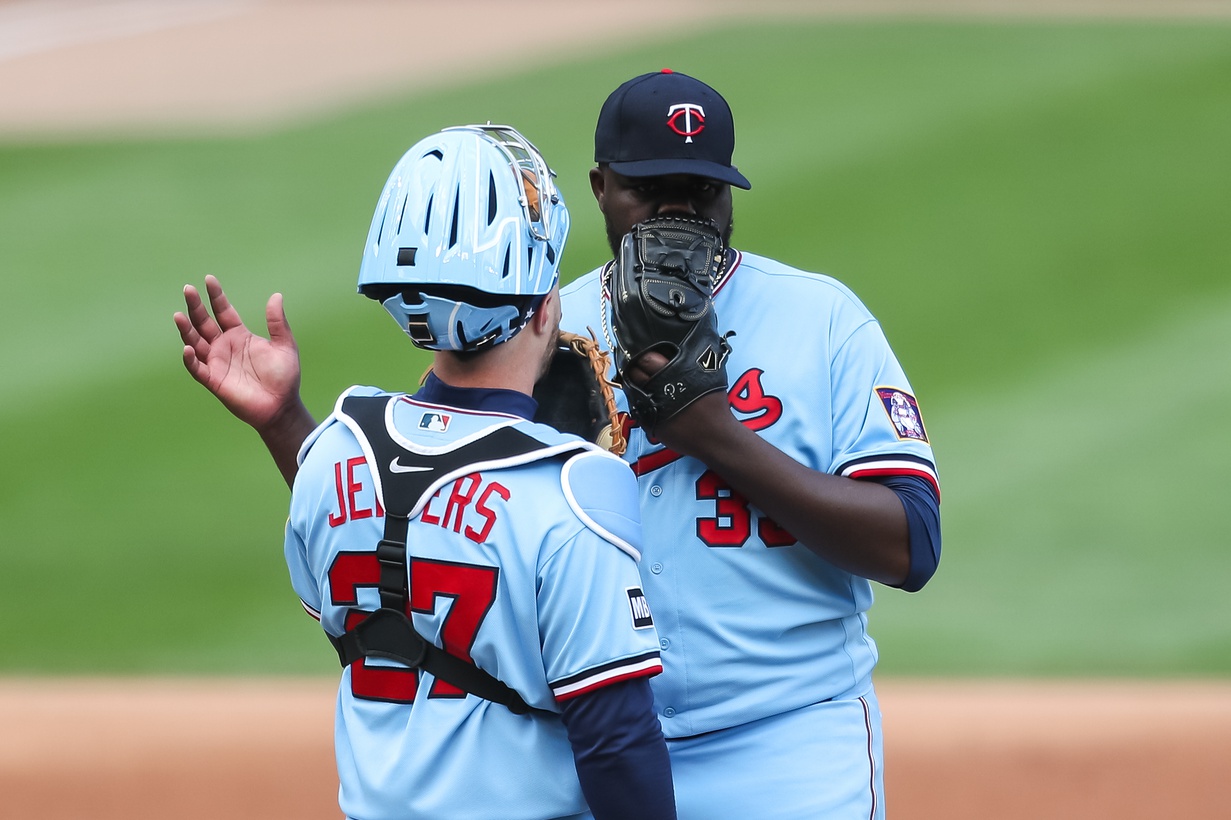 Box Score Michael Pineda: 4.1 IP, 6, 5 R, 4 ER, 1 BB, 5 K Home Runs: None Bottom 3 WPA: Pineda -.275, Arraez -.083, Donaldson -.080 Win Probability Chart (via FanGraphs): Unfortunately for the Minnesota Twins, a win streak — even one as minor as two games — just wasn’t in the cards. The Twins fell Saturday afternoon to the Pittsburgh Pirates, 6-2, evening up the series at one win apiece. The team is now 7-12 overall. Michael Pineda — who has been arguably the Twins’ best and most consistent starting pitcher during the early portion of the season — struggled in this one, allowing two home runs and surrendering five runs, though only four were earned, over 4 1/3 innings. The team didn’t fare much better at the plate either, as they managed to drive in an anemic two runners and picked up only three hits, two being doubles off the bat of Jake Cave. Willians Astudillo picked up the team’s only other hit, a single. However, Saturday didn’t contain only doom and gloom — just mostly — for the Twins, who did manage to have a couple of bright spots shine through. For starters, Byron Buxton did this: https://twitter.com/BallySportsNOR/status/1386027888093372417?s=20 Additionally, Cave stayed hot, picking up two extra base hits after hitting his first home run of the season Friday night. Finally, Devin Smeltzer pitched 4 2/3 shutout innings in his 2021 debut. He struck out three and only threw 52 pitches. Other than that, things were pretty dreary. Jorge Polanco’s batting average dipped back below the Mendoza line following an 0-for-3 day, Ryan Jeffers continues to strike out at an alarming rate and Alex Kirilloff remains (officially) hitless in his major league career. However, there is some evidence that the Twins got a little unlucky Saturday afternoon. They managed to hit nine balls — two less than the Pirates — that qualified as being hard hit by Baseball Savant, though only two — Cave’s doubles — were converted into hits. They also hit six balls that had an xBA of at least .500, including Astudillo’s single and one of Cave’s doubles; Kirilloff's fly out in the second inning had an xBA of .700 and Polanco's line out in the fourth an xBA of .870. So it goes sometimes in the game of baseball. While frustrating due to the greater context of the first 19 games of the season, Saturday's loss was of the run-of-the-mill variety that occur many times throughout the course of the season, even among the league's best teams. The Twins will look to bounce back Sunday afternoon and claim the series two games to one. Matt Shoemaker will take the hill and will face off against and as yet undetermined Pirates pitcher. First pitch is scheduled for 1:10 p.m. CT. Postgame Interview https://twitter.com/BallySportsNOR/status/1386072012263657476?s=20 https://twitter.com/BallySportsNOR/status/1386069564434358276?s=20 Bullpen Usage Spreadsheet Click here to see the bullpen usage over the past five days (link opens a Google Sheet).
 -
 The Minnesota Twins announced Saturday evening that their matchup with the Los Angeles Angels slated to begin at 8:07 p.m. CT was postponed “to allow for continued testing and contact tracing involving members of the Twins organization.”The Minnesota Twins announced Saturday evening that their matchup with the Los Angeles Angels slated to begin at 8:07 p.m. CT was postponed “to allow for continued testing and contact tracing involving members of the Twins organization.” Sunday's game has also been postponed. The Athletic’s Dan Hayes provided further detail regarding the reasoning behind the postponement, reporting that a Twins’ staffer as well as outfielder Kyle Garlick have tested for COVID-19 since the team arrived in California. Hayes also reported that the Twins’ most recent positive cases don’t appear to be connected to Andrelton Simmons’ positive test earlier in the week. Additionally, the Twins have not announced further positive results, though contact tracing and testing remains ongoing. Perhaps the more concerning aspect of his positive test, for both the Twins and Angels, is that Garlick was in the Twins’ lineup during the team’s 10-3 loss Friday night and has appeared in their last five games dating back to April 13. This is a developing situation and more news is sure to break in the near future. Stay tuned to Twins Daily for more information as the story develops. For now, we wish a speedy, full recovery for Garlick and the yet-unnamed staffer. MORE FROM TWINS DAILY — Latest Twins coverage from our writers — Recent Twins discussion in our forums — Follow Twins Daily via Twitter, Facebook or email Click here to view the article
 -
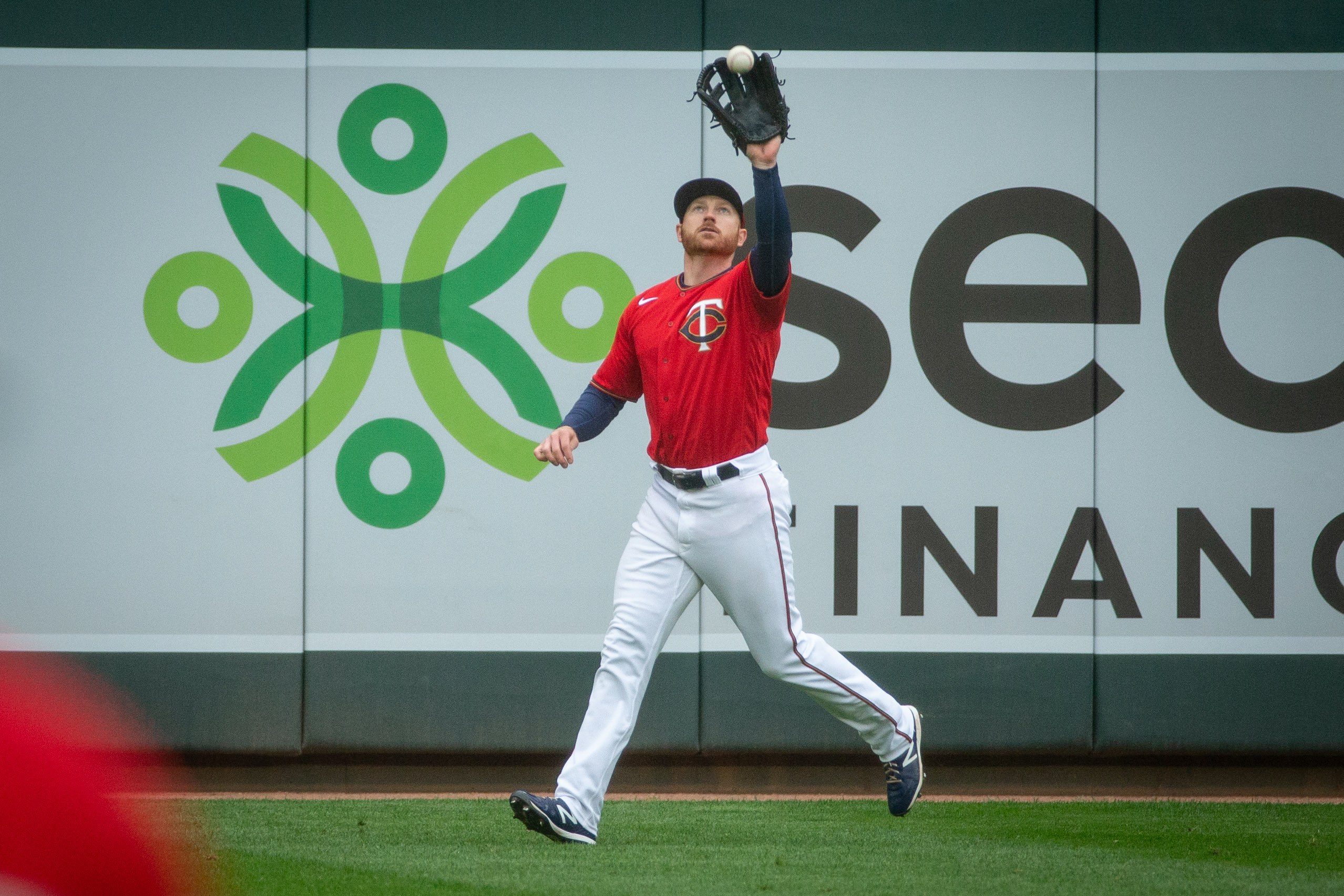 The Minnesota Twins announced Saturday evening that their matchup with the Los Angeles Angels slated to begin at 8:07 p.m. CT was postponed “to allow for continued testing and contact tracing involving members of the Twins organization.” https://twitter.com/Twins/status/1383569717164535814?s=20 Sunday's game has also been postponed. The Athletic’s Dan Hayes provided further detail regarding the reasoning behind the postponement, reporting that a Twins’ staffer as well as outfielder Kyle Garlick have tested for COVID-19 since the team arrived in California. https://twitter.com/DanHayesMLB/status/1383578245853966344?s=20 Hayes also reported that the Twins’ most recent positive cases don’t appear to be connected to Andrelton Simmons’ positive test earlier in the week. https://twitter.com/DanHayesMLB/status/1383572567340945410?s=20 Additionally, the Twins have not announced further positive results, though contact tracing and testing remains ongoing. Perhaps the more concerning aspect of his positive test, for both the Twins and Angels, is that Garlick was in the Twins’ lineup during the team’s 10-3 loss Friday night and has appeared in their last five games dating back to April 13. This is a developing situation and more news is sure to break in the near future. Stay tuned to Twins Daily for more information as the story develops. For now, we wish a speedy, full recovery for Garlick and the yet-unnamed staffer. MORE FROM TWINS DAILY — Latest Twins coverage from our writers — Recent Twins discussion in our forums — Follow Twins Daily via Twitter, Facebook or email
 -
Fantastic article, Rena!
-
Even though he is now 38 years old, Toby Gardenhire is still making memories while playing catch with his dad. The most recent round of toss isn’t going to be one that either father or son will soon forget.“I was pretty cool. Not everybody gets the chance to [throw out] Opening Day first pitch, stuff like that. To catch it, to throw it, whatever, it’s a really cool experience,” Gardenhire said on a blustery Sunday afternoon following a St. Paul Saints’ workout and simulated game at CHS Field. “It’s pretty special for my dad too, because he was with this organization for a very long time. It means a lot to him that they still think of him in that way.” Gardenhire’s father is, of course, former Minnesota Twins and Detroit Tigers manager Ron Gardenhire, who accumulated 1,200 wins over the course of a 16-year managerial career; he also served as the Twins’ third base coach from 1991 until 2001, after managing in the minor leagues for three seasons. The elder Gardenhire retired last September, electing to focus on his health after suffering from multiple stomach ailments during a season played as a one-in-a-generation global pandemic raged. Gardenhire the Younger — a 41st-round pick in the 2005 draft by the Twins — always knew that he’d follow in his father’s footsteps when his playing days ended. He retired after the 2011 season, reaching as high as AAA Rochester, before heading to the University of Wisconsin, Stout to coach at the collegiate level. Five seasons later, he reunited with the Twins as a hitting coach in the lower levels of their farm system. He now finds himself back in AAA, this time in St. Paul as the manager of the newly adopted Saints. “I always knew I was going to coach at some point. [baseball] has pretty much been my whole life. I grew up at the ballpark, when I was a kid I was at the ballpark, I [wouldn’t] even know what to do with myself if I wasn’t coming to the ballpark all the time,” Gardenhire said. “The managing thing just kind of seemed like the best fit. When I started coaching, I was at the University of Wisconsin, Stout as the head coach for a few years, then I went in as a hitting coach for a little bit, but I always knew I’d end up being a manager at some point.” Managing in the minors is different than doing so at the MLB level. The goal of MLB managers is to simply to win, baby, win. Legacies are based on championship banners hung and consecutive postseason appearances, with firings occurring when either fails to manifest. In the minors, the story is different. It’s the manager’s job to make sure that his athletes are ready for the Big Show when their numbers are finally called. “A lot of it is about development, especially at the lower levels. You’re trying to develop kids, so putting the best lineup on the field isn’t always what you’re doing. There’s times when you’re not putting the best guys out there or you’re putting guys in positions that they’re not the most comfortable in,” Gardenhire said. “It’s about trying to develop those guys, so that when they do get up to the Big Leagues, they’re ready for whatever gets thrown at them. It’s a lot about development at the lower levels. As you get going up, then it’s not as much. Then you’re trying to win more games and stuff like that.” Gardenhire is in a unique spot as the Twins’ AAA manager in that not only is he charged with winning more than his lower-level compatriots, but also tasked with developing the Alex Kirilloffs and Trevor Larnachs of the organization. Additionally, the actions he takes as manager are very much dependent on what is going on across the river at any given moment. “The other big thing about it is, what we do [in AAA], a lot of it is based on what happens with the Big League team. The Big League team throws a couple of pitchers, then all of a sudden we have to change the pitchers we throw because of that,” Gardenhire said. “You always have to have somebody on standby basically, ready to go out there in case something happens. We’re constantly watching the Twins games and watching the box scores, talking to their coaches and making sure that we have guys ready to be slotted in whenever they’re needed.” Gardenhire and the rest of the Saints organization are in discussions with the Twins and their front office on a daily basis, planning out potential call-ups or other roster moves in the event of an injury or earned promotion. Rarely does any move occur without Gardenhire having at least some prior knowledge of what may soon be on the horizon, but it’s his job to be ready to adjust his lineup or pitching rotation at the drop of a hat. The Saints open their season on May 4 in Omaha for a six-game series before making their home debut one week later against Iowa. Tickets are available for purchase. MORE FROM TWINS DAILY — Latest Twins coverage from our writers — Recent Twins discussion in our forums — Follow Twins Daily via Twitter, Facebook or email Click here to view the article
-
Toby Gardenhire Is Following in His Father's Footsteps
Lucas Seehafer PT posted an article in Minor Leagues
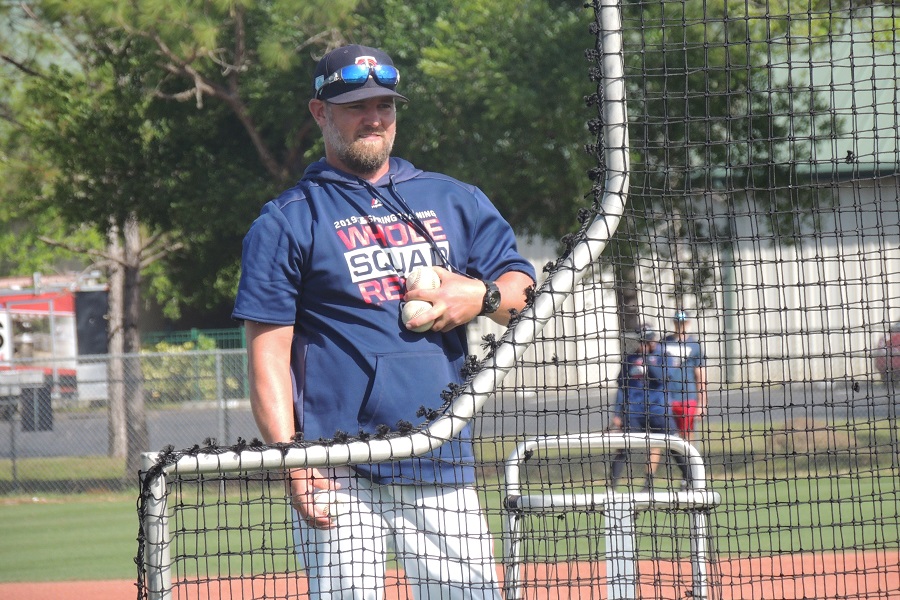 “I was pretty cool. Not everybody gets the chance to [throw out] Opening Day first pitch, stuff like that. To catch it, to throw it, whatever, it’s a really cool experience,” Gardenhire said on a blustery Sunday afternoon following a St. Paul Saints’ workout and simulated game at CHS Field. “It’s pretty special for my dad too, because he was with this organization for a very long time. It means a lot to him that they still think of him in that way.” https://twitter.com/BallySportsNOR/status/1380267033506512898?ref_src=twsrc%5Etfw%7Ctwcamp%5Etweetembed%7Ctwterm%5E1380267033506512898%7Ctwgr%5E%7Ctwcon%5Es1_c10&ref_url=https%3A%2F%2Fwww.wxyz.com%2Fsports%2Fwatch-former-tigers-manager-ron-gardenhire-throws-out-first-pitch-to-his-son-in-minnesota Gardenhire’s father is, of course, former Minnesota Twins and Detroit Tigers manager Ron Gardenhire, who accumulated 1,200 wins over the course of a 16-year managerial career; he also served as the Twins’ third base coach from 1991 until 2001, after managing in the minor leagues for three seasons. The elder Gardenhire retired last September, electing to focus on his health after suffering from multiple stomach ailments during a season played as a one-in-a-generation global pandemic raged. Gardenhire the Younger — a 41st-round pick in the 2005 draft by the Twins — always knew that he’d follow in his father’s footsteps when his playing days ended. He retired after the 2011 season, reaching as high as AAA Rochester, before heading to the University of Wisconsin, Stout to coach at the collegiate level. Five seasons later, he reunited with the Twins as a hitting coach in the lower levels of their farm system. He now finds himself back in AAA, this time in St. Paul as the manager of the newly adopted Saints. “I always knew I was going to coach at some point. [baseball] has pretty much been my whole life. I grew up at the ballpark, when I was a kid I was at the ballpark, I [wouldn’t] even know what to do with myself if I wasn’t coming to the ballpark all the time,” Gardenhire said. “The managing thing just kind of seemed like the best fit. When I started coaching, I was at the University of Wisconsin, Stout as the head coach for a few years, then I went in as a hitting coach for a little bit, but I always knew I’d end up being a manager at some point.” Managing in the minors is different than doing so at the MLB level. The goal of MLB managers is to simply to win, baby, win. Legacies are based on championship banners hung and consecutive postseason appearances, with firings occurring when either fails to manifest. In the minors, the story is different. It’s the manager’s job to make sure that his athletes are ready for the Big Show when their numbers are finally called. “A lot of it is about development, especially at the lower levels. You’re trying to develop kids, so putting the best lineup on the field isn’t always what you’re doing. There’s times when you’re not putting the best guys out there or you’re putting guys in positions that they’re not the most comfortable in,” Gardenhire said. “It’s about trying to develop those guys, so that when they do get up to the Big Leagues, they’re ready for whatever gets thrown at them. It’s a lot about development at the lower levels. As you get going up, then it’s not as much. Then you’re trying to win more games and stuff like that.” Gardenhire is in a unique spot as the Twins’ AAA manager in that not only is he charged with winning more than his lower-level compatriots, but also tasked with developing the Alex Kirilloffs and Trevor Larnachs of the organization. Additionally, the actions he takes as manager are very much dependent on what is going on across the river at any given moment. “The other big thing about it is, what we do [in AAA], a lot of it is based on what happens with the Big League team. The Big League team throws a couple of pitchers, then all of a sudden we have to change the pitchers we throw because of that,” Gardenhire said. “You always have to have somebody on standby basically, ready to go out there in case something happens. We’re constantly watching the Twins games and watching the box scores, talking to their coaches and making sure that we have guys ready to be slotted in whenever they’re needed.” Gardenhire and the rest of the Saints organization are in discussions with the Twins and their front office on a daily basis, planning out potential call-ups or other roster moves in the event of an injury or earned promotion. Rarely does any move occur without Gardenhire having at least some prior knowledge of what may soon be on the horizon, but it’s his job to be ready to adjust his lineup or pitching rotation at the drop of a hat. The Saints open their season on May 4 in Omaha for a six-game series before making their home debut one week later against Iowa. Tickets are available for purchase. MORE FROM TWINS DAILY — Latest Twins coverage from our writers — Recent Twins discussion in our forums — Follow Twins Daily via Twitter, Facebook or email
 -
MIN 2, MIL 0: Take a Bow, José Berríos
Lucas Seehafer PT replied to Lucas Seehafer PT's topic in Twins Daily Front Page News
Berríos said in his post-game interview with Dick and Justin that Baldelli decided to pull him after Buxton hit the homer, otherwise they were going to let him to go to 100 pitches if need be. Tough decision, but the right one as you said. -
José Berríos pitched six no-hit innings with 12 strikeouts before Rocco Baldelli turned Saturday night’s game over to the bullpen. Come read all about it in tonight’s game recap.Box Score Berríos: 6.0 IP, 0 H, 0 ER, 0 BB, 12 K Home Runs: Buxton (2) Top 3 WPA: Berríos .366, Buxton .168, Rogers .111 Win Probability Chart (via FanGraphs): Download attachment: chart.png Everyone has at least one sports moment that is imprinted in their memory. For those who fancy themselves as fans of the Minnesota Twins, these moments usually come in the form of Games. Game 163. Game 6. Game 7. Saturday night, we witnessed another one of those Games, however, this one won’t be remembered for its numerical value. This one will forever be remembered as The José Berríos Game. Berríos was hot from the start, averaging 95.3 mph on his four-seam fastball through the first two innings and touching 96 mph on multiple occasions. For much of last season as well as the later half of the 2019 season, Berríos’ velocity would tend to dip beginning around the fourth inning. That was not an issue Saturday night, however, as his fastball sat 95 all night in addition to a sinker that averaged 94.7 mph, according to Baseball Savant. Berríos combined his fastball velocity masterfully with a devastating curveball and occasional changeup to keep the Brewers’ hitters on their heels all night. He exited after 84 pitches and six innings of ace-level pitching, accumulating 12 strikeouts and zero walks, as well as a 50% overall Whiff% and 34.9 WPA, along the way. Unfortunately for the Twins, Milwaukee Brewers’ starter Corbin Burnes also brought his A-game. Like his Minnesota counterpart, Burnes was nasty from the opening frame, touching 99 mph with his sinker and 98 with his cutter. Burnes is atypical in the current age of MLB as he has a legitimate five-pitch arsenal, all five of which he can employ to strikeout opposing hitters. The Twins found this out the hard way, as they struck out 11 times and did not register a hit. That is until Byron Buxton came to the plate in the top of the seventh inning. Buxton’s second home run of the season broke up Burnes' no-hitter and ended his night. While not as visually impressive as his 456-foot bomb Thursday afternoon, Buxton’s home run to center field in the middle of a no-hitter was perhaps just as impressive. The Brewers’ broke up the Twins’ no-hitter when Omar Narváez laced a single off Tyler Duffey in the eighth inning. (Taylor Rogers entered the game in place of Berríos in the seventh inning and struck out the side.) Minnesota added a second run in the eighth inning on a Luis Arráez single that brought in Andrelton Simmons. In all, the Twins struck out 17 Milwaukee batters Saturday night - in recompense for the 17 strikeouts they suffered at the hands of the Brewers on opening night - and did not walk any in what was arguably one of the most dominant nights of pitching in franchise history. The Twins and Brewers will be back in action on Sunday afternoon when Michael Pineda and Adrian Houser face off with the series on the line. First pitch is scheduled for 1:10 p.m. Postgame With Berríos Bullpen Usage Spreadsheet Download attachment: Bullpen.png Click here to view the article
-
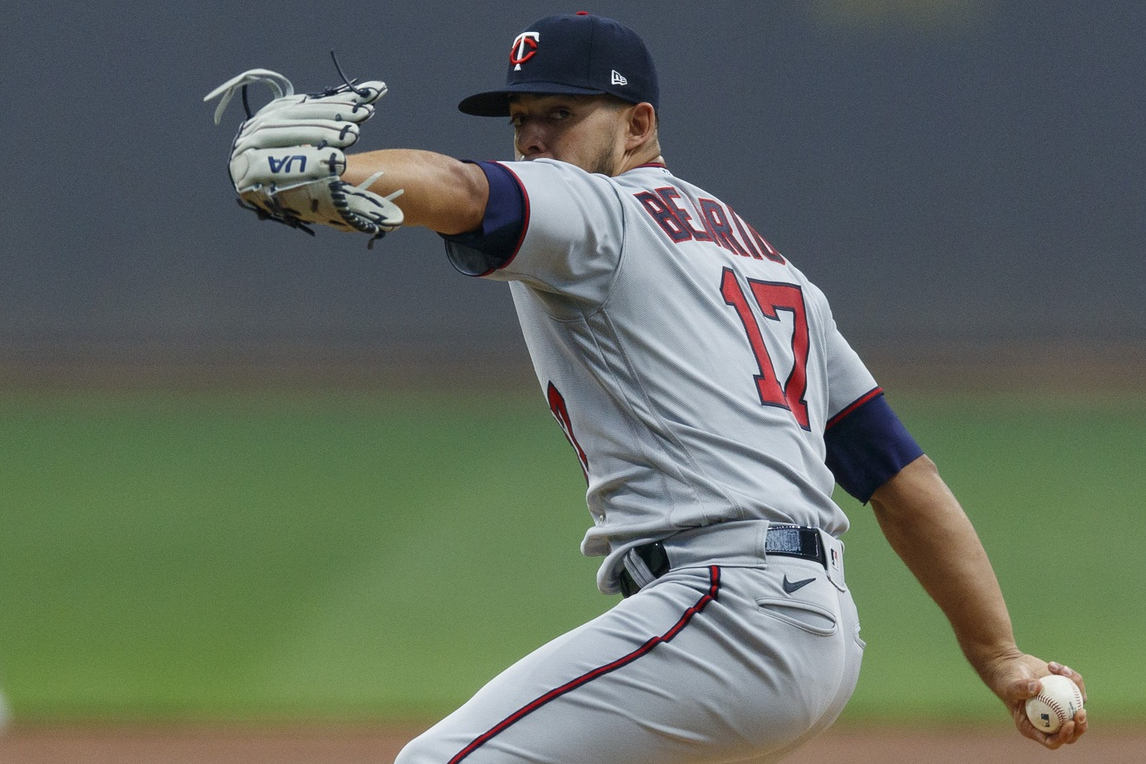 Box Score Berríos: 6.0 IP, 0 H, 0 ER, 0 BB, 12 K Home Runs: Buxton (2) Top 3 WPA: Berríos .366, Buxton .168, Rogers .111 Win Probability Chart (via FanGraphs): Everyone has at least one sports moment that is imprinted in their memory. For those who fancy themselves as fans of the Minnesota Twins, these moments usually come in the form of Games. Game 163. Game 6. Game 7. Saturday night, we witnessed another one of those Games, however, this one won’t be remembered for its numerical value. This one will forever be remembered as The José Berríos Game. Berríos was hot from the start, averaging 95.3 mph on his four-seam fastball through the first two innings and touching 96 mph on multiple occasions. For much of last season as well as the later half of the 2019 season, Berríos’ velocity would tend to dip beginning around the fourth inning. That was not an issue Saturday night, however, as his fastball sat 95 all night in addition to a sinker that averaged 94.7 mph, according to Baseball Savant. https://twitter.com/dohyoungpark/status/1378513333922496515 Berríos combined his fastball velocity masterfully with a devastating curveball and occasional changeup to keep the Brewers’ hitters on their heels all night. He exited after 84 pitches and six innings of ace-level pitching, accumulating 12 strikeouts and zero walks, as well as a 50% overall Whiff% and 34.9 WPA, along the way. https://twitter.com/seehafer_/status/1378512561985961984 Unfortunately for the Twins, Milwaukee Brewers’ starter Corbin Burnes also brought his A-game. Like his Minnesota counterpart, Burnes was nasty from the opening frame, touching 99 mph with his sinker and 98 with his cutter. Burnes is atypical in the current age of MLB as he has a legitimate five-pitch arsenal, all five of which he can employ to strikeout opposing hitters. The Twins found this out the hard way, as they struck out 11 times and did not register a hit. That is until Byron Buxton came to the plate in the top of the seventh inning. https://twitter.com/Twins/status/1378515583965167618?s=20 Buxton’s second home run of the season broke up Burnes' no-hitter and ended his night. While not as visually impressive as his 456-foot bomb Thursday afternoon, Buxton’s home run to center field in the middle of a no-hitter was perhaps just as impressive. https://twitter.com/seehafer_/status/1378511748228120576 The Brewers’ broke up the Twins’ no-hitter when Omar Narváez laced a single off Tyler Duffey in the eighth inning. (Taylor Rogers entered the game in place of Berríos in the seventh inning and struck out the side.) Minnesota added a second run in the eighth inning on a Luis Arráez single that brought in Andrelton Simmons. In all, the Twins struck out 17 Milwaukee batters Saturday night - in recompense for the 17 strikeouts they suffered at the hands of the Brewers on opening night - and did not walk any in what was arguably one of the most dominant nights of pitching in franchise history. The Twins and Brewers will be back in action on Sunday afternoon when Michael Pineda and Adrian Houser face off with the series on the line. First pitch is scheduled for 1:10 p.m. Postgame With Berríos Bullpen Usage Spreadsheet
 -
Twins Claim OF Kyle Garlick
Lucas Seehafer PT replied to Seth Stohs's topic in Twins Daily Front Page News
Now go get Trout and Alfredo (Rodriquez)! I've heard Garlick goes well with them.- 15 replies
-
- 17
-

-
Let's identify a free agent and potential trade target starting pitcher for the Twins by analyzing Statcast's new spin metrics.The Minnesota Twins’ offseason is moving at a snail’s pace and it turns out that the snail is in it’s waning years and crippled by various forms of arthritis. The team’s only significant transaction to date has been the signing of relief pitcher Hansel Robles to a one-year, $2 million deal at the end of December, otherwise the Twins’ transaction page is littered with minor league deals. Those in and around the team with working knowledge of how the Twins are approaching the offseason firmly believe that they will make at least one move of significance before Spring Training starts in approximately six weeks. Most of the rumors surrounding the Twins have them focused on obtaining a shortstop as well as various relief pitchers. However, one area where the team also figures to be exploring its options is the starting pitching market. The Twins currently have three rotation spots locked up for the 2021 season in Kenta Maeda, Jose Berrios, and Michael Pineda. Randy Dobnak and Devin Smeltzer will also undoubtedly see their fair share of starts and Jhoan Duran and Jordan Balazovic are on the cusp of making their Major League debuts. But that still leaves plenty of room for the Twins to bring in at least one starting pitcher of consequence. They have been linked to the likes of Jake Odorizzi — who is reportedly seeking a multiyear deal of at least $10 million per year guaranteed — and the recently signed Corey Kluber. Pitchers that fit this mold would primarily add to the starting rotation’s depth as they would clearly be the third or fourth best starter on the Twins’ roster without impacting its overall ceiling. However, a fair amount of intriguing names remain on the open market — both via free agency and trades — that could not only make the starting unit deeper, but also more dangerous. One way to determine which names the Twins may be wise to go after is by looking at the spin and movement of each individual’s pitches. This isn’t a new concept by any means, but for the uninitiated, the thought process goes something like this: more spin on the ball = more movement = more difficult to hit the pitch = more strikeouts = less runs allowed = more wins. That’s an over simplified explanation that doesn’t always convert to real life, but you get the picture. There are a number of pitchers still available, so going over every single one would go beyond the scope of this article. That said, let’s discuss two names that may be of particular interest. THE STANDARD But before we do that and in order to set a comparison for how the pitchers on the market stack up, it would be prudent to take a look at the data of various pitches of the Twins’ best hurler. (Here’s a key for interpreting the chart: Parameters were set so that each pitch had to be thrown at least 100 times during the 2020 season. This will be true for the two examples below, as well.The deeper the color the further away that value is from average.Positive values are above average, while negative values are below.All data was gathered via Baseball Savant.)Maeda relied upon his slider and changeup much more during his first season with the Twins compared to his previous seasons while in Dodger blue, consistent with the team’s overall philosophy of leaning on offspeed pitches when the pitcher’s fastball isn’t their most dominant option. This is backed up in the chart above — as well as the more nuanced data found on Baseball Savant — that shows Maeda’s fastball to be pretty average in terms of both speed and overall movement. However, what may be interesting to note is that Maeda’s slider isn’t all that great either, at least on it’s own. What makes Maeda’s slider useful is the dominance of his changeup. The chart and graphic above can be a little confusing, so I’ll try to succinctly summarize. Active spin percentage is the amount of the baseball’s spin that goes toward the pitch’s break and/or drop; the higher the percentage, the less wasted spin. The clocks represent the direction in which each pitch moves based on spin at the release of the pitch (left) versus when it reaches home (right). For Maeda, this means that his slider breaks as expected — which is to say not much in any direction — whereas his changeup drops significantly based on what would be assumed when it leaves his hand. To put it simply: Maeda’s changeup is one of the best in the game due to its movement and spin. Now that we have developed a baseline, let’s look at two of the Twins’ options on the market. FREE AGENT OPTION Jake Arrieta Much like Maeda, Arrieta boasts a changeup with great movement, but where he differentiates himself from the Twins’ ace is that he has another pitch that moves quite a bit: his sinker. Arrieta is but a shell of his former Cy Young winning self, but he still may have some gas left in the tank. Part of his struggles over the last few seasons have been due to bad luck, but the main reason is a K% that has precipitously dropped from 27.1% there season he was named the National League’s best pitcher to 16.8% last season. If there is a pitching coach that could help Arrieta right the ship — at least on a one-year deal — it’s Wes Johnson. Perhaps the key to raising his K% is a change in pitch mix? TRADE OPTION German Marquez, Colorado Rockies At first blush, Marquez’s data doesn’t look all that promising. His movement is below average for all of his pitches and they move in an expected manner. However, the data should be taken with a grain of salt as Marquez spent a good chunk of 2020 — and his career — pitching in the unfriendly confines of Coors Field. The thin atmosphere in Denver makes playing at Coors the bane of every pitcher’s existence. The ball flies further when hit and moves less when thrown as the ball has less drag to fight. It’s simple physics! It’s safe to say that Marquez’s stuff has suffered because of the Colorado air and his numbers back this assumption up. Marquez is a mid- to top-end starter when he isn’t pitching a mile above sea level and rather poor when he is. Pitching a full season in the American Midwest would may result in Marquez fighting for an All-Star spot due in large part to improved stuff. Under the tutelage of Johnson, Marquez would be a contender for making a Maeda-esque jump. MORE FROM TWINS DAILY — Latest Twins coverage from our writers — Recent Twins discussion in our forums — Follow Twins Daily via Twitter, Facebook or email Click here to view the article
-
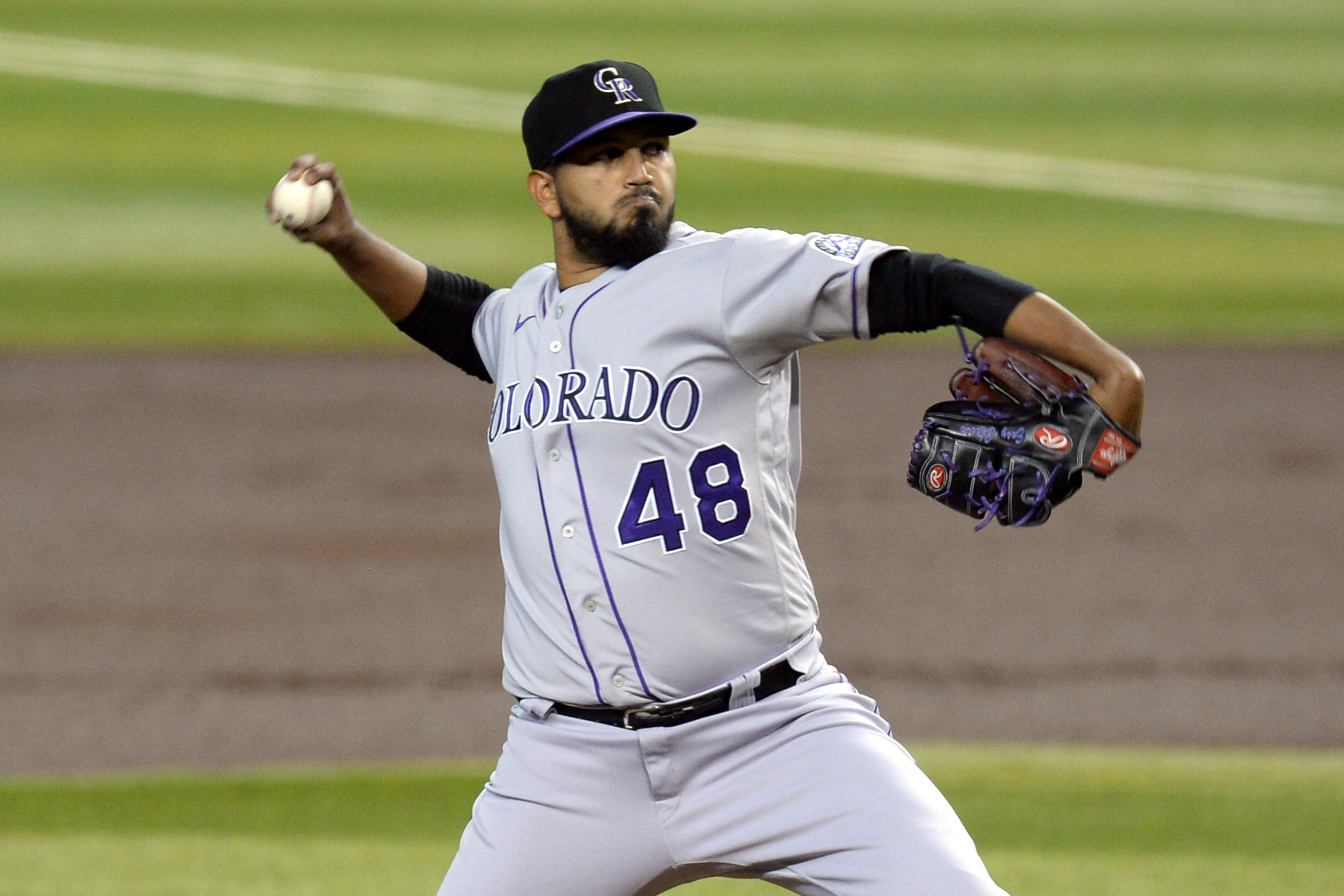 The Minnesota Twins’ offseason is moving at a snail’s pace and it turns out that the snail is in it’s waning years and crippled by various forms of arthritis. The team’s only significant transaction to date has been the signing of relief pitcher Hansel Robles to a one-year, $2 million deal at the end of December, otherwise the Twins’ transaction page is littered with minor league deals. Those in and around the team with working knowledge of how the Twins are approaching the offseason firmly believe that they will make at least one move of significance before Spring Training starts in approximately six weeks. Most of the rumors surrounding the Twins have them focused on obtaining a shortstop as well as various relief pitchers. However, one area where the team also figures to be exploring its options is the starting pitching market. The Twins currently have three rotation spots locked up for the 2021 season in Kenta Maeda, Jose Berrios, and Michael Pineda. Randy Dobnak and Devin Smeltzer will also undoubtedly see their fair share of starts and Jhoan Duran and Jordan Balazovic are on the cusp of making their Major League debuts. But that still leaves plenty of room for the Twins to bring in at least one starting pitcher of consequence. They have been linked to the likes of Jake Odorizzi — who is reportedly seeking a multiyear deal of at least $10 million per year guaranteed — and the recently signed Corey Kluber. Pitchers that fit this mold would primarily add to the starting rotation’s depth as they would clearly be the third or fourth best starter on the Twins’ roster without impacting its overall ceiling. However, a fair amount of intriguing names remain on the open market — both via free agency and trades — that could not only make the starting unit deeper, but also more dangerous. One way to determine which names the Twins may be wise to go after is by looking at the spin and movement of each individual’s pitches. This isn’t a new concept by any means, but for the uninitiated, the thought process goes something like this: more spin on the ball = more movement = more difficult to hit the pitch = more strikeouts = less runs allowed = more wins. That’s an over simplified explanation that doesn’t always convert to real life, but you get the picture. There are a number of pitchers still available, so going over every single one would go beyond the scope of this article. That said, let’s discuss two names that may be of particular interest. THE STANDARD But before we do that and in order to set a comparison for how the pitchers on the market stack up, it would be prudent to take a look at the data of various pitches of the Twins’ best hurler. https://twitter.com/seehafer_/status/1350499973553598465 (Here’s a key for interpreting the chart: Parameters were set so that each pitch had to be thrown at least 100 times during the 2020 season. This will be true for the two examples below, as well. The deeper the color the further away that value is from average. Positive values are above average, while negative values are below. All data was gathered via Baseball Savant.) Maeda relied upon his slider and changeup much more during his first season with the Twins compared to his previous seasons while in Dodger blue, consistent with the team’s overall philosophy of leaning on offspeed pitches when the pitcher’s fastball isn’t their most dominant option. This is backed up in the chart above — as well as the more nuanced data found on Baseball Savant — that shows Maeda’s fastball to be pretty average in terms of both speed and overall movement. However, what may be interesting to note is that Maeda’s slider isn’t all that great either, at least on it’s own. What makes Maeda’s slider useful is the dominance of his changeup. https://twitter.com/seehafer_/status/1350506415266422786 The chart and graphic above can be a little confusing, so I’ll try to succinctly summarize. Active spin percentage is the amount of the baseball’s spin that goes toward the pitch’s break and/or drop; the higher the percentage, the less wasted spin. The clocks represent the direction in which each pitch moves based on spin at the release of the pitch (left) versus when it reaches home (right). For Maeda, this means that his slider breaks as expected — which is to say not much in any direction — whereas his changeup drops significantly based on what would be assumed when it leaves his hand. To put it simply: Maeda’s changeup is one of the best in the game due to its movement and spin. Now that we have developed a baseline, let’s look at two of the Twins’ options on the market. FREE AGENT OPTION Jake Arrieta https://twitter.com/seehafer_/status/1350512006382710787 https://twitter.com/seehafer_/status/1350512267490697222 Much like Maeda, Arrieta boasts a changeup with great movement, but where he differentiates himself from the Twins’ ace is that he has another pitch that moves quite a bit: his sinker. Arrieta is but a shell of his former Cy Young winning self, but he still may have some gas left in the tank. Part of his struggles over the last few seasons have been due to bad luck, but the main reason is a K% that has precipitously dropped from 27.1% there season he was named the National League’s best pitcher to 16.8% last season. If there is a pitching coach that could help Arrieta right the ship — at least on a one-year deal — it’s Wes Johnson. Perhaps the key to raising his K% is a change in pitch mix? TRADE OPTION German Marquez, Colorado Rockies https://twitter.com/seehafer_/status/1350521544427118595 https://twitter.com/seehafer_/status/1350521680368697345 At first blush, Marquez’s data doesn’t look all that promising. His movement is below average for all of his pitches and they move in an expected manner. However, the data should be taken with a grain of salt as Marquez spent a good chunk of 2020 — and his career — pitching in the unfriendly confines of Coors Field. The thin atmosphere in Denver makes playing at Coors the bane of every pitcher’s existence. The ball flies further when hit and moves less when thrown as the ball has less drag to fight. It’s simple physics! It’s safe to say that Marquez’s stuff has suffered because of the Colorado air and his numbers back this assumption up. https://twitter.com/seehafer_/status/1350523287525335042?s=20 Marquez is a mid- to top-end starter when he isn’t pitching a mile above sea level and rather poor when he is. Pitching a full season in the American Midwest would may result in Marquez fighting for an All-Star spot due in large part to improved stuff. Under the tutelage of Johnson, Marquez would be a contender for making a Maeda-esque jump. MORE FROM TWINS DAILY — Latest Twins coverage from our writers — Recent Twins discussion in our forums — Follow Twins Daily via Twitter, Facebook or email
 -
A starting rotation of Maeda-Berrios-Pineda-Odorizzi - should he re-sign - is a solid core that is perhaps one move away from being one of the best that the American League has to offer. Maybe that one move is trading for a Sonny Gray or a Luis Castillo from the Cincinnati Reds. Or maybe that one move is less obvious.To say that the 2020 MLB offseason is moving at a snail’s pace would be a bit of an understatement. Few teams have made any moves of significance — save for the San Diego Padres — including the Minnesota Twins, whose only major league signing is relief pitcher Hansel Robles. The majority of the hot stove — er, cold stove? — Twins-centric rumors being bandied about as of late tend to focus on the team heavily considering bringing in a shortstop via free agency or trade. However, it is widely assumed that the Twins will also be players in the starting pitching market as at least one rotation spot is up for grabs. Kenta Maeda, Jose Berrios, and Michael Pineda are locks to be in the starting rotation on opening day. Randy Dobnak, Devin Smeltzer, and perhaps Lewis Thorpe will make their fair share of spot starts. Jhoan Duran and Jordan Balazovic are waiting in the wings. Jake Odorizzi is reportedly open to a return to Minnesota. Mike Foltynewicz was an All-Star in 2018 with the Atlanta Braves. During that magical season, he posted an ERA of 2.85, averaged 9.9 K/9, induced a ton of ground balls, and boasted an ERA- of 70, according to FanGraphs. Folty, as he is affectionately known, was waived by Atlanta after one start this past summer and went unclaimed. How is it that one of the better pitchers in the game can fall so drastically and rapidly? Well, for starters, Foltynewicz’s 2018 campaign was likely a bit of a fluke. A quick glance over his statistics reveals that nearly every category was a career-best by quite a wide margin, but his success can be summarized fairly succinctly. Foltynewicz’s 2018 K/9, HR/9, and HR/FB were significantly better than his career numbers (9.93/8.59, 0.84/1.33, 9.6%/12.9%, respectively). Why? His slider was absolutely dominant. The Twins’ pitching staff’s love affair with the slider is well-known and documented at this point (see: Wisler, Matt). Their belief that they can beef up a pitcher by taking their strongest asset and relying on it heavily has paid significant dividends for them in recent seasons. For Madeda, it was his crazy deep arsenal, for Dobnak his earth-plunging sinker. Foltynewicz’s slider was one of the best the game had to offer in 2018 according to Baseball Savant. It struck out 106 batters — 52% of his total — and gave up only two home runs; it produced a .180 WOBA and 36.8% Whiff%. However, these numbers returned to his career norms in 2019 in addition to losing nearly six miles per hour on his fastball by 2020. That last part is probably the most concerning thing about Foltynewicz moving forward. Right-handed pitchers who struggle to top 90 mph have almost no role in modern MLB where gas and movement rule the land. Such a drastic drop in velocity is often a sign of injury, however, he has never been diagnosed with an injury since the 2019 season when he missed the Braves’ first 25 games with a bone spur in his right elbow. Perhaps his velocity can be attributed to reduced confidence in his stuff (i.e. “the yips”)? Regardless, if there is one team that could help Foltynewicz return to his 2018 self it’s probably the Twins. Pitching coach Wes Johnson is one of the best in the business in unlocking a pitcher’s potential and in Foltynewicz it’s known that that potential is of All-Star caliber. Foltynewicz could likely be had on a minor league deal similar to that of Jhoulys Chacin last Spring. Bringing on Foltynewicz at that price is the epitome of a low risk-high reward move. At worst, Foltynewicz is cut without repercussion, at best, the Twins bring on an All-Star level pitcher at minimal price. MORE FROM TWINS DAILY — Latest Twins coverage from our writers — Recent Twins discussion in our forums — Follow Twins Daily via Twitter, Facebook or email Click here to view the article
-
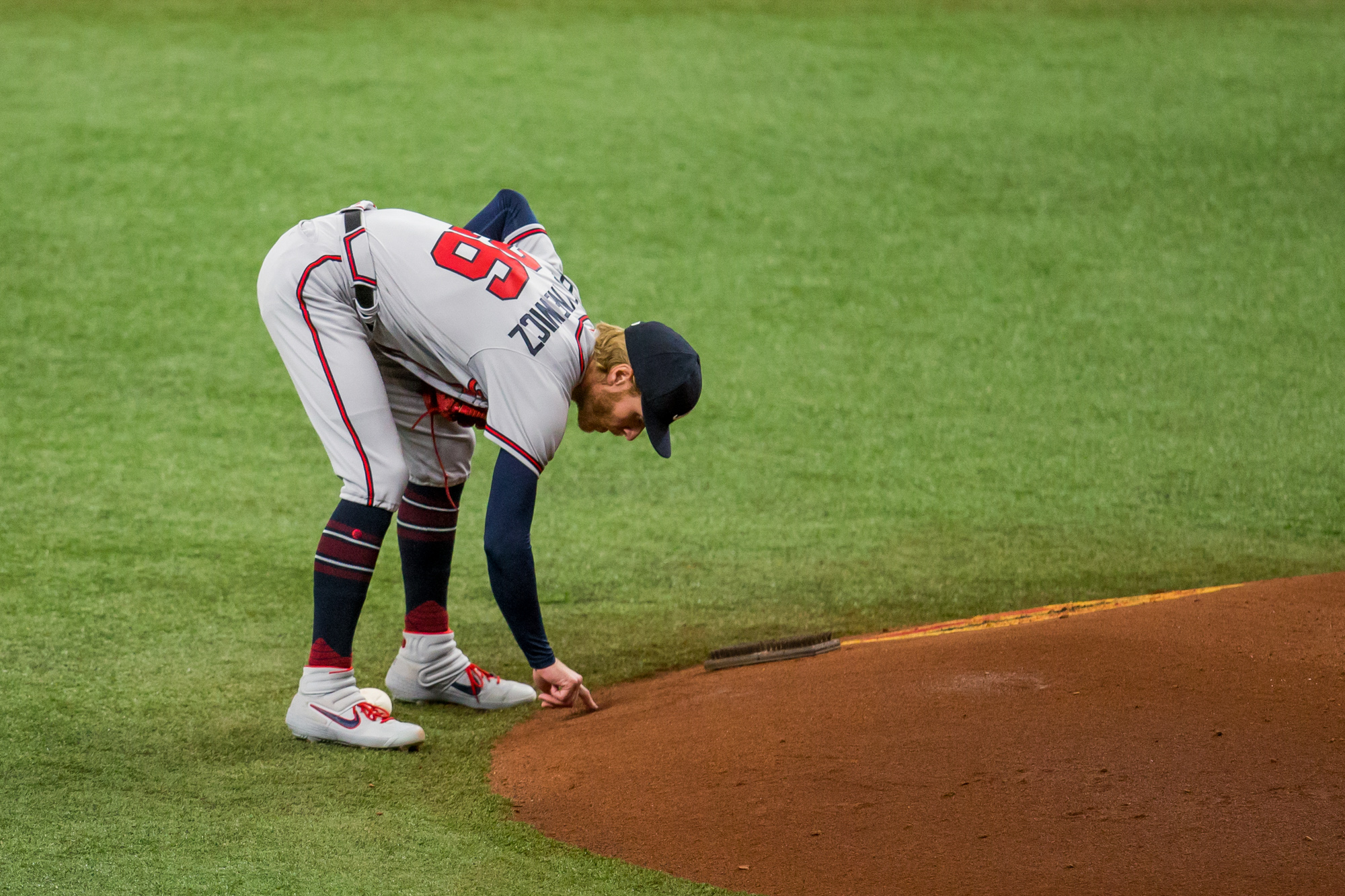 To say that the 2020 MLB offseason is moving at a snail’s pace would be a bit of an understatement. Few teams have made any moves of significance — save for the San Diego Padres — including the Minnesota Twins, whose only major league signing is relief pitcher Hansel Robles. The majority of the hot stove — er, cold stove? — Twins-centric rumors being bandied about as of late tend to focus on the team heavily considering bringing in a shortstop via free agency or trade. However, it is widely assumed that the Twins will also be players in the starting pitching market as at least one rotation spot is up for grabs. Kenta Maeda, Jose Berrios, and Michael Pineda are locks to be in the starting rotation on opening day. Randy Dobnak, Devin Smeltzer, and perhaps Lewis Thorpe will make their fair share of spot starts. Jhoan Duran and Jordan Balazovic are waiting in the wings. Jake Odorizzi is reportedly open to a return to Minnesota. Mike Foltynewicz was an All-Star in 2018 with the Atlanta Braves. During that magical season, he posted an ERA of 2.85, averaged 9.9 K/9, induced a ton of ground balls, and boasted an ERA- of 70, according to FanGraphs. Folty, as he is affectionately known, was waived by Atlanta after one start this past summer and went unclaimed. How is it that one of the better pitchers in the game can fall so drastically and rapidly? Well, for starters, Foltynewicz’s 2018 campaign was likely a bit of a fluke. A quick glance over his statistics reveals that nearly every category was a career-best by quite a wide margin, but his success can be summarized fairly succinctly. Foltynewicz’s 2018 K/9, HR/9, and HR/FB were significantly better than his career numbers (9.93/8.59, 0.84/1.33, 9.6%/12.9%, respectively). Why? His slider was absolutely dominant. The Twins’ pitching staff’s love affair with the slider is well-known and documented at this point (see: Wisler, Matt). Their belief that they can beef up a pitcher by taking their strongest asset and relying on it heavily has paid significant dividends for them in recent seasons. For Madeda, it was his crazy deep arsenal, for Dobnak his earth-plunging sinker. Foltynewicz’s slider was one of the best the game had to offer in 2018 according to Baseball Savant. It struck out 106 batters — 52% of his total — and gave up only two home runs; it produced a .180 WOBA and 36.8% Whiff%. However, these numbers returned to his career norms in 2019 in addition to losing nearly six miles per hour on his fastball by 2020. https://twitter.com/seehafer_/status/1345406168957644800 That last part is probably the most concerning thing about Foltynewicz moving forward. Right-handed pitchers who struggle to top 90 mph have almost no role in modern MLB where gas and movement rule the land. Such a drastic drop in velocity is often a sign of injury, however, he has never been diagnosed with an injury since the 2019 season when he missed the Braves’ first 25 games with a bone spur in his right elbow. Perhaps his velocity can be attributed to reduced confidence in his stuff (i.e. “the yips”)? Regardless, if there is one team that could help Foltynewicz return to his 2018 self it’s probably the Twins. Pitching coach Wes Johnson is one of the best in the business in unlocking a pitcher’s potential and in Foltynewicz it’s known that that potential is of All-Star caliber. Foltynewicz could likely be had on a minor league deal similar to that of Jhoulys Chacin last Spring. Bringing on Foltynewicz at that price is the epitome of a low risk-high reward move. At worst, Foltynewicz is cut without repercussion, at best, the Twins bring on an All-Star level pitcher at minimal price. MORE FROM TWINS DAILY — Latest Twins coverage from our writers — Recent Twins discussion in our forums — Follow Twins Daily via Twitter, Facebook or email
 -
The Minnesota Twins are supposedly in the market for a shortstop, the position that former All-Star Jorge Polanco has occupied for the majority of the previous four seasons and changeIt’s logical to assume that Polanco would become the Twins new utilityman - replacing Marwin Gonzalez and Ehire Adrianza - should the team decide to make a move on a shortstop rather than sign someone in the ilk of Kike Hernandez, who has developed into one of the league’s premier Swiss Army knives. But would that be a decision that ends up being fruitful for winning baseball? When healthy - something he has struggled with since the latter part of the 2019 season, which has resulted in two ankle surgeries - Polanco is an above average offensive shortstop. He’s produced 179 extra base hits across 1,891 career at bats, good for a slugging percentage of .435, which places him 16th among shortstops since he entered the lineup full-time in 2017. Offense is not Polanco’s downfall; his defense, however, is another story. Polanco has completed 1,173 fielding attempts across 496 games in his career, 980 of which came at the shortstop position. His relatively poor arm strength and range have led him to accumulate -26 career outs above average according to Baseball Savant. While he has found a greater degree of success at second (+2 OAA; -0.1 UZR) and third (-3 OAA; -1.8 UZR), his overall sample size is too small to even begin to draw conclusions based on data alone. Additionally, he has never appeared at first base or in the outfield. (For reference, Hernandez has appeared at every position except for catcher and pitcher.) Polanco’s defensive skillset and attributes are arguably better suited for second and even third base - less range and arm strength is required for both positions - but his lack of experience in the outfield may be cause for a slight amount of pause. (Admittedly, the presence of the likes of Alex Kiriloff, Brent Rooker, Jake Cave, and LaMonte Wade Jr. - not to mention Trevor Larnach and Royce Lewis who are waiting in the wings - dampens some of the need for Polanco to appear in the outfield.) What it comes down to is this: Would bringing in a shortstop of a greater caliber than Polanco place the Twins in a better position to win more games than bringing in a super utilityman? From a purely statistical standpoint it would be difficult to argue otherwise, even with Polanco’s defensive shortcomings - potential and actualized - across the infield. Semien would be a significant - albeit still below average - upgrade over Polanco defensively while also being a solid upgrade offensively; his OPS is .002 points higher than Polanco’s since 2017 and he has hit 20 more home runs in 41 more games. On the other hand, most of Hernandez’s value would come defensively; he’s average to above average at virtually every position, though he is strongest in the outfield according to UZR. Hernandez boasts a career slugging percentage of .425 and 71 home runs in 690 games. But let’s be real, signing either of Semien or Hernandez would provide the Twins with an embarrassment of riches, particularly offensively. The only way the Twins lose in their current situation is if they do not make a move at all, an outcome that is highly unlikely. MORE FROM TWINS DAILY — Latest Twins coverage from our writers — Recent Twins discussion in our forums — Follow Twins Daily via Twitter, Facebook or email Click here to view the article
-
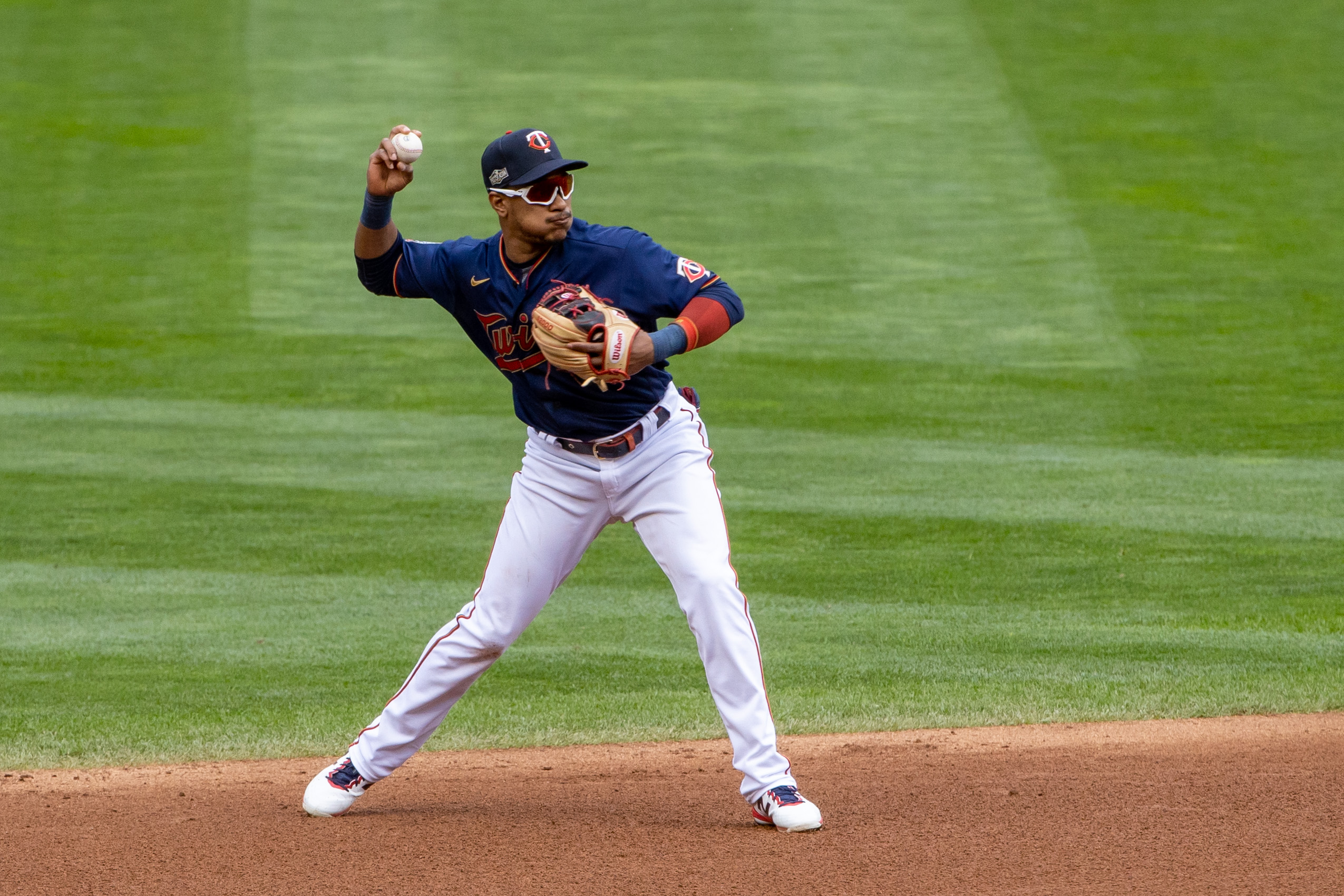 It’s logical to assume that Polanco would become the Twins new utilityman - replacing Marwin Gonzalez and Ehire Adrianza - should the team decide to make a move on a shortstop rather than sign someone in the ilk of Kike Hernandez, who has developed into one of the league’s premier Swiss Army knives. But would that be a decision that ends up being fruitful for winning baseball? When healthy - something he has struggled with since the latter part of the 2019 season, which has resulted in two ankle surgeries - Polanco is an above average offensive shortstop. He’s produced 179 extra base hits across 1,891 career at bats, good for a slugging percentage of .435, which places him 16th among shortstops since he entered the lineup full-time in 2017. Offense is not Polanco’s downfall; his defense, however, is another story. Polanco has completed 1,173 fielding attempts across 496 games in his career, 980 of which came at the shortstop position. His relatively poor arm strength and range have led him to accumulate -26 career outs above average according to Baseball Savant. https://twitter.com/seehafer_/status/1342878044005027840 While he has found a greater degree of success at second (+2 OAA; -0.1 UZR) and third (-3 OAA; -1.8 UZR), his overall sample size is too small to even begin to draw conclusions based on data alone. Additionally, he has never appeared at first base or in the outfield. (For reference, Hernandez has appeared at every position except for catcher and pitcher.) Polanco’s defensive skillset and attributes are arguably better suited for second and even third base - less range and arm strength is required for both positions - but his lack of experience in the outfield may be cause for a slight amount of pause. (Admittedly, the presence of the likes of Alex Kiriloff, Brent Rooker, Jake Cave, and LaMonte Wade Jr. - not to mention Trevor Larnach and Royce Lewis who are waiting in the wings - dampens some of the need for Polanco to appear in the outfield.) What it comes down to is this: Would bringing in a shortstop of a greater caliber than Polanco place the Twins in a better position to win more games than bringing in a super utilityman? From a purely statistical standpoint it would be difficult to argue otherwise, even with Polanco’s defensive shortcomings - potential and actualized - across the infield. Semien would be a significant - albeit still below average - upgrade over Polanco defensively while also being a solid upgrade offensively; his OPS is .002 points higher than Polanco’s since 2017 and he has hit 20 more home runs in 41 more games. https://twitter.com/seehafer_/status/1342903932046237698 On the other hand, most of Hernandez’s value would come defensively; he’s average to above average at virtually every position, though he is strongest in the outfield according to UZR. Hernandez boasts a career slugging percentage of .425 and 71 home runs in 690 games. But let’s be real, signing either of Semien or Hernandez would provide the Twins with an embarrassment of riches, particularly offensively. The only way the Twins lose in their current situation is if they do not make a move at all, an outcome that is highly unlikely. MORE FROM TWINS DAILY — Latest Twins coverage from our writers — Recent Twins discussion in our forums — Follow Twins Daily via Twitter, Facebook or email
 -
The Athletic’s intrepid reporter Ken Rosenthal sent the imaginations of trade enthusiasts — myself a representative of the club — aflurry when he speculated in his Friday column that the Minnesota Twins may try to bring in a shortstop this offseason.This idea isn’t necessarily unique — other Twins reporters and bloggers have brought this up as well — and he ultimately concluded that former Oakland Athletic Marcus Semien or Twins killer Didi Gregorius probably make the most sense, but he also mentioned two very intriguing potential trade targets: Francisco Lindor and Trevor Story. A reporter of Rosenthal’s caliber and track record likely wouldn’t acknowledge this smoke unless there was some amount of corresponding fire and, as I have written previously, the Twins’ farm system is deep enough to make a significant trade and not be kneecapped in the process. The biggest issue with both Lindor and Story is that they will be eligible for free agency following the 2021 season meaning they only have one full season of guaranteed team control remaining. However, “Should the Twins be willing to trade for either player?” should not really even be a question. Lindor is the better of the two — he’s younger, is a four-time All-Star, and has finished in the top 10 in MVP voting three times compared to Story’s two and zero, respectively — but both shortstops possess legitimate team-altering talent. Any team in the Twins’ position — back-to-back division titles, playoff embarrassments, etc. — should be willing to depart with their top prospects to obtain an MVP-caliber talent, no matter how many years of control they have left. The question, though, is how many prospects should the Twins be willing to depart with? It’s likely that Cleveland and Colorado’s asking price will begin with at least one of Royce Lewis, Alex Kiriloff, Trevor Larnach, Jhoan Duran, and/or Jordan Balazovic. Additionally, it wouldn’t be surprising if Luiz Arraez were included in the deal — as Rosenthal surmised — as bringing in a shortstop would likely mean shifting Jorge Polanco to second, a position his talents are likely better suited for. Other potential prospects included in a trade may include Blayne Enlow and Gilberto Celestino, or someone of commensurate talent. A package of Arraez, Lewis, and Enlow in exchange for Lindor or Story would be a massive loss for the Twins, but would also place them in a position to perhaps be the best team in the American League, particularly if they retain the services of Nelson Cruz and Jake Odorizzi. Imagine the following lineup, if even for just a moment: Max Kepler, RFFrancisco Lindor/Trevor Story, SSNelson Cruz, DHJosh Donaldson, 3BMiguel Sano, 1BJorge Polanco, 2BMitch Garver/Ryan Jeffers, CAlex Kiriloff, LFByron Buxton, CFTalk about a murder’s row! Now for the cold shower of reality: It remains highly unlikely that either Lindor or Story will be in the Twins starting lineup on opening day. Cleveland probably won’t be too keen on trading Lindor within their division even if it sets them up nicely for the future and Colorado may try to convince themselves — however irrationally — that they could contend in the National League West as long as Story remains on their roster. Regardless of either team’s thought process, the market for both players will likely be extremely competitive and other teams may be willing to give up more than the Twins; additionally, both Cleveland and Colorado may wait until closer to the trade deadline in July before parting with their All-Star shortstop in an attempt to further drum up the market. Trading for a Lindor or Story is not a move that just any team should make; only those with a legit chance to win the World Series with their acquisition should even consider it and the Twins fit that description to a T. The window to win a title is only open for a short amount of time for most teams and the Twins find themselves on the window sill pondering if they should jump. If the opportunity presents itself they should, even if it means mortgaging some of their future. MORE FROM TWINS DAILY — Latest Twins coverage from our writers — Recent Twins discussion in our forums — Follow Twins Daily via Twitter, Facebook or email Click here to view the article
-
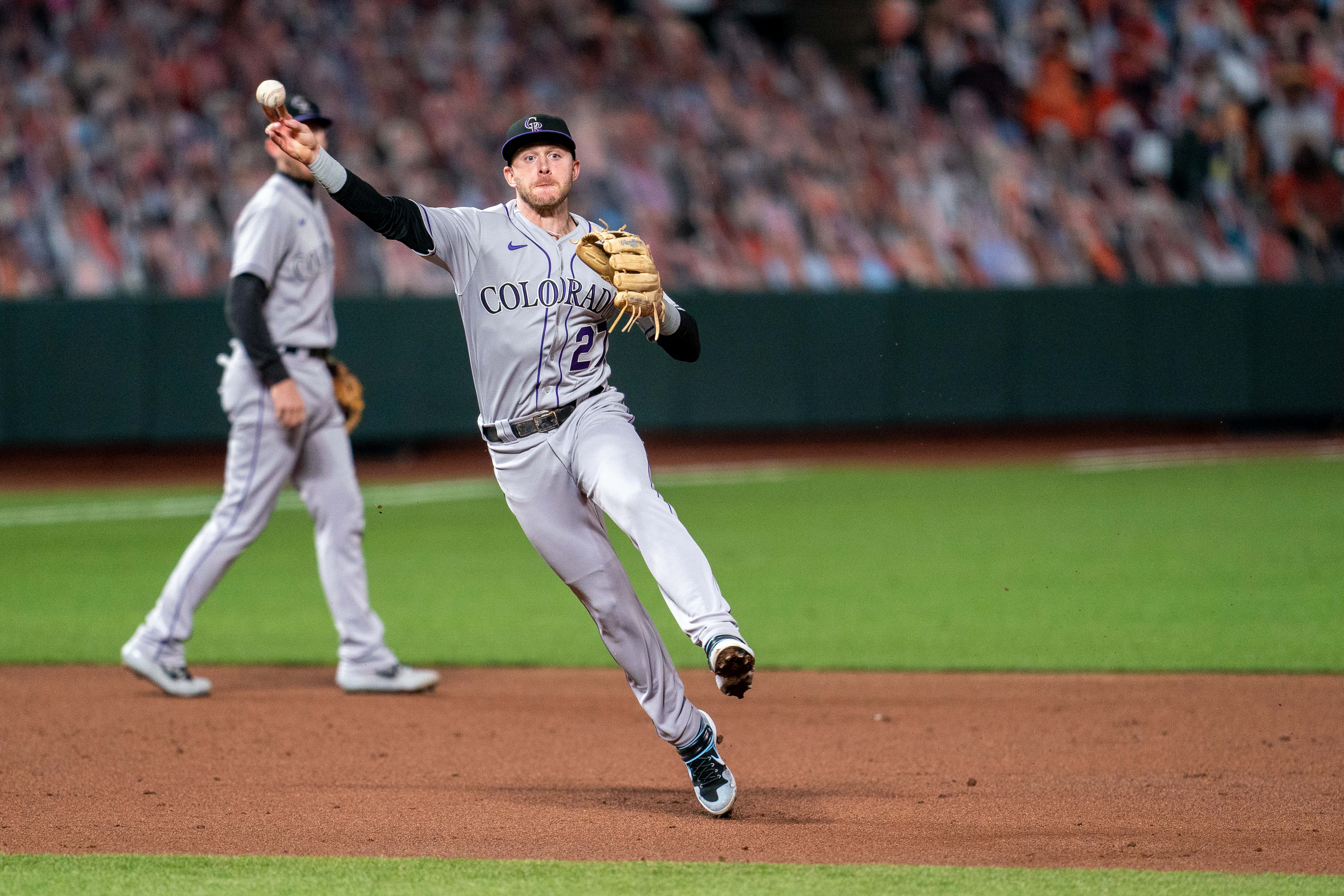 This idea isn’t necessarily unique — other Twins reporters and bloggers have brought this up as well — and he ultimately concluded that former Oakland Athletic Marcus Semien or Twins killer Didi Gregorius probably make the most sense, but he also mentioned two very intriguing potential trade targets: Francisco Lindor and Trevor Story. A reporter of Rosenthal’s caliber and track record likely wouldn’t acknowledge this smoke unless there was some amount of corresponding fire and, as I have written previously, the Twins’ farm system is deep enough to make a significant trade and not be kneecapped in the process. The biggest issue with both Lindor and Story is that they will be eligible for free agency following the 2021 season meaning they only have one full season of guaranteed team control remaining. However, “Should the Twins be willing to trade for either player?” should not really even be a question. Lindor is the better of the two — he’s younger, is a four-time All-Star, and has finished in the top 10 in MVP voting three times compared to Story’s two and zero, respectively — but both shortstops possess legitimate team-altering talent. Any team in the Twins’ position — back-to-back division titles, playoff embarrassments, etc. — should be willing to depart with their top prospects to obtain an MVP-caliber talent, no matter how many years of control they have left. The question, though, is how many prospects should the Twins be willing to depart with? It’s likely that Cleveland and Colorado’s asking price will begin with at least one of Royce Lewis, Alex Kiriloff, Trevor Larnach, Jhoan Duran, and/or Jordan Balazovic. Additionally, it wouldn’t be surprising if Luiz Arraez were included in the deal — as Rosenthal surmised — as bringing in a shortstop would likely mean shifting Jorge Polanco to second, a position his talents are likely better suited for. Other potential prospects included in a trade may include Blayne Enlow and Gilberto Celestino, or someone of commensurate talent. A package of Arraez, Lewis, and Enlow in exchange for Lindor or Story would be a massive loss for the Twins, but would also place them in a position to perhaps be the best team in the American League, particularly if they retain the services of Nelson Cruz and Jake Odorizzi. Imagine the following lineup, if even for just a moment: Max Kepler, RF Francisco Lindor/Trevor Story, SS Nelson Cruz, DH Josh Donaldson, 3B Miguel Sano, 1B Jorge Polanco, 2B Mitch Garver/Ryan Jeffers, C Alex Kiriloff, LF Byron Buxton, CF Talk about a murder’s row! Now for the cold shower of reality: It remains highly unlikely that either Lindor or Story will be in the Twins starting lineup on opening day. Cleveland probably won’t be too keen on trading Lindor within their division even if it sets them up nicely for the future and Colorado may try to convince themselves — however irrationally — that they could contend in the National League West as long as Story remains on their roster. Regardless of either team’s thought process, the market for both players will likely be extremely competitive and other teams may be willing to give up more than the Twins; additionally, both Cleveland and Colorado may wait until closer to the trade deadline in July before parting with their All-Star shortstop in an attempt to further drum up the market. Trading for a Lindor or Story is not a move that just any team should make; only those with a legit chance to win the World Series with their acquisition should even consider it and the Twins fit that description to a T. The window to win a title is only open for a short amount of time for most teams and the Twins find themselves on the window sill pondering if they should jump. If the opportunity presents itself they should, even if it means mortgaging some of their future. MORE FROM TWINS DAILY — Latest Twins coverage from our writers — Recent Twins discussion in our forums — Follow Twins Daily via Twitter, Facebook or email
 -
The St. Paul Saints are now the official Triple-A affiliate of the Minnesota Twins and if you’re to believe franchise president Dave St. Peter and executive vice president Derek Falvey at their word, the pairing was all about improving player development and driving competitive success.“Since moving to Minnesota in 1961, I think player development has been the heartbeat of the Twins franchise,” St. Peter told reporters during Wednesday’s press conference announcing the move. “Thinking back over six decades of Twins’ baseball there hasn’t been a single successful team that we’ve had that wasn’t really largely fueled by players that were ultimately products of our farm system. And with that reality in mind, I think today’s news of an enhanced player development model is absolutely central to our future success.” “We are uniquely positioned now as a major league franchise to have our two highest levels of play within a few short miles of one another and we view that as a competitive advantage,” Falvey said. “As something as, in this game when you’re seeking every possible competitive advantage in scouting, in development, in player selection, in performance, this is something that we feel is going to be a significant benefit to our club.” While there is undoubtedly a large element of truth in those statements - the Twins will now be able to have a fully functional “taxi squad” for a second season in a row, something most other MLB teams will not have access to due to geographical limitations - it also can’t be ignored that the Minny and Paul Merger allows for the Twins to develop the Twin Cities into a Midwestern baseball Mecca, a factor that likely played into the decision as well. A select few MLB teams have their Triple-A affiliate in close proximity - though not all teams have officially announced their respective Triple-A teams and all are longer than the 13 miles between the two Minnesota stadiums - and it is safe to say that none have the same cachet as Target Field and CHS Field. Both fields are considered to be crown jewels in their respective leagues and, in the case of CHS Field, provide a fan experience that is unique and Saints’ owner Marvin Goldklang stated that ticket prices - which begin as low as $5 - will not be changing. These factors are the primary reason behind why the Saints are able to draw in crowd sizes that are practically unrivaled, even by Triple-A standards. According to the official press release, “Since [the Saints moved] to their current home, located in the historic Lowertown District of St. Paul, the club has drawn 2,028,402 fans over five full seasons (2015-19), leading the American Association in each of those years. They have been over 100% capacity 15 times, including a combined 112% capacity in the first five full seasons at CHS Field. In 2019, the Saints led all of Minor League Baseball in percent capacity, were eighth in average attendance (topped only by seven Triple-A teams), and 26th in overall attendance.” The ability to watch top prospects such as Royce Lewis, Jordan Balazovic, and Trevor Larnach in person and on a near daily basis will surely draw even more fans to lowertown St. Paul. This will allow fans to become even more familiar with the Twins’ stars of tomorrow, which, in turn, will likely have a ripple effect on the overall attendance numbers at Target Field - and the franchise’s bottom line. This line of logic applies to the Saints as well. Combining their state-of-the-art field and fan experience with the Twins’ top prospects will likely drive attendance above the 112% capacity number cited previously - once fans are allowed to go to games uninhibited - and will drive revenue skyward. In essence, this pairing was a no-brainer for all parties involved. The ability to create a competitive advantage by pairing with the Saints was undoubtedly an enticing proposition for the Twins - and one that ultimately proved too good to turn down - but at the end of the day, baseball is a business and businesses are driven by the bottom line. Not only will the merger with the Saints make the Twins a better baseball team around the margins, it also will have a significant impact on their margins of profit as well. MORE FROM TWINS DAILY — Latest Twins coverage from our writers — Recent Twins discussion in our forums — Follow Twins Daily via Twitter, Facebook or email Click here to view the article
-
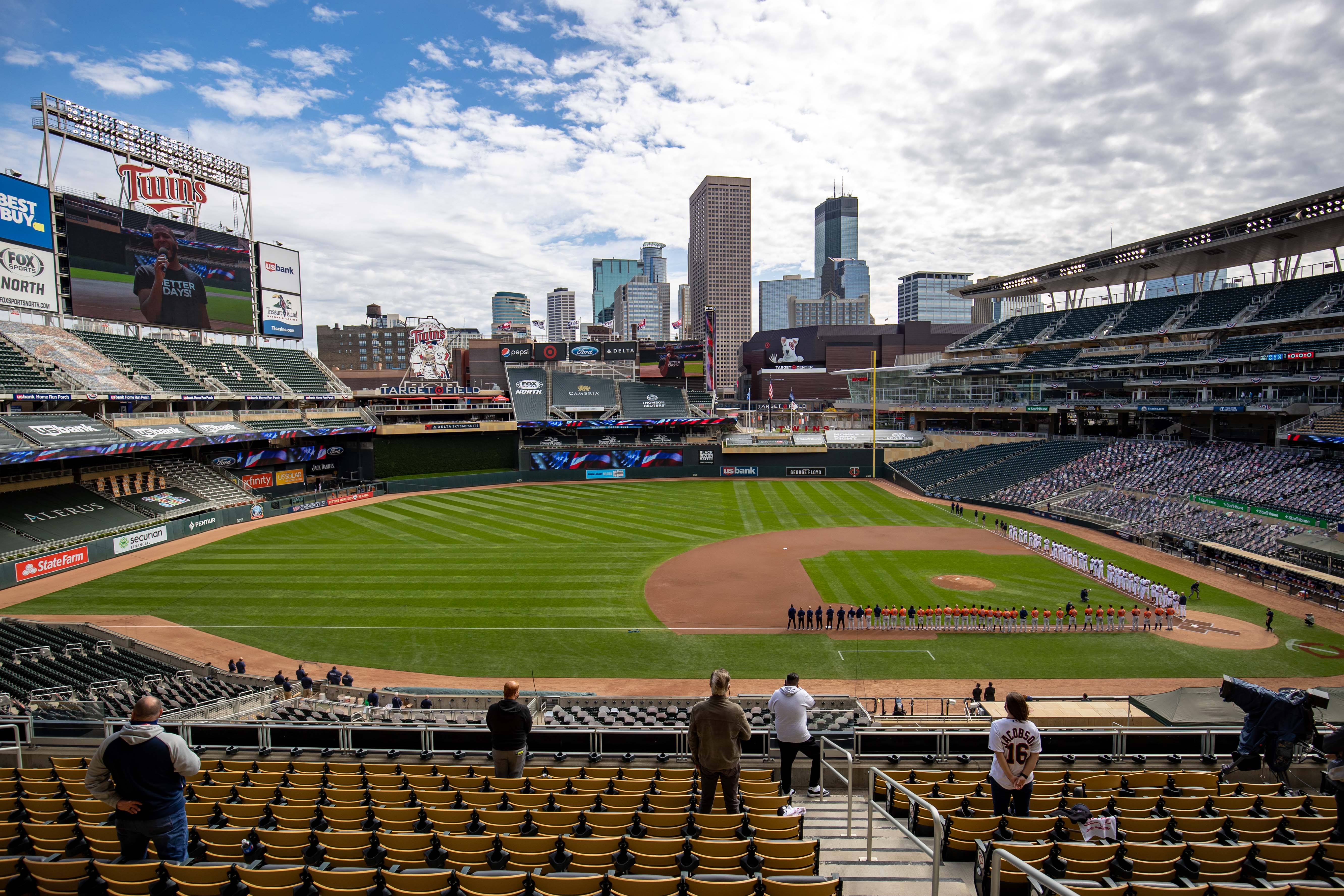 “Since moving to Minnesota in 1961, I think player development has been the heartbeat of the Twins franchise,” St. Peter told reporters during Wednesday’s press conference announcing the move. “Thinking back over six decades of Twins’ baseball there hasn’t been a single successful team that we’ve had that wasn’t really largely fueled by players that were ultimately products of our farm system. And with that reality in mind, I think today’s news of an enhanced player development model is absolutely central to our future success.” “We are uniquely positioned now as a major league franchise to have our two highest levels of play within a few short miles of one another and we view that as a competitive advantage,” Falvey said. “As something as, in this game when you’re seeking every possible competitive advantage in scouting, in development, in player selection, in performance, this is something that we feel is going to be a significant benefit to our club.” While there is undoubtedly a large element of truth in those statements - the Twins will now be able to have a fully functional “taxi squad” for a second season in a row, something most other MLB teams will not have access to due to geographical limitations - it also can’t be ignored that the Minny and Paul Merger allows for the Twins to develop the Twin Cities into a Midwestern baseball Mecca, a factor that likely played into the decision as well. A select few MLB teams have their Triple-A affiliate in close proximity - though not all teams have officially announced their respective Triple-A teams and all are longer than the 13 miles between the two Minnesota stadiums - and it is safe to say that none have the same cachet as Target Field and CHS Field. Both fields are considered to be crown jewels in their respective leagues and, in the case of CHS Field, provide a fan experience that is unique and Saints’ owner Marvin Goldklang stated that ticket prices - which begin as low as $5 - will not be changing. These factors are the primary reason behind why the Saints are able to draw in crowd sizes that are practically unrivaled, even by Triple-A standards. According to the official press release, “Since [the Saints moved] to their current home, located in the historic Lowertown District of St. Paul, the club has drawn 2,028,402 fans over five full seasons (2015-19), leading the American Association in each of those years. They have been over 100% capacity 15 times, including a combined 112% capacity in the first five full seasons at CHS Field. In 2019, the Saints led all of Minor League Baseball in percent capacity, were eighth in average attendance (topped only by seven Triple-A teams), and 26th in overall attendance.” The ability to watch top prospects such as Royce Lewis, Jordan Balazovic, and Trevor Larnach in person and on a near daily basis will surely draw even more fans to lowertown St. Paul. This will allow fans to become even more familiar with the Twins’ stars of tomorrow, which, in turn, will likely have a ripple effect on the overall attendance numbers at Target Field - and the franchise’s bottom line. This line of logic applies to the Saints as well. Combining their state-of-the-art field and fan experience with the Twins’ top prospects will likely drive attendance above the 112% capacity number cited previously - once fans are allowed to go to games uninhibited - and will drive revenue skyward. In essence, this pairing was a no-brainer for all parties involved. The ability to create a competitive advantage by pairing with the Saints was undoubtedly an enticing proposition for the Twins - and one that ultimately proved too good to turn down - but at the end of the day, baseball is a business and businesses are driven by the bottom line. Not only will the merger with the Saints make the Twins a better baseball team around the margins, it also will have a significant impact on their margins of profit as well. MORE FROM TWINS DAILY — Latest Twins coverage from our writers — Recent Twins discussion in our forums — Follow Twins Daily via Twitter, Facebook or email
 -
The Minnesota Twins have yet to make a substantial splash in free agency, but they have landed a few interesting players on minor league deals. One such player is former Boston Red Sox utilityman Tzu-Wei Lin.Boston outrighted Lin this past October after he spent the previous eight seasons with the organization; he was originally signed by the club out of Taiwan in 2012. The signing of Lin seems to provide further evidence to the foregone conclusion that Ehire Adrianza - and to a lesser extent Marwin Gonzalez - will not be returning to the Twins after four successful yet unremarkable seasons. Lin topped out as the 16th best prospect in the Red Sox’s system before making his major league debut in 2017. During his time in Boston, he was billed as a defensive Swiss Army knife of sorts, being able to play virtually every position in the field. He appeared at every position save for first base over the first 101 games of his career, though 70% of his time has been spent at either shortstop or second base. However, despite his perceived versatility, Lin’s defensive numbers leave much to be desired across a small sample. According to FanGraphs, Lin grades as a decent second baseman (2.1) and shows some potential at third base (0.9) in terms of career UZR - the equivalent of 14.9 and 21.9 career UZR/150, respectively - but falls flat virtually everywhere else. So, he can do everything, but nothing particularly well; he’s less a Swiss Army knife and more a poor generic brand facsimile. Offensively, Lin has less pop than a popgun. His average exit velocity (85.7 mph) and barrel percentage (2.9%) fall well below the league average (88.3 and 6.4%, respectively) according to Baseball Savant, and he’s only ever launched one home run across 218 plate appearances. Lin has fairly good plate discipline boasting career 9.6% walk and 25.7% chase percentages - both considered well above average - however, he rarely makes opposing pitchers pay for having to throw him strikes. His slow swing velocity and overall lack of power - even extrabase power - doesn’t prevent pitchers from pounding the zone. In essence, the Twins’ signing of Tzu-Wei Lin is likely more of a low-risk, low-reward backup plan than a direct response to the pending departures of Adrianza and Gonzalez. His acquisition should not - and likely will not - prevent them from looking to sign or trade for a versatile defender in the vein of Kike Hernadez or Andrelton Simmons. Signings like that of Lin’s are common occurrences in baseball as, at the very least, they help build the overall depth of a team’s farm system while being able to take an inexpensive flier on a young talent; Lin is only 26-years-old. In all likelihood, Lin will spend the majority of his time with the St. Paul Saints during the 2021 season, though his presence provides an available, if fleeting, stopgap should, say, Jorge Polanco or Luis Arraez suffer an injury and the Twins determine that Travis Blankenhorn and/or Royce Lewis are not quite ready for the big show. MORE FROM TWINS DAILY — Latest Twins coverage from our writers — Recent Twins discussion in our forums — Follow Twins Daily via Twitter, Facebook or email Click here to view the article
-
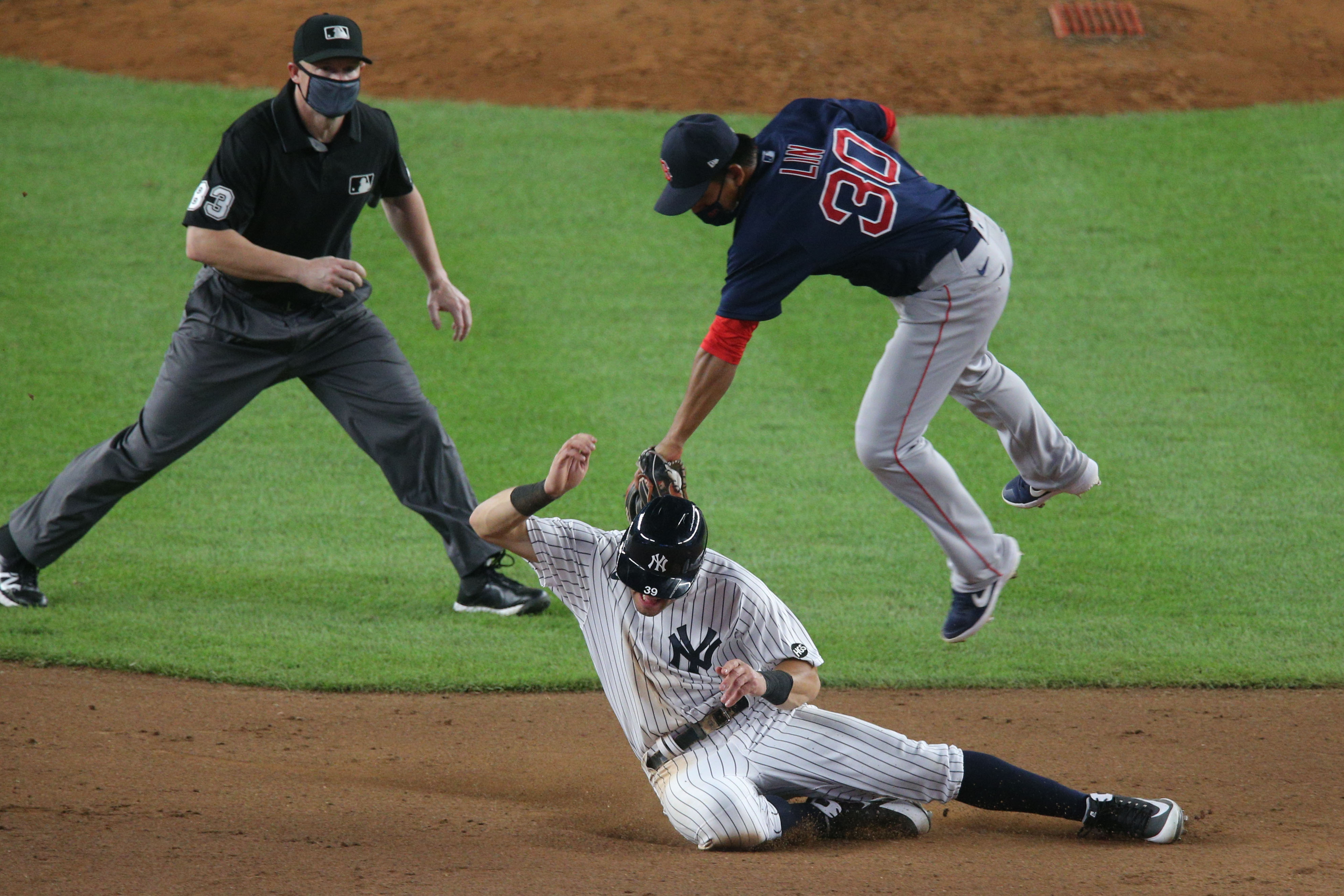 Boston outrighted Lin this past October after he spent the previous eight seasons with the organization; he was originally signed by the club out of Taiwan in 2012. The signing of Lin seems to provide further evidence to the foregone conclusion that Ehire Adrianza - and to a lesser extent Marwin Gonzalez - will not be returning to the Twins after four successful yet unremarkable seasons. Lin topped out as the 16th best prospect in the Red Sox’s system before making his major league debut in 2017. During his time in Boston, he was billed as a defensive Swiss Army knife of sorts, being able to play virtually every position in the field. He appeared at every position save for first base over the first 101 games of his career, though 70% of his time has been spent at either shortstop or second base. However, despite his perceived versatility, Lin’s defensive numbers leave much to be desired across a small sample. https://twitter.com/seehafer_/status/1335257387276570624 According to FanGraphs, Lin grades as a decent second baseman (2.1) and shows some potential at third base (0.9) in terms of career UZR - the equivalent of 14.9 and 21.9 career UZR/150, respectively - but falls flat virtually everywhere else. So, he can do everything, but nothing particularly well; he’s less a Swiss Army knife and more a poor generic brand facsimile. Offensively, Lin has less pop than a popgun. His average exit velocity (85.7 mph) and barrel percentage (2.9%) fall well below the league average (88.3 and 6.4%, respectively) according to Baseball Savant, and he’s only ever launched one home run across 218 plate appearances. https://twitter.com/seehafer_/status/1335258980956954628 Lin has fairly good plate discipline boasting career 9.6% walk and 25.7% chase percentages - both considered well above average - however, he rarely makes opposing pitchers pay for having to throw him strikes. His slow swing velocity and overall lack of power - even extrabase power - doesn’t prevent pitchers from pounding the zone. In essence, the Twins’ signing of Tzu-Wei Lin is likely more of a low-risk, low-reward backup plan than a direct response to the pending departures of Adrianza and Gonzalez. His acquisition should not - and likely will not - prevent them from looking to sign or trade for a versatile defender in the vein of Kike Hernadez or Andrelton Simmons. Signings like that of Lin’s are common occurrences in baseball as, at the very least, they help build the overall depth of a team’s farm system while being able to take an inexpensive flier on a young talent; Lin is only 26-years-old. In all likelihood, Lin will spend the majority of his time with the St. Paul Saints during the 2021 season, though his presence provides an available, if fleeting, stopgap should, say, Jorge Polanco or Luis Arraez suffer an injury and the Twins determine that Travis Blankenhorn and/or Royce Lewis are not quite ready for the big show. MORE FROM TWINS DAILY — Latest Twins coverage from our writers — Recent Twins discussion in our forums — Follow Twins Daily via Twitter, Facebook or email
 -
The Minnesota Timberwolves reportedly re-signed shooting guard Malik Beasley Friday night to a four-year, $60 million dollar deal. It’s a good move for the Wolves, who are looking to obtain relevance for the first time in what seems like an eternity, but what does this have to do with the Twins, exactly?The 24-year-old Beasley was acquired by the Wolves in a February trade and went on to score 20.7 points per game and shoot 42.6% from three in 14 games before the NBA shut down due to the initial COVID-19 outbreak on U.S. shores. According to Michael Scotto, a plugged-in reporter for the website HoopsHype.com, components of the Wolves’ pitch to Beasley Friday night involved custom Vikings and Twins jerseys, a video of his top highlights in Minnesota, and a message from Twins’ key free agent target Nelson Cruz. Twins Daily was able to confirm Scotto's report, though the content of Cruz's message is unknown. Does this mean that Cruz is destined to return to the friendly confines of Target Field? No. But it is interesting that off all the Twins players and coaches who could have pitched Beasley on staying in Minneapolis, Cruz was designated as the best one to do it. Cruz is reportedly waiting on further clarification about the status of the universal DH moving forward and is seeking a multi-year deal in free agency; additionally, while both sides have interest in a reunion, a signing is not expected anytime soon. MORE FROM TWINS DAILY — Latest Twins coverage from our writers — Recent Twins discussion in our forums — Follow Twins Daily via Twitter, Facebook or email Click here to view the article
-
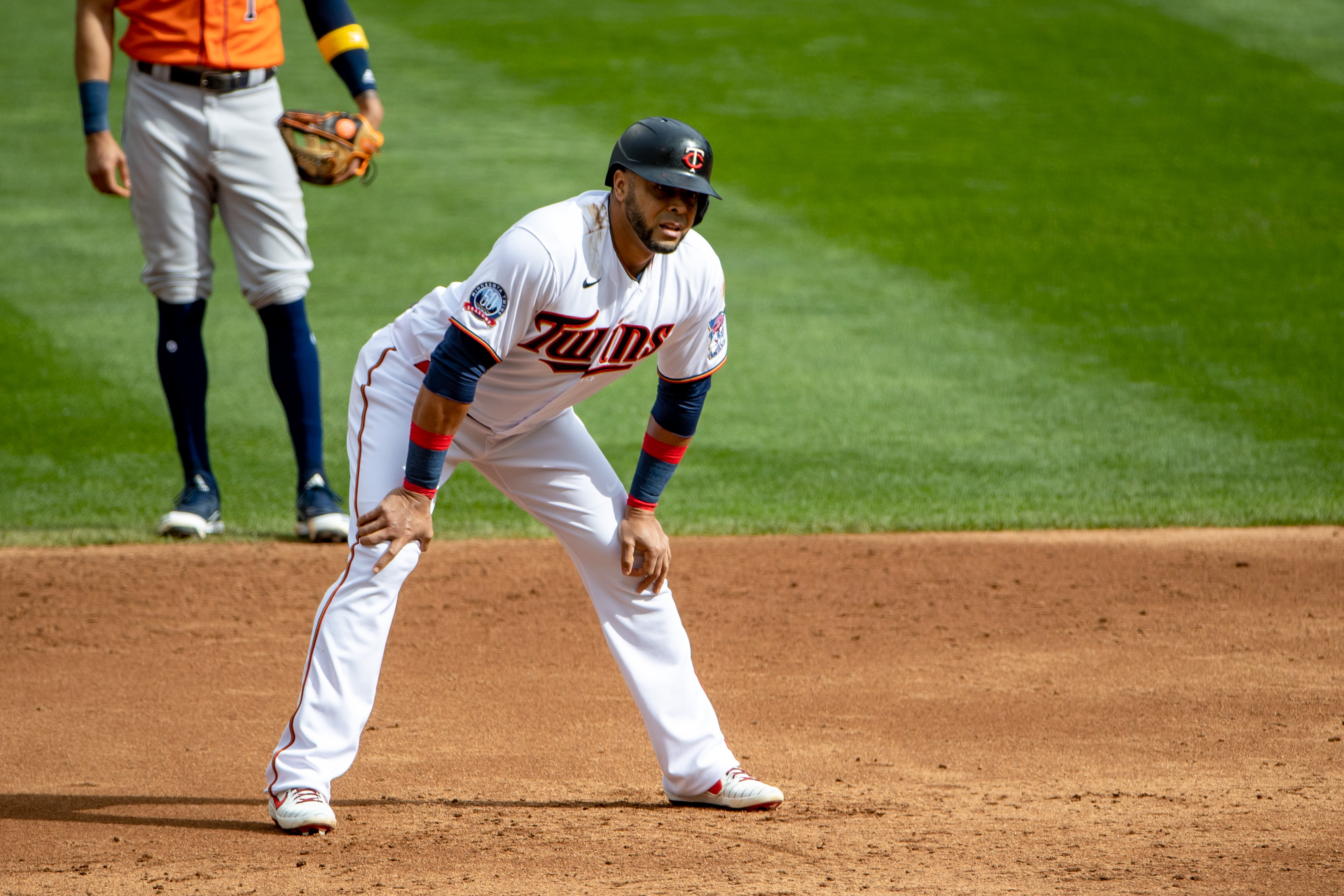 The 24-year-old Beasley was acquired by the Wolves in a February trade and went on to score 20.7 points per game and shoot 42.6% from three in 14 games before the NBA shut down due to the initial COVID-19 outbreak on U.S. shores. According to Michael Scotto, a plugged-in reporter for the website HoopsHype.com, components of the Wolves’ pitch to Beasley Friday night involved custom Vikings and Twins jerseys, a video of his top highlights in Minnesota, and a message from Twins’ key free agent target Nelson Cruz. Twins Daily was able to confirm Scotto's report, though the content of Cruz's message is unknown. Does this mean that Cruz is destined to return to the friendly confines of Target Field? No. But it is interesting that off all the Twins players and coaches who could have pitched Beasley on staying in Minneapolis, Cruz was designated as the best one to do it. Cruz is reportedly waiting on further clarification about the status of the universal DH moving forward and is seeking a multi-year deal in free agency; additionally, while both sides have interest in a reunion, a signing is not expected anytime soon. MORE FROM TWINS DAILY — Latest Twins coverage from our writers — Recent Twins discussion in our forums — Follow Twins Daily via Twitter, Facebook or email
