



Sabir Aden
-
Posts
70 -
Joined
-
Last visited
Recent Profile Visitors
1,882 profile views

Sabir Aden's Achievements






-
 Omg, I wish I could join!
 -
Since June 1, no team’s top three relievers have a lower wOBA than the group of Taylor Rogers, Tyler Duffey and Trevor May. Approaching their first postseason foray since 2010, no bullpen group, save perhaps the Rays, will face more heavy lifting than this trio. The Twins starting pitching has taken significant blows since June 1.In 2015, the Royals pioneered the strategy of five-and-dive starters, and allowed the pen to handle the rest. The merits of relievers now rests in the seventh through ninth innings, and given the Twins recent playoff demons that should bring nightmarish flashbacks. Bullpens are a focal point of postseason success. In the 2017 wildcard game, Ervin Santana was yanked three innings into his start. Luis Severino, the Yankees starter was also removed on a much shorter hook after just 1/3 of an inning with three runs already allowed. It's no safe assumption a starter will go five innings or 100 pitches. Shutdown starters and unhittable closers get all the glory, but the unsung heroes of the past season, such as Josh Hader, are much more valuable than they get credit for. Trevor May has received his fair share of criticism. Saturday night’s display of pure dominance predicated on fastball command would be a welcomed sight in the postseason. More breaking ball usage and less dependence on a flat changeup could perhaps be enough for May. A much smoother finish with his mechanics, and not leaving as many pitches in the whomping zone of hitters have been helpful for Trevor. Since his bad stretch of home runs he has lost all trust in his curve, which could fuel more good fortune. Download attachment: HardHitHeat.png May has had the year of his life in 2019. He had a promising end to his 2018 campaign that saw him flash the truly elite stuff that he flashed as a middling fourth/fifth starter in the dawn of his career. He’s bumped his velocity up considerably, and lately has sliced his pitch assortment, providing a better directive to his mound mindset. Taylor Rogers might be the most underrated pitcher, perhaps even player, in baseball thanks to his above average fastball and frisbee slider. A bullpen absent the invincible Aroldis Chapman fireball, or the radioactive cutter of Kenley Jansen, or the capital C-declared closer, might be an assembly of relief pitchers as effective, or more so, than any other in baseball. If there was one point of criticism for Rogers, I would point to the curveball and slider blending together. But that in no way detracts from the set of weapons that he has, and that the Twins have, that their playoff success could hinge on. Tyler Duffey might be the most remarkable story of the entire season for the Twins. He flamed-out as a starter in 2016 and followed with a pair of enigmatic seasons. At the tipping point of his career, he took on a complete overhaul, reinvention and refinement of his mechanics and approach under the tutelage of Wes Johnson. Duffey was taught sinkers inside and low, during the Rick Anderson, Neil Allen and Garvin Alston regimes. Jace Frederick of the Pioneer Press recently wrote an article that delved into Duffey's progress that included some illuminating quotes. Duffey spoke to how different Wes Johnson's mentality is. “Obviously I had the potential to be good, but it was seeing why I could be, understanding why I could be, and then doing it and repeating was the last piece of that. I think for me, personally, it’s just been trusting the whole plan that’s been set and going with it. “Pitching with conviction is the name of the game. Hitters can tell when you’re not convicted in what you’re doing. I think I’m trusting it, I feel good doing it and the results are speaking for themselves.” “He can be a strikeout guy, and he’s learned that,” Johnson said. “When we started back in spring training, our goal was to strike out more hitters than we ever have. We’re getting there, incrementally. And Tyler is someone you’re seeing make progress really fast.” The intuitive and tailored recipe for success spearheaded with the ongoing trend of elevating, decelerating and spiking. Fastballs up, sliders and curves down and away, and toggling with the velocity of those breakers has paved the way to a 2.35 ERA and a 1.0 WAR during this 2019 run to the postseason. A truly remarkable achievement for a pitcher once on the bubble. For the Twins to succeed in the postseason, a strong back-end of the bullpen must complement a competent starting staff. It could be a feasible plan, given that the trio of Trevor May, Tyler Duffey and Taylor Rogers has arrived and they are here to stay. Click here to view the article
-
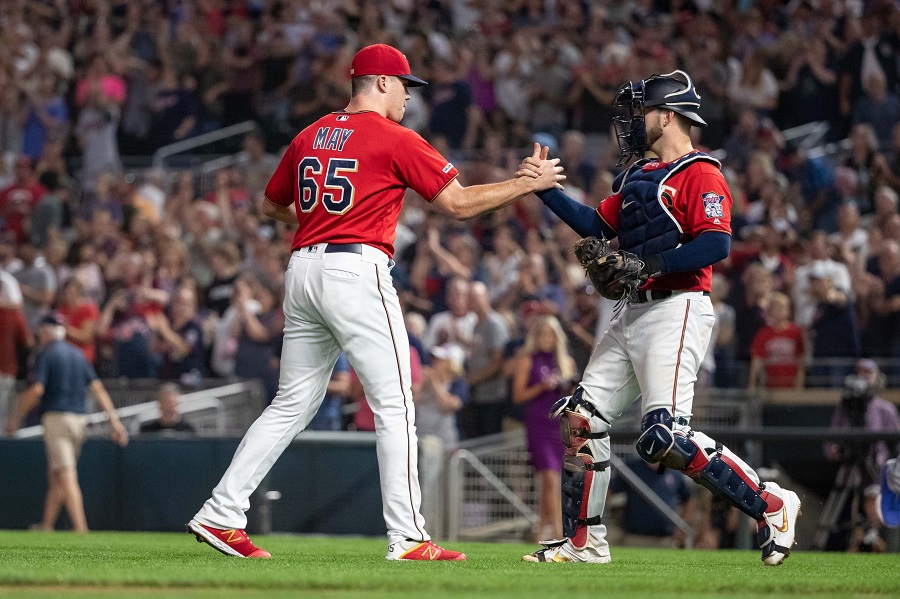 In 2015, the Royals pioneered the strategy of five-and-dive starters, and allowed the pen to handle the rest. The merits of relievers now rests in the seventh through ninth innings, and given the Twins recent playoff demons that should bring nightmarish flashbacks. Bullpens are a focal point of postseason success. In the 2017 wildcard game, Ervin Santana was yanked three innings into his start. Luis Severino, the Yankees starter was also removed on a much shorter hook after just 1/3 of an inning with three runs already allowed. It's no safe assumption a starter will go five innings or 100 pitches. Shutdown starters and unhittable closers get all the glory, but the unsung heroes of the past season, such as Josh Hader, are much more valuable than they get credit for. Trevor May has received his fair share of criticism. Saturday night’s display of pure dominance predicated on fastball command would be a welcomed sight in the postseason. More breaking ball usage and less dependence on a flat changeup could perhaps be enough for May. A much smoother finish with his mechanics, and not leaving as many pitches in the whomping zone of hitters have been helpful for Trevor. Since his bad stretch of home runs he has lost all trust in his curve, which could fuel more good fortune. May has had the year of his life in 2019. He had a promising end to his 2018 campaign that saw him flash the truly elite stuff that he flashed as a middling fourth/fifth starter in the dawn of his career. He’s bumped his velocity up considerably, and lately has sliced his pitch assortment, providing a better directive to his mound mindset. Taylor Rogers might be the most underrated pitcher, perhaps even player, in baseball thanks to his above average fastball and frisbee slider. A bullpen absent the invincible Aroldis Chapman fireball, or the radioactive cutter of Kenley Jansen, or the capital C-declared closer, might be an assembly of relief pitchers as effective, or more so, than any other in baseball. If there was one point of criticism for Rogers, I would point to the curveball and slider blending together. But that in no way detracts from the set of weapons that he has, and that the Twins have, that their playoff success could hinge on. Tyler Duffey might be the most remarkable story of the entire season for the Twins. He flamed-out as a starter in 2016 and followed with a pair of enigmatic seasons. At the tipping point of his career, he took on a complete overhaul, reinvention and refinement of his mechanics and approach under the tutelage of Wes Johnson. Duffey was taught sinkers inside and low, during the Rick Anderson, Neil Allen and Garvin Alston regimes. Jace Frederick of the Pioneer Press recently wrote an article that delved into Duffey's progress that included some illuminating quotes. Duffey spoke to how different Wes Johnson's mentality is. “Obviously I had the potential to be good, but it was seeing why I could be, understanding why I could be, and then doing it and repeating was the last piece of that. I think for me, personally, it’s just been trusting the whole plan that’s been set and going with it. “Pitching with conviction is the name of the game. Hitters can tell when you’re not convicted in what you’re doing. I think I’m trusting it, I feel good doing it and the results are speaking for themselves.” “He can be a strikeout guy, and he’s learned that,” Johnson said. “When we started back in spring training, our goal was to strike out more hitters than we ever have. We’re getting there, incrementally. And Tyler is someone you’re seeing make progress really fast.” The intuitive and tailored recipe for success spearheaded with the ongoing trend of elevating, decelerating and spiking. Fastballs up, sliders and curves down and away, and toggling with the velocity of those breakers has paved the way to a 2.35 ERA and a 1.0 WAR during this 2019 run to the postseason. A truly remarkable achievement for a pitcher once on the bubble. For the Twins to succeed in the postseason, a strong back-end of the bullpen must complement a competent starting staff. It could be a feasible plan, given that the trio of Trevor May, Tyler Duffey and Taylor Rogers has arrived and they are here to stay.
 -
 Sabir Aden reacted to a post in a topic:
Front Page: Suspension Shouldn’t Factor into Potential Pineda Reunion
Sabir Aden reacted to a post in a topic:
Front Page: Suspension Shouldn’t Factor into Potential Pineda Reunion
-
Kevin reacted to a post in a topic:
Front Page: Suspension Shouldn’t Factor into Potential Pineda Reunion
-
glunn reacted to a post in a topic:
Front Page: Suspension Shouldn’t Factor into Potential Pineda Reunion
-
glunn reacted to a post in a topic:
Front Page: Suspension Shouldn’t Factor into Potential Pineda Reunion
-
DocBauer reacted to a post in a topic:
Front Page: Suspension Shouldn’t Factor into Potential Pineda Reunion
-
Riverbrian reacted to a post in a topic:
Front Page: Suspension Shouldn’t Factor into Potential Pineda Reunion
-
nicksaviking reacted to a post in a topic:
Front Page: Suspension Shouldn’t Factor into Potential Pineda Reunion
-
nicksaviking reacted to a post in a topic:
Front Page: Suspension Shouldn’t Factor into Potential Pineda Reunion
-
SwainZag reacted to a post in a topic:
Front Page: Suspension Shouldn’t Factor into Potential Pineda Reunion
-
Tough Criticism. I never in the article said that Pineda’s injury history or PEDs should be specifically ignored in the aggregate, but expecting him to trend upwards and not downwards would and should be a realistic possibility coupled with a low price tag, making him a very realistic option for resigning. There has never been a baseball team to enter the season with 5, and come out with 5 starters with 30+ starts in who knows how long. That’s just reality now. And given three roster spots have come open, the fruits for possibility are endless. I thought exploring this possibility was intriguing and that I’d get mixed bag reactions. I assumed that readers would enter this with open, impartial view and not be vindictive and resentful. Obviously I was wrong. I apologize if my content wasn’t up to your standards. I’ll try harder next time.
-
I should premise before you guys blast me, I was trying to lobby for why Pineda should be considered as much a candidate as any other free agent pitcher. That was the purpose Not to rail against the ramifications of PEDs to be accepted as another offset of the game.
-
Michael Pineda's current contract with the Twins will end with him under suspension. So his comeback season was tainted and this is the end of the story for him in Minnesota, right? Wrong. He's among the best free agent starting pitchers and this will be a Twins team thirsty for rotation help.We all have that perception of what PEDs looks like. Artificial, manufactured bulk. Insatiable supplement drive. Drug-hungry monsters covered with knots and curls of the synthetic side-effects of the phony, lifestyle they can only bootleg themselves into believing. Above all, they’re cheaters. We all have dismay and disdain for cheaters, and its palpable. The inequity of those that load themselves with anabolics over those that play natural is stigmatic enough, but the impression that those cheaters are head and shoulders above competitors while playing with an abnormal, unfair and skewed advantage, especially when the PEDS are wildly condemned, is truly preposterous. Was Michael Pineda even using PEDs? All we know he has been suspended for testing positive for a drug identified as a masking agent, but that fact teams feel it's necessary to censor and exempt those who "juiced" before entering the free agent market doesn’t make sense. Since 2010 there have been 26 players of notable significance to be suspended by the MLB for PEDs juicing. Download attachment: WARimage.png And as you can, this graph pretty much debunk the myth that players with juicing ‘enhanced’ their performance by yielded results by aggregate. The Twins face crucial decisions in regard to all three of their pending free agent starting pitchers. As the gap between legitimate starters becomes wider, it’s especially crucial for teams to equip themselves with effective starters. With his climbing velocity and swinging strike percentages, I would especially encourage the Twins to approach Pineda with an extension. This may be more of the fact that Jake Odorizzi and Kyle Gibson pose more concerns. History has shown that after Tommy John surgery, velocity actually increases. Pineda was also showing impressive command. Of any free agent pitcher to have thrown 1,000 pitches this season, Michael Pineda leads every single one of them (including Gerritt Cole) in Quality Of Pitch Average. QOP is a patent-pending proprietary regression model that factors in mph, location, and movement (vertical break, horizontal break, breaking distance and rise). Not that Gerritt Cole wouldn’t be my dream acquisition, but location and movement gives a better testament to the longevity and success of a pitcher. This coupled with rising velocity, an insanely good knack for hitting the strike zone (third of any free agent pitcher) and three pitches trending above average (changeup, fastball and slider) make Pineda an even more appealing candidate. Reasons why the Twins shouldn't consider a reunion with Pineda are few and far between. They more than likely lie in the composition of your own values, ethics and morals than the actual product. Nelson Cruz is a prime example of why you shouldn’t allow a failed PED test to influence your psyche, because Cruz ended up posting a 3.6 WAR season after his suspension. The even more important thing I want to bring to light is the reasoning behind the PEDs usage. Below is Pineda's statement after the suspension was announced. “I mistakenly took a medication that was given to me by a close acquaintance, who obtained it over-the-counter and assured me it would safely help me manage my weight. I ingested a a few of these pills without the consent of the Twins’ training staff. Testing revealed trace elements of a substance called Hydrochloride, which is a banned diuretic under baseball’s testing program.” Take it for what it’s worth, but the fact that he felt it was necessary for him to regulate his weight is a deeply ingrained perspective, grounded in and molded by the stereotypes we insist players must adhere to. How often do we as fans judge players with striking weight or size problems and reduce them with slander saying they can't perform? I consider it bigotry that someone with weight issues should be slandered because of his weight, and anything below excellent performance be pointed to as a corollary aftereffect of that dysfunction. So would it be fair to say that the suspension may have been the net result of our preconceived notions that drove him to search for weight recovery? Let me know what you think in the comments. Please follow me for more discussion @Sabir_Aden. Click here to view the article
-
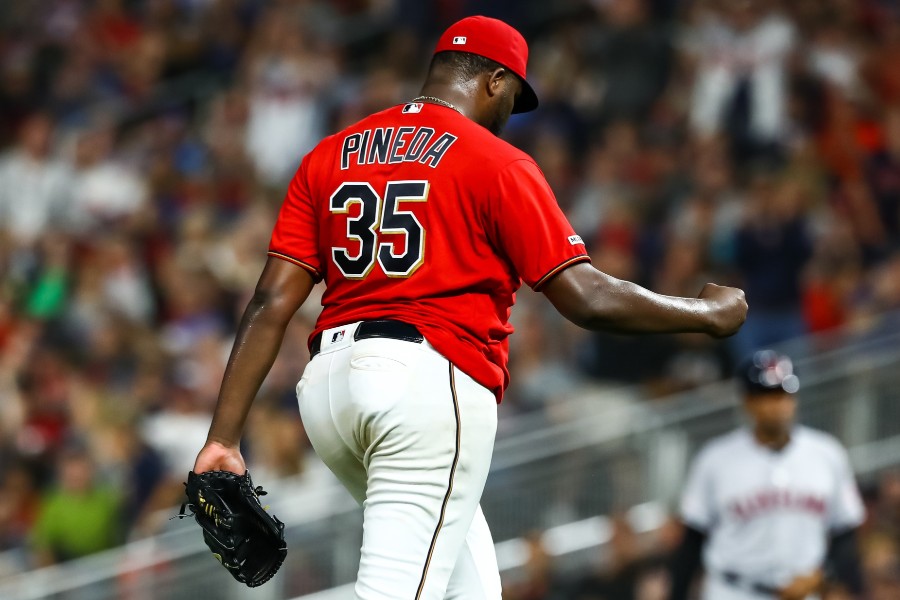 We all have that perception of what PEDs looks like. Artificial, manufactured bulk. Insatiable supplement drive. Drug-hungry monsters covered with knots and curls of the synthetic side-effects of the phony, lifestyle they can only bootleg themselves into believing. Above all, they’re cheaters. We all have dismay and disdain for cheaters, and its palpable. The inequity of those that load themselves with anabolics over those that play natural is stigmatic enough, but the impression that those cheaters are head and shoulders above competitors while playing with an abnormal, unfair and skewed advantage, especially when the PEDS are wildly condemned, is truly preposterous. Was Michael Pineda even using PEDs? All we know he has been suspended for testing positive for a drug identified as a masking agent, but that fact teams feel it's necessary to censor and exempt those who "juiced" before entering the free agent market doesn’t make sense. Since 2010 there have been 26 players of notable significance to be suspended by the MLB for PEDs juicing. And as you can, this graph pretty much debunk the myth that players with juicing ‘enhanced’ their performance by yielded results by aggregate. The Twins face crucial decisions in regard to all three of their pending free agent starting pitchers. As the gap between legitimate starters becomes wider, it’s especially crucial for teams to equip themselves with effective starters. With his climbing velocity and swinging strike percentages, I would especially encourage the Twins to approach Pineda with an extension. This may be more of the fact that Jake Odorizzi and Kyle Gibson pose more concerns. History has shown that after Tommy John surgery, velocity actually increases. Pineda was also showing impressive command. Of any free agent pitcher to have thrown 1,000 pitches this season, Michael Pineda leads every single one of them (including Gerritt Cole) in Quality Of Pitch Average. QOP is a patent-pending proprietary regression model that factors in mph, location, and movement (vertical break, horizontal break, breaking distance and rise). Not that Gerritt Cole wouldn’t be my dream acquisition, but location and movement gives a better testament to the longevity and success of a pitcher. This coupled with rising velocity, an insanely good knack for hitting the strike zone (third of any free agent pitcher) and three pitches trending above average (changeup, fastball and slider) make Pineda an even more appealing candidate. Reasons why the Twins shouldn't consider a reunion with Pineda are few and far between. They more than likely lie in the composition of your own values, ethics and morals than the actual product. Nelson Cruz is a prime example of why you shouldn’t allow a failed PED test to influence your psyche, because Cruz ended up posting a 3.6 WAR season after his suspension. The even more important thing I want to bring to light is the reasoning behind the PEDs usage. Below is Pineda's statement after the suspension was announced. “I mistakenly took a medication that was given to me by a close acquaintance, who obtained it over-the-counter and assured me it would safely help me manage my weight. I ingested a a few of these pills without the consent of the Twins’ training staff. Testing revealed trace elements of a substance called Hydrochloride, which is a banned diuretic under baseball’s testing program.” Take it for what it’s worth, but the fact that he felt it was necessary for him to regulate his weight is a deeply ingrained perspective, grounded in and molded by the stereotypes we insist players must adhere to. How often do we as fans judge players with striking weight or size problems and reduce them with slander saying they can't perform? I consider it bigotry that someone with weight issues should be slandered because of his weight, and anything below excellent performance be pointed to as a corollary aftereffect of that dysfunction. So would it be fair to say that the suspension may have been the net result of our preconceived notions that drove him to search for weight recovery? Let me know what you think in the comments. Please follow me for more discussion @Sabir_Aden.
 -
ashbury reacted to a post in a topic:
Front Page: Give Us All Your Eddie Rosario Throw Mashups, NOW.
-
Usually I don’t like Dick Bremer calling twins games, but that was my favorite call of his.
-
sethmoko reacted to a comment on a blog entry:
Jake Odorizzi's Pitch Distribution
-
Really good summation!
-
Sabir Aden reacted to a blog entry:
Jake Odorizzi's Pitch Distribution
-
The Twins bullpen has been among the best in the entire league. Still, many Twins fans don’t seem to like the team’s chances against the American League’s powerhouses in the postseason. With the inevitable arrival of the most-hyped Twins pitching prospect in the last decade, however, there’s an argument to be made that the depth of the Twins bullpen matches up with anybody.Since the All-Star break, the Twins have baseball’s best SIERRA (a better or more comprehensive branch of FIP), and K-BB% a very good indicator of sustainably- sterling pitching, even while posting baseball’s highest zone per pitch%. We expected Wes Johnson to initiate some velocity increases, but he’s also helped a few relievers unleash some more bite on their breaking pitches. Download attachment: RogersDuffeyMay.png Velocity has risen, the sharpness of break along with the tunneling of those pitches in relation to fastball location has improved, and in turn that’s led to more strikeouts and weaker contact. Tyler Duffey is an interesting experiment, and they’ve built a rapport with using the fastball as a catalyst to set up the wipeout slider, a new pitch he believes is just a harder thrown version of his former knucklecurve. With improved control, Trevor May has been an appealing seventh-inning guy to watch. Taylor Rogers, once was a generic LOOGY, is now perhaps the most impactful left-handed reliever in baseball excluding Felipe Vazquez. A 1.9 WAR is absolutely insane! Do you remember the old Rogers, Duffey, and May? They all relied on softer secondary stuff to get away with the weaker fastballs they had previously. Now armed and loaded with fastball velocity, they still haven’t ventured too far (apart from May) from their old plan of attack. What’s important to note is the current assembly of Twins pitchers is perfectly able at proving capable in the postseason. In Extra Innings, a book by Baseball Prospectus, Ben Lindbergh advocated for relievers to be picked at the margins or be groomed through the system once failing as starting pitchers. It’s an interesting proposal. Don’t ever buy a reliever because he'll often turn out to be a poor investment. Instead, build your bullpen with roster casualties and scuffling relievers that good teams feel they can’t wait to get better. Download attachment: FA contract WAR.png The Twins haven’t been the most hardcore adherents to this system of thinking. They jettisoned Nick Anderson, Nick Burdi, JT Chargois and others for guys that may or may not have been past their primes on the free-agent market. That Addison Reed, Matt Belisle, Dillon Gee and Craig Breslow were all acquired under the Falvine regime, might be the result of fan pressure than actual thorough analysis on the makings of on-the-margin acquisitions. Guys like Tanner Rainey, Nick Anderson, Brendan Brennan, Austin Adams and Ty Buttrey were all traded in low-profile deals and turned out to be dynamic relievers. The Twins found innovative ways to hire intuitive and introspective thinkers to take on these projects in Duffey, May, Rogers and others. This bullpen is stacked with assorted gadgets and analytical fireman. So here’s my postseason bullpen predictions…. Multi Inning Firemen; Brusdar Graterol (RHP) / Taylor Rogers (LHP) Set Up; Sam Dyson (RHP) / Trevor May (RHP) Situational; Tyler Duffey (RHP) / Trevor Hildenberger (RHP) / Sergio Romo (RHP) Swiss Army Knife; 1 OF EITHER Martin Perez (LHP) / Zack Littell (RHP) Not included on the postseason roster: Randy Dobnak (RHP), Sean Poppen (RHP), Cody Stashak (RHP), Lewis Thorpe (LHP), Ryan Harper (RHP), Devin Smetlzer (LHP). Click here to view the article
- 8 replies
-
- 3
-
-
- taylor rogers
- trevor may
- (and 3 more)
-
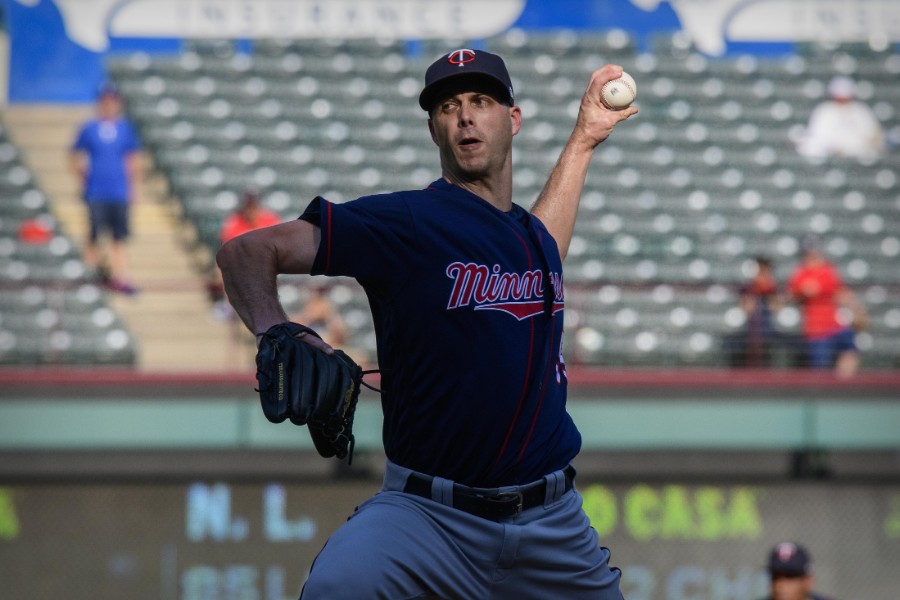 Since the All-Star break, the Twins have baseball’s best SIERRA (a better or more comprehensive branch of FIP), and K-BB% a very good indicator of sustainably- sterling pitching, even while posting baseball’s highest zone per pitch%. We expected Wes Johnson to initiate some velocity increases, but he’s also helped a few relievers unleash some more bite on their breaking pitches. Velocity has risen, the sharpness of break along with the tunneling of those pitches in relation to fastball location has improved, and in turn that’s led to more strikeouts and weaker contact. Tyler Duffey is an interesting experiment, and they’ve built a rapport with using the fastball as a catalyst to set up the wipeout slider, a new pitch he believes is just a harder thrown version of his former knucklecurve. With improved control, Trevor May has been an appealing seventh-inning guy to watch. Taylor Rogers, once was a generic LOOGY, is now perhaps the most impactful left-handed reliever in baseball excluding Felipe Vazquez. A 1.9 WAR is absolutely insane! Do you remember the old Rogers, Duffey, and May? They all relied on softer secondary stuff to get away with the weaker fastballs they had previously. Now armed and loaded with fastball velocity, they still haven’t ventured too far (apart from May) from their old plan of attack. What’s important to note is the current assembly of Twins pitchers is perfectly able at proving capable in the postseason. In Extra Innings, a book by Baseball Prospectus, Ben Lindbergh advocated for relievers to be picked at the margins or be groomed through the system once failing as starting pitchers. It’s an interesting proposal. Don’t ever buy a reliever because he'll often turn out to be a poor investment. Instead, build your bullpen with roster casualties and scuffling relievers that good teams feel they can’t wait to get better. The Twins haven’t been the most hardcore adherents to this system of thinking. They jettisoned Nick Anderson, Nick Burdi, JT Chargois and others for guys that may or may not have been past their primes on the free-agent market. That Addison Reed, Matt Belisle, Dillon Gee and Craig Breslow were all acquired under the Falvine regime, might be the result of fan pressure than actual thorough analysis on the makings of on-the-margin acquisitions. Guys like Tanner Rainey, Nick Anderson, Brendan Brennan, Austin Adams and Ty Buttrey were all traded in low-profile deals and turned out to be dynamic relievers. The Twins found innovative ways to hire intuitive and introspective thinkers to take on these projects in Duffey, May, Rogers and others. This bullpen is stacked with assorted gadgets and analytical fireman. So here’s my postseason bullpen predictions…. Multi Inning Firemen; Brusdar Graterol (RHP) / Taylor Rogers (LHP) Set Up; Sam Dyson (RHP) / Trevor May (RHP) Situational; Tyler Duffey (RHP) / Trevor Hildenberger (RHP) / Sergio Romo (RHP) Swiss Army Knife; 1 OF EITHER Martin Perez (LHP) / Zack Littell (RHP) Not included on the postseason roster: Randy Dobnak (RHP), Sean Poppen (RHP), Cody Stashak (RHP), Lewis Thorpe (LHP), Ryan Harper (RHP), Devin Smetlzer (LHP).
 -
Sabir Aden reacted to a comment on a blog entry:
I think I found out what's wrong with Jose Berrios
-
I looked into the numbers, and his 4 seam between his stretch and windup is 0.1 mph off, and two seam is 0.4 mph off, so I think we could definitively strike that as inconclusive, or at least inconsequential for the time being given that the numbers correlate to his career marks. It’s certainly a intriguing observation, and in theory you’d believe that it did (stretch would zap velo). But it’s actaully the converse of that, where pitcher velocities sometimes go up, or stay saddled. I guess Parker would have a good rebuttal, but you’d have to ask him.
-
NO thank you for reading.
-
Sabir Aden reacted to a post in a topic:
Front Page: I Think I Found Out What’s Wrong With Jose Berrios
-
Sabir Aden reacted to a post in a topic:
Front Page: I Think I Found Out What’s Wrong With Jose Berrios
-
Sabir Aden reacted to a post in a topic:
Front Page: I Think I Found Out What’s Wrong With Jose Berrios
-
Yeah, Jose had some abnormally weird release points pockets in his chart, which may signal there is a change in something like maybe grip, or overworking the pronation of his pitches. https://twitter.com/Sabir_Aden/status/1166213643496841216 You can see how sporadic they are from start to start, and you have to imagine not throwing from the same window can’t really be a positive factor, for a guy whose had trouble replicating his delivery in his career. I looked into the release point pockets when I was writing this, I think I asked one of the driveline guys in the article about overpronating that changeup and I assumed that overpronation would lead to more spin which would validate my hypothesis that he’s overpronating and lowering his arm slot, and they said you can’t really “add” spin to your pitches. It’s more of an innate talent you get. I recently followed up with one of them, and they said…. “Not sure if this is the case with Berrios but we do see a lot when an athlete is trying to add or improve a pitch that requires the spin axis to shift they may alter mechanics slightly or more so arm slot slightly to get the desired axis shift as opposed to adjusting how the ball comes out of the hand or wrist orientation into and at release.” When we talk about extension, so his landing spot on the rubber I think that’s even more noticeable. We talk about this extension then leading to perceived velocity, and lately his extension has been down, this is just another inducing instrument to lowering his velocity (like you said, which is very essential to him). You’d think it’s very weird. He’s been pitching from a 5.5ft to 7.3ft extension domain span all season long. But guys like Verlander and Cole who’ve had their fair share of success use the same 2ft to 3ft window when they pitch, so I’d probably cross that off. Here below is Jose’s changeup from 1st half to 2nd Half (white is 2nd, blue and red is 1st) and you can see the noticeable differences you alluded to. P.S Thanks for the nice complement. You’ve been the only twins writer that I’ve known that constantly pursues what the twins are trying to teach, and not the on-field product over the years. I really tried to replicate my work to be as clean and airtight as yours so thanks. Means a lot Oh yeah and btw you should follow me
-
“Baseball is a relative sport.” By nature we often remember the really good or really bad things, and not the okay or decent things that someone does. I bet you can vividly remember the last time you won an award, but perhaps not the last time you went to the grocery store, or who your 10th grade history teacher was. It’s a core principle to how memories are formed. Those that stand out are often fueled by the emotional context the situation derives from.Say me for instance, I remember when Adrian Peterson nearly clipped the 2,100 yards or when Jason Zucker beat the Blackhawks in 2013, and conversely when Blair Walsh's epic failure from 27. These were momentous occasions to me personally, and culminated milestones of jubilee and heartbreak with lots and lots of backstory. Why is that such an important thing to consider when discussing the plight to Jose Berrios? It’s these disaster moments to fans in a season, where we can get way over our heads and make truly outrageous statements, and during the offseason in retrospect be like -- ”Did I actually say that?” He began the season on a pristine pinnacle. Logistically, Jose was exerting his mechanical best in how he was driving through his hips along with his delivery, and keeping his hands back in sync with driving those hips, which was a bad tendency he would commit in his youth. You can in the video how the different the glove placement is imperative to gaining that two to three ticks in velocity to the plate. In hardcore pitching circles they call this the kinetic chain, where the components of one’s mechanics are at an equilibrium, where the joints are in a symphonic harmony, making it all a simplistic, clean, and efficiently repeatable delivery. And Berrios looked really good. He proved with the results to bear, and added a new wrinkle into that much anticipated pitch mix, the changeup. In that 2019 opening unveiling we saw the changeup being fruitfully showcased 12.5% of the time, more than his total the previous season (9.1%) and the cumulative average during his very short career (10.7%). He wasn’t deliberately delaying his arm speed, and everything in that start was sublime. Pristine. You could say Berrios was perhaps an “ACE” in that start had things not turned sideways and pear-shaped just a handful of months later. Now fast-forward to today. Fresh (or perhaps rotten) from that second consecutive All-Star appearance, Jose Berrios is showcasing his most agonizing and problematic struggle points of his career. He’s been hittable, hit very hard with declining velocity, and to boot; seemingly single-handedly taking baseball’s third-best offense (in wOBA and wRC+; .348 and 115 respectively) out of critically important games. What’s even more frightening? That the strength of the opposition over the past four games has sported a 91 wRC+, with 100 being league average. He’s struggling mightily against bad opponents, compounded with the fact that they shouldn’t be hitting him this hard, period. So far, we as all separate pitching expert entities haven’t found the culprit to what hindering subset of pitching statistics is responsible for pruning our Johan of today, devoid of the attributes that made us reminisce of Johan, the great killer of men, sheep, and those brave enough to step into the battered boxes of right and left. But jokes aside, what’s really been the inhibitor to Jose’s velocity and coincidentally his release point since his dynamic beginning? Let’s zoom into one of his particular starts, this one against the Indians on June 6, as the start to our inquiry. In that one start, Berrios didn’t feature the curveball like we have become expect. He would throw a whopping 25.4% changeups, nearly double his career total and triple his season percentage to that point. But something interesting of note lied in that changeup subgrouping. In that start he would throw 27 changeups of his entire 107 pitches in those six strong innings. Only one ball was hit harder than 85 mph, and here’s a mapping of those pitch velocities with their extensions metrics. Notice anything weird? For a guy throwing from an average release point of 6.5 ft away from the pitching rubber, the extensions point were remarkably scattered and the changeup release points also dropped, along with the average pitch velocity. Increasing extension would typically incite would velocity, (Josh Hader’s extension would come in mind) and it’s a very peculiar trend into Jose’s portfolio. If we critically analyze Jose’s pitching approach further, we wouldn't have anything particularly striking about his movements. Berrios has a unique windup, something of another other beast, where he utilizes his windup as a vehicle to increase the movement and velocity of his pitches. Whereas others use their windup as a balancing point or to find their zen, Berrios uses his windup like a stress ball where he curled himself into a ball. He breaks out of the ball in smooth rhythm to swing his front side, lurch the back end and launch the pitch. Looking at the progress he’s made since his debut, where his arms and legs need a lot of refinements, he’s made noticeable and encouraging strides. When he was young he would treat his arms and legs as separate mechanism, and he now manages to keep his core in rhythm and not out of motion with his elbows, knees, and front striding foot. So nothing abundantly different with the windup, and not that much difference in the general technique with his hand placement, etc. Berrios, technically speaking hasn't changed anything with the conducting of his delivery, until Glen Perkins spoke about it during Jose’s latest start. I’m paraphrasing what Roy Smalley said during the game, but here’s what he said: “This is what Glen Perkins was talking about in the pregame shows, where (Jose) coils up and then has to uncoil and gets way spun around and his arm either lags or he’s gotta really rush to catch up, and that’s what happens when you spike that curveball ... And just you’ve opened up way to quickly and your arm just whips around.” “They are trying to get (Jose) to alter his mechanics a little bit, but he’s very rotational and he gets really turned around and can’t get his arm back through, so when his hips come way around behind him he coils up, and his arm has to speed up to catch up. That’s why you see so many fastballs up and into lefthanders, and spiked breaking balls.” You can see that his windup is almost, where he isn’t riding with the energy generated by his windup as much and through that back heel, that the great Parker Hageman discussed during the offseason as a foundation through building and sustaining velocity. We can see the locked back leg not pulling through, anchored and dragging his weight in a counterproductive direction. It’s slinging and stopping, preventing him from riding through that back leg and pulling in his follow through. It’s a sign of stress and unease to rip through, as young pitching are taught today to rip through with elastic bands at data driven developmental programs. You can see the lazy back leg grappling with the front side and the glove holstered to his side, almost as if he’s more location conscious then ripping the back leg through for the additional ticks of velocity he needs to be at his best. This looks more like a fatigue and midseason swoon related dilemma than a mechanics dead-gone disaster, but the velocity problems and mechanical technique are very much redeemable. Additionally I wanted to dive into more of what’s causing the lower arm slot, and perhaps an aggravator of the lower velocity readings and the dropping of the arm slots. This graphic below shows the release points of all of Jose’s pitches horizontally since the beginning of the season. I postulated the changeup he’s been throwing has played role in why the release point has waned lately, so I consulted with two acute baseball minds to at least minimally come to a conclusion. Through some research and conspiracy thinking, changeups might play a part in cannibalizing fastball velocity. Now take with a grain of salt, but changeup reduces fastball velocity for youth pitchers, and Paul Nyman theorized that an intentionally manipulated change for sink and drop would lead to fastball velocity dropping. Coupled with the fact that Jose played with the changeup in the Cleveland start I spoke of, and that his deviation of his velocities are so wide, maybe the changeup is playing with his repertoire and his mechanics. It’s certainly cause for concern given that the more he’s thrown his changeup the more his velocity as dropped. I was curious about the changeup possibly curtailing Jose's potential, so I talked with two sources: a Manager of Mechanical Analysis at Driveline Baseball, who also happens to be a former pitching coach, and Michael O'Neal, a former professional pitcher who is now a trainer at Driveline and assistant coach at Southern Illinois University Edwardsville. ME: Hey Guys. I was recently diving into a pitcher (Jose Berrios), and just wanted to ask that if ... say a right-hander where to increasingly lower their arm slot, which just so happened to coincide with an increase in spin rate and decrease in velocity, would you say an increase to using a changeup could be a detriment of this? I look at some of the side effects of short-arming a changeup (like slinging from the side) and couldn’t find anything, but I did however find that Jose’s changeup spin rate has increased. Do you think that a lowering of the arm slot on a changeup and an increase in spin could lead to decreased velocity? Or perhaps the lowering of arm slot could increase spin in general? Michael (Former MLB Player); It depends on the guy, but lowering the arm slot would help to create more sidespin on a changeup, which also would increase horizontal movement on the pitch. Jose’s arm slot might also be more natural for him which could be an increase in spin rate. (Driveline Pitching Analysis Expert); Unfortunately you can’t (increase spin on arm slot) when it comes to increasing spin rate. Raw spin rate that is, there is not anything definitive that has been found to increase it outside of the use of foreign substance. Michael (Former MLB Player); Me personally, I have the same tendency when I try to “get on top” of my fastball. I laterally trunk-tilt more causing a higher arm slot. This also negatively impacts my spin rate. When I stay taller and don’t tilt so much (unlike what Jose has been doing), my spin rate increases and also causes my arm slot/release point to be lower on the Z axis. (Driveline Pitching Analysis Expert); Now increasing true spin is different. Pitchers increase true spin all the time by improving spin efficiency. In terms of a change up you ideally and in most cases want to kill or decrease spin. Most changeups, whether it is a circle change or a split type change are trying to kill total spin, kill lift on the pitch to create separation from the heater and kill velocity. I would have to look at Berrios’ pitch metrics to really tell you anything in regards to arm slot changes or spin total changes. Traditionally a change up is predominantly side spin. The spin direction or spin axis for a righty usually needs to shift in the direction of 3:00. Sometimes pitchers won’t have a good feel for how to do that so they will manipulate theirs arm action or arm slot to try to get there instead of pronating the pitch more to create that side spin. In the case of Berrios and knowing how exceptionally good Wes Johnson is with utilizing Trackman data, I’m sure Wes has him trending in the correct direction at the very least. Michael (Former MLB Player); (It) Depends. A laggy arm could be possible, BUT better changeups have a fast arm speed. Also though, his changeup could play close to the 2 seam fastball, so hows his usage on the 2 seam changed? So that was the end to this conversation and the article. I hope you enjoyed. As far as what I would expect the Twins to do, we saw earlier in the season when Michael Pineda’s velocity was hitting a rough patch so they placed on the DL. I could conceivably see Rocco buying some time by giving the duo of Lewis Thorpe and Devin Smeltzer a start against the lowly White Sox and Tiger on this coming road trip, and perhaps recharge the rotation (Gibson and Odorizzi velocity has been down lately). Wes Johnson in the splendid piece by Dan Hayes of the Athletic during a makeup interview of his sudden unavailability, said something of significance. “We’re getting him back on his heel and trying to get him to rotate, get his chest velocity back up,” Johnson said. “It’s not just to get José to survive. We want more of the start against Chicago that he had when he was 94 mph and was dominant. Or even you go to the Miami start when his velocity was down a little bit. The pitch execution was through the roof for seven innings. “Our focus isn’t to find a way just to get this guy through. We have to try to get him better every time he goes out.” Which again corroborates with what Wes has done with biomechanics velocity induction. If you want to read more, I would encourage you to read this. Please Follow me @Sabir Click here to view the article

