


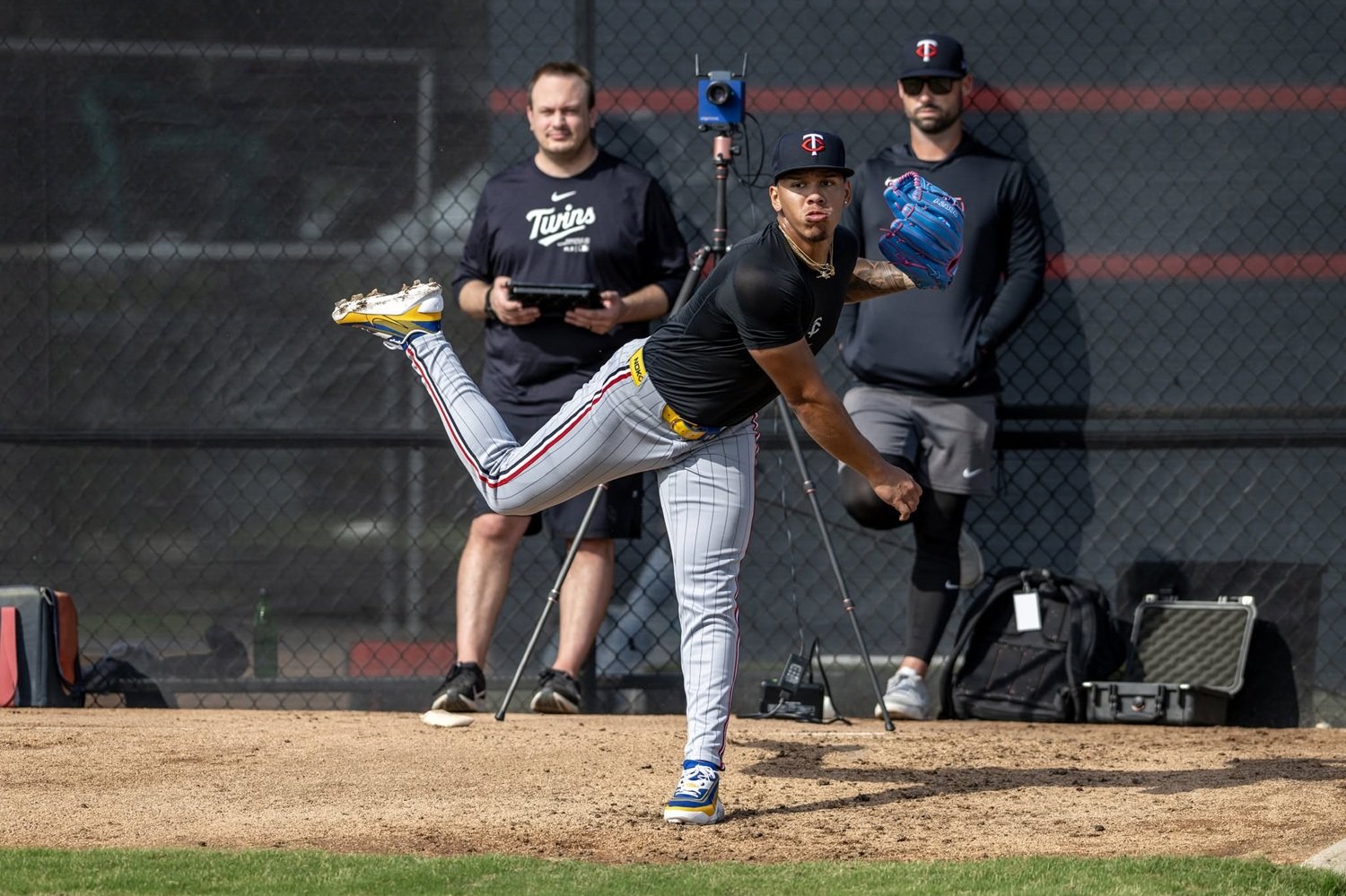
Twins Video
Prospect development rarely follows a straight line. Some pitchers move quickly through the minor leagues, while others encounter injuries, command issues, and setbacks that threaten to derail their careers. Jose Olivares has experienced plenty of the latter.
Once viewed as one of the Minnesota Twins' top 40 prospects, Olivares has seen his stock decline after several inconsistent seasons. His 2026 campaign was particularly difficult, as control problems and offseason elbow surgery limited his effectiveness at Double-A.
Still, there are reasons not to give up on the 23-year-old right-hander. He spent nearly the entire 2026 season at Double-A and possesses a fastball that can reach the upper 90s, along with secondary pitches capable of generating swings and misses. The question is whether he can rediscover his command and turn his raw ability into consistent results.
An Intriguing Arm From Venezuela
The Twins signed Olivares out of Venezuela for a $100,000 bonus in January 2021 during the delayed 2020-21 international signing period. He began his professional career in the Dominican Summer League in 2022 before moving to the Florida Complex League in 2023.
His first exposure to full-season baseball proved challenging, as he posted a 6.22 ERA and a 1.47 WHIP in 2023. The following season offered more encouragement. After returning to Fort Myers, Olivares recorded a 3.33 ERA and a 1.33 WHIP despite dealing with a shoulder issue and a hip impingement.
At his best, Olivares offers an intriguing combination of size, velocity, and pitch movement. The 6-foot-1 right-hander saw his average fastball velocity climb from approximately 93 mph early in his professional career to 95 mph, with the pitch reaching 97 mph. Its riding action and arm-side run give hitters a difficult combination when he locates it effectively.
His secondary arsenal includes a gyro-style slider around 87 mph, a curveball around 80 mph, and a changeup in the 86-87 mph range. The slider has shown improved depth and swing-and-miss potential, while the curveball and changeup provide additional options.
That four-pitch mix helped elevate Olivares among Minnesota's prospects. However, possessing a deep arsenal and consistently executing it against professional hitters are two very different things.
Progress at High-A, Followed by More Questions
Olivares entered 2025 with some momentum after his improved performance in Fort Myers. He spent the season at High-A Cedar Rapids, finishing with a 4.11 ERA across 96 1/3 innings. He recorded 111 strikeouts against 59 walks, demonstrating that his stuff could still generate missed bats against more experienced hitters.
His 27.6 K% was encouraging, but his 14.7 BB% illustrated the other side of his profile. Olivares could overpower hitters at times, yet he struggled to get ahead in counts and finish at-bats efficiently. He also had difficulty consistently landing his curveball and changeup in the strike zone.
The Twins faced a roster decision after the season. Olivares was not added to Minnesota's 40-man roster and went unselected in the Rule 5 Draft. That outcome reflected the uncertainty surrounding his development, but it allowed him to continue working within the organization without another club committing a roster spot to him.
Elbow Surgery Complicates His 2026 Season
Olivares faced another obstacle heading into 2026. He underwent surgery in early October 2025 to remove a bone spur from his elbow, forcing him to begin the following season on the minor-league injured list.
When he returned, his results at Double-A Wichita were difficult to overlook. Olivares posted a 7.41 ERA and a 2.02 WHIP across 37 2/3 innings, striking out 29 hitters while issuing 30 walks. Opponents collected 46 hits against him.
The numbers represented a significant step backward. His strikeout-to-walk ratio was particularly concerning, as he nearly matched his strikeout total with free passes. A pitcher with his velocity and secondary offerings should have opportunities to miss bats, but those advantages become less meaningful when he struggles to consistently locate the ball.
The surgery is an important part of the evaluation, but it cannot explain away every issue. Olivares needs to prove that he can throw strikes and execute his pitches against advanced hitters.
There is still value in the experience he gained at Double-A. He reached that level at 23 and now has a clearer picture of what he must improve. His next opportunity will be about demonstrating that his command issues are correctable rather than permanent limitations.
Should the Twins Consider a Bullpen Role?
Minnesota eventually must determine whether Olivares should remain a starter or transition to the bullpen. Both options have merit.
Keeping him in the rotation would give him more opportunities to develop his four-pitch mix, improve his command, and build the durability needed for a major-league workload. Given his injury history, another healthy offseason and a full spring training could help him regain consistency.
A move to the bullpen would offer a different path. Olivares could focus on his fastball and slider while throwing at maximum effort over shorter outings. His mid-90s velocity and swing-and-miss potential might play better in relief, where he would not need to navigate a lineup multiple times.
However, a bullpen conversion would not automatically solve his biggest problem. A pitcher who struggles to locate the strike zone as a starter can carry those same issues into relief appearances. The Twins would need to see improved command before confidently projecting him as a late-inning option.
For now, Minnesota has reason to give Olivares another opportunity to start. His development has been interrupted by multiple injuries, and his 2026 season offered limited evidence of what he can do when fully healthy. If the control problems persist, a move to relief could become more appealing.
Olivares Still Has Time to Change His Trajectory
Olivares is no longer the prospect he appeared to be after his promising 2024 campaign. His recent results have pushed him down the organizational pecking order, and his career minor-league ERA sits above 5.00.
Yet a disappointing season does not necessarily end a pitcher's prospect status. Olivares still has a fastball with above-average potential, a slider that can miss bats, and additional offerings that could become useful with better execution.
His next season will be critical. Rather than focusing exclusively on his ERA, the Twins should look for signs that he is throwing more strikes, reducing his walks, and consistently getting ahead of hitters. Better command would give his secondary pitches more opportunities to succeed and help him make better use of his fastball.
Minnesota does not need to decide immediately whether Olivares will become a starter or reliever. The organization first needs to see whether his stuff can translate into better results when he is healthy. If he regains his command, he could still climb back into the prospect conversation.
His path to the majors is considerably less certain than it was a few years ago. However, at 23, he has not run out of time. The next step is straightforward, even if it is not easy: throw strikes, make hitters earn their way on base, and show the Twins that his best pitching is still ahead of him.
What stands out about Olivares? Is he a candidate who should move to the bullpen? Leave a comment and start the discussion.
Do you approve of the job the Twins front office is doing?

Interested in learning more about the Minnesota Twins' top prospects? Check out our comprehensive top prospects list that includes up-to-date stats, articles and videos about every prospect, scouting reports, and more!
View Twins Top Prospects



Recommended Comments
Create an account or sign in to comment
You need to be a member in order to leave a comment
Create an account
Sign up for a new account in our community. It's easy!
Register a new accountSign in
Already have an account? Sign in here.
Sign In Now