


Twins Video
The downside of hiring Derek Shelton—a former organizational soldier who remains a close friend of the just-ousted Rocco Baldelli—was that the Minnesota Twins risked sending the message to their fans that the foregoing 15 months had been acceptable. Whatever differences of perspective Shelton might bring, he comes from the same philosophical lineage as the front office, which hired him once before, and his closeness to Baldelli will lead some fans to paint the two with the same brush.
Derek Falvey knew that. Thus, entering the club's interview with Shelton for the managerial job, he and his staff ensured that they also realized the upside of engaging with him.
"I think we were harder on [Shelton] than maybe we were on other candidates, because when you spend three rounds of interviews (6-8 hours each time among groups, there's a lot of time when you're interviewing somebody that you spend a lot of time getting to know the person," Falvey said at Shelton's introductory press conference Tuesday. "How's the fit? Can we work with this [person]? How do they feel about this organization?
"With Shelty, it was easy to cut through all that. 'I know you. We know you.' We can talk about the challenges and what is similar to what you would do to what we've done historically, but how you'd do things differently."
In other words, the very familiarity that made Shelton somewhat suspect in the eyes of many outsiders permitted a much-needed frankness between the once-and-future colleagues. Specifically, Shelton has a long track record as a hitting coach; that's the side of the runs ledger on which his greater expertise lies. He worked in the Cleveland organization at the same time as Falvey, before moving on to become the hitting coach for the Rays.
When the time came for those harder questions, therefore, Falvey and the Twins front office asked Shelton the same thing so many Twins fans asked, starting in August 2024 and almost without stopping until the end of this September: What's going wrong with these hitters?
The answer, as Shelton rendered it, will be maddening for some Twins fans, but it remains true. In brief: it's complicated. Falvey said that Shelton, who took a gig on SiriusXM MLB Network Radio over the summer and got more accustomed to watching the whole league again and asking objective questions. focused his analysis of Minnesota's long slumps at the plate on approach.
"He said the most important thing is to understand what the player's intent was, right?" Falvey recalled. "To know a little bit of what they were trying to do. Because you can watch a game, you can watch an at-bat, and go, 'Man, why was he doing that?' I was like, 'I don't know what his game plan was. I don't know what his approach was. I could judge it because he was 0-3. But like, was he actually, did he actually have a good approach and a good plan, and it just didn't execute that night?' That happens too. So, he has said he wants to get to know how our people operate and what they do to better assess, is it a plan issue? Is it an execution issue?"
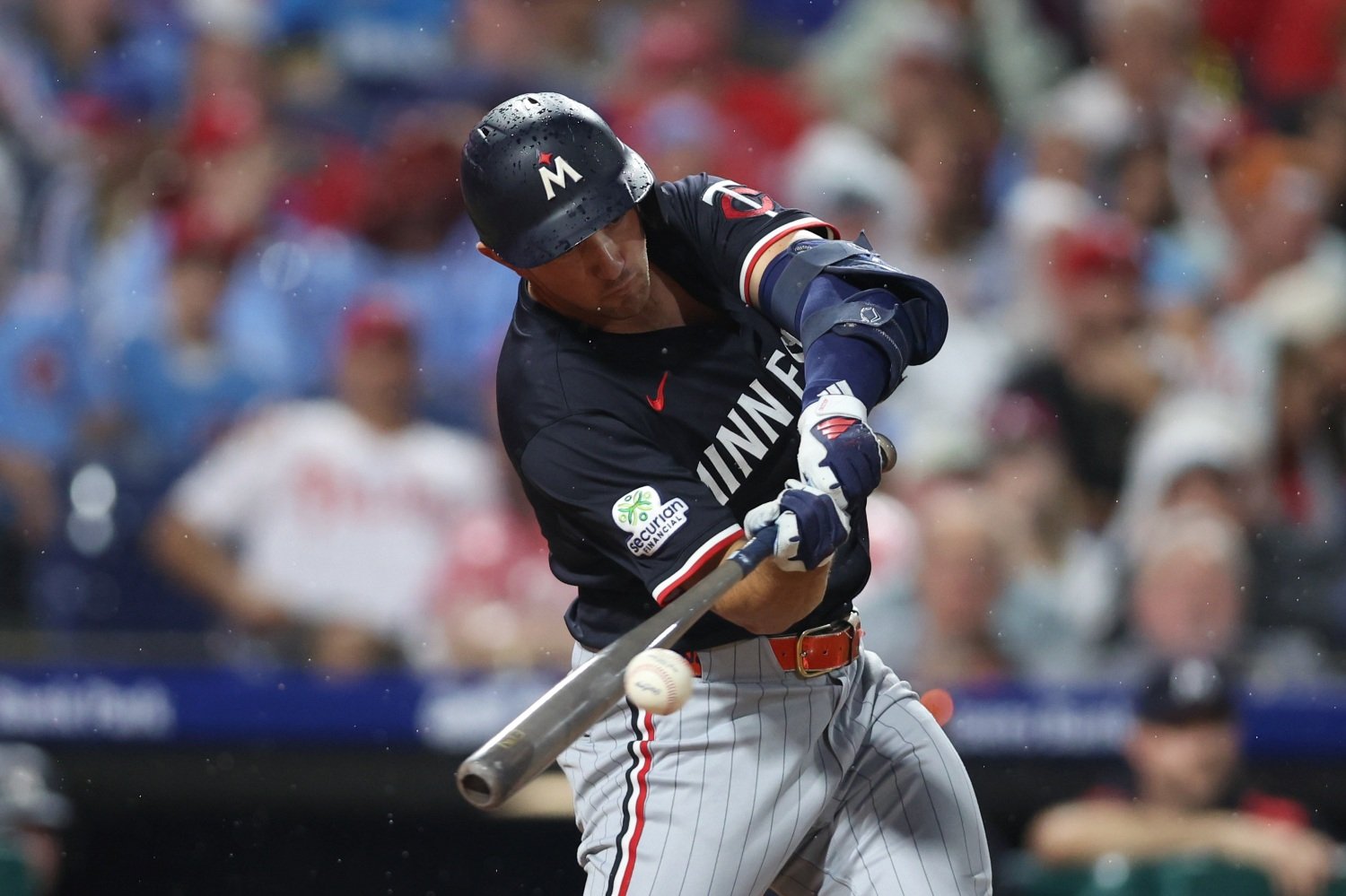
Predictably, both Falvey and Shelton said they don't yet have those answers hammered out, in each individual case or at the broader team level. But Shelton was asked a specific question about Brooks Lee, who is hitting .232/.279/.357 over his first 712 career plate appearances, and he did have at least a partial (and perhaps a telling) answer for it.
"I talked to Drew MacPhail a little bit about it, and we’ll continue to talk about it, but players get to the big leagues so fast these days," Shelton observed, "and then when players get to the big leagues the competition they go through in terms of amateur baseball is different, and they end up jumping from team to team, and it becomes almost more of a showcase than what’s actually going on in the game."
That explanation widens the lens far beyond Lee, and it offloads the blame for his slow or uneven development to entities beyond the Twins. Shelton doesn't yet have a specific remedy in mind for his switch-hitting infielder, because he doesn't yet know Lee deeply enough to evaluate his process. However, the answer he gave Falvey still tells us something, because of what he didn't do: he didn't denigrate or question the fundamental moves of any of the hitters there.
Shelton takes a holistic and intellectual tack to hitting, but he also has the eye of a coach who has to correct and adjust bad mechanics or essential failures of timing. That wasn't his focus in the meeting with Falvey, and it's not a crisis-level, organizational problem. In Shelton's view, the Twins do have talent, and their hitters are doing things he considers plausibly correct; he just didn't have the access to them to test those plausible options.
As he looks ahead to the time when he will have more complete information, Shelton believes the first part of his work in reforming struggling hitters is done: they've failed. For most big-leaguers, it takes some failure to open the doors to change. From there, the question becomes one of information management—which sometimes means figuring out what voices the player is hearing, besides his own.
"I think the second, and probably just as important, thing is you have to figure out where they are getting their information," Shelton said. "Players get their information from so many different people today that we all have to be working in the same direction. The communication lines—sometimes, that’s the manager. Sometimes that’s the pitching coach. It’s definitely a hitting coach in today’s world. I know. I lived it at one point. You have to find out where they’re getting their information and is it counterproductive? With today’s player, you have to prove to them this is why we’re doing it. I think that is important."
Most hitters work with some private hitting instructor or trainer. Shelton was quick to say that that's often a good thing. The wrinkle comes in the form of whatever confusion it might cause, as the team and the player try to communicate clearly about the best way for that hitter to be their best self.
"If you tell someone right away, 'Hey, we’re not going to allow you to do this,' and they have a feeling that it helps them, then we’re damaging the relationship from the get-go," he said. "The biggest part is making sure there are open relationships in terms of the information you’re getting. That may not directly be made to that other coach, but at least to the player, hey, if you’re getting that, can you give me a little bit of a glimpse into what you’re doing?"
Every team strives for this, of course, but not every team achieves it. Baldelli took a delegatory approach to the job, and left any sorting out of messaging from coach to player between those parties. Shelton will take a more direct role, not only in those conversations about hitters' approaches, but in the follow-up and in the discovery of underlying theory in everything his hitters do.
That could be the way he separates himself from Baldelli, and it could make him the right man for this job. If there's one thing the Twins must do better going forward than they've done over the last half-decade, it's develop and transition talented young batters to the majors. Falvey bought into Shelton's ability to do that. It's up to Shelton to prove (not merely to Falvey, but to Twins Territory) that that faith was warranted.









Recommended Comments
Create an account or sign in to comment
You need to be a member in order to leave a comment
Create an account
Sign up for a new account in our community. It's easy!
Register a new accountSign in
Already have an account? Sign in here.
Sign In Now