


Twins Video
History
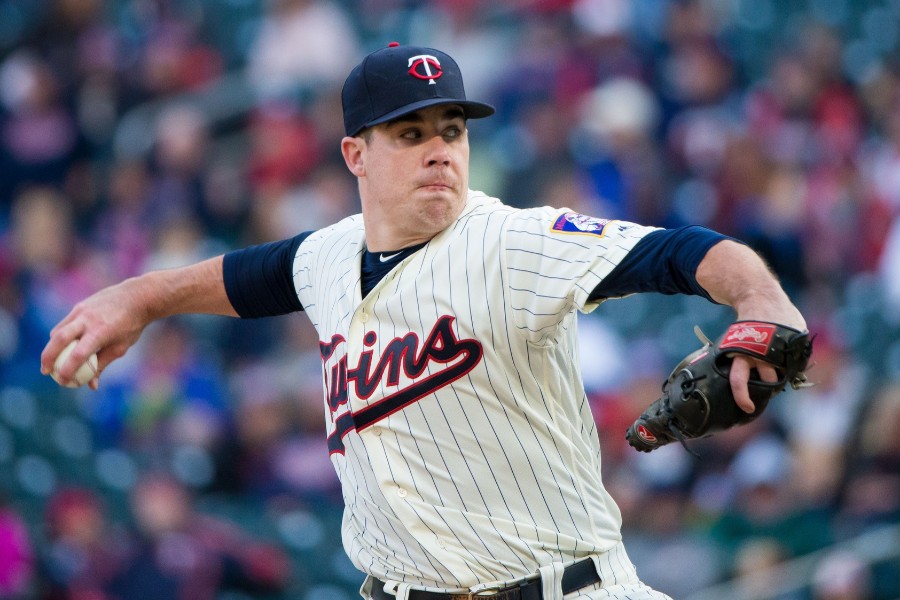
May is a relative late bloomer and has been around for a long time. The 29-year-old was drafted in the fourth round of the 2008 June amateur draft. May found himself with the Twins after being traded for light-hitting center fielder Ben Revere. May made his big-league debut in 2014, showing solid stuff, but struggling consistently with command and control.
Since his debut, there has been a constant question around whether he would feature as a starter or relief pitcher in a franchise particularly starved for the former. Prior to his 2017 injury, May logged around 200 innings for the Twins, typically showing signs of promise with peripheral numbers out-performing more mainstream stats. There were a number of indicators that show that 2018 was the year May made a significant leap forwards.
2018 numbers
Here are some numbers which frame May’s 2018 excellence:

Pitch mix and values
May offers a four-pitch mix which includes a four-seam fastball (94mph), curve (78mph), slider (87mph), and changeup (86mph). May’s fastball is relatively flat, with slightly above average velocity. He has good downward movement on his curveball and a changeup which generates a large number of ground balls. All this is fairly typical and would not lead one to the conclusion that May would produce the kind of results he did in 2018 (albeit with a limited sample size). This begs the question - how is May getting such outstanding results without truly mind-blowing reliever stuff?
May’s July return did not herald any great difference in his pitch mix, save for throwing fewer sliders than previously. May threw his fastball around 60% of the time, his changeup around 10% of the time, and his breaking pitches the remaining 30%, with two thirds of those being his curveball.
May’s greatest challenge (there weren’t many) was combatting the longball. In 2018, he had a HR/FB of 18.2% and a HR/9 of 1.42. Neither of these figures are disastrous, but he gave up four homeruns in limited work. In a season in which he had pitched 60 innings, we would have been on pace to give up 12 HR, good for a bottom 15 ranking among qualified relievers. The Twins already have a reliever for whom home runs are an Achilles heel (Trevor Hildenberger), so limiting the long ball will have to be a focus for May in 2019.
Looking at May’s heat map of SLG% against his fastball highlights the challenge. He leaves a number of fastballs up and in to LHH and down and in to RHH. May had excellent control in 2018 (1.78 BB/9) but needs to establish better fastball command, as a lack of movement makes it a hittable pitch.

By contrast, a similar heat map of opposing SLG% against May’s curveball shows his ability to cluster location more tightly and the impact resulting from impressive command of a pitch.

Digging into opposing hitters’ outcomes against May’s pitch arsenal help to highlight the leap he took from 2016 to his MLB return in 2018.

May has shown impressive improvement throughout his pitch arsenal, including his fastball, but the primary reason for his breakout in 2018 was developing a high quality breaking and off-speed pitch, both of which have been outrageously effective, albeit in a limited sample. May is an unusual MLB success story, starting to put his considerable talent together in his age 29 season. Examining the tweaks that led to his improved secondary arsenal is key in determining what the Twins might expect from May in 2019.

The chart above shows May’s vertical release points for his primary pitches between 2016 and 2018. There is a noticeable drop in his release point on all three of his primary pitches. May’s release point drop has had a fascinating impact on all three of his primary pitches in 2018.
Let’s consider his fastball and changeup first:

May has seen an increase in his GB% on his fastball, leading to less contact and a higher swinging strike percentage. The impact on his changeup was dramatic, with an increase in GB% of almost 45%. May’s changeup is not a newly dominant strikeout pitch, it just consistently generates weak groundball contact.
May’s curveball actually resulted in a significant increase in fly balls in 2018. The biggest difference was May’s ability to command it down in the zone, resulting in a huge hike in strikeout percentage from 31% in 2016, to 47.1% in 2018. In short, the curveball became May’s go to strikeout pitch.
Whether May can take another step forward in 2019 remains to be seen. It will depend on his ability to maintain incredibly strong 2018 numbers and build on a vastly improved arsenal of secondary pitches, in addition to keeping his fastball inside the yard. What seems to be clear however, is in a bullpen full of question marks, the Twins have found themselves a high leverage reliever to plug in alongside Taylor Rogers.






Recommended Comments
Create an account or sign in to comment
You need to be a member in order to leave a comment
Create an account
Sign up for a new account in our community. It's easy!
Register a new accountSign in
Already have an account? Sign in here.
Sign In Now